The Era of Delicate Handling: Why Non-Destructive Picking is Redefining Packaging Automation
Modern manufacturing facilities face a continuous challenge: maximizing throughput while ensuring zero damage to fragile, irregular, or highly sensitive products. Historically, high-speed automated packaging lines relied on rigid mechanical systems that prioritized speed over touch sensitivity. However, with the debut of the latest flexible parallel robot packaging lines, a paradigm shift is underway. Non-destructive picking has officially taken center stage, redefining how delicate goods—ranging from freshly baked pastries and soft confectionery to pharmaceutical vials and cosmetic pouches—are handled at high speeds.
Parallel robots, often referred to as delta robots, are renowned for their overhead mounting configuration and spider-like arms that converge at a central tool plate. By utilizing advanced kinematics and lightweight carbon fiber components, these robots achieve extraordinary acceleration and pick rates. However, the true breakthrough of modern systems lies not just in their speed, but in their ability to interact with products gently, ensuring complete product integrity from conveyor belt to final container.
The Core Technologies Behind Soft-Touch Automation
Achieving non-destructive handling at speeds exceeding 100 picks per minute requires a sophisticated combination of hardware, vision guidance, and sensor feedback. The latest flexible parallel robot lines integrate three primary technologies to safeguard product quality:
- Advanced 3D Vision Systems: High-resolution industrial cameras scan incoming products on the conveyor belt in real-time. By utilizing AI-driven classification algorithms, the system determines the exact position, orientation, and height of each item, allowing the robot to adjust its approach trajectory dynamically.
- Soft Robotics and Adaptive End Effectors: Instead of rigid metal claws, modern parallel robots utilize food-grade silicone grippers, Bernoulli vacuum cups, or adaptive mechanical fingers. These tools conform to the shape of the object, distributing pressure evenly to prevent bruising, cracking, or surface marking.
- Active Force Feedback Sensors: Integrated torque and force sensors continuously measure the resistance encountered during the grip phase. If a product is slightly softer or larger than expected, the system instantly modulates the gripping force to remain within safe, pre-programmed thresholds.
Comparative Performance: Traditional vs. Flexible Parallel Robotic Picking
To understand the business value of these advanced systems, it is helpful to compare their capabilities with traditional pick-and-place methods. The table below outlines how flexible parallel robots outperform legacy systems across key operational parameters:
| Operational Parameter | Traditional Pick-and-Place | Flexible Parallel Robotic Picking |
|---|---|---|
| Product Safety | High risk of mechanical damage, bruising, or crushing. | Non-destructive contact; highly protective of product finish. |
| Product Shape Adaptability | Limited to uniform geometries; requires mechanical retooling for changes. | Highly adaptive; handles random, irregular, and changing shapes instantly. |
| Sorting Speed & Efficiency | Moderate speed; limited by mechanical travel constraints. | Ultra-high speed, multi-axis agility for optimized cycle times. |
| Sanitary Design | Complex assemblies with hard-to-clean crevices and lubrication points. | Washdown-ready, IP69K-rated arms suitable for sterile environments. |
Cross-Industry Applications of Non-Destructive Picking
The applications for gentle robotic handling cross multiple highly demanding industries, each presenting unique product format challenges:
1. Food & Confectionery Packaging
In the bakery and pastry sectors, products like croissants, soft cookies, and decorated chocolates are highly susceptible to deformation. Parallel robots equipped with soft vacuum cups can lift these delicate items directly from cooling conveyors and place them into trays or flow-wrapper feeds without disturbing sugar coatings, frostings, or structural shapes.
2. Pharmaceuticals & Sterile Medical Devices
Pharmaceutical packaging demands extreme precision and absolute hygiene. Glass vials, pre-filled syringes, and diagnostic test kits must be handled without causing micro-fractures or packaging scuffs that could compromise sterile seals. Parallel robots operate seamlessly in cleanroom environments, ensuring zero human contact and zero structural damage to critical medical containers.
3. Cosmetics & Personal Care Products
Cosmetic products, from premium serums to multi-compartment eye shadow palettes, rely heavily on pristine visual presentation. Robotic grippers with precise pressure management pick fragile skincare bottles, lipsticks, and delicate tubes, placing them into cartons or blister trays without scratching reflective surfaces or tearing delicate label edges.
Integrating Parallel Robots into Turnkey Packaging Lines
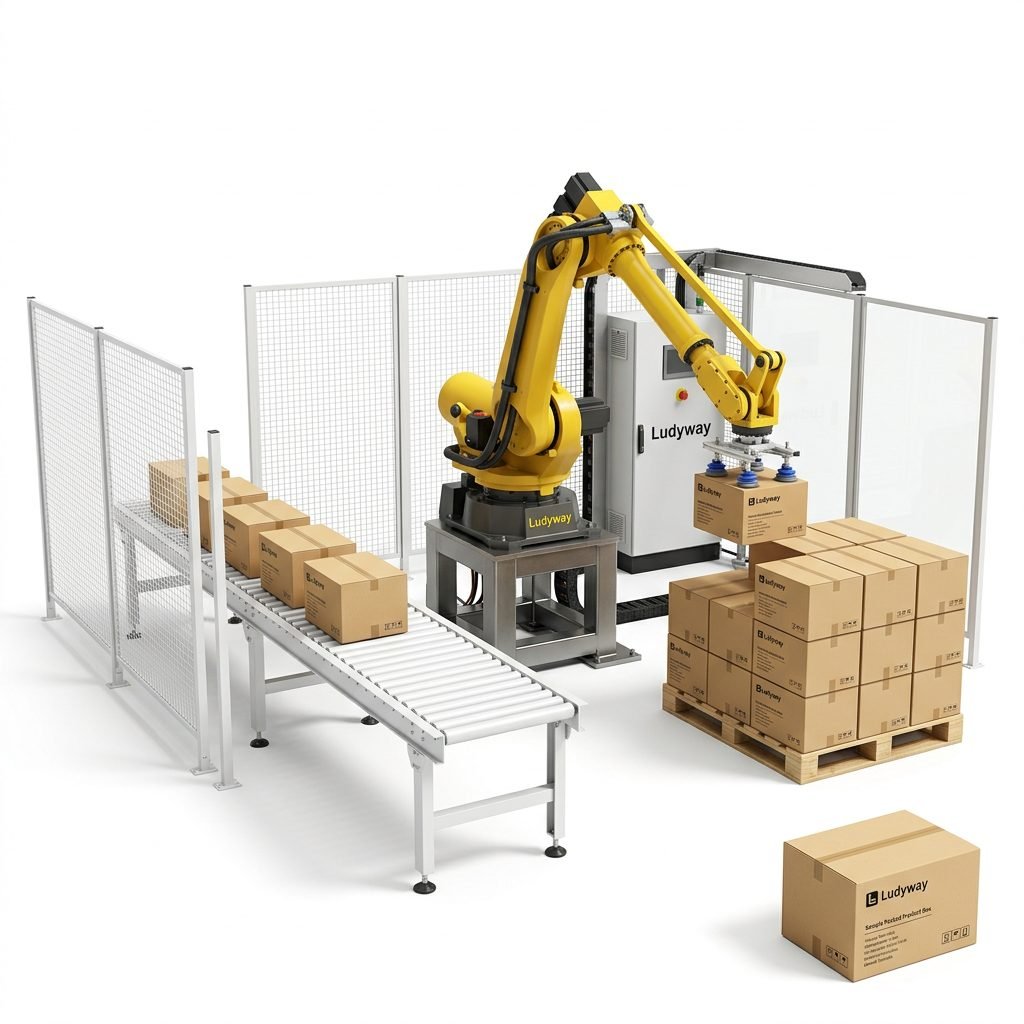
While the parallel robot acts as the high-speed “hands” of the operation, it cannot work in isolation. To achieve true production efficiency, the robotic cell must be integrated into a complete downstream packaging workflow. This integration is where the expertise of a specialized OEM becomes invaluable.
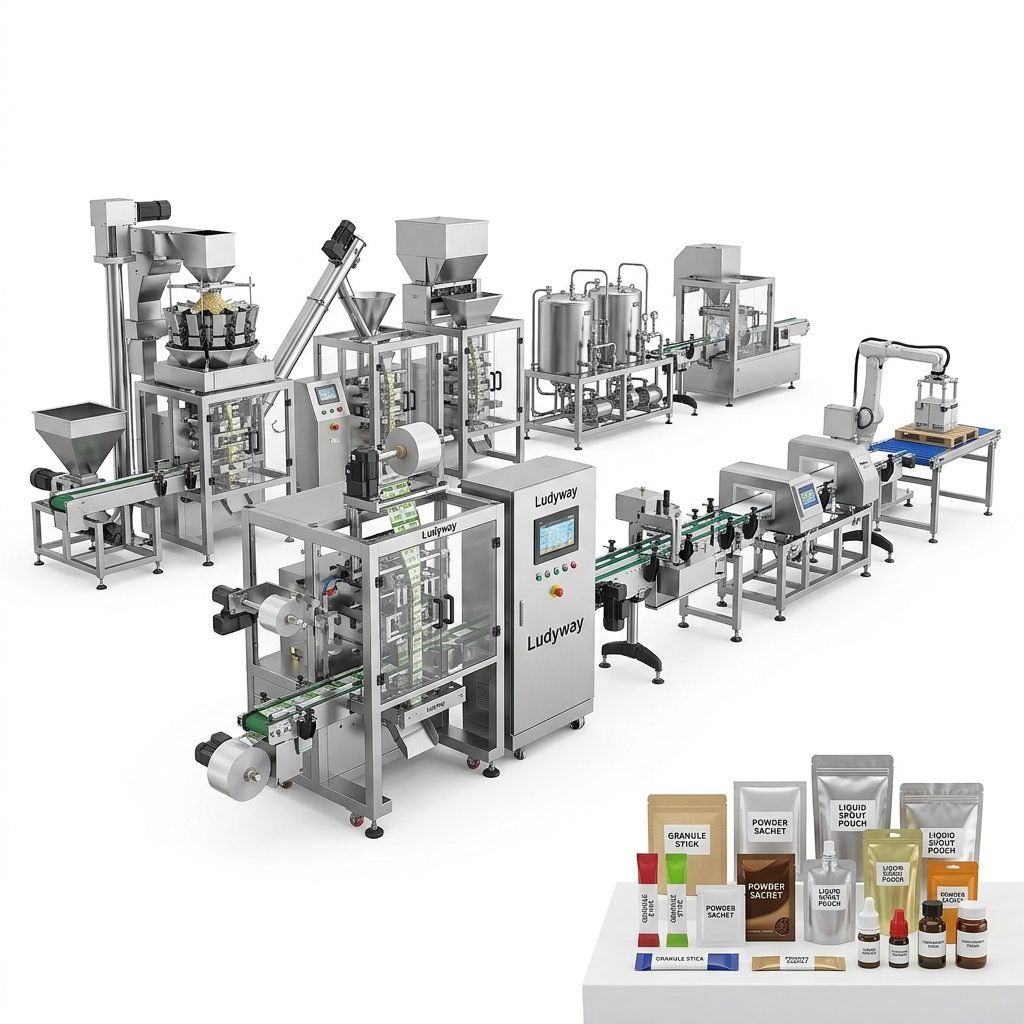
By partnering with a leading packaging machine manufacturer like Ludyway, manufacturers can transition from siloed machinery to fully automated, synchronized turnkey lines. A unified production line coordinates the speed of the upstream feeding systems, the positioning of the parallel robots, and the operations of downstream cartoning, case packing, and palletizing systems. This comprehensive approach eliminates bottlenecks, reduces floor space requirements, and ensures that the gentle handling protocols established at the beginning of the line are maintained until the product is securely sealed in its transport case.
Future Horizons: AI and Predictive Intelligence in Robotic Packaging
The future of non-destructive picking lies in the deeper integration of artificial intelligence and machine learning. Upcoming generations of parallel robot packaging lines will feature predictive gripping models. By analyzing historical pick data, the system can predict how a batch of slightly under-baked bread or irregular fruit will behave under grip pressure, adjusting its touch preemptively before the gripper even makes physical contact.
Additionally, cloud-based performance monitoring allows operators to track the wear and tear of soft silicone grippers and mechanical joints. By predicting component degradation before a failure occurs, factories can schedule preventative maintenance during planned shutdowns, eliminating costly unexpected downtime.
As consumer demand for high-quality, visually perfect, and sustainably packaged goods continues to rise, the adoption of flexible parallel robots is no longer just an optional upgrade—it is a critical strategy for forward-thinking manufacturers aiming to maintain a competitive edge on the global stage.