Choosing the right packaging strap machine can directly affect shipping safety, labor efficiency, operating cost, and customer satisfaction. Whether you ship cartons, bundle products, or stabilize pallet loads, the right strapping system helps reduce damage, improve consistency, and speed up end-of-line operations.
For businesses comparing options, the decision is not only about price. You also need to look at package size, output volume, strap material, automation level, maintenance needs, and future production expansion. This guide explains how to evaluate a strapping machine in a practical way so you can invest with confidence.
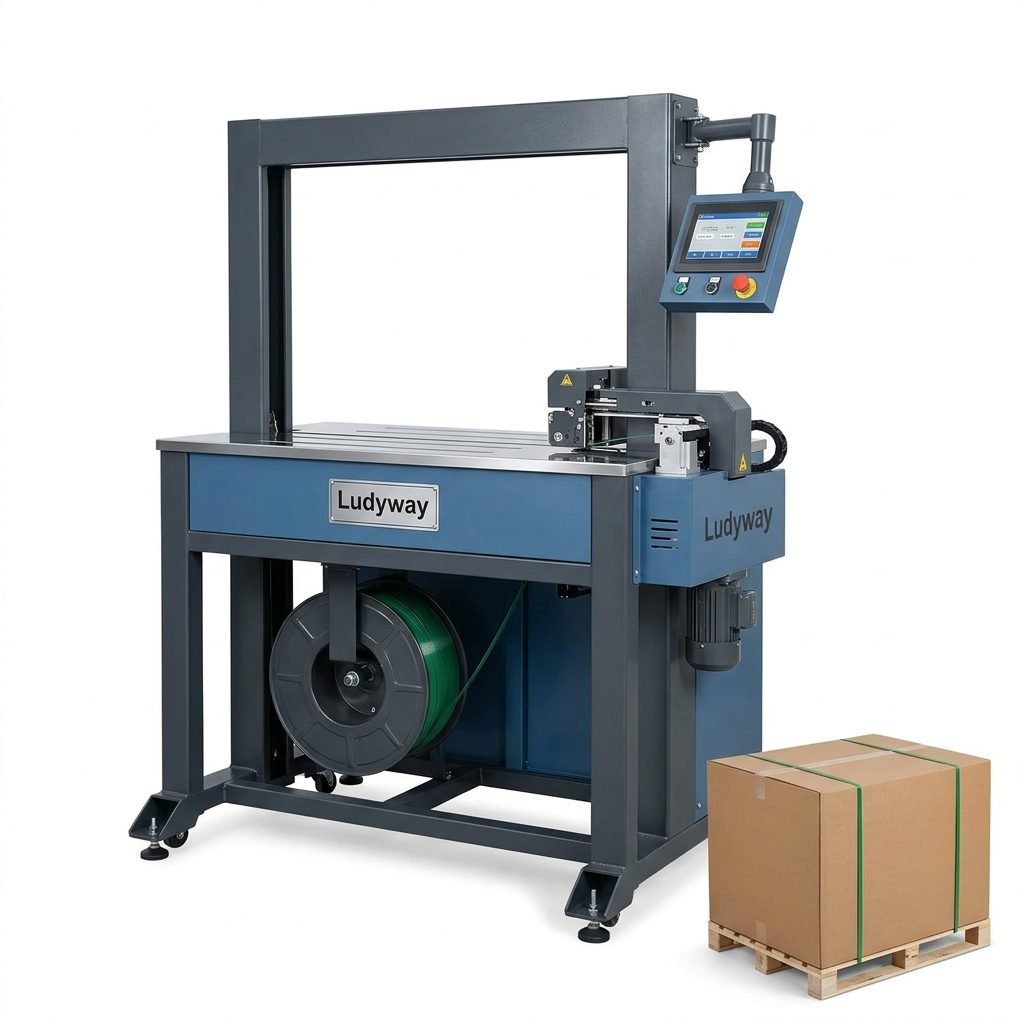
What Is a Packaging Strap Machine?
A packaging strap machine is equipment used to apply plastic or steel straps around cartons, bundles, trays, or palletized goods. The machine tensions, seals, and cuts the strap to secure products for storage or transport.
These machines are commonly used in industries such as:
- Food and beverage
- Pharmaceuticals and healthcare
- E-commerce and logistics
- Consumer goods
- Electronics
- Building materials
- Paper and printing
Why Choosing the Right Strapping Machine Matters
A poorly matched machine can create bottlenecks, unstable loads, wasted strap material, and frequent downtime. A properly selected system delivers measurable business benefits:
- Lower labor cost through automation
- More secure packaging during transit
- Faster throughput at the packing line
- Reduced material waste from consistent tensioning
- Better package appearance for retail or B2B shipments
- Improved workplace safety versus manual strapping methods
Main Types of Strapping Machines
Manual Strapping Tools
These are handheld devices suitable for low-volume operations or mobile use in warehouses. They are usually chosen by small businesses or facilities with irregular package sizes.
- Low initial cost
- Flexible for different package dimensions
- Best for low-output environments
Semi-Automatic Strapping Machines
Semi-automatic models require the operator to position the package and insert the strap, while the machine tightens and seals it. This option is common for medium-volume businesses.
- Good balance of cost and efficiency
- Suitable for cartons and regular box sizes
- Easy to operate and maintain
Automatic Strapping Machines
Automatic machines strap packages with minimal operator intervention. They are ideal for companies with consistent product flow and higher output requirements.
- Higher speed
- More consistent sealing quality
- Reduced labor dependence
Fully Integrated Strapping Systems
These systems are installed into complete packaging lines and can work with conveyors, carton sealers, labelers, palletizers, and wrapping machines. They are best for large-scale manufacturing and logistics centers.
- Maximum automation
- Ideal for high-volume production lines
- Supports smart factory upgrades
How to Choose the Right Strapping Machine for Your Business
1. Identify Your Package Type
Start by understanding what you are strapping. The shape, size, weight, and surface of your product will determine the most suitable machine design.
- Small cartons may need tabletop or arch strapping machines
- Large cartons may require wider arch sizes or side-seal designs
- Pallet loads often need vertical or horizontal pallet strapping systems
- Fragile packages need adjustable tension control
2. Calculate Your Daily Output
Your production volume has a major impact on machine selection. A low-volume operation may perform well with a semi-automatic machine, while high-volume lines usually need an automatic or integrated system.
| Production Volume | Recommended Machine Type | Typical Use |
|---|---|---|
| Low volume | Manual or semi-automatic | Small warehouses, workshops, startups |
| Medium volume | Semi-automatic or automatic | Growing factories, distribution centers |
| High volume | Automatic or integrated line system | Large manufacturers, high-speed logistics operations |
3. Choose the Right Strap Material
Most businesses use either polypropylene (PP), polyester (PET), or steel strap. Your packaging load and transport conditions will determine the best choice.
- PP strap: economical, lightweight, suitable for cartons and standard packages
- PET strap: stronger than PP, better for heavier loads and pallets
- Steel strap: best for very heavy, rigid, or industrial products
The machine must be compatible with your chosen strap width, thickness, and core size.
4. Check Tension Control Requirements
Not every product can handle the same strapping force. Light cartons, soft packs, and fragile goods need lower and more precise tension settings. Heavy industrial boxes or pallet loads need stronger holding force.
Adjustable tension control is especially important if you pack different product categories on the same line.
5. Consider Automation Level
Think beyond your current situation. If your business is growing quickly, buying a machine with upgrade potential can save money later.
- Manual tools for occasional use
- Semi-automatic machines for stable medium-volume tasks
- Automatic arch machines for fast carton strapping
- Inline systems for synchronized end-of-line packaging
6. Evaluate Available Space
Floor layout matters. Measure your packing area, conveyor height, package dimensions, and operator access zone before selecting equipment. On compact factory floors, a space-saving machine may be more valuable than a higher-speed model that disrupts workflow.
7. Review Maintenance and Reliability
Downtime can cost more than the machine itself over time. Ask these questions before buying:
- How often does the machine need routine maintenance?
- Are wear parts easy to replace?
- Is technical support available?
- Can operators be trained quickly?
- Are spare parts readily supplied?
8. Think About Integration With Other Packaging Equipment
If your business already uses conveyors, carton sealers, shrink wrappers, pallet wrappers, coding equipment, or palletizers, the strapping machine should integrate smoothly into the overall line.
For businesses planning broader packaging automation, working with an experienced supplier such as Ludyway packaging machine manufacturer can help simplify line matching, customization, and long-term scaling.
Key Features to Compare Before Buying
| Feature | Why It Matters |
|---|---|
| Strapping speed | Affects line efficiency and throughput |
| Arch size | Must fit your package dimensions |
| Seal type | Determines strap joint strength and consistency |
| Tension adjustment | Protects fragile products and secures heavy loads |
| Power consumption | Influences operating cost |
| Mobility or fixed design | Determines whether the machine can be moved between workstations |
| User interface | Improves ease of operation and reduces training time |
Best Machine Choice by Business Type
Small Businesses
If you handle limited daily shipments, a semi-automatic machine is often the best starting point. It offers better speed and consistency than manual tools without a high investment.
Medium-Sized Manufacturers
If you run regular production batches and ship multiple cartons every hour, an automatic strapping machine can improve productivity and reduce operator fatigue.
Large Factories and Distribution Centers
For high-throughput operations, integrated inline strapping systems provide the highest efficiency. They are ideal when paired with conveyorized case sealing, labeling, weighing, wrapping, and pallet handling systems.
Common Buying Mistakes to Avoid
- Choosing only based on the lowest purchase price
- Ignoring future production growth
- Overlooking strap compatibility
- Buying a machine without adjustable tension
- Not checking after-sales support and spare parts availability
- Failing to test real package samples before purchase
Questions to Ask a Supplier Before Ordering
- What package sizes and weights can the machine handle?
- What strap materials and widths are supported?
- What is the real output speed under working conditions?
- Can the system integrate with my current packaging line?
- What spare parts are recommended for the first year?
- Is remote or on-site technical support available?
- Can the machine be customized for special products or limited space?
When Should You Upgrade Your Current Strapping Equipment?
You may need an upgrade if you notice any of the following:
- Frequent sealing failures or inconsistent tension
- Rising labor costs from manual handling
- Packaging damage during transportation
- Production delays at the end of the line
- Inability to handle new package sizes or heavier loads
Final Buying Tip
The best packaging strap machine is the one that fits your actual product, output, layout, and expansion plan. Instead of focusing only on machine price, evaluate total value: efficiency, reliability, safety, support, and compatibility with your full packaging process.
When selected correctly, a strapping machine becomes more than a simple packaging tool—it becomes a practical investment in shipping stability, operational efficiency, and long-term business growth.