In the world of automated food production, selecting the right ravioli packaging machine is a critical decision that impacts efficiency, product quality, and profitability. This guide provides a comprehensive roadmap to help you choose the best automatic solution tailored to your specific operational needs.
Understanding Ravioli Packaging Machines
An automatic ravioli packaging machine is designed to handle the delicate process of filling, sealing, and packaging ravioli pasta. These systems integrate various technologies to form, fill with precise amounts of ingredients (like cheese, meat, or vegetables), seal the edges, and often portion the finished product into retail-ready packages. The core advantage is the significant increase in production speed and consistency compared to manual or semi-automatic methods.
Key Functionalities: Modern machines typically perform dough sheeting, depositing filling, cutting/sealing individual ravioli, and sometimes final cooking or drying stages. High-end models integrate directly with downstream cartoning or case packing lines.
Core Types of Ravioli Packaging Equipment
The market offers several configurations, each suited for different production scales and ravioli types.
1. Rotary Ravioli Machines
These are often the choice for medium to high-volume producers. They use a rotating drum with molds to form ravioli pockets. Filling is injected, and the dough is sealed under pressure as the drum rotates. They are renowned for high speed and excellent seal integrity.
2. Linear Ravioli Machines
Linear systems process dough sheets on a flat conveyor. Filling is deposited at precise intervals, and a second dough layer or a folding mechanism creates the seal. This type offers great flexibility for different ravioli shapes and sizes and is easier to integrate with other line components.
3. Integrated Production & Packaging Lines
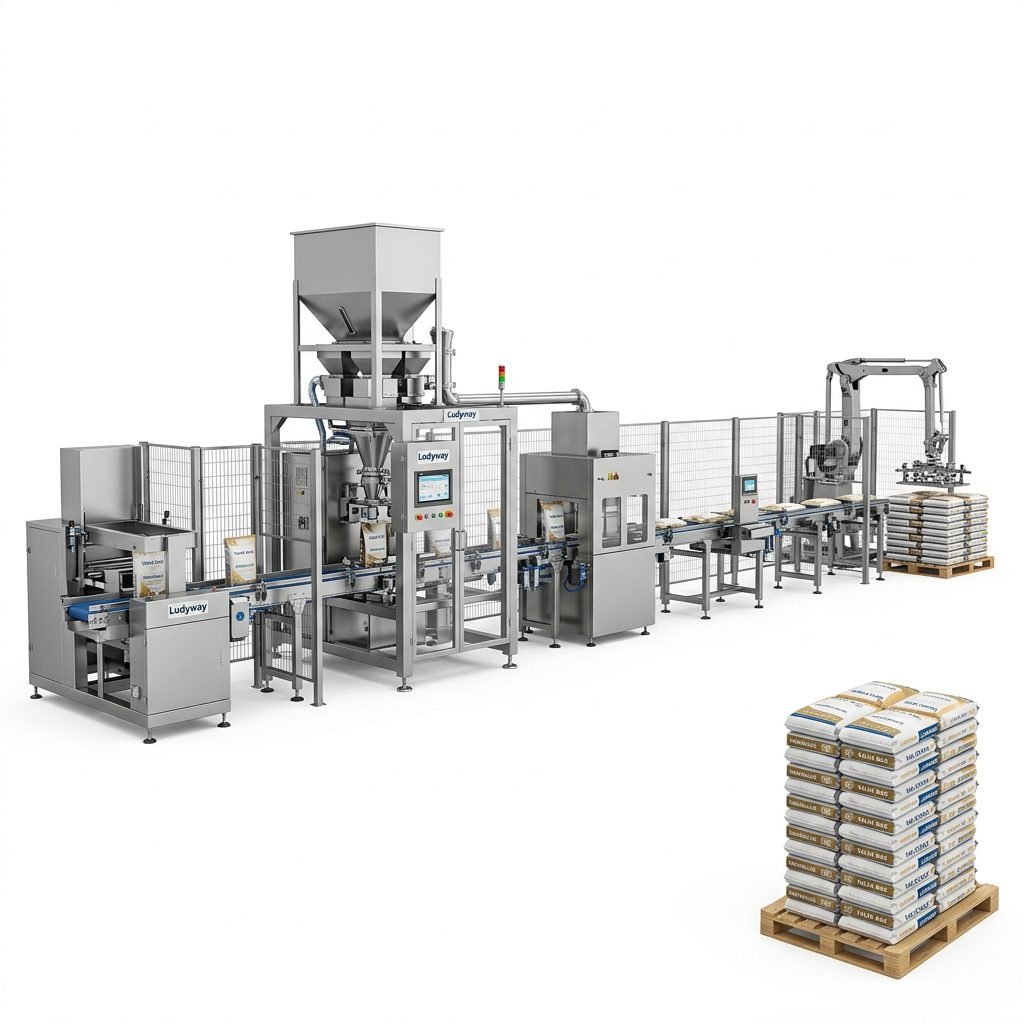
For large-scale operations, a complete turnkey line is optimal. These systems combine the ravioli forming machine with automated weighing, tray loading, film wrapping, vacuum sealing, or modified atmosphere packaging (MAP) stations. This ensures a seamless flow from raw ingredients to palletized finished goods.
Critical Factors for Choosing Your Machine
Making an informed choice requires evaluating several technical and operational parameters.
Production Capacity & Speed Requirements
Your target output dictates the machine type. Calculate your required units per hour or per day. Rotary machines can exceed 10,000 pieces/hour, while linear systems might range from 2,000 to 6,000 pieces/hour. Ensure the machine’s rated speed matches your peak demand, considering future growth.
Tip: Always test the machine with your specific recipe at the claimed maximum speed to verify consistency and quality are maintained.
Product Specifications & Flexibility
The physical characteristics of your ravioli are paramount.
- Size & Shape: Can the machine handle your ravioli dimensions (square, round, rectangular) and thickness? Check the adjustability of molds or cutting tools.
- Filling Type: Is your filling homogeneous, chunky, or semi-liquid? The filling pump and nozzle system must be compatible to avoid clogging or uneven deposition.
- Dough Type: Different doughs (egg-based, whole wheat, gluten-free) have varying elasticity and behavior. The sheeting and sealing mechanisms must accommodate your dough’s properties.
Automation Level & Integration
Define how much human intervention you want. Fully automatic machines require only monitoring and loading of bulk ingredients. They often include automatic dough feeding, filling level monitoring, and fault detection. Consider how easily the machine can connect to your existing upstream (mixers) and downstream (packers, coders) equipment. Look for machines with standard communication protocols (PLC, IoT-ready).
Sanitation, Hygiene & Material
Food safety is non-negotiable. The machine should be designed for easy and thorough cleaning. Key features include:
- Stainless steel (grade 304 or 316) contact surfaces.
- Quick-release parts for wash-down areas.
- Smooth surfaces with minimal crevices where product or cleaning fluid can accumulate.
- Compliance with relevant food machinery safety standards (e.g., EHEDG guidelines, USDA, or local equivalents).
The Supplier Selection Process
Choosing a reliable machinery supplier is as important as choosing the machine itself.
Evaluating Manufacturer Expertise & Support
Look for a supplier with proven experience in pasta and ravioli packaging. They should understand the unique challenges of the product. Examine their project portfolio and ask for client references in the ravioli sector. A supplier like Ludyway Packaging Machinery, with over a decade of focused industry experience, exemplifies the deep application knowledge required. Their support extends beyond the sale, offering crucial installation, training, and maintenance services.
Importance of Testing & Validation
Never buy based solely on specifications. Arrange a production test at the supplier’s facility or, ideally, at your plant. Use your actual dough and filling recipes. This test validates:
- Actual output speed and yield.
- Final product quality (seal strength, shape consistency, filling accuracy).
- Machine stability and ease of operation with your materials.
It’s the best way to avoid costly post-purchase modifications.
Considering Total Cost of Ownership (TCO)
The purchase price is just one component. A robust TCO analysis includes:
- Installation and commissioning costs.
- Energy consumption (power, compressed air).
- Expected maintenance costs and spare part pricing.
- Training costs for operators and technicians.
- Potential costs for future upgrades or integration.
A machine with a slightly higher initial price but lower long-term operating costs and higher reliability often provides better value.
Future-Proofing Your Investment
Technology is rapidly evolving. Consider features that protect your investment against future needs.
Modularity & Scalability
Can the machine be easily upgraded? For example, can you add a second filling head later for dual-flavor ravioli? Or integrate a vision system for quality inspection? Modular designs allow you to scale functionality without replacing the entire unit.
Data Connectivity & Smart Features
The modern factory is data-driven. Machines offering PLC connectivity, data export (OEE, production counts, error logs), and even remote monitoring capabilities enable better production management and predictive maintenance. These smart packaging solutions are becoming industry standards.
Sustainability Considerations
Evaluate the machine’s environmental impact. Does it minimize product waste (dough, filling)? Is it energy-efficient? Can it handle newer, sustainable packaging materials you might adopt in the future? Choosing a supplier committed to innovative and efficient solutions aligns with long-term sustainability goals.
Conclusion
Selecting the optimal ravioli packaging machine is a multifaceted process that balances technical specifications, operational requirements, and strategic supplier partnership. By thoroughly assessing your production needs, rigorously testing equipment with your product, and choosing a knowledgeable and supportive supplier, you can secure an automatic solution that enhances your productivity, ensures product quality, and delivers a strong return on investment for years to come.
Frequently Asked Questions (FAQs)
What is the typical output speed range for an automatic ravioli machine?
Speeds vary widely by type. Rotary machines are fastest, often producing 8,000 to 15,000+ pieces per hour. Linear machines commonly range from 2,000 to 6,000 pieces per hour. Integrated lines have speeds defined by their bottleneck station, often the packaging module.
Can one machine handle different ravioli shapes and sizes?
Many modern machines offer good flexibility. Linear machines typically excel here, as changing cutting tools or adjusting conveyor guides can create different shapes and sizes. Rotary machines require mold changes, which is possible but may be more time-consuming. Discuss your flexibility needs explicitly with the supplier.
How important is the filling system compatibility?
It is absolutely critical. An incompatible filling pump can lead to under/over-filling, clogging, and product inconsistency. Always test the machine with your exact filling—whether it’s a smooth ricotta mixture, a coarse meat blend, or a vegetable puree—to ensure the pump, valves, and nozzles perform correctly.
What are the key maintenance requirements?
Daily cleaning and lubrication of specific points are essential. Weekly or monthly checks might include inspecting seals, belts, and cutting blades. Professional preventive maintenance by a technician should be scheduled annually or as per the manufacturer’s recommendation to ensure longevity and prevent unexpected downtime.
How do I ensure the machine meets food safety standards?
Request documentation proving compliance with international or local food machinery hygiene standards (e.g., EHEDG, USDA, CE food safety directives). Inspect the machine’s design for cleanability—all product contact surfaces should be accessible, smooth, and made of appropriate stainless steel. The supplier’s expertise in food and pharmaceutical packaging is a strong indicator of their focus on hygiene.