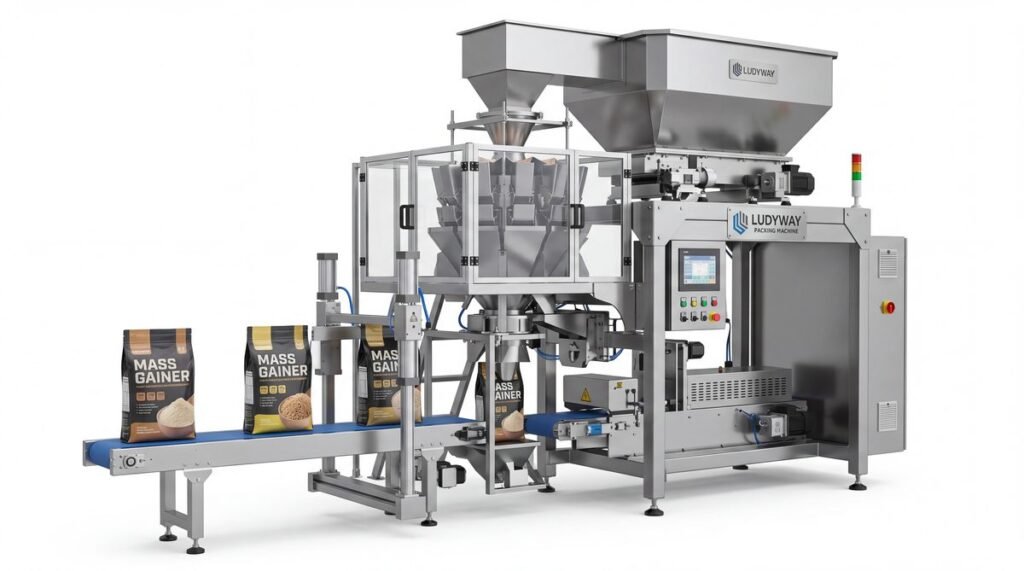
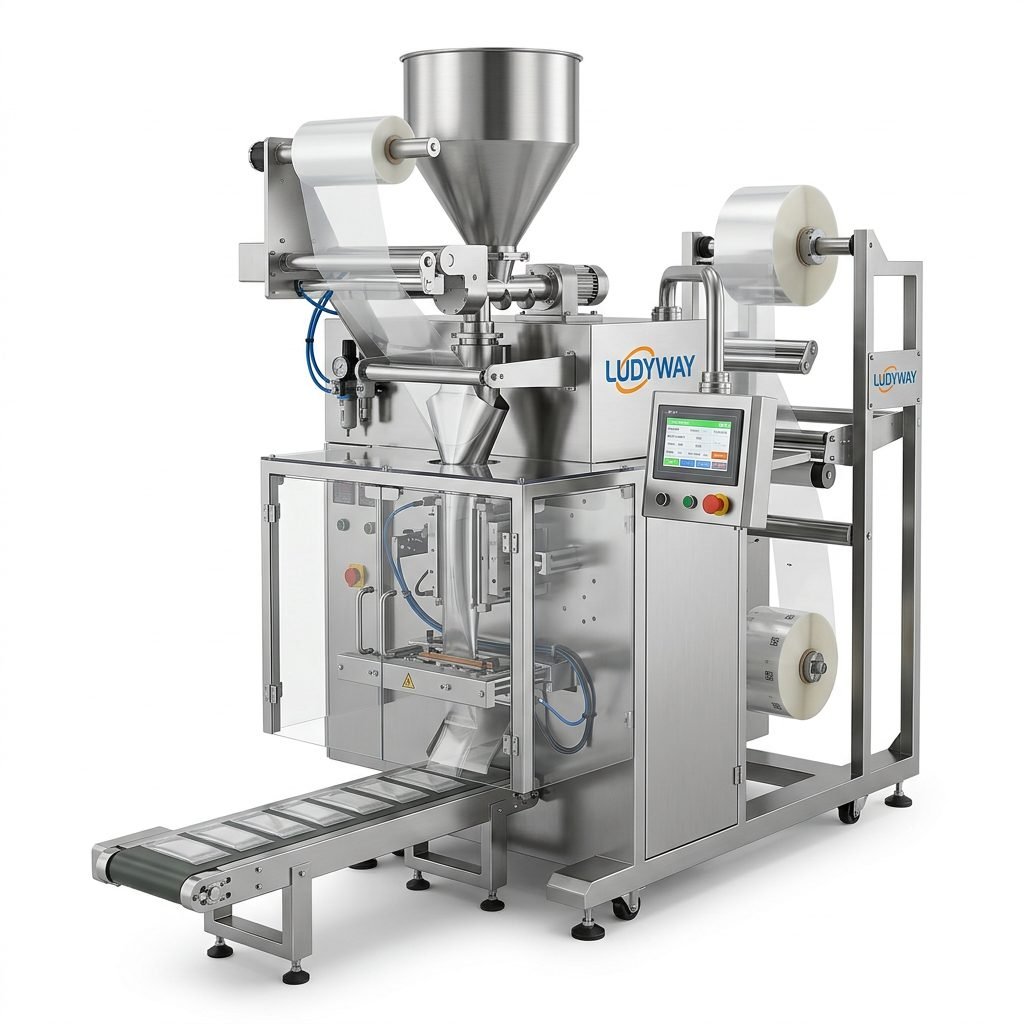
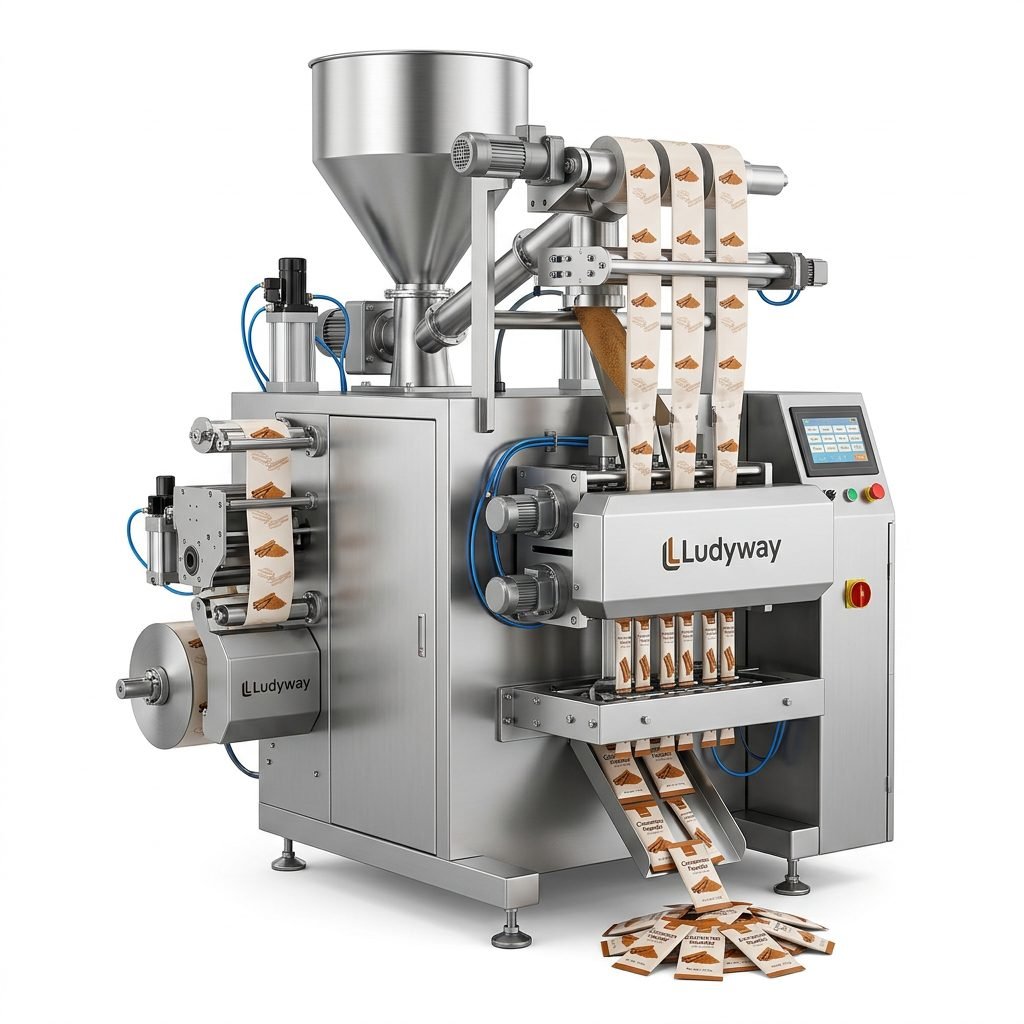
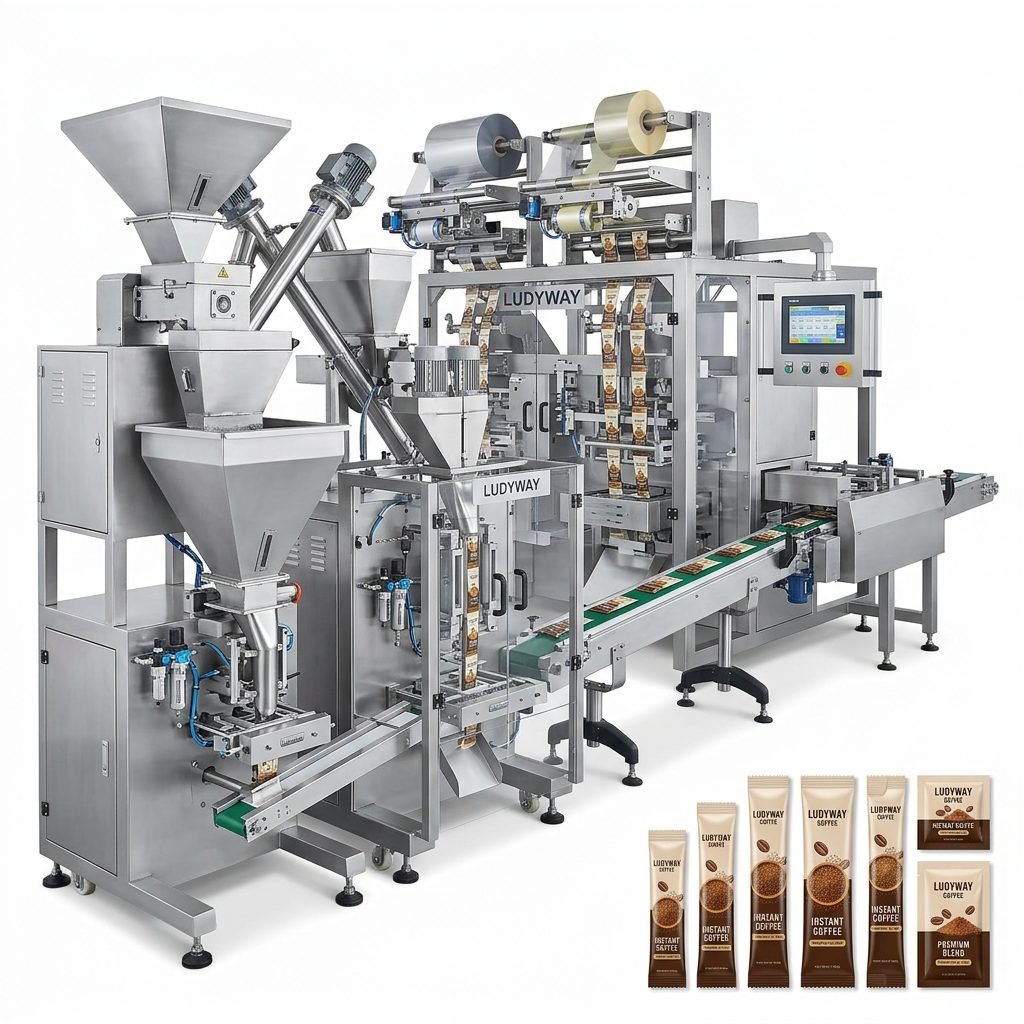
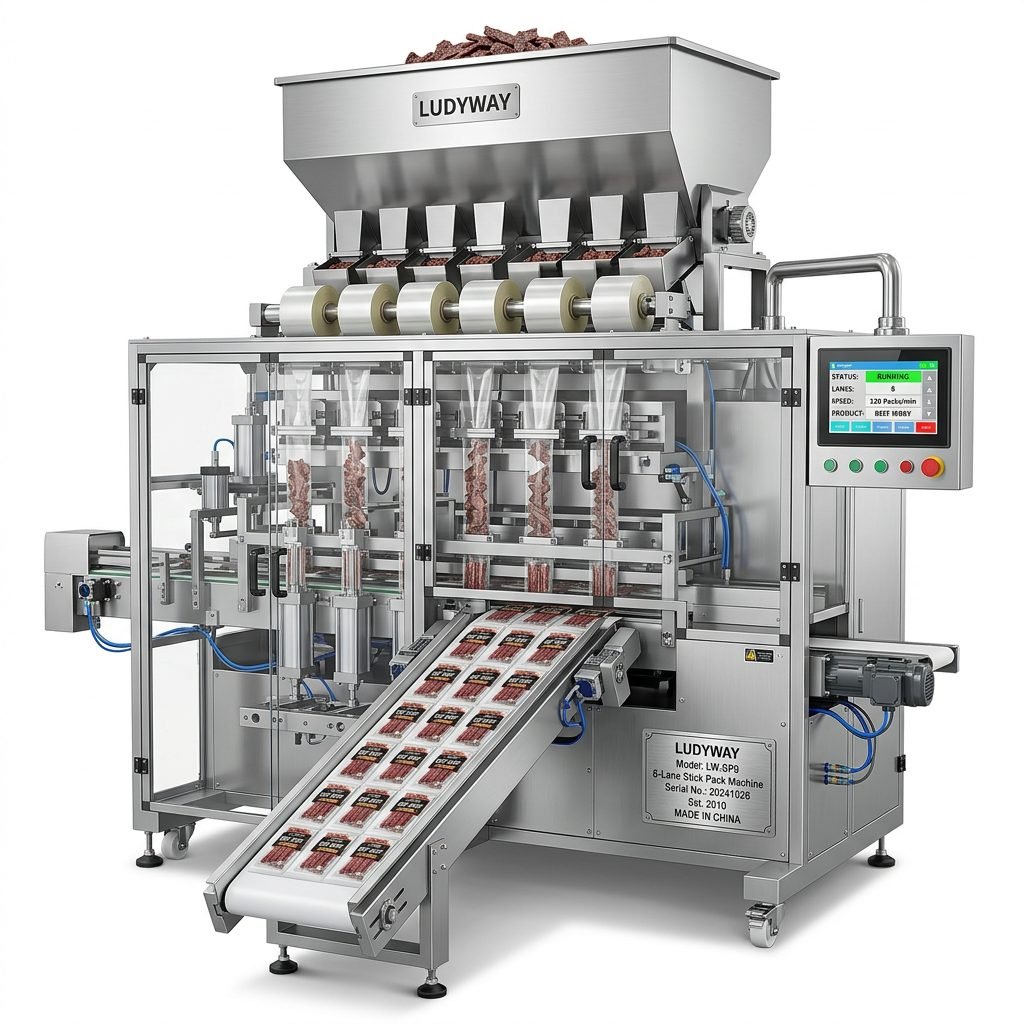
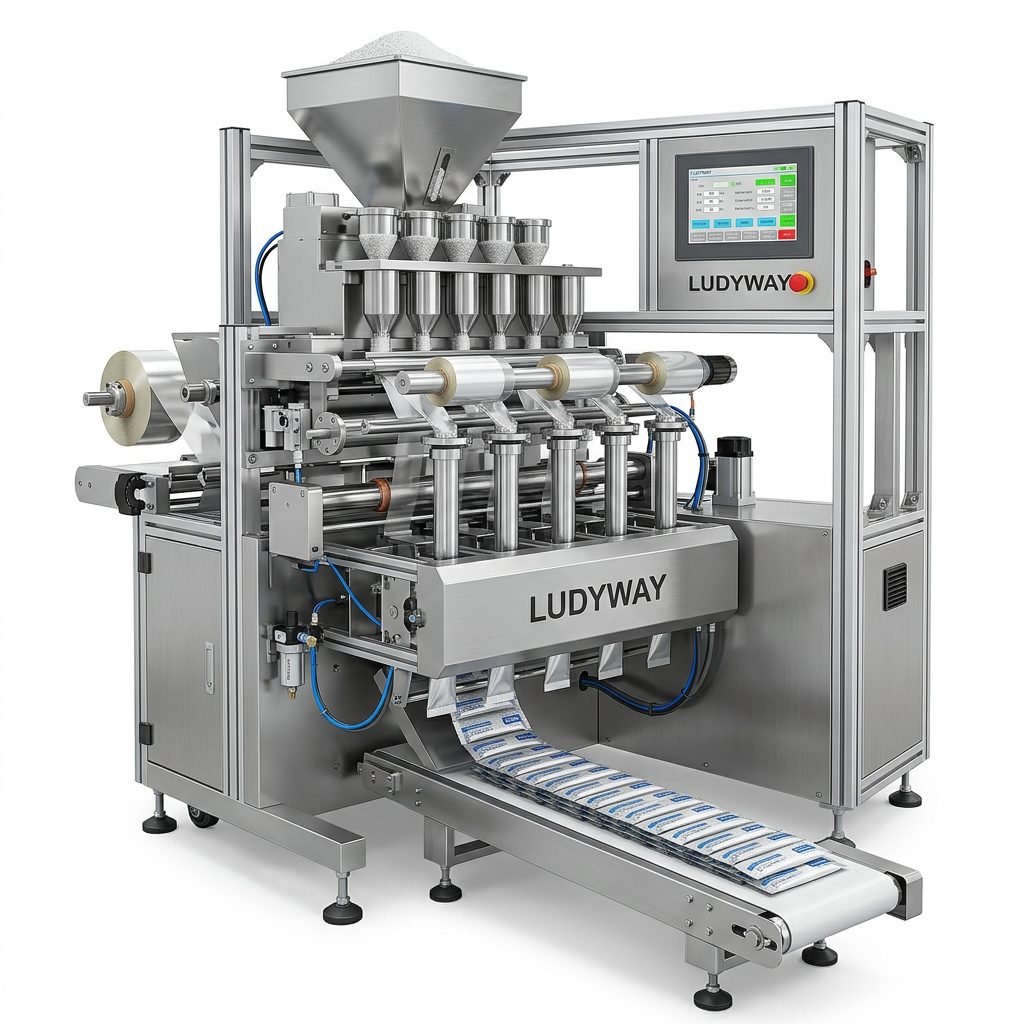
Choosing the right sugar sachet packing machine is not only about speed. It is about matching your product characteristics, packaging goals, factory conditions, and future business growth with the right automatic powder packaging solution. For producers of white sugar, brown sugar, icing sugar, sweetener blends, beverage premixes, and other free-flowing powders or granules, the right machine can improve output stability, dosing accuracy, packaging appearance, labor efficiency, and long-term operating cost.
If you are comparing automatic packaging equipment for stick packs or sachets, this guide explains what matters most before you invest.
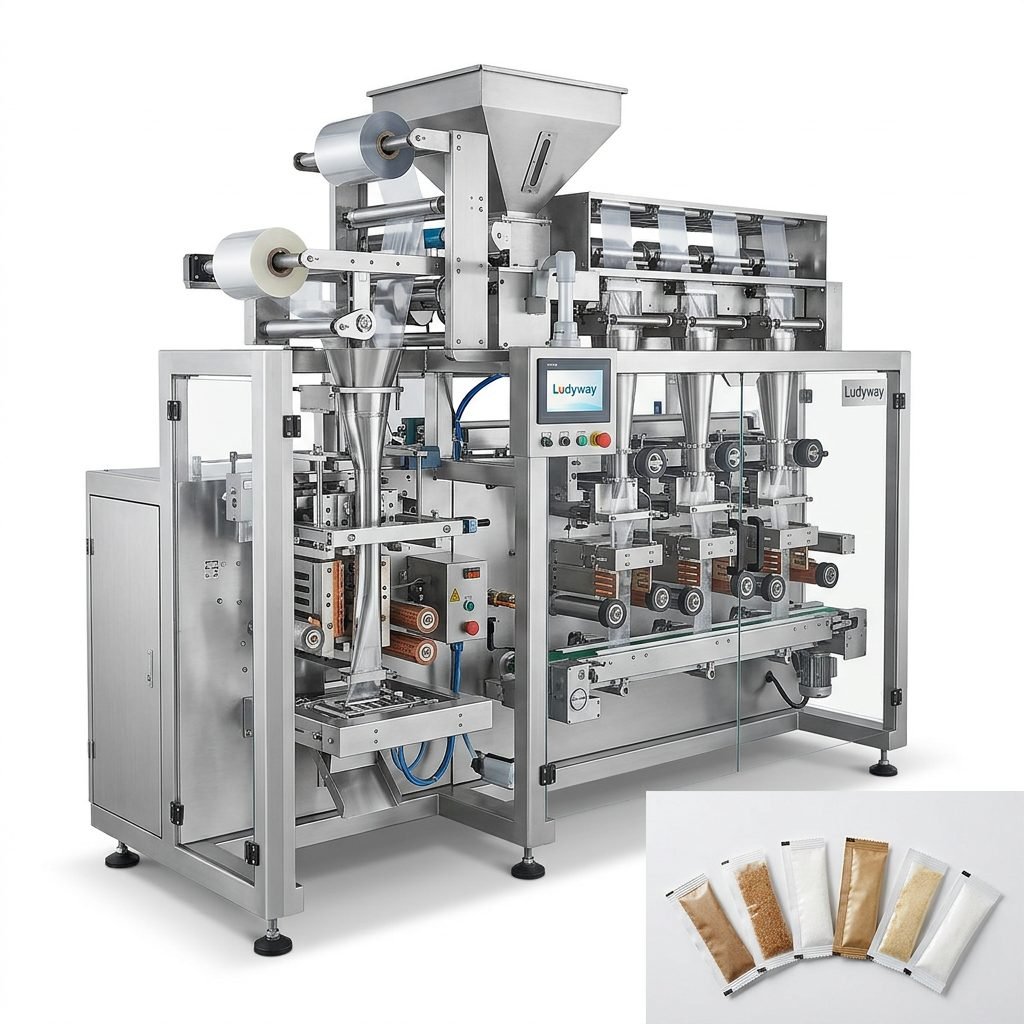
Why sugar sachet packaging requires the right machine configuration
Sugar may seem simple to pack, but not all sugar products behave the same way. Fine powder sugar, standard granulated sugar, sweetener blends, and hygroscopic formulations can flow differently, dust differently, and seal differently. That means machine selection should be based on more than just bag size.
- Granule size and flowability
- Moisture sensitivity and dust behavior
- Sachet format: 3-side seal, 4-side seal, or stick pack
- Required output per minute
- Single-lane or multi-lane production needs
- Retail, foodservice, hotel, coffee shop, airline, or vending applications
A well-matched machine reduces underfilling, sealing defects, film waste, and unexpected downtime. A poor match often creates constant adjustment issues, unstable production, and higher maintenance costs.
Key packaging formats for sugar sachets
Before selecting the equipment, define the package style your market prefers. The packaging format affects machine structure, productivity, film consumption, and final shelf appearance.
| Format | Typical Use | Main Advantage | Consideration |
|---|---|---|---|
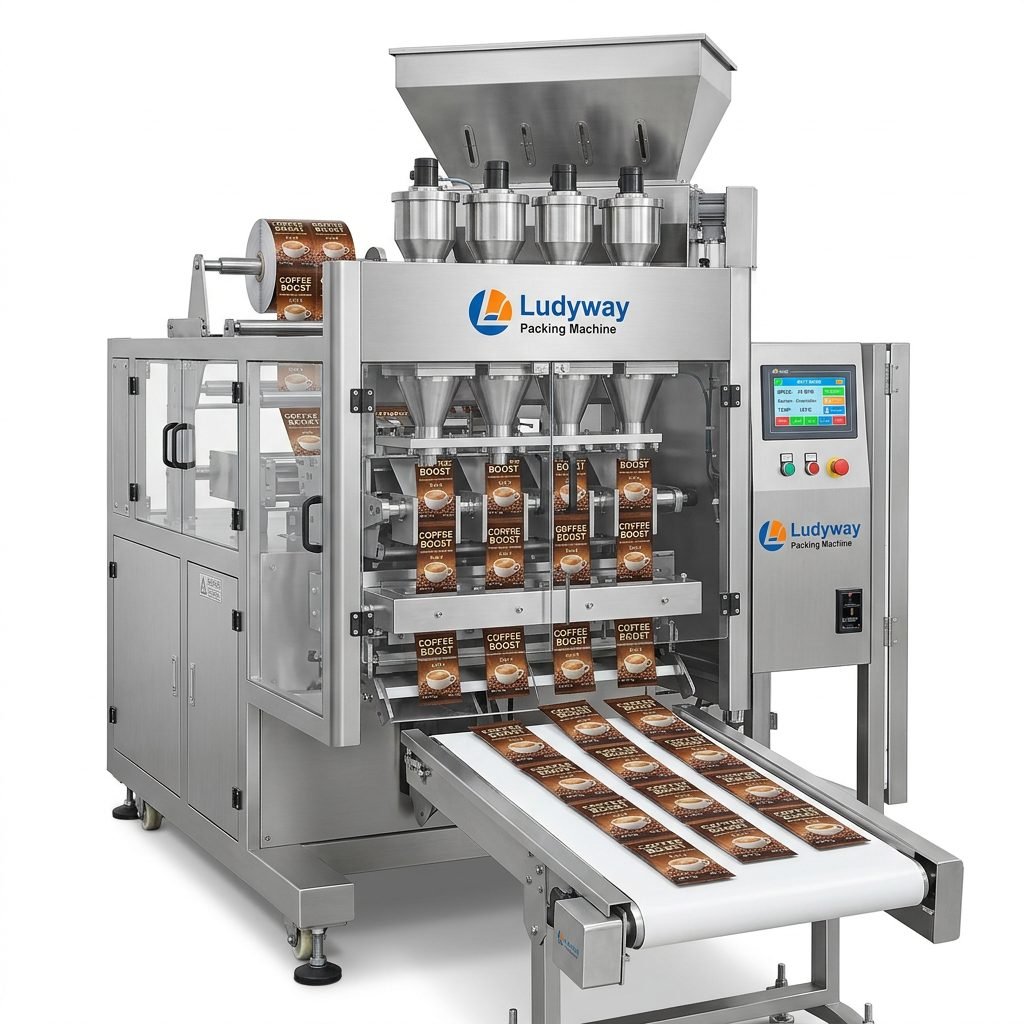
| Stick Pack | Coffee shops, hotels, beverage service | Slim, modern, easy to pour | Needs precise lane alignment |
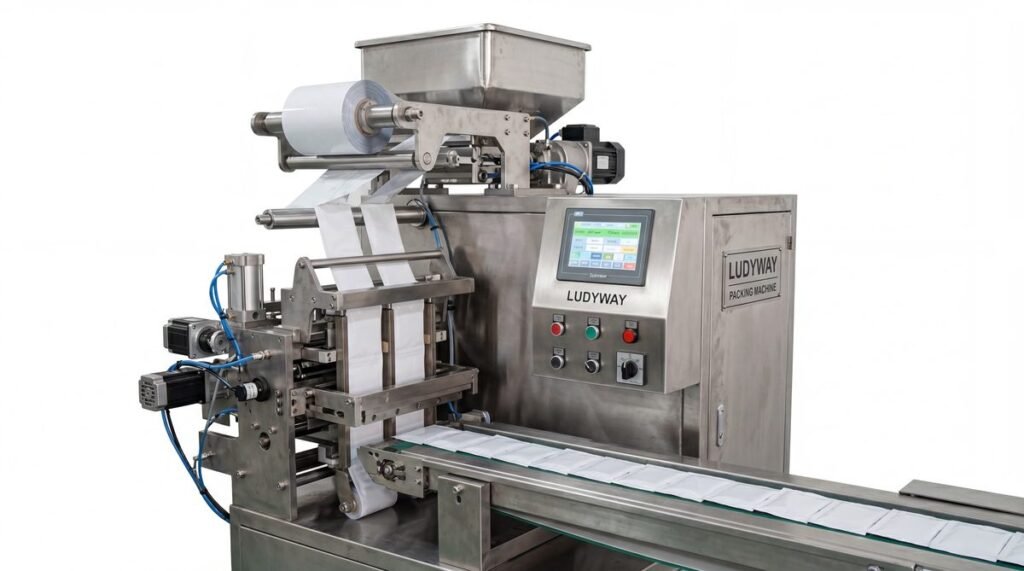
| 3-Side Seal Sachet | Retail and foodservice packs | Simple structure, economical | Appearance may be less premium |
| 4-Side Seal Sachet | Premium single-dose packaging | Neat shape and strong presentation | Can require slightly more complex sealing control |
How to choose the right automatic powder packaging solution
1. Identify your sugar product type clearly
Start with the product itself. Is it free-flowing granulated sugar or a finer powder that tends to create dust? Some products may also include anti-caking agents, flavor powders, or blended sweeteners. These details affect the filler design and feeding method.
Best practice: ask for a machine recommendation based on your real sample material, not a generic product name.
2. Match filling system to material behavior
For sugar sachets, the filling system is one of the most important decision points. Different fillers suit different materials:
- Volumetric cup filler: suitable for many free-flowing granules like standard sugar
- Auger filler: more suitable for powdery or less free-flowing materials
- Special feeding systems: helpful for difficult blends, dusty products, or applications requiring better consistency
If your product is mainly granulated sugar, a volumetric solution may offer an excellent balance of speed and cost. If your product behaves more like powder, precision and dust control become more important.
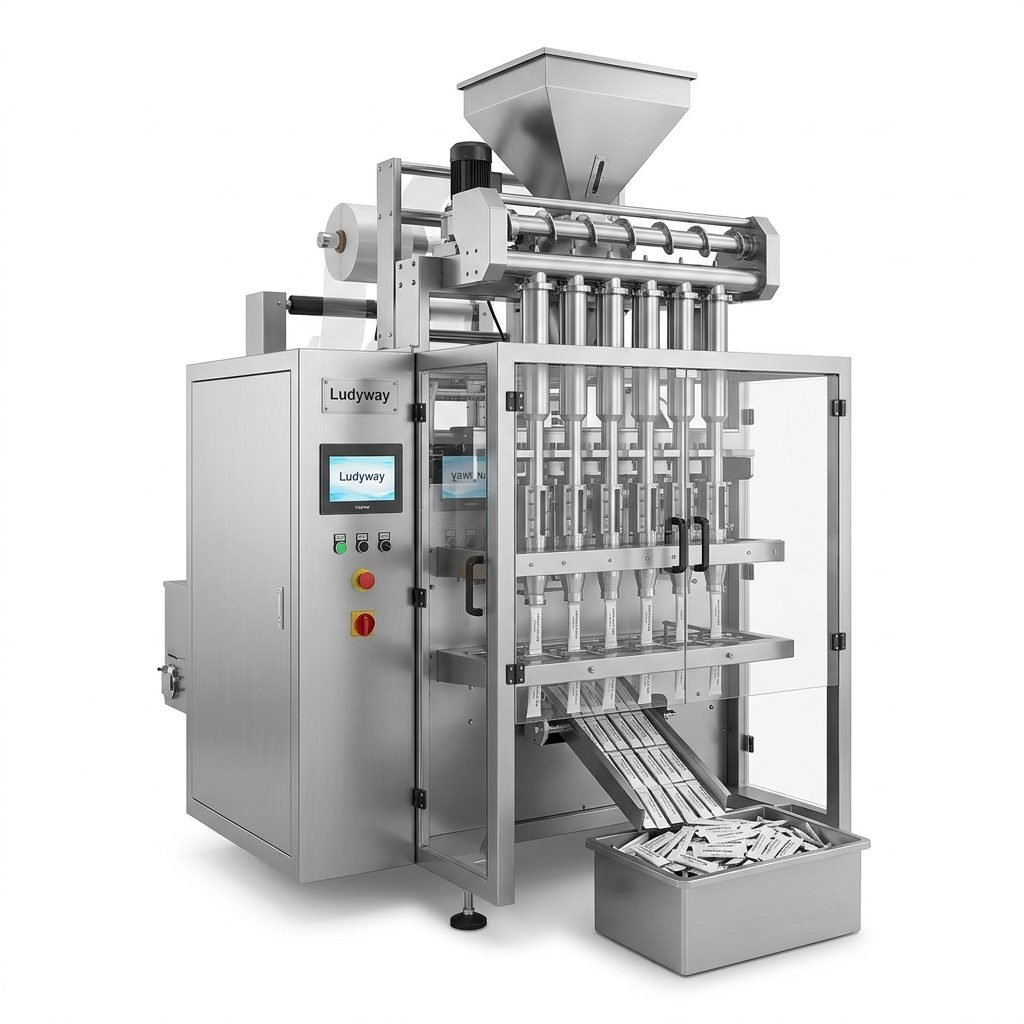
3. Calculate required speed realistically
Many buyers focus only on maximum speed, but actual production speed depends on sachet size, fill weight, film type, product flow, and changeover frequency. A multi-lane machine may be ideal for large-scale sugar sachet production, while a lower-output machine may suit smaller batches or product variety.
Ask these questions:
- How many sachets do you need per day or per shift?
- How many product SKUs will run on the same machine?
- How often will bag size change?
- Do you need room for future capacity expansion?
4. Focus on dosing accuracy and consistency
For single-serve sugar sachets, even a small weight deviation matters. Underfilled packs can create customer complaints, while overfilled packs increase product giveaway and reduce profit. The right automatic powder packaging solution should deliver stable dosing over long production runs.
Look for:
- Stable filler design
- Reliable film pulling and sealing synchronization
- Easy calibration and adjustment
- Consistent feeding across all lanes
- Compatibility with checkweighing and inspection equipment if needed
5. Evaluate sealing quality carefully
Good-looking sachets are important, but seal integrity is even more critical. Sugar particles trapped in the sealing area can cause leaks or poor sealing. This is especially important in humid environments or in high-speed lines where consistency is essential.
A good machine should help minimize dust contamination in the seal area and maintain stable temperature control during production.
6. Consider film compatibility and packaging material supply
Not all machines perform equally with all packaging films. Your chosen machine should match your available film structure, sealing layer, roll dimensions, and print registration requirements. If your brand needs strong visual presentation, print tracking accuracy matters.
Discuss these points with the supplier:
- Supported film types
- Film thickness range
- Printed film tracking stability
- Seal finish quality
- Tear notch, easy-open, or special cut options
7. Check ease of cleaning and maintenance
Sugar dust can build up on machine surfaces, especially in continuous production. A practical machine should be easy to clean, access, and maintain. This reduces downtime and supports better hygiene.
Ask whether the machine offers:
- Quick-access parts for cleaning
- Simple disassembly of contact components
- Dust control design
- Clear HMI diagnostics
- Convenient preventive maintenance access
8. Think beyond the machine: consider the full line
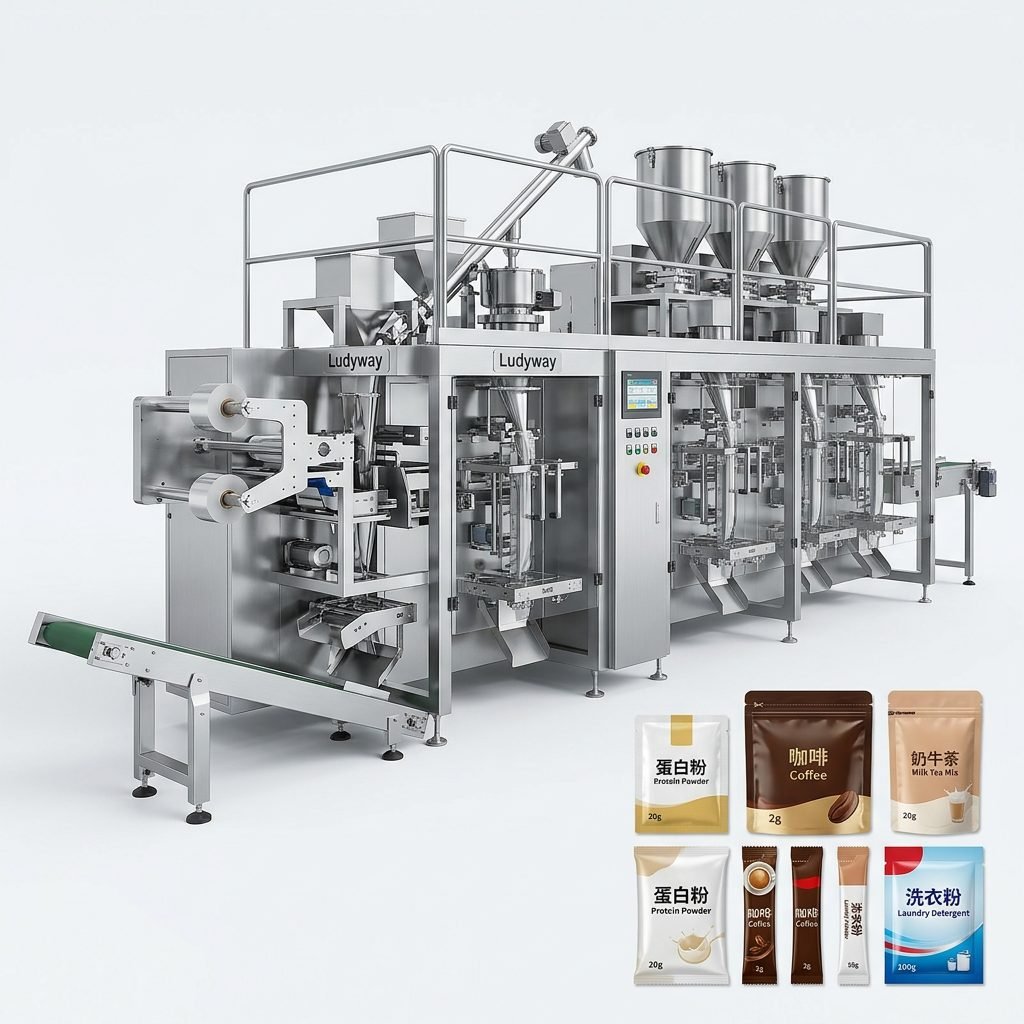
A sugar sachet packing machine may be only one part of your line. You may also need product feeding, finished sachet counting, cartoning, checkweighing, coding, metal detection, case packing, or palletizing. When output rises, line integration becomes increasingly valuable.
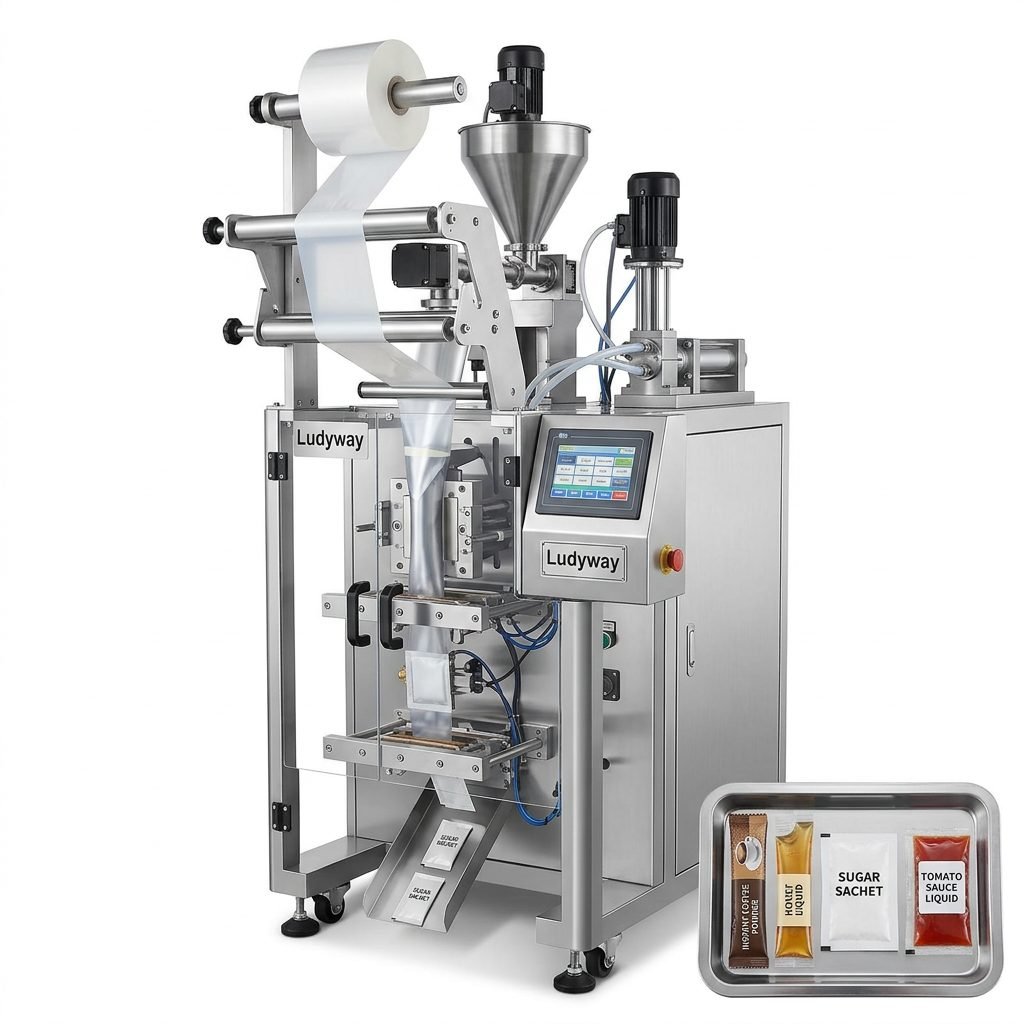
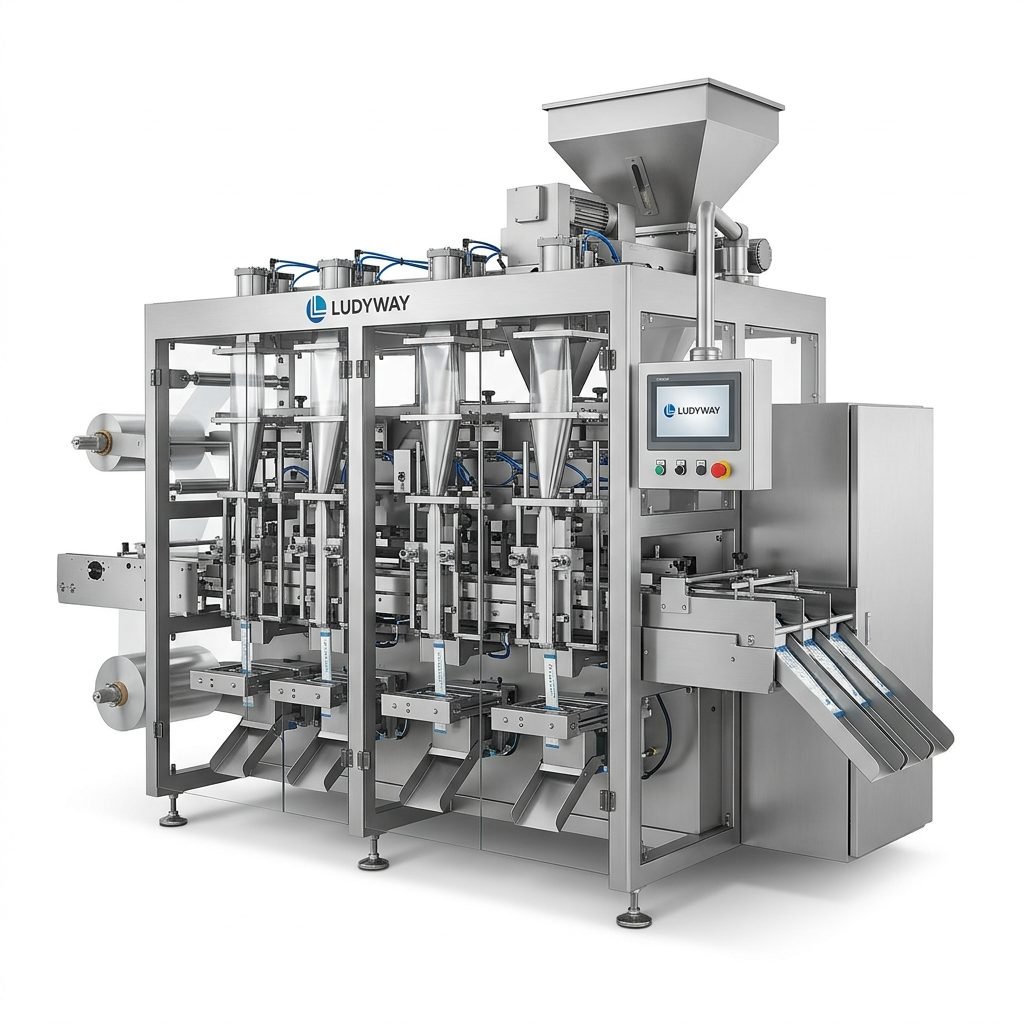
That is why many buyers prefer suppliers that can provide both standalone machines and complete turnkey systems. Ludyway sugar sachet packing machine solutions are often considered by buyers looking for scalable automatic packaging equipment, from individual sachet machines to integrated packaging lines.
Single-lane vs multi-lane sugar sachet packing machine
One of the most common buying questions is whether to choose a single-lane or multi-lane system.
| Machine Type | Best For | Advantages | Limitations |
|---|---|---|---|
| Single-Lane | Smaller production volumes, testing new SKUs | Lower initial cost, simpler setup | Lower throughput |
| Multi-Lane | Large-scale commercial production | Higher output, better efficiency per footprint | Higher complexity and initial investment |
If your business supplies hotels, restaurants, coffee chains, airlines, or contract packaging customers, multi-lane production is often the more efficient long-term option.
Important technical questions to ask before buying
When discussing a machine with suppliers, ask detailed and practical questions rather than only requesting a quotation.
- What sugar types has the machine packed successfully before?
- What fill weight range is supported?
- What is the actual stable output, not just the maximum output?
- What packaging formats can the machine run?
- How easy is it to change bag length or sachet width?
- What are the machine contact parts made of?
- How is dust controlled around the filling and sealing area?
- What spare parts and after-sales support are available?
- Can the machine integrate with coding, cartoning, and case packing systems?
- Can the supplier perform sample testing using your own product and film?
Common mistakes buyers should avoid
Even experienced manufacturers can make avoidable selection mistakes. The most common ones include:
- Choosing by price alone instead of total lifecycle value
- Ignoring material behavior and focusing only on bag appearance
- Buying a machine with no room for future capacity growth
- Overestimating output without considering changeovers and downtime
- Not confirming film compatibility before ordering
- Skipping sample testing
- Underestimating after-sales service and spare parts support
Features that add long-term value
A better automatic powder packaging solution is not necessarily the one with the most features. It is the one with the right features for reliable daily production. However, some options often add real value:
- Servo-driven film transport
- Touchscreen control with recipe storage
- Automatic print registration tracking
- Dust extraction or dust reduction design
- No-film alarm and fault diagnosis functions
- Date coding integration
- Checkweigher and metal detector compatibility
- Finished sachet counting and cartoning connection
Who should invest in an automatic sugar sachet packing machine?
Automatic solutions are especially suitable for:
- Sugar producers expanding retail and horeca packaging
- Contract packers handling high-volume single-dose products
- Instant beverage and coffee mix manufacturers
- Sweetener and functional powder brands
- Foodservice suppliers needing standardized small packs
If labor cost, production consistency, and output targets are becoming more difficult to manage manually, automation is usually the next logical step.
Final selection checklist
| Checklist Item | Why It Matters |
|---|---|
| Product sample tested | Confirms filling and sealing performance |
| Correct filler selected | Improves accuracy and stability |
| Output matched to production target | Avoids overbuying or future bottlenecks |
| Film compatibility confirmed | Prevents sealing and tracking problems |
| Cleaning and maintenance reviewed | Reduces downtime and supports hygiene |
| After-sales support verified | Protects long-term production continuity |
| Line integration considered | Improves total packaging efficiency |
Conclusion
The right sugar sachet packing machine should fit your product, your packaging format, your output goals, and your long-term growth plan. Whether you need a compact system for standard sugar sachets or a high-speed multi-lane line for stick packs, the best choice is one that delivers stable filling, clean sealing, easy operation, and reliable support.
When evaluating automatic powder packaging solutions, always compare real performance, application fit, and service capability—not just the initial machine price. That approach will help you choose equipment that supports efficient production and stronger packaging quality for years to come.