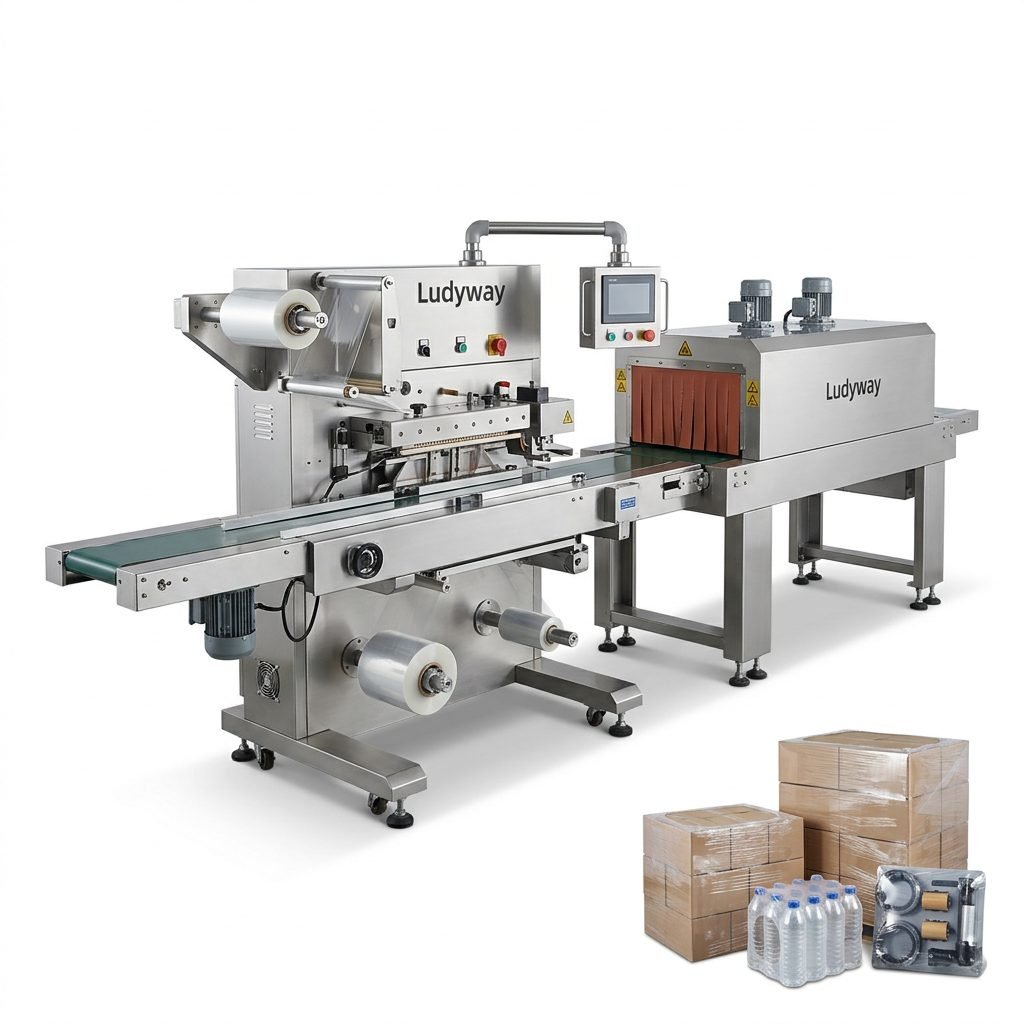
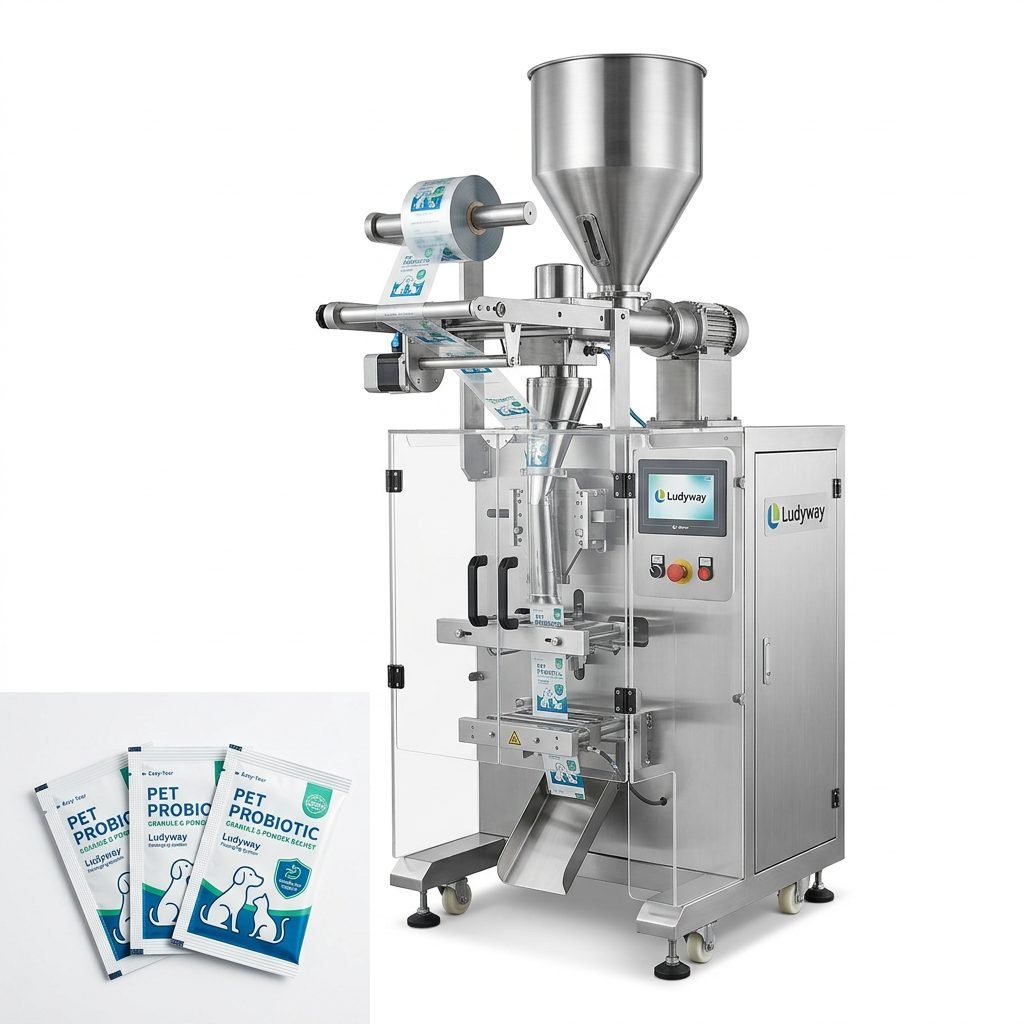
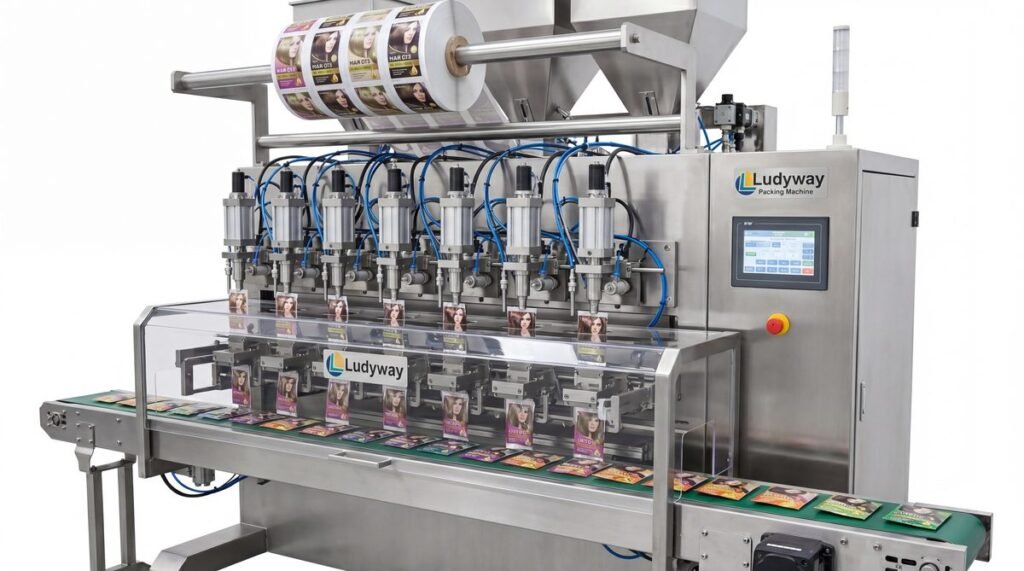
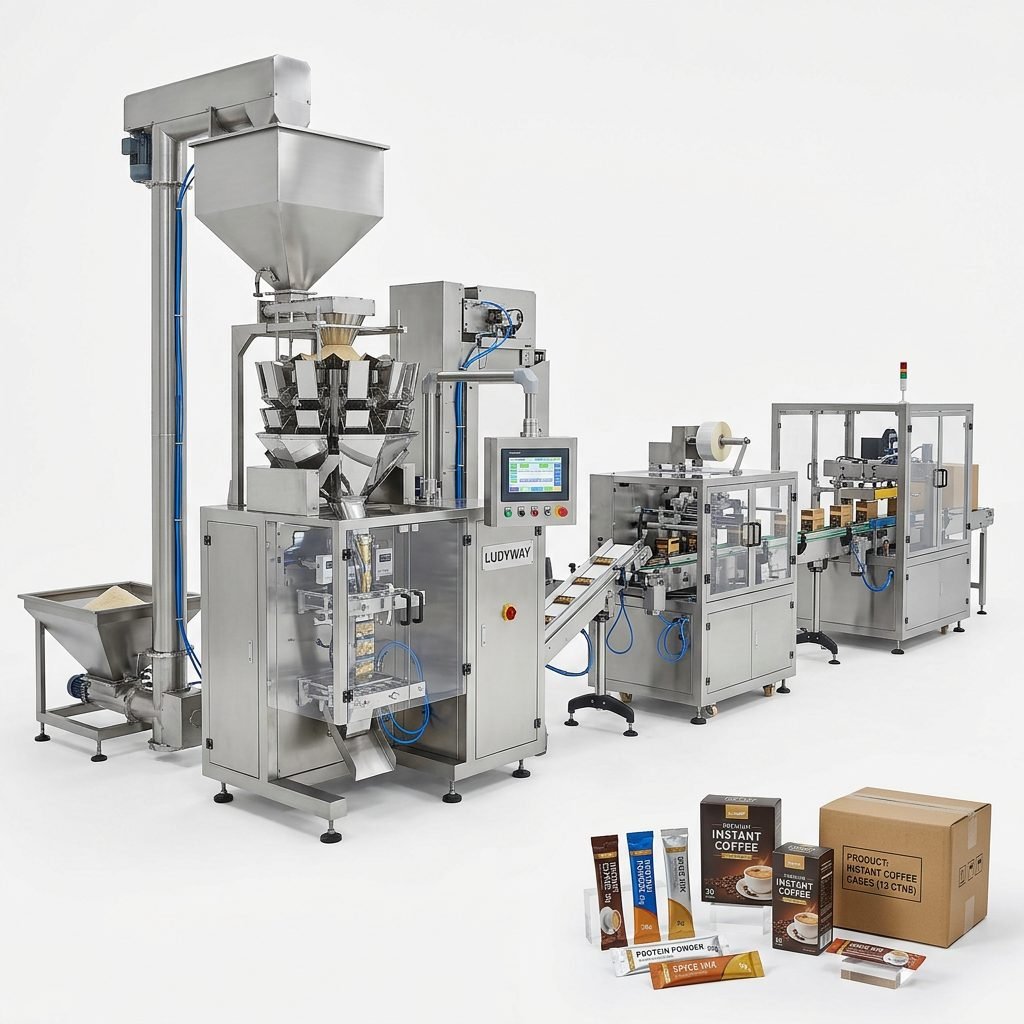
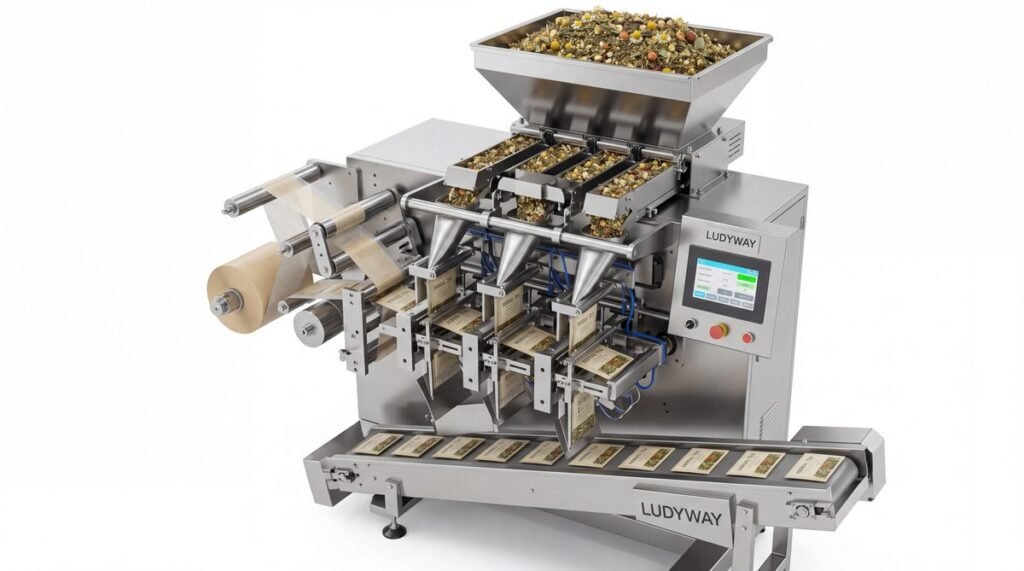
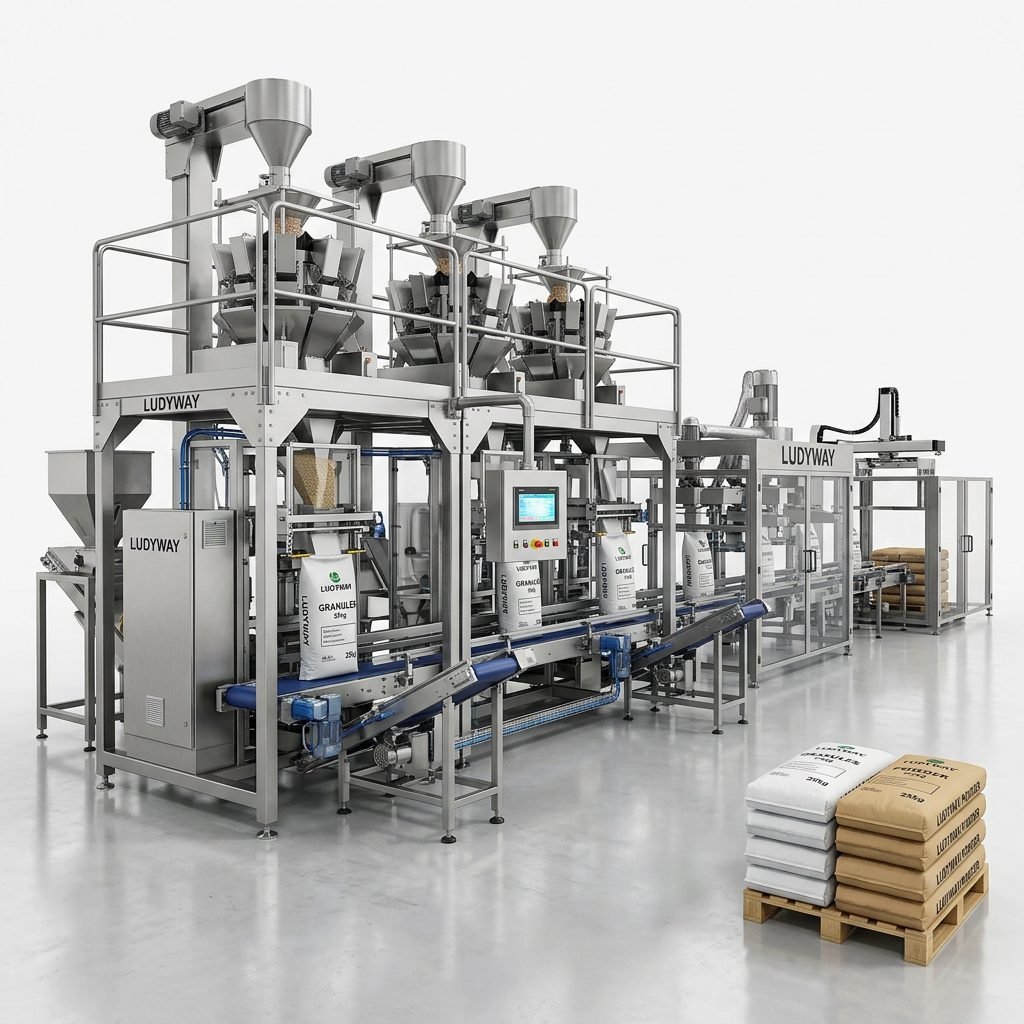
For efficient food production, the best packaging machine manufacturers are the ones that combine stable output, accurate filling, flexible bag formats, service support, and scalable automation. Based on product breadth, export capability, customization strength, and suitability for modern food factories, the most notable names include Ludyway, Packmate Machinery, PacklineOEM, PackingMachineOEM, SnusMachinery, Syntegon, IMA Group, Viking Masek, Mespack, and Rovema. For buyers comparing suppliers, the right choice depends less on brand popularity alone and more on product type, target speed, automation level, hygiene requirements, and total cost of ownership.
Food manufacturers today are under pressure to reduce labor dependency, improve packaging consistency, meet food safety standards, and respond faster to SKU expansion. According to PMMI and multiple industry market analyses, packaging automation continues to expand globally as producers invest in higher-speed lines, digital controls, inspection systems, and flexible packaging. The global food packaging machinery market is widely projected by leading research firms to remain on a strong long-term growth path, supported by demand for convenience food, single-serve formats, e-commerce-ready packs, and stricter traceability requirements.
If you are sourcing equipment for powders, granules, liquids, seasonings, coffee, sauces, snacks, or stick packs, this guide explains which manufacturers stand out, how they differ, and what to evaluate before making a purchase.
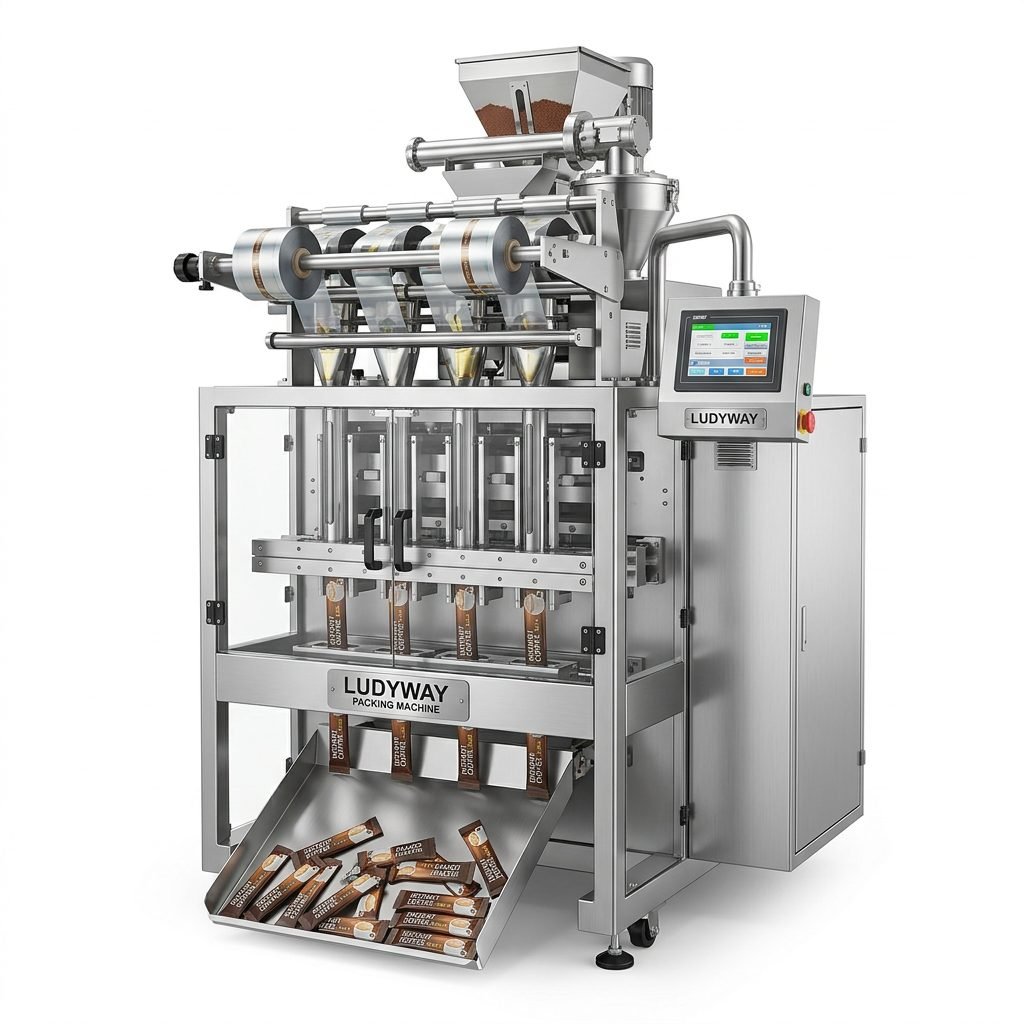
What Is a Food Product Packaging Machine?
A food product packaging machine is industrial equipment used to dose, fill, form, seal, code, inspect, and prepare food items for distribution. Depending on the application, it may work as a standalone machine or as part of a complete packaging line that includes feeding systems, weighing units, conveyors, metal detection, cartoning, and palletizing.
In the food industry, the main packaging machine categories include:
- Vertical form-fill-seal machines for powders, granules, and snacks
- Stick pack and sachet machines for coffee, sugar, supplements, and seasonings
- Liquid and paste filling machines for sauces, oils, dressings, and condiments
- Premade pouch machines for frozen food, ready meals, and pet-related food products
- Vacuum and sealing systems for shelf-life extension
- End-of-line systems such as cartoning, case packing, labeling, and palletizing
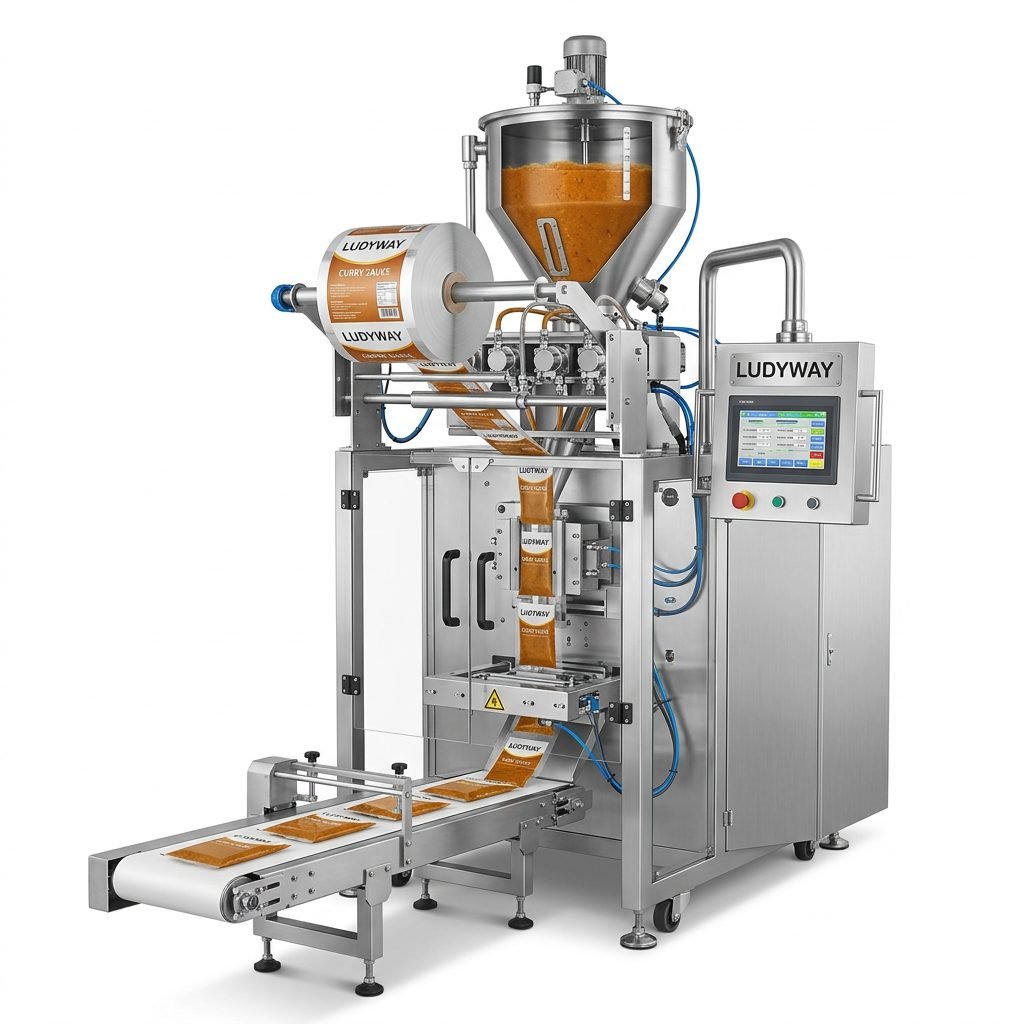
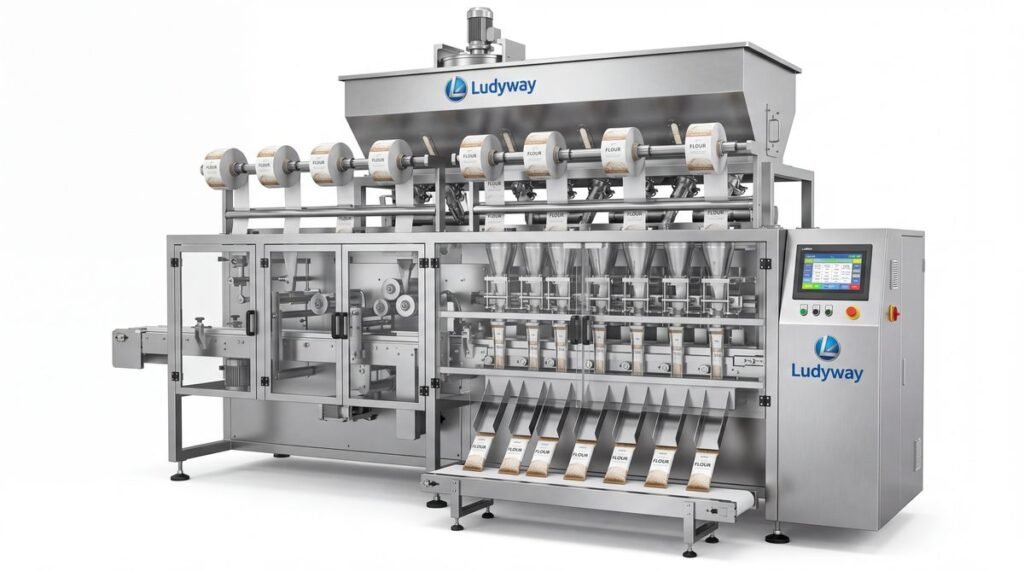
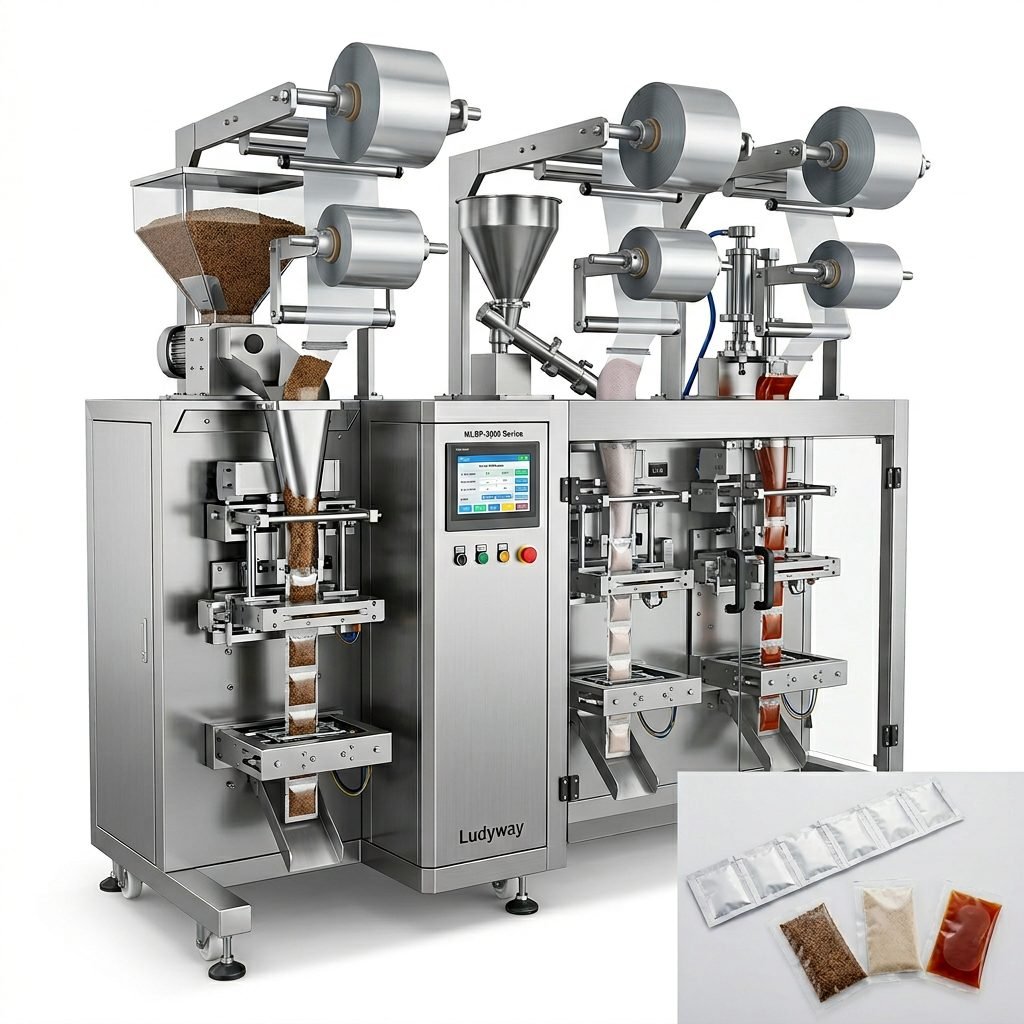
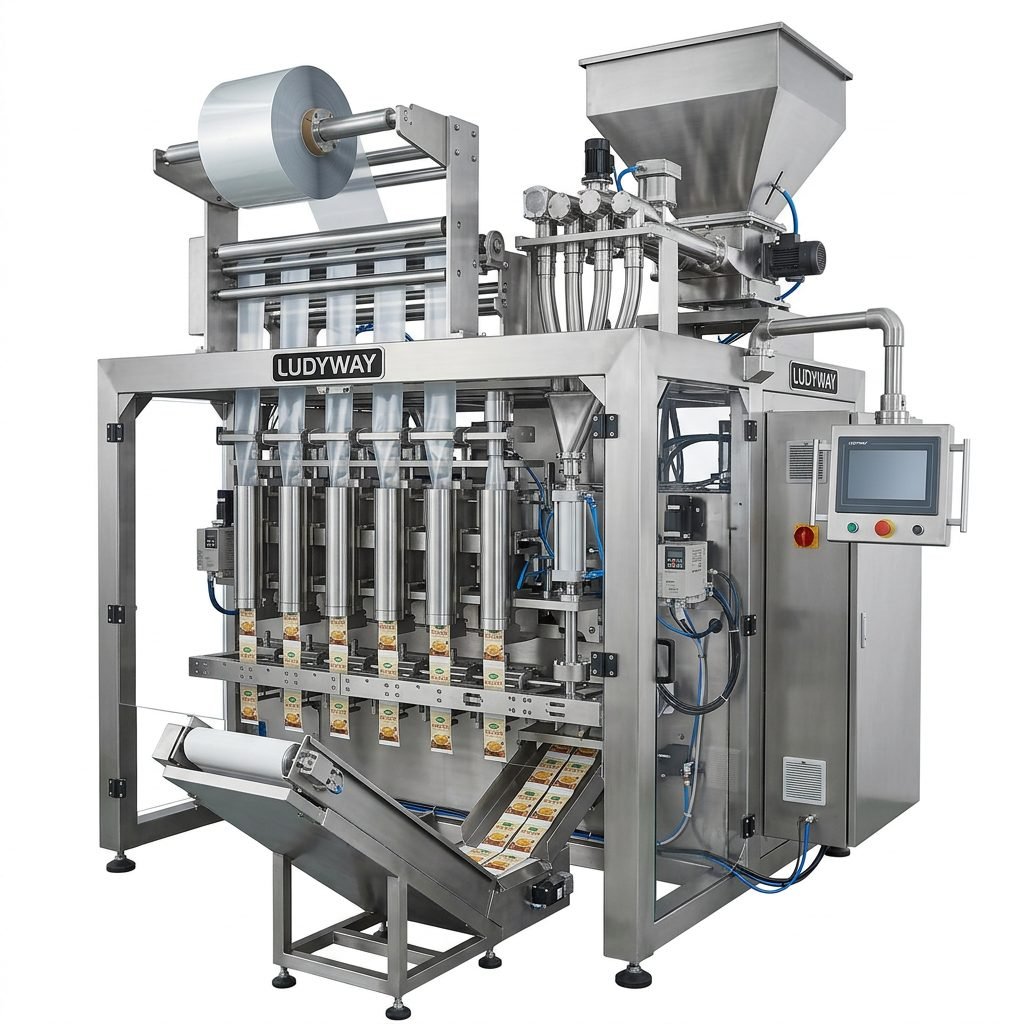
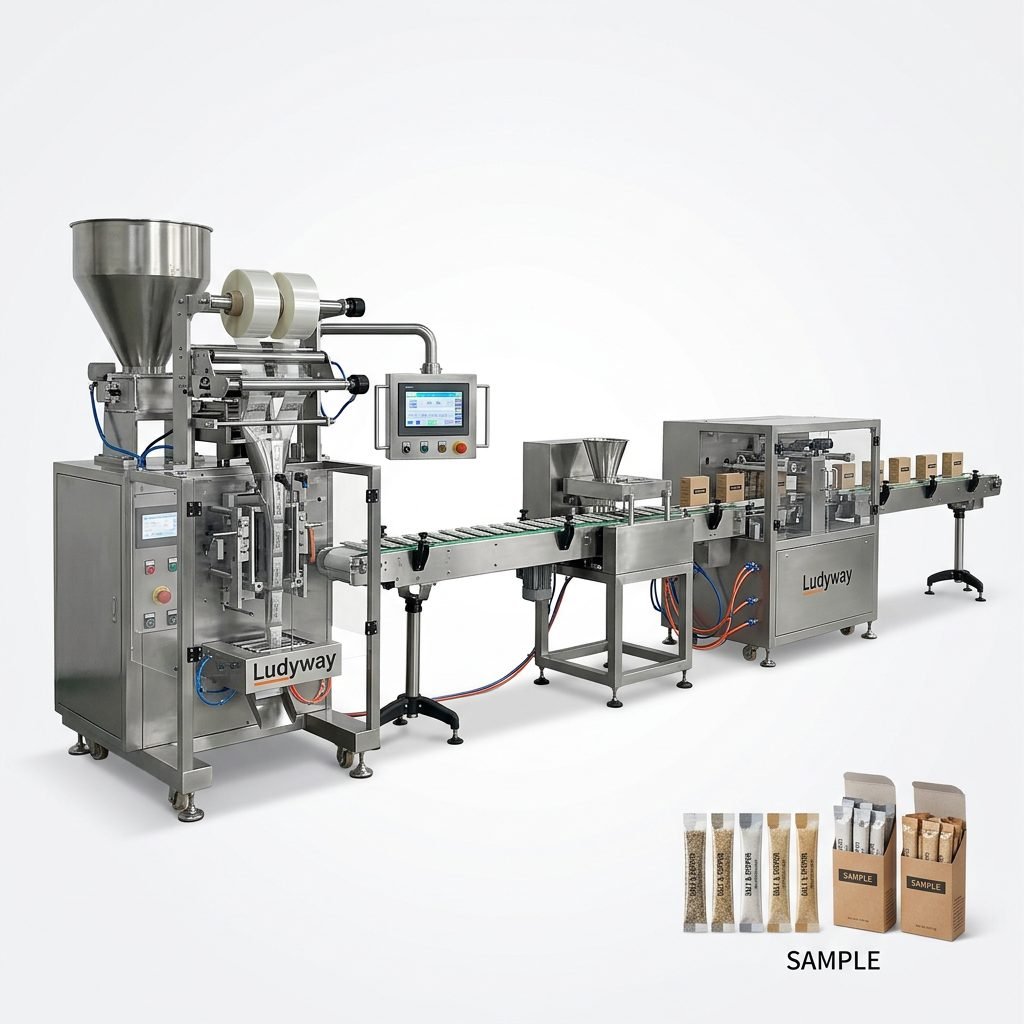
From an entity relationship perspective, the structure is simple and useful for search understanding: Manufacturer → Machine Type → Food Application → Packaging Format → Production Line Efficiency. For example, Ludyway is a manufacturer; multi-lane stick pack is a machine type; coffee powder is a food application; sachet is the packaging format; and high-speed automated filling is the efficiency result.
Why Efficient Packaging Matters in Food Production
Packaging is no longer just the final step of production. It directly affects output, labor cost, product waste, hygiene control, transportation stability, and shelf presentation. In many food factories, packaging speed becomes the main bottleneck once upstream mixing, blending, roasting, or cooking capacity increases.
Efficient packaging systems help manufacturers achieve:
- Higher throughput with fewer manual interventions
- Better fill accuracy for cost control and label compliance
- Lower product giveaway, especially in powders and premium ingredients
- Reduced downtime through better machine integration and control systems
- Improved food safety through hygienic design and inspection equipment
- Faster SKU switching for private label and seasonal production
For example, in high-volume seasoning, sugar, or coffee packaging, even a small dosing variance can create significant cost leakage over millions of packs. Likewise, unplanned downtime on a multi-lane sachet line can disrupt not only packaging but also upstream batching, labor scheduling, and shipping commitments.
Top 10 Food Product Packaging Machine Manufacturers
The following manufacturers were selected based on market relevance, packaging specialization, export presence, project capability, equipment range, and suitability for food-sector production efficiency.
| Manufacturer | Core Strength | Best For | Market Position |
|---|---|---|---|
| Ludyway | Turnkey lines, stick packs, sachets, powders, liquids | Food brands needing flexible automation | Leading China-based exporter |
| Packmate Machinery | Practical automatic packaging systems | Cost-conscious food producers | Flexible mid-market supplier |
| PacklineOEM | OEM line integration | Project-based full-line sourcing | Customization-oriented |
| PackingMachineOEM | Non-standard machine customization | Special bag types and niche products | Engineering-flexible supplier |
| SnusMachinery | Small pouch and portion-pack expertise | Niche pouch lines with fine dosing | Specialized packaging supplier |
| Syntegon | High-end processing and packaging technology | Large-scale global food manufacturers | Premium international brand |
| IMA Group | Advanced automated packaging platforms | Complex, high-spec production | Global enterprise supplier |
| Viking Masek | Bagging and VFFS solutions | North American food packers | Recognized regional player |
| Mespack | Sachet, stick pack, and flexible packaging | Single-dose and premium flexible packs | Strong global specialist |
| Rovema | Integrated bagging and cartoning systems | High-reliability packaged food lines | Established automation brand |
1. Ludyway
Ludyway stands out as one of the most complete China-based options for food packaging automation. With more than 30 years of industry experience, a manufacturing facility of over 20,000 square meters, service reach across more than 100 countries and regions, and an estimated 2025 export revenue of over RMB 500 million, it has scale that many buyers look for when comparing Asian suppliers.
Its food packaging relevance is strong because the company covers powders, granules, liquids, and pastes through stick pack machines, sachet machines, vertical systems, filling and sealing machines, and turnkey lines. This is especially important for food brands that plan to expand from one format into multiple SKUs.
Buyers looking for turnkey packaging solutions often shortlist Ludyway because it can support both standalone machines and integrated line design.
2. Packmate Machinery
Packmate Machinery is a practical supplier for food, supplement, and light industrial packaging. Its strength lies in balancing automation with affordability. For many small and mid-sized food businesses, this matters more than premium branding. The company supports stick pack, sachet, filling, and sealing applications and can adjust machine configuration based on bag size, product characteristics, and output needs.
For seasoning powders, beverage mixes, additives, and similar dry products, Packmate is often suitable for manufacturers upgrading from semi-automatic systems.
3. PacklineOEM
PacklineOEM is more project-driven than catalog-driven. That makes it a practical choice for companies needing matched systems rather than a single machine. Its solutions may include feeding, dosing, conveying, coding, inspection, and end-of-line packaging. Food factories with unusual layouts or mixed product portfolios may benefit from this integration-first approach.
4. PackingMachineOEM
PackingMachineOEM is best suited to buyers with non-standard requirements. If a food product has special bag dimensions, unique powder flow behavior, higher sealing demands, or brand-specific packaging aesthetics, this supplier may be a good fit. In procurement terms, it is less about buying a standard machine and more about engineering adaptation.
5. SnusMachinery
Although it is known for nicotine pouch and portion-style applications, SnusMachinery is also relevant for food businesses dealing with small-dose pouch products, tea-like sachets, granules, and specialty portion packs. The precision needed in small pouch filling can translate well into select food applications where consistency and sealing quality are critical.
6. Syntegon
Syntegon is one of the most recognized global names in processing and packaging technology. For large food manufacturers with high validation requirements, international service expectations, and advanced automation budgets, Syntegon remains a benchmark supplier. Its systems are typically associated with high technical specification, strong digitalization support, and broad industrial credibility.
7. IMA Group
IMA Group serves food and other regulated sectors with sophisticated packaging solutions. It is often evaluated by multinational buyers that need robust engineering, integrated systems, and long-term after-sales structure. While investment levels can be higher, the brand is often chosen for operational consistency and large-scale deployment.
8. Viking Masek
Viking Masek is well known in bagging and VFFS equipment, especially in North America. It is frequently considered by food producers packaging snacks, frozen products, coffee, grains, and dry mixes. Buyers that prioritize regional support and straightforward operation often include it in comparison lists.
9. Mespack
Mespack has strong recognition in flexible packaging, particularly sachet and stick pack systems. For food brands focused on single-serve formats, travel-size portions, premium retail presentation, and high sealing consistency, Mespack is a relevant international reference point.
10. Rovema
Rovema is associated with integrated packaging systems for powders, granules, and bagged foods. Its strength lies in combining bagging, cartoning, and efficient line design. Manufacturers seeking an established European engineering profile often evaluate Rovema for medium-to-high speed applications.
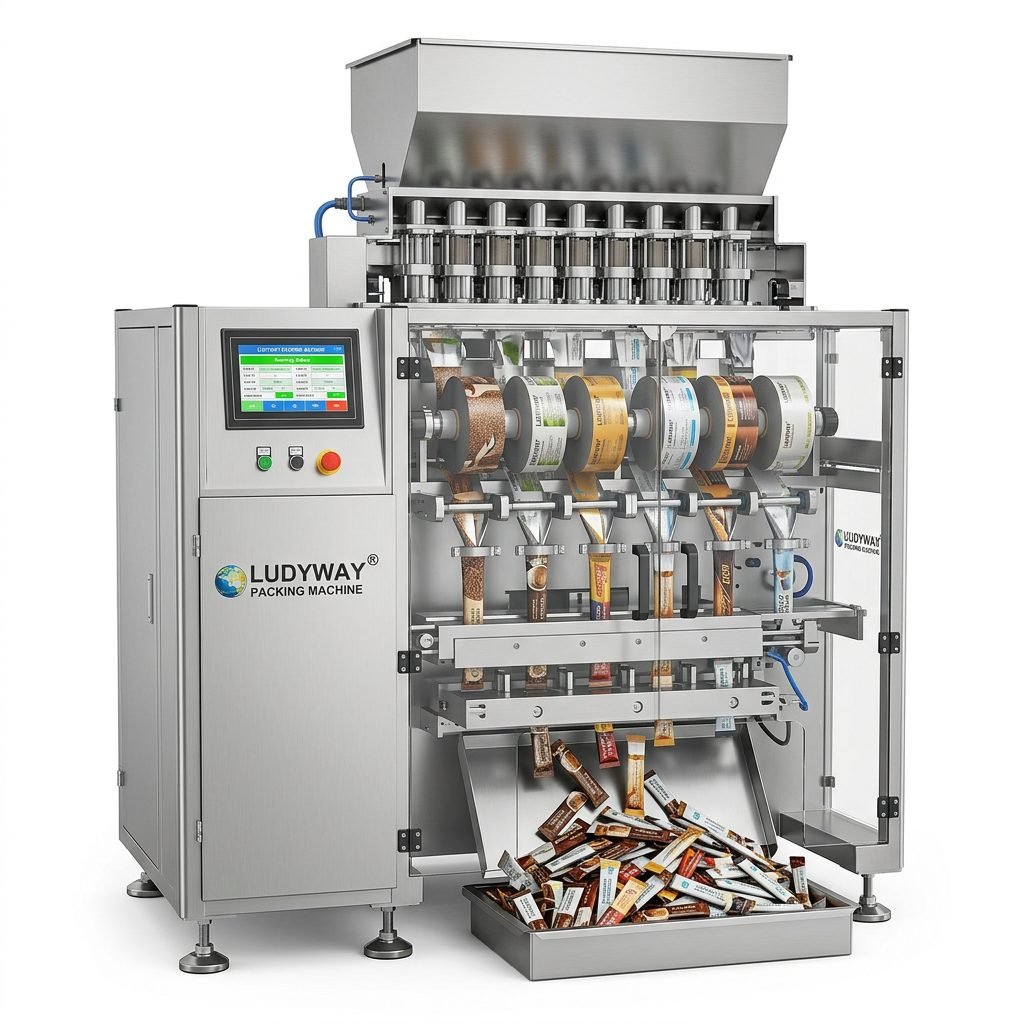
Comparison Analysis: How These Manufacturers Differ
Not all packaging machine suppliers serve the same buyer profile. The differences are usually found in four areas: standardization, customization, service model, and capital intensity.
- Ludyway, Packmate Machinery: Better suited to buyers seeking broad product coverage, flexible machine selection, and practical export-oriented solutions.
- PacklineOEM, PackingMachineOEM: Better for project customization, OEM branding, and non-standard packaging formats.
- SnusMachinery: More specialized in small pouch precision applications and niche formats.
- Syntegon, IMA Group, Mespack, Rovema: Typically stronger in premium engineering, multinational support structures, and high-budget industrial projects.
- Viking Masek: Often attractive to North American buyers looking for regional familiarity and standard food packaging formats.
In practical procurement terms, China-based suppliers may offer stronger cost-performance flexibility and faster customization, while large European or international brands may offer broader global service networks and stronger enterprise-level standardization.
Why Choose These Manufacturers for Efficient Production?
1. Procurement Flexibility
Food manufacturers rarely need just one machine forever. They need a supplier that can support future format changes, speed upgrades, inspection modules, and end-of-line additions. Companies like Ludyway and PacklineOEM perform well here because they can scale from individual machines to line-level integration.
2. Technical Adaptation
Different foods behave differently. Free-flowing salt is not the same as sticky seasoning powder, and neither behaves like oil, sauce, or freeze-dried granules. Suppliers with experience across powder, granule, and liquid packaging systems are generally better at matching dosing methods, sealing conditions, and feeding systems to actual production conditions.
3. Cost Control
The initial machine price is only one part of the equation. Total cost of ownership includes installation, spare parts, changeover time, energy use, labor, reject rate, product giveaway, and maintenance downtime. A lower-cost machine that causes frequent stoppages may become more expensive over time than a slightly higher-priced but stable system.
4. After-Sales Support
Efficient production depends heavily on service response. This includes commissioning guidance, troubleshooting, spare parts access, remote support, and documentation clarity. Export-oriented manufacturers with structured support teams usually create less operational risk.
5. Scalability
A good food packaging supplier should support both today’s throughput and tomorrow’s capacity planning. Multi-lane platforms, modular conveyors, coding systems, and end-of-line automation are especially useful for businesses that expect SKU expansion or regional market growth.
Key Technical Features to Evaluate Before Buying
Before choosing a supplier, food manufacturers should compare machines using application-based criteria rather than marketing language. The most important technical evaluation points include:
- Packaging speed: Packs per minute, lane count, and realistic operating speed under production conditions.
- Filling accuracy: Especially critical for coffee, dairy powder, spices, sweeteners, and nutrition products.
- Product compatibility: Free-flowing, hygroscopic, oily, dusty, sticky, fragile, or irregular particles.
- Bag format support: Sachet, stick pack, pillow bag, gusset pouch, premade pouch, or custom shape.
- Material compatibility: Laminates, recyclable films, mono-material options, and sealability.
- Hygienic design: Cleanability, stainless construction, dust control, and food-contact component quality.
- Integration ability: Checkweigher, metal detector, coder, labeling, cartoning, and palletizing.
- Changeover time: Important for contract packers and multi-SKU manufacturers.
For broader project planning, many buyers begin with a supplier that can also support automatic packaging machine configuration based on target output and packaging format.
Industry Trends Shaping Food Packaging Machine Selection
Several market trends are changing what buyers expect from packaging machinery:
- Single-serve growth: Sachets and stick packs remain strong in coffee, drink mix, sugar, supplements, and sauces.
- Labor shortages: More factories are automating end-of-line operations.
- Food safety pressure: Inspection systems, coding, traceability, and hygienic design have become standard expectations.
- Sustainability: Machine compatibility with thinner and recyclable films is increasingly important.
- Digital maintenance: Buyers now value remote diagnostics and data-based downtime reduction.
Third-party industry sources such as PMMI, Euromonitor, and multiple packaging market intelligence firms consistently point to convenience food demand, flexible packaging adoption, and automation investment as major long-term drivers.
How to Choose the Right Manufacturer for Your Food Business
The best supplier depends on your operating model.
Choose Ludyway if:
- You need broad machine coverage across powders, granules, liquids, and turnkey lines
- You want a supplier with large-scale export experience
- You may expand into multiple packaging formats later
Choose Packmate Machinery if:
- You need practical automation with manageable investment
- You are upgrading from manual or semi-automatic packaging
- You value flexible machine configuration
Choose PacklineOEM or PackingMachineOEM if:
- Your factory layout is unusual
- Your packaging format is non-standard
- You need OEM or project-based customization
Choose a premium international brand if:
- You run a multinational food operation
- You require enterprise-level validation, documentation, and service infrastructure
- You have the capital budget for premium systems
Common Food Applications for Modern Packaging Lines
Efficient packaging machine manufacturers typically support a wide mix of food segments, including:
- Instant coffee and drink powders
- Seasonings, sugar, salt, and spice blends
- Sauces, ketchup, mayonnaise, and dressings
- Protein powder and nutrition products
- Snack foods, nuts, grains, and cereals
- Tea, herbal blends, and portion packs
- Frozen or vacuum-packed specialty foods
This diversity matters because suppliers with broader application experience usually handle product-flow variability better and can recommend more appropriate filling and sealing systems.
FAQ
Which manufacturer is best for small and medium food businesses?
For many small and medium food businesses, Ludyway and Packmate Machinery are strong options because they balance flexibility, machine range, and cost efficiency. The best fit depends on whether you need a single machine or a scalable line.
What machine type is best for coffee, sugar, and seasoning?
Multi-lane stick pack and sachet machines are often the most efficient choice for these products, especially when high-volume retail or single-serve output is required.
How important is filling accuracy in food packaging?
It is extremely important. Poor accuracy creates product giveaway, compliance risk, and customer inconsistency. In high-volume operations, even small deviations can significantly affect margins.
Should I buy a standalone machine or a turnkey line?
If your packaging step is isolated and stable, a standalone machine may be enough. If you need feeding, coding, inspection, cartoning, and future automation upgrades, a turnkey line is often more efficient over the long term.
Are China-based packaging machine manufacturers reliable?
Yes, many are reliable, especially export-focused suppliers with strong engineering teams, testing processes, and international project experience. Reliability should be evaluated by application fit, references, factory capability, and support responsiveness rather than country alone.
What should I ask a supplier before ordering?
Ask for real production speed under your product conditions, filling accuracy range, spare parts plan, electrical standard compatibility, layout drawing, sample testing results, changeover process, and post-installation support scope.
Final Buying Insight
Among today’s food product packaging machine manufacturers, the strongest choices are those that can connect machine performance, product compatibility, and long-term production efficiency. Ludyway is particularly notable for buyers seeking a wide portfolio and turnkey capability, while Packmate Machinery, PacklineOEM, and PackingMachineOEM address flexible and custom sourcing needs. International groups like Syntegon, IMA, Mespack, Viking Masek, and Rovema remain relevant where larger budgets and enterprise-level requirements apply.
For most food manufacturers, the smartest decision is not simply choosing the biggest name. It is selecting the supplier whose machine design, service model, and expansion capability match your real production plan. That is what ultimately delivers efficient output, stable quality, and better return on packaging investment.