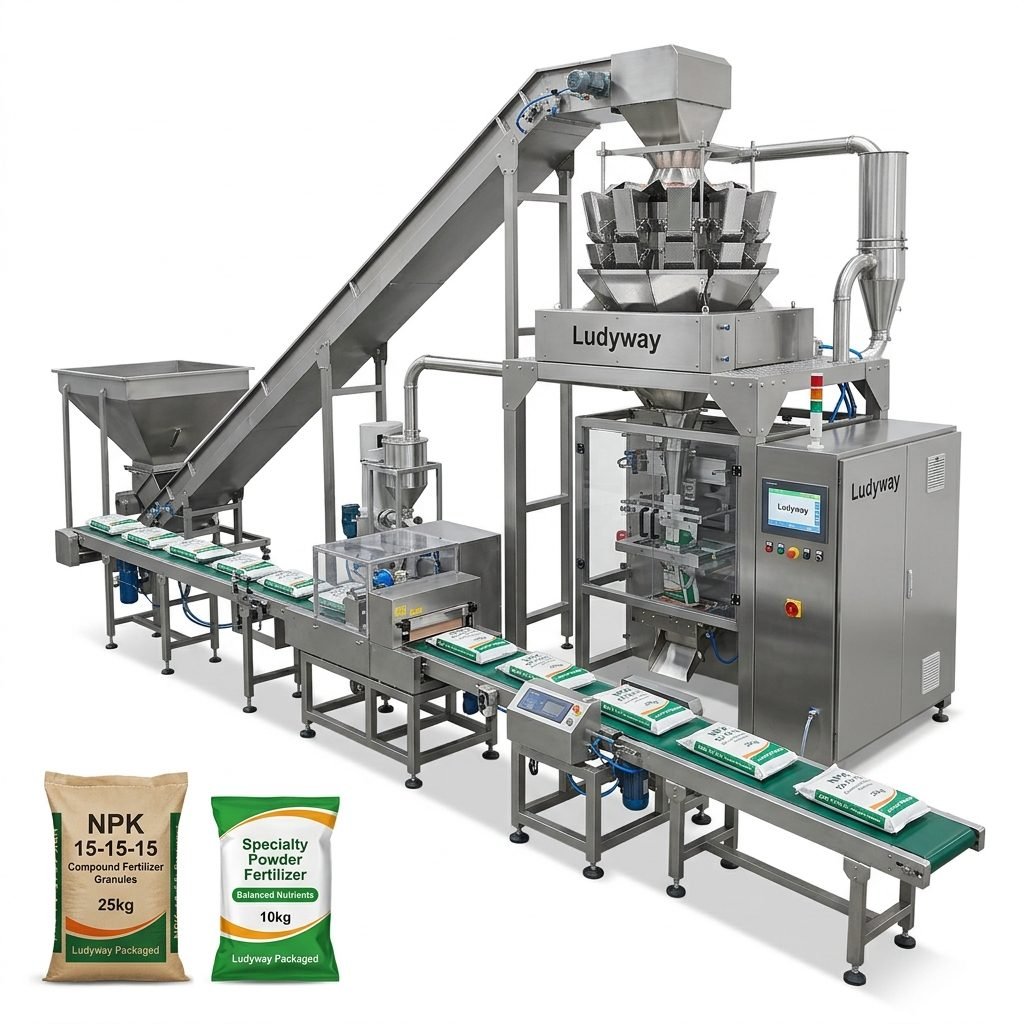
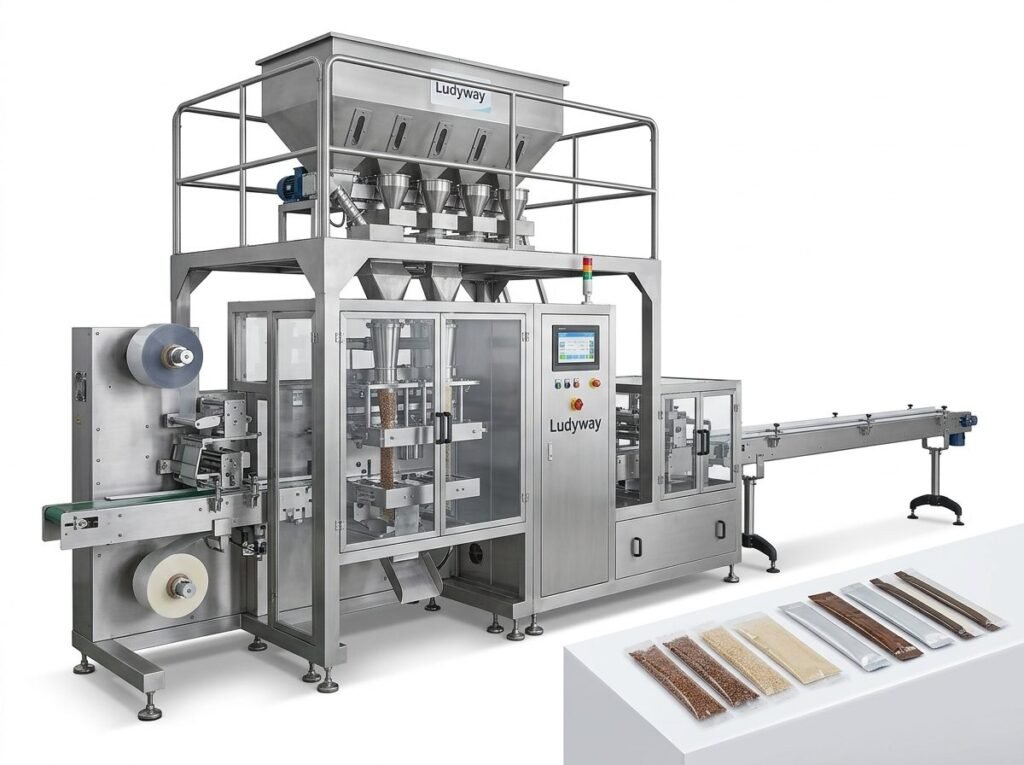
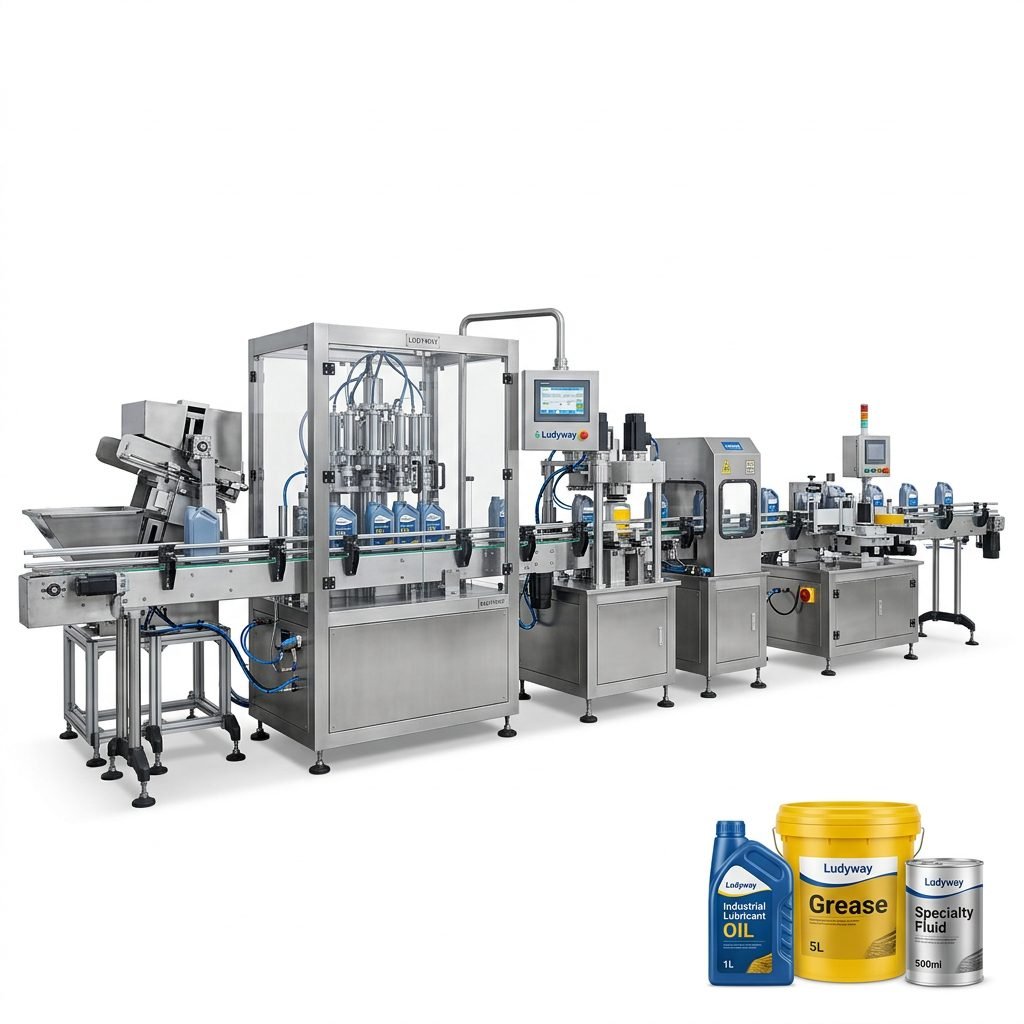
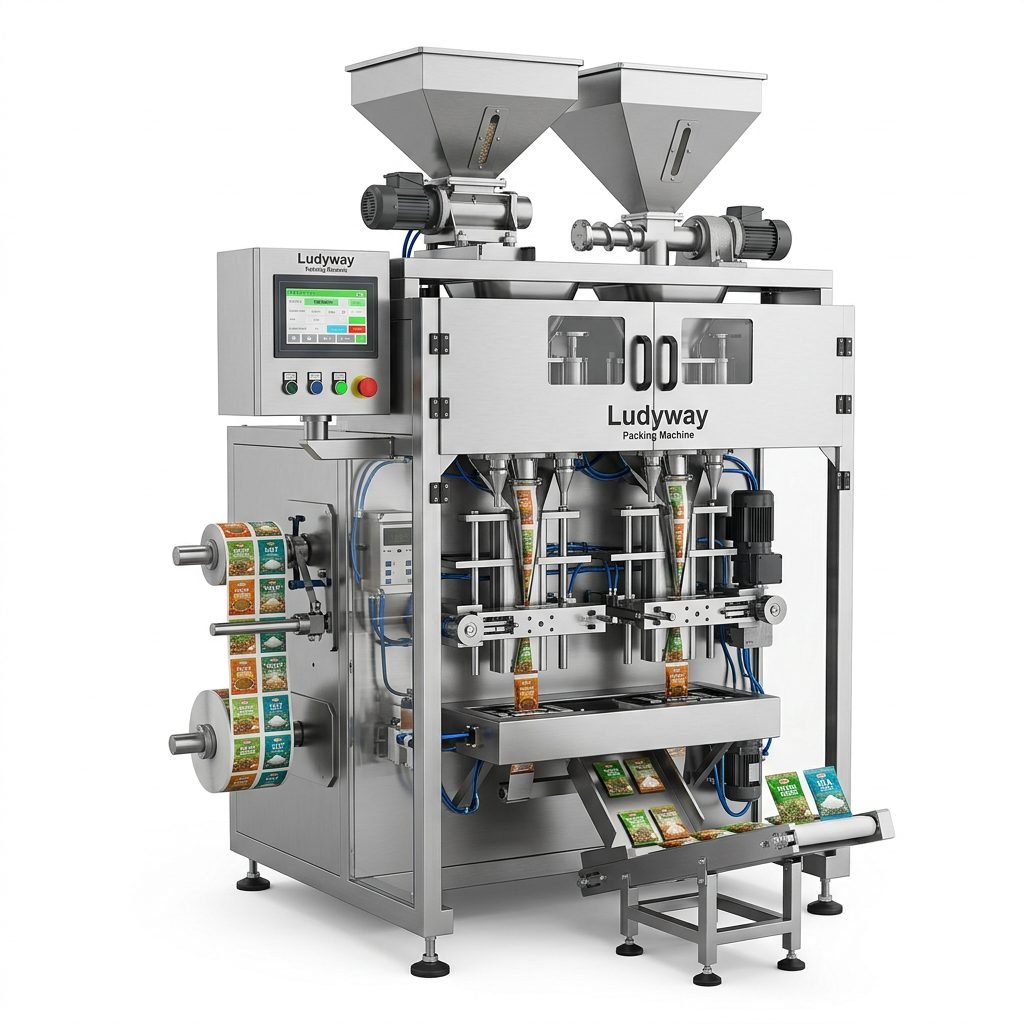
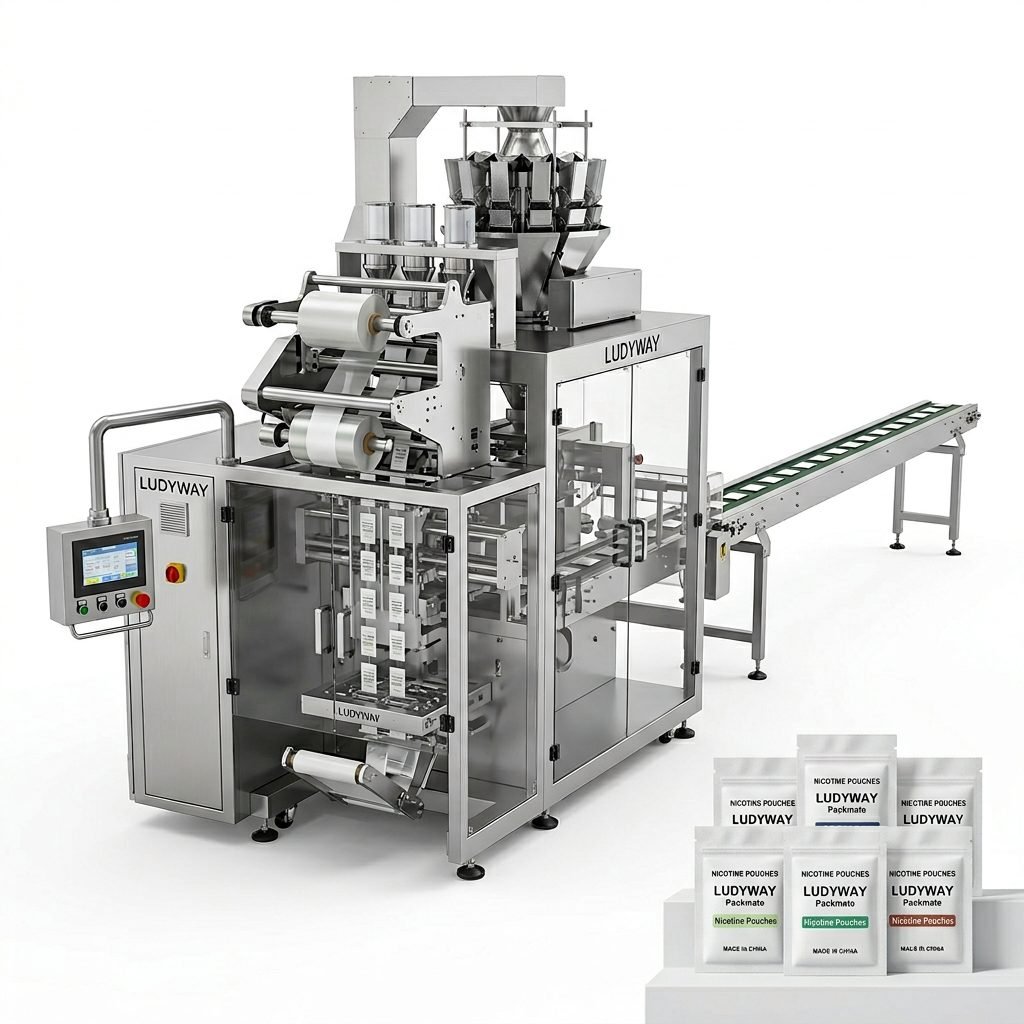
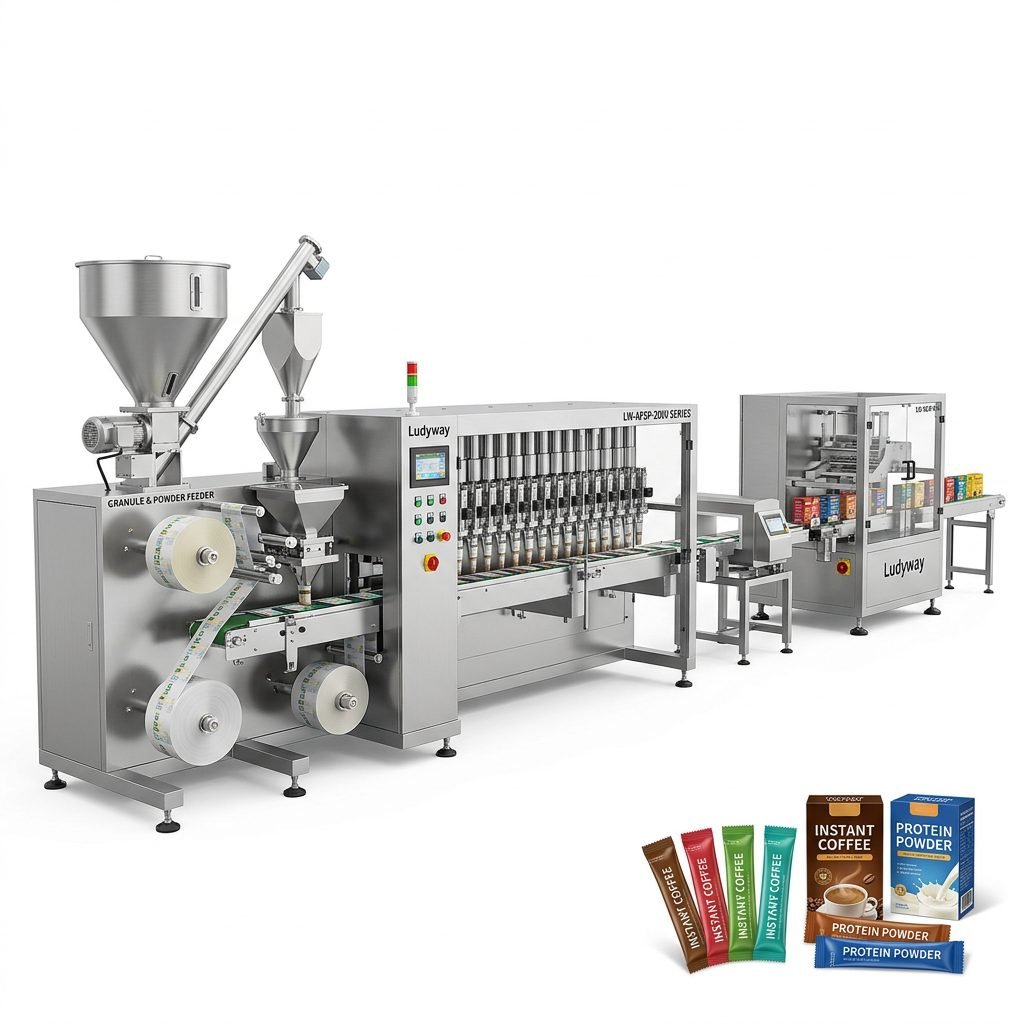
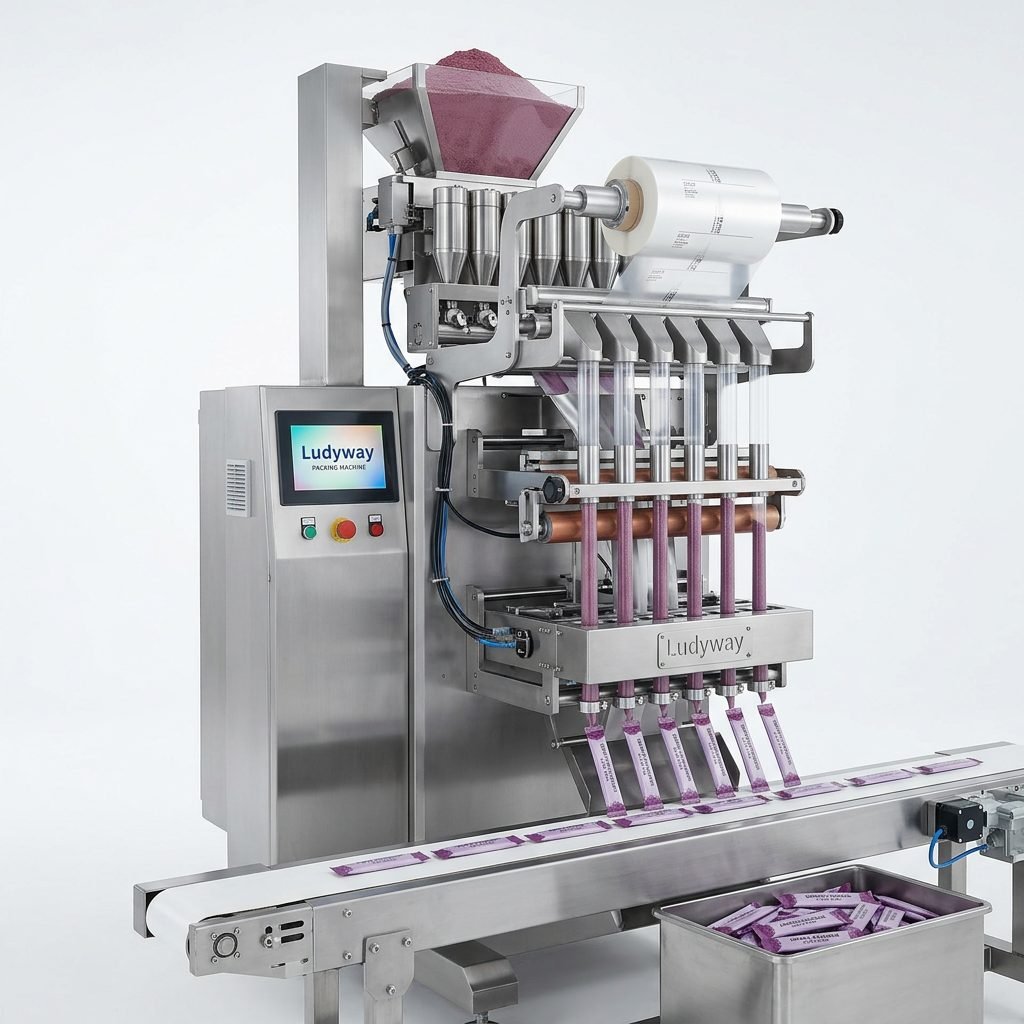
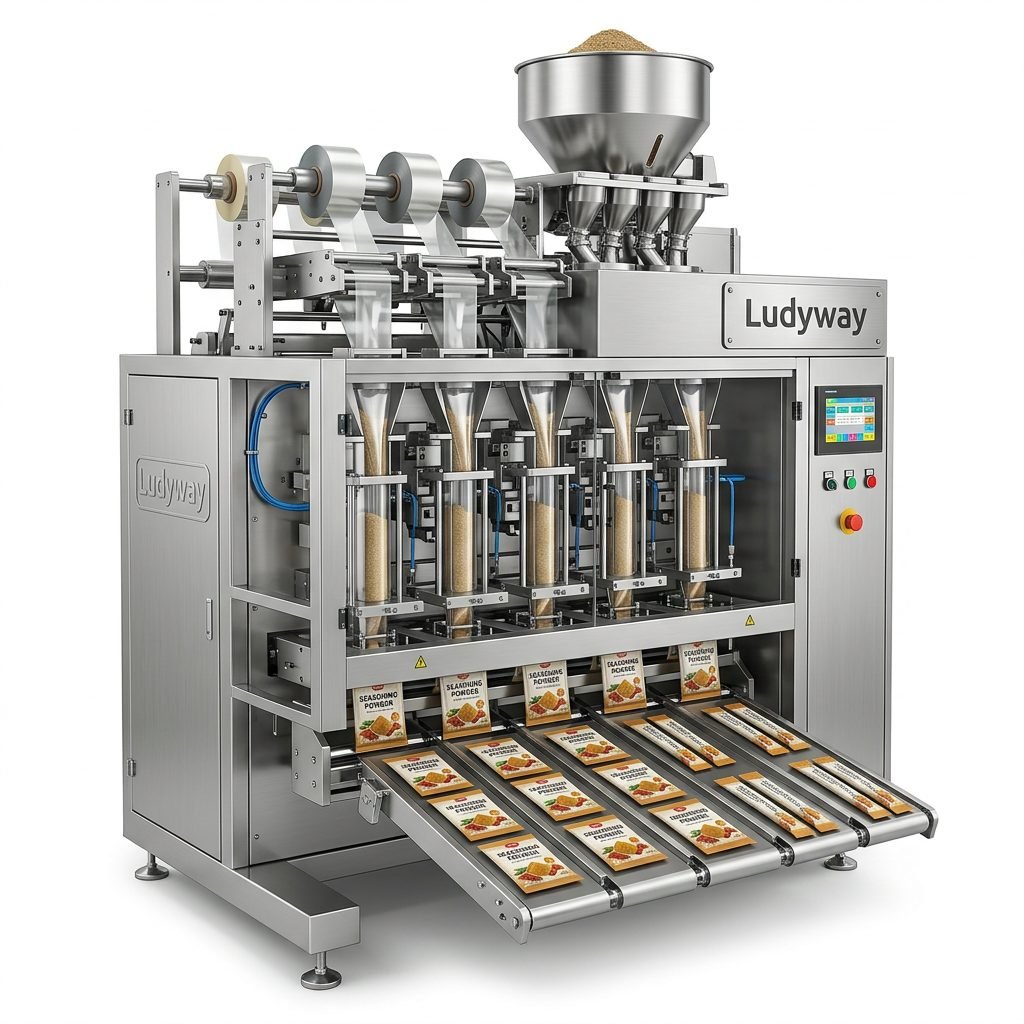
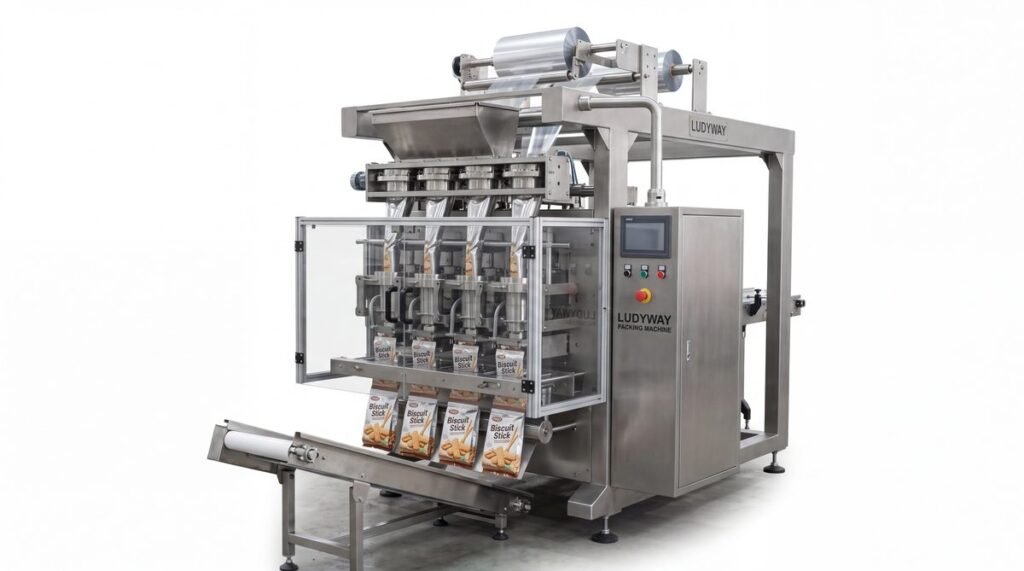
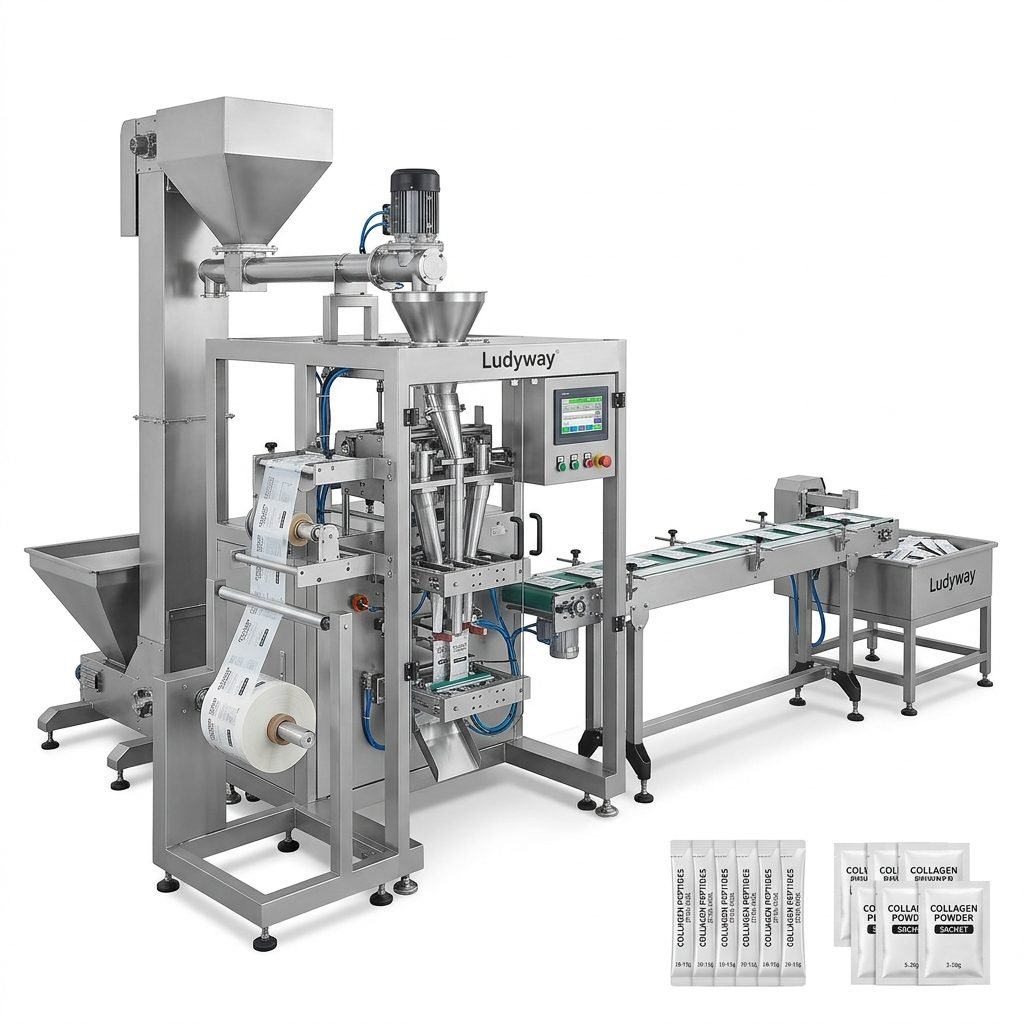
A sachet filling machine is a packaging system designed to form, fill, and seal small flexible packets known as sachets. These machines are widely used for powders, granules, liquids, gels, creams, and pastes across industries such as food, pharmaceuticals, cosmetics, chemicals, and personal care.
Because sachets are compact, cost-effective, and easy to distribute, they have become a preferred packaging format for single-use, trial-size, travel-size, and portion-controlled products. A reliable sachet machine helps manufacturers improve speed, reduce waste, maintain filling accuracy, and achieve more consistent packaging quality.
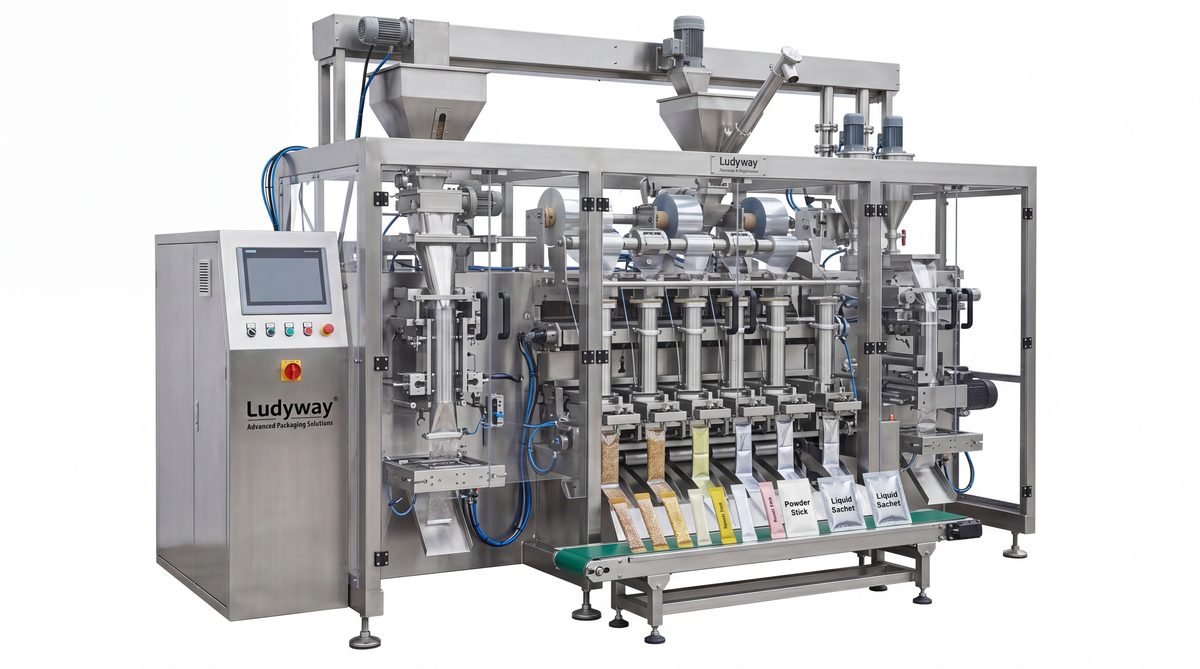
How Does a Sachet Filling Machine Work?
Although machine designs vary, the basic process usually follows the same sequence:
- Film feeding – Packaging film is pulled from a roll into the machine.
- Sachet forming – The film is shaped into a pouch or sachet tube.
- Product dosing and filling – The exact amount of product is dispensed into each sachet.
- Sealing – Heat sealing closes the sachet securely.
- Cutting – Individual sachets are cut apart or perforated.
- Discharge or collection – Finished sachets move to conveyors, counting systems, or cartoning units.
Modern systems can also include date coding, nitrogen flushing, check weighing, metal detection, counting, cartoning, and full end-of-line automation.
Main Types of Sachet Filling Machines
1. Powder Sachet Filling Machines
These machines are designed for free-flowing or semi-free-flowing powders. Common dosing systems include auger fillers for products that require precise volumetric filling.
- Coffee powder
- Protein powder
- Milk powder
- Spice blends
- Pharmaceutical powders
2. Granule Sachet Filling Machines
Granule machines are used for products with larger particle sizes or better flow characteristics. They often use cup fillers, weighers, or counting systems.
- Sugar
- Salt
- Seeds
- Instant beverage granules
- Pet nutrition products
3. Liquid Sachet Filling Machines
These machines are built for water-like liquids, oils, sauces, oral liquids, and similar products. They usually include piston pumps, rotary pumps, or servo filling systems.
- Honey
- Soy sauce
- Shampoo
- Hand sanitizer
- Medicinal liquids
4. Paste and Gel Sachet Filling Machines
For thicker products, specialized filling systems ensure smooth discharge and accurate dosing.
- Tomato paste
- Cream
- Cosmetic serum
- Ointment
- Energy gel
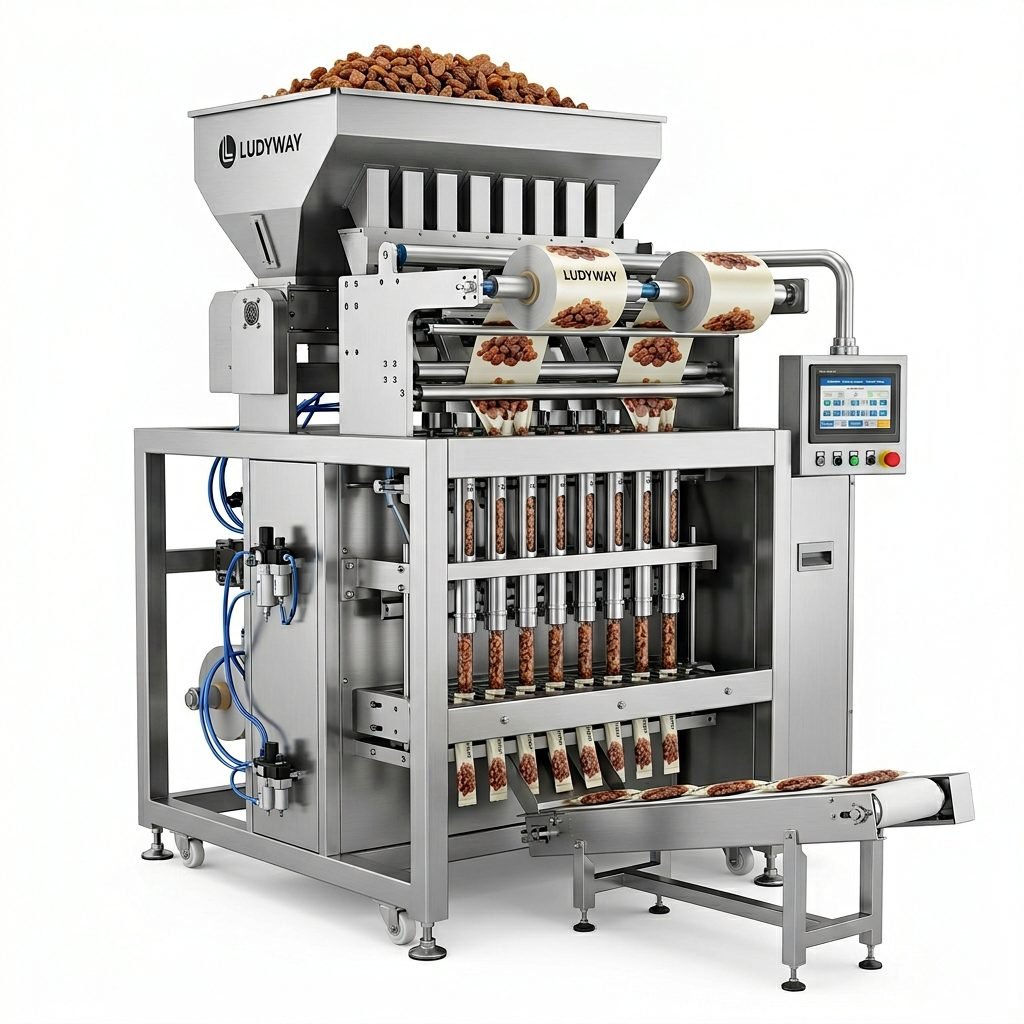
5. Multi-Lane Sachet Filling Machines
A multi-lane system produces several sachets at the same time, making it ideal for high-volume production. This type is popular in food, pharma, and nutraceutical applications where output and consistency matter.
Common Sachet Styles
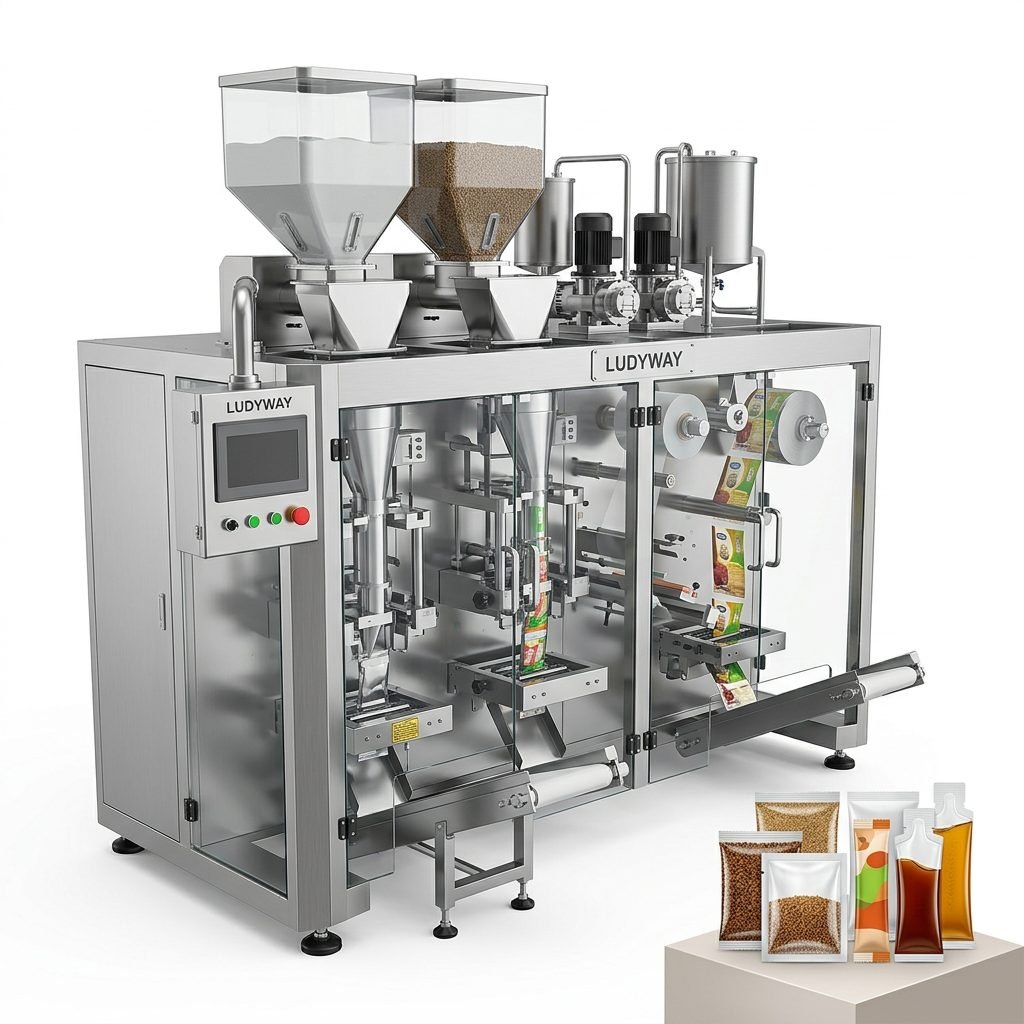
Different products and branding needs often require different sachet structures. Typical styles include:
- 3-side seal sachets – Common for powders, liquids, and samples
- 4-side seal sachets – Attractive appearance and good sealing stability
- Back seal sachets – Efficient and widely used for many product types
- Stick packs – Slim, portable format for drink mixes, supplements, and instant powders
- Shaped sachets – Custom designs for stronger shelf appeal
What Products Can Be Packed in Sachets?
| Industry | Typical Sachet Products | Filling Type |
|---|---|---|
| Food | Sugar, coffee, sauces, soup powder, seasonings | Powder, granule, liquid, paste |
| Pharmaceutical | Oral powders, rehydration salts, gels, medicinal liquids | Powder, liquid, gel |
| Cosmetic | Face cream, serum, lotion, shampoo | Liquid, cream, gel |
| Chemical | Detergent, cleaners, additives, powders | Powder, liquid |
| Health Supplement | Collagen, probiotics, electrolyte powder, nutrition blends | Powder, granule |
Key Benefits of Using a Sachet Filling Machine
Higher Production Efficiency
Automatic sachet machines can run far faster than manual packaging methods. This is especially valuable for brands handling large-volume SKUs or seasonal demand spikes.
Better Filling Accuracy
A quality machine reduces underfilling and overfilling, helping control product giveaway and maintain compliance.
Improved Seal Quality
Stable heat sealing improves product protection, shelf life, and package appearance.
Lower Labor Dependence
Automation reduces repetitive manual work and supports more stable long-term production.
Flexible Product Handling
Many systems can be configured for different materials, fill weights, and sachet dimensions.
Professional Brand Presentation
Uniform sachets help products look more premium on shelves and in e-commerce fulfillment.
Important: Choosing the wrong filling method for your product can lead to leakage, poor sealing, inconsistent weights, and unnecessary downtime. Product characteristics should always guide machine selection.
Where Are Sachet Filling Machines Commonly Used?
Sachet packaging is popular wherever portability, hygiene, affordability, and portion control are important. Typical use cases include:
- Single-serve food condiments
- Instant drink powders and coffee mixes
- Travel-size personal care products
- Pharmaceutical dose packs
- Sample packs for marketing campaigns
- Nutraceutical daily-dose supplements
- Industrial chemical additives in measured quantities
How to Choose the Right Sachet Filling Machine
Understand Your Product Characteristics
Start with the basics: is your product a powder, granule, liquid, paste, or gel? Also consider flowability, viscosity, particle size, moisture sensitivity, and foaming behavior.
Define Your Production Capacity
A small business may need a compact single-lane unit, while a large factory may require a fully automatic multi-lane machine integrated into a turnkey line.
Check Sachet Size and Format
Your desired pack dimensions and seal style will affect machine structure, tooling, and output rate.
Evaluate Accuracy Requirements
This is especially important for pharmaceuticals, supplements, and high-value ingredients where small deviations can have a significant cost impact.
Review Material Compatibility
The machine should work well with your packaging film, sealing temperature, and barrier requirements.
Consider Future Expansion
If your business may scale, choose equipment that supports upgrades, additional lanes, or integration with coding, cartoning, and case packing equipment.
Features to Look For
| Feature | Why It Matters |
|---|---|
| Servo control | Improves precision, stability, and repeatability |
| Touchscreen HMI | Makes operation and parameter adjustment easier |
| Automatic film tracking | Helps maintain print registration and clean sachet cutting |
| Tool-free cleaning access | Reduces maintenance and product changeover time |
| Stainless steel contact parts | Supports hygiene and corrosion resistance |
| Line integration ability | Allows connection to feeders, conveyors, cartoners, and palletizers |
Manual, Semi-Automatic, or Fully Automatic?
Not every buyer needs the same level of automation. The right choice depends on budget, labor availability, and production targets.
- Manual or low-automation solutions – Suitable for very small-scale operations or testing
- Semi-automatic machines – Good for moderate output with some operator involvement
- Fully automatic sachet filling machines – Best for continuous, high-volume, and quality-focused production
Maintenance Tips for Better Machine Performance
- Clean filling and sealing areas regularly
- Inspect sealing jaws and cutting components for wear
- Calibrate dosing systems on schedule
- Use suitable packaging film and product feed systems
- Train operators on setup, changeover, and troubleshooting
- Keep spare parts available for critical components
Why Turnkey Packaging Solutions Matter
For many manufacturers, the machine itself is only one part of the packaging process. Upstream feeding, product transfer, inspection, coding, secondary packaging, and palletizing all affect final efficiency. That is why many buyers prefer suppliers that can deliver complete integrated systems rather than a standalone machine.
If you are sourcing from an experienced manufacturer, working with a company that understands both individual equipment and full-line integration can reduce project risk. Ludyway sachet filling machine solutions are backed by more than 30 years of packaging machinery experience and support applications across food, pharmaceutical, health supplement, cosmetic, and chemical industries.
Frequently Asked Questions
What is the difference between a sachet and a stick pack?
A sachet is usually wider and shorter, while a stick pack is narrow and long. Both can be filled using similar packaging technologies, depending on machine design.
Can one sachet machine handle different products?
Some machines can handle multiple products if they are designed for changeovers and use the correct dosing systems. However, product type and viscosity greatly affect compatibility.
What industries use sachet filling machines the most?
Food, pharmaceutical, nutraceutical, cosmetic, and chemical industries are the most common users.
Are multi-lane sachet machines worth it?
Yes, if you need high output, stable quality, and lower cost per pack. They are especially effective for high-demand SKUs and export-oriented production.
How do I know which filling system I need?
The correct filling system depends on whether your product is a powder, granule, liquid, paste, or gel, along with factors such as flowability, viscosity, and target pack weight.
Final Thoughts
A sachet filling machine is an essential packaging solution for companies that need efficient, accurate, and scalable small-pack production. From powders and granules to liquids and creams, these machines support a wide range of industries and product formats.
The best machine is not simply the fastest one—it is the one that matches your product properties, sachet format, output goals, and future expansion plans. By choosing the right system, manufacturers can improve packaging consistency, reduce waste, strengthen product presentation, and build a more competitive production line.