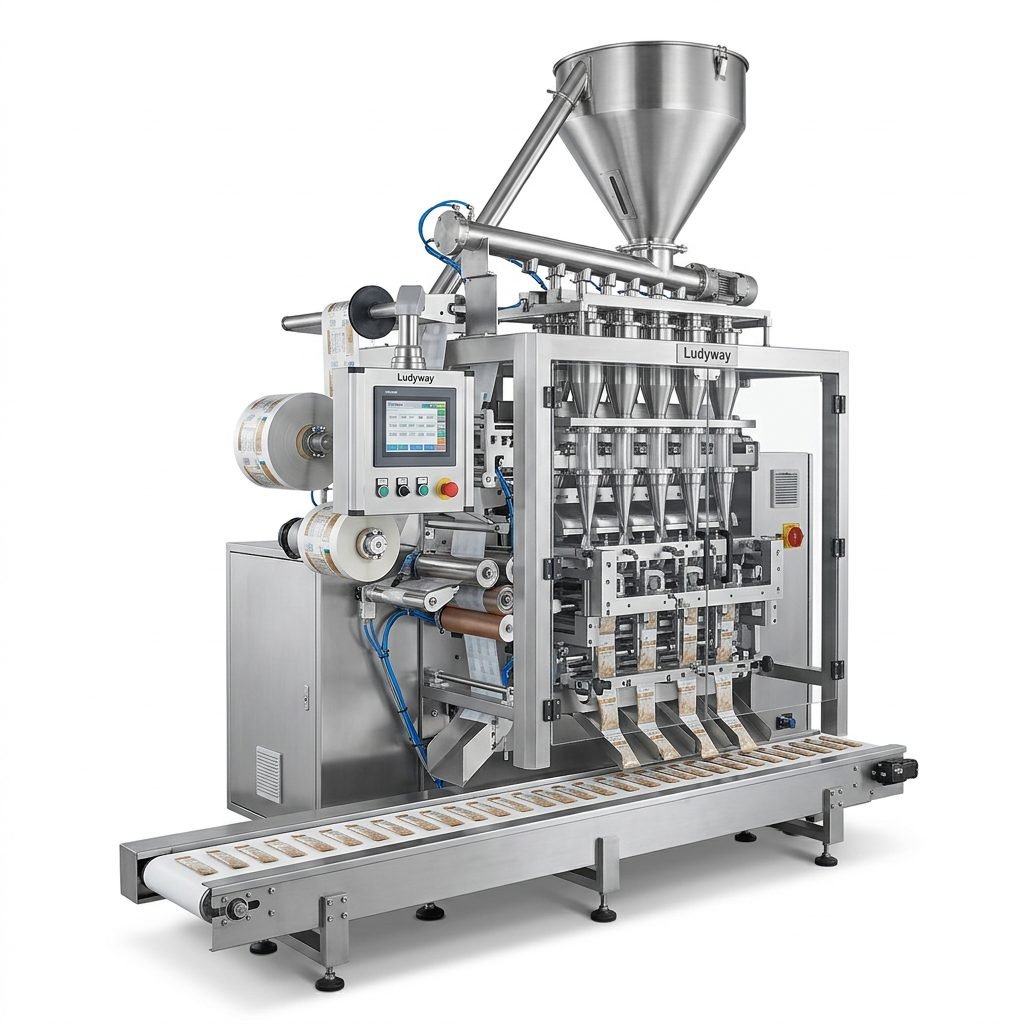
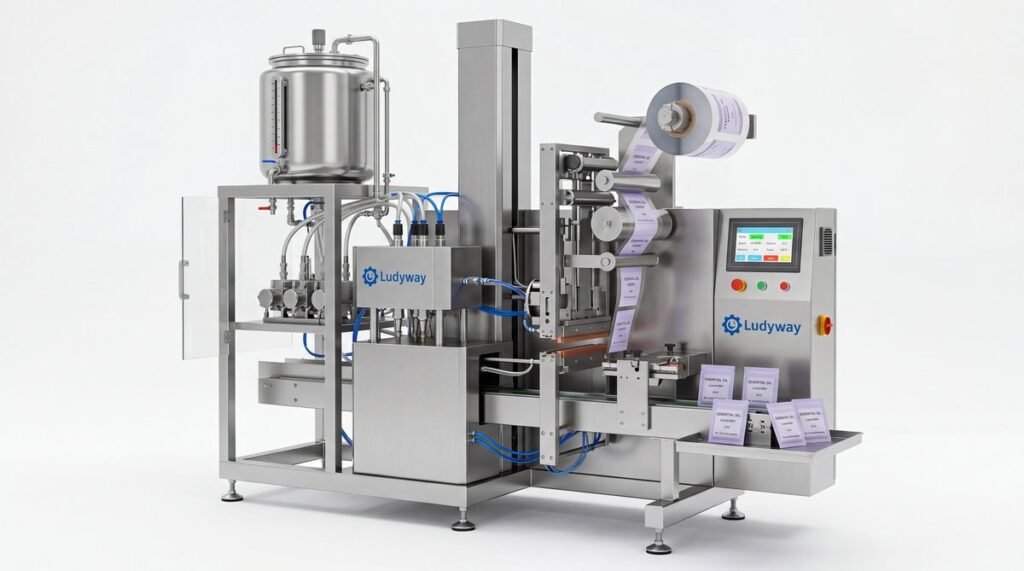
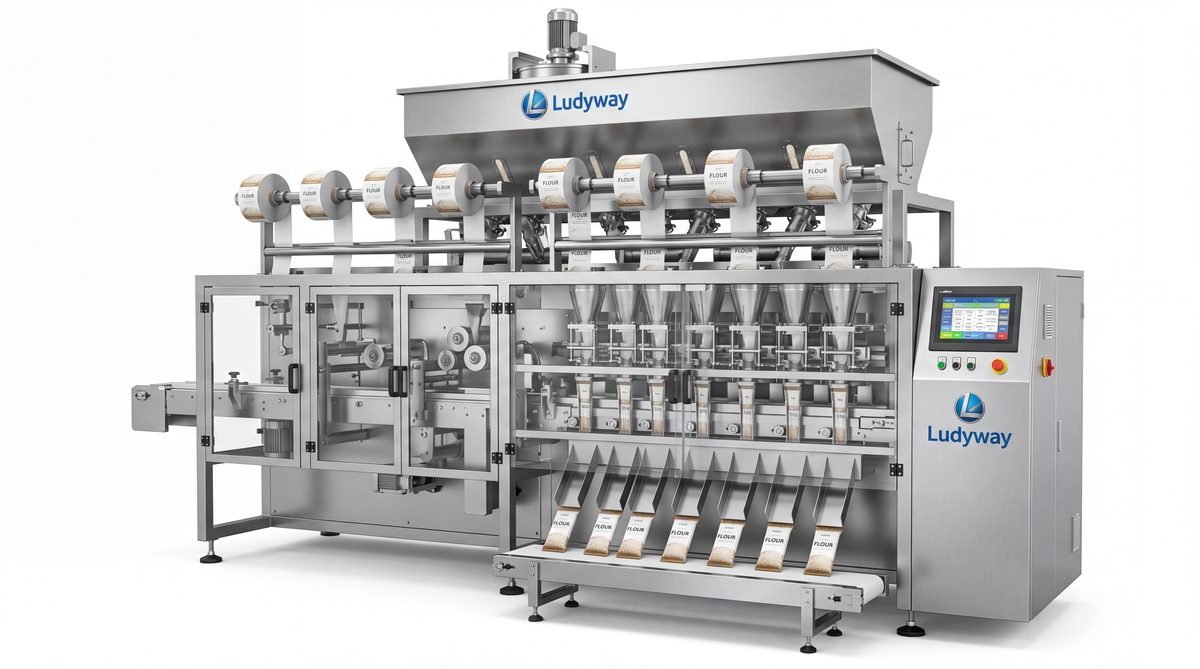
A 1 kg flour packing machine is an ideal solution for flour mills, food manufacturers, baking ingredient suppliers, and contract packers that need reliable, hygienic, and consistent packaging performance. In today’s competitive market, packaging is no longer just about filling bags. It is about accuracy, speed, cleanliness, product protection, and operational efficiency.
Whether you are packing wheat flour, rice flour, corn flour, gluten-free flour, premix flour, or specialty baking powders, the right system helps reduce manual labor, minimize product loss, and improve final package consistency. A modern flour packaging machine can also support brand presentation, traceability, and downstream automation.
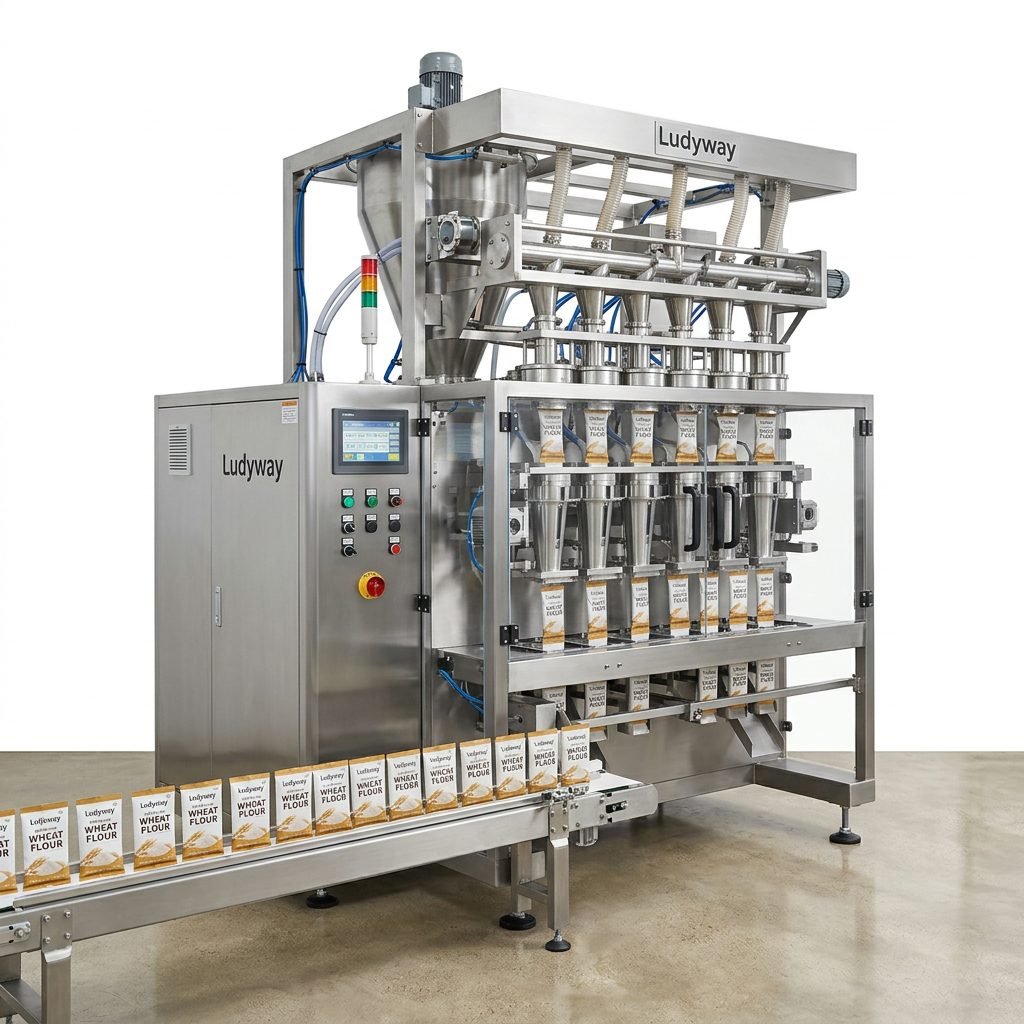
Why a 1 kg Flour Packing Machine Matters
The 1 kg pack size is one of the most popular flour packaging formats in retail and distribution. It is convenient for home users, bakeries, small foodservice businesses, and supermarket shelves. To meet this demand, manufacturers need equipment that delivers dependable filling accuracy and stable sealing quality over long production runs.
- Consistent 1 kg weight control for every bag
- Reduced dust leakage during filling and sealing
- Higher output compared with manual or semi-manual packing
- Improved packaging appearance for retail-ready products
- Lower labor dependency and fewer human errors
- Better hygiene for food-grade production environments
How the Machine Works
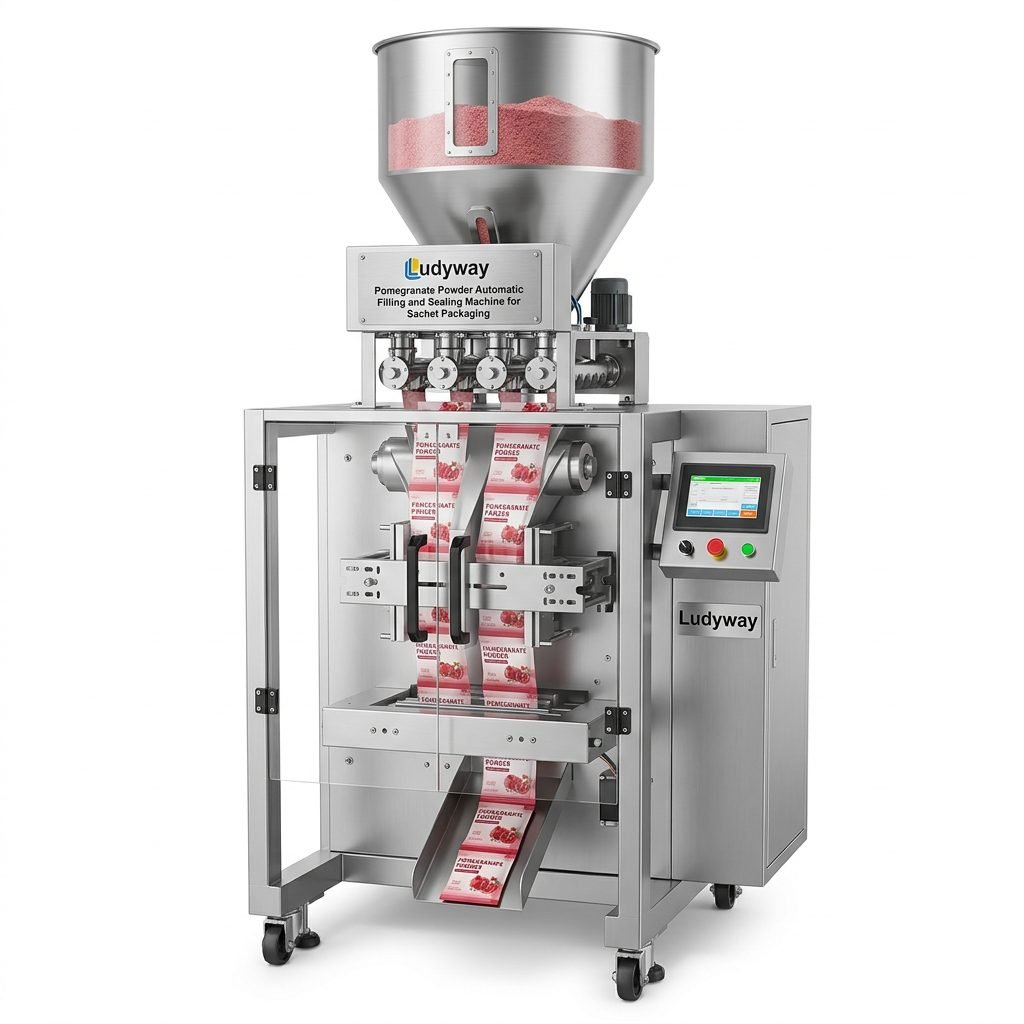
A typical flour packing machine integrates several key steps into one efficient workflow. Flour is fed from a hopper or upstream conveying system into the dosing unit. The machine then measures the target weight, fills the bag, and completes sealing. Depending on production requirements, the system may also include coding, checkweighing, metal detection, carton packing, or palletizing.
- Bulk flour enters the feeding hopper
- The weighing or auger system doses exactly 1 kg
- The package is formed or positioned
- Flour is discharged into the bag with controlled flow
- The bag is sealed securely
- Optional inspection and coding are completed before discharge
Key Features to Look For
Not all flour packaging machines are the same. Fine powders such as flour require careful dust control, stable feeding, and precise metering. Choosing the right configuration depends on your flour type, package style, plant layout, and output target.
| Feature | Why It Matters |
|---|---|
| High-precision dosing | Ensures each 1 kg bag meets weight standards and reduces giveaway |
| Dust control design | Improves cleanliness, protects seals, and enhances workplace safety |
| Reliable sealing system | Prevents leakage and helps extend shelf life |
| PLC and touchscreen control | Makes operation simple and recipe changeovers faster |
| Food-grade contact parts | Supports hygiene compliance and easy cleaning |
| Modular integration | Allows connection with conveyors, elevators, coding and inspection devices |
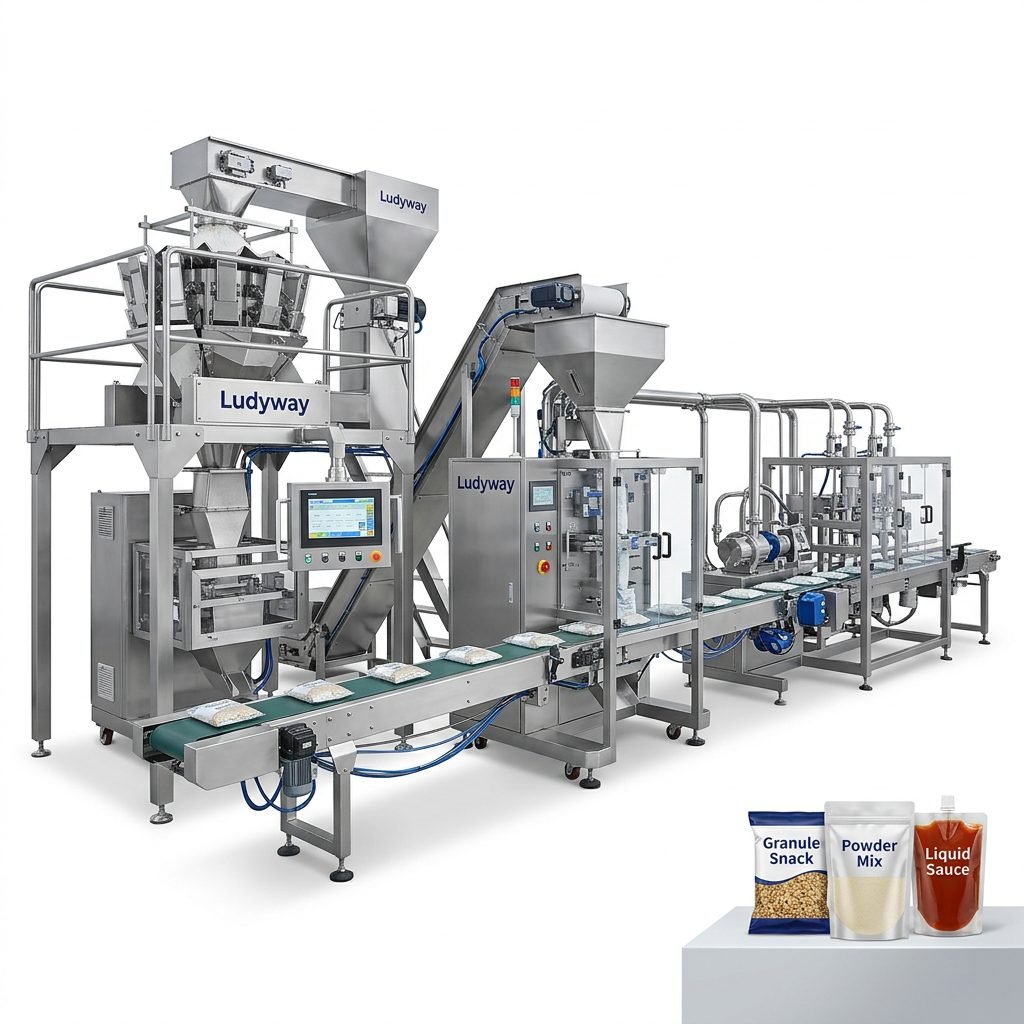
Suitable Packaging Formats for Flour
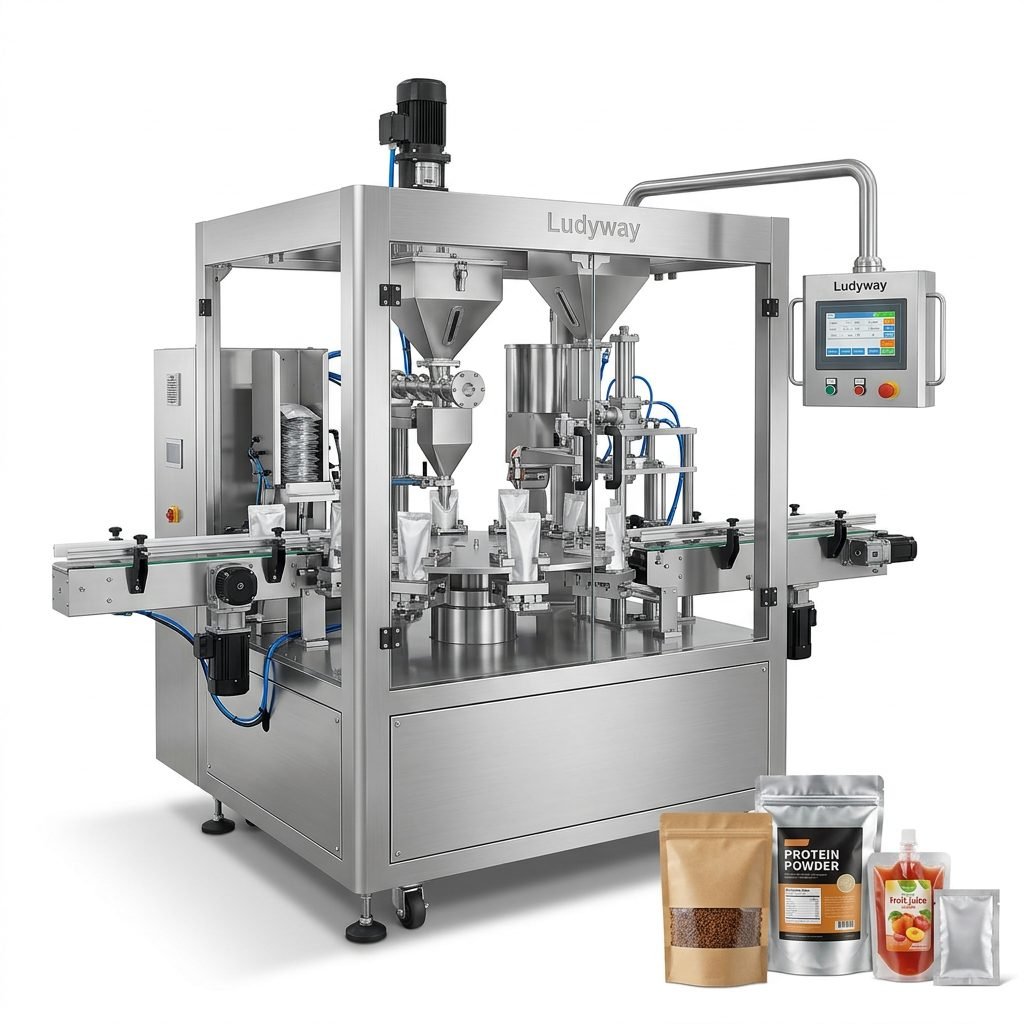
A 1 kg flour packing machine can be designed for different package structures depending on branding, storage, transport, and retail goals. Common formats include pillow bags, gusset bags, premade pouches, and other flexible packs.
Common options include:
- Pillow bags for economical high-volume production
- Gusset bags for better shelf appearance and stability
- Premade pouches for premium retail positioning
- Laminated film structures for moisture protection
- PE or composite materials depending on sealing and barrier needs
Applications Across the Food Industry
Although designed around flour, these systems are often suitable for a wide range of powdery food products with similar flow characteristics. That makes them highly attractive for processors managing multiple SKUs.
| Product Type | Packaging Demand |
|---|---|
| Wheat flour | High-volume daily retail packaging |
| Rice flour | Accurate fine-powder filling with clean sealing |
| Corn flour | Stable dosing for food processing and retail packs |
| Cake mix and baking premix | Consistent weight and attractive packaging |
| Gluten-free flour blends | Precise packaging for specialty food markets |
Main Benefits for Manufacturers
Investing in an automated flour packing machine can bring both immediate and long-term gains. Beyond labor savings, manufacturers often improve batch consistency, reduce complaints, and support future production expansion.
Operational advantages:
- Improved packaging accuracy with lower material waste
- Faster throughput for growing order volumes
- Cleaner operation with reduced airborne flour dust
- Stable bag quality and stronger seal integrity
- Lower labor intensity and easier process standardization
- Compatibility with upstream and downstream automation
How to Choose the Right 1 kg Flour Packing Machine
Before purchasing, it is important to define your actual production requirements. A machine that is too small may limit growth, while an overconfigured system may increase unnecessary investment. Matching the machine to your product and packaging goals is the most practical approach.
Ask these questions before buying:
- What is your target output per hour?
- What type of flour are you packing?
- Do you need pillow bags, gusset bags, or premade pouches?
- What filling tolerance is acceptable?
- Do you require date coding, nitrogen flushing, checkweighing, or metal detection?
- Will the machine operate as standalone equipment or part of a full line?
- How important are easy cleaning and fast product changeover?
Automation and Turnkey Integration
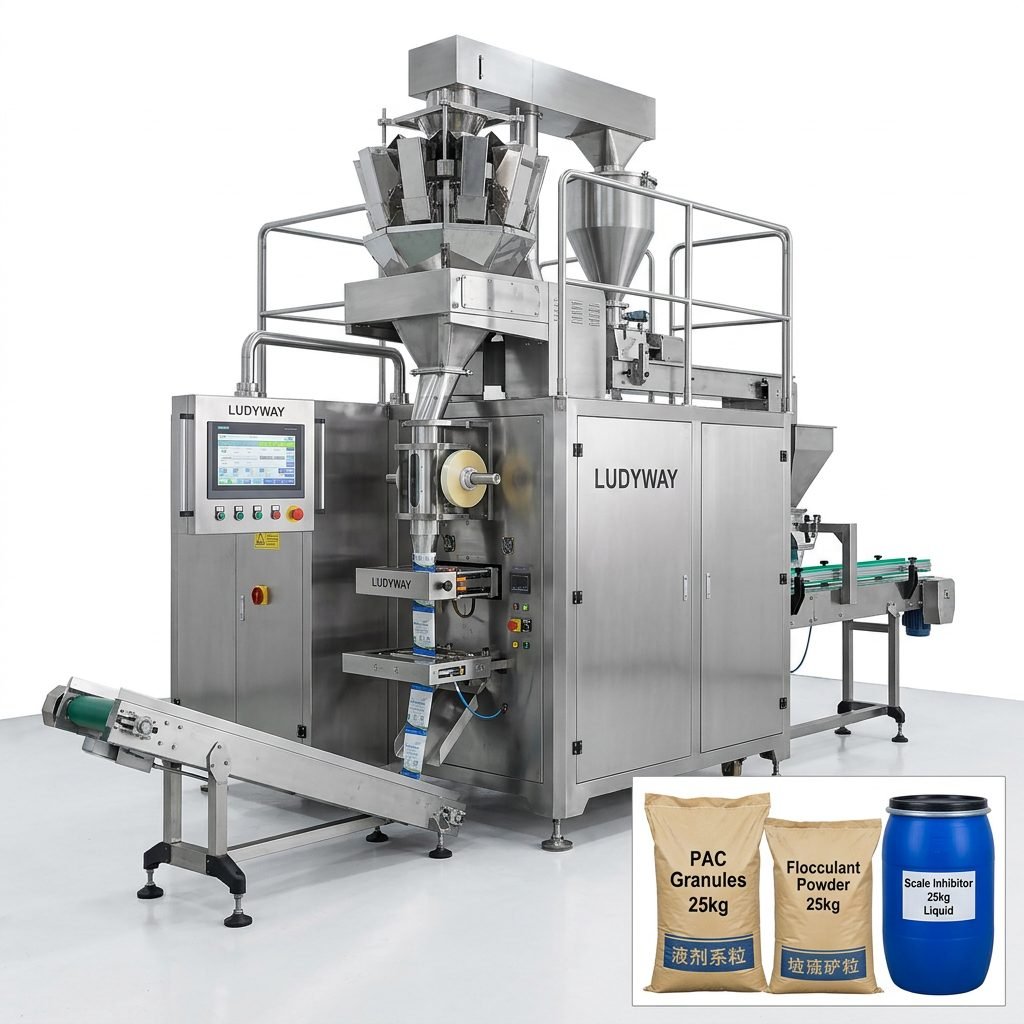
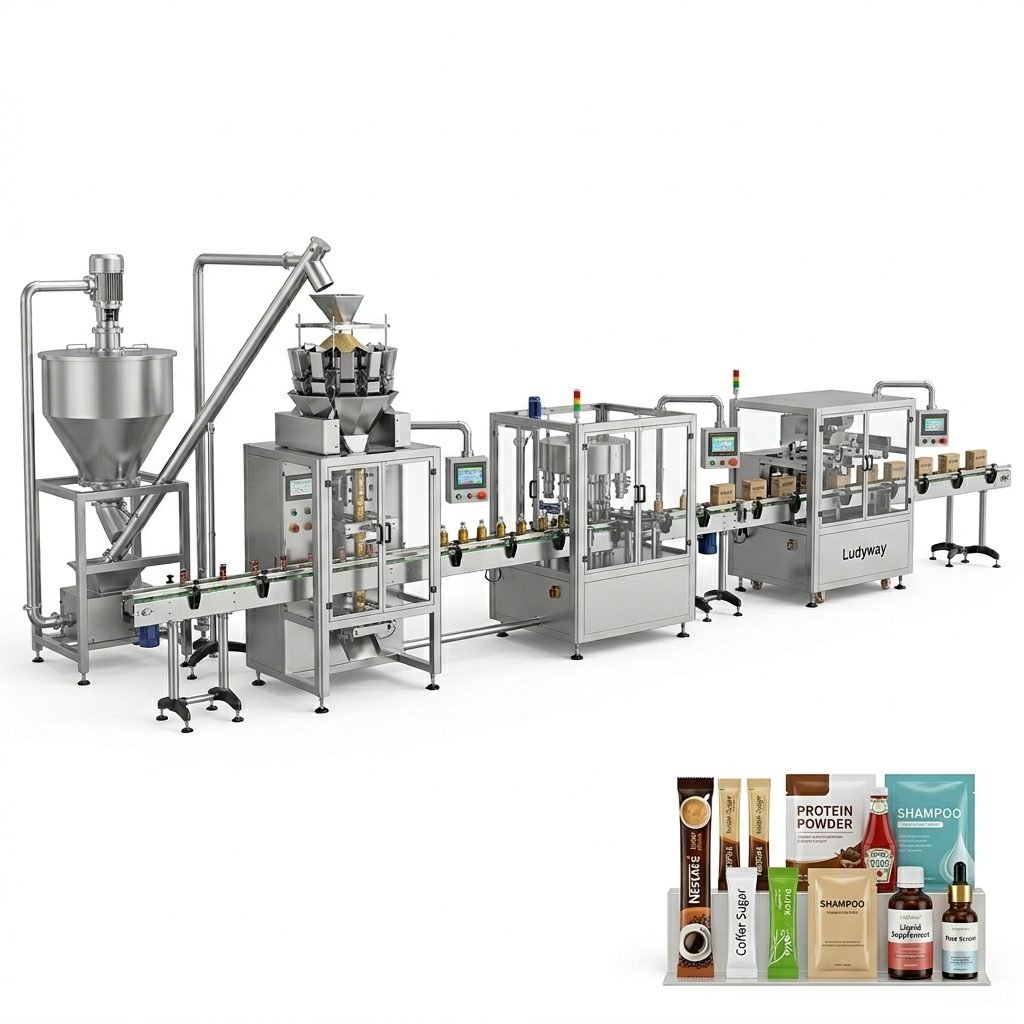
For medium and large factories, a single machine is often just one part of a bigger packaging workflow. A complete line may include feeding systems, elevators, auger fillers, bagging systems, coding units, inspection equipment, case packing, and palletizing. Integrated solutions help synchronize the entire production process and reduce bottlenecks.
For businesses looking for scalable packaging automation, Ludyway flour packing machine solutions are backed by more than 30 years of packaging industry experience, a modern manufacturing base of over 20,000 square meters, and broad export service capabilities across global markets.
Maintenance and Hygiene Considerations
Flour is a fine powder, so hygiene and maintenance should never be overlooked. Equipment should be easy to clean, resistant to buildup, and designed to minimize dust accumulation around critical components. Good maintenance improves both machine lifespan and packaging consistency.
Best practices include:
- Routine cleaning of hoppers, augers, and sealing areas
- Checking weighing calibration regularly
- Monitoring seal temperature and pressure stability
- Inspecting conveying and feeding systems for powder buildup
- Replacing wear parts before they affect output quality
Who Should Use This Machine?
A 1 kg flour packing machine is suitable for a wide range of businesses, including:
- Flour mills and grain processors
- Baking ingredient manufacturers
- Private-label food packers
- Supermarket supply brands
- Specialty flour producers
- Contract packaging companies
Final Buying Insight
A dependable 1 kg flour packing machine helps manufacturers achieve the balance between speed, precision, hygiene, and cost control. In a market where packaging quality influences both product protection and consumer trust, choosing the right machine is a strategic investment rather than a simple equipment purchase.
If your business needs better filling accuracy, cleaner production, and more efficient flour bagging, an automated system tailored to your product and packaging format can deliver measurable value over time.