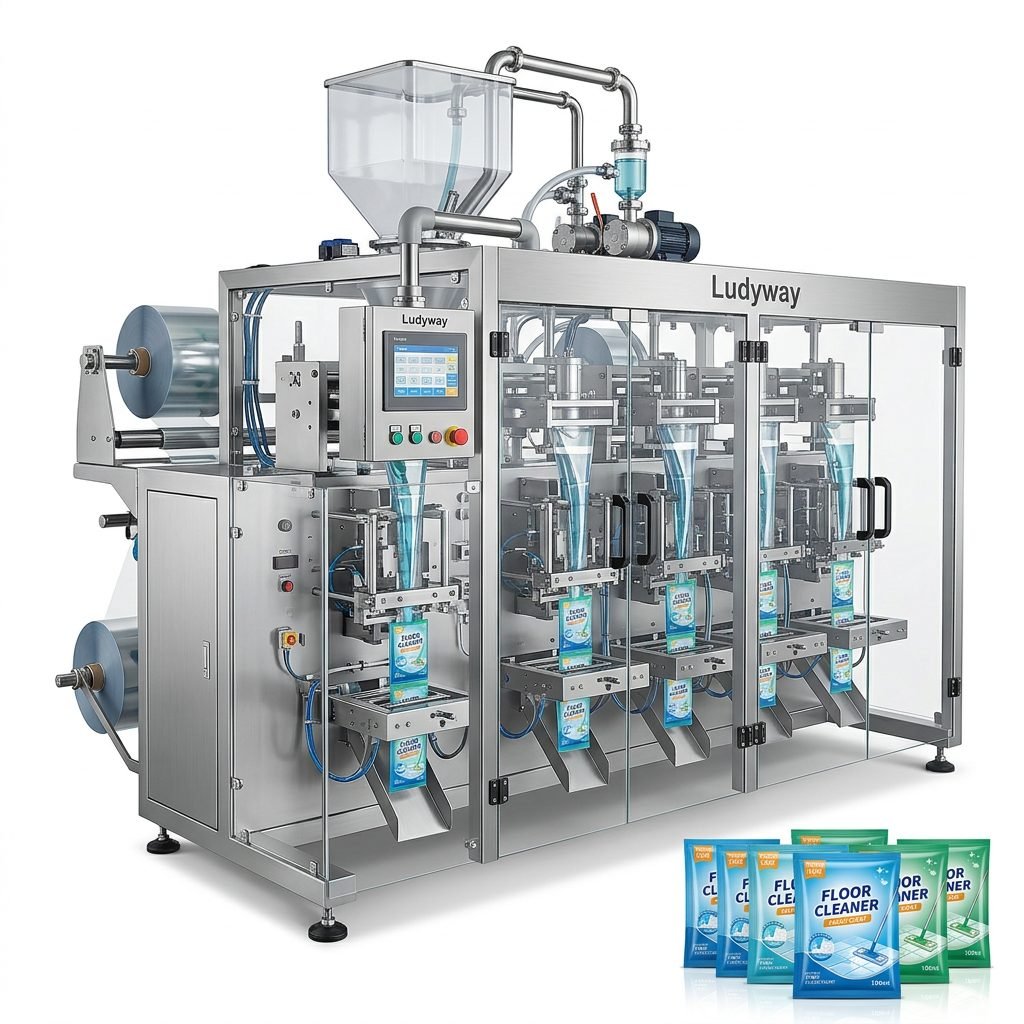
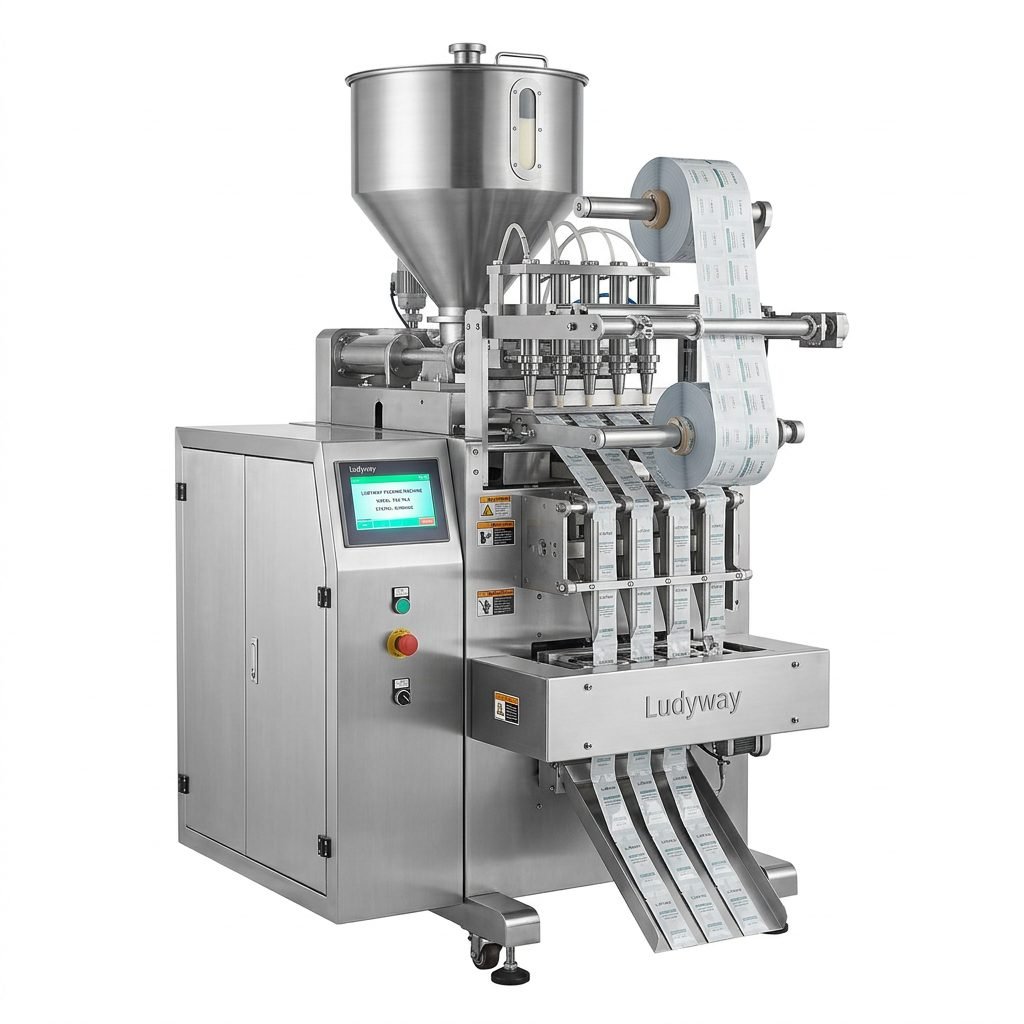
In the fast-paced world of product manufacturing, efficient and reliable packaging is a cornerstone of success. For countless items, from food seasonings and pharmaceuticals to hardware components and tea bags, the flow wrapper packaging machine stands as an indispensable piece of equipment. This guide delves into the essential aspects of flow wrapper machines, exploring their various types, core working principles, diverse applications, and crucial buying tips to help you make an informed investment.
Understanding Flow Wrapper Packaging Machines
A flow wrapper, also known as a horizontal form-fill-seal (HFFS) machine, is designed to create a sealed pouch around a product from a continuous roll of flexible packaging film. The process is continuous and highly efficient, making it ideal for medium to high-speed production lines. Unlike vertical form-fill-seal machines that package products dropped vertically, flow wrappers handle products fed horizontally, allowing for gentle handling of a wide range of item shapes and consistencies.
Core Advantage: The primary strength of flow wrapping lies in its speed and versatility. It can create pillow packs, fin-seal packs, or gusseted packs with high precision, offering excellent product presentation and barrier protection against moisture, light, and contaminants.
Primary Types of Flow Wrapper Machines
The market offers several configurations of flow wrappers, each suited to specific production needs and product types.
Standard Continuous Motion Flow Wrapper
This is the most common type, characterized by a continuously moving film web. The product is placed onto the film, which is then formed around it and sealed. It’s renowned for its high-speed operation, often exceeding hundreds of packs per minute, making it perfect for uniform, stable products like candy bars, biscuits, and soap bars.
Intermittent Motion Flow Wrapper
In this design, the film stops momentarily for the product placement and sealing actions. While generally slower than continuous motion machines, they offer superior precision and are excellent for handling fragile, irregularly shaped, or multi-component products that require careful positioning, such as bakery items, medical device kits, or hardware assortments.
Horizontal Flow Wrapper with Gas Flushing
For products sensitive to oxygen, such as sliced meats, cheeses, or certain snacks, this machine integrates a gas flushing system. It replaces the air inside the package with a protective gas mixture (like nitrogen or carbon dioxide) before sealing, significantly extending shelf life and maintaining product freshness.
How Does a Flow Wrapper Work? The Working Principle
The operation of a flow wrapper is an elegant symphony of mechanical actions. Here’s a step-by-step breakdown of the standard process:
Step 1: Film Unwinding & Guidance
A roll of packaging film (laminated or coated for barrier properties) is mounted and fed through a series of guide rollers. A photo-electric sensor ensures proper alignment and tension control of the film web.
Step 2: Film Forming
The flat film passes over a forming shoulder or “forming box.” This precision tool gradually shapes the flat film into a tube around the product inlet, with the longitudinal edges overlapping underneath.
Step 3: Longitudinal Sealing
A heated sealing roller or band applies pressure and heat to the overlapping film edges, creating a continuous fin seal or lap seal along the package’s bottom.
Step 4: Product Feeding & Placement
Products are fed into the formed film tube via a conveyor or feeding system, synchronized perfectly with the film’s movement.
Step 5: End Sealing & Cutting
Cross-sealing jaws, which contain heated crimpers, close at precise intervals. They simultaneously seal the front end of the next package and the rear end of the current package, and cut them apart, creating individual pillow packs.
Broad Applications Across Industries
The adaptability of flow wrapper machines makes them vital in numerous sectors. Their ability to handle different films and integrate various features unlocks diverse applications.
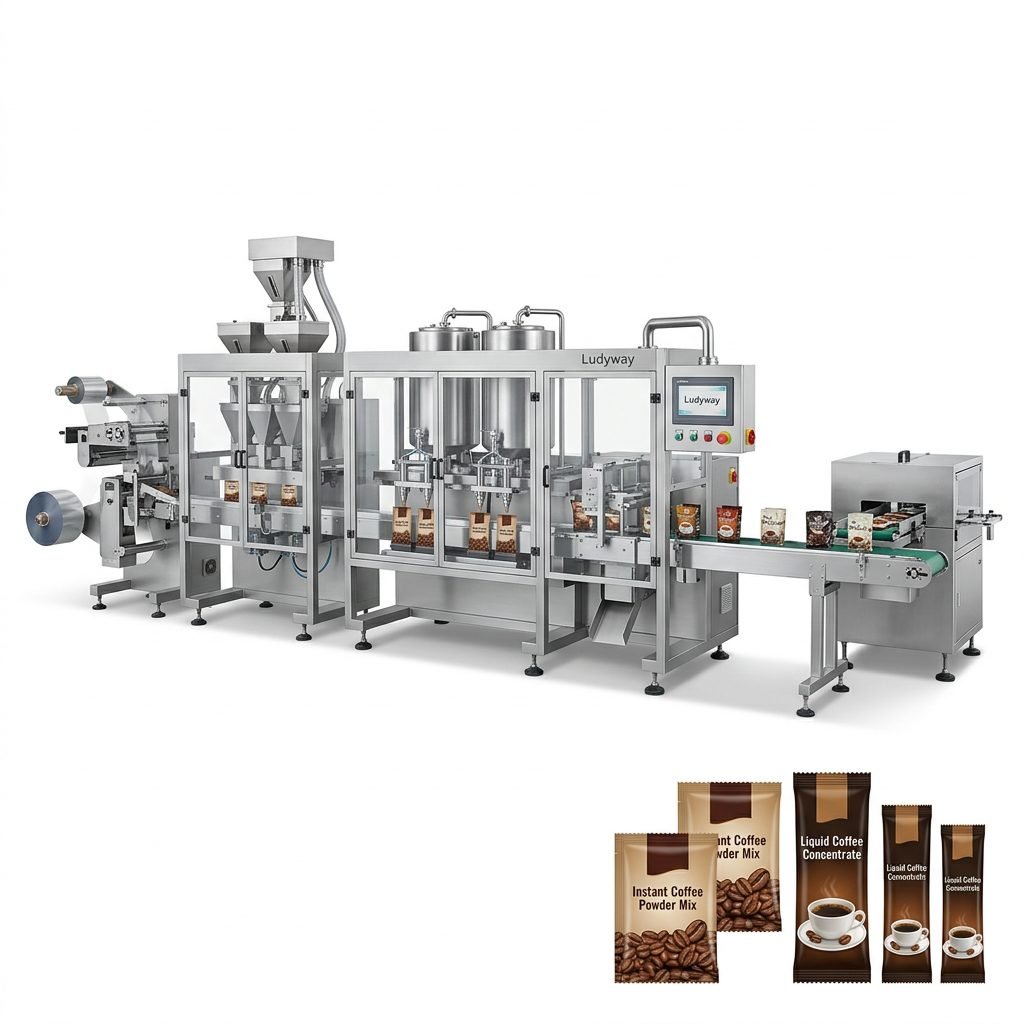
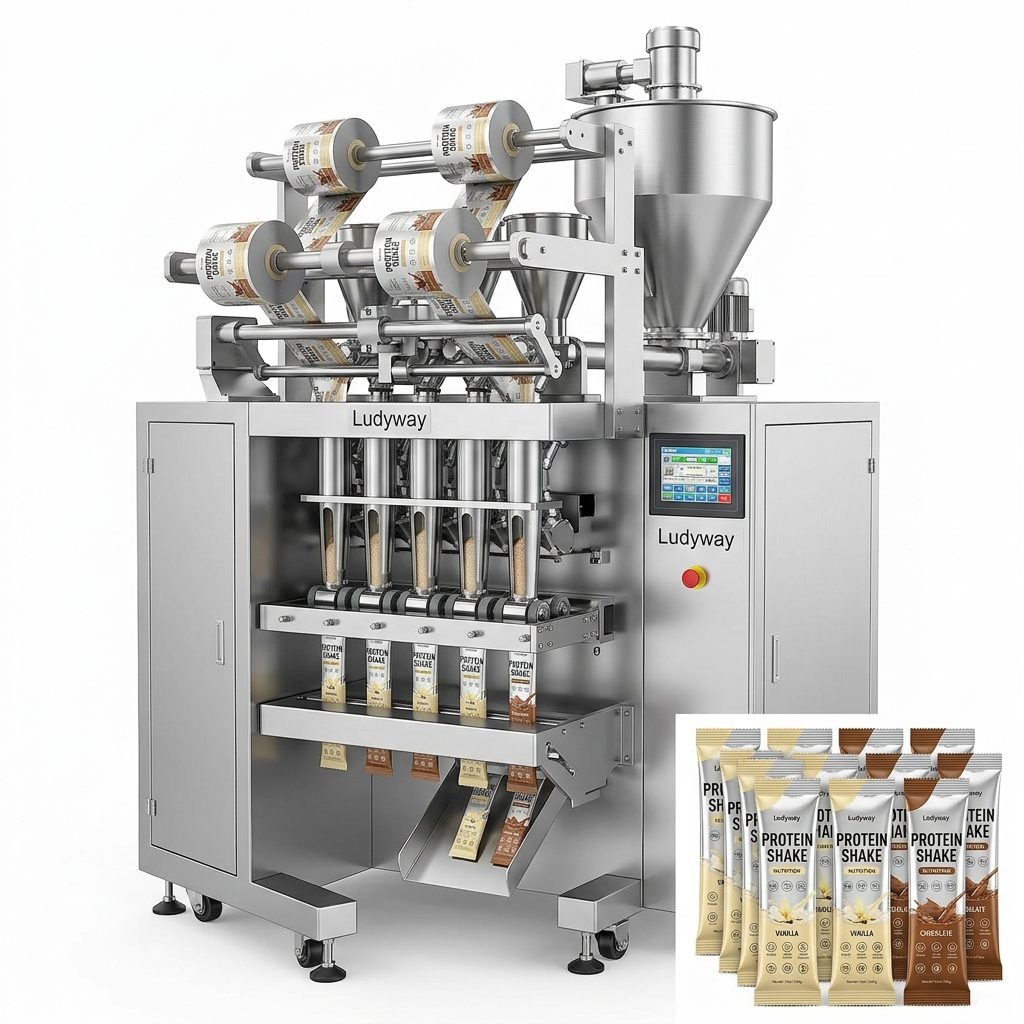
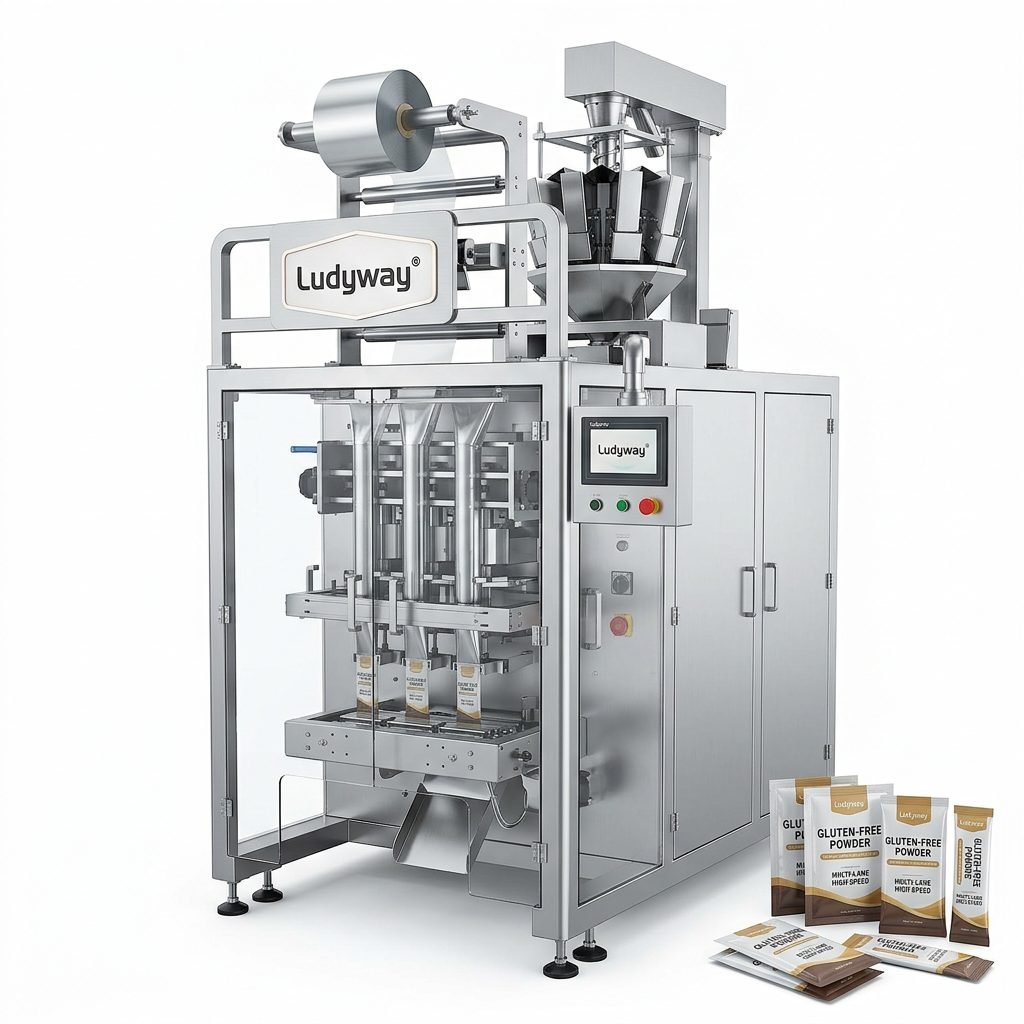
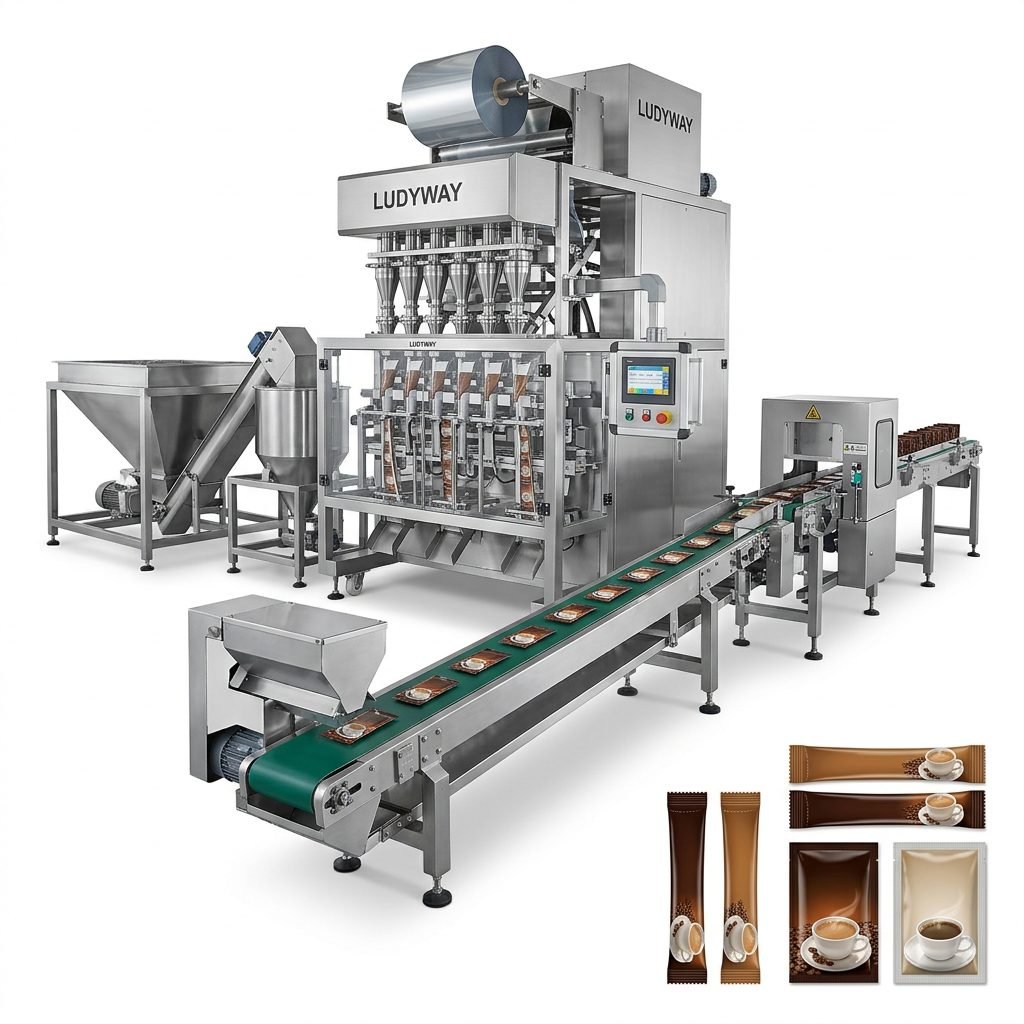
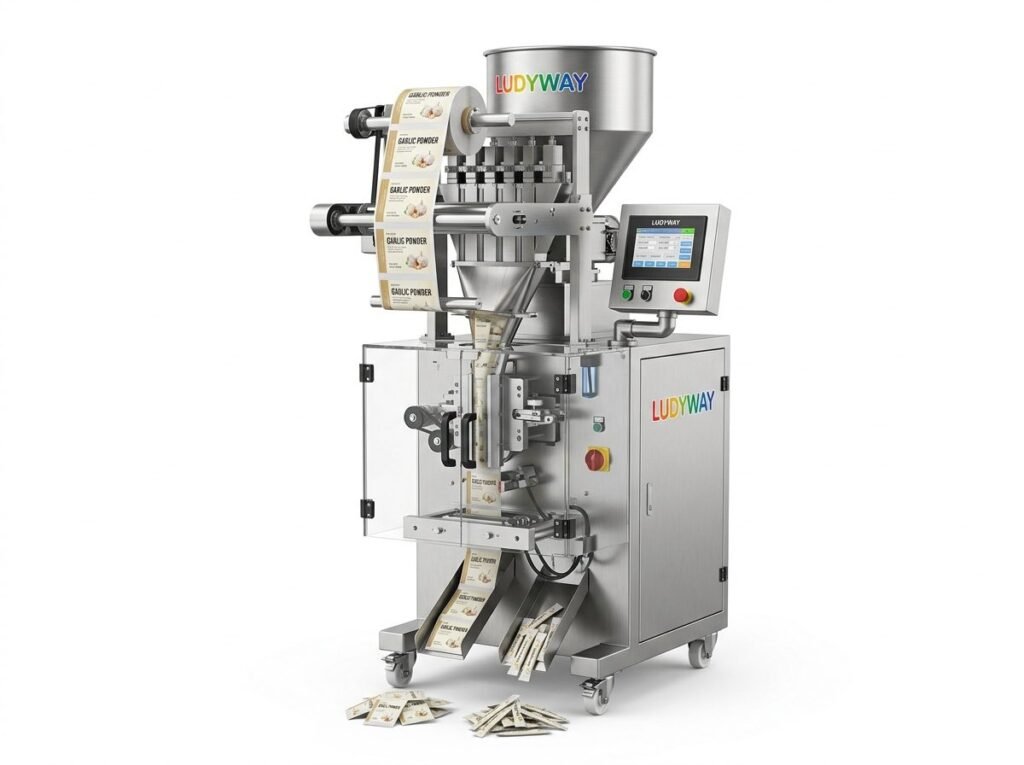
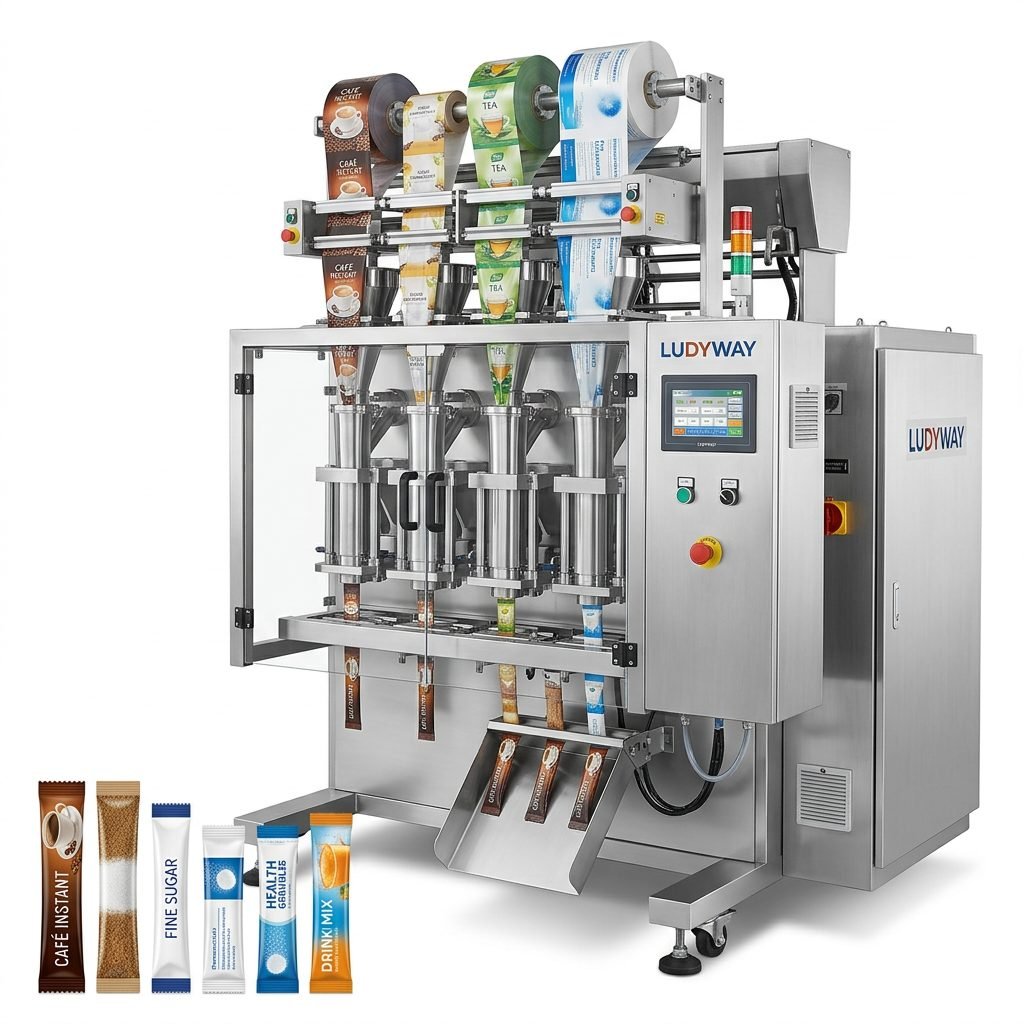
Food & Beverage: This is the largest application area. Flow wrappers package snacks (chips, nuts), confectionery (chocolate bars, candy), baked goods (bread, pastries), frozen foods, pasta, and tea bags. Machines like the multi-lane stick pack machine are perfect for single-serve portions of sugar, instant coffee, or seasoning.
Pharmaceutical & Healthcare: Sterility and precision are paramount. Flow wrappers package blister packs, syringe kits, surgical tools, and sachets of powder or granules. They can operate in cleanroom environments and often include advanced verification systems.
Consumer Goods & Hardware: Items like batteries, lightbulbs, stationery, small tools, and hardware fittings are efficiently packaged in clear or printed film, offering visibility and protection.
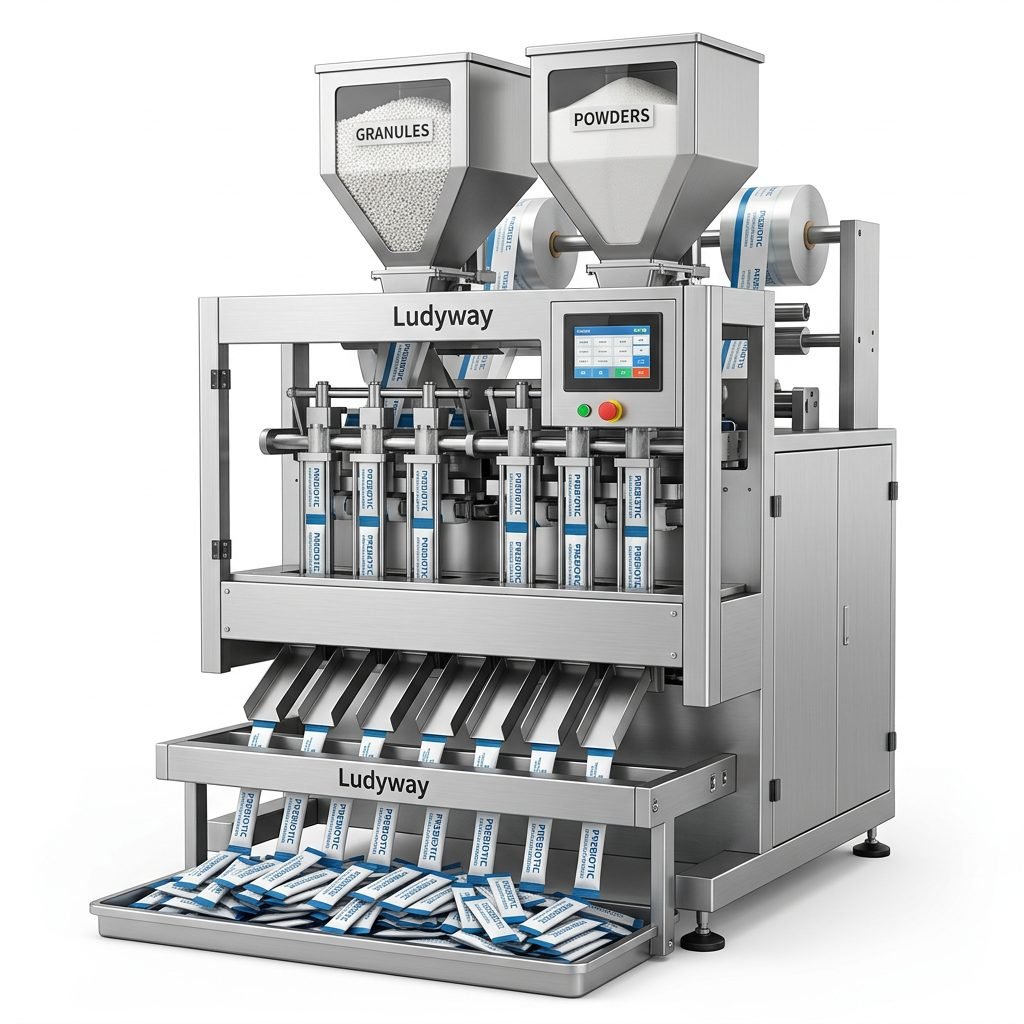
Non-Food Granules & Powders: Detergents, agricultural chemicals, pigments, and other industrial powders are packaged in durable, sealed sachets using specialized granule and powder packaging systems.
Essential Buying Tips for Your Investment
Selecting the right flow wrapper is a critical decision that impacts your production efficiency and product quality. Consider these key factors:
1. Analyze Your Product & Packaging Needs
Define your product’s size, shape, fragility, and required packaging speed. Determine the film type (e.g., OPP, PET/PE, metallized) and the seal type (fin seal or lap seal) needed for barrier properties and appearance.
2. Prioritize Machine Speed & Flexibility
Match the machine’s maximum speed (packs per minute) to your current and future output goals. Consider if you need quick changeover capabilities for different product sizes or films to enhance production flexibility.
3. Evaluate Construction & Reliability
Look for robust frames (stainless steel is preferred for food/pharma), high-quality sealing jaws, and precision servo motors. A reliable machine from an experienced manufacturer like Ludyway Machinery minimizes downtime and ensures long-term performance.
4. Consider Integration & Automation
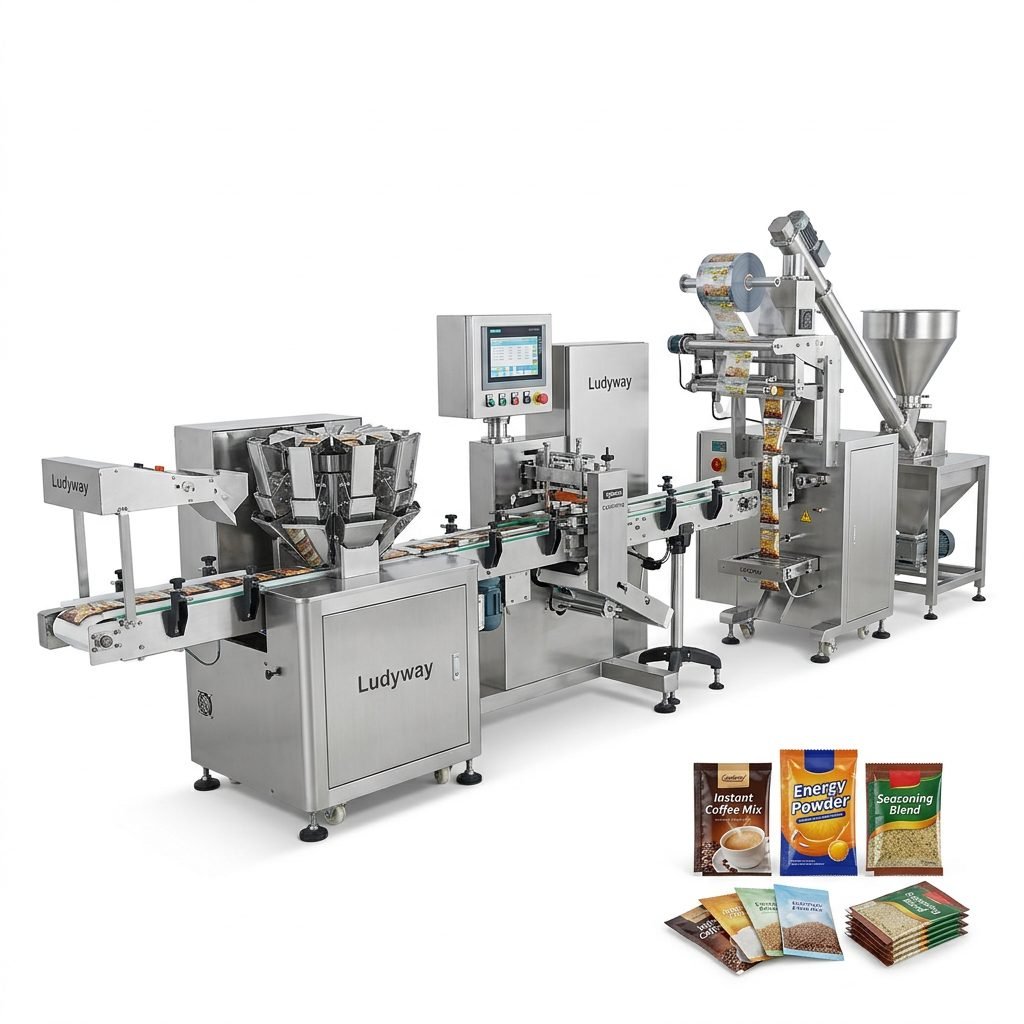
Assess how the wrapper will integrate with your upstream feeders (like scales or counters) and downstream systems (cartoners, case packers). Features like automatic film splicing and touch-screen PLC controls with recipe memory are valuable for automated lines.
5. Assess Supplier Support & Service
The supplier’s reputation is crucial. Choose a partner that offers comprehensive after-sales support, including installation, operator training, readily available spare parts, and responsive technical service. A supplier with over 30 years of industry experience brings invaluable expertise to the table.
By thoroughly understanding the types, principles, and applications of flow wrapper machines, and by carefully considering the buying tips outlined above, you can select equipment that not only meets your current packaging demands but also scales with your business growth. Partnering with a knowledgeable and reliable machinery provider ensures a smooth transition and optimal performance on your production floor.
Frequently Asked Questions (FAQs)
Q1: What is the main difference between a flow wrapper and a vertical form-fill-seal (VFFS) machine?
A: The primary difference is the product feeding direction and the resulting package shape. Flow wrappers (HFFS) feed products horizontally into a film tube, creating pillow packs ideal for solid items. VFFS machines drop products vertically into a pre-formed bag, making them better suited for loose, granular, or powdered products like snacks or coffee.
Q2: Can a flow wrapper handle products that are not perfectly rectangular?
A: Yes, modern flow wrappers are quite versatile. With the right forming box and gentle handling systems (like intermittent motion), they can package round, oval, or irregularly shaped products such as rolls, muffins, or grouped hardware items effectively.
Q3: What type of packaging film can be used with a flow wrapper?
A: Flow wrappers can run a wide variety of heat-sealable flexible films, including polyethylene (PE), polypropylene (OPP, BOPP), polyester (PET), laminates (e.g., PET/PE, OPP/CPP), and metallized films. The choice depends on the required barrier properties (moisture, oxygen, light), clarity, and printability.
Q4: How important is after-sales service when purchasing a flow wrapper?
A: It is critically important. Packaging machines are long-term investments. Reliable after-sales service—including installation, training, readily available spare parts, and prompt technical support—is essential for minimizing production downtime, ensuring optimal machine performance, and protecting your investment over its entire lifespan.
Q5: Can flow wrappers be integrated into a fully automated packaging line?
A: Absolutely. Flow wrappers are designed as core components of automated lines. They can be seamlessly integrated with upstream equipment like product feeders, checkweighers, and metal detectors, and downstream with systems like cartoners, case packers, and palletizers. Modern machines with PLC controls and communication protocols (like Ethernet/IP) facilitate this integration.