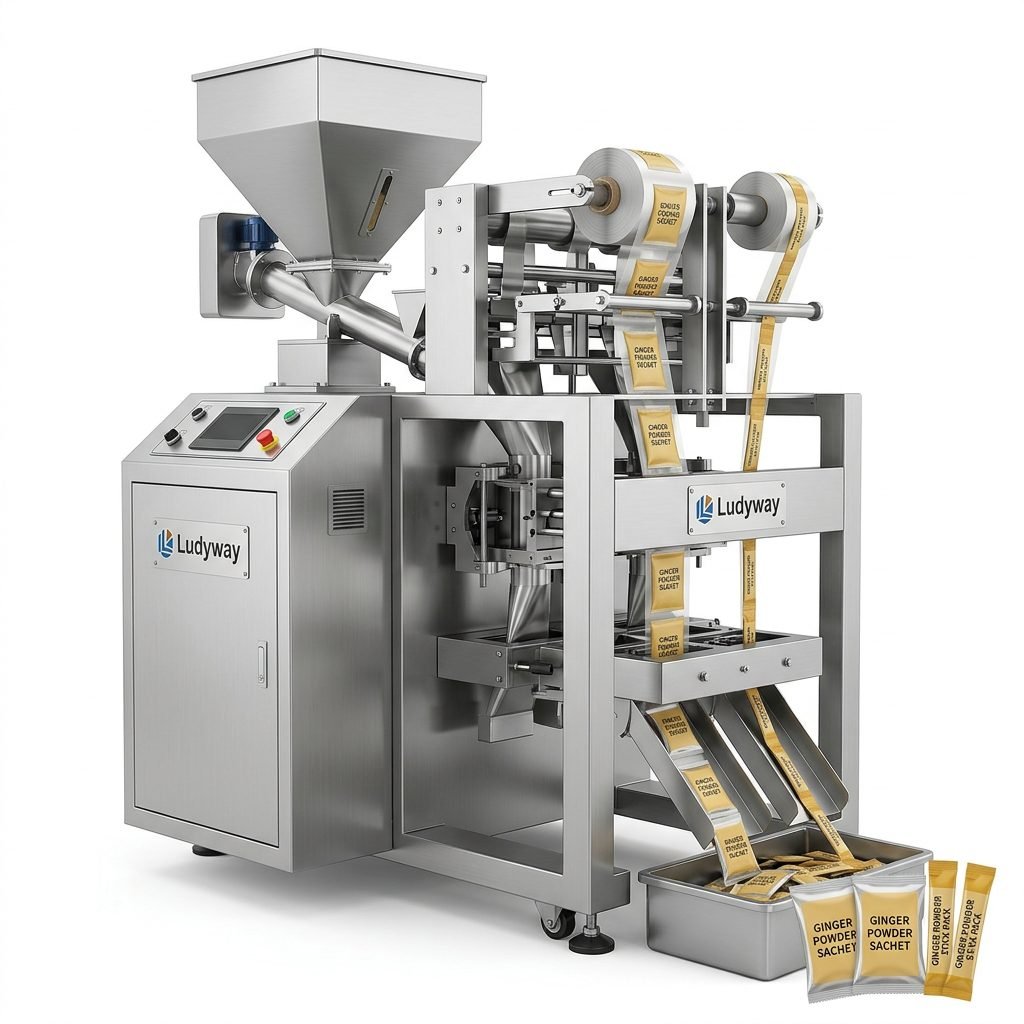
Choosing the right retort packaging machine is a critical decision for any food manufacturer aiming to achieve commercial sterilization and extend product shelf life. This comprehensive guide will walk you through the key factors to consider, ensuring you select the best solution for your specific production needs.
Core Objective: A retort packaging machine thermally processes sealed containers to destroy pathogenic and spoilage microorganisms, enabling safe, ambient-temperature storage for months or even years.
Understanding Retort Technology and Packaging Formats
The retort process, also known as terminal sterilization, involves heating hermetically sealed food containers under controlled pressure and temperature. The machine must maintain precise conditions to ensure even heat penetration while preventing package deformation.
Primary Packaging Formats for Retort Processing
- Retort Pouches & Stand-up Pouches: Flexible, lightweight, and offer excellent heat transfer. Ideal for ready-to-eat meals, sauces, and vegetables.
- Trays & Semi-Rigid Containers: Often made from polypropylene or multi-layer materials. Perfect for meals with higher solid content or specific presentation needs.
- Cans (Steel & Aluminum): The traditional format, offering superior strength and barrier properties.
Key Factors for Choosing Your Retort Machine
1. Production Capacity and Throughput
Assess your required output in containers per hour. Batch retorts are suitable for smaller, diversified production, while continuous rotary or hydrostatic retorts are designed for high-volume, single-product lines. Consider peak demand and future growth.
2. Process Control and Uniformity
The heart of a reliable retort is its control system. Look for machines with:
- Precise temperature and pressure sensors.
- Automated F0 value calculation and monitoring to verify lethality.
- Uniform steam/water distribution for consistent results across the entire batch.
3. Energy and Water Efficiency
Modern retorts focus on sustainability. Water spray or full-immersion systems with efficient heat recovery can significantly reduce utility consumption and operating costs compared to older steam-air models.
4. Flexibility and Changeover
If you run multiple products or package sizes, evaluate the machine’s changeover time. Features like quick-door mechanisms, adaptable basket configurations, and programmable recipe storage are invaluable.
5. Safety and Regulatory Compliance
The machine must be designed to safely handle high pressure and temperature. Ensure it meets all relevant safety standards (e.g., ASME, PED) and is built to facilitate validation processes required by food safety regulations like FDA 21 CFR Part 113.
⚠️ Critical Consideration: Package Compatibility
Not all packaging materials withstand retort conditions. Your chosen machine must be compatible with your package’s material (e.g., specific plastic layers, seal integrity) and geometry. Always conduct thorough process authority validation with your specific product-packaging combination.
Types of Retort Packaging Machines
Batch Retorts (Vertical & Horizontal)
Best for low-to-medium volume, high-mix production. They offer great flexibility and a lower initial investment. Loading and unloading are typically manual or semi-automatic.
Continuous Retorts (Rotary & Hydrostatic)
The solution for high-volume production of similar products. They provide consistent quality and superior energy efficiency but require a significant capital investment and are less flexible.
Water Spray/Immersion Retorts
Use heated water overpressure for temperature control. Excellent for processing flexible and semi-rigid packages with delicate geometries, as the water supports the containers and prevents distortion.
Integration with Upstream and Downstream Equipment
Your retort should not be an island. For a seamless packaging line, consider its integration with:
- Filling and Sealing Machines: Consistent fill weight and a hermetic seal are prerequisites for safe retorting.
- Loading/Unloading Systems: Automating these steps boosts throughput and reduces labor.
- Labeling and Secondary Packaging: Ensure the line flow from cooling to final packaging is efficient.
The Importance of Supplier Expertise and Support
Choosing a machine is also about choosing a partner. A supplier with deep application knowledge, like Ludyway Machinery, can provide invaluable guidance. Look for a provider offering comprehensive services:
- Detailed factory acceptance testing (FAT) and site installation support.
- Thorough operator and maintenance training programs.
- Readily available spare parts and responsive technical service.
- Assistance with process validation and documentation.
With over 30 years of industry experience, experts understand that a successful installation depends on both the equipment and the partnership behind it.
Conclusion: Making an Informed Investment
Selecting the best retort packaging machine requires a careful balance of technical specifications, production needs, and total cost of ownership. Prioritize process uniformity, safety, and supplier reliability. By thoroughly evaluating your product portfolio, capacity requirements, and long-term goals, you can invest in a sterilization solution that ensures product safety, quality, and market success for years to come. For exploring specific packaging solutions, consulting with an experienced supplier is the recommended next step.
Frequently Asked Questions (FAQs)
What is the main difference between a retort and a pasteurizer?
Retort processing achieves commercial sterility (destruction of all pathogenic and spoilage microorganisms) for ambient shelf-stable products. Pasteurization only reduces pathogen levels to a safe point and typically requires refrigerated storage for a limited shelf life.
Can I use a regular pouch in a retort machine?
No. Retort pouches are specially engineered multi-laminate structures designed to withstand high temperatures and pressures while maintaining seal integrity and barrier properties. Using a non-retort-grade pouch will lead to failure.
How long does a retort cycle typically take?
Cycle time varies greatly based on product, package size, and machine type. It includes come-up time, holding (sterilization) time, and cooling time. A cycle can range from 30 minutes to over 90 minutes. The critical factor is achieving the required F0 value.
What is the F0 value, and why is it important?
The F0 value is a measure of thermal lethality delivered to a product. It quantifies the equivalent minutes of sterilization at 121.1°C (250°F). Monitoring and documenting the achieved F0 is essential for validating that the process delivered a safe, commercially sterile product.
Is retorted food less nutritious than fresh food?
While heat-sensitive vitamins (like some B vitamins and Vitamin C) can degrade, retorting effectively preserves most macro- and micronutrients, protein, and dietary fiber. The trade-off for extended shelf life, safety, and convenience is considered acceptable, and the nutritional value remains significant.