Pharmaceutical products can absolutely be packaged by machines—but not by just any machine. In the pharmaceutical industry, packaging equipment must do far more than fill and seal. It must support accuracy, hygiene, traceability, regulatory compliance, product protection, and process validation.
Whether the product is a powder sachet, oral liquid, tablet, capsule, cream, gel, or granule, the right pharmaceutical packaging machine can help manufacturers improve output while maintaining strict quality standards. The key is selecting equipment designed for pharma applications, clean production environments, and dependable dosing performance.
What Makes Pharmaceutical Packaging Different?
Packaging medicines is very different from packaging ordinary consumer goods. In pharma, every packaged unit may affect patient safety, shelf life, dosage integrity, and legal compliance. A packaging machine used for pharmaceuticals must consistently perform under tightly controlled production conditions.
- Precise filling accuracy for powders, granules, liquids, tablets, or capsules
- Compatibility with GMP-oriented production environments
- Clean-contact design and easy sanitation
- Reliable sealing to protect against moisture, oxygen, and contamination
- Batch coding and traceability support
- Inspection integration such as checkweighing, metal detection, or vision systems
- Validation and documentation readiness
This is why the answer to the question is not simply “yes.” A packaging machine can package pharmaceuticals if it is properly engineered, configured, and qualified for pharmaceutical use.
Can a Packaging Machine Package Pharmaceuticals?
Yes. Modern packaging machines can package a wide range of pharmaceutical products, including:
- Powder medicines
- Granule medicines
- Oral liquids
- Topical creams and gels
- Tablets and capsules
- Medical wipes and certain healthcare consumables
- Nutraceutical and supplement products packaged under pharma-like standards
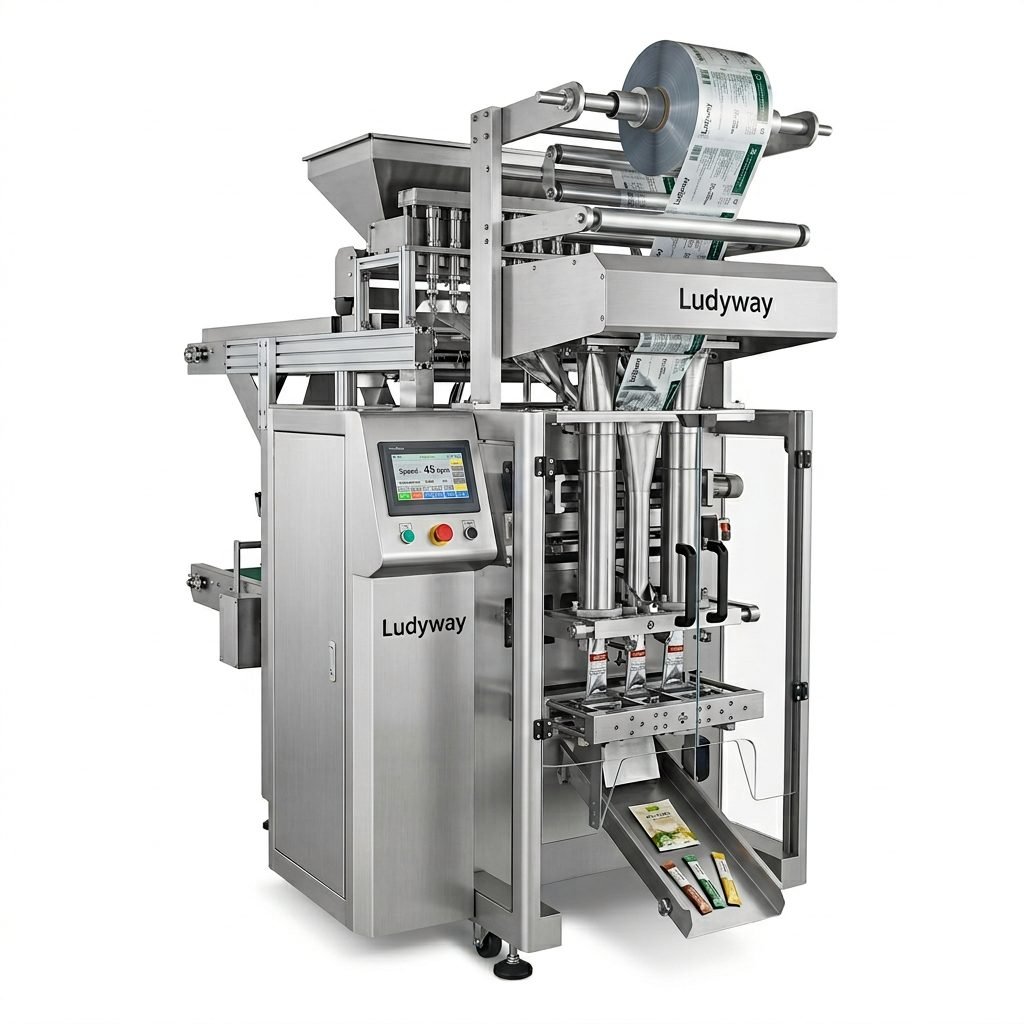
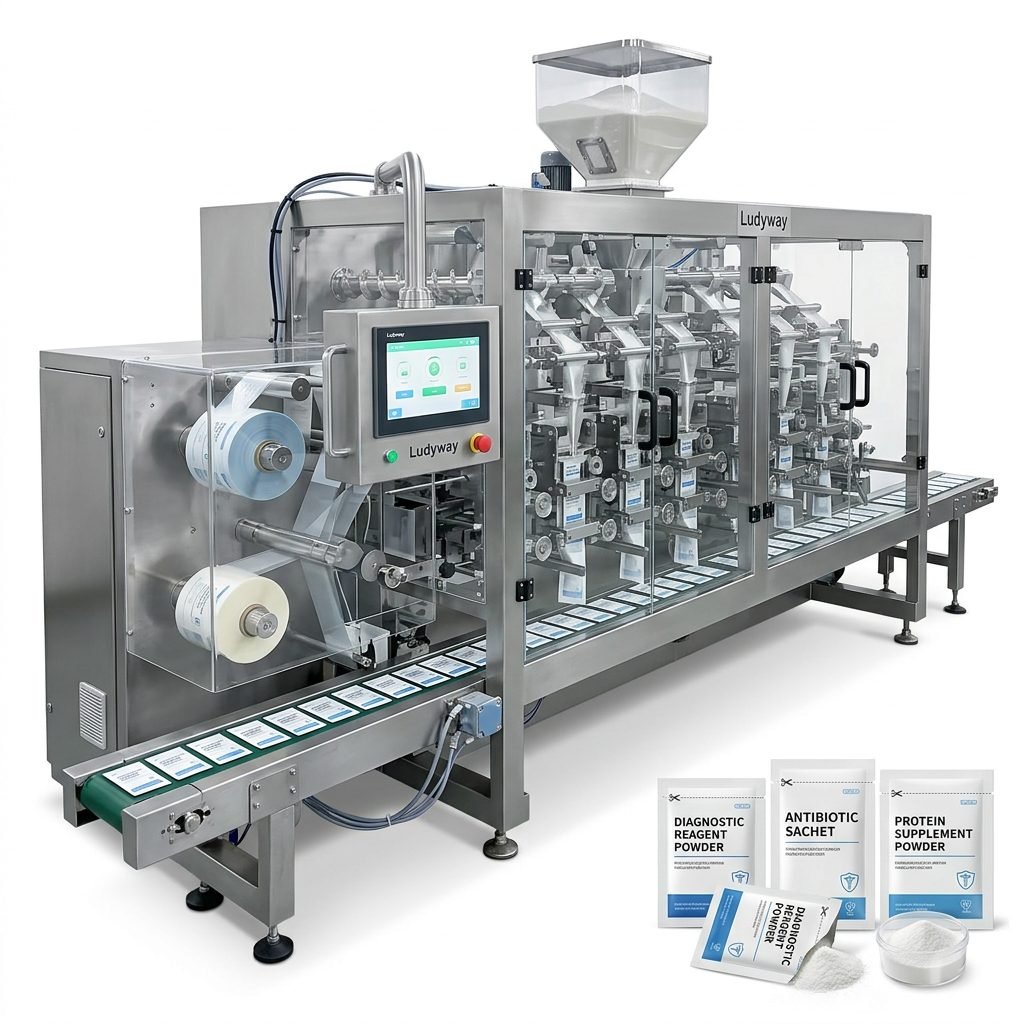
However, the machine must match the product form, packaging format, output target, and compliance requirements. For example, a sachet machine for pharmaceutical powder must deliver accurate dosing, strong seals, low dust leakage, and consistent print registration. A blister or tablet line must also support counting, feeding, and sealing precision.
Types of Pharmaceutical Packaging Machines
Pharmaceutical packaging equipment is not one single machine category. It includes several machine types depending on the dosage form and pack style.
| Machine Type | Suitable Products | Common Packaging Formats |
|---|---|---|
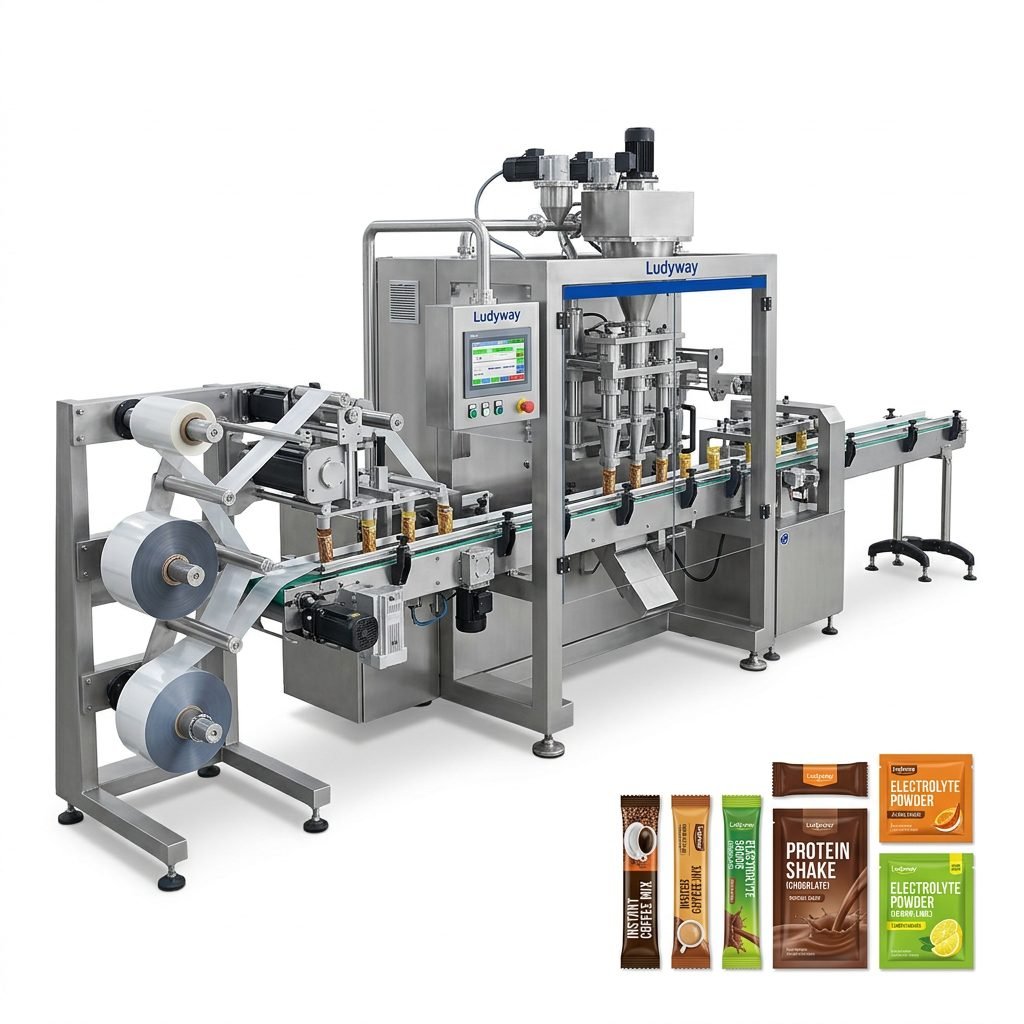
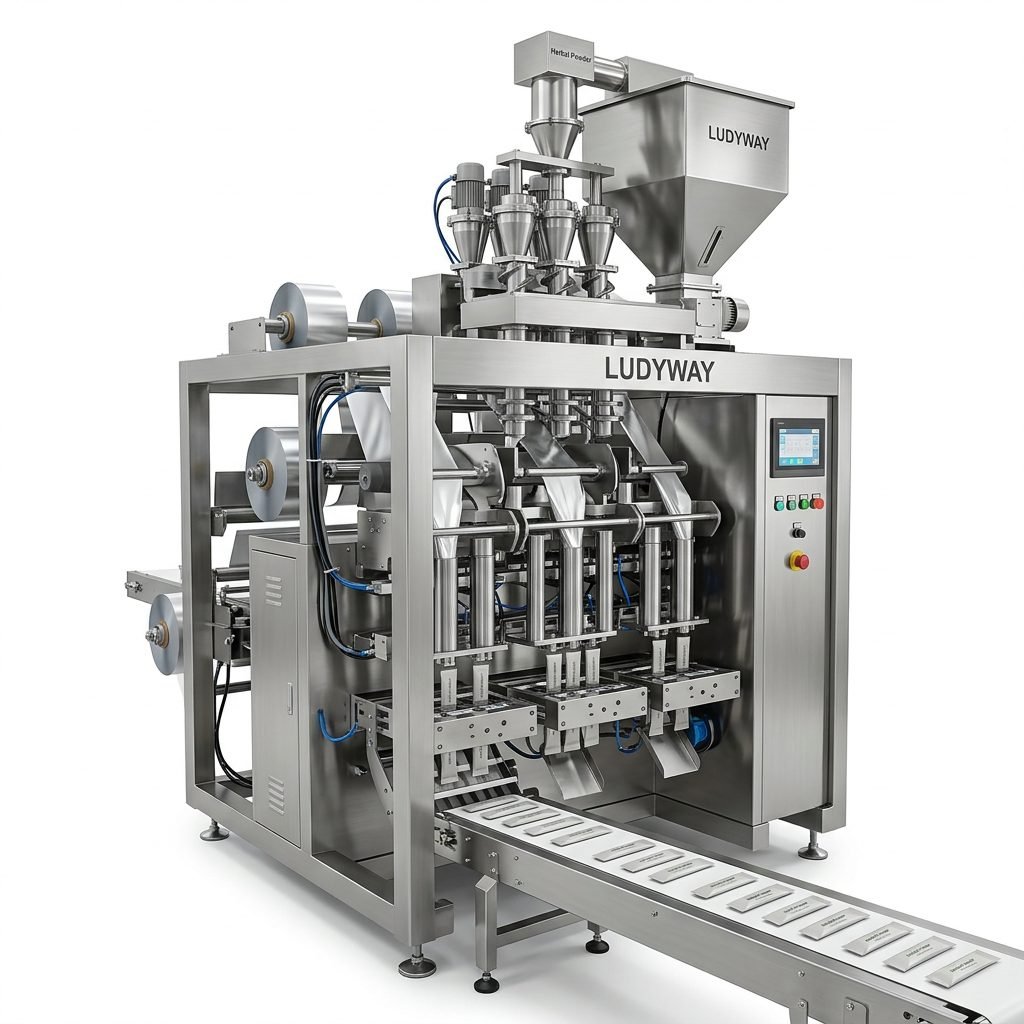
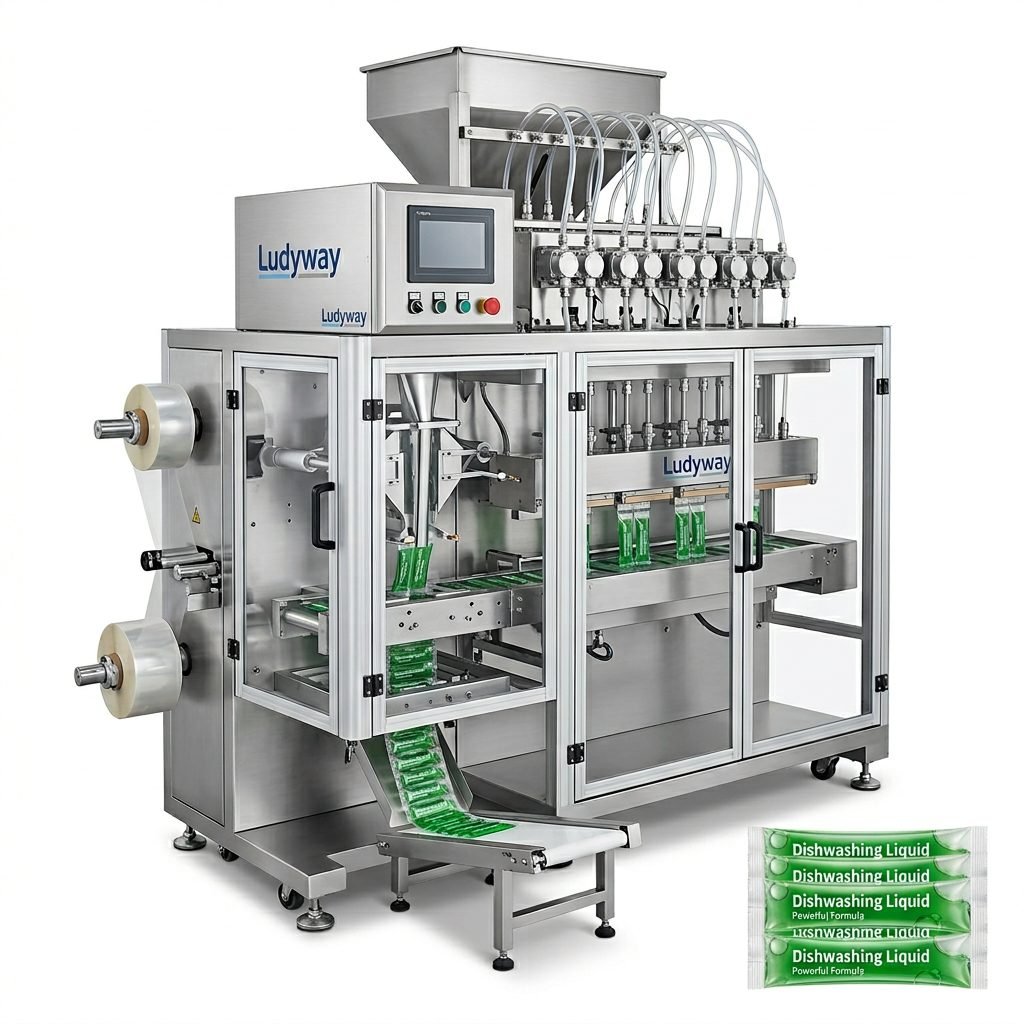
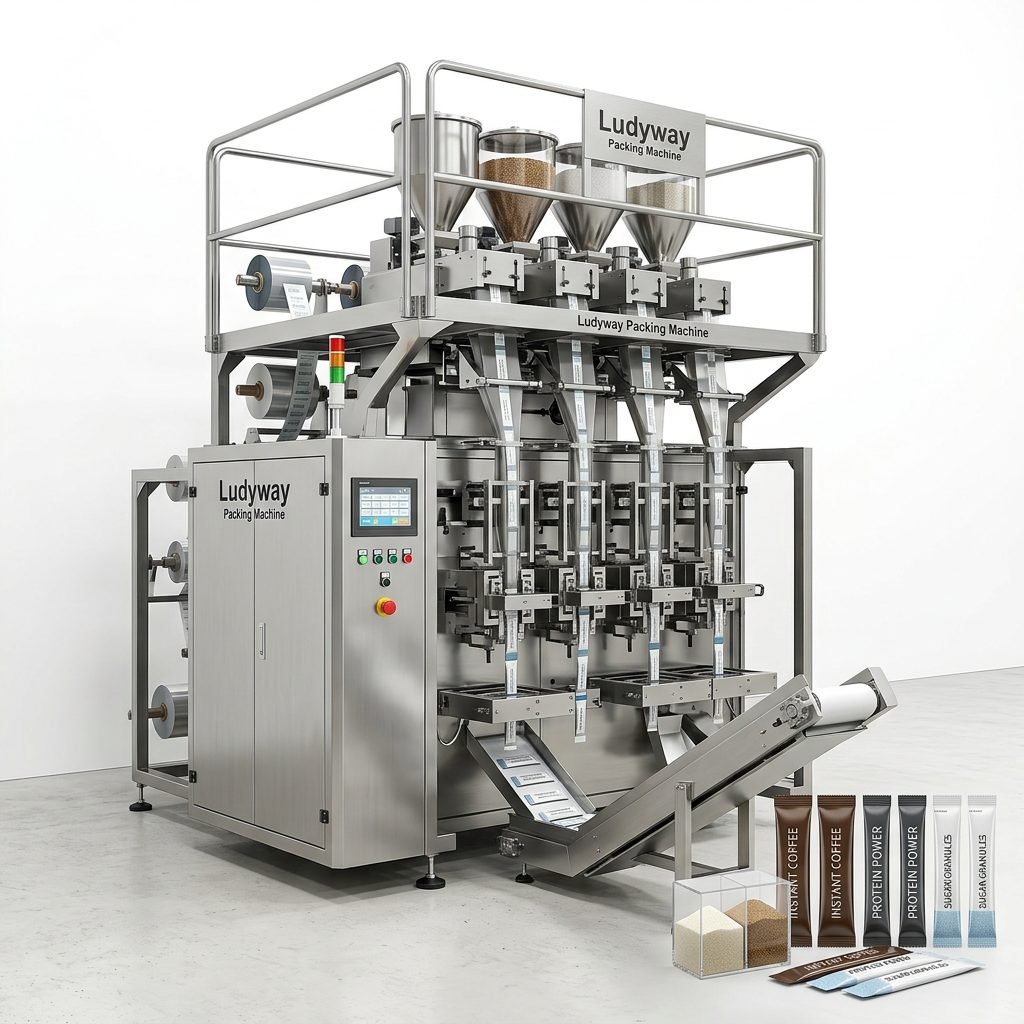
| Sachet/Stick Pack Machines | Powders, granules, gels, oral liquids | Sachets, stick packs |
| Blister Packaging Machines | Tablets, capsules | Blister cards |
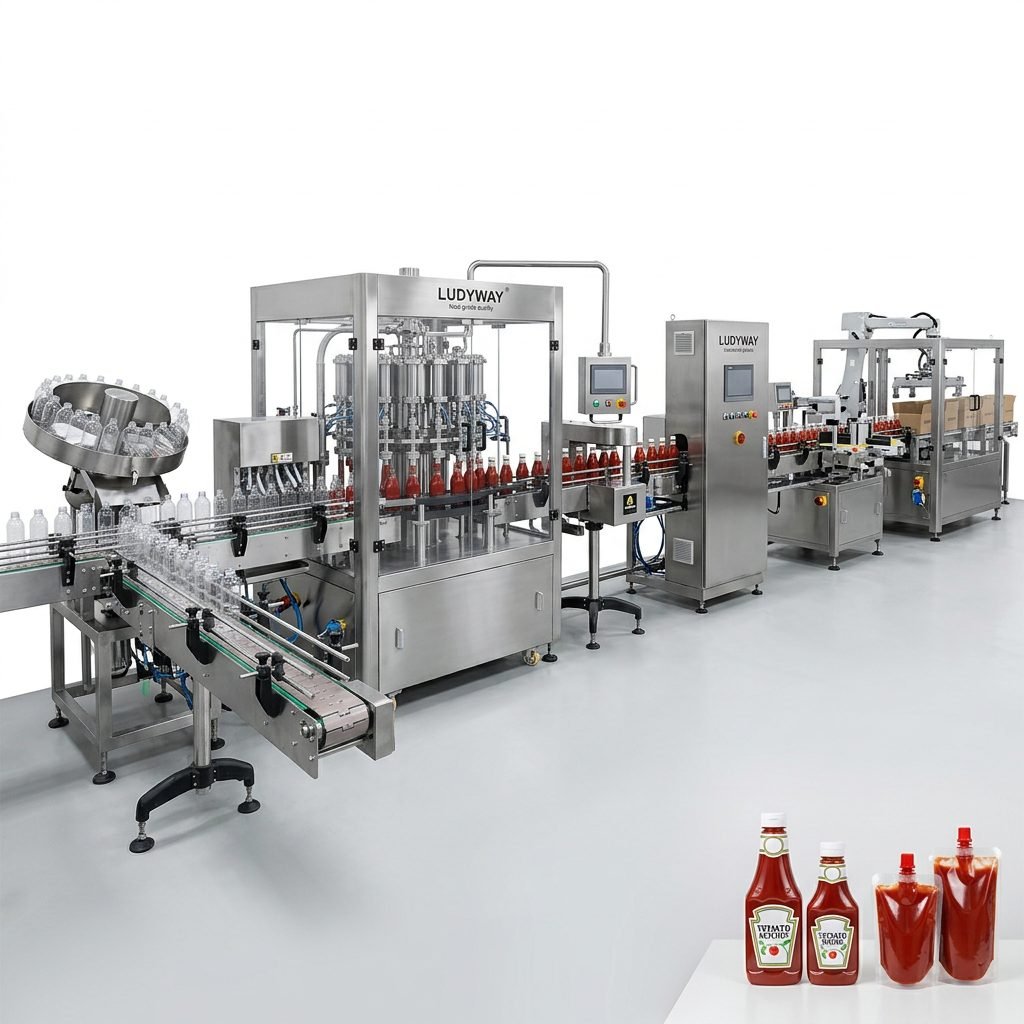
| Bottle Filling Lines | Tablets, capsules, syrups, liquids | Bottles with caps, labels, cartons |
| Tube Filling & Sealing Machines | Ointments, creams, gels | Tubes |
| Pouch Packaging Machines | Powders, liquids, healthcare products | Premade pouches or formed pouches |
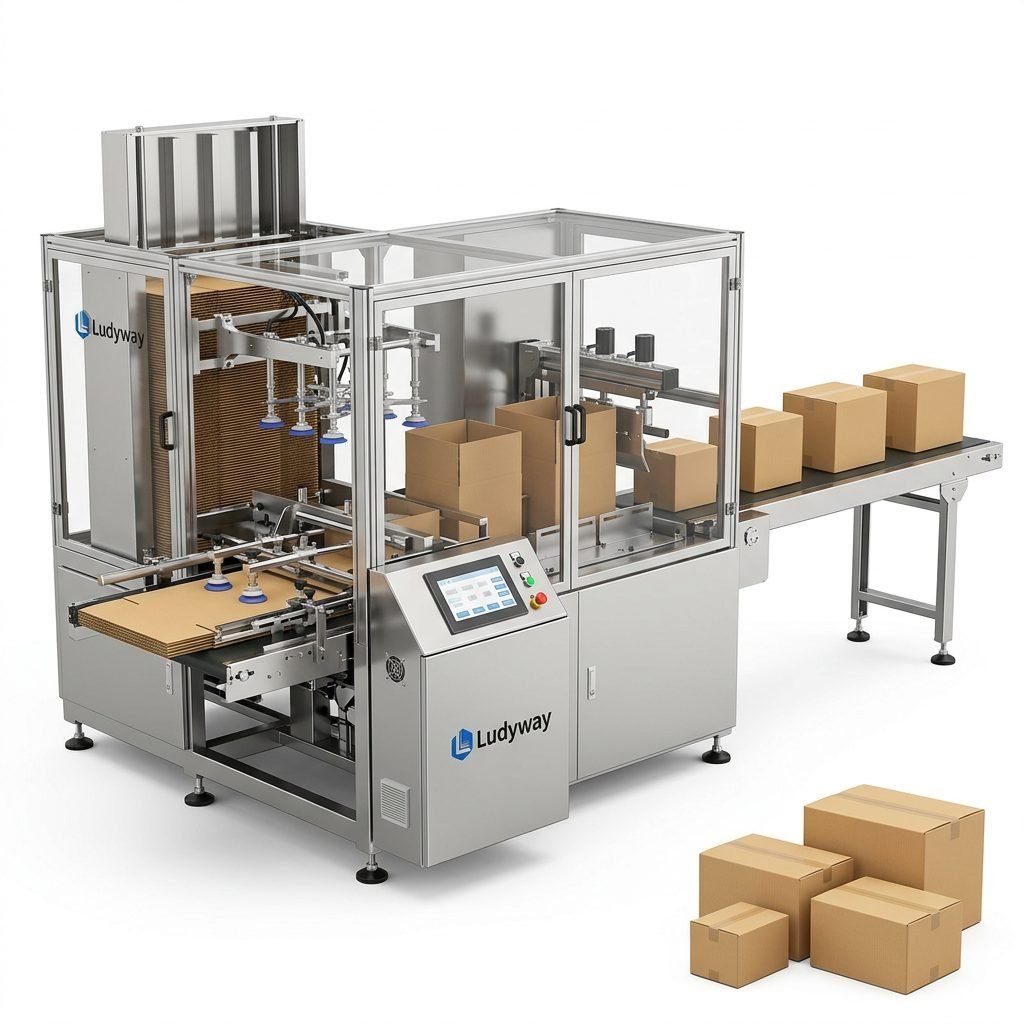
| Cartoning Machines | Primary packaged pharma products | Cartons and secondary packs |
| Coding & Inspection Systems | All pharmaceutical categories | Batch coding, vision check, weighing |
Which Pharmaceutical Products Are Commonly Machine-Packed?
1. Powder Pharmaceuticals
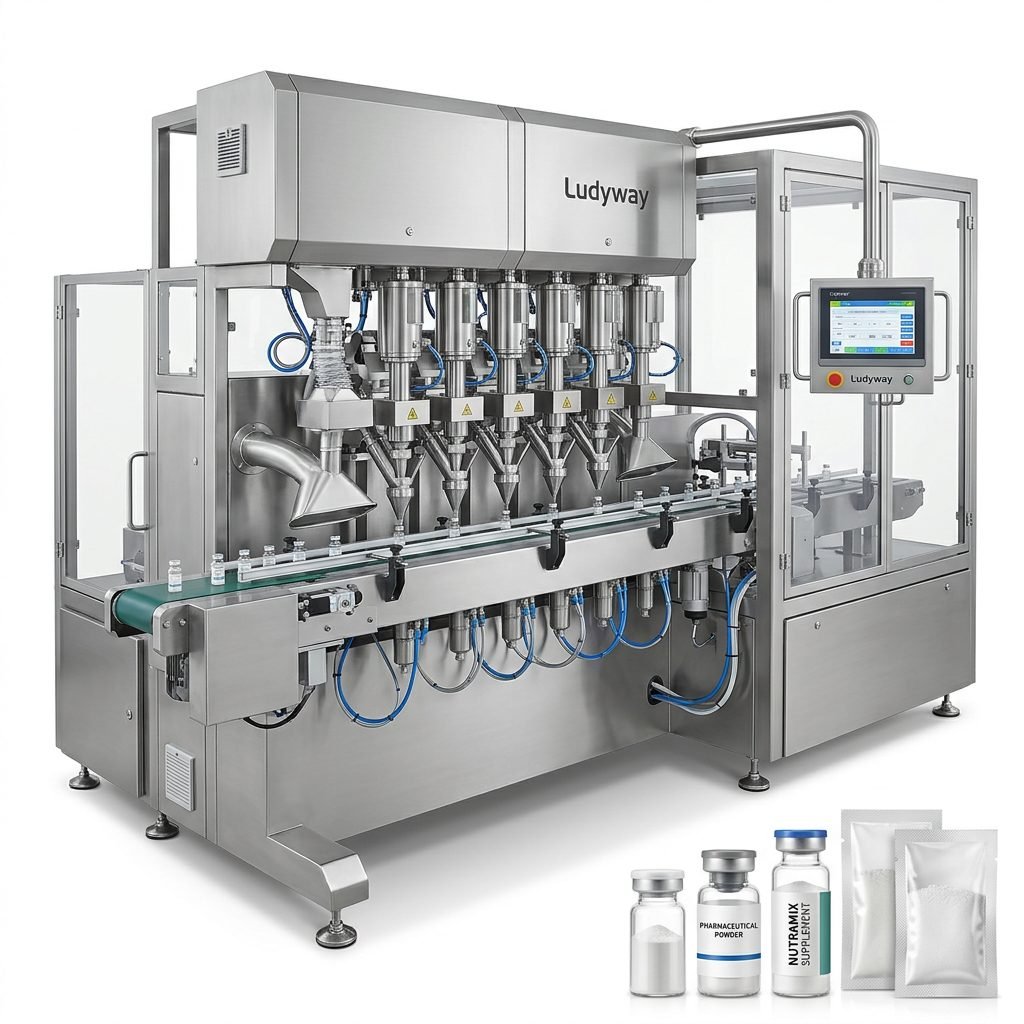
Examples include antibiotic powders, glucose powder, oral rehydration salts, probiotics, herbal powders, and supplement blends. These are often packed into sachets or stick packs for single-dose convenience.
2. Granule Pharmaceuticals
Cold medicine granules, digestive granules, electrolyte formulas, and pediatric granules are frequently packaged in sealed flexible packs. Accurate filling and low dust escape are especially important.
3. Liquids and Oral Solutions
These can be filled into sachets, stick packs, bottles, vials, or ampoules depending on the product category and dosing requirements.
4. Creams, Ointments, and Gels
Topical products often require tube filling, sachet filling, or unit-dose packs with dependable sealing and clean no-drip filling.
5. Tablets and Capsules
These are typically counted into bottles or packed into blister packs. Secondary packaging may include cartoning, labeling, and case packing.
Core Requirements for a Pharmaceutical Packaging Machine
If a manufacturer wants to use packaging machinery for pharmaceuticals, the equipment should be evaluated against several critical criteria.
Hygienic Design
Product-contact parts should be made from suitable materials, commonly stainless steel, with smooth surfaces and structures that reduce residue accumulation.
Accurate Dosing
Powders and granules require reliable auger or volumetric dosing systems, while liquids may require piston pumps or precision metering pumps. Small dose deviations can create major compliance risks.
Stable Sealing Performance
Weak seals can expose products to moisture, contamination, and leakage. Pharma packaging needs repeatable, validated sealing quality.
Traceability Functions
Batch coding, date printing, serial identification, and integration with inspection systems are often essential for pharmaceutical packaging operations.
Easy Cleaning and Changeover
In facilities handling multiple SKUs, cleaning speed and cross-contamination prevention are major selection factors.
System Integration
Packaging machines often work as part of a line with feeding, counting, cartoning, checkweighing, labeling, coding, and rejection systems.
Benefits of Using Packaging Machines in Pharmaceutical Production
- Higher efficiency: Automatic systems significantly improve output versus manual packaging.
- Better consistency: Machine-controlled filling and sealing reduce variation.
- Improved hygiene: Less product handling lowers contamination risk.
- Lower labor dependence: Automation reduces repetitive manual work.
- Enhanced product protection: Better barrier packaging improves shelf life.
- More professional presentation: Accurate coding, neat seals, and consistent pack appearance help market credibility.
What Packaging Formats Are Popular in Pharma?
Different dosage forms require different packaging structures. These are among the most common formats:
| Packaging Format | Advantages | Typical Applications |
|---|---|---|
| Sachet | Cost-effective, single-dose, portable | Powders, granules, gels |
| Stick Pack | Slim, convenient, premium appearance | Drink powders, oral granules, supplements |
| Blister Pack | Dose separation, protection, compliance-friendly | Tablets, capsules |
| Bottle | High volume, familiar retail format | Tablets, capsules, syrups |
| Tube | Clean dispensing, good for semi-solids | Creams, ointments, gels |
| Vial/Ampoule | High protection, medical-grade presentation | Injectables, oral liquids |
How to Choose the Right Pharmaceutical Packaging Machine
Choosing the right equipment starts with understanding the product and the production goal. Buyers should evaluate the following factors:
Product Form
Is the medicine a powder, granule, tablet, capsule, liquid, cream, or gel? The filling principle must match the material behavior.
Dose Size and Accuracy
Small-dose pharmaceutical products usually need tighter tolerances than standard food applications.
Packaging Material and Format
Foil laminate, blister materials, bottles, tubes, or pouches all require different machine configurations.
Production Capacity
A startup may need a flexible semi-automatic or mid-speed system, while large pharmaceutical plants may need high-speed multi-lane or fully integrated lines.
Compliance Expectations
Documentation, qualification support, cleanability, and validation features may strongly influence the final machine choice.
Future Expansion
A good investment should allow room for additional formats, upstream feeders, and downstream cartoning or inspection modules.
Common Mistakes When Buying Pharma Packaging Equipment
- Choosing based on price alone
- Using a general packaging machine without checking pharma suitability
- Ignoring cleaning and product changeover requirements
- Underestimating sealing validation needs
- Not planning for coding, inspection, and rejection systems
- Failing to test actual pharmaceutical samples before purchase
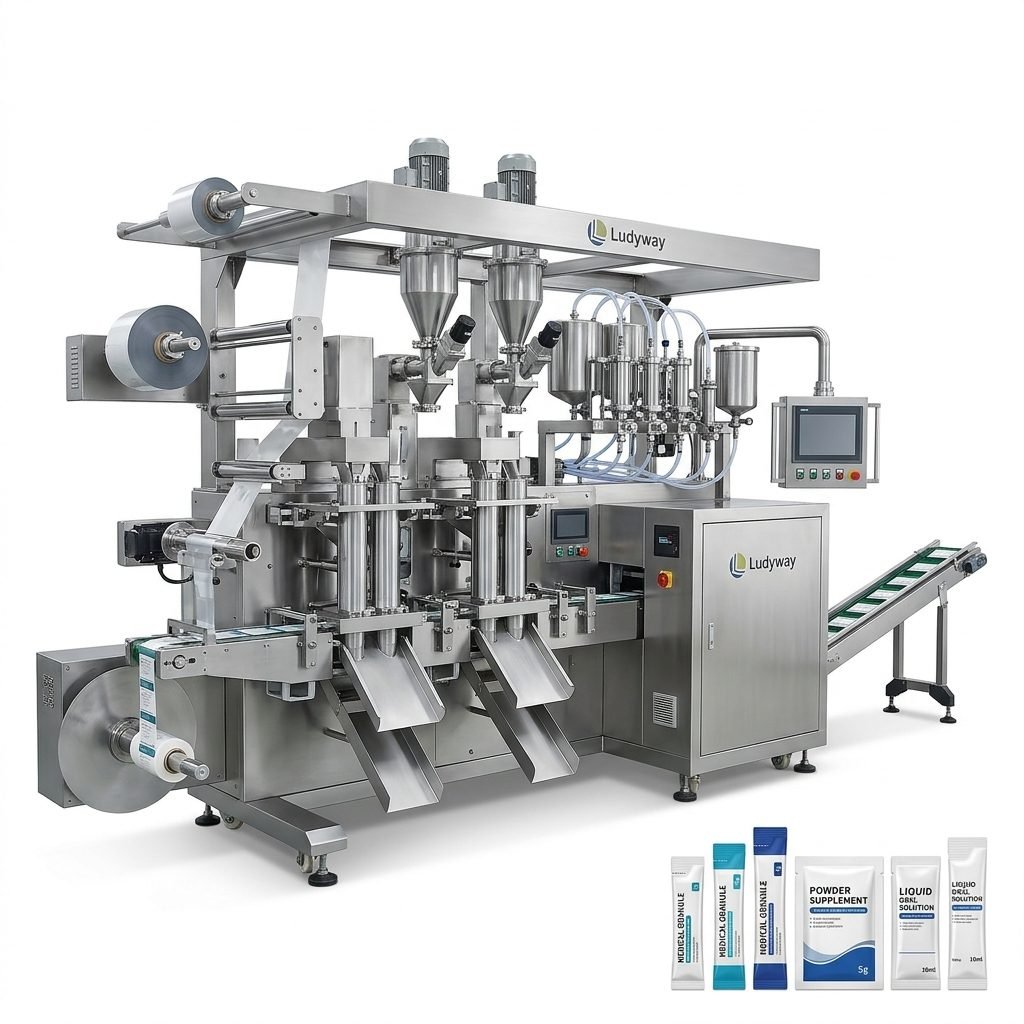
Single Machine or Complete Pharmaceutical Packaging Line?
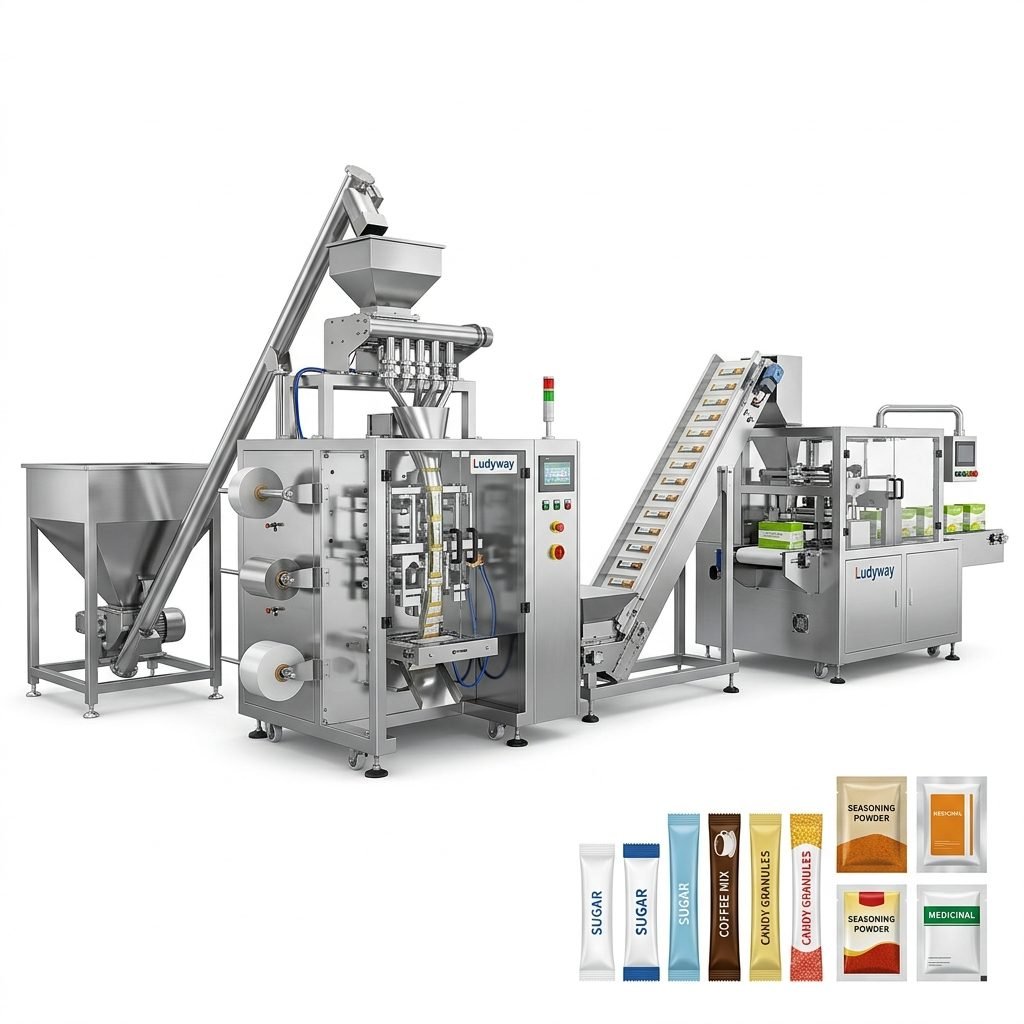
Some companies only need a standalone filler or sachet packer. Others need a complete line that includes feeding, dosing, primary packaging, coding, inspection, cartoning, and final case handling.
A complete packaging line is often the better option when:
- Production volume is growing quickly
- Consistency between process stages matters
- Manual transfer between stations increases contamination risk
- Traceability and inspection must be integrated
- Labor reduction is a major goal
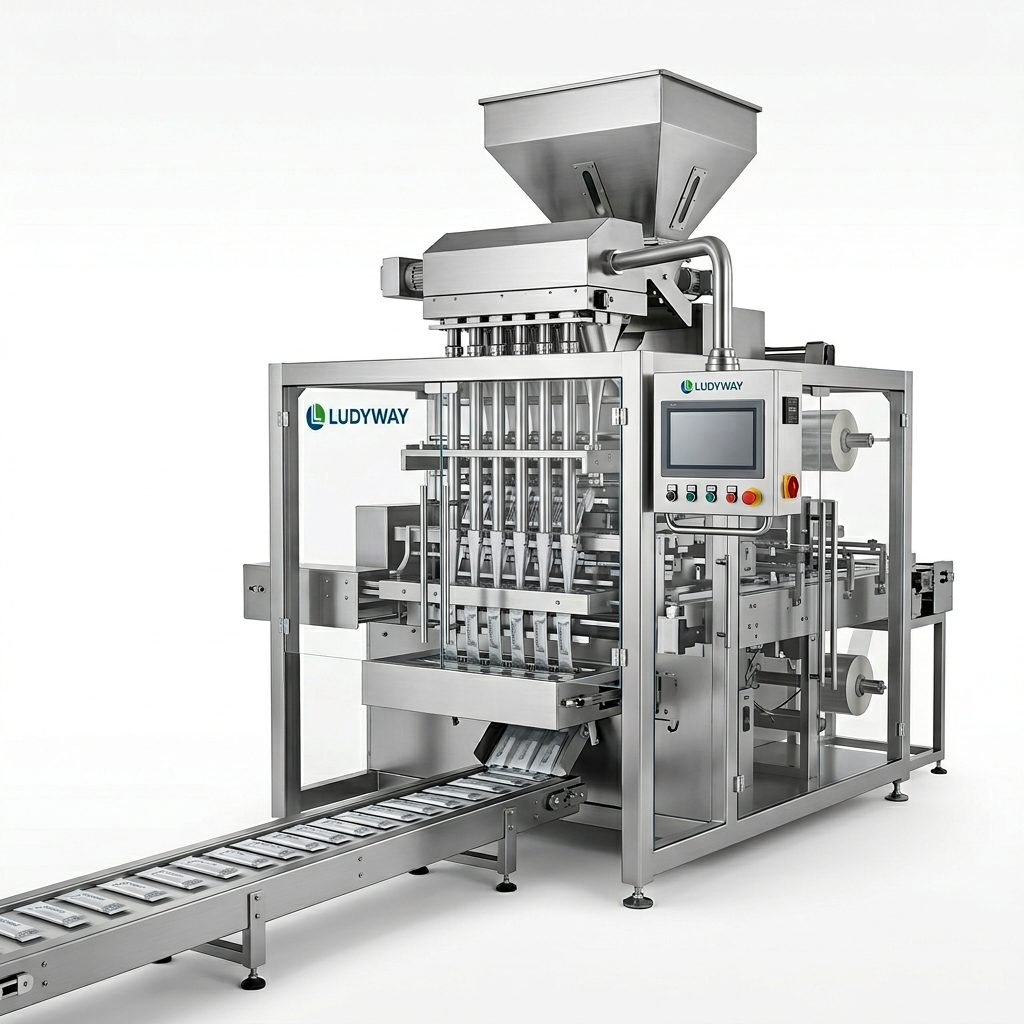
Manufacturers looking for pharmaceutical automation often consider experienced suppliers that can provide both standalone machines and turnkey systems. Ludyway pharmaceutical packaging machine solutions are designed for applications involving powders, granules, liquids, sachets, stick packs, and integrated packaging lines, supported by over 30 years of packaging equipment experience.
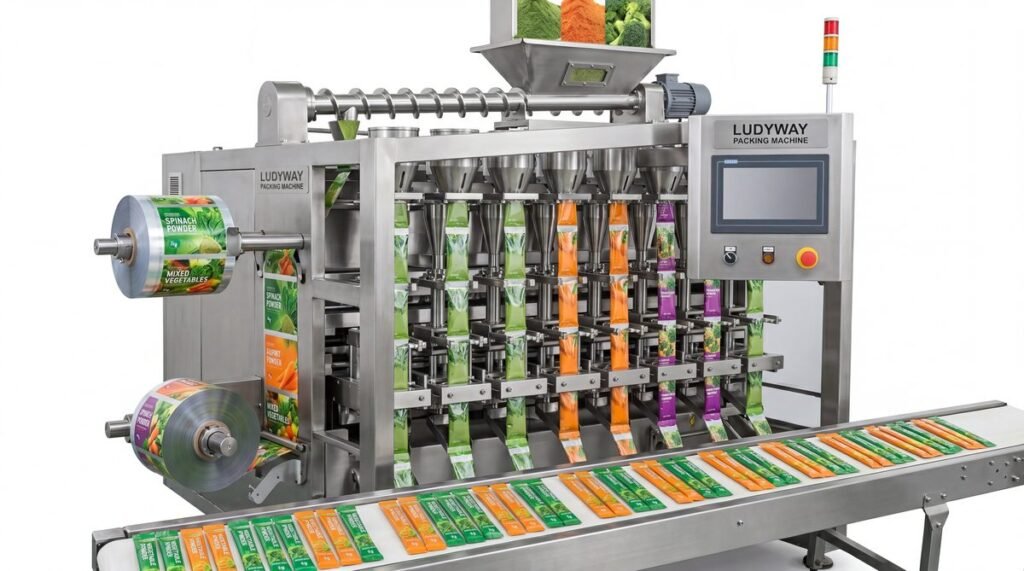
Why Multi-Lane Machines Are Popular for Pharmaceutical Sachets and Stick Packs
For unit-dose pharmaceuticals and health products, multi-lane machines are especially attractive because they increase output without requiring multiple separate machines. This is useful for products such as:
- Cold medicine granules
- Electrolyte powders
- Probiotic sachets
- Herbal granules
- Oral rehydration salts
- Medical and supplement powders
Key benefits include compact layout efficiency, synchronized filling, reduced labor input, and better suitability for high-volume unit-dose production.
Pharmaceutical Packaging Machine Checklist for Buyers
| Checklist Item | Why It Matters |
|---|---|
| Material compatibility | Ensures safe and stable contact with pharmaceutical products |
| Filling accuracy | Supports dosage consistency and product compliance |
| Seal quality | Protects product integrity and shelf life |
| Cleaning design | Helps reduce contamination and downtime |
| Coding and traceability | Supports batch control and recall readiness |
| Inspection integration | Improves quality assurance |
| Line expandability | Makes future upgrades easier and more economical |
| Supplier experience | Reduces technical and after-sales risk |
Final Answer
A packaging machine can package pharmaceuticals when it is specifically selected and configured for pharmaceutical requirements. The most suitable systems combine precise dosing, hygienic structure, stable sealing, traceability features, and compatibility with industry-standard production practices.
For pharmaceutical manufacturers, nutraceutical brands, contract packers, and healthcare product producers, the right packaging machine is not just a tool for speed—it is a key part of product safety, quality control, and scalable growth.