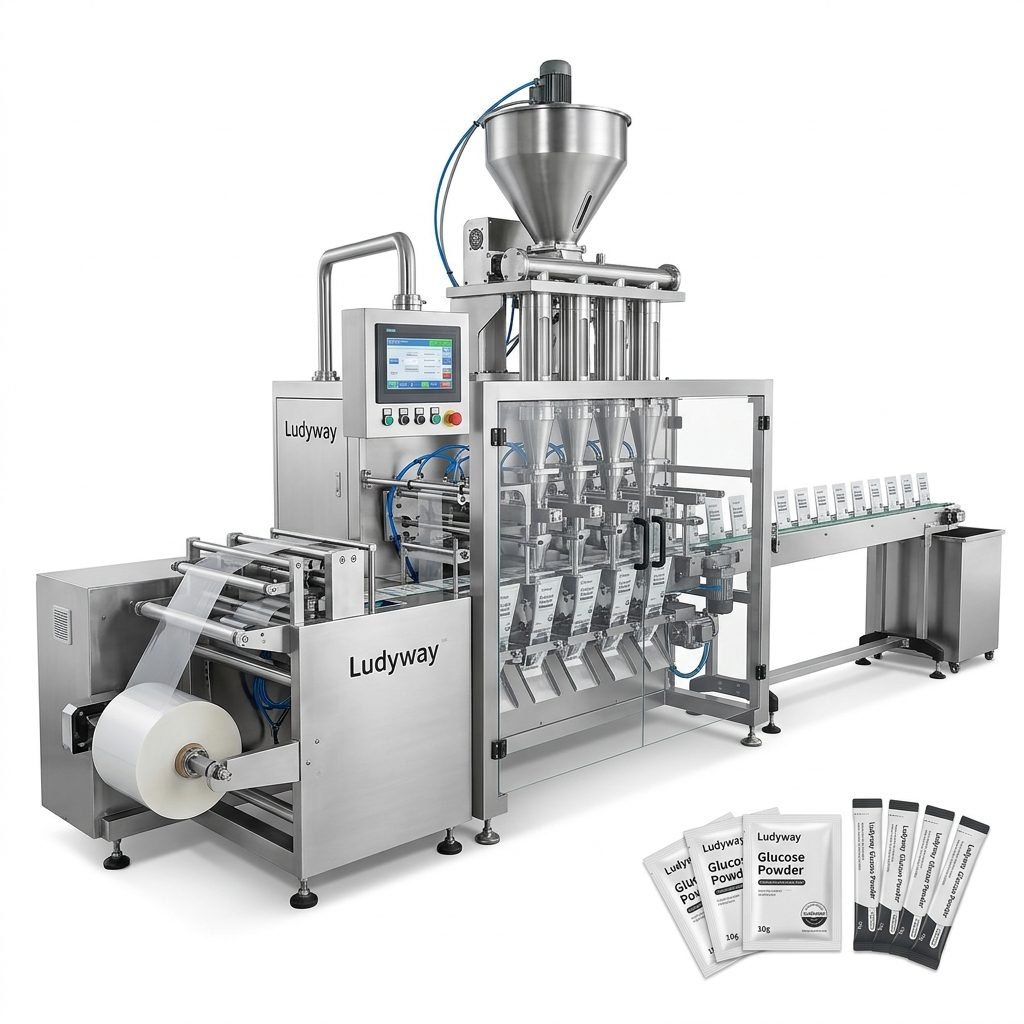
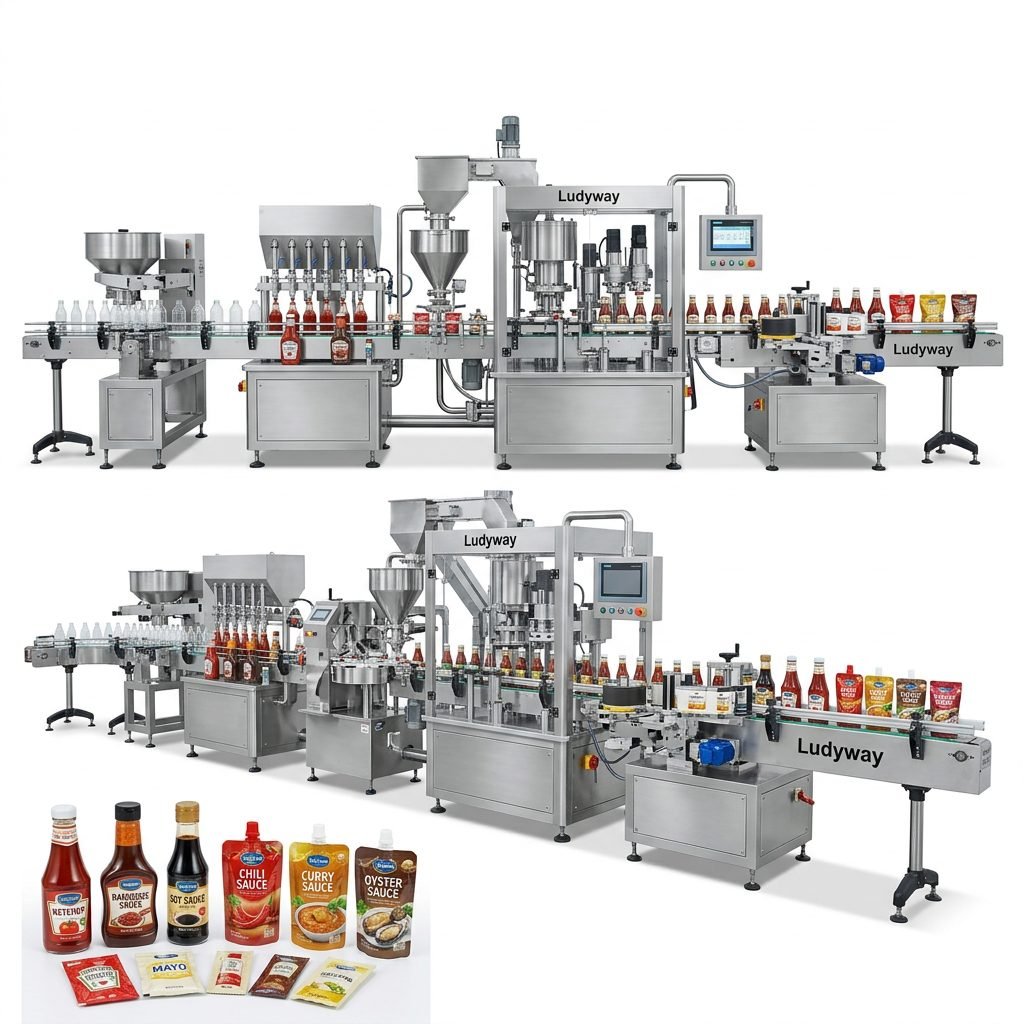
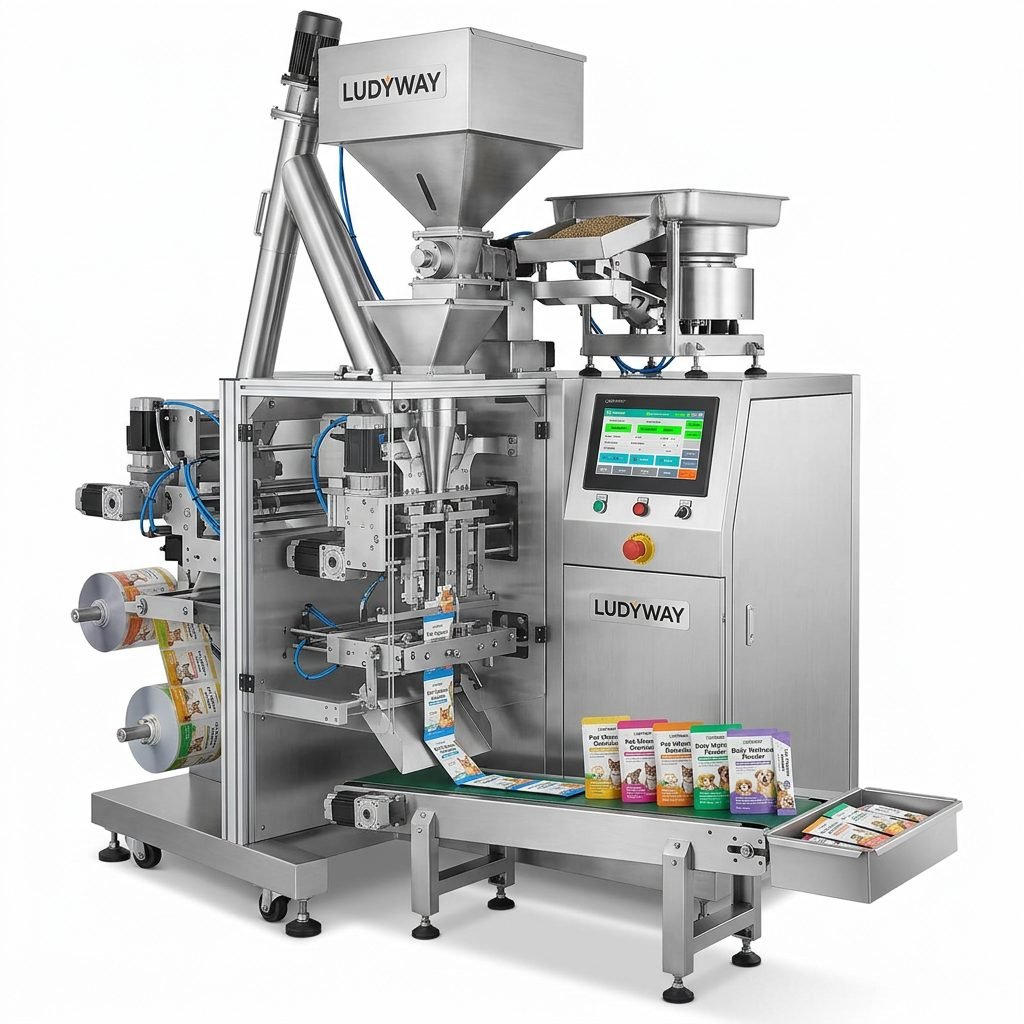
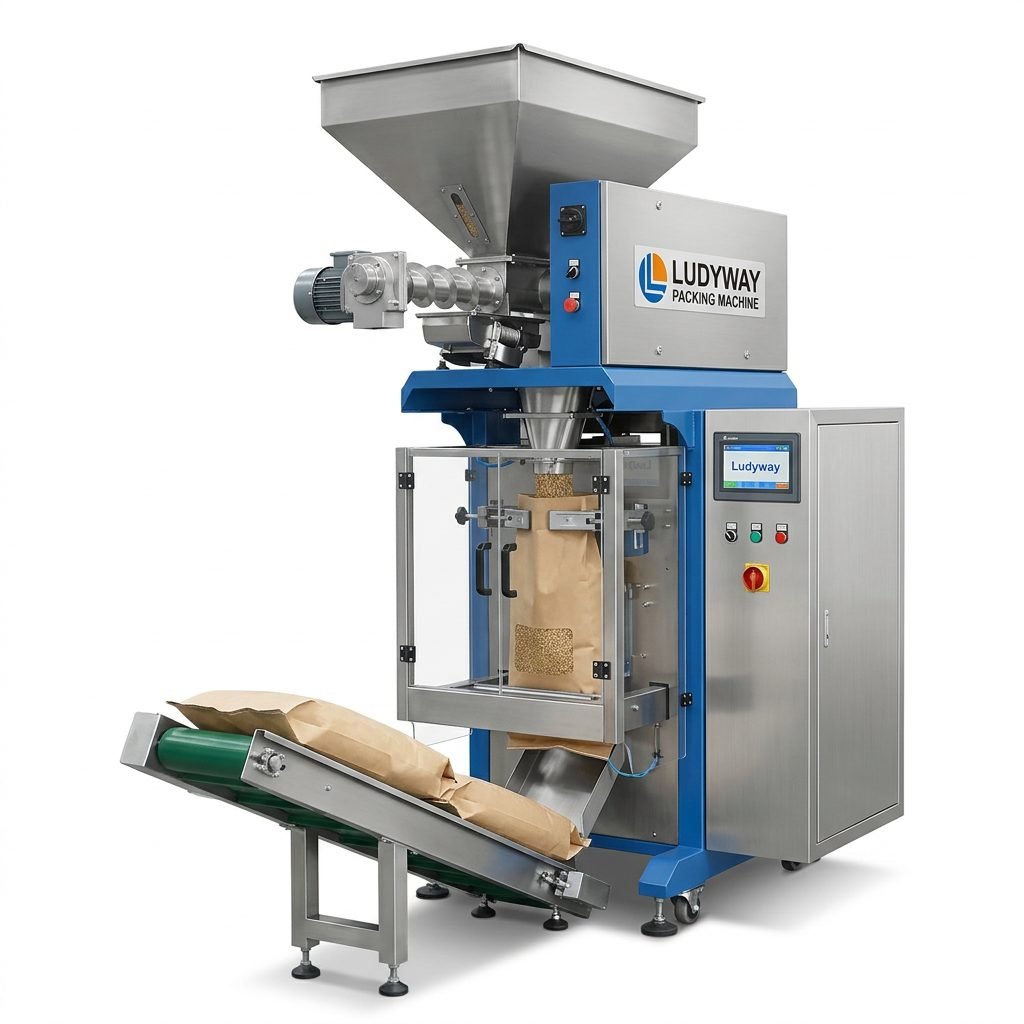
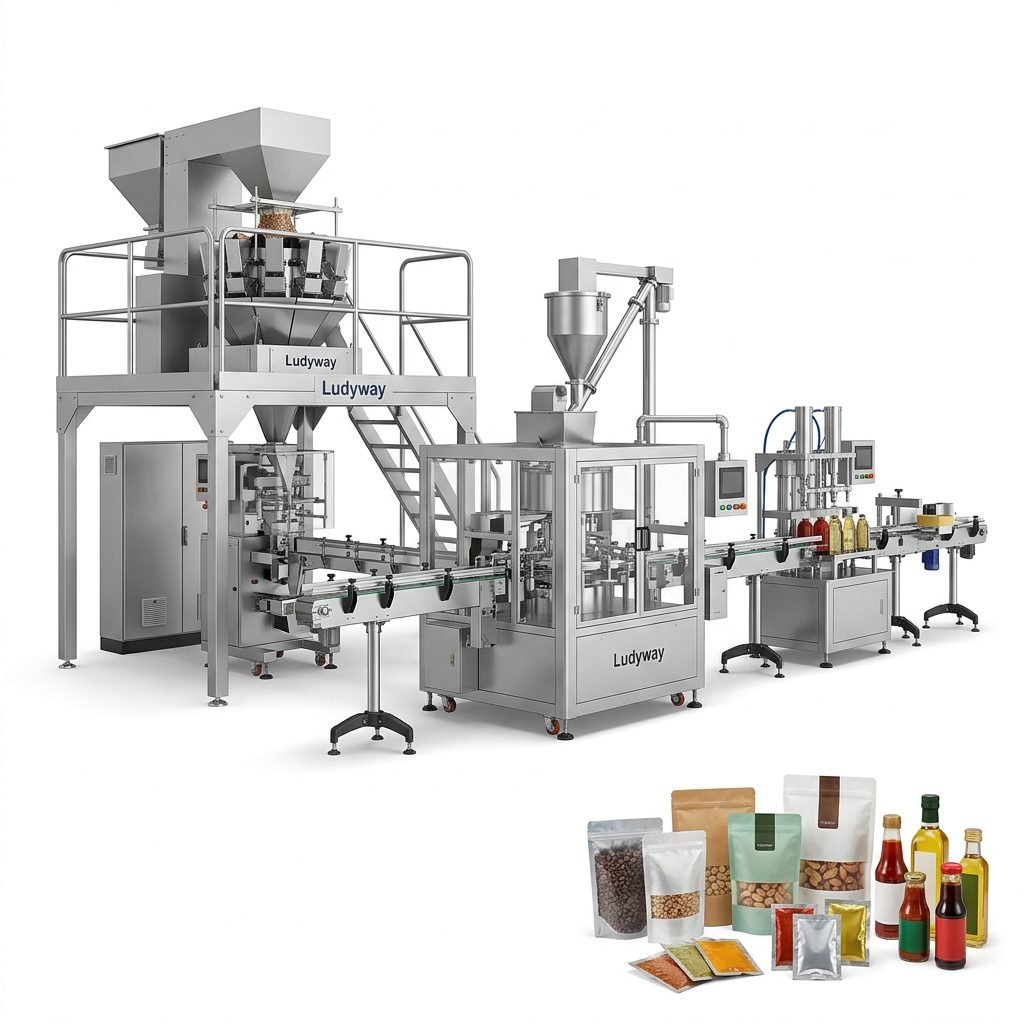
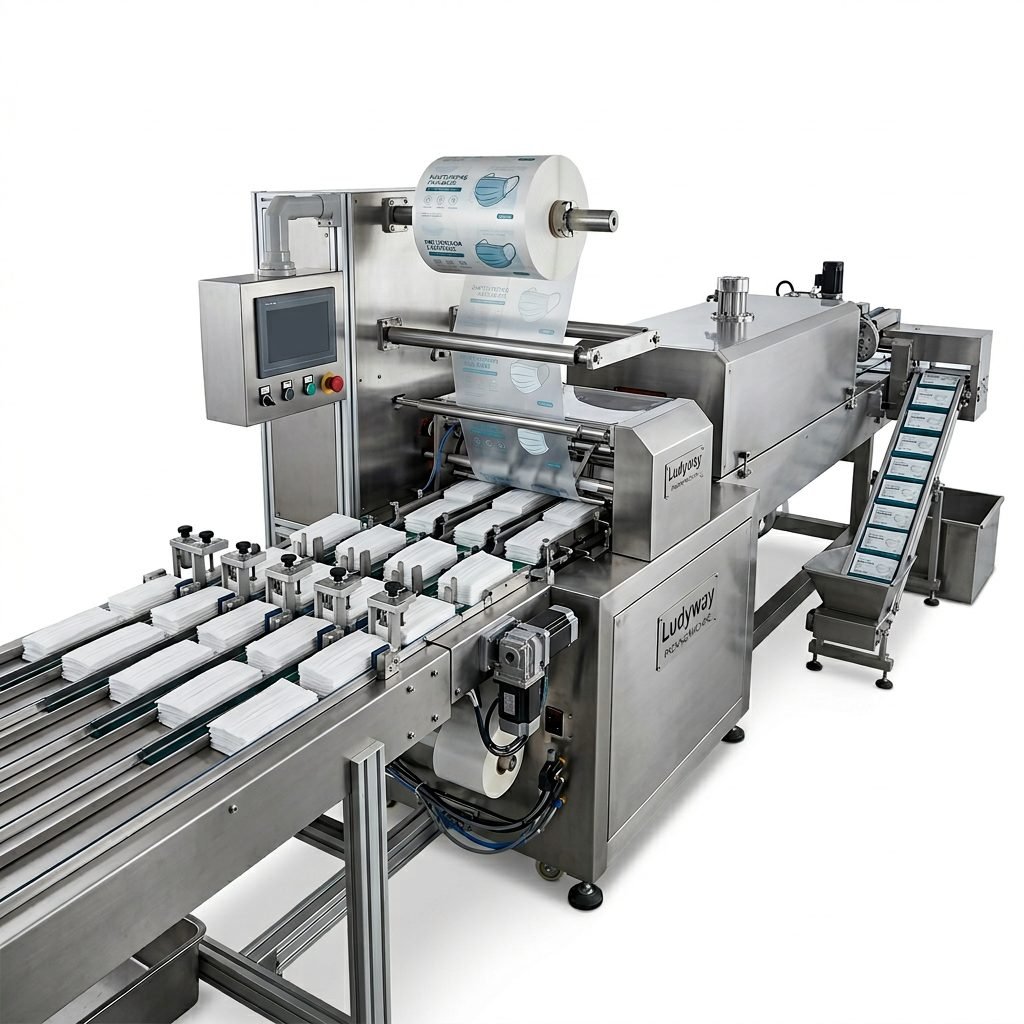
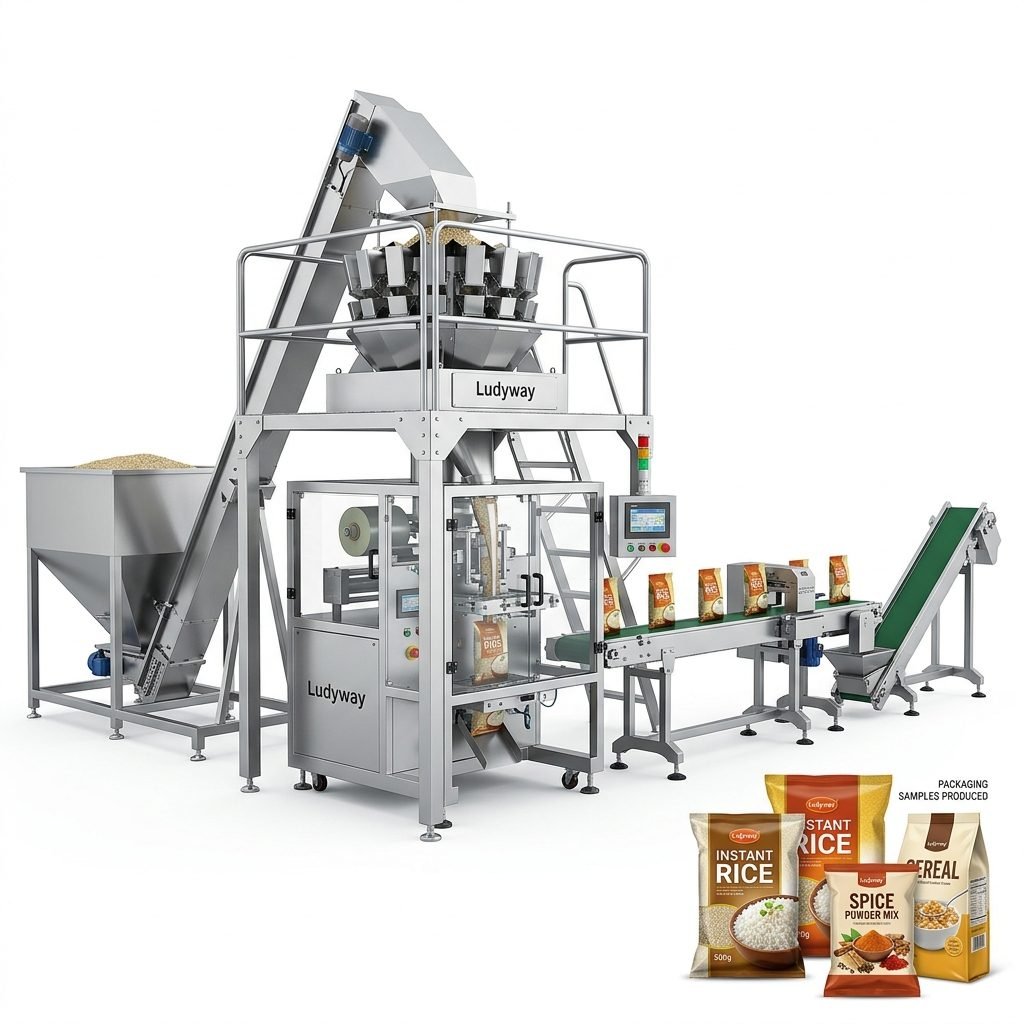
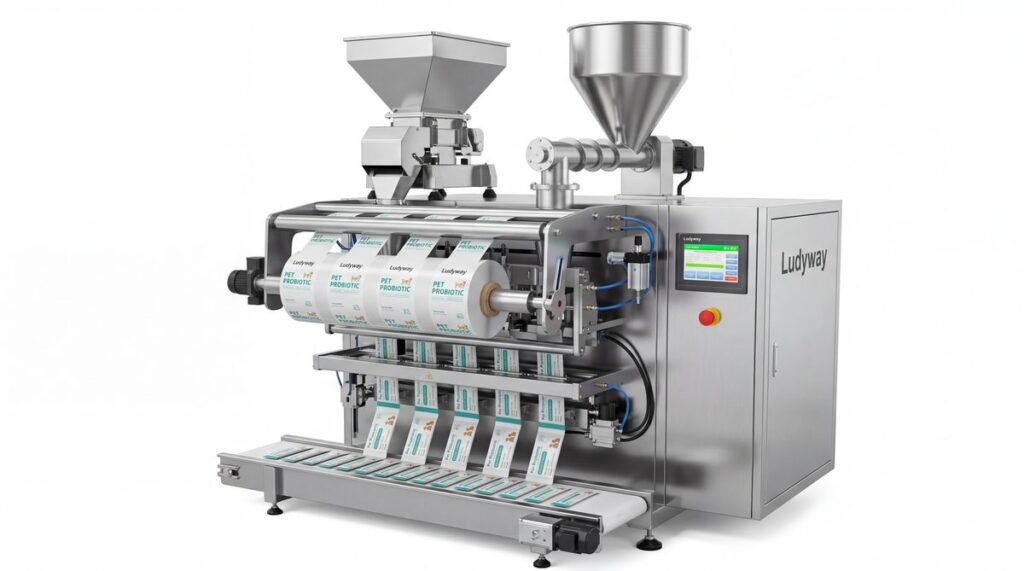
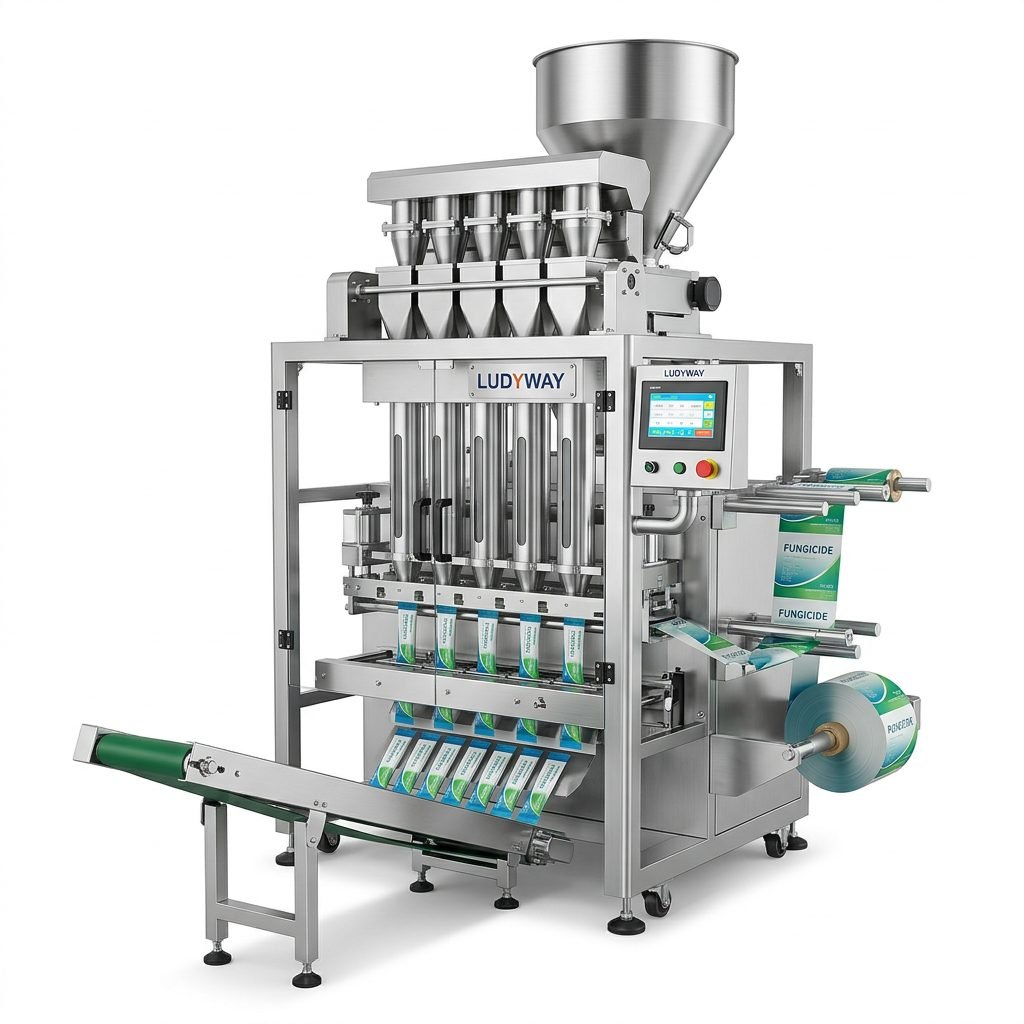
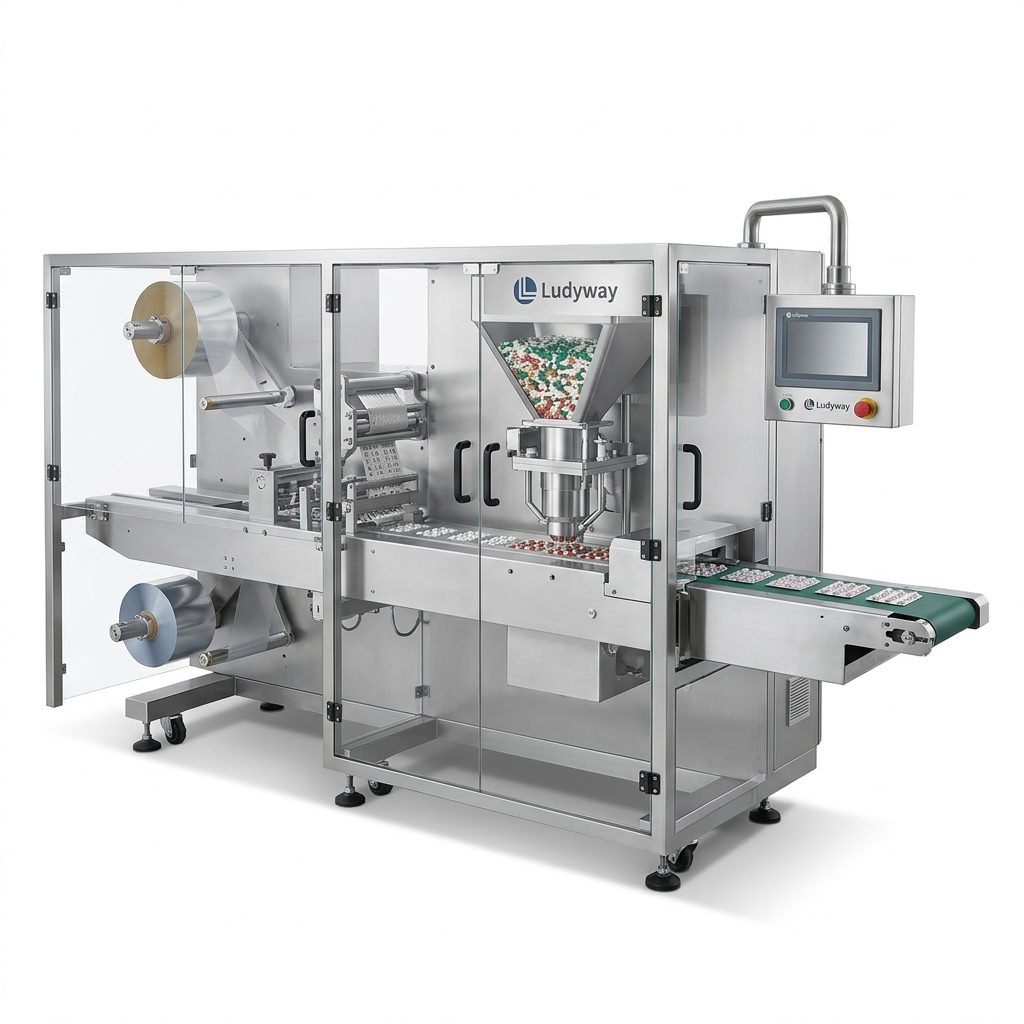
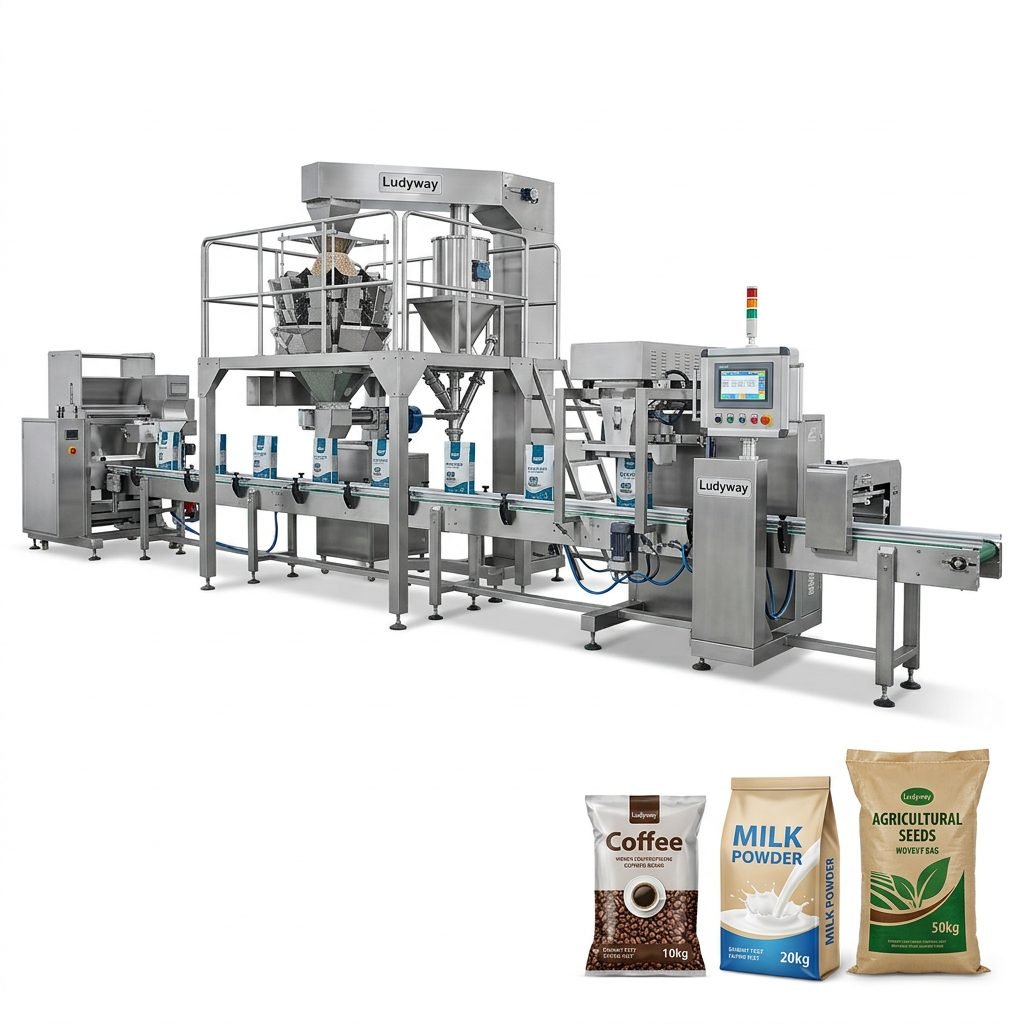
An automated bagging system is an integrated packaging solution that automatically measures, fills, seals, and prepares products in bags for storage, transport, or retail sale. It is widely used in food processing, pharmaceuticals, chemicals, agriculture, pet food, and bulk material handling because it reduces manual work while improving speed, consistency, and packaging accuracy.
For manufacturers facing rising labor costs, stricter quality standards, and growing output targets, automated bagging has become a practical investment rather than just an upgrade. From small sachets and pouches to large open-mouth bags and bulk sacks, these systems can be configured for many packaging formats and production environments.
What does an automated bagging system do?
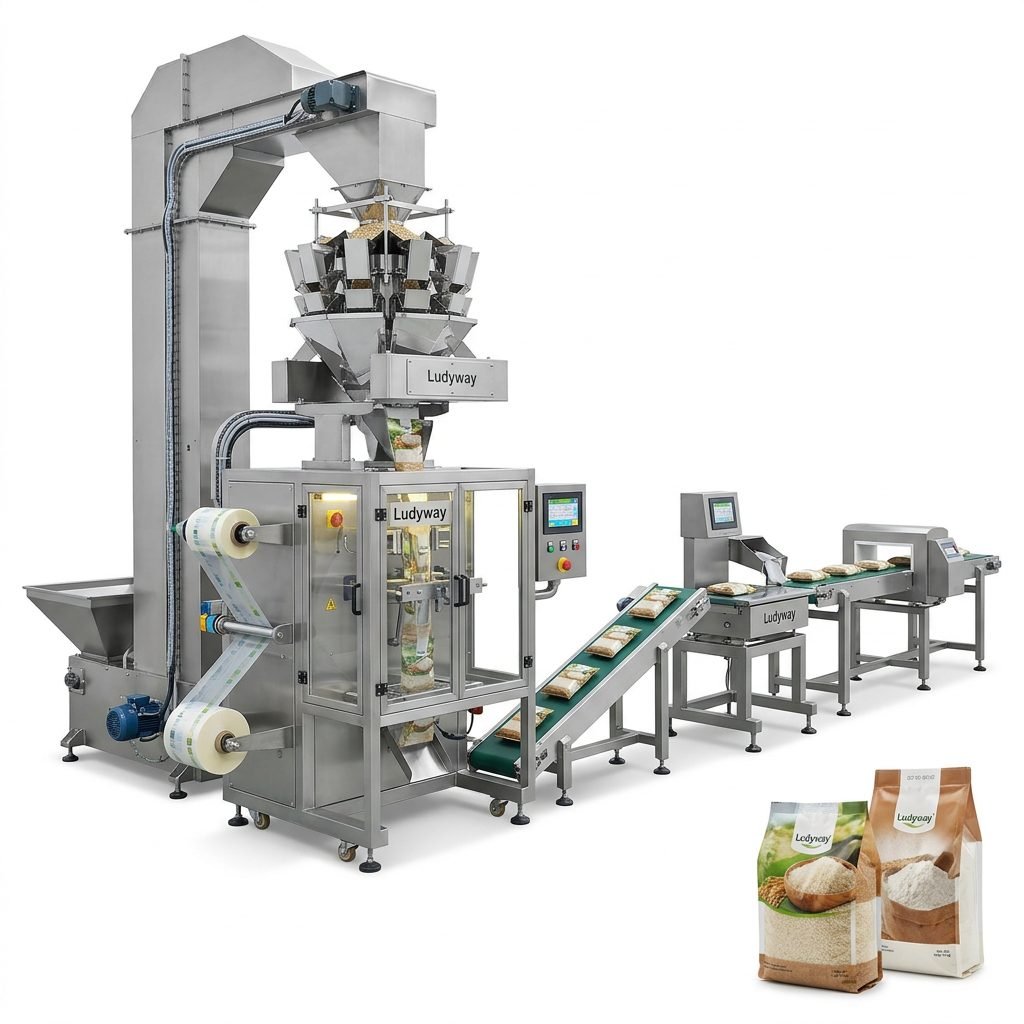
At its core, the system automates the full bagging cycle. Instead of operators manually scooping product, holding bags, sealing them, and moving them to the next station, the machine handles these steps with coordinated equipment.
- Feeds product into the system
- Weighs or doses the correct quantity
- Forms or positions the bag
- Fills the bag with product
- Seals or closes the package
- Prints codes or labels when required
- Transfers the finished bag for inspection, cartoning, or palletizing
Depending on the application, a system may be fully automatic or semi-automatic, but the goal is the same: faster packaging with less waste and more stable output.
How an automated bagging system works
Although machine layouts vary by product and bag type, most automated bagging systems follow a similar workflow.
1. Product feeding
Raw product enters the bagging line through conveyors, hoppers, vacuum feeders, elevators, pumps, or augers. The feeding method depends on whether the product is a powder, granule, liquid, paste, tablet, or solid item.
2. Dosing or weighing
The system measures a preset quantity using volumetric cups, auger fillers, multihead weighers, linear weighers, piston pumps, or counting devices. Accurate dosing is critical for cost control and quality compliance.
3. Bag making or bag feeding
Some systems form bags from roll film, while others use premade bags. This stage aligns the packaging material and prepares it for filling.
4. Filling
The measured product is dispensed into the bag through a filling head. Advanced systems minimize dust, spills, and product bridging during this step.
5. Sealing and closing
The bag is sealed by heat, ultrasonic sealing, stitching, taping, capping, or other closure methods depending on the package style and material.
6. Inspection and discharge
Finished bags may pass through checkweighers, metal detectors, vision inspection, or coding stations before being conveyed to case packing or palletizing.
Main types of automated bagging systems
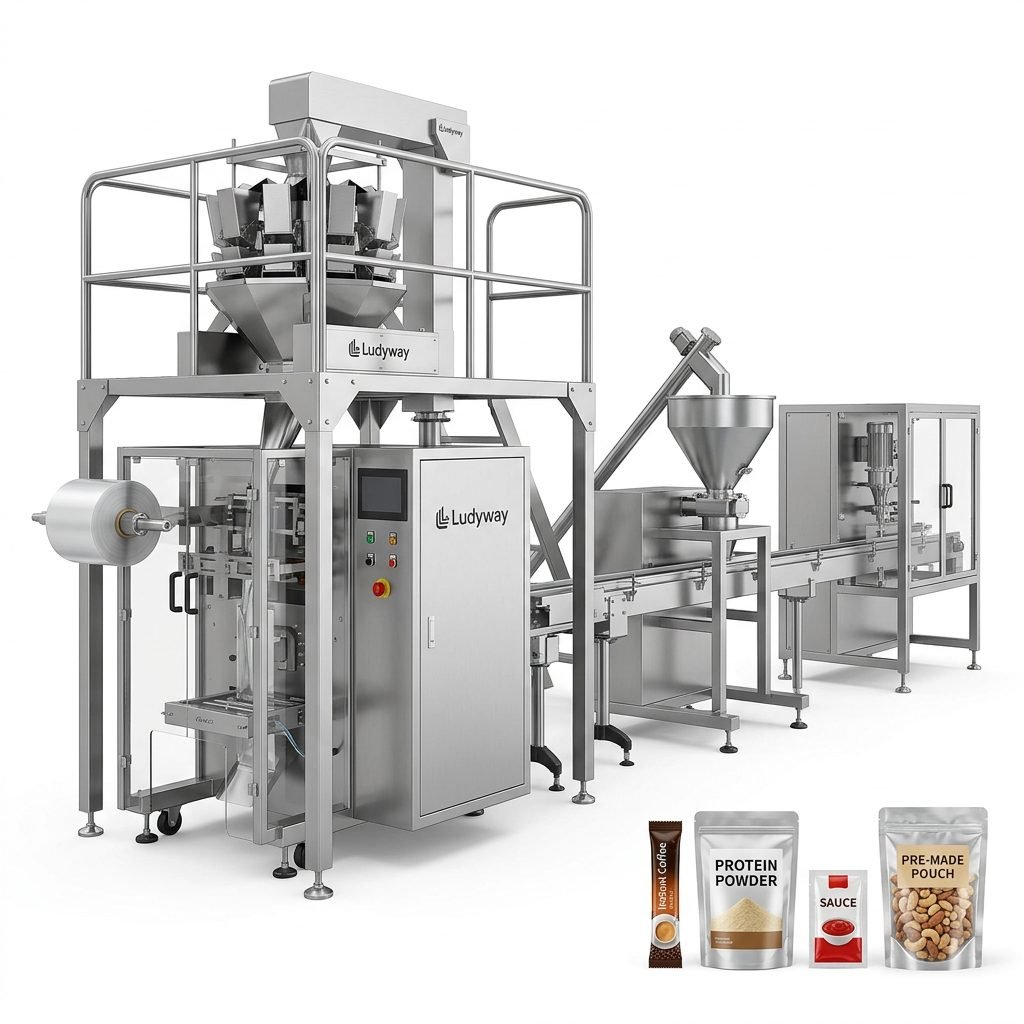
Different industries require different bagging technologies. Choosing the right type depends on the product, output target, hygiene level, and package format.
| System Type | Typical Use | Suitable Products |
|---|---|---|
| Vertical form fill seal (VFFS) | Forms bags from film and fills automatically | Powders, granules, snacks, seeds, coffee, supplements |
| Premade pouch bagging system | Fills and seals ready-made pouches | Liquids, sauces, powders, pet food, personal care products |
| Open-mouth bagging machine | Fills larger bags with measured bulk material | Feed, fertilizer, grains, chemicals, minerals |
| Valve bag packing system | For dust-controlled filling of powders | Cement, fine powder, additives, industrial chemicals |
| Big bag / FIBC filling system | Automates jumbo bag filling | Bulk granules, resins, minerals, agricultural products |
| Multi-lane sachet or stick pack system | High-speed small-dose packaging | Pharma powders, drink mixes, sauces, health supplements |
Key benefits of automated bagging systems
Higher productivity
One of the biggest advantages is speed. Automated systems run continuously and consistently, often packaging far more units per hour than manual labor can achieve.
Better accuracy
Precise weighing and dosing reduce product giveaway and help maintain package uniformity. This is especially important in industries with strict compliance requirements.
Lower labor dependence
Automation reduces the need for repetitive manual tasks, helping factories address labor shortages, improve workstation safety, and redeploy workers to higher-value roles.
Improved sealing quality
Consistent bag sealing protects products against leakage, contamination, and moisture ingress, which supports shelf life and customer satisfaction.
Reduced waste
Automated bagging systems reduce underfill, overfill, film waste, and spillage. In high-volume production, even a small reduction in waste can produce significant cost savings.
Scalability
Many systems can be integrated with upstream feeding, downstream cartoning, labeling, inspection, and palletizing, making future expansion easier.
More hygienic operation
In food, pharmaceutical, and health product manufacturing, automation reduces direct human contact with the product, helping support cleaner production conditions.
Common uses across industries
Automated bagging systems are highly versatile and can handle a wide range of product categories.
- Food industry: sugar, flour, rice, snacks, coffee, spices, sauces, frozen foods, grains
- Pharmaceutical industry: sachets, powders, tablets, capsules, medical consumables
- Health supplements: collagen powder, protein powder, electrolyte mix, probiotics
- Chemical industry: detergents, additives, water treatment chemicals, industrial powders
- Agriculture and feed: seeds, fertilizer, animal feed, mineral additives
- Pet care: dry food, supplements, treats, nutrition powders
- Cosmetics and personal care: creams, lotions, gels, sachet-packed liquids
Who should invest in an automated bagging system?
This equipment is especially valuable for businesses that:
- Need to increase production capacity without sharply increasing labor
- Package products with strict weight tolerance requirements
- Experience frequent packaging inconsistencies in manual operations
- Want to improve packaging appearance and shelf readiness
- Need traceability, coding, and inspection integration
- Are planning a turnkey packaging line with room for expansion
Important components in a complete bagging line
A standalone bagger can be effective, but a fully integrated system often delivers the best efficiency. Common components include:
| Component | Function |
|---|---|
| Feeding system | Moves product from storage to the filler |
| Weighing or dosing unit | Controls fill volume or weight |
| Bagging machine | Forms, opens, fills, and seals bags |
| Coding or printing device | Applies date, batch, or traceability codes |
| Checkweigher / detector | Verifies package quality and compliance |
| Conveyor system | Transfers bags between line stages |
| Cartoning / palletizing unit | Automates final packing and warehouse handling |
How to choose the right automated bagging system
Not every system fits every product. Before buying, evaluate the following factors carefully:
Product characteristics
Is the material free-flowing, sticky, dusty, fragile, corrosive, or liquid? Product behavior directly affects filling method and machine design.
Bag size and format
Determine whether you need pillow bags, gusset bags, premade pouches, stick packs, sachets, open-mouth sacks, or jumbo bags.
Production speed
Target output per minute or per hour is one of the main selection criteria. Overspecifying can waste budget, while underspecifying can limit growth.
Accuracy requirements
Pharma and premium food products may require tighter tolerances than general industrial applications.
Hygiene and compliance
Food and pharmaceutical environments may need stainless steel construction, dust control, easy cleaning, and validation-friendly configurations.
Line integration
Choose a machine that can connect smoothly with feeders, printers, inspection devices, case packers, and palletizers.
After-sales support
Reliable technical support, spare parts availability, training, and commissioning assistance are essential for long-term performance.
Automated bagging vs manual bagging
| Factor | Manual Bagging | Automated Bagging |
|---|---|---|
| Speed | Low to moderate | High and consistent |
| Labor demand | High | Lower |
| Fill accuracy | Variable | More precise |
| Package consistency | Depends on operator | Highly repeatable |
| Waste control | Less efficient | Better controlled |
| Scalability | Limited | Strong |
What industries benefit the most?
Any industry with repeat packaging tasks can benefit, but the highest returns are often seen in operations with large production volumes, expensive raw materials, or strict quality standards. For example, supplement companies benefit from accurate fill weights, while feed and fertilizer manufacturers benefit from faster heavy-bag handling.
Companies looking for complete machinery support often work with experienced packaging line manufacturers such as Ludyway packaging machine manufacturer when they need bagging equipment that can be integrated into broader turnkey automation projects.
Final thoughts before investing
An automated bagging system is more than a filling machine. It is a productivity tool that improves packaging quality, reduces labor pressure, and creates a more scalable production environment. The right solution should match your product type, bag format, speed target, and long-term growth plan.
If your current packaging process struggles with inefficiency, inconsistency, or rising operating costs, upgrading to an automated bagging system can deliver measurable value in both the short and long term.