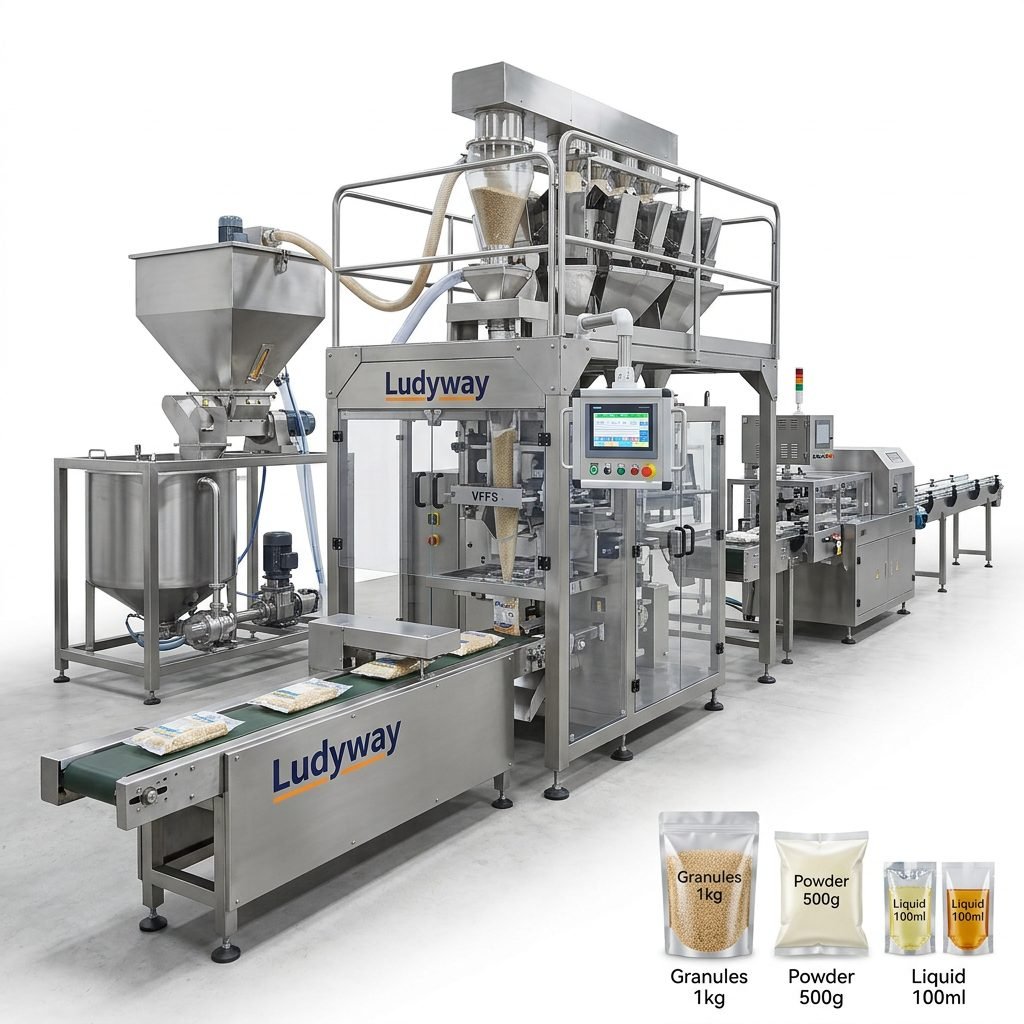
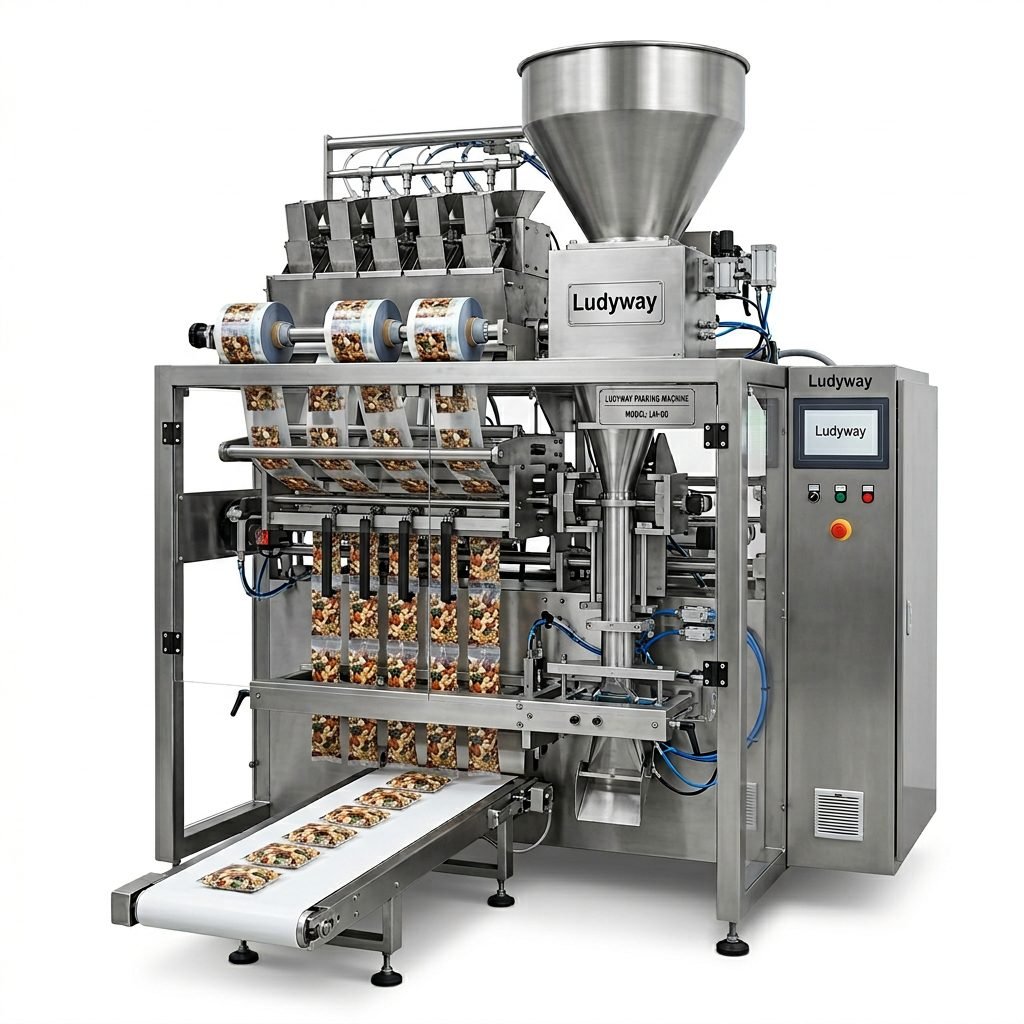
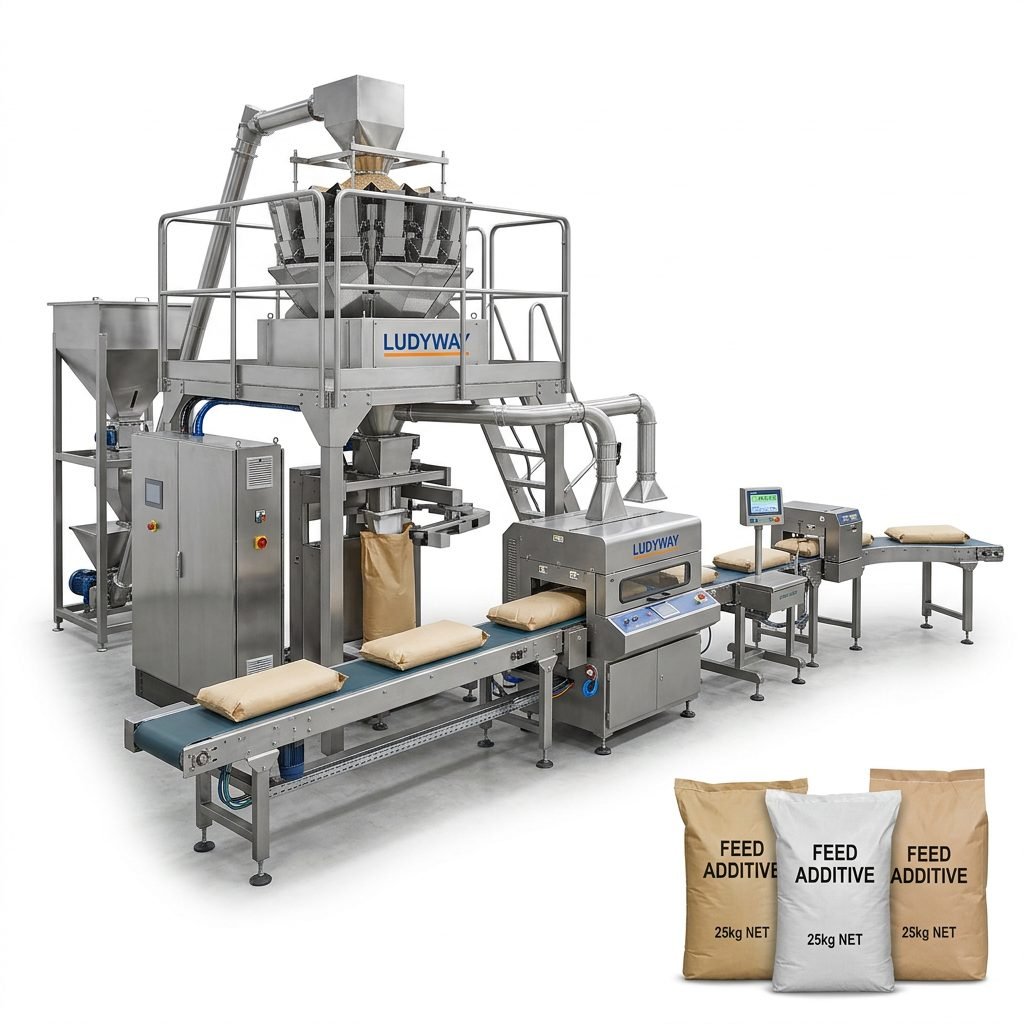
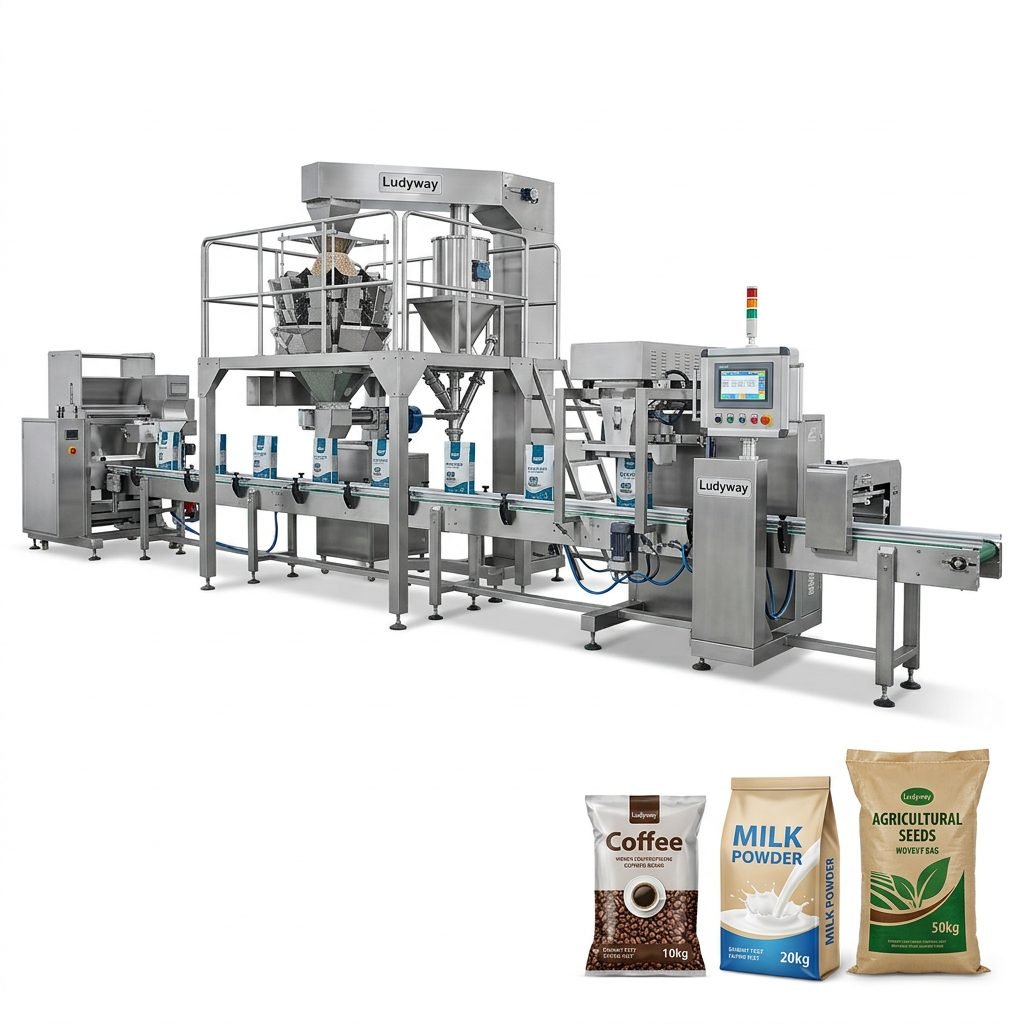
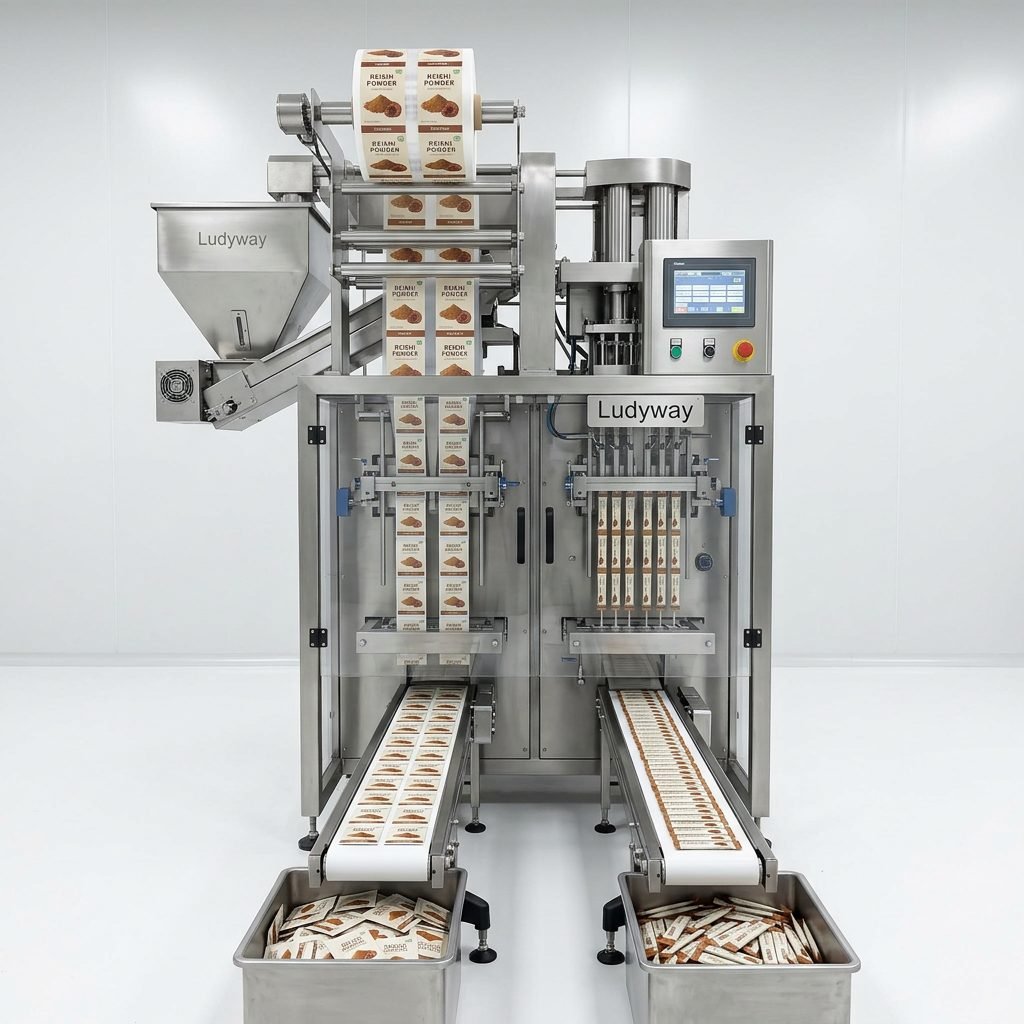
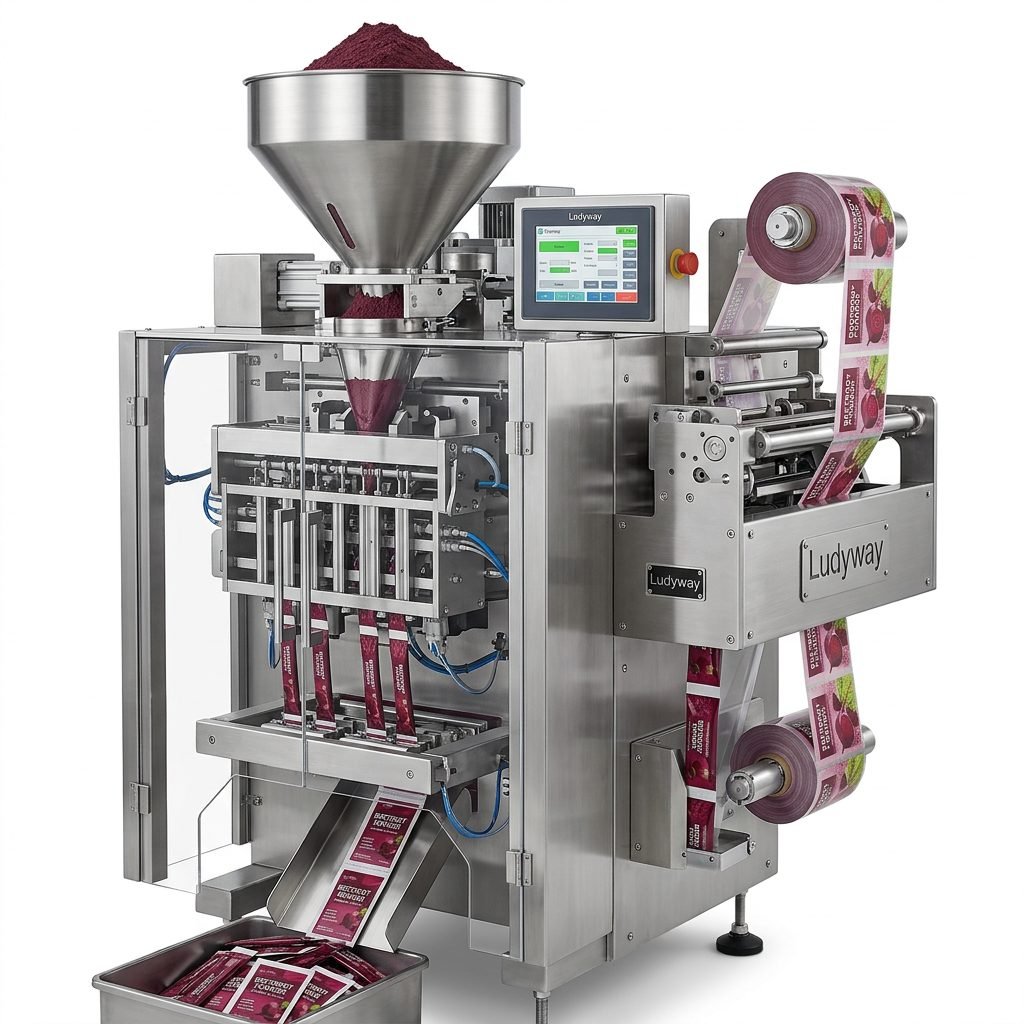
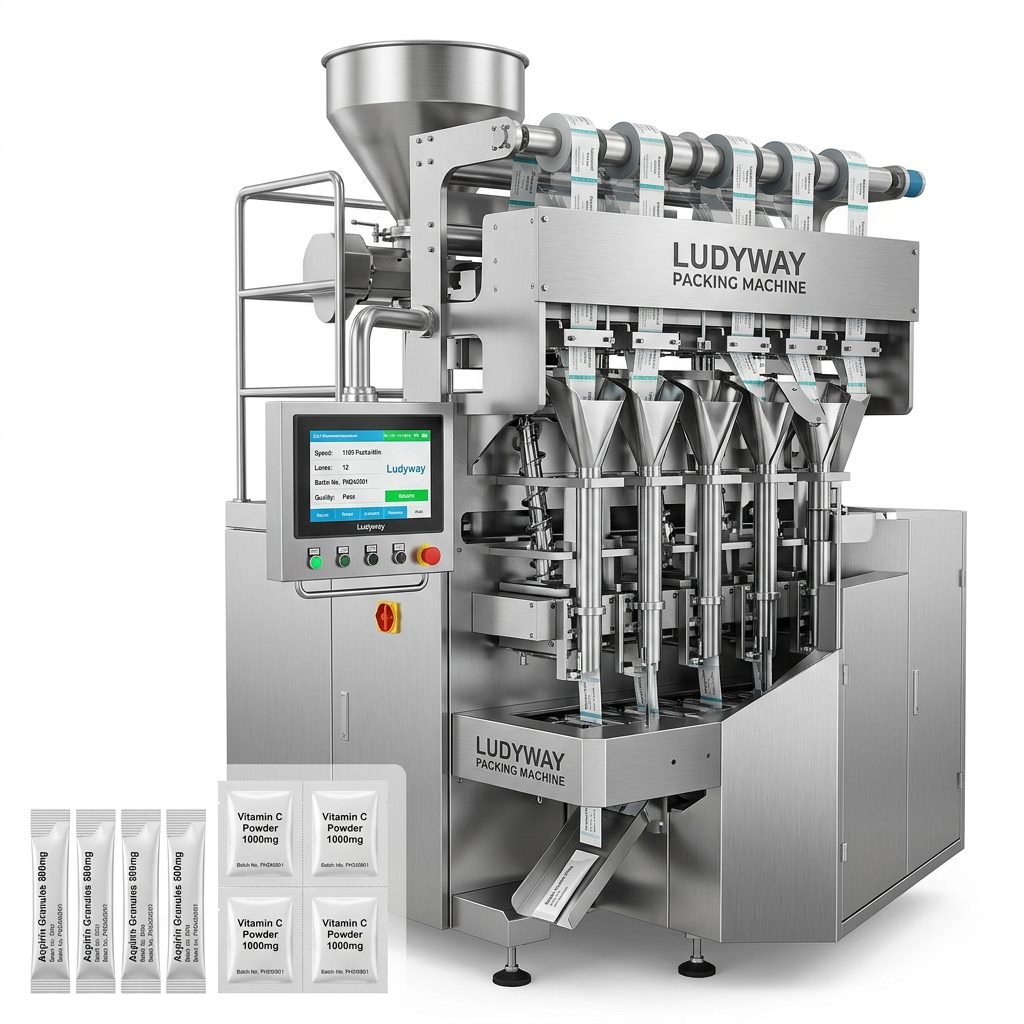
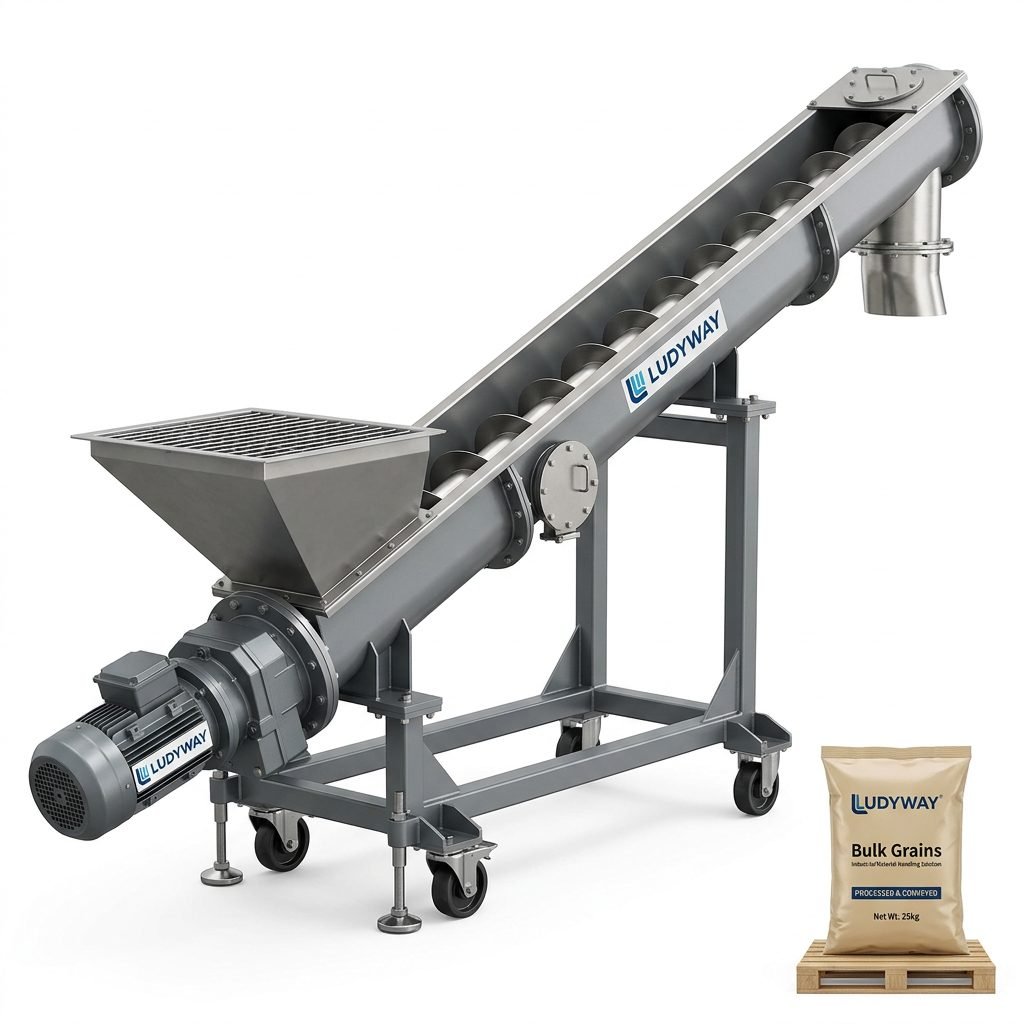
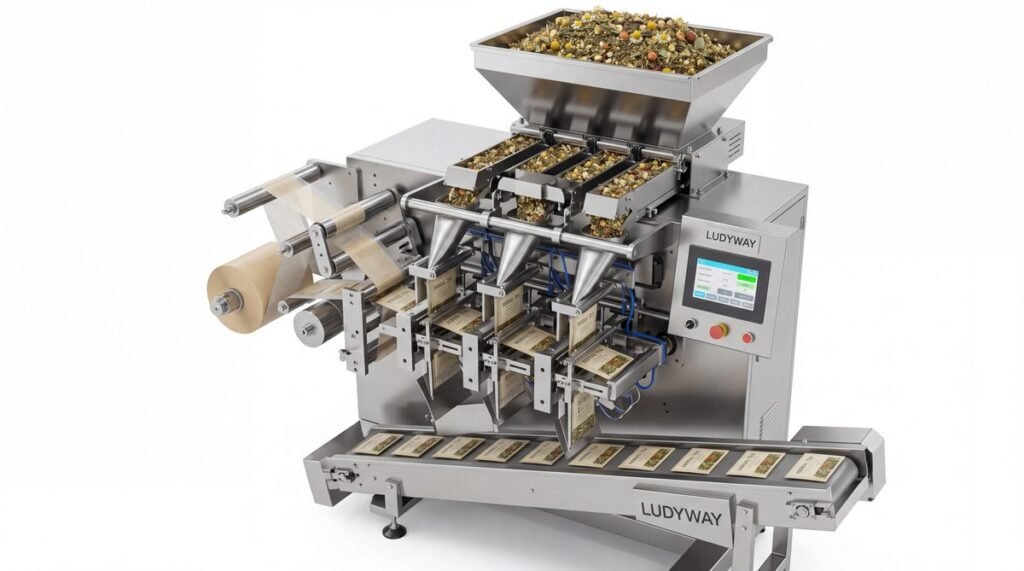
Automatic bagging equipment is an integrated packaging system designed to fill, weigh, seal, and discharge bags with minimal manual intervention. It is widely used in industries that handle powders, granules, pellets, flakes, and bulk solids, helping manufacturers improve output, reduce labor dependency, and maintain more consistent packaging quality.
In simple terms, this equipment automates the bagging process from product feeding to final bag closure. Depending on the application, it may work with open-mouth bags, valve bags, gusset bags, woven sacks, PE bags, paper bags, or jumbo bags. For companies scaling production, automatic bagging equipment can become a key part of a complete packaging line.
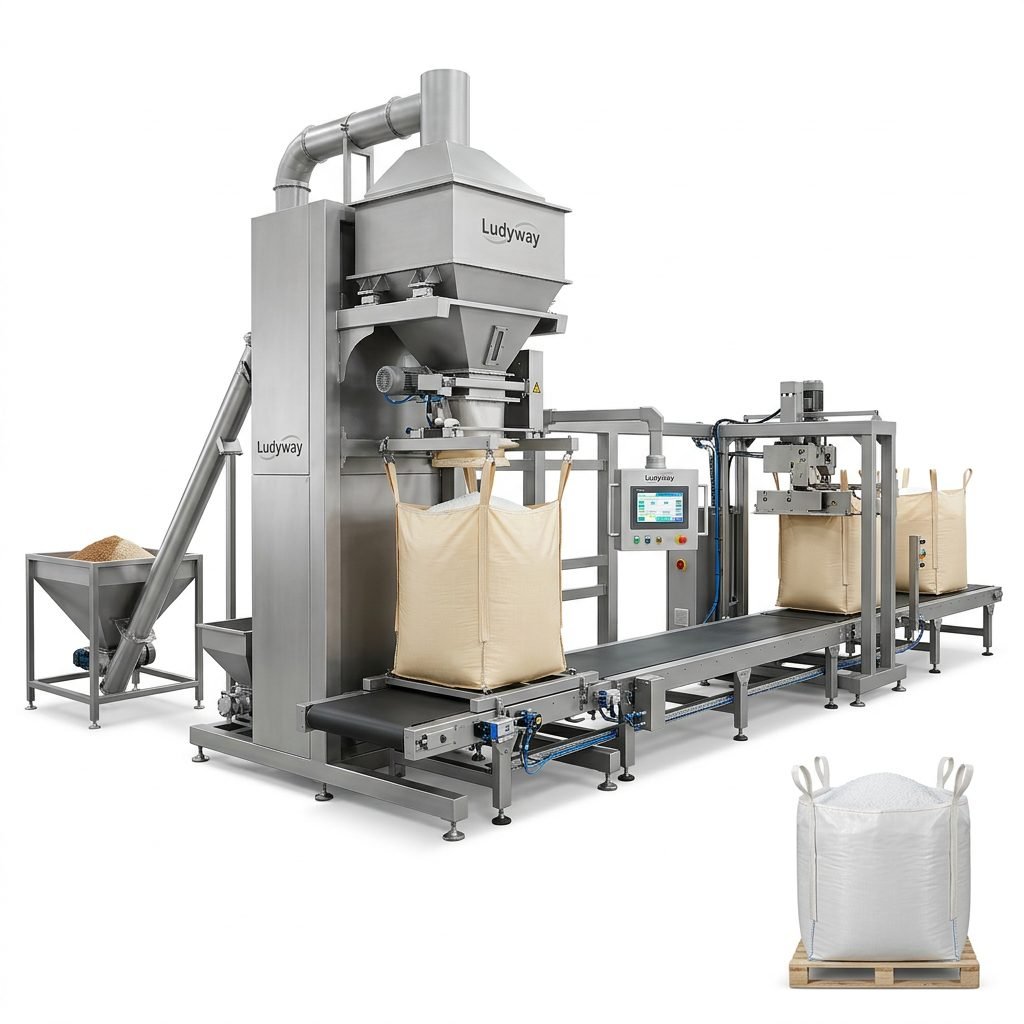
What Is Automatic Bagging Equipment?
Automatic bagging equipment is a machine or a complete line that automatically performs the main packaging steps for bulk or semi-bulk products. These steps usually include:
- Product feeding
- Accurate weighing or dosing
- Bag picking and positioning
- Bag opening and filling
- Bag sealing, sewing, or heat closing
- Conveying, checkweighing, coding, and palletizing
The equipment is commonly found in food, animal feed, fertilizer, chemical, pharmaceutical, and mineral processing plants. It is suitable for both medium- and high-volume operations where speed, accuracy, and repeatability are essential.
How Automatic Bagging Equipment Works
Although machine designs differ by product and bag type, the working principle is generally straightforward.
1. Product Feeding
Raw material is transferred from a hopper, silo, auger, conveyor, or bucket elevator into the dosing section. The feeding system must match the product’s characteristics, such as flowability, particle size, dust level, and moisture content.
2. Weighing or Metering
The machine measures the target quantity using load cells, net weighers, gross weighers, auger fillers, volumetric cups, or multihead weighing systems. This step determines bag weight consistency and directly affects product giveaway and cost control.
3. Bag Supply and Positioning
Empty bags are automatically picked from a magazine or feeding unit. The system then opens the bag mouth and positions it at the filling station. For some applications, premade bags are used; for others, the system may work with form-fill-seal technology.
4. Filling
Once aligned, the machine dispenses the product into the bag. Dust extraction, vibration, compaction, or deaeration may be added to improve filling performance, especially for powders and lightweight materials.
5. Closing and Sealing
Filled bags are then closed using sewing, heat sealing, ultrasonic sealing, pinch-top closure, or valve bag sealing methods. The right closure method depends on bag material, product sensitivity, and transport requirements.
6. Final Handling
After sealing, bags may pass through checkweighers, metal detectors, coding systems, case packers, stretch wrappers, or palletizers. This creates a smoother end-of-line process and reduces downstream bottlenecks.
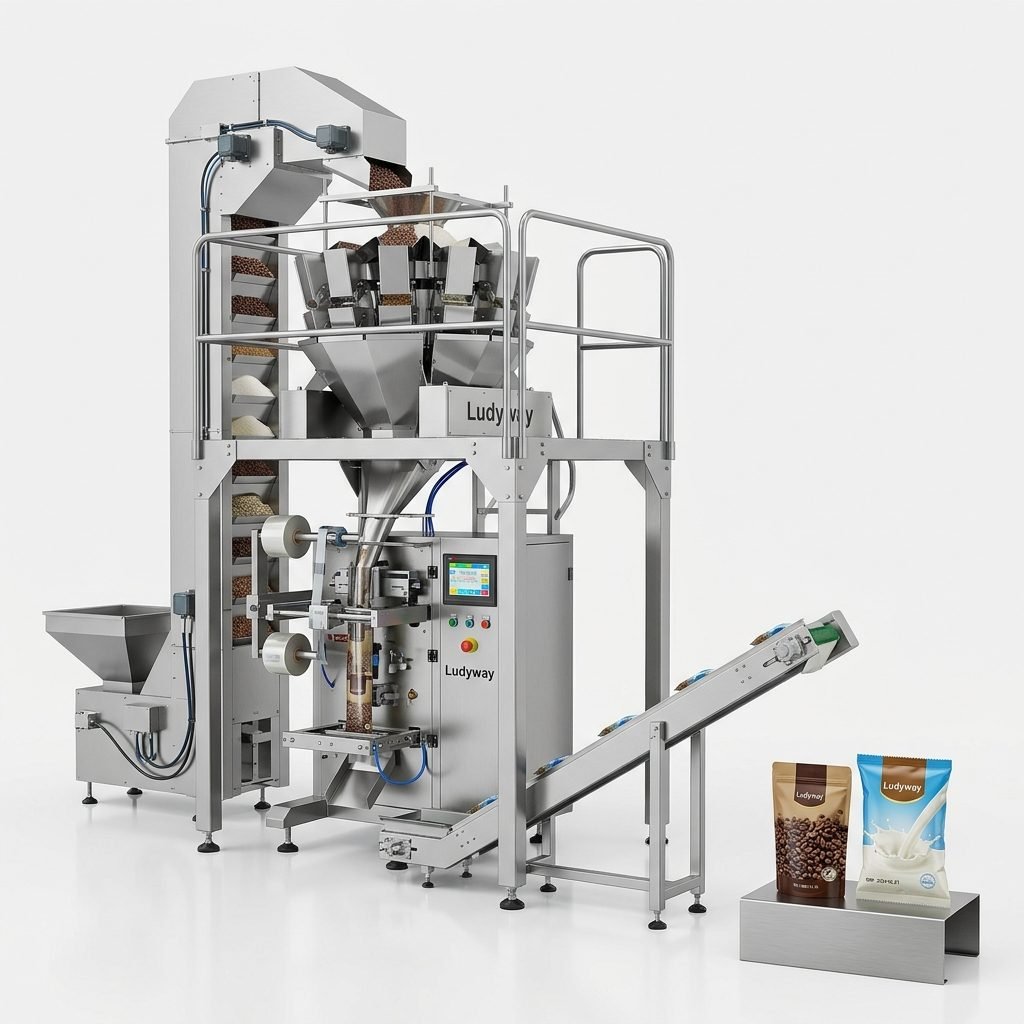
Main Types of Automatic Bagging Equipment
Different production needs require different bagging technologies. Choosing the right type improves performance and lowers maintenance issues.
| Type | Best For | Common Products |
|---|---|---|
| Open-mouth bagging machine | Pre-made bags and medium to large bag sizes | Rice, flour, animal feed, fertilizer |
| Valve bag packer | Powders requiring dust control | Cement, dry mortar, starch, chemicals |
| FFS bagging system | High-volume automated bag forming and filling | Resins, pellets, grains, seeds |
| Jumbo bag filling system | Large bulk bags | Minerals, chemicals, feed additives |
| Robotic bagging line | Flexible automation and integrated end-of-line handling | Mixed industrial and food applications |
Key Benefits of Automatic Bagging Equipment
Higher Productivity
Manual bagging slows down operations, especially when output targets rise. Automated systems can run continuously with stable cycle times, helping factories package more products in less time.
Improved Accuracy
Modern weighing and dosing systems reduce underfilling and overfilling. This protects profit margins and helps ensure compliance with packaged weight standards.
Lower Labor Costs
Replacing repetitive manual tasks with automation reduces staffing pressure and allows operators to focus on supervision, quality checks, and line management.
Better Bag Quality and Consistency
Automatic bag handling creates cleaner seals, more uniform filled bags, and more reliable stackability during warehousing and transport.
Safer Working Conditions
Heavy lifting, dust exposure, and repetitive motion injuries are common in manual bagging areas. Automation helps reduce these risks significantly.
Easy Integration with Full Packaging Lines
Automatic bagging systems can connect with conveyors, feeders, sealers, coding machines, palletizers, and warehouse handling equipment to support end-to-end automation.
Common Uses Across Industries
Automatic bagging equipment is valued because it can handle many product types and bag formats.
- Food industry: flour, sugar, rice, salt, starch, spices, grains, coffee, powdered ingredients
- Animal feed: pellets, premixes, supplements, pet food, livestock feed
- Chemical industry: detergents, pigments, additives, resins, industrial powders
- Agriculture: fertilizer granules, seeds, soil conditioners, agrochemicals
- Pharmaceutical and health sectors: bulk powders, nutritional ingredients, raw materials
- Construction materials: mortar, cementitious blends, gypsum products
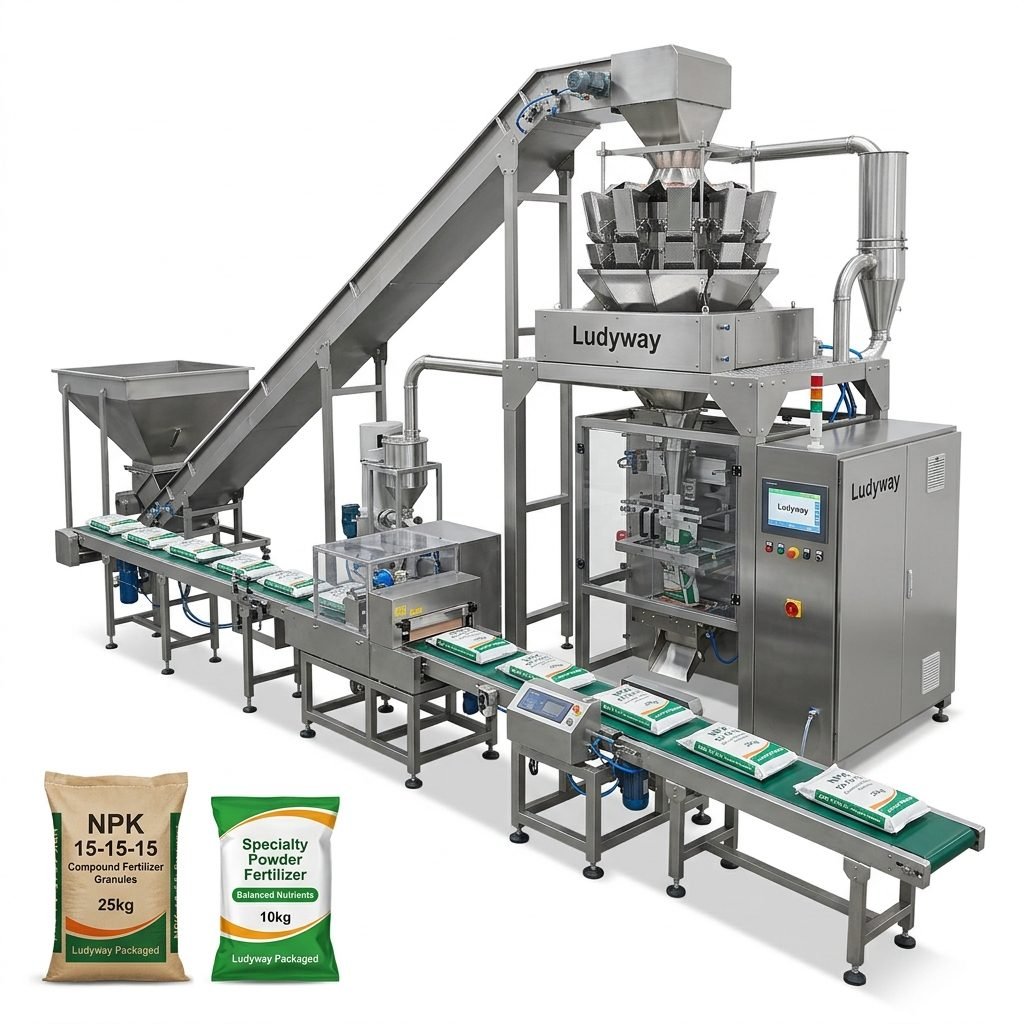
Who Should Invest in Automatic Bagging Equipment?
This equipment is especially suitable for manufacturers that:
- Need to increase daily production volume
- Have frequent issues with weight inconsistency
- Want to reduce labor dependence and operator fatigue
- Need cleaner packaging for dusty or sensitive materials
- Plan to build a scalable automated packaging line
If your business is packaging large quantities of dry bulk products, a well-designed bagging system can deliver both short-term efficiency gains and long-term operational savings.
Important Features to Consider Before Buying
Not all automatic bagging machines are the same. Buyers should compare equipment based on actual production goals, not just machine speed on paper.
| Feature | Why It Matters |
|---|---|
| Bag type compatibility | Ensures the machine fits your packaging materials and sizes |
| Product feeding method | Affects flow stability and filling accuracy |
| Weighing precision | Reduces giveaway and improves quality control |
| Dust control design | Important for powders, hygiene, and operator safety |
| Automation level | Determines labor savings and future scalability |
| Cleaning and maintenance access | Improves uptime and reduces service complexity |
| Line integration ability | Supports conveyors, coding, palletizing, and ERP/MES connection |
Automatic vs. Semi-Automatic Bagging Equipment
Many buyers compare automatic systems with semi-automatic alternatives before making a decision.
Semi-automatic bagging equipment usually requires an operator to place or hold the bag during filling. It is a practical choice for lower volumes or limited budgets.
Automatic bagging equipment handles the full process with far less human intervention. It is better suited for larger factories, continuous production, and businesses seeking long-term efficiency.
- Semi-automatic: lower upfront cost, lower output, more labor dependency
- Automatic: higher investment, higher speed, stronger consistency, better expansion potential
Typical Components in an Automatic Bagging Line
A complete system may include much more than just the bagging unit itself. Depending on the project, the line can include:
- Storage silo or hopper
- Auger feeder, screw conveyor, or bucket elevator
- Weighing and dosing system
- Automatic bag placer
- Filling station
- Heat sealer or sewing machine
- Bag flattening and conveying system
- Checkweigher and metal detector
- Inkjet or thermal transfer coding unit
- Robotic palletizer and wrapping machine
This is why many manufacturers prefer working with suppliers that can provide not only a standalone machine but also a complete turnkey solution.
How to Choose the Right System
To select the right equipment, prepare the following information before contacting suppliers:
- Product type and characteristics
- Target bag weight range
- Bag material and dimensions
- Expected bags per hour
- Factory layout and available space
- Need for dustproof, hygienic, or explosion-proof design
- Planned integration with sealing, coding, or palletizing equipment
Clear technical data helps suppliers recommend the correct model and avoid mismatched configurations.
Why Equipment Customization Matters
Bulk packaging products vary greatly. Free-flowing pellets behave very differently from sticky powders or fragile granules. A standard machine may not always deliver the best performance. Customized solutions often include:
- Specialized contact parts for corrosive or hygienic products
- Custom feeding systems for poor-flow materials
- Dust collection or nitrogen flushing options
- Multi-format bag handling
- Integrated inspection and end-of-line automation
For businesses seeking scalable and application-specific solutions, automatic bagging equipment manufacturer Ludyway offers packaging machinery and turnkey packaging line solutions for food, pharmaceutical, health supplement, chemical, and related industries.
Final Thoughts
Automatic bagging equipment is more than a labor-saving machine. It is a productivity tool that helps manufacturers package products faster, more accurately, and more safely. Whether you are handling feed pellets, fertilizer granules, industrial powders, or food ingredients, the right bagging system can improve operational efficiency across the entire production line.
As demand for automation continues to rise, businesses that invest in reliable, well-matched bagging equipment are better positioned to control costs, maintain quality, and scale output with confidence.