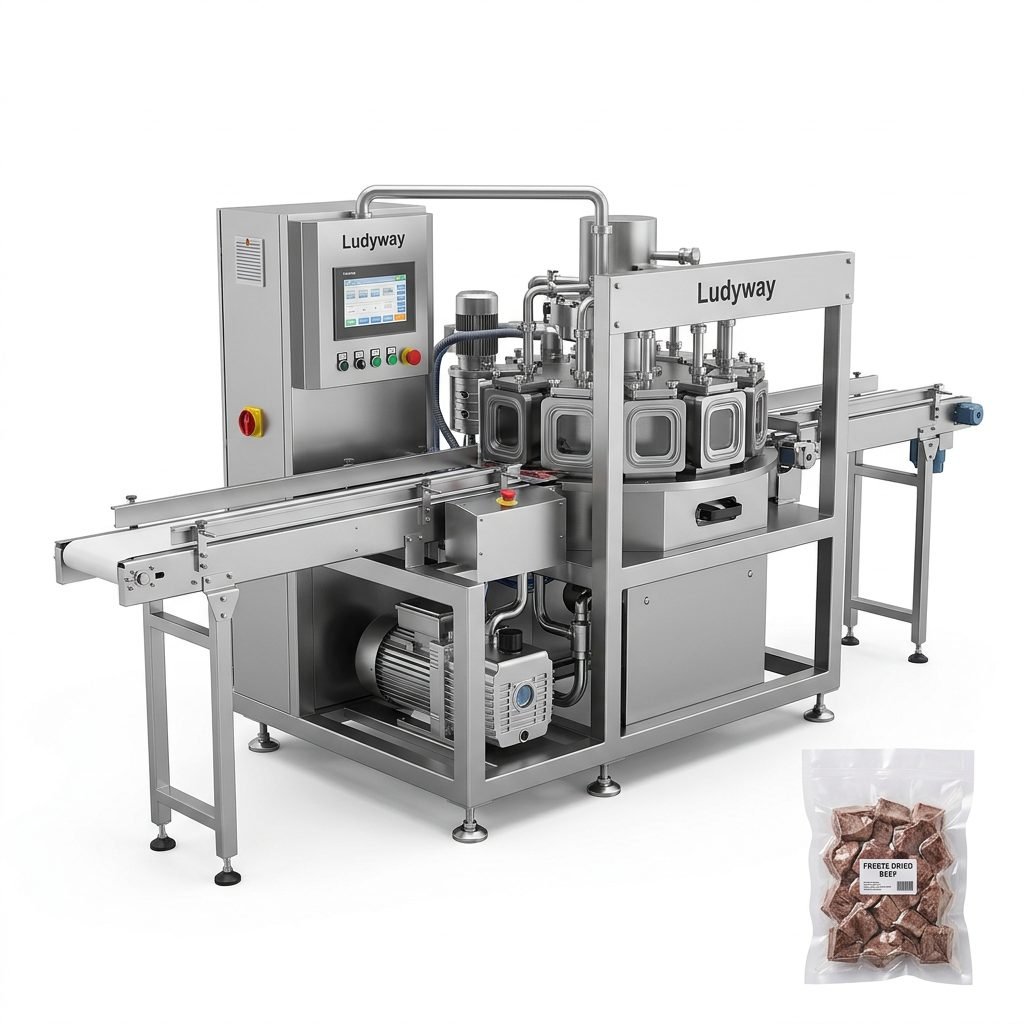
Choosing the right granule packing machine is not only about buying equipment—it is about building a packaging process that delivers speed, accuracy, product safety, and long-term cost control. Whether you package sugar, seeds, coffee granules, spices, fertilizers, pet food, pharmaceutical granules, or chemical particles, the best solution depends on your product characteristics, output goals, packaging format, and automation level.
A well-matched machine can reduce material waste, improve seal quality, stabilize fill weight, and support scalable production. A poor fit can create downtime, inconsistent packs, dust problems, and costly maintenance. This guide explains how to evaluate granule filling equipment and select the packaging solution that best supports efficient production.
Why granule packaging machine selection matters
Granules may look easy to handle, but in practice they vary widely in particle size, flowability, density, dust level, moisture sensitivity, and fragility. These differences directly affect feeding, dosing, filling, sealing, and final package appearance.
- Free-flowing products such as sugar or salt usually support faster filling speeds.
- Irregular or fragile granules may bridge, break, or generate dust during handling.
- Hygroscopic products may need sealed, low-exposure packaging conditions.
- Pharma and nutraceutical granules often require tighter accuracy and validation support.
The correct machine improves line performance by matching the dosing system and package format to the physical behavior of the product.
Start with the characteristics of your granule product
Before comparing suppliers or machine models, define your product in operational terms. This is the foundation of a good purchasing decision.
Key product questions to answer
- What is the particle size range? Fine granules, coarse granules, and mixed-particle products behave differently.
- How well does the product flow? Free-flowing products work differently from sticky or poorly flowing materials.
- Is the product dusty? Dust affects sealing, hygiene, weighing stability, and operator safety.
- Is it fragile? Some granules break under vibration, auger pressure, or drop height.
- Does it need high hygiene control? Food, pharma, and health supplement products may need sanitary contact parts and easier cleaning.
- What fill weight is required? Small sachets and large bags need very different filling systems.
| Product Type | Typical Challenge | Recommended Focus |
|---|---|---|
| Sugar, salt, rice granules | High-speed flow control | Fast, stable dosing and sealing |
| Coffee granules, seasoning | Dust and fill consistency | Precision dosing and dust management |
| Pharmaceutical granules | Accuracy and compliance | Validation-ready hygienic design |
| Fertilizer, chemical granules | Corrosion and dust | Durable materials and safe feeding |
| Pet food granules | Mixed size handling | Flexible feeding and gentle transfer |
Choose the right packaging format first
The best granule filling solution depends heavily on the final package style. Many buying mistakes happen because companies focus on speed before confirming the right pack format.
Common packaging formats for granules
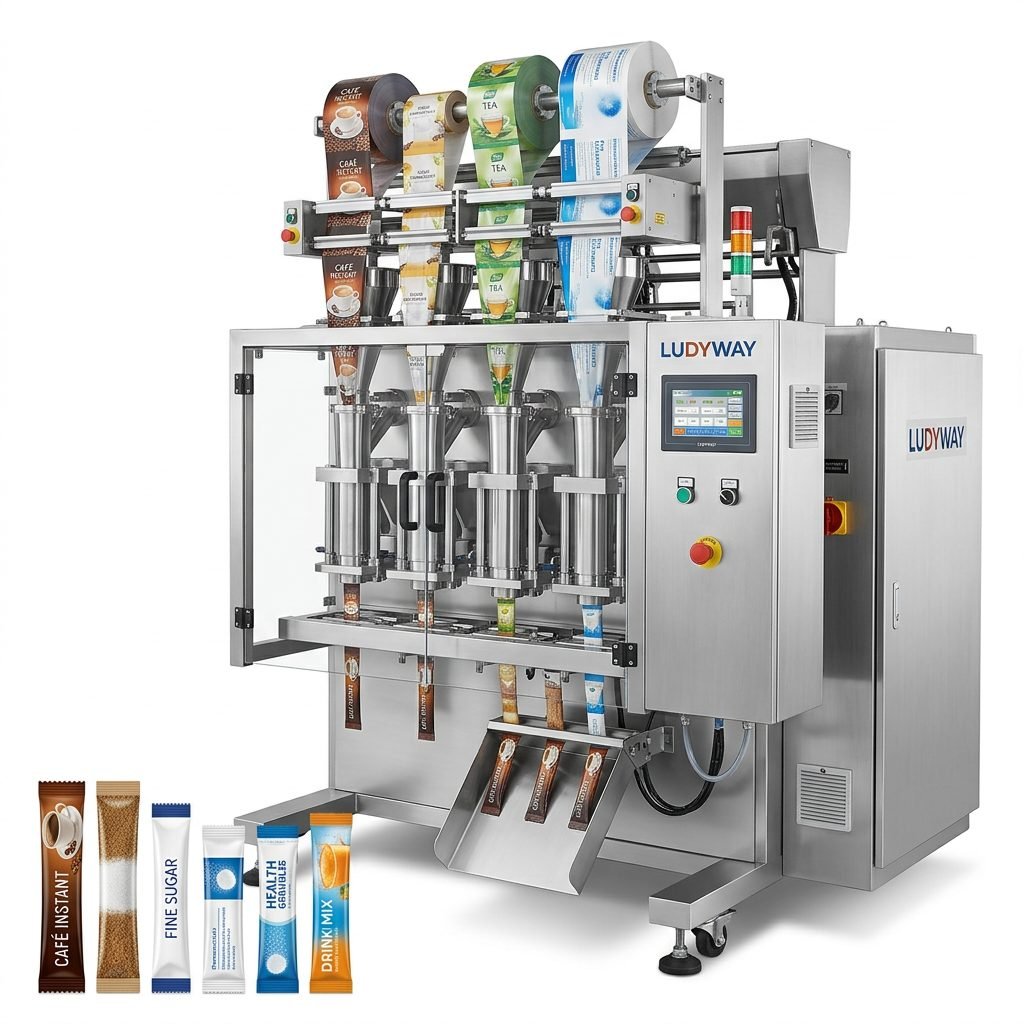
- Stick packs – ideal for single-serve drink mixes, supplements, coffee, sugar, and pharmaceutical granules.
- Sachets – widely used for food, health products, and chemicals in small-dose packaging.
- Pouches – suitable for retail packs with stronger shelf presence.
- Pillow bags or VFFS bags – effective for medium and larger-volume granule packaging.
- Open-mouth or heavy-duty bags – used for fertilizer, feed, industrial granules, and bulk materials.
If your business sells multiple SKUs, look for a machine that supports quick format changeovers. This is especially valuable for contract packers and growing brands with frequent packaging updates.
Understand the main types of granule packing machines
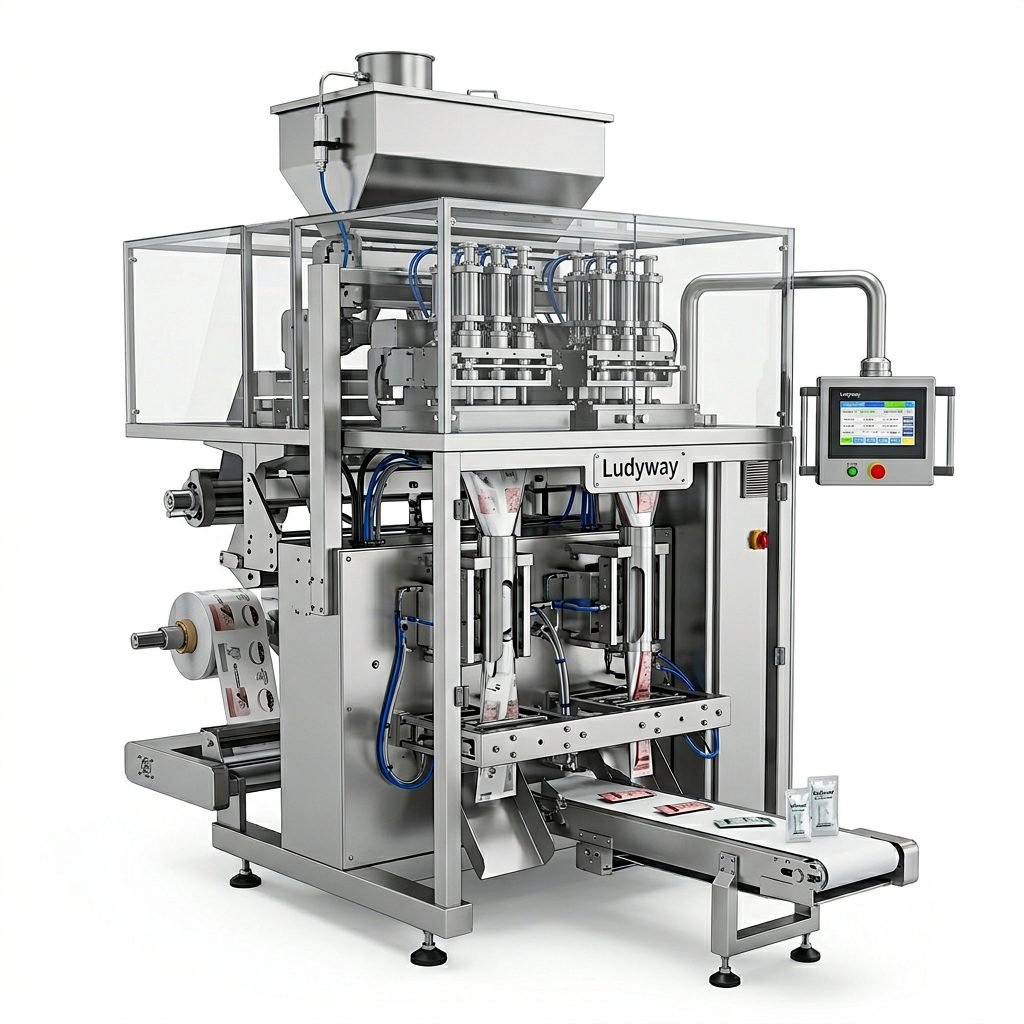
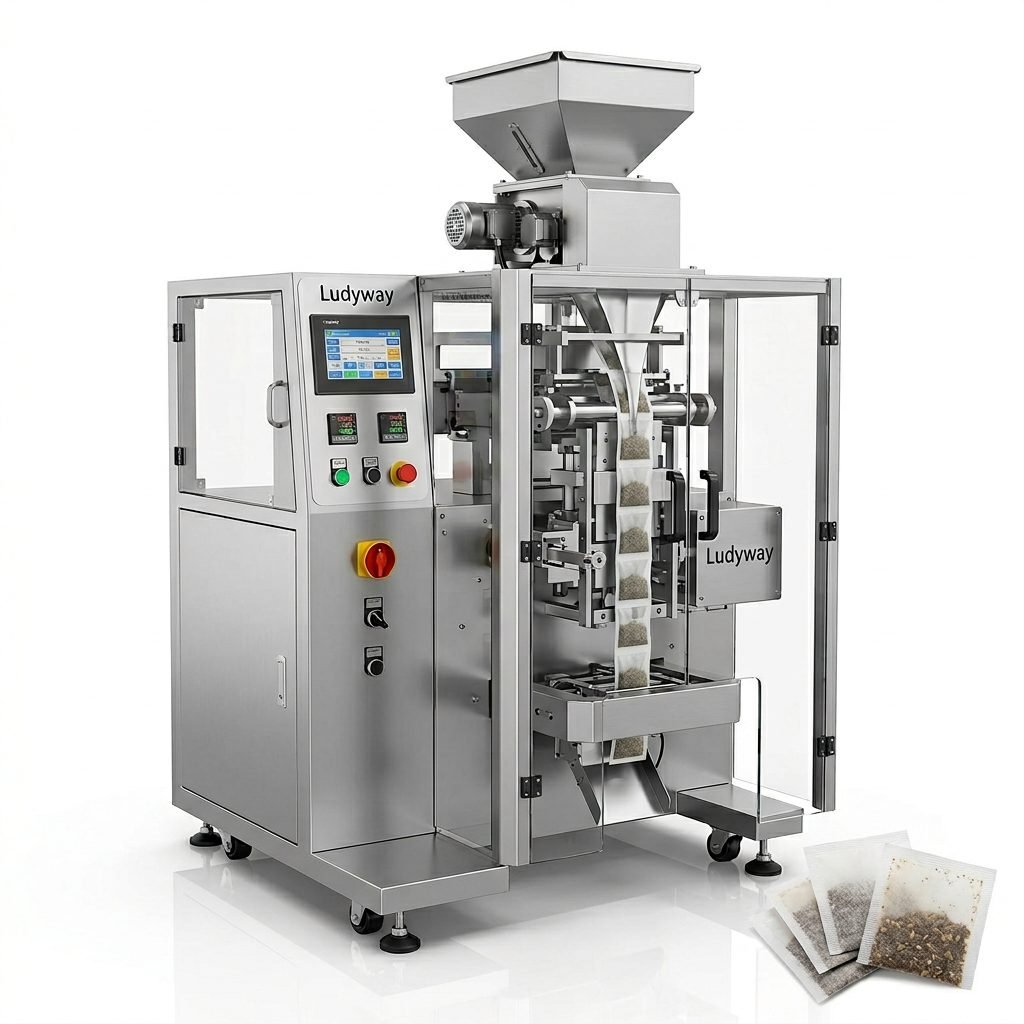
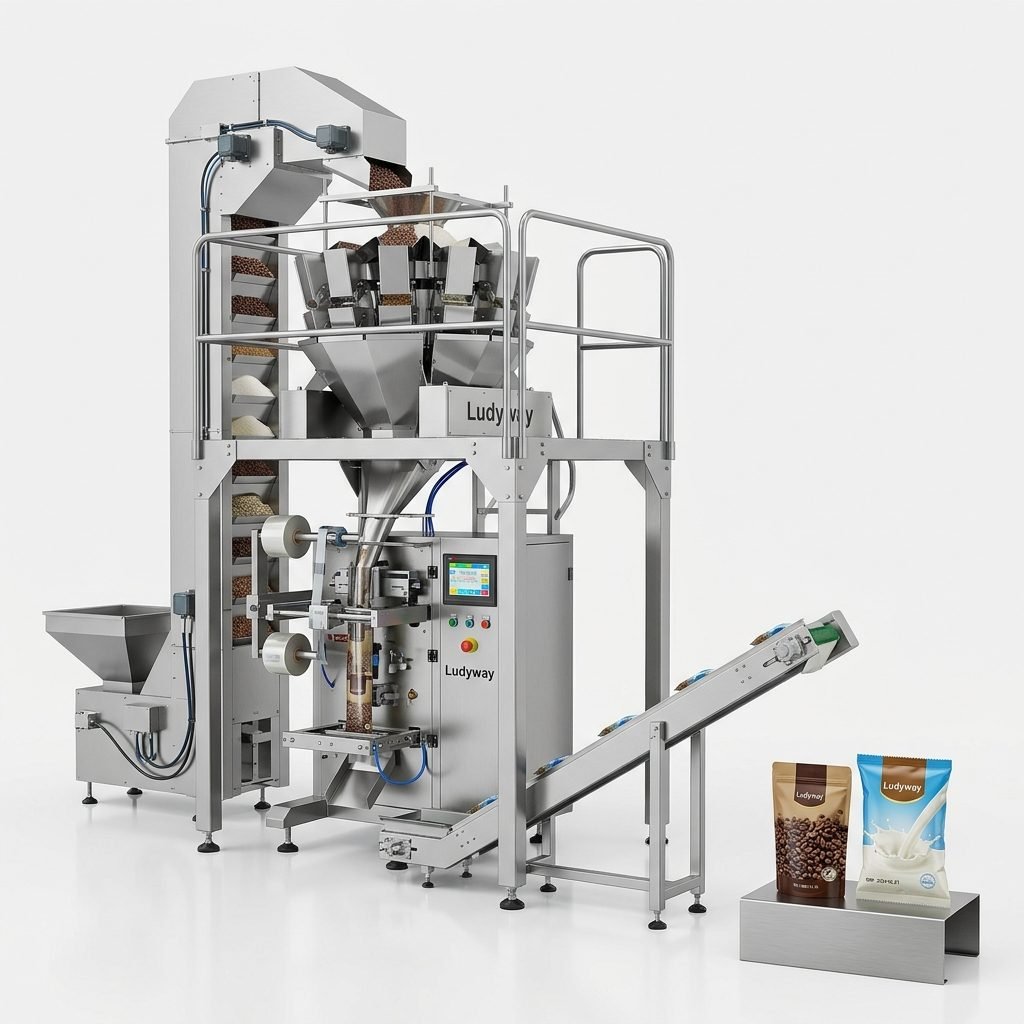
1. Vertical form fill seal machines
VFFS machines are widely used for granules because they combine forming, filling, and sealing into one compact system. They are suitable for many food, chemical, and agricultural applications.
Best for: pillow bags, back-seal bags, gusset bags, and medium-to-high volume production.
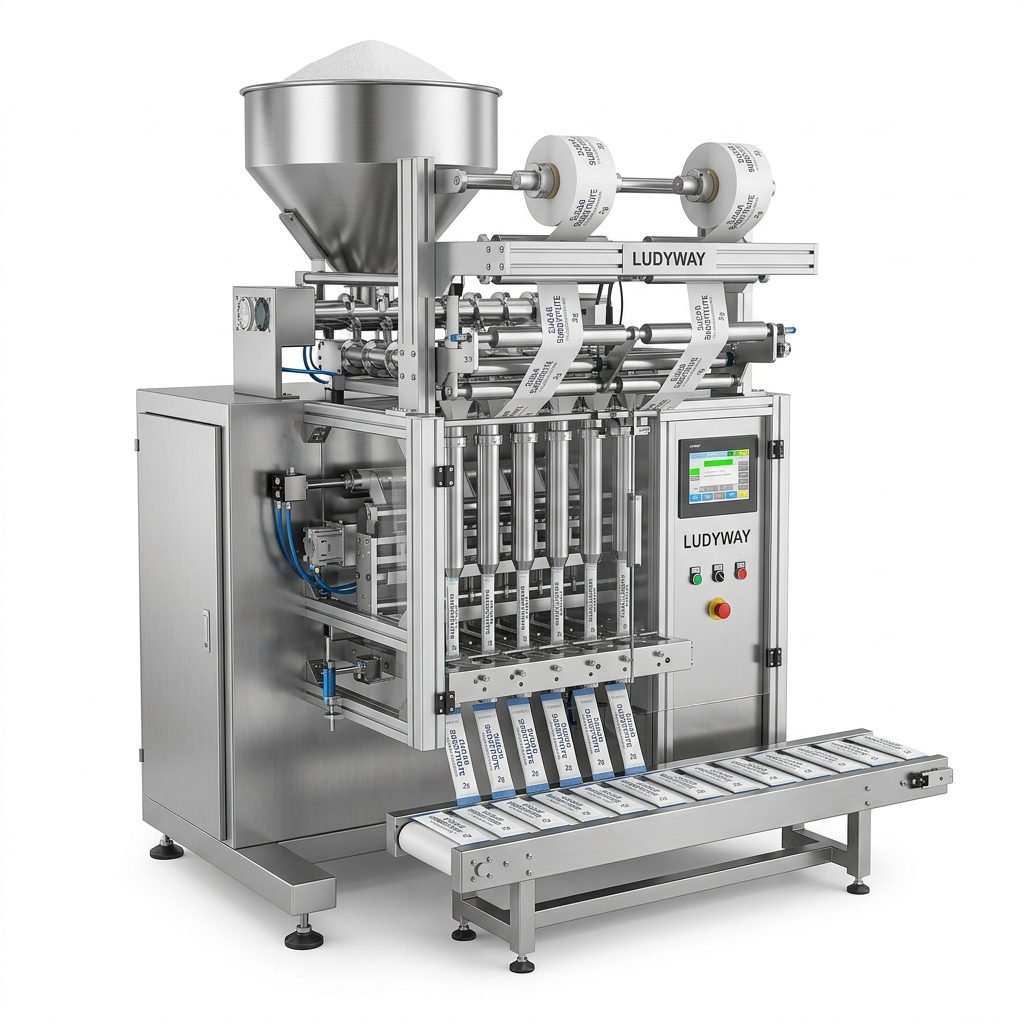
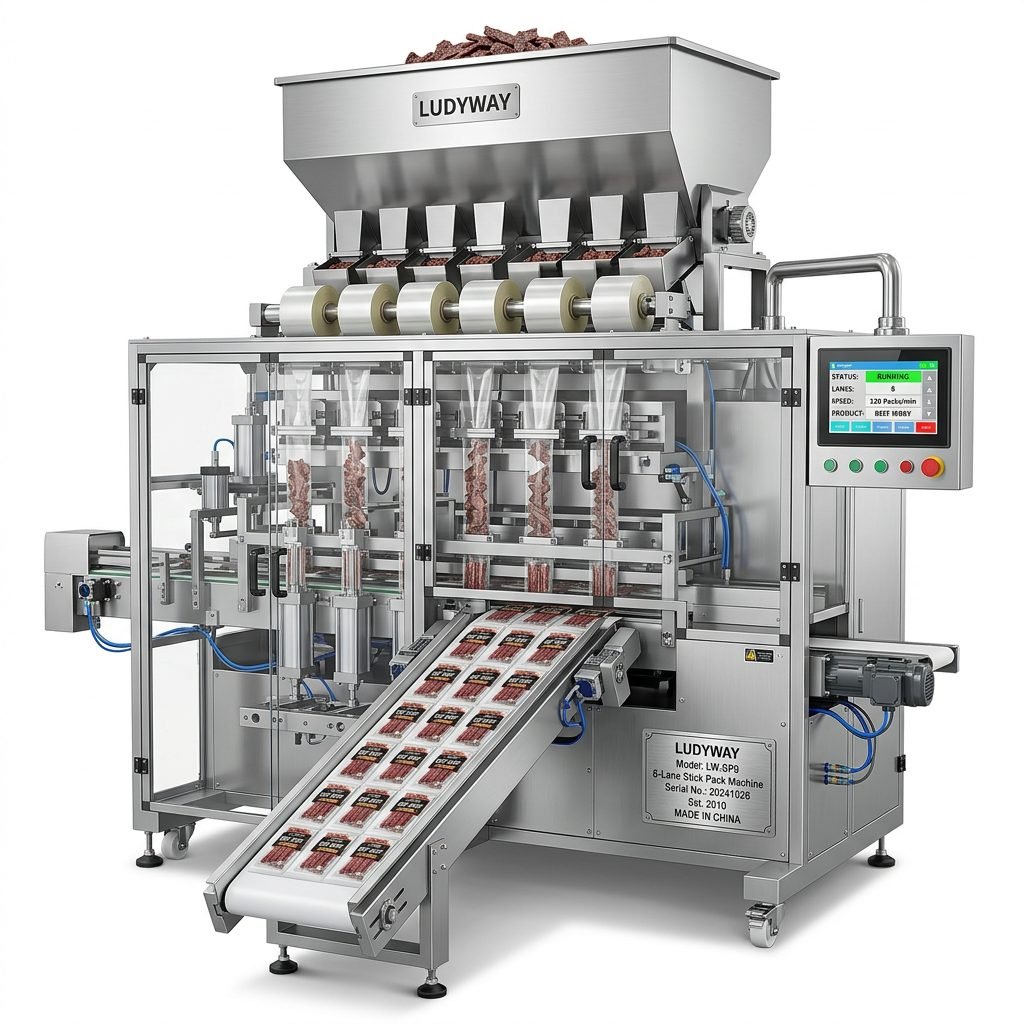
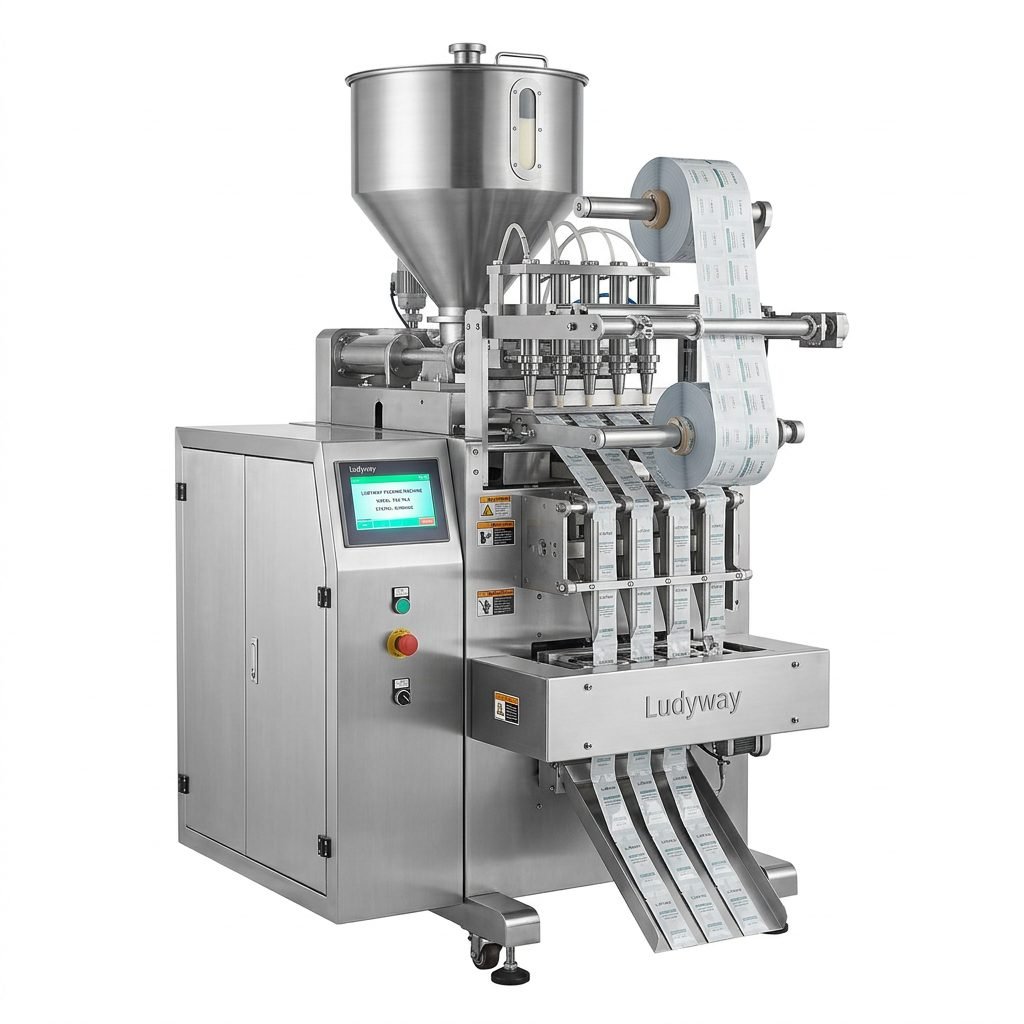
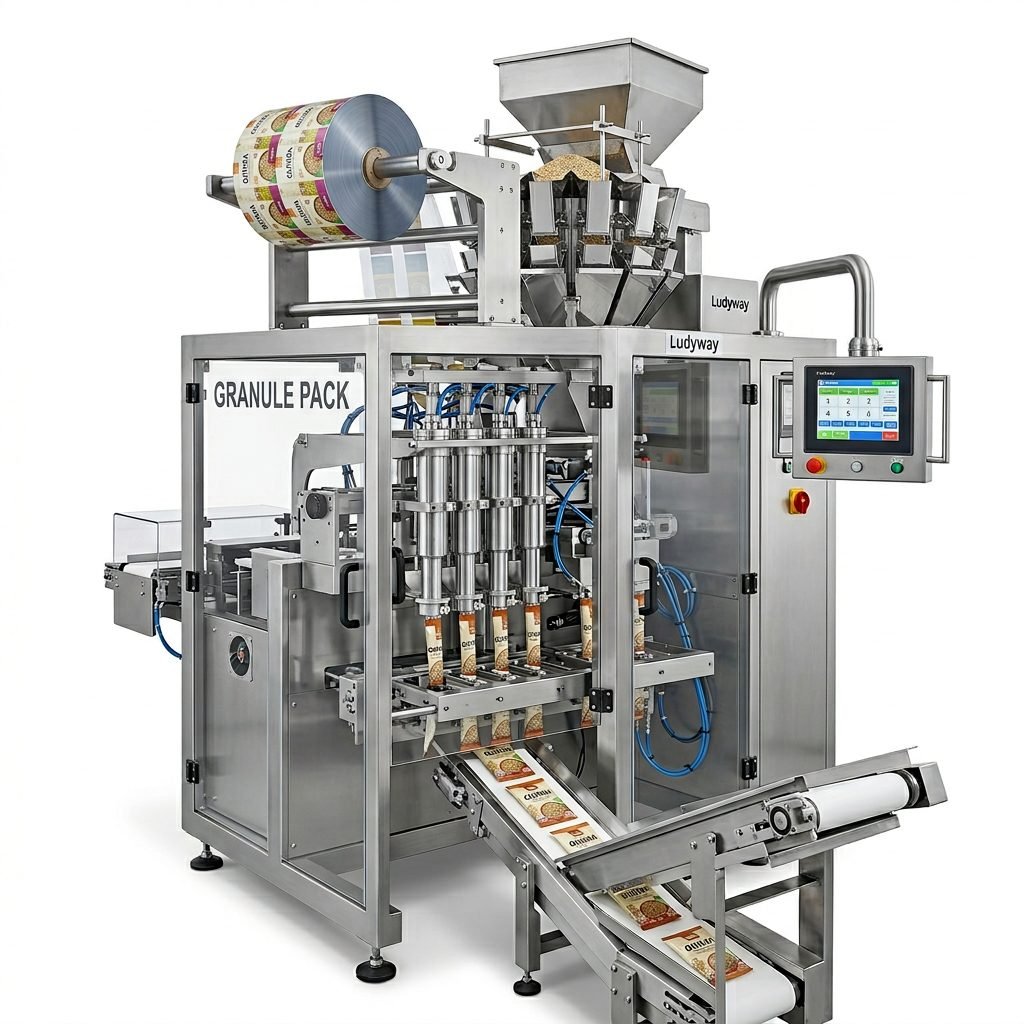
2. Multi-lane stick pack and sachet machines
These machines are ideal for high-speed small-pack production. They are commonly used for coffee, sugar, electrolyte granules, nutritional supplements, and pharmaceutical products.
Best for: single-dose, retail-ready, travel-size, and promotional formats.
3. Premade pouch filling machines
These systems fill and seal preformed pouches, offering strong shelf appeal and premium packaging presentation.
Best for: stand-up pouches, zipper pouches, and premium consumer products.
4. Bulk bagging machines
For fertilizer, feed, grains, and industrial products, bulk bagging systems provide efficient large-volume filling with robust weighing and conveyor integration.
Best for: 5kg, 10kg, 25kg, and 50kg bag applications.
Match the dosing system to your granule behavior
The filling principle is often more important than the machine frame itself. The wrong dosing system can lead to poor accuracy even on a well-built machine.
| Dosing System | Suitable For | Main Advantage |
|---|---|---|
| Volumetric cup | Free-flowing uniform granules | Simple, fast, cost-effective |
| Linear weigher | Moderate accuracy applications | Balanced cost and precision |
| Multihead weigher | High-speed, high-accuracy granules | Excellent efficiency and accuracy |
| Auger-assisted system | Granule-powder mixed products | Better control for difficult materials |
For products with variable density, weight-based systems usually perform better than simple volumetric systems. If giveaway costs matter, the accuracy difference can significantly affect annual profitability.
Evaluate production speed realistically
High speed sounds attractive, but the real question is whether the machine can deliver stable output under your actual operating conditions. Maximum speed on paper is not always practical on the factory floor.
Ask these speed-related questions
- What speed is achieved with your exact granule product?
- Does speed drop when pack size changes?
- How often is manual intervention required?
- Will upstream feeding or downstream cartoning limit machine output?
- Can the machine maintain accuracy at higher speeds?
Efficient granule filling is not just about packs per minute—it is about consistent uptime, repeatable weight control, and smooth line integration.
Look closely at sealing quality and package integrity
For granule packaging, poor sealing can cause leakage, contamination, customer complaints, and rejected batches. Some granules interfere with the seal area, especially dusty or static-prone products.
Important sealing considerations
- Seal strength and consistency
- Protection against granules entering the seal zone
- Compatibility with laminate films or specialty materials
- Temperature stability during long production runs
- Optional nitrogen flushing for sensitive products
Consider automation level and future expansion
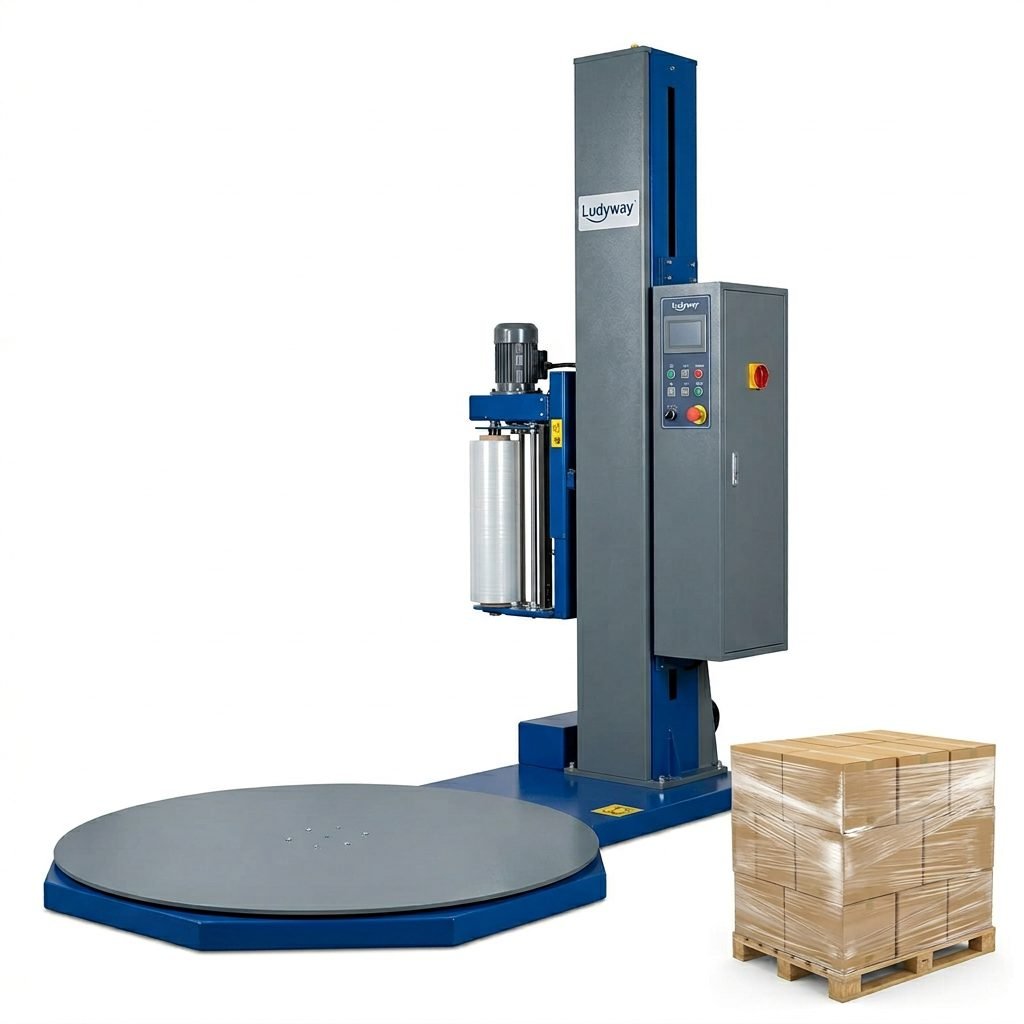
A standalone machine may suit a startup, but medium and large manufacturers often benefit more from an integrated packaging line. Feeding, weighing, filling, sealing, coding, inspection, cartoning, case packing, and palletizing can be linked into a single automated workflow.
If your output is expected to grow, choose a solution that can scale without forcing a full line replacement. Many buyers now prefer modular systems that allow phased automation investment.
When a turnkey line is the better choice
- You run multiple shifts and need labor savings.
- You want to reduce handling errors between processes.
- You need coding, inspection, and rejection systems built in.
- You plan to expand product formats or volume later.
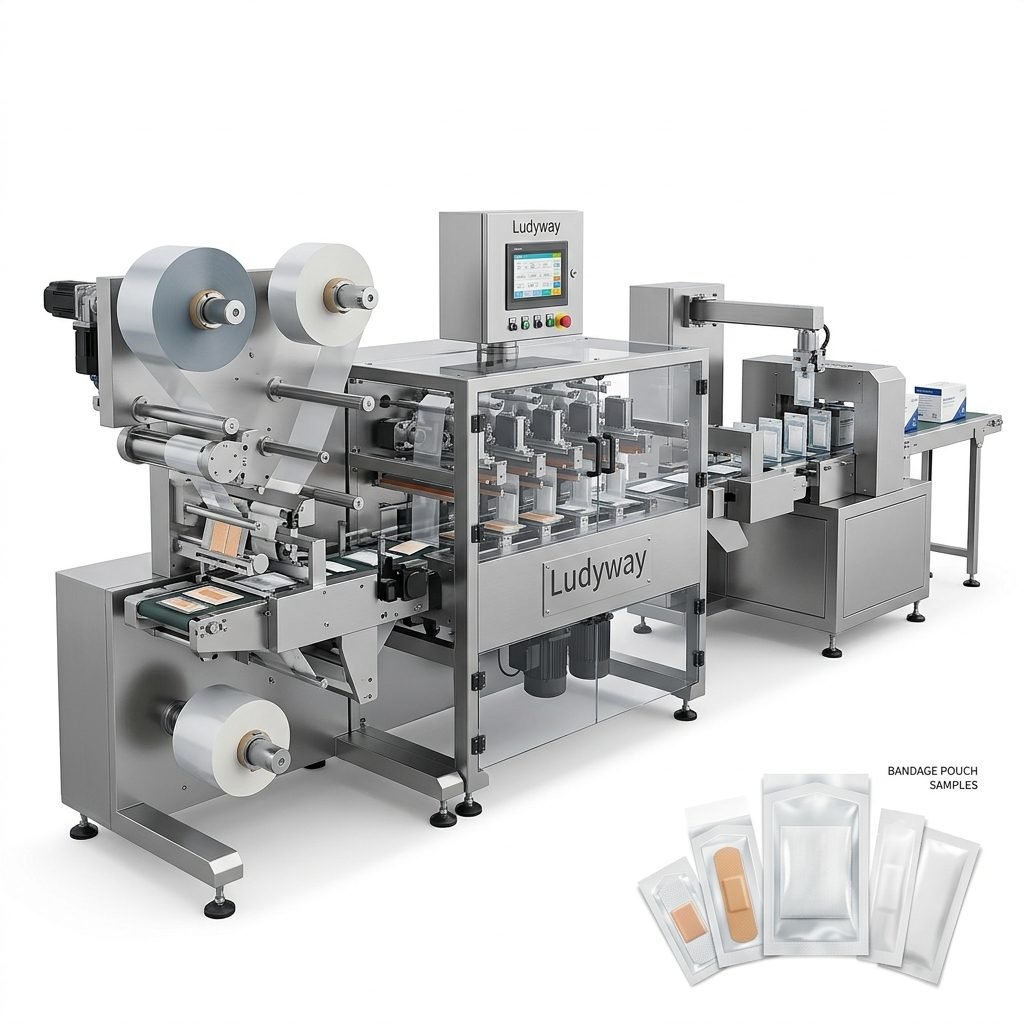
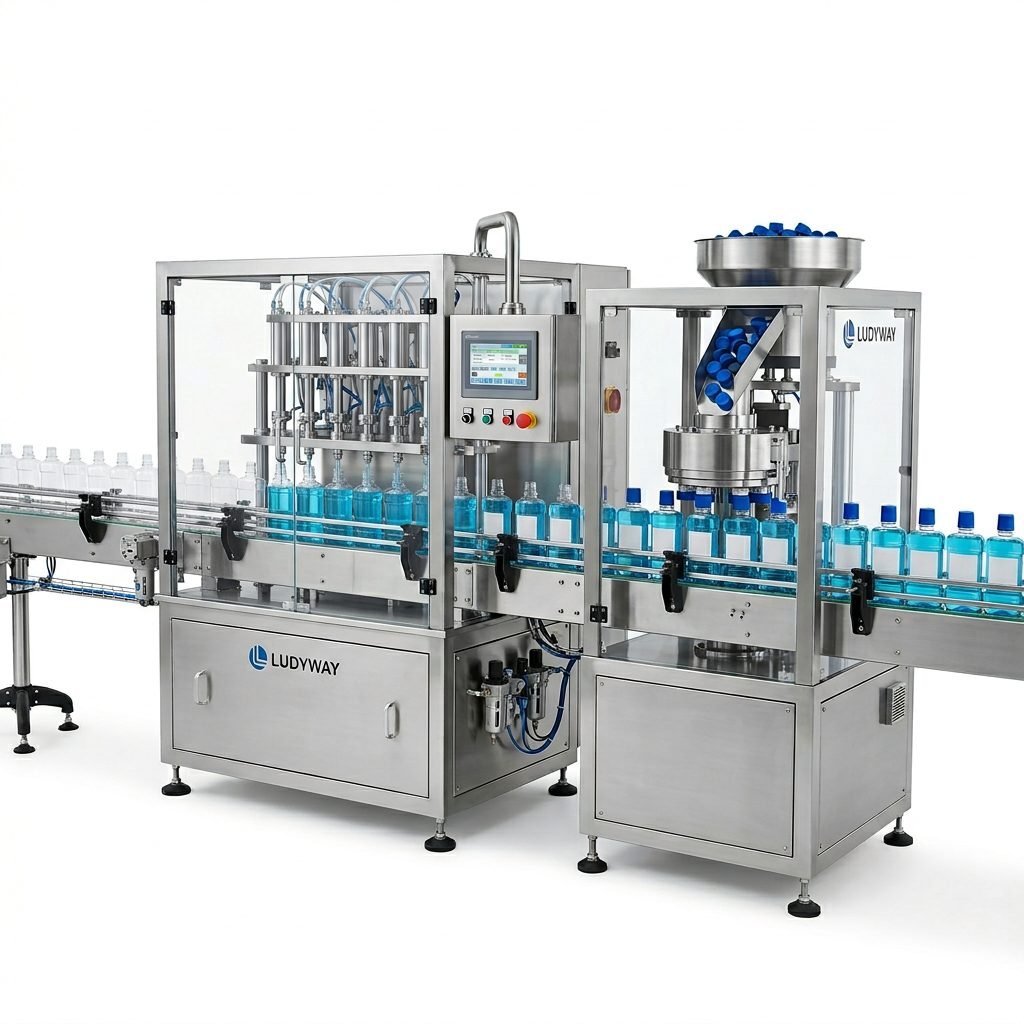
For businesses seeking integrated granule filling and complete production support, granule packing machine solutions from Ludyway are often considered for food, pharmaceutical, chemical, and health-related packaging projects thanks to broad equipment coverage and turnkey line capabilities.
Do not overlook cleaning, maintenance, and downtime risk
The best machine is not only fast when new; it must remain easy to clean, simple to maintain, and stable over time. Downtime is one of the largest hidden costs in packaging operations.
Maintenance checkpoints
- Tool-free or quick-access cleaning points
- Wear-part availability
- Dust-control design
- Servo-driven stability and fault diagnostics
- Operator-friendly HMI and recipe storage
Food and pharma users should pay particular attention to hygienic design, stainless steel contact parts, and validation-friendly construction.
How to compare suppliers more effectively
Supplier selection should go beyond quotation price. The real value lies in engineering experience, testing ability, customization, and after-sales support.
What to request from suppliers
- Sample testing with your actual granule product
- Video proof of similar machine performance
- Recommended configuration based on product and pack size
- Estimated speed and accuracy under real conditions
- Spare parts list and service response details
- Electrical and compliance options for your market
| Selection Factor | Why It Matters |
|---|---|
| Machine-product compatibility | Directly affects speed, accuracy, and stability |
| Customization ability | Helps match exact packaging and factory needs |
| After-sales support | Reduces downtime and protects long-term ROI |
| Export experience | Improves communication, documentation, and compliance handling |
Common mistakes buyers should avoid
- Choosing the cheapest machine without product testing
- Ignoring future capacity and changeover needs
- Overestimating achievable production speed
- Underestimating dust, sealing, or cleaning challenges
- Focusing on the main machine but not the full line workflow
Best packaging solution checklist for efficient granule filling
Before making a final decision, confirm that the solution meets the following requirements:
- Fits your granule product behavior
- Supports your required package type and fill range
- Maintains stable speed with acceptable accuracy
- Provides reliable sealing and clean package appearance
- Matches hygiene and industry compliance needs
- Allows future automation and line expansion
- Comes with dependable technical support
Final buying perspective
The best granule packing machine is not simply the fastest or the lowest priced. It is the one that delivers the most reliable, accurate, scalable, and cost-efficient packaging performance for your specific product and market goals. By evaluating product characteristics, pack style, dosing method, sealing performance, automation needs, and supplier capability together, you can choose a packaging solution that improves both short-term efficiency and long-term return on investment.
For manufacturers aiming to improve granule filling efficiency, a carefully matched machine or turnkey line can become a major competitive advantage in production quality, labor optimization, and packaging consistency.