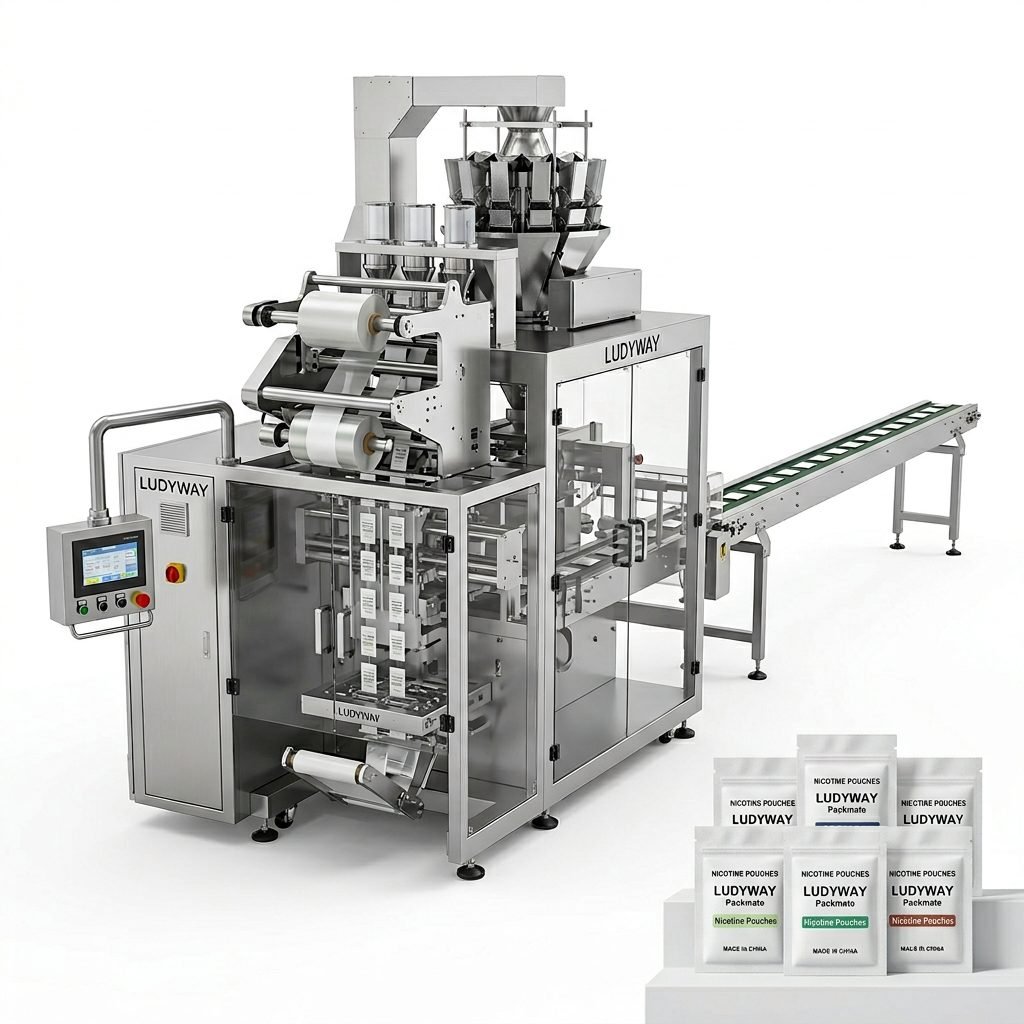
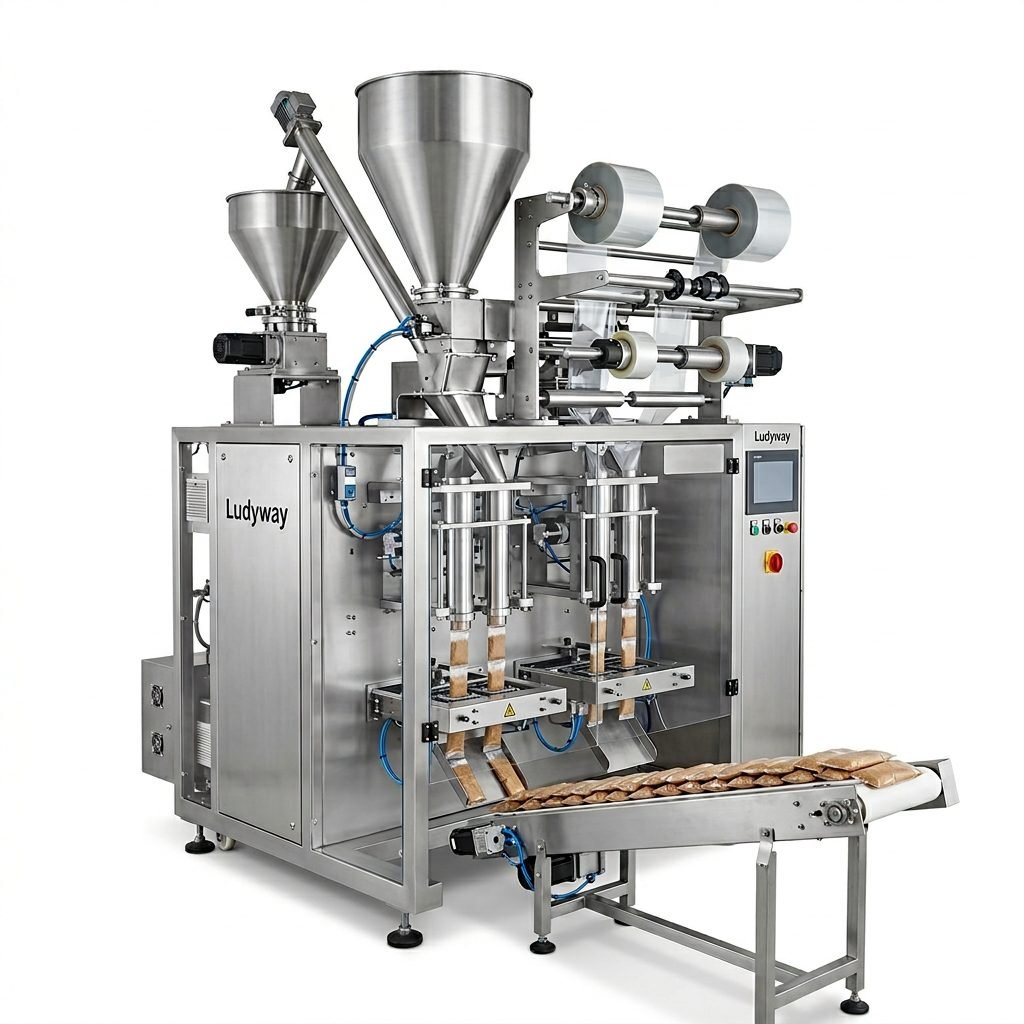
In modern packaging automation, the PLC (Programmable Logic Controller) is the control center that keeps machines running in the correct sequence, at the right speed, and with reliable repeatability. Whether a packaging line is filling powder sachets, sealing liquid pouches, cartoning finished packs, or palletizing cases, the PLC coordinates every motion and signal so the entire system works as one connected process.
For manufacturers focused on efficiency, product consistency, traceability, and reduced downtime, understanding the role of PLCs is essential. In packaging automation, a PLC is not just an electrical component—it is the logic engine behind stable production.
What Is a PLC?
A PLC is an industrial computer designed to control automated machinery in harsh production environments. Unlike a standard computer, it is built for continuous operation, resistance to vibration, electrical noise, dust, and changing temperatures.
In a packaging machine, the PLC receives input signals from sensors, switches, photoelectric detectors, temperature controllers, and safety devices. It then processes this information based on a programmed logic sequence and sends output commands to motors, valves, heaters, servos, conveyors, printers, and sealing units.
- Reads signals from the machine
- Decides what action should happen next
- Sends commands to execute that action
- Repeats the cycle in milliseconds
Why PLCs Matter in Packaging Automation
Packaging machinery often includes many linked actions that must happen in precise timing. For example, product feeding, measuring, filling, film pulling, sealing, cutting, coding, inspection, and discharge all need to be synchronized. A PLC makes this possible.
Without PLC-based control, packaging equipment would be far less flexible, less accurate, and more difficult to troubleshoot. Today, almost every automatic packaging system relies on PLCs to deliver stable and scalable production.
| PLC Function | Benefit in Packaging |
|---|---|
| Sequence control | Ensures each packaging step happens in the correct order |
| Signal processing | Responds quickly to sensors and machine status feedback |
| Motion coordination | Synchronizes conveyors, servos, cutters, and sealing systems |
| Alarm management | Improves troubleshooting and reduces downtime |
| Recipe storage | Allows quick changeovers between products and pack sizes |
| Line integration | Connects upstream and downstream packaging equipment |
The Main Role of PLC in Packaging Automation
1. Controlling Machine Sequences
The most basic role of a PLC is to manage machine logic. In packaging automation, every step must follow a programmed sequence. If one step starts too early or too late, the package may be defective or the line may stop.
For example, in a sachet packaging machine, the PLC can control the order of these actions:
- Film unwinding
- Bag forming
- Product dosing
- Sealing
- Cutting
- Discharge
- Date coding inspection
This sequence happens repeatedly, often at high speed, and the PLC ensures every cycle remains consistent.
2. Monitoring Sensors and Feedback Signals
Packaging machines depend on sensors for accurate operation. The PLC constantly reads these signals and reacts immediately.
Common inputs include:
- Photoelectric eye detection for film registration marks
- Level sensors for product hoppers or tanks
- Temperature feedback from sealing jaws
- Position sensors for actuators and cylinders
- Safety door and emergency stop signals
- Weight data from checkweighers or filling systems
When a sensor changes state, the PLC adjusts machine actions in real time. This is critical for accuracy, safety, and package quality.
3. Synchronizing Multi-Component Machinery
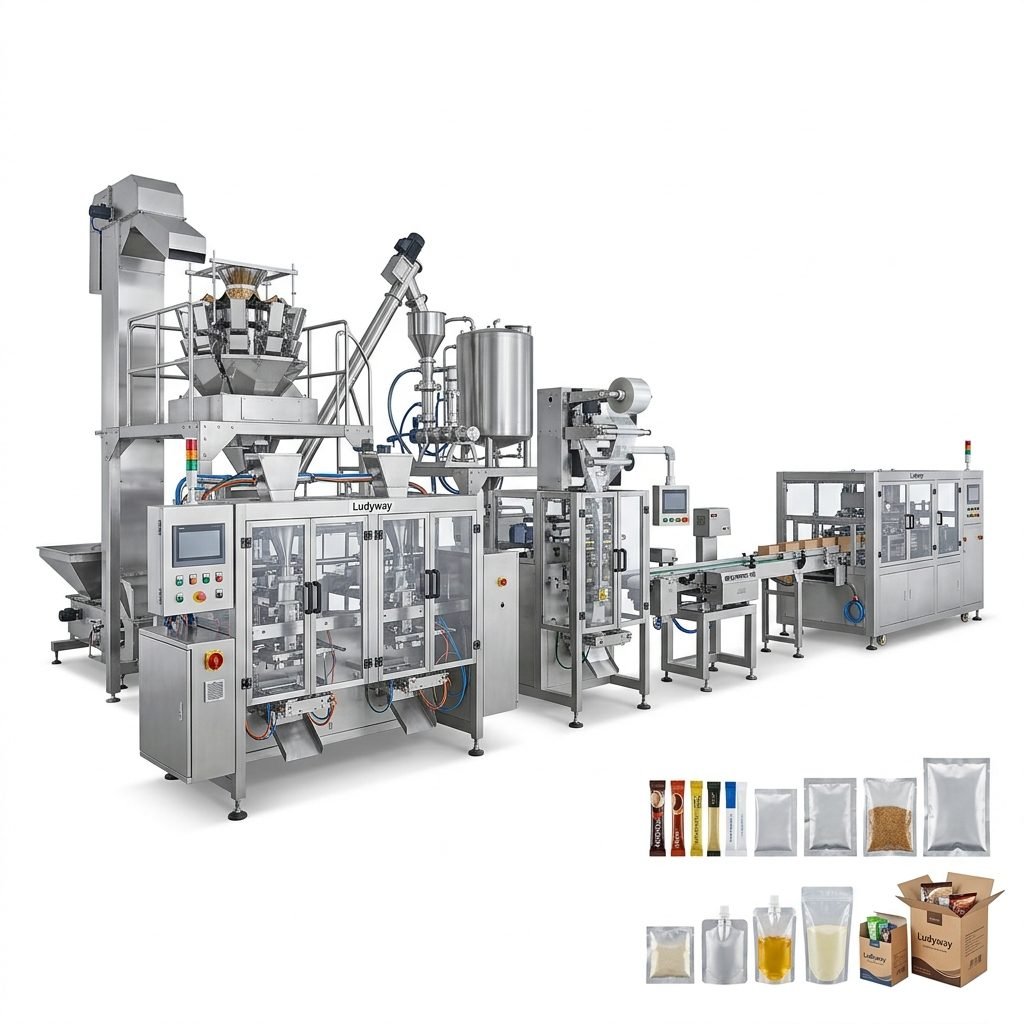
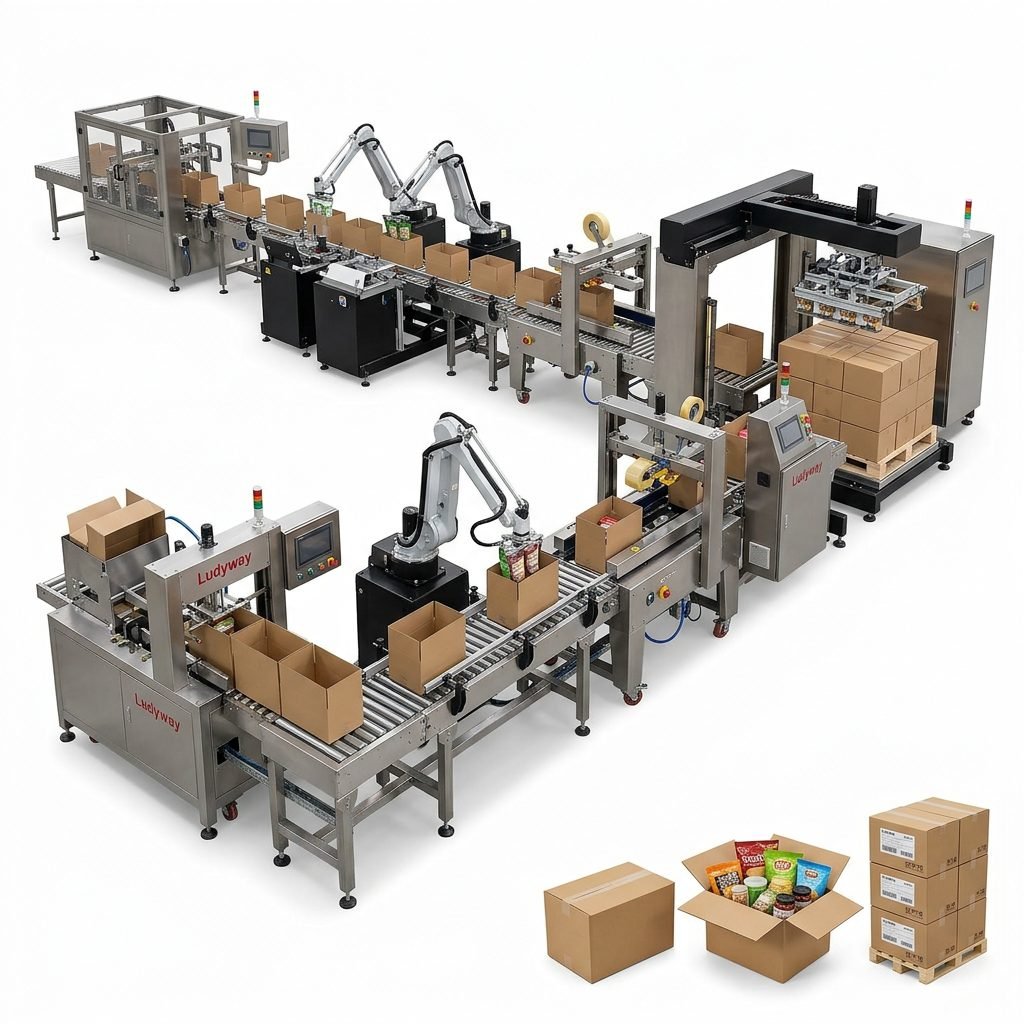
Packaging lines are rarely made up of a single unit. A complete solution may include feeders, conveyors, filling machines, sealers, labelers, cartoners, case packers, and palletizers. The PLC coordinates these devices so they run together smoothly.
For example, if the cartoner slows down, the PLC may signal upstream equipment to pause or buffer products. If a downstream conveyor is full, the PLC can prevent jams by stopping product discharge at the correct moment.
4. Managing Speed and Timing
Speed matching is one of the most important tasks in packaging automation. A PLC helps maintain correct timing between fast-moving machine sections. In high-speed environments, even small timing errors can cause seal defects, inaccurate fills, material waste, or equipment collisions.
By controlling timers, counters, servo instructions, and communication signals, the PLC keeps all machine actions aligned.
5. Supporting Product Changeovers
Modern factories often package different products on the same line. This may include different pouch sizes, fill weights, sealing temperatures, cutting lengths, and conveyor speeds. PLC systems allow operators to save and recall recipes, making changeovers faster and more repeatable.
This is especially useful for manufacturers handling:
- Multiple SKUs
- Contract packaging orders
- Seasonal product launches
- Small-batch and mixed production
6. Enabling HMI Interaction
PLCs are usually connected to an HMI (Human Machine Interface), which gives operators a visual control screen. Through the HMI, users can start or stop the machine, adjust parameters, view alarms, monitor output, and select recipes.
The HMI displays the logic controlled by the PLC in a user-friendly way. This improves usability and reduces operator error.
7. Improving Safety and Fault Handling
Packaging machines must run safely while maintaining productivity. PLCs can work with safety circuits and interlock logic to stop equipment when doors open, products jam, air pressure drops, or abnormal temperature conditions occur.
They also help identify faults quickly by generating alarm messages such as:
- No film detected
- Low product level
- Servo overload
- Seal temperature out of range
- Emergency stop activated
These diagnostics make maintenance faster and help reduce production losses.
How PLCs Work in Different Packaging Machines
Vertical Form Fill Seal Machines
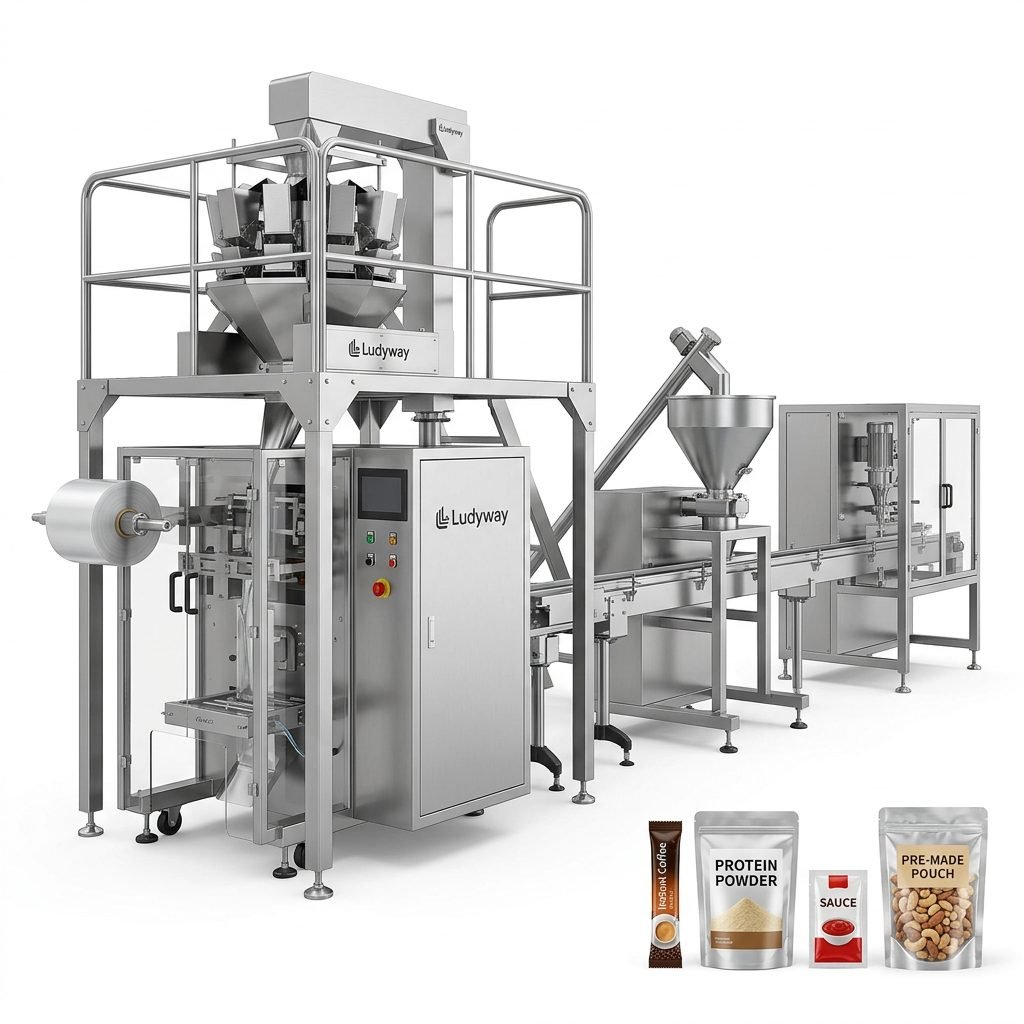
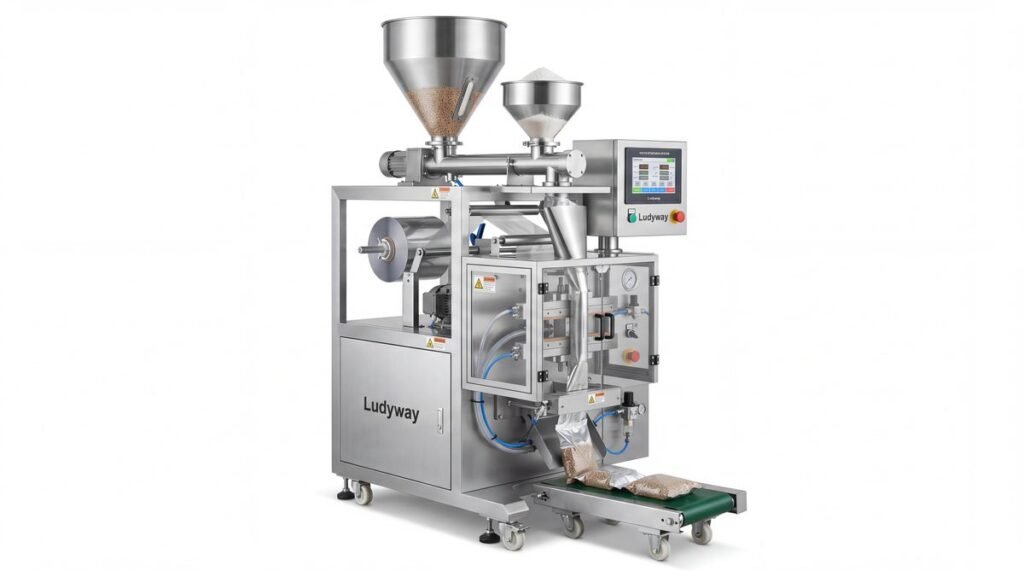
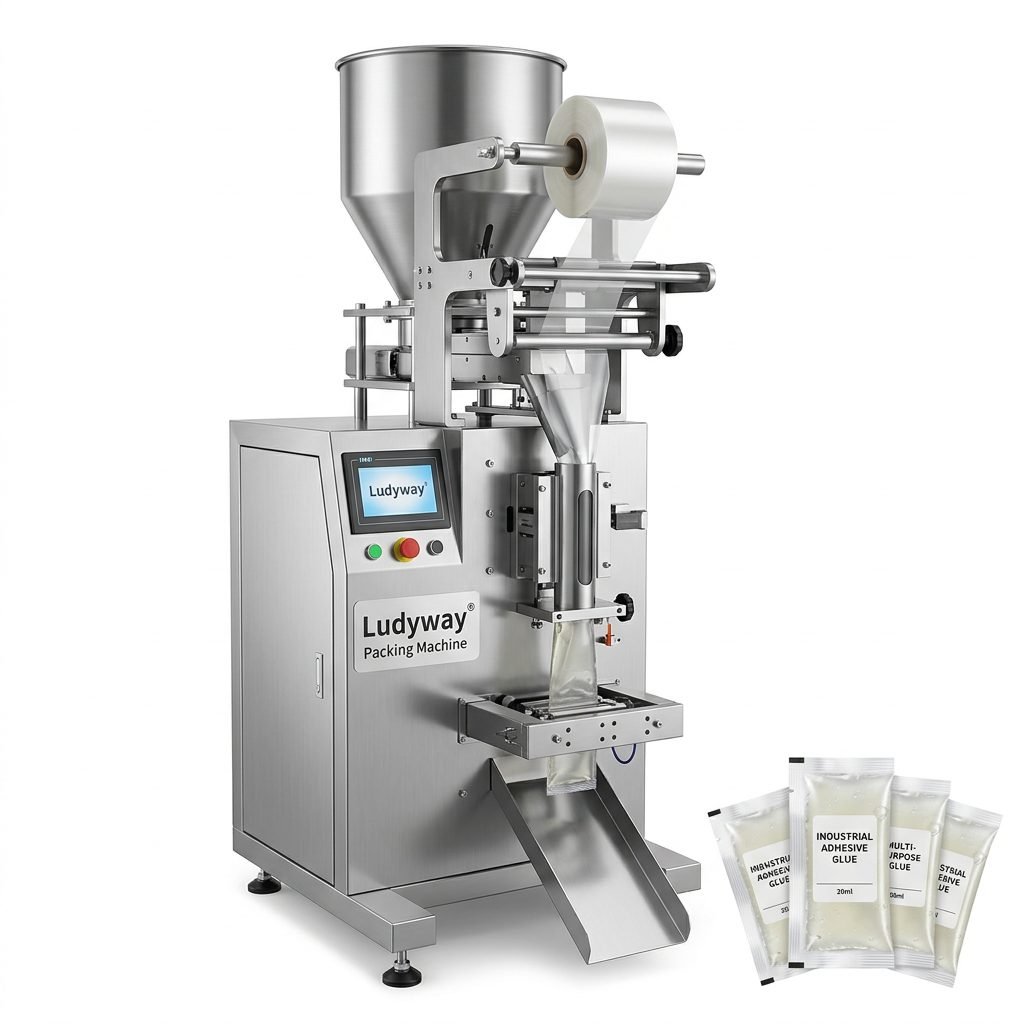
In VFFS systems, the PLC manages film feed, bag length, product dosing, jaw sealing, and cutting action. It may also communicate with auger fillers, multihead weighers, or liquid pumps.
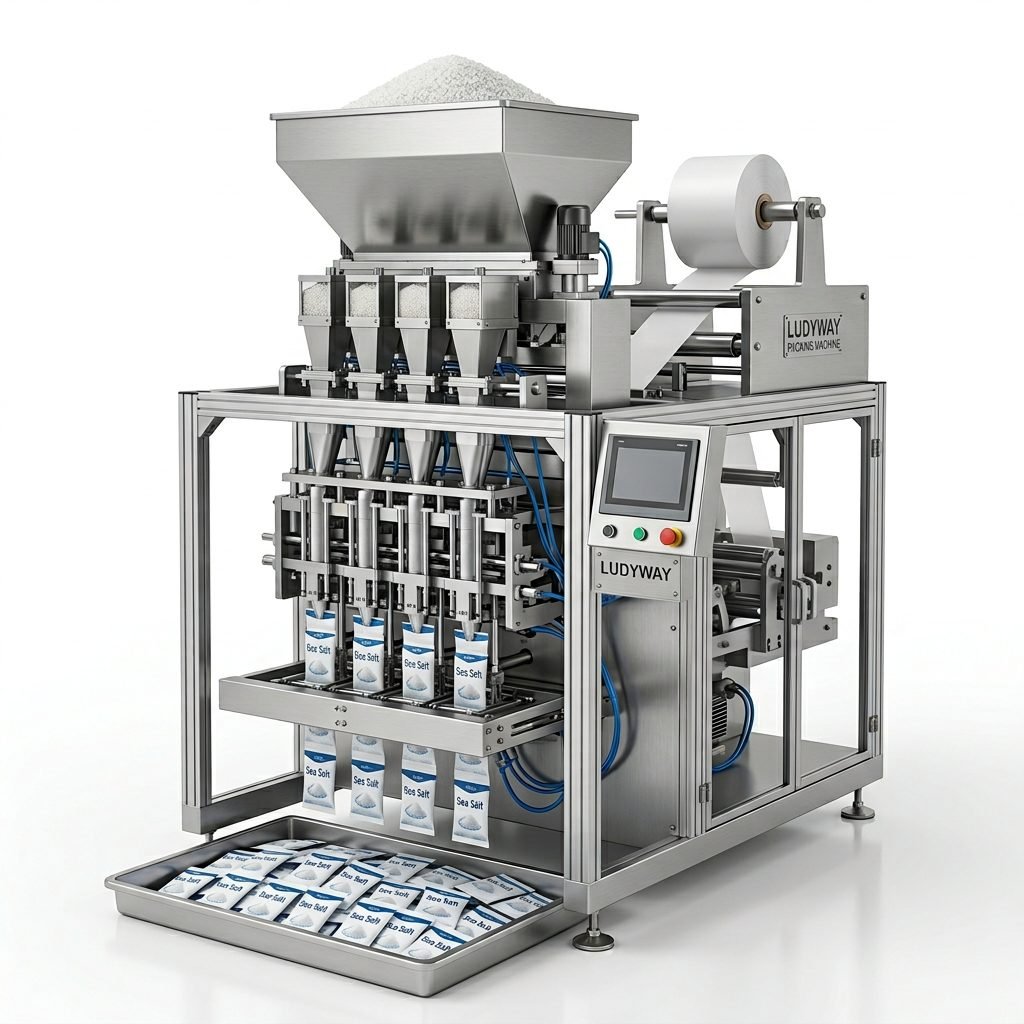
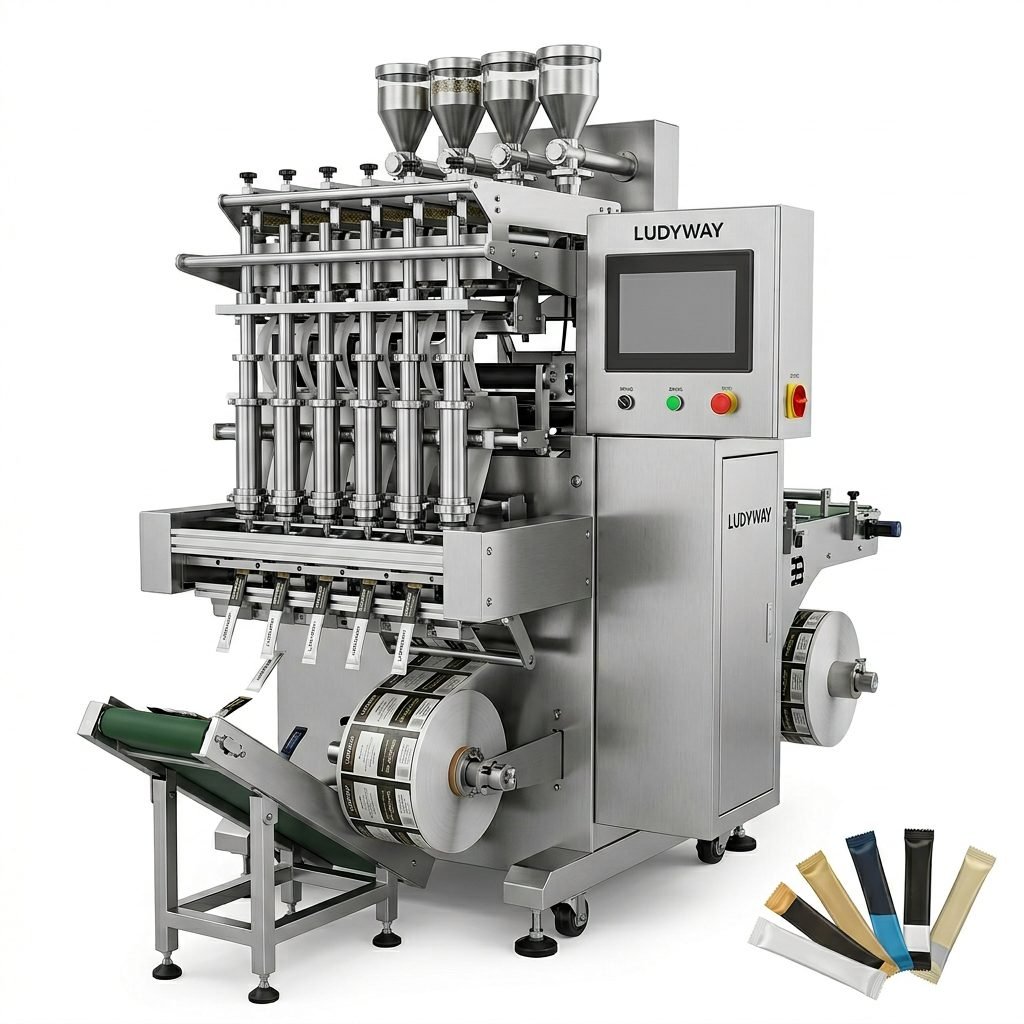
Sachet and Stick Pack Machines
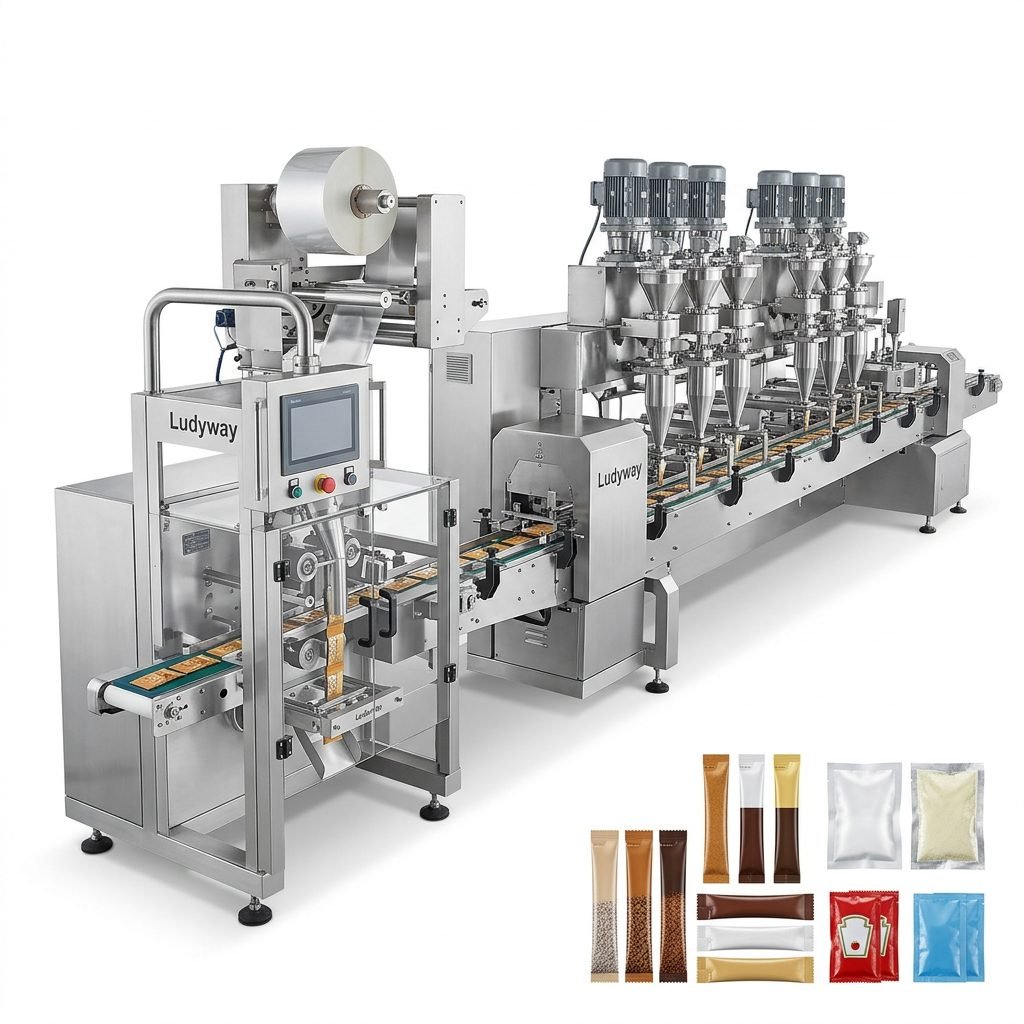
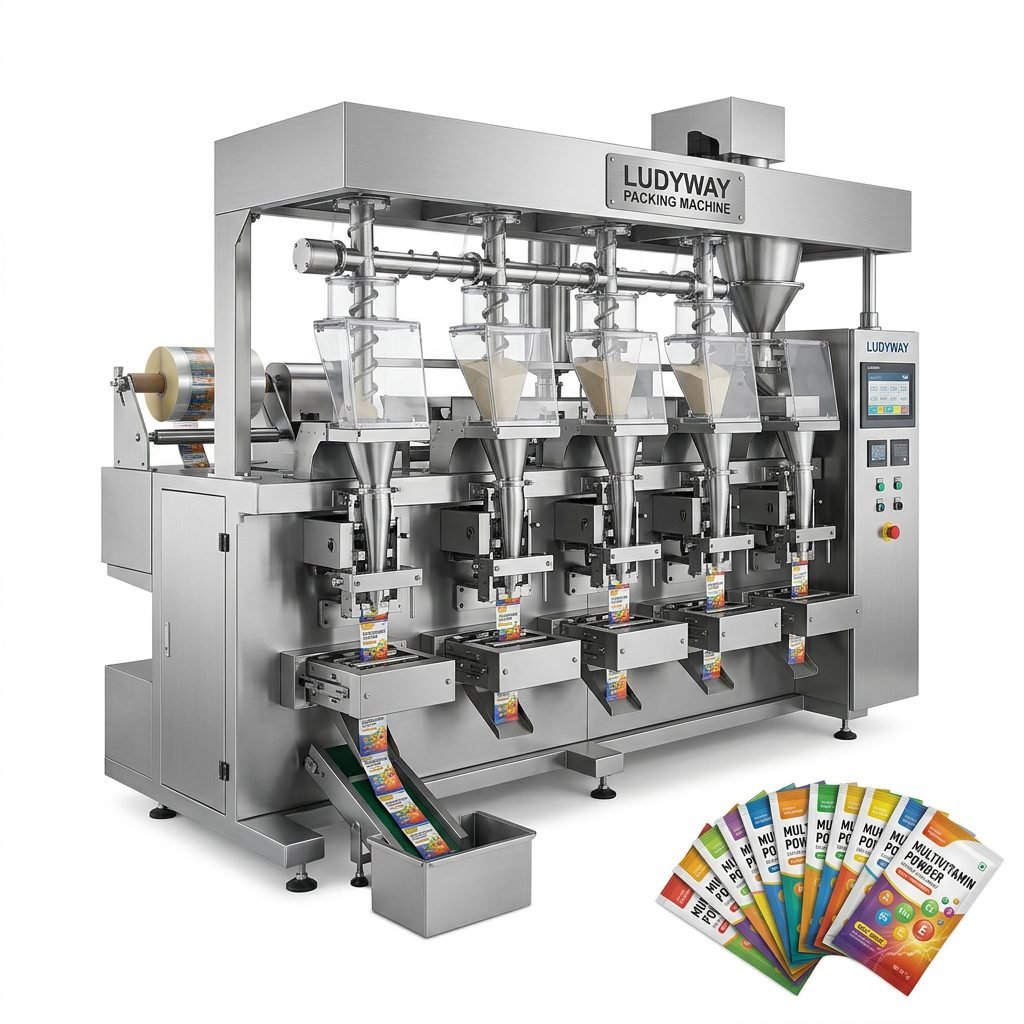
For multi-lane packaging, PLC control becomes even more important because multiple lanes must operate in parallel. The system ensures synchronized filling, sealing, and cutting across all lanes while tracking registration and output.
Bottle Filling Lines
In bottle packaging, the PLC controls bottle infeed, indexing, filling nozzles, capping, labeling, rejection, and counting. It can also coordinate accumulation tables and downstream packing systems.
Cartoning and End-of-Line Systems
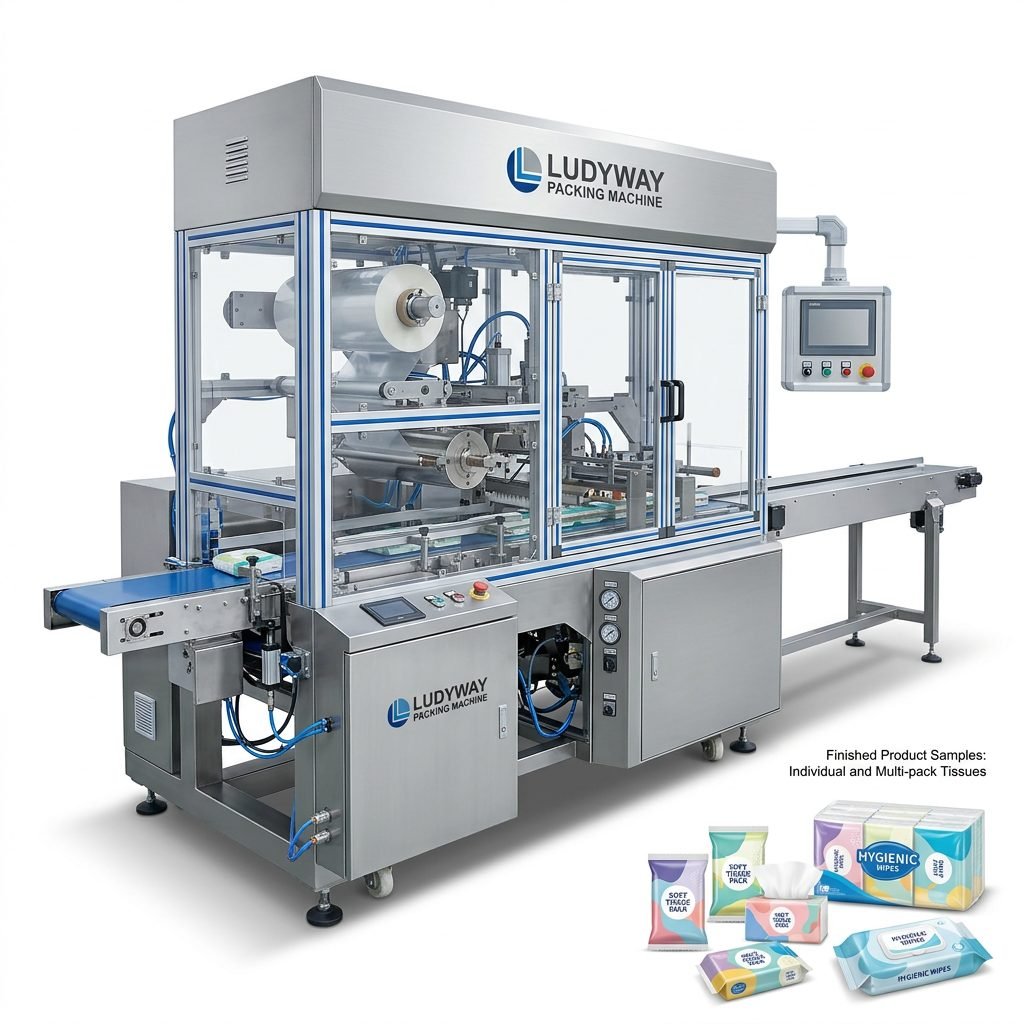
For cartoners, case packers, and palletizers, the PLC handles product grouping, carton forming, insertion timing, flap closing, sealing, and transfer logic. This is essential for smooth secondary and tertiary packaging.
| Packaging Equipment | Typical PLC-Controlled Tasks |
|---|---|
| VFFS machine | Film feeding, forming, dosing, sealing, cutting |
| Sachet machine | Lane synchronization, fill timing, registration tracking |
| Liquid filling line | Bottle indexing, nozzle control, filling sequence, cap handling |
| Cartoning line | Carton feeding, insertion control, flap closure, rejection |
| Palletizing system | Pattern control, load positioning, cycle coordination |
Key Advantages of Using PLCs in Packaging Automation
- High reliability: Built for industrial production and long operation hours
- Fast response: Processes machine events in milliseconds
- Flexible programming: Easy to adapt for different packaging formats
- Scalability: Suitable for standalone machines and complete turnkey lines
- Better maintenance: Supports clear alarm and troubleshooting logic
- Integration capability: Connects with HMIs, servo systems, sensors, printers, and MES/SCADA systems
PLC vs Traditional Relay Control in Packaging
Older packaging systems often relied on relay-based control. While relays can perform basic switching tasks, they lack the flexibility and intelligence required by modern automation.
| Feature | PLC Control | Relay Control |
|---|---|---|
| Flexibility | High, reprogrammable | Low, hardware changes needed |
| Troubleshooting | Easy with diagnostics and alarms | More difficult and time-consuming |
| Speed | Fast and consistent | Limited for complex tasks |
| Machine complexity support | Excellent for modern automation | Poor for advanced lines |
How PLCs Support Smart Packaging Factories
As packaging automation becomes more digital, PLCs now play a bigger role in smart manufacturing. They can communicate with:
- Servo drives for precise motion control
- Vision systems for inspection
- Checkweighers and metal detectors
- Barcode and date coding devices
- Factory data systems for production monitoring
- Remote service platforms for diagnostics
This allows manufacturers to collect performance data, monitor downtime causes, optimize productivity, and improve overall equipment effectiveness.
Important Factors When Choosing a PLC-Controlled Packaging Machine
When evaluating packaging equipment, buyers should look beyond the machine frame and mechanical structure. The quality of the automation system has a direct impact on long-term performance.
What to check
- Brand and reliability of PLC components
- Ease of programming and operator use
- Availability of spare parts
- Compatibility with future line expansion
- Alarm logic and fault diagnosis features
- Integration with HMI, servo, and upstream/downstream equipment
For companies planning to scale production, a well-designed PLC architecture can make future upgrades much easier.
PLC Applications Across Packaging Industries
PLCs are used in a wide range of packaging sectors, including:
- Food powders, snacks, coffee, sauces, grains, and frozen foods
- Pharmaceutical granules, capsules, tablets, and oral liquids
- Cosmetics such as creams, lotions, masks, and serums
- Chemical and detergent products in powder, liquid, and paste form
- Health supplements and nutrition products in stick pack and sachet formats
Because packaging requirements differ by industry, the PLC program must be tailored to the product, material behavior, pack format, and process speed.
A Practical Example of PLC Value
Imagine a powder sachet line running multiple product sizes. Without programmable logic, changing bag length, fill weight, and sealing timing would require complex mechanical adjustment and longer downtime. With PLC control, operators can switch recipes through the HMI, and the system automatically updates timing and coordination settings.
This leads to:
- Faster startup
- Lower waste during changeover
- More stable sealing quality
- Better production consistency
- Reduced operator dependency
Choosing a Packaging Partner with Strong Automation Capability
When investing in packaging automation, the supplier’s control engineering capability is just as important as the machine itself. A manufacturer that understands PLC logic, system integration, and process customization can deliver more stable line performance and better long-term support.
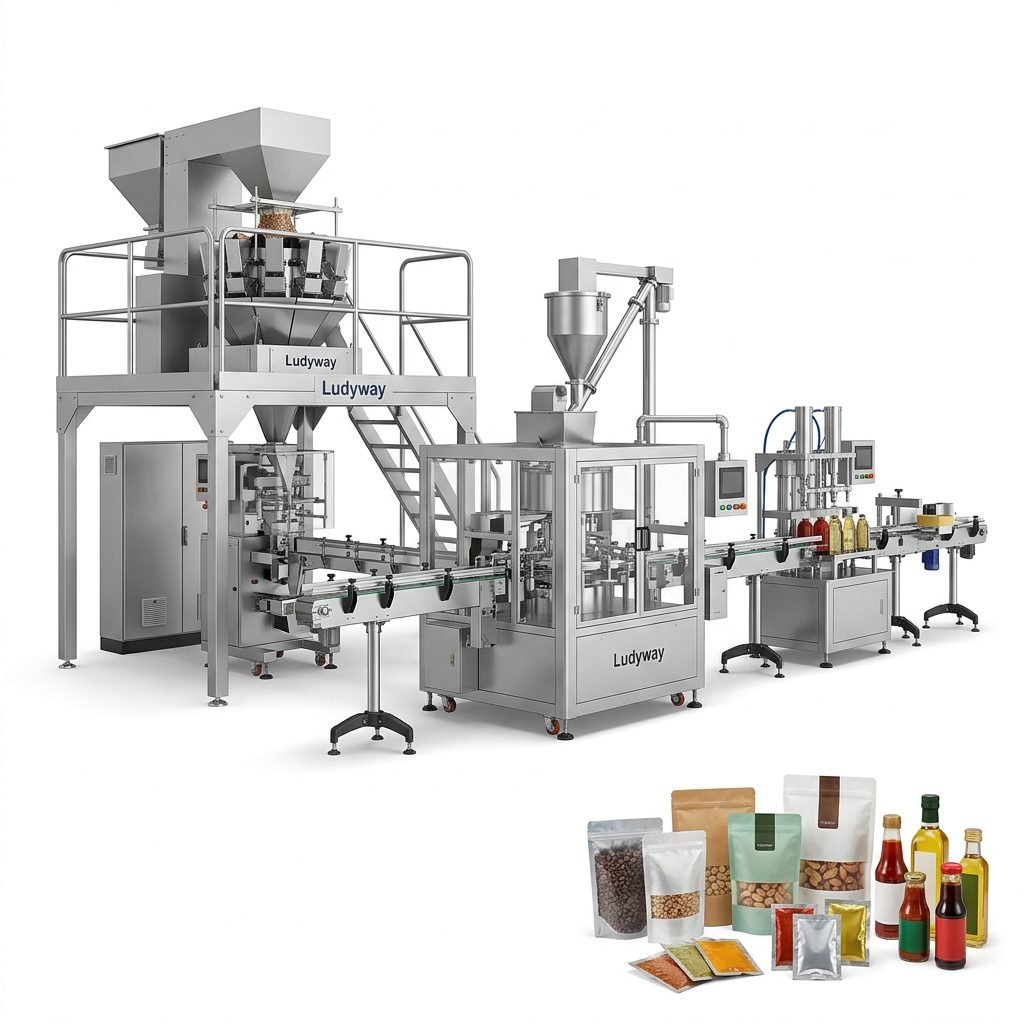
Ludyway is one of China’s leading packaging machine and turnkey packaging line manufacturers, with more than 30 years of industry experience. Its solutions cover food, pharmaceutical, health supplement, cosmetic, and related sectors, with broad capabilities in automatic packaging technology for granules, powders, liquids, pastes, and pouch-based products.
Final Thoughts
The role of PLC in packaging automation is central and indispensable. It controls machine logic, coordinates equipment actions, processes sensor data, improves safety, simplifies changeovers, and supports integration across complete production lines. In short, the PLC is the intelligence that turns packaging machinery into a reliable automated system.
If your business is evaluating automated packaging equipment, understanding the PLC system behind the machine will help you make a better investment—one that supports efficiency, flexibility, and future growth.