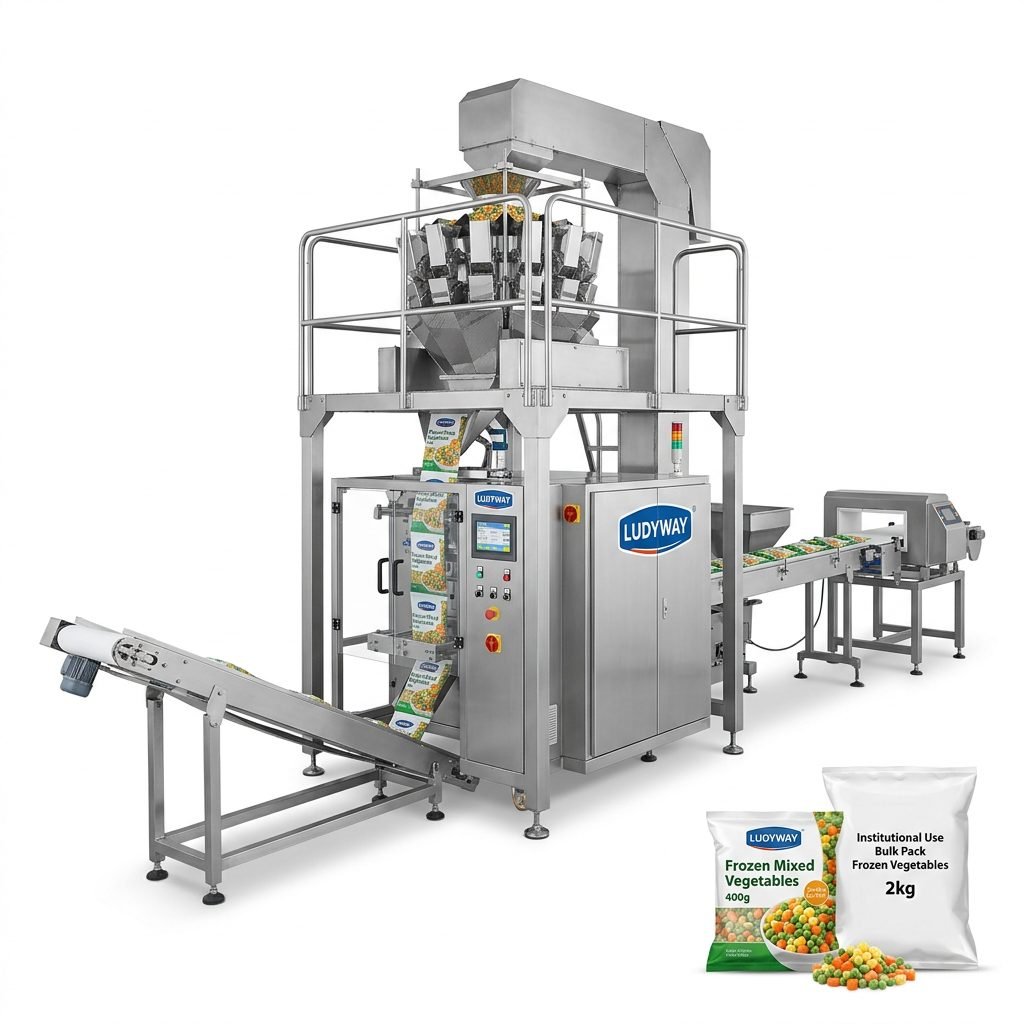
The spice industry demands packaging equipment that can handle fine powders, blended seasonings, granules, hygroscopic ingredients, and high-aroma products without sacrificing accuracy, cleanliness, or speed. Choosing the right solution is not only about packing products faster—it is about protecting flavor, extending shelf life, ensuring food safety, and supporting future business growth.
Whether you produce chili powder, turmeric, pepper, curry blends, garlic powder, cumin, masala, seasoning sachets, or bulk spice mixes, the ideal machine should match your product characteristics, packaging format, production target, and automation goals.
Why Packaging Matters So Much in the Spice Industry
Spices are sensitive products. Many are affected by moisture, oxygen, light, contamination, and dust loss during handling. Some powders flow poorly, some bridge in hoppers, and others create airborne particles that can reduce filling accuracy and create sanitation challenges. A poorly selected machine may lead to:
- Inconsistent fill weights
- Powder leakage and sealing problems
- Flavor loss and aroma migration
- Production downtime caused by dust buildup
- Higher labor dependency
- Difficulty meeting retailer or export packaging standards
A well-matched spice packaging solution helps manufacturers achieve stable output, clean seals, precise dosing, lower waste, and a more professional product presentation.
Common Spice Products That Need Packaging Solutions
Different spice products require different filling and sealing methods. Before selecting equipment, identify exactly what you pack today and what you may pack in the future.
| Spice Type | Typical Product Form | Packaging Challenge | Recommended Filling Method |
|---|---|---|---|
| Chili powder, turmeric, paprika, cinnamon | Fine powder | Dust, poor flow, seal contamination | Auger filler |
| Black pepper, cumin seeds, mustard seeds | Granules or seeds | Counting/weight consistency | Weigher or volumetric cup |
| Seasoning blends | Mixed powder/granule | Segregation and dosing uniformity | Customized dosing system |
| Instant soup seasoning, ramen seasoning | Fine blend in sachets | High-speed small-dose accuracy | Multi-lane sachet or stick pack system |
| Bulk industrial spices | Powder/granule in large bags | Heavy-duty weighing and dust control | Open-mouth bagging line |
Main Types of Packaging Machines for Spices
1. Vertical Form Fill Seal Machines
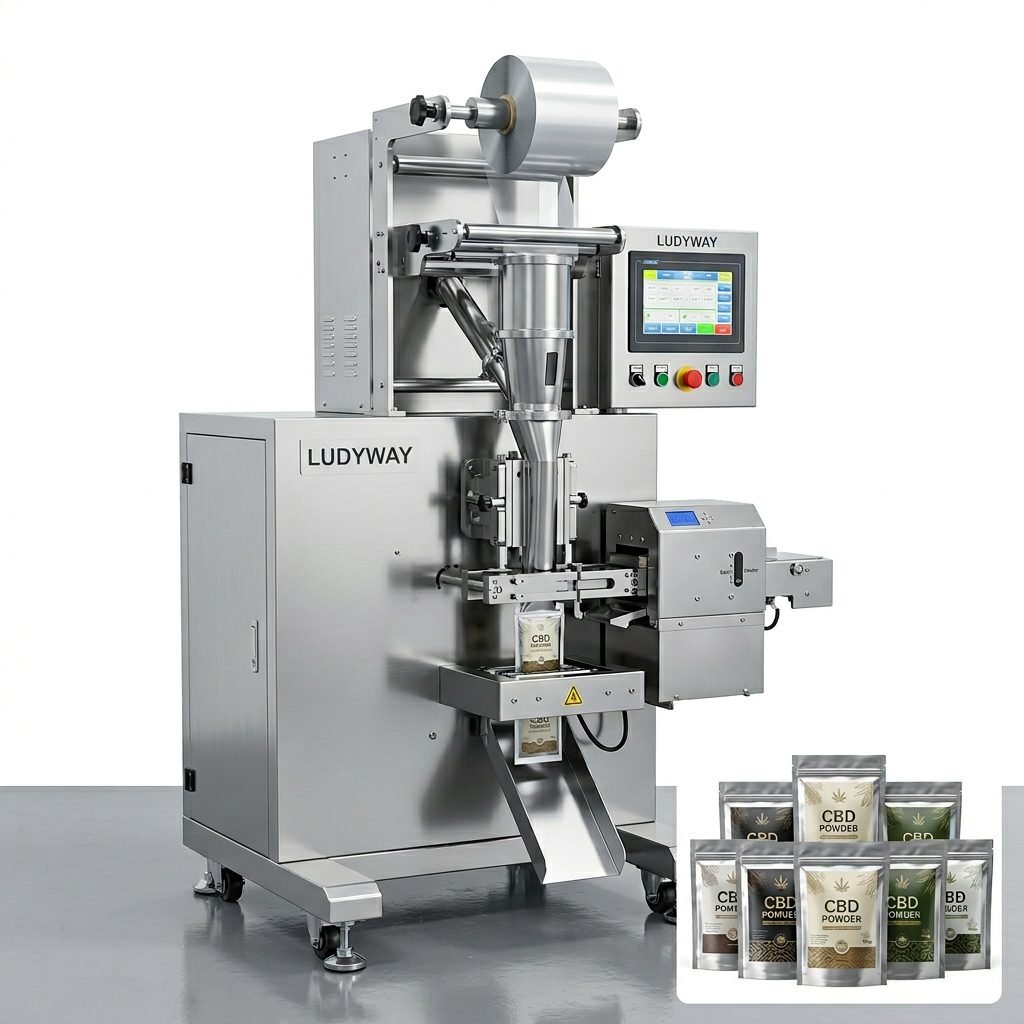
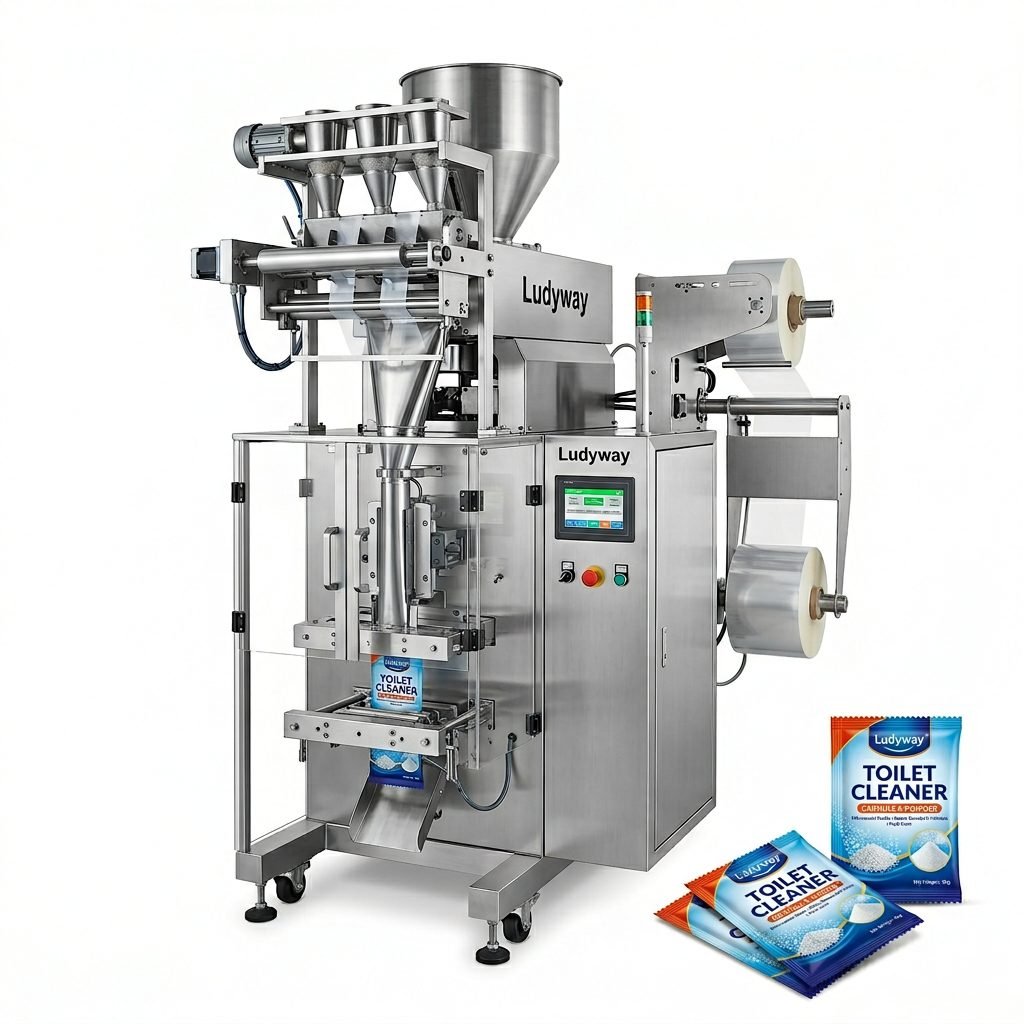
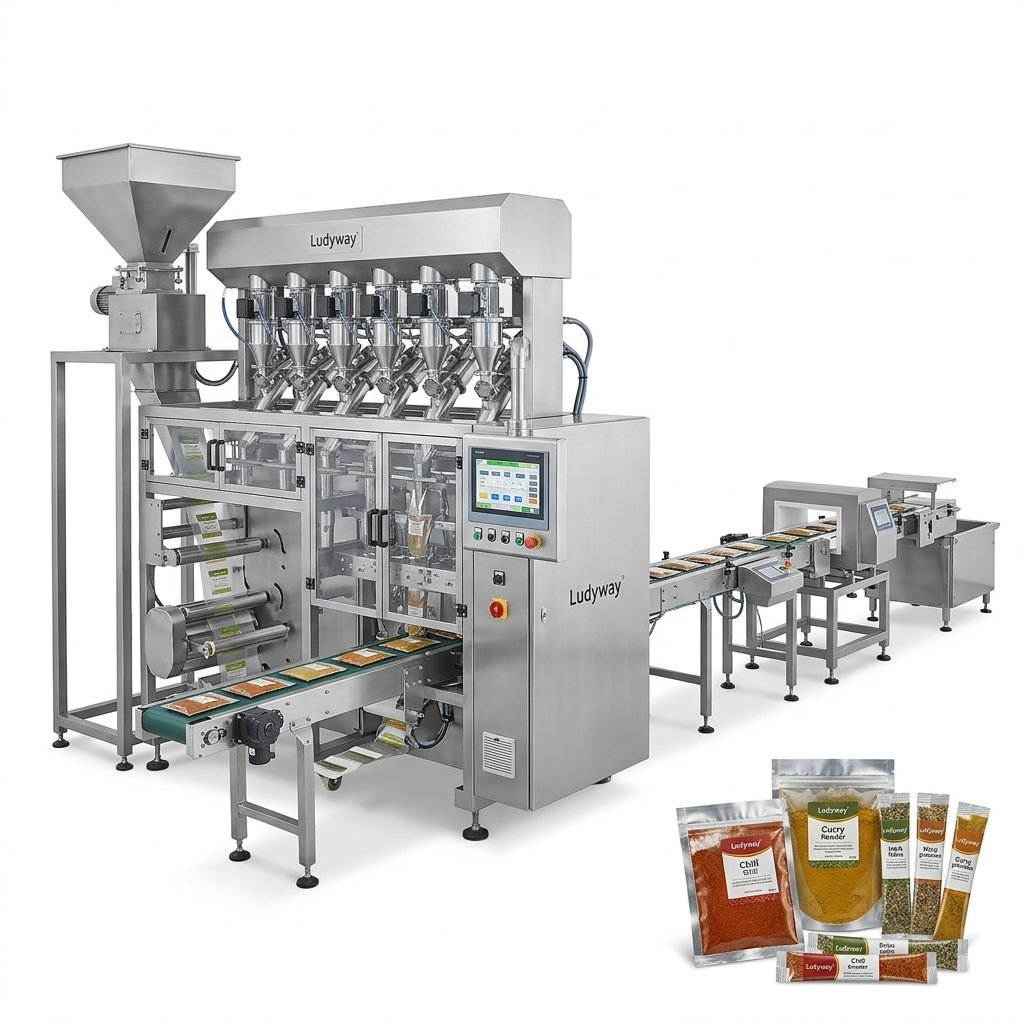
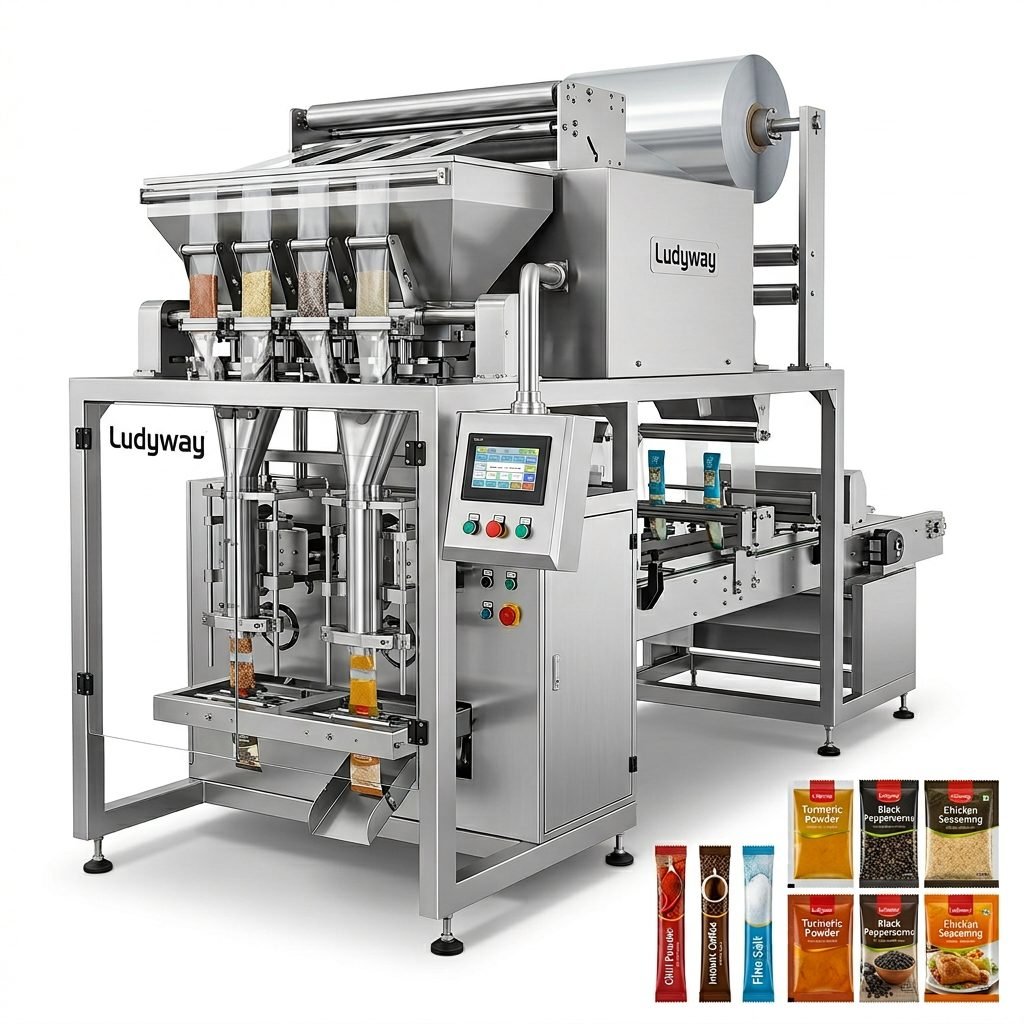
VFFS machines are widely used for spice powders and granules packed into pillow bags, gusset bags, or larger pouches. They are suitable for medium to high-speed production and can integrate with auger fillers, multihead weighers, screw feeders, dust collectors, and date coders.
2. Sachet Packaging Machines
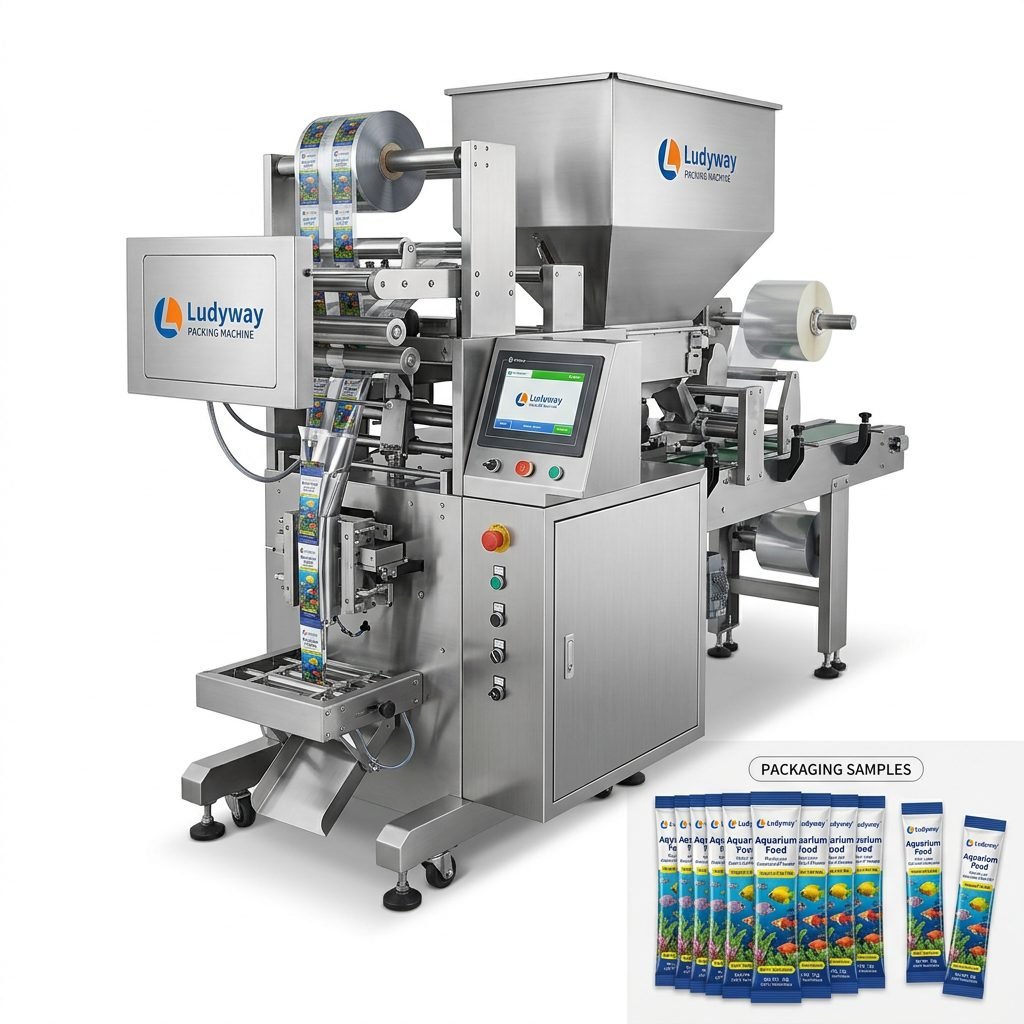
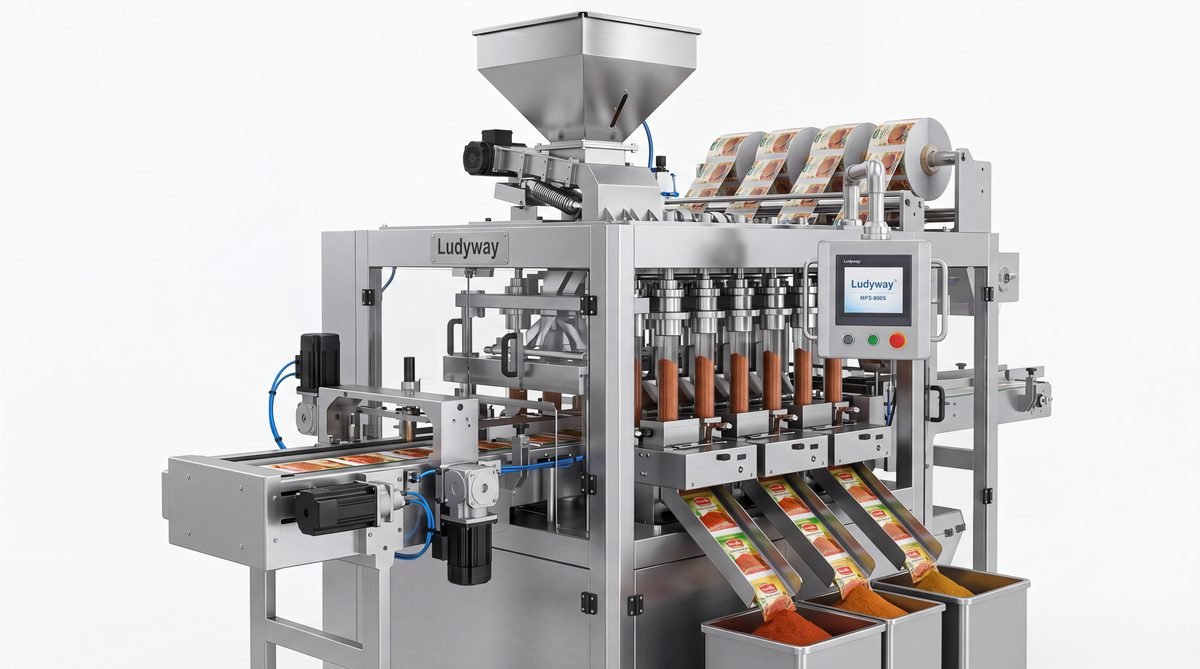
These are ideal for small single-use spice packs commonly used in retail, takeaway, airline meals, instant noodles, and food service kits. They are especially useful when you need compact packaging with good sealing performance.
3. Stick Pack Machines
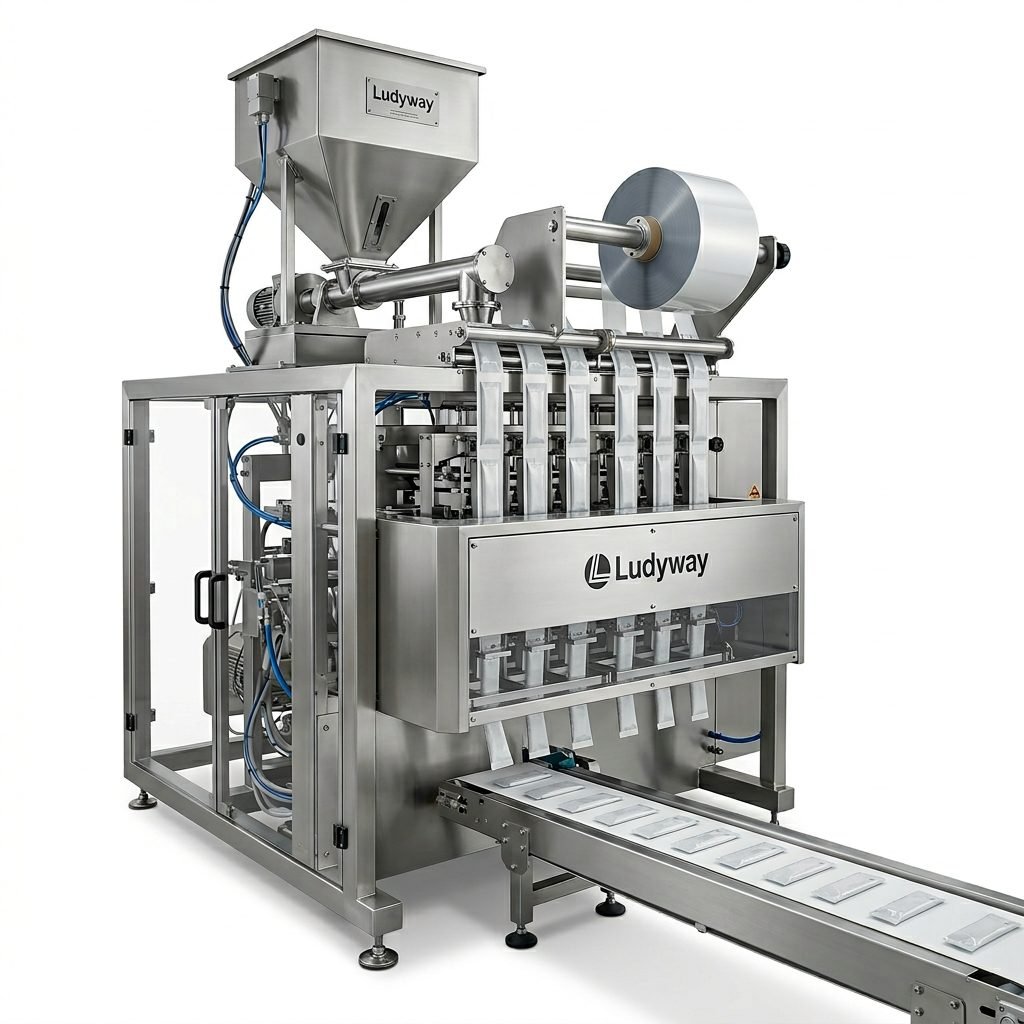
Stick packs are a smart option for portion-controlled seasonings and spice powders. This format works well for premium presentation, convenience, and e-commerce-friendly packaging.
4. Premade Pouch Filling Machines
If your brand uses stand-up pouches, zipper pouches, or premium retail bags, a premade pouch system may be the best choice. It supports stronger shelf presence and flexible bag design.
5. Bulk Bagging Systems
For factories packaging spices in 5 kg, 10 kg, 25 kg, or larger industrial bags, automated weighing and bagging systems offer better efficiency and lower labor costs.
How to Choose the Right Spice Packaging Machine
Understand Your Product Characteristics
The first step is to analyze your spice product in detail. Ask:
- Is it a free-flowing powder or a non-free-flowing powder?
- Is it pure spice or a mixed seasoning with particles?
- Does it absorb moisture easily?
- Does it generate heavy dust during filling?
- Does it require aroma retention or nitrogen flushing?
For example, turmeric and chili powder often need good dust management and accurate auger filling, while whole spices may be better handled by weighing systems.
Match the Machine to the Packaging Format
Your target market strongly affects machine selection. Different buyers prefer different pack styles:
- Retail market: sachets, stand-up pouches, pillow bags
- Foodservice market: larger pouches or bulk bags
- Instant food brands: multi-lane seasoning sachets
- Private label brands: flexible pouch designs with coding and labeling
Calculate Required Speed and Output
A machine that is too small may limit growth, while an oversized machine may increase investment unnecessarily. Consider:
- Packs per minute
- Working hours per day
- Number of SKUs
- Changeover frequency
- Seasonal demand peaks
If you run high-volume sachet production, a multi-lane machine may deliver better productivity than a single-lane solution.
Check Filling Accuracy
Spices are often sold in small weights, so even minor filling errors can add up quickly. The right machine should provide stable dosing performance across different batch conditions. Accuracy affects:
- Product giveaway
- Regulatory compliance
- Customer satisfaction
- Margin protection
Focus on Sealing Quality
Powder trapped in the seal area is a common problem in spice packaging. Good equipment should minimize product contamination at the sealing jaws and maintain strong, clean, consistent seals. This is essential for shelf life and transport safety.
Evaluate Hygiene and Cleaning Convenience
Spice production environments can get dusty. Machines should be designed for easy cleaning, quick product changeover, and reduced material retention. Stainless steel contact parts and practical access points make maintenance easier.
Think About Automation and Line Integration
A packaging machine rarely works alone. You may also need:
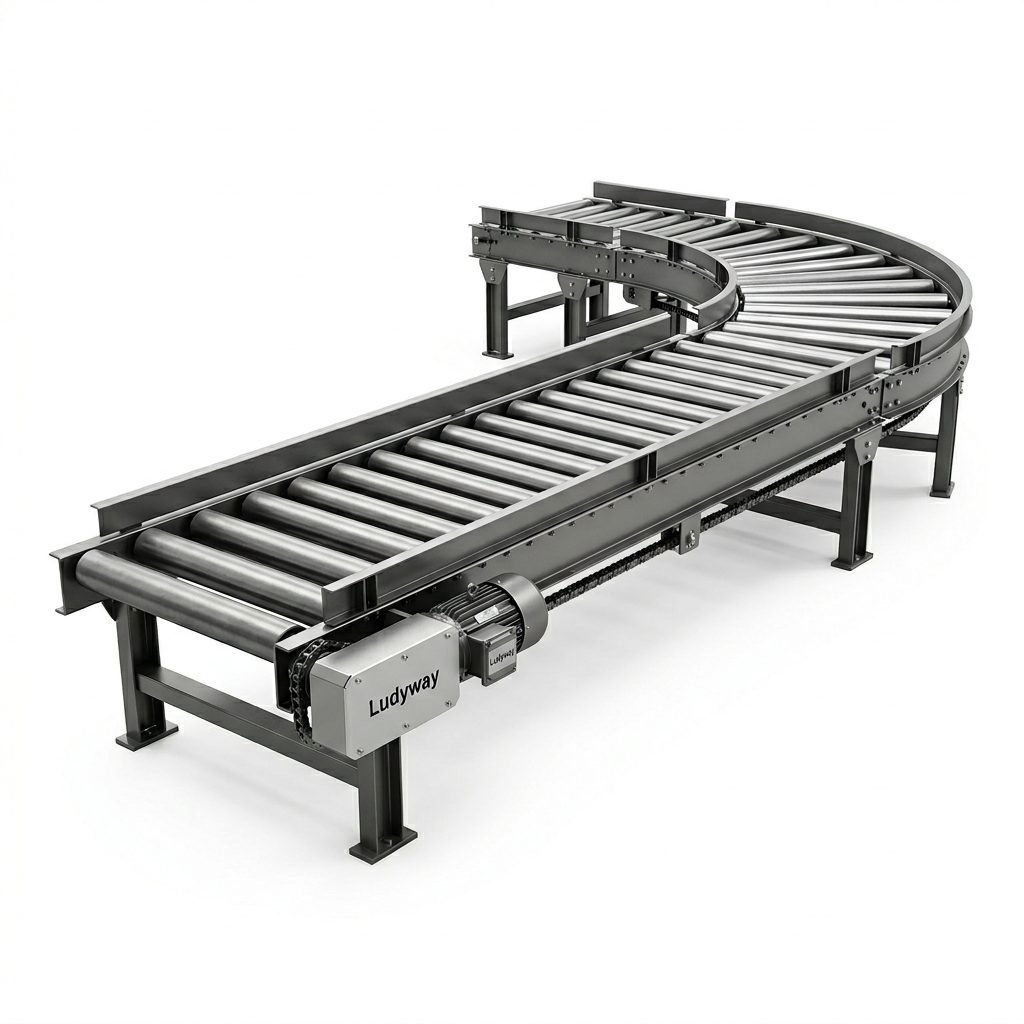
- Screw conveyors or vacuum feeders
- Bucket elevators
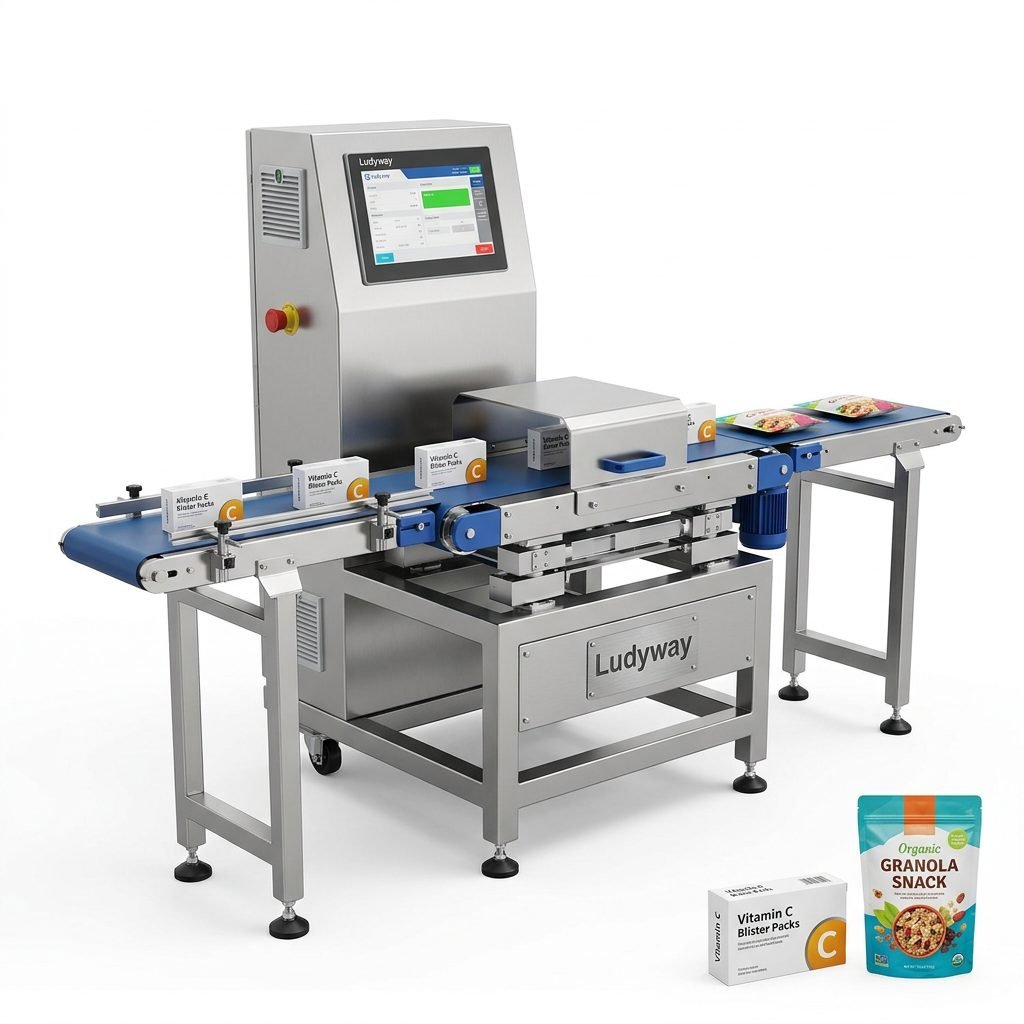
- Checkweighers
- Metal detectors
- Cartoning systems
- Case packing and palletizing equipment
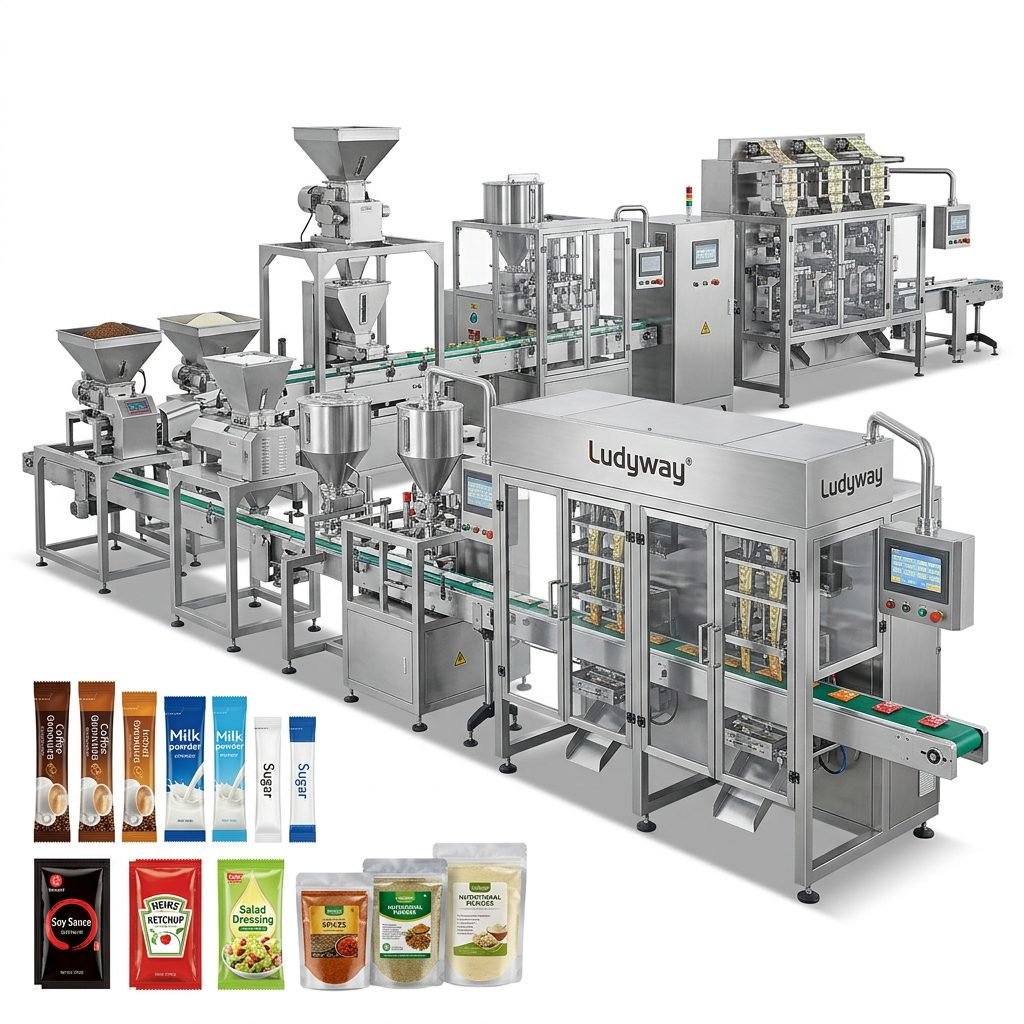
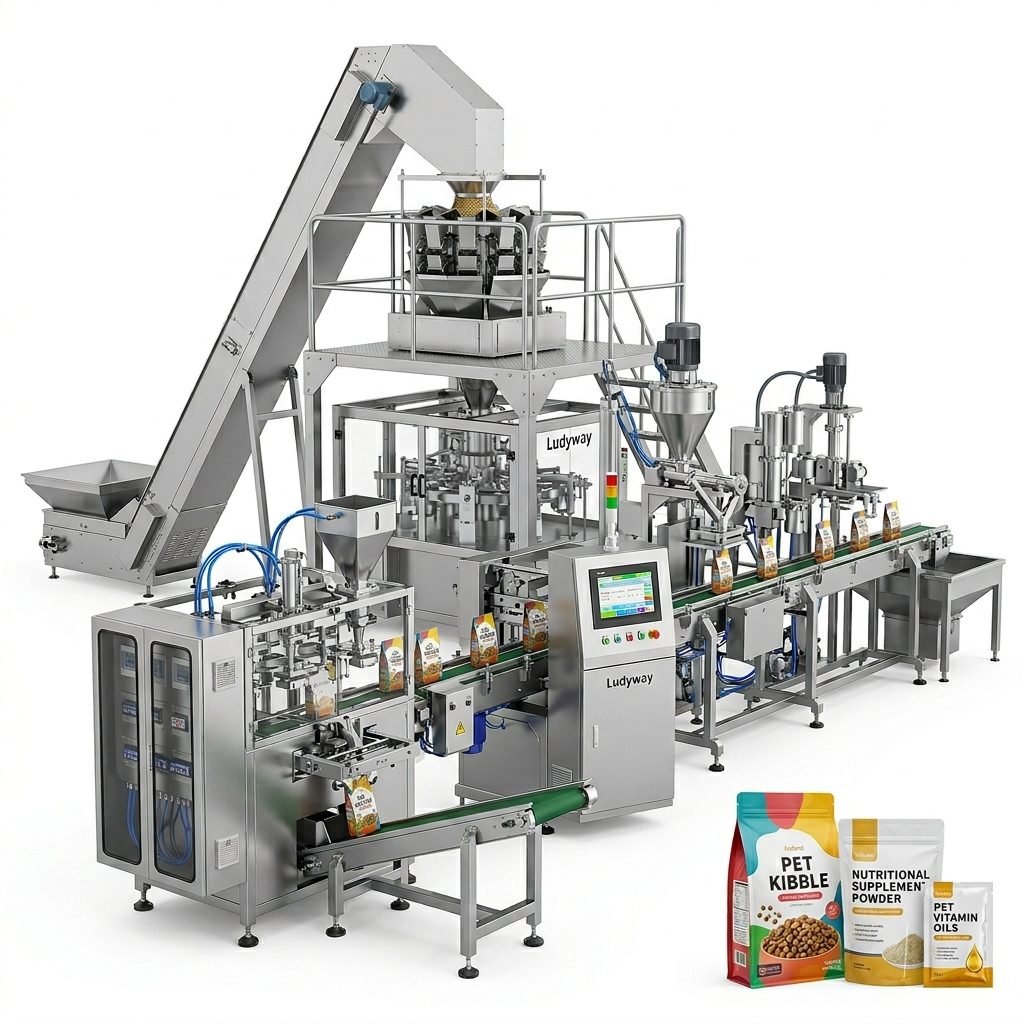
If you expect growth, choose a solution that can be expanded into a more complete line later.
Key Features to Look For in a Spice Packaging Solution
| Feature | Why It Matters |
|---|---|
| Auger dosing system | Improves precision for fine spice powders |
| Dust control design | Keeps the machine cleaner and helps sealing quality |
| Servo-driven operation | Enhances control, consistency, and efficiency |
| Recipe storage | Speeds up changeovers between different spice products |
| Nitrogen flushing option | Helps preserve aroma and reduce oxidation |
| Date coding integration | Supports traceability and export compliance |
| Tool-free cleaning access | Reduces downtime and sanitation effort |
Single Machine or Complete Packaging Line?
Many spice manufacturers start by comparing machine models, but the smarter question is often whether they need a standalone machine or a complete packaging line.
A single machine may be enough if you have:
- Low to medium production volume
- Manual loading and downstream packing
- Limited factory space
- Simple product range
A turnkey line is often better if you have:
- High output requirements
- Multiple packaging stages
- Strict labor cost targets
- Export-oriented quality standards
- Plans to scale operations within 1–3 years
For buyers looking for scalable automation, Ludyway packaging machine solutions are often considered for spice, food, pharmaceutical, and related turnkey packaging applications due to broad machine coverage and long manufacturing experience.
Questions to Ask Before Buying
- What spice products will the machine handle now and later?
- What pack sizes and bag styles are required?
- What level of accuracy do you need?
- How many packs per minute are necessary?
- How easy is cleaning when changing strong aromas or colors?
- Can the machine integrate with conveyors, checkweighers, and coding systems?
- Is technical support available for installation, training, and spare parts?
- Can the system be customized for your factory layout?
Common Mistakes When Choosing a Spice Packaging Machine
- Choosing by price alone instead of total operating value
- Ignoring product flow behavior and dust characteristics
- Selecting a speed that does not match actual production goals
- Overlooking seal quality and package appearance
- Buying a machine with limited upgrade flexibility
- Not planning for maintenance, cleaning, and spare parts support
Best Machine Choice by Business Type
| Business Type | Recommended Solution |
|---|---|
| Startup spice brand | Compact sachet or VFFS machine |
| Retail seasoning producer | VFFS or premade pouch machine with auger filler |
| Instant noodle or meal kit supplier | High-speed multi-lane sachet machine |
| Foodservice and wholesale packer | Large pouch system or bulk bagging line |
| Growing export manufacturer | Integrated turnkey packaging line with inspection and end-of-line automation |
Final Buying Advice for Spice Manufacturers
The best packaging machine for the spice industry is the one that fits your product behavior, package format, output target, hygiene requirements, and long-term growth plan. A reliable solution should do more than fill and seal—it should help you reduce waste, improve consistency, protect aroma, and present your spice brand professionally in competitive markets.
Before making a final decision, request sample testing, compare filling methods, evaluate cleaning convenience, and confirm whether the supplier can support future upgrades. The right choice today can create better efficiency, stronger product quality, and a more scalable packaging operation tomorrow.