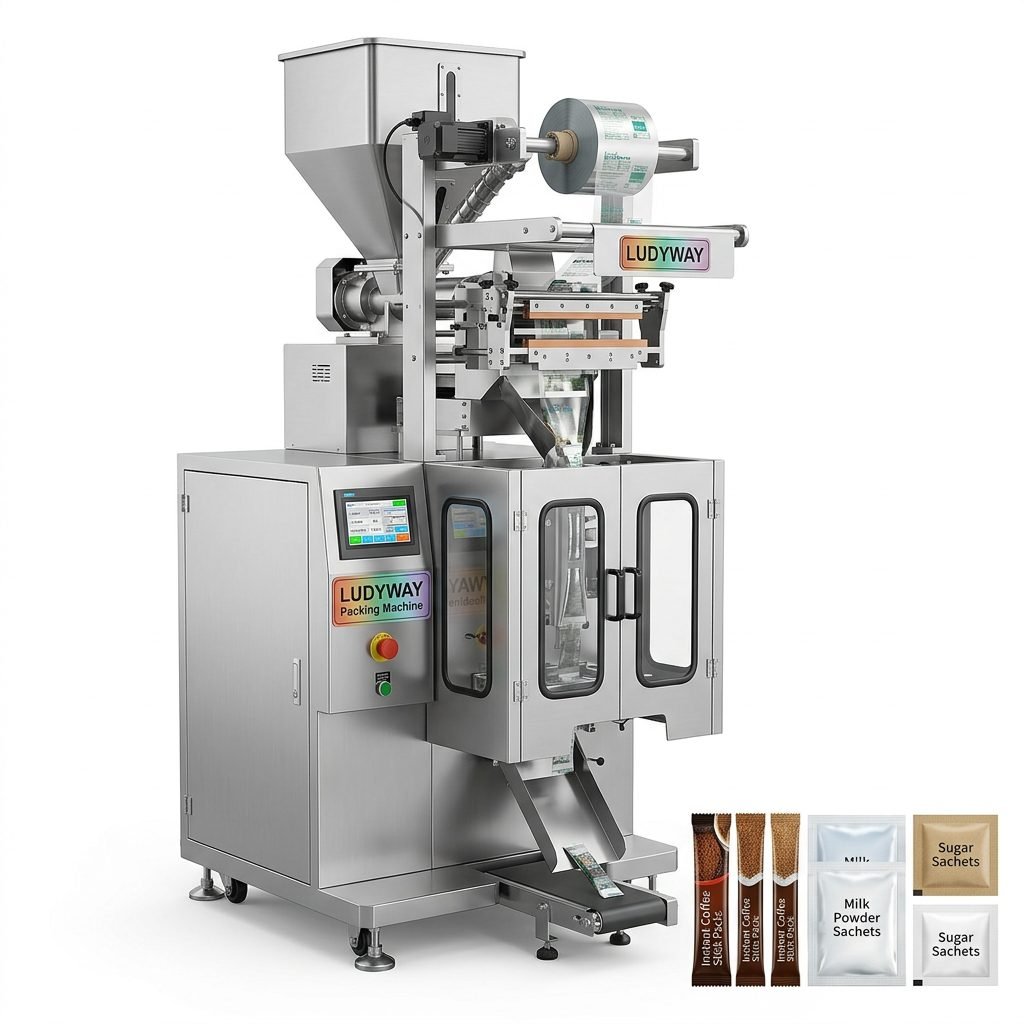
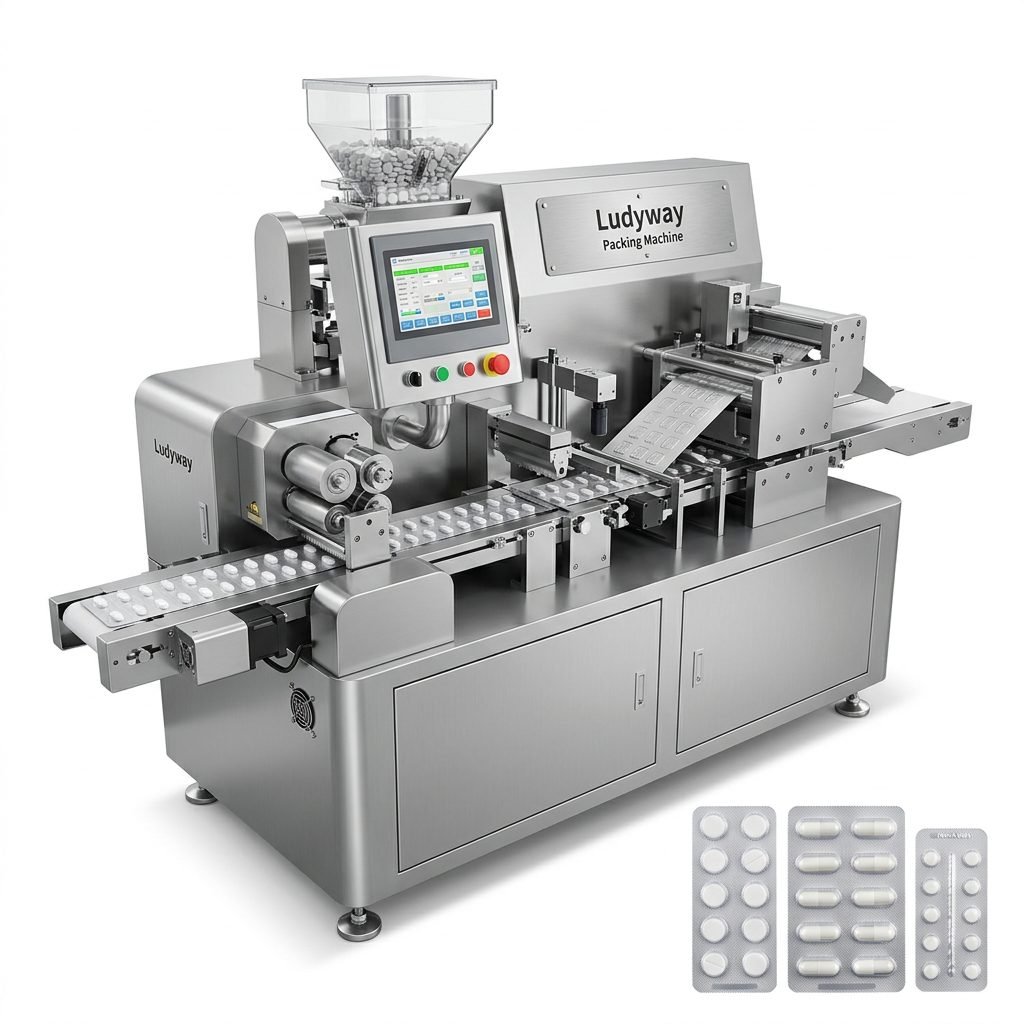
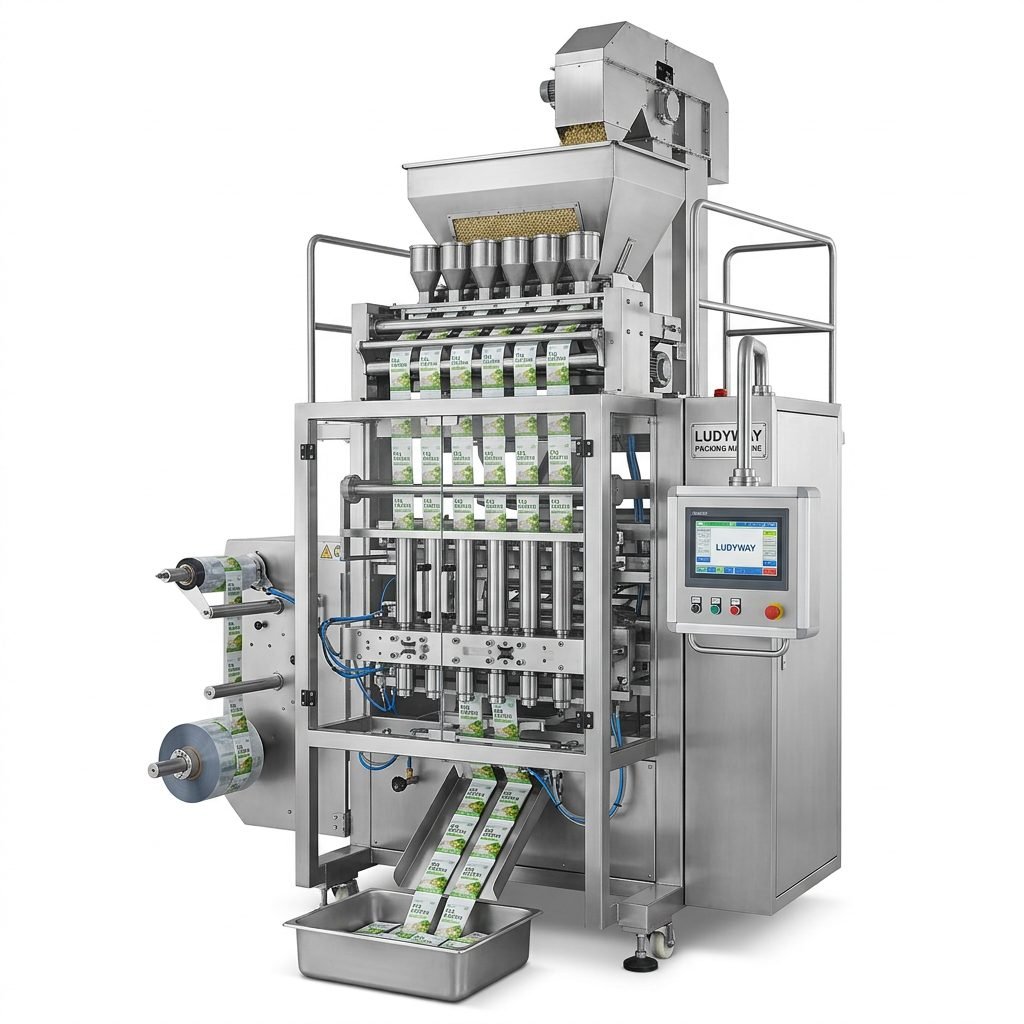
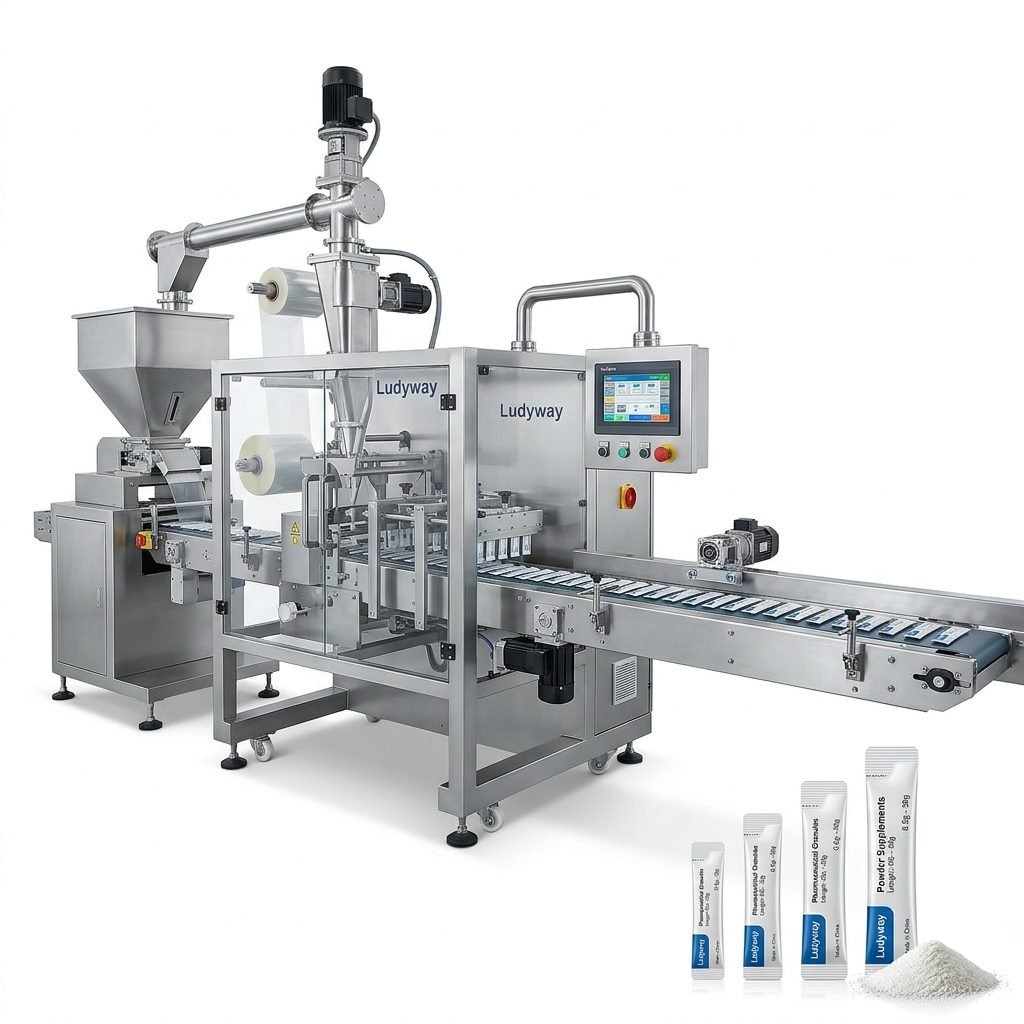
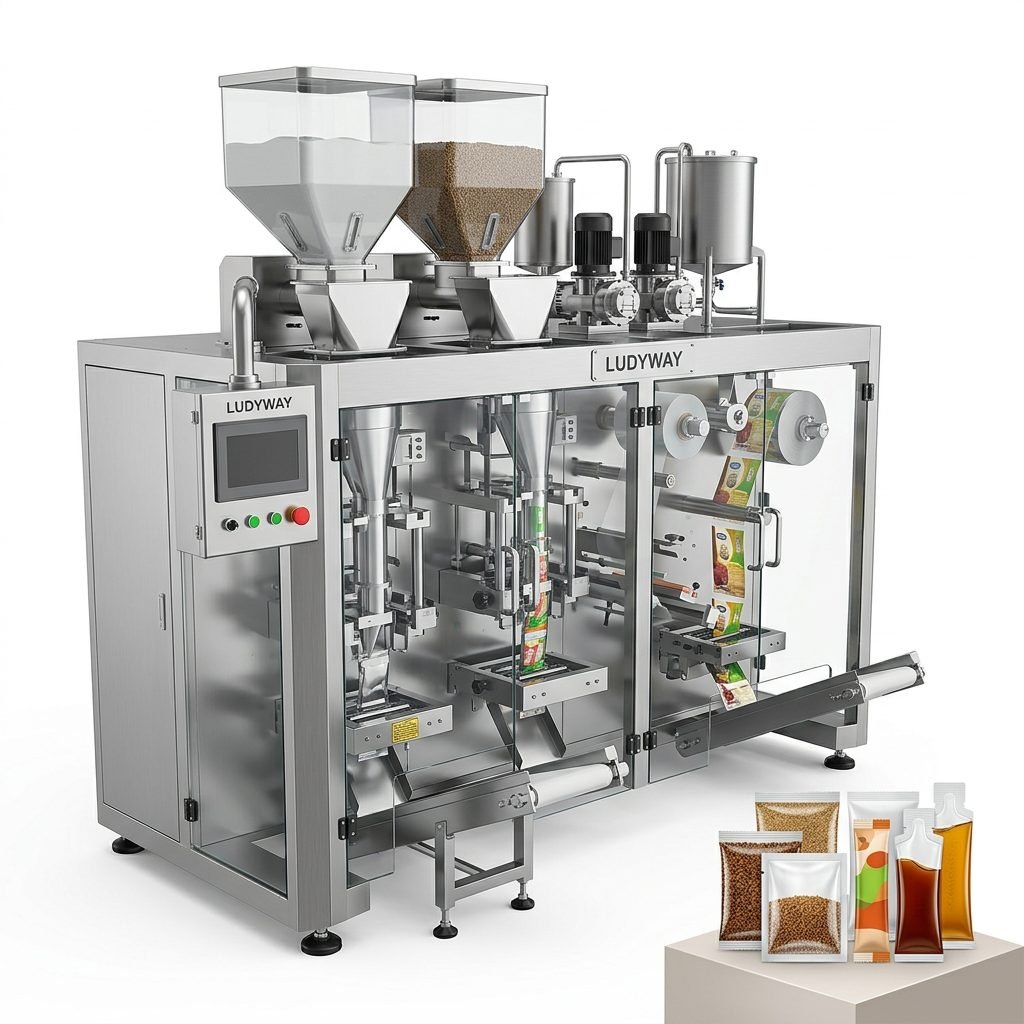
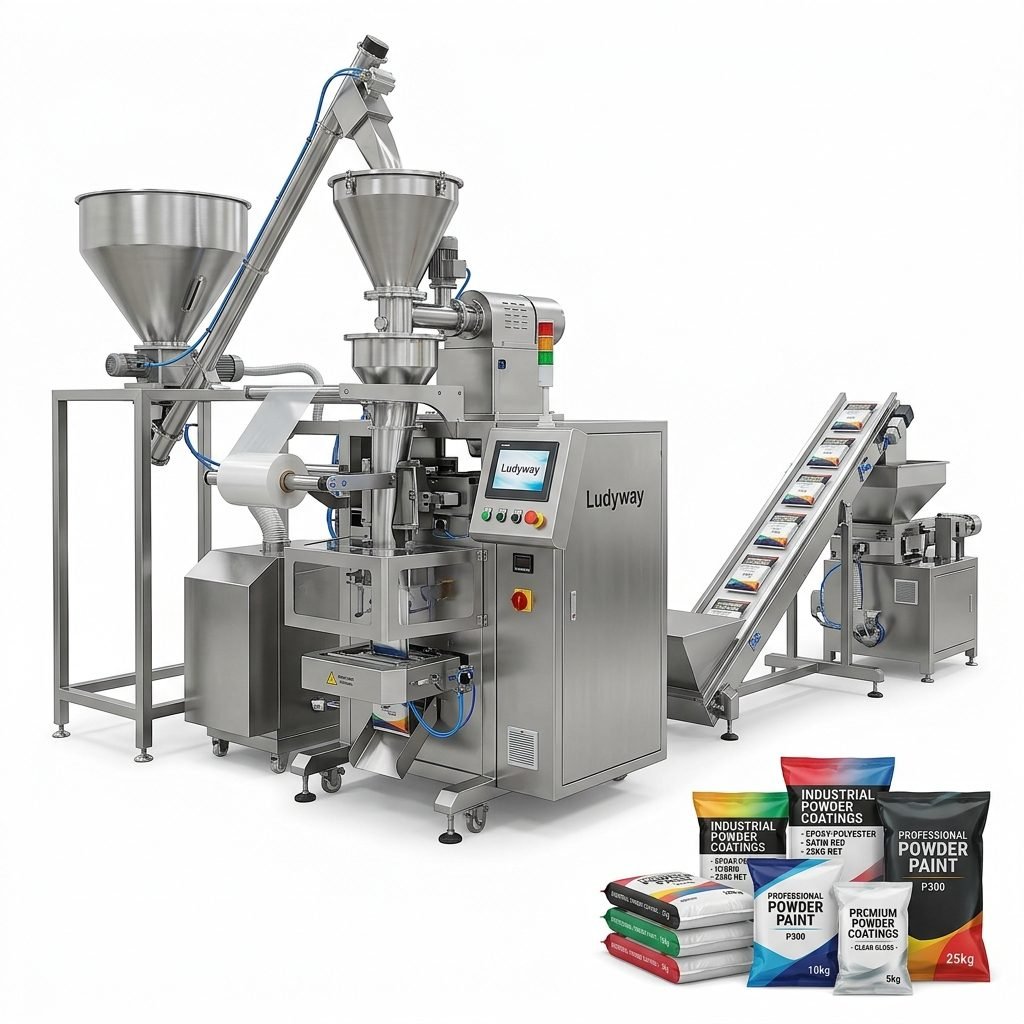
Choosing the right powder for a sachet packaging machine is not just about whether the product is dry. Different powders behave very differently during feeding, dosing, sealing, and storage. Some flow smoothly like sugar, while others bridge, clump, generate dust, or absorb moisture quickly. Understanding powder characteristics helps you select the right machine configuration, filling method, and packaging material for stable output and better product quality.
In practical production, sachet packaging machines are widely used in food, pharmaceutical, nutraceutical, cosmetic, and chemical industries. The best results come when the machine is matched to the powder’s particle size, density, flowability, hygroscopicity, and required dosing accuracy.
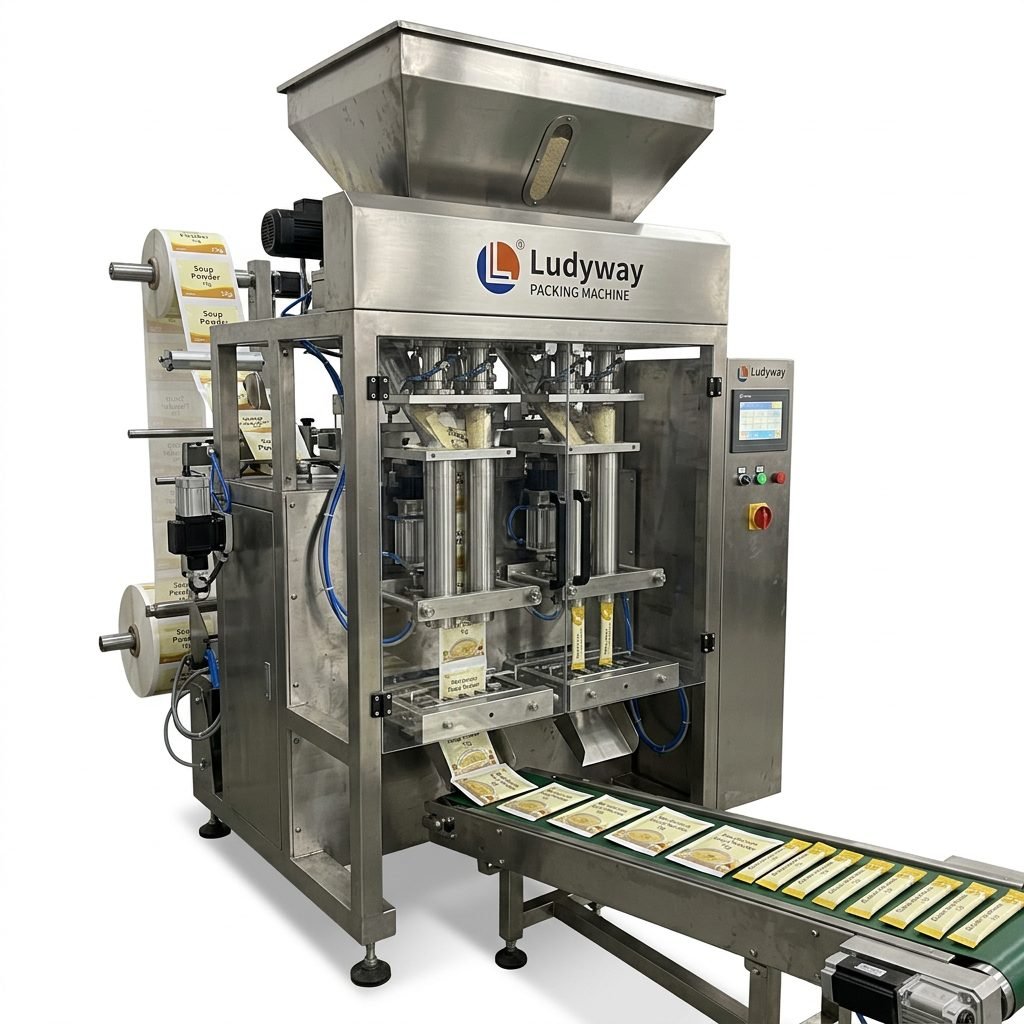
What Types of Powders Can Be Packed in Sachets?
Sachet packaging machines can handle a broad range of powders, but suitability depends on product behavior and machine design. In general, these powders are commonly packaged in sachets:
- Food powders: milk powder, coffee powder, seasoning powder, soup mix, cocoa powder, protein powder, starch, baking mix, flour blends
- Pharmaceutical powders: oral rehydration salts, glucose powder, antibiotic powders, herbal medicine powders, supplement formulations
- Health supplement powders: collagen, probiotics, electrolyte powders, meal replacement powders, vitamin blends
- Cosmetic powders: facial mask powder, whitening powder, herbal beauty powder
- Chemical powders: detergent powder, descaling powder, industrial additives, agricultural powders, water-treatment chemicals
The key question is not only “Can it be packed?” but also “Can it be packed accurately, consistently, and cleanly at the target speed?”
The Main Powder Characteristics That Affect Sachet Packaging
Before selecting equipment, manufacturers should evaluate the physical properties of the powder. These factors directly impact filling precision and machine stability.
| Powder Characteristic | Why It Matters | Typical Impact |
|---|---|---|
| Flowability | Determines how easily powder feeds into the dosing unit | Poor flow may cause bridging, inconsistent weights, and downtime |
| Particle size | Affects dosing behavior and dust formation | Fine powders may create dust and sealing contamination |
| Bulk density | Influences filling volume and auger calibration | Density variation affects dosing accuracy |
| Moisture sensitivity | Determines need for barrier film and humidity control | Can cause caking, clumping, and shelf-life issues |
| Dustiness | Affects cleanliness and seal quality | Requires dust extraction or enclosed filling systems |
| Stickiness | Influences hopper discharge and screw feeding | May lead to buildup inside the filler |
Best Powder Categories for Sachet Packaging Machines
1. Free-Flowing Powders
These are the easiest powders to package. They move smoothly through the hopper and filler, making them highly suitable for high-speed sachet production.
- Instant drink powders
- Coffee creamer
- Electrolyte powder
- Glucose powder
- Fine sugar blends
These powders generally support stable feeding, faster machine speed, and consistent fill weights.
2. Fine and Light Powders
Examples include protein powder, milk powder, herbal powder, and cosmetic powder. These products are suitable for sachet packaging, but they usually need more attention to dust control and filling accuracy.
Recommended features often include:
- Auger screw dosing
- Dust collection systems
- Servo-driven filling
- Sealing area protection
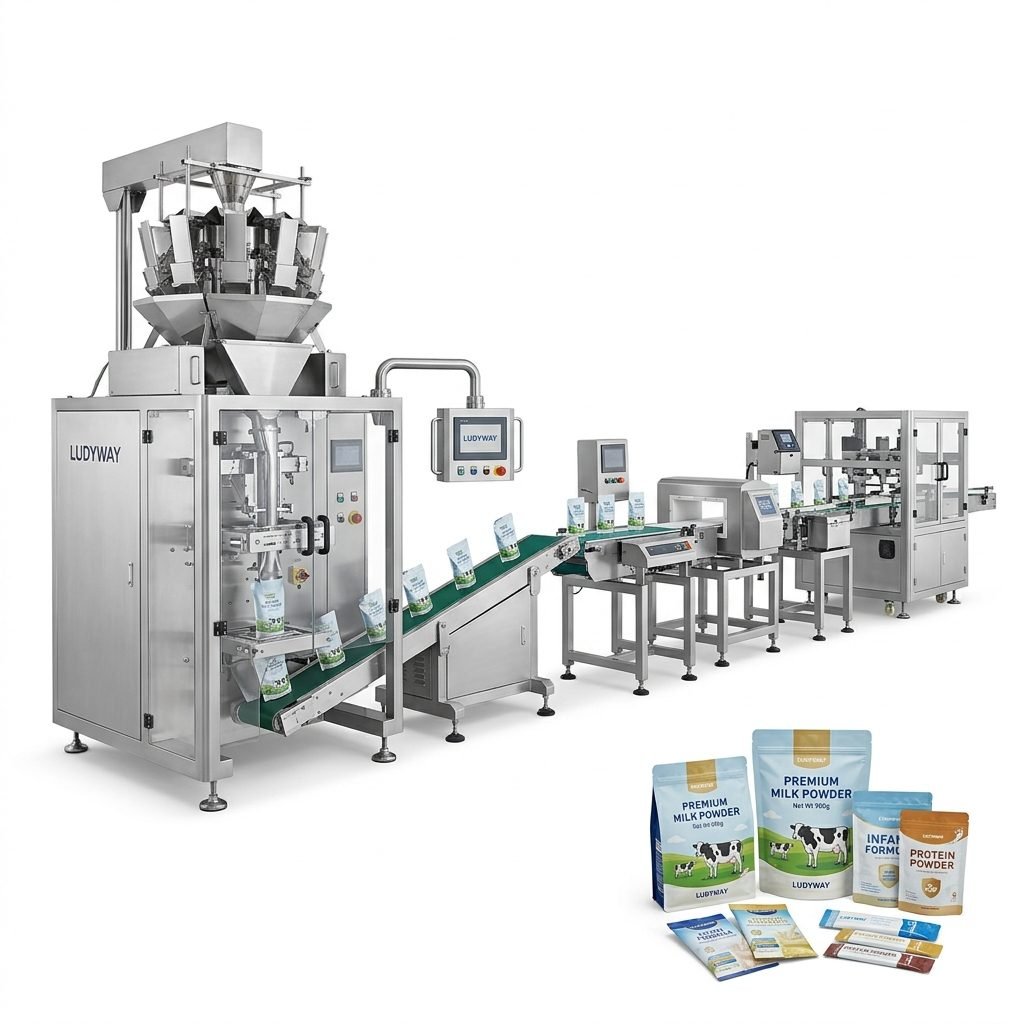
3. Hygroscopic Powders
Hygroscopic powders absorb moisture from the air. Common examples include probiotic powder, oral rehydration salts, some pharmaceutical blends, and plant extract powders.
These powders can be packaged successfully in sachets if the system includes:
- Moisture-barrier packaging film
- Controlled production environment
- Fast sealing after filling
- Optional nitrogen flushing where required
4. Blended Functional Powders
Nutritional and pharmaceutical powders often include multiple ingredients with different densities and particle sizes. Sachet machines are well suited for these products, but formula uniformity must be maintained throughout filling.
Typical examples include:
- Collagen sachets
- Meal replacement powders
- Immune-support supplements
- Sports nutrition powders
- Vitamin and mineral blends
5. Industrial and Chemical Powders
Some non-food powders are also highly suitable for sachet packaging, especially when sold in small-dose retail or single-use industrial formats.
- Detergent powder
- Descaling powder
- Water treatment powder
- Agricultural additives
- Construction chemical additives
For these products, machine selection must consider corrosion resistance, operator safety, dust containment, and film compatibility.
Powders That May Be Difficult to Pack Without Special Design
Not every powder runs smoothly on a standard sachet machine. Some powders need custom engineering or auxiliary devices.
| Powder Type | Common Problem | Possible Solution |
|---|---|---|
| Very dusty powder | Seal contamination and airborne dust | Dust hood, vacuum extraction, enclosed auger |
| Sticky powder | Wall buildup and poor discharge | Agitator, hopper design optimization, anti-stick surfaces |
| Non-uniform blend | Ingredient segregation | Better premixing, controlled feeding, shorter transfer path |
| Poor-flow powder | Bridging and inconsistent filling | Agitation, screw feeder, vibration assist |
| Moisture-sensitive powder | Clumping and reduced shelf life | Barrier film, climate control, quick sealing |
Which Filling System Is Best for Powder Sachets?
The filling method matters as much as the powder itself. For most powders, the preferred choice is an auger filler, especially when high accuracy is required.
Common filling options include:
- Auger filling: ideal for fine powders, nutritional powders, pharmaceutical powders, and milk powder
- Volumetric cup filling: suitable for some free-flowing granulated powders with lower accuracy demands
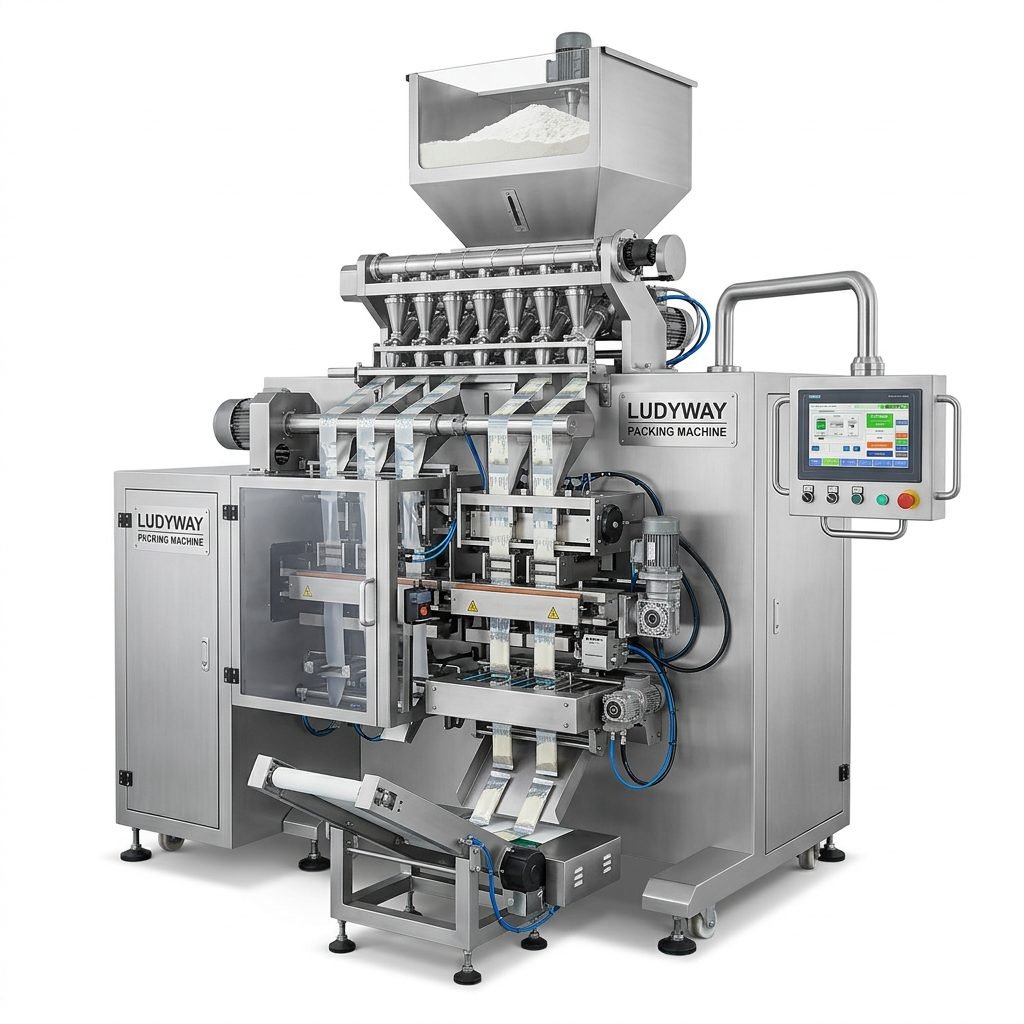
- Multi-lane auger systems: best for high-output production of single-dose sachets or stick packs
- Screw feeder with agitation: useful for poor-flow or compacting powders
For many manufacturers, especially in food and pharma, servo-controlled auger filling provides the best balance of accuracy, flexibility, and production speed.
How to Know if Your Powder Is Suitable for Sachet Packaging
A powder is generally considered suitable if it can meet most of the following conditions:
- It can flow or be assisted to flow consistently through the filler.
- It can achieve target fill weight with acceptable accuracy.
- It does not excessively contaminate the sealing area.
- It remains stable in sachet packaging during storage and transport.
- It matches a suitable packaging film for moisture, oxygen, or light protection.
If one or two of these points are challenging, that does not automatically mean the powder is unsuitable. It may simply require customized dosing, conveying, or environmental control.
Industries That Commonly Use Powder Sachet Packaging
Sachet packaging is especially popular in markets where portability, dosage control, hygiene, and branding matter.
- Food industry: instant beverage powder, seasoning powder, coffee mixes, soup powder, baking ingredients
- Pharmaceutical industry: oral powders, rehydration salts, glucose formulations, herbal medical powders
- Health supplement industry: collagen, probiotics, greens powders, sports nutrition, vitamin sachets
- Cosmetic industry: facial mask powder, herbal beauty treatments, skincare powder blends
- Chemical industry: detergent, disinfectant powder, cleaner additives, agricultural chemical powders
Packaging Material Considerations for Powders
Even when the powder is suitable, packaging performance also depends on film structure. Different powders need different barrier levels.
Typical film selection considerations:
- Moisture barrier for hygroscopic powders
- Oxygen barrier for oxidation-sensitive formulations
- Puncture resistance for dense or crystalline products
- Seal integrity for fine dusty powders
- Product compatibility for food, pharma, or chemical use
For example, milk powder, probiotics, and electrolyte products often benefit from higher barrier laminate films, while some detergent powders may prioritize toughness and seal security.
Key Machine Features to Look For
If you are planning to package powders in sachets, these features can greatly improve long-term performance:
- Servo auger dosing for precise fill control
- Agitator in hopper for difficult-flow powders
- Dust extraction or enclosed filling zone
- Automatic film tracking and sealing control
- Quick-change tooling for multiple sachet sizes
- Multi-lane layout for higher capacity
- Easy-clean contact parts for hygiene-sensitive products
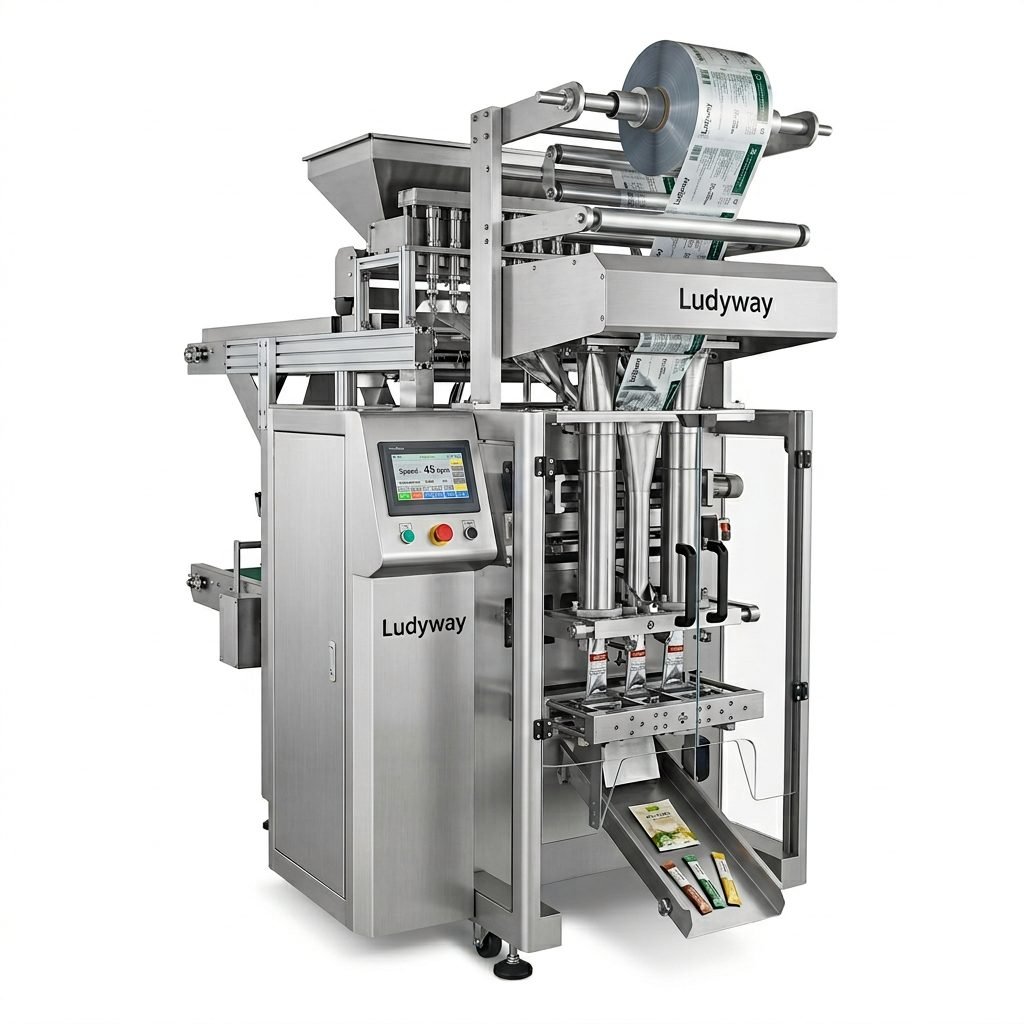
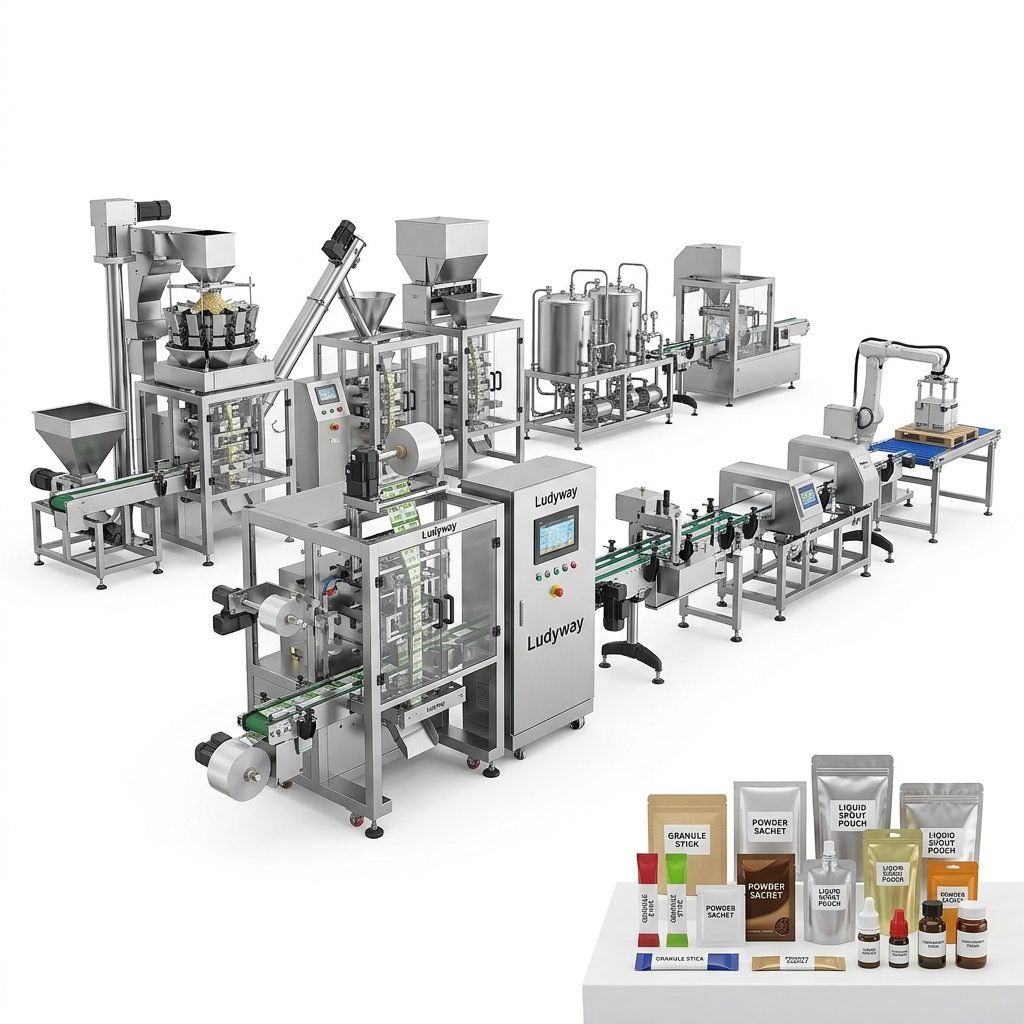
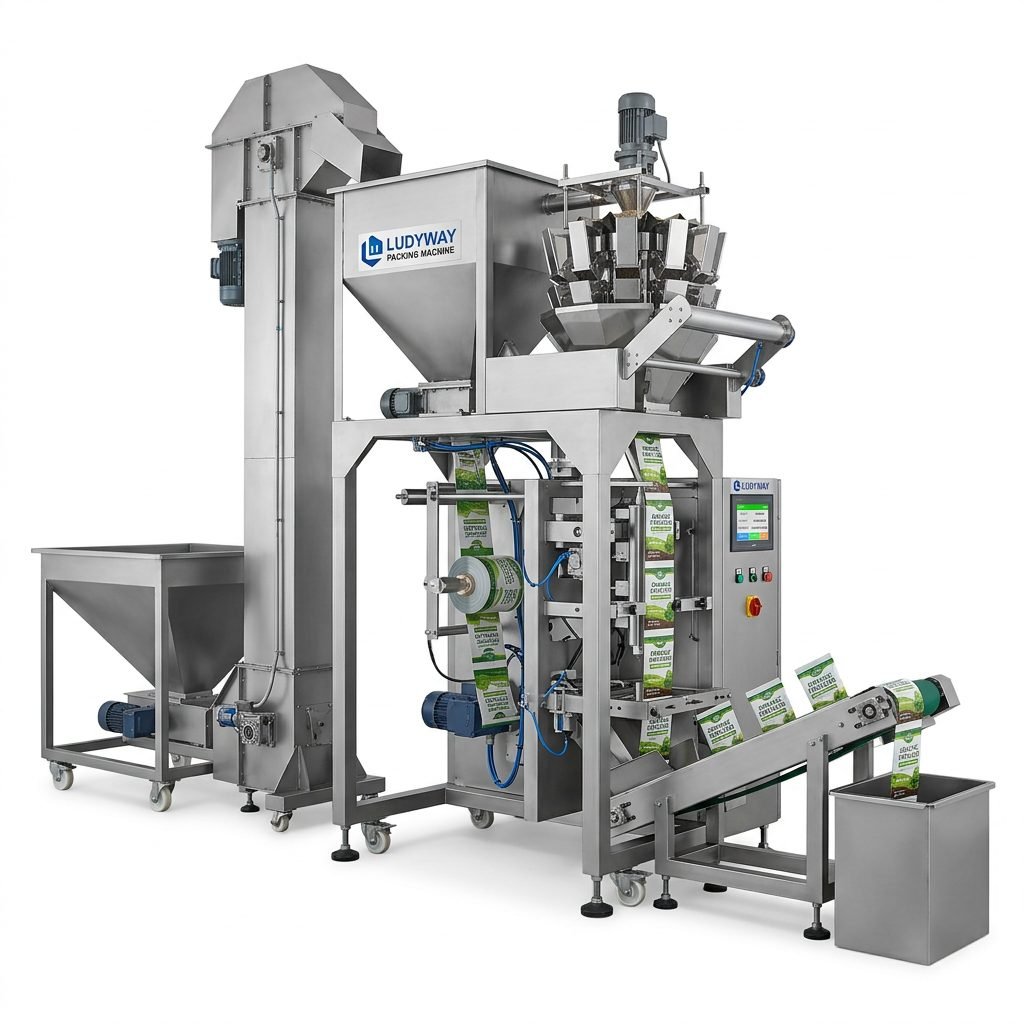
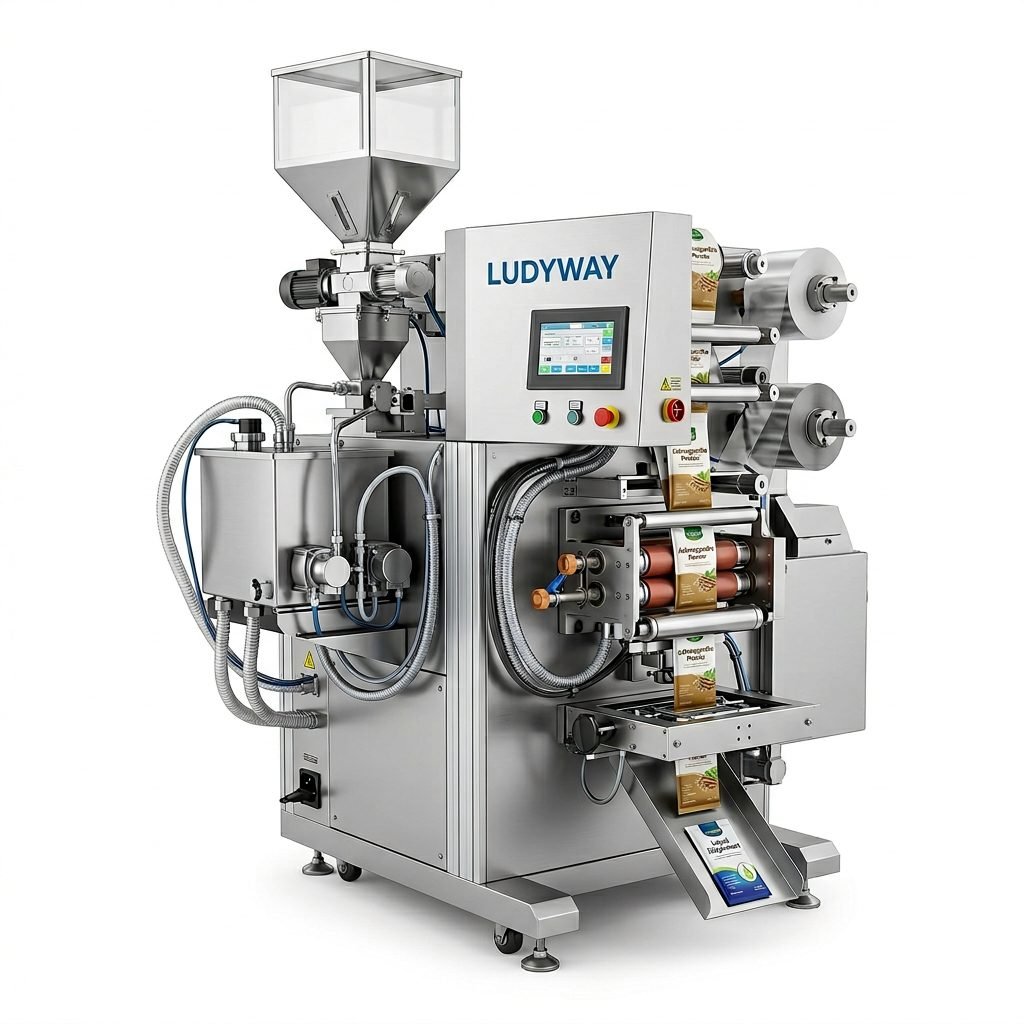
For buyers looking for reliable powder sachet automation, Ludyway sachet packaging machine solutions are widely used across food, pharmaceutical, health supplement, and industrial applications, with flexible configurations for different powder characteristics and production scales.
Final Selection Tips Before Buying a Powder Sachet Packing Machine
Before making a machine decision, prepare clear product data and production goals. This helps suppliers recommend the right structure and testing plan.
Important details to confirm:
- Powder name and product application
- Particle size and flow behavior
- Target sachet weight range
- Sachet size and format
- Required output per minute
- Accuracy tolerance
- Need for dust control or nitrogen flushing
- Packaging film structure
- Cleaning and hygiene standards
A product trial is often the fastest way to confirm whether a powder is truly suitable for a sachet packaging machine. Real testing reveals dosing consistency, sealing quality, and achievable speed much more accurately than theory alone.
Conclusion
Many powders are suitable for sachet packaging machines, including food powders, nutritional powders, pharmaceutical powders, cosmetic powders, and industrial chemical powders. The best candidates are powders with stable flow, manageable dust, and good compatibility with the selected filling and sealing system.
However, even difficult powders can often be packaged successfully when the machine includes the right auger filler, agitation system, dust control, and packaging film. The most effective approach is to evaluate powder properties carefully and match them with a machine designed for that exact application.