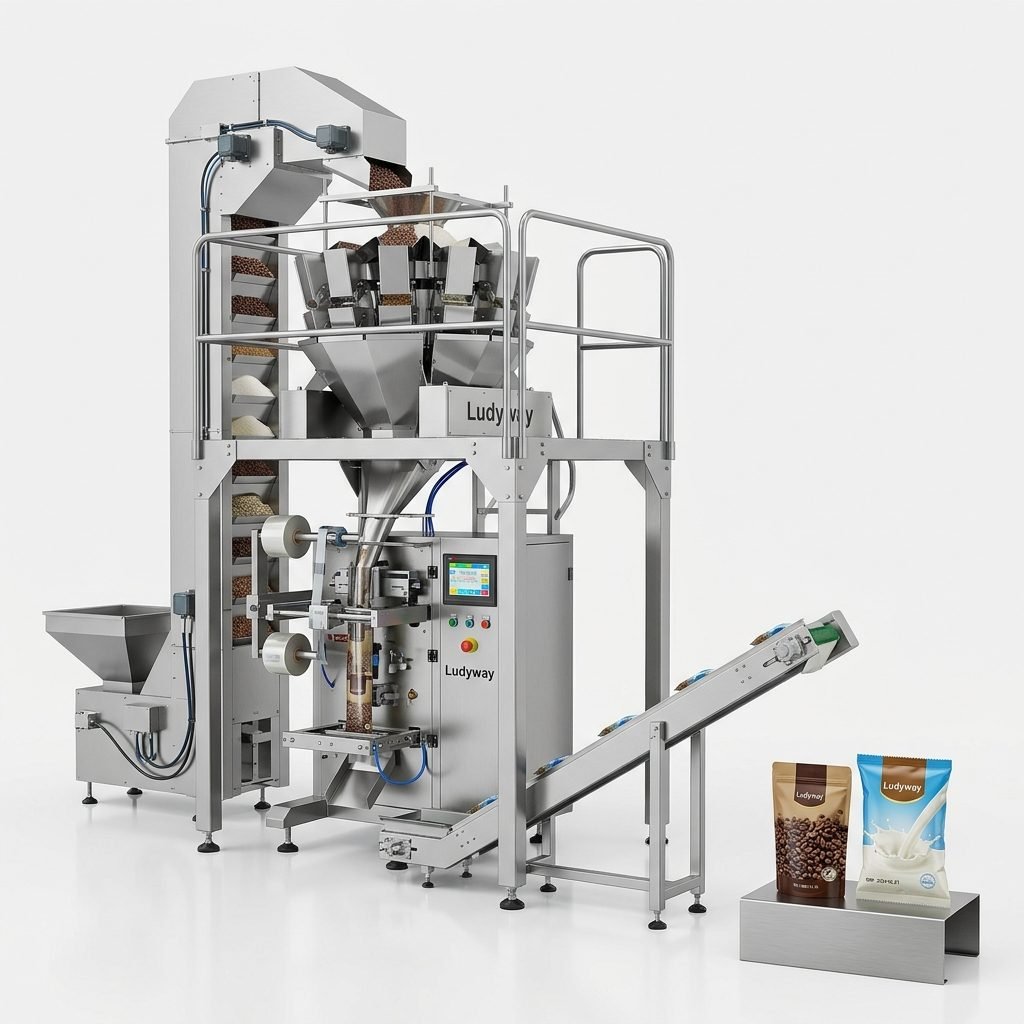
Choosing between powder packaging and granule packaging is not just a matter of product appearance. It directly affects filling accuracy, sealing quality, dust control, machine selection, transport stability, and overall production efficiency. For food, pharmaceutical, supplement, chemical, and pet product manufacturers, understanding the difference is essential before investing in equipment or upgrading a packaging line.
In simple terms, powders are usually finer, lighter, and more prone to dusting or bridging, while granules are more free-flowing, larger in particle size, and easier to dose in many applications. However, real-world packaging decisions are rarely that simple. Product density, moisture sensitivity, pack format, speed targets, and hygiene standards all play a role.
What Is Powder Packaging?
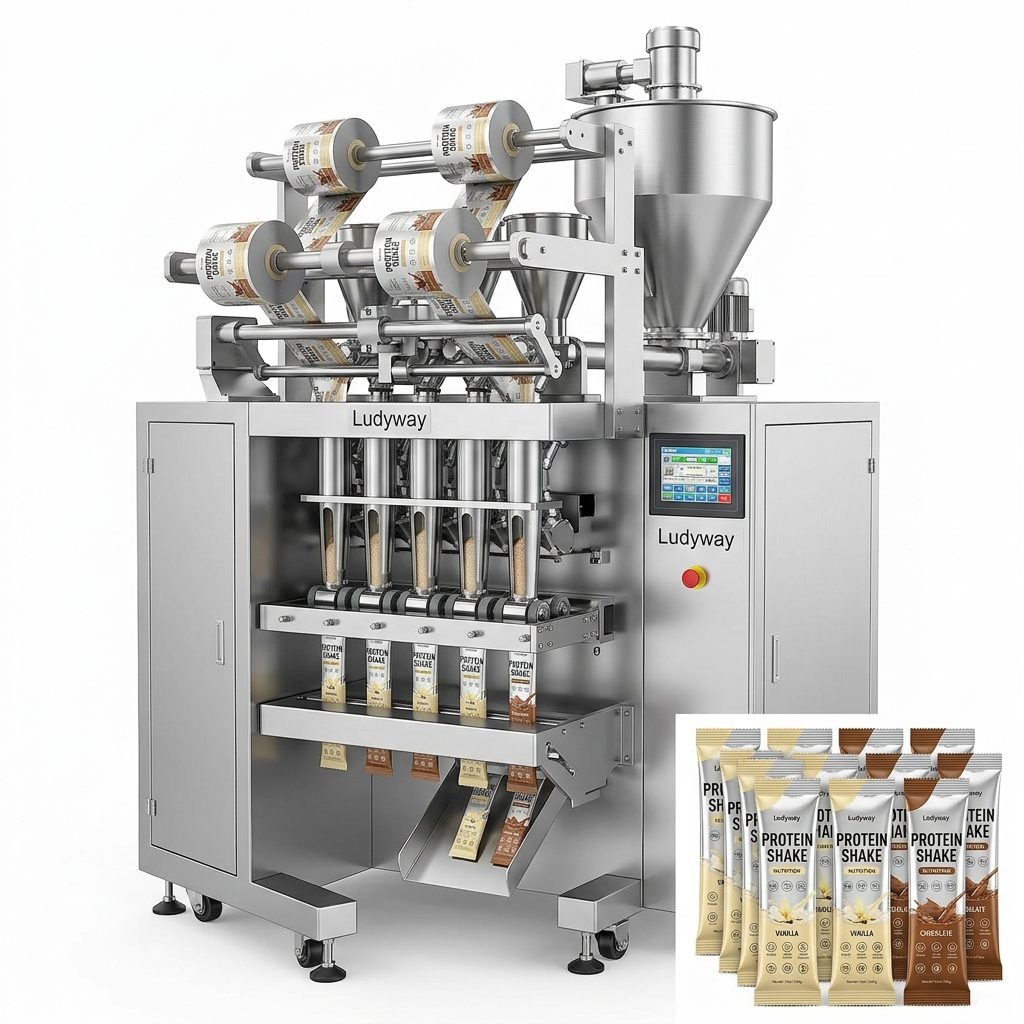
Powder packaging refers to the filling and sealing of products with fine or semi-fine particles. Common examples include protein powder, milk powder, spices, flour, pharmaceutical blends, collagen, drink mixes, and chemical powders. These materials often behave differently from larger particles because they can generate dust, cling to machine surfaces, compress easily, and vary in bulk density.
- Typical products: coffee powder, cocoa, seasoning powder, pharmaceutical powder, detergent powder
- Common pack types: sachets, stick packs, pouches, jars, bottles, bags
- Typical filling systems: auger fillers, servo screw dosing, vacuum feeding systems
What Is Granule Packaging?
Granule packaging is used for products with larger and more defined particles. These may include sugar, salt, seeds, instant coffee granules, snack mixes, pellets, desiccants, pharmaceutical granules, and feed additives. Compared with powders, granules often show better flowability, lower dust risk, and more stable discharge behavior, although fragile granules can still break during handling.
- Typical products: sugar, seeds, pellets, instant beverage granules, pet food granules
- Common pack types: sachets, stick packs, premade pouches, pillow bags, larger sacks
- Typical filling systems: volumetric cup fillers, multihead weighers, linear weighers, counting systems for special products
Powder vs Granule Packaging: Core Differences
| Factor | Powder Packaging | Granule Packaging |
|---|---|---|
| Particle size | Very fine to semi-fine | Larger, more defined particles |
| Flow behavior | Can bridge, compact, or cling | Usually better flowability |
| Dust generation | High risk | Generally lower |
| Filling method | Mostly auger or screw dosing | Weighing, cup filling, or counting |
| Seal contamination risk | Higher due to powder dust | Lower, but particle trapping can occur |
| Weight consistency | Affected by density variation | Usually more stable, depending on size uniformity |
| Machine hygiene needs | Often stricter cleaning and dust collection | Still important, but often easier to manage |
How Product Flowability Changes the Packaging Process
Flowability is one of the most important technical differences between powders and granules. A product that does not flow consistently will create underfills, overfills, machine stoppages, and sealing defects. Powders often require agitation, screw feeding, hopper design optimization, or de-aeration support. Granules may flow better, but irregular shapes or mixed particle sizes can still cause dosing instability.
Free-flowing granules generally work well with volumetric or weighing systems, while fine powders often need controlled auger filling for better precision. If the powder is cohesive, hygroscopic, or electrostatic, the packaging line may also need dust extraction, anti-static features, or enclosed product transfer.
Applications of Powder Packaging
Powder packaging is widely used in industries where fine material handling and precise dosing are critical.
Food Industry
- Protein powder and sports nutrition
- Spices, seasoning blends, soup mixes
- Coffee powder, milk powder, cocoa, flour
- Functional beverage powders and meal replacements
Pharmaceutical and Health Supplement Industry
- Oral powder sachets
- Herbal medicine powders
- Electrolyte or ORS powder packs
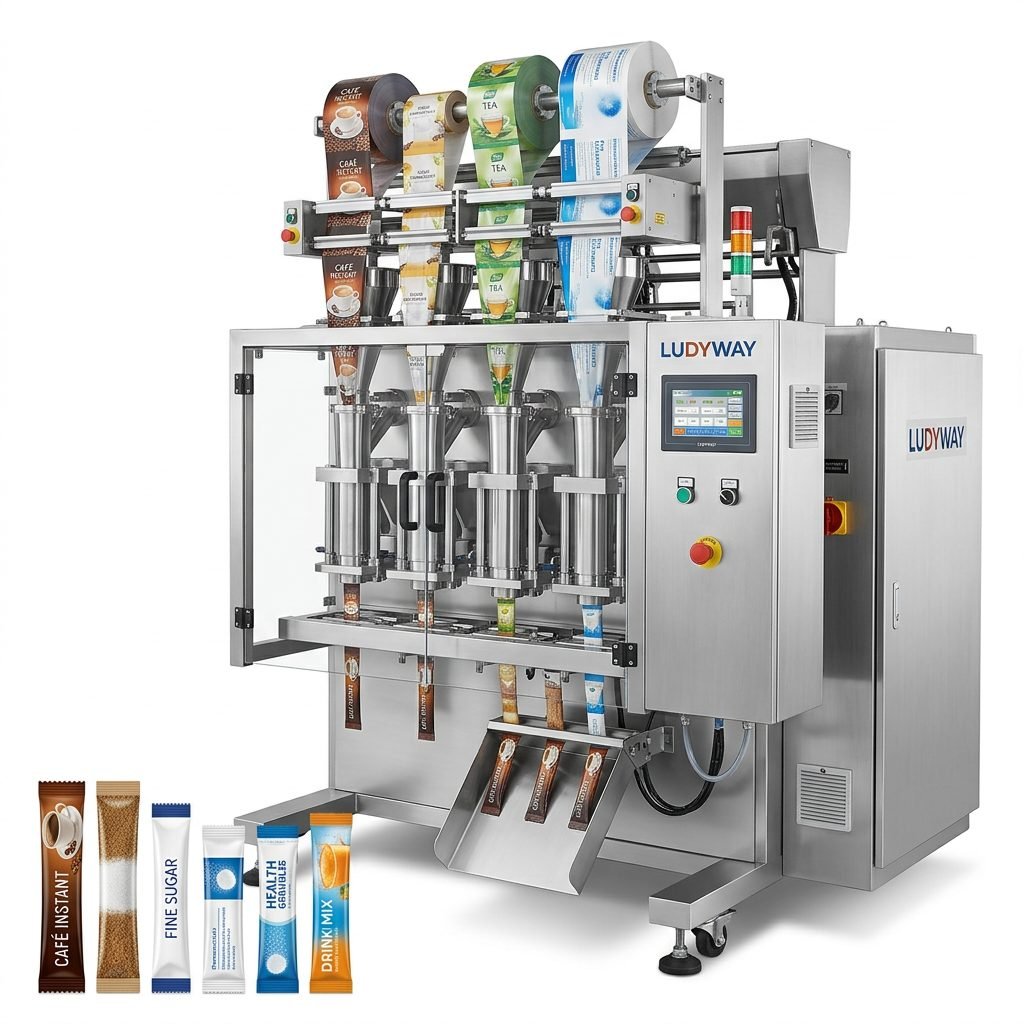
- Nutraceutical blends in stick packs
Chemical and Industrial Industry
- Detergent powder
- Water treatment chemicals
- Construction additives
- Fine industrial compounds
Applications of Granule Packaging
Granule packaging is suitable for products that need stable flow, gentle handling, or portioned filling with visible particles.
Food and Beverage Industry
- Sugar, salt, instant coffee granules
- Seeds, cereal blends, rice, grains
- Snack inclusions and dry toppings
- Pet food pellets and feed granules
Pharmaceutical Industry
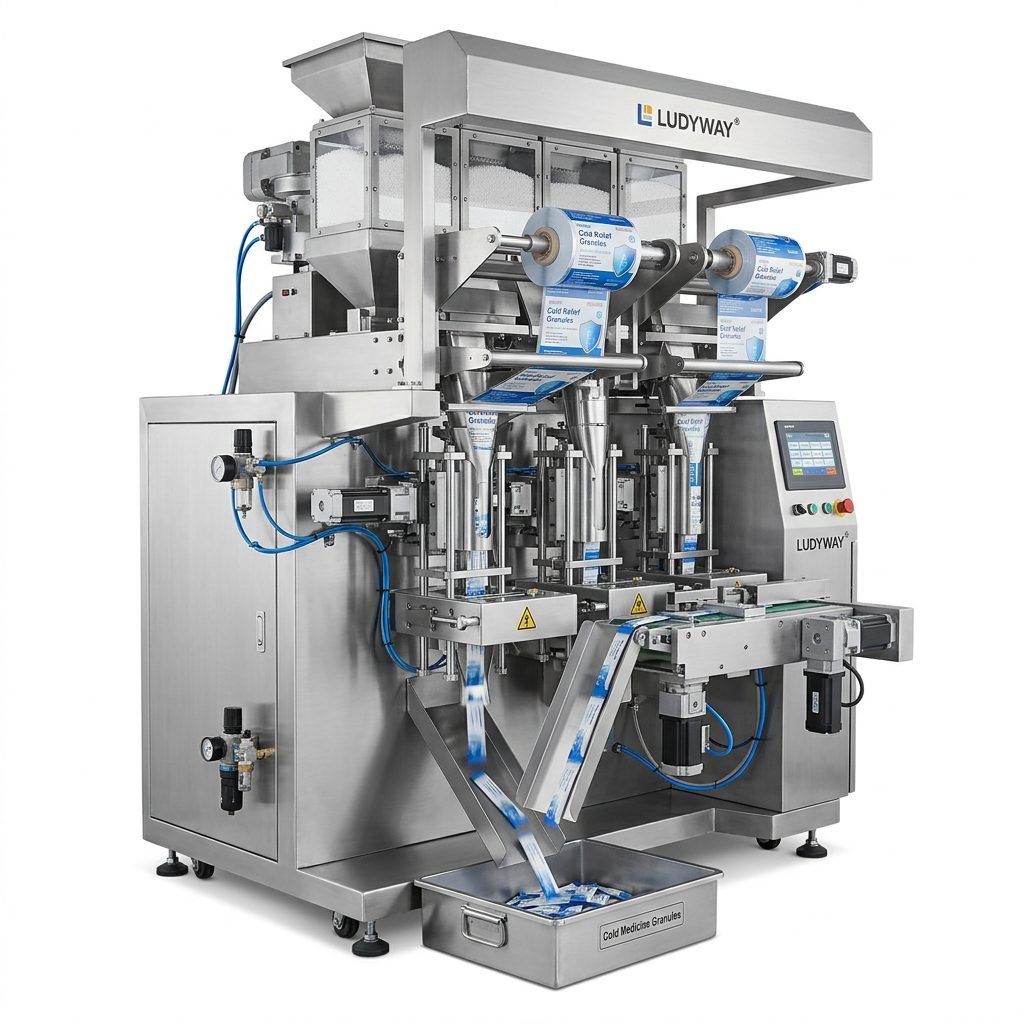
- Cold medicine granules
- Effervescent granules
- Controlled-dose medicinal granules
Agriculture and Chemical Industry
- Fertilizer granules
- Seed treatment products
- Resin pellets
- Animal feed additives
Best Packaging Machines for Powders
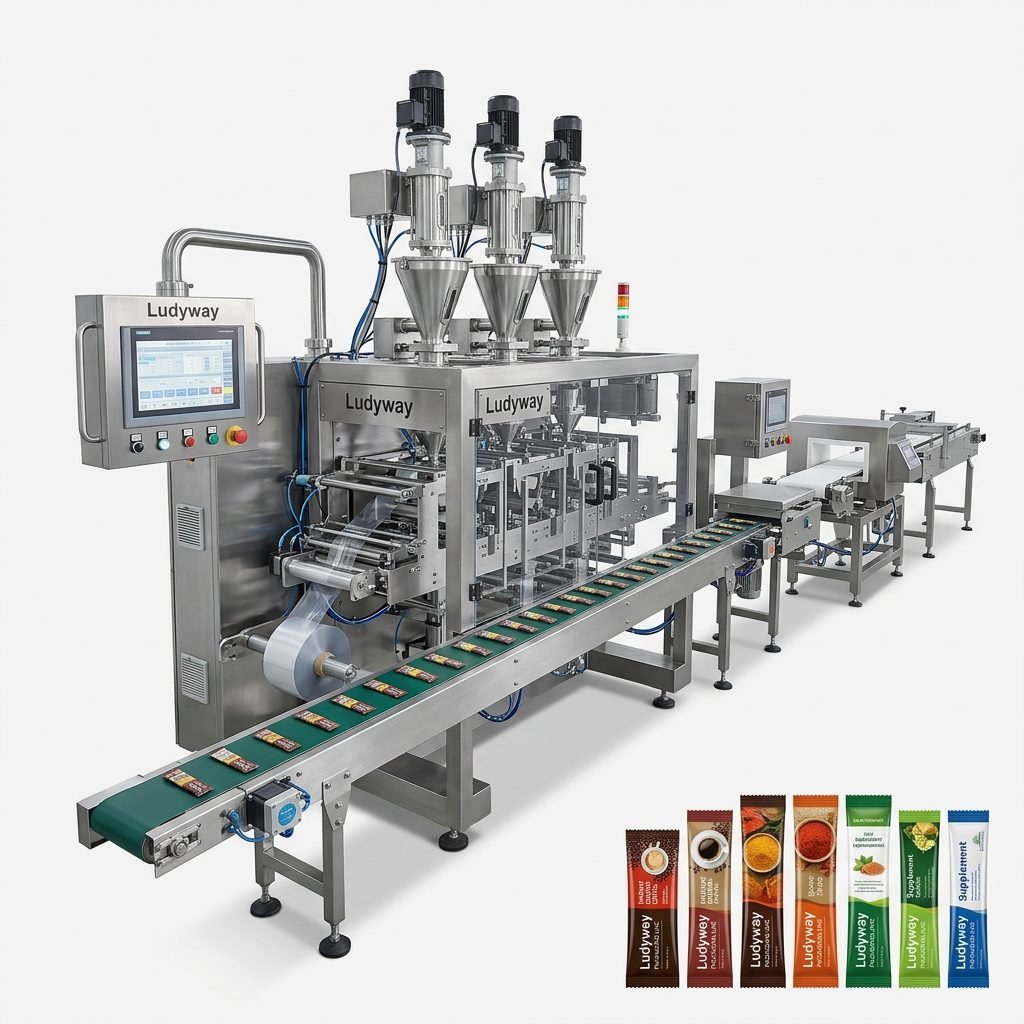
Powder products usually demand machines designed for accurate dosing, controlled product movement, and clean sealing. The most common options include:
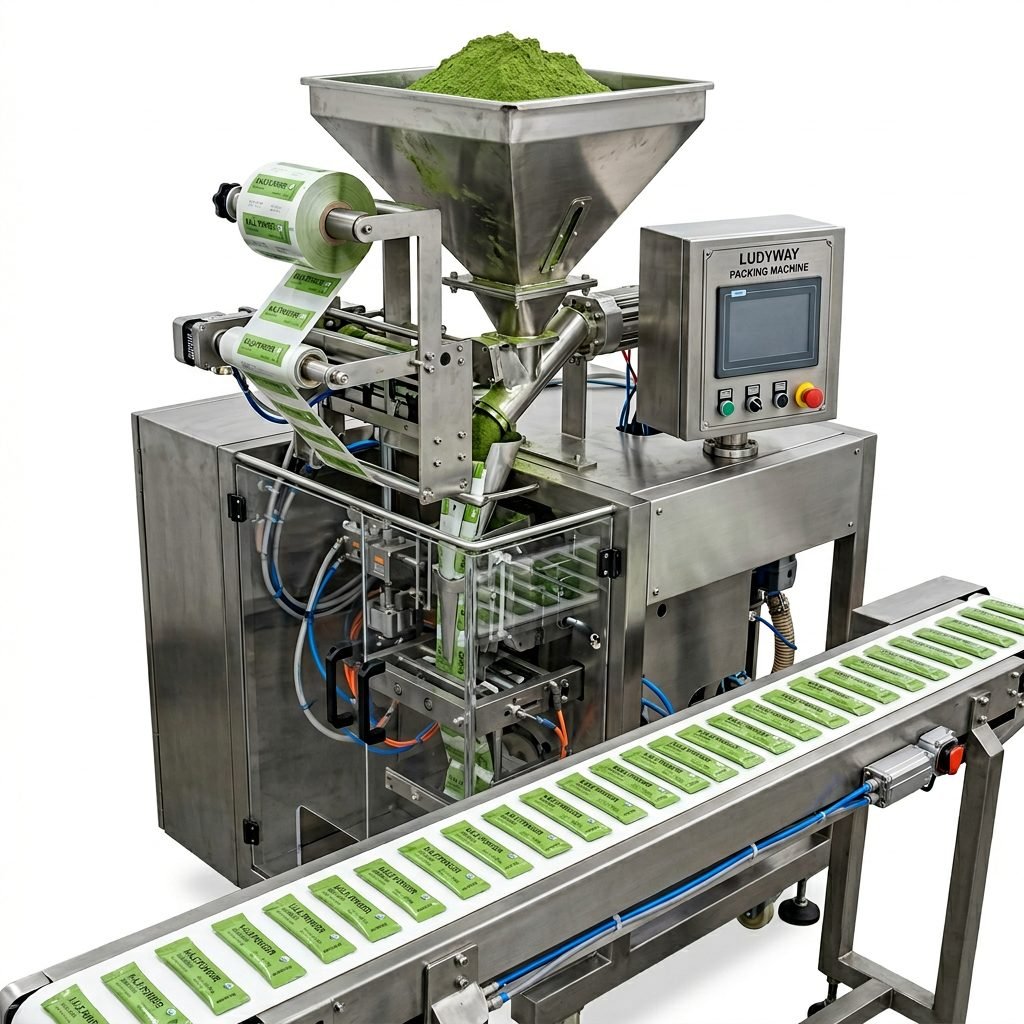
- Auger filling machines for high-precision powder dosing
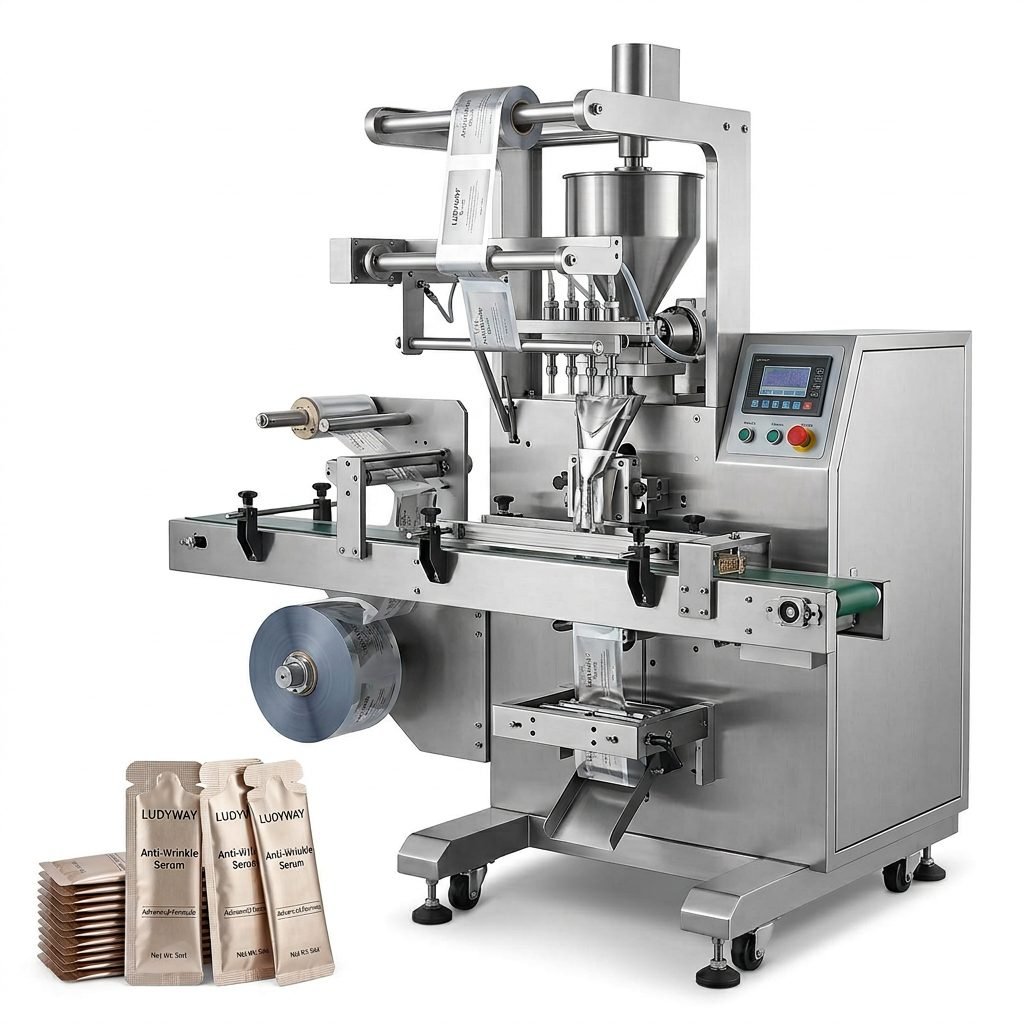
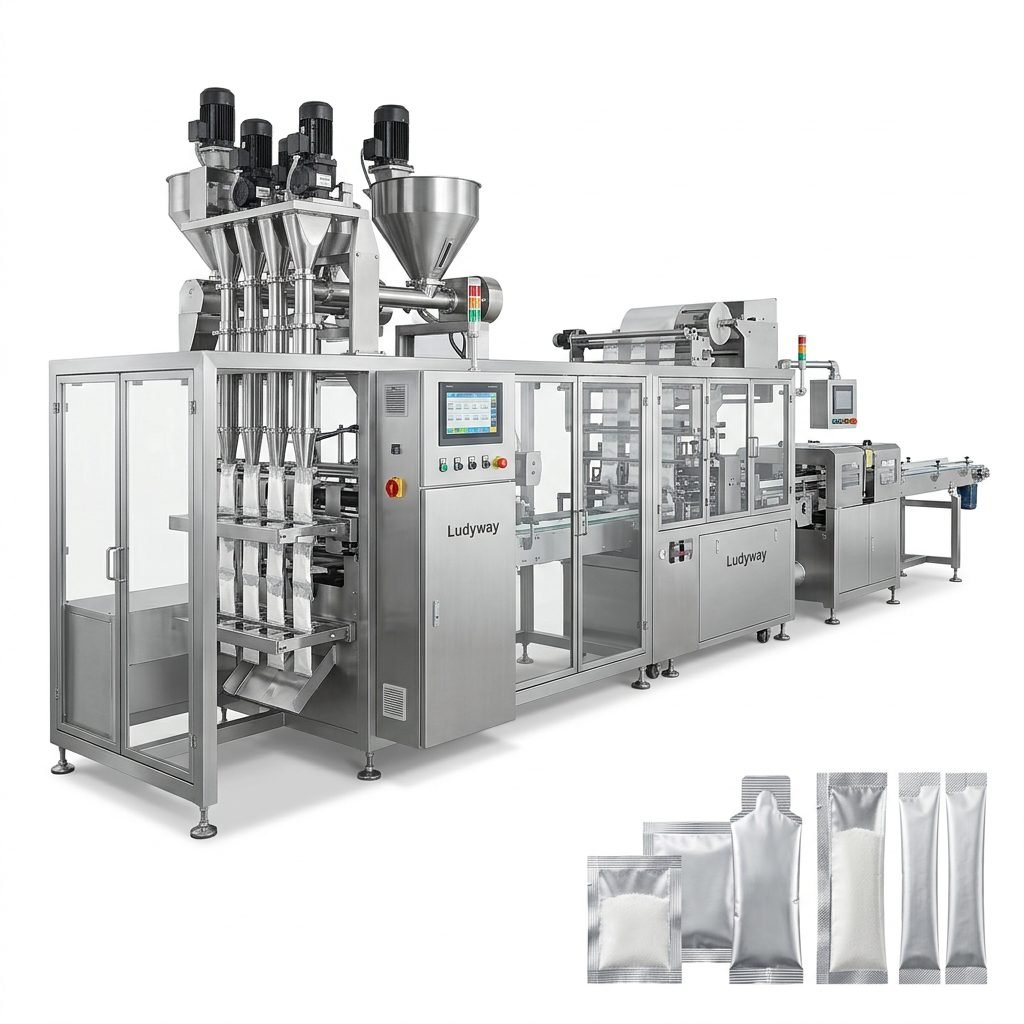
- Vertical form fill seal machines for pillow bags, sachets, and stick packs
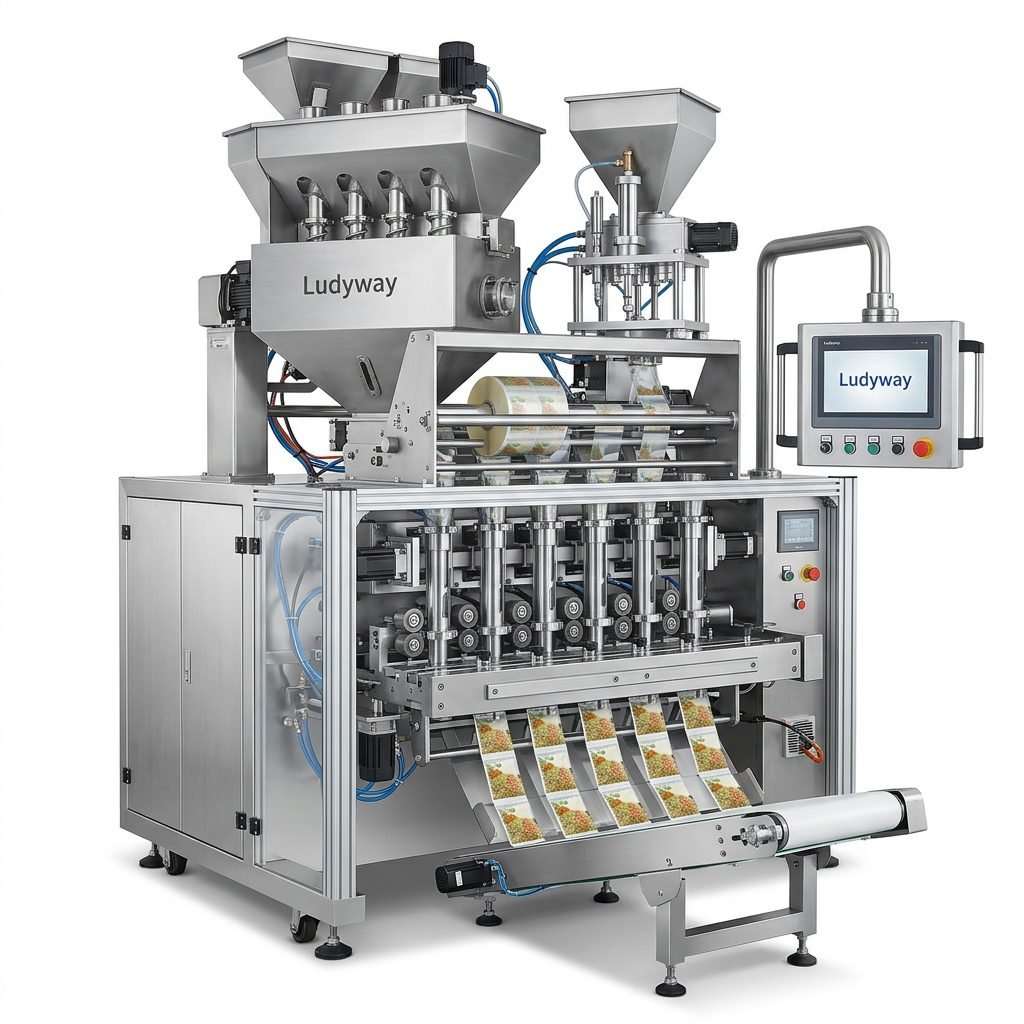
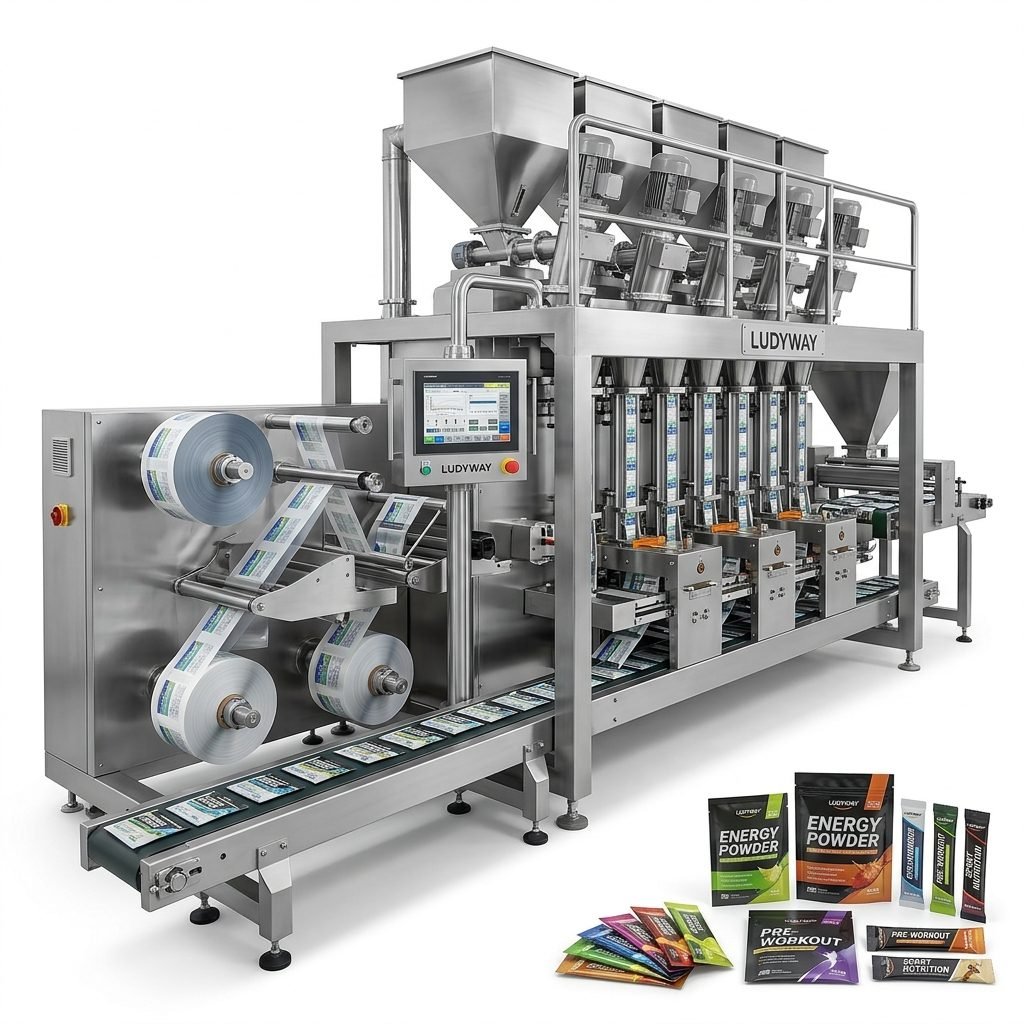
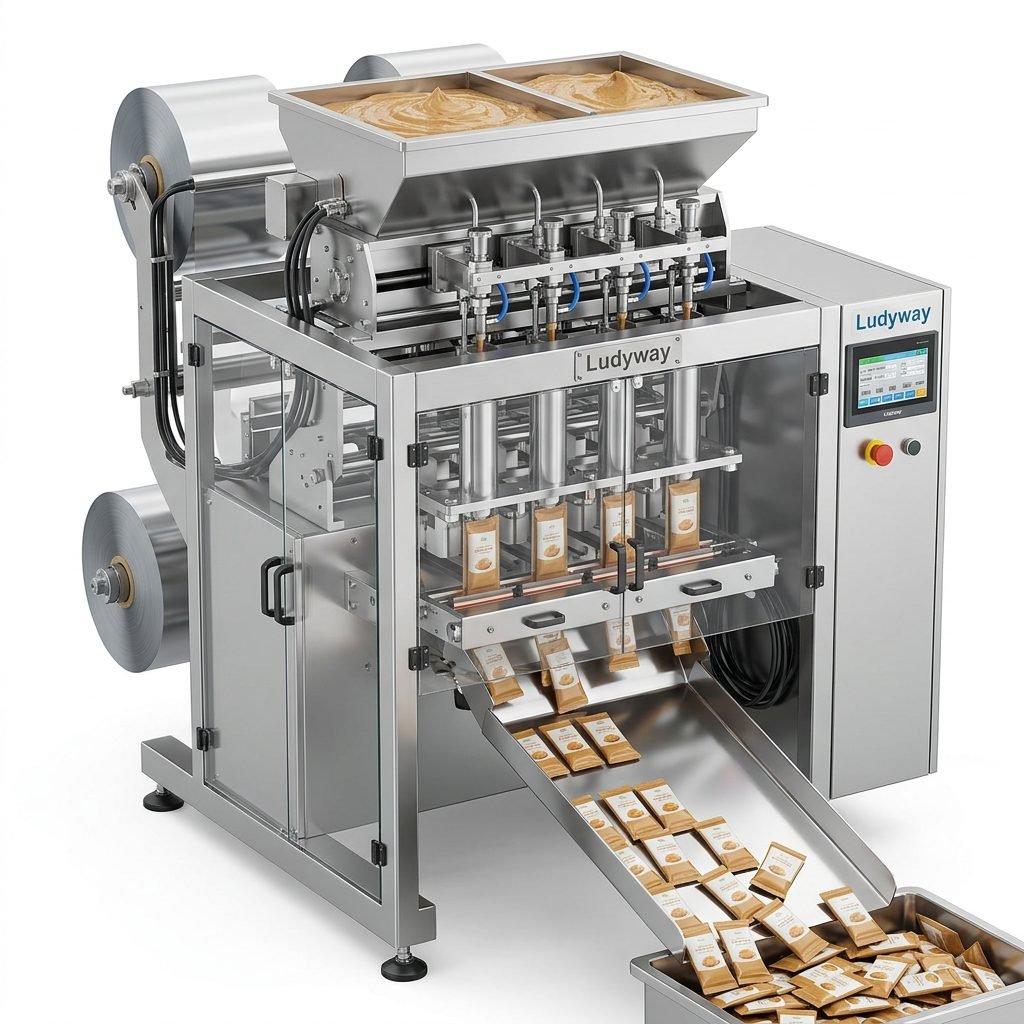
- Multi-lane stick pack machines for high-output small-dose powder packaging
- Vacuum feeders and screw conveyors to transfer powder hygienically
- Dust collection and seal-cleaning systems to reduce leakage and contamination
For products such as whey protein, milk powder, pharmaceutical powders, or spice blends, machine design should also consider easy cleaning, stainless steel contact parts, and recipe changeover efficiency.
Best Packaging Machines for Granules
Granule packaging equipment depends heavily on particle size, fragility, and target bag size. Typical solutions include:
- Volumetric cup fillers for uniform free-flowing granules
- Multihead weighers for irregular or mixed granules needing accuracy
- Linear weighers for moderate-speed applications
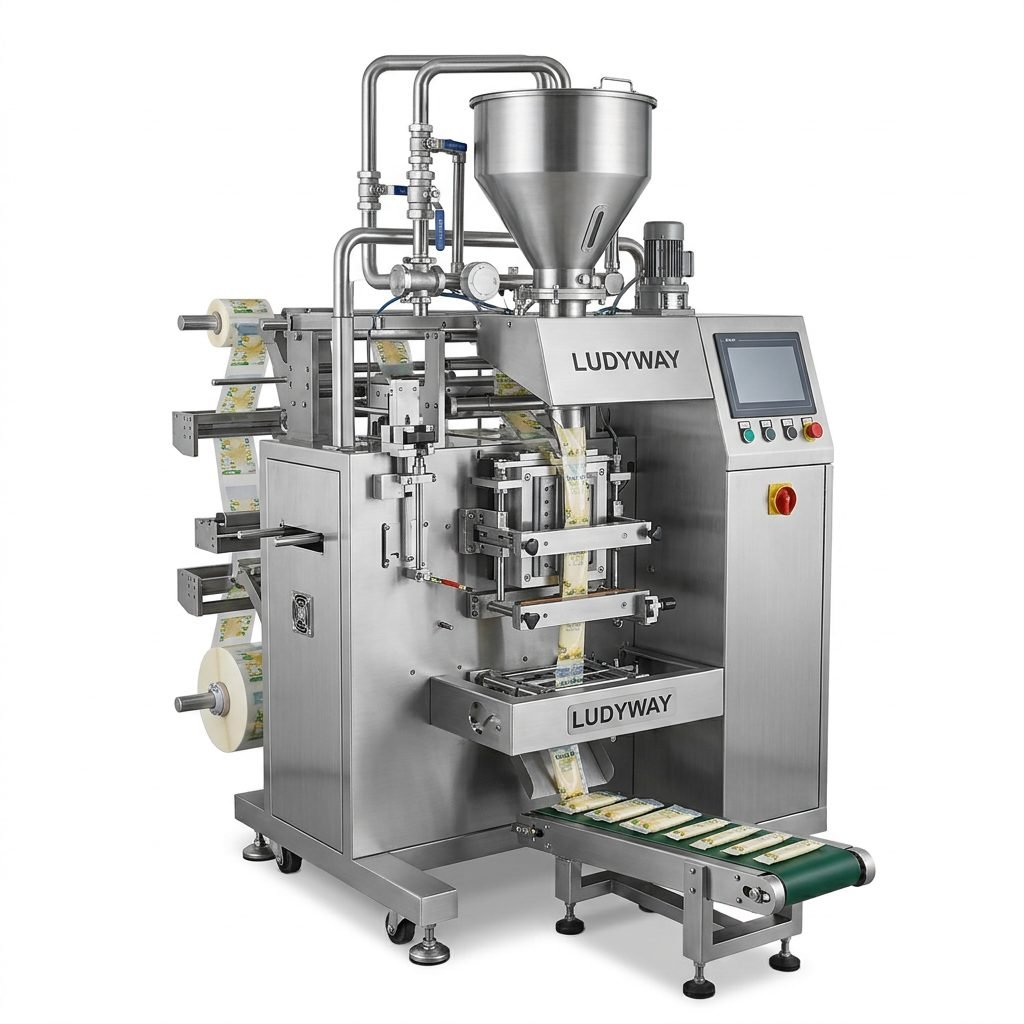
- VFFS machines for automatic bag forming, filling, and sealing
- Premade pouch systems for retail-ready granule products
Fragile granules may need gentler drop paths, lower fall heights, and vibration control to prevent breakage or dust creation during filling.
Common Packaging Challenges for Powders
| Challenge | Why It Happens | Best Practice |
|---|---|---|
| Dusting | Fine particles disperse during filling | Use enclosed filling, dust extraction, seal cleaning |
| Bridging in hopper | Poor flow or moisture absorption | Add agitation, hopper redesign, controlled environment |
| Weight inconsistency | Bulk density changes | Servo auger control and regular calibration |
| Seal contamination | Powder lands on sealing area | Seal protection design and air cleaning |
Common Packaging Challenges for Granules
Granules usually package more easily than powders, but they are not problem-free. Oversized particles can jam forming tubes, uneven granule size can affect weight accuracy, and brittle particles can generate fines during transport. Some granules also require nitrogen flushing or moisture barrier films to protect shelf life.
- Particle breakage during conveying or drop
- Bag sealing interference if particles get trapped in the seal area
- Segregation when blended products separate by size or density
- Moisture pickup in hygroscopic granules such as salts or beverage mixes
How to Choose Between Powder and Granule Packaging Systems
The right packaging system depends on more than just whether the product looks like powder or granules. Buyers should evaluate the full processing and packaging behavior.
Key Decision Points
- Particle size distribution: Is it uniform or mixed?
- Flowability: Does the product flow smoothly or bridge in the hopper?
- Target weight range: Small sachets require higher dosing precision
- Dust sensitivity: Especially important for food and pharma plants
- Packaging format: Sachet, stick pack, pouch, bottle, or bulk bag
- Production speed: Single-lane vs multi-lane systems
- Cleaning requirements: Tool-free disassembly and sanitary design may be essential
Packaging Material Considerations
Packaging film and material structure should match the product’s sensitivity. Powders that absorb moisture or oxidize easily often need higher barrier laminates. Granules that are sharp or abrasive may require stronger puncture resistance. Seal performance is equally important, especially when powders can contaminate the sealing zone.
Typical considerations include:
- Moisture barrier performance
- Oxygen barrier performance
- Heat seal compatibility
- Puncture resistance
- Printability and retail appearance
- Recyclability or sustainability targets
Best Practices for Powder and Granule Packaging
- Test real product samples before selecting a filling method
- Measure bulk density and flow behavior under production conditions
- Choose the right dosing technology instead of using one machine for all materials
- Control dust and spillage to improve hygiene and seal integrity
- Match film structure to product sensitivity
- Use checkweighing and inspection systems for consistent quality
- Plan for cleaning and maintenance access from the start
- Consider future SKUs if your business may expand from powder to granule or mixed products
When a Turnkey Packaging Line Makes More Sense
If your operation includes conveying, feeding, filling, sealing, cartoning, coding, inspection, and final case packing, a standalone machine may not be enough. In these cases, a turnkey line can improve automation, reduce operator dependency, and create more stable upstream-to-downstream integration.
Manufacturers looking for scalable systems often work with experienced suppliers such as Ludyway packaging machine solutions, especially for projects involving powders, granules, liquids, stick packs, sachets, and complete automated packaging lines across food, pharmaceutical, health supplement, chemical, and related industries.
Final Buying Checklist
| Question | Why It Matters |
|---|---|
| Is the product truly powder, granule, or a mixed format? | The answer determines filling technology and handling design |
| Does it flow consistently? | Poor flow leads to unstable weights and downtime |
| How accurate must each pack be? | Small-dose packaging needs tighter control |
| Will dust or broken particles affect sealing? | Seal integrity directly impacts shelf life and complaints |
| What speed and package format do you need? | Machine structure changes significantly by output target |
| Do you need standalone equipment or a full line? | Integration affects efficiency, labor, and long-term ROI |
Conclusion
Powder and granule packaging may look similar from the outside, but their processing behavior is very different. Powders usually demand tighter dust control, more precise dosing, and stronger sealing protection. Granules often offer easier flow and simpler filling, but they still require the right weighing, handling, and pack protection strategy. The best results come from matching the product’s physical behavior with the correct filling method, machine design, and packaging material.
For brands aiming to improve accuracy, efficiency, and packaging consistency, the smartest step is always the same: test the actual product, define the required package format, and choose a system built for that material rather than forcing a generic solution.