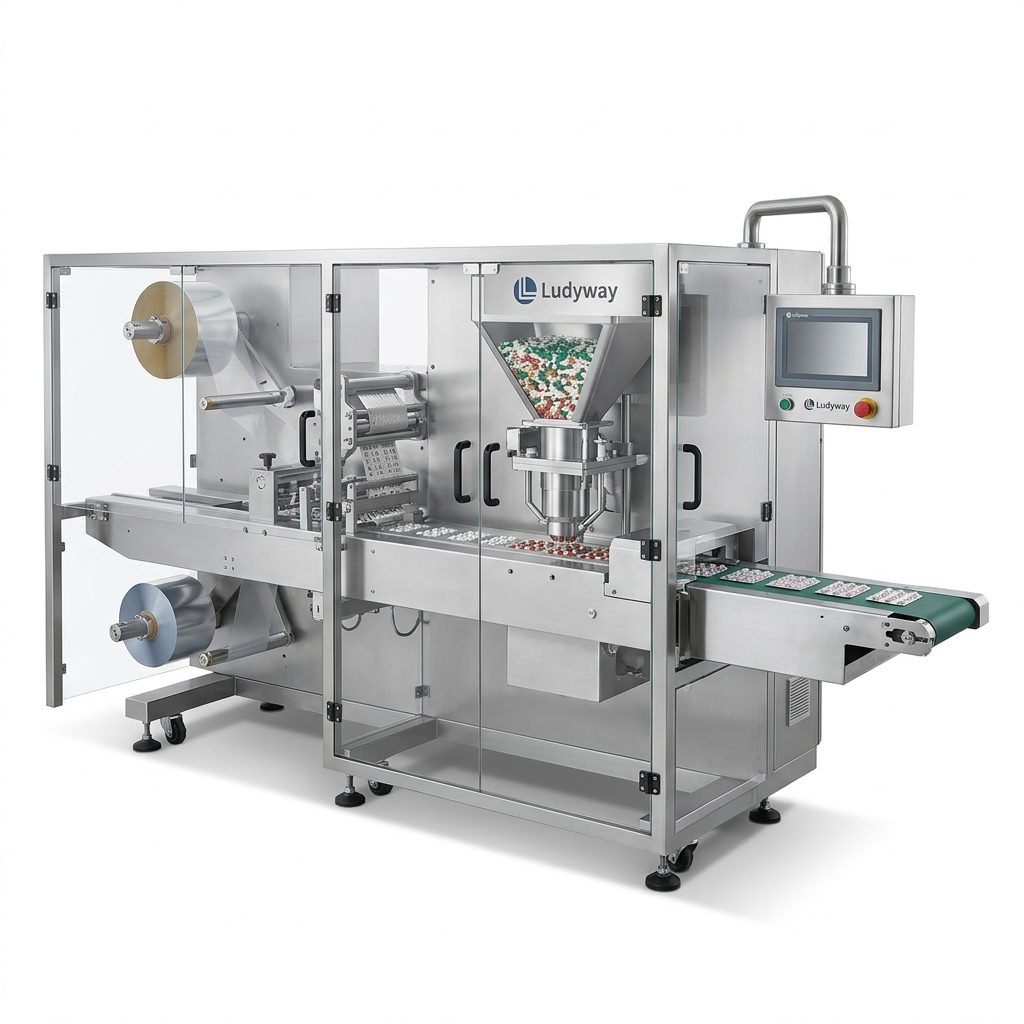
Industrial food packaging machines play a critical role in modern food production. From powders and granules to sauces, snacks, and frozen products, the right system helps manufacturers improve speed, reduce waste, maintain hygiene, and deliver consistent packaging quality at scale.
Whether you run a fast-growing food brand, a co-packing facility, or a large factory, understanding machine types, key benefits, and buying criteria can help you make a smarter long-term investment.
What Are Industrial Food Packaging Machines?
Industrial food packaging machines are automated or semi-automated systems designed to fill, seal, wrap, label, inspect, and prepare food products for storage, shipping, and retail sale. These machines are used across many food categories, including:
- Powders such as milk powder, seasoning, coffee, and protein blends
- Granules such as sugar, rice, seeds, cereal, and snack mixes
- Liquids and pastes such as ketchup, honey, oil, mayonnaise, and sauces
- Frozen and vacuum-packed products such as meat, seafood, and ready meals
- Pouch and sachet products for single-serve and portion-controlled packaging
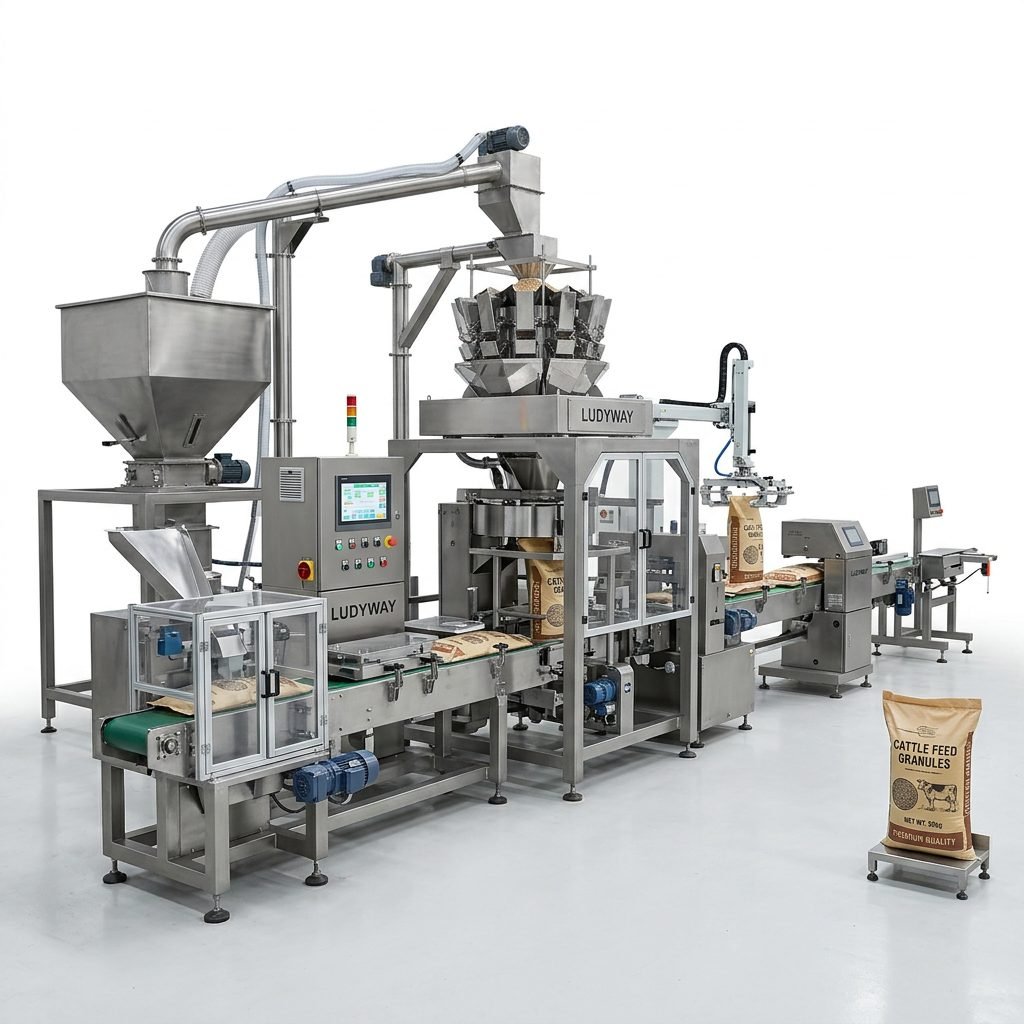
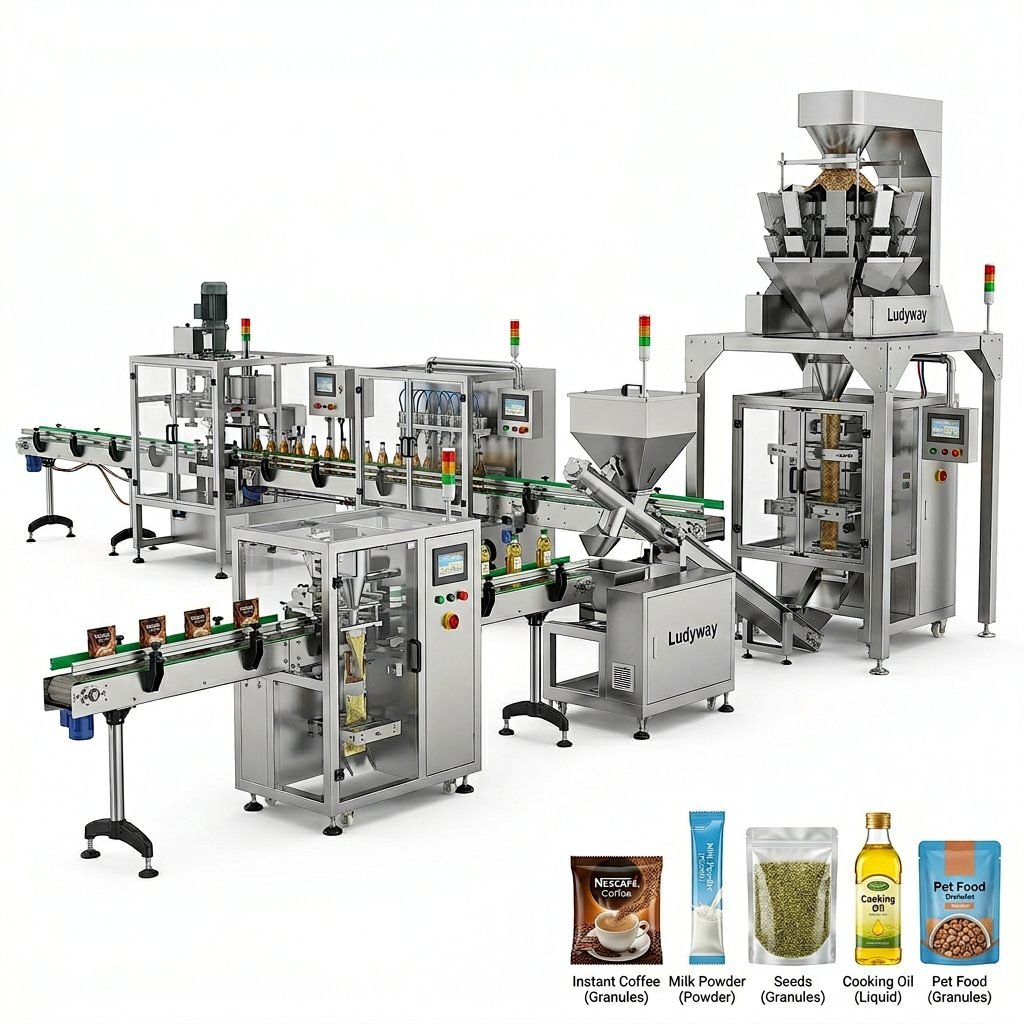
In a modern factory, food packaging equipment is often integrated into a complete line with feeders, weighers, conveyors, coding systems, metal detection, checkweighing, cartoning, and palletizing.
Main Types of Industrial Food Packaging Machines
1. Vertical Form Fill Seal Machines
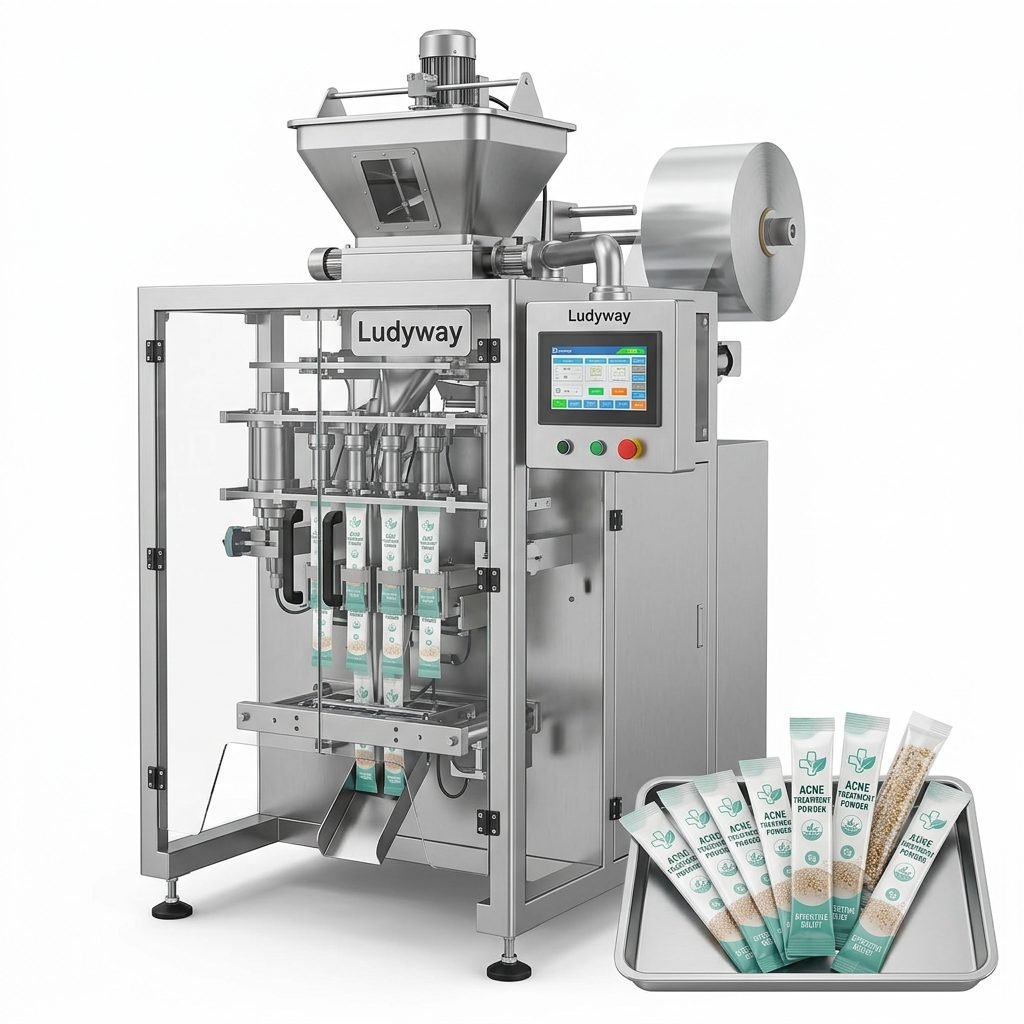
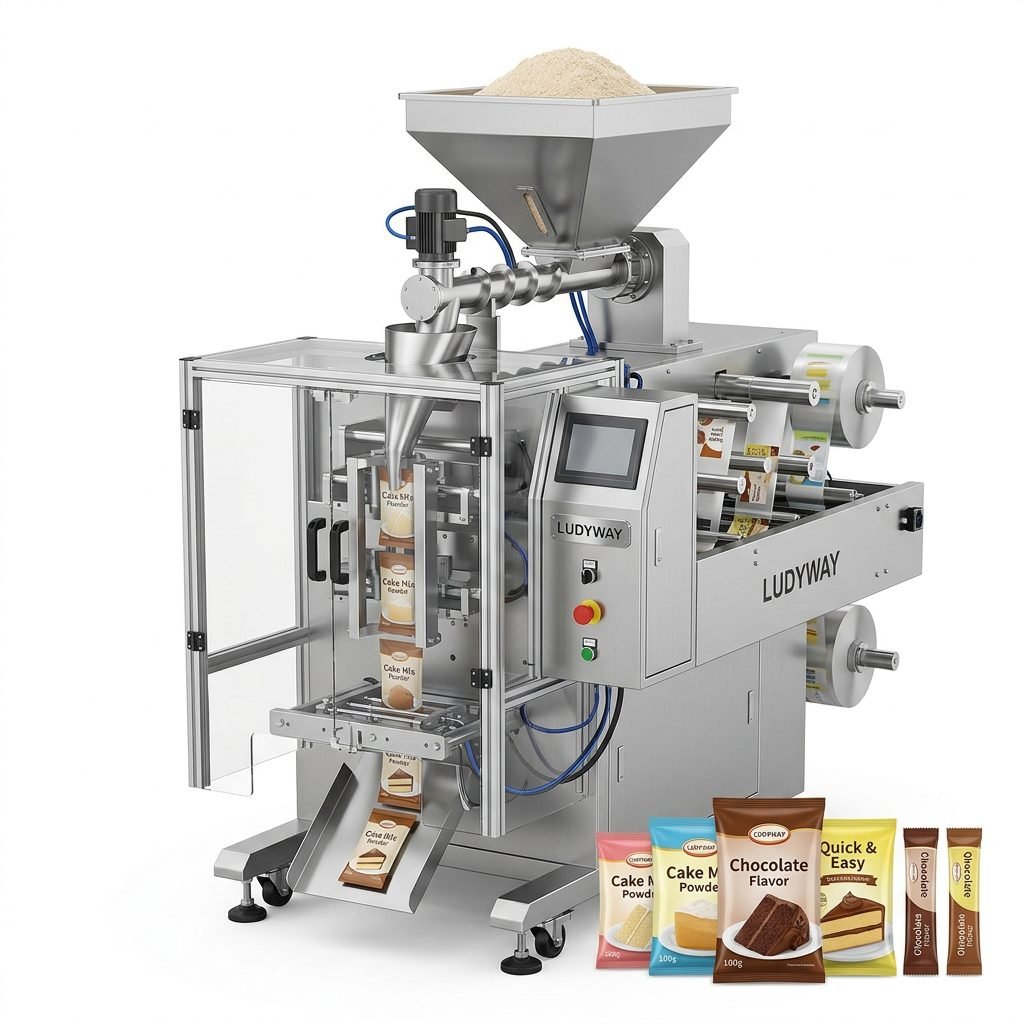
Vertical form fill seal (VFFS) machines are widely used for packing granules, powders, and small solids into pillow bags, gusset bags, or other flexible packaging formats. The machine forms the bag from roll film, fills it with product, and seals it in one continuous process.
These machines are ideal for:
- Rice, beans, sugar, salt, and grains
- Coffee powder and drink mixes
- Nuts, snacks, and dry food ingredients
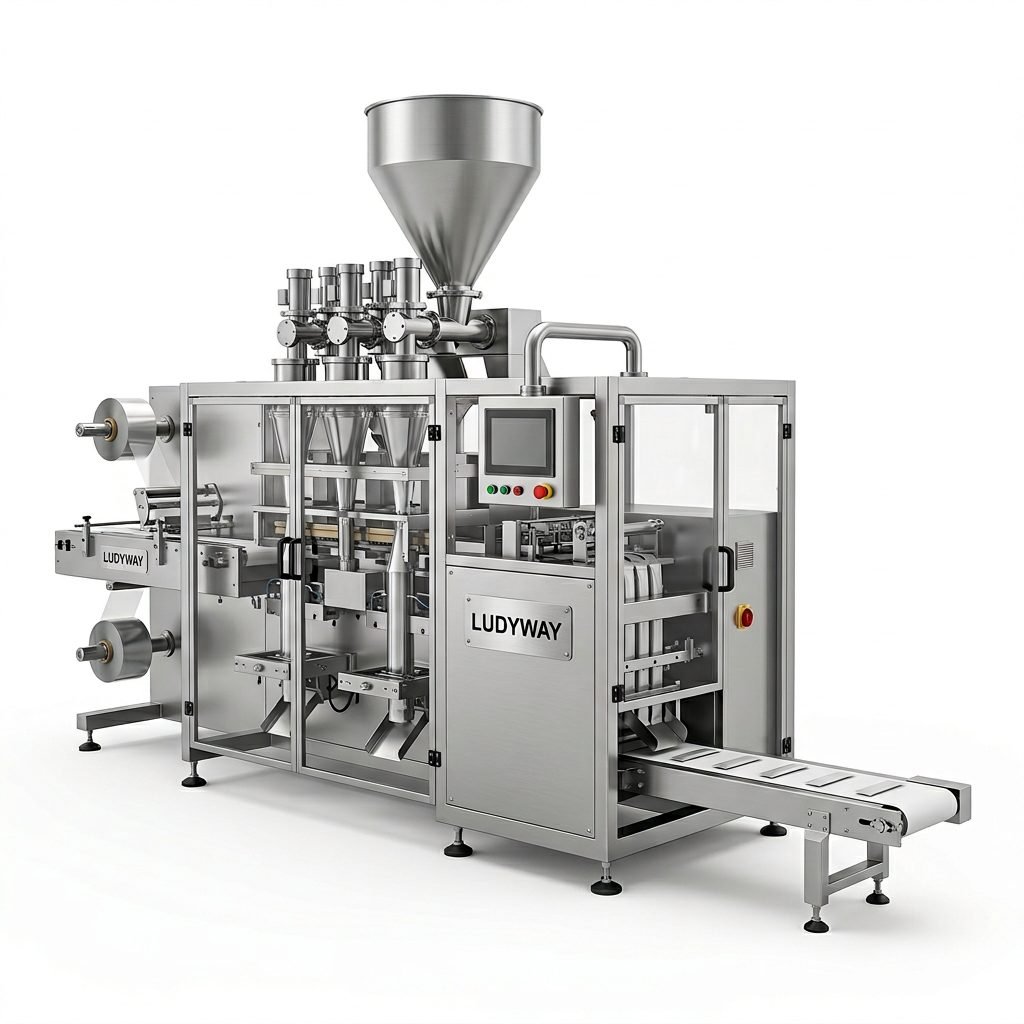
2. Sachet Packaging Machines
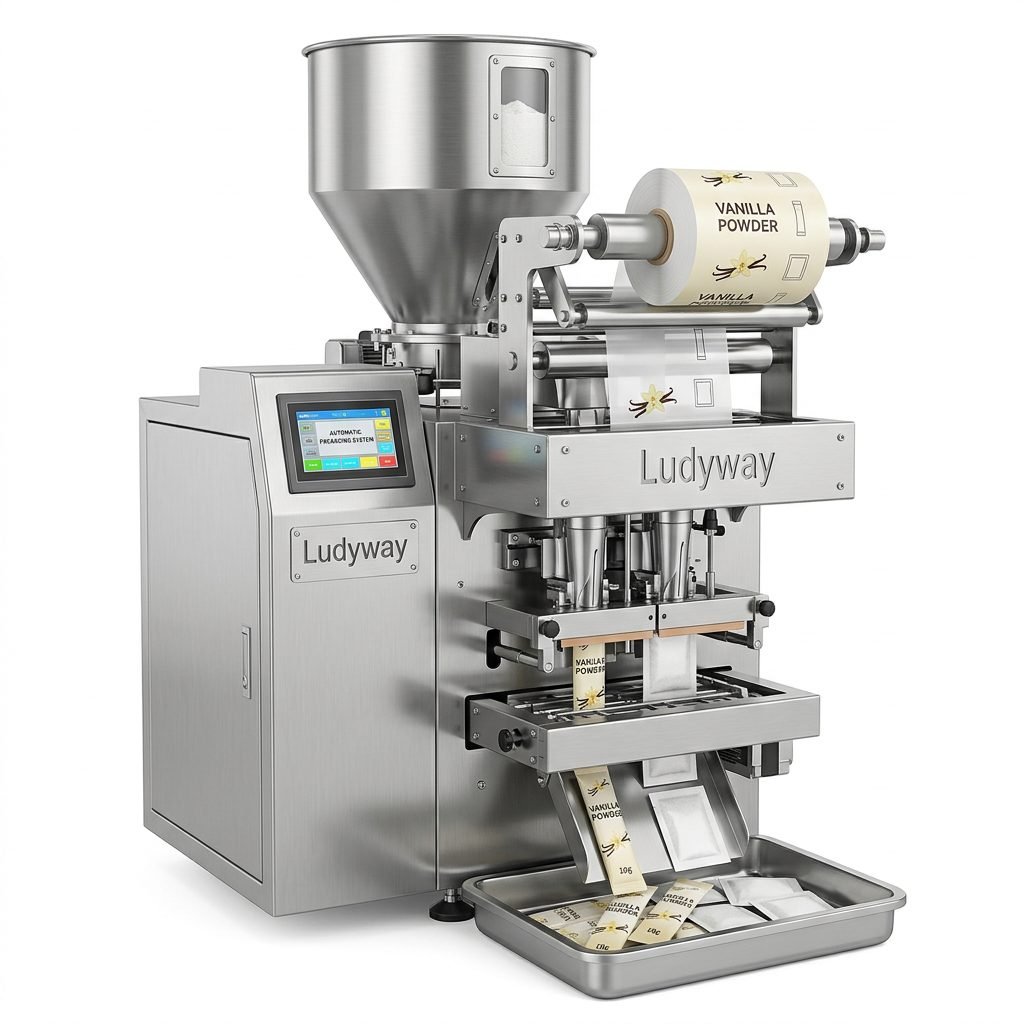
Sachet machines are designed for compact, single-dose packaging. They are commonly used for condiments, seasoning powders, instant beverages, and sample-size food products.
Typical applications include:
- Ketchup, chili sauce, soy sauce, and salad dressing
- Spice blends and powdered soup bases
- Sugar and coffee sachets
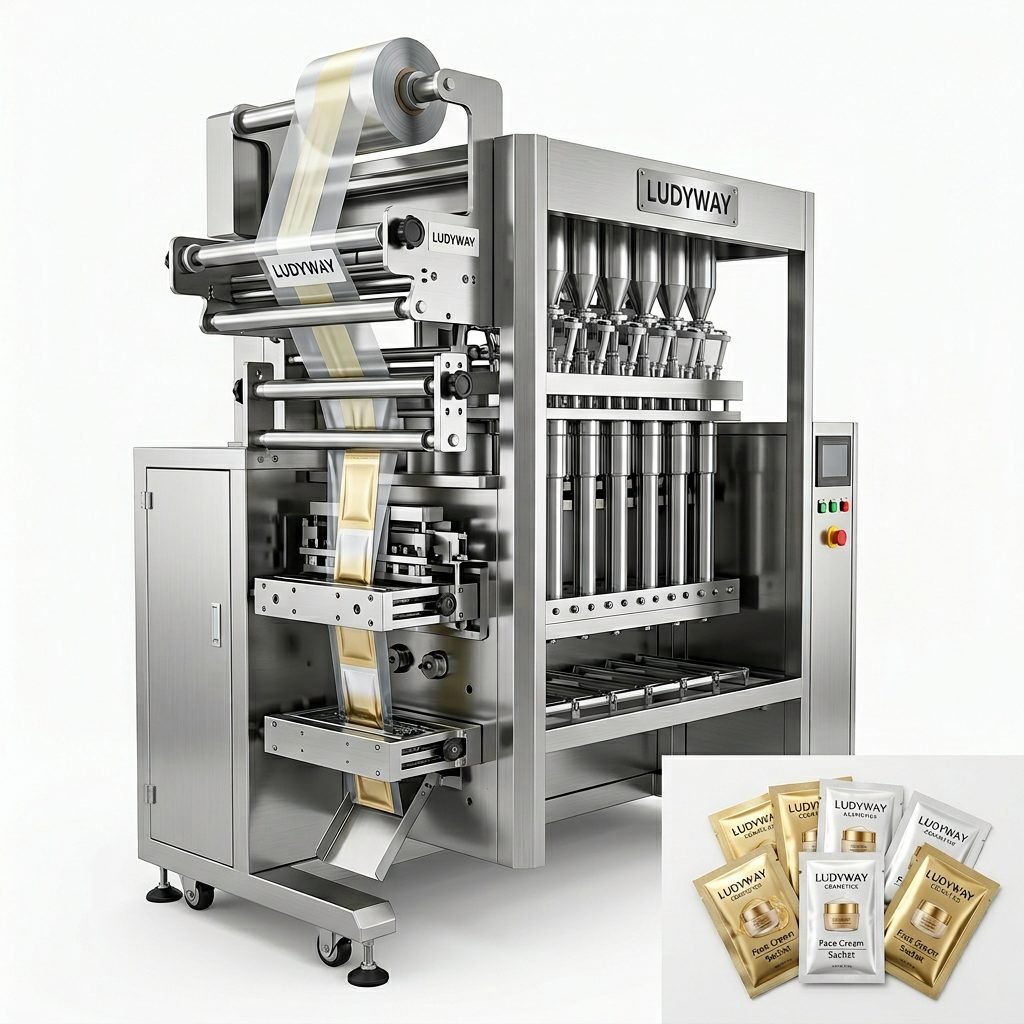
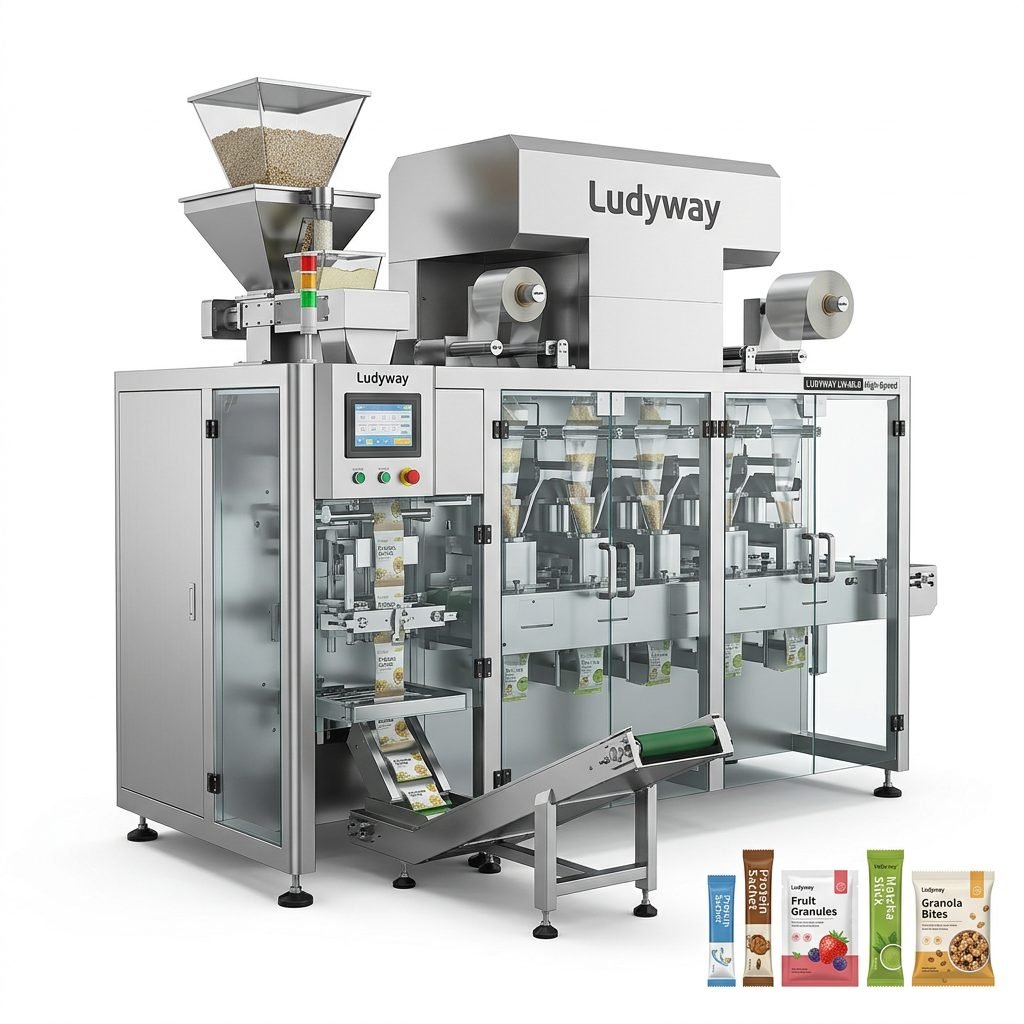
3. Stick Pack Machines
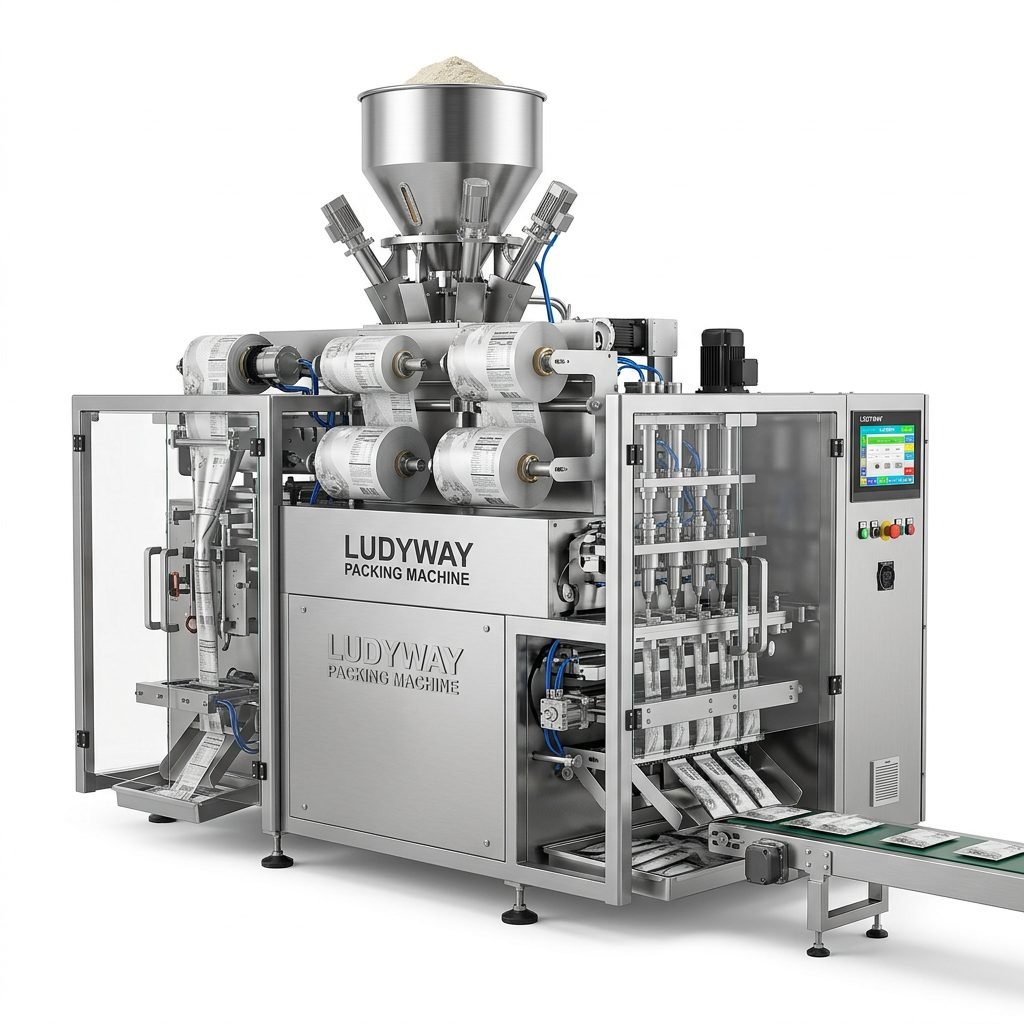
Stick pack machines produce narrow, tube-shaped packs that are popular for portable and single-serve food products. They are especially suitable for high-speed production and premium retail presentation.
Common products include:
- Instant coffee and beverage powders
- Electrolyte powders and nutrition blends
- Honey, syrups, and liquid supplements
4. Premade Pouch Packaging Machines
These machines fill and seal preformed pouches rather than creating bags from film rolls. They are a good choice for brands that want stronger shelf appeal and more complex pouch styles such as stand-up pouches or zipper bags.
- Frozen food
- Ready-to-eat snacks
- Sauces and liquid foods
- Pet food and specialty ingredients
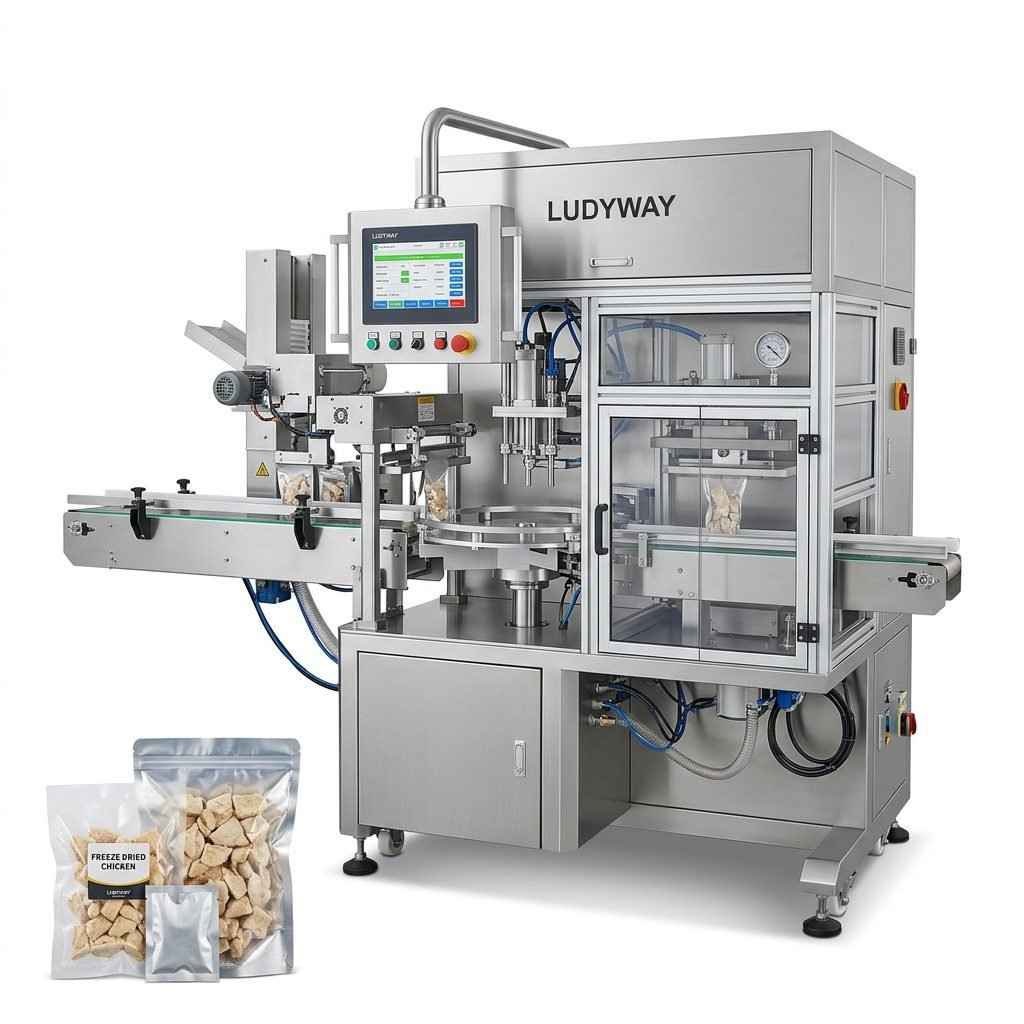
5. Vacuum Packaging Machines
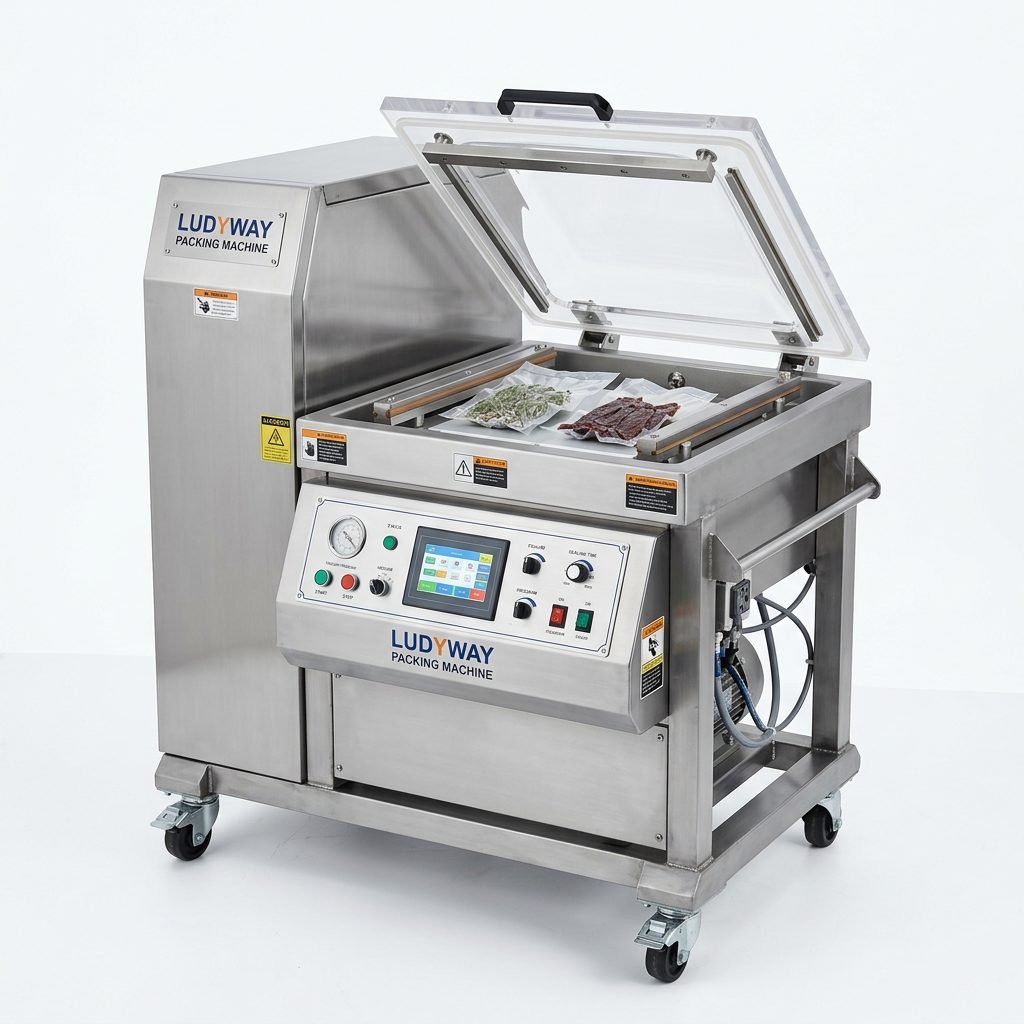
Vacuum packaging machines remove air from the package before sealing. This helps extend shelf life, protect product quality, and reduce oxidation.
They are often used for:
- Freeze-dried foods
- Processed meat
- Seafood
- Prepared meals
6. Filling and Sealing Machines for Liquids and Pastes
These systems are built for free-flowing liquids, viscous sauces, creams, and semi-liquid food products. Depending on viscosity and hygiene requirements, they may use piston fillers, pump fillers, or servo-controlled dosing systems.
7. Complete Turnkey Packaging Lines
For medium and large food factories, a single machine may not be enough. A turnkey packaging line can include:
- Raw material feeding systems
- Weighing or dosing units
- Primary packaging machines
- Date coding and labeling
- Metal detectors and checkweighers
- Cartoning, case packing, and palletizing
Key Benefits of Industrial Food Packaging Machines
| Benefit | Why It Matters |
|---|---|
| Higher Efficiency | Automated packing reduces manual work and increases output per shift. |
| Better Product Consistency | Accurate filling and sealing improve weight control and package appearance. |
| Improved Food Safety | Sanitary construction and stable sealing help maintain hygiene standards. |
| Lower Waste | Precise dosing and controlled film usage reduce product and material loss. |
| Labor Savings | Fewer operators are needed for repetitive and high-volume packaging tasks. |
| Scalability | Manufacturers can expand from standalone machines to complete automated lines. |
How to Choose the Right Food Packaging Machine
Understand Your Product Characteristics
Start with the product itself. A machine suitable for free-flowing sugar may not work well for sticky sauce or fragile snacks. Key questions include:
- Is the product a powder, granule, liquid, paste, or solid piece?
- Does it have dusting, clumping, oil content, or moisture sensitivity?
- Does it require vacuum sealing or nitrogen flushing?
- Will the product break easily during filling?
Match the Packaging Format
The right machine depends heavily on the final package style. Consider whether you need:
- Pillow bags
- Stand-up pouches
- Sachets
- Stick packs
- Vacuum bags
- Bottle or jar filling integration
Check Output Requirements
Production targets are essential. Some businesses only need moderate throughput, while others require high-speed multi-lane systems. Look at:
- Packages per minute
- Shift hours per day
- Seasonal demand peaks
- Future growth plans
Evaluate Accuracy and Seal Quality
Poor filling accuracy increases giveaway and cost. Weak seals lead to leaks, contamination, and customer complaints. Always review the machine’s:
- Dosing precision
- Seal consistency
- Temperature control stability
- Compatibility with your packaging film or pouch material
Focus on Hygiene and Compliance
In food production, machine construction matters. Stainless steel contact parts, easy-clean designs, and dust control systems support safer operations. Depending on your market, you may also need compliance with local food safety and certification standards.
Consider Integration with the Full Line
A packaging machine should not be viewed in isolation. To maximize performance, think about upstream and downstream equipment such as:
- Feeders and elevators
- Multihead weighers or auger fillers
- Metal detection and inspection
- Labeling and coding systems
- Case packing and palletizing
Review Customization and Technical Support
Off-the-shelf equipment may not fully fit your product or plant layout. Many food manufacturers benefit from custom machine configurations, line engineering, and after-sales support. This is especially important for factories handling multiple SKUs or planning automation upgrades over time.
Common Buying Mistakes to Avoid
- Choosing a machine based only on price instead of total lifecycle value
- Ignoring future production expansion needs
- Not testing actual product samples before purchase
- Overlooking maintenance access and cleaning convenience
- Failing to confirm film, pouch, or sealing material compatibility
- Buying a standalone machine when a line solution would be more efficient
Which Machine Is Best for Different Food Products?
| Food Product | Recommended Machine Type | Typical Packaging Format |
|---|---|---|
| Coffee powder | Stick pack machine / sachet machine | Stick packs, sachets |
| Rice and grains | VFFS machine / weighing bagging line | Pillow bags, larger bags |
| Sauces and condiments | Liquid sachet filler / pouch filling machine | Sachets, pouches |
| Nuts and snacks | VFFS machine / premade pouch machine | Bags, stand-up pouches |
| Freeze-dried food | Vacuum packaging machine | Vacuum pouches |
| Protein and supplement powders | Multi-lane stick pack / auger filling system | Stick packs, sachets |
Why Turnkey Packaging Lines Are Becoming More Popular
As food factories aim for higher throughput and lower labor dependency, turnkey systems are becoming more attractive than standalone machines. A complete line improves synchronization between filling, sealing, inspection, packing, and end-of-line handling.
This approach can deliver:
- More stable line efficiency
- Lower manual intervention
- Better traceability and quality control
- Easier plant-wide automation upgrades
- More consistent product flow from raw material to finished shipment
Choosing a Reliable Packaging Machine Manufacturer
The machine itself is only part of the decision. Your supplier should also offer engineering experience, customization capability, and dependable service. If you are looking for a manufacturer with broad food packaging expertise, Ludyway food packaging machines are backed by more than 30 years of industry experience, a manufacturing base of over 20,000 square meters, and turnkey packaging line capabilities for granules, powders, liquids, pastes, and pouch-based products.
Final Considerations Before You Buy
Before making a final purchase decision, ask the supplier for:
- Product sample testing
- Machine layout drawings
- Output and accuracy data
- Electrical and pneumatic requirements
- Installation, training, and after-sales support details
- Upgrade options for future automation
The best industrial food packaging machine is not simply the fastest or the cheapest. It is the one that fits your product, packaging style, hygiene standards, output goals, and long-term growth plan. A well-matched system can improve profitability, strengthen quality control, and give your food business a much more scalable production foundation.