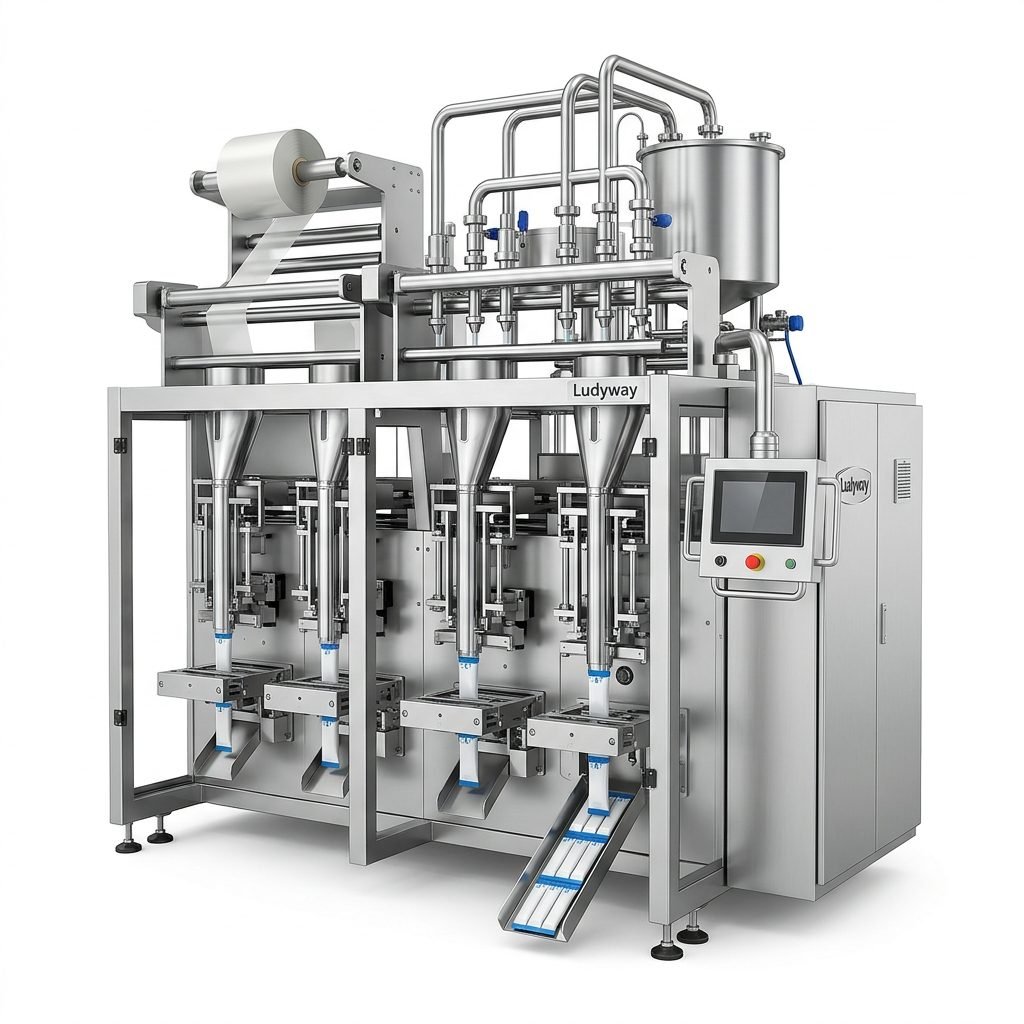
Industrial packaging machines are the backbone of modern production. From food and pharmaceuticals to cosmetics, chemicals, and feed products, manufacturers rely on packaging automation to improve throughput, protect product quality, and reduce operating costs. When the right system is selected, businesses can achieve higher efficiency, reliable output, and long-term cost savings without compromising flexibility.
For companies seeking scalable automation, industrial packaging equipment can support everything from single-machine upgrades to complete turnkey lines. Whether your products are granules, powders, liquids, pastes, or pouches, the right machine configuration helps create a smoother production flow and more consistent packaging performance.
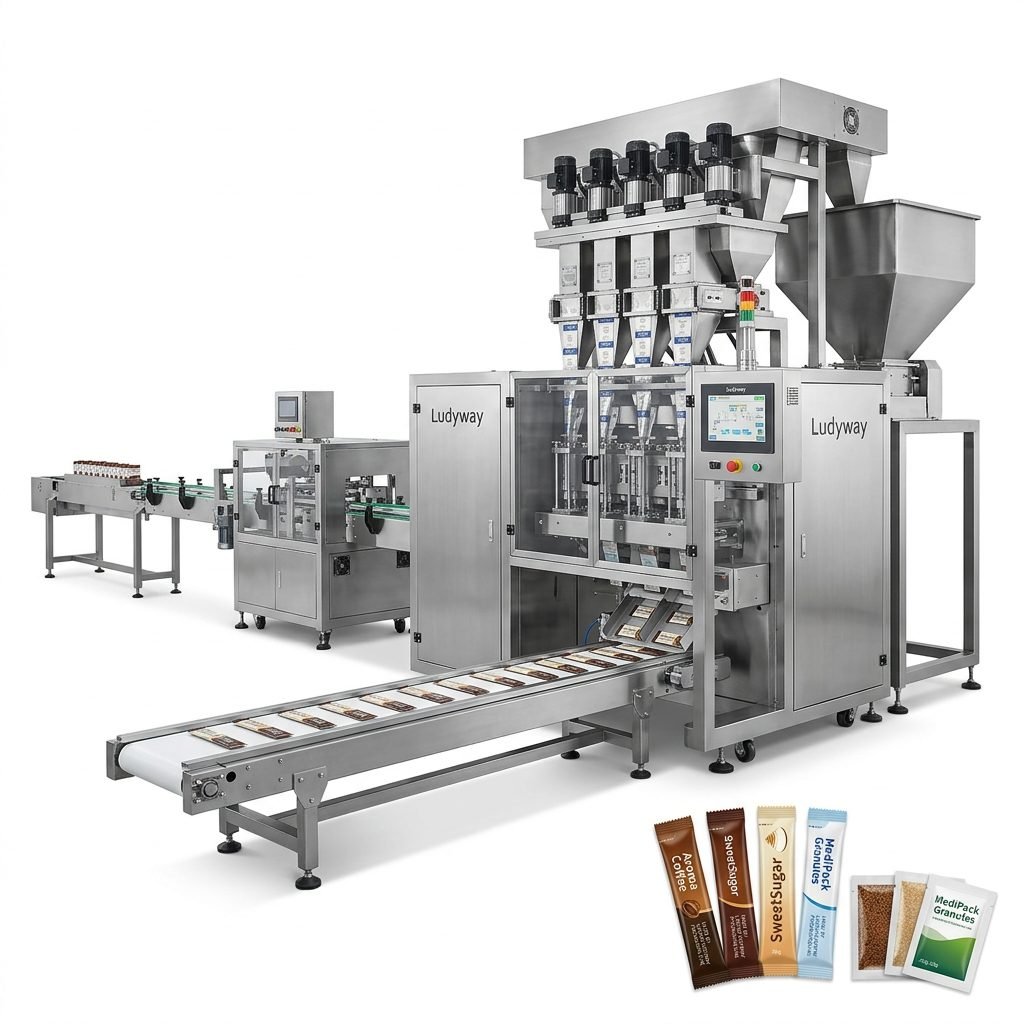
Why Industrial Packaging Machines Matter in Modern Manufacturing
Manual packing processes often create bottlenecks, variable sealing quality, material waste, and higher labor dependency. Industrial packaging machines solve these issues by introducing automation, repeatability, and process control. This is especially important in industries where speed, hygiene, traceability, and precise filling are critical.
- Faster production cycles for growing demand
- Stable filling and sealing quality across batches
- Reduced labor intensity and lower operating costs
- Improved packaging appearance and shelf consistency
- Better compatibility with weighing, conveying, coding, and cartoning systems
- Enhanced compliance for food, pharma, and regulated sectors
In highly competitive markets, packaging is no longer just the final production step. It is now a strategic part of manufacturing efficiency, product safety, and brand presentation.
Key Benefits of Efficient Packaging Automation
1. Higher Output with Less Downtime
Automated systems can run at stable speeds for extended production shifts. Multi-lane packaging machines, vertical form fill seal systems, filling and sealing equipment, and integrated lines help companies increase total output while minimizing interruptions caused by human error or inconsistent manual handling.
2. Reliable Filling Accuracy
For powders, granules, liquids, and pastes, dosing precision directly affects both customer satisfaction and production cost. Well-designed packaging equipment provides consistent volume or weight control, helping reduce underfilling, overfilling, and rejected packs.
3. Cost-Effective Long-Term Operation
Although automation requires initial investment, the long-term savings are significant. Lower labor requirements, less film waste, fewer defective packs, and better material utilization all contribute to a more cost-effective packing operation.
4. Better Product Protection
Industrial packaging machines help maintain package integrity through precise sealing, controlled filling, and compatibility with quality inspection systems. This is essential for moisture-sensitive powders, contamination-sensitive pharmaceuticals, and consumer products requiring a clean, professional finish.
| Benefit | Operational Impact |
|---|---|
| Automation speed | Increases daily packaging capacity |
| Consistent sealing | Reduces leakage and product returns |
| Accurate dosing | Controls material loss and improves quality |
| Integrated line design | Improves production flow and reduces handling |
| Scalable equipment | Supports future product and capacity expansion |
Types of Industrial Packaging Machines for Different Products
Different industries require different packaging technologies. The ideal machine depends on product characteristics, pack style, speed requirements, and the desired degree of automation.
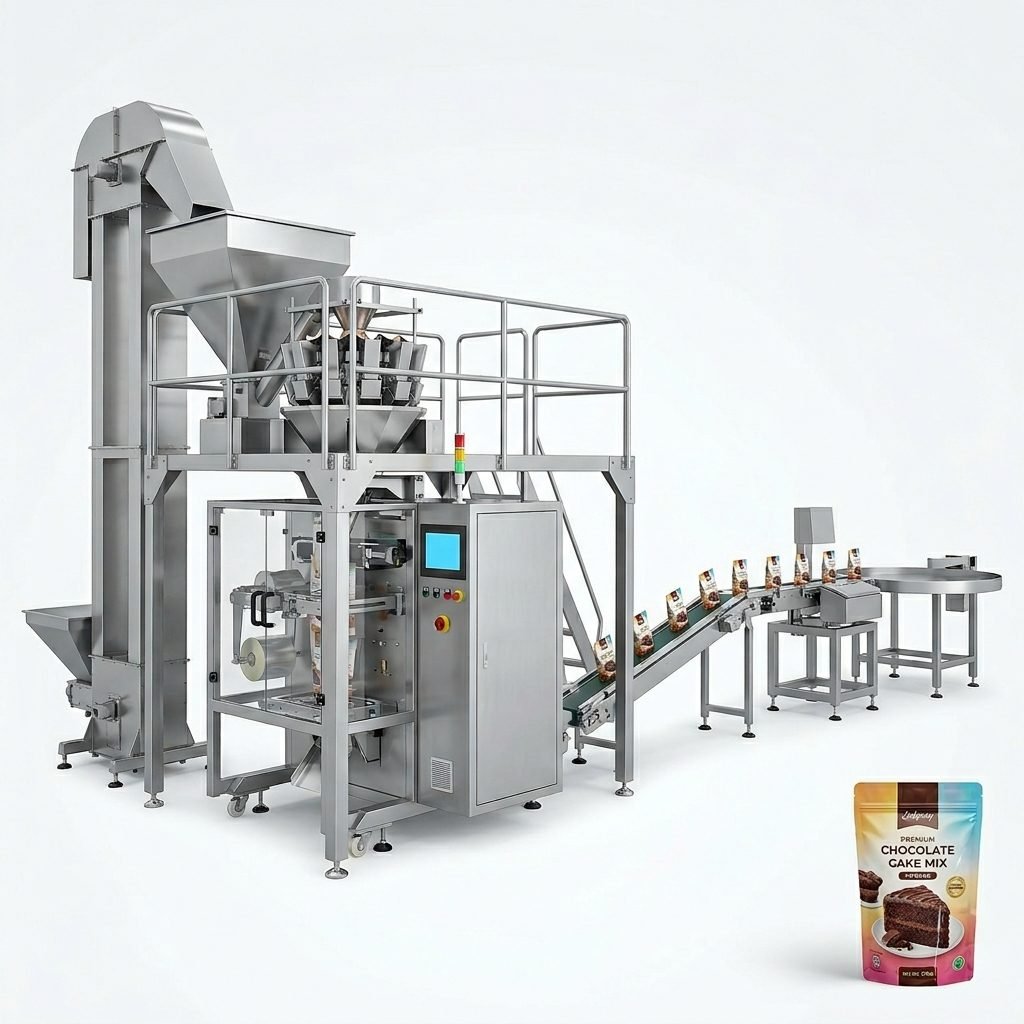
Granule Packaging Machines
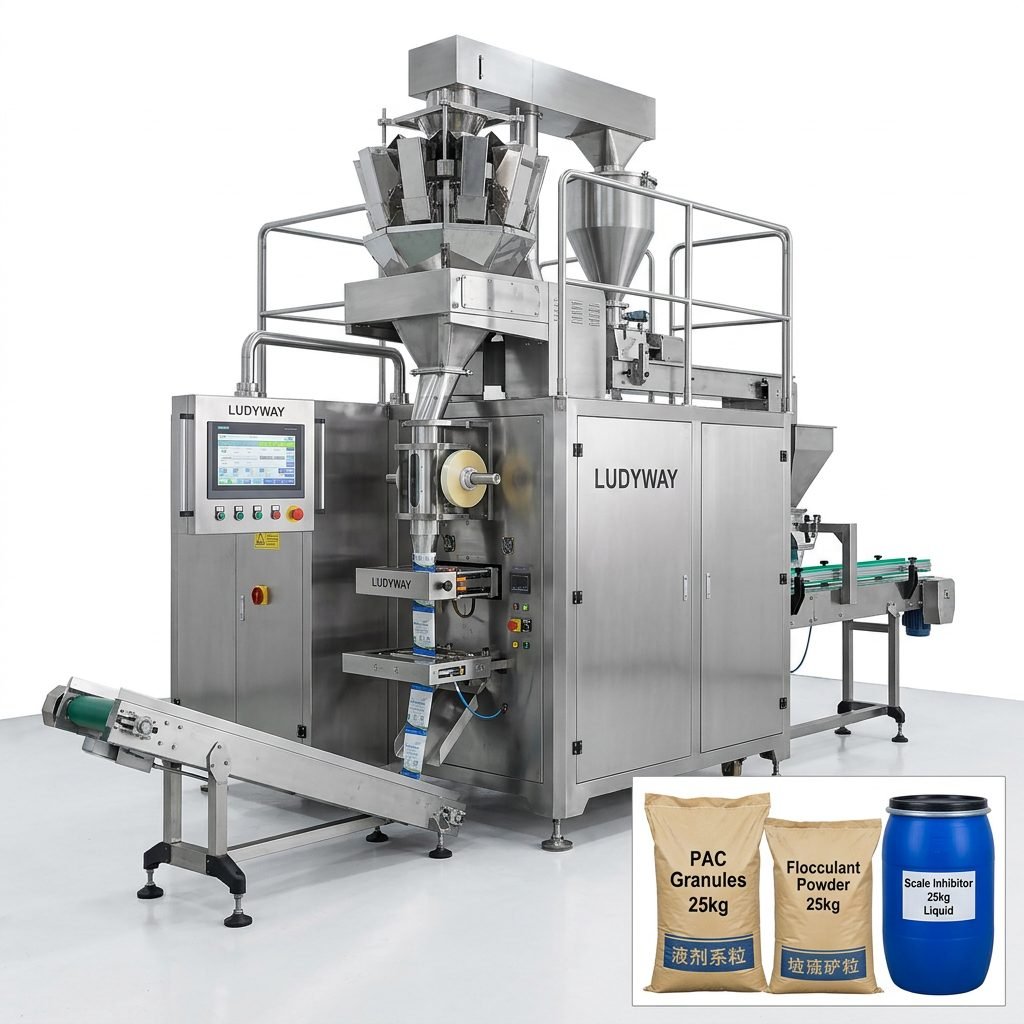
Suitable for sugar, coffee, seeds, seasoning, snacks, feed pellets, and health granules. These systems typically use cup fillers, weighers, or counting systems depending on product behavior and pack format.
Powder Packaging Machines
Designed for flour, milk powder, protein powder, pharmaceutical powders, and chemical powders. Powder packaging requires reliable dust control, accurate auger filling, and stable sealing performance.
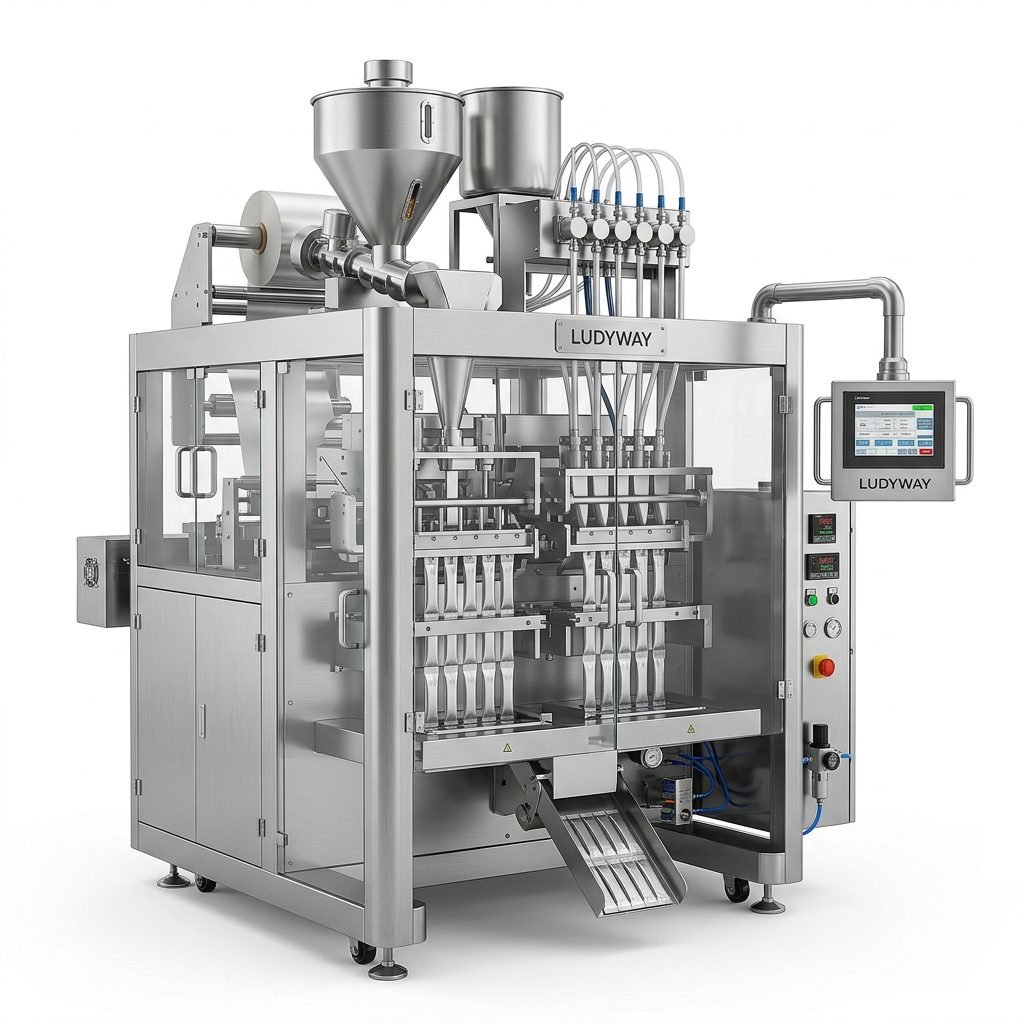
Liquid and Paste Packaging Machines
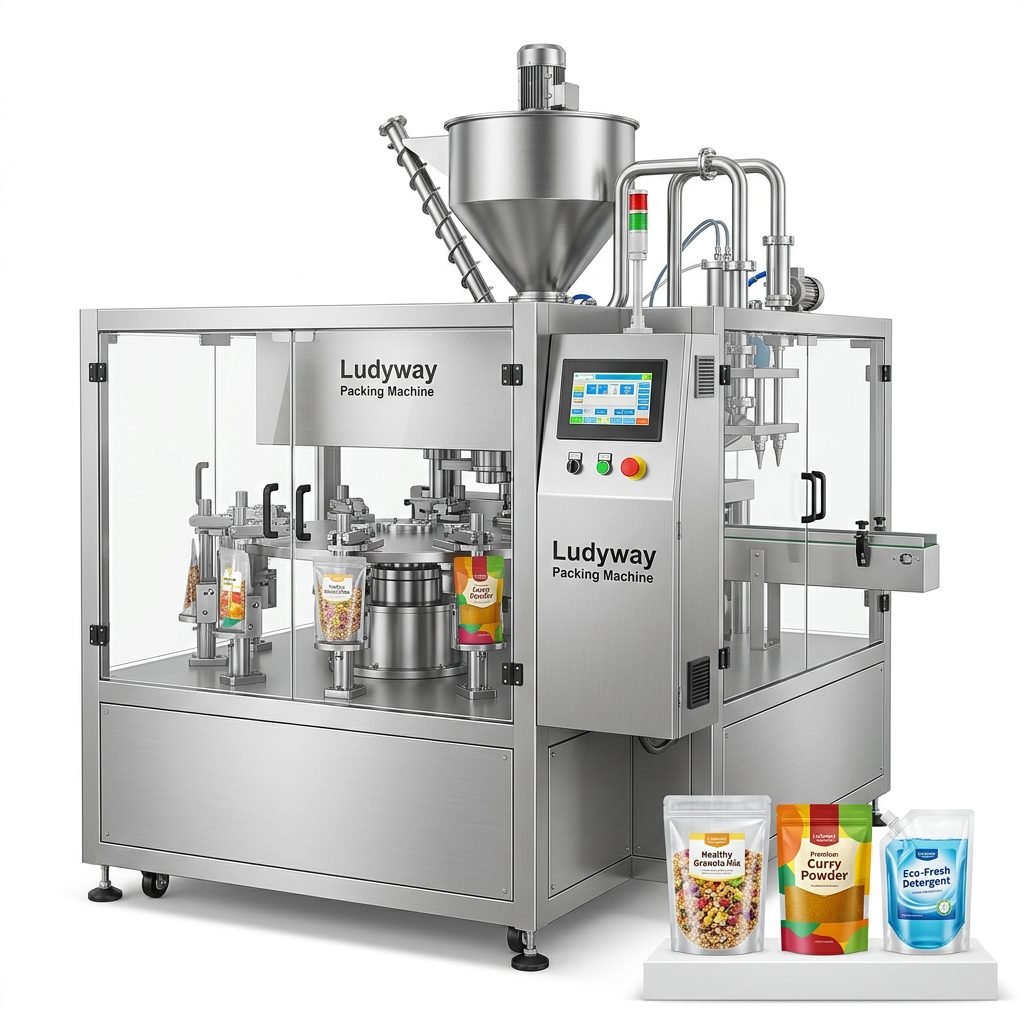
Used for sauces, shampoo, detergent, lotion, oral liquid, and gel products. These machines often incorporate piston pumps, liquid pumps, heated hoppers, or anti-drip systems to ensure clean filling.
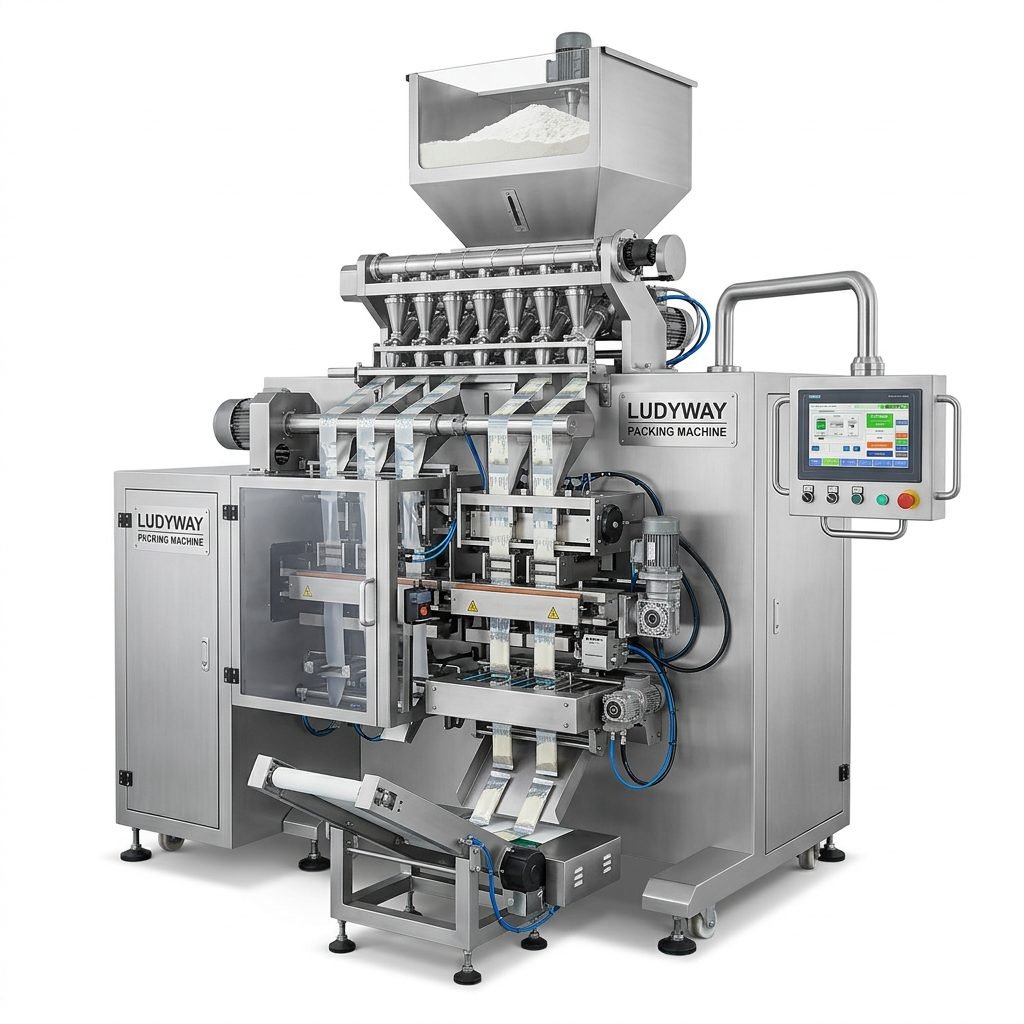
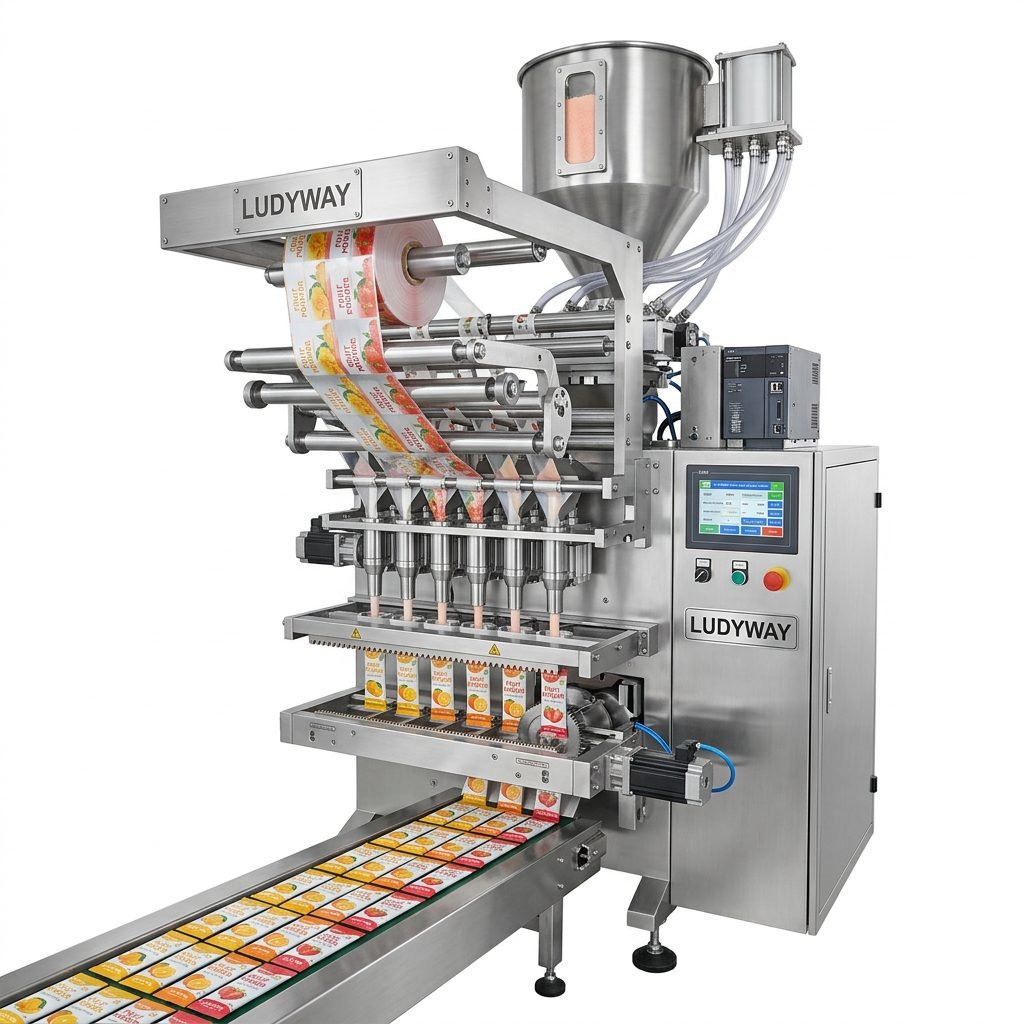
Stick Pack and Sachet Machines
Ideal for single-dose and small-format packaging. Multi-lane machines are especially effective for high-volume production of beverages, supplements, cosmetics, and pharmaceutical products.
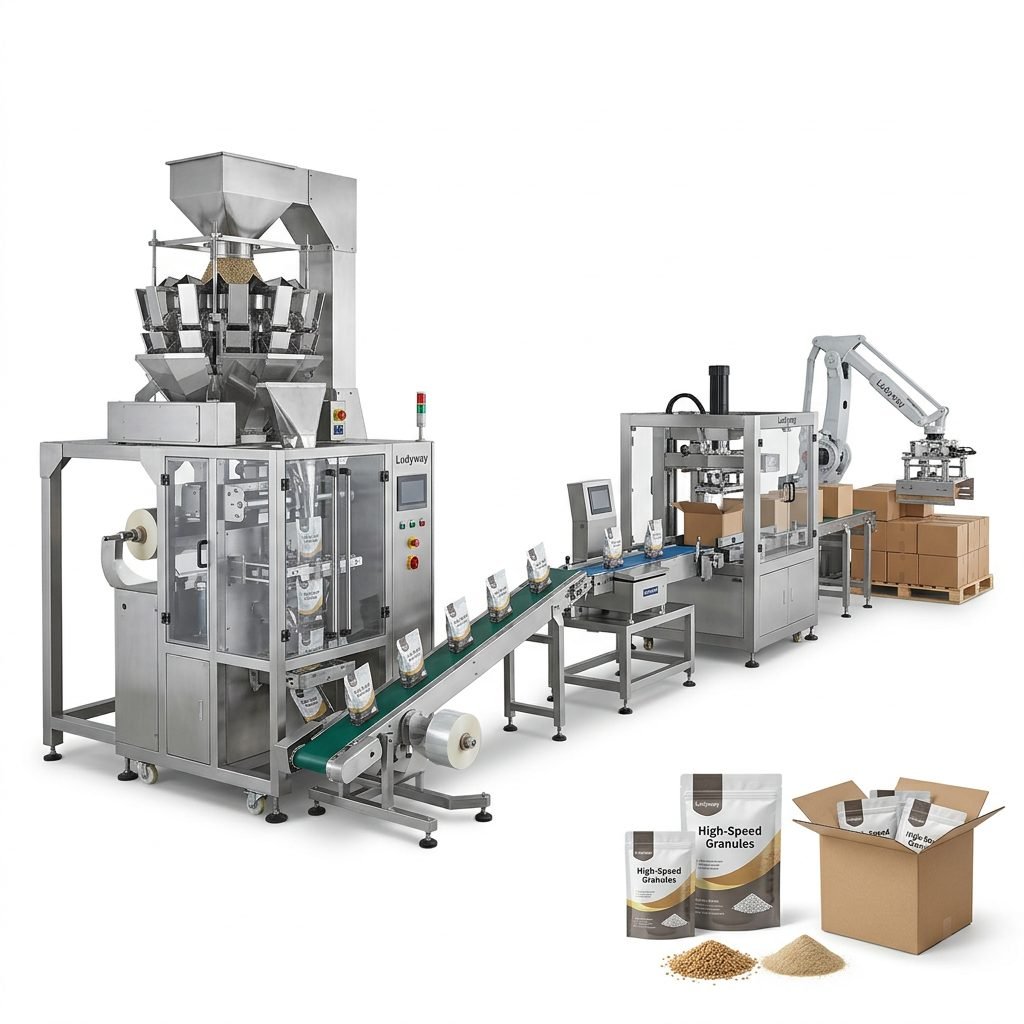
Complete Turnkey Packaging Lines
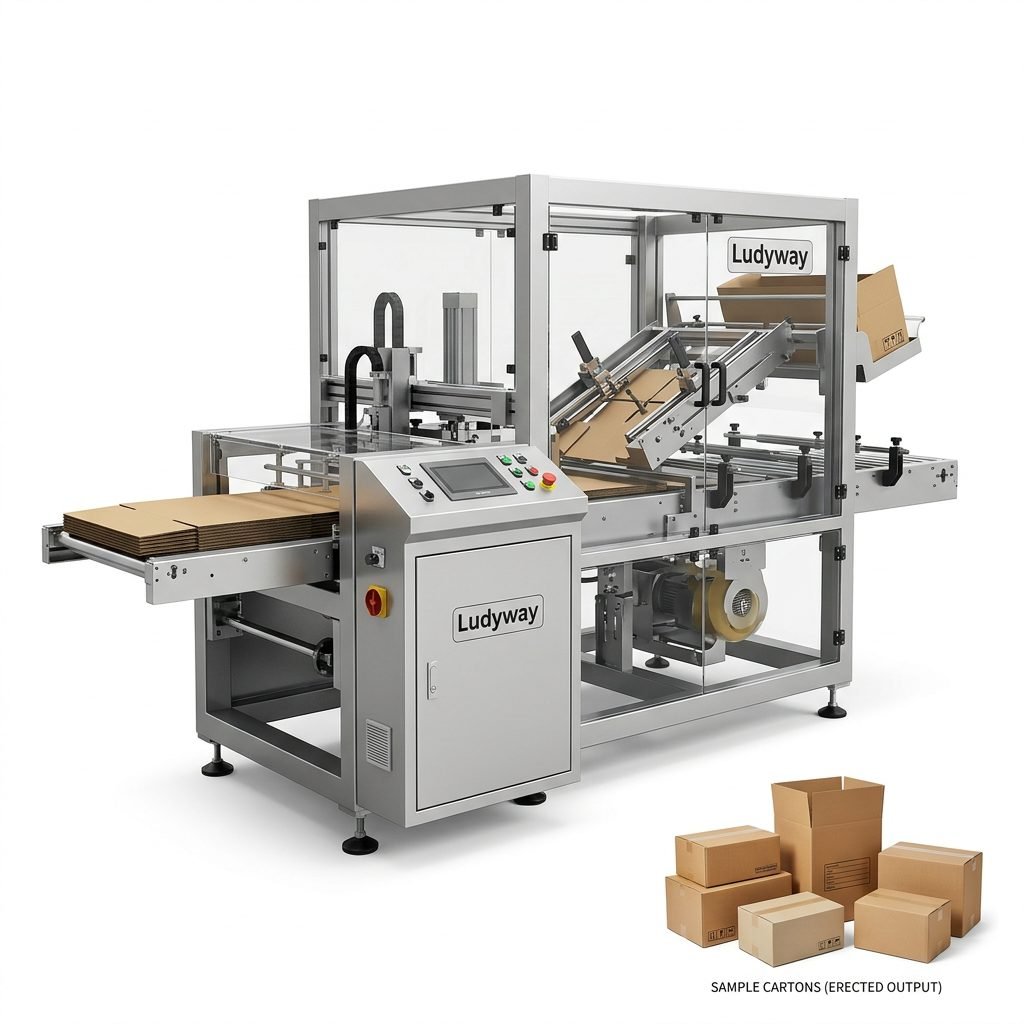
These solutions combine feeding, conveying, filling, sealing, coding, inspection, cartoning, case packing, and palletizing into one integrated process. Turnkey systems are ideal for businesses seeking end-to-end packaging efficiency.
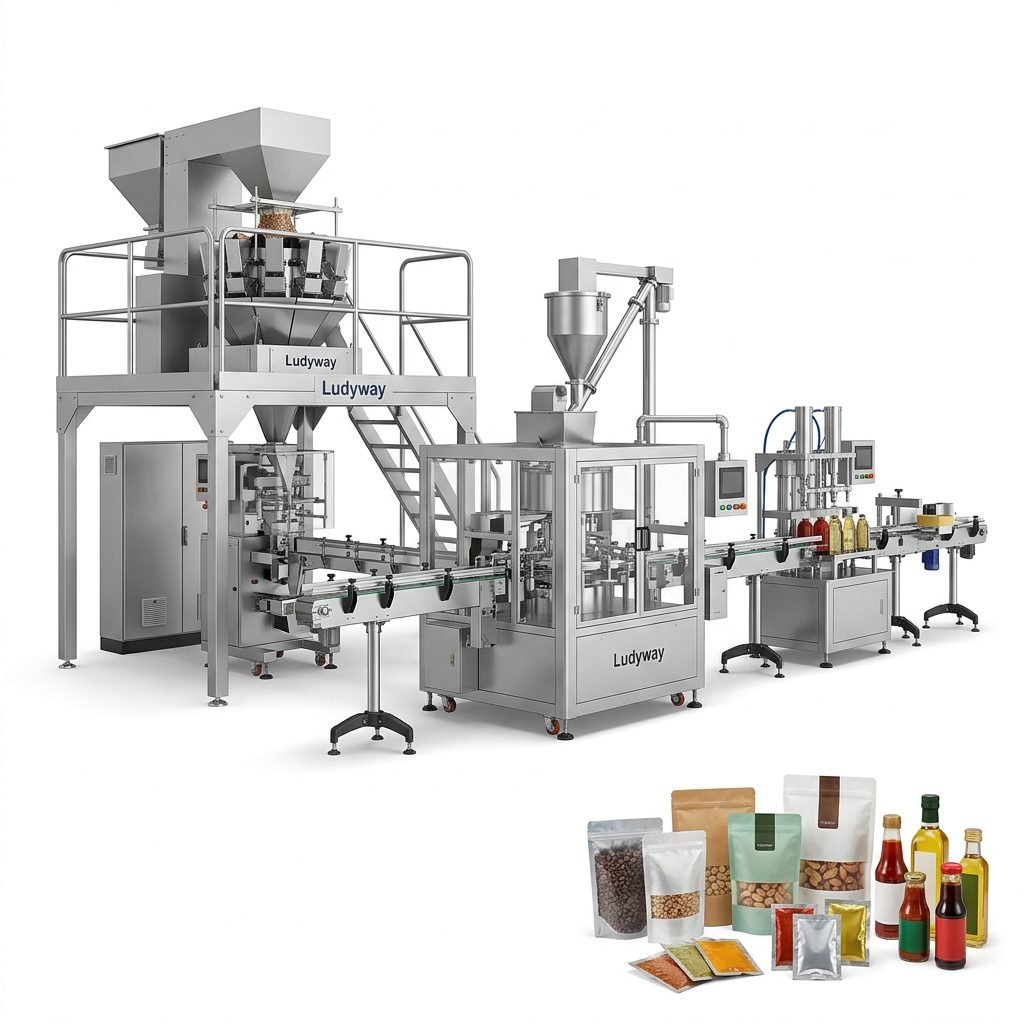
How to Choose the Right Packaging Machine
Selecting the right equipment is about more than speed alone. A machine should fit your product, plant layout, packaging material, and future expansion goals.
Product Characteristics
Consider whether the product is free-flowing, dusty, sticky, corrosive, fragile, or moisture-sensitive. This determines the feeding method, filler type, sealing design, and contact material requirements.
Packaging Format
Sachets, stick packs, pouches, bottles, cartons, and large bags all require different machine structures. The chosen system should also support your branding and retail presentation needs.
Production Volume
Small and mid-sized operations may begin with standalone machines, while larger factories often benefit from integrated automatic lines. If you plan to scale, choosing modular equipment can prevent costly replacement later.
Industry Compliance
Food and pharmaceutical applications often require higher standards for cleanliness, accuracy, and traceability. Stainless steel construction, easy-clean structures, and compatibility with inspection devices can be essential.
After-Sales Support and Customization
Reliable technical support, spare parts availability, and application-based customization are crucial for stable long-term operation. A supplier that understands both machinery and product applications can significantly reduce commissioning risks.
Essential Features to Look For
- Servo-driven control for stable operation
- Human-machine interface for easy adjustment
- Precise metering or filling system
- Reliable sealing with temperature control
- Easy cleaning and maintenance access
- Compatibility with date coding, checkweighing, and inspection
- Flexible configuration for different pack sizes
- Integration capability with conveyors, cartoners, and palletizers
Machines with these features generally deliver stronger long-term value because they support both current production stability and future process upgrades.
Industries That Benefit Most from Industrial Packaging Machines
| Industry | Common Products | Recommended Packaging Solutions |
|---|---|---|
| Food | Coffee, seasoning, snacks, cereals, sauces | Sachet machines, stick pack machines, VFFS, turnkey lines |
| Pharmaceutical | Powders, oral liquids, tablets, granules | Multi-lane sachet systems, filling and sealing machines, blister and bottling lines |
| Cosmetic | Creams, lotions, serums, gels | Liquid sachet machines, tube filling lines, pouch packaging systems |
| Chemical | Powders, detergents, additives, liquids | Chemical packaging machines, automated filling and sealing lines |
| Animal Feed | Pellets, feed powder, additives, supplements | Bagging lines, multi-lane feed packaging systems, bulk filling solutions |
Improving ROI with Turnkey Packaging Solutions
A complete packaging line often delivers better ROI than disconnected standalone machines. When feeding, filling, sealing, coding, inspection, cartoning, and end-of-line handling are designed as one solution, production becomes more efficient and easier to manage.
Key return-on-investment advantages include:
- Reduced manual transfer between production stages
- Improved line synchronization and less idle time
- Lower defect rates due to integrated control
- More efficient use of floor space
- Stronger data consistency for quality assurance
- Higher total throughput over time
For growing manufacturers, turnkey automation is often the most practical route to long-term operational efficiency.
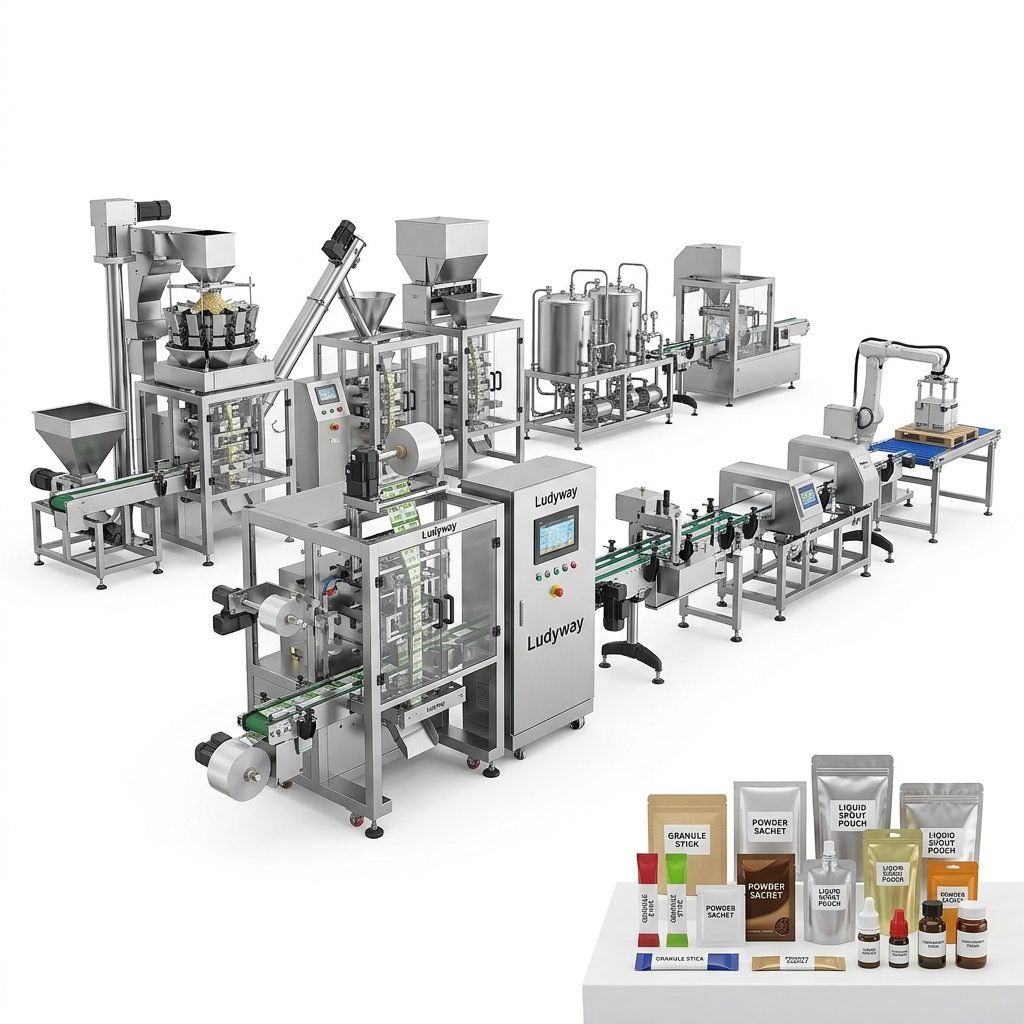
A Trusted Packaging Machinery Partner for Global Buyers
For buyers looking for dependable equipment and integrated line capability, Ludyway packaging machine solutions offer a strong combination of manufacturing experience, broad application coverage, and export-focused service. Founded in 1993, the company has more than 30 years of industry experience, operates a manufacturing facility of over 20,000 square meters, and provides over 100 machine configurations for food, pharmaceutical, health supplement, cosmetic, chemical, and related industries.
As one of China’s leading packaging machine and turnkey packaging line manufacturers, the company serves customers in more than 100 countries and regions across Europe, North America, the Middle East, South America, Africa, and Southeast Asia. Its product range includes multi-lane stick pack machines, sachet packing machines, vertical packaging systems, filling and sealing machines, and complete automated packaging lines designed to improve production efficiency, consistency, and labor savings.
Practical Tips Before Investing in Packaging Equipment
- Define your actual hourly and daily output targets
- Prepare product samples and packaging material details for testing
- Confirm the required pack sizes and future SKU plans
- Evaluate cleaning, maintenance, and changeover requirements
- Check the availability of operator training and remote support
- Ask about customization for local compliance and factory layout
- Consider full-line integration, not only the primary packer
Conclusion: Invest in Packaging Machines That Deliver Real Production Value
Industrial packaging machines are essential for manufacturers that want to stay competitive in today’s market. The right equipment improves speed, accuracy, package quality, and production reliability while lowering labor dependency and reducing waste. From standalone filling and sealing units to fully integrated turnkey lines, modern packaging automation creates measurable value across the entire production process.
If your goal is efficient, reliable, and cost-effective packing solutions, choosing the right machine partner and system design can make a lasting difference in output, profitability, and brand performance.