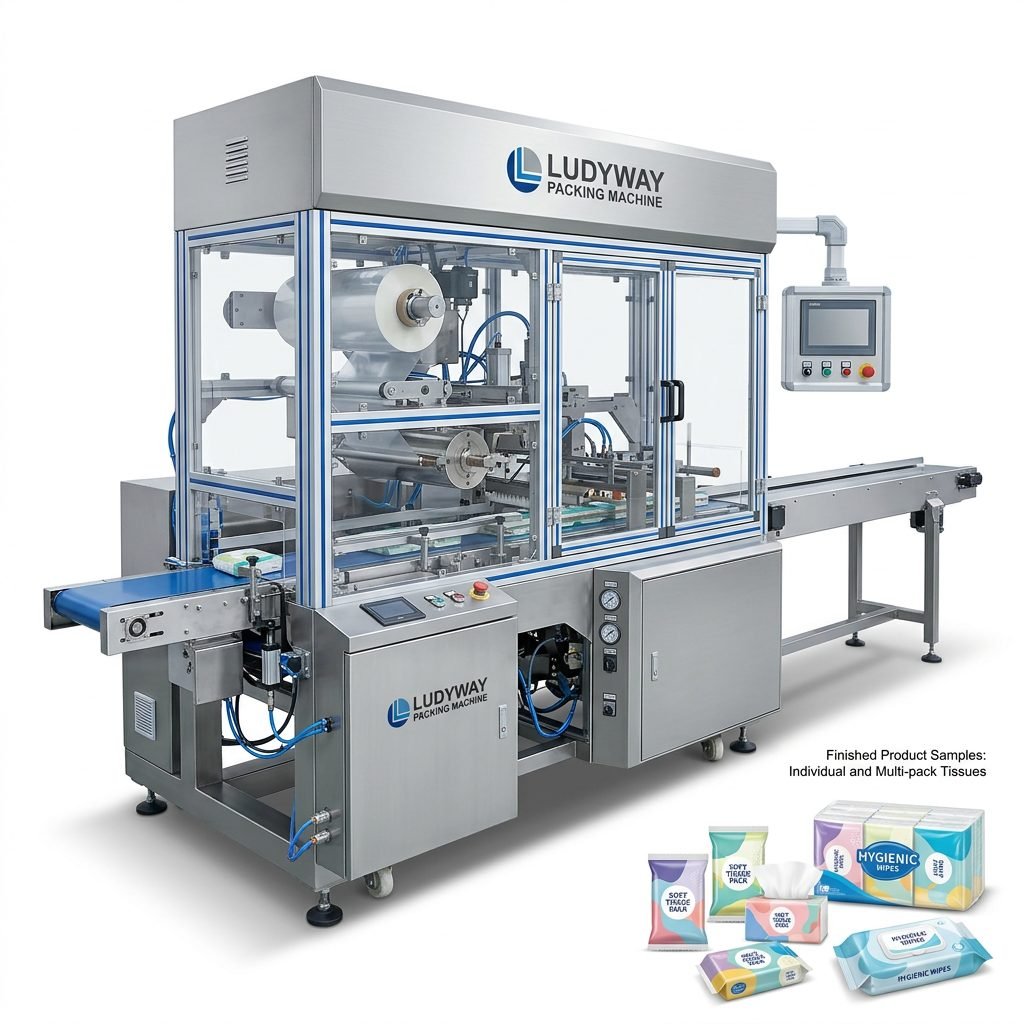
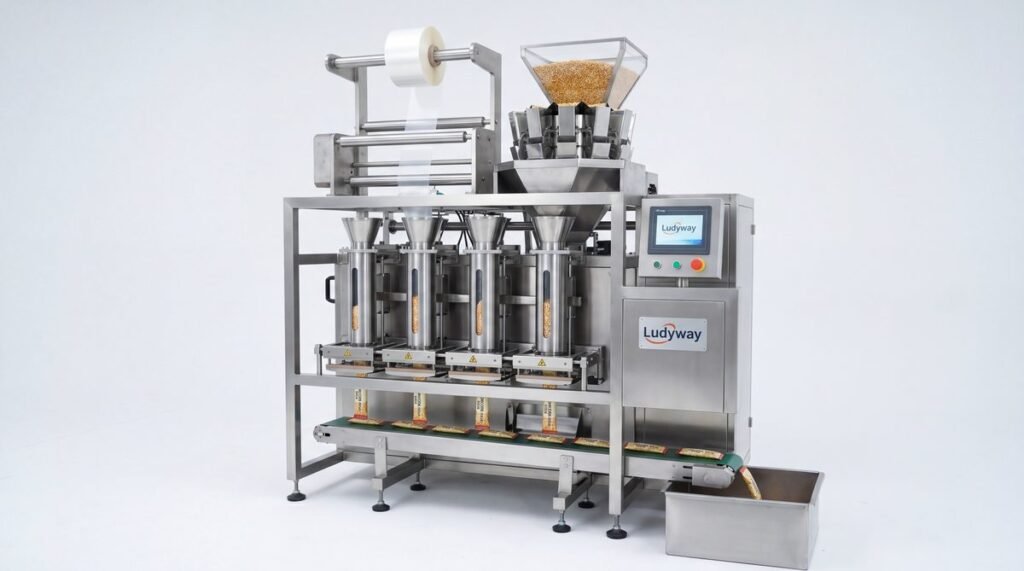
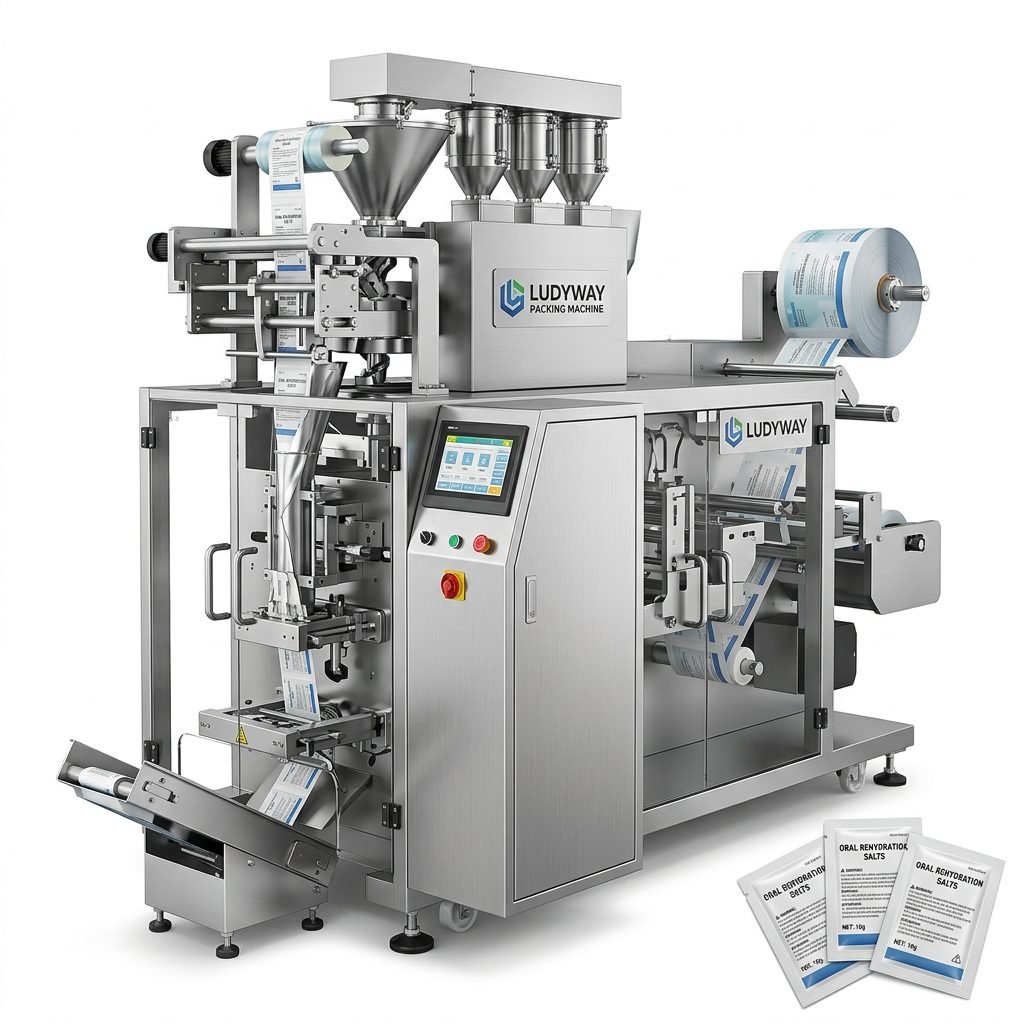
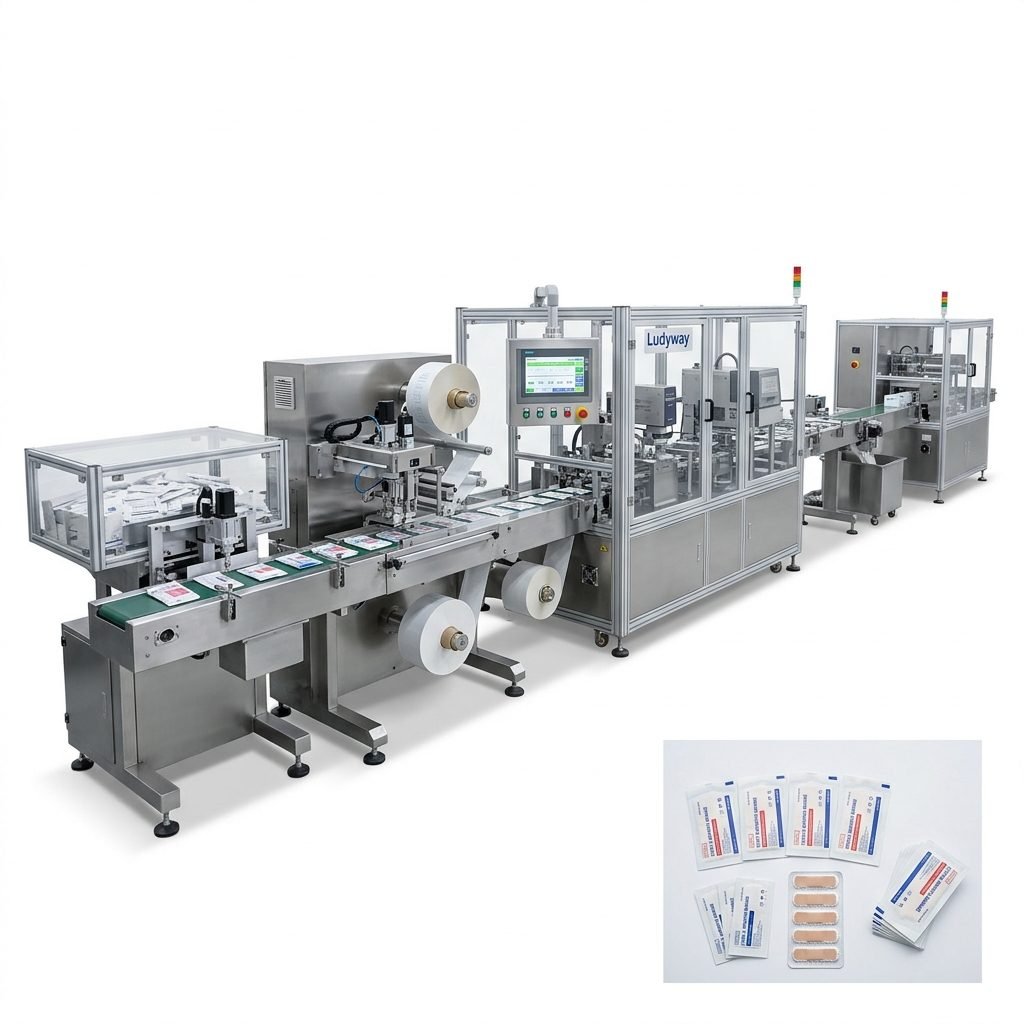
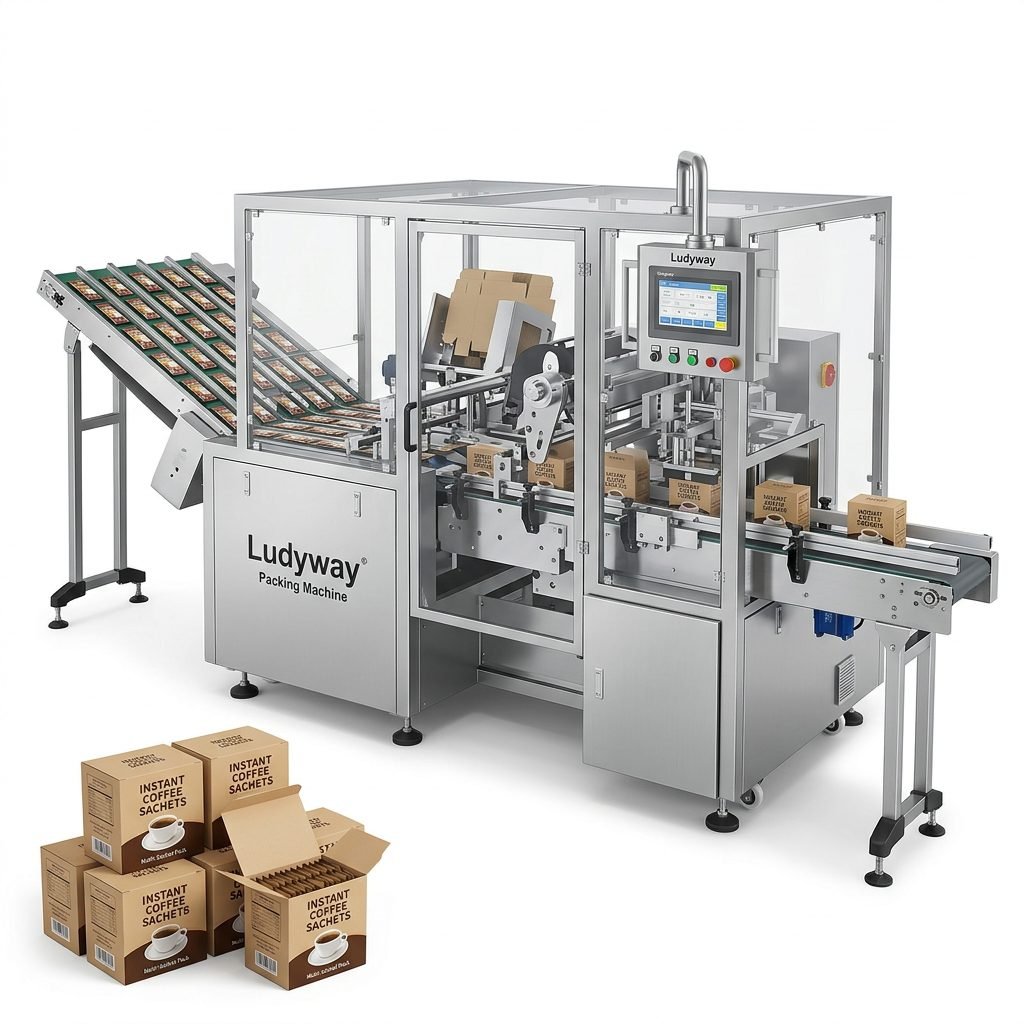
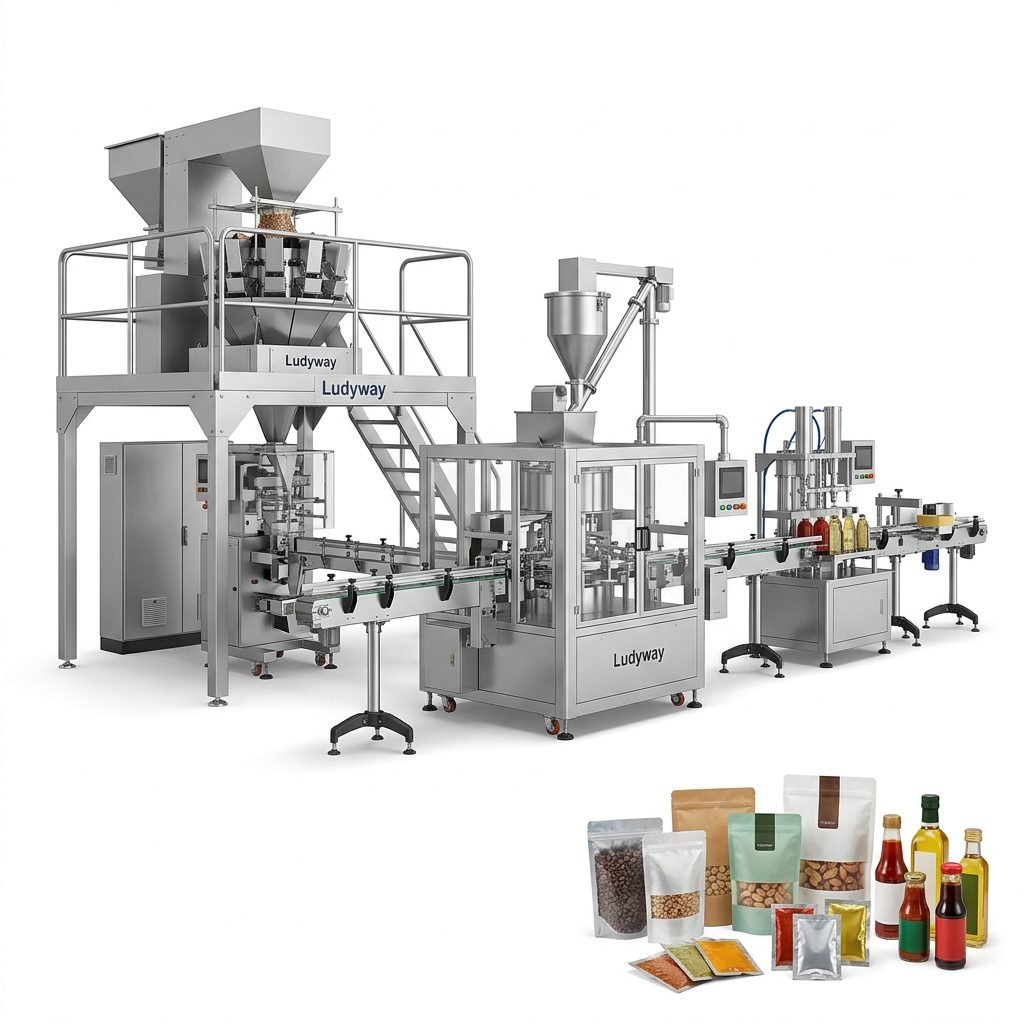
Beverage packaging machines are essential for brands that want faster output, cleaner filling, consistent package quality, and lower labor dependence. Whether you produce instant drink powder, energy drink sachets, juice concentrates, ready-to-drink liquids, or functional beverage mixes, the right machine can directly affect product safety, shelf appeal, and operating cost.
In this guide, you’ll learn the main machine types, their benefits, and how to choose a system that matches your product format, production target, and long-term growth plan.
What Is a Beverage Packaging Machine?
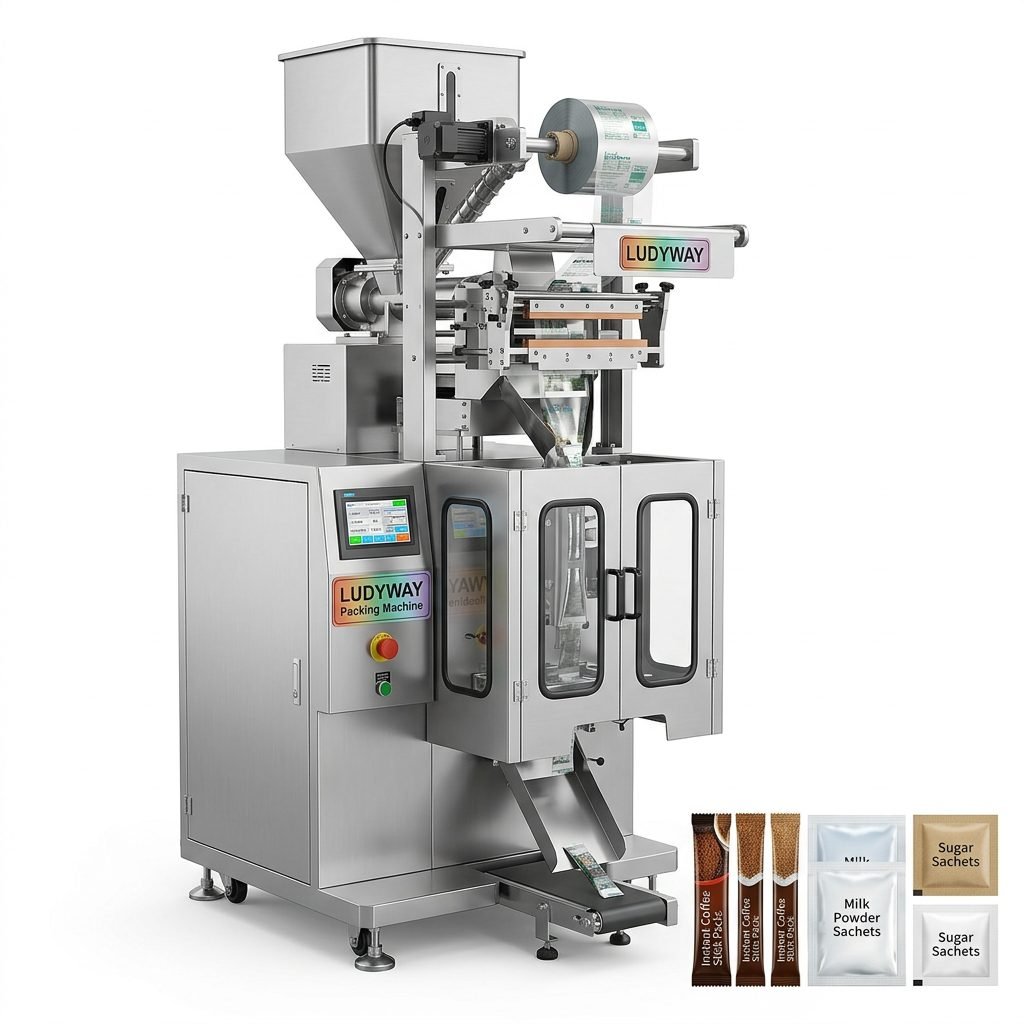
A beverage packaging machine is equipment designed to fill, seal, and package beverage products in a controlled and repeatable way. It may handle powders, granules, liquids, concentrates, gels, or premixed drink formulas depending on the application.
These machines are commonly used for:
- Instant coffee and milk tea powders
- Electrolyte and hydration mixes
- Protein and nutrition drinks
- Functional beverage sachets
- Liquid juice, syrup, and beverage concentrates
- Ready-to-drink bottle filling lines
Modern systems can work as standalone units or as part of a complete automated line with feeding, conveying, coding, cartoning, inspection, and final case packing.
Main Types of Beverage Packaging Machines
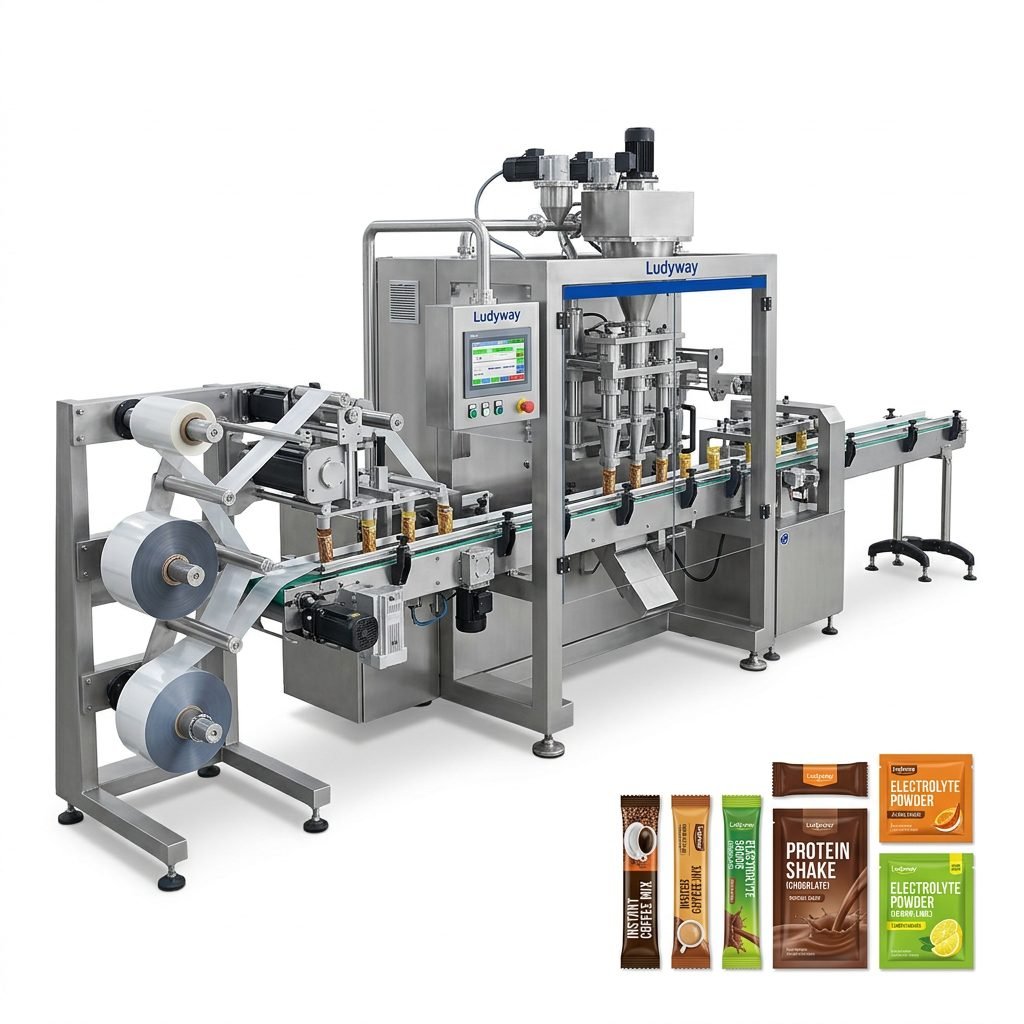
1. Stick Pack Beverage Packaging Machines
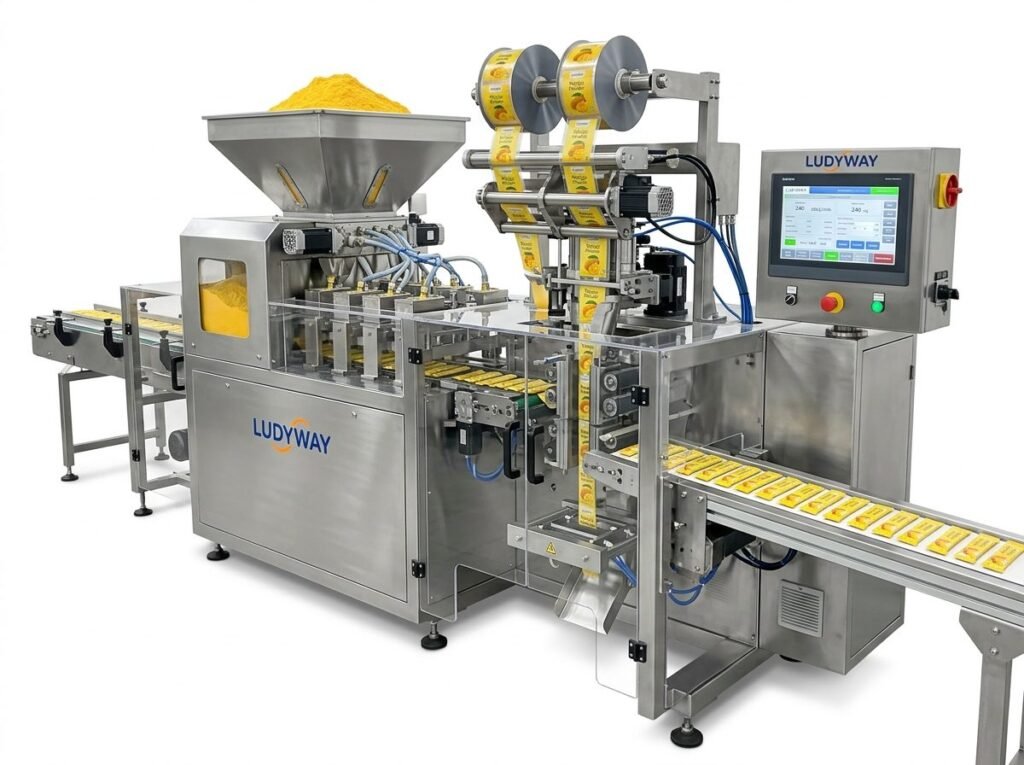
Stick pack machines are ideal for single-serve drink powders and granules. They form narrow packs, accurately dose the product, and seal each unit at high speed. This format is widely used for coffee, electrolyte drinks, collagen beverages, and energy drink mixes.
Best for: portable, single-dose beverage products with strong retail appeal.
2. Sachet Packaging Machines
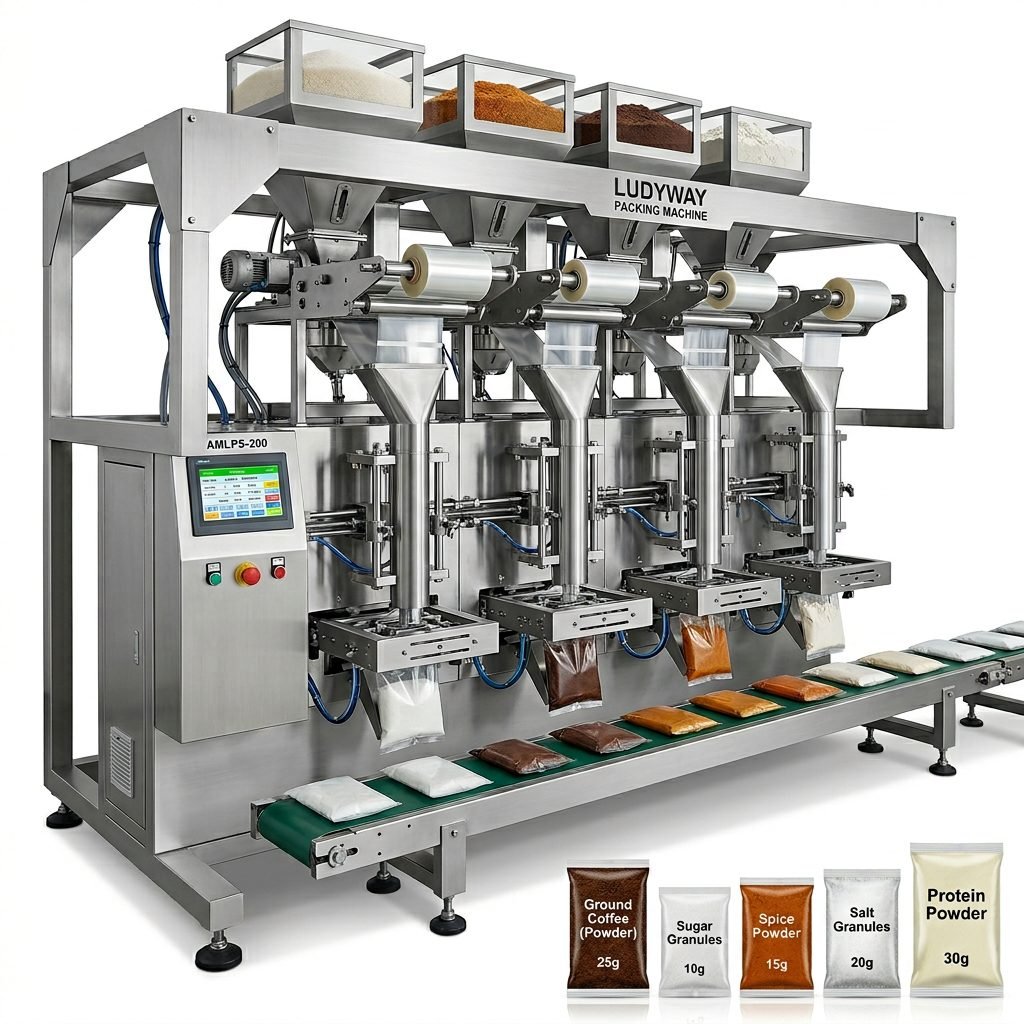
Sachet machines produce flat pouches suitable for beverage powders, instant mixes, liquid concentrates, and syrup-based products. They are popular when brands need a larger printable surface for instructions, nutrition information, and branding.
Best for: powdered beverage mixes, liquid flavor shots, and promotional or travel-size drink products.
3. Vertical Form Fill Seal Machines
Vertical form fill seal systems are often selected for larger bags or pillow packs. For beverage applications, they work well for bulk drink powders, café supply packs, and foodservice packaging.
Best for: medium to large bag packaging and flexible pack formats.
4. Liquid Filling and Sealing Machines
These machines handle flowable beverage products such as juice concentrate, coconut water, flavored syrup, and functional liquid shots. Depending on the package type, they may fill sachets, pouches, bottles, or cups.
Best for: liquid beverage products requiring precise volumetric filling and secure sealing.
5. Bottle Filling Lines
Bottle packaging lines usually include bottle feeding, rinsing, filling, capping, labeling, coding, and packing. They are suited for ready-to-drink beverages where hygiene, filling accuracy, and output efficiency are critical.
Best for: water, juice, tea drinks, dairy beverages, and nutraceutical drinks in bottles.
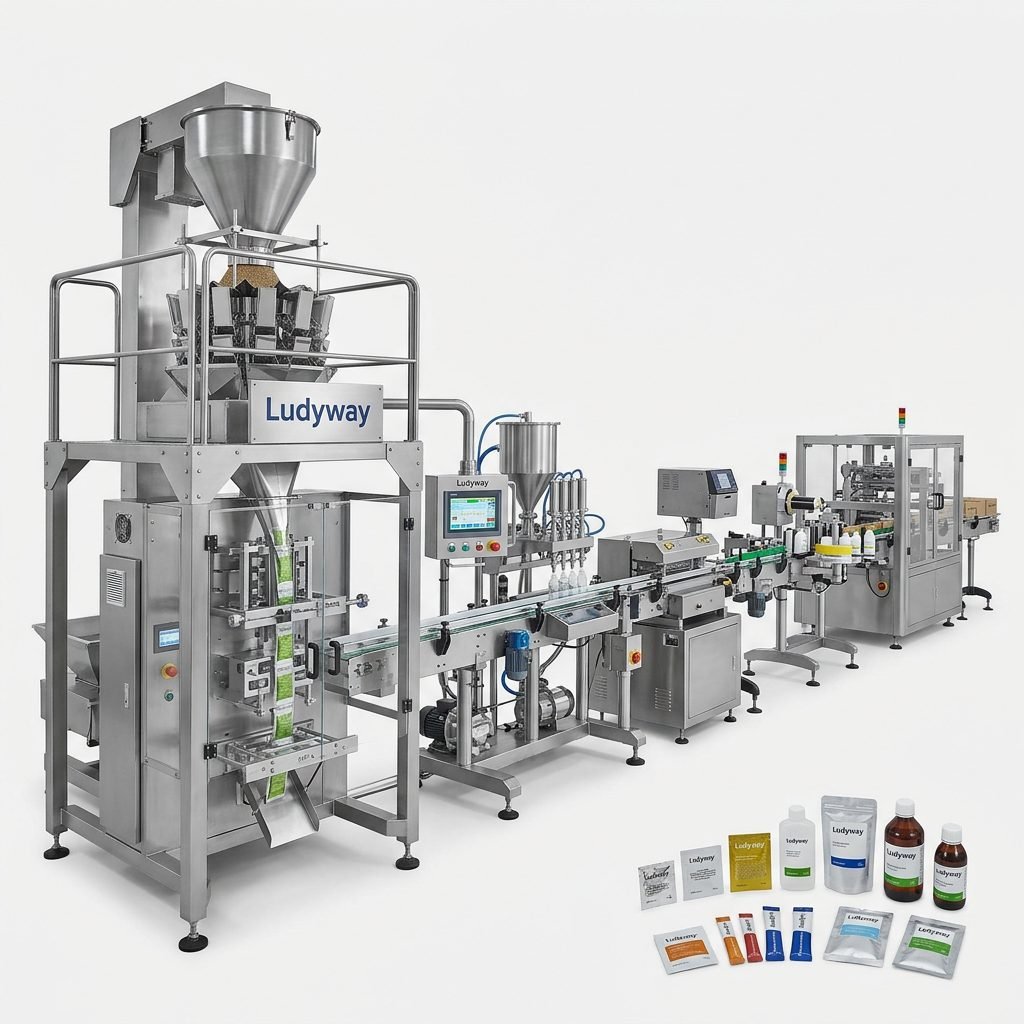
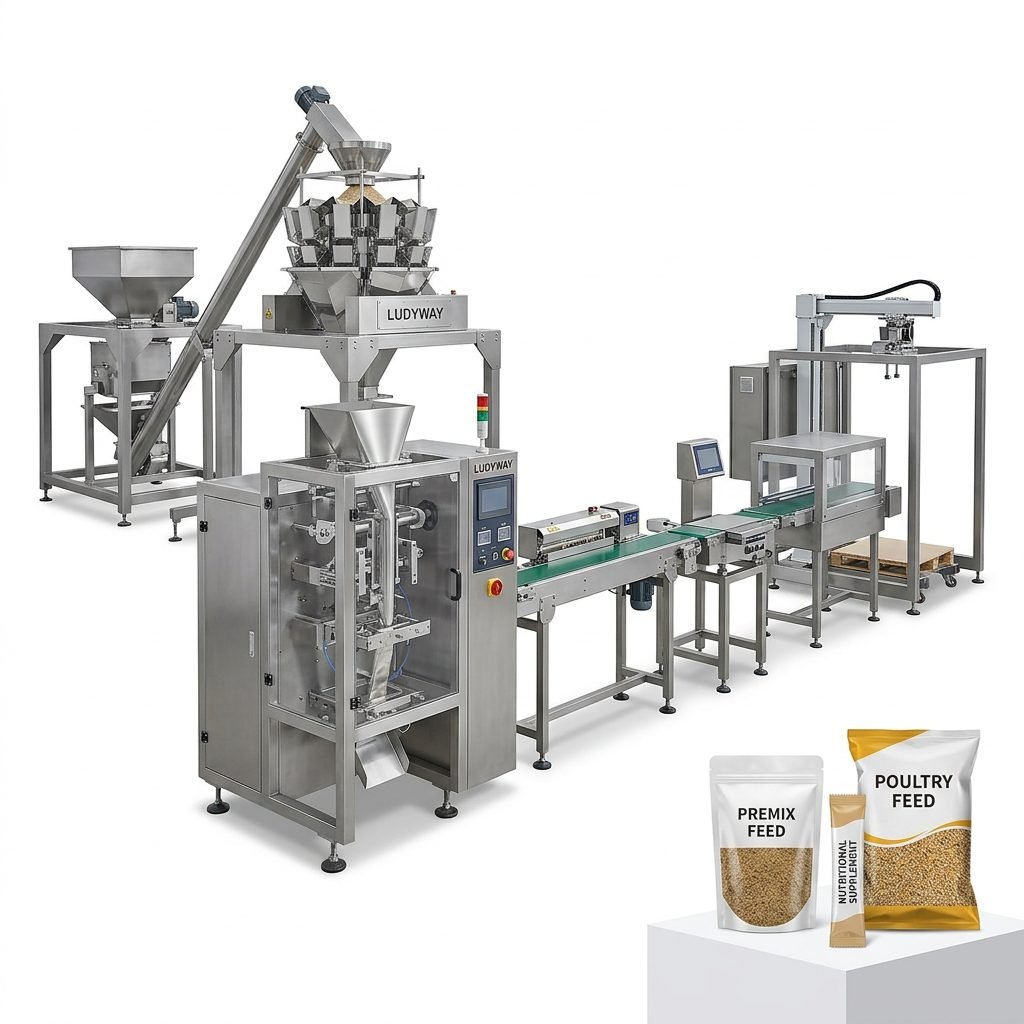
6. Turnkey Beverage Packaging Lines
A turnkey line integrates multiple machines into one coordinated system. This is the best option for manufacturers planning higher output, labor reduction, and smoother product flow from filling to final packaging.
For businesses seeking scalable beverage automation, Ludyway supplies packaging machines and turnkey packaging line solutions for powder, granule, and liquid applications.
Comparison of Beverage Packaging Machine Types
| Machine Type | Suitable Product | Package Format | Main Advantage |
|---|---|---|---|
| Stick Pack Machine | Powder, granule | Stick packs | High speed, single-serve convenience |
| Sachet Packaging Machine | Powder, granule, liquid | Flat sachets | Good branding area, flexible use |
| VFFS Machine | Bulk powders, granules | Pillow bags, pouches | Suitable for larger pack sizes |
| Liquid Filling Machine | Juice, syrup, concentrate | Sachets, pouches, bottles | Accurate liquid dosing |
| Bottle Filling Line | Ready-to-drink liquids | Bottles | End-to-end automation |
| Turnkey Packaging Line | Powder, granule, liquid | Multiple formats | Integrated efficiency and scalability |
Key Benefits of Using a Beverage Packaging Machine
Higher Production Efficiency
Automated machinery can package far more units per hour than manual methods. This helps beverage brands meet growing demand without constantly increasing labor costs.
Better Filling Accuracy
Consistent dosing is especially important for drink powders, supplements, and concentrated liquids. Accurate filling reduces giveaway, protects margins, and improves product reliability.
Improved Hygiene and Safety
Automated systems reduce human contact with the product. This supports cleaner production conditions and helps businesses meet food safety and quality standards.
Stronger Packaging Consistency
Uniform seal quality, precise pack dimensions, and neat appearance improve shelf presentation and reduce rejection rates.
Lower Labor Dependence
With labor shortages and rising wages affecting many markets, automation helps maintain stable output with fewer manual steps.
Easier Scale-Up
A well-chosen machine allows manufacturers to expand from pilot production to larger commercial volumes without replacing the whole packaging strategy.
How to Choose the Right Beverage Packaging Machine
1. Identify Your Beverage Type
The first question is whether your product is a powder, granule, liquid, paste, or mixed formulation. Different materials need different filling technologies.
- Powders often use auger fillers
- Granules may use volumetric cups or weighing systems
- Liquids require piston, pump, or flowmeter filling systems
2. Match the Package Format
Your target market often determines the ideal format:
- Stick packs for convenient single servings
- Sachets for flexible branding and retail packs
- Bottles for ready-to-drink beverages
- Larger bags for wholesale or foodservice supply
3. Define Output Requirements
Think beyond today’s volume. A machine should support current demand while leaving room for growth. Buying a system that is too small may create an expensive bottleneck later.
4. Evaluate Packaging Material Compatibility
The machine must work well with your selected film, pouch material, bottle type, cap, or laminate structure. Seal performance depends heavily on material compatibility.
5. Consider Product Sensitivity
Some beverage products are moisture-sensitive, dusty, sticky, heat-sensitive, or prone to bridging. These characteristics affect feeder design, dosing method, sealing settings, and optional protection features.
6. Review Automation Level
Choose between a standalone unit and a complete line. If your business expects rapid growth, integrated automation can improve long-term cost efficiency.
7. Check Cleaning and Maintenance Needs
Machines used for beverage and nutrition products should be easy to clean, easy to access, and simple to maintain. This reduces downtime and supports more stable output.
8. Look at Supplier Experience
An experienced manufacturer can provide better application guidance, customization, spare parts support, and line integration knowledge.

Features to Look for in a Modern Beverage Packaging Machine
- Accurate dosing system for stable fill weights or volumes
- Reliable sealing performance to prevent leakage and moisture ingress
- User-friendly touch screen controls
- Quick changeover for different pack sizes
- Date coding and batch printing integration
- Checkweigher or inspection compatibility
- Dust control or nitrogen flushing options for sensitive powders
- Expandable layout for future automation upgrades
Who Needs Beverage Packaging Machines?
These systems are widely used by:
- Beverage powder manufacturers
- Instant coffee and tea brands
- Sports nutrition companies
- Functional drink and supplement producers
- Contract packers
- Private label beverage brands
- Food and nutraceutical factories launching single-serve drink products
Common Mistakes to Avoid When Buying
- Choosing only by price instead of total operating value
- Ignoring future production growth
- Using the wrong filling system for the product texture
- Not confirming film or container compatibility
- Overlooking cleaning convenience and spare parts support
- Buying a machine without considering downstream packing steps
Why Turnkey Solutions Are Becoming More Popular
Many beverage manufacturers now prefer turnkey lines because they reduce integration risk and improve overall equipment coordination. Instead of sourcing separate machines from multiple vendors, businesses can streamline project management through one packaging solution partner.
This approach is especially useful for beverage brands that need:
- Faster project launch timelines
- Consistent communication during installation
- Better line matching from filling to end-of-line packing
- Simpler technical support and after-sales service
Quick Selection Checklist
| Question | Why It Matters |
|---|---|
| What product are you packing? | Determines filling technology and machine structure |
| What package format do you need? | Affects machine type, sealing design, and branding space |
| What output per hour is required? | Prevents under-capacity or unnecessary overspending |
| Do you need standalone or full-line automation? | Impacts labor, efficiency, and future expansion |
| How easy is maintenance? | Reduces downtime and supports long-term operation |
| Can the supplier customize the solution? | Ensures better fit for real production needs |
Final Buying Insight
The best beverage packaging machine is not simply the fastest or cheapest option. It is the one that fits your product properties, target package, hygiene standard, output requirement, and future expansion plan. When chosen correctly, it can improve efficiency, reduce waste, strengthen quality control, and help your beverage brand compete more effectively in the market.
If you are planning a new beverage packaging project, start by defining product type, pack format, and desired automation level. That will make it much easier to select a machine that delivers reliable long-term value.