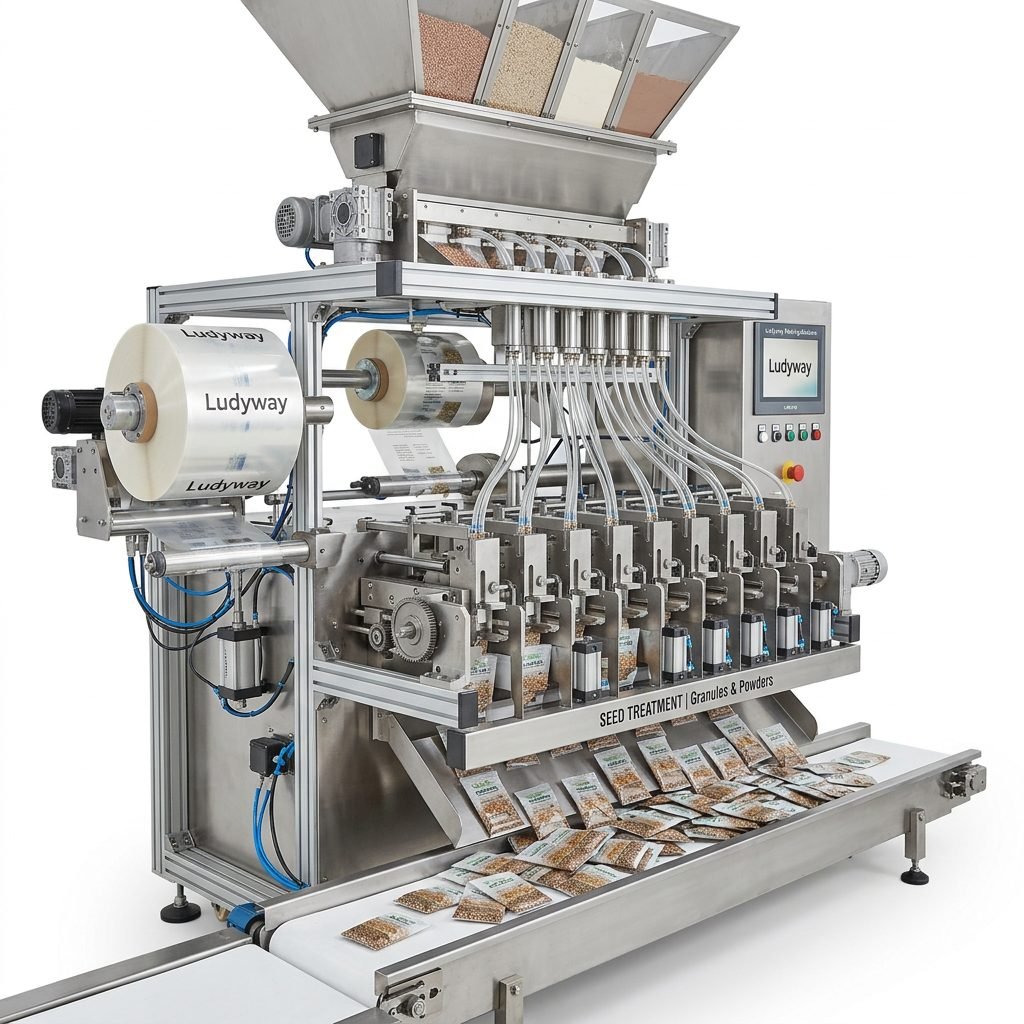
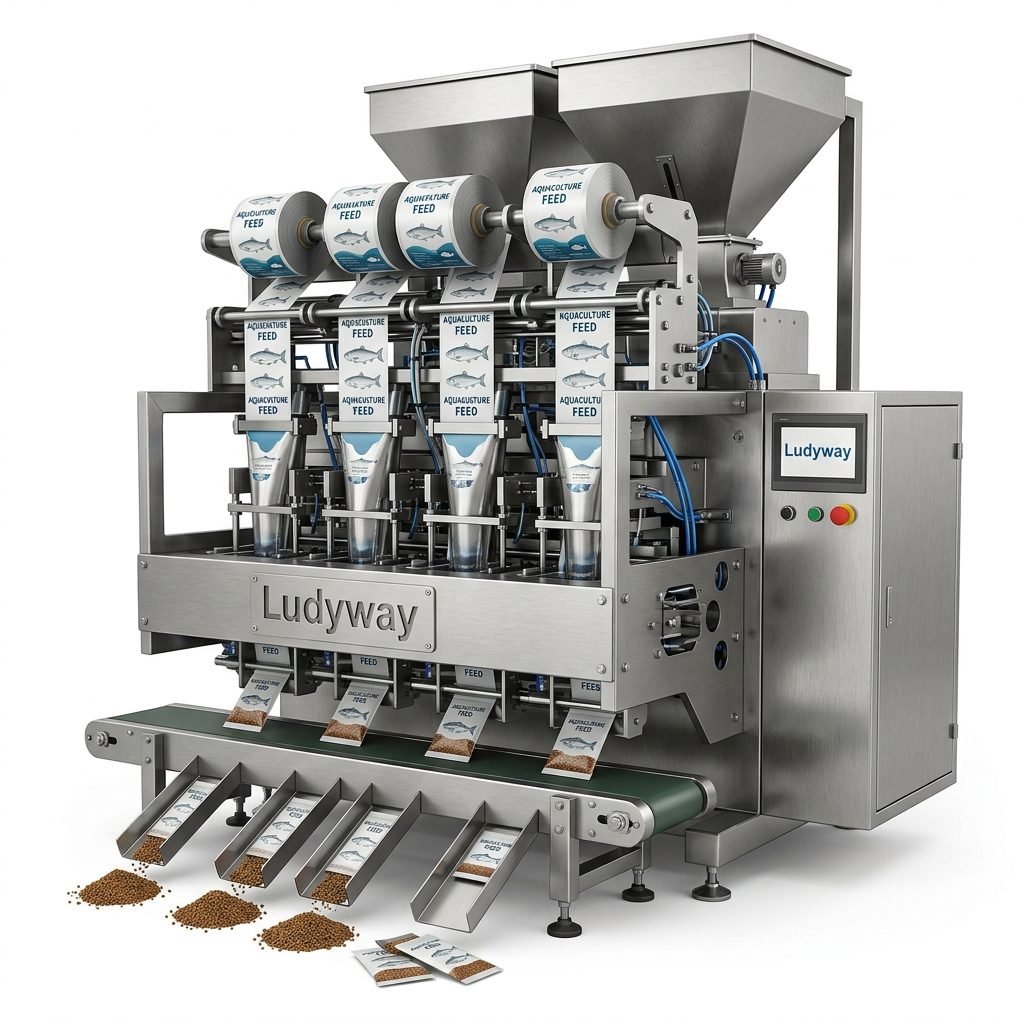
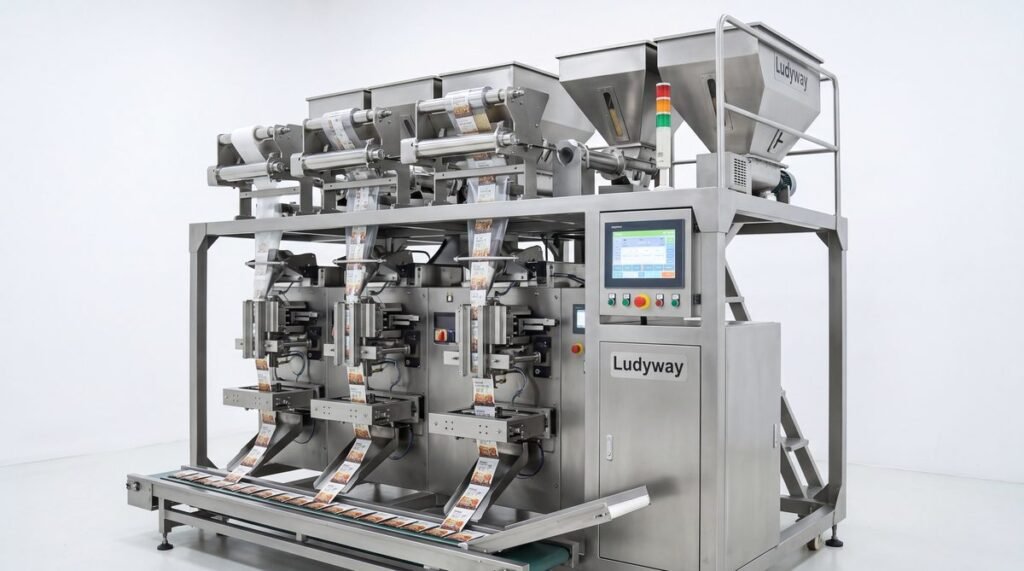
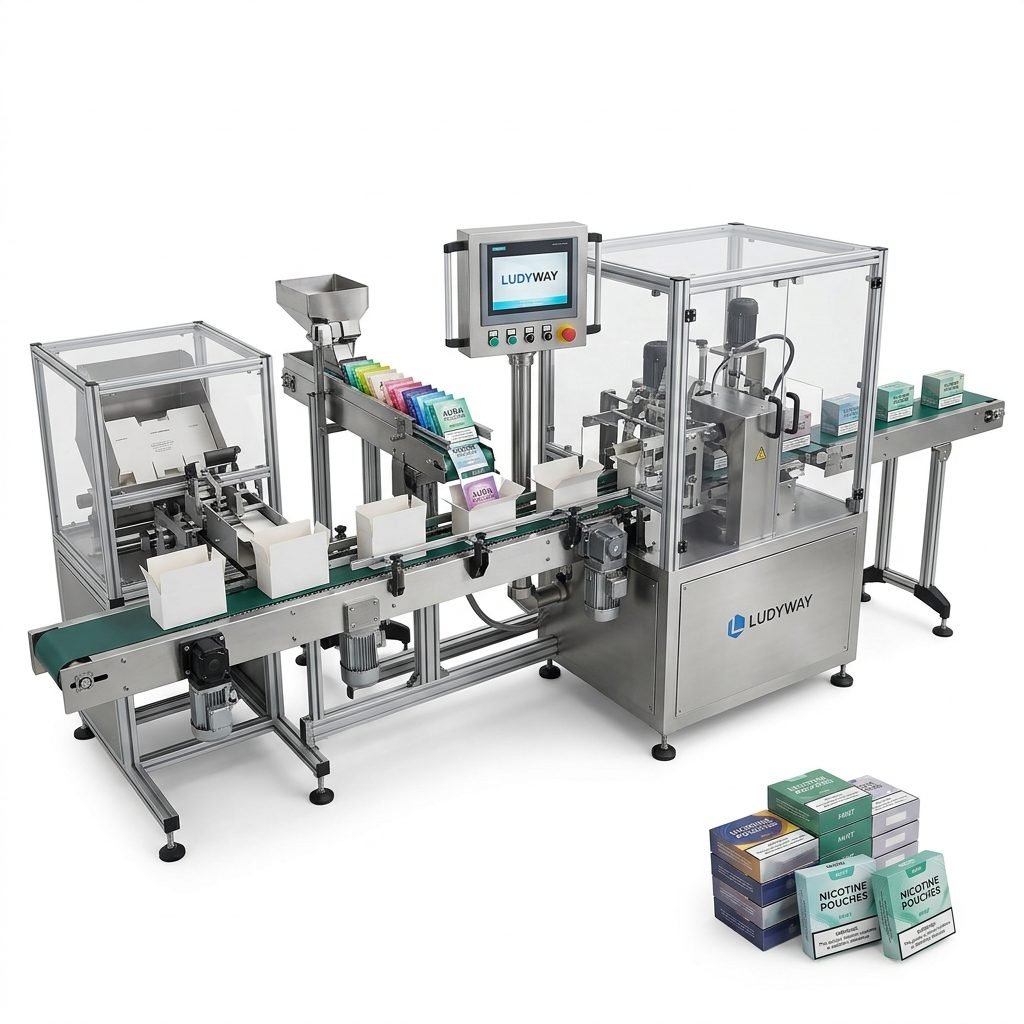
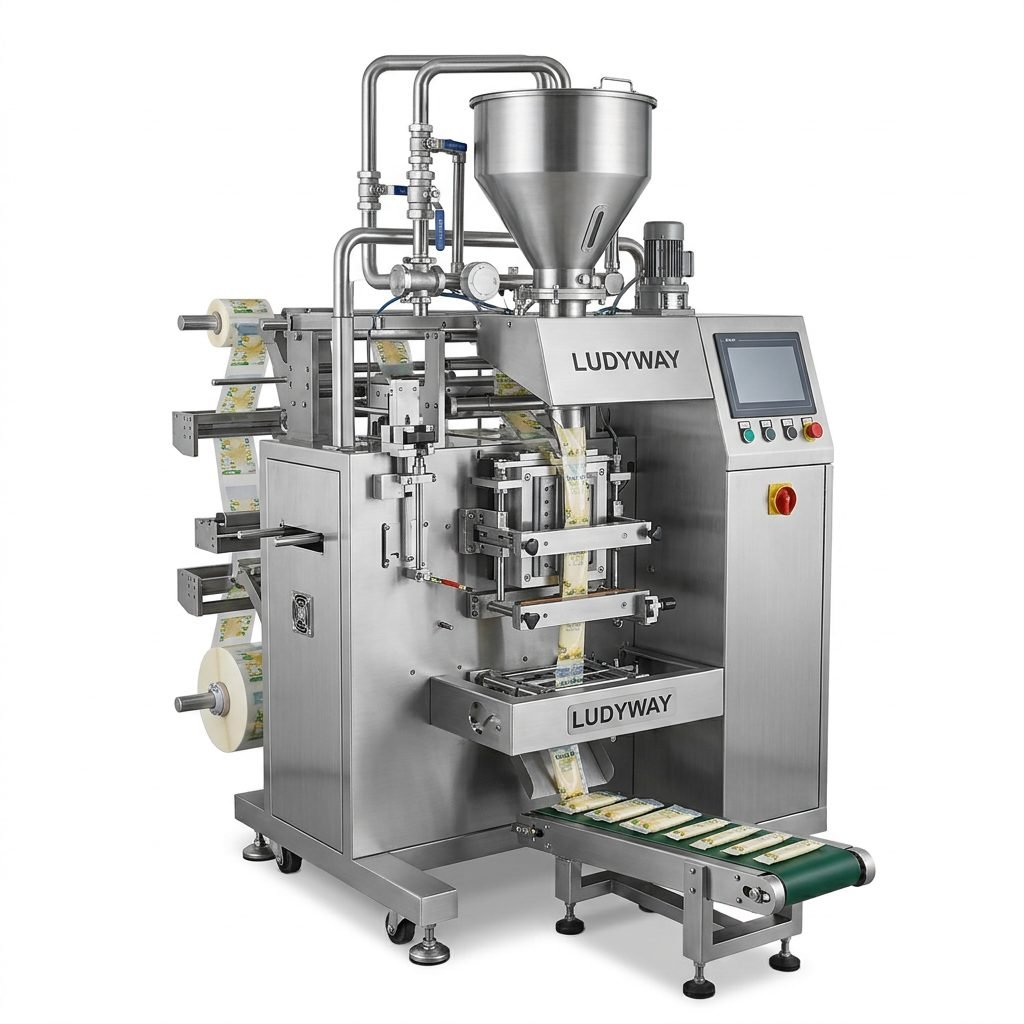
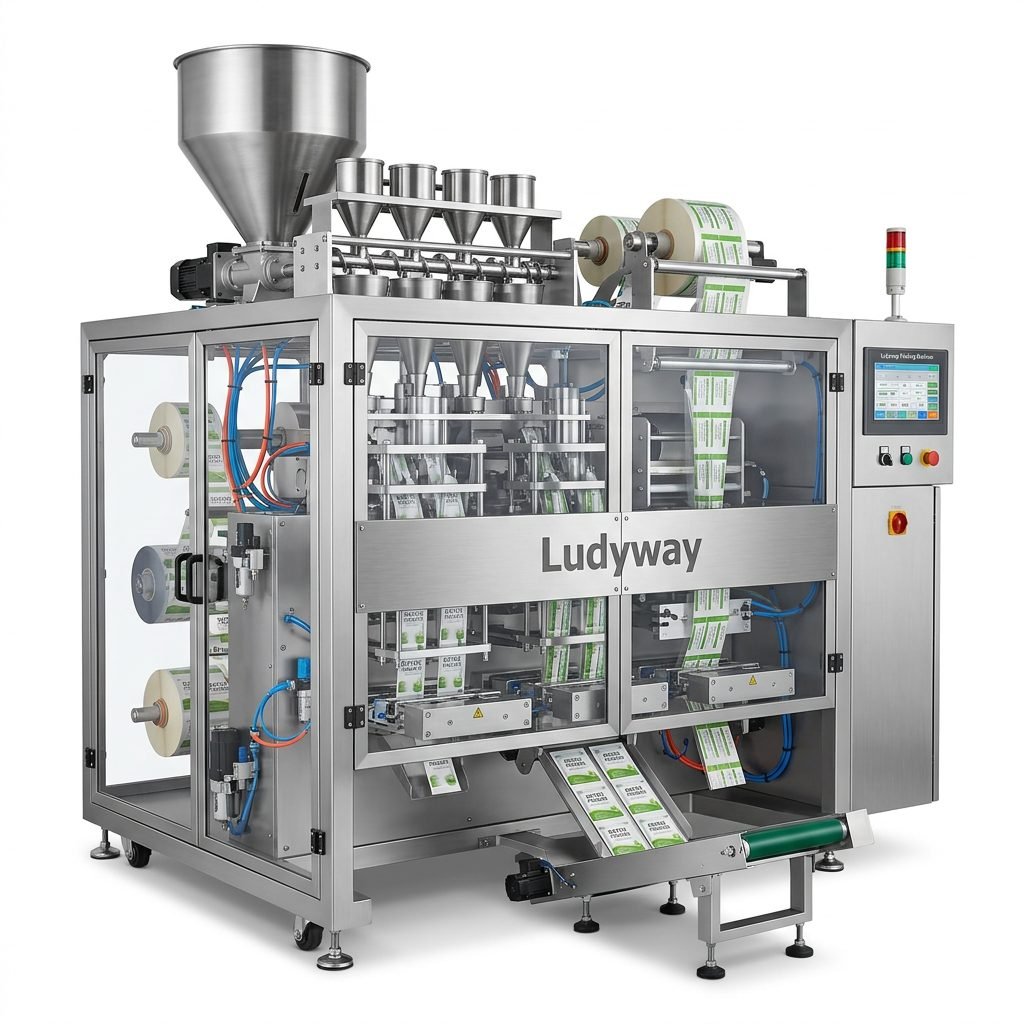
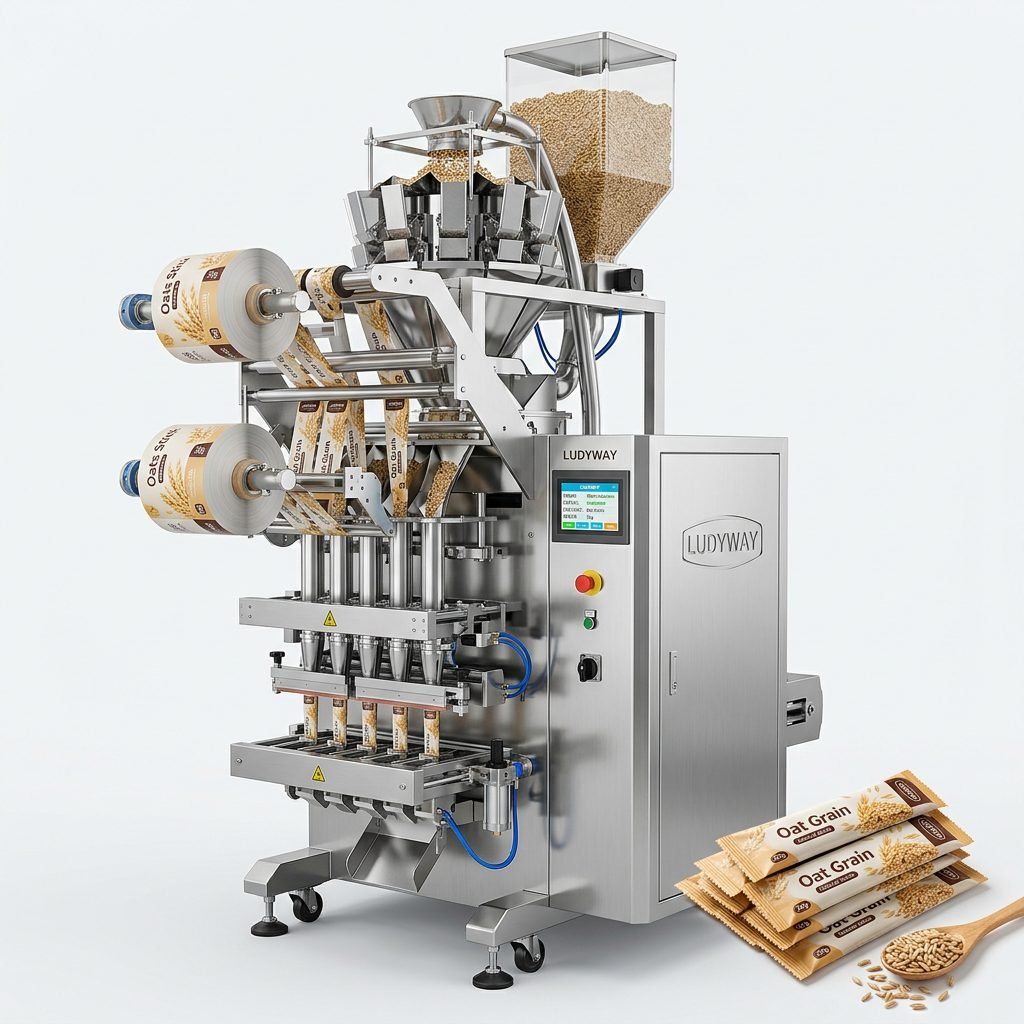
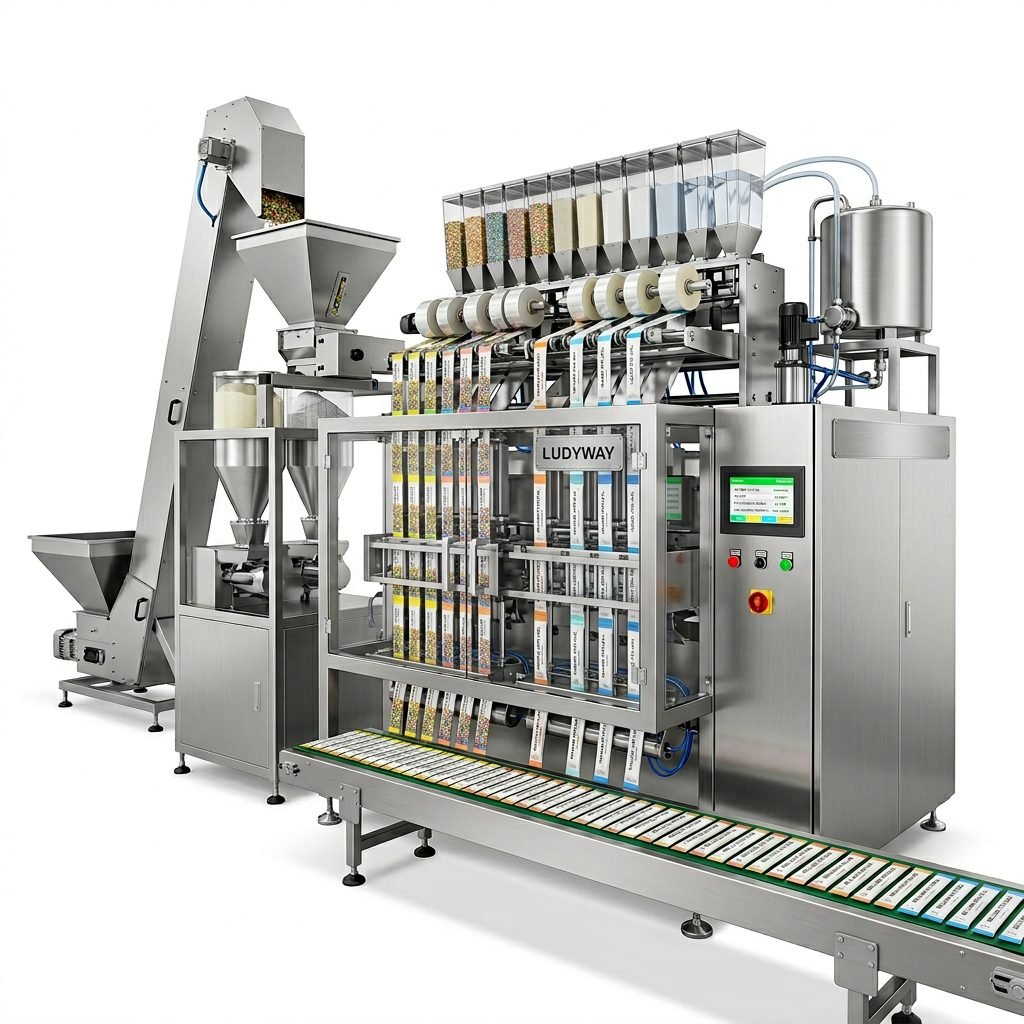
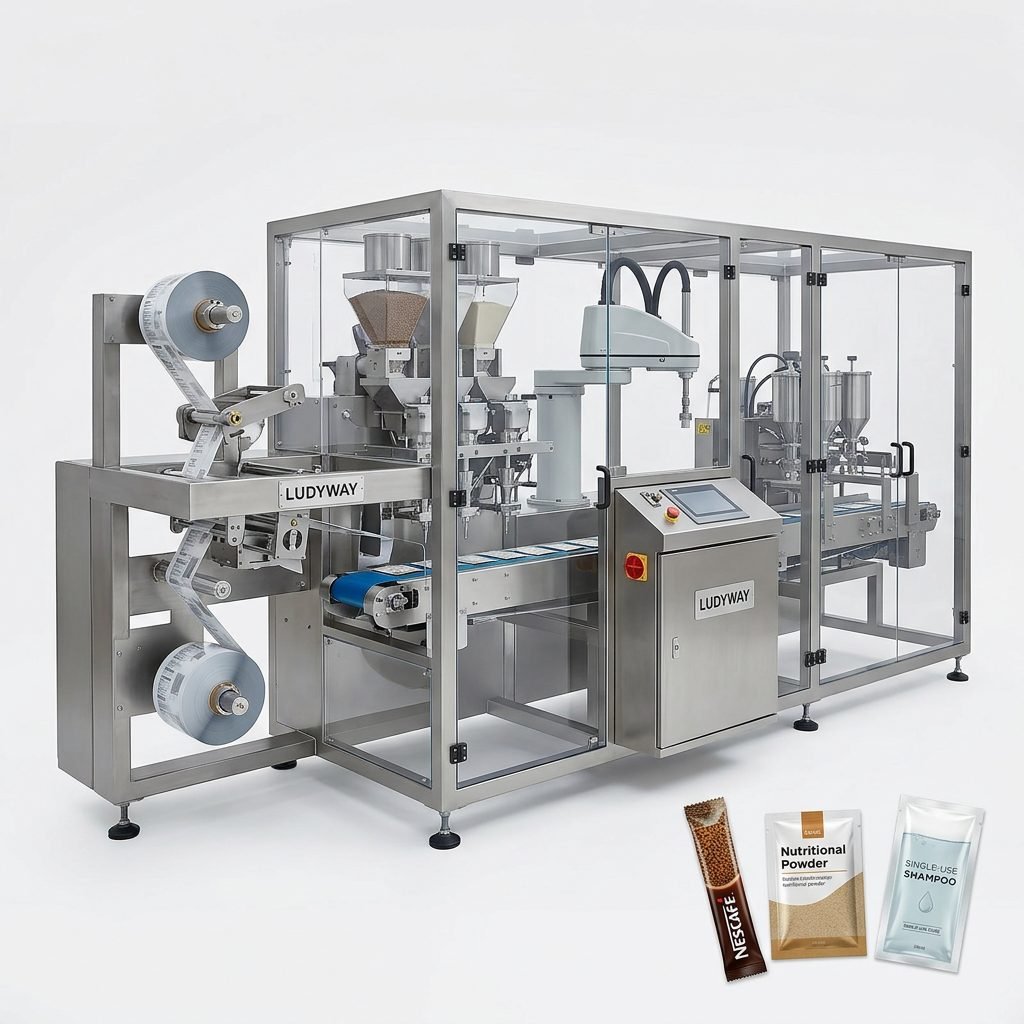
A 50 kg bag packing machine is designed for heavy-duty packaging tasks where speed, weighing accuracy, sealing reliability, and stable continuous output all matter. For manufacturers handling granules, powders, pellets, flakes, or blended bulk materials, an automatic system can significantly reduce labor intensity while improving bag consistency and downstream logistics efficiency.
In modern factories, 50 kg bag packaging is widely used for animal feed, fertilizer, rice, grains, flour, starch, resin, chemicals, minerals, salt, seeds, and building materials. An integrated weighing, filling, and sealing solution helps producers achieve cleaner packaging, less product loss, and more predictable production management.
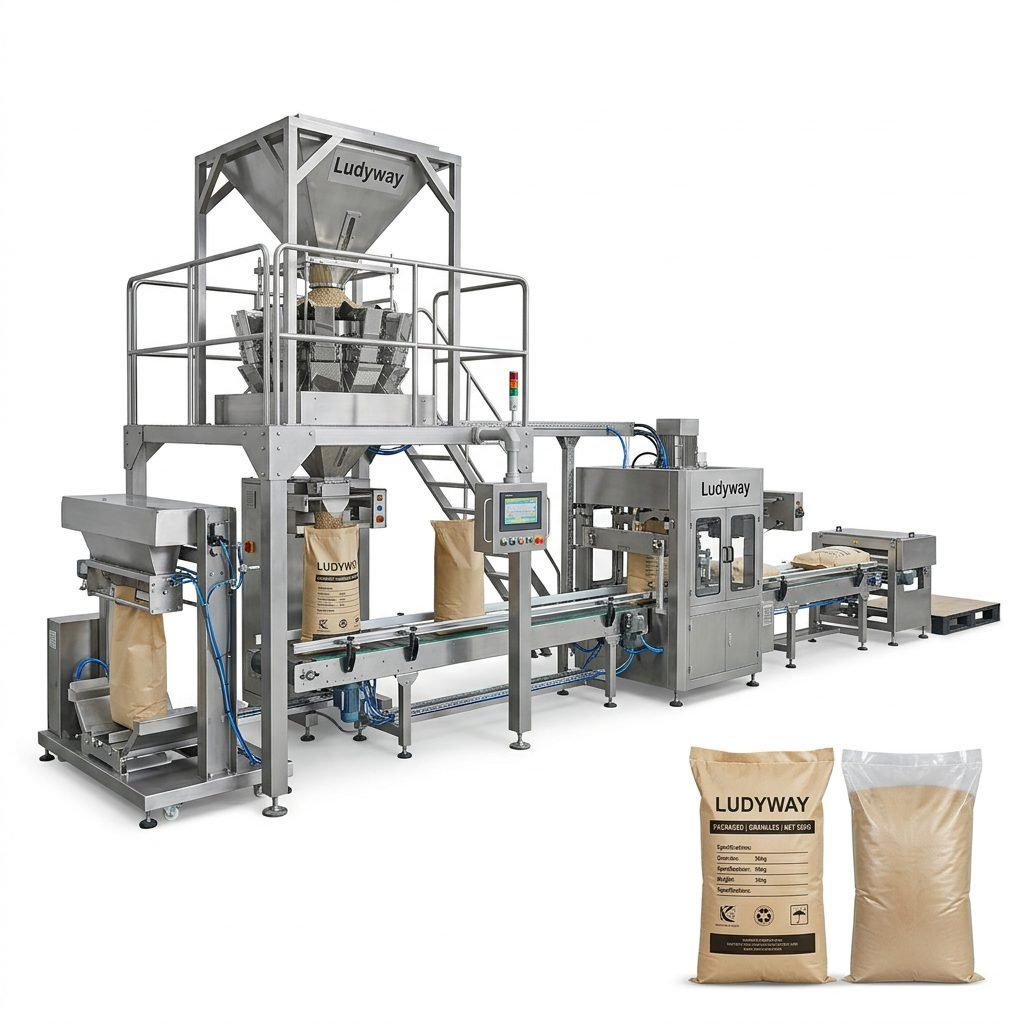
What Is a 50 kg Bag Packing Machine?
This type of equipment is an automatic or semi-automatic bagging system built to package products into large open-mouth or valve bags, typically at 25 kg, 40 kg, and 50 kg capacities. The machine usually combines material feeding, weighing, bag clamping, filling, conveying, sealing or sewing, and optional palletizing into one coordinated process.
Depending on the material characteristics, the machine may use gravity feeding, belt feeding, screw feeding, vibratory feeding, or net/gross weighing methods. The goal is simple: deliver the target weight quickly and accurately while keeping the bag shape neat and the sealing result dependable.
How the Automatic Weighing, Filling, and Sealing Process Works
- Material feeding: Bulk product is transferred from a hopper, silo, or buffer bin into the weighing section.
- Automatic weighing: The system performs coarse and fine feeding to reach the preset 50 kg target.
- Bag positioning: An empty bag is placed manually or automatically onto the bag clamp or filling spout.
- Filling: The weighed product is discharged into the bag with controlled flow to reduce dust and spillage.
- Bag transfer: The filled bag moves by conveyor to sealing, heat sealing, or sewing equipment.
- Final discharge: The finished bag is conveyed for checkweighing, metal detection, palletizing, or warehouse transport.
Key Benefits of a 50 kg Bag Packing Machine
- Higher throughput for bulk packaging operations
- Better weighing precision and reduced giveaway
- Less dependence on manual labor
- Cleaner filling environment for dusty powders and granules
- More uniform bag appearance for stacking and shipping
- Easier integration with conveyors, palletizers, and coding systems
- Lower long-term packaging cost per bag
Applications Across Industries
50 kg automatic bagging systems are highly adaptable and can be configured for a wide range of bulk products. The right design depends on product density, flowability, dust level, moisture content, and bag type.
| Industry | Typical Products | Recommended Feeding Type |
|---|---|---|
| Agriculture | Seeds, corn, wheat, rice, feed pellets | Gravity or belt feeding |
| Feed Industry | Animal feed, premix, nutrition additives | Belt, gravity, or screw feeding |
| Food Processing | Flour, sugar, starch, grains, salt | Screw or gravity feeding |
| Chemical Industry | Resin, powder chemicals, additives | Screw or enclosed feeding |
| Fertilizer | Granular fertilizer, powder fertilizer | Gravity, vibratory, or belt feeding |
| Building Materials | Mortar, cement blends, mineral powder | Screw or heavy-duty bulk feeding |
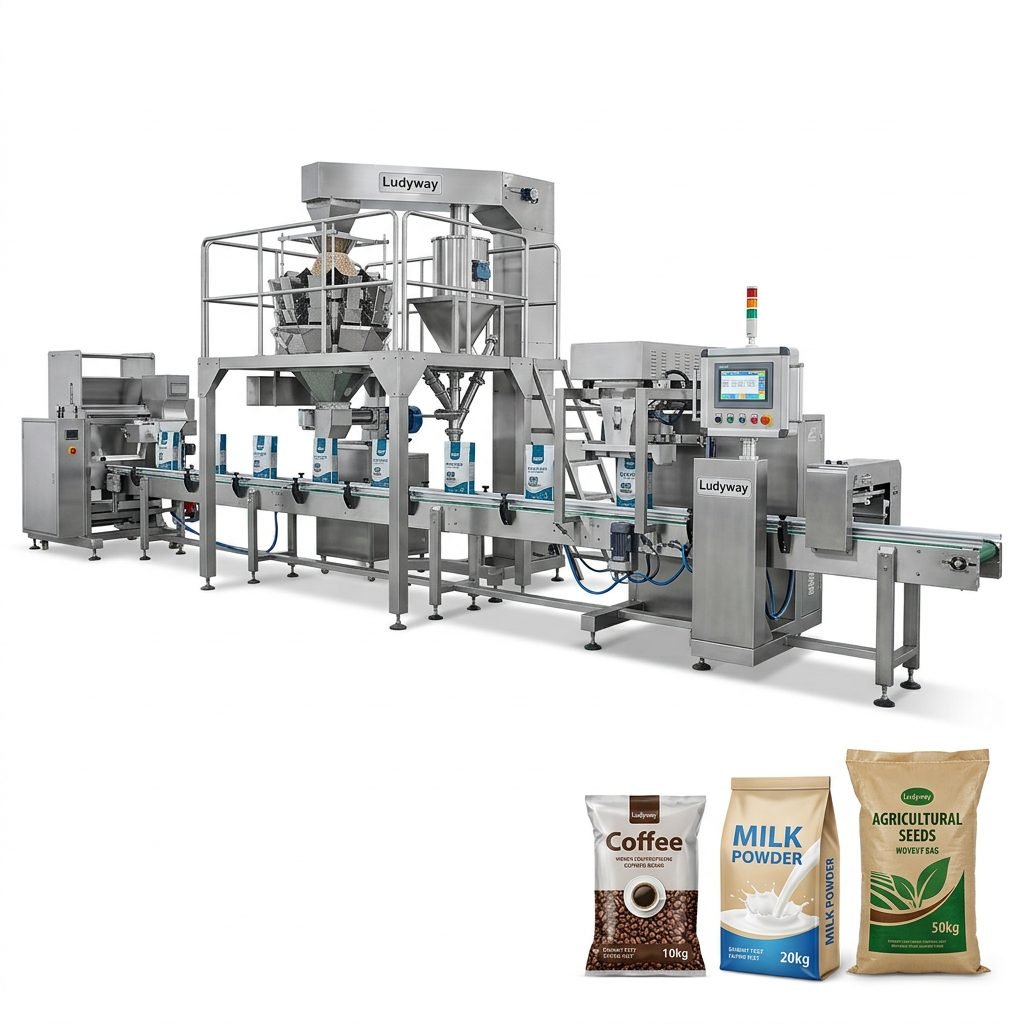
Main Machine Configurations to Consider
1. Net Weigh vs. Gross Weigh
Net weigh systems weigh product before it enters the bag, which can improve speed in many applications. Gross weigh systems weigh directly into the bag and are often selected for simpler line structures or certain material types. The best choice depends on production rate and required weighing tolerance.
2. Open-Mouth Bagging vs. Valve Bag Filling
Open-mouth bagging is common for woven bags, paper bags, and plastic-lined sacks that need sewing or heat sealing. Valve bag filling is often used for fine powders and construction materials where compact filling and reduced dust are important.
3. Powder vs. Granule Handling
Free-flowing granules usually work well with gravity-fed systems, while powders often need screw feeding, dust control, deaeration support, and tighter sealing design. Sticky or poorly flowing materials may require agitation, vibration, or customized hopper geometry.
4. Sealing Method
- Sewing for woven polypropylene bags
- Heat sealing for PE or laminated bags
- Fold-and-sew combinations
- Ultrasonic or specialty sealing for selected bag materials
Important Features That Improve Performance
When comparing 50 kg bag packing machines, buyers should look beyond speed alone. Stable operation over long shifts usually depends on machine structure, control system quality, and material-specific engineering.
| Feature | Why It Matters |
|---|---|
| PLC + HMI control | Simplifies operation, recipe changeover, and fault diagnosis |
| Dual-speed feeding | Improves final weighing accuracy |
| Dust collection interface | Keeps the work area cleaner for powder applications |
| Bag clamping device | Prevents spillage and stabilizes heavy bags during filling |
| Automatic conveyor connection | Supports sealing, coding, inspection, and palletizing |
| Stainless steel contact parts | Important for food, feed, and corrosive material handling |
| Modular design | Makes future line expansion easier |
How to Choose the Right 50 kg Bag Packaging Solution
Not all 50 kg bag packing systems are the same. The right machine should be selected according to the actual product and production target, not just the bag weight.
Evaluate These Factors First
- Product form: powder, granule, pellet, flake, or mixed material
- Flowability and tendency to bridge or cake
- Target output per hour
- Required weighing tolerance
- Bag material and bag style
- Need for dustproof filling or hygienic design
- Available factory space and layout
- Need for automatic palletizing and stretch wrapping
For example, a fertilizer producer may prioritize rugged structure and anti-corrosion treatment, while a flour manufacturer may focus more on dust-tight filling, food-grade contact parts, and fine screw feeding accuracy.
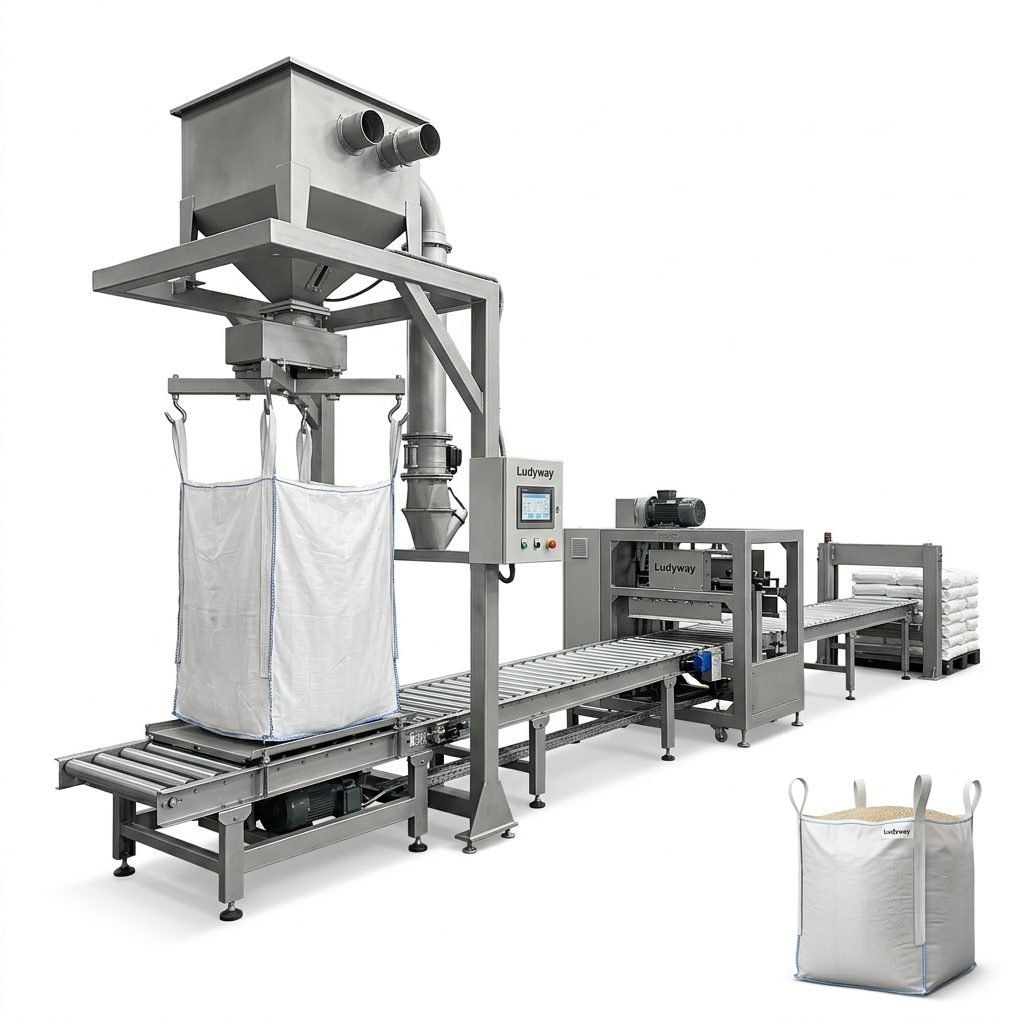
Why Automation Matters for 50 kg Bagging
Heavy bag packaging creates physical strain, increases manual handling risk, and often causes inconsistency in weighing and sealing when done with low automation. By introducing automatic weighing, filling, and sealing, factories can gain measurable improvements in:
- Production planning accuracy
- Operator safety
- Bagging speed stability
- Reduced downtime from manual handling delays
- Cleaner packaging areas
- Improved warehousing and pallet stacking consistency
Typical Line Integration Options
A modern 50 kg bag packing machine can work as a standalone unit or as part of a full bagging line. Integration options often include upstream conveying and downstream end-of-line automation.
Common Add-On Equipment
- Storage silo or product hopper
- Screw conveyor, belt conveyor, or bucket elevator
- Dust collector
- Bag sewing machine or heat sealer
- Checkweigher
- Metal detector
- Bag flattening unit
- Robotic palletizer
- Stretch wrapper
- Inkjet coding or labeling system
Maintenance Tips for Long-Term Stability
Reliable operation depends not only on machine design but also on routine maintenance. Heavy-duty bulk bagging equipment often works in dusty or abrasive environments, so preventive care is essential.
- Clean weighing components and discharge areas regularly
- Check sensors, load cells, and pneumatic parts for drift or wear
- Inspect bag clamps and sealing units for alignment
- Lubricate transmission components according to schedule
- Calibrate weighing accuracy at planned intervals
- Monitor screw feeders and conveyors for material buildup
- Train operators to identify abnormal vibration, noise, or discharge behavior
Who Should Invest in a 50 kg Bag Packing Machine?
This equipment is ideal for companies that package bulk materials daily and need a more efficient alternative to manual weighing and bagging. It is especially suitable for:
- Feed mills and agricultural processors
- Fertilizer manufacturers
- Food ingredient suppliers
- Chemical powder and granule producers
- Mineral and construction material plants
- Export-oriented factories requiring uniform pallet-ready bags
A Reliable Partner for Bulk Bag Packaging Projects
For businesses seeking scalable automation, Ludyway bag packing machine solutions can support applications ranging from standalone weighing units to complete turnkey packaging lines. With more than 30 years of industry experience, a manufacturing base of over 20,000 square meters, and service coverage across more than 100 countries and regions, the company is recognized as one of China’s leading packaging machine and turnkey packaging line manufacturers.
Final Buying Checklist
| Checklist Item | What to Confirm |
|---|---|
| Material characteristics | Powder, granule, bulk density, flowability, dust level |
| Target bag size | Whether the line should also handle 25 kg or 40 kg bags |
| Output requirement | Bags per hour and future expansion needs |
| Bag type | Open-mouth, valve bag, woven, paper, PE, laminated |
| Sealing method | Sewing, heat sealing, fold-and-sew |
| Line integration | Conveyors, palletizer, coding, inspection, wrapping |
| Factory environment | Dust control, corrosion resistance, hygiene needs |
Choosing the right 50 kg bag packing machine means investing in productivity, packaging consistency, and long-term operating efficiency. When the system is properly matched to the product and line layout, automatic weighing, filling, and sealing can deliver a faster, cleaner, and more profitable bulk packaging process.