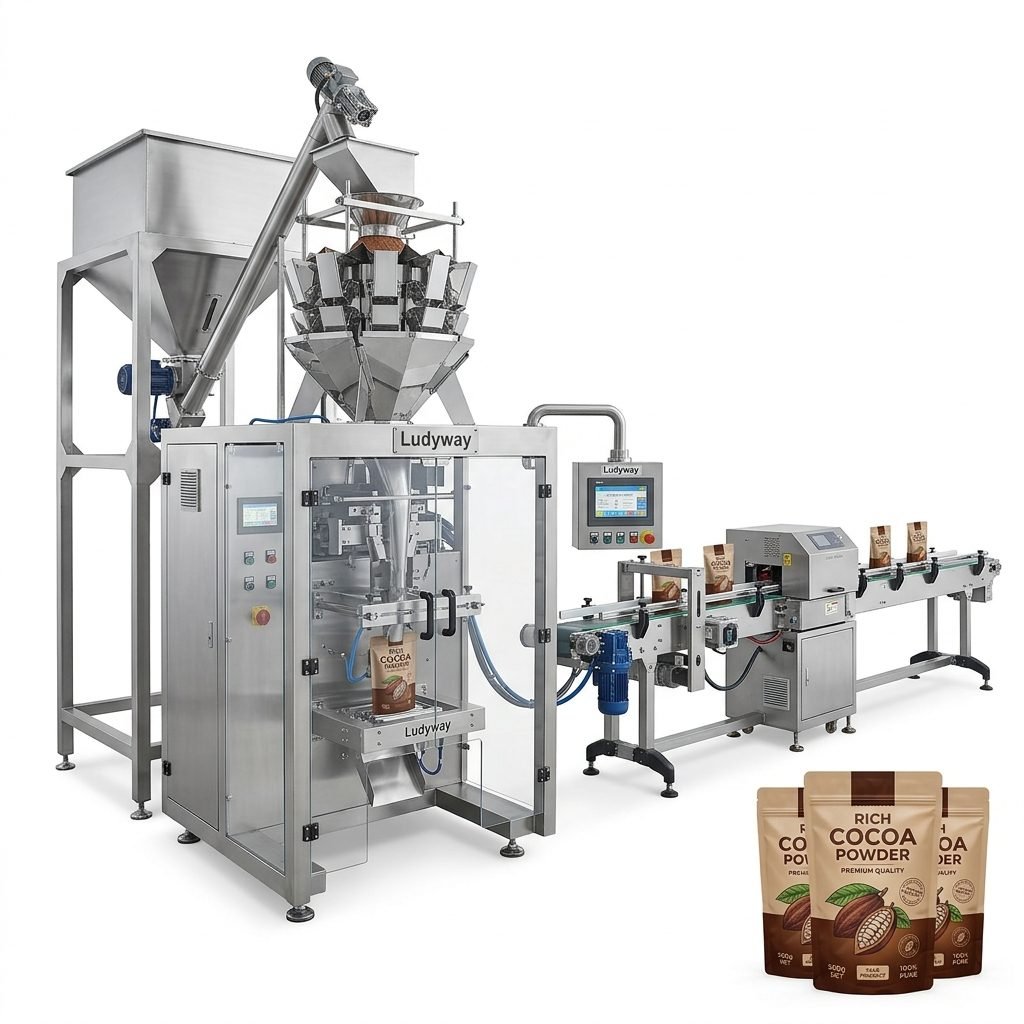
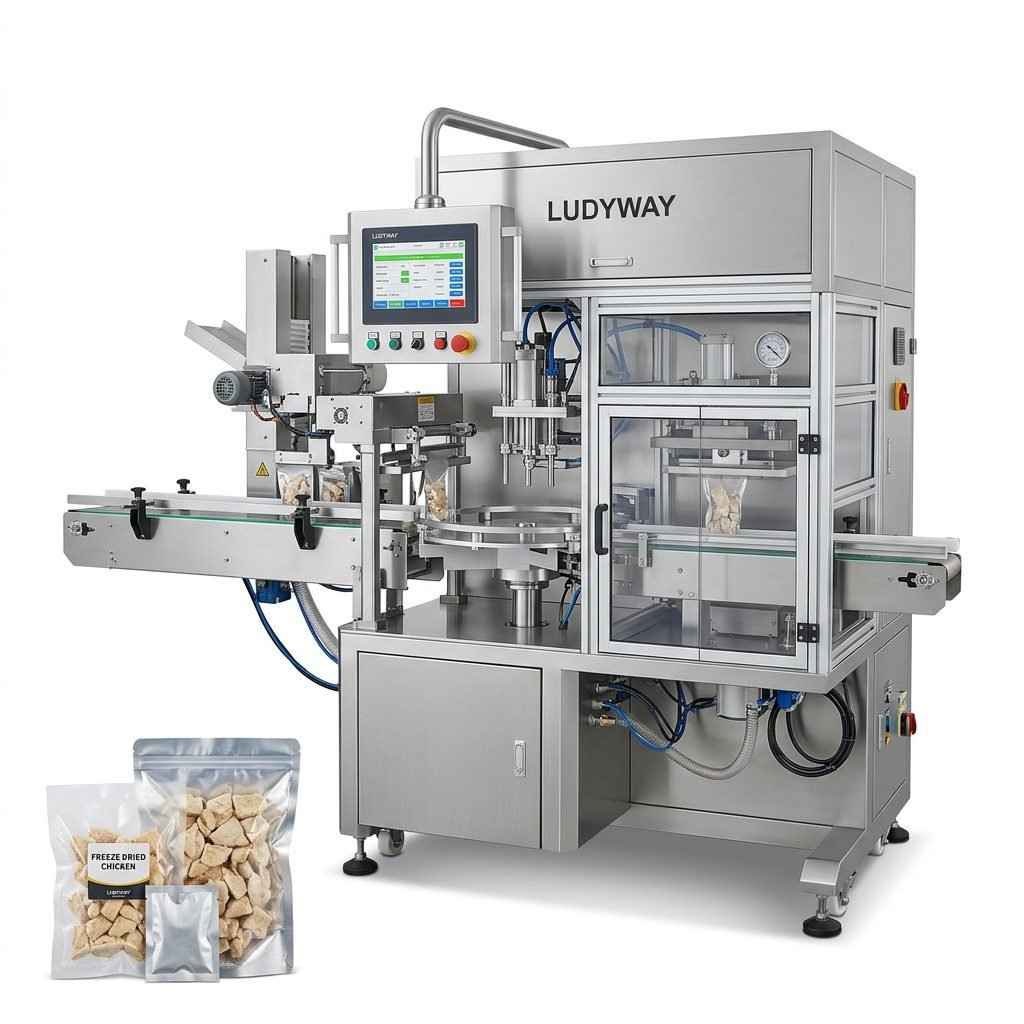
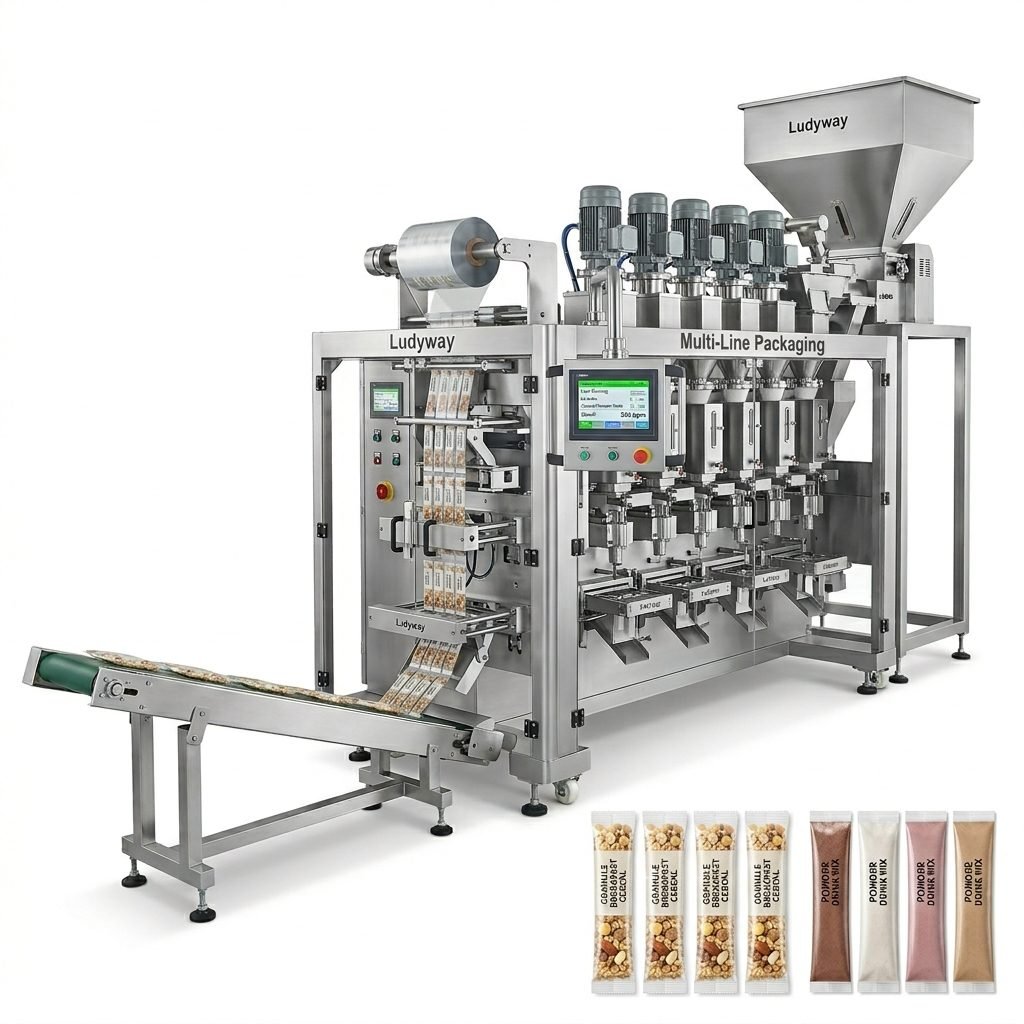
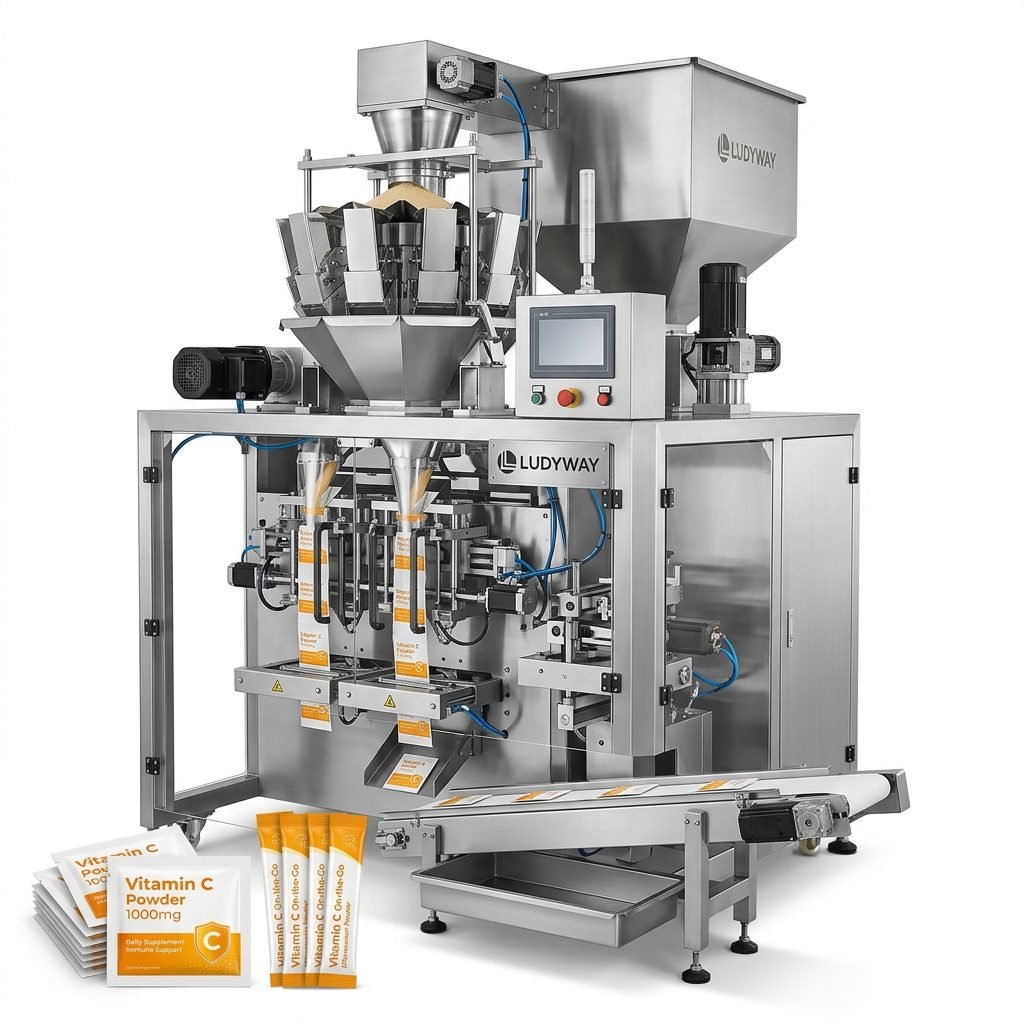
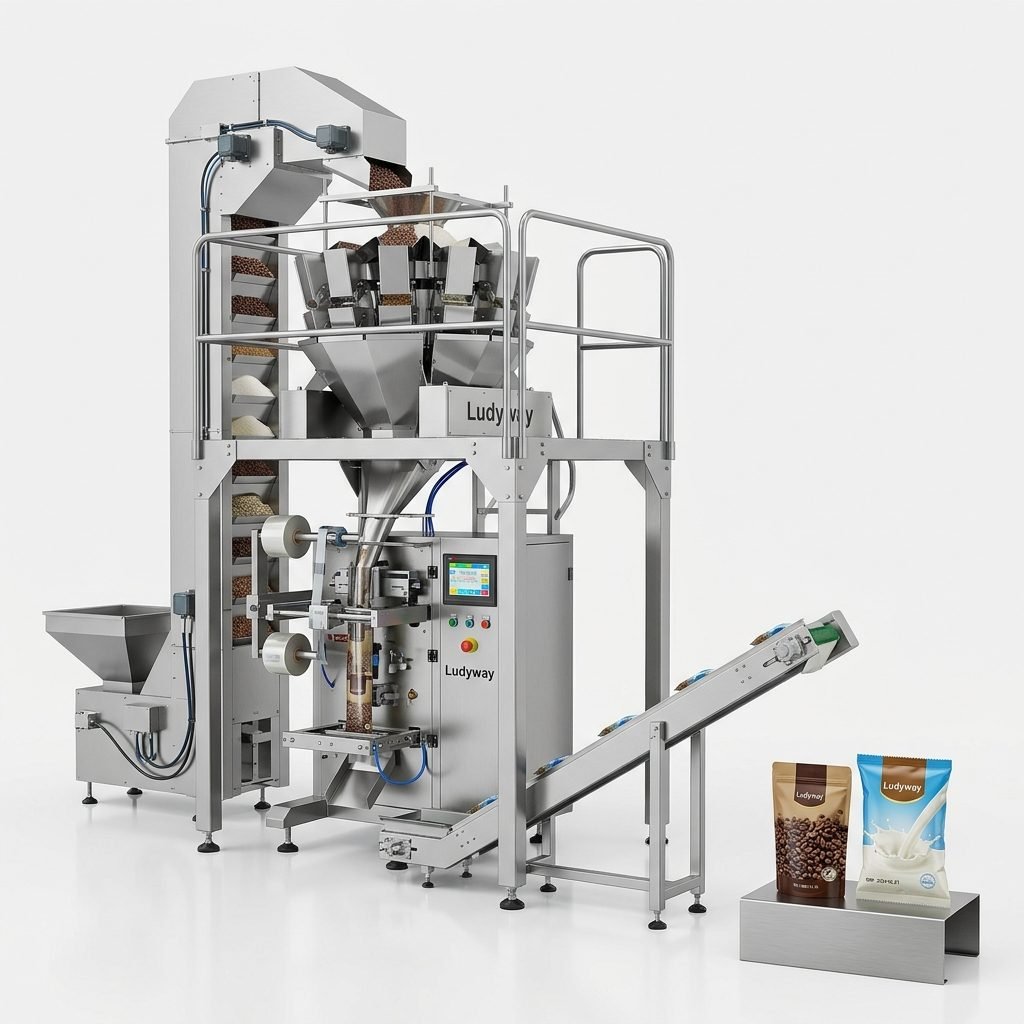
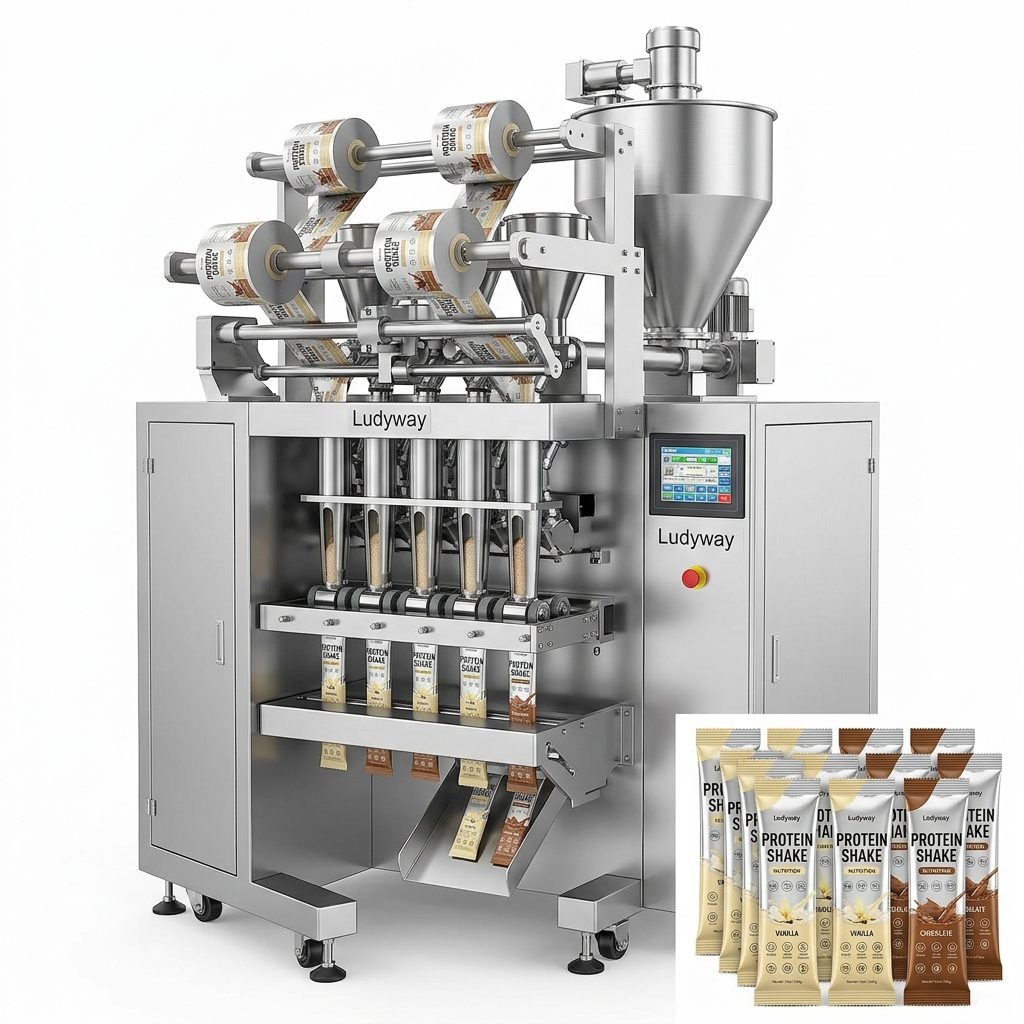
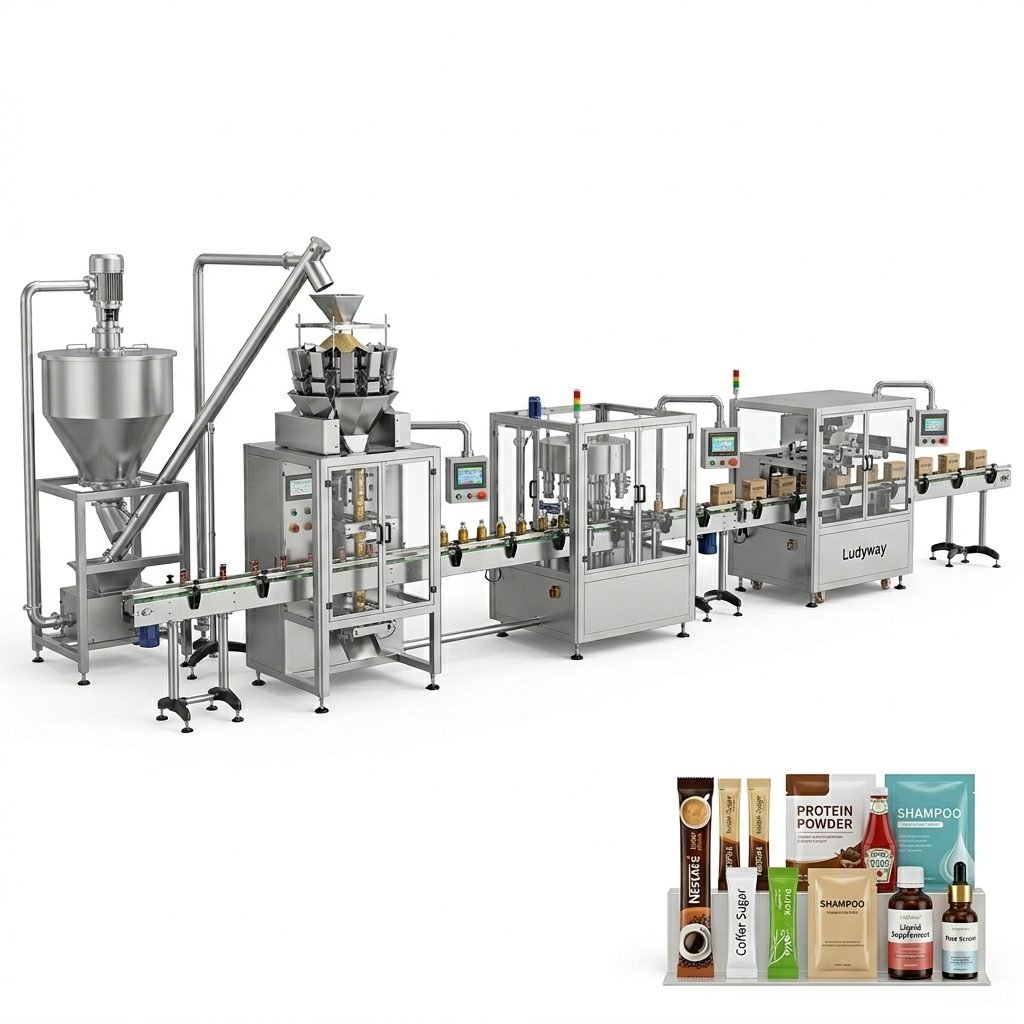
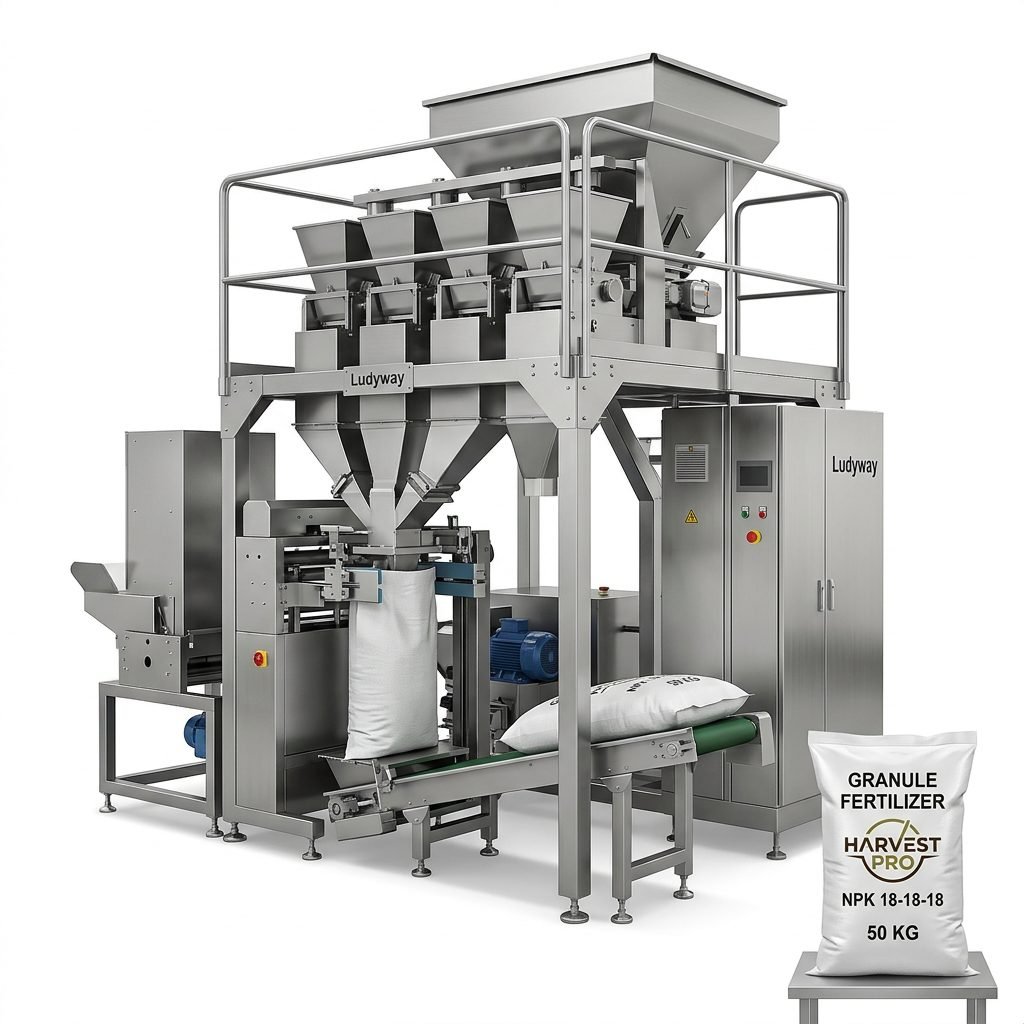
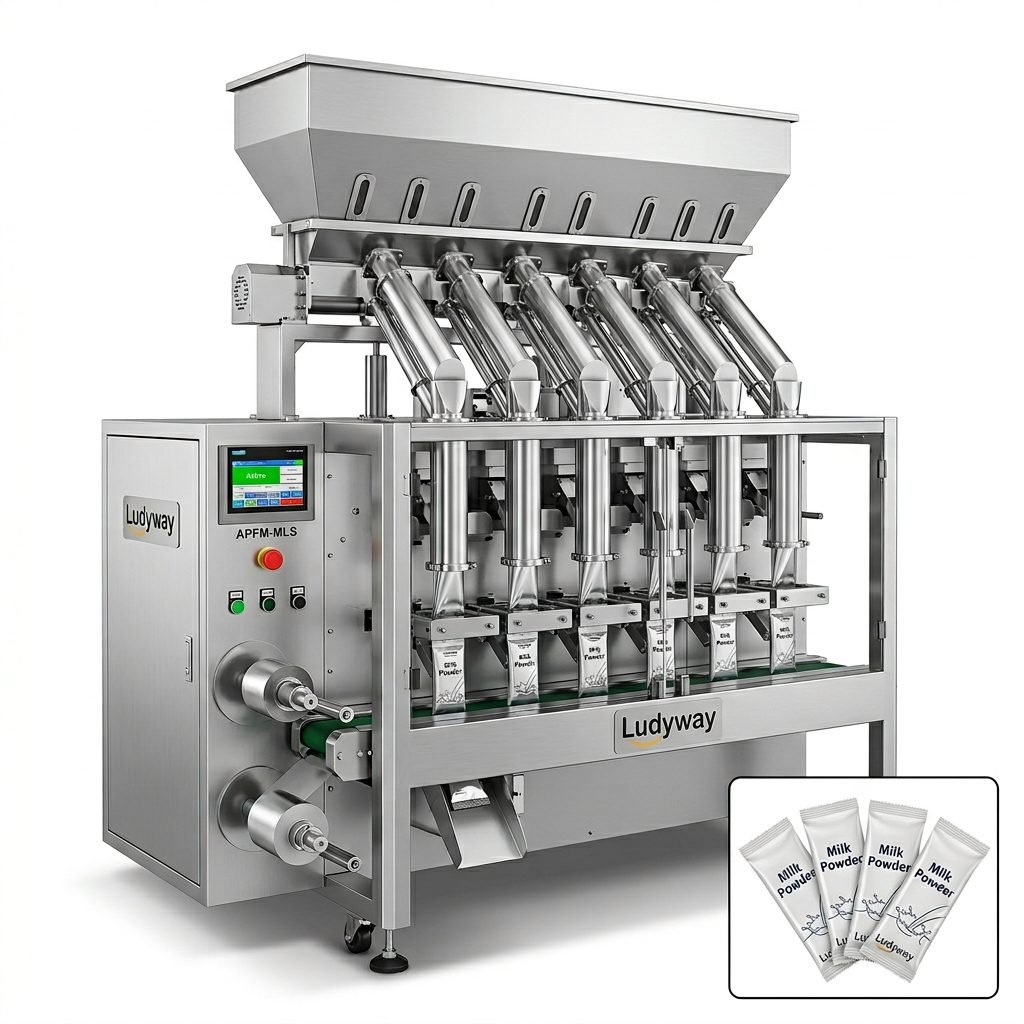
Vertical pouch packing machines are widely used in modern manufacturing because they combine forming, filling, and sealing into one efficient process. For food, pharmaceutical, health supplement, cosmetic, and chemical products, they help businesses improve output, reduce labor dependency, and maintain consistent package quality.
Whether you are packaging powder, granules, liquids, or small-dose products, understanding how a vertical pouch packing machine works can help you make a better investment decision and avoid costly mismatches between machine capability and product requirements.
What Is a Vertical Pouch Packing Machine?
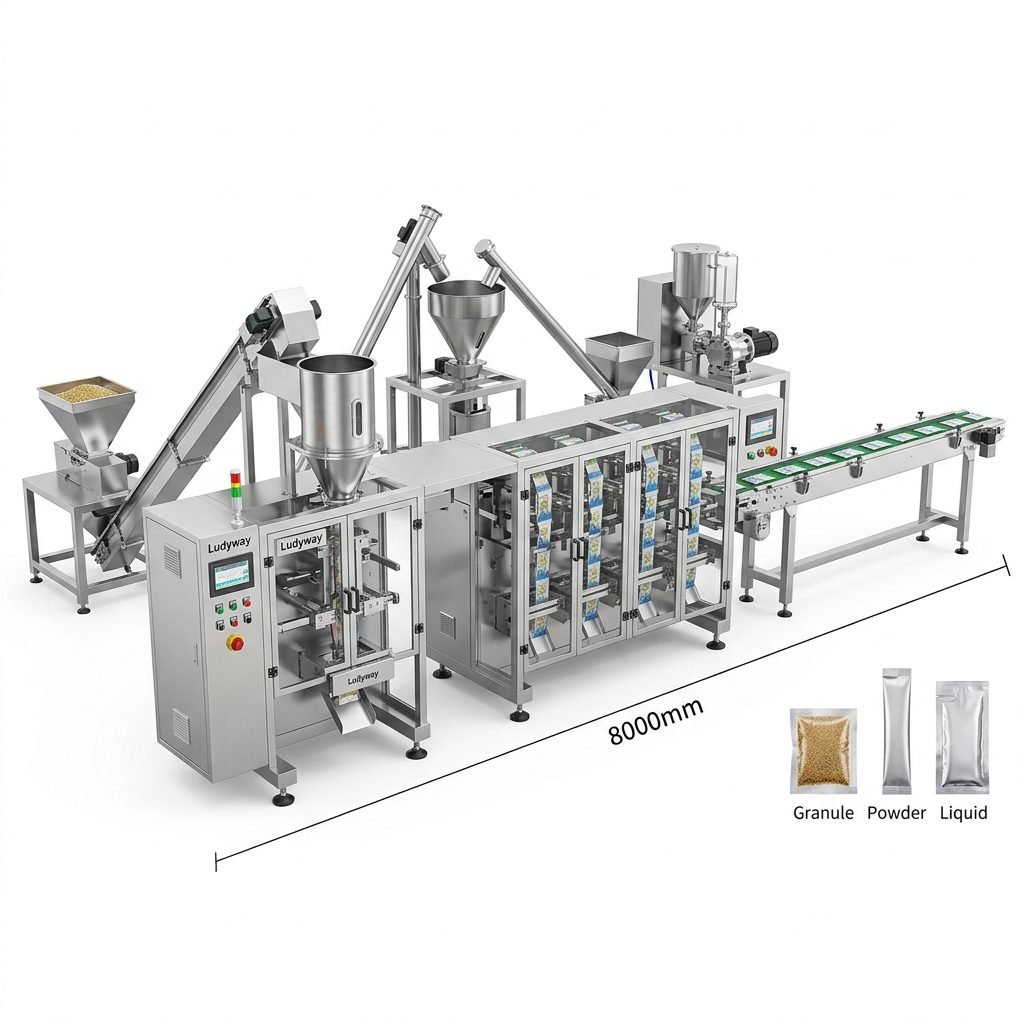
A vertical pouch packing machine is an automated system that packages products into pouches by moving packaging film vertically through the machine. It typically performs the following core actions:
- Unwinds and feeds the packaging film
- Forms the film into a pouch shape
- Measures or doses the product
- Fills the pouch accurately
- Seals the pouch
- Cuts and discharges the finished package
These machines are often called VFFS machines, short for Vertical Form Fill Seal. They are especially suitable for high-efficiency packaging lines where speed, repeatability, and reduced manual handling are essential.
How a Vertical Pouch Packing Machine Works
The working process is straightforward in principle, but highly precise in practice. Each stage must stay synchronized to ensure the pouch is correctly formed, filled, sealed, and discharged.
1. Film Feeding
A roll of packaging film is mounted on the machine. The film is pulled downward by servo-driven belts or rollers. Tension control keeps the film stable so that print registration, pouch length, and seal alignment remain accurate.
2. Pouch Forming
The film passes over a forming collar or tube, which shapes the flat film into a cylindrical or pouch-form structure. Depending on the machine design, this may create pillow pouches, gusset pouches, stick packs, or sachets.
3. Vertical Sealing
The overlapping edges of the film are heat-sealed to create the back or side seal. Seal integrity is critical because it directly affects product protection, shelf life, and presentation.
4. Product Dosing and Filling
Once the lower part of the pouch is sealed, the product is dispensed into the formed pouch through the filling system. The dosing method depends on product type:
- Auger filler for powders
- Volumetric cup filler for free-flowing granules
- Multihead weigher for snacks and irregular solids
- Liquid pump filler for liquids and sauces
- Piston filler for viscous paste products
5. Horizontal Sealing
The machine creates the top seal of the filled pouch and the bottom seal of the next pouch in one cycle. Temperature, pressure, and dwell time must match the film material to ensure reliable sealing.
6. Cutting and Output
After sealing, the pouch is cut off and discharged. Additional functions such as date coding, tear notch punching, round corner cutting, nitrogen flushing, and hole punching may also be integrated.
Simple Process Flow
Film Roll → Forming → Vertical Seal → Filling → Horizontal Seal → Cutting → Finished Pouch
Main Types of Vertical Pouches
Different industries require different pouch structures. A vertical pouch packing machine may support one or more of the following formats:
| Pouch Type | Typical Use | Key Advantage |
|---|---|---|
| Pillow Pouch | Snacks, grains, powders | Simple, cost-effective, high speed |
| Gusset Pouch | Coffee, pet food, bulk products | Improved shelf presence and volume |
| Sachet | Powders, pharmaceuticals, condiments | Small-dose precision packaging |
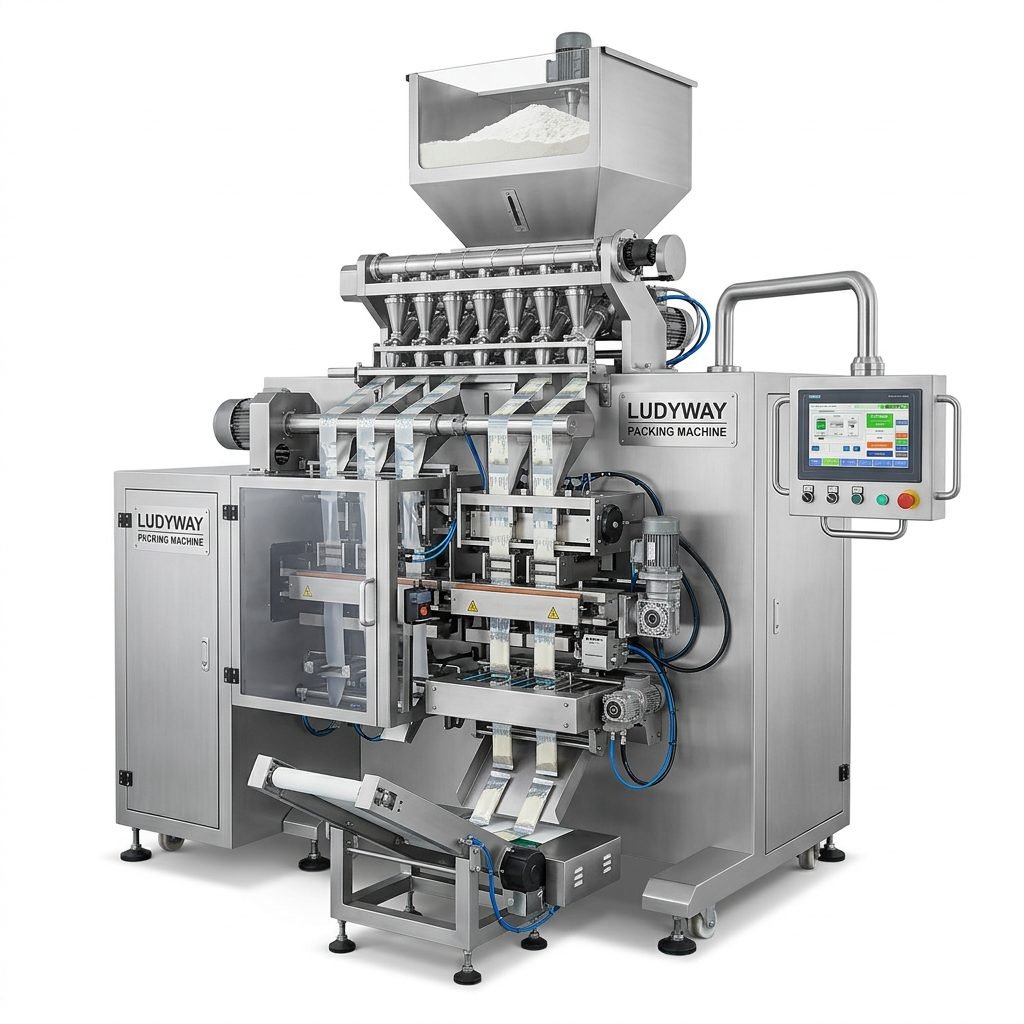
| Stick Pack | Drink mix, sugar, supplements | Slim format, convenient for single use |
| Shaped or Specialty Pouch | Premium consumer goods | Brand differentiation |
Key Features to Look For
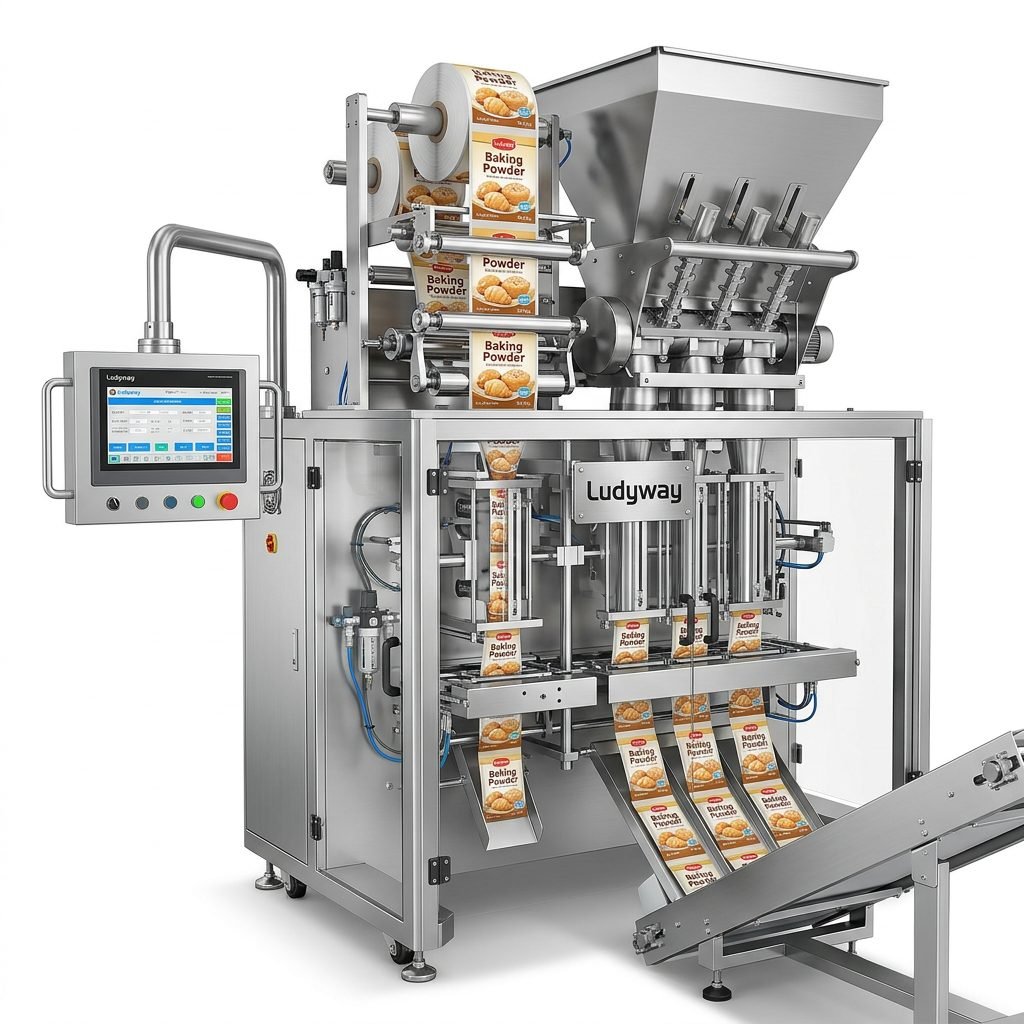
Not all vertical pouch packing machines are built the same. The right model should match your product characteristics, production target, and packaging goals.
Accurate Filling System
Filling accuracy affects product giveaway, compliance, and customer trust. High-quality machines use stable control systems and properly matched dosing devices to keep each pouch within the target range.
Stable Sealing Performance
Strong sealing is essential for leak prevention and shelf life. Machines with consistent temperature control, strong sealing jaws, and reliable film tracking deliver better package quality over long runs.
Servo Control
Servo-driven systems offer improved precision for film pulling, pouch length control, and synchronization. They also support easier recipe changes and better repeatability.
PLC and Touchscreen Interface
A user-friendly control panel reduces operator error and simplifies daily operation. It should allow fast parameter setting, alarm display, recipe storage, and production monitoring.
Material Compatibility
The machine should work with the packaging film you intend to use, such as laminated film, aluminum foil film, PE composite materials, or recyclable structures where applicable.
Hygienic and Durable Construction
For food, pharmaceutical, and health supplement applications, stainless steel construction and easy-clean design are important. Dust control, enclosed filling zones, and sanitary contact parts can significantly improve operational safety.
Expandability
A good machine should support future upgrades, including:
- Date coding or printing
- Checkweigher integration
- Metal detection
- Nitrogen flushing
- Cartoning and case packing
- Conveyor and palletizing systems
Common Applications
Vertical pouch packing machines are used across many industries because of their flexibility. Common applications include:
- Food powders such as coffee, milk powder, seasoning, and protein powder
- Granules such as sugar, salt, seeds, nuts, and pet food
- Pharmaceutical powders and granules
- Health supplement sachets and stick packs
- Liquids and sauces such as ketchup, oils, shampoo, and detergents
- Chemical powders and industrial additives
Benefits of Using a Vertical Pouch Packing Machine
For growing manufacturers, the main advantages are not just speed. The bigger value comes from improved consistency and lower long-term operating cost.
- Higher productivity through continuous automated operation
- Reduced labor cost compared with manual or semi-automatic packing
- More consistent pouch quality in shape, weight, and sealing
- Lower material waste with precise film and dosing control
- Flexible packaging options for different product sizes and pouch formats
- Better factory integration with upstream feeding and downstream packing equipment
Buying Guide: How to Choose the Right Machine
Before you buy, it is important to evaluate the machine from both a technical and business perspective. Many packaging problems happen not because the machine is poor, but because it was chosen without enough application analysis.
1. Define Your Product Type
Start with the product itself. Ask these questions:
- Is it powder, granule, liquid, paste, or mixed material?
- Is it free-flowing or difficult to dose?
- Does it create dust, foam, or residue?
- Is it sensitive to moisture, oxygen, or contamination?
The answers will determine the best dosing and machine configuration.
2. Confirm Your Pouch Size and Format
Machine selection must match your target pouch dimensions, seal type, and packaging style. If you plan to run multiple SKUs, choose a system with convenient changeover and flexible format adjustment.
3. Check Speed Requirements
Do not simply buy the fastest machine available. Buy the machine that can reliably meet your real production demand with room for moderate future growth. Extremely high speed without stable filling and sealing can create more downtime than value.
4. Evaluate Packaging Film Compatibility
Different films require different sealing temperatures and handling characteristics. Always confirm whether the machine supports your film structure and whether it can maintain print registration accurately.
5. Consider Automation Level
If your factory already uses conveyors, elevators, inspection devices, or cartoning systems, choose a machine that can be integrated easily. A packaging machine should not become an isolated bottleneck.
6. Review Maintenance and Spare Parts
Maintenance access matters. Look for a design that allows operators to clean contact parts, replace wearing components, and troubleshoot alarms efficiently. Spare parts availability and technical support should also be part of your supplier evaluation.
7. Assess Supplier Experience
Experienced manufacturers can usually offer better application advice, more mature machine designs, and stronger after-sales support. If you need a complete line instead of a standalone machine, supplier engineering capability becomes even more important.
| Buying Factor | Why It Matters | What to Check |
|---|---|---|
| Product Type | Determines filler and machine design | Powder, granule, liquid, viscosity, dust |
| Pouch Format | Affects forming and sealing structure | Pillow, gusset, sachet, stick pack |
| Output Speed | Defines production capacity | Bags per minute, stable operating speed |
| Film Material | Impacts seal quality and machine compatibility | Film thickness, seal layer, print mark |
| Automation Level | Supports line integration and labor saving | Feeding, inspection, cartoning, palletizing |
| Supplier Support | Affects installation and long-term reliability | Training, spare parts, technical service |
Questions to Ask a Supplier Before Purchasing
- What product types has this machine already been tested on?
- What is the actual stable output, not just the maximum theoretical speed?
- Which filler is recommended for my material and why?
- Can the machine support my current and future pouch sizes?
- What sealing performance can be expected with my film structure?
- Are training, commissioning, and spare parts included?
- Can the machine be integrated into a complete automatic packaging line?
Mistakes Buyers Should Avoid
Avoid choosing only by price. A low-cost machine may lead to unstable output, poor seals, frequent downtime, and higher overall ownership cost.
- Ignoring product flow characteristics
- Underestimating cleaning and maintenance needs
- Buying a machine with no room for future expansion
- Failing to test actual film and product samples
- Choosing a supplier without reliable after-sales support
Choosing a Reliable Manufacturing Partner
For buyers looking for long-term packaging automation value, supplier capability matters as much as machine specifications. An experienced manufacturer can help with machine selection, sample evaluation, line layout, customization, and support after installation.
One option many global buyers consider is Ludyway vertical pouch packing machine solutions, backed by more than 30 years of packaging machinery experience, a manufacturing base of over 20,000 square meters, and turnkey packaging line capabilities for food, pharmaceutical, health supplement, cosmetic, and related industries.
Final Selection Checklist
- Match the machine to your exact product type
- Confirm pouch format and size range
- Verify realistic speed and accuracy
- Check film compatibility and seal quality
- Review hygiene, maintenance, and operator interface
- Plan for future automation upgrades
- Choose a supplier with proven export and service experience
A well-selected vertical pouch packing machine can deliver higher efficiency, lower waste, stable package quality, and scalable automation. For manufacturers planning to improve productivity and packaging consistency, taking time to evaluate the machine properly is the smartest first step.