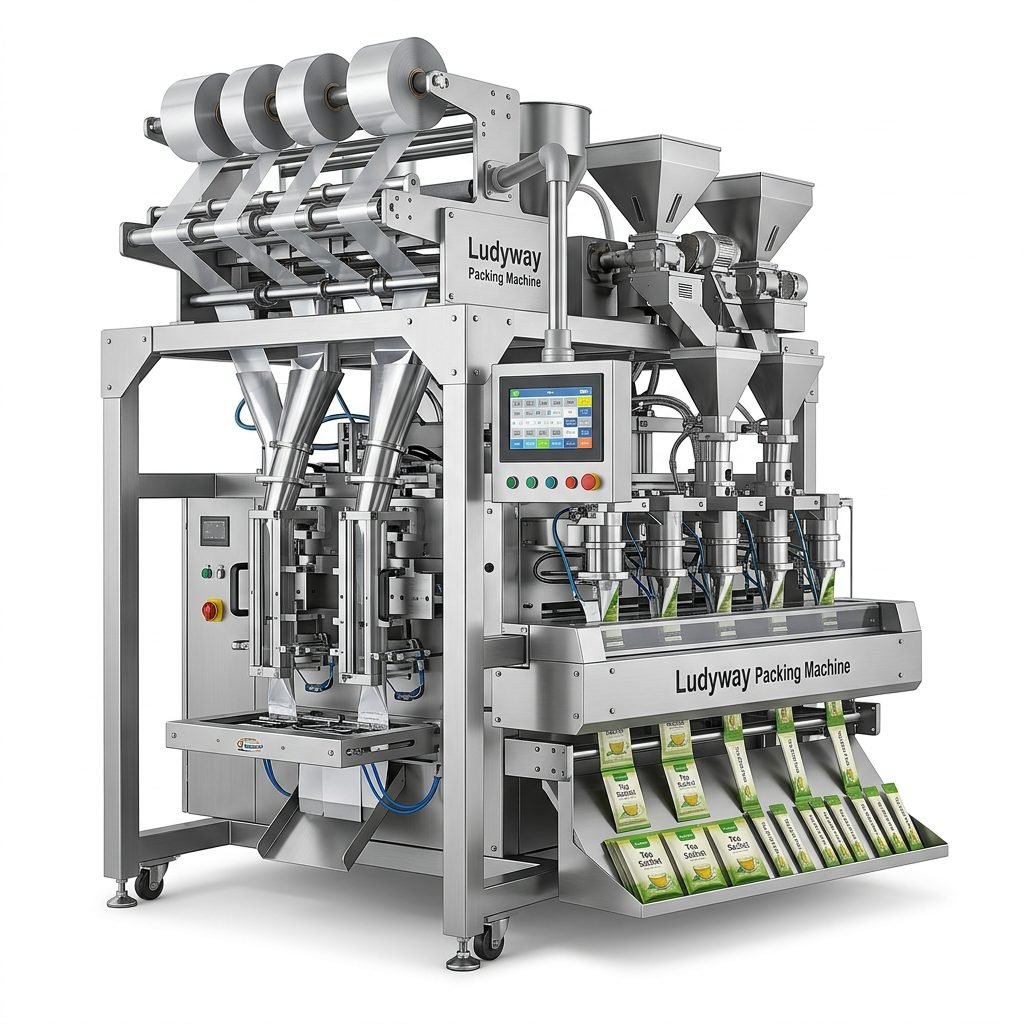
Selecting the right big bag packaging machine is not just about filling larger bags. It is about matching your product characteristics, weighing accuracy, plant layout, dust control needs, labor goals, and long-term production targets with the right FIBC filling solution. For industries handling powders, granules, flakes, pellets, and bulk solids, the right system can significantly improve throughput, safety, and cost control.
Whether you pack fertilizer, feed, chemicals, minerals, construction materials, or food ingredients, choosing the best FIBC filling system requires a clear understanding of bag type, target output, automation level, and downstream handling requirements.
What Is a Big Bag Packaging Machine?
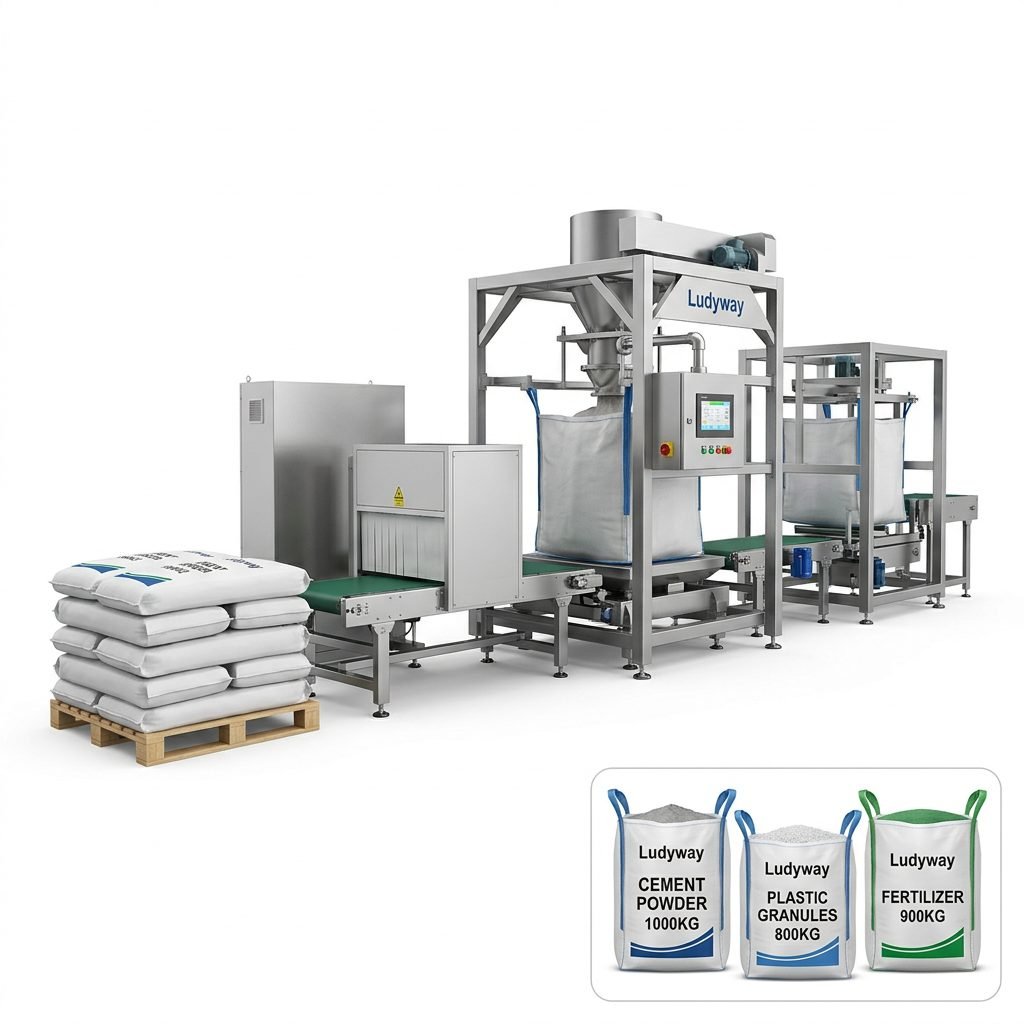
A big bag packaging machine, also called an FIBC filling machine or jumbo bag filling system, is designed to weigh and fill bulk materials into flexible intermediate bulk containers. These bags are commonly used for loads from 250 kg to 2000 kg, depending on bag design and application.
A typical machine may include:
- Bag hanging frame or loop suspension structure
- Inflatable sealing neck or spout clamping device
- Net/gross weighing system
- Feeding system such as screw feeder, gravity feeder, valve feeder, or belt feeder
- Dust extraction interface
- Bag settling or vibration support
- Roller conveyor or pallet conveying section
- Palletizing or forklift-ready discharge position
Why Choosing the Right FIBC Filling Solution Matters
An under-specified machine can lead to poor weighing accuracy, dust leakage, bag instability, and downtime. An over-specified system may increase capital costs without delivering practical value. The ideal solution balances performance, flexibility, safety, and total operating cost.
| Decision Area | Why It Affects Your Choice |
|---|---|
| Material characteristics | Determines the feeder type, dust control, and weighing method |
| Bag size and design | Affects bag clamping, frame adjustment, and support structure |
| Output target | Defines required speed, automation, and line integration level |
| Accuracy requirement | Influences weighing control and feed cut-off design |
| Factory environment | Impacts dust-proof, corrosion-resistant, or hygienic construction needs |
Start with Your Product Type
The most important question is: what exactly are you filling? Bulk solids behave very differently during filling, and the machine must be configured accordingly.
1. Free-Flowing Granules and Pellets
Products such as plastic pellets, grains, seeds, and some fertilizers are usually easier to handle. Gravity feeders or gate-controlled bulk filling systems can deliver high speed with good control.
2. Powders
Fine powders such as cement additives, mineral powders, flour, starch, and chemical powders often require screw feeding, dust collection, and airtight spout sealing. Powders are more likely to create bridging, dust clouds, and weight instability.
3. Flakes, Fibers, or Irregular Bulk Solids
These materials may have poor flowability or inconsistent bulk density. In such cases, bag support, vibration, and customized feeding become especially important.
4. Abrasive or Corrosive Products
For minerals, salts, or aggressive chemicals, machine contact parts may need wear-resistant materials, stainless steel options, or anti-corrosion treatment.
Tip: Always ask for a machine recommendation based on your actual material sample, not just a general product name.
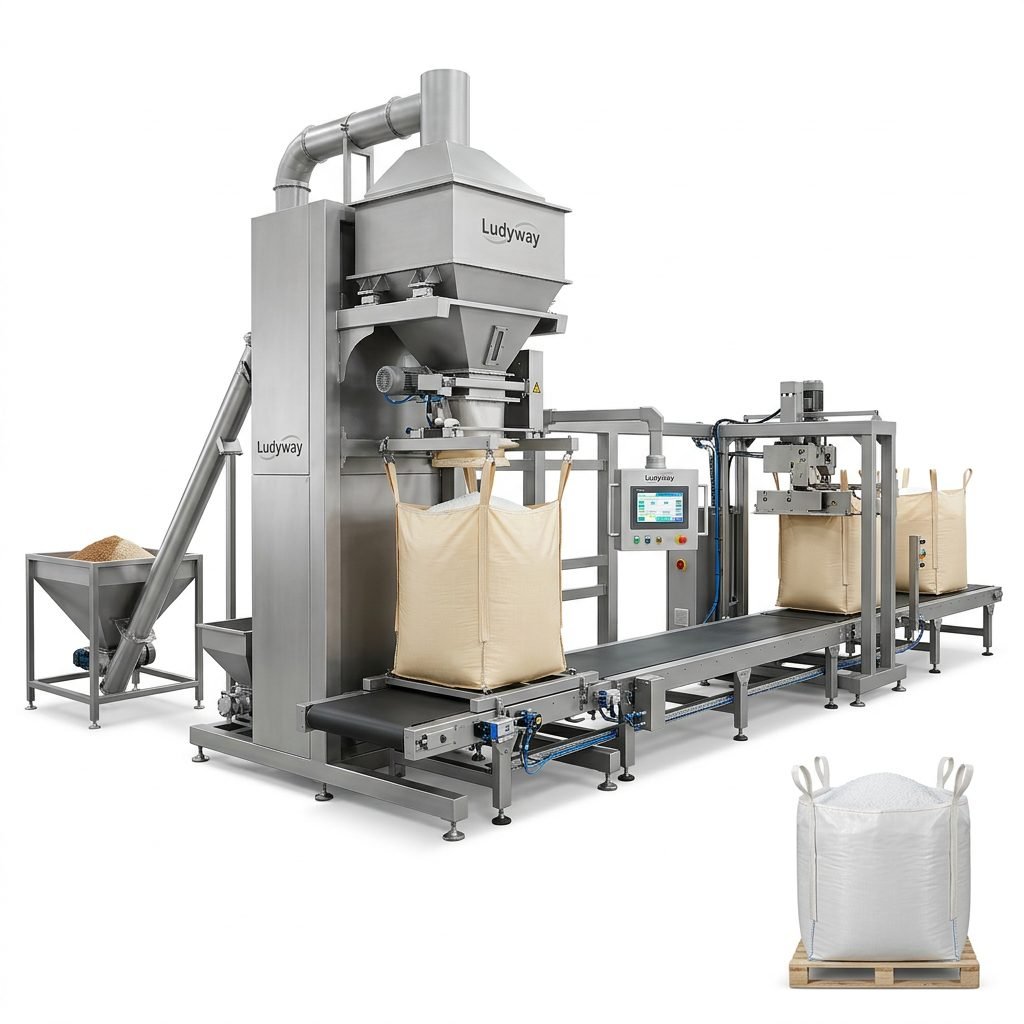
Understand the Different Types of FIBC Filling Machines
Not all big bag fillers are built the same. The best solution depends on your operational priorities.
Manual or Semi-Automatic Big Bag Fillers
These systems usually require an operator to hang bag loops, position the bag spout, and remove the filled bag. They are suitable for moderate output and lower investment budgets.
- Lower initial cost
- Good for varied bag sizes
- Suitable for small to mid-volume production
- Higher labor dependency
Automatic Big Bag Filling Lines
These systems are designed for higher throughput and less manual intervention. They may include automatic bag handling, conveyor transfer, pallet positioning, and integrated downstream logistics.
- Higher output consistency
- Lower labor requirement
- Better line integration
- More suitable for continuous production
Net Weigh vs. Gross Weigh Systems
Gross weigh machines weigh the bag and product together during filling. They are common and practical for many bulk applications. Net weigh systems weigh the product before discharge into the bag, which can improve speed in certain operations.
| System Type | Best For | Main Advantage |
|---|---|---|
| Semi-automatic | Flexible low-to-mid output plants | Lower upfront investment |
| Automatic line | High-volume production | Reduced labor and higher efficiency |
| Gross weigh | General bulk bag filling | Simple and reliable structure |
| Net weigh | Operations focused on speed and pre-weigh control | Potentially faster cycle efficiency |
Key Factors to Evaluate Before Buying
Bag Specifications
Check the bag dimensions, loop configuration, top spout type, liner use, and bottom discharge style. If your operation uses several bag types, choose a machine with adjustable hanging hooks and flexible clamping assemblies.
Target Filling Weight
Common jumbo bag targets include 500 kg, 1000 kg, and 1500 kg. Your machine should have a weighing range designed for your actual operating band to maintain stable accuracy.
Required Capacity
Ask how many bags per hour you need today and how many you may need within the next 2 to 3 years. Capacity should include not only filling speed but also bag loading, conveying, and discharge handling.
Feeding Method
The feeder design is critical. A poor match can cause overflow, low accuracy, or material buildup.
- Gravity feeder: suitable for free-flowing products
- Screw feeder: suitable for powders and poor-flow materials
- Belt feeder: useful for controlled bulk discharge
- Vibratory feeder: suitable for some granular or fragile materials
Dust Control and Environmental Safety
If your material is dusty, choose a system with sealed filling heads, dust extraction ports, and optional filtration support. This protects operators, improves housekeeping, and helps meet plant compliance standards.
Weighing Accuracy
A quality big bag filling machine should support coarse and fine feeding stages for better cut-off precision. Accuracy expectations depend on material type and target bag weight, but consistency always matters.
Cleaning and Maintenance
For food, feed, or sensitive chemical applications, cleanability should be considered early. Easy-access structures, fewer dead corners, and quick-change parts can reduce downtime.
How to Match the Machine to Your Industry
Chemical Industry
Chemical producers often prioritize dust sealing, corrosion resistance, explosion-risk assessment where needed, and accurate bulk dosing. Anti-corrosion materials and enclosed transfer systems are common requirements.
Fertilizer Industry
Fertilizer products may be granular, powdery, or blended. Machines should tolerate abrasive flow, high throughput demand, and rough plant conditions. Bag compaction and pallet-ready discharge are often important.
Animal Feed Industry
Feed plants usually need reliable high-volume output and good adaptability across pellets, mash, and premixes. Fast bag changeover and strong conveyor integration improve overall line efficiency.
Food Ingredients
Food applications usually require more attention to hygiene, stainless contact surfaces, easy cleaning, and contamination control. Some ingredients may also need gentle filling to reduce segregation.
Minerals and Building Materials
These products can be heavy, abrasive, and dusty. A robust frame, wear-resistant feed parts, and strong dust extraction support are essential for long-term equipment life.
Questions You Should Ask a Supplier
- What materials has this FIBC filling machine handled successfully?
- Can the machine run my target bag weight and bag size range?
- What is the actual bags-per-hour output under real operating conditions?
- How is weighing accuracy achieved and verified?
- What dust-control options are included?
- Can the line integrate with conveyors, palletizers, sewing, sealing, or wrapping systems?
- What spare parts and after-sales support are available?
- Can the machine be customized for future expansion?
Signs of a High-Quality Big Bag Filling Solution
When comparing suppliers, look beyond the brochure. Strong equipment usually shows the following characteristics:
- Stable frame construction for heavy-duty operation
- Reliable load cell and weighing control system
- Well-designed bag support to reduce sway and improve filling stability
- Practical adjustment for different FIBC sizes
- Good dust containment and sealing performance
- Simple operator interface and maintenance access
- Capability for turnkey integration if your project expands
Should You Choose a Standalone Machine or a Complete Line?
If your production is simple and labor is available, a standalone jumbo bag filling machine may be enough. But if you are targeting higher automation, better material flow, and lower manual handling, a complete line is often the smarter long-term investment.
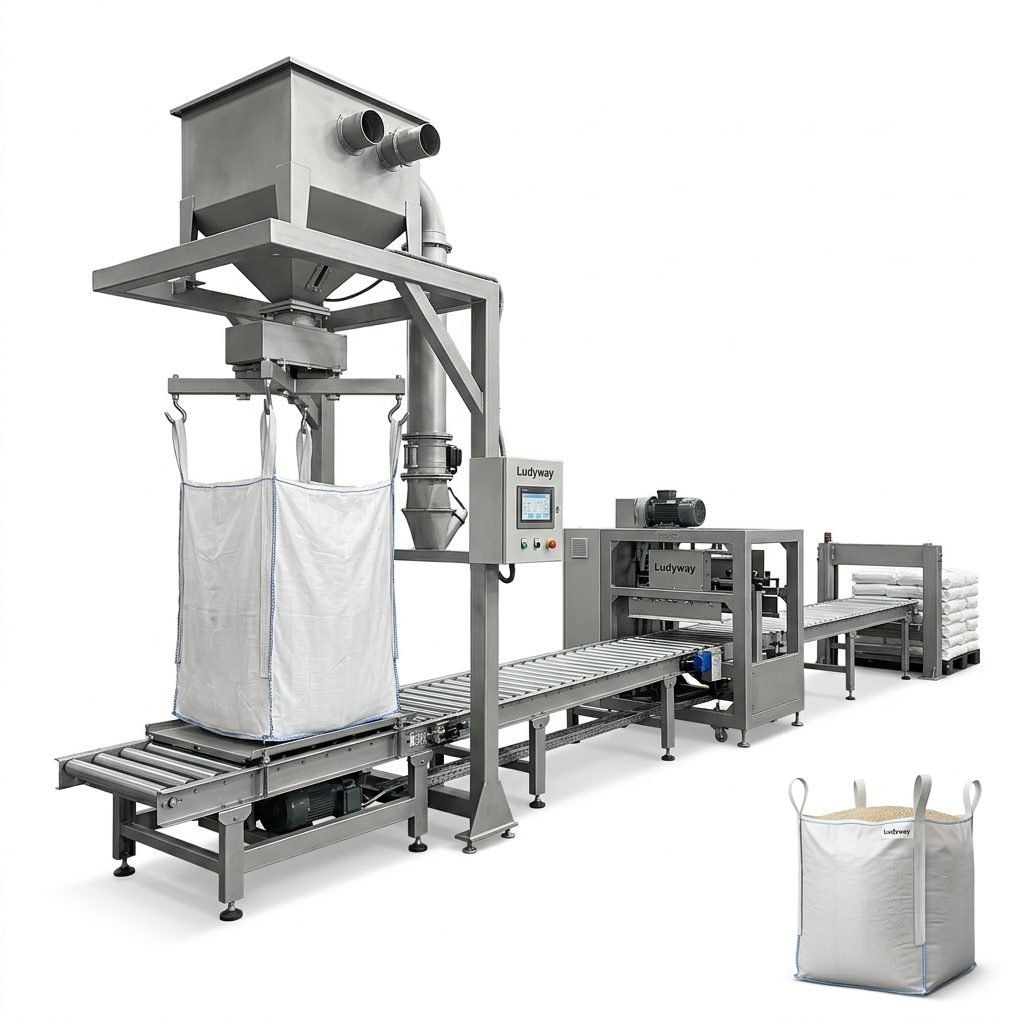
A full line can include:
- Upstream storage hopper or silo discharge
- Feeding conveyor or screw transfer
- Big bag filling station
- Bag settling and conveying unit
- Palletizing or pallet transfer
- Stretch wrapping or strapping
- Dust collection and control system
For buyers looking for scalable automation, Ludyway big bag packaging machine solutions can be considered as part of a broader turnkey packaging line strategy, backed by more than 30 years of packaging equipment manufacturing experience and global export service.
Common Buying Mistakes to Avoid
- Choosing based on price alone without checking material compatibility
- Ignoring dust behavior for powder products
- Underestimating output needs during seasonal production peaks
- Overlooking downstream handling such as pallet transport and wrapping
- Buying a rigid design that cannot adapt to future bag or product changes
Quick Selection Checklist
| Checklist Item | Your Target |
|---|---|
| Product type | Powder / granule / pellet / flake |
| Bag size | 500 kg / 1000 kg / custom |
| Capacity | Bags per hour requirement |
| Accuracy | Acceptable filling tolerance |
| Automation level | Manual / semi-auto / automatic |
| Environment | Dusty / corrosive / hygienic / standard |
| Expansion plan | Standalone now or turnkey line later |
Final Thoughts on Choosing the Best FIBC Filling Machine
The best FIBC filling solution is the one that fits your material, your bags, your factory workflow, and your growth plan. A reliable big bag packaging machine should deliver stable weighing, efficient filling, safe operation, and practical integration with the rest of your packaging process.
Before making a final decision, prepare detailed information about your product, bag dimensions, target speed, and plant layout. With the right technical evaluation, you can invest in a system that improves productivity today and supports expansion tomorrow.