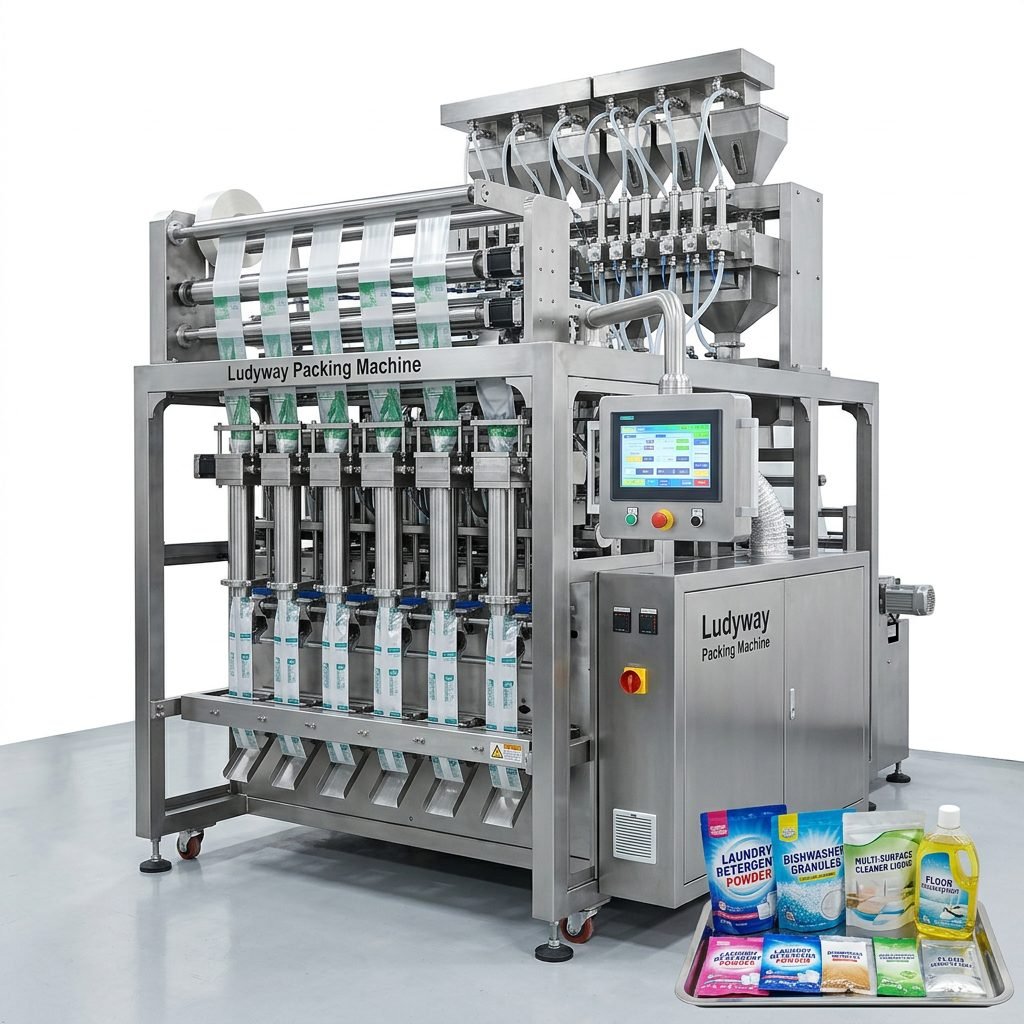
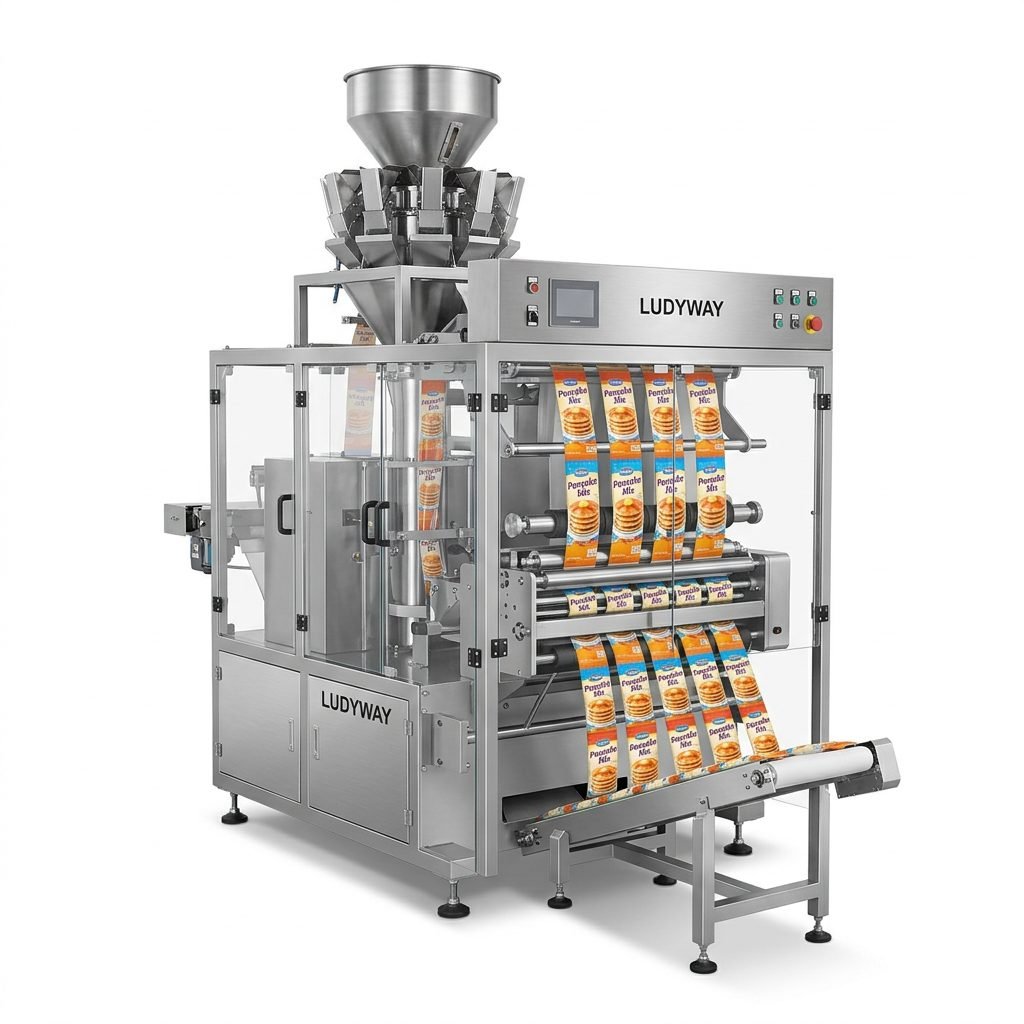
The best seafood packaging machine suppliers are the ones that can deliver high hygiene standards, stable sealing performance, corrosion-resistant machine design, fast changeovers, and reliable after-sales support. For seafood processors, exporters, and private-label brands, supplier selection should not be based on price alone. It should be based on whether the machine can protect product freshness, reduce contamination risk, support cold-chain workflows, and match the packaging format you actually sell—vacuum bags, pouches, trays, stick packs, sachets, or bulk formats.
This guide reviews 10 seafood packaging machine suppliers and explains how to compare them from an operational and procurement perspective. It also covers seafood packaging basics, industry demand, equipment types, and the main technical factors buyers should assess before making an investment.
If you are evaluating packaging automation for dried seafood, seafood snacks, seasoning sachets, fish oil products, shrimp pellets, freeze-dried seafood, or integrated food packing lines, this article is designed to match that search intent directly.
What Is a Seafood Packaging Machine?
A seafood packaging machine is industrial equipment used to fill, seal, vacuum-pack, weigh, pouch, tray-pack, label, code, or carton seafood products. Depending on the product category, the machine may package fresh fish, frozen shrimp, dried squid, freeze-dried seafood, fish feed, seafood snacks, fish oil, sauces, powders, granules, or ready-to-cook seafood portions.
- Fresh or chilled seafood often requires vacuum sealing, MAP, tray sealing, or thermoforming.
- Frozen seafood typically needs durable bagging and moisture-resistant sealing.
- Dried seafood and seafood snacks often use pouch, sachet, stick pack, or pillow bag formats.
- Seafood-derived liquids and supplements may require bottle filling, sachet filling, or capsule packaging.
In practice, seafood packaging is not just about appearance. It directly affects shelf life, food safety, shipping efficiency, oxygen control, and brand consistency.
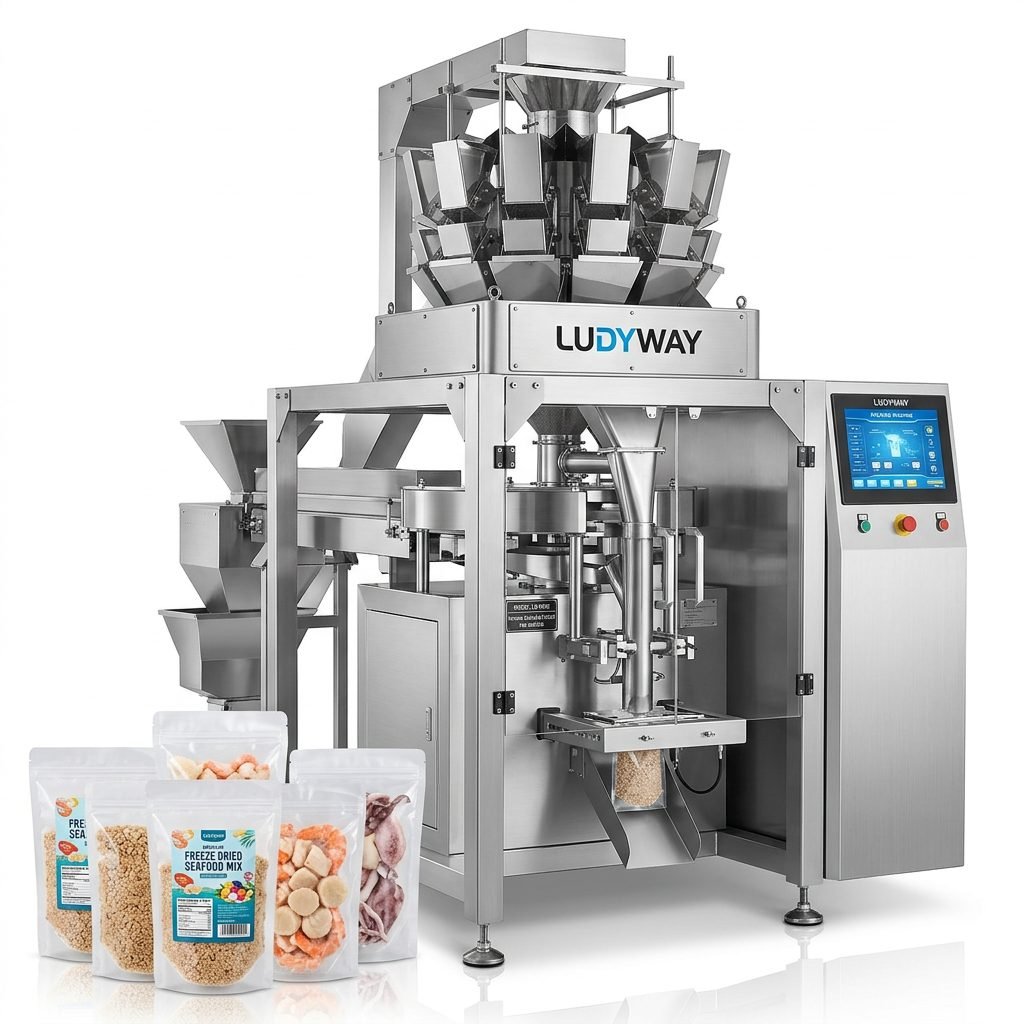
Why Efficient and Hygienic Seafood Packing Matters
Seafood is one of the most sensitive food categories in the packaging industry. It is highly perishable, vulnerable to microbial contamination, and strongly affected by temperature fluctuation and oxygen exposure. Efficient and hygienic packaging protects product quality while reducing spoilage, labor dependence, and compliance risk.
According to the FAO, global fisheries and aquaculture production has continued to expand over the past decade, with aquaculture becoming a major contributor to seafood supply. At the same time, global seafood trade remains highly international, which means packaging quality is increasingly linked to export success. Third-party market research firms such as Grand View Research and Fortune Business Insights also continue to report growth in food packaging machinery and vacuum packaging equipment as food processors invest in automation, hygiene, and shelf-life extension.
- Food safety: Hygienic machine surfaces, easy cleaning, and reduced human contact lower contamination risk.
- Freshness protection: Better sealing and oxygen control help maintain seafood texture and flavor.
- Cold-chain compatibility: Automated packing lines support faster throughput in chilled and frozen operations.
- Export readiness: Accurate coding, traceability, and consistent packs improve regulatory compliance.
- Labor efficiency: Automation reduces manual bagging, sealing, and weighing steps.
Top 10 Seafood Packaging Machine Suppliers
Below is a practical shortlist of suppliers that buyers may consider for seafood-related packaging applications. Some are broad packaging machinery manufacturers, while others are more specialized in turnkey lines, sachet systems, or niche pouch applications.
| Supplier | Best For | Strength | Markets |
|---|---|---|---|
| Ludyway | Turnkey seafood and food packaging automation | Large product range and export experience | Global |
| Packmate Machinery | Cost-effective automatic packaging systems | Flexible standard and custom machines | Europe, Middle East, South America, SEA |
| PacklineOEM | OEM and integrated packaging lines | Project-based line design | International |
| PackingMachineOEM | Non-standard machine customization | Adaptation for unusual bag and filling needs | International |
| SnusMachinery | Small pouch and sachet systems | Niche pouch packaging expertise | Europe, North America, Middle East |
| MULTIVAC | Vacuum packing, thermoforming, tray sealing | Strong reputation in food packaging | Global |
| ULMA Packaging | Fresh and frozen seafood formats | Tray sealing, thermoforming, flow wrapping | Global |
| Ishida | Weighing and inspection-heavy seafood lines | Checkweighers, seal inspection, quality control | Global |
| Marel | Seafood processing plus integrated packaging | Strong seafood industry connection | Global |
| Proseal | Tray sealing and MAP applications | Retail-ready seafood packaging | Global |
1. Ludyway
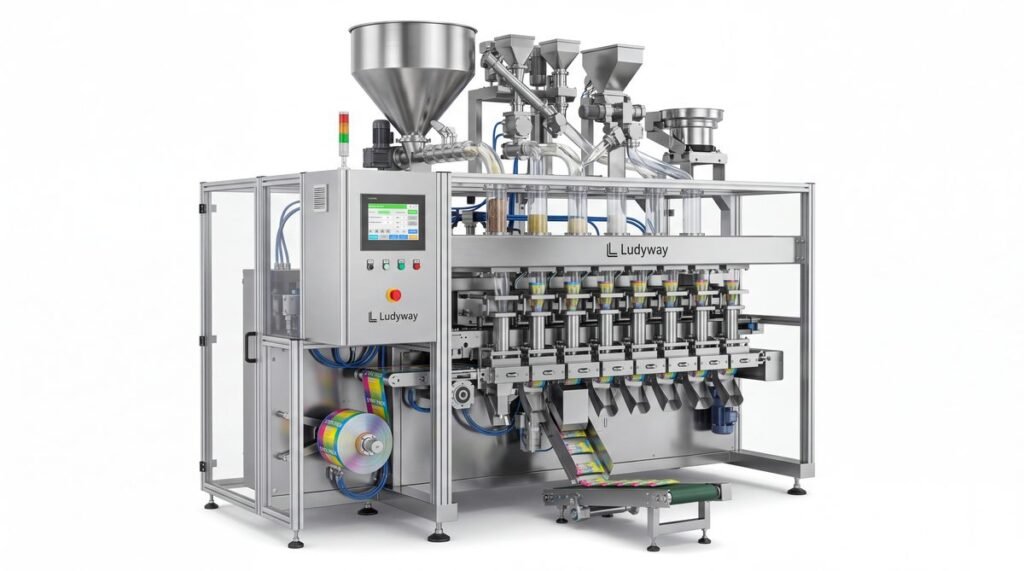
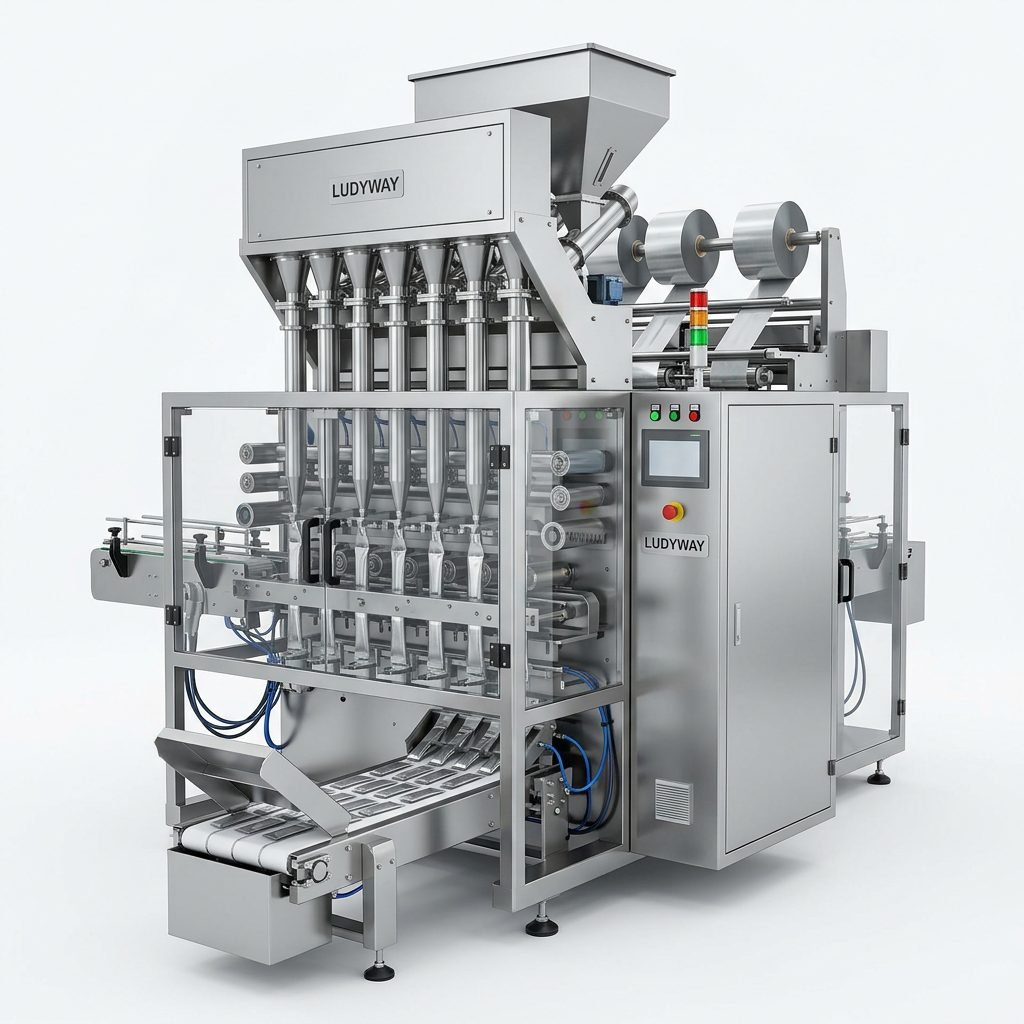
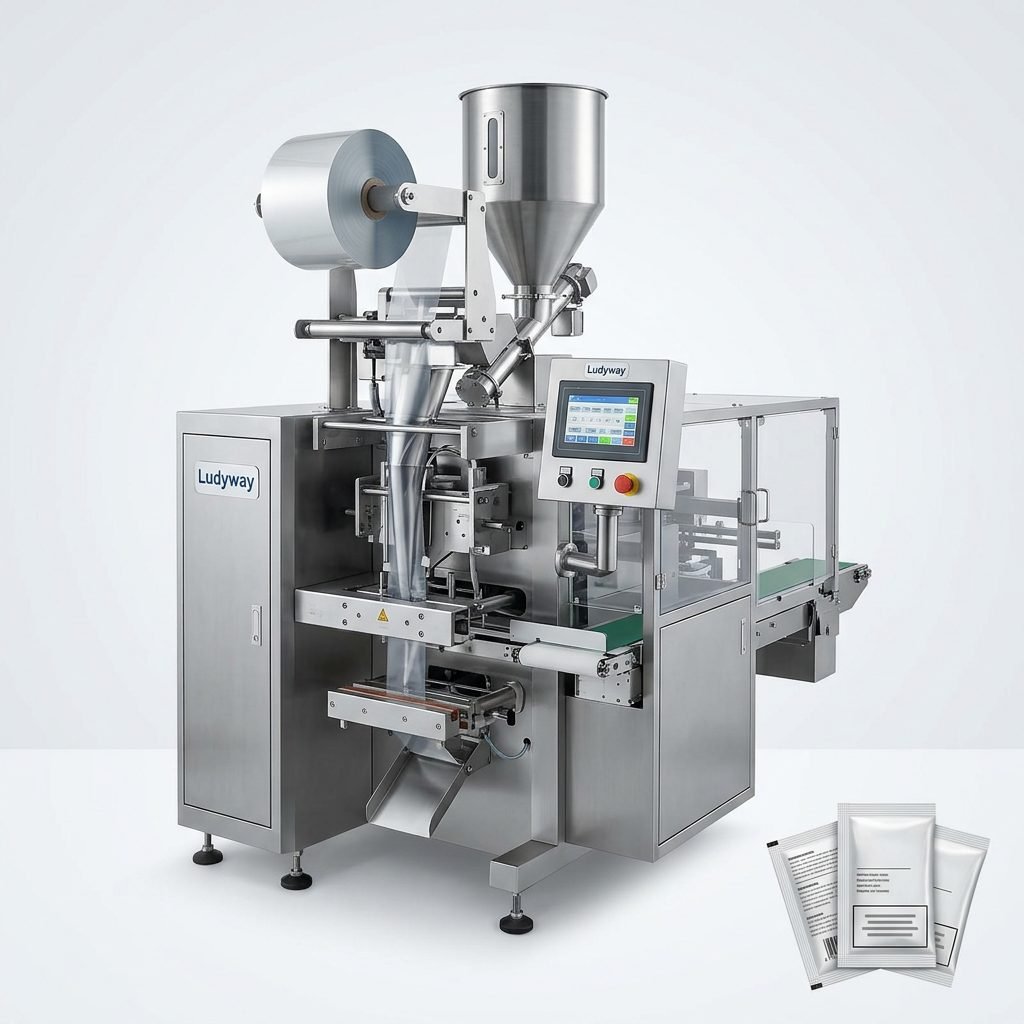
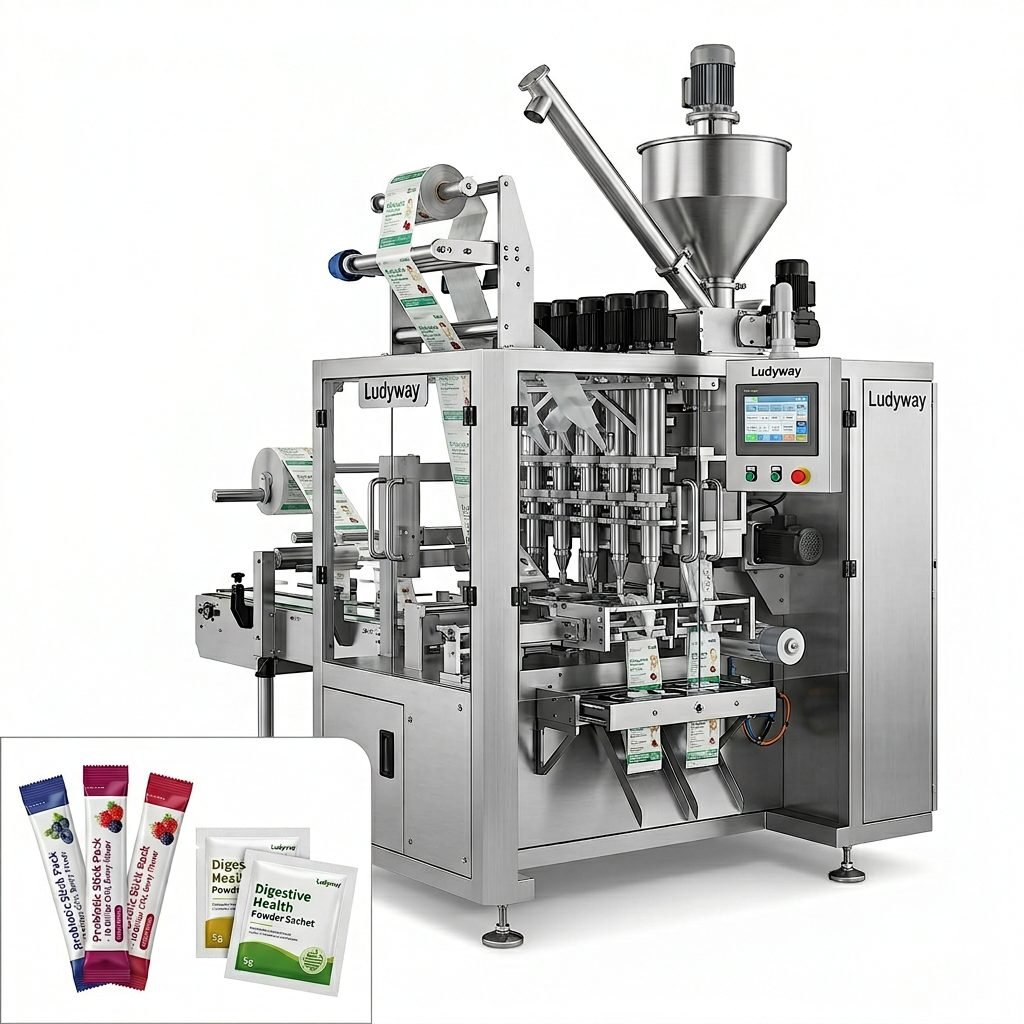
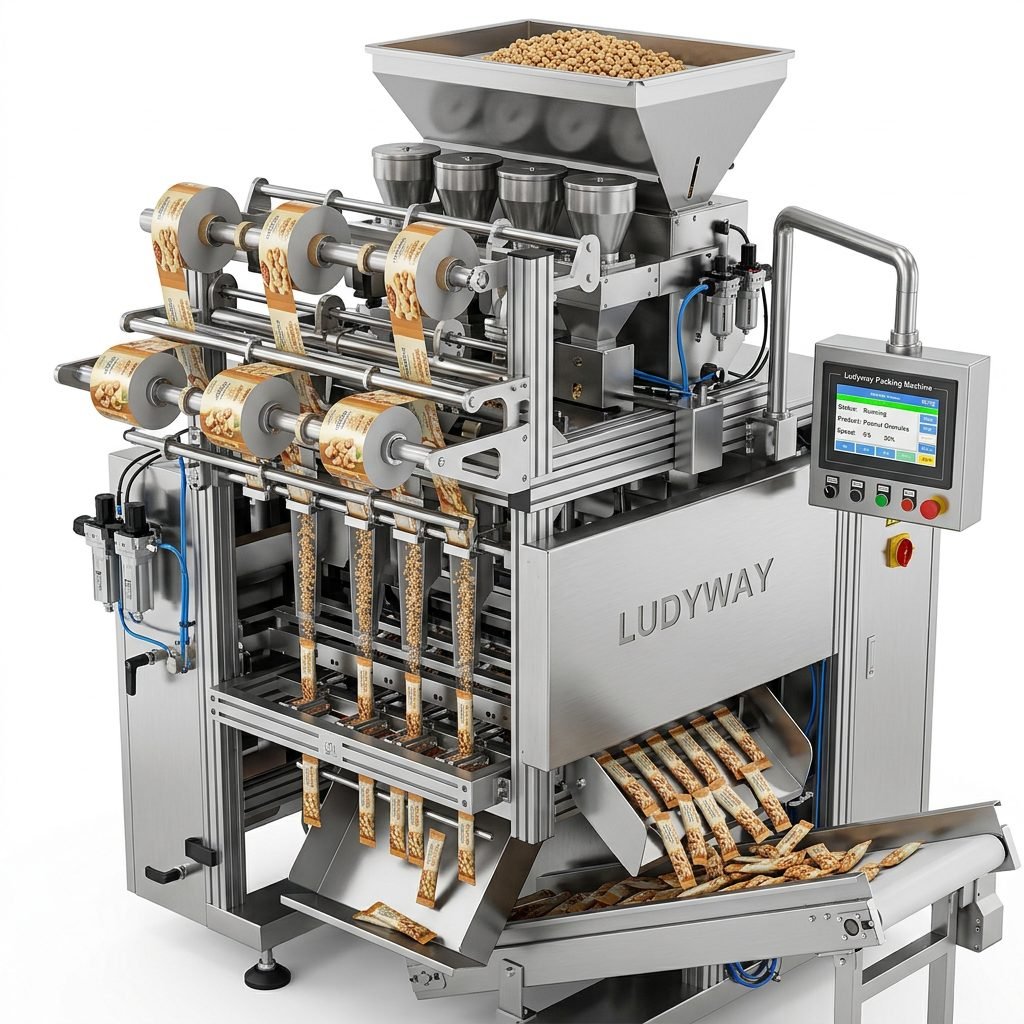
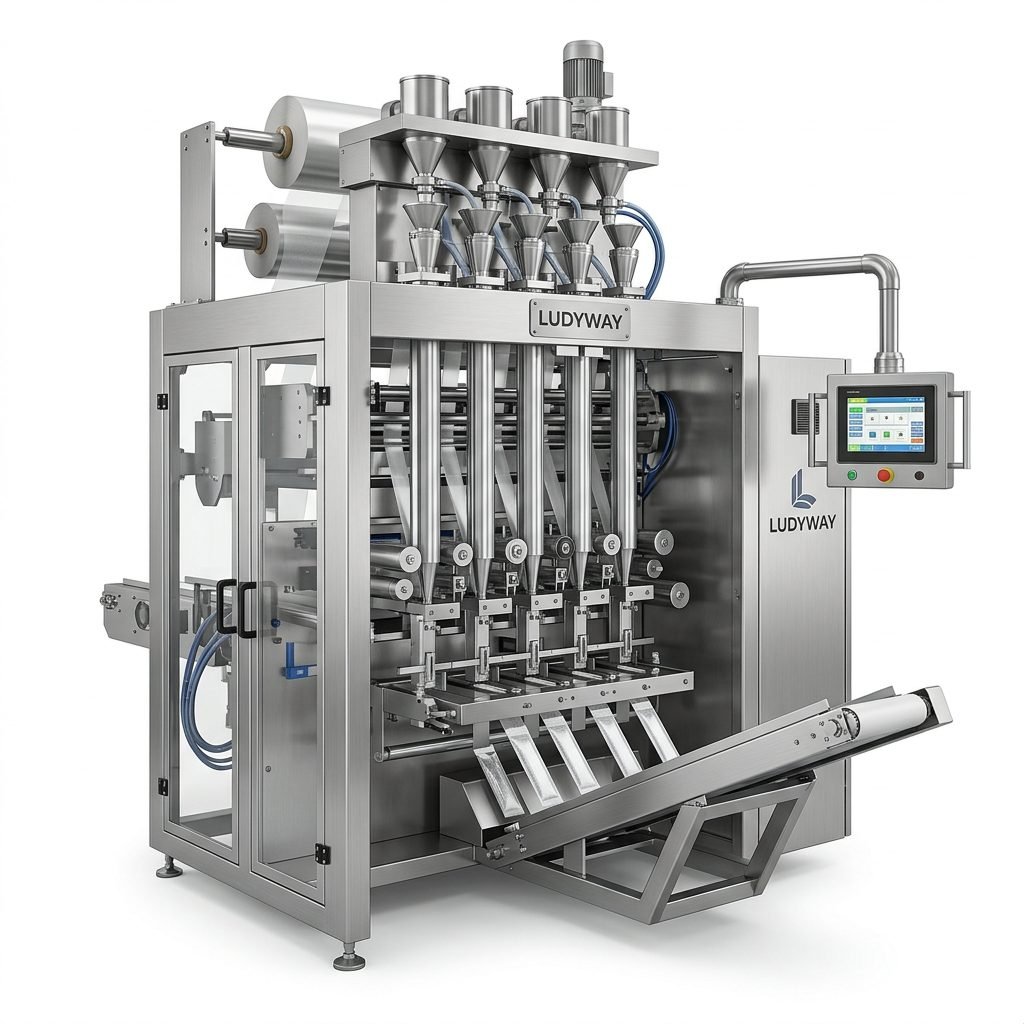
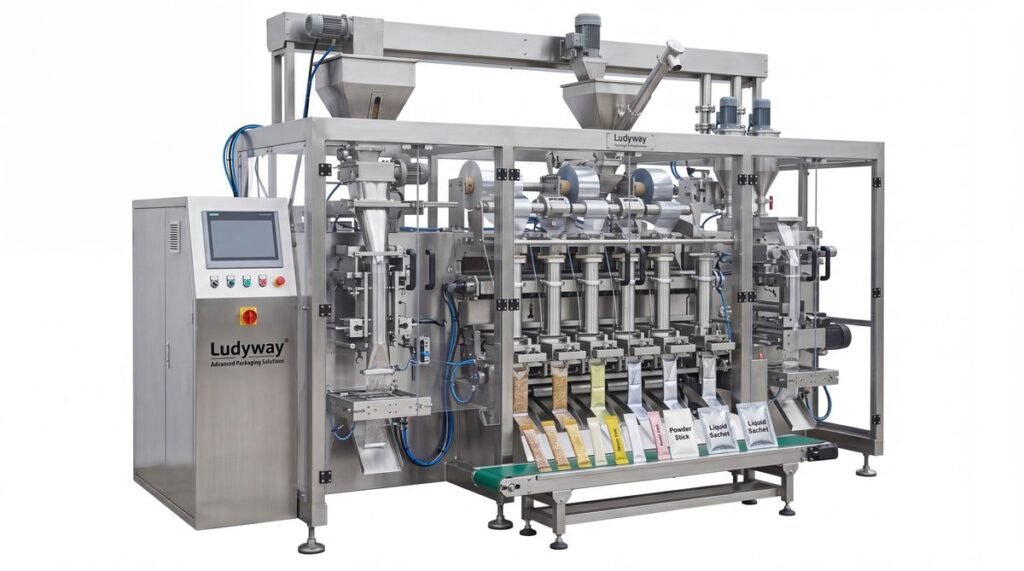
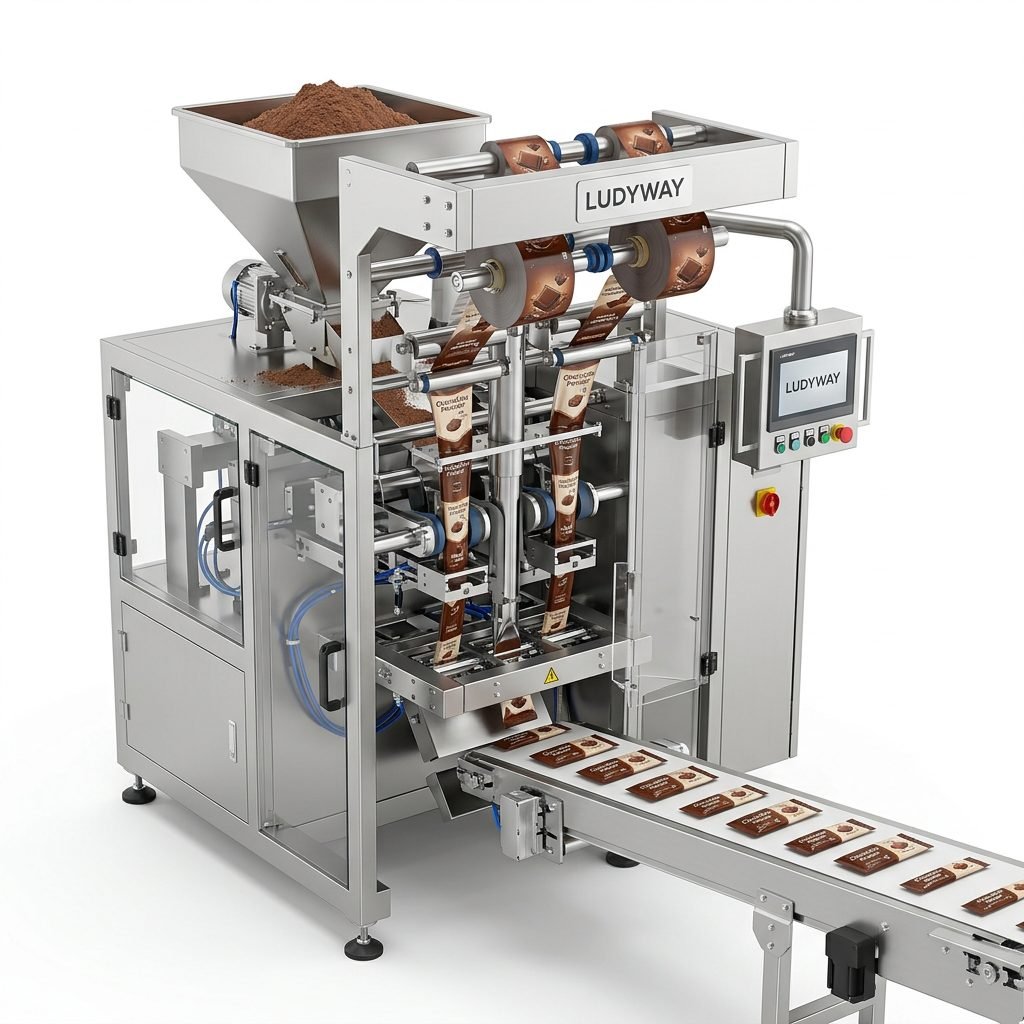
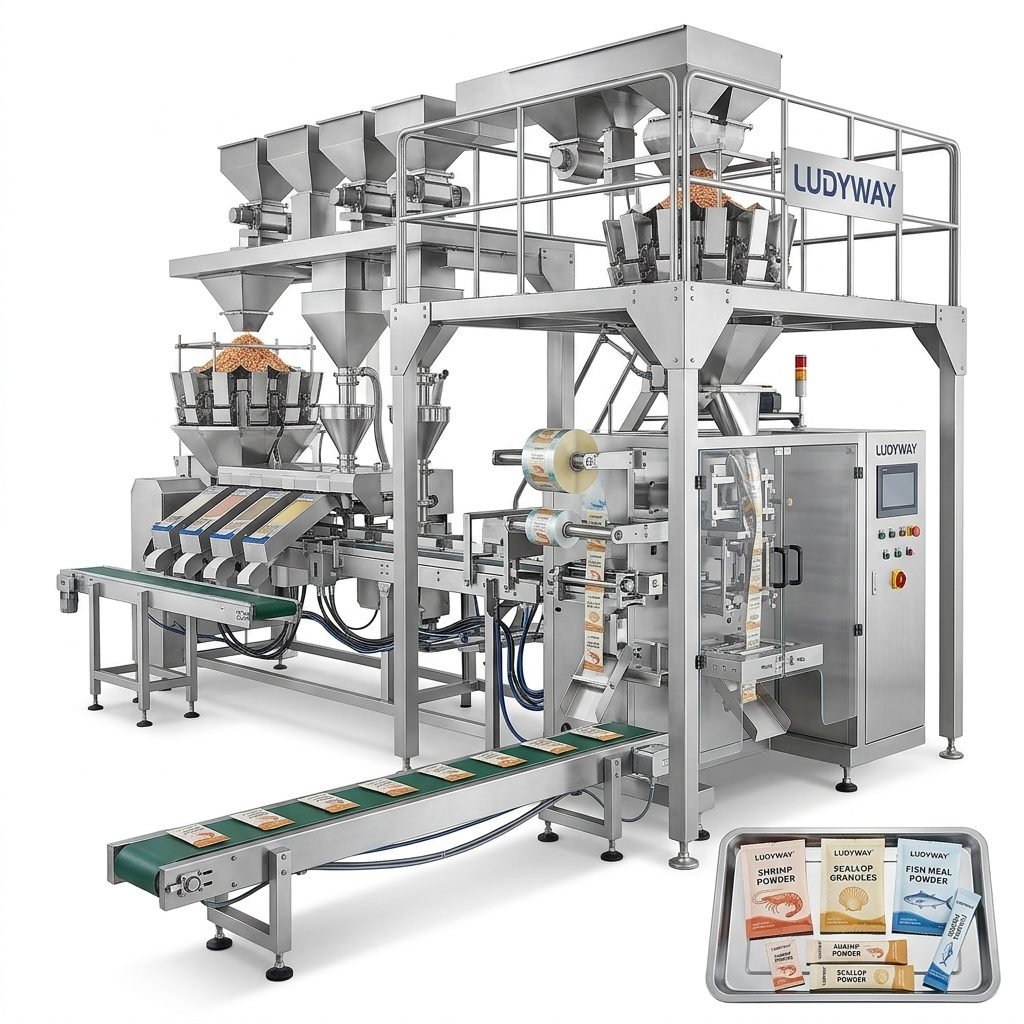
Ludyway is one of the strongest options for buyers seeking turnkey packaging lines and broad machine compatibility across food, pharmaceutical, supplement, and related sectors. For seafood packing, its value lies in flexible automation for powders, granules, liquids, stick packs, sachets, pouches, and integrated end-of-line systems. The company operates a manufacturing base of over 20,000 square meters and serves more than 100 countries and regions.
Ludyway is especially relevant for seafood-adjacent products such as dried seafood powder, seasoning sachets, seafood snack lines, fish oil sachets, freeze-dried seafood, and complete automated lines that combine feeding, filling, sealing, coding, inspection, and cartoning. Buyers looking for scalable export-oriented machinery can visit Ludyway for more details.
2. Packmate Machinery
Packmate Machinery is suitable for processors that need a practical balance between automation and budget control. Its equipment range covers powders, granules, liquids, and pastes, making it useful for seafood seasoning packs, dehydrated seafood ingredients, sauces, and other packaged food formats. It is often considered by buyers who need customization without moving into the price range of large multinational brands.
3. PacklineOEM
PacklineOEM focuses on OEM-oriented and project-based packaging systems. This makes it a relevant choice when a seafood company does not want just one machine, but a coordinated line that includes feeding, weighing, filling, sealing, conveyors, coding, and final packaging. It fits private-label factories and exporters that need layout adaptation or machine matching across several production stages.
4. PackingMachineOEM
PackingMachineOEM stands out when standard models are not enough. If your seafood product requires a non-standard pouch shape, special dosing control, moisture-sensitive packaging film handling, or unusual bag dimensions, this supplier may be worth reviewing. It is more engineering-flexible than catalog-only suppliers.
5. SnusMachinery
Although primarily focused on niche pouch applications, SnusMachinery may still be relevant for very small seafood sachets, seasoning portions, or compact pouch projects where precise small-dose packaging is the priority. It is not the first choice for mainstream fresh seafood tray lines, but it can be useful in specialty pouch formats.
6. MULTIVAC
MULTIVAC is widely recognized in vacuum packaging, thermoforming, tray sealing, and food packaging automation. For fresh fish fillets, chilled salmon portions, frozen shrimp, and premium retail seafood packs, MULTIVAC is often shortlisted because of its packaging integrity, hygiene engineering, and strong support network.
7. ULMA Packaging
ULMA Packaging has strong visibility in the food sector, especially for tray sealing, thermoforming, and horizontal flow wrapping. Seafood exporters and retail processors often consider ULMA for retail-ready packaging that requires attractive presentation and controlled atmosphere sealing.
8. Ishida
Ishida is particularly strong where accuracy and inspection matter. Seafood processors using multihead weighing, seal inspection, X-ray inspection, or checkweighing frequently evaluate Ishida systems. This is especially relevant when underweight packs, foreign body detection, or retailer compliance are major concerns.
9. Marel
Marel is closely associated with seafood processing equipment and integrated processing systems. For large plants that want a broader production solution—from processing to packing—Marel can be a strategic choice. The company is especially relevant for buyers prioritizing sector-specific seafood processing know-how.
10. Proseal
Proseal is a notable name in tray sealing and modified atmosphere packaging. For chilled seafood displayed in retail cabinets, tray seal quality matters a great deal. Proseal is commonly evaluated when presentation, shelf life, and top-film sealing consistency are top priorities.
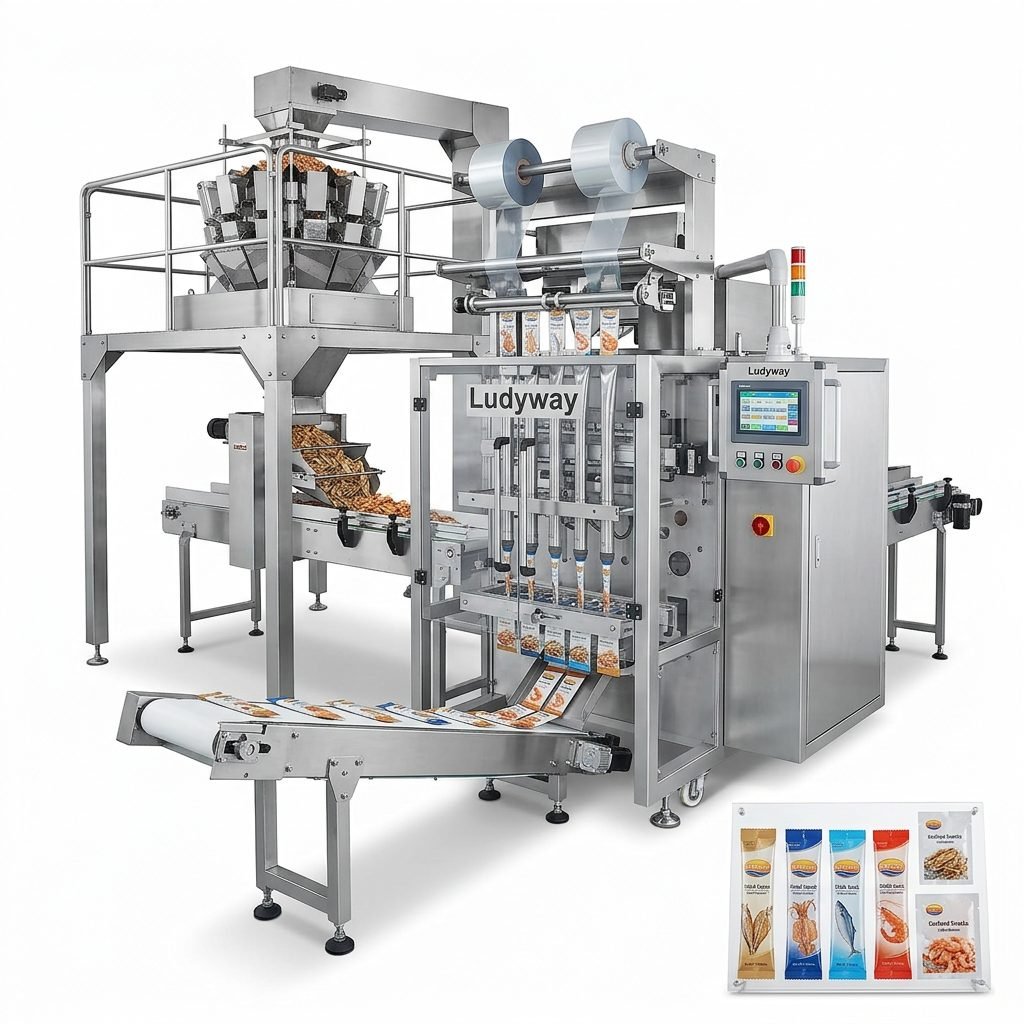
Comparison Analysis: How These Suppliers Differ
Instead of looking at all suppliers as interchangeable, buyers should classify them by packaging role.
Broad turnkey packaging suppliers
Ludyway, Packmate Machinery, PacklineOEM, and PackingMachineOEM are more flexible across many packaging formats. They are often easier to adapt for dried seafood, seafood powders, snack sachets, fish oil products, and custom line projects.
Fresh seafood and retail packaging specialists
MULTIVAC, ULMA Packaging, and Proseal are stronger in thermoforming, vacuum packing, tray sealing, and MAP-style retail packs. These are usually better suited to fresh fillets, shrimp trays, chilled shellfish, and supermarket-ready seafood presentations.
Inspection and weighing-driven solutions
Ishida becomes more relevant where weight control, contamination detection, and quality assurance are central to the packaging line.
Seafood processing integration
Marel is often considered when the buyer wants a larger system strategy rather than only packaging equipment.
Niche pouch applications
SnusMachinery is more specialized and may be considered for compact pouch or sachet applications rather than mainstream seafood tray or bulk bag lines.
Why Choose the Right Seafood Packaging Machine Supplier?
Choosing the right supplier affects much more than the machine purchase. It affects uptime, labor cost, hygiene audit performance, product recalls, film waste, and production flexibility.
- Procurement value: A cheaper machine with poor sealing or weak local support may cost more over time.
- Technical fit: Seafood is wet, oily, salty, or temperature-sensitive; machines must match those realities.
- Operating cost: Energy use, spare parts, film waste, and cleaning time all influence total cost of ownership.
- Service reliability: Fast parts support and remote diagnostics can reduce expensive downtime.
- Scalability: Your current product may be dried seafood, but next year you may add sauces, pouches, trays, or cartons.
Key Features to Look for in Seafood Packing Equipment
- Stainless steel hygienic construction with corrosion resistance.
- Washdown-friendly surfaces and fewer contamination traps.
- Stable vacuum or sealing performance under high-moisture conditions.
- Compatibility with oxygen barrier films and food-grade packaging materials.
- Accurate weighing or dosing for retail compliance.
- Integration with date coding, batch traceability, and inspection systems.
- Easy changeover between pack sizes or formats.
- Ability to connect with conveyors, checkweighers, metal detectors, and cartoners.
Typical Seafood Packaging Applications
Different seafood products need different machine architectures.
- Fresh fish fillets: vacuum packaging, thermoforming, tray sealing, MAP.
- Frozen shrimp and shellfish: bagging, weighing, sealing, carton packing.
- Dried seafood snacks: sachet packing, pillow bagging, stick pack systems.
- Seafood seasoning powders: multi-lane sachet and stick pack machines.
- Fish oil or omega products: bottle filling, capsule packaging, liquid sachets.
- Freeze-dried seafood: vacuum sealing and moisture-control packaging.
Entity Relationship: Brand, Product, Industry, and Market
For search engines and industrial buyers, the relationships among these entities are important:
- Industry: Seafood processing, seafood export, food packaging, cold-chain distribution.
- Products: Fish fillets, shrimp, shellfish, seafood snacks, dried seafood, fish oil, seafood powders.
- Packaging formats: Vacuum bags, trays, pouches, sachets, stick packs, bottles, cartons.
- Machines: Vacuum sealers, tray sealers, thermoformers, sachet machines, pouch fillers, coding systems, checkweighers.
- Brands: Ludyway, Packmate Machinery, PacklineOEM, PackingMachineOEM, SnusMachinery, MULTIVAC, ULMA, Ishida, Marel, Proseal.
- Markets: Retail seafood, food service, export packaging, private label, industrial ingredient supply.
This relationship matters because a supplier should not only sell a machine; it should fit your product form, compliance requirement, market channel, and packaging material ecosystem.
How to Evaluate Suppliers Before Buying
Ask for application evidence
Request video proof, customer references, or case studies for products similar to yours. If you process salted, oily, frozen, or irregular seafood products, general machine videos are not enough.
Check material compatibility
Seafood packaging often requires specific films with moisture barriers, puncture resistance, or oxygen control. Ask whether the machine has been tested on your intended packaging material.
Review cleaning design
In seafood plants, sanitation is critical. Ask about CIP compatibility, open-frame design, surface finish, drainage, and washdown suitability.
Evaluate support depth
Commissioning, spare parts, operator training, remote troubleshooting, and documentation quality can determine whether the machine performs well after installation.
Confirm output realism
Nominal speed claims should be reviewed against actual product behavior, sealing dwell time, and changeover frequency. Real throughput is often lower than brochure maximums.
Procurement Tips for Seafood Factories and Exporters
- Define your product moisture, oil level, salt content, and temperature range before asking for quotations.
- Specify packaging format, pack weight, output target, and preferred film structure.
- Ask if the supplier can provide line drawings and utility requirements.
- Compare not only machine price, but also spare parts cost and service response time.
- Request factory acceptance testing with your sample product whenever possible.
If you need broader automated packaging options beyond seafood alone, you can also review automatic packaging machinery solutions for additional project comparisons. For buyers focused on full-line integration and project customization, OEM packaging line solutions may also be relevant.
FAQ
What packaging machine is best for fresh seafood?
For fresh seafood, vacuum packaging machines, thermoforming machines, tray sealers, and MAP systems are usually the best choices. The right selection depends on shelf-life goals, retail presentation, and throughput requirements.
What is the most important hygiene feature in seafood packaging equipment?
The most important features are hygienic stainless steel design, easy-clean contact surfaces, reduced dead zones, and suitability for wet processing environments. Corrosion resistance is especially important in seafood plants.
Can sachet or stick pack machines be used for seafood products?
Yes. They are commonly used for seafood seasonings, powdered seafood ingredients, instant soup bases, seafood snack portions, and certain dried seafood applications. They are not the primary choice for fresh fillets or tray-packed shrimp.
How much can automation improve seafood packaging efficiency?
The exact number depends on product type and plant layout, but automated packaging lines generally improve output consistency, reduce manual handling, lower film waste, and support better traceability. In many factories, the labor reduction and downtime savings justify the investment over time.
Should I choose a specialist seafood packaging supplier or a general packaging machine manufacturer?
If you mainly package fresh, chilled, or frozen seafood in trays or vacuum bags, a specialist in food packaging may be better. If you pack seafood powders, snacks, sachets, sauces, or mixed-format products, a broad turnkey manufacturer may offer more flexibility.
What certifications or compliance points should buyers review?
Buyers commonly review food-grade contact materials, electrical safety standards, sanitary design, traceability functions, and compatibility with local regulatory requirements. Export-focused operations may also need specific market documentation.
Final Buying Perspective
The top seafood packaging machine supplier for your business depends on your actual product and sales channel. For fresh retail seafood, tray sealing and vacuum specialists are usually the better fit. For dried seafood, seasoning sachets, seafood snacks, and integrated automation projects, flexible turnkey packaging manufacturers can offer stronger value. Among the suppliers reviewed here, Ludyway stands out for broad packaging range, export reach, and turnkey line capability, while multinational brands like MULTIVAC, ULMA Packaging, Ishida, Marel, and Proseal remain strong choices in specialized seafood and food packaging applications.
For most buyers, the smartest path is to shortlist suppliers by packaging type first, then compare technical fit, hygiene design, support capability, and long-term operating cost rather than just initial machine price.