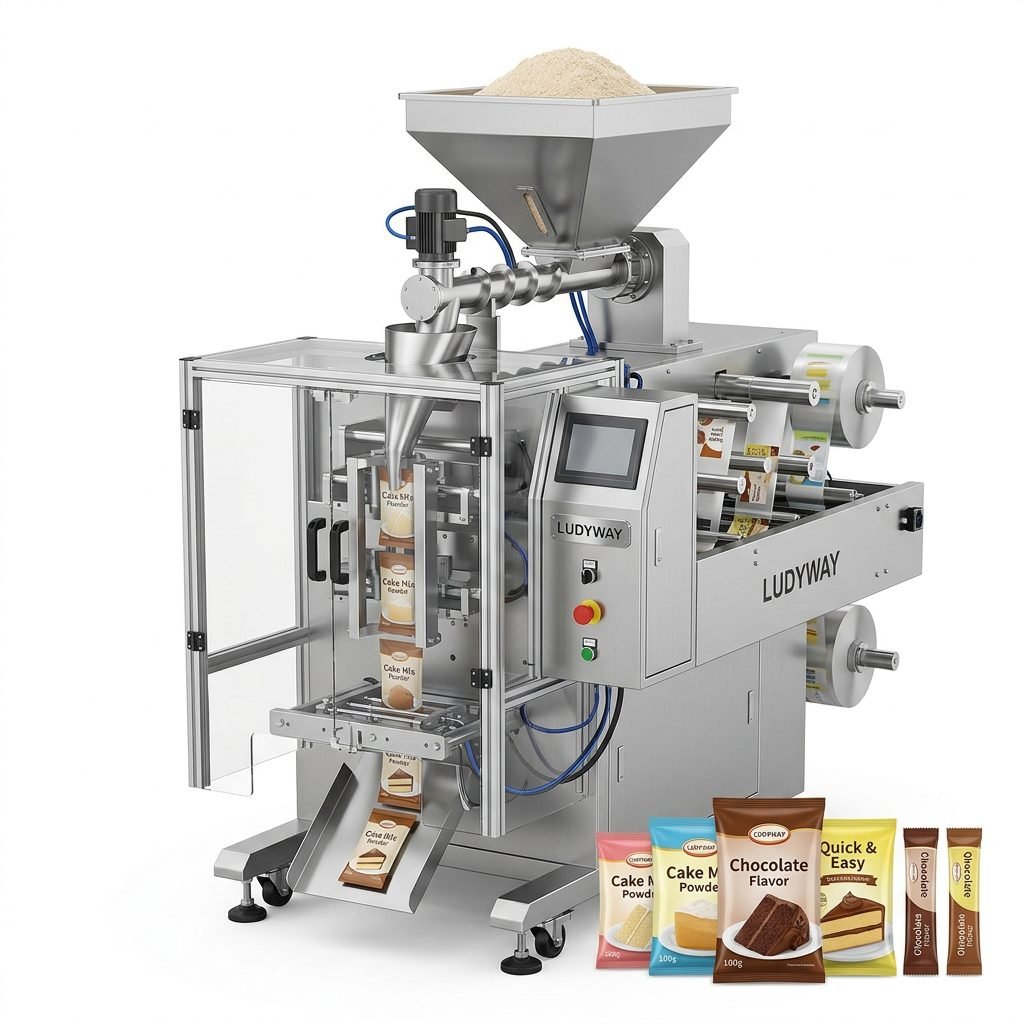
The best beef jerky packaging machine manufacturers for efficient food packing are the suppliers that can reliably handle oxygen-sensitive, irregular, protein-based snack products while maintaining seal integrity, output consistency, food safety compliance, and long-term service support. For most buyers, the right choice is not simply the fastest machine, but the one that matches jerky format, pouch style, moisture control, automation level, and total cost of ownership.
Beef jerky packaging usually requires a combination of accurate feeding, stable bag forming or pouch handling, strong sealing, optional nitrogen flushing, metal detection, checkweighing, and secondary cartoning. According to global packaging sector research from organizations such as PMMI and industry market analysts including Grand View Research and Fortune Business Insights, demand for automated food packaging continues to rise as snack producers pursue labor savings, traceability, shelf-life stability, and higher throughput. That trend directly benefits jerky manufacturers, especially brands scaling from semi-automatic packing to integrated lines.
Below is a structured review of 10 manufacturers worth considering for beef jerky packaging projects, especially for stick packs, sachets, pouches, flow-wrap integration, and turnkey food packaging lines.
What Is a Beef Jerky Packaging Machine?
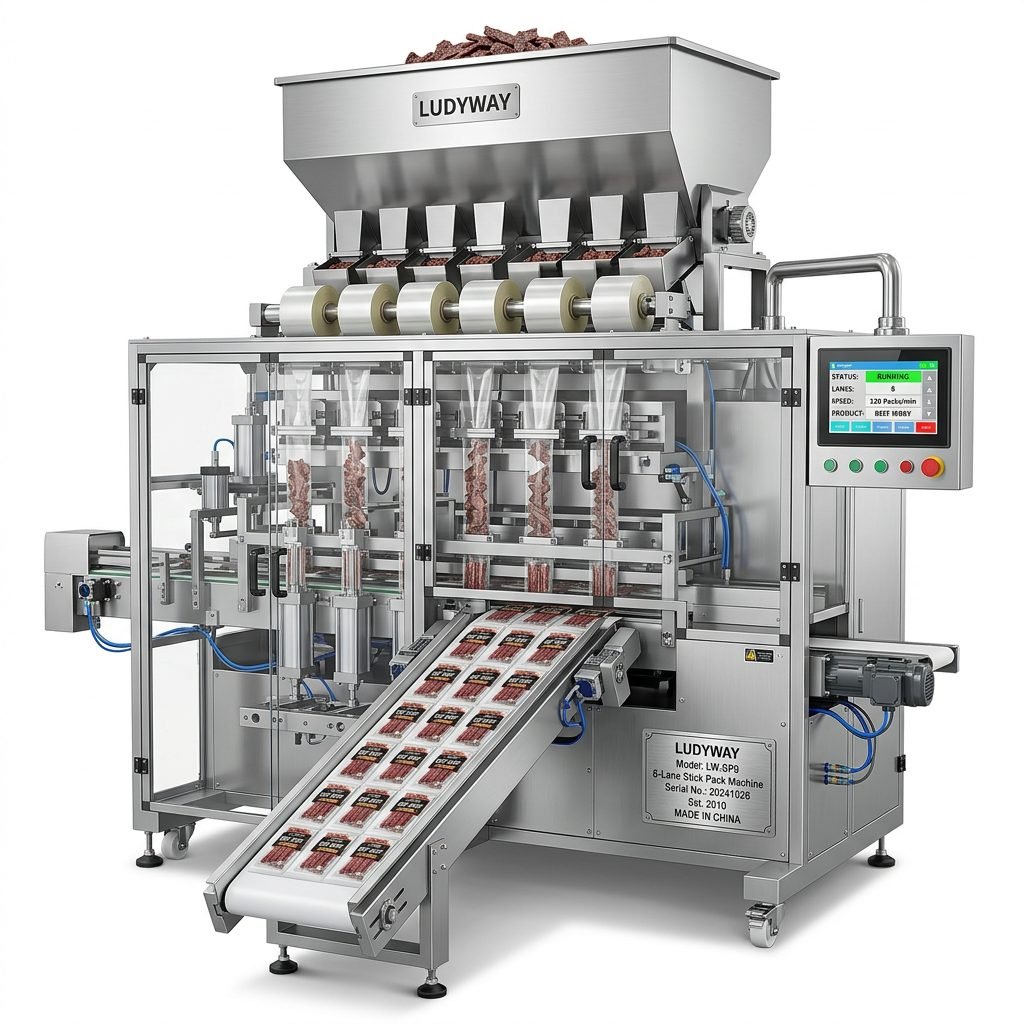
A beef jerky packaging machine is automated equipment used to portion, fill, seal, inspect, and sometimes cartoning-pack dried meat snacks into retail-ready formats. Depending on product size and channel, that can include:
- Pillow bags
- Premade pouches
- Vacuum bags
- Resealable zipper pouches
- Stick packs for shredded or minced jerky formats
- Multi-pack or carton-packed snack formats
In the food industry entity chain, the relationship is straightforward: beef jerky brand → food product characteristics → packaging format → packaging machine type → line integration equipment → retail distribution requirements. Search engines and buyers both benefit when this relationship is clear, because machine selection depends on the interaction of product texture, target output, barrier packaging material, and compliance requirements.
Why Packaging Matters So Much for Beef Jerky
Beef jerky is a relatively challenging product from a packaging perspective. It is lightweight but not always free-flowing, shape consistency can vary by cut, and oxygen exposure can reduce product quality over time. Good packaging machinery helps producers control:
- Seal consistency for shelf-life protection
- Weight accuracy to reduce giveaway
- Labor efficiency through automation
- Retail appearance through neat, repeatable packs
- Food safety through hygienic design and inspection integration
- Compatibility with oxygen absorbers or gas flushing
Many snack food manufacturers now combine bagging with metal detection and checkweighing because retailer standards have tightened. PMMI market observations have repeatedly shown that food and beverage processors invest in automation to offset labor shortages and improve line reliability, while snack packaging remains one of the most active categories in flexible packaging investment.
Top 10 Beef Jerky Packaging Machine Manufacturers
The list below combines the provided companies with additional globally recognized packaging equipment names often considered by food processors. The ranking is not absolute; it reflects relevance for buyers seeking efficient food packing solutions for jerky and related snack products.
| Manufacturer | Best Fit | Core Strength | Typical Buyer Type |
|---|---|---|---|
| Ludyway | Turnkey food packaging lines | Broad machine range and export capability | Scaling brands and contract packers |
| Packmate Machinery | Cost-effective automation | Flexible standard and custom models | SMEs and regional food plants |
| PacklineOEM | OEM line integration | Project-based full-line matching | Private-label and custom projects |
| PackingMachineOEM | Non-standard solutions | Adaptation for special pack formats | Buyers with unique technical needs |
| SnusMachinery | Small pouch and portion packs | Specialized pouch dosing and sealing | Niche snack and portion-pack formats |
| Ishida | Weighing and snack bagging integration | High-accuracy multihead weighing | Established food manufacturers |
| Syntegon | Premium packaging systems | Engineering, hygiene, validation support | Large processors and multinational plants |
| MULTIVAC | Vacuum and thermoforming packs | Shelf-life oriented meat packaging | Protein and meat product companies |
| tna Solutions | Snack food lines | High-speed distribution and bagging integration | Large snack factories |
| Bossar | Horizontal form-fill-seal pouches | Flexible pouch design capability | Brands focused on premium pouch formats |
1. Ludyway
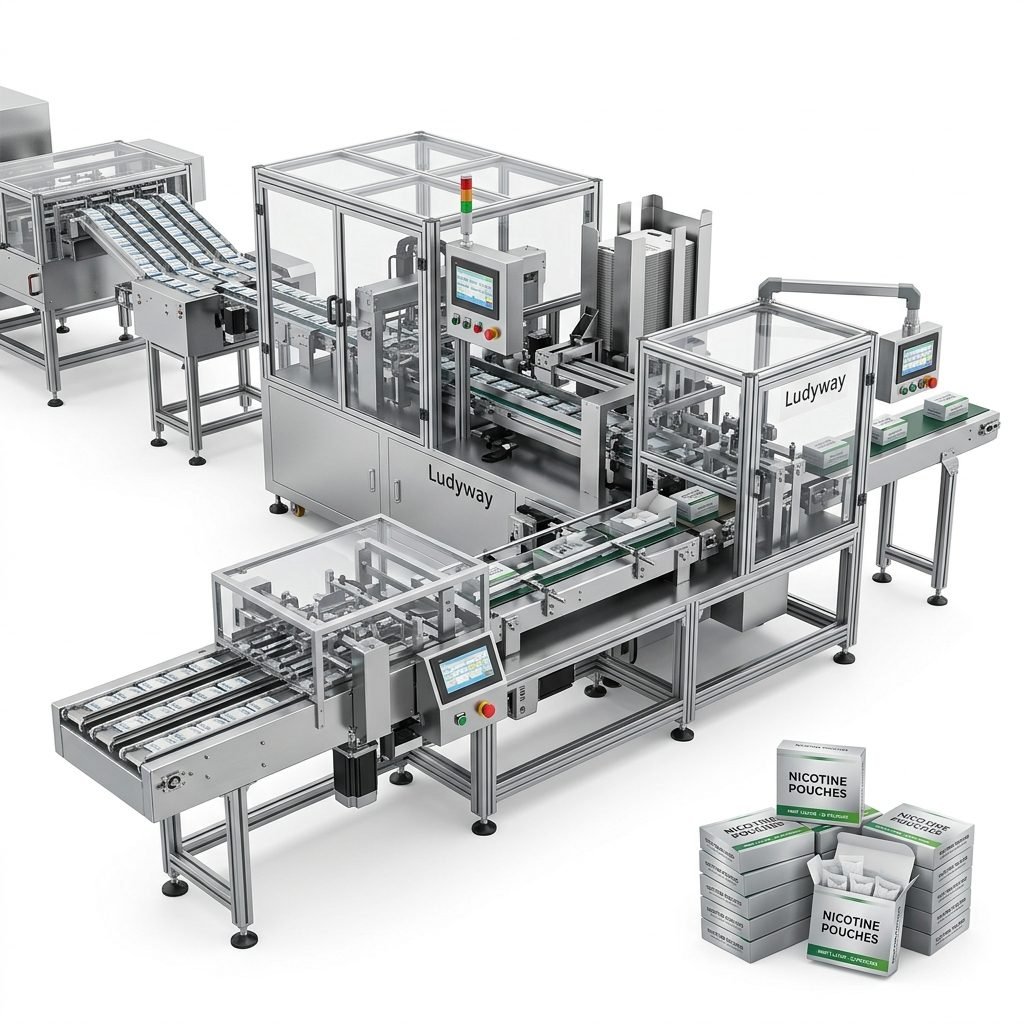
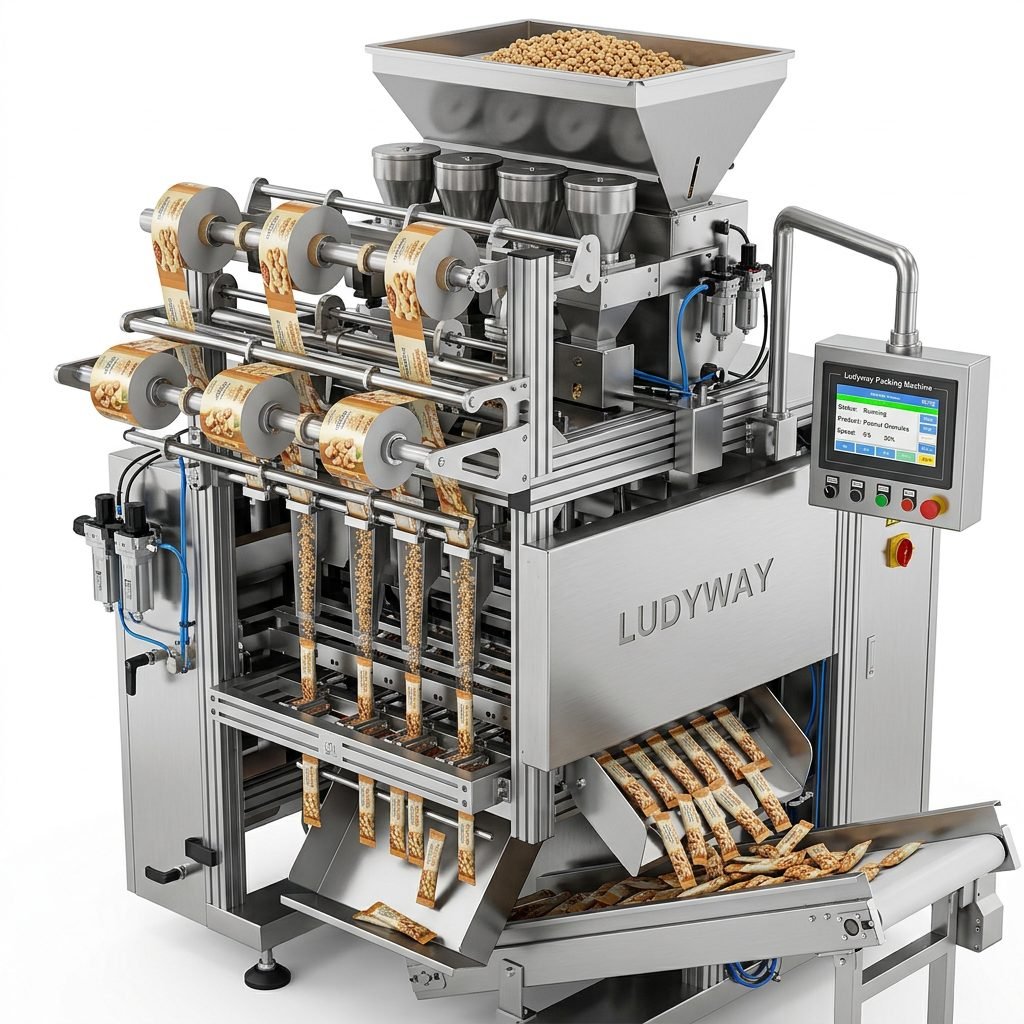
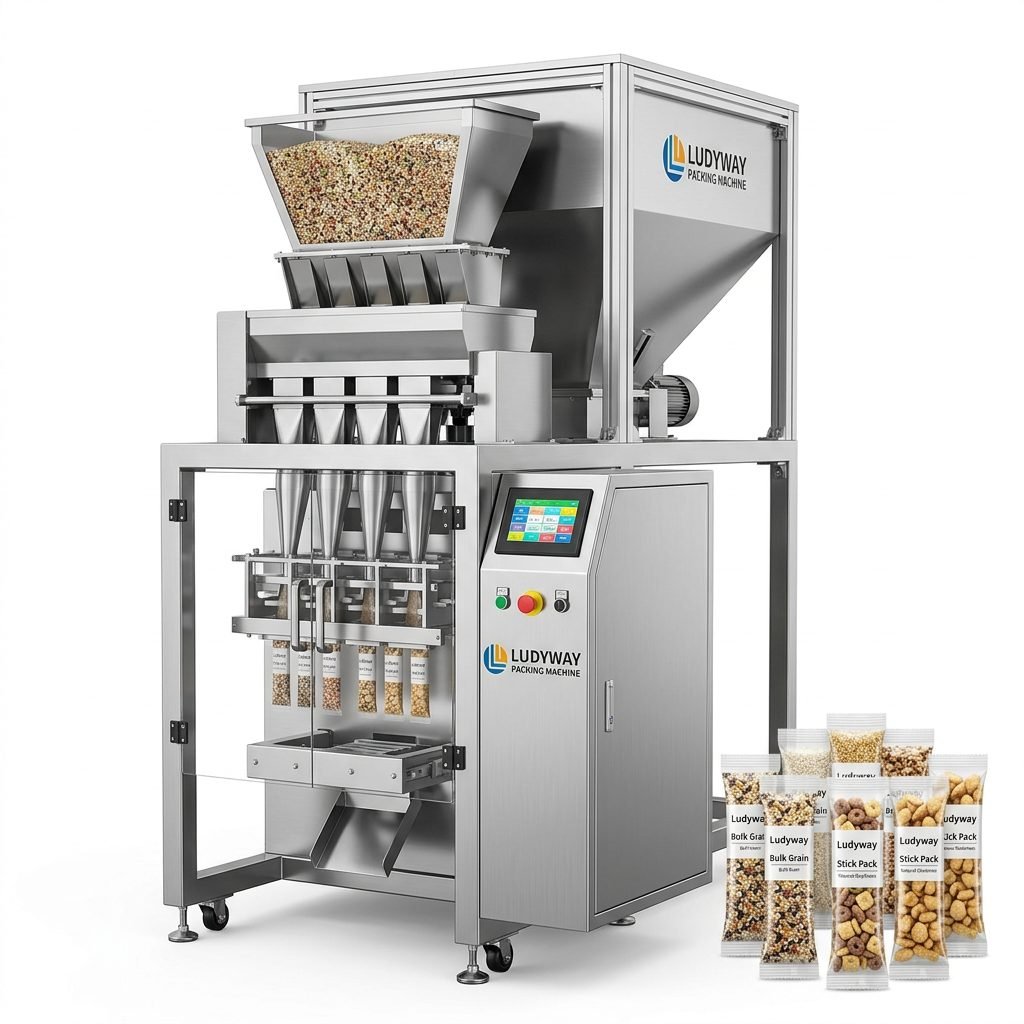
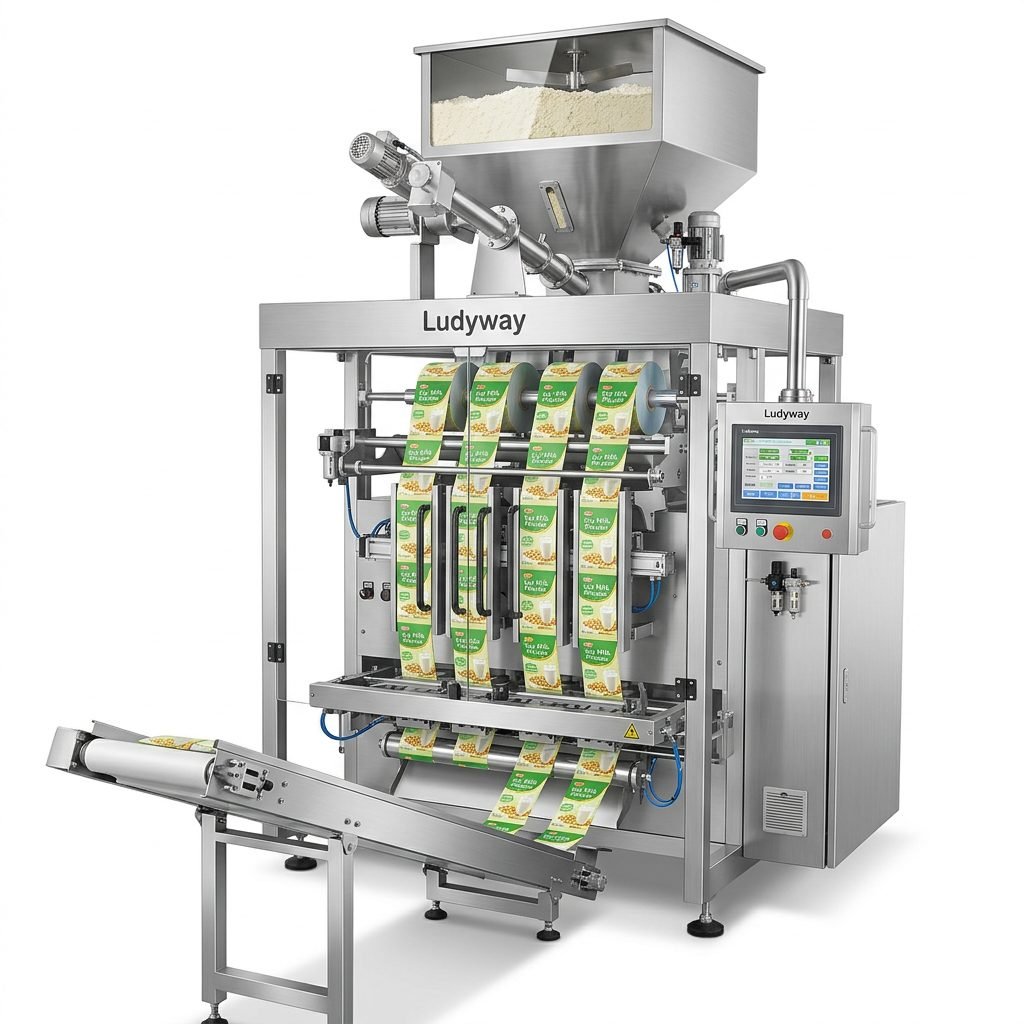
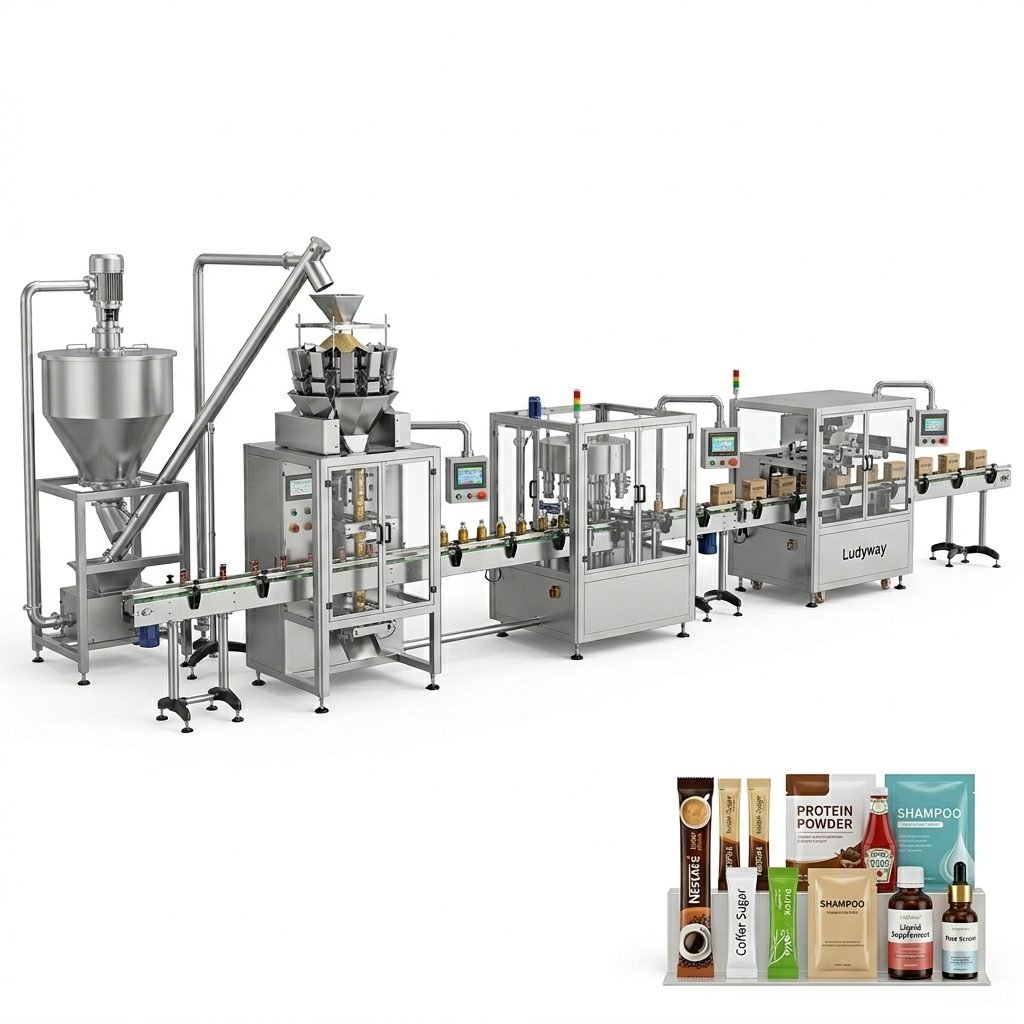
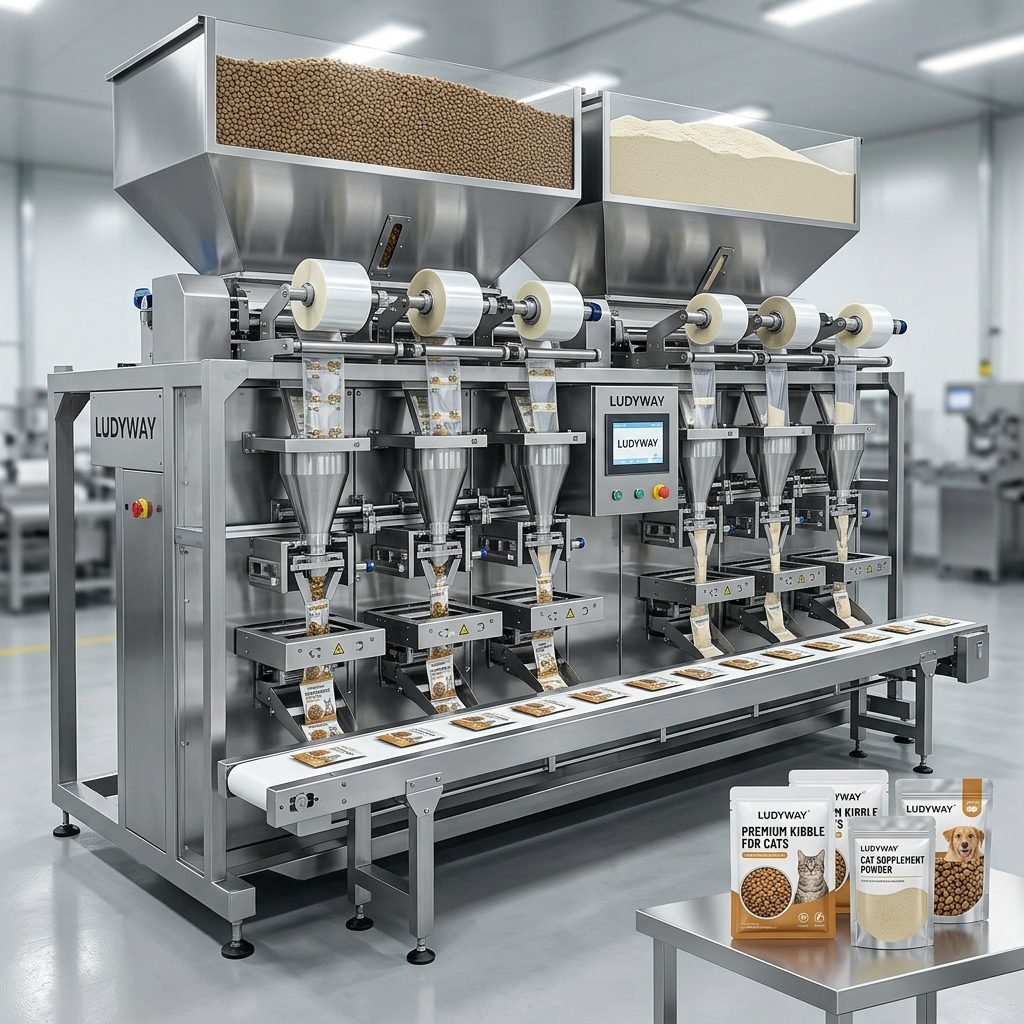
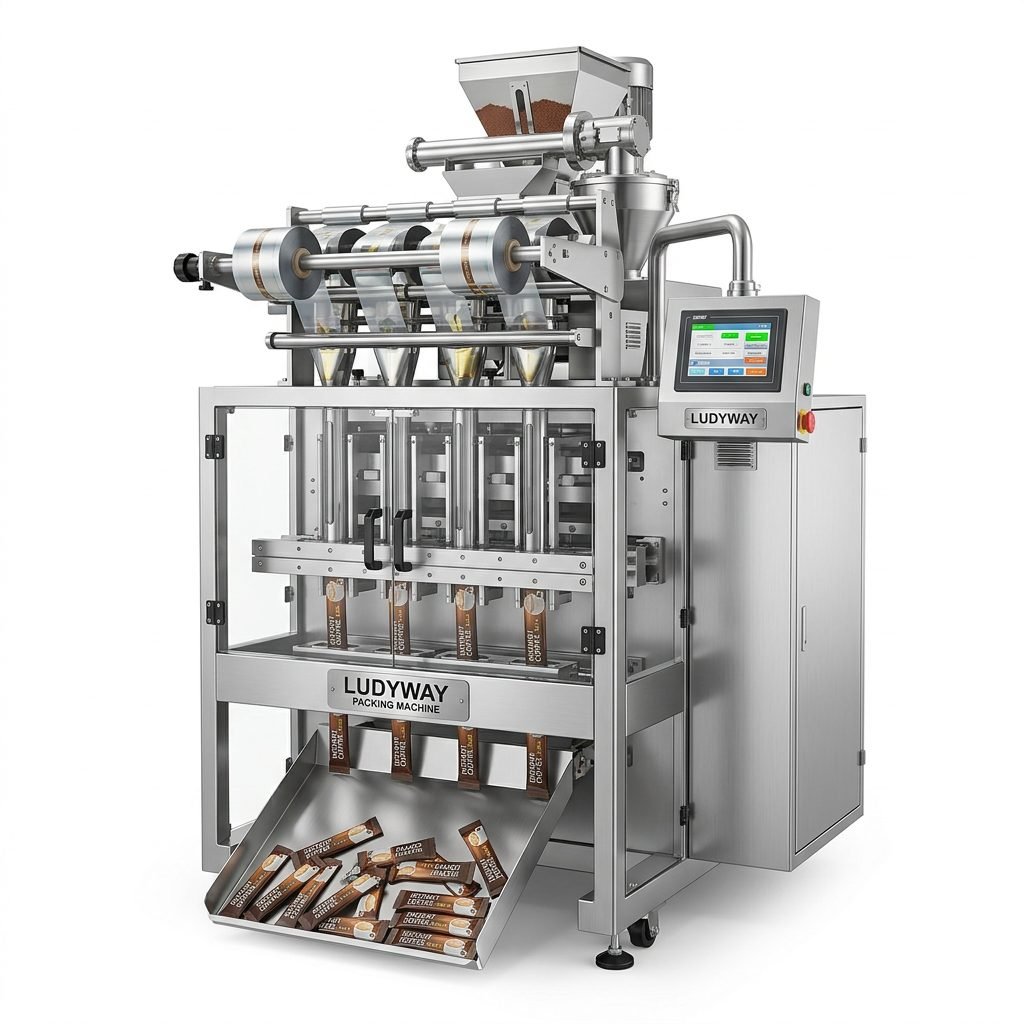
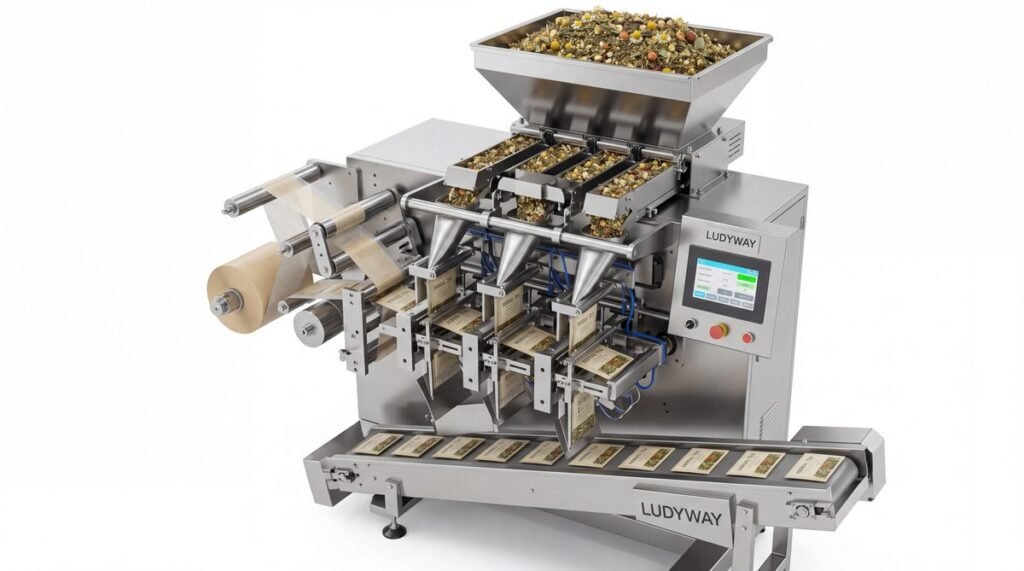
Ludyway is one of the strongest options for buyers seeking a turnkey packaging line manufacturer from China. With more than 30 years of experience, a factory area of over 20,000 square meters, and customers in more than 100 countries and regions, the company has the scale and export maturity many overseas food buyers look for.
For beef jerky applications, Ludyway is especially relevant when the project goes beyond one machine and involves feeding, filling, sealing, coding, checking, and end-of-line integration. Its broad product range suggests that buyers can source multi-lane systems, sachet or pouch equipment, vertical packaging solutions, and related conveying modules through one engineering channel.
This matters because jerky manufacturers often start with a bagging need but later realize they also need metal detection, checkweighing, coding, and cartoning compatibility. Ludyway’s turnkey positioning fits those scaling requirements.
Anchor resource: turnkey packaging line manufacturer.
2. Packmate Machinery
Packmate Machinery is a practical choice for buyers looking for cost-effective automatic packaging equipment without moving immediately into the highest premium price bracket. It supplies stick pack, sachet, filling, sealing, and packaging line systems for food, supplements, pharmaceutical goods, and daily-use products.
For jerky processors, Packmate may be a good fit when the target is functional automation and customization around bag size, output, and layout. Mid-sized snack plants and new brands often value this balance because they need productivity gains but still want flexibility in line design.
3. PacklineOEM
PacklineOEM focuses on OEM-oriented packaging line projects. That makes it useful when a buyer needs a coordinated system rather than a stand-alone machine. Beef jerky packaging can require line synchronization between feeders, weighers, pouch equipment, conveyors, coding units, inspection, and secondary packaging.
Its project-based approach is particularly relevant for private-label food manufacturers and co-packers who need layout-specific engineering. Instead of forcing a standard machine into a difficult plant environment, PacklineOEM appears to support machine matching and line adaptation.
4. PackingMachineOEM
PackingMachineOEM is better suited for buyers with non-standard packaging requirements. In jerky, that could mean unusual pouch sizes, uncommon fill weights, specialty films, or compact space restrictions. Its positioning around customized and non-standard equipment gives it value where standard catalog machines are not ideal.
This is often important for niche meat snack brands launching premium retail SKUs that use distinctive packaging to stand out on shelf.
5. SnusMachinery
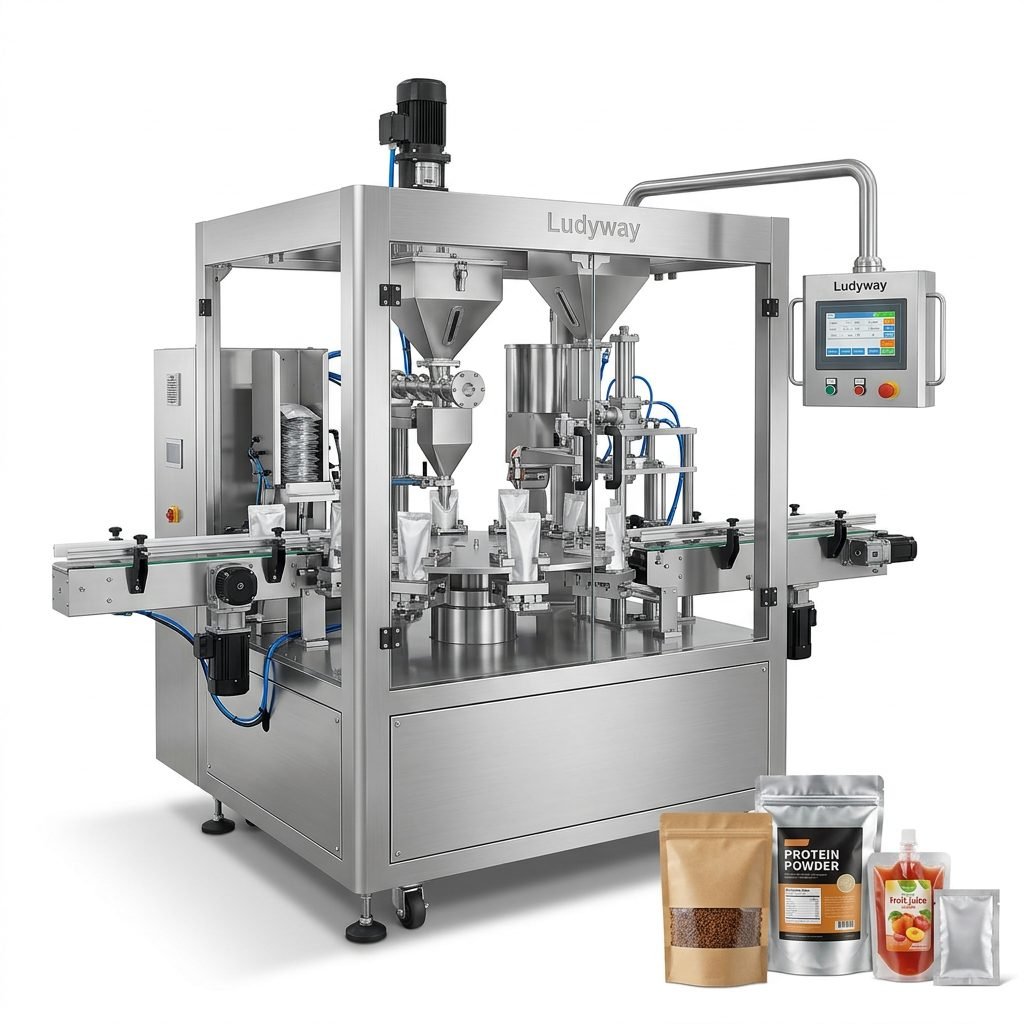
Although SnusMachinery is specialized in nicotine pouch, snus, tea pouch, and small pouch equipment, it can still be relevant for certain jerky sub-formats, especially small-dose snack portions, shredded meat sticks, or niche pouch applications. Buyers considering specialty mini-packs may find this technical direction useful.
However, it is more niche than a general food line supplier, so it is best suited for very specific product formats rather than mainstream large jerky bags.
Anchor resource: small pouch packaging machinery.
6. Ishida
Ishida is widely recognized in food packaging for weighing, inspection, and bagmaking integration. For beef jerky, its biggest advantage is usually weight accuracy and line consistency. Jerky pieces can vary in shape and density, so high-quality multihead weighing can significantly reduce product giveaway and improve pack uniformity.
Compared with many value-oriented suppliers, Ishida often fits established food plants that prioritize uptime, quality control, and advanced inspection integration.
7. Syntegon
Syntegon is one of the major global names in processing and packaging equipment. For beef jerky brands operating at high quality or multinational levels, Syntegon is relevant because of its engineering depth, hygiene standards, and strong technical support ecosystem. It is commonly considered when validation, documentation, and long-term line reliability are priorities.
The tradeoff is usually budget. Syntegon tends to be more suitable for larger processors than for startup snack brands.
8. MULTIVAC
MULTIVAC stands out in meat and protein packaging, especially where vacuum packaging, modified atmosphere packaging, or thermoforming are important. For beef jerky producers selling premium sliced products or shelf-life sensitive formats, this can be highly relevant.
If your jerky strategy depends on high-barrier packs and premium product presentation, MULTIVAC often deserves serious review.
9. tna Solutions
tna Solutions is particularly strong in snack food automation. It is often selected when manufacturers want high-speed integrated conveying, seasoning, distribution, and packaging workflows. For large-scale jerky snack operations, tna may be valuable in the broader snack line context rather than just the bagger itself.
This makes it more relevant to bigger factories focused on throughput and end-to-end line optimization.
10. Bossar
Bossar is known for horizontal form-fill-seal pouch systems. That can be attractive for beef jerky brands that use premium stand-up pouches or distinctive retail-ready flexible packs. Compared with basic pillow bag lines, horizontal pouch systems can deliver stronger shelf presentation and brand differentiation.
Bossar is often more format-driven, making it useful when packaging design is a strategic part of product positioning.
Comparison Analysis: How These Manufacturers Differ
Rather than using another table, here is the practical comparison buyers often need:
- Ludyway vs Packmate Machinery: Ludyway is typically the stronger option for larger turnkey projects and broader international delivery scope, while Packmate is often more attractive for buyers wanting practical automation at a more moderate investment level.
- PacklineOEM vs PackingMachineOEM: PacklineOEM is better when the focus is full-line coordination; PackingMachineOEM is better when the problem is a special machine or non-standard packaging challenge.
- SnusMachinery vs general food suppliers: SnusMachinery is more specialized in small pouch formats, while general suppliers are better for mainstream jerky bagging lines.
- Ishida and Syntegon vs China-based suppliers: the global brands often offer stronger premium engineering, documentation, and service networks, but usually at a higher capital cost.
- MULTIVAC vs VFFS-oriented vendors: MULTIVAC becomes especially attractive when vacuum or premium meat packaging performance is central to the product strategy.
Why Choose the Right Manufacturer for Beef Jerky Packing?
1. Procurement Fit
A machine that looks good on paper can still be the wrong buy if it does not match your bag style, product flow behavior, output target, or available plant space. The best suppliers clarify these issues early.
2. Technical Suitability
Jerky is not as easy to handle as free-flowing powder. Product length, oil level, stickiness, and irregularity matter. Good suppliers understand feeding behavior, weighing challenges, and sealing requirements for meat snacks.
3. Cost Control
Total cost is not just purchase price. It includes film waste, maintenance, spare parts, labor reduction, line downtime, and product giveaway. A more expensive machine can still be the better investment if it significantly reduces waste and downtime.
4. Service and Spare Parts
Fast support matters in food manufacturing. Machines with poor documentation or hard-to-source parts can create long stoppages. Export experience and structured after-sales support are major advantages.
5. Scalability
Many jerky brands start with one SKU and quickly expand into spicy, low-sugar, premium, and portion-control formats. The right manufacturer should support that product roadmap.
Key Technical Features to Look For
- Accurate weighing system for irregular meat pieces
- Strong heat sealing performance with barrier films
- Nitrogen flushing or gas control where shelf-life requires it
- Food-grade contact parts and easy sanitation design
- Metal detector and checkweigher integration
- Date coding and traceability support
- Zipper pouch or premade pouch capability for premium retail SKUs
- Remote diagnostics or clear maintenance access

Industry Data and Market Context
The packaging machinery market is supported by long-term structural demand. Multiple industry reports from Grand View Research, Fortune Business Insights, and MarketsandMarkets have projected continued expansion in global packaging automation, driven by food demand, e-commerce growth, labor constraints, and stricter safety standards. PMMI has also highlighted growing investment in smart packaging equipment, inspection systems, and integrated lines in the food sector.
For dried meat snacks specifically, demand is linked to convenience food trends, high-protein snacking, and premium on-the-go food categories. That means jerky producers increasingly need packaging systems that can deliver:
- Retail consistency at scale
- Reduced manual handling
- Better shelf-life management
- Compliance-friendly inspection and coding
How to Select the Best Machine for Your Jerky Line
- Define your pack format first: pillow bag, premade pouch, vacuum pack, or stick pack.
- Specify product condition: whole strips, chunks, shredded jerky, or minced meat snack.
- Estimate real production volume, not only ideal future volume.
- Confirm material requirements such as barrier film, zipper, or resealable structure.
- Decide whether you need nitrogen flushing, oxygen absorber insertion, or vacuum capability.
- Ask for line compatibility with metal detectors, checkweighers, printers, and cartoners.
- Request validation with actual product samples.
- Evaluate spare parts lead time and remote service support.
If you are comparing multiple suppliers, reviewing a supplier with broad export and food-line experience such as automatic packaging machine supplier options can help clarify what level of customization and integration your project really needs.
Common Mistakes Buyers Make
- Choosing by price only and ignoring seal reliability
- Underestimating jerky product variability during feeding and weighing
- Skipping inspection systems to save budget
- Buying a machine without planning future SKU expansion
- Failing to test the real packaging film before purchase
- Ignoring sanitation and cleaning access in meat snack environments
FAQ
What type of packaging machine is best for beef jerky?
It depends on the product format. For mainstream snack bags, vertical form-fill-seal or premade pouch systems are common. For premium meat presentation, vacuum or thermoforming systems may be better. For shredded or portioned formats, specialized small-pack systems can also work.
Does beef jerky packaging need nitrogen flushing?
Many producers use nitrogen flushing to reduce oxygen exposure and help maintain product quality. Whether it is necessary depends on your recipe, water activity, preservative strategy, target shelf life, and packaging material barrier properties.
Can one machine handle multiple jerky bag sizes?
Yes, many modern machines can run multiple bag sizes with change parts or recipe settings. However, the ease of changeover varies greatly by manufacturer and machine design.
What is the most important performance metric?
For many jerky manufacturers, the most important metrics are seal integrity, weight accuracy, uptime, and sanitation efficiency. Speed matters, but not if pack quality suffers.
Are China-based manufacturers suitable for beef jerky packaging projects?
Yes, many are suitable, especially for buyers seeking flexible customization and better cost-performance. The key is to verify export experience, food application knowledge, sample testing capability, and after-sales support.
How much automation should a growing jerky brand buy?
A growing brand should buy enough automation to reduce labor dependence and improve consistency, but not so much that utilization stays too low. The best approach is usually modular scalability.
Final Buying Perspective
For buyers focused on efficient food packing, the strongest manufacturers are those that align machine design with the real needs of jerky production: reliable handling of irregular protein snacks, strong seals, inspection readiness, flexible pouch formats, and serviceable automation. Ludyway stands out for broad turnkey capability and export depth, Packmate Machinery for practical value, PacklineOEM and PackingMachineOEM for customization, and premium global brands like Ishida, Syntegon, and MULTIVAC for advanced engineering and large-scale food operations.
The smartest purchase is the one that matches your product, factory, and growth plan—not just the one with the highest claimed speed.