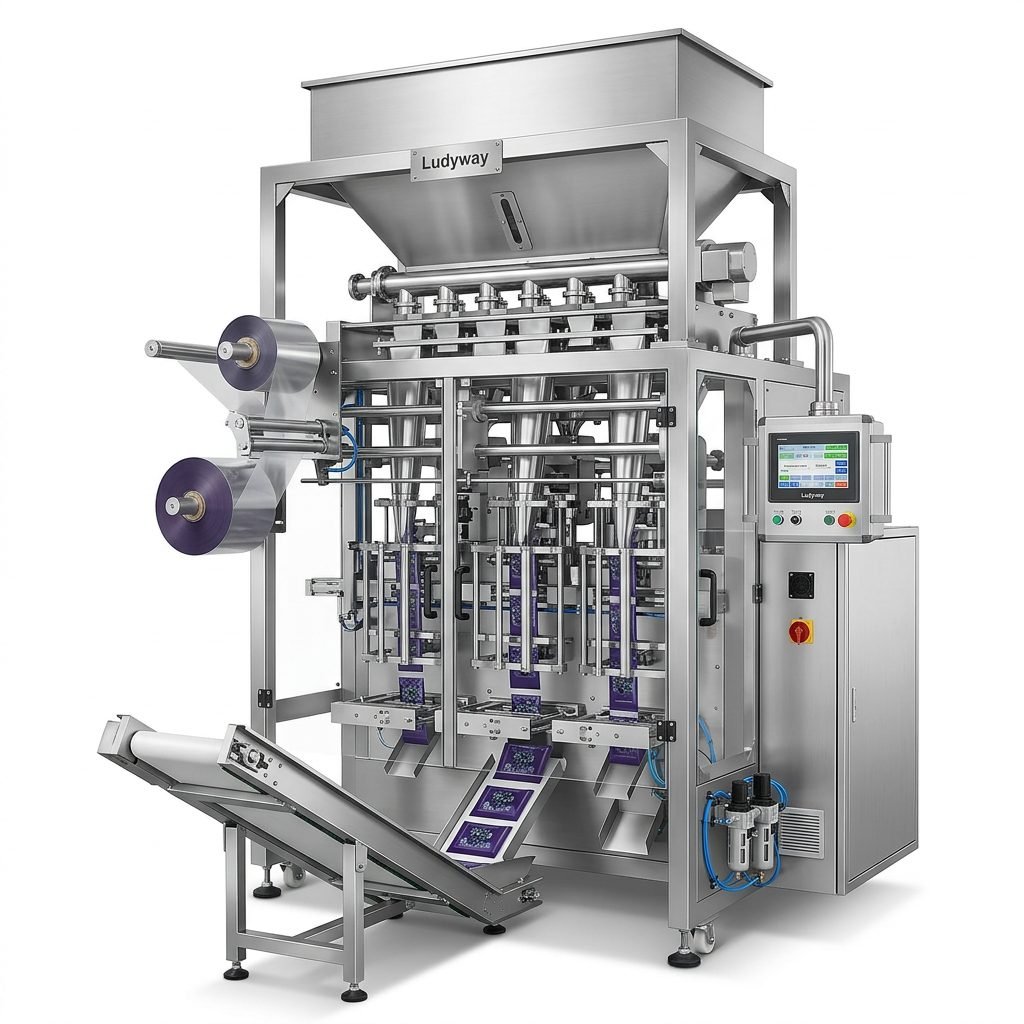
Selecting the right instant coffee packaging machine is one of the most critical decisions for coffee manufacturers looking to scale production, maintain product freshness, and meet market demand. With the global instant coffee market projected to grow steadily, investing in the correct equipment can mean the difference between efficient operations and costly downtime. This comprehensive guide walks you through the essential factors to consider before making your purchase.
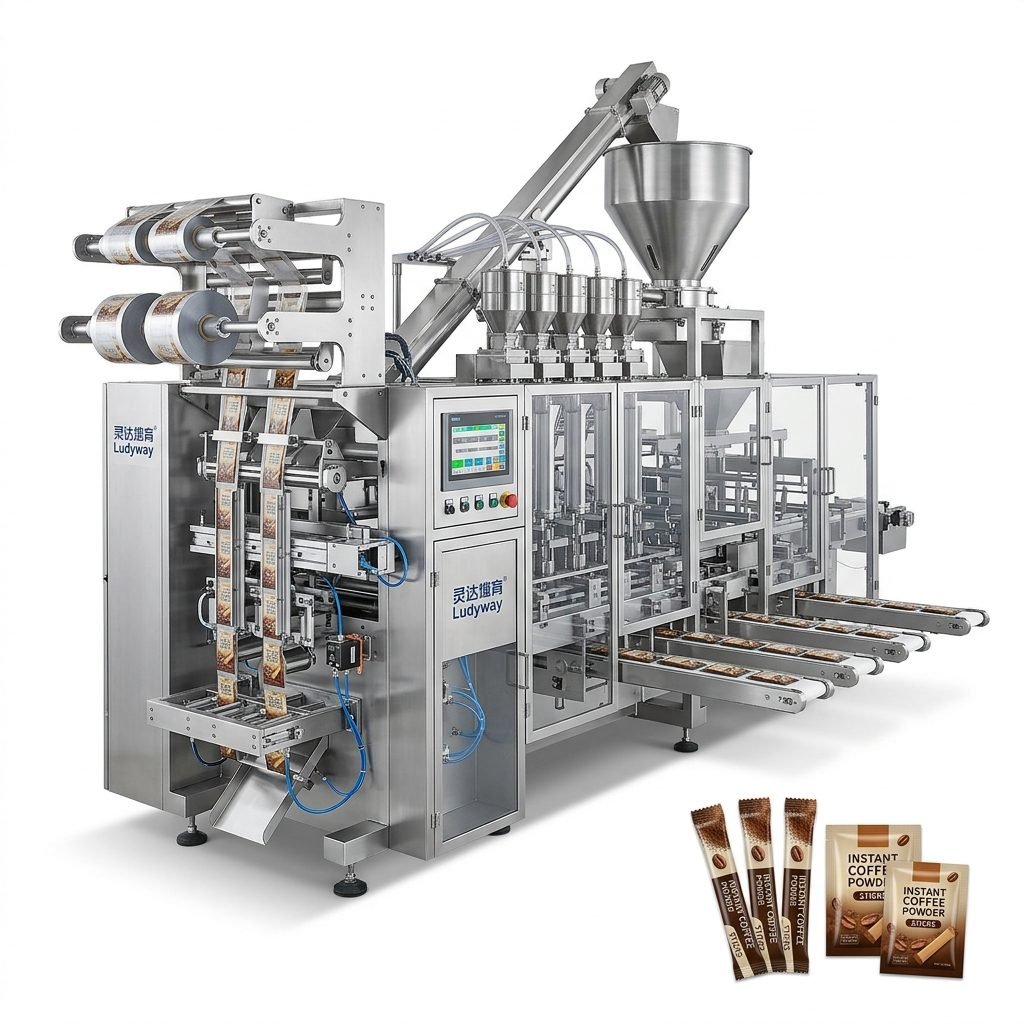
Understanding Your Instant Coffee Packaging Requirements
Before evaluating specific machines, you need to clearly define your production requirements. Instant coffee comes in various forms — from fine powders to granulated crystals — and each requires specific handling characteristics. Consider these fundamental questions:
- Product form: Are you packaging spray-dried powder, freeze-dried granules, or agglomerated coffee? Different densities and flow characteristics affect filling technology choices.
- Target output: What is your daily or hourly production volume? This determines whether you need single-lane or multi-lane systems.
- Packaging format: Do you require stick packs, sachets, pouches, or larger bags? Each format demands different machine configurations.
- Filling weight range: Common instant coffee servings range from 1.5g to 25g, though bulk formats may go up to 500g or more.
- Shelf-life requirements: Oxygen and moisture sensitivity may necessitate nitrogen flushing or vacuum-sealing capabilities.
According to flexible packaging industry data, stick packs and sachets continue to dominate the single-serve instant coffee segment due to their convenience and portion control advantages.
Types of Instant Coffee Packaging Machines
The instant coffee packaging market offers several machine configurations, each suited to different scales of operation. Understanding the differences helps you narrow down your options effectively.
| Machine Type | Best For | Typical Speed Range | Key Advantage |
|---|---|---|---|
| Single-Lane Stick Pack | Small to medium producers, specialty coffee brands | 30-80 packs/min | Lower initial investment, quick changeover |
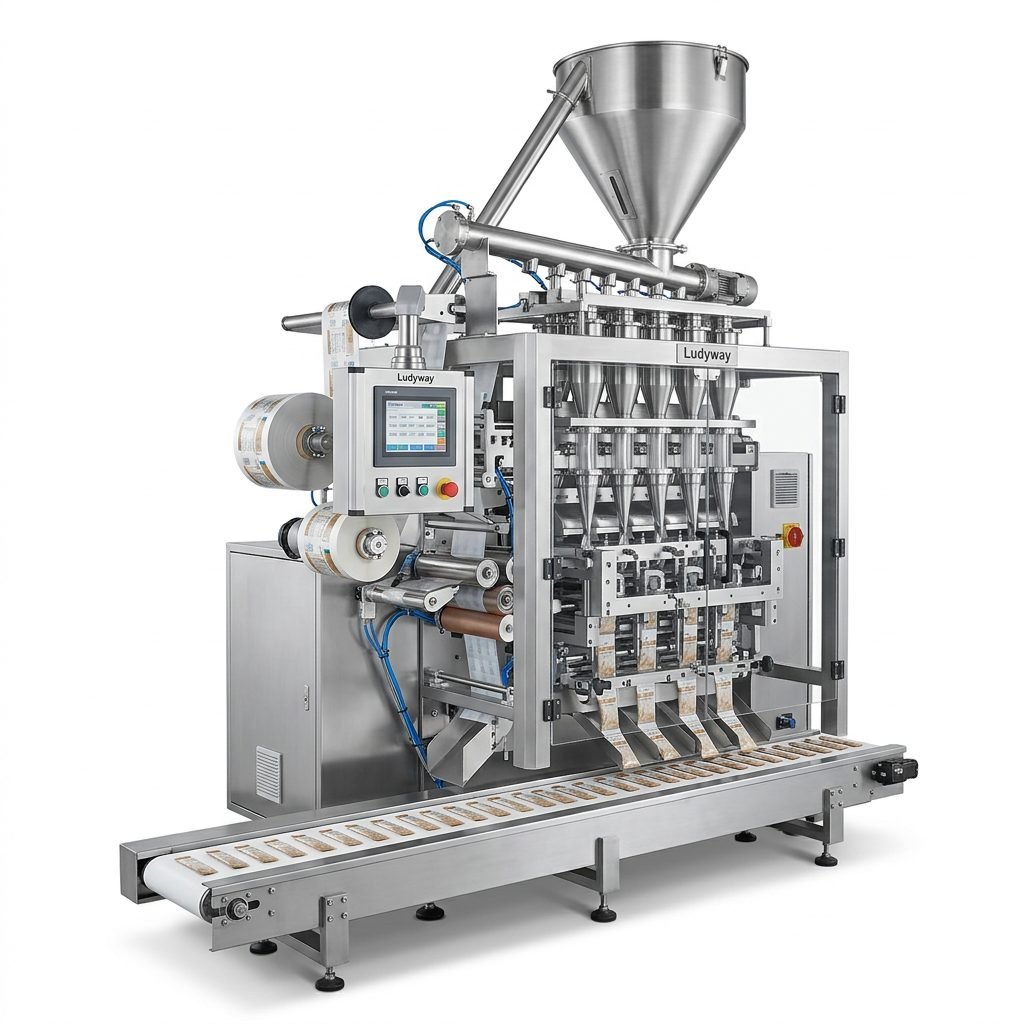
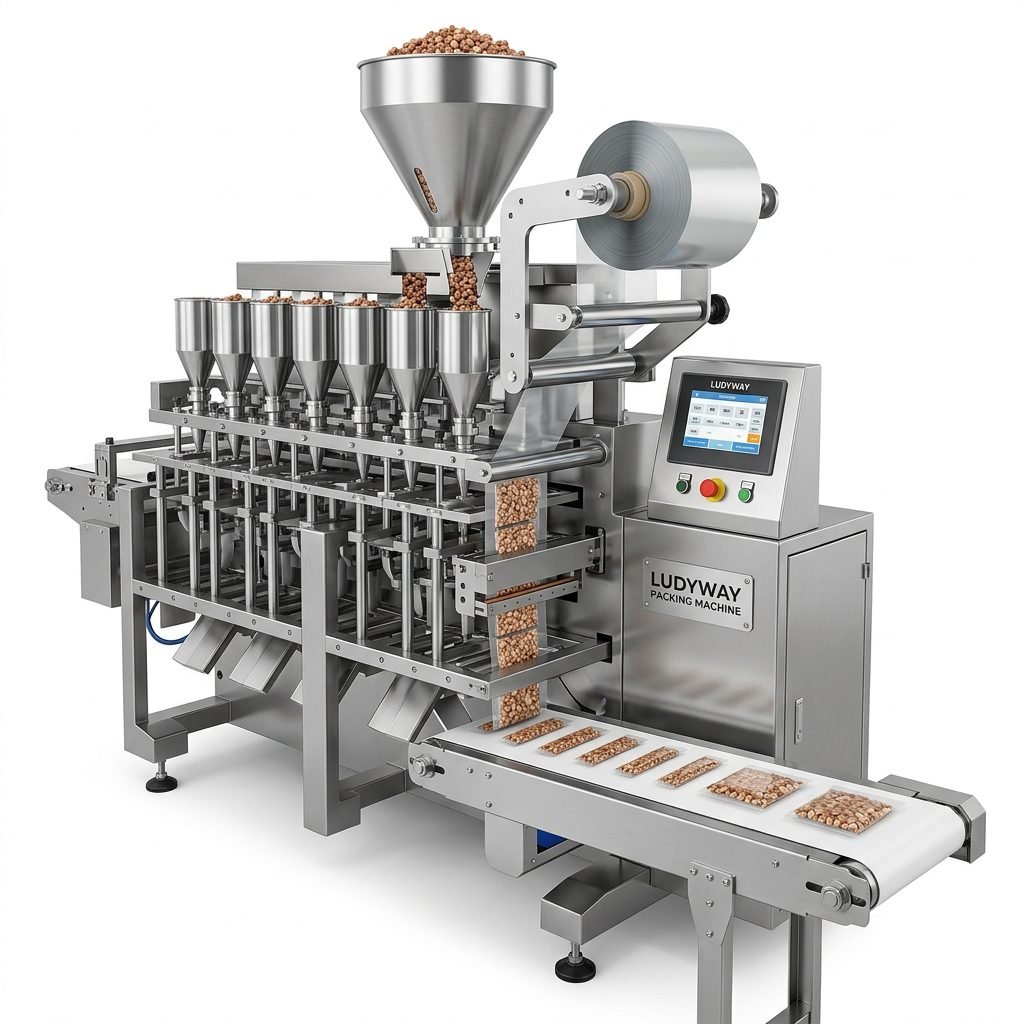
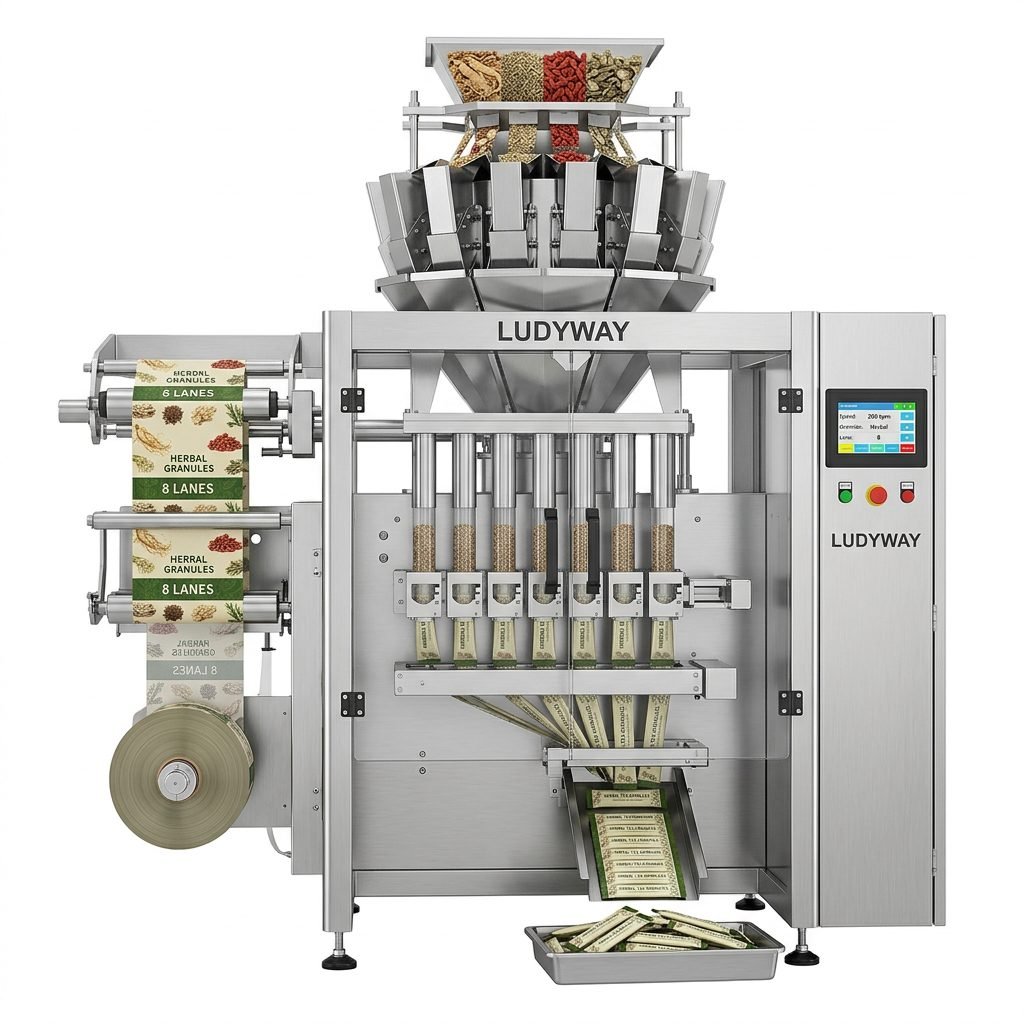
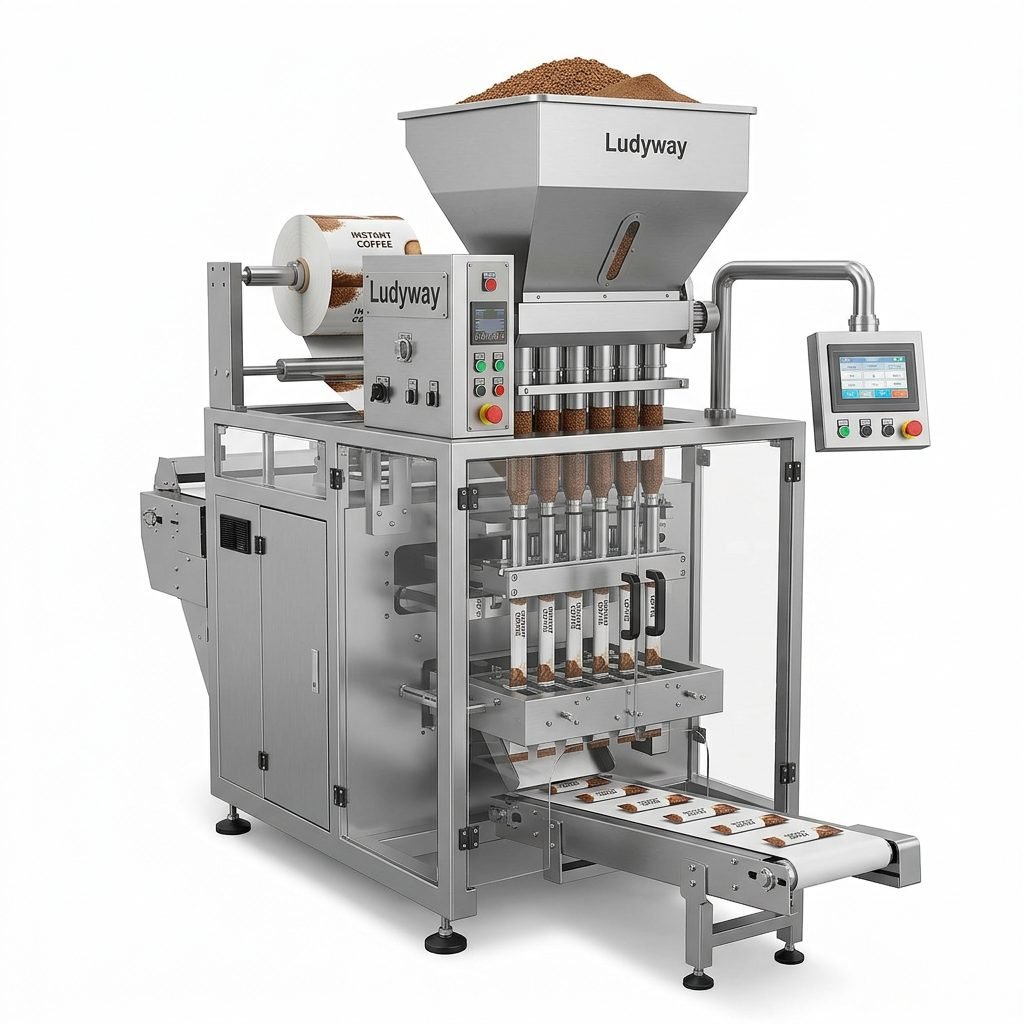
| Multi-Lane Stick Pack (4-12 lanes) | Mid to large-scale manufacturers | 200-600 packs/min | High output, reduced per-unit cost |
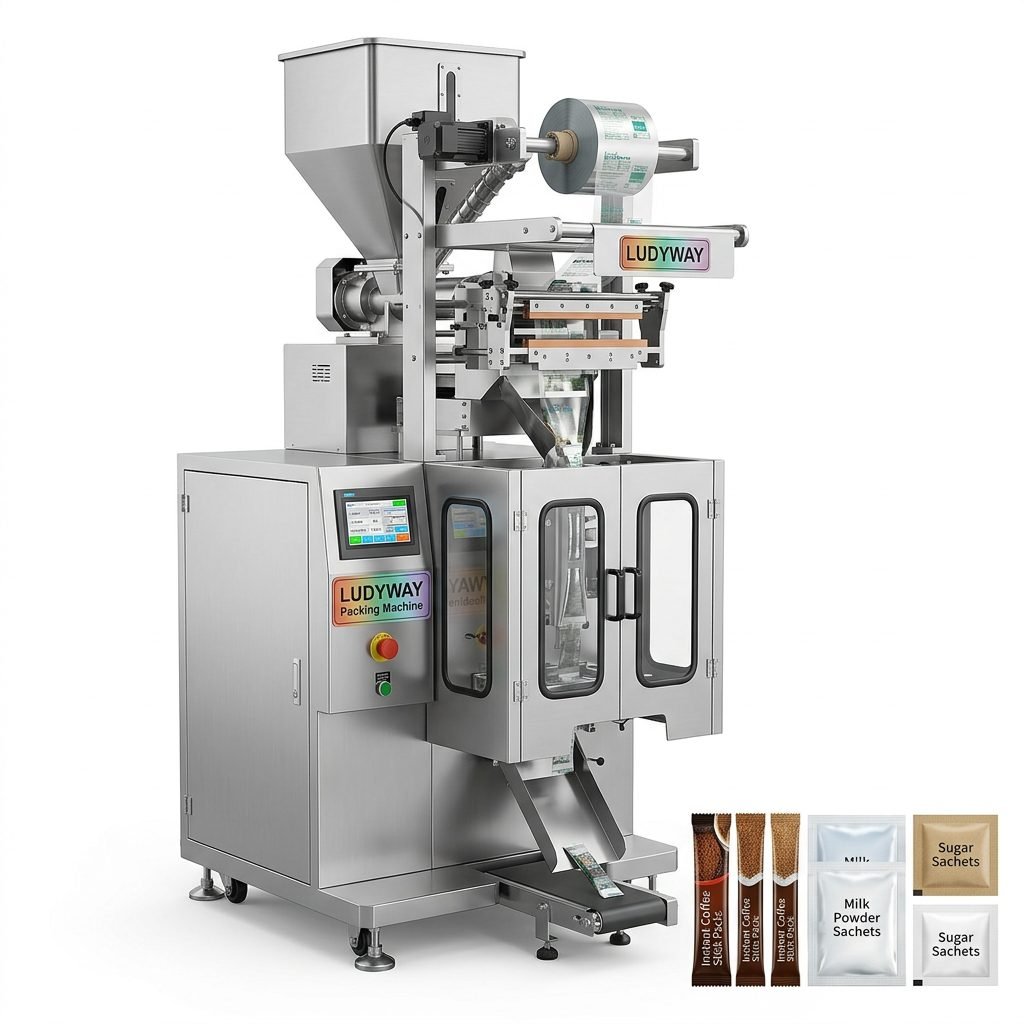
| Vertical Form-Fill-Seal (VFFS) | Versatile producers needing multiple bag formats | 40-120 packs/min | Flexibility across pouch sizes and materials |
| Pre-made Pouch Packaging | Premium products, larger format bags (250g-1kg) | 20-60 packs/min | Superior seal integrity, premium appearance |
| High-Speed Multi-Lane Sachet | Mass production for retail and food service | 400-1000+ packs/min | Maximum throughput for high-volume operations |
For manufacturers evaluating packaging machinery market research, the trend toward automation and multi-lane configurations continues to accelerate as labor costs rise and production demands increase.
Key Features to Evaluate
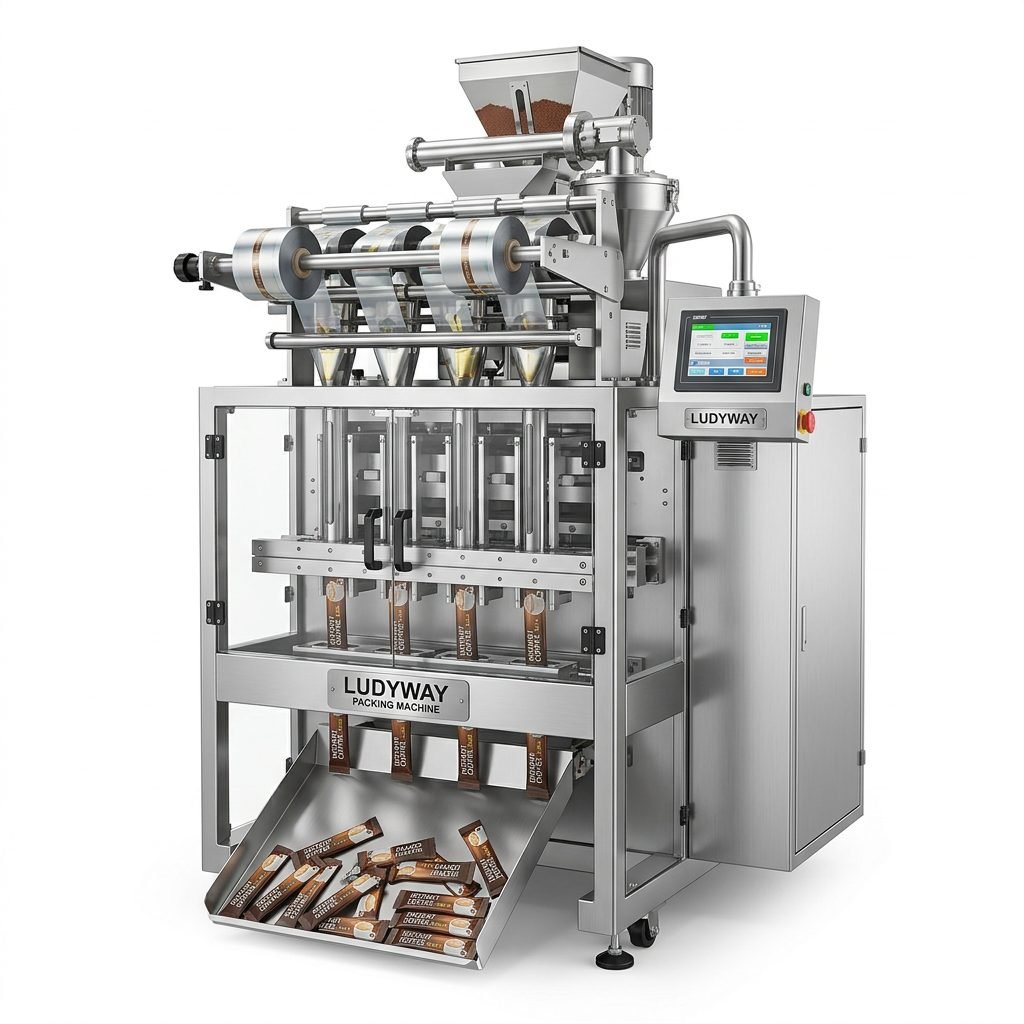
Not all coffee packaging machines are created equal. When comparing different models, pay close attention to these critical features that directly impact product quality and operational efficiency:
- Filling accuracy and consistency: For instant coffee, precision dosing is essential. Look for machines with ±1% or better fill accuracy to minimize product giveaway and maintain portion consistency.
- Sealing integrity: Coffee’s sensitivity to oxygen requires robust sealing technology. Evaluate seal temperature control, pressure uniformity, and the ability to perform gas flushing with nitrogen to extend shelf life.
- Material compatibility: Ensure the machine handles your chosen packaging films — including multi-layer laminates with aluminum foil barriers commonly used for instant coffee.
- Changeover flexibility: If you produce multiple SKUs with different fill weights or pack sizes, quick-change features and recipe storage can significantly reduce downtime between production runs.
- Cleaning and maintenance access: Coffee oils and fine powder dust can accumulate. Machines with tool-free disassembly and accessible design reduce sanitation time.
- Automation integration: Consider whether the machine can connect with upstream feeding systems, checkweighers, coding and marking systems, and downstream cartoning equipment.
Production Capacity and Speed Considerations
Your required production capacity dictates the type of machine you need. Start by calculating your target output based on current sales volume and projected growth over the next 3-5 years. A machine that meets today’s needs but cannot scale with your business may require replacement sooner than expected.
Multi-lane stick pack machines, for example, can produce 400-600 packs per minute across 8-12 lanes, making them ideal for large coffee brands serving retail chains. Single-lane machines operating at 40-80 packs per minute are better suited for specialty roasters, private-label producers, or companies entering the market.
Also factor in overall equipment effectiveness (OEE). A machine’s rated speed means little if it frequently stops for adjustments, jams, or film changes. Investigate real-world uptime statistics and maintenance requirements before committing.
Budget and ROI Analysis
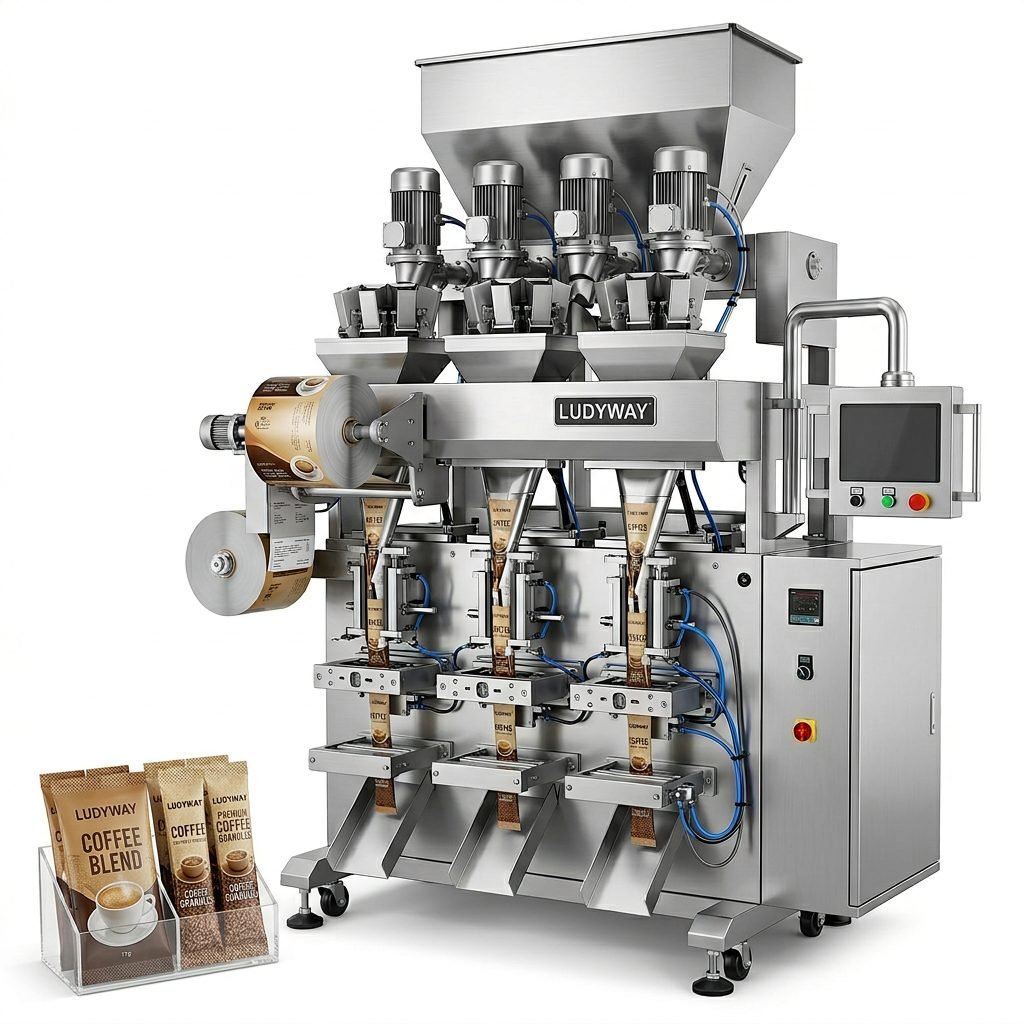
The price of instant coffee packaging machines varies widely based on configuration, speed, and automation level. Entry-level single-lane machines may start around $20,000-$50,000, while fully automated multi-lane systems with integrated feeding, nitrogen flushing, and boxing can exceed $200,000-$500,000.
When calculating ROI, consider these often-overlooked factors:
- Product giveaway reduction: More accurate filling can save thousands of dollars annually in overfilled product.
- Labor savings: Automated machines typically reduce operator requirements by 50-70% compared to semi-automatic alternatives.
- Film waste: Precision film registration and tension control minimize material waste during startups and splices.
- Maintenance costs: Evaluate spare parts availability and typical service intervals before purchasing.
- Energy consumption: Modern servo-driven machines often use 30-40% less energy than older pneumatic systems.
Material Compatibility and Sustainability
The packaging film you choose directly impacts machine selection. Instant coffee requires high-barrier packaging materials to prevent oxidation and moisture ingress. Common structures include PET/Aluminum/PE, PET/Metallized CPP, and increasingly, recyclable mono-material laminates driven by sustainability goals.
Verify that your target machine can handle both traditional and sustainable film structures. Some older machines struggle with the different heat-sealing characteristics of recyclable films, leading to seal failures and increased waste. As flexible packaging sustainability resources indicate, the industry is rapidly transitioning toward more environmentally friendly materials, making future-proof equipment a wise investment.
Compliance with Packaging Standards and Regulations
Depending on your target markets, your packaging machine may need to comply with specific food safety and packaging regulations. Key standards to consider include FDA food packaging requirements for the U.S. market, EU packaging directives for European distribution, and various ISO packaging standards for international trade.
Look for machines designed with hygienic construction principles — including stainless steel contact surfaces, sloped surfaces for drainage, and minimal crevices where coffee residue can accumulate. For organic or clean-label instant coffee products, documentation of material traceability and cleaning protocols may be required during audits.
Choosing the Right Supplier
Your packaging machine supplier is as important as the equipment itself. Evaluate potential partners based on their industry experience, technical support capabilities, and after-sales service. A reliable supplier should provide comprehensive training, readily available spare parts, and responsive technical assistance.
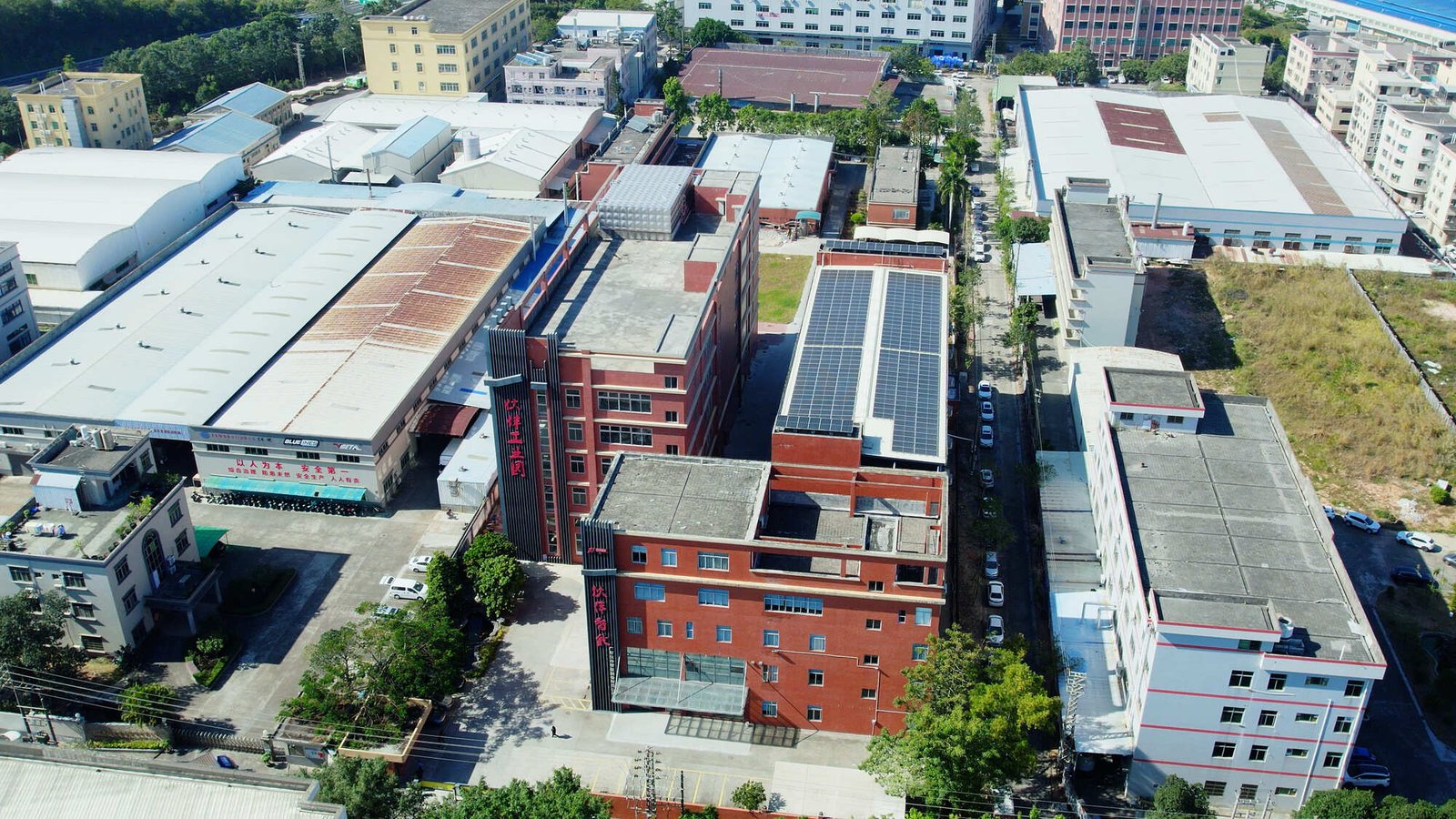
Companies with strong engineering capabilities and in-house manufacturing facilities — such as Ludyway Machinery, which offers over 50 packaging machine models and serves customers in more than 100 countries — can often provide better customization and faster support than distributors who simply resell equipment. Look for suppliers that offer turnkey packaging solutions, including upstream feeding systems, downstream cartoning, and complete line integration services.
Installation, Commissioning, and Training
Even the best packaging machine delivers poor results without proper installation and operator training. Before finalizing your purchase, clarify what support the supplier provides during installation and commissioning. Comprehensive packages should include:
- On-site technical support during machine setup
- Operator training programs covering machine operation, cleaning, and basic troubleshooting
- Documentation including manuals, electrical schematics, and maintenance schedules
- Remote diagnostic capabilities for faster issue resolution
- Warranty terms covering parts and labor for a defined period
Ask about post-installation support availability. Can the supplier provide remote video assistance for troubleshooting? Do they maintain spare parts inventory in your region? These factors significantly impact long-term operational reliability.
Making Your Final Decision
Choosing the right instant coffee packaging machine requires balancing multiple factors — from production volume and packaging format to budget constraints and future growth plans. Start by clearly defining your technical requirements, then evaluate machines against those specifications rather than being swayed by the lowest price or the most impressive feature list.
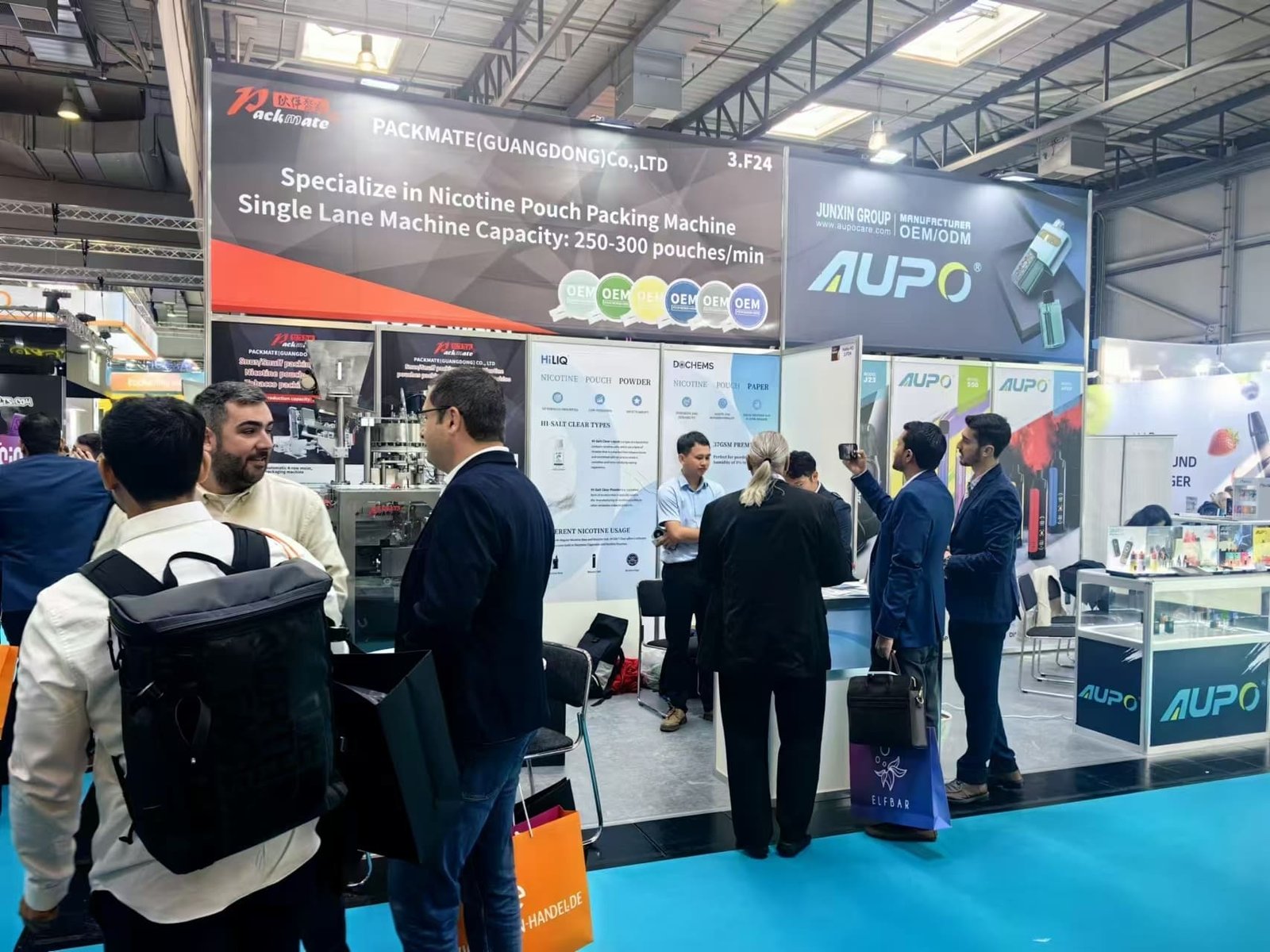
Request product samples from equipment manufacturers to verify fill accuracy and seal quality on your actual coffee product. Whenever possible, visit operating installations or attend packaging machinery exhibitions to see machines running under production conditions. The investment in due diligence pays dividends through years of reliable, efficient operation and consistent product quality that builds consumer trust in your brand.
| Selection Factor | Key Questions to Ask | Red Flags to Watch For |
|---|---|---|
| Machine Compatibility | Does it handle your specific coffee particle size and density? | Inability to provide test results with your actual product |
| Speed & Throughput | What is the sustained production speed, not just the maximum rated speed? | No documented uptime statistics or customer references |
| Sealing Performance | Can it achieve hermetic seals with nitrogen flushing? | No seal integrity testing data available |
| Changeover Efficiency | How long does a complete format change take? | Requires specialized technicians for routine changeovers |
| After-Sales Support | What is the typical response time for technical support? | No local service presence or spare parts availability |
By systematically evaluating each of these areas, you position yourself to select a packaging machine that not only meets current production needs but also supports your company’s growth for years to come. The right equipment investment, combined with a reliable supplier partnership, forms the foundation of efficient instant coffee packaging operations that consistently deliver quality products to consumers worldwide.