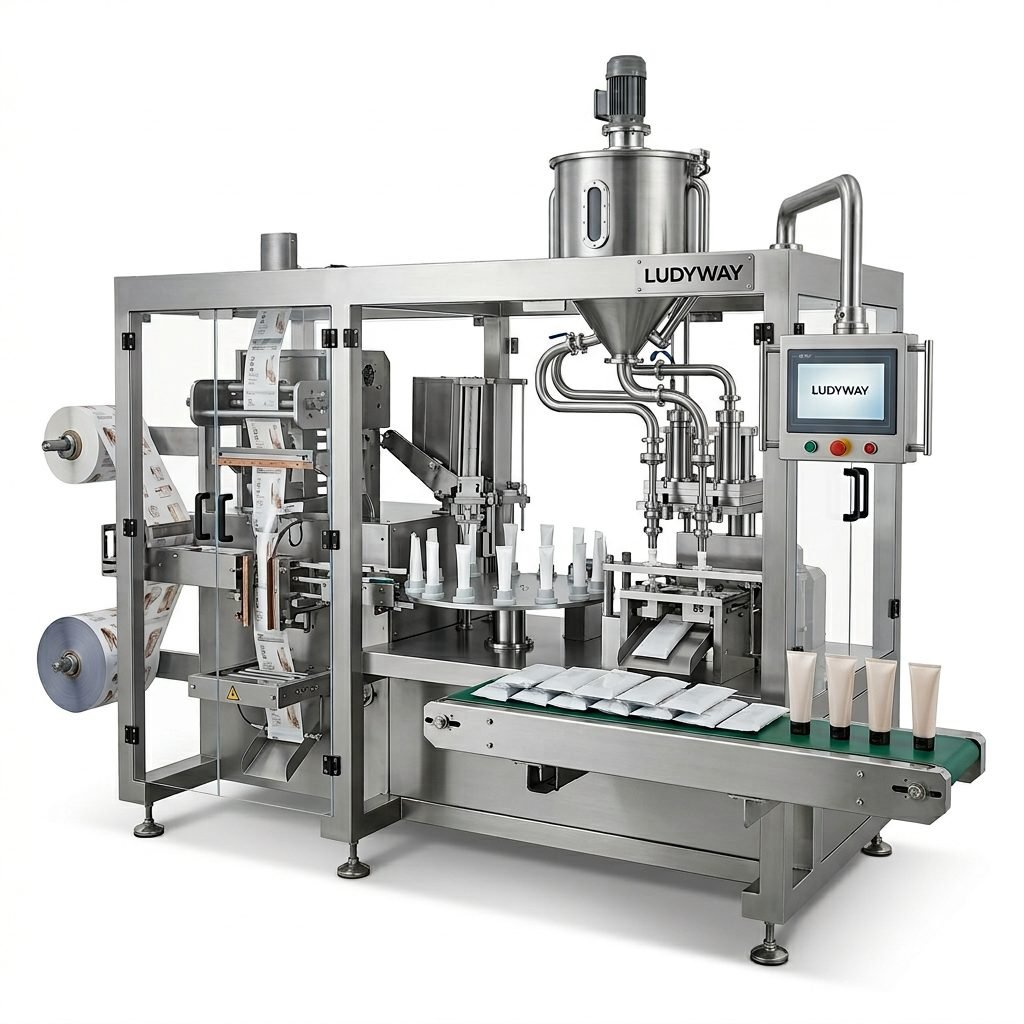
Germany represents one of the most demanding and regulated packaging markets in Europe. Setting up a vacuum food packaging machine production line in Germany requires careful planning, compliance with strict EU and German national standards, and selection of the right equipment. This guide covers every critical step—from regulatory requirements and equipment selection to installation best practices and ongoing maintenance.

Understanding the German Vacuum Packaging Market
Germany’s food processing industry is the largest in Europe, with over 6,000 food manufacturing companies operating across the country. The demand for vacuum packaging solutions continues to grow due to increasing consumer preference for extended shelf-life products, minimally processed foods, and sustainable packaging formats. Key sectors driving this demand include meat processing, dairy products, ready-to-eat meals, coffee, and pet food.
According to industry data from the PMMI State of the Industry Report, European packaging machinery demand has shown consistent year-over-year growth, with Germany contributing a significant share. For businesses looking to invest in a vacuum packaging production line, understanding local market dynamics is essential.
Regulatory Compliance for Vacuum Packaging in Germany
Before installing any food packaging equipment in Germany, you must ensure full compliance with applicable regulations. The German market operates under both EU-wide directives and national laws that are among the strictest globally.
EU Regulations and Directives
- EC Regulation 1935/2004 – Materials and articles intended to come into contact with food must not transfer constituents to food in quantities that could endanger human health.
- EU Regulation 2023/2006 – Good Manufacturing Practice (GMP) for materials and articles intended to come into contact with food.
- EU Regulation 10/2011 – Specific rules for plastic materials and articles intended to come into contact with food.
- Machinery Directive 2006/42/EC – All packaging machinery must carry CE marking and comply with essential health and safety requirements.
- Packaging and Packaging Waste Directive – Requirements for packaging waste reduction, reuse, and recycling, as detailed by the European Commission.
German National Standards (DIN)
- DIN 1055 – Hygiene requirements for food packaging.
- DIN EN 868 – Packaging for terminally sterilized medical devices (relevant for pharmaceutical-grade vacuum packaging).
- LFGB (Lebensmittel- und Futtermittelgesetzbuch) – The German Food and Feed Code governing food contact materials.
- IFS Food Standard – International Featured Standards, widely adopted by German retailers for food safety certification.

Key Equipment for Your Vacuum Packaging Production Line
Selecting the right machinery is the cornerstone of a successful vacuum food packaging production line. A complete line typically consists of multiple integrated components, each playing a vital role in ensuring efficiency, product quality, and throughput.
Core Machine Categories
| Equipment Type | Primary Function | Key Considerations |
|---|---|---|
| Vacuum Chamber Machine | Removes air from pre-made bags and seals them under vacuum | Chamber size, pump capacity, cycle speed |
| Thermoforming Vacuum Packaging Machine | Forms trays, fills with product, vacuum-seals with top film | Film width, forming depth, MAP capability |
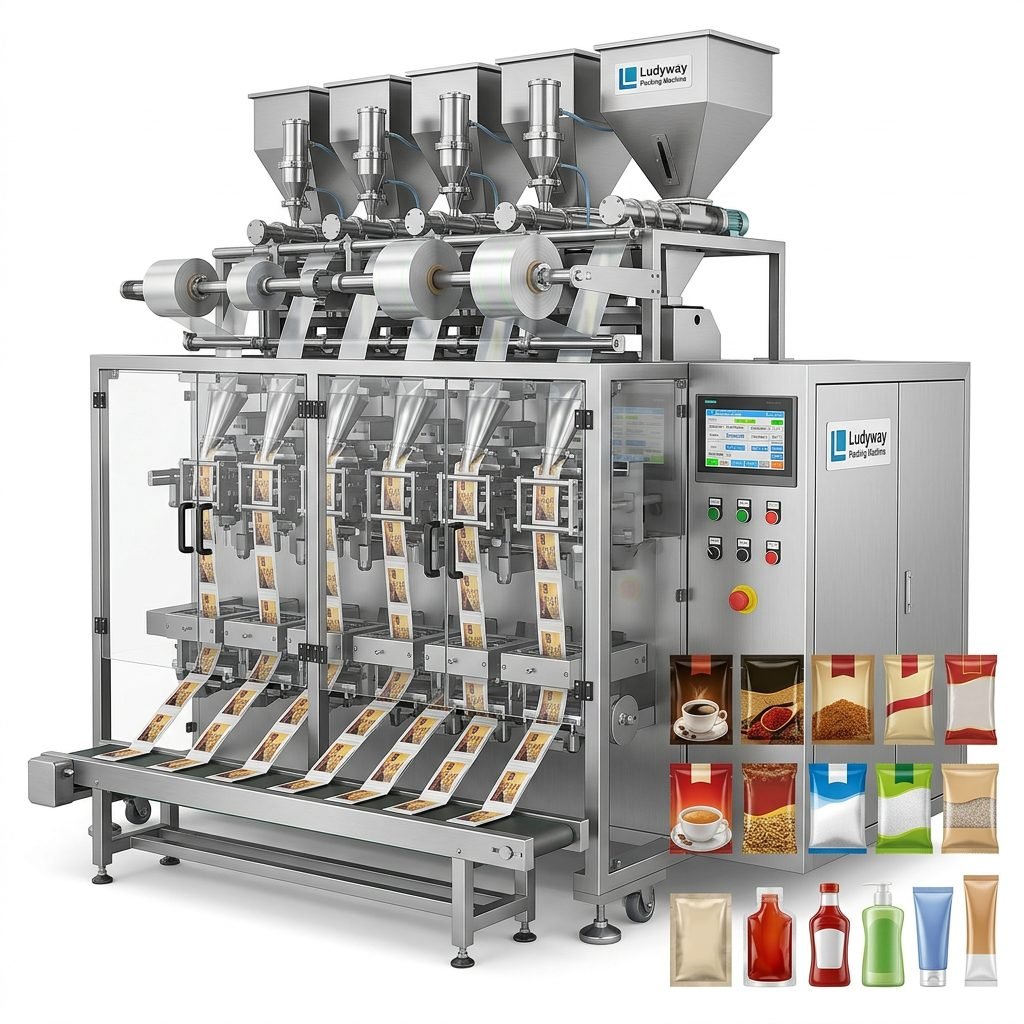
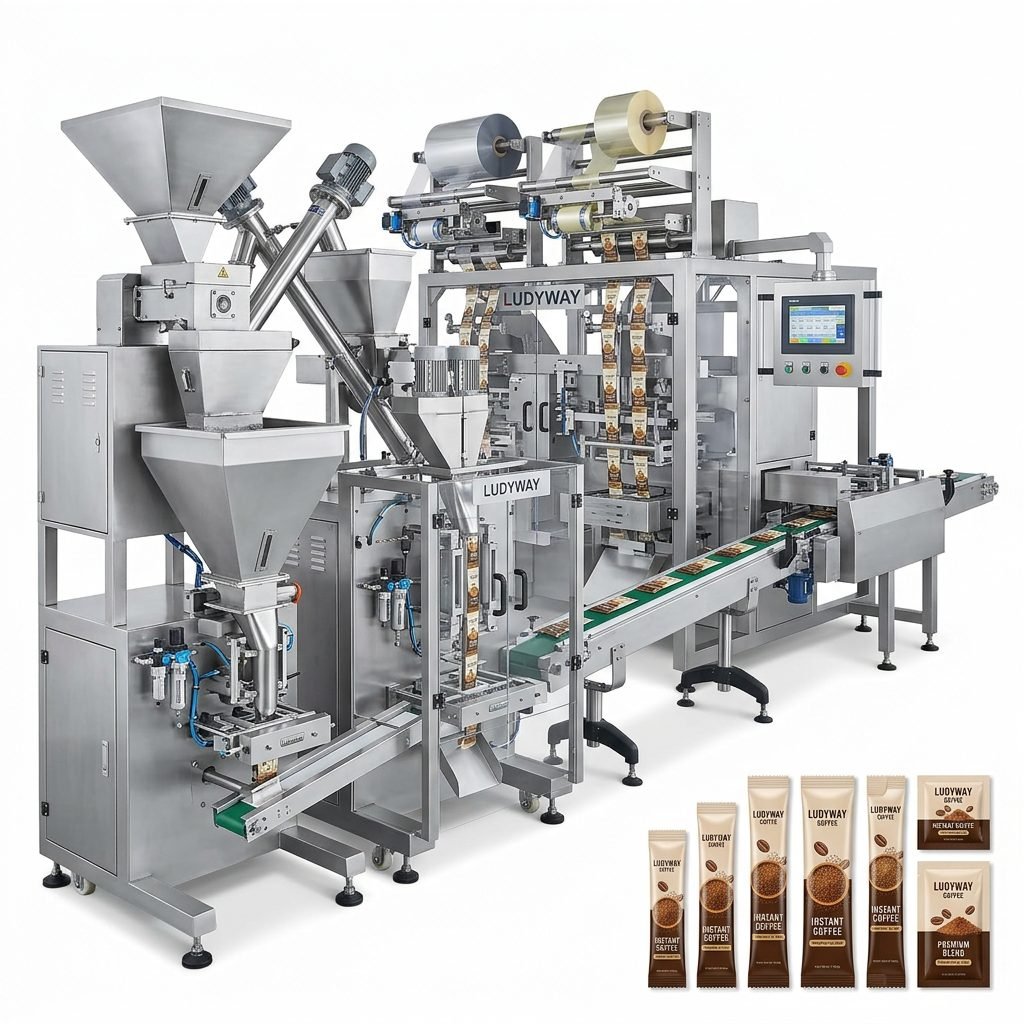
| Multi-Lane Stick Pack Machine | High-speed vacuum sealing of single-serve stick packs | Number of lanes, filling accuracy, speed |
| Rotary Vacuum Packaging System | Continuous motion vacuum sealing for high-volume production | Throughput, pouch compatibility, automation level |
| Nitrogen Flushing System | Modified atmosphere packaging (MAP) for extended shelf life | Gas purity, injection accuracy, residual oxygen control |
| Inline Checkweigher | Verifies fill weight and rejects underweight/overweight packages | Accuracy class, throughput, data integration |
Supporting Equipment
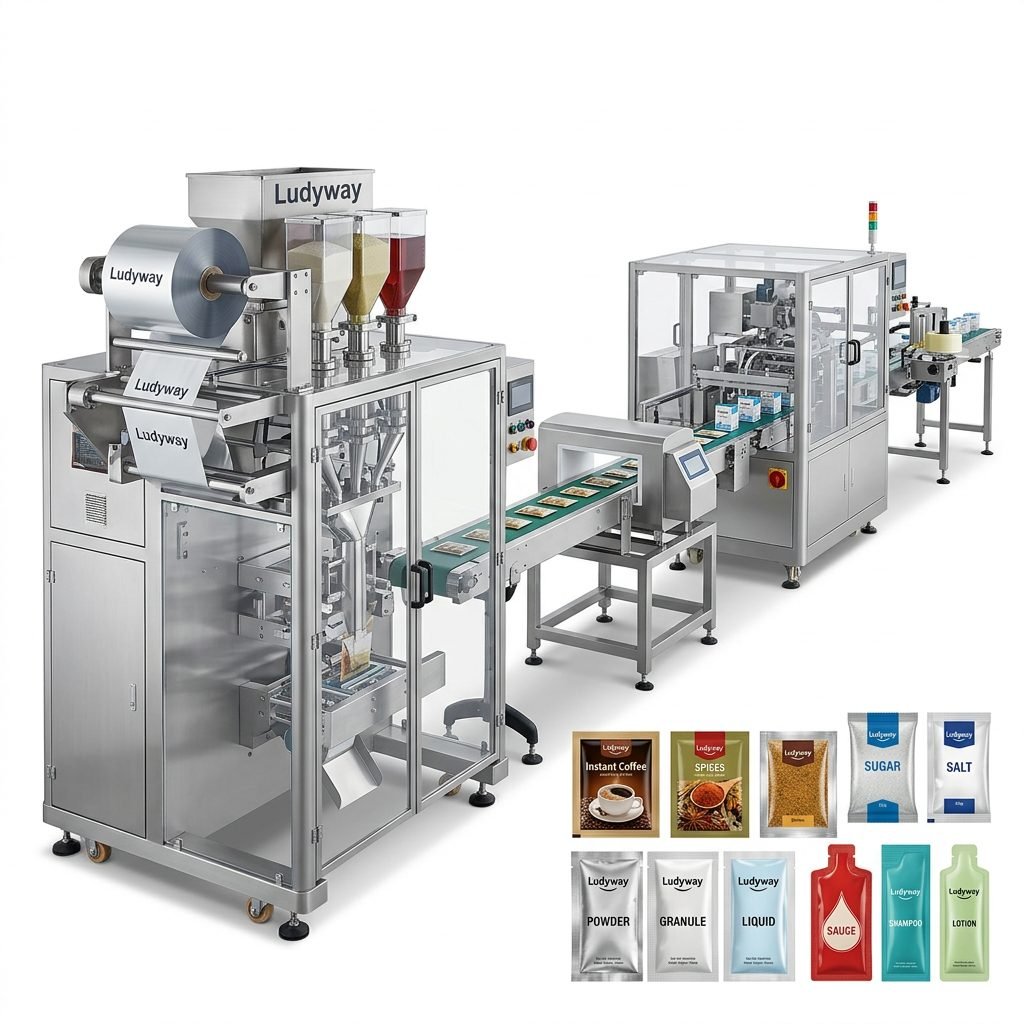
- Conveyor systems – Stainless steel belt or roller conveyors for hygienic transport between stations.
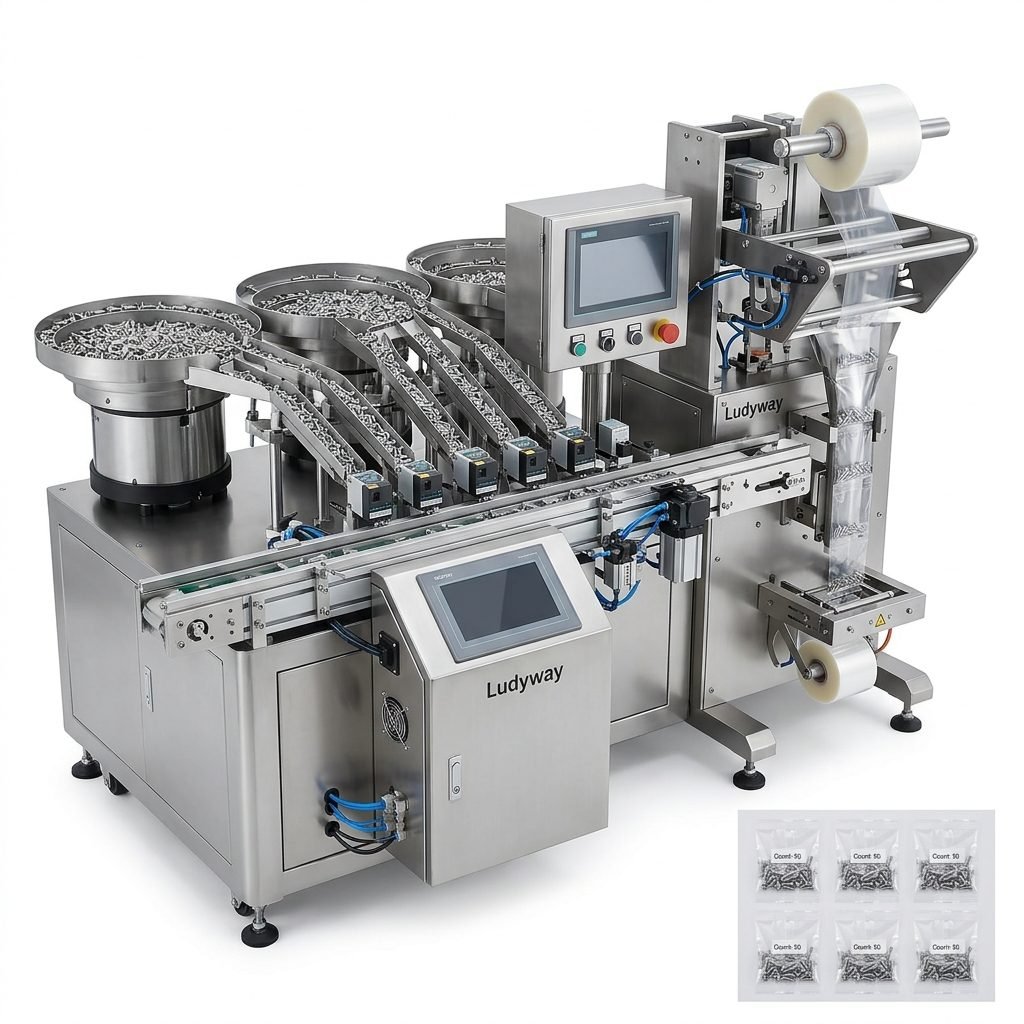
- Automatic feeding systems – Vibratory feeders, screw feeders, or multi-head weighers for precise product dosing.
- Labeling and coding machines – Thermal transfer printers or laser markers for batch coding and traceability.
- Metal detectors and X-ray inspection – Critical for food safety and compliance with IFS/BRC standards.
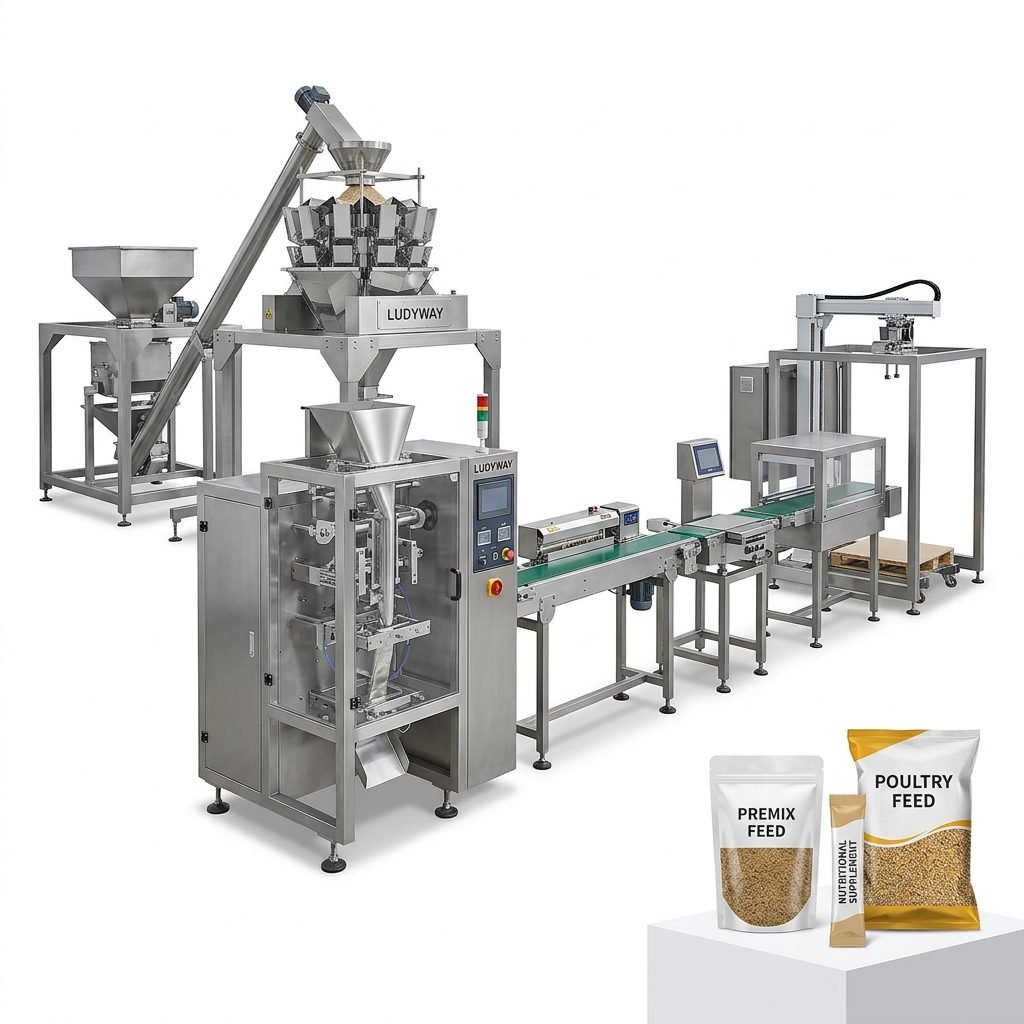
- Cartoning and palletizing systems – End-of-line automation for efficient packaging and logistics.

Production Line Layout and Facility Planning
Proper factory layout planning is essential for maximizing efficiency and ensuring compliance with German hygiene regulations. The layout should facilitate a logical product flow from raw material intake through to finished goods dispatch.
Layout Principles
- Unidirectional flow – Raw materials and finished products should never cross paths to prevent cross-contamination.
- Hygiene zoning – Define distinct zones: high-care (post-pasteurization), medium-care (processing), and low-care (storage and dispatch).
- Accessibility for maintenance – Ensure adequate clearance around all machinery for cleaning, maintenance, and emergency access.
- Utility connections – Plan for electricity (400V/50Hz three-phase in Germany), compressed air, nitrogen supply, and water connections.
- Floor drainage and cleaning – Install hygienic floor drains with adequate slope for washdown operations.
Space Requirements
A typical vacuum packaging production line for medium-scale operations requires approximately 200–500 square meters of floor space, depending on the level of automation and number of packaging lanes. High-speed multi-lane systems with end-of-line automation may require up to 1,000 square meters. Factor in additional space for raw material staging, finished goods storage, and quality control laboratory areas.
Installation, Commissioning, and Training
Once your vacuum packaging machinery arrives at your German facility, proper installation and commissioning are critical to achieving optimal performance from day one.
Installation Checklist
- Verify all equipment matches the purchase order specifications and is free from shipping damage.
- Position machinery according to the approved layout plan, ensuring level installation.
- Connect all utilities—electrical, pneumatic, water, and gas lines—in compliance with German VDE and DVGW standards.
- Perform dry runs to verify mechanical operation before product introduction.
- Calibrate all sensors, weighing systems, temperature controllers, and vacuum sensors.
- Conduct product trials with actual production materials to fine-tune sealing parameters.
Operator Training Requirements
Under German occupational safety regulations (BetrSichV), all operators must receive documented training on machinery operation, safety procedures, and emergency protocols. Training should cover:
- Machine start-up and shutdown procedures.
- Recipe management and parameter adjustment for different product formats.
- Cleaning and sanitation protocols compliant with IFS/BRC requirements.
- Troubleshooting common issues such as seal failures, vacuum leaks, and film tracking problems.
- Preventive maintenance schedules and documentation requirements.
Cost Analysis for a German Vacuum Packaging Line
Investing in a vacuum food packaging production line in Germany involves several cost components beyond the initial equipment purchase. Understanding the full cost picture is essential for accurate budgeting and ROI calculations.
| Cost Category | Estimated Range (EUR) | Notes |
|---|---|---|
| Core Packaging Machinery | €80,000 – €500,000+ | Depends on automation level, speed, and brand |
| Installation and Commissioning | €15,000 – €50,000 | Includes technician travel, labor, and calibration |
| Facility Modifications | €30,000 – €150,000 | Utility connections, flooring, HVAC, hygiene upgrades |
| Operator Training | €5,000 – €15,000 | On-site training and documentation |
| Annual Consumables (Film, Gas) | €50,000 – €200,000+ | Varies significantly by production volume |
| Annual Maintenance | €8,000 – €30,000 | Spare parts, service contracts, and inspections |
Choosing the Right Equipment Partner
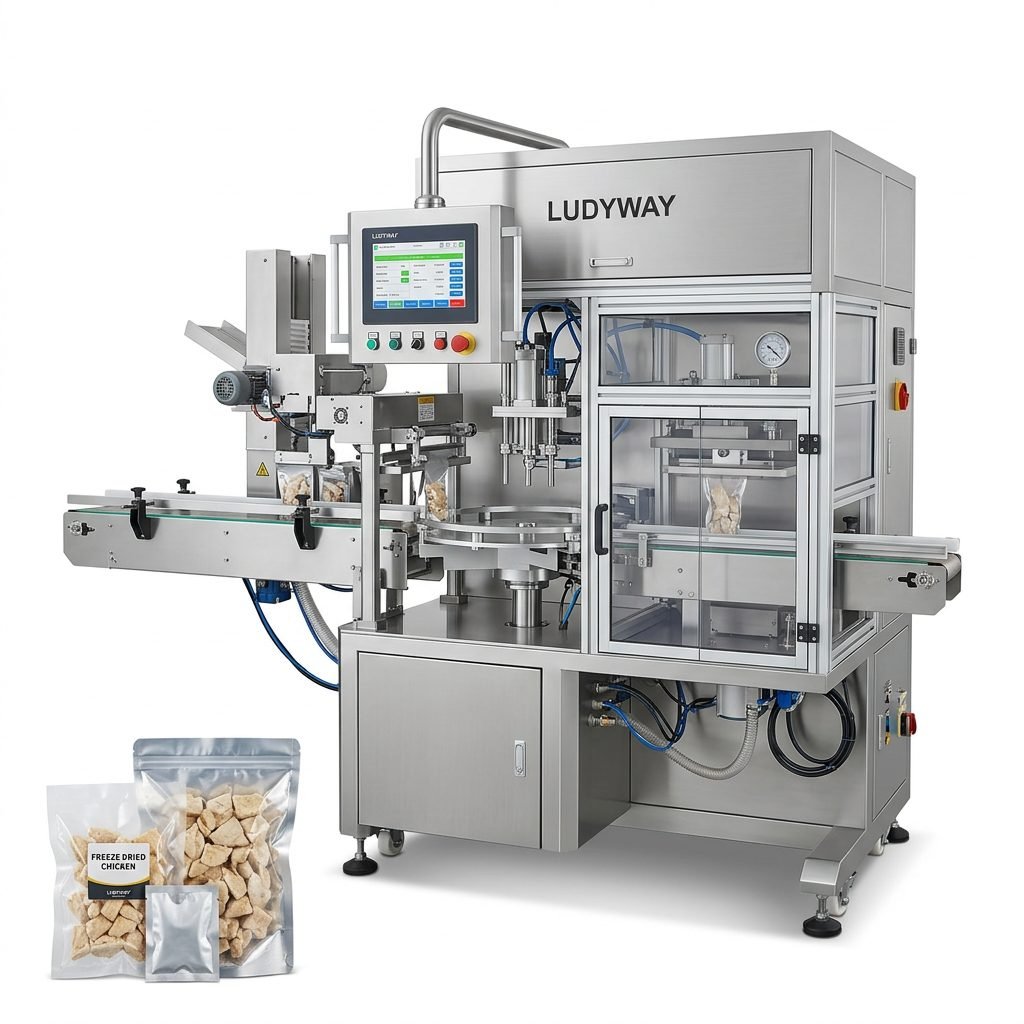
Selecting a reliable packaging machinery manufacturer is critical to the success of your German production line. Look for partners with proven experience in European installations, comprehensive after-sales support, and familiarity with German regulatory requirements. A reputable supplier should offer turnkey solutions including layout design, installation supervision, operator training, and ongoing technical support.
Companies like Ludyway, one of the largest packaging machine manufacturers in China with over 30 years of industry experience, provide advanced packaging equipment and complete production line solutions for the food, pharmaceutical, and health industries. With installations in over 100 countries and a modern 20,000㎡ manufacturing facility, they offer more than 50 intelligent packaging machine models suitable for diverse applications.
Ongoing Maintenance and Quality Control
Maintaining your vacuum packaging line in peak condition is essential for consistent product quality and compliance with German food safety standards. Establish a structured maintenance program that includes:
Preventive Maintenance Schedule
- Daily: Clean all food contact surfaces, check vacuum pump oil levels, inspect sealing bars for wear, and verify temperature settings.
- Weekly: Calibrate temperature sensors, inspect gas flush nozzles, clean filters, and check belt tensions on conveyors.
- Monthly: Replace vacuum pump oil, inspect electrical connections, verify safety interlocks, and test emergency stops.
- Quarterly: Comprehensive inspection of all mechanical components, replacement of worn sealing gaskets, and deep cleaning of internal machine areas.
- Annually: Full overhaul including bearing replacement, vacuum pump rebuild, software updates, and complete calibration.
Quality Assurance Documentation
German authorities and retail chains require thorough documentation of your quality assurance processes. Maintain detailed records of:
- Vacuum seal integrity testing results (dye penetration tests, burst tests).
- Residual oxygen measurements for MAP products.
- Temperature logs from sealing stations.
- Metal detector and X-ray inspection verification records.
- Cleaning and sanitation logs.
Industry Resources and Reference Links
Staying informed about industry standards and regulatory updates is essential for long-term success. Below are key resources for vacuum packaging professionals operating in Germany and the broader European market:
| Resource | Description | Link |
|---|---|---|
| PMMI – Packaging Industry Association | Industry reports, standards, and market intelligence for packaging machinery | Visit PMMI |
| PACK EXPO International | Leading packaging trade show with the latest vacuum packaging technology | Visit PACK EXPO |
| FDA – Food Packaging & Food Contact Substances | Regulatory guidance on food contact materials and packaging safety | Visit FDA |
| ISO – Packaging Standards (ICS 55) | International standards for packaging, including vacuum packaging specifications | Visit ISO |
| European Commission – Packaging Waste | EU regulations on packaging waste management and sustainability requirements | Visit EU Commission |
| Flexible Packaging Association | Resources and industry data on flexible and vacuum packaging materials | Visit FPA |
Frequently Asked Questions
What is the typical lead time for a vacuum packaging production line in Germany?
Lead times for a complete vacuum packaging production line typically range from 8 to 16 weeks, depending on the level of customization required. This includes manufacturing, factory acceptance testing (FAT), shipping, and on-site installation. For complex turnkey lines with multiple integrated systems, lead times may extend to 20–24 weeks.
Do I need a permit to install packaging machinery in Germany?
While no specific permit is required solely for packaging machinery installation, you must ensure compliance with building codes (Bauordnung), workplace safety regulations (Arbeitsschutzgesetz), and environmental regulations. The local Gewerbeaufsichtsamt (Trade Supervisory Authority) may inspect your facility. CE certification for all machinery is mandatory.
Can I import vacuum packaging machines from outside the EU?
Yes, importing vacuum packaging equipment from non-EU countries is common. However, the machinery must carry valid CE marking and comply with all applicable EU directives. Work with your supplier to ensure proper documentation, including the Declaration of Conformity, user manuals in German (or English with German supplement), and safety test certificates. Customs duties vary based on the equipment classification and country of origin.
What are the energy efficiency requirements for packaging lines in Germany?
Germany has stringent energy efficiency standards under the EnEG (Energy Saving Act) and EnEV (Energy Saving Ordinance). While these primarily target building systems, industrial equipment should meet the energy efficiency benchmarks outlined in EU Ecodesign regulations where applicable. Modern servo-driven vacuum packaging machines with regenerative braking systems can significantly reduce energy consumption compared to older pneumatic systems.

Final Checklist Before Production Launch
Before commencing full-scale production with your new vacuum food packaging line in Germany, verify the following items:
- All machinery has valid CE certification and Declarations of Conformity.
- Facility meets German hygiene standards (IFS/BRC certification in progress or completed).
- Utility connections have been inspected and approved by certified technicians.
- Operator training has been completed and documented for all shifts.
- Emergency procedures are posted and all safety interlocks are verified functional.
- Product trials have demonstrated consistent seal integrity and acceptable residual oxygen levels.
- Quality control protocols and documentation systems are in place.
- Spare parts inventory for critical components has been established.
- Service contact information for your equipment supplier is readily available.
- Waste disposal contracts for packaging materials are in place per German recycling regulations.
By following this comprehensive guide and partnering with experienced packaging equipment manufacturers, you can successfully establish a high-performance vacuum food packaging production line that meets all German regulatory requirements and delivers reliable, efficient operation for years to come.