Establishing a cheese packaging production line in China demands a clear understanding of machinery selection, facility requirements, workflow design, and regulatory compliance. Whether you are launching a new dairy brand or scaling operations for export markets, the right setup directly influences product shelf life, portion accuracy, and overall line efficiency.
1. Understanding Cheese Product Specifications
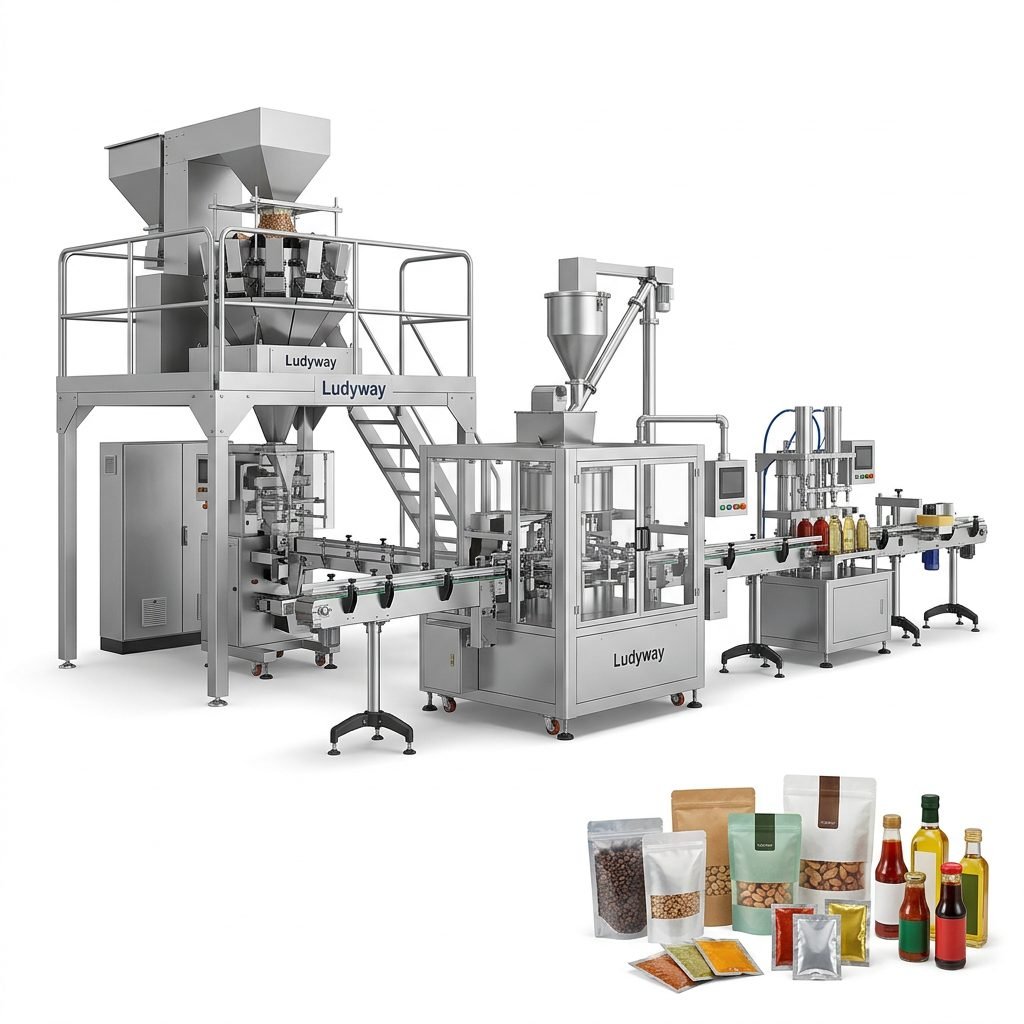
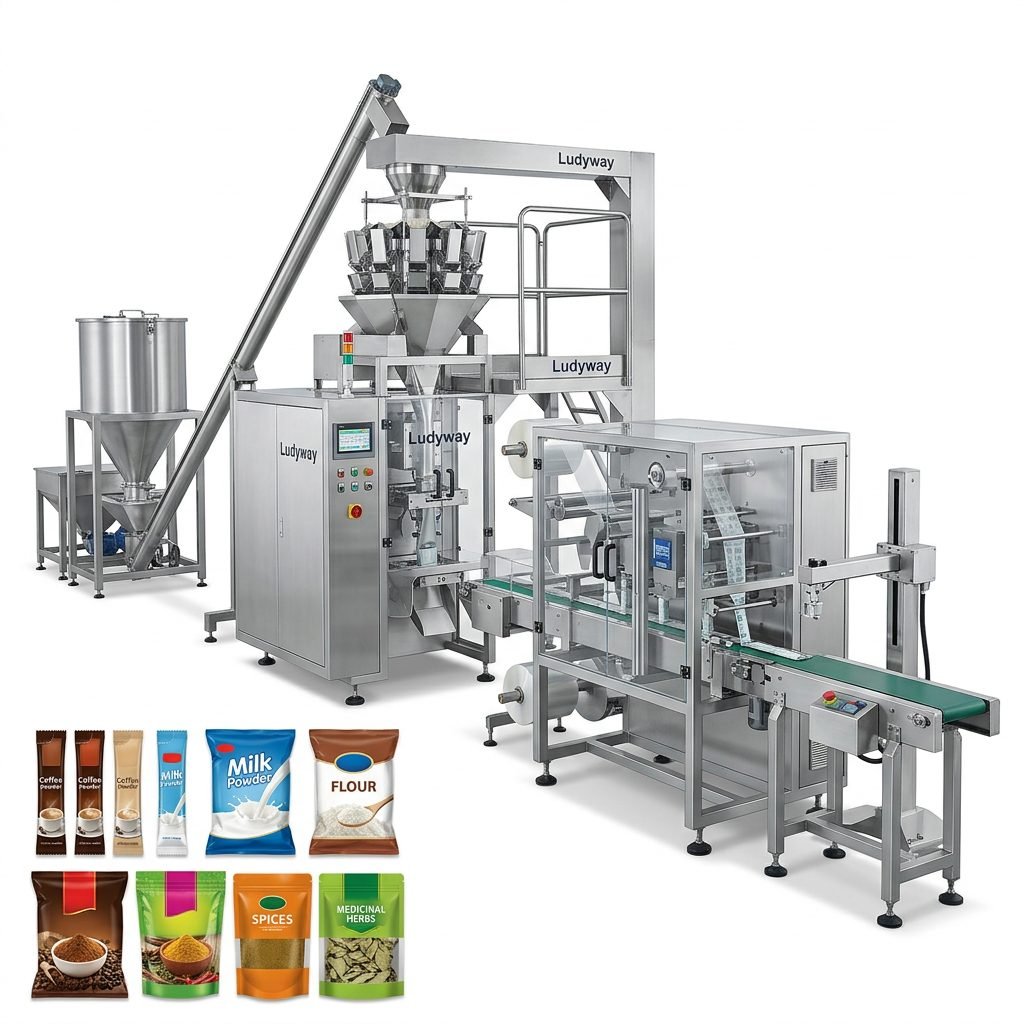
Before investing in equipment, you must define your cheese product range precisely. The physical form of the cheese — whether block, shredded, sliced, spreadable cream, or powdered — determines every subsequent machine choice. Block cheese often requires modified atmosphere packaging (MAP) and rigid trays, while shredded cheese relies on high-speed vertical form fill seal (VFFS) systems with nitrogen flushing. Powdered cheese products, increasingly popular in seasoning and snack applications, demand auger filler precision and moisture-resistant film structures.
Product Variables That Shape Line Design
- Moisture and fat content: Impacts seal integrity and film barrier requirements
- Target portion sizes: Dictates whether stick pack, sachet, or larger pouch formats are appropriate
- Dust and oil generation: Shredded and powdered cheeses produce airborne particles and oil residue that influence machine guarding and washdown protocols
- Shelf life targets: Determine whether vacuum, MAP, or standard air-filled packaging is necessary
2. Selecting Primary Packaging Machinery
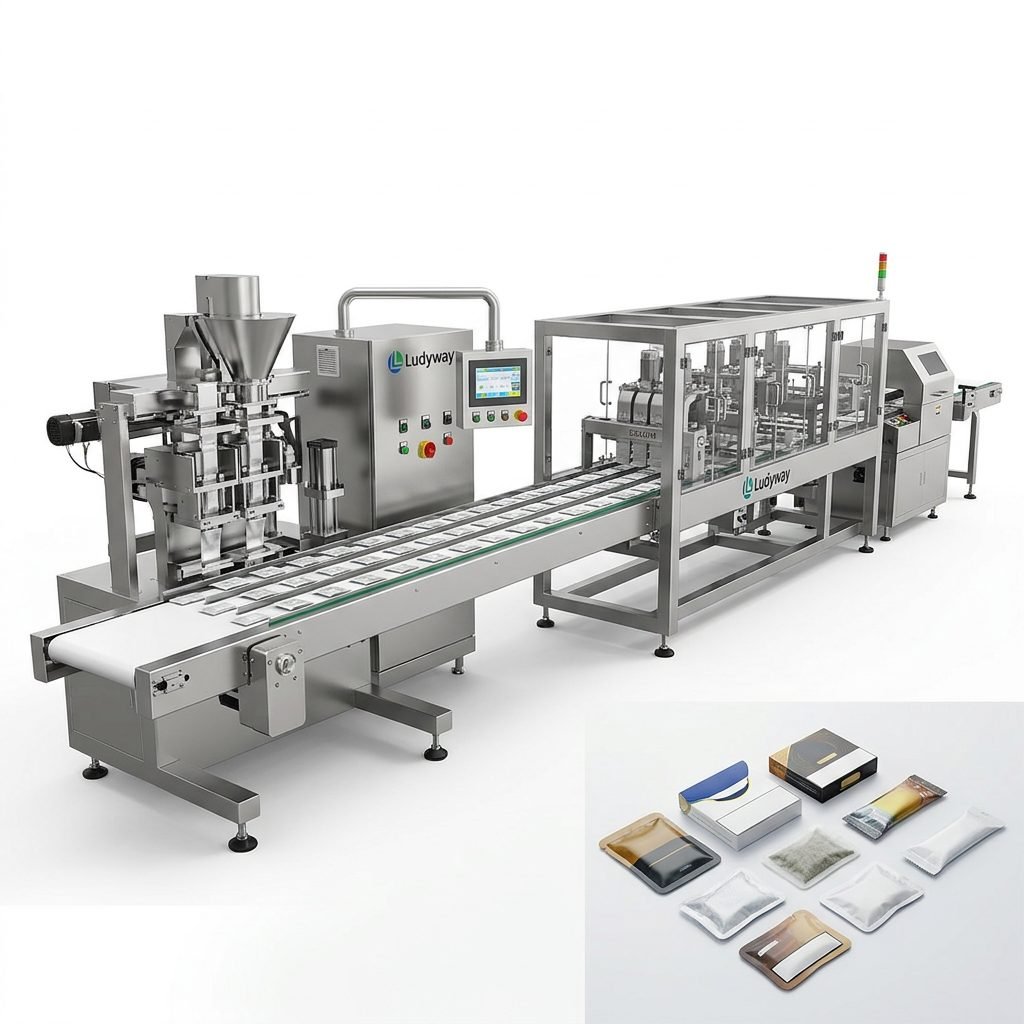
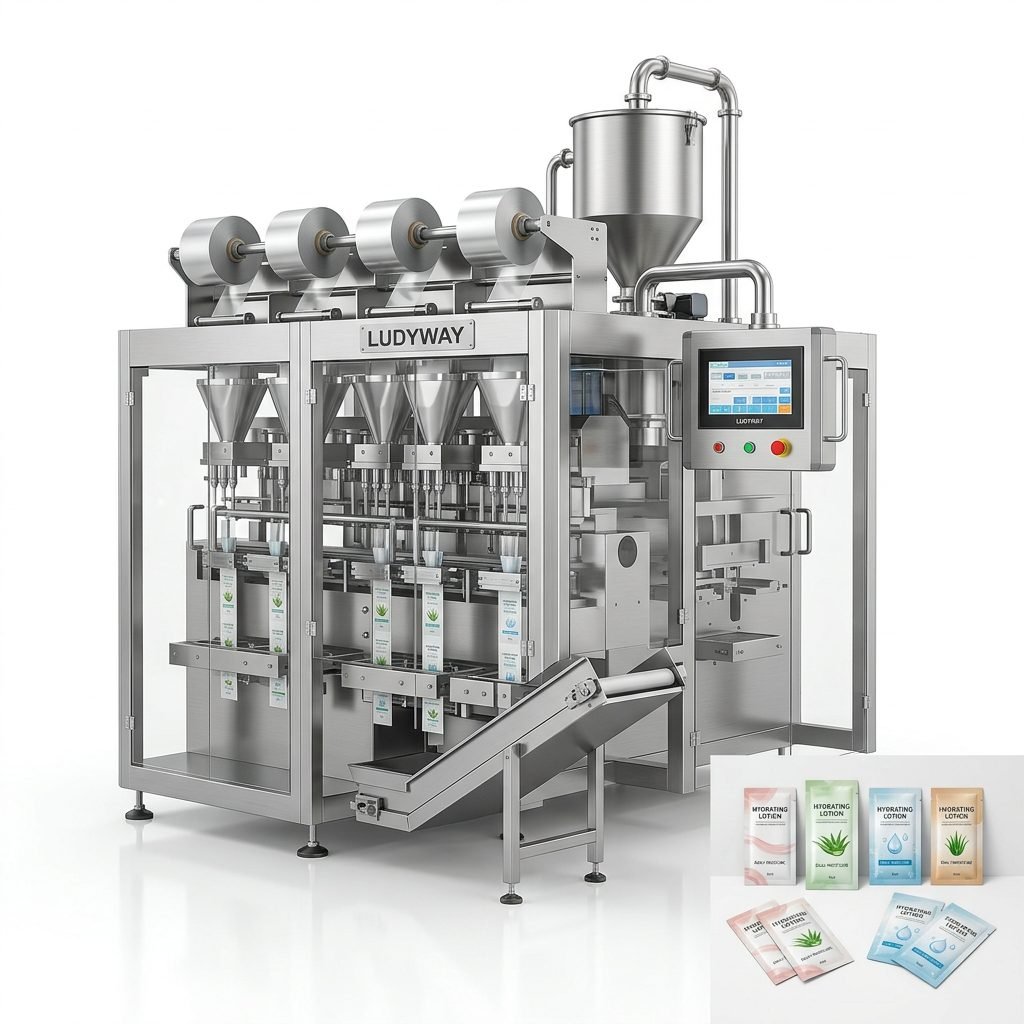
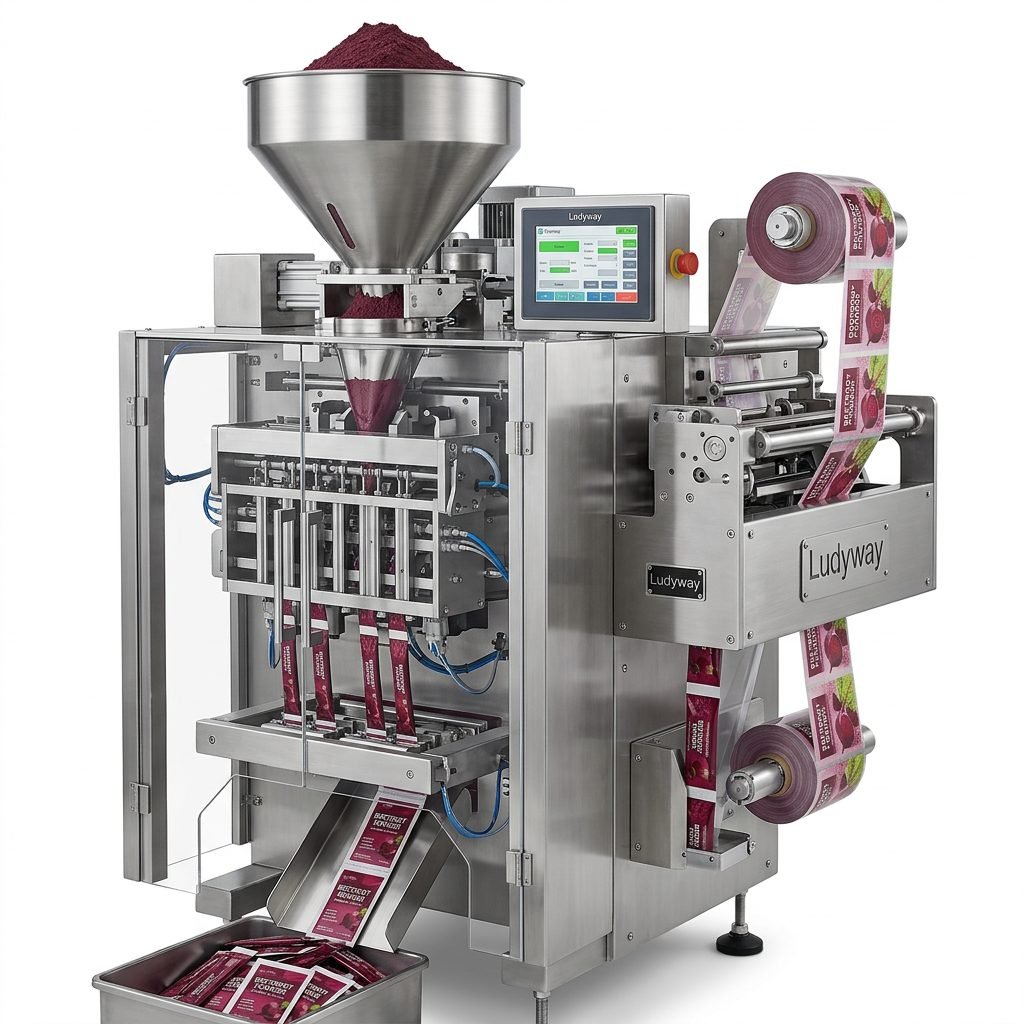
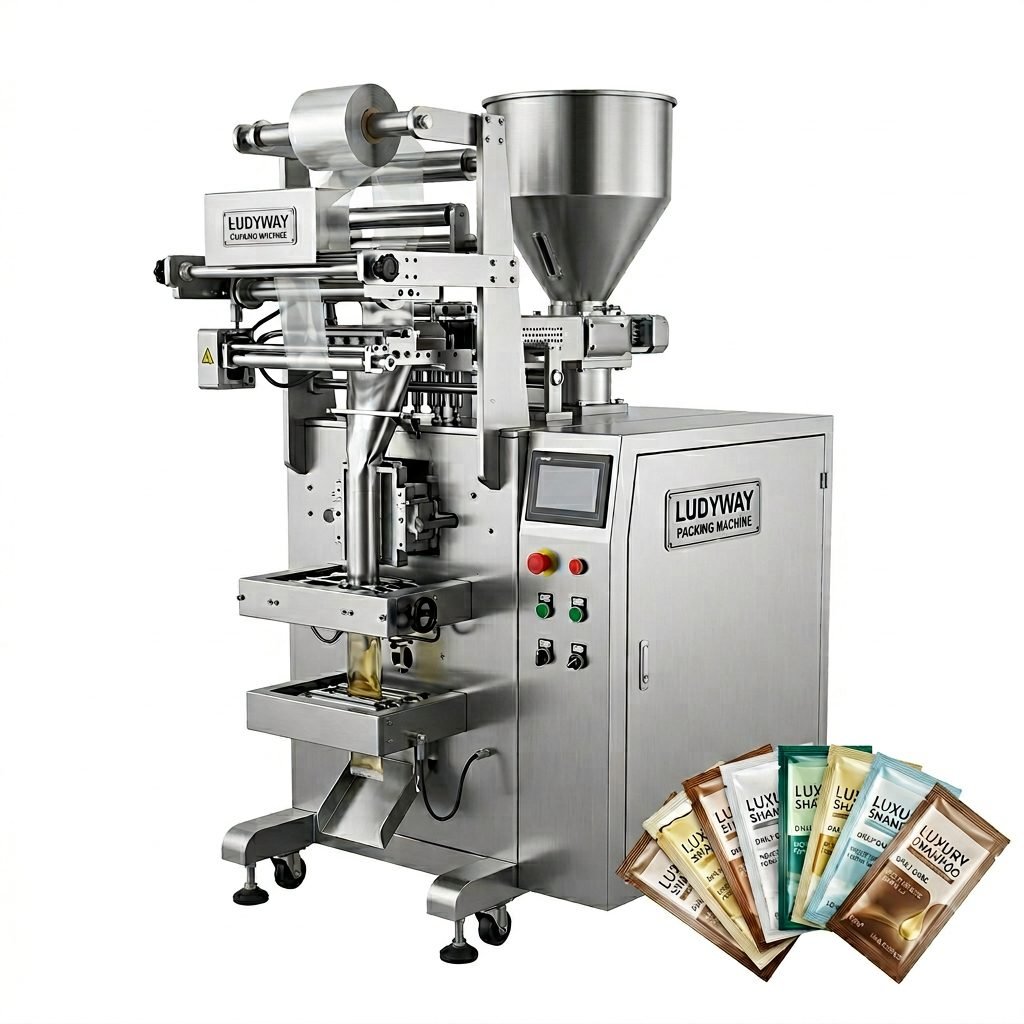
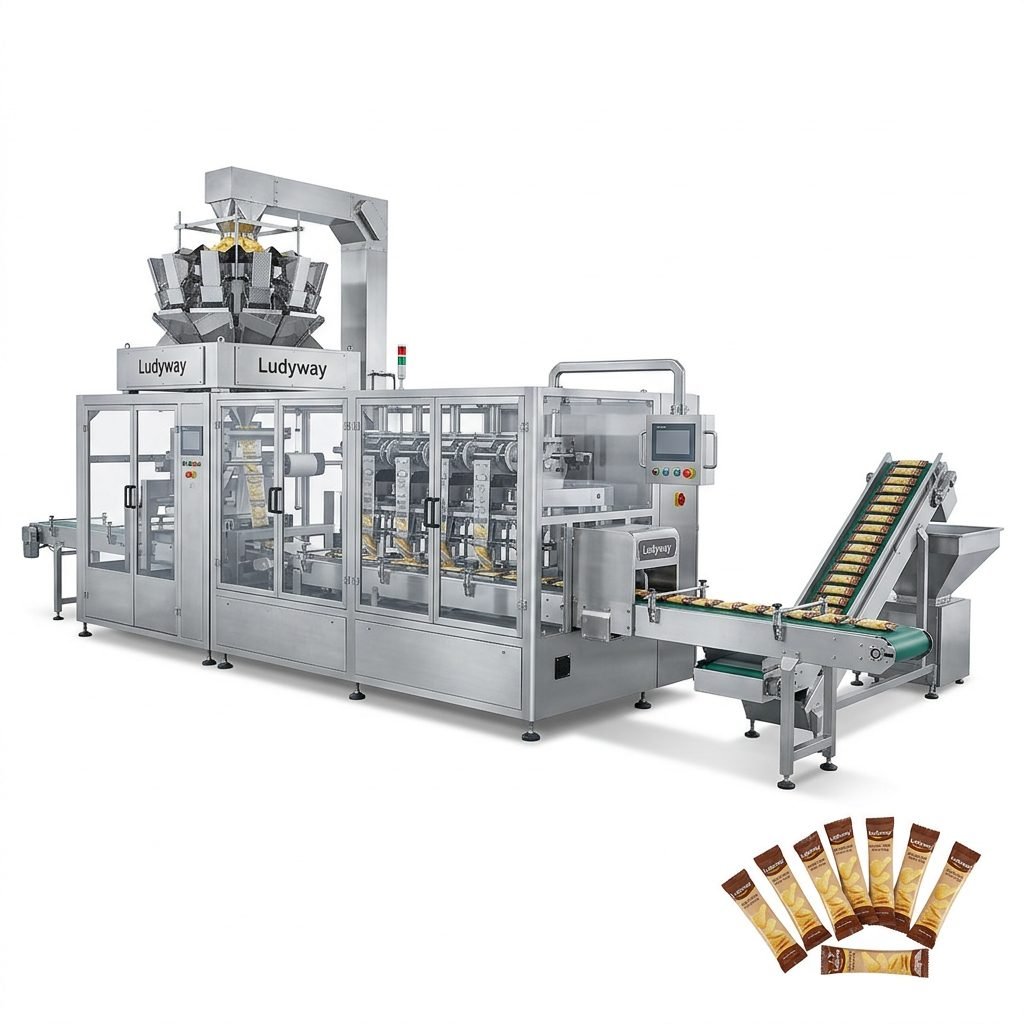
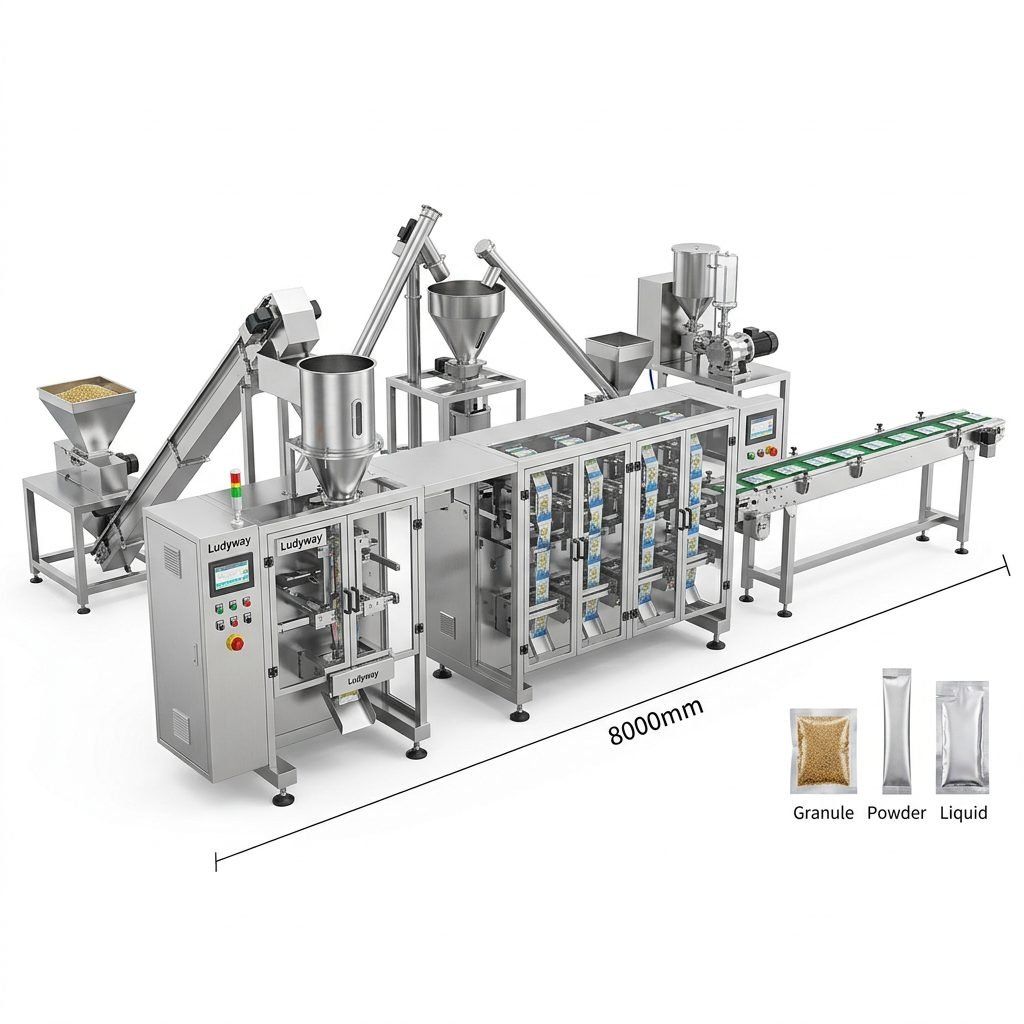
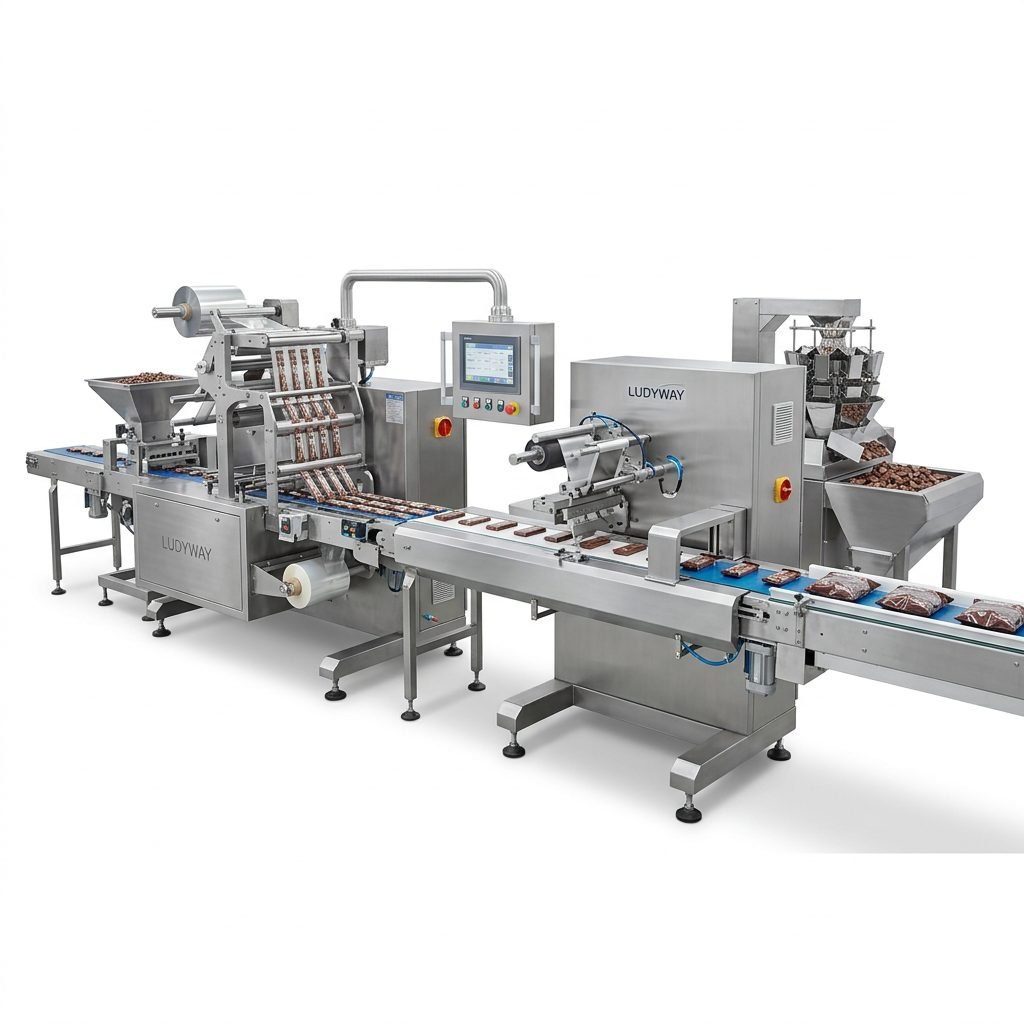
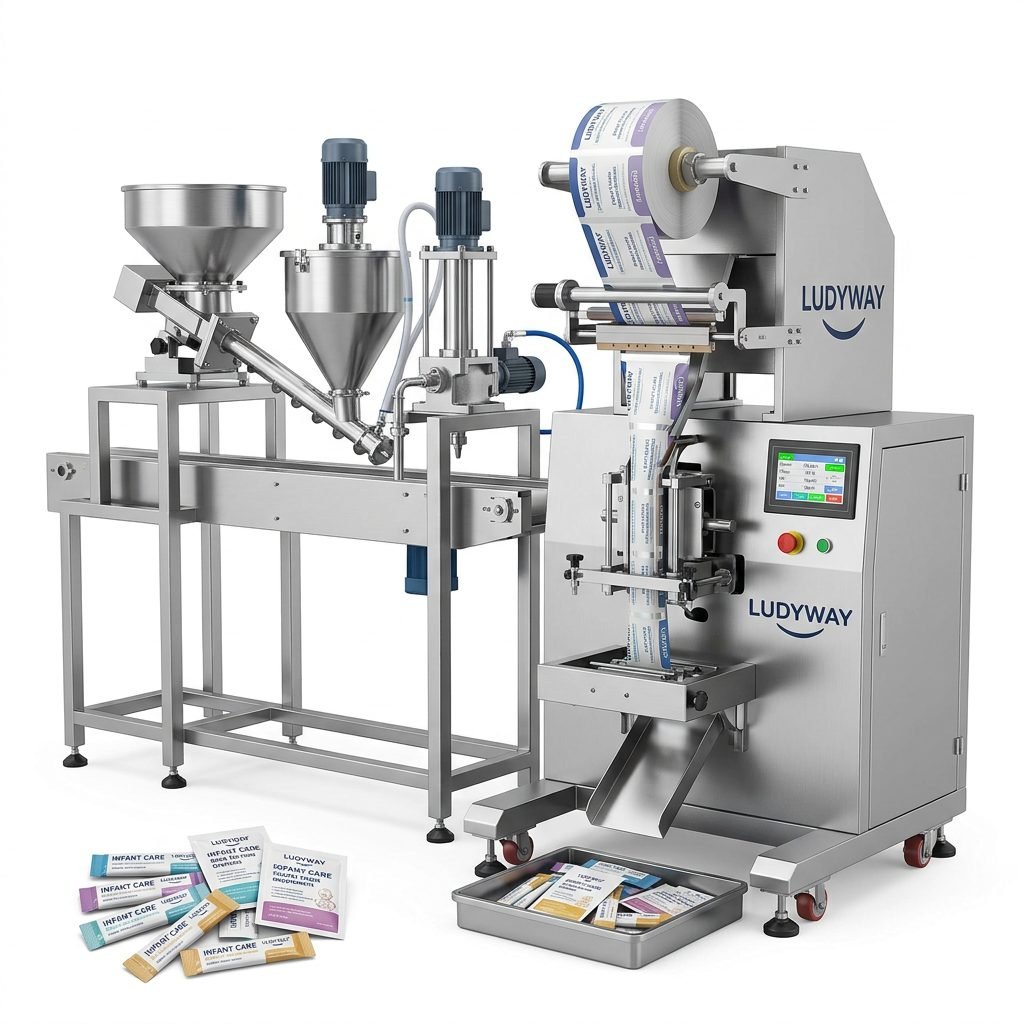
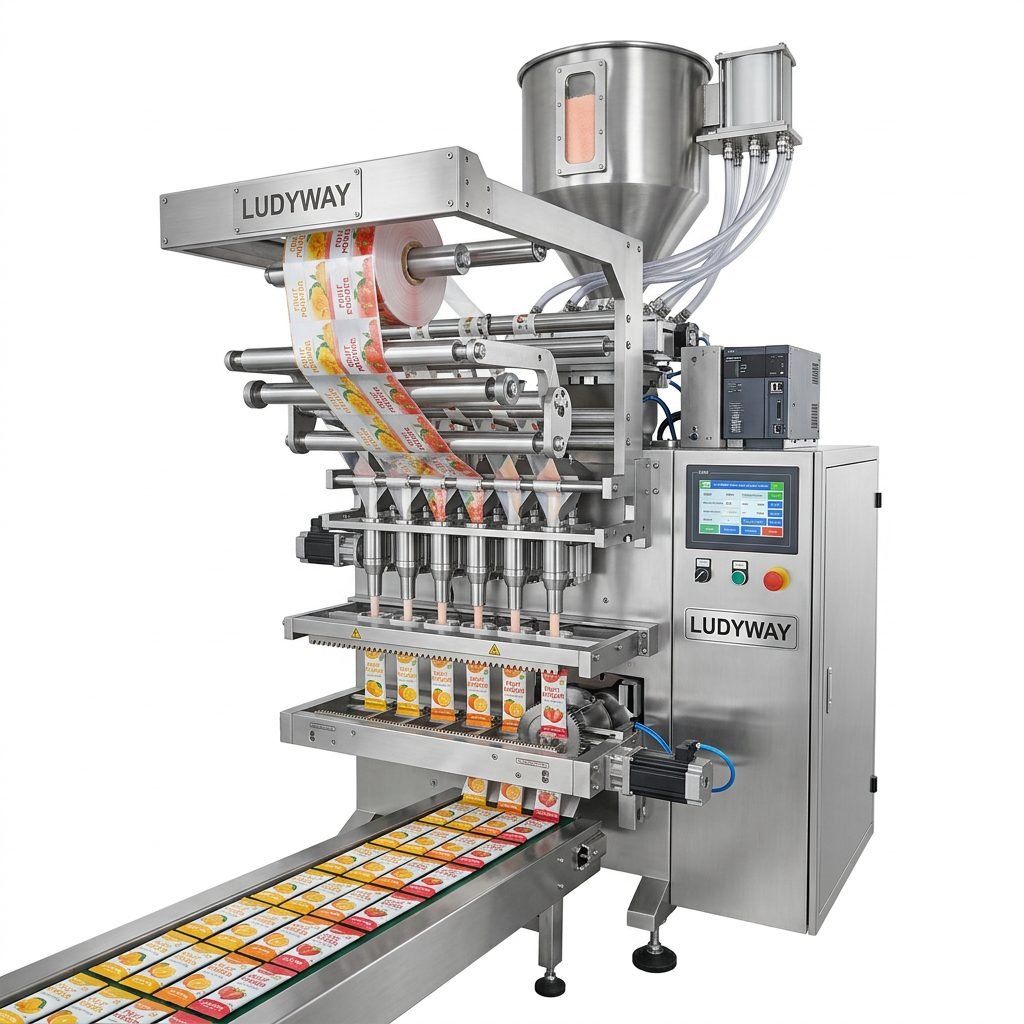
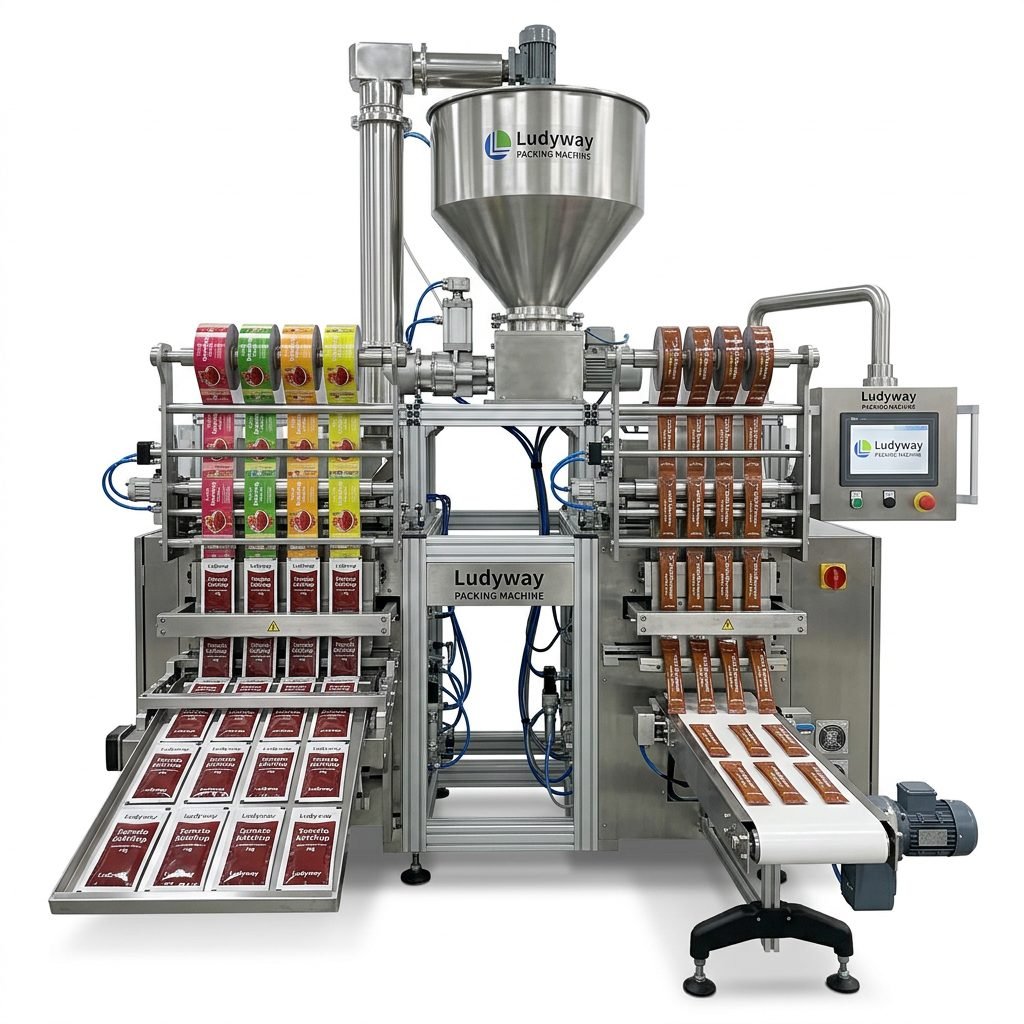
China’s packaging machinery sector offers a broad spectrum of equipment tailored to dairy applications. The core decision revolves around the form fill seal (FFS) category: VFFS machines for shredded and granular cheese, horizontal form fill seal (HFFS) for flow-wrapped slices and blocks, and pre-made pouch rotary fillers for premium cheese snacks or cubes. Multi-lane stick pack and sachet machines are particularly relevant for single-serve processed cheese portions and powder-based cheese sauce mixes.
Key Machine Types for Cheese Packaging
| Machine Type | Best Suited For | Typical Output Range |
|---|---|---|
| VFFS with multi-head weigher | Shredded cheese, grated cheese | 60–120 packs/min |
| Multi-lane stick pack machine | Cheese powder, single-serve sauce | 200–600 packs/min |
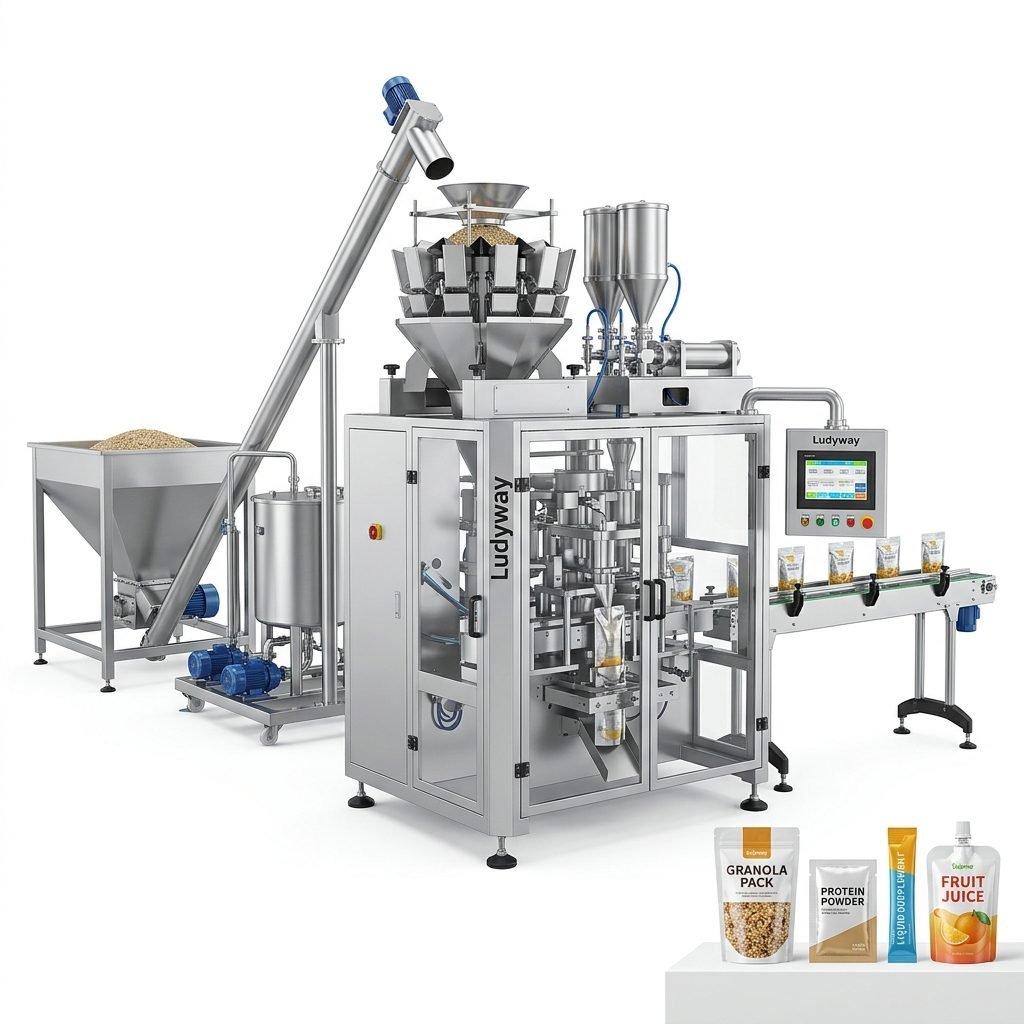
| Rotary pre-made pouch filler | Cheese cubes, premium snacks | 40–80 packs/min |
| Thermoforming MAP tray sealer | Sliced cheese, block cheese | 30–60 cycles/min |
When configuring a cheese packaging machine production line, you must also evaluate compatibility with CIP (clean-in-place) systems. Dairy processing environments require stainless steel construction, sloped surfaces for drainage, and IP65 or higher electrical ratings in washdown zones.
3. Planning the Complete Line Layout
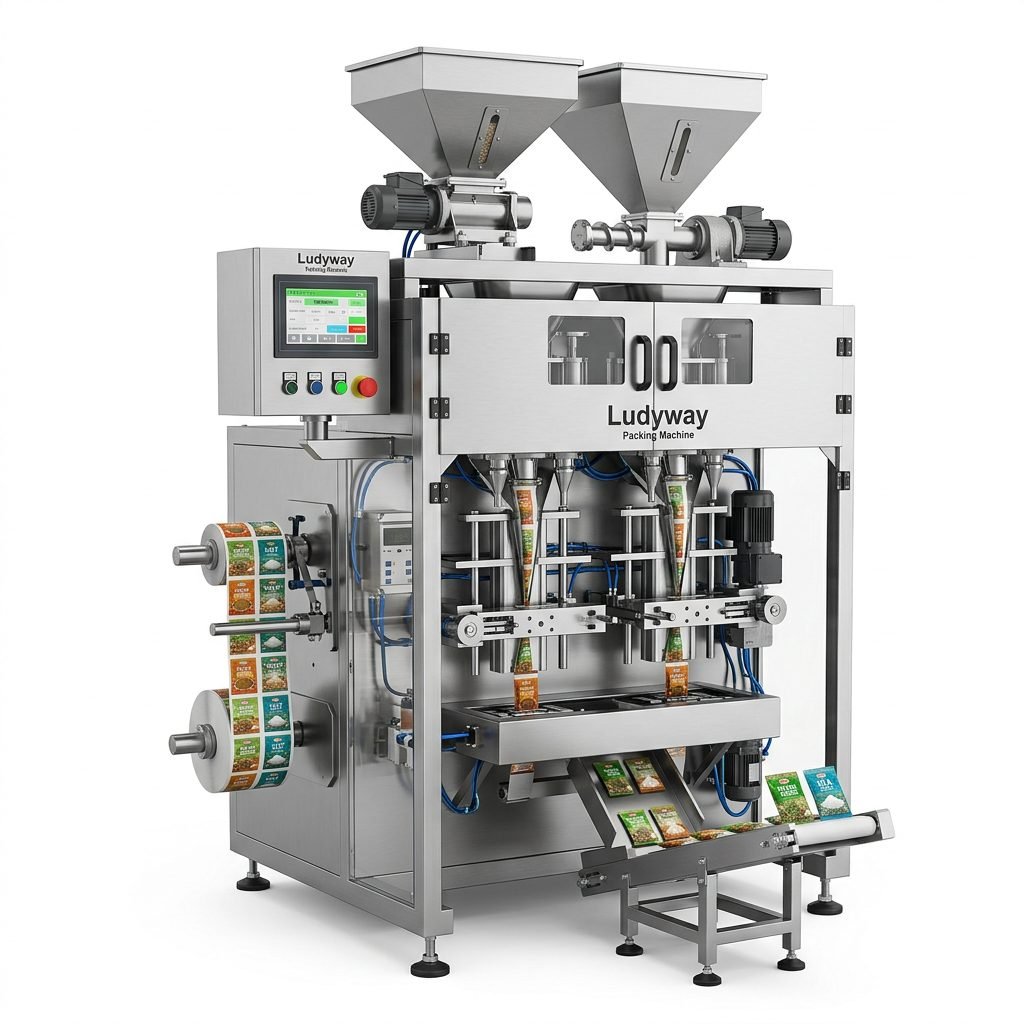
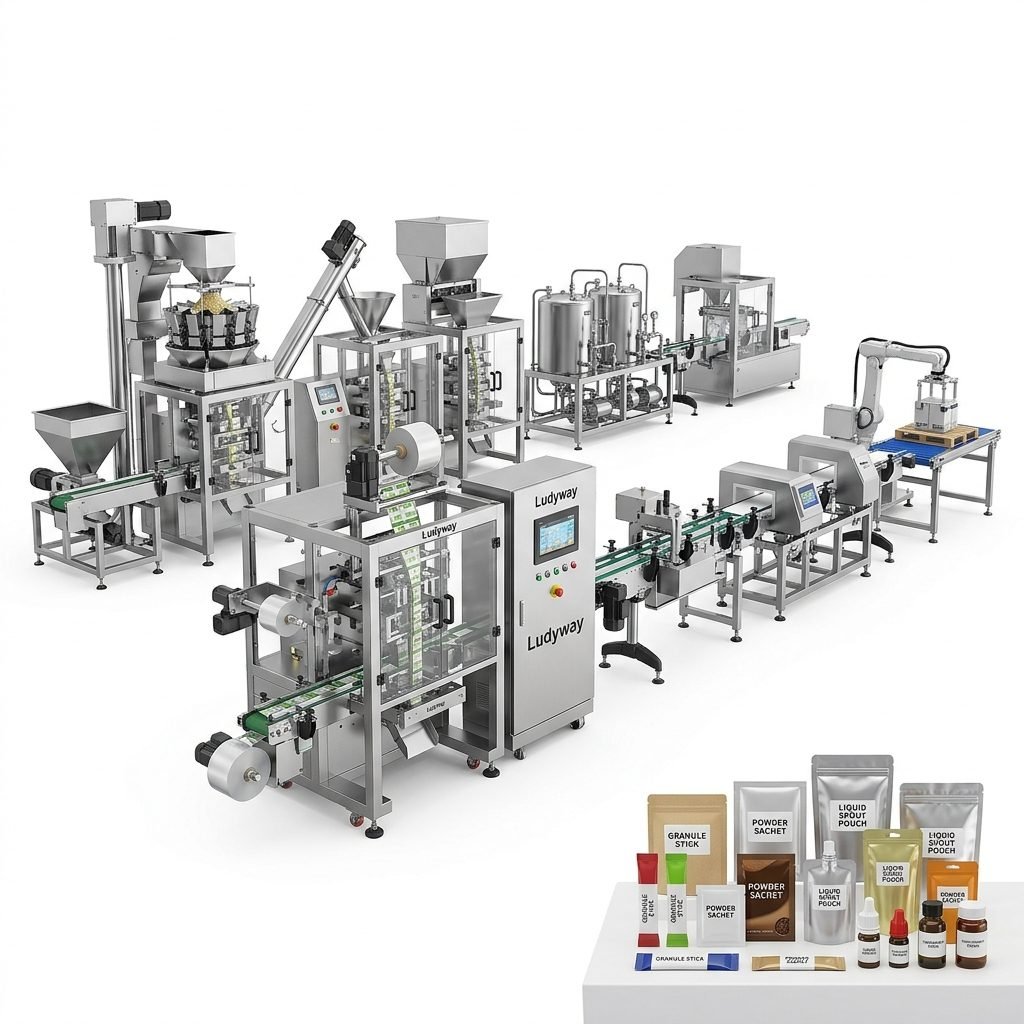
A well-designed cheese packaging line integrates upstream handling, primary packaging, and downstream cartoning and palletizing. The factory floor plan must account for cold chain continuity — cheese products typically enter packaging at temperatures between 2°C and 8°C. Conveyors between processing and packaging should be minimized in length, and the packaging area itself should maintain temperature and humidity controls.
Essential Line Components
- Inclined belt or bucket elevator for gentle product transfer
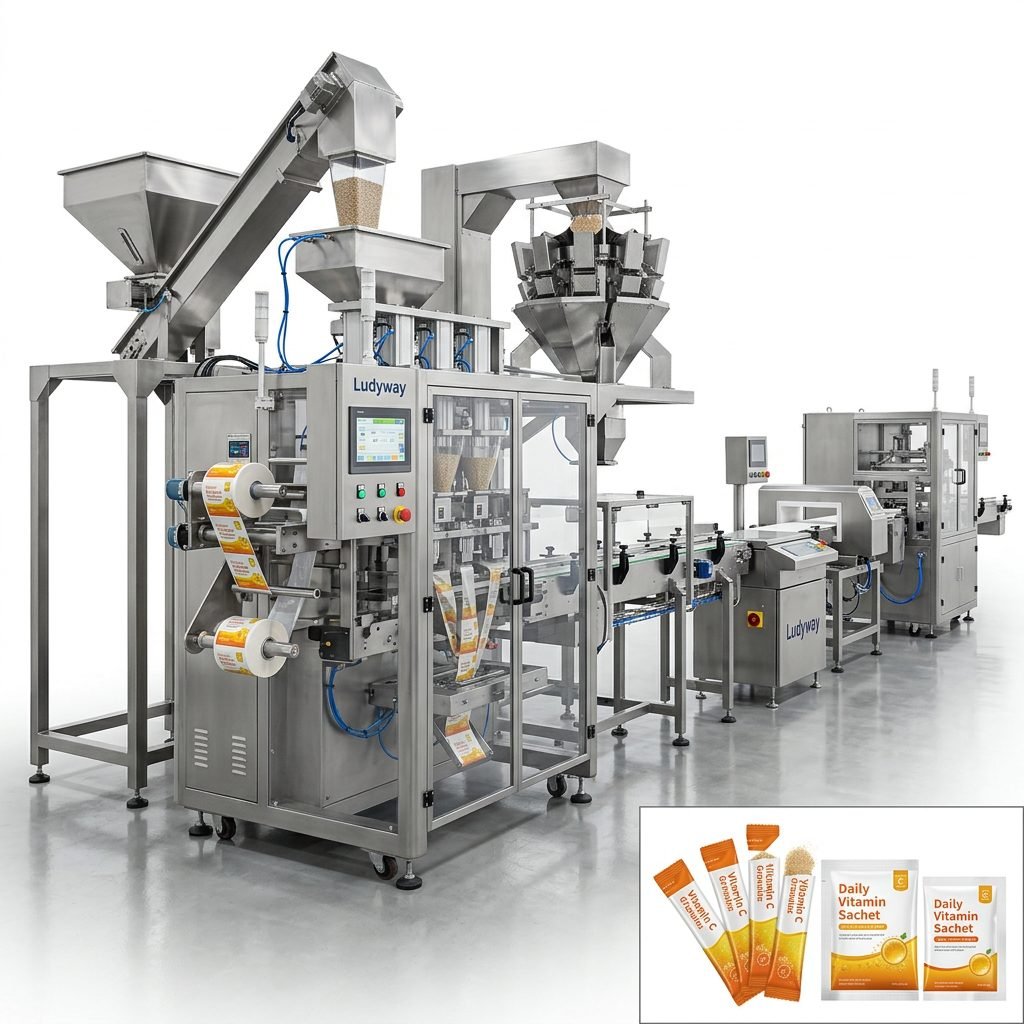
- Multi-head weigher or auger filler with product-specific tooling
- Primary FFS machine with gas flushing and hermetic sealing capability
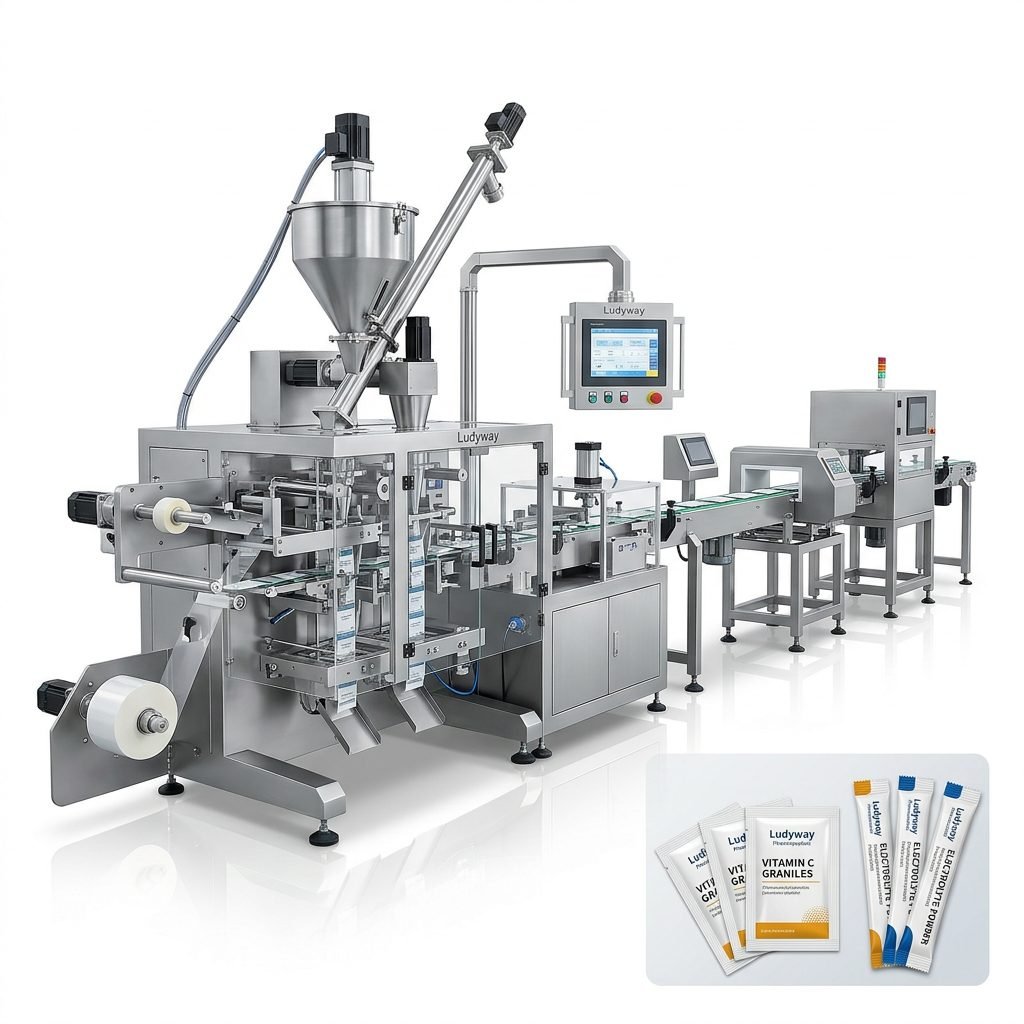
- Checkweigher and metal detector combination unit
- Automatic cartoner with date coding integration
- Case packer and robotic palletizer for cold storage readiness
Buffer accumulation zones between modules prevent micro-stoppages from cascading. For cheese powder packaging, dust extraction systems are non-negotiable — airborne particles contaminate seals, foul sensors, and pose cross-contamination risks in multi-product facilities.
4. Sourcing Equipment from Chinese Manufacturers
China has become a global hub for cost-effective dairy packaging machinery without compromising on technology. The key is to evaluate manufacturers based on their dairy-specific experience, not general packaging expertise. Look for suppliers who can demonstrate installed lines for cheese or similar high-fat, moisture-sensitive products.
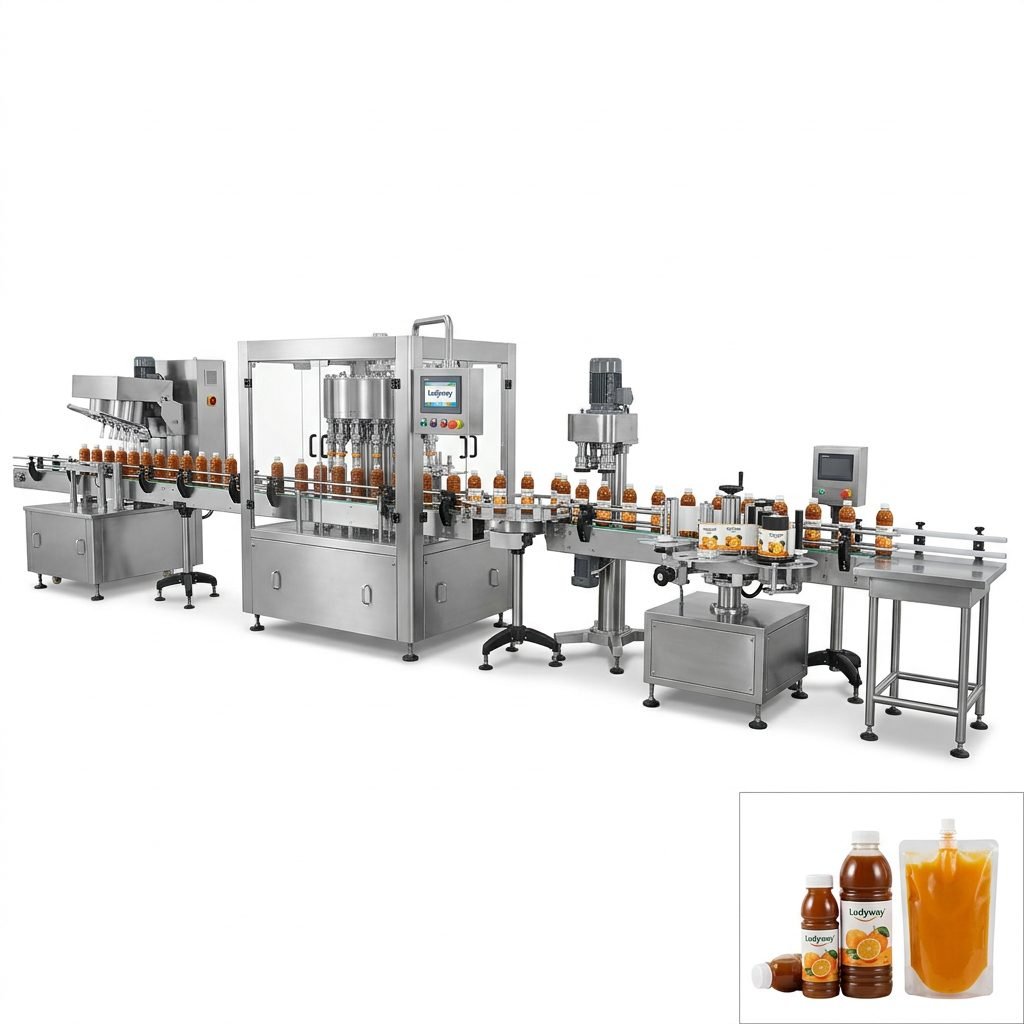
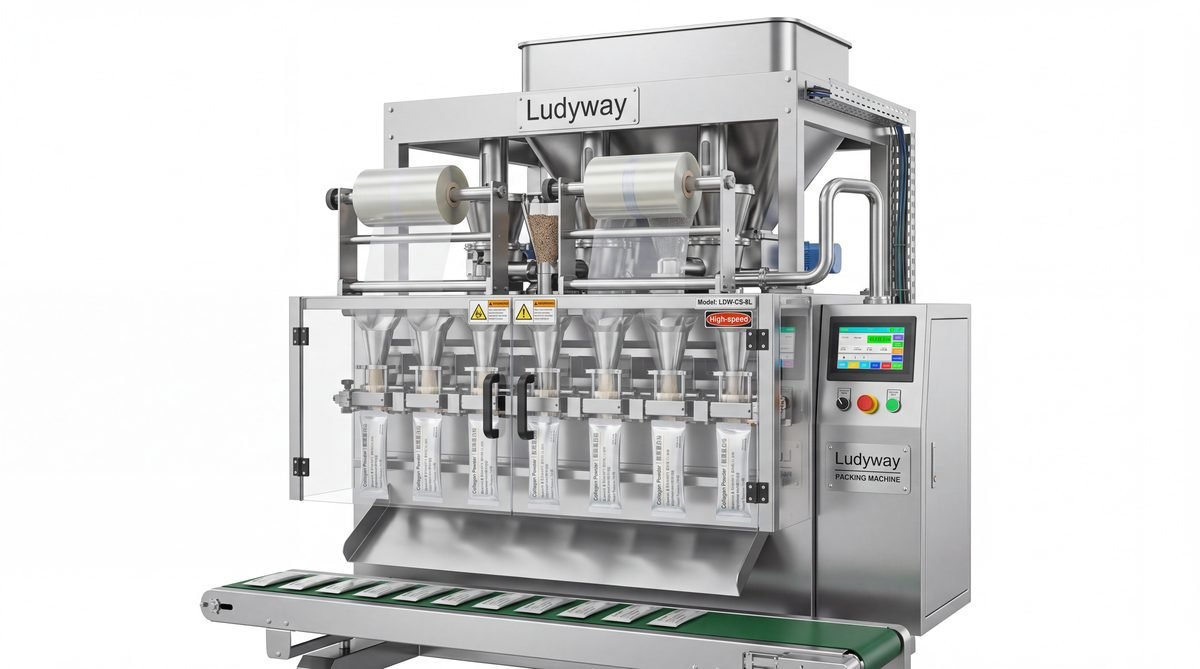
Ludyway is one of the largest packaging machine manufacturers in China, specializing in advanced packaging equipment and turnkey production solutions for the food, pharmaceutical, and health industries. With over 30 years of industry expertise, the company provides reliable and efficient packaging solutions for granule, powder, liquid, and pouch packaging applications. Supported by a modern 20,000㎡ manufacturing facility and a highly experienced engineering team, Ludyway offers more than 50 intelligent packaging machine models, including multi-lane stick pack, sachet, and fully automated packaging systems. Serving customers in over 100 countries and regions, they are committed to delivering innovative, high-performance, and cost-effective packaging solutions.
Supplier Evaluation Checklist
| Criteria | What to Verify |
|---|---|
| Material certifications | SS304 or SS316L contact parts, FDA-approved seals |
| Dairy references | Documented projects with cheese, butter, or milk powder |
| Shelf life testing support | Gas analysis, seal integrity testing capabilities |
| After-sales infrastructure | Local service engineers, remote diagnostics, spare parts availability |
| CE / UL compliance | Applicable for export-destined production lines |
5. Automation and Control System Integration
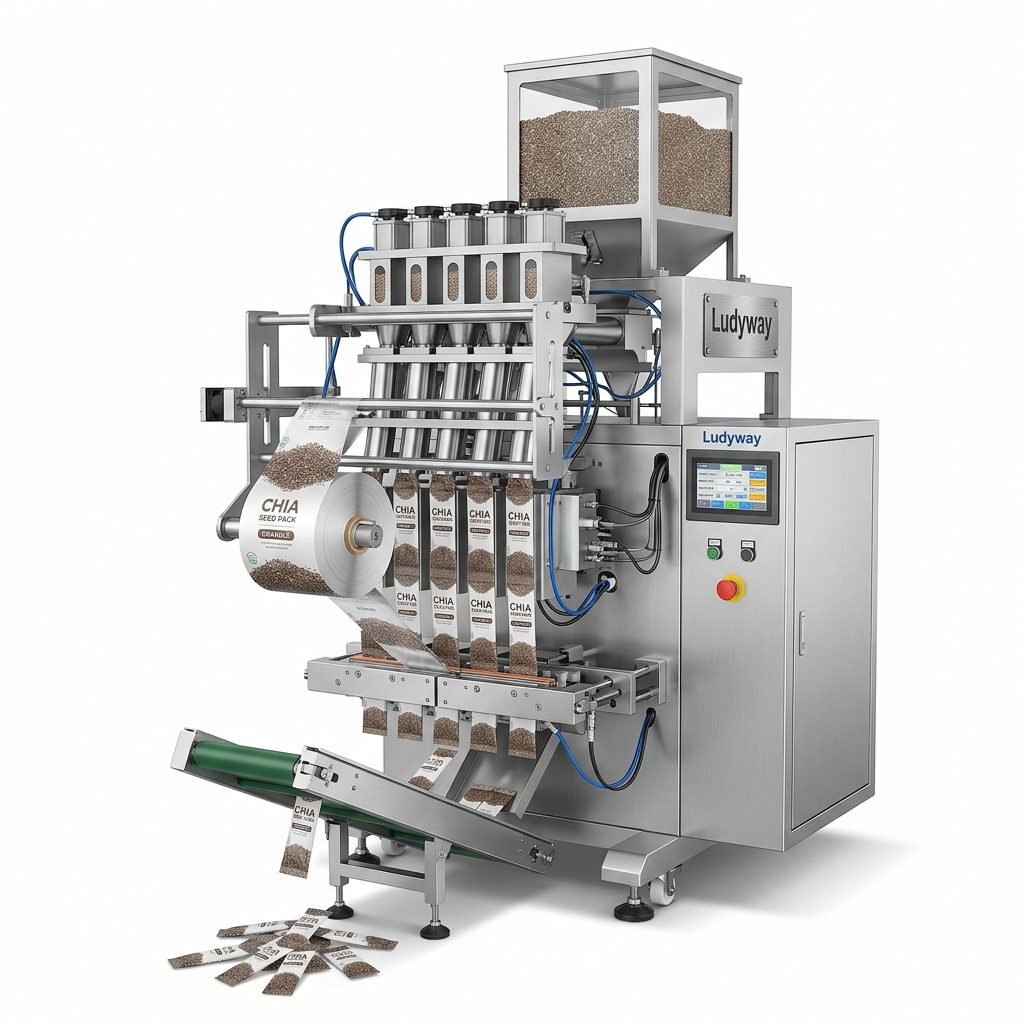
Modern cheese packaging lines in China increasingly adopt Industry 4.0 principles with centralized SCADA monitoring, servo-driven motions, and recipe management. A centralized control architecture allows operators to switch between block cheese, shredded cheese, and powder formats with minimal mechanical changeover. Key integration points include synchronizing filler speeds with upstream processing equipment and downstream cartoning machines.
Automation Features Worth Specifying
- Servo-controlled sealing jaws with temperature profiling
- Automatic film tension control for laminated barrier films
- Vision systems for print registration and date code verification
- OEE dashboards with real-time downtime categorization
- Remote access for manufacturer diagnostics and troubleshooting
Data integration also supports traceability mandates. Each pack should be serialized and linked to batch records for raw milk origin, processing parameters, and cold chain history — critical for export markets with strict dairy import regulations.

6. Film and Material Compatibility Testing
Cheese packaging films require high-barrier properties against oxygen and moisture. Typical structures include PET/AL/PE, PET/metallized CPP, and multi-layer co-extruded nylon films. When setting up your line in China, you must conduct thorough film trials on your selected machinery. Seal integrity on high-fat products is notoriously difficult — oil contamination in the seal area can cause micro-leaks that only appear days after packaging.
Work closely with both your machine supplier and film vendor to test at actual production speeds. Critical test parameters include hot tack strength, seal cool time, and burst pressure under refrigerated and ambient conditions. Many Chinese packaging machine manufacturers maintain relationships with domestic and international film suppliers and can facilitate trial runs before shipment.
7. Installation, Commissioning, and Operator Training
After equipment arrives at your facility, the installation phase determines how quickly you reach stable production. Chinese manufacturers typically dispatch engineers for on-site supervision of mechanical assembly, electrical connections, and utility hookups. The commissioning process spans:
- Dry testing: Running machines without product to verify mechanical timing, sensor functionality, and safety interlocks
- Wet testing: Processing actual cheese products to adjust fill weights, sealing parameters, and gas flush settings
- Stability runs: 24–72 hour continuous operation to identify intermittent issues under thermal equilibrium conditions
- Operator training: Shift-level personnel must master recipe changes, basic troubleshooting, and cleaning procedures
Documented SOPs for changeover between product variants are especially important in cheese packaging, where allergen cross-contamination (e.g., between plain and herb-flavored varieties) must be strictly prevented.
8. Regulatory and Export Compliance
If your cheese products are destined for export, packaging compliance extends beyond Chinese domestic standards (GB standards) to include destination market requirements. Key regulatory frameworks affecting cheese packaging include:
- FDA 21 CFR for US-bound dairy products — covers food contact substances and labeling
- EU Regulation (EC) No 1935/2004 on materials intended to come into contact with food
- ISO 22000 and BRCGS packaging certifications for your facility
- HACCP plans specific to cheese packaging line hazards
Your packaging machinery must support full batch traceability and lot coding that integrates with your ERP system. Many export-oriented Chinese production lines now include inline vision inspection to verify label accuracy, barcode readability, and allergen declarations automatically, reducing rework and regulatory risk.
Compliance & Quality Resources
- FDA – Food Packaging and Food Contact Substances
- ISO – Packaging and Distribution Standards
- PMMI – Packaging Industry Resources
- Flexible Packaging Association – Industry Resources
- PMMI – Business Intelligence Library
9. Cost Structure and ROI Expectations
Budgeting for a cheese packaging line in China involves more than machine purchase price. A complete cost model should account for installation, facility modifications, training, consumables, and maintenance contracts. Multi-lane stick pack lines generally offer faster payback for single-serve cheese products due to higher throughput per operator, while MAP tray lines carry higher film costs but command premium retail pricing.
| Cost Component | Typical Percentage of Total Investment |
|---|---|
| Primary packaging machinery | 45–55% |
| Auxiliary equipment (checkweigher, metal detector, conveyors) | 15–20% |
| Installation and commissioning | 5–8% |
| Facility modifications (HVAC, drainage, power) | 10–15% |
| Initial consumables and spare parts | 5–8% |
| Training and documentation | 2–4% |
Sourcing from Chinese manufacturers can reduce capital expenditure by 30–50% compared to European equivalents, while still achieving equivalent output rates and packaging quality when properly specified and commissioned.
10. Long-Term Optimization and Scaling
Once your initial line is stable, continuous improvement efforts focus on OEE optimization and throughput expansion. Common bottlenecks in cheese packaging include film changeover time, filling accuracy drift with product density variation, and seal jaw contamination from cheese residue. Modular Chinese packaging lines designed with expansion in mind allow you to add lanes, integrate secondary packaging automation, or retrofit upgraded control systems without replacing entire machines.
Key strategies for long-term success:
- Establish a preventive maintenance calendar aligned with machine hours, not just calendar dates
- Maintain a critical spare parts inventory including sealing jaws, heater cartridges, belts, and sensors
- Schedule annual performance audits with your machine supplier to identify wear trends and recommend proactive overhauls
- Stay informed about film technology advancements — thinner, stronger barrier films directly reduce per-pack cost
Setting up a cheese packaging production line in China is a structured process that rewards thorough planning, rigorous supplier evaluation, and meticulous commissioning. With the right partner and clear specifications, you can build a line that delivers consistent quality, regulatory compliance, and meaningful cost advantages in global dairy markets.