Launching a ketchup packaging machine production line in the United States requires careful planning, a clear understanding of regulatory requirements, and selecting the right automated equipment. Whether you are a new condiment brand, a co-packer, or an established food manufacturer looking to upgrade operations, this guide covers the essential steps to design, install, and scale a high-efficiency ketchup packaging line.
Understanding the U.S. Ketchup Packaging Landscape
The U.S. sauce and condiment market continues to expand, driven by demand for convenience, portion control, and food service formats. Ketchup is packaged in multiple formats, including single-serve sachets, stick packs, dipping cups, pouches, and bottles. Each format requires specific filling and sealing technologies. Understanding your target market segment—retail, food service, or institutional—is the first step in defining the right ketchup packaging line configuration.
Step 1: Defining Your Ketchup Packaging Format and Output Goals
Before investing in machinery, determine the primary packaging formats your business will produce. Common ketchup packaging configurations in the U.S. market include:
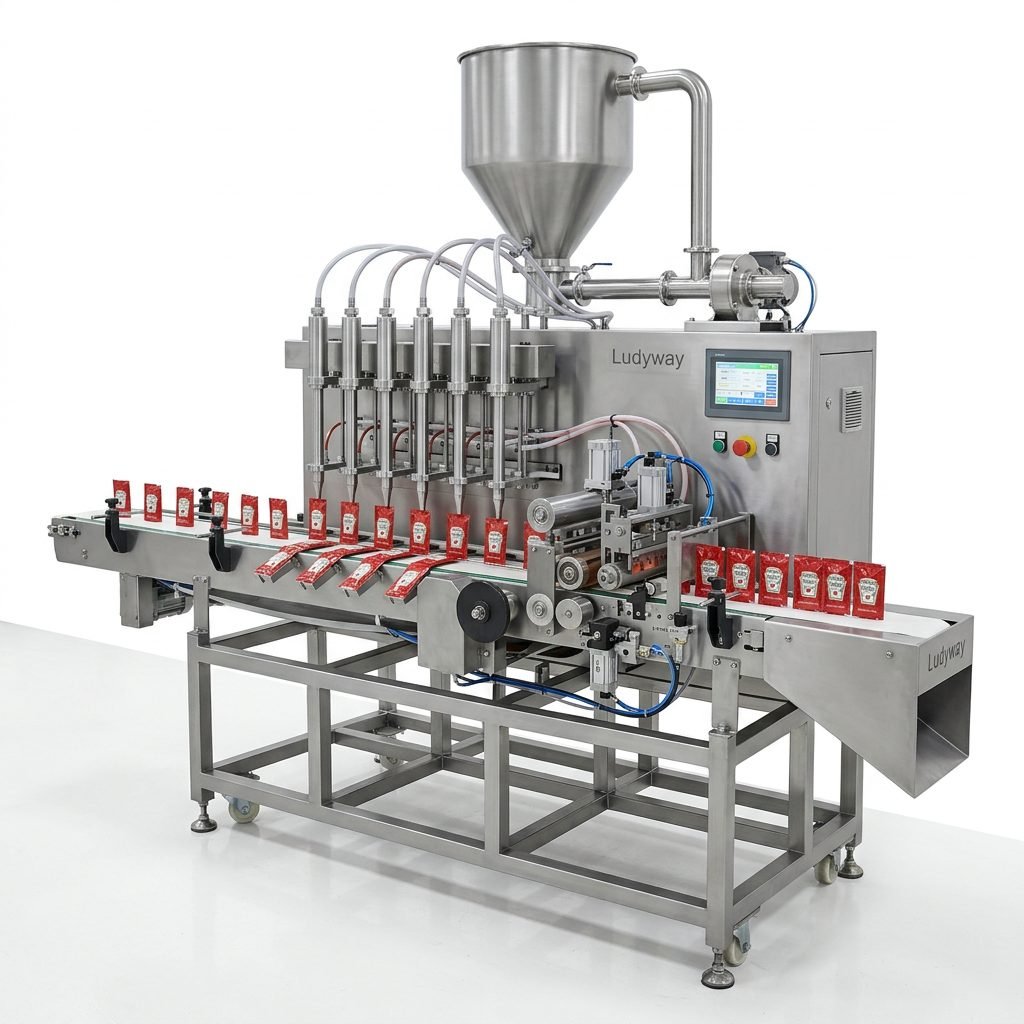
- Single-serve sachets (3g to 15g) – Ideal for fast food chains, takeout, and portion control.
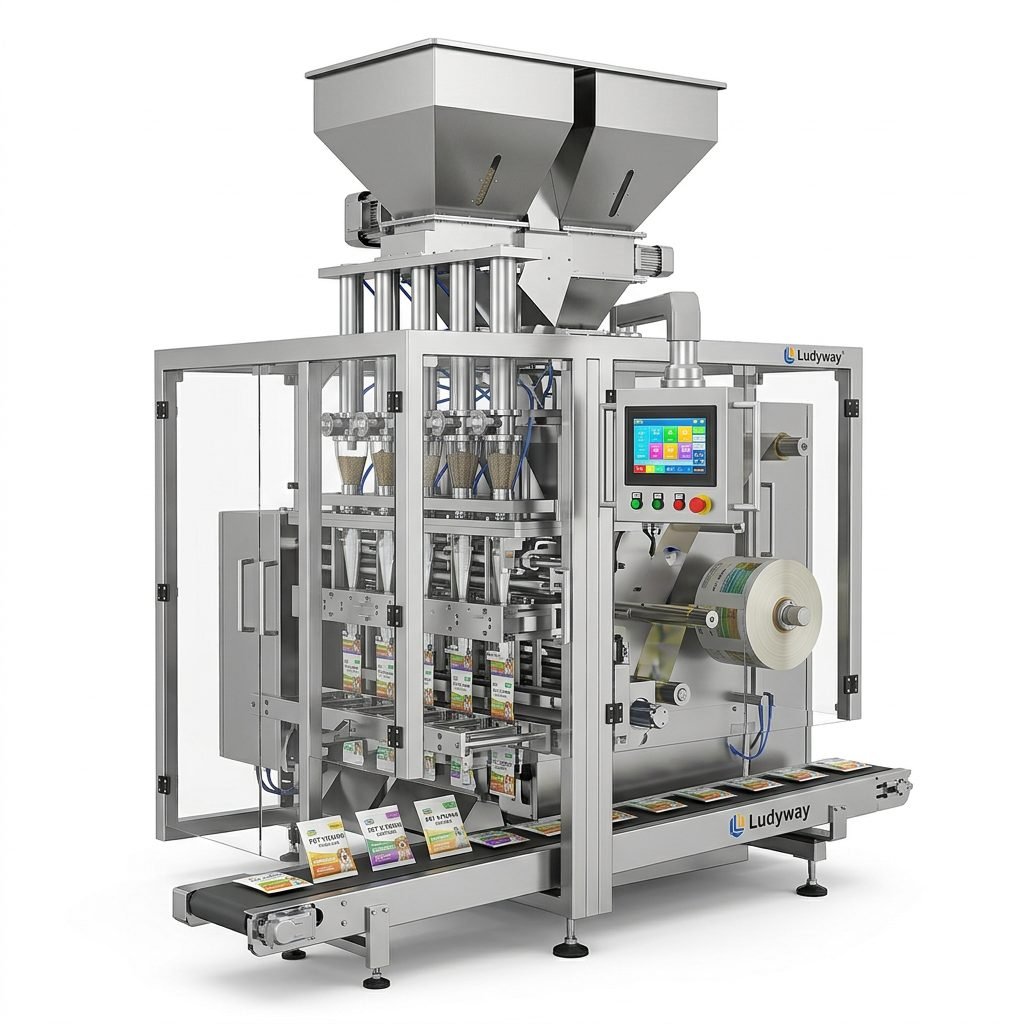
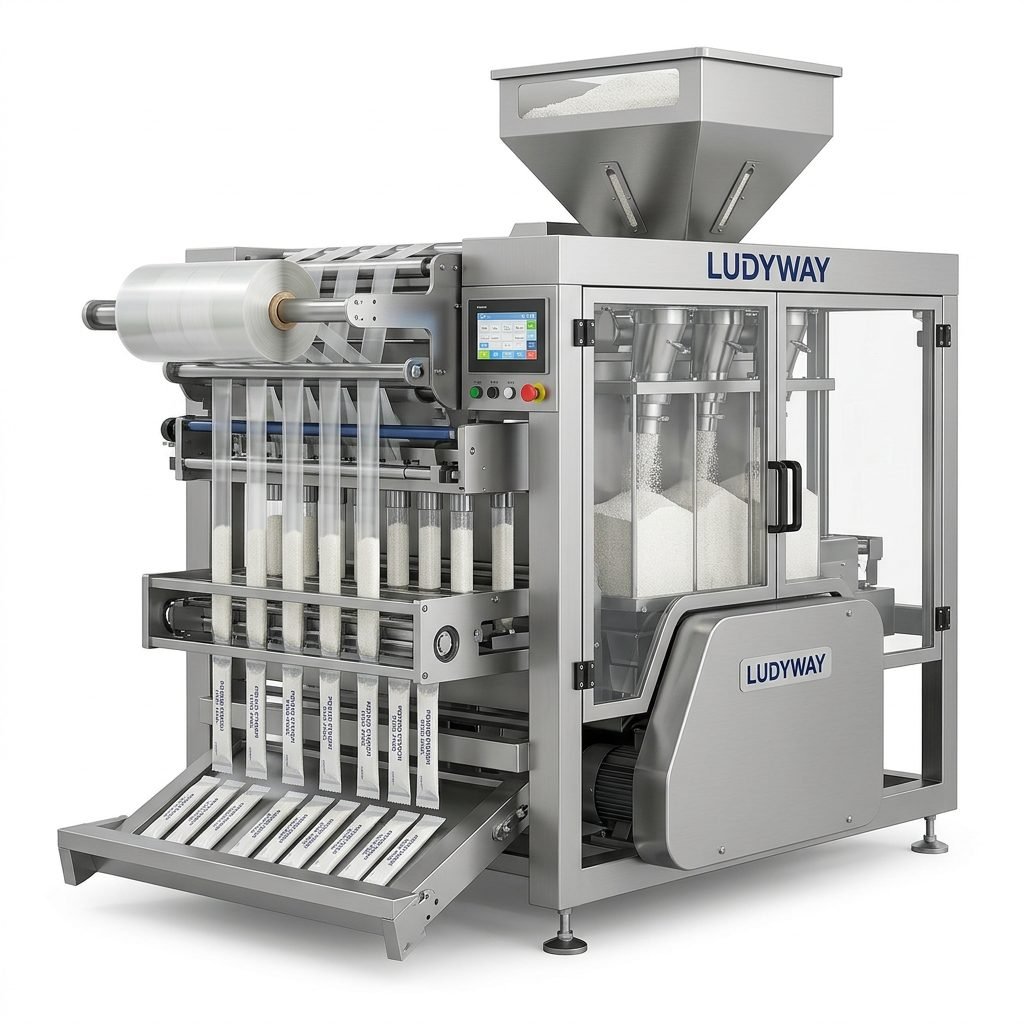
- Stick packs – Slim, elongated sachets gaining popularity for convenience sampling and travel.
- Dipping cups – Widely used for food service and quick-service restaurants.
- Stand-up pouches – Retail-ready with high shelf appeal for premium organic ketchup brands.
- Bottles (glass or PET) – Traditional retail format requiring filling, capping, and labeling systems.
Once your target output volume is defined—measured in packs per minute (ppm)—you can select between standard-speed and high-speed multi-lane ketchup packaging machines that scale from 200 to over 800 packs per minute.
Step 2: Selecting Core Ketchup Packaging Equipment
A complete ketchup packaging production line consists of several integrated components. Each module must be compatible with the viscosity and acidity characteristics of tomato-based sauces. The core equipment includes:
| Equipment Module | Function | Key Consideration for Ketchup |
|---|---|---|
| Liquid Filling System | Piston, servo, or magnetic flow fillers | Must handle viscous products with particulates |
| Vertical Form Fill Seal (VFFS) Machine | Forms sachets or stick packs from roll film | Requires heat-sealable film resistant to acidic products |
| Multi-Lane Configuration | Parallel lanes for higher output | Lane count affects footprint and throughput |
| Sealing and Cutting Station | Hermetic seals with easy-tear features | Must prevent leakage and ensure product integrity |
| Batch Coding and Inspection | Laser or inkjet printing, metal detection | Compliance with FDA 21 CFR traceability |
Ketchup Sachet and Stick Pack Machine Options
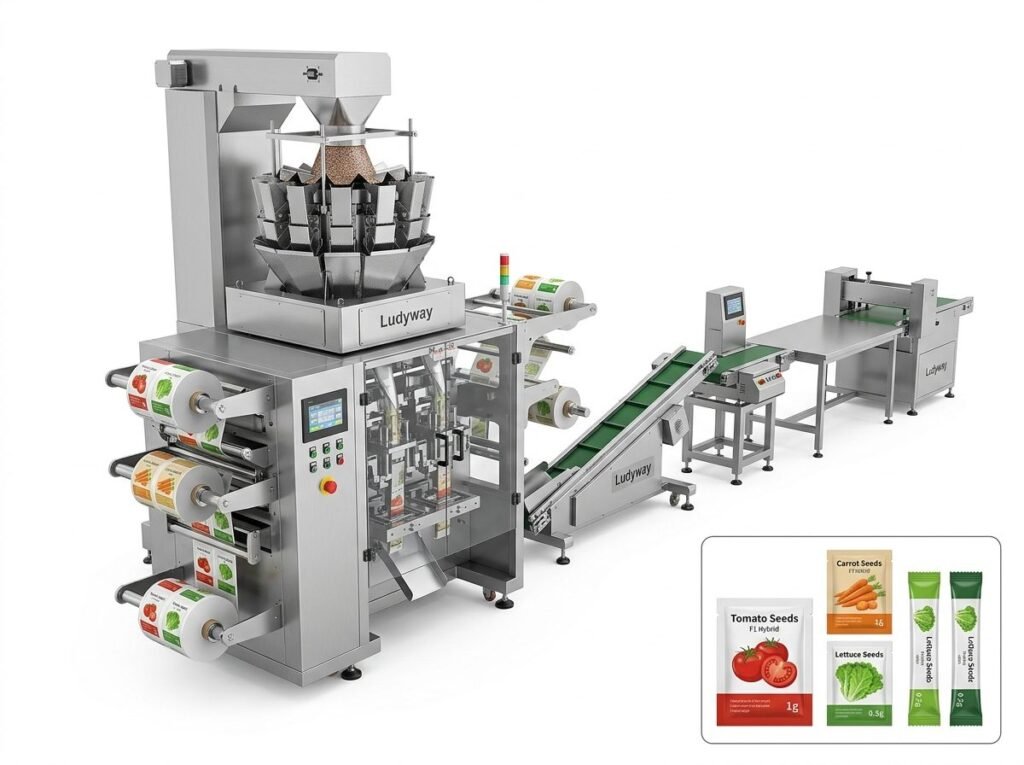
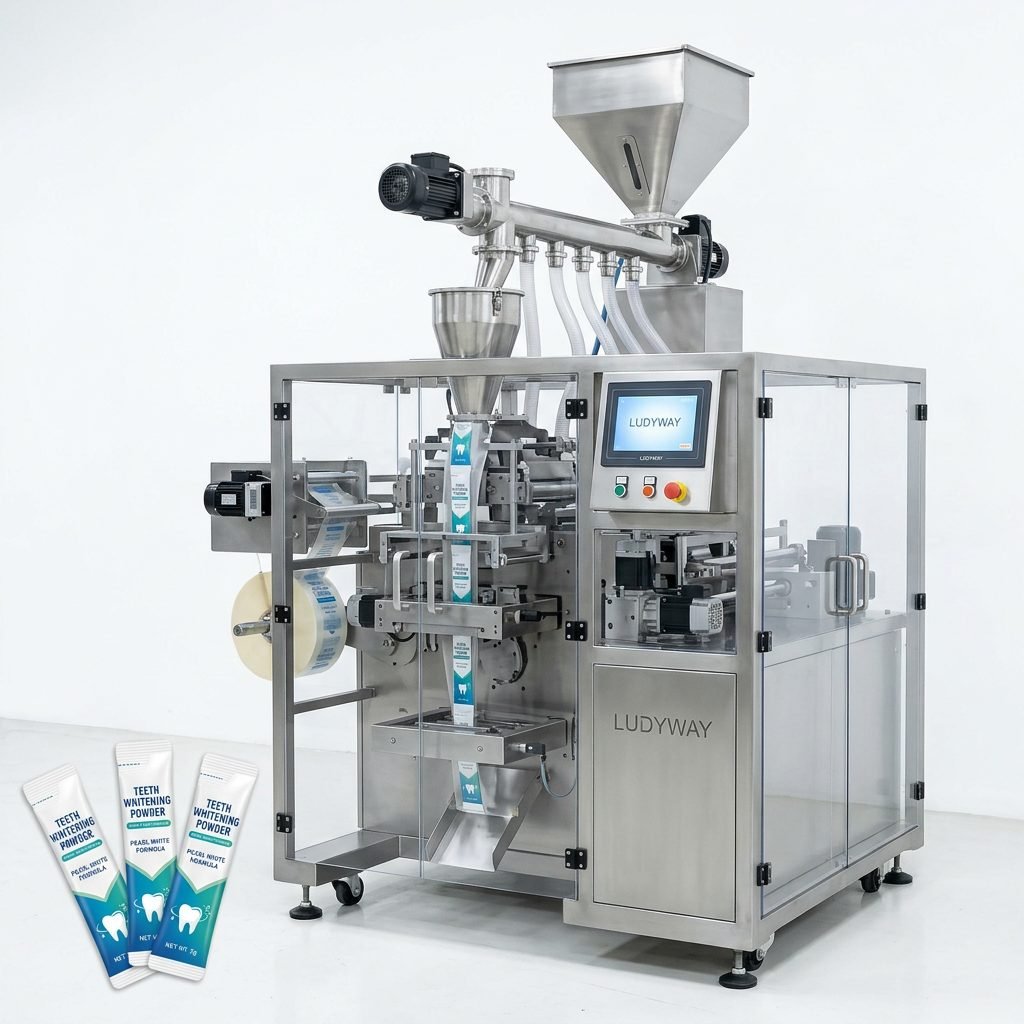
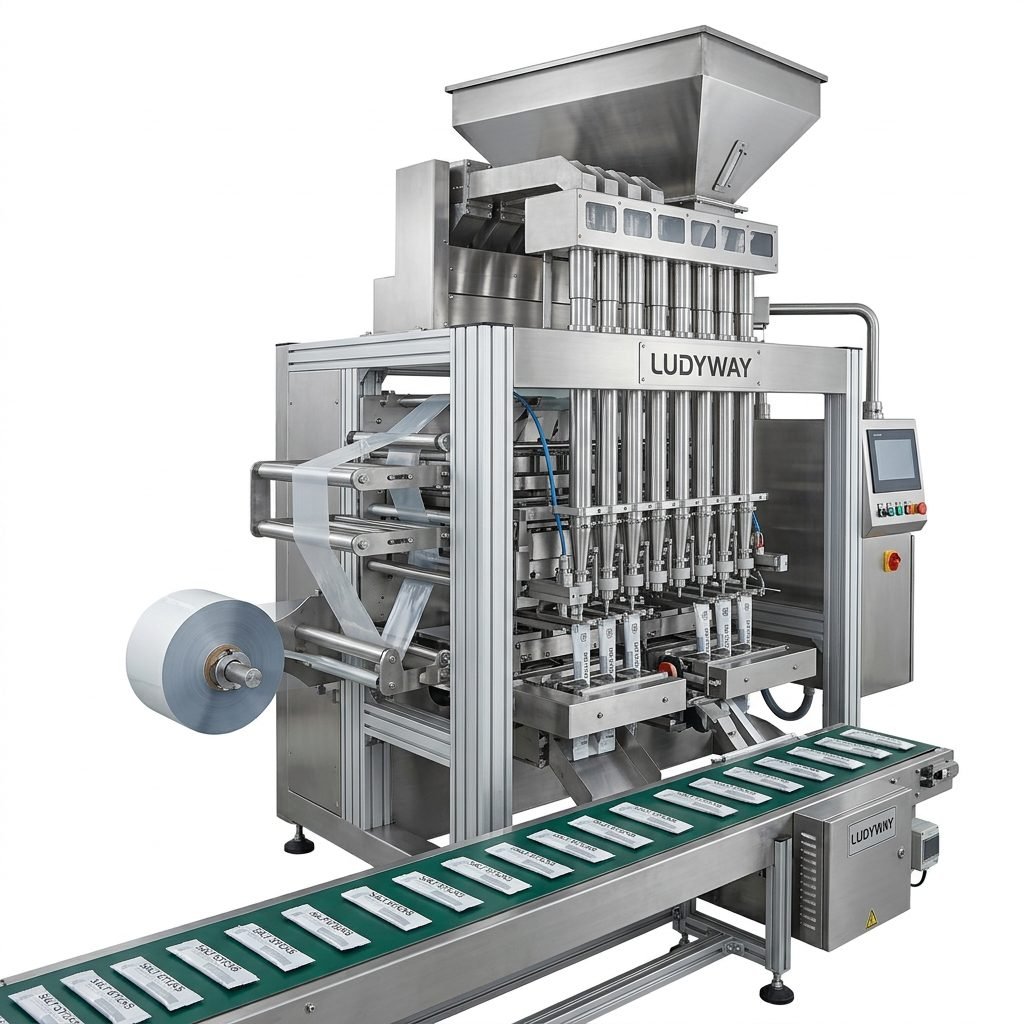
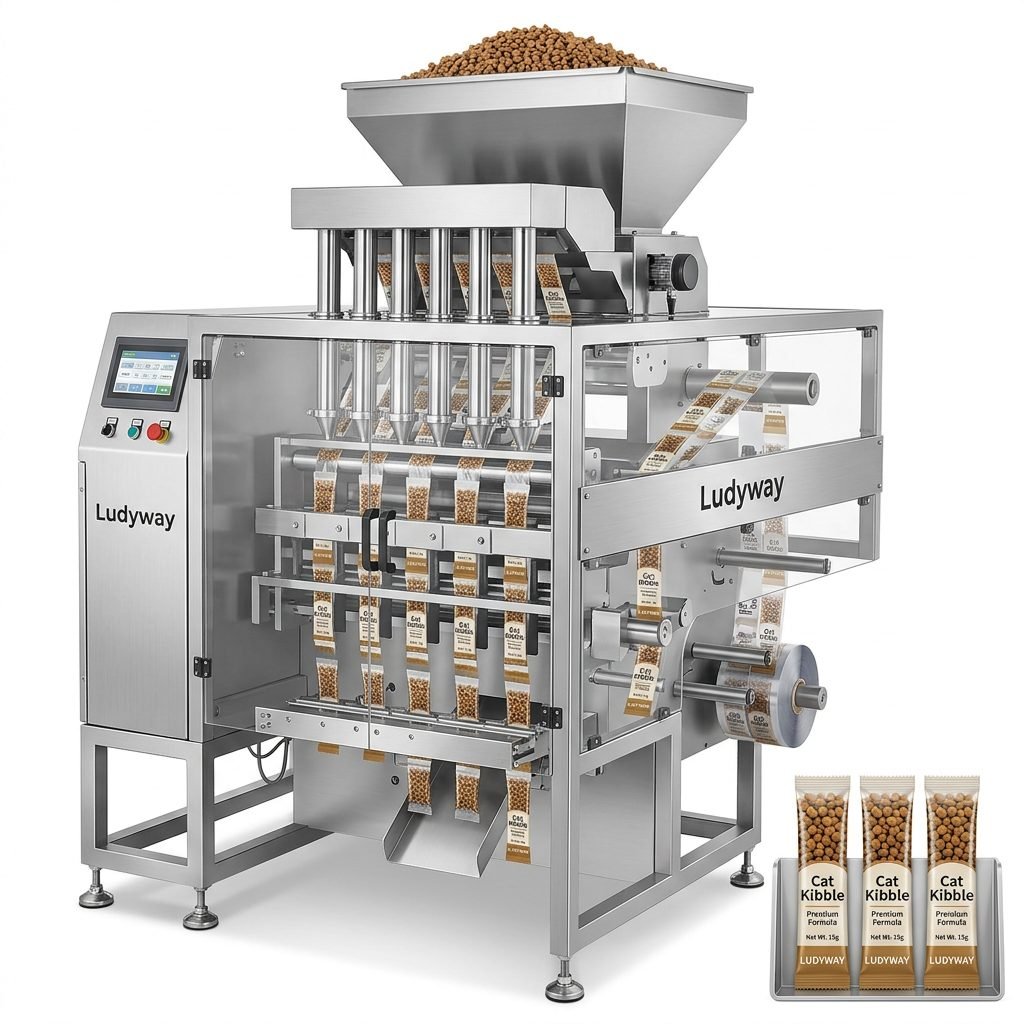
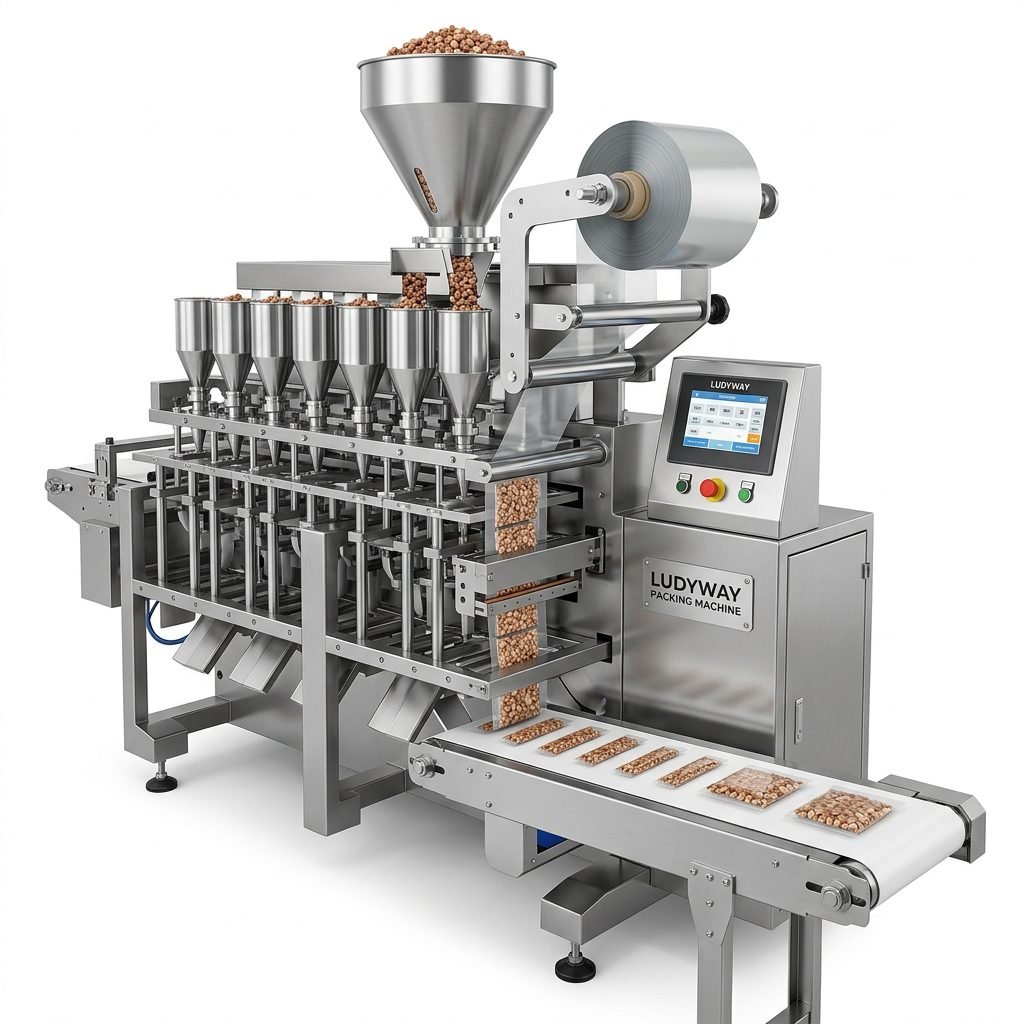
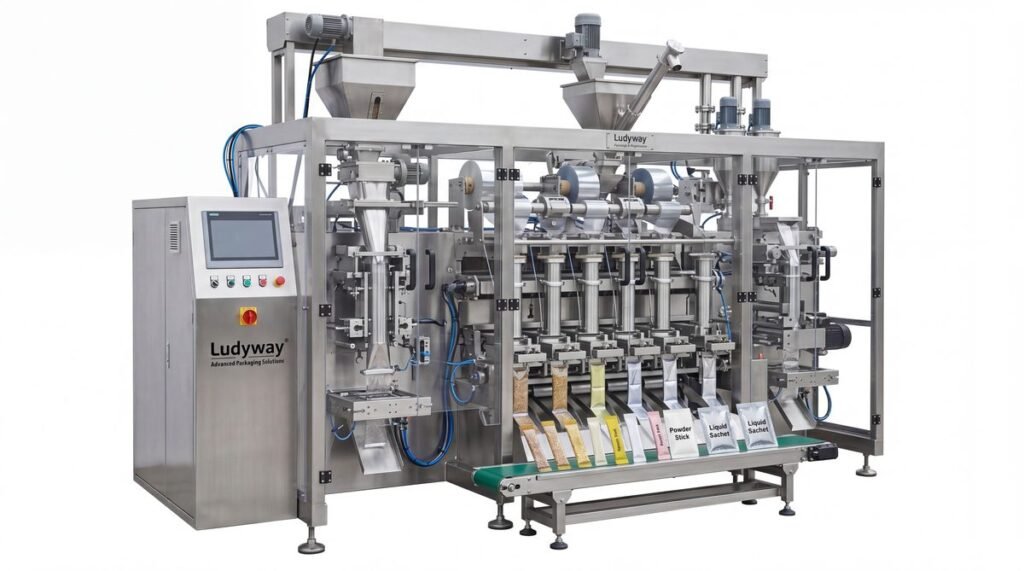
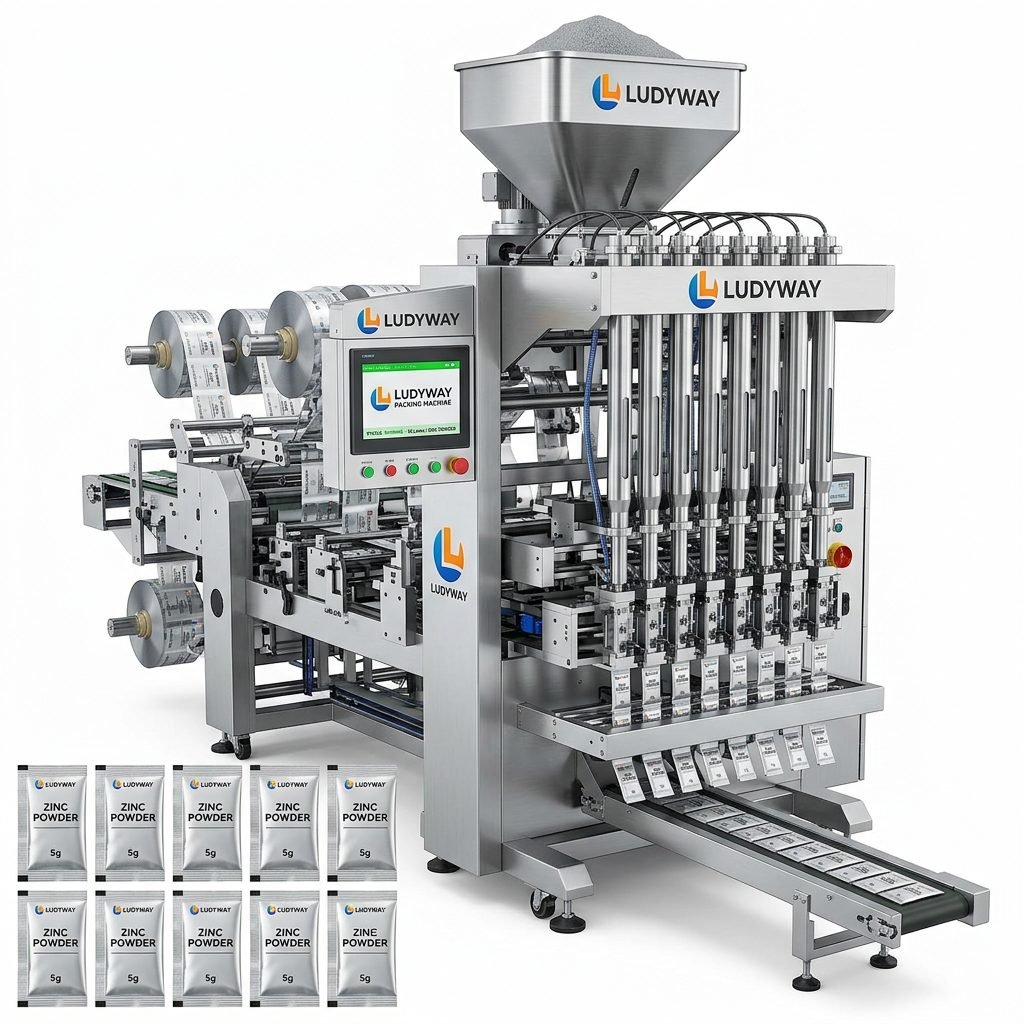
For single-serve ketchup packaging, multi-lane sachet machines are the industry standard. These systems are designed to run multiple lanes simultaneously, dramatically increasing output without proportional increases in labor or floor space. Key technologies include:
- Servo-driven multi-lane stick pack machines – Offer precise fill accuracy and high-speed performance.
- Rotary sachet filling and sealing systems – Ideal for medium-volume production with frequent format changes.
- Intermittent-motion VFFS machines – Cost-effective for startups and regional co-packers entering the ketchup market.

Step 3: Integrating Auxiliary Equipment for a Turnkey Production Line
A fully automated ketchup packaging line extends beyond the primary filling and sealing unit. Auxiliary equipment ensures smooth material handling, quality control, and end-of-line packaging. Essential components include:
- Automatic feeding systems – Pump and pipeline systems designed for viscous sauces, often with jacketed tanks for temperature control.
- Metal detectors and checkweighers – Critical for food safety compliance under FDA food packaging regulations.
- Cartoning machines – Automatically pack finished sachets or stick packs into cartons for retail distribution.
- Robotic palletizing systems – Reduce manual labor at the end of the line and improve warehouse efficiency.
- Nitrogen flushing modules – Extend shelf life by reducing oxygen content in the sealed package.
Step 4: Facility Preparation and Regulatory Compliance
Setting up a ketchup packaging line in the U.S. requires adherence to FDA food safety standards, local building codes, and industry best practices. Your facility must support hygienic production with proper drainage, ventilation, and washdown-capable surfaces. Key regulatory milestones include:
- Registering your facility with the FDA under the Bioterrorism Act.
- Implementing a HACCP plan (Hazard Analysis and Critical Control Points) specific to sauce packaging.
- Ensuring all packaging materials comply with FDA food contact substance regulations.
- Obtaining necessary state-level food manufacturing permits and local business licenses.
- Conducting equipment installation qualification (IQ), operational qualification (OQ), and performance qualification (PQ) per PMMI packaging standards.
Step 5: Installation, Commissioning, and Training
Once equipment arrives on-site, professional installation and commissioning are critical to achieving rated output speeds. Work with a supplier that offers comprehensive on-site support, including:
- Machine uncrating, positioning, and leveling by experienced technicians.
- Electrical and pneumatic connections verified against U.S. voltage and pressure standards.
- Line integration testing with actual ketchup product to validate fill accuracy and seal integrity.
- Operator and maintenance staff training covering machine operation, changeover procedures, and troubleshooting.
Step 6: Optimizing Production Efficiency and Reducing Downtime
Operational efficiency is a key competitive advantage in the U.S. condiment packaging industry. To maximize uptime and throughput, focus on:
- Preventive maintenance schedules – Regular inspection of filling nozzles, sealing jaws, and film tracking systems.
- Quick-changeover design – Machines with tool-less adjustments reduce downtime between format changes.
- Real-time production monitoring – Integrated software tracks output, rejects, and OEE (Overall Equipment Effectiveness).
- Spare parts inventory – Maintain critical spare parts on-site to minimize lead time for repairs.
According to industry data from PMMI’s state of the industry reports, automated packaging lines with integrated monitoring systems can reduce downtime by up to 25% compared to manual or semi-automated setups.
Ketchup Bottle Filling and Capping Line Configurations
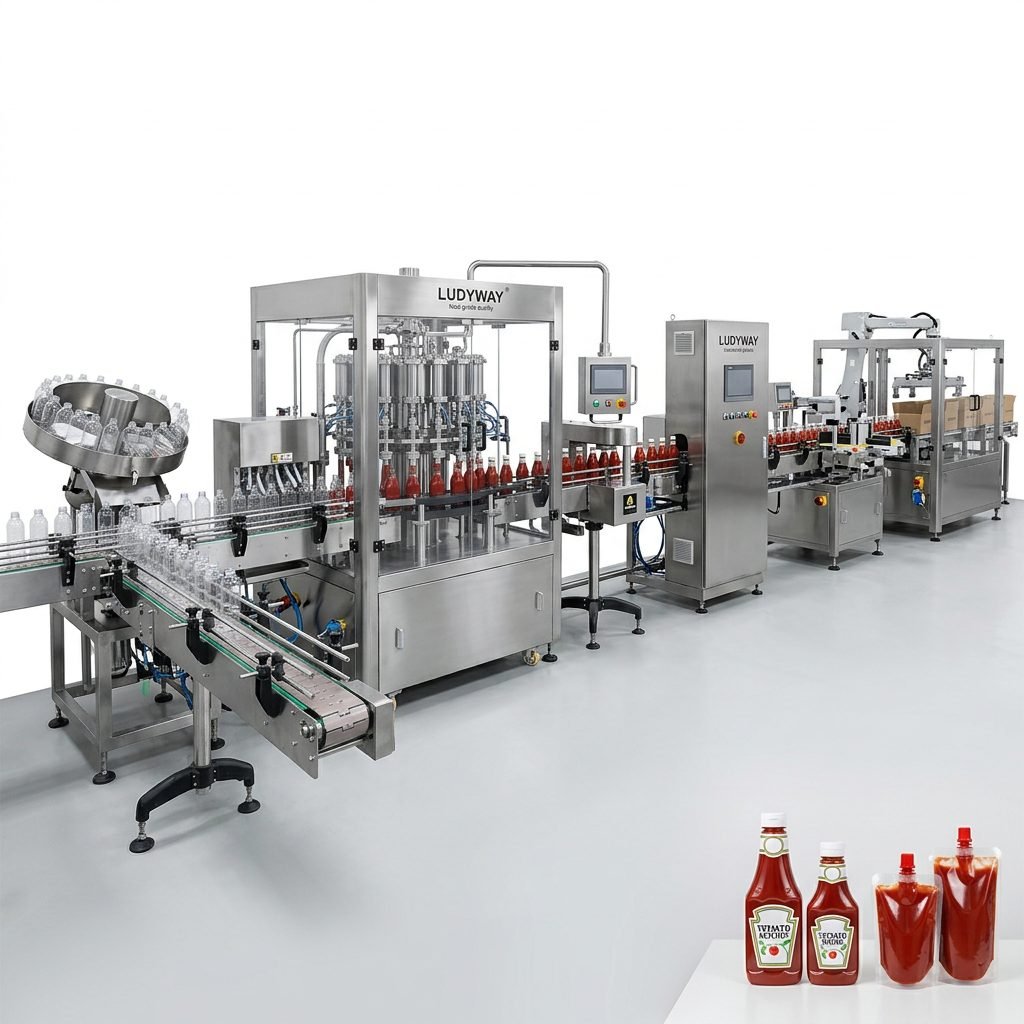
For brands targeting retail shelves, ketchup bottle filling lines require different technology than sachet systems. Bottle lines typically include:
- Rotary liquid fillers – High-speed volumetric or net-weight filling for glass and PET bottles.
- Cap feeding and capping systems – Torque-controlled for consistent cap application.
- Labeling machines – Pressure-sensitive or shrink-sleeve labelers for brand packaging.
- Induction sealing – Provides tamper-evident seals required by many U.S. retailers.
- Case packing and palletizing – End-of-line automation for distribution-ready pallets.
Cost Considerations for a Ketchup Packaging Line Investment
Budgeting for a ketchup packaging production line involves capital equipment costs, installation, facility modifications, and ongoing operational expenses. Key cost factors include:
| Cost Category | Estimated Range | Notes |
|---|---|---|
| Multi-Lane Sachet Machine | $50,000 – $250,000+ | Varies by lane count and speed |
| Bottle Filling and Capping Line | $80,000 – $400,000+ | Depends on automation level and capacity |
| Auxiliary Equipment Package | $30,000 – $150,000 | Conveyors, inspection, cartoning |
| Installation and Training | $10,000 – $40,000 | On-site support from manufacturer |
| Facility Upgrades | Variable | Electrical, plumbing, and hygienic design |
Choosing the Right Packaging Machinery Partner for the U.S. Market
Selecting an experienced equipment manufacturer is crucial for a successful ketchup packaging line setup. Look for a partner with:
- Proven experience with viscous liquid packaging – Ketchup, sauces, and condiments have unique filling challenges.
- FDA-compliant machine design – Stainless steel construction, sanitary welding, and CIP compatibility.
- U.S. service and support network – Local technicians, spare parts availability, and responsive after-sales service.
- Comprehensive project management – From line design to commissioning to ongoing optimization.
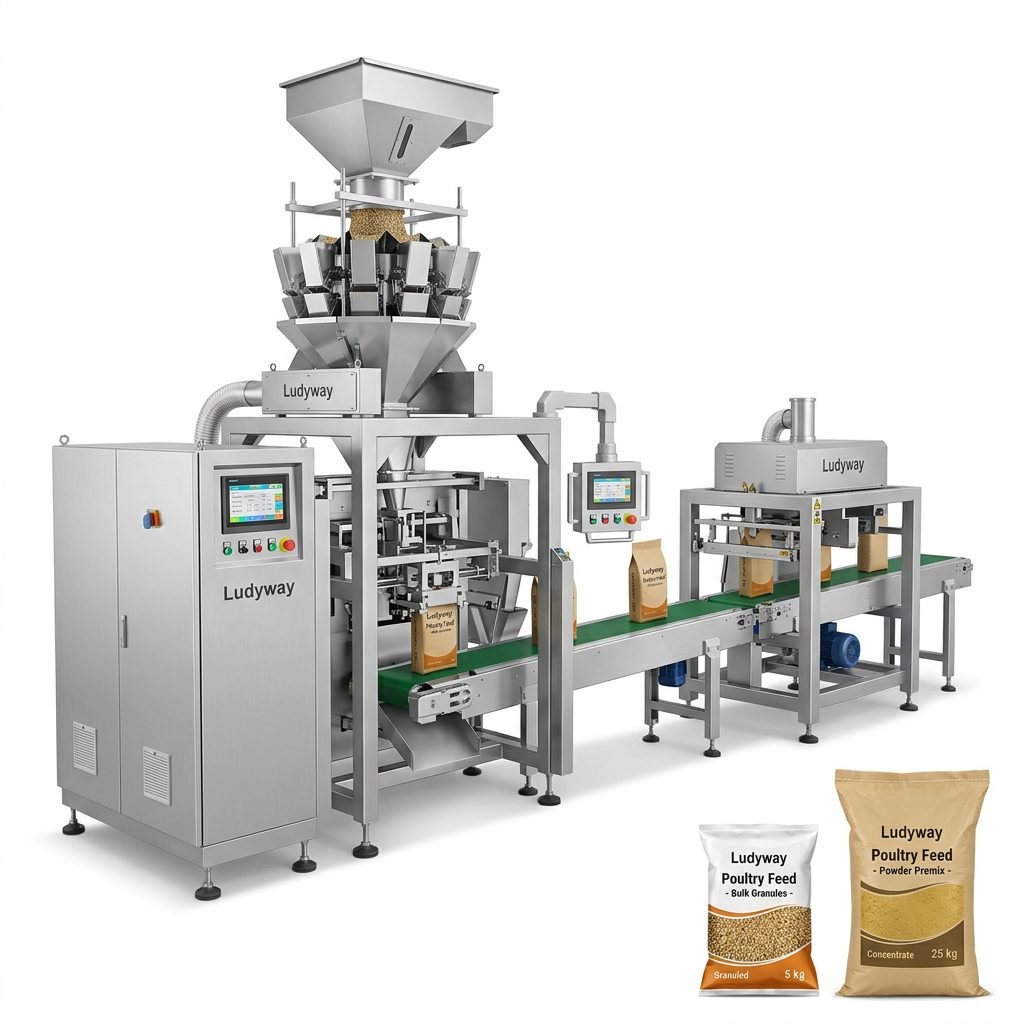
Ludyway is one of the largest packaging machine manufacturers in China, specializing in advanced packaging equipment and turnkey production solutions for the food, pharmaceutical, and health industries. With over 30 years of industry expertise, we provide reliable and efficient packaging solutions for granule, powder, liquid, and pouch packaging applications. Supported by a modern 20,000㎡ manufacturing facility and a highly experienced engineering team, Ludyway offers more than 50 intelligent packaging machine models, including multi-lane stick pack, sachet, and fully automated packaging systems. Serving customers in over 100 countries and regions, we are committed to delivering innovative, high-performance, and cost-effective packaging solutions that help businesses improve productivity, product quality, and operational efficiency.
Future-Proofing Your Ketchup Packaging Line
The U.S. packaging industry is evolving toward greater automation, sustainability, and flexibility. Future-ready ketchup packaging lines should incorporate:
- Modular machine designs that allow capacity expansion without replacing entire systems.
- Eco-friendly film compatibility to support recyclable and compostable packaging materials.
- Digital integration with ERP and MES systems for real-time production planning and traceability.
- Energy-efficient servo drives that reduce operational costs and support sustainability goals.
Industry resources from the Flexible Packaging Association regularly highlight the growing demand for sustainable packaging formats in the North American condiment sector, making eco-ready machinery a strategic investment.
Frequently Asked Questions About Ketchup Packaging Lines
What is the typical lead time for a custom ketchup packaging machine?
Lead times vary from 8 to 16 weeks depending on configuration complexity and current production schedules. Custom multi-lane systems may require additional engineering and testing time.
Can one machine handle multiple ketchup packaging formats?
Many modern multi-lane packaging systems support quick changeover between sachet sizes and formats, allowing a single line to produce different pack sizes with minimal downtime.
What are the common compliance issues when importing packaging machinery to the U.S.?
Ensuring electrical systems meet UL standards, pneumatic components comply with U.S. specifications, and all food-contact materials have appropriate certifications are common considerations. Working with an experienced international supplier helps navigate these requirements smoothly.
Key Takeaways for Setting Up a Ketchup Packaging Line in the U.S.
- Define your packaging format and output goals before selecting equipment.
- Choose multi-lane machines for high-volume single-serve production.
- Integrate auxiliary systems for a complete turnkey packaging line.
- Ensure FDA compliance and food safety documentation from day one.
- Partner with an experienced packaging machinery manufacturer offering U.S. support.
- Plan for future growth with modular, upgradeable equipment designs.
With the right planning, equipment, and manufacturing partner, your ketchup packaging production line in the United States can achieve high efficiency, consistent product quality, and rapid return on investment.