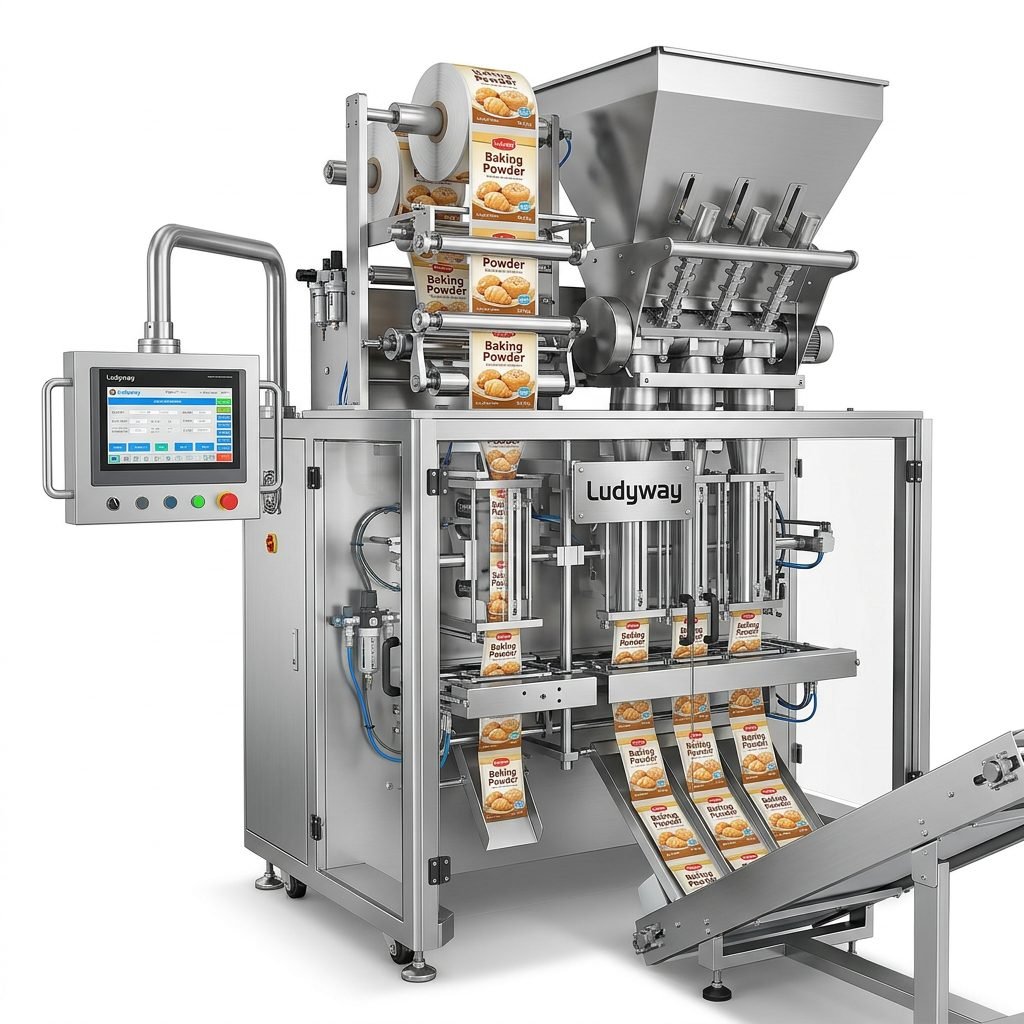
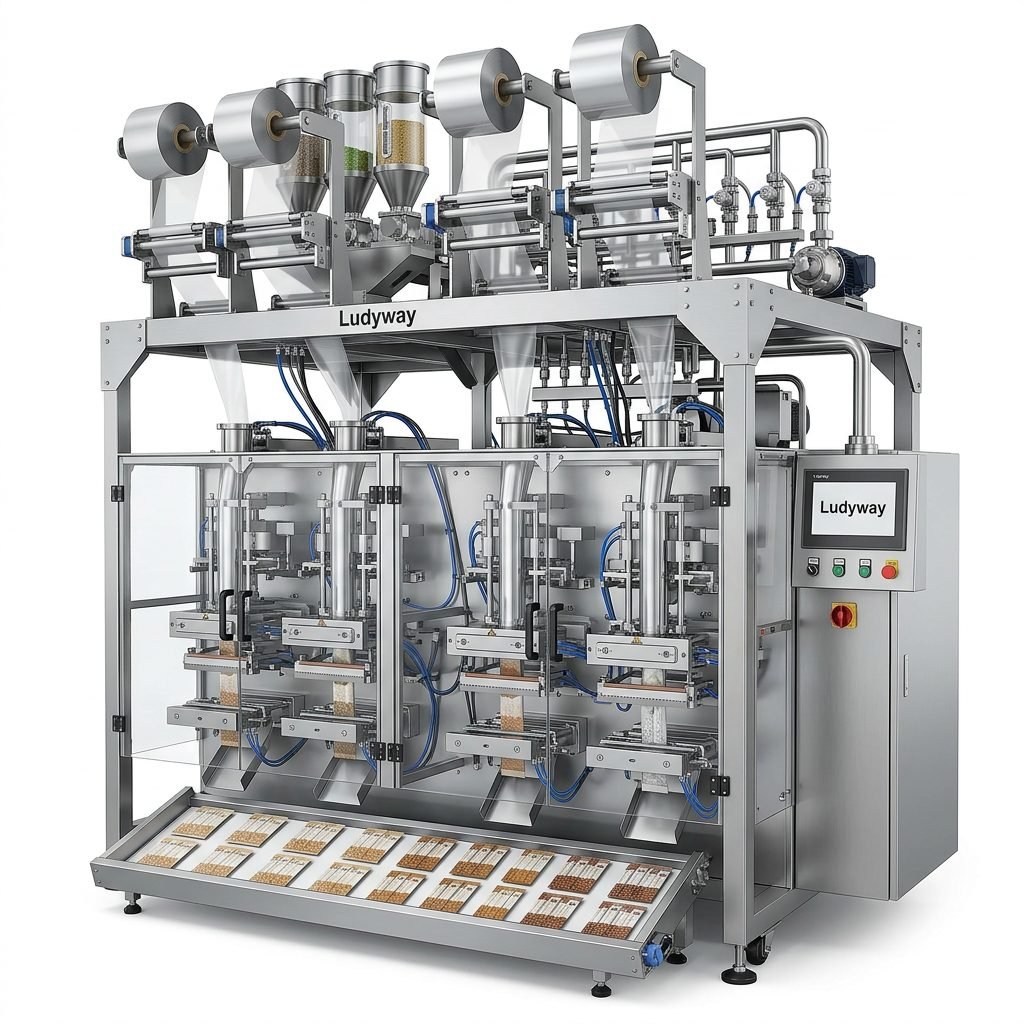
Setting up a grain packaging machine production line in Europe requires careful planning, strict adherence to EU regulations, and a clear understanding of the available equipment options. Whether you are packaging rice, wheat, cereals, seeds, or granule-based snacks, the right setup can dramatically improve productivity, reduce waste, and ensure consistent product quality for your customers across European markets.
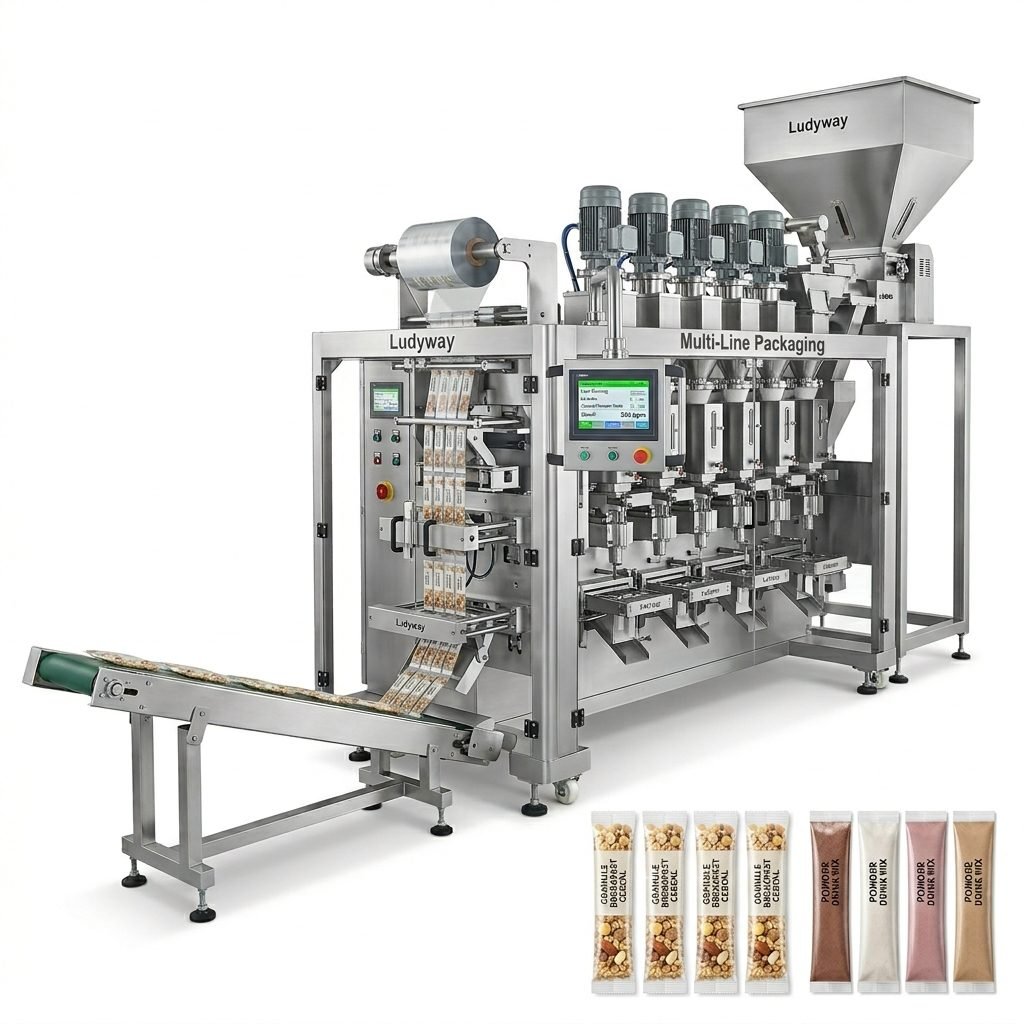
Understanding the European Grain Packaging Market
The European packaging machinery market is one of the most regulated and technologically advanced in the world. According to PMMI business intelligence reports, demand for automated packaging solutions continues to grow, driven by food safety requirements, labor shortages, and the need for higher production efficiency. For grain products specifically, the trend toward multi-lane stick pack and sachet formats has been particularly strong in countries like Germany, France, the Netherlands, and Italy.
Key Market Drivers in Europe
- Food safety compliance — EU Regulation (EC) No 1935/2004 on food contact materials
- Sustainability mandates — The European Packaging and Packaging Waste Regulation drives eco-friendly packaging
- Single-serve demand — Growing popularity of portion-controlled grain snacks and instant cereals
- Automation ROI — Rising labor costs push manufacturers toward fully automated systems
- CE marking requirements — All machinery sold in the EU/EEA must carry CE certification
Step 1 — Defining Your Packaging Requirements
Before selecting any equipment, you must clearly define your production goals and product characteristics. Grain products vary widely in density, flowability, and particle size, all of which directly impact machine selection. A comprehensive packaging assessment should cover the following parameters:
| Parameter | Description | Impact on Equipment Choice |
|---|---|---|
| Product Type | Rice, wheat, oats, seeds, granola, cereal flakes | Determines feeding mechanism and filling accuracy |
| Granule Size | Fine powder to large granules (0.1–10 mm) | Affects weigher type and seal integrity |
| Target Output | Packs per minute (e.g., 40–400 ppm) | Dictates lane count and automation level |
| Pack Format | Stick pack, sachet, pillow bag, gusseted pouch | Determines machine type and film specifications |
| Fill Weight | 1 g to 5 kg per pack | Influences dosing and weighing system design |
| Packaging Material | Laminated film, paper, biodegradable materials | Must match sealing temperature and jaw design |
Step 2 — Selecting the Right Grain Packaging Machine Type
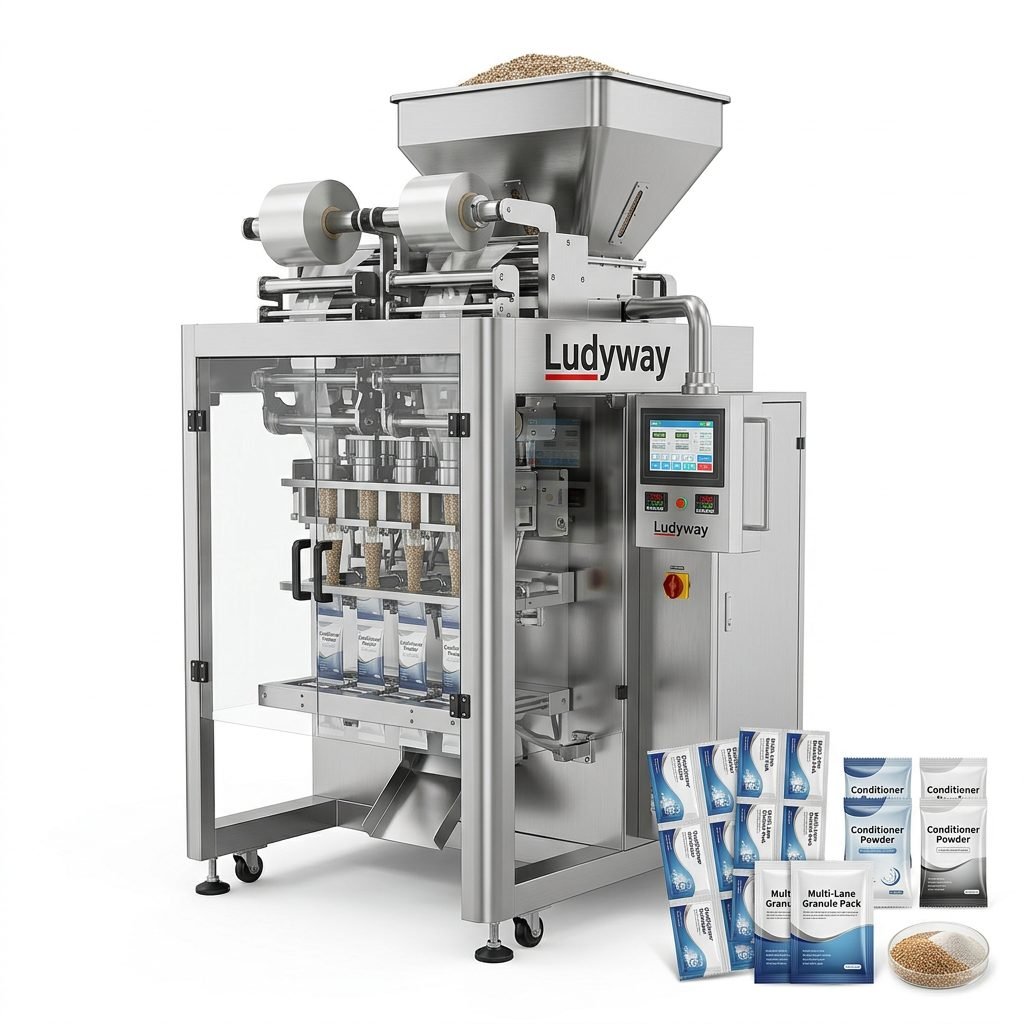
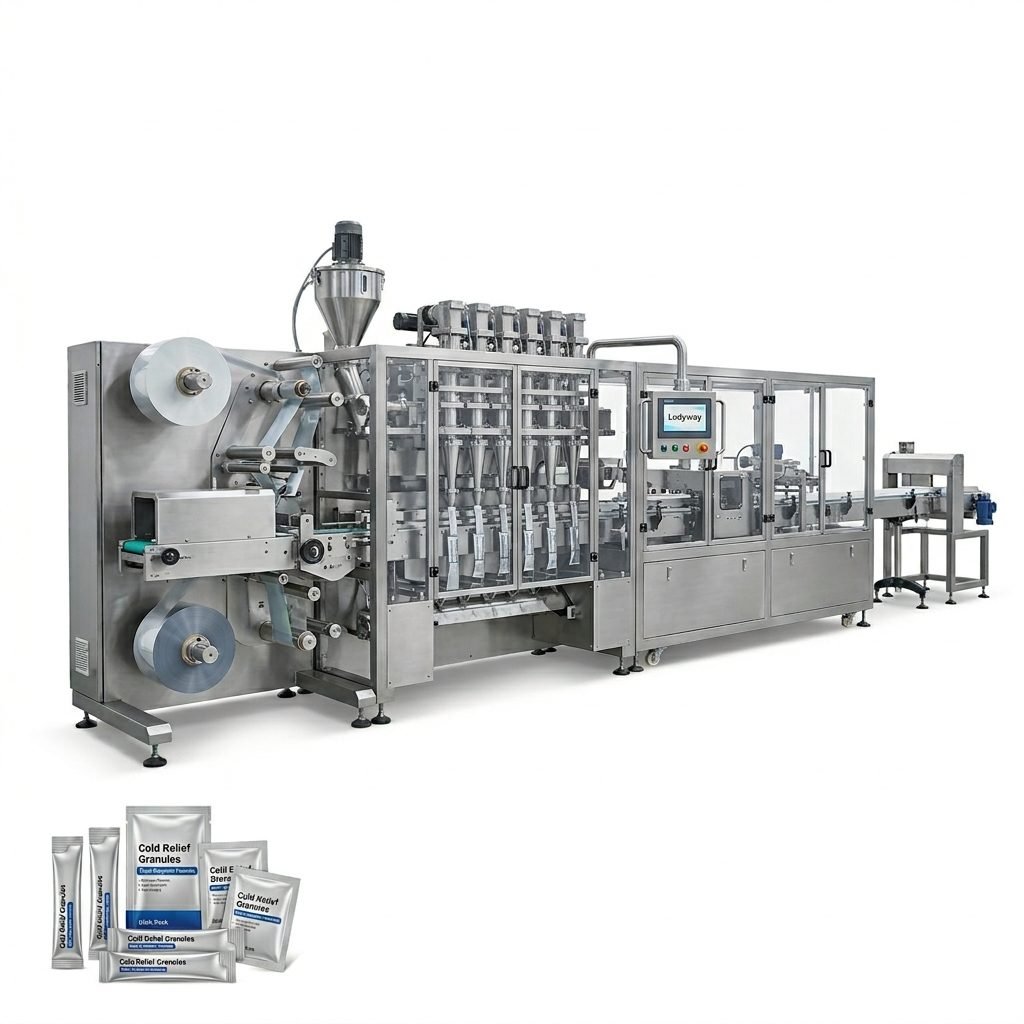
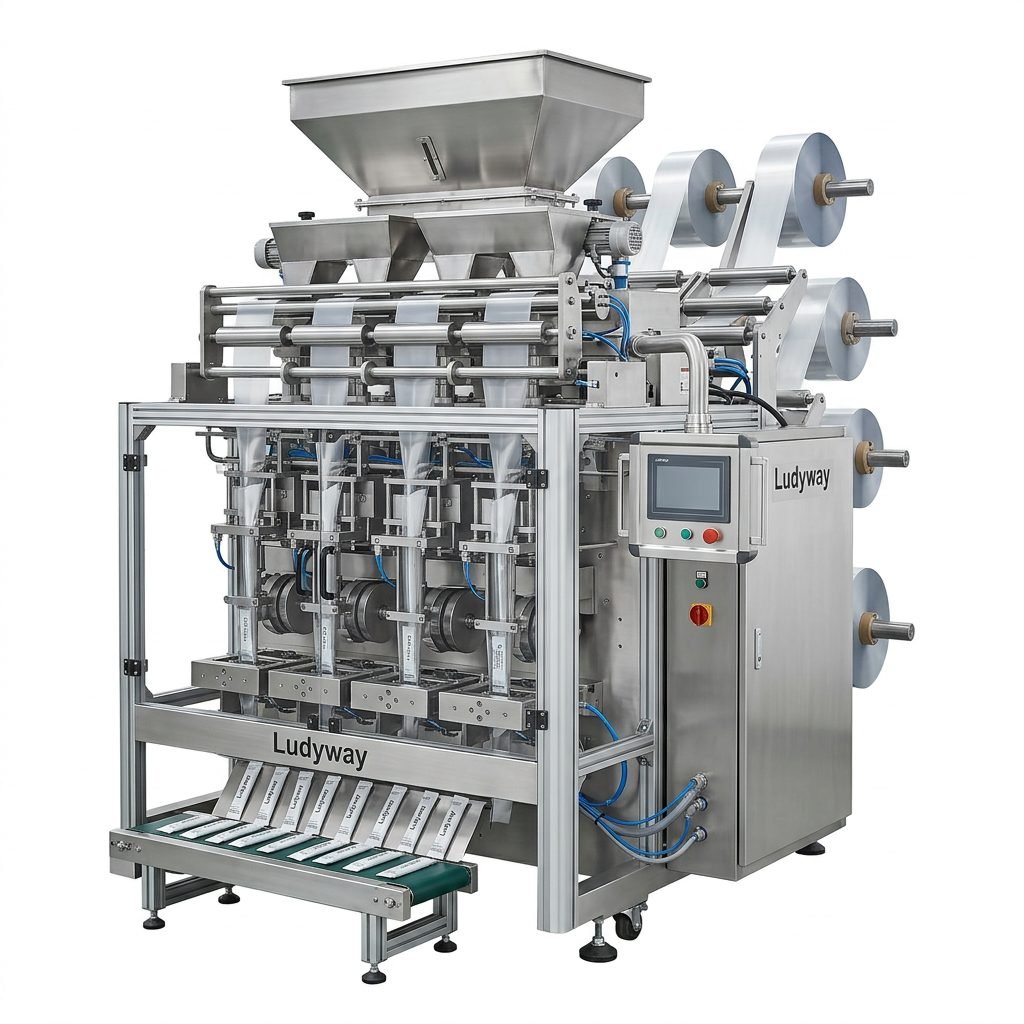
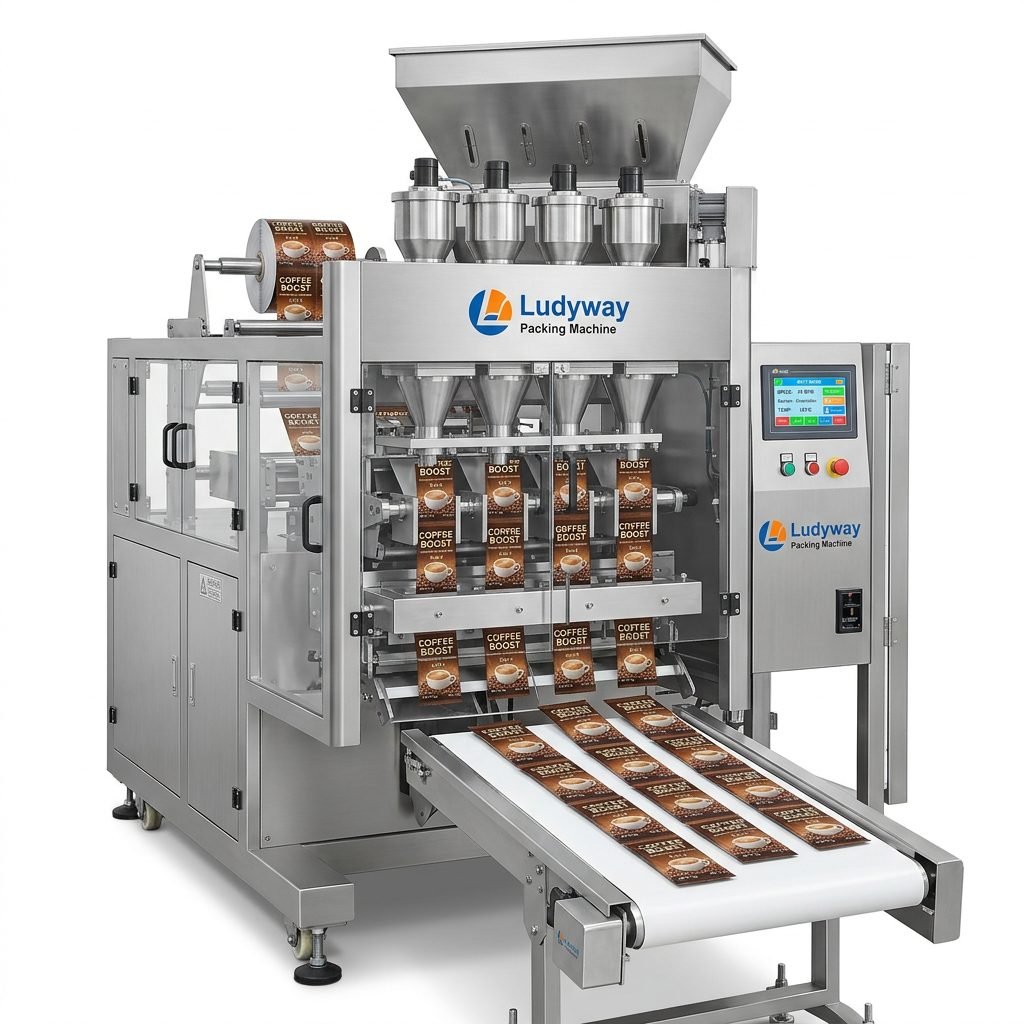
European manufacturers typically choose from several machine configurations depending on their scale and product portfolio. The multi-lane stick pack machine has become the dominant choice for grain-based single-serve products due to its high throughput and material efficiency. Below are the primary machine types used in European grain packaging lines:
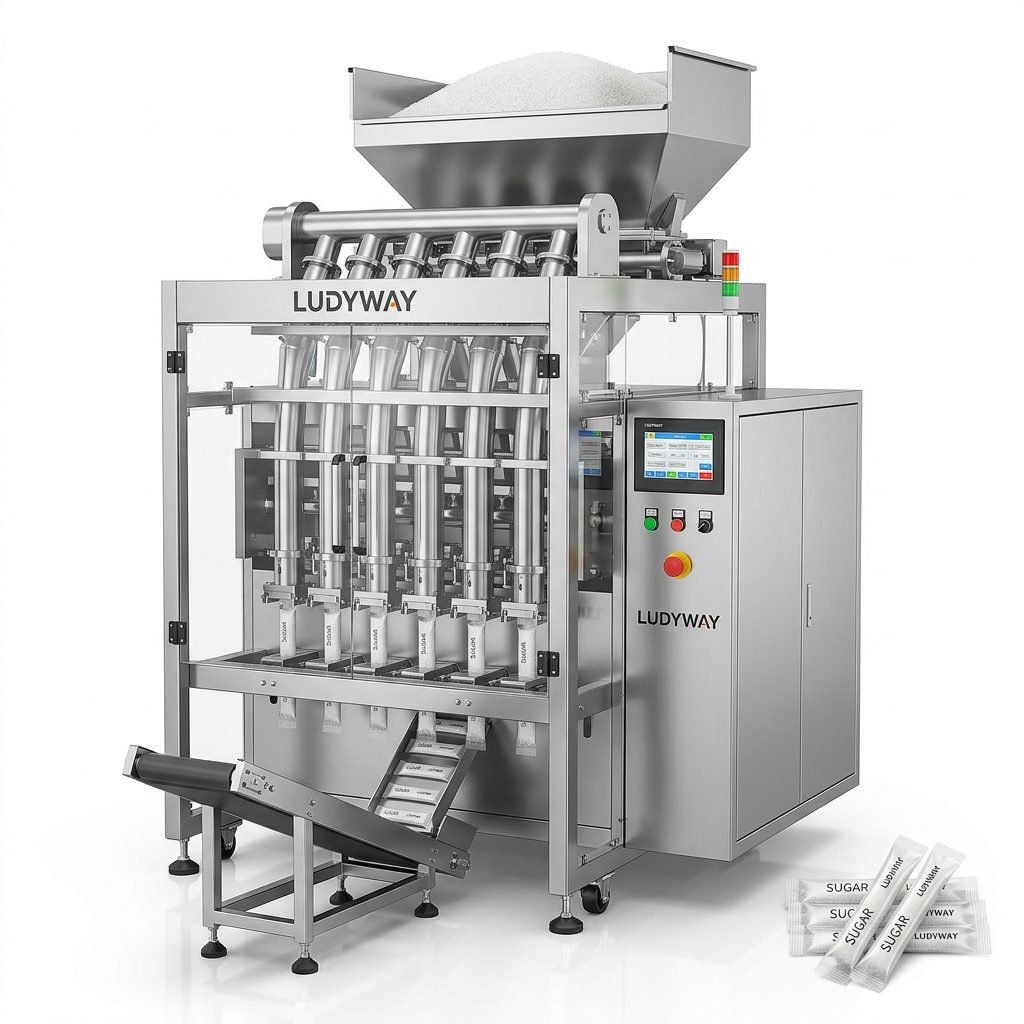
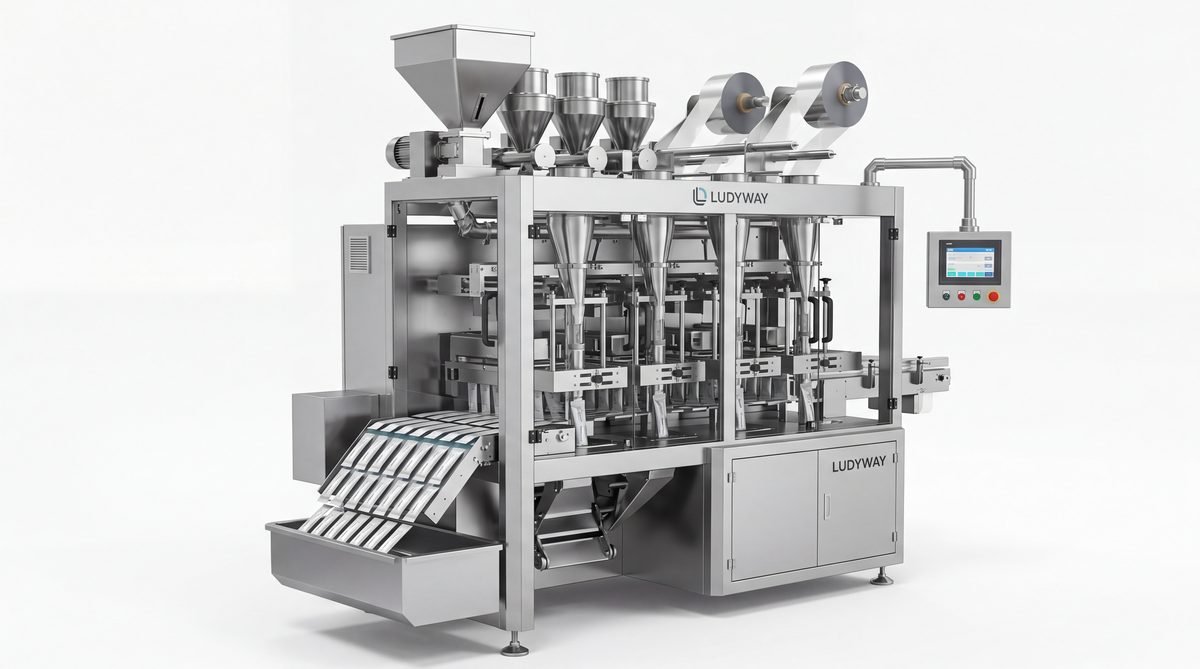
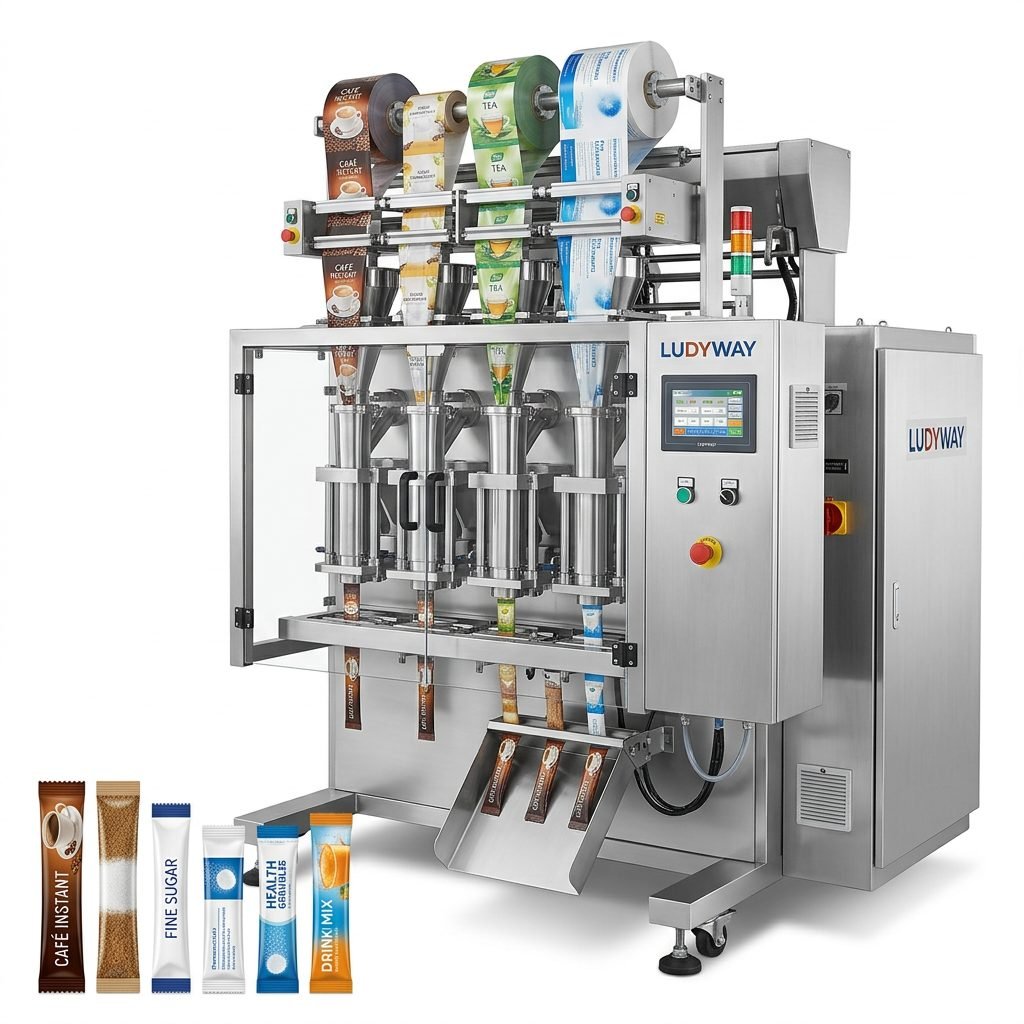
Multi-Lane Stick Pack Machines (4–20 Lanes)
- Ideal for: Single-serve sugar, instant cereal, granola snacks, coffee grains
- Speed: 200–800 packs per minute depending on lane count
- Advantages: Compact footprint, low film waste, high-speed output
- European application: Widely used in Germany and Benelux for portioned grain products
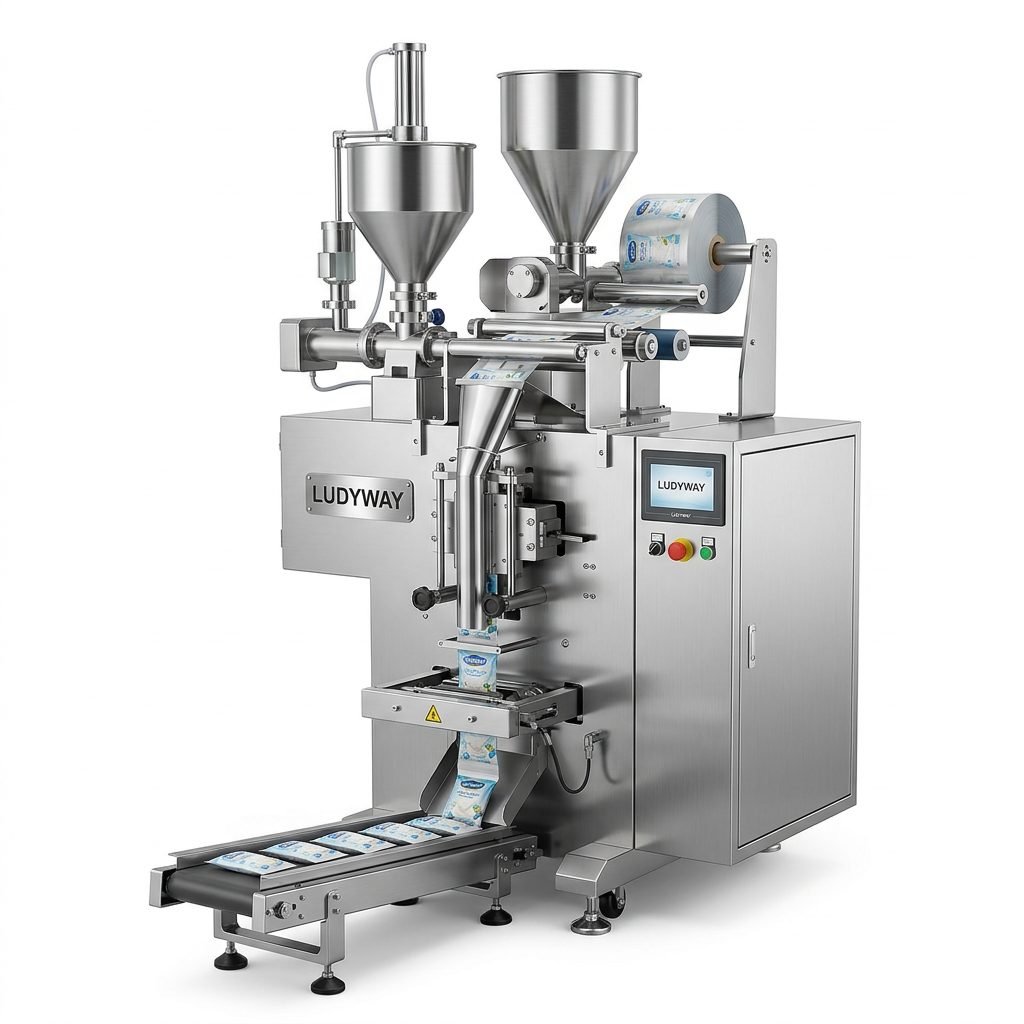
Vertical Form-Fill-Seal (VFFS) Machines
- Ideal for: Rice, pulses, larger grain bags (500 g–5 kg)
- Speed: 30–80 packs per minute
- Advantages: Versatile bag styles, robust for heavier fills
- European application: Common in Southern Europe for retail rice and legume packaging
Pre-Made Pouch Filling and Sealing Machines
- Ideal for: Premium grain products with zipper closures, stand-up pouches
- Speed: 25–60 pouches per minute
- Advantages: High-quality pack presentation, flexible pouch styles
- European application: Growing in organic and specialty grain segments across the EU
Step 3 — CE Marking and EU Regulatory Compliance
Any grain packaging machinery installed in Europe must comply with the Machinery Directive 2006/42/EC and carry CE marking. This is not optional — it is a legal requirement for placing equipment on the EU market. Additionally, food contact materials must meet FDA and EU food contact substance regulations for any components that touch the grain product directly.
Essential Compliance Checklist
- CE marking with full technical documentation
- Risk assessment according to EN ISO 12100
- Hygienic design per EN 1672-2 for food machinery
- Electrical safety per EN 60204-1
- Electromagnetic compatibility (EMC Directive 2014/30/EU)
- Food contact material declaration per Regulation (EC) No 1935/2004
- Packaging waste compliance per Directive 94/62/EC and upcoming PPWR
Step 4 — Designing the Complete Production Line Layout
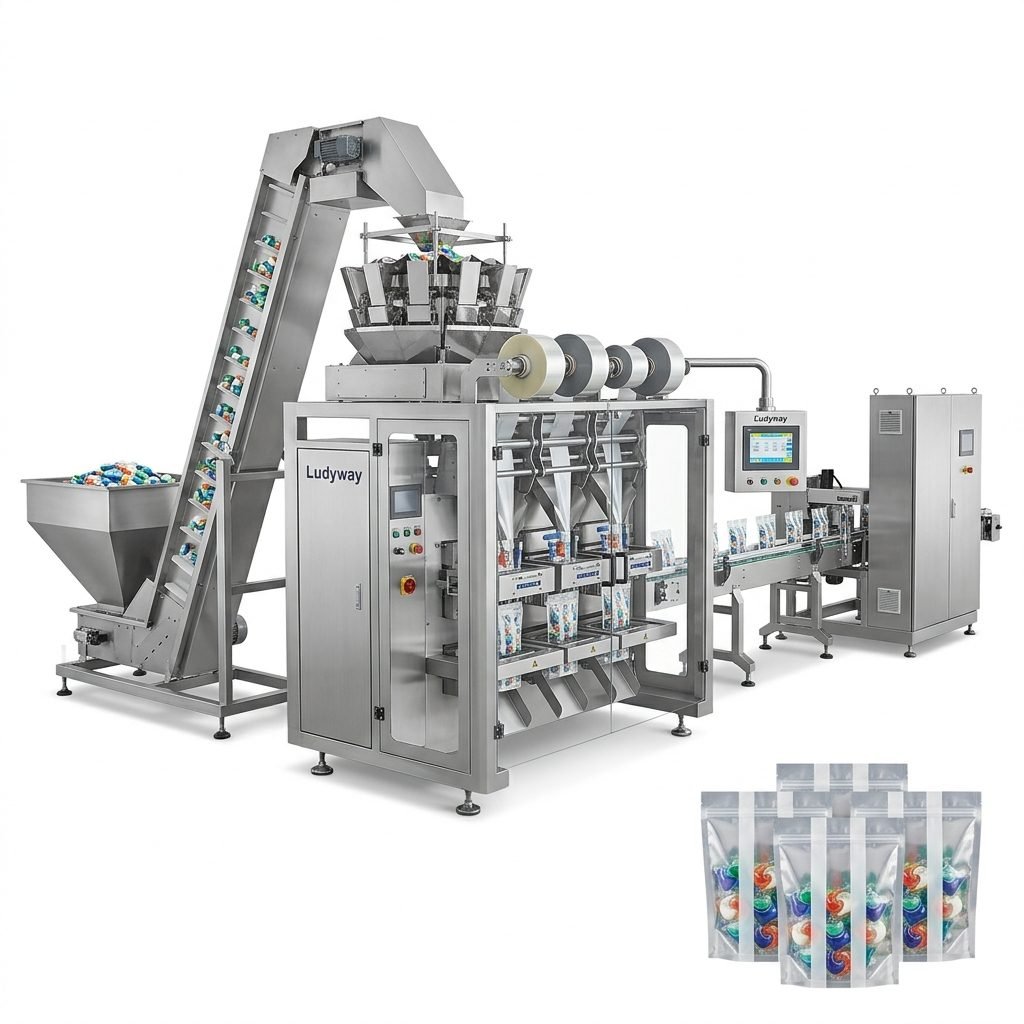
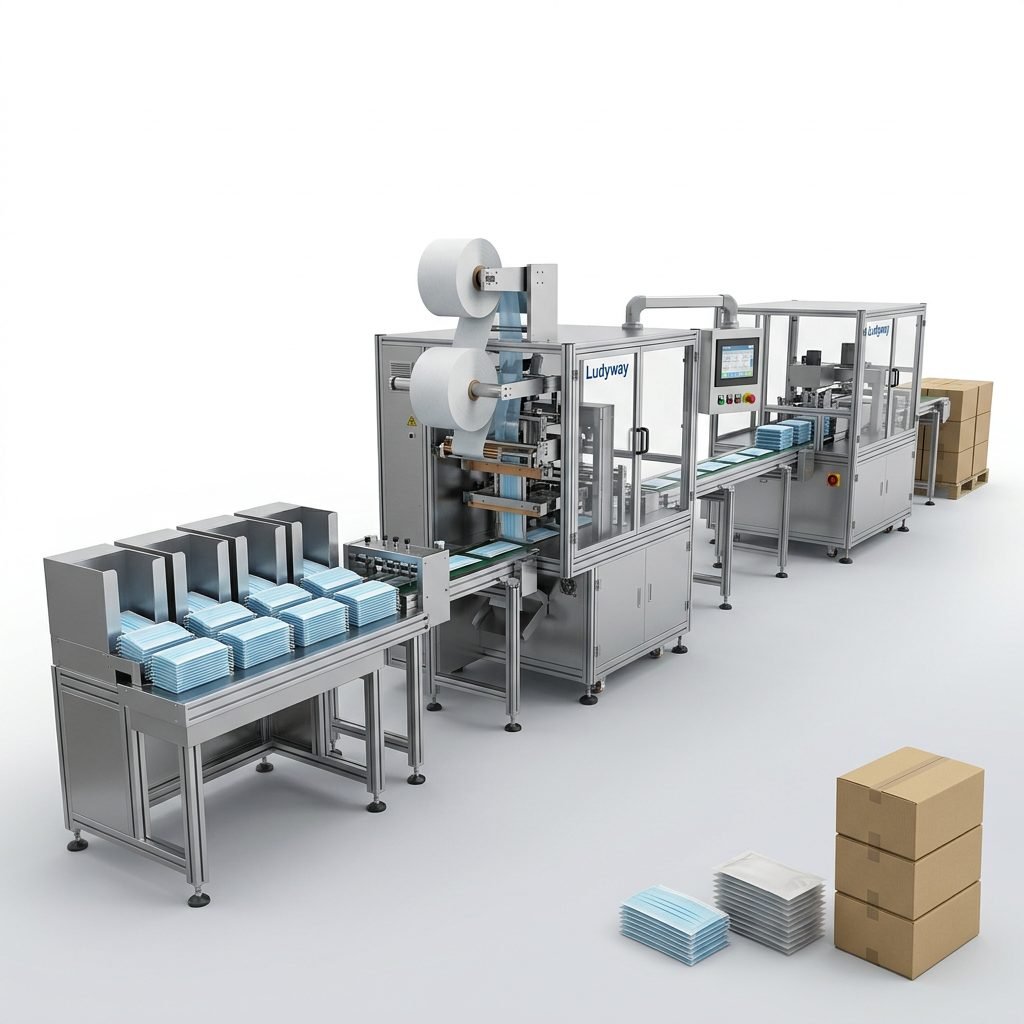
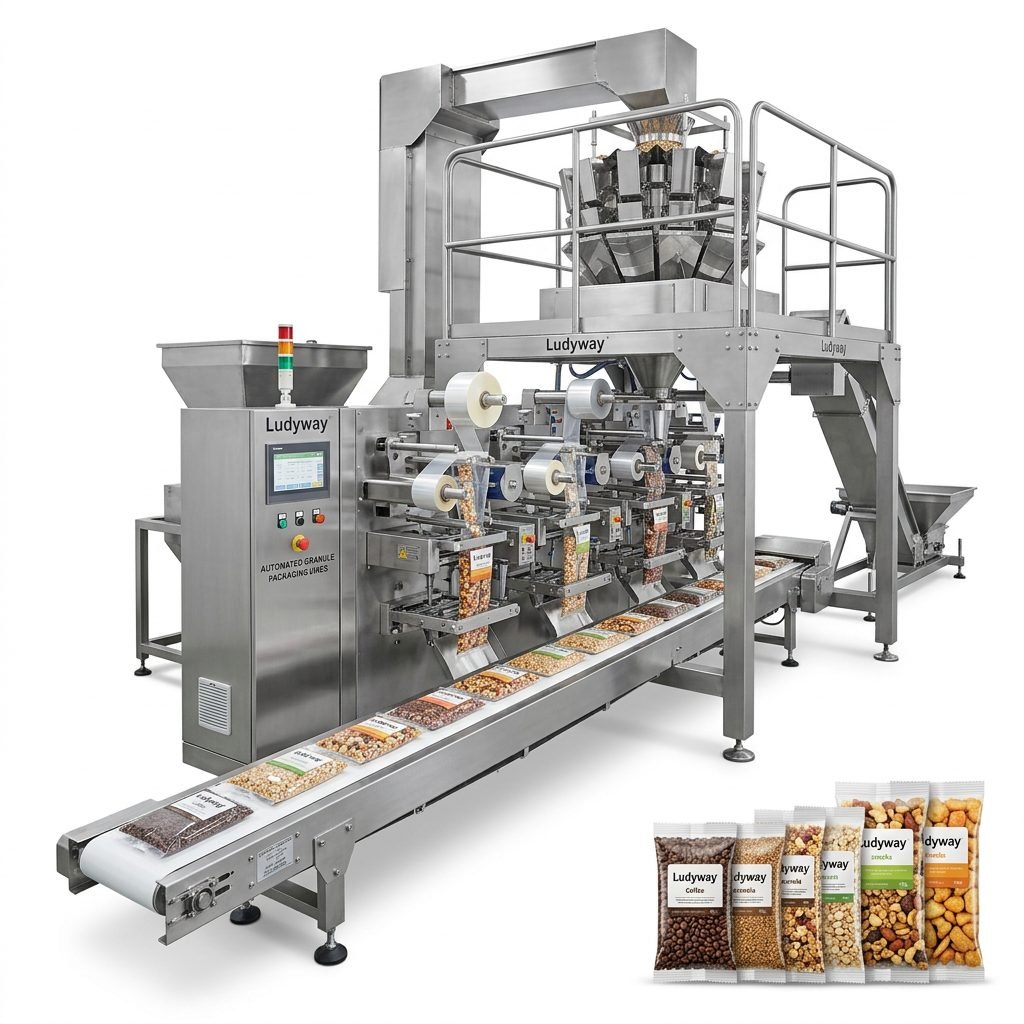
A well-designed grain packaging line integrates multiple subsystems into a seamless, efficient workflow. The layout must consider material flow from bulk storage to finished carton, while meeting European workplace safety standards. Based on ISO packaging standards, each component should be accessible for cleaning and maintenance.
Typical Grain Packaging Line Components
- Bulk feeding system — Bucket elevators, inclined conveyors, or vacuum feeders for grain transfer
- Multi-head weigher — High-precision weighing with 10–14 heads for consistent fill weights
- Primary packaging machine — Multi-lane stick pack, VFFS, or pre-made pouch filler
- Checkweigher — In-line weight verification with automatic reject capability
- Metal detector — Critical for food safety and HACCP compliance in EU facilities
- Date coding system — Thermal transfer or inkjet for batch codes and expiry dates
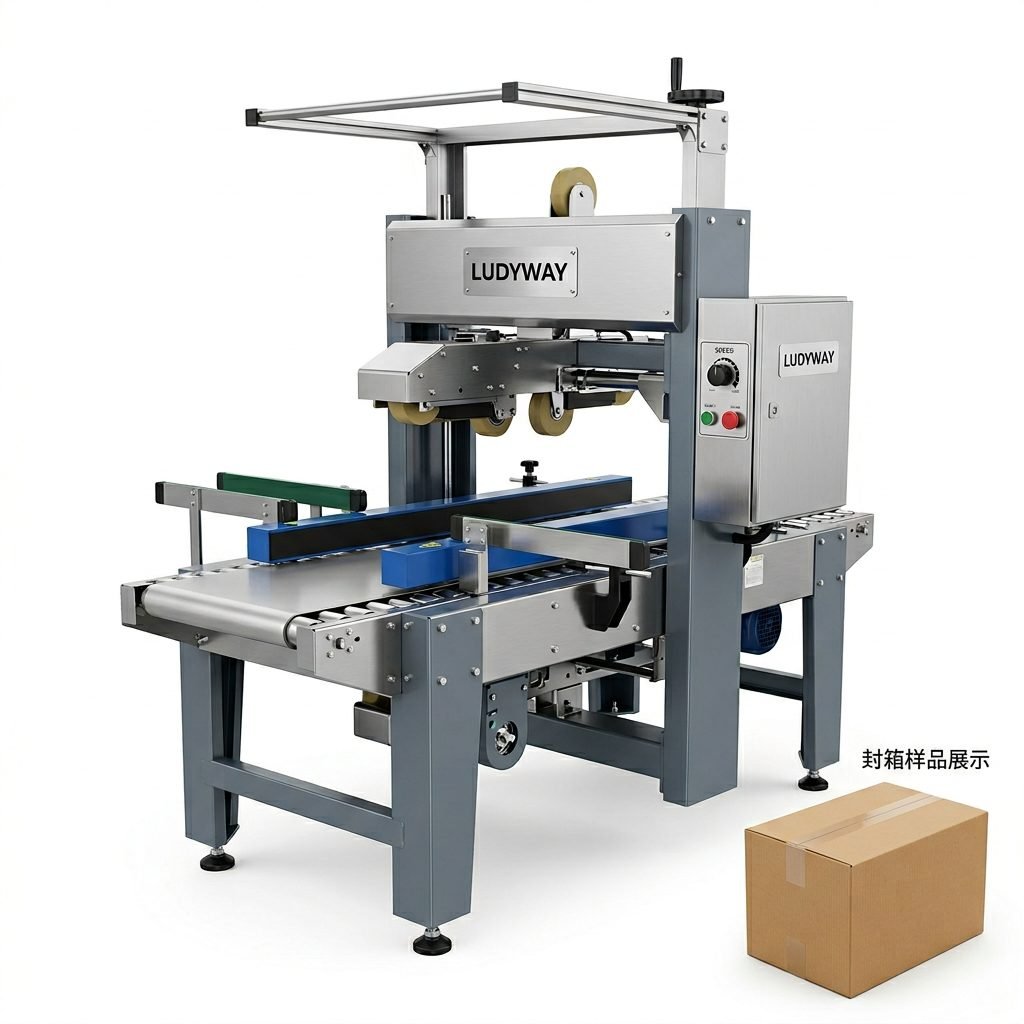
- Cartoning machine — Automated packing of finished sachets into cartons
- Case packing and palletizing — End-of-line automation for distribution
Step 5 — Installation, Commissioning, and Operator Training
Once the equipment arrives at your European facility, professional installation and commissioning are critical to achieving rated performance. Many manufacturers offer on-site support, but it is essential to verify that the installation team understands local electrical standards (typically 400V/50Hz three-phase in Europe) and compressed air requirements.
Installation Timeline (Typical)
| Phase | Duration | Key Activities |
|---|---|---|
| Site Preparation | 1–2 weeks | Floor leveling, utility connections, safety zoning |
| Mechanical Assembly | 3–5 days | Machine positioning, conveyor linking, air line connections |
| Electrical Integration | 2–4 days | PLC programming, sensor calibration, safety circuit verification |
| Commissioning & Testing | 3–7 days | Dry runs, product testing, speed optimization, quality checks |
| Operator Training | 2–3 days | Hands-on operation, maintenance procedures, troubleshooting |
Step 6 — Budgeting and Cost Considerations for European Operations
Investing in a grain packaging production line in Europe involves more than just the equipment purchase price. You must account for import duties (if sourcing from outside the EU), VAT, installation, training, and ongoing operational costs. The following table provides an overview of typical cost factors:
Cost Breakdown Overview
| Cost Category | Estimated Range | Notes |
|---|---|---|
| Multi-Lane Packaging Machine | €50,000 – €250,000 | Varies by lane count and automation level |
| Auxiliary Equipment | €20,000 – €80,000 | Weighers, conveyors, metal detectors, coders |
| Import Duties & Customs | 0% – 5% of CIF value | Dependent on country of origin and trade agreements |
| Installation & Commissioning | €8,000 – €25,000 | Including technician travel and accommodation |
| Annual Maintenance | 3% – 5% of equipment value | Spare parts, service contracts, preventive maintenance |
Choosing a Reliable Packaging Machine Supplier for Europe
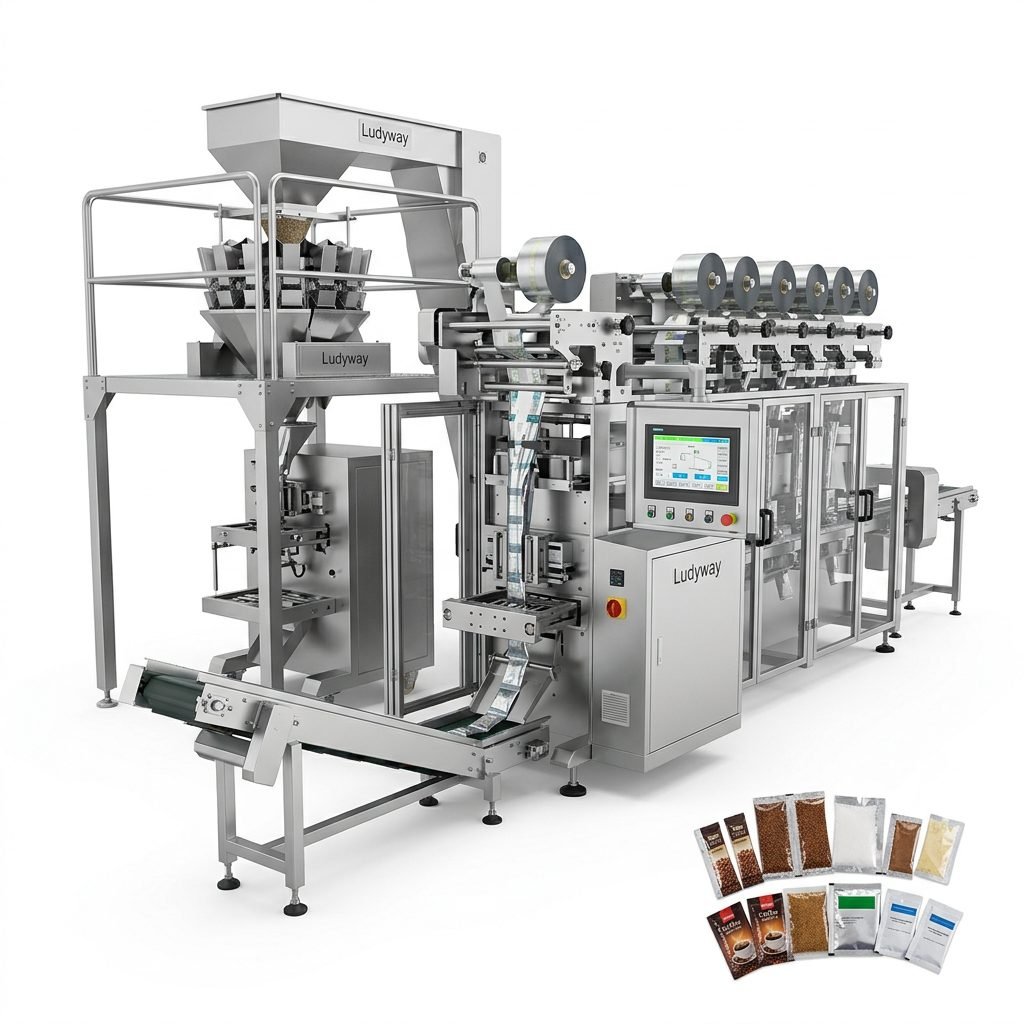
Selecting the right equipment partner is arguably the most important decision in your project. European buyers should look for suppliers with proven CE-certified equipment, responsive after-sales support, and experience with grain packaging applications. One notable manufacturer in this space is Ludyway Machinery, which offers a wide range of multi-lane stick pack and sachet packaging machines suitable for European grain and granule applications, backed by over 30 years of industry expertise and a modern 20,000㎡ manufacturing facility.
Supplier Evaluation Criteria
- CE certification — Verify that all machines carry valid CE marking with full documentation
- European references — Ask for case studies from existing EU customers
- After-sales support — Confirm availability of remote diagnostics and local service partners
- Spare parts availability — Ensure critical components can be delivered quickly within Europe
- Language capability — Technical documentation and support should be available in your local language
- Industry certifications — Look for ISO 9001 and relevant ISO packaging and distribution standards compliance
Maintenance and Long-Term Operational Efficiency
Once your grain packaging line is operational, preventive maintenance becomes essential for sustained performance. European food manufacturers typically follow a structured maintenance schedule aligned with flexible packaging industry best practices to minimize downtime and extend equipment life.
Maintenance Schedule Recommendations
| Frequency | Task | Responsible Party |
|---|---|---|
| Daily | Clean product contact surfaces, check seal integrity, inspect sensors | Machine Operator |
| Weekly | Lubricate moving parts, check belt tension, clean dust collectors | Maintenance Technician |
| Monthly | Inspect electrical connections, calibrate weighing system, test safety devices | Maintenance Supervisor |
| Quarterly | Replace wear parts, deep clean, review production data for efficiency trends | Engineering Team |
| Annually | Full machine overhaul, control system backup, comprehensive safety audit | Manufacturer Service Team |
Future-Proofing Your Grain Packaging Investment
The European packaging landscape is evolving rapidly, driven by sustainability regulations, digitalization, and changing consumer preferences. When setting up your grain packaging production line, consider these forward-looking strategies:
Emerging Trends to Watch
- Smart factory integration — IoT-enabled machines with real-time monitoring and predictive maintenance
- Sustainable packaging materials — Mono-material films, paper-based laminates, and compostable options
- Flexible production — Quick-changeover designs that allow multiple pack formats on a single line
- Energy efficiency — Machines with lower power consumption to meet EU energy directives
- Track-and-trace capability — Serialization and aggregation systems for supply chain compliance
- Remote service capability — VPN-connected machines for remote troubleshooting by technicians
Key Takeaways for European Grain Packaging Success
Setting up a grain packaging machine production line in Europe is a strategic investment that can deliver significant returns when executed correctly. By carefully defining your product requirements, selecting CE-certified equipment, designing an efficient line layout, and planning for ongoing maintenance, you can build a packaging operation that meets the highest European standards. For further guidance, resources from PACK EXPO International and the Flexible Packaging Association offer valuable industry insights and networking opportunities.
Frequently Asked Questions About Grain Packaging Lines in Europe
What is the typical lead time for a grain packaging machine?
Standard machines typically require 8–14 weeks for manufacturing, plus 4–6 weeks for ocean freight to European ports. Customized lines may take 16–20 weeks. Always confirm lead times with your supplier before placing an order.
Do I need a local representative in Europe for after-sales service?
While not mandatory, having a local service partner or distributor in Europe can significantly reduce response times for maintenance and spare parts delivery. Many international suppliers now offer remote diagnostic support as a first line of troubleshooting.
Can I run multiple grain products on the same packaging line?
Yes, modern multi-lane machines support quick product changeovers, often within 15–30 minutes. This requires proper cleaning protocols between runs, especially when switching between allergenic and non-allergenic grain products, which is particularly important for EU allergen labeling compliance.
What electrical and utility requirements apply in Europe?
Most European facilities operate on 400V/50Hz three-phase power for industrial machinery, with compressed air at 6–8 bar. Confirm these specifications with your supplier and ensure the machine’s electrical cabinet is configured accordingly before shipment.