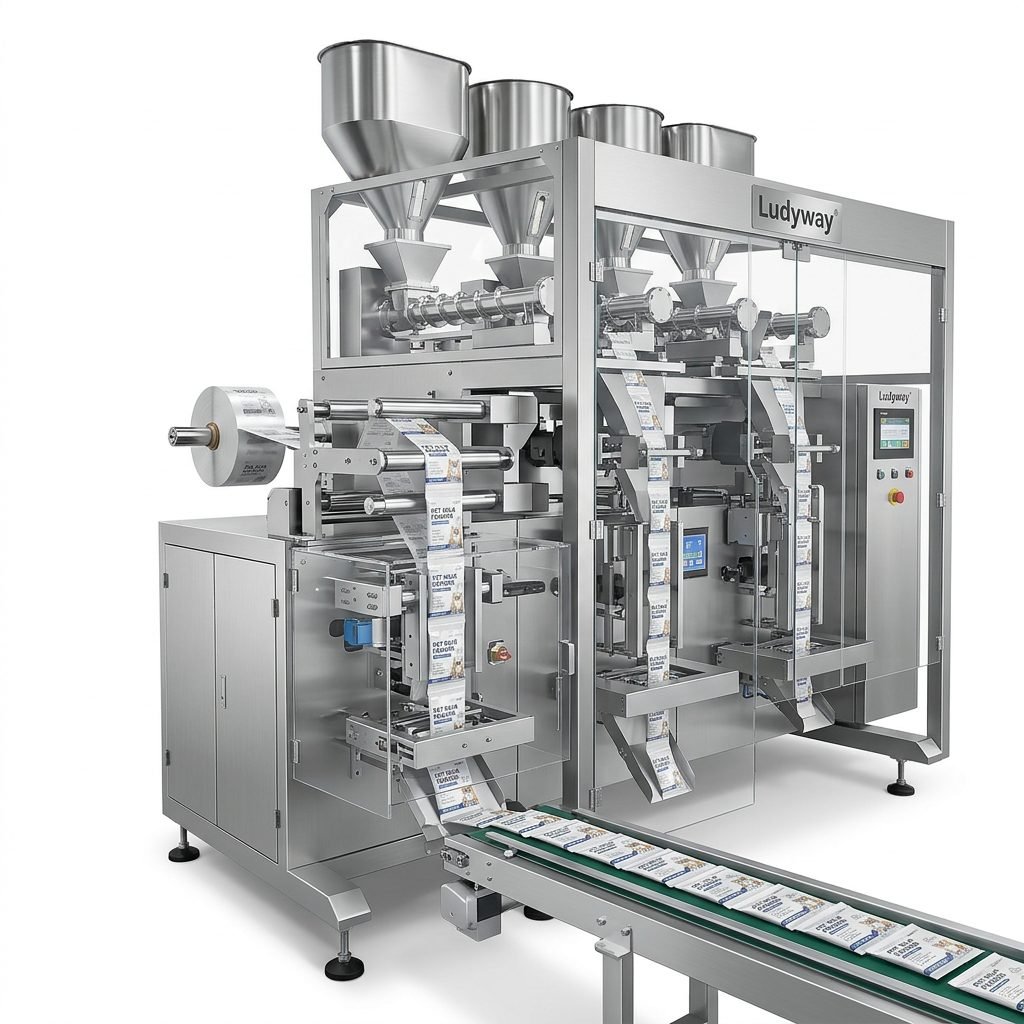
In today’s fast-paced manufacturing landscape, efficiency is paramount. Industrial packaging machinery stands as a critical component in streamlining production lines, reducing operational costs, and ensuring product consistency and safety. This guide delves into the comprehensive world of industrial packaging solutions, exploring the technologies, benefits, and strategic considerations for implementing systems that drive efficient production.
Understanding Industrial Packaging Machinery
Industrial packaging machinery encompasses a wide range of automated equipment designed to package products at high speeds and with precision. These systems handle everything from primary packaging—placing the product into its direct container—to secondary packaging, which involves grouping primary packages for distribution. The core objective is to automate repetitive tasks, minimize human error, and significantly increase output.
Key Categories of Packaging Equipment
The market offers diverse machinery tailored to specific product forms and production needs. Understanding these categories is the first step toward selecting the right solution.
Filling and Sealing Machines
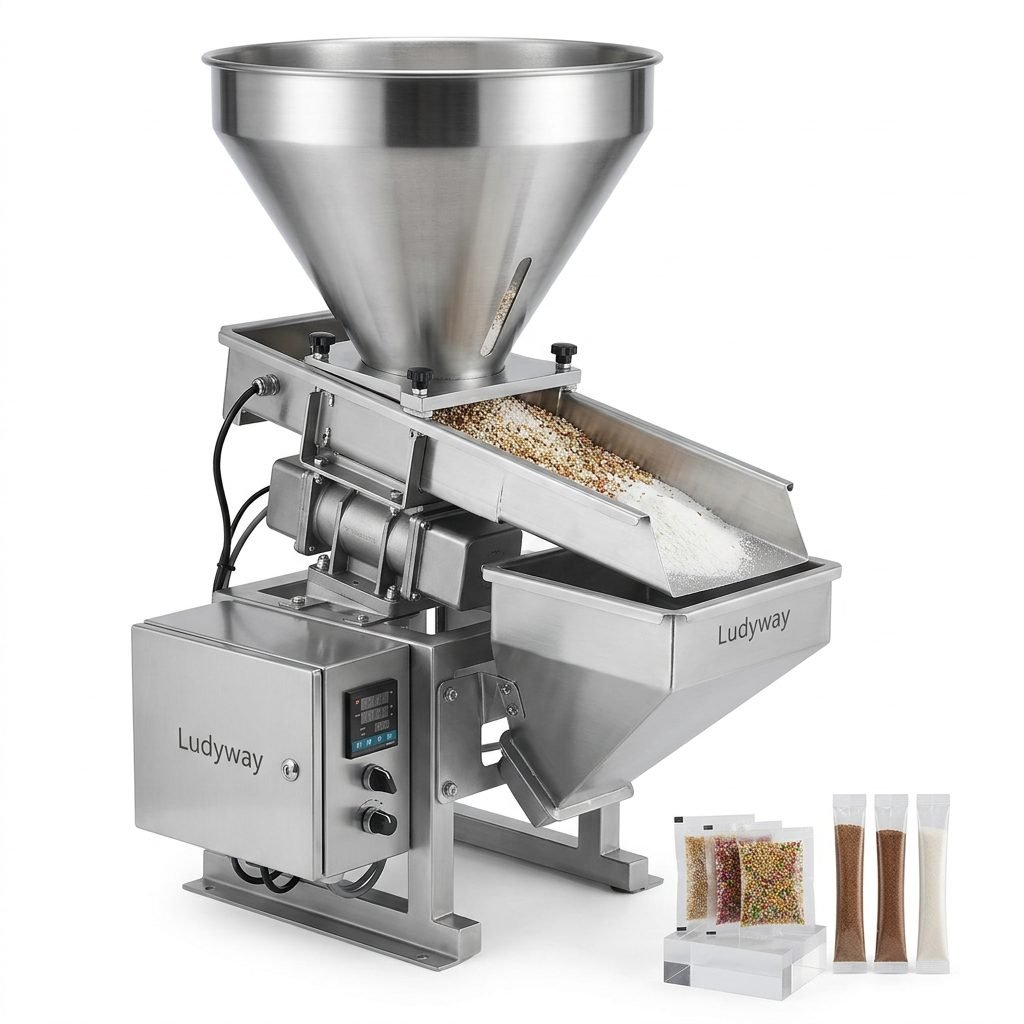
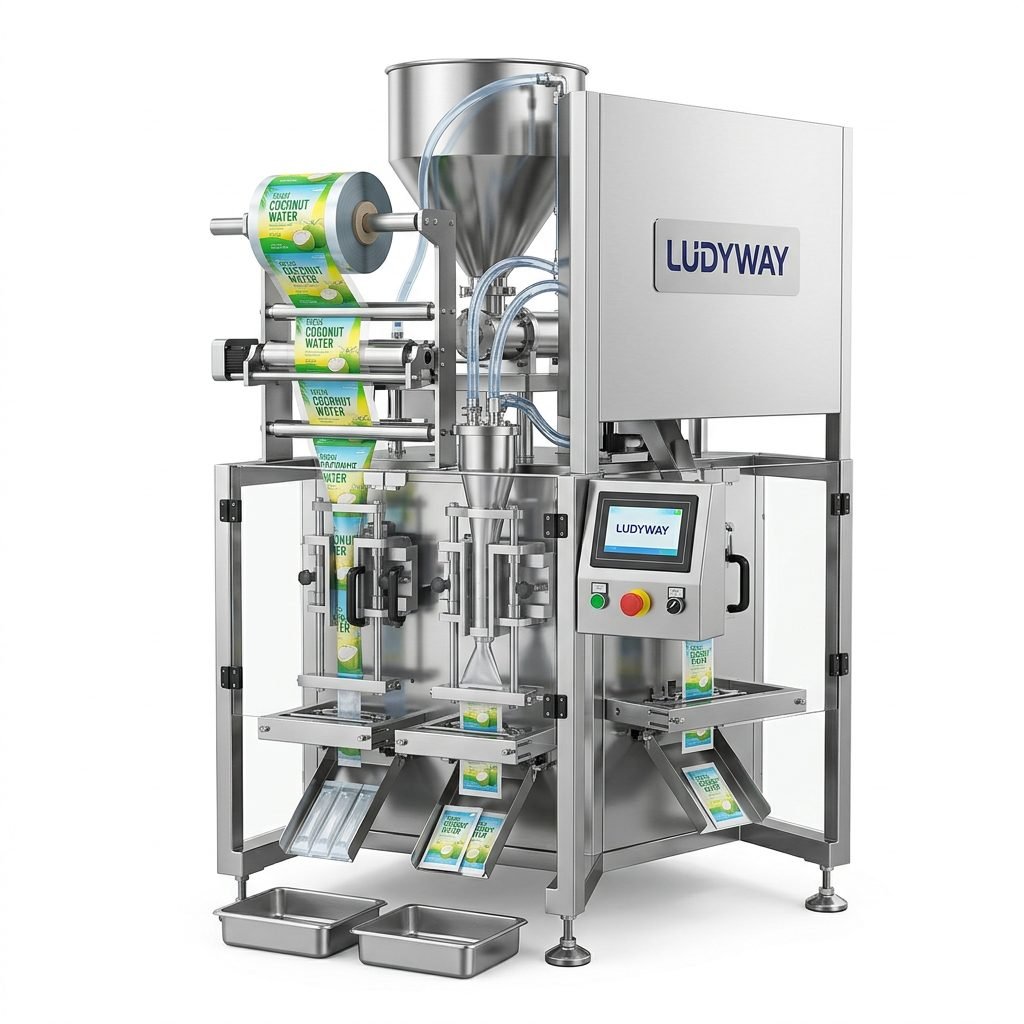
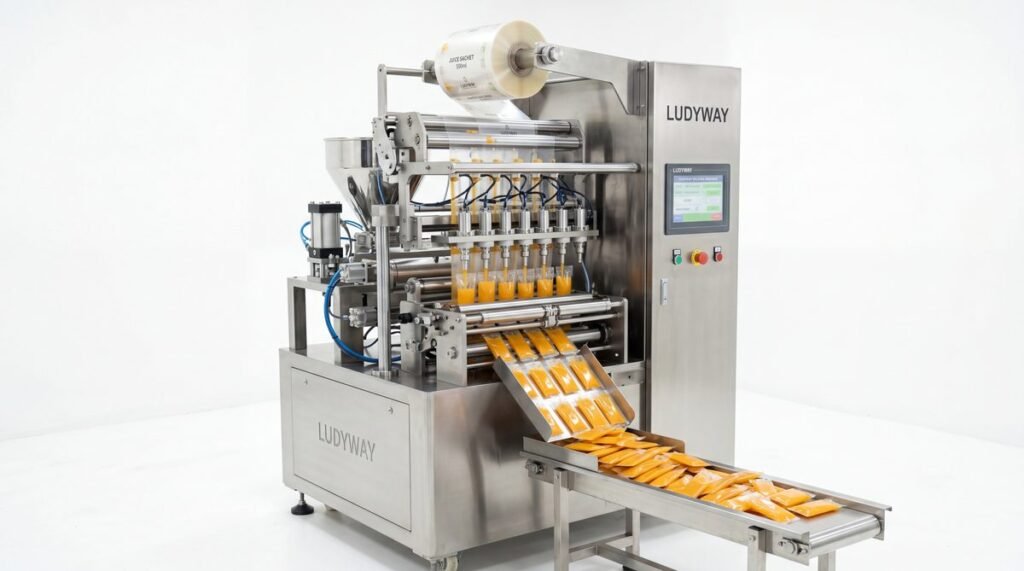
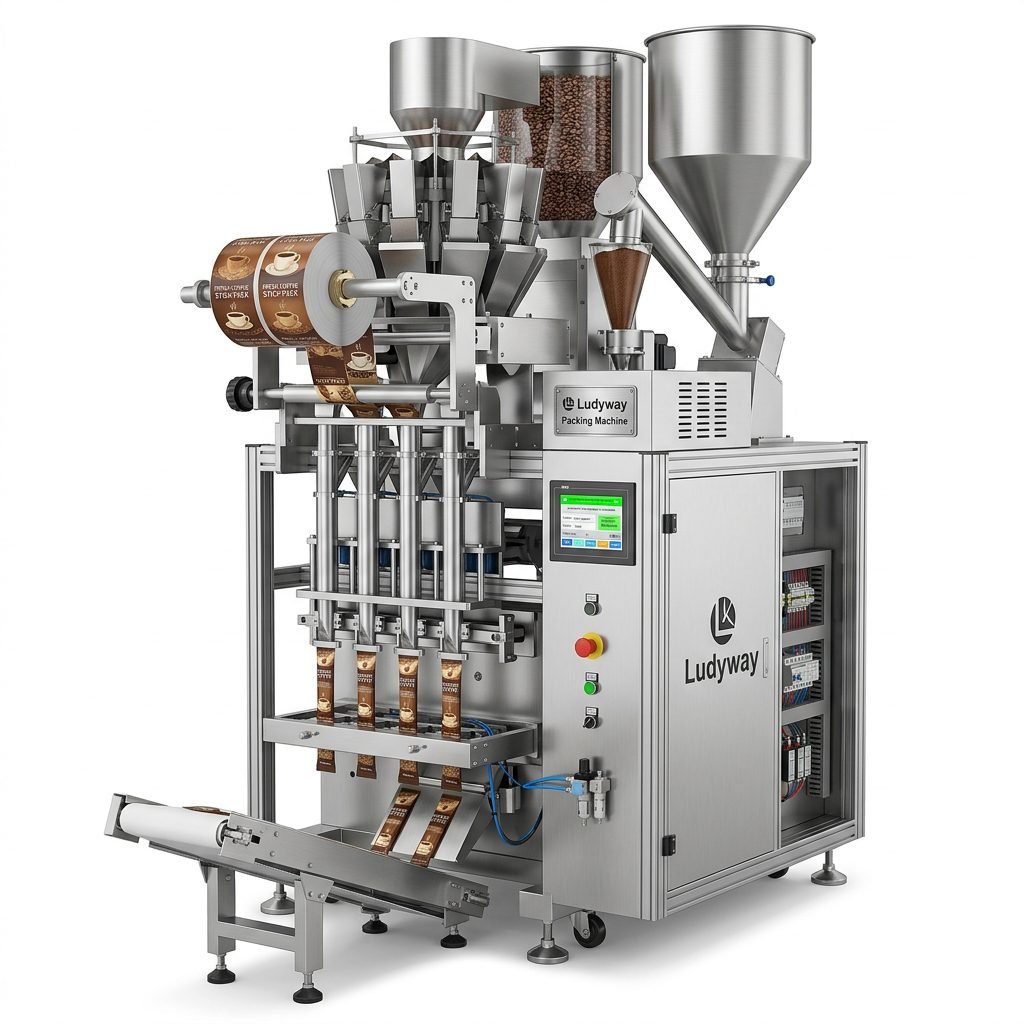
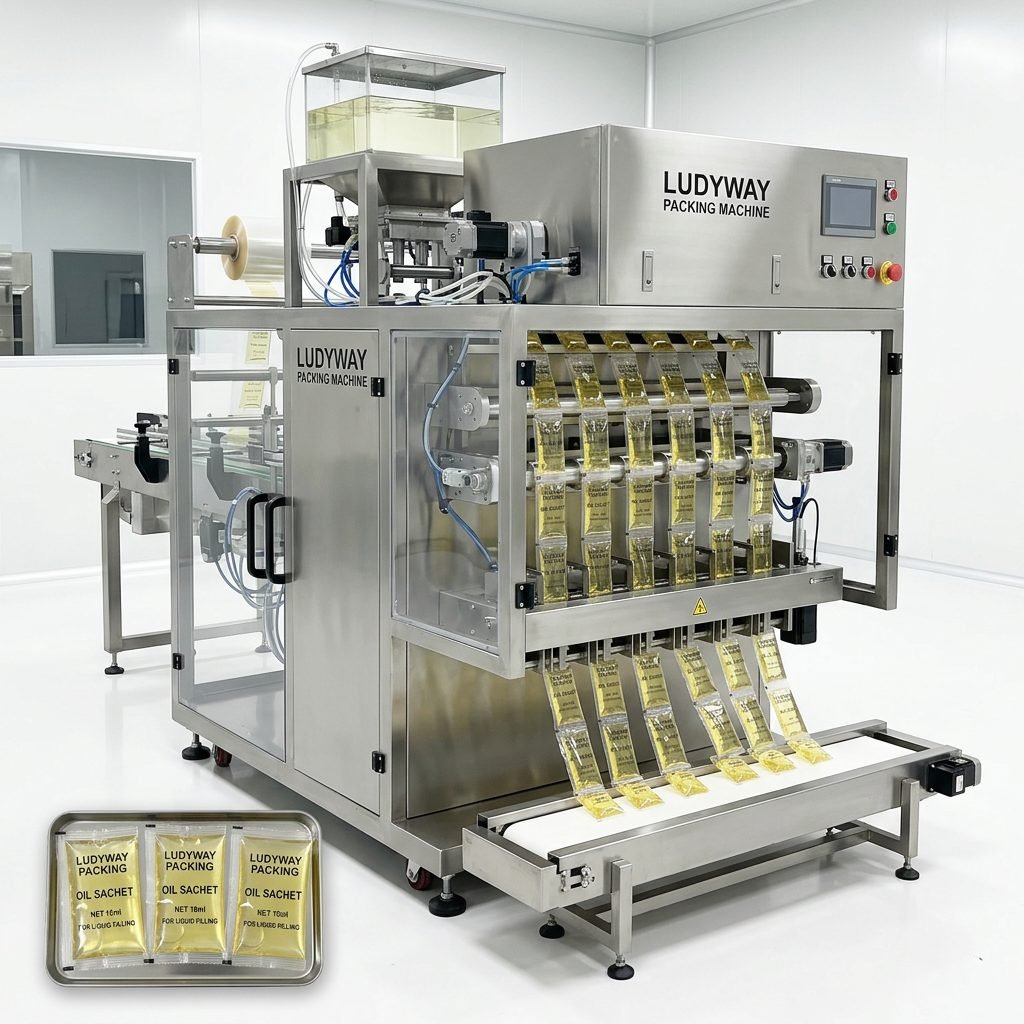
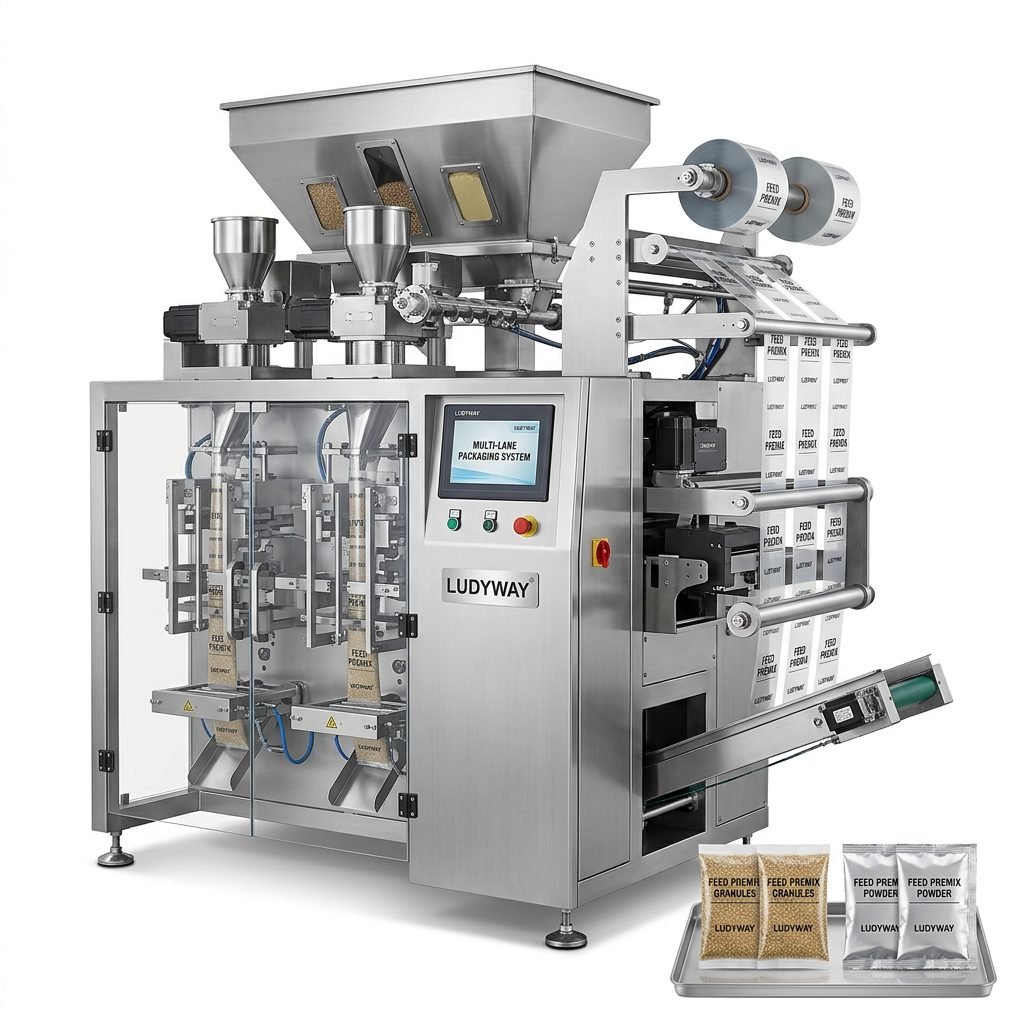
These are the workhorses for granules, powders, and liquids. They accurately dose product into pouches, sticks, or bottles and hermetically seal them. Advanced models feature multi-lane operations for unparalleled throughput.
Form-Fill-Seal (FFS) Machines
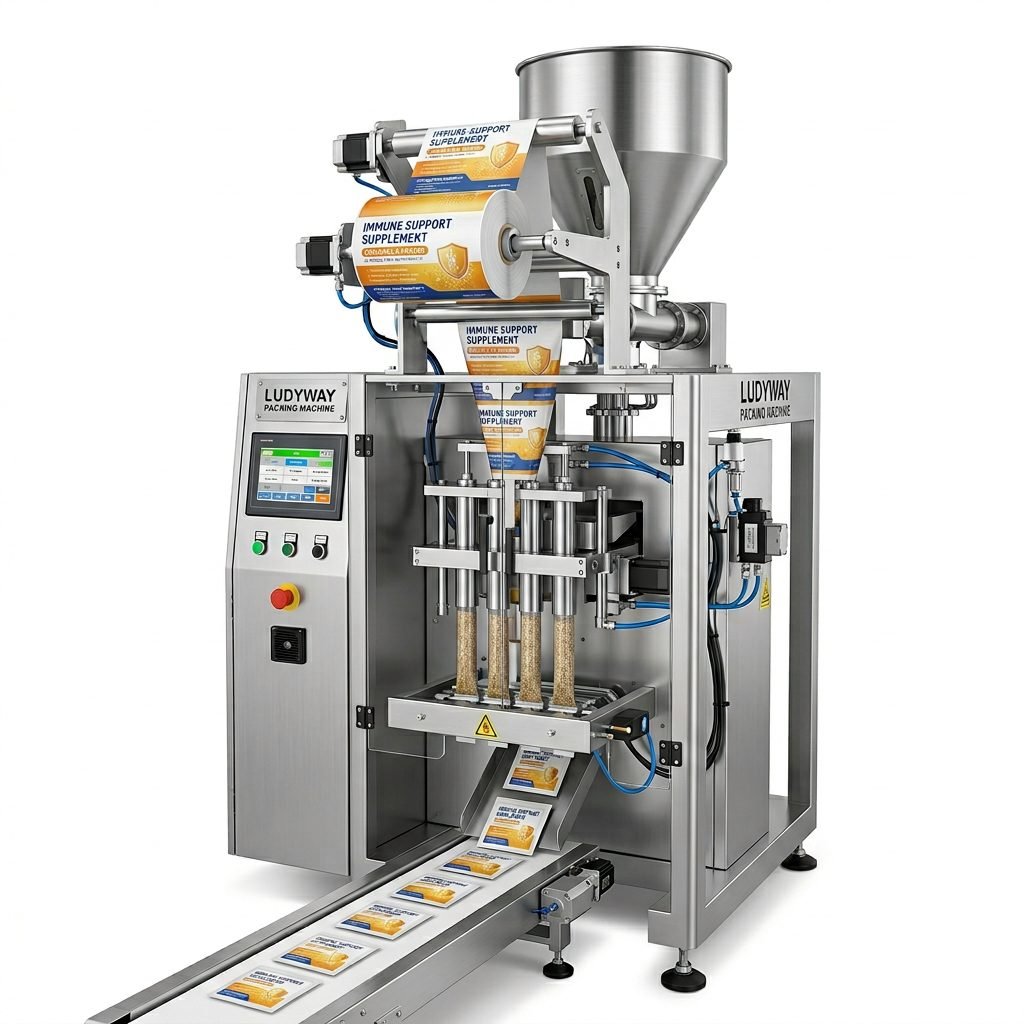
FFS systems are highly efficient, creating the package from a roll of film, filling it with product, and sealing it in one continuous operation. This is ideal for creating stick packs and sachets, offering excellent barrier properties and material savings.
Cartoning and Case Packing
This equipment automates the secondary packaging stage, erecting cartons, inserting primary packages, and sealing them. Case packers then load these cartons into shipping cases, ready for palletizing.
The Pillars of an Efficient Packaging Line
Building an efficient production line goes beyond buying individual machines. It involves integrating several key pillars that work in concert.
1. Automation and Integration
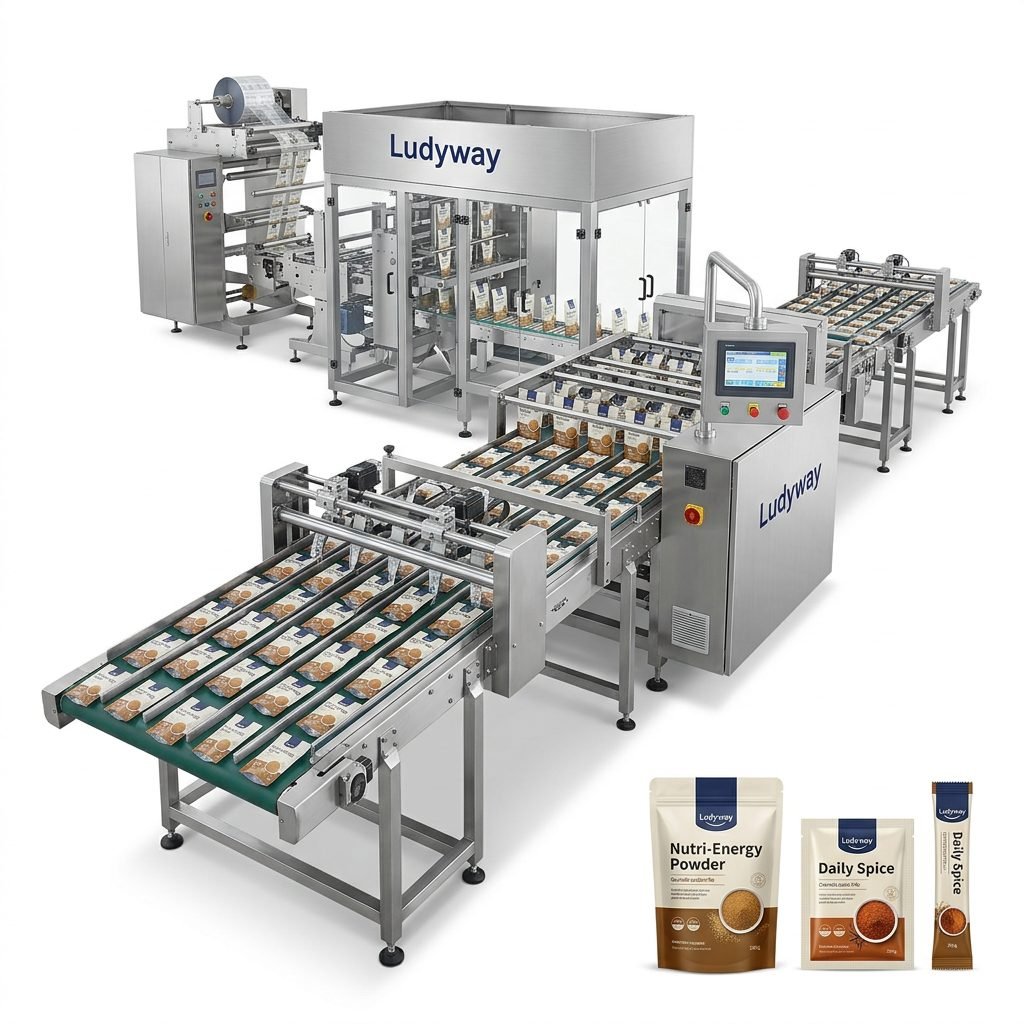
Modern packaging lines are highly integrated systems. Conveyors, robotic arms, and vision inspection systems work together seamlessly. This integration minimizes bottlenecks, allows for real-time monitoring, and enables quick changeovers between different products or package sizes.
2. Precision and Consistency
Industrial machinery delivers unmatched precision in filling weights and seal integrity. This consistency reduces product give-away, ensures compliance with regulatory standards, and protects brand reputation by delivering a uniform customer experience every time.
✔ Key Benefit: Eliminates weight variations common in manual packaging.
3. Flexibility and Scalability
The best solutions are designed to grow with your business. Look for machinery that offers modular designs and easy reconfiguration. This allows you to adapt to new product launches, different packaging formats, or increased production volumes without a complete line overhaul.
Selecting the Right Machinery Partner
Choosing a supplier is as crucial as choosing the machine. A reliable partner provides more than just equipment; they offer a complete solution.
- Industry Experience: Seek a partner with a proven track record in your specific sector, whether it’s food, pharmaceutical, or health products. Their experience translates into understanding your unique challenges.
- Engineering & Customization: Off-the-shelf solutions rarely fit perfectly. A partner with strong in-house engineering can tailor the machinery to your specific production floor, product characteristics, and output goals.
- Comprehensive Support: This includes installation, operator training, readily available spare parts, and responsive technical service. This support ensures maximum uptime and a strong return on your investment.
Companies like Ludyway Machinery, with decades of focused experience, exemplify this approach. By offering a wide range of intelligent packaging models and turnkey production solutions, they help manufacturers worldwide achieve their efficiency targets.
Implementing Your Solution for Maximum ROI
Successful implementation is a phased process. It begins with a detailed analysis of your current process and future needs. A thorough factory acceptance test (FAT) at the supplier’s facility is recommended before installation. Once on-site, proper training for your maintenance and operations teams is critical to ensure smooth running and quick troubleshooting.
→ Future Trends: Smart Packaging Lines
The future lies in Industry 4.0 and the Industrial Internet of Things (IIoT). Next-generation packaging machinery will feature enhanced connectivity, collecting vast amounts of data on machine performance, production rates, and maintenance needs. This data enables predictive maintenance, minimizing unplanned downtime, and provides insights for continuous process optimization.
Conclusion
Investing in the right industrial packaging machinery is a strategic decision that directly impacts production efficiency, product quality, and bottom-line profitability. By understanding the different types of equipment, prioritizing integration and flexibility, and partnering with an experienced and supportive supplier, manufacturers can build packaging lines that are not just fast, but also resilient, adaptable, and intelligent. In a competitive global market, a robust packaging solution is no longer a luxury—it’s a fundamental driver of operational excellence.
Frequently Asked Questions (FAQs)
1. What is the typical lead time for a custom packaging line?
Lead times vary significantly based on complexity and customization. For standard machines, it can be 8-12 weeks. For a fully customized turnkey line involving multiple integrated machines, the timeline can extend from 4 to 6 months or more, including design, manufacturing, and testing phases.
2. How can I ensure the machine will work with my specific product?
The most reliable method is to conduct a product test at the supplier’s facility. Send them your actual product material, and they will run trials on the proposed equipment. This tests flow characteristics, sealing compatibility, and overall performance before you commit to a purchase.
3. What kind of after-sales support should I expect?
Comprehensive support should include detailed installation guidance (or on-site assistance), thorough training for your operators and technicians, a clear warranty, access to a library of manuals and schematics, and a reliable supply chain for genuine spare parts. Many suppliers also offer remote diagnostic services.
4. Are these machines difficult to maintain?
Modern machines are designed for serviceability. A good supplier will design with maintenance in mind—easy access to wear parts, clear lubrication points, and user-friendly HMIs for diagnostics. Proper initial training is key to empowering your team to perform routine maintenance confidently.