Dairy is one of the most demanding categories in food packaging. Milk, cheese and yogurt are perishable, sensitive to oxygen, light and temperature, and sold in formats that range from 10 ml creamer sachets to 25 kg milk powder bags. Choosing the right dairy packaging machines for milk, cheese and yogurt products therefore means balancing hygiene, shelf life, portion flexibility and line speed, rather than simply buying the fastest filler available.
This guide is written for dairy processors, co-packers, project engineers and equipment distributors who are specifying new lines or upgrading existing ones. It covers the machine types used for liquid milk, milk powder, portioned cheese and yogurt, the technical standards buyers should verify, how a complete line is integrated, and what to prepare before requesting a quotation from a manufacturer such as Ludyway.
Why Dairy Packaging Has Its Own Rules
Unlike dry snacks or hardware, dairy products carry live cultures, fats that oxidise and proteins that spoil quickly. Packaging equipment must protect the product from contamination, preserve barrier integrity through the cold chain, and allow fast, verifiable cleaning between runs. Four pressures shape nearly every dairy packaging decision.
Hygienic Design
Product-contact parts in 304 or 316L stainless steel, tool-free disassembly, sloped surfaces and optional CIP/SIP circuits for liquid fillers reduce microbial risk and cleaning downtime.
Shelf-Life Protection
Nitrogen flushing for milk powder, vacuum or modified-atmosphere packaging for cheese, and high-barrier laminates for UHT milk and yogurt all extend saleable life.
Portion Flexibility
Retail and food-service buyers want single-serve sticks, sachets, cups, pouches and bulk bags from the same plant, which favours multi-lane systems with quick format changeover.
Verified Compliance
Food-contact materials, seal integrity, checkweighing and metal detection must be documented for audits under FDA, EU and retailer standards.
Milk Packaging Machines: Liquid, UHT and Milk Powder
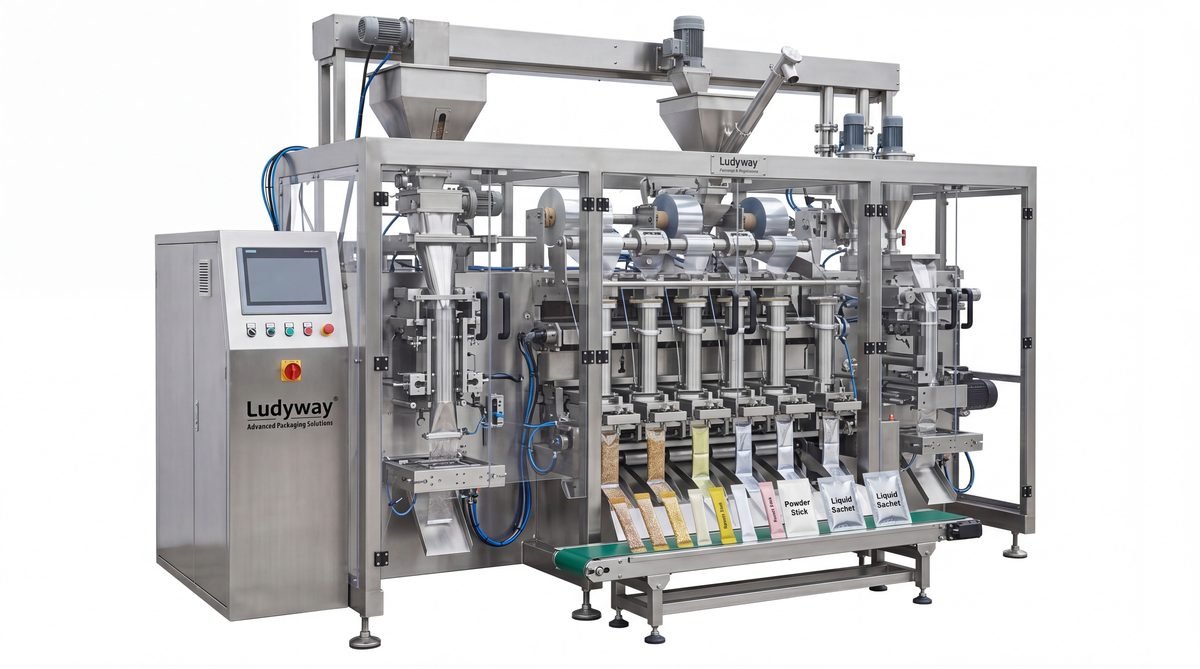
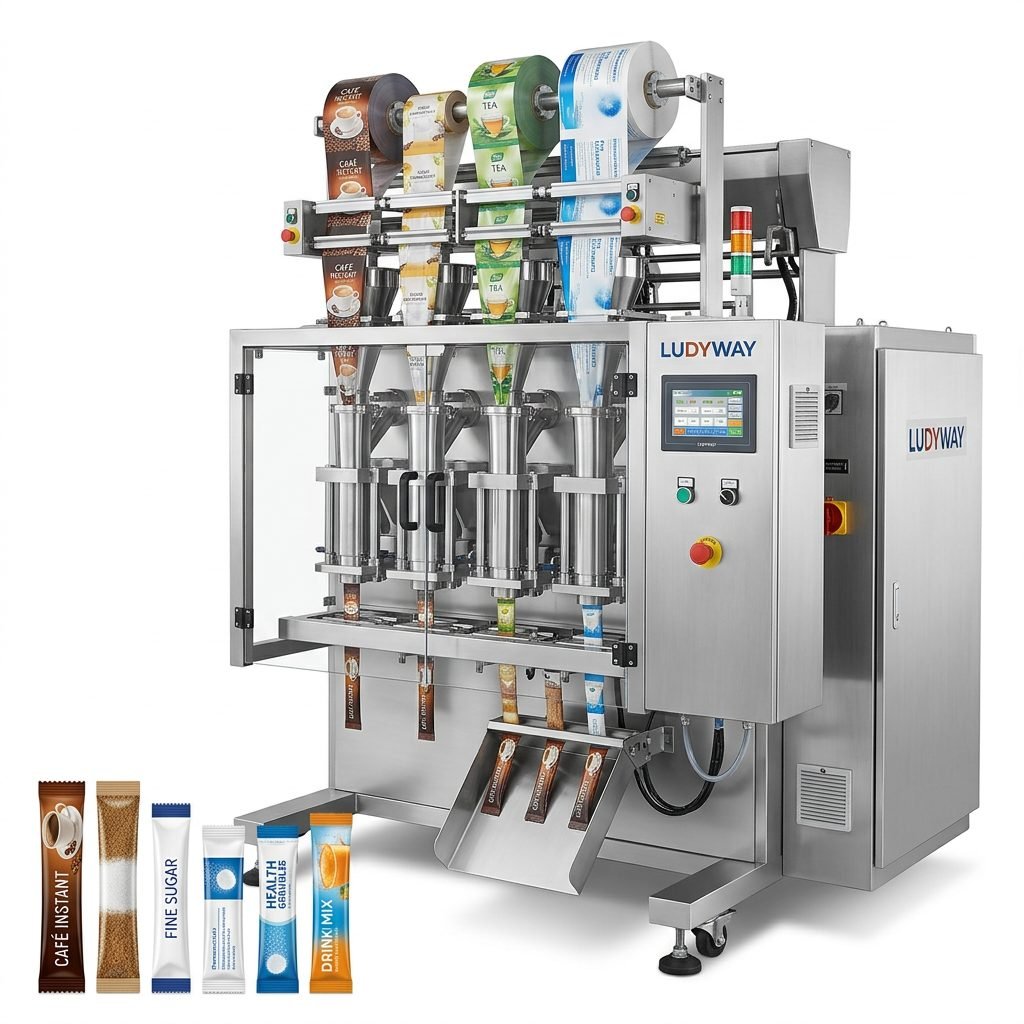
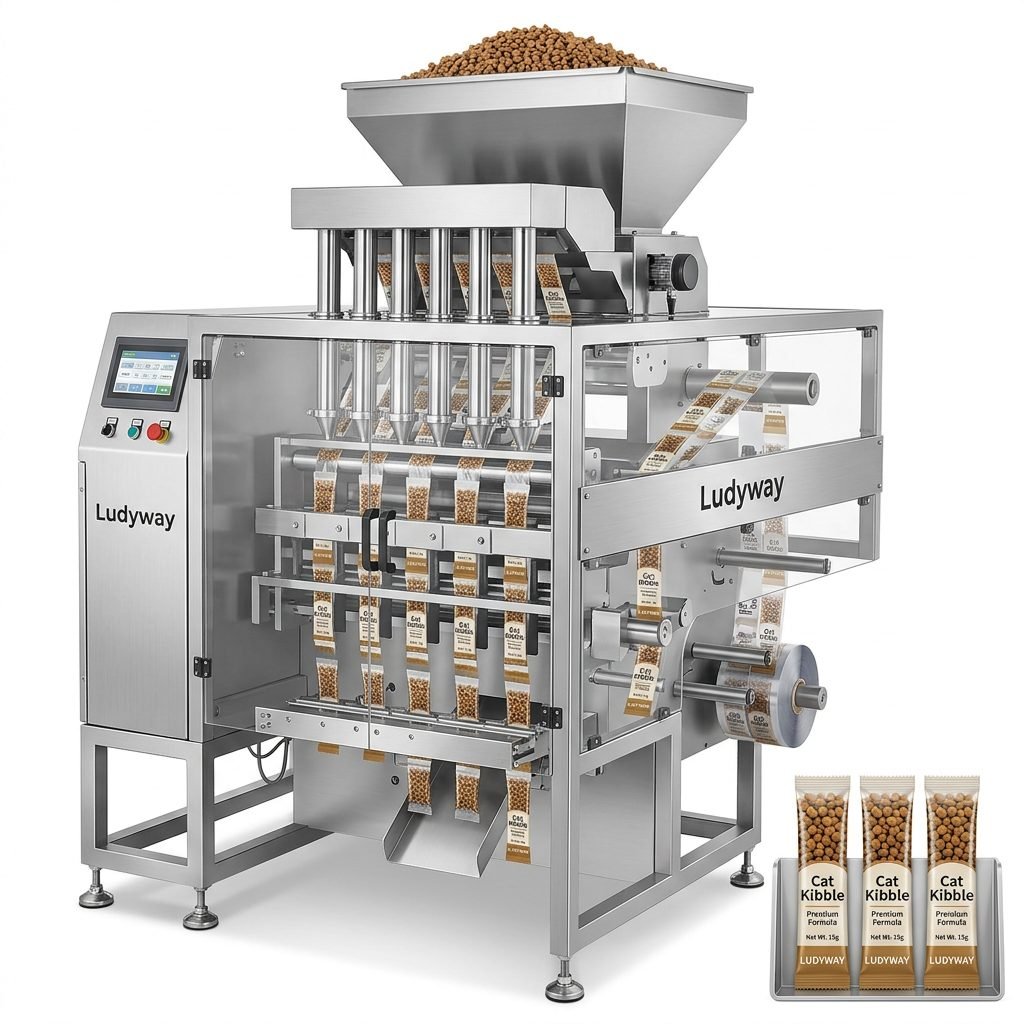
Multi-lane stick pack and sachet system configured for liquid and powdered milk products
Liquid Milk, Creamer and Condensed Milk
Single-serve liquid milk, coffee creamer and sweetened condensed milk are typically packed in 5–30 ml stick packs or four-side-seal sachets on vertical form-fill-seal machines with piston or peristaltic pumps. A multi-lane liquid milk stick pack machine runs 4–12 lanes at 30–60 cycles per minute per lane, with servo-driven film pull and heat-seal jaws tuned for PET/AL/PE laminates.
Where product is aseptically processed, the filler can be supplied with a sterile product path, UV film sterilisation and nitrogen headspace control so that ambient-stable UHT portions can be shipped without refrigeration.
Milk Powder, Infant Formula and Milk Replacers
Powdered dairy is dosed by servo auger fillers with load-cell feedback, achieving typical accuracy of ±0.5–1% on 3–50 g portions. Because milk fat oxidises, powder lines are usually fitted with nitrogen flushing to hold residual oxygen below 2–3%, plus dust extraction to keep seal areas clean. A dedicated milk powder sachet and stick pack machine handles retail sticks, while automated powder packaging lines for milk products extend the same principle to 400 g–1 kg pouches and 25 kg bags for ingredient and feed-grade milk replacer markets.
Specification tip: ask for the auger, hopper and agitator in 316L when packing infant formula or whey-based nutrition powders, and request a documented changeover procedure that keeps allergen cross-contact below your HACCP limits.
Cheese Packaging Solutions: Vacuum, MAP and Portion Packs
Blocks, Slices and Shredded Cheese
Hard and semi-hard cheese blocks are most often vacuum packed in shrink or non-shrink barrier bags, which removes oxygen, limits mould growth and gives a tight retail presentation. An industrial vacuum packaging machine with double-chamber operation and optional gas back-flush covers both block cheese and pre-sliced trays.
Shredded and grated cheese behaves like a sticky granule. It is weighed on multi-head or linear weighers and dropped into pillow bags or multi-lane sachets, usually under CO₂/N₂ modified atmosphere to delay clumping and spoilage. Anti-caking flow aids, chilled product temperature and PTFE-coated contact surfaces are standard requests.
Food-service portion cups, cream-cheese sachets and dip-style spreads use piston fillers with heated hoppers so that viscosity stays within the pump’s working range.
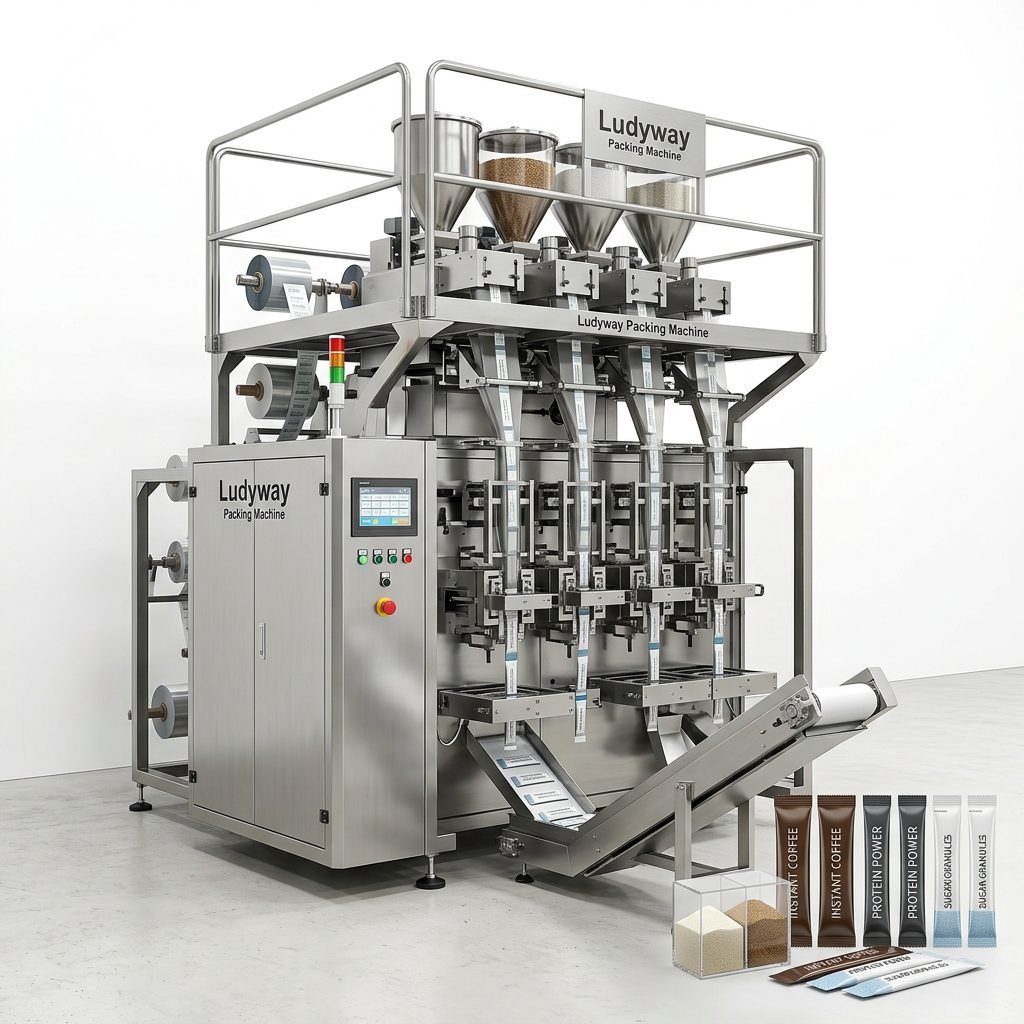
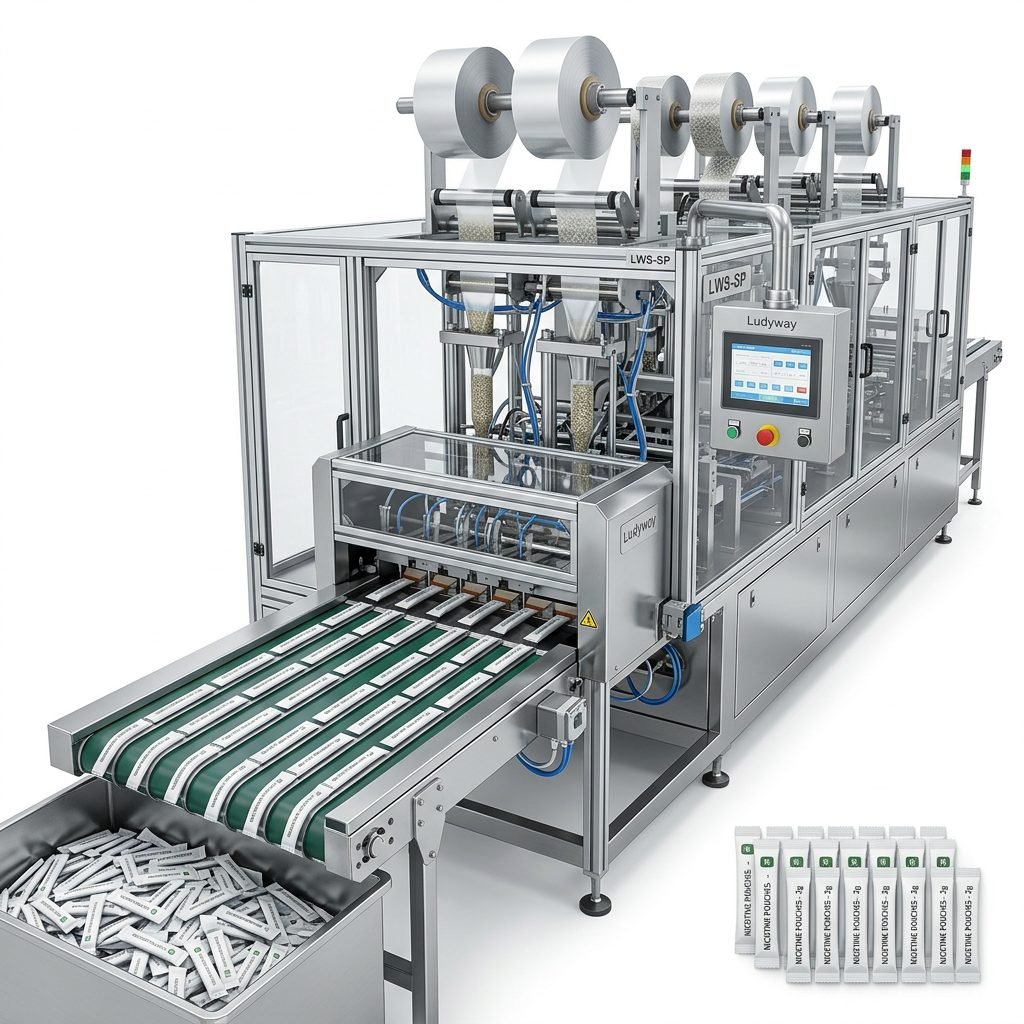
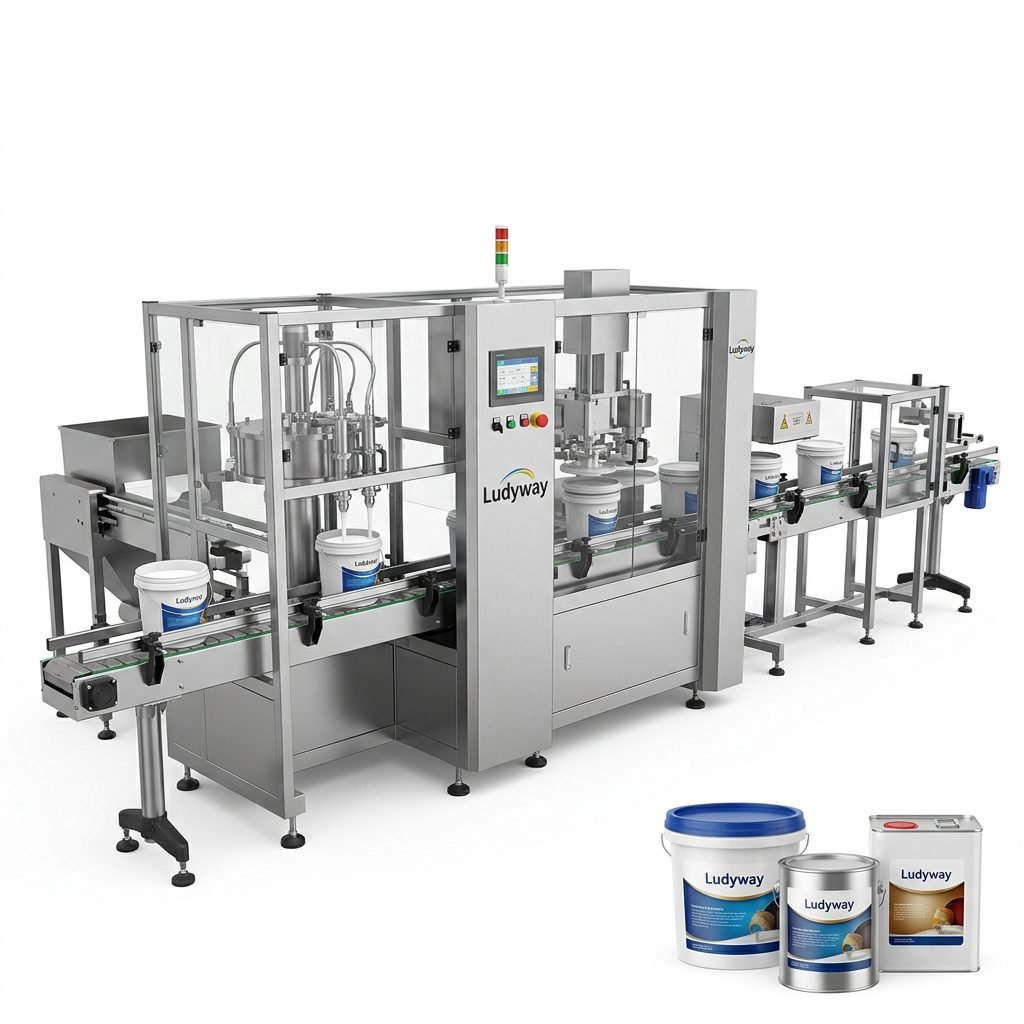
High-speed multi-lane system used for grated cheese and dairy topping portions
Yogurt Packaging Equipment: Cups, Pouches and Yogurt Powder
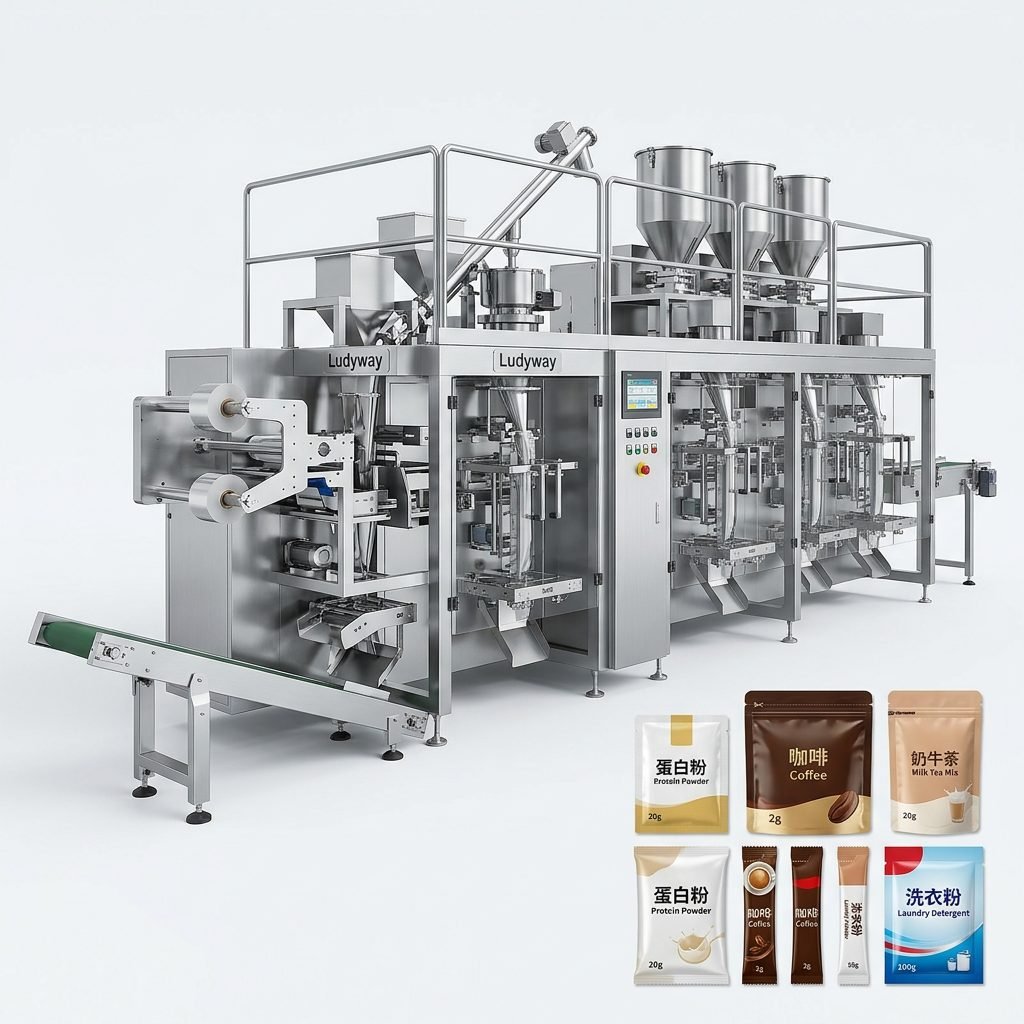
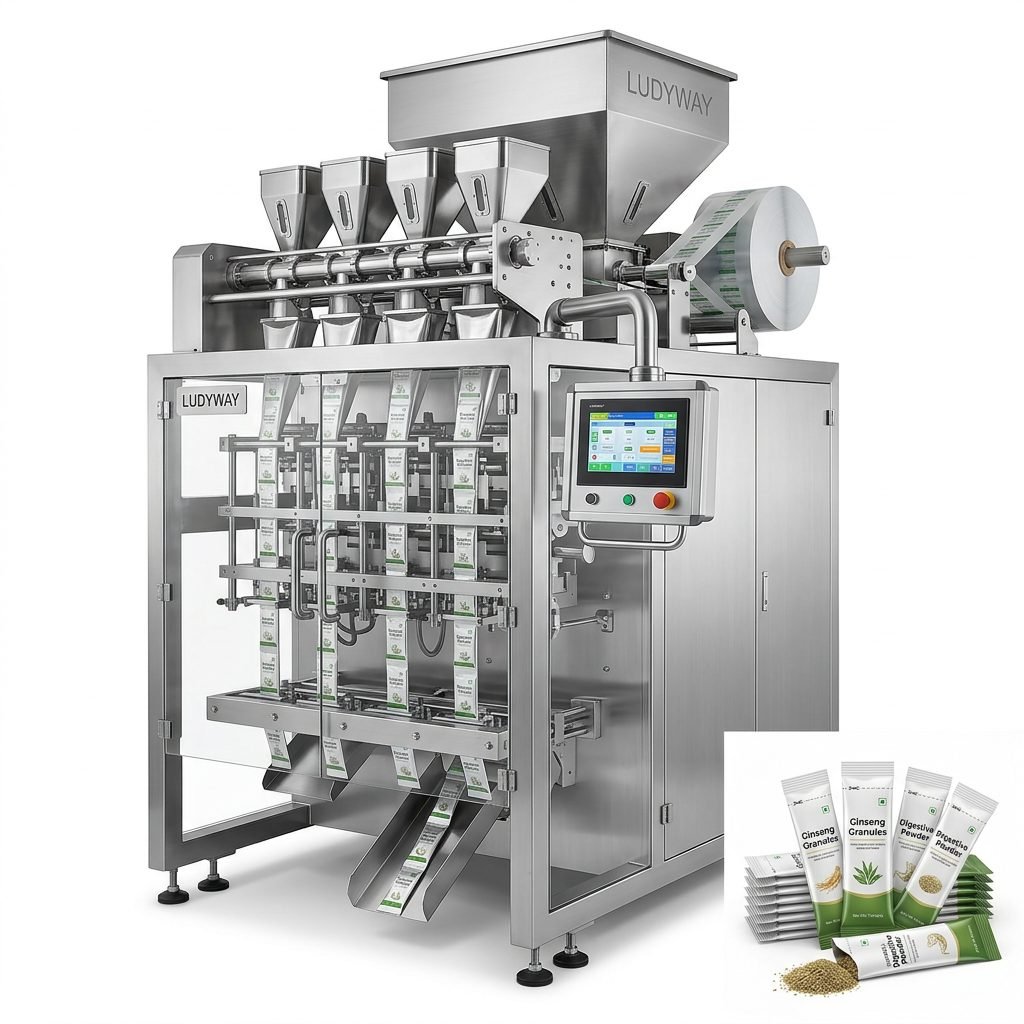
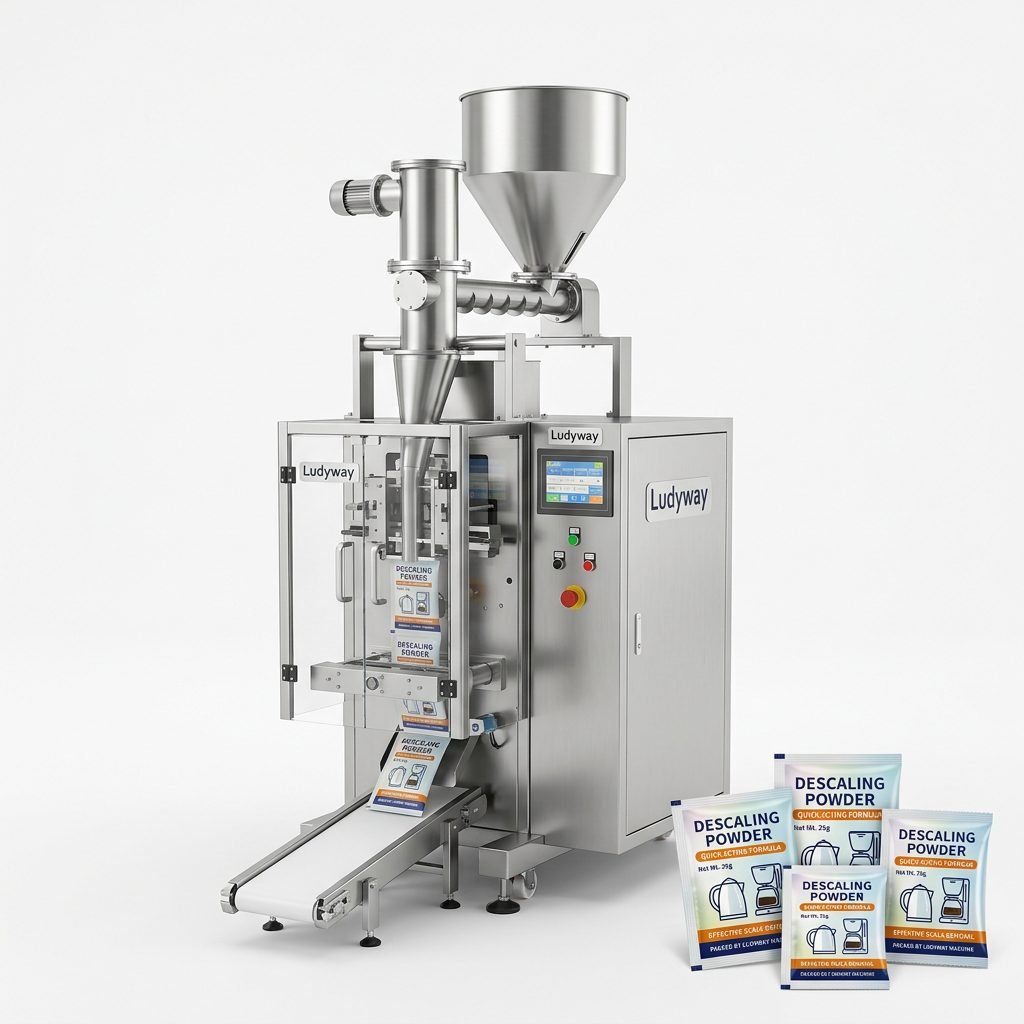
Multi-lane powder system for yogurt starter, probiotic and drink-mix sachets
Spoonable, Drinkable and Powdered Yogurt
Set and stirred yogurt is filled into preformed cups on fill-seal machines with heat-sealed aluminium or PET lidding, often under a laminar-flow hood. Drinkable yogurt, kefir and dairy-based smoothies suit spouted pouches and stick packs. A yogurt sachet packaging machine configured for liquid or powder lets one platform cover on-the-go portions, fruit-prep inserts and lactic starter cultures.
Freeze-dried yogurt powder and probiotic blends are hygroscopic and oxygen-sensitive, so they are packed with controlled humidity, nitrogen flush and high-barrier foil film. Dosing uses low-shear augers to protect live cultures, and seal temperatures are kept at the minimum required for a hermetic seal.
Dairy Packaging Machine Comparison
The table below summarises the main machine families used across milk, cheese and yogurt lines. Output figures are indicative and depend on dose size, film and product temperature.
| Dairy Product | Typical Format | Machine Type | Indicative Output | Key Options |
|---|---|---|---|---|
| Liquid milk / creamer | 5–30 ml stick or sachet | Multi-lane VFFS, piston pump | 200–600 packs/min | CIP, UV film sterilisation, N₂ |
| Milk powder / formula | 3–50 g sachet, 400 g–25 kg bag | Auger filler VFFS or bagging line | 150–400 sachets/min | N₂ flush, dust extraction, 316L |
| Block / sliced cheese | Vacuum bag, MAP tray | Chamber vacuum or thermoformer | 4–12 cycles/min | Gas flush, shrink tunnel |
| Shredded cheese | Pillow bag, multi-lane sachet | Weigher + VFFS | 60–120 bags/min | MAP, PTFE contact parts |
| Yogurt / yogurt powder | Cup, spouted pouch, stick | Cup fill-seal or multi-lane VFFS | 100–400 units/min | Laminar flow, low-shear auger |
Specifications and Standards to Verify Before You Buy
A quotation that only lists speed and lane count is incomplete. Procurement teams should request the following details in writing and attach them to the purchase contract.
Materials and Food-Contact Compliance
All product-contact surfaces should be 304 or 316L stainless steel or food-grade polymers with declarations of compliance. In the United States this falls under the FDA’s framework for packaging and food contact substances; in Europe, Regulation (EC) 1935/2004 and GMP Regulation 2023/2006 apply. Hygienic design guidelines such as EHEDG or 3-A are increasingly requested by multinational dairies.
Film, Seal Integrity and Shelf Life
Confirm the machine is proven on your laminate structure (PET/AL/PE, PET/PE, paper/PE or mono-material PE for recyclability) and ask for seal strength and leak-test data from a factory acceptance test. The Flexible Packaging Association publishes material and sustainability resources that help align film choice with retailer requirements.
Automation, Inspection and Data
- Servo film transport and PLC with recipe memory for fast changeover between milk, creamer and yogurt powder SKUs
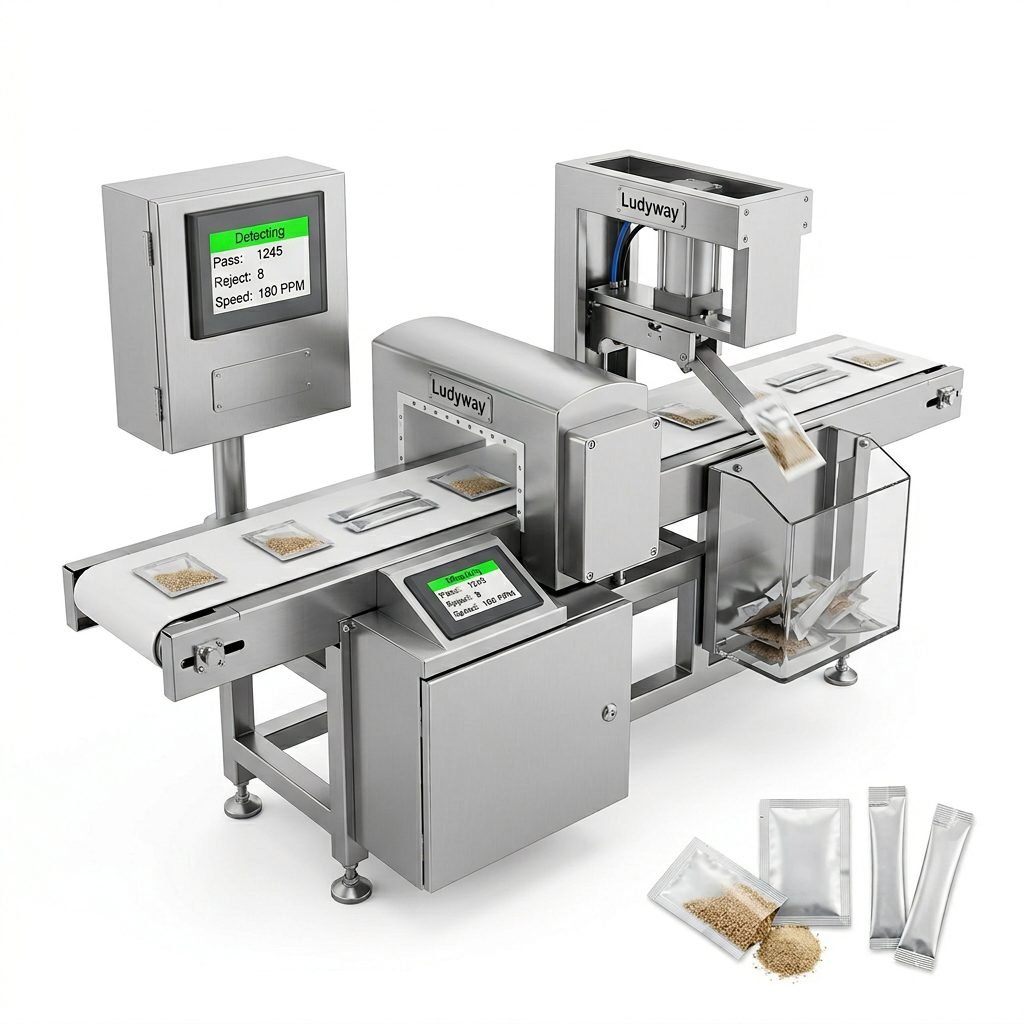
- Inline checkweigher, metal detector and reject system for weight and foreign-body control
- Date and batch coding (thermal transfer or inkjet) integrated on the film web
- OEE and alarm logging exportable to MES, plus remote diagnostics for after-sales support
- Documentation pack: IQ/OQ templates, spare-parts list, electrical drawings and CE or UL-compliant control cabinet
How a Complete Dairy Packaging Line Comes Together
Most dairy projects move beyond a single machine. A typical turnkey scope links product feeding, primary packaging, inspection, cartoning and palletising under one control architecture, which shortens commissioning and makes one supplier accountable for line performance.
1. Feeding – vacuum conveyors for powder, jacketed tanks and pumps for liquid, chilled hoppers for cheese
2. Primary Packaging – multi-lane stick/sachet, cup filler, vacuum or VFFS bagger
3. Inspection – checkweigher, metal detection, vision seal check
4. Secondary Packaging – counting, cartoning, case packing and sealing
5. End of Line – robotic palletising, stretch wrapping, cold-store handover
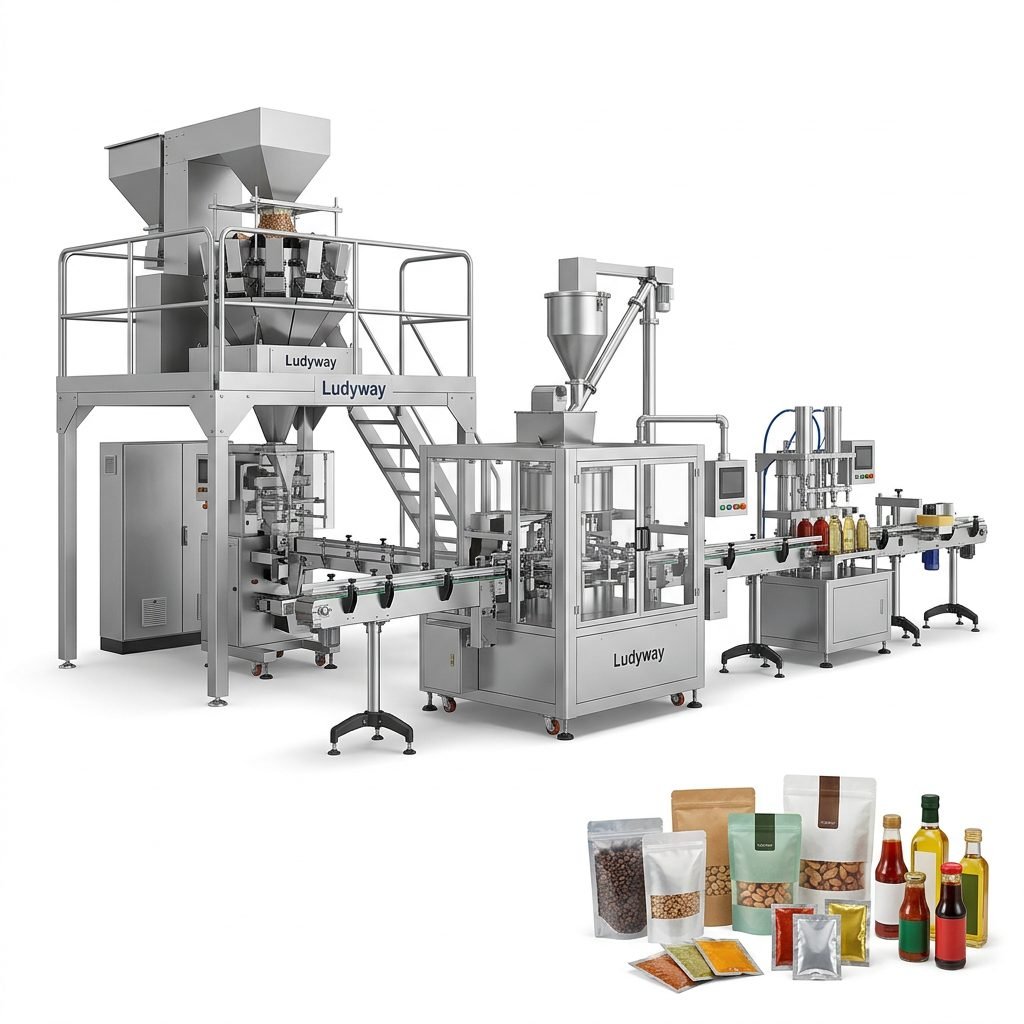
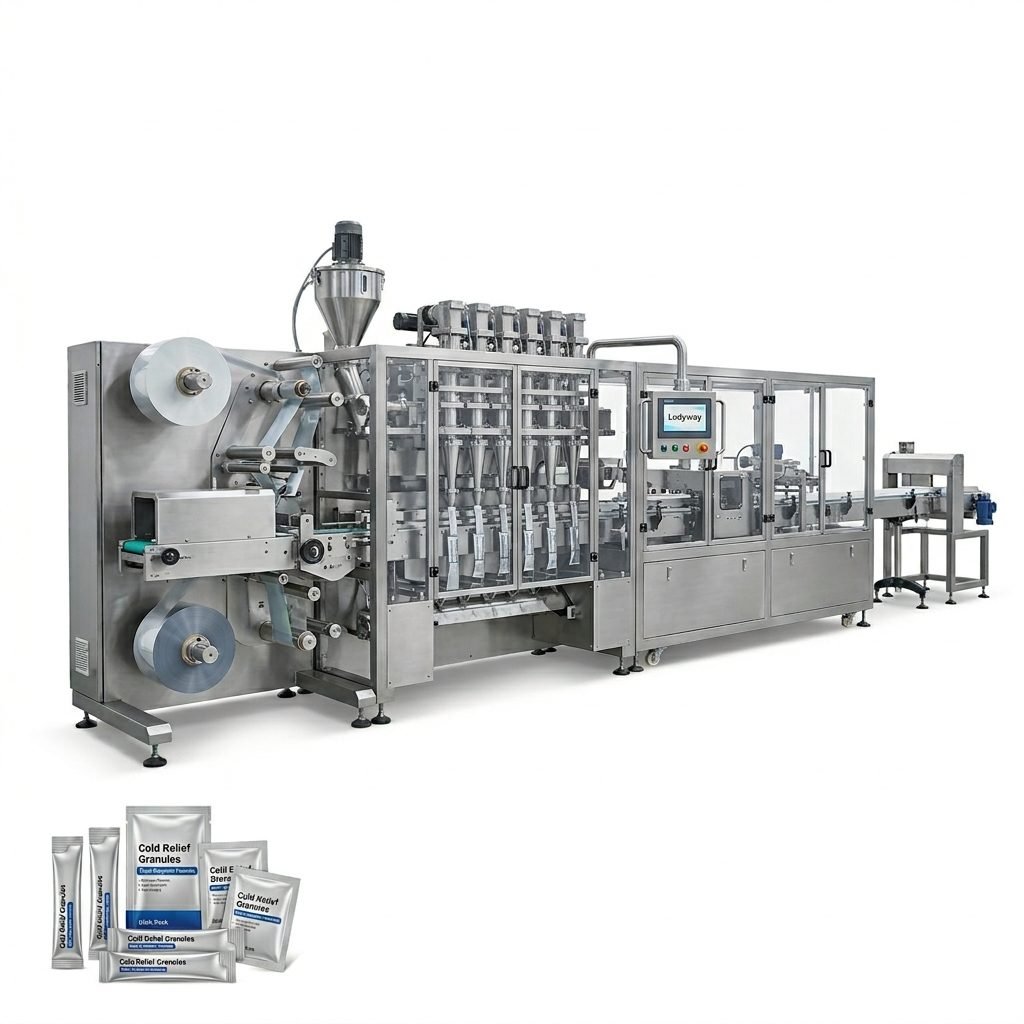
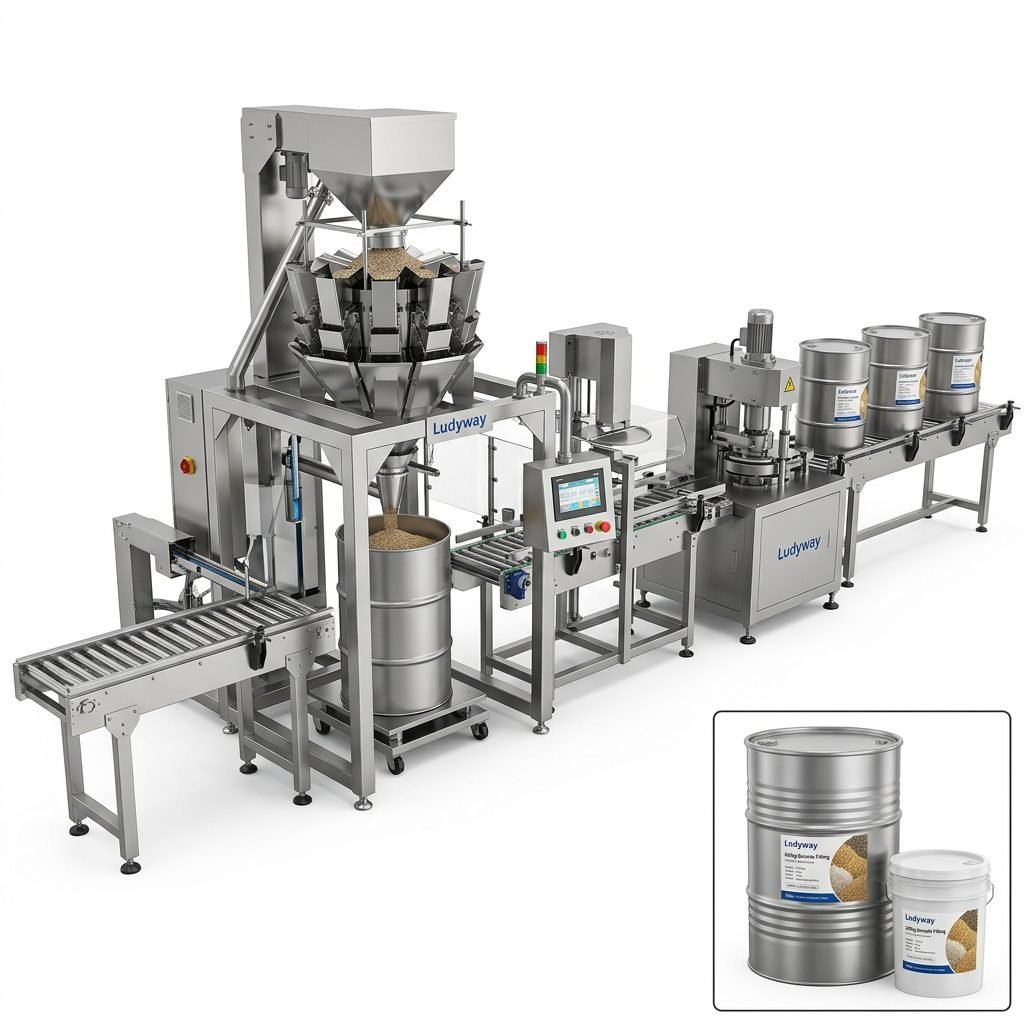
Line integration system linking filling, inspection and end-of-line equipment
Industry analysis from PMMI’s State of the Industry reports consistently ranks flexibility, hygienic design and labour reduction among the top purchase drivers for food and dairy packaging machinery, which explains why integrated multi-lane lines with automated end-of-line handling are displacing stand-alone fillers in new plants.
Sourcing Dairy Packaging Equipment from Ludyway
Ludyway is one of the largest packaging machine manufacturers in China, founded in 1993 and based in Zhongshan, Guangdong. From a 20,000 m² facility the company builds more than 50 intelligent packaging machine models, including multi-lane stick pack, sachet, liquid filling, vacuum and fully automated turnkey lines for the food, pharmaceutical and health industries, and serves customers in over 100 countries. For dairy buyers the relevant strengths are hygienic multi-lane platforms that switch between liquid milk, creamer and milk powder, in-house line integration, and an engineering team that has delivered projects from pilot sachet machines to complete powder bagging and palletising lines.
30+
Years of Industry Experience
20,000 m²
Modern Production Facility
130+
Professional Packaging Experts
100+
Countries and Regions Served
Order Quantities, Lead Times and Quotation Process
| Item | Typical Terms | What to Prepare |
|---|---|---|
| Minimum order | 1 machine; multi-unit and line discounts available to distributors | Target SKUs, annual volume, number of shifts |
| Lead time | Standard machines 30–45 days; integrated lines 60–120 days | Plant layout, utilities, installation window |
| Testing | Free sample trials; FAT with customer film and product; video FAT for remote sign-off | 1–5 kg product sample, film rolls, pack specification |
| Commercial terms | T/T deposit with balance before shipment; FOB, CIF or DAP quoted | Destination port, voltage/frequency, certification needs |
| After-sales | 12-month warranty, on-site commissioning, remote diagnostics, spare-parts kits | Local technician contact, preferred language for manuals |
Dairy Sachet and Stick Pack Machines from Ludyway
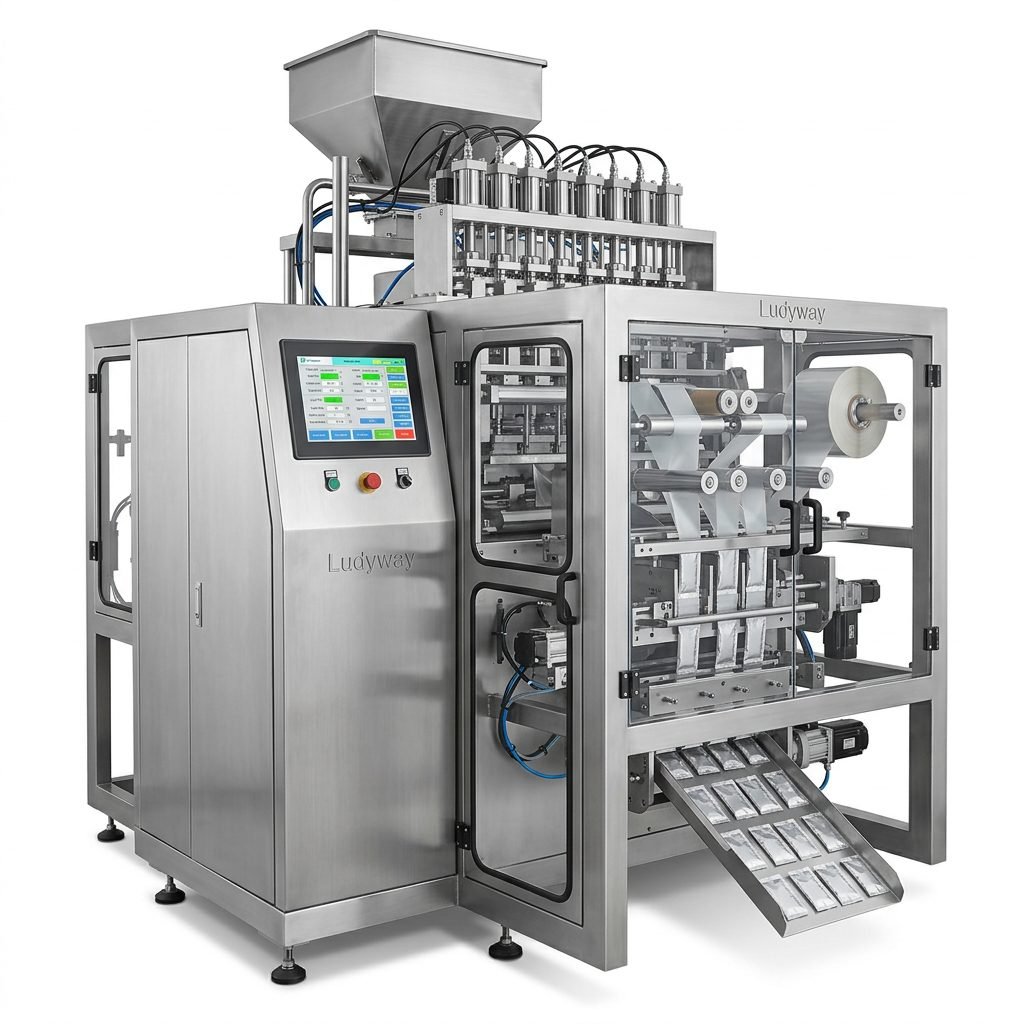
Liquid Milk Stick Pack Machine
Dairy Liquid, Multi-Lane VFFS
Quote on Request
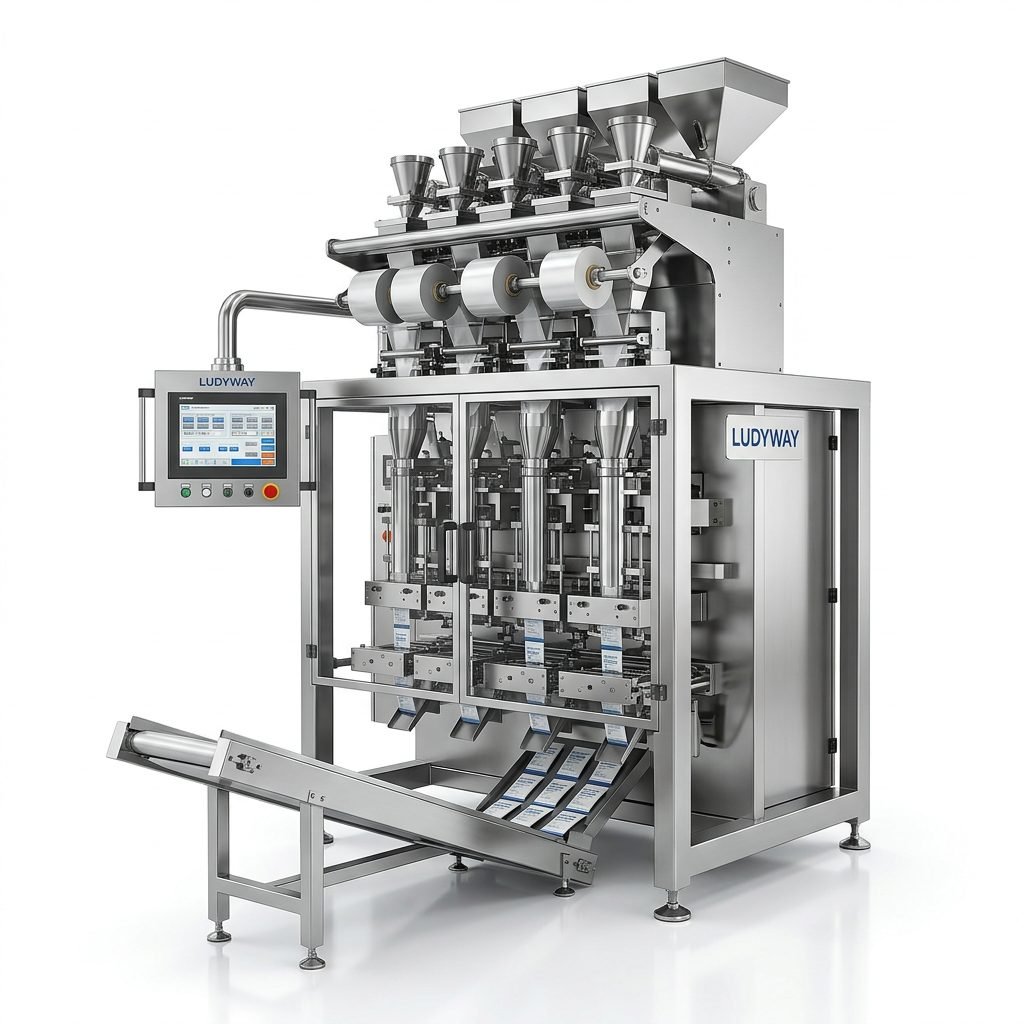
Milk Powder Sachet Machine
Dairy Powder, Auger Dosing
Quote on Request
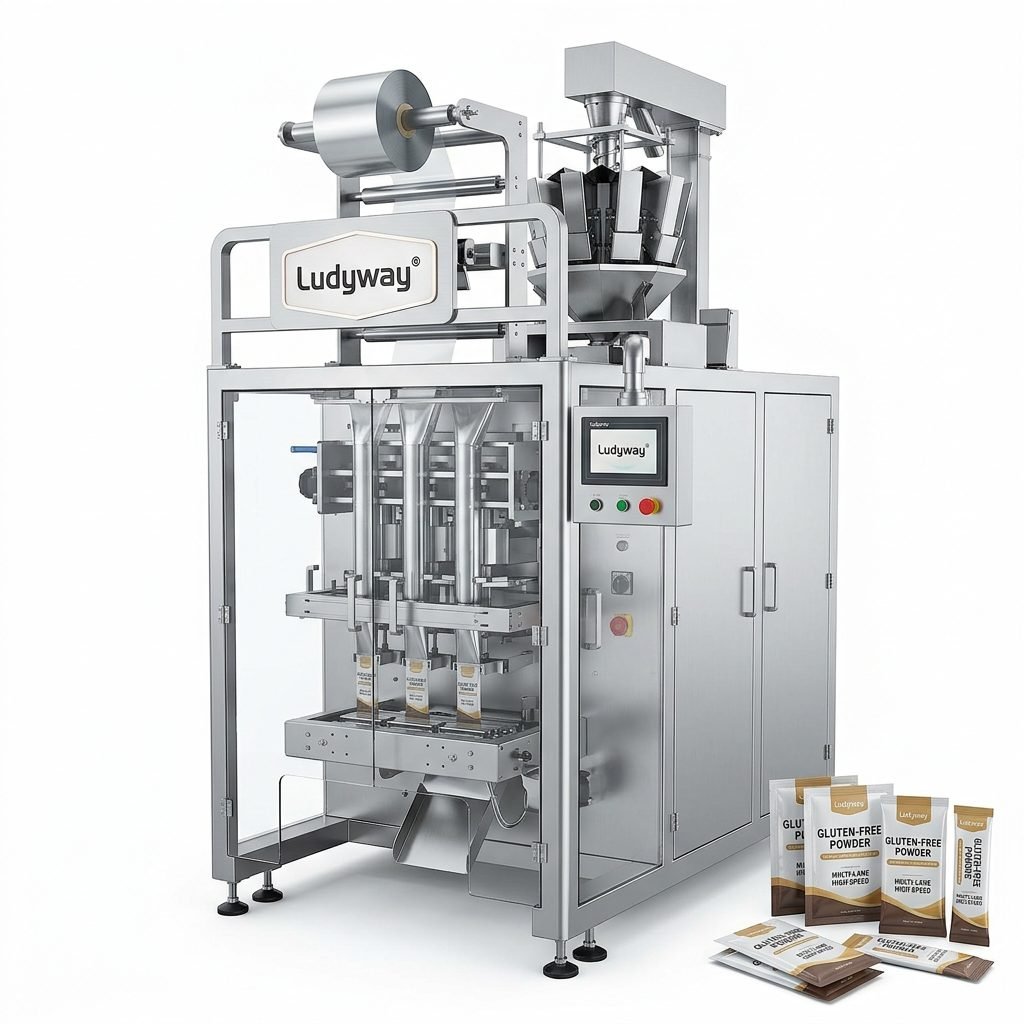
Yogurt Sachet Packaging Machine
Yogurt Powder & Liquid, Sachet
Quote on Request
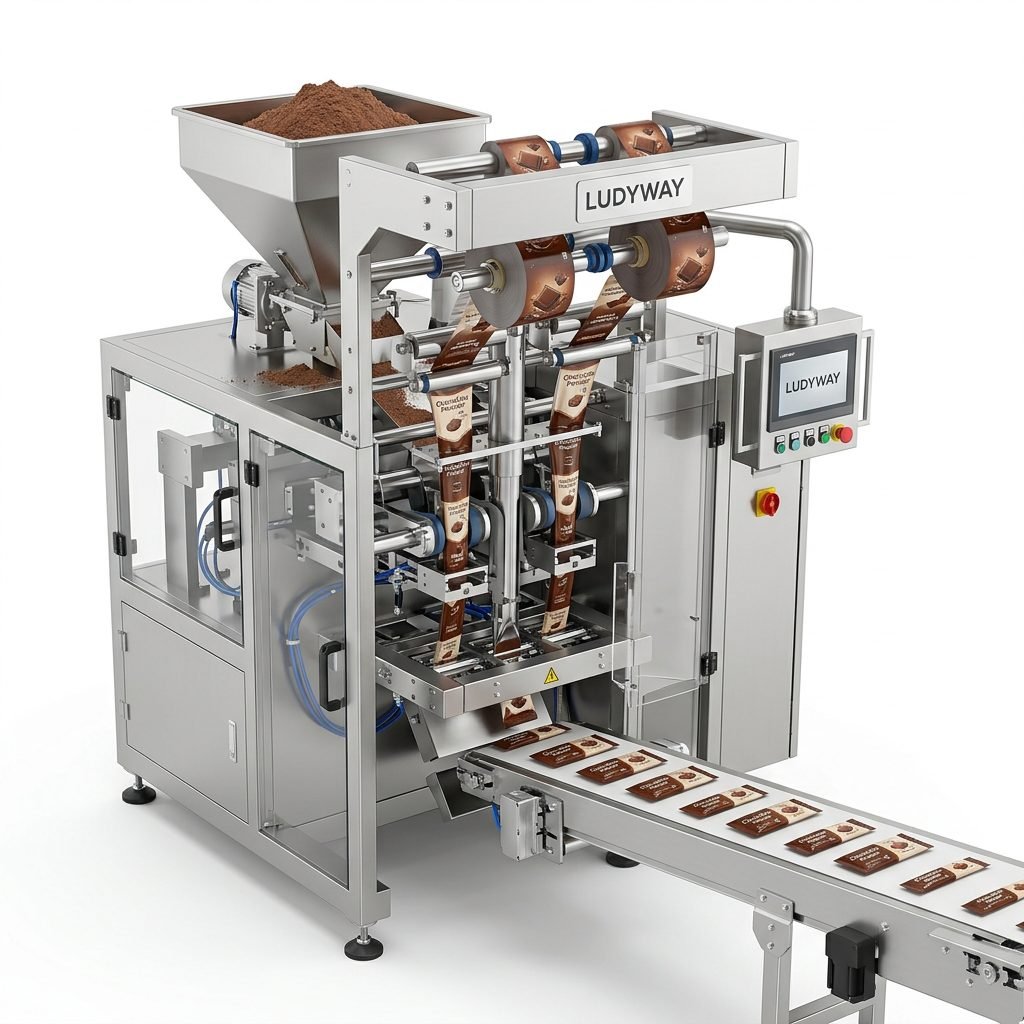
Creamer Filling Sealing Machine
Creamer Powder & Liquid, Sachet
Quote on Request
Frequently Asked Questions
Can one machine pack both liquid milk and milk powder?
Yes. Multi-lane stick pack and sachet platforms can be supplied with interchangeable dosing modules, a piston or peristaltic pump for liquids and a servo auger for powders, sharing the same film-forming and sealing station. Changeover typically takes under an hour with tool-free parts.
What film should I use for UHT milk or creamer sachets?
A PET/AL/PE or PET/AL/PET/PE laminate gives the light and oxygen barrier needed for ambient-stable portions. For chilled products with shorter shelf life, PET/PE or recyclable mono-PE structures are acceptable, provided seal parameters are validated on the machine.
Is vacuum or MAP better for cheese?
Vacuum is standard for hard blocks because it removes oxygen cheaply and gives a tight pack. Shredded cheese and soft slices crush under vacuum, so a CO₂/N₂ modified atmosphere in a bag or tray is preferred. Many lines run both using a chamber machine with gas back-flush.
How do I protect live cultures in yogurt or probiotic powder?
Use low-shear auger dosing, keep room humidity below 40% RH, nitrogen flush to under 2% residual oxygen and choose foil-based high-barrier film. Seal jaws should run at the lowest temperature that still achieves a hermetic seal to avoid heat transfer into the product.
What documents should accompany an exported dairy packaging machine?
Request a CE declaration (or UL/CSA-compliant electrics for North America), material certificates for product-contact parts, food-contact declarations of compliance, FAT report, operation and maintenance manuals, electrical drawings and a recommended spare-parts list.
Ready to specify your dairy packaging line?
Send Ludyway your product type (liquid milk, powder, cheese or yogurt), target portion size, required output and preferred film, and the engineering team will return a configured proposal, lane count recommendation and lead-time estimate. Free sample trials with your own product and film are available before you commit.
Email info@ludyway.com or WhatsApp +86 131 2959 2456 to request a quotation, machine catalogue or a factory visit in Zhongshan, Guangdong.