Frozen food only stays “fresh” for as long as its package keeps moisture in, oxygen out and the seal intact at -18°C or colder. A bag of IQF shrimp, a tray of dumplings or a sachet of frozen sauce can survive a 12 to 24-month cold chain without freezer burn or rancidity, but only when the packaging machine forms, fills and seals every unit with consistent barrier integrity. That is why choosing frozen food packaging machines for long-term product protection is less about headline speed and more about seal technology, film compatibility, dosing accuracy and how the equipment behaves in a cold, wet production environment.
This guide is written for food processors, co-packers, procurement teams and line engineers who are specifying new frozen food packaging equipment. It covers what damages frozen food inside the pack, how to match machine type and sealing system to your film and product, which standards to write into the tender, and exactly what information to prepare before you request a quotation from a manufacturer such as Ludyway.
Quick takeaway: long-term protection for frozen food depends on four machine-side factors: a sealing system that seals through frost, oil or powder; dosing that keeps each pack within target weight so the pack geometry stays stable; hygienic, washdown-rated construction that keeps running in a 0–10°C packing hall; and the option to add vacuum, MAP or nitrogen flushing plus in-line inspection. Everything else, including speed, is secondary.
What Actually Damages Frozen Food Inside the Package
Freezing stops microbial growth, but it does not stop physical and chemical change. Three mechanisms account for most quality complaints and shelf-life shortfalls, and each one points back to a packaging decision.
Freezer Burn (Moisture Loss)
Ice sublimates from the product surface and re-deposits as frost inside the bag. The cause is a film with a high moisture vapour transmission rate (MVTR), headspace that is too large, or a seal with micro-channels. The result is dry, greyish patches, weight loss and texture damage.
Oxidation (Rancidity & Colour Loss)
Fatty products such as fish, meat, fried foods and pastry oxidise slowly even when frozen. Oxygen transmission rate (OTR) of the film and residual oxygen in the pack decide how fast off-flavours develop. Vacuum, modified atmosphere or nitrogen flushing is the machine-side answer.
Seal Failure in the Cold Chain
Films become stiffer and more brittle as they cool, while frost, condensation, oil and seasoning powder in the seal area create weak spots. A seal that looks fine at ambient can crack when a 10 kg case is dropped onto a pallet at -20°C. Seal jaw design, dwell time and contamination-tolerant sealing all matter.
How to Choose Frozen Food Packaging Machines for Long-Term Product Protection
Work through the six decision areas below in order. Each one narrows the equipment shortlist and gives you a concrete specification line to put in front of suppliers.
1. Match the Sealing System to Cold-Chain Films
Frozen food films are usually multilayer laminates: PA/PE and PET/PE for general IQF products, EVOH or metallised barrier structures for fatty or oxygen-sensitive items, and PE-rich mono-material films where recyclability targets apply. These structures stay flexible at -40°C, but their seal layers need precise temperature, pressure and dwell control.
Specify hot-bar or heated-jaw sealing with independent PID control on each jaw, serrated or flat jaw profiles matched to your film, and the option for ultrasonic sealing when the seal zone is routinely contaminated with frost, oil or seasoning dust. Ultrasonic seals also use a narrower seal width, which reduces film consumption and headspace.
Ask the supplier to run seal-strength and leak tests on your actual film, not a generic sample, and to report results after cold conditioning. A machine that cannot hold seal strength on frosted film will not protect product for 18 months in distribution.
2. Choose the Right Pack Format and Machine Type
There is no single best machine for frozen food. The right choice depends on product form (IQF pieces, blocks, trays, sauces, powders), pack size and the retail or foodservice channel. The comparison below summarises the main options processors evaluate.
| Machine Type | Best For | Typical Formats | Protection Features | Throughput Guide |
|---|---|---|---|---|
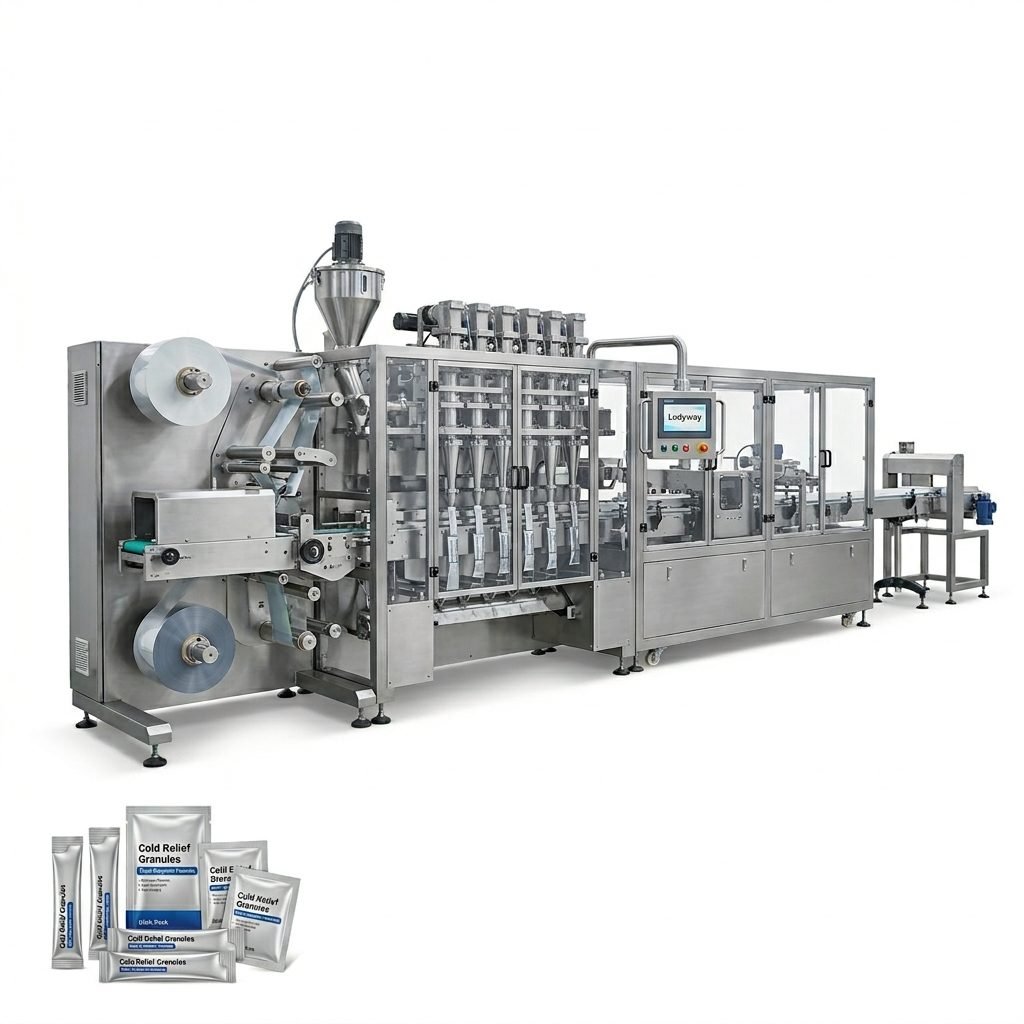
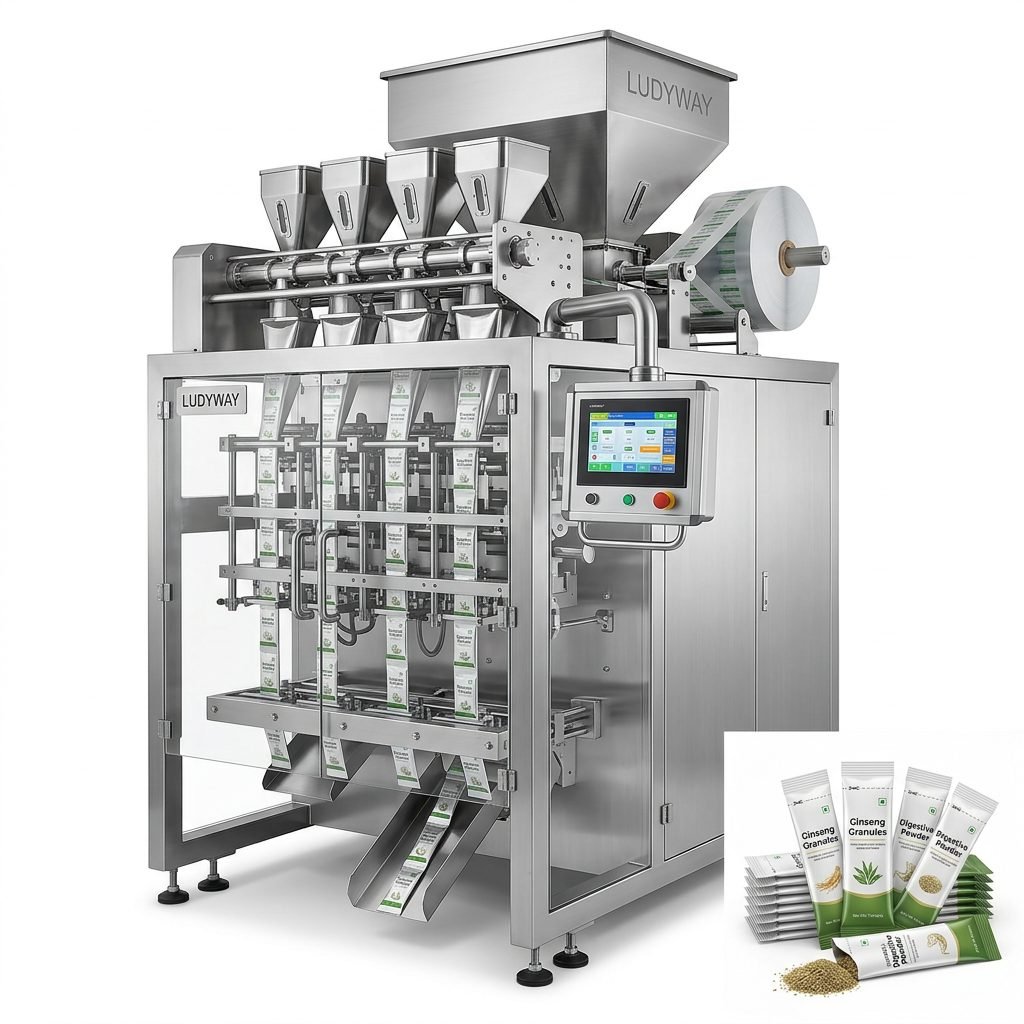
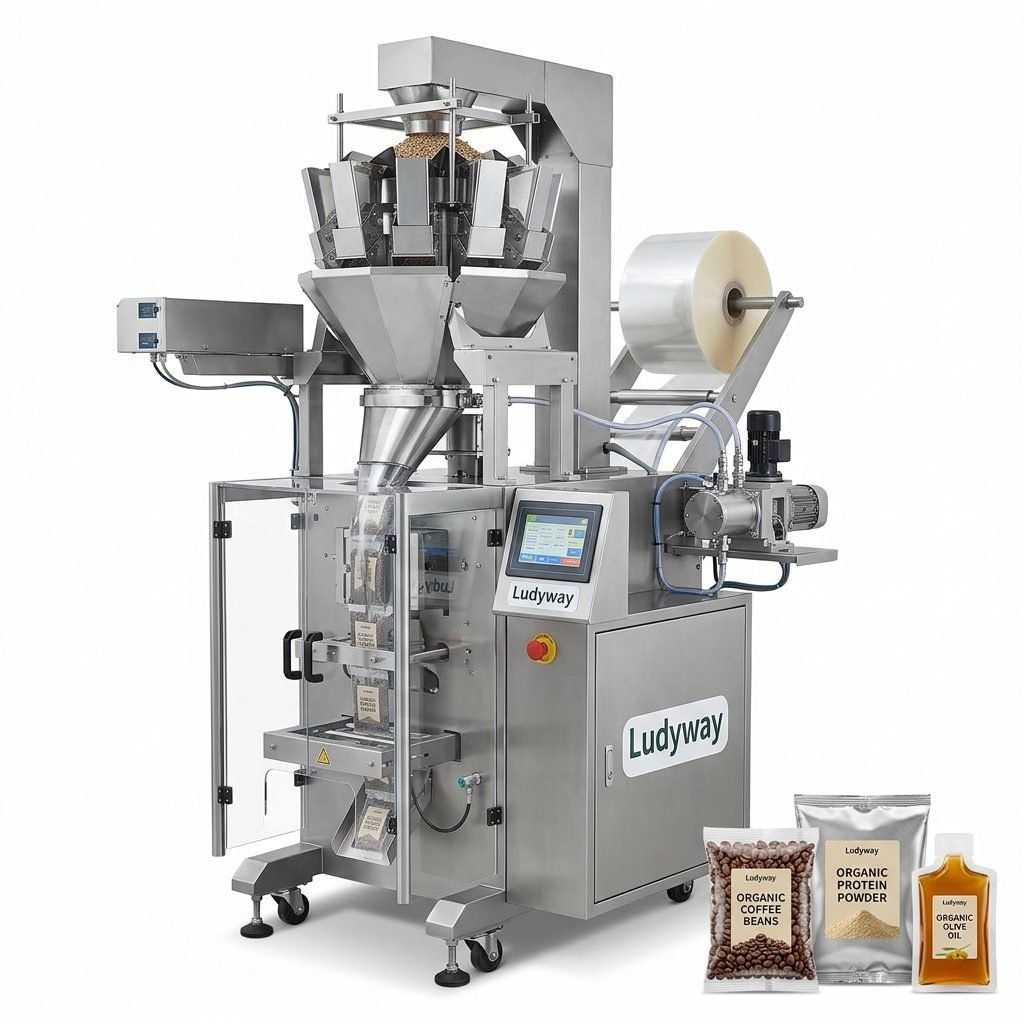
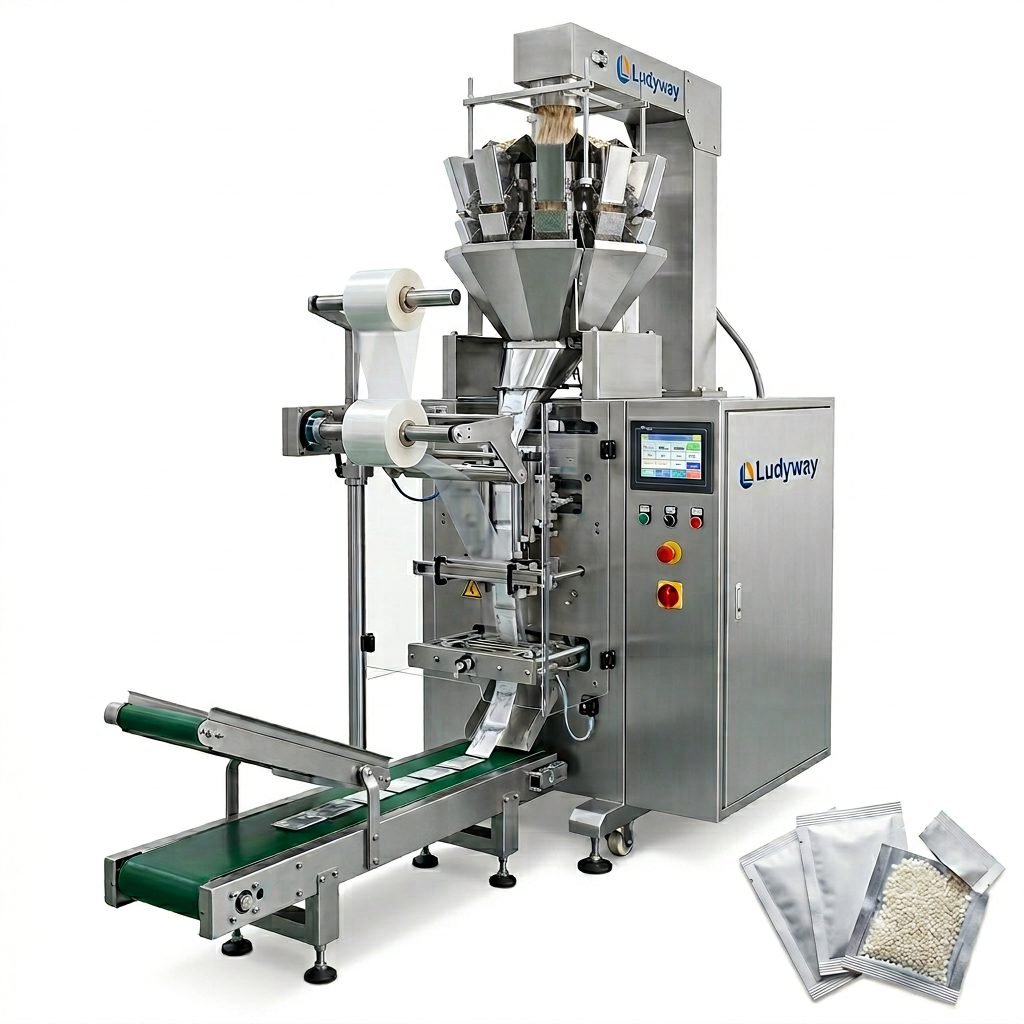
| VFFS (Vertical Form Fill Seal) | IQF vegetables, fruit, fries, shrimp, dumplings, meatballs | Pillow bags, gusseted bags, quad-seal, 250 g–10 kg | Gas flushing, wide seals, product-in-seal detection | 30–120 bags/min |
| HFFS / Flow Wrapper | Frozen pizza, bars, filled pastries, portion blocks | Flow-wrap pillow packs, tray-in-bag | Hermetic fin seal, MAP option, long-dwell sealing | 60–200 packs/min |
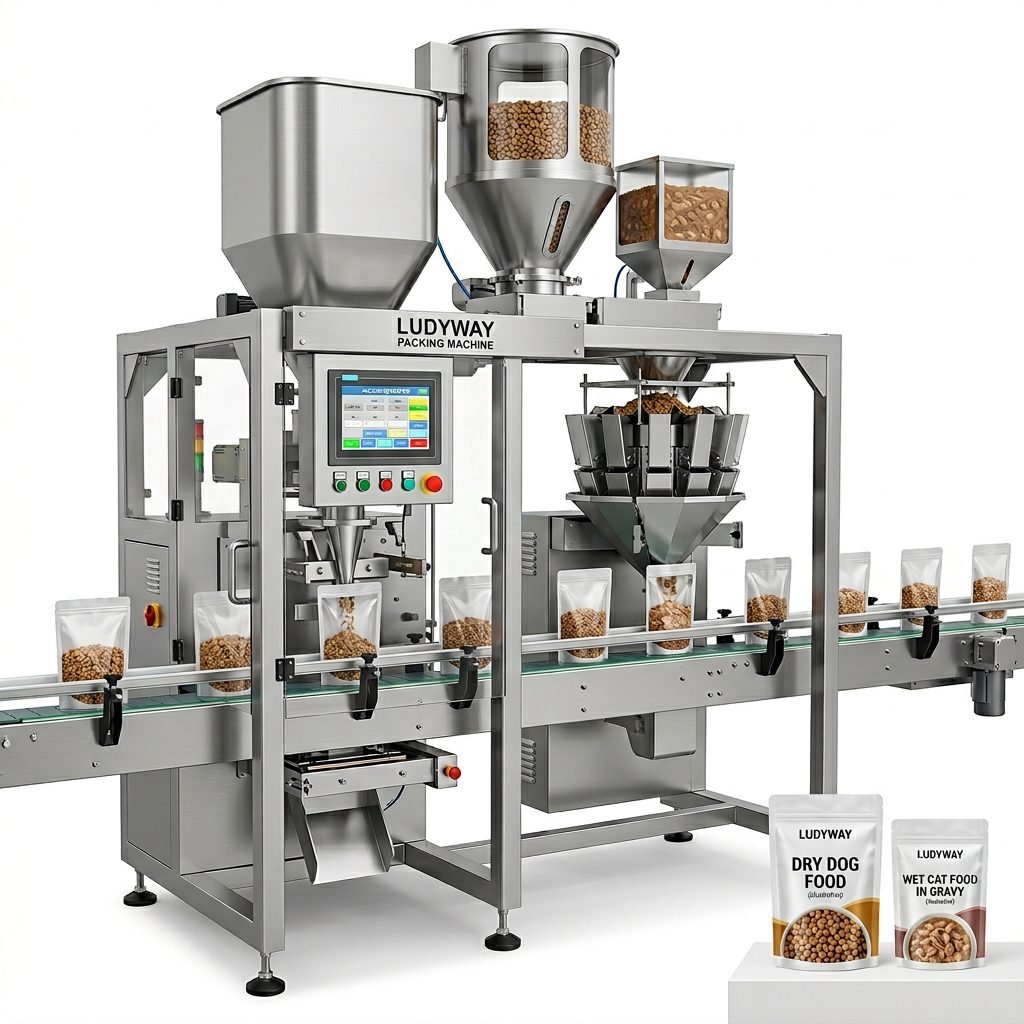
| Premade Pouch / Doypack | Premium retail frozen meals, seafood, ready-to-cook kits | Stand-up pouches with zipper, 200 g–3 kg | High-barrier laminates, nitrogen flush before sealing | 30–80 pouches/min |
| Vacuum / Skin Packaging | Frozen meat, fish fillets, portioned proteins | Vacuum pouches, thermoformed skin packs | Near-zero residual oxygen, no headspace frost | 10–40 cycles/min |
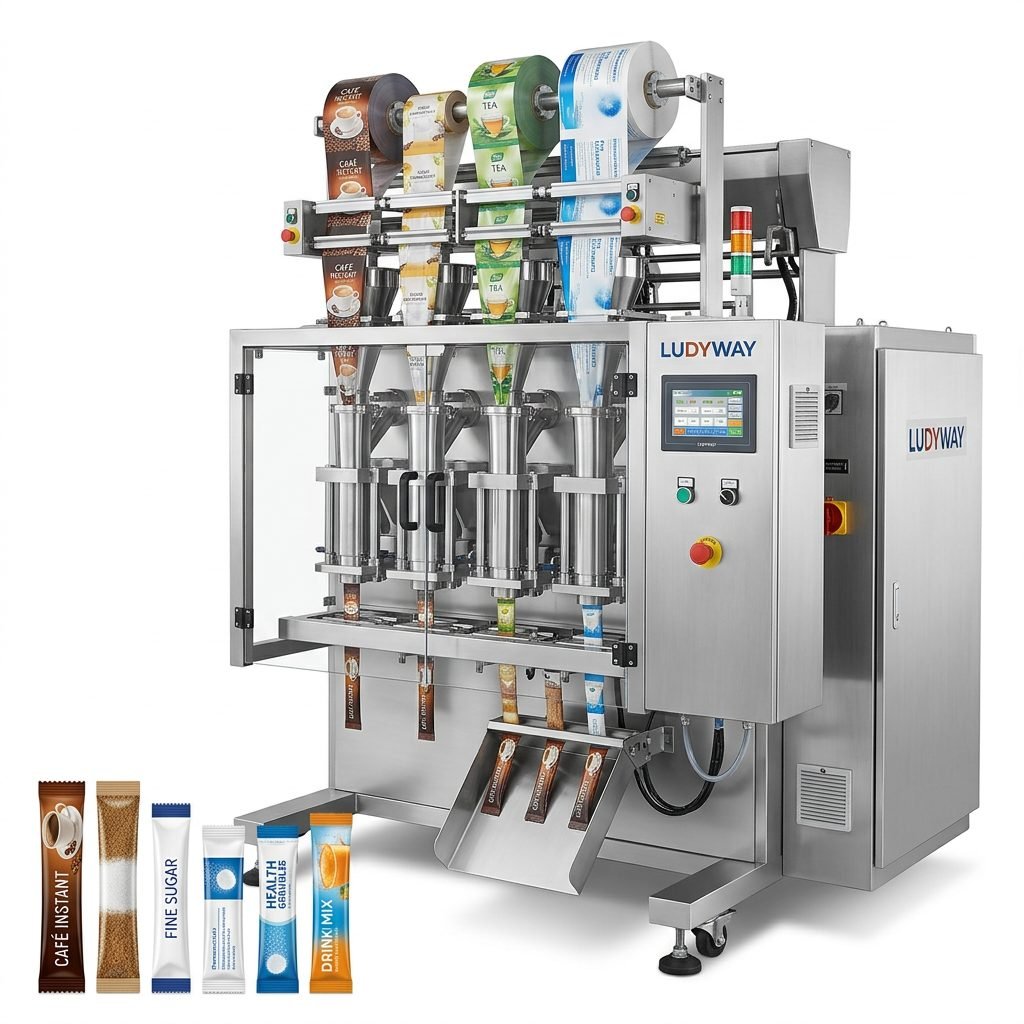
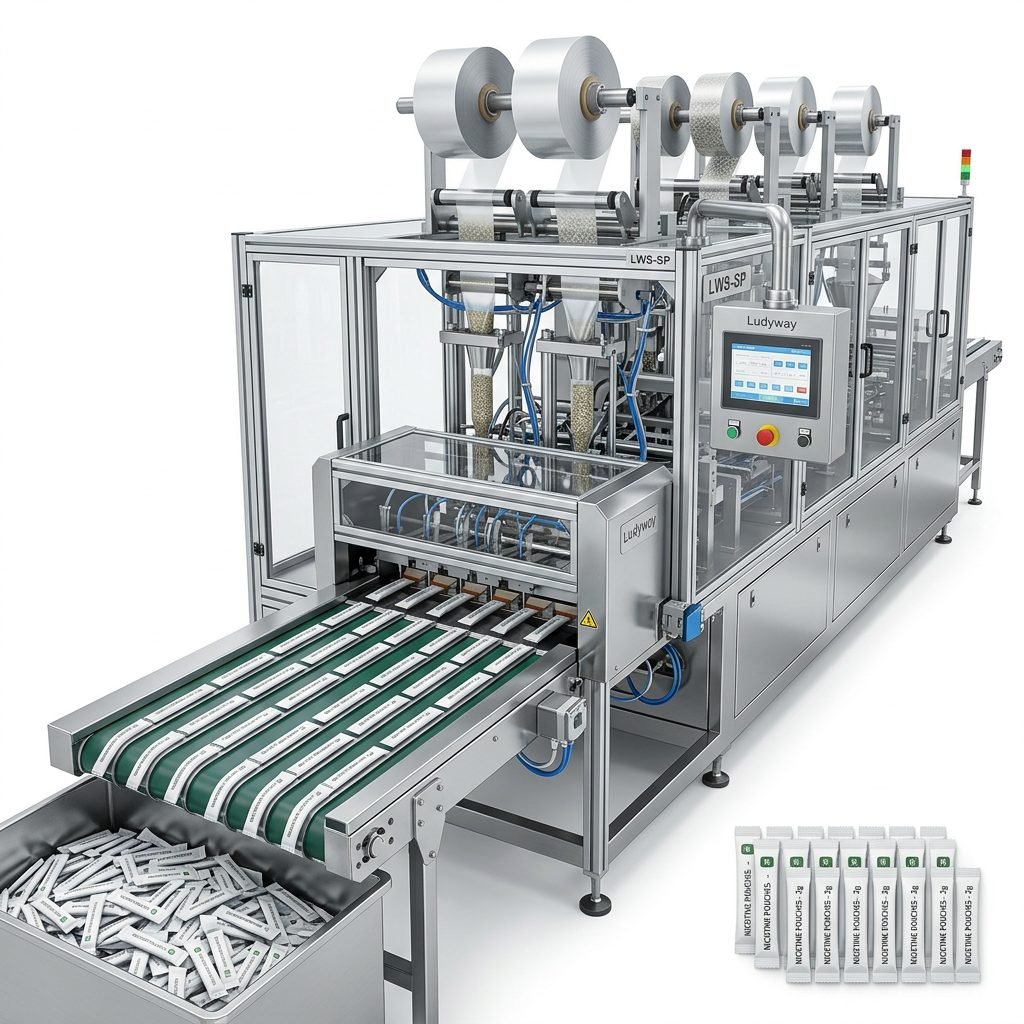
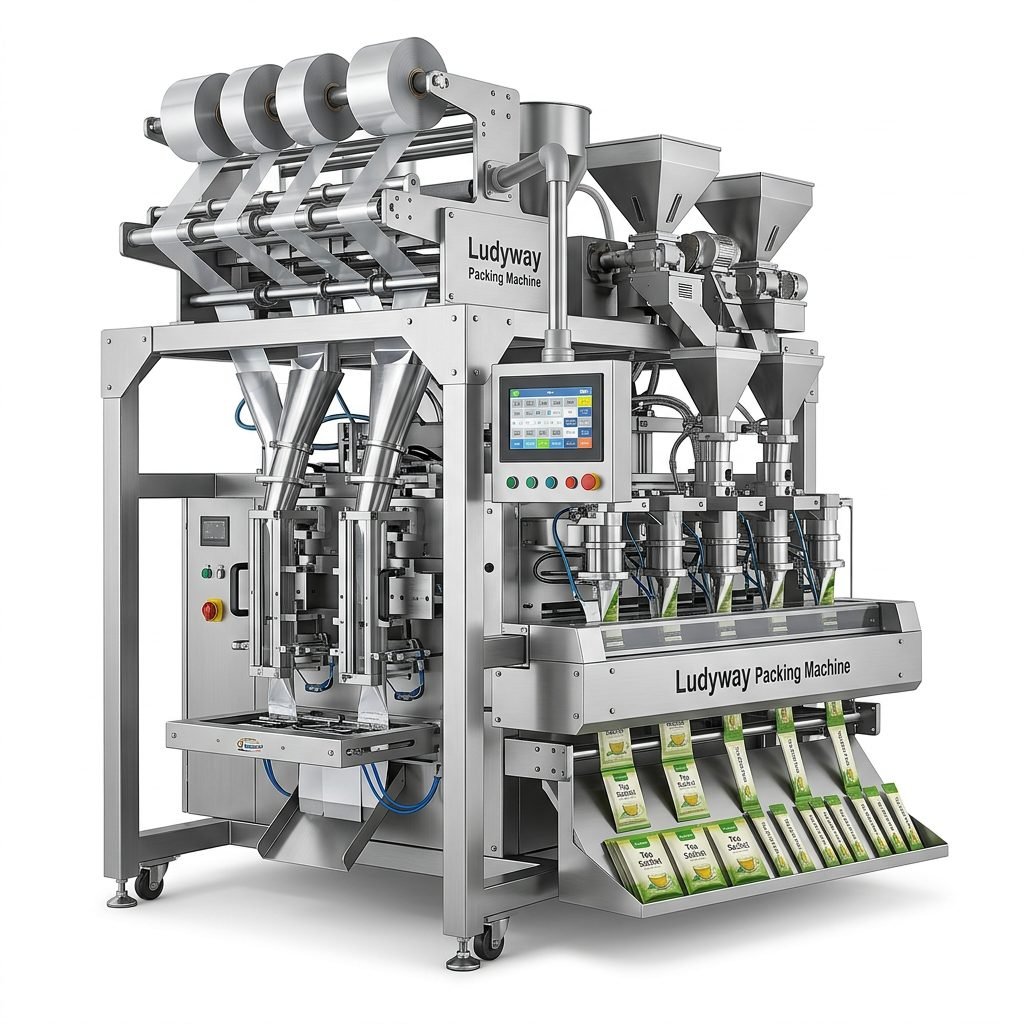
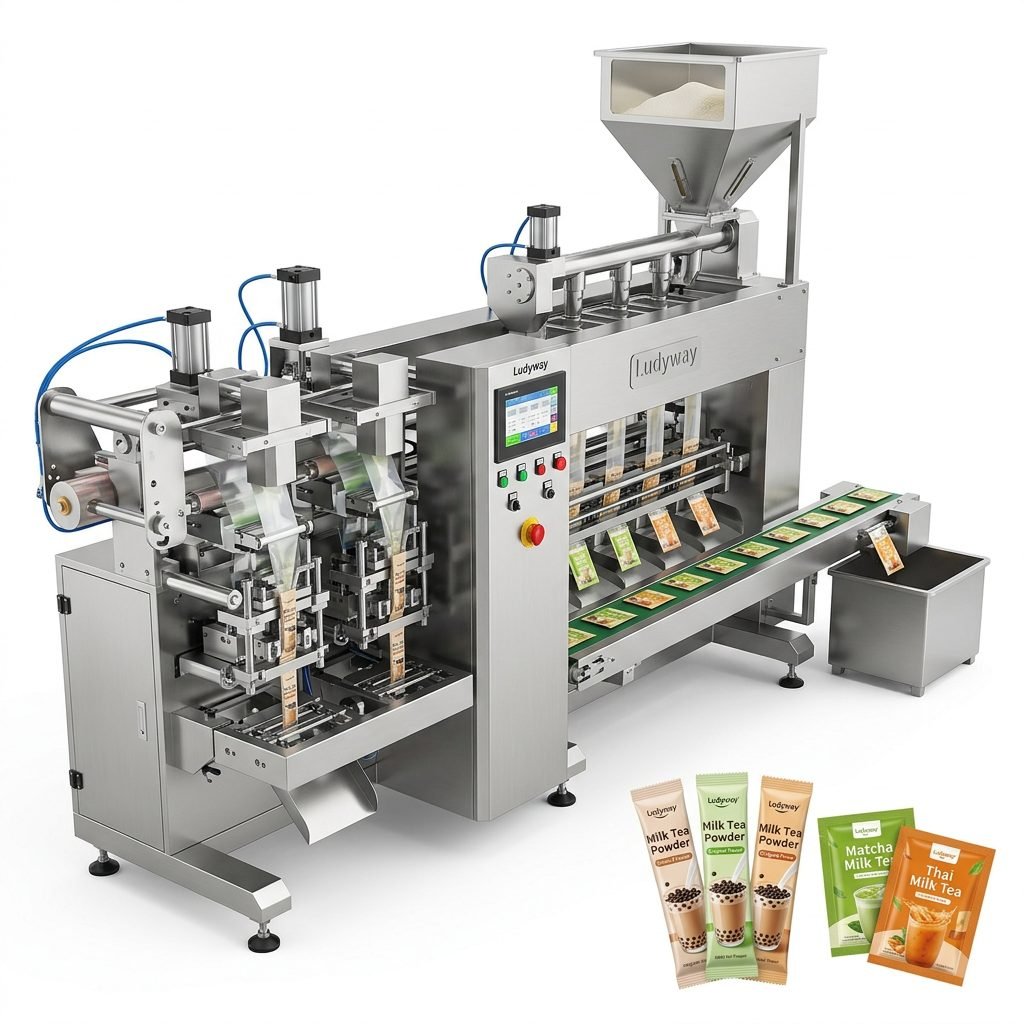
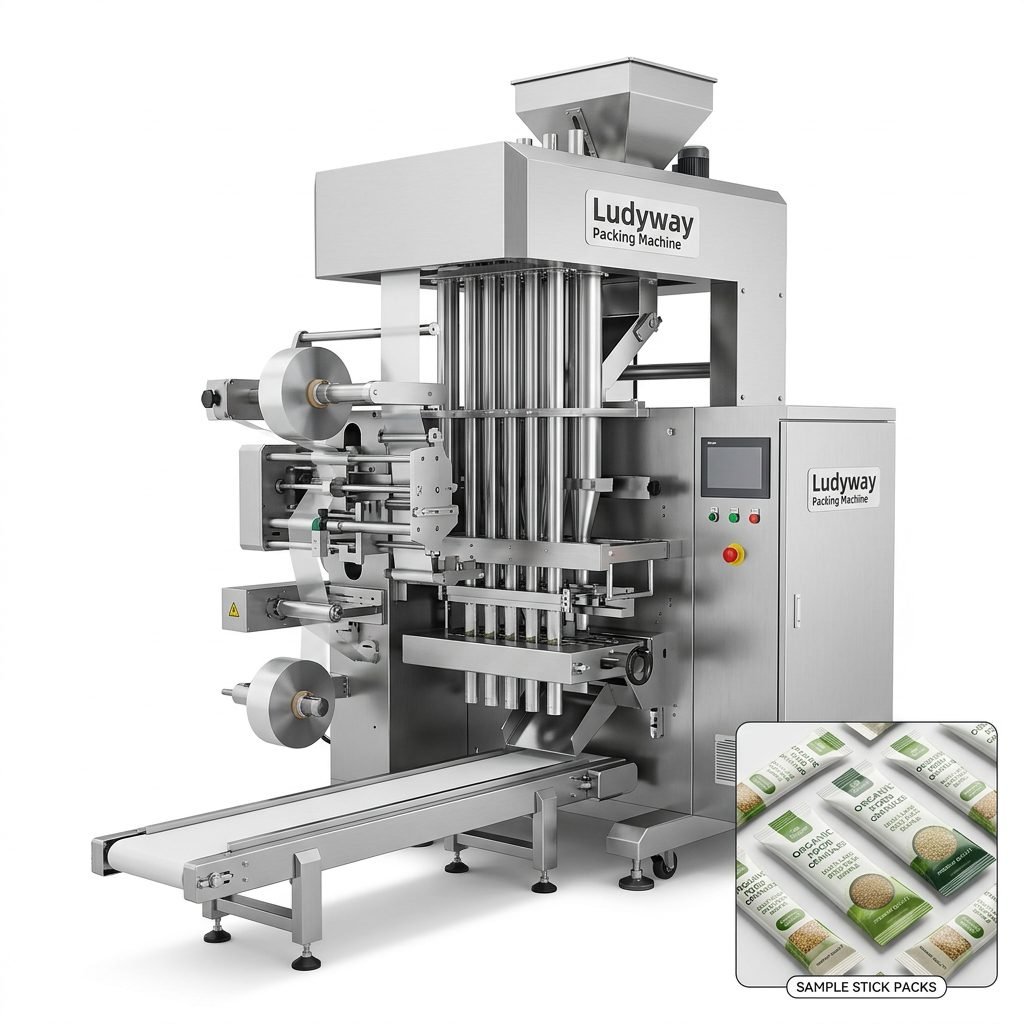
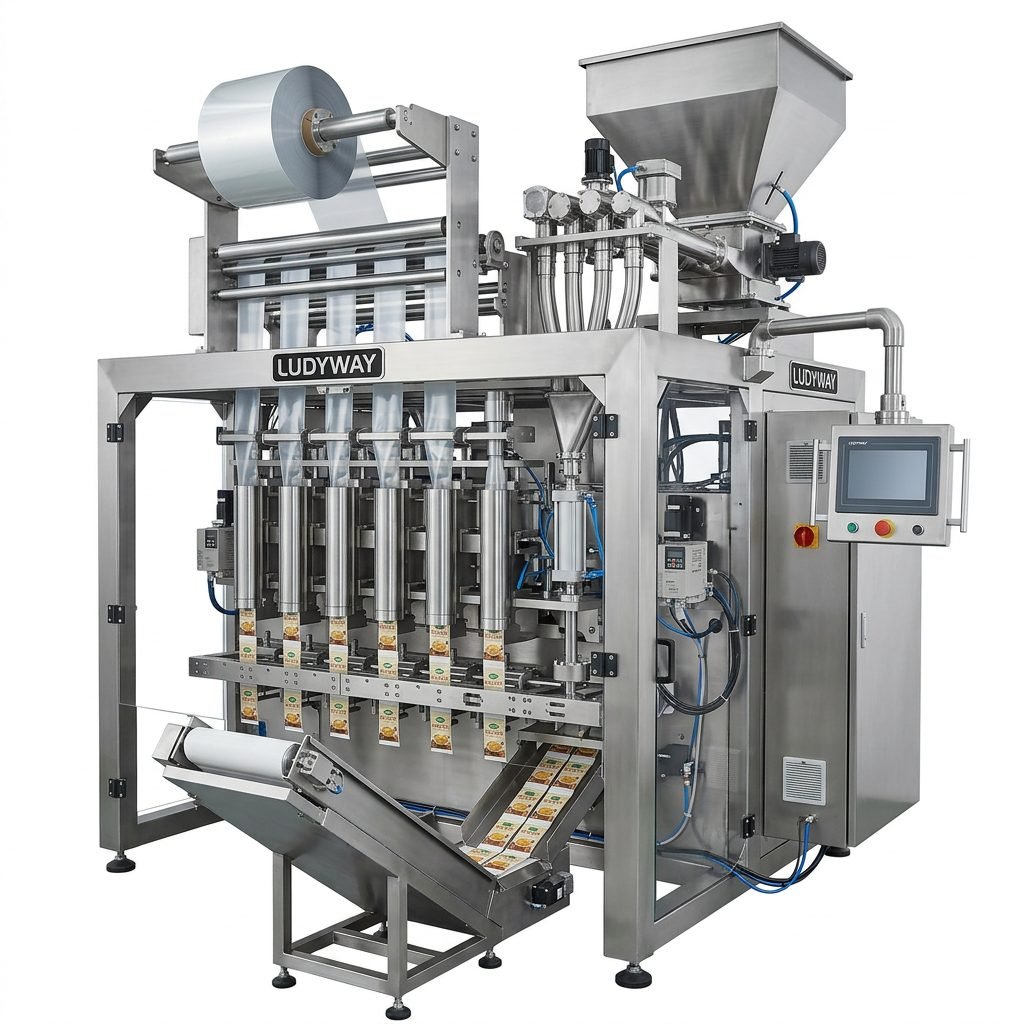
| Multi-Lane Sachet / Stick Pack | Frozen sauce portions, seasoning packets, dessert toppings in meal kits | 3-side / 4-side seal sachets, stick packs, 2–100 ml | 4-side hermetic seals, barrier film, N2 purge option | 300–1,200 units/min |
Many frozen meal and meal-kit producers end up with two machine types on one line: a VFFS or pouch machine for the primary product and a multi-lane frozen food packaging machine for the sauce, seasoning or oil sachets that go into the same outer bag. Specifying both from the same supplier simplifies controls integration and spare-parts management.
3. Dosing Accuracy for IQF Pieces, Powders and Sauces
Dosing affects protection more than most buyers expect. Overfilled bags stretch seals and create thin spots; underfilled bags leave excess headspace where frost and oxygen collect. The dosing system must suit the product’s physical form at freezing temperature, when pieces can be sticky, brittle or prone to clumping.
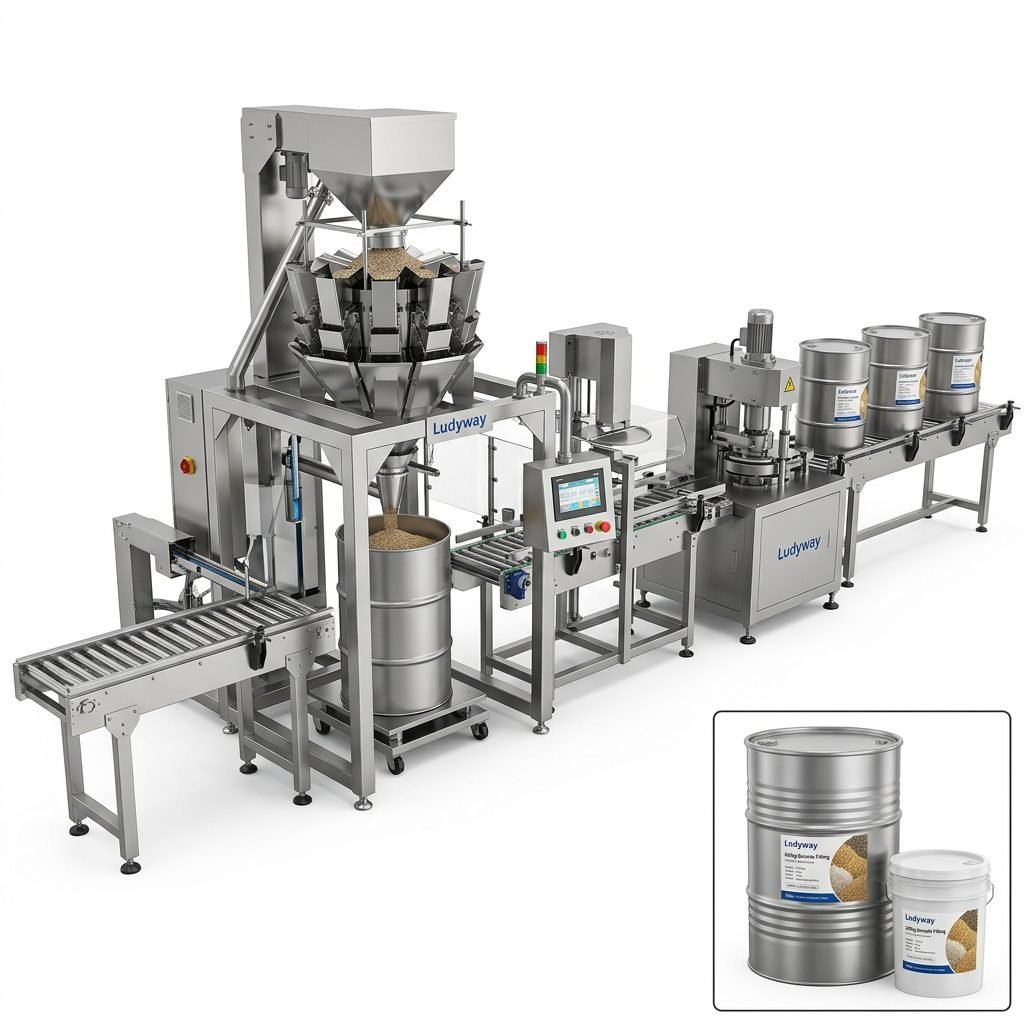
- Multihead combination weighers (10–14 heads) for IQF fruit, vegetables, seafood and formed products, with dimpled or Teflon-coated contact surfaces to stop frozen pieces sticking.
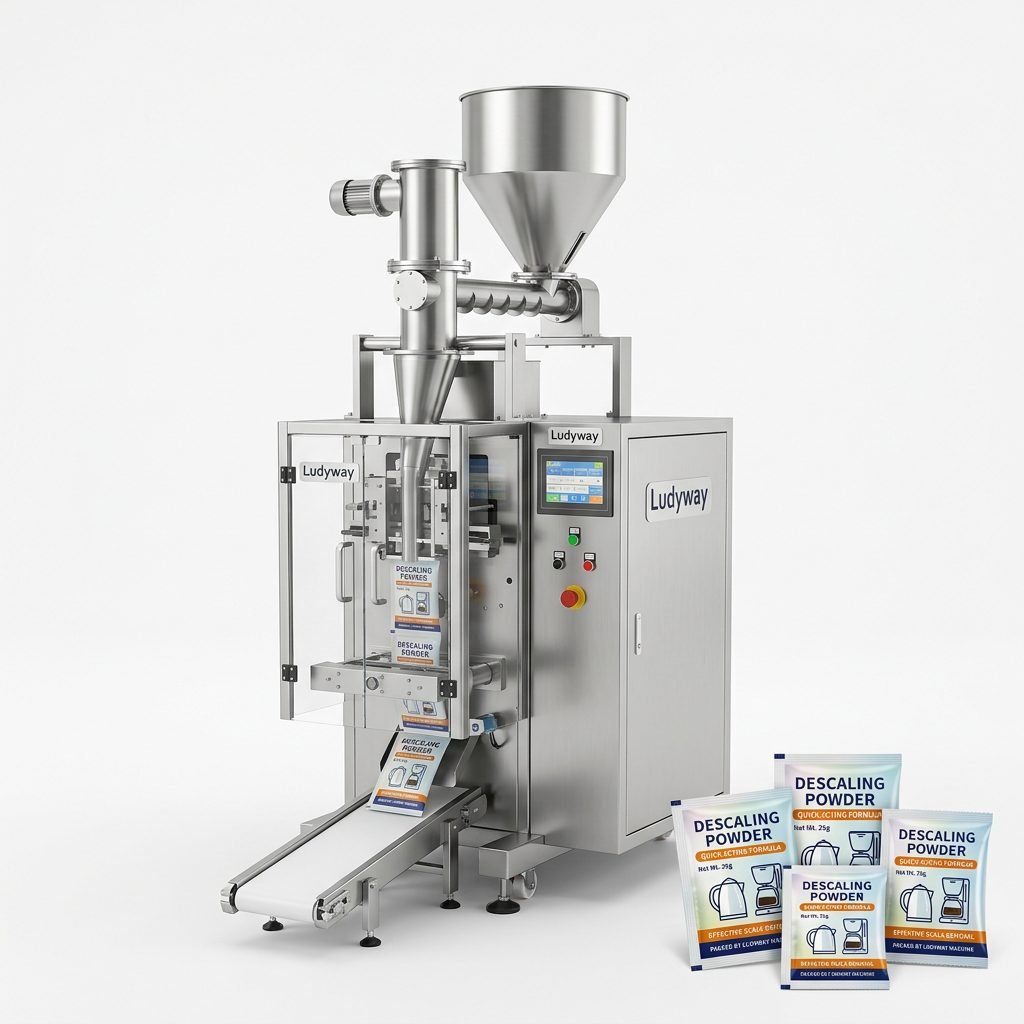
- Servo auger fillers for frozen dessert powders, batter mixes and seasoning blends, with dust extraction to keep powder out of the seal area.
- Volumetric cup fillers for free-flowing frozen granules such as peas, corn or diced onion where ±1–2% accuracy is acceptable.
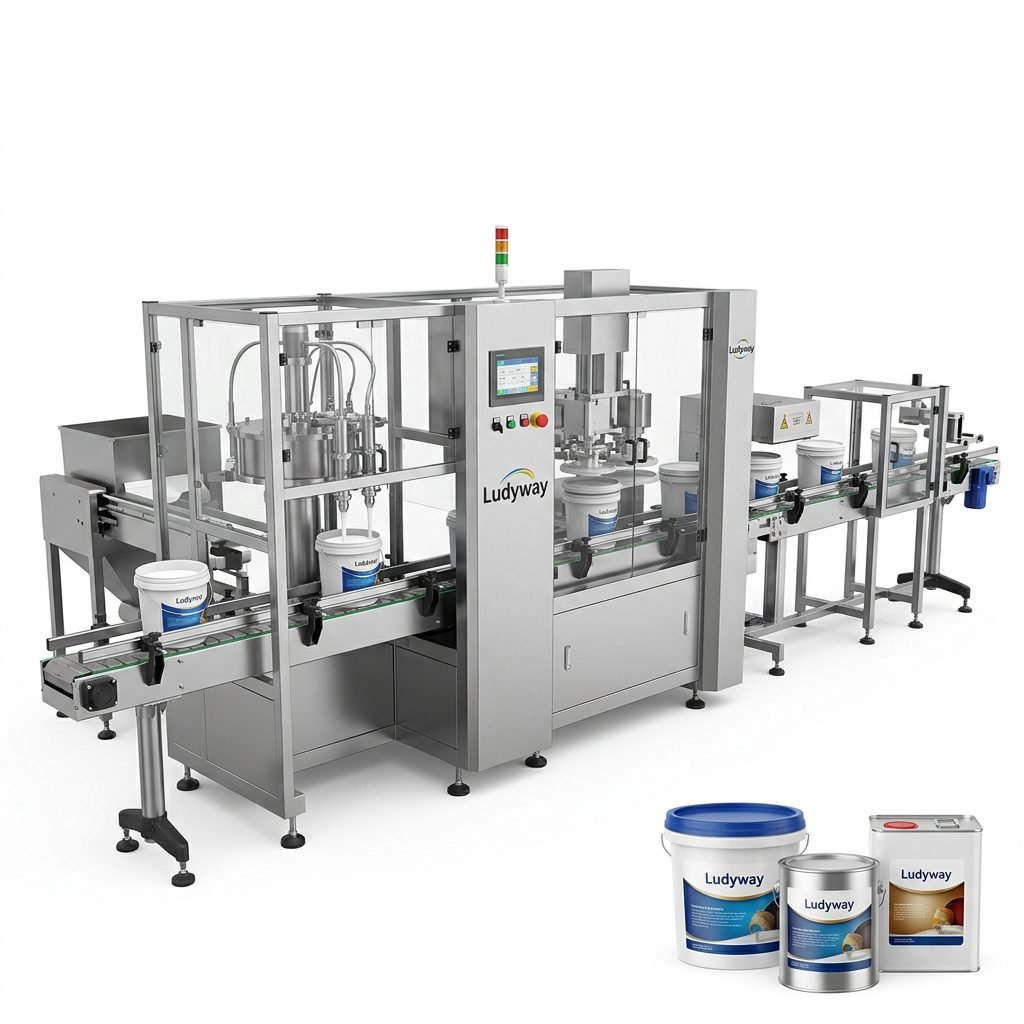
- Piston or rotary lobe pumps for chilled sauces, purées and soups that are packed before blast freezing, with jacketed hoppers to control viscosity.
- Target accuracy: ±0.5–1% for sachets and stick packs, ±1–2 g for 500 g–1 kg retail bags, confirmed by an in-line checkweigher with automatic feedback to the filler.
4. Hygienic Design and Cold-Room Operation
Frozen food packaging halls are typically held at 0–10°C with high humidity and daily washdown. Equipment that is not designed for this environment suffers from condensation in electrical cabinets, corrosion on frames and biofilm in hidden crevices. These failures shorten machine life and, more importantly, introduce contamination risks that no barrier film can fix.
Write the following into your specification: 304 stainless steel frame as a minimum, 316L for product contact parts where salt or acidic marinades are present; IP65 or IP66 washdown rating for motors, sensors and HMI; sloped surfaces with no horizontal ledges; open-channel frame design; tool-less removal of forming tubes, jaws and conveyor belts; and cabinet heaters or air conditioning units to prevent condensation on PLC and servo drives.
Also confirm that lubricants are NSF H1 food grade and that the supplier can provide a sanitation procedure that matches your HACCP plan.
5. Barrier Enhancement: Vacuum, MAP and Nitrogen Flushing
Film barrier sets the ceiling for shelf life, but the atmosphere inside the pack decides how close you get to it. For oxygen-sensitive frozen products, add one of the following to the machine specification.
Vacuum Packaging
Removes almost all air before sealing, eliminating headspace frost and slowing oxidation. Ideal for frozen meat, fish and portioned proteins. Vacuum packed frozen beef or salmon routinely reaches 18–24 months of quality shelf life versus 6–12 months in a simple pillow bag.
See the industrial vacuum packaging machine for food products and the seafood vacuum sealing machine.
Modified Atmosphere & Nitrogen Flushing
Replaces air with N2 or an N2/CO2 blend on VFFS, flow-wrap, pouch and multi-lane machines. Suitable for fragile IQF products that would be crushed by vacuum, frozen bakery and ready meals. Target residual oxygen is typically below 1–2%, verified by a headspace analyser during commissioning.
A nitrogen flushing packaging system can be fitted as a standard option on most Ludyway machines.
6. In-Line Inspection and Line Integration
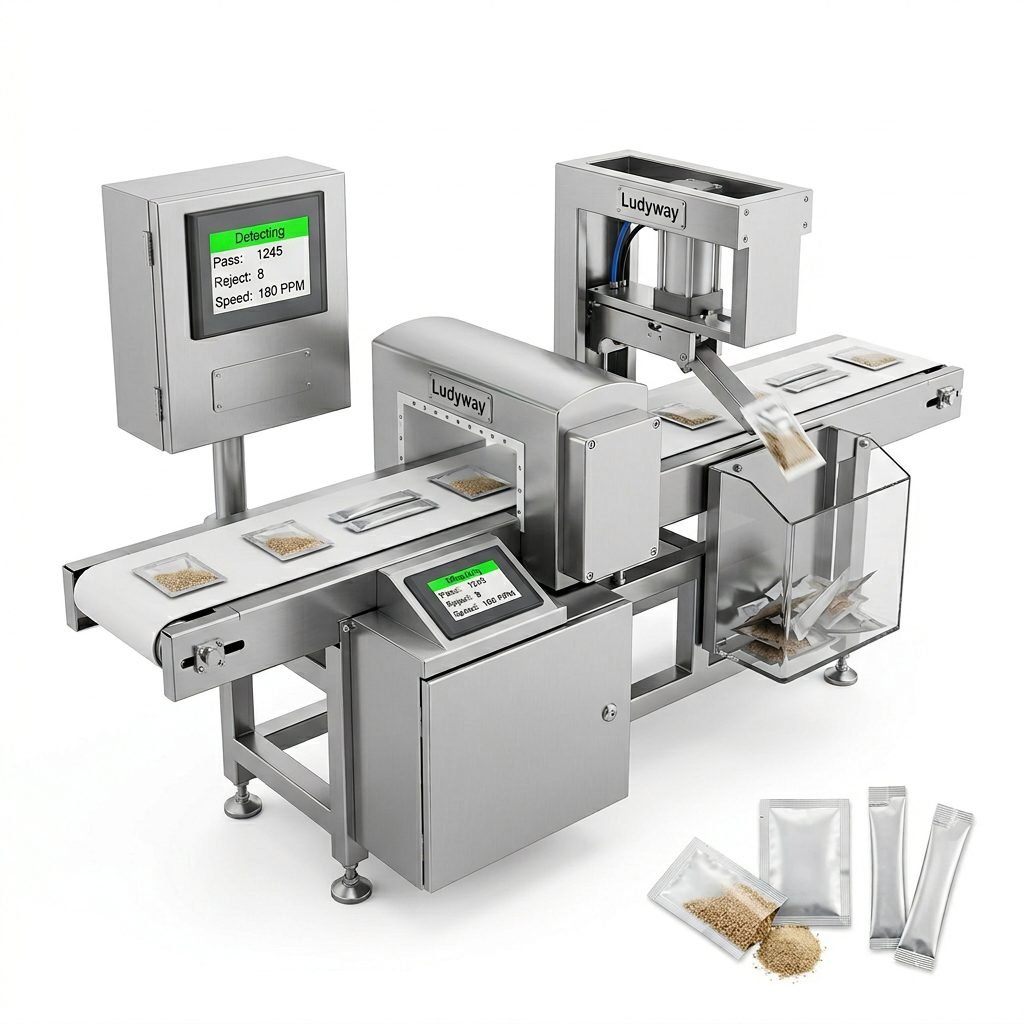
A frozen pack that leaves the sealing station with a leak, a foreign body or an off-weight will fail somewhere in the cold chain. Inspection belongs on the line, not in the QA lab. Frozen products present a strong “product effect” for metal detectors because ice has a different conductivity profile from thawed product, so detectors must be calibrated on frozen samples and, for bone-in meat or seafood, supplemented with X-ray.
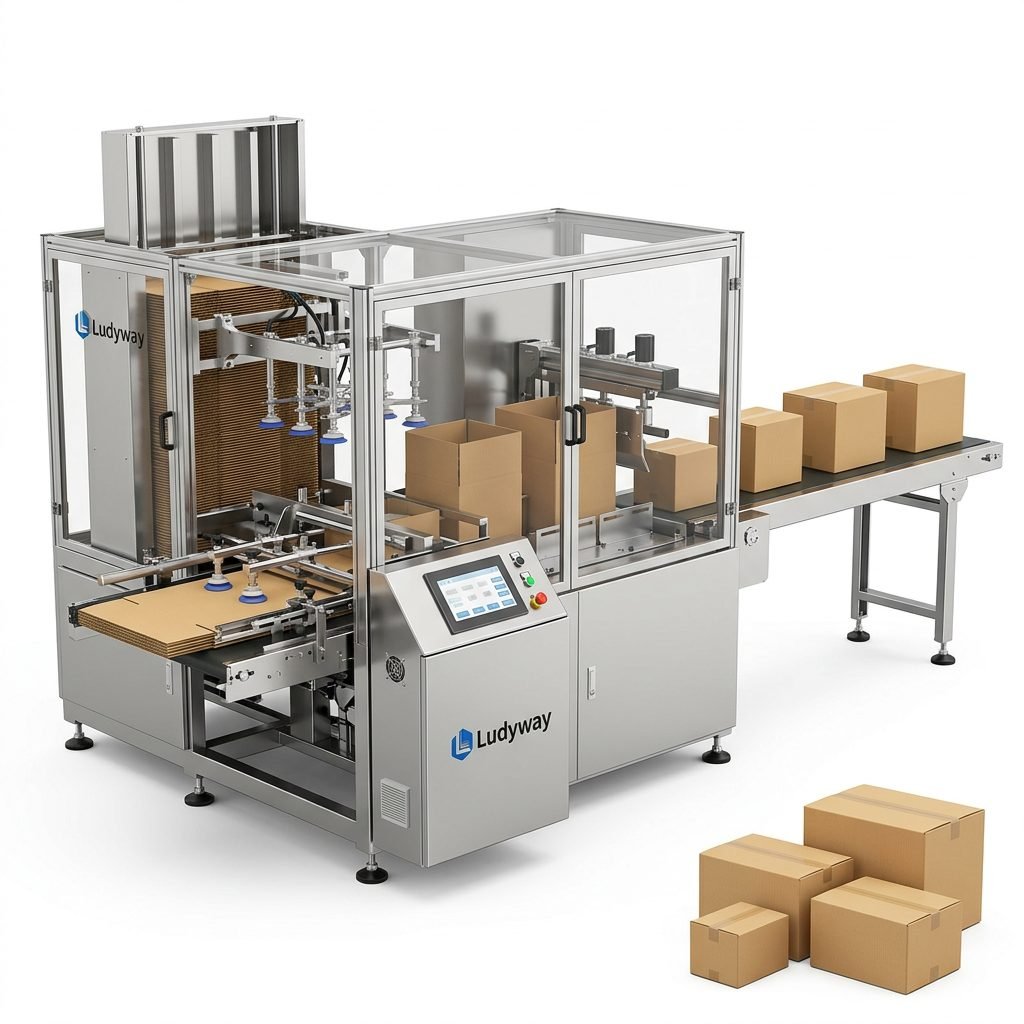
A complete line for retail frozen food typically includes a high-precision checkweigher, an industrial metal detector or X-ray inspection machine, a seal inspection or leak-test station, date coding, case packing and palletising.
Buying these as an integrated system from one supplier, as in Ludyway’s high-speed frozen food packaging lines for bulk and portion control, avoids the controls and conveyor mismatches that cause most start-up delays.
“The cheapest frozen food packaging machine is the one that never produces a leaker. Every rejected pallet in a -18°C warehouse costs more than the price difference between a basic and a properly specified sealing system.”
Compliance and Standards Buyers Should Specify
Standards do two jobs in a tender: they protect your product and they make supplier quotations comparable. The following references are relevant to frozen food packaging machinery sold into international markets.
Food Contact & Packaging Materials
Product-contact parts and films should comply with US FDA requirements for packaging and food contact substances and, for the EU, Regulation (EC) 1935/2004 and (EU) 10/2011. If you sell into Europe, also review the EU packaging and packaging waste rules, which increasingly favour recyclable mono-material films that your machine must be able to seal.
Machine Safety & Performance
Request CE marking (Machinery Directive, EMC, LVD) for Europe, and UL 508A control panels with NFPA 79 wiring for North America. PMMI publishes OpX Leadership Network guidance on factory acceptance testing and overall equipment effectiveness that is useful when writing FAT/SAT protocols. The Flexible Packaging Association offers material and sustainability resources for specifying frozen food films.
In addition, confirm the IP rating under IEC 60529, NSF H1 lubricants, and that the supplier can provide material certificates for stainless steel grades and food-contact plastics. For plants operating under BRCGS, SQF or FSSC 22000, ask for hygienic design documentation that your auditors can review.
Specification Checklist Before Requesting a Quote
Suppliers quote faster and more accurately when the enquiry contains the right information. Follow these five steps to turn your requirements into a workable RFQ.
1
Define the Product
Product form (IQF pieces, blocks, sauce, powder), piece size, bulk density, fat content, stickiness at -18°C, and whether it is packed frozen or chilled then frozen. Send 2–5 kg of real samples for test runs.
2
Fix the Pack Specification
Pack style, fill weights or volumes, bag dimensions, film structure and thickness, zipper or valve requirements, print registration, and whether gas flushing or vacuum is required.
3
State Output and Utilities
Required packs per minute or kg per hour, shifts per day, plant voltage (380 V/50 Hz, 480 V/60 Hz), compressed air, nitrogen supply, floor space and ceiling height, and ambient temperature of the packing hall.
4
List Compliance and Scope
Certifications (CE, UL), inspection equipment, upstream feeding, downstream case packing, HMI language, remote diagnostics, spare-parts kit and the FAT/SAT protocol you expect.
5
Clarify Commercial Terms
Incoterms (EXW, FOB, CIF), payment schedule, lead time (typically 45–90 days for standard models, longer for turnkey lines), warranty period, installation and training, and after-sales response time in your region.
Minimum Order & Quotation Format
Industrial packaging machines are normally quoted per unit with a minimum order of one machine. Expect a technical proposal with layout drawing, parts list, utility consumption and performance guarantee alongside the commercial quotation, so you can compare suppliers on equal terms.
Why Global Food Processors Work with Ludyway
Ludyway is one of the largest packaging machine manufacturers in China, founded in 1993 and based in Nanlang Town, Zhongshan, Guangdong. The company specialises in advanced packaging equipment and turnkey production solutions for the food, pharmaceutical and health industries, covering granule, powder, liquid and pouch applications with more than 50 intelligent machine models, including multi-lane stick pack, sachet, vacuum and fully automated packaging systems.
For frozen food producers, this breadth matters: a single supplier can deliver the primary bagging or pouch machine, the multi-lane sachet machine for sauce and seasoning portions, nitrogen flushing, checkweighing, metal detection and end-of-line case packing as one engineered line. Ludyway serves customers in more than 100 countries and regions, and its export growth has been covered by industry press.
Buyers are welcome to visit the factory for sample runs on their own frozen product and film, or to meet the team at international packaging exhibitions.
130+
Professional Packaging Experts
20,000㎡
Modern Production Facility
30+
Years of Industry Experience
200+
Manufacturing Equipment Units
Frozen Food Packaging Equipment from Ludyway
The models below are the starting points most frozen food processors evaluate. Each can be configured with your film, pack size, gas flushing and inspection requirements.
Multi-Lane Frozen Food Packaging Machine
Sachet & Stick Pack, Granule Powder Liquid
Request a Quote
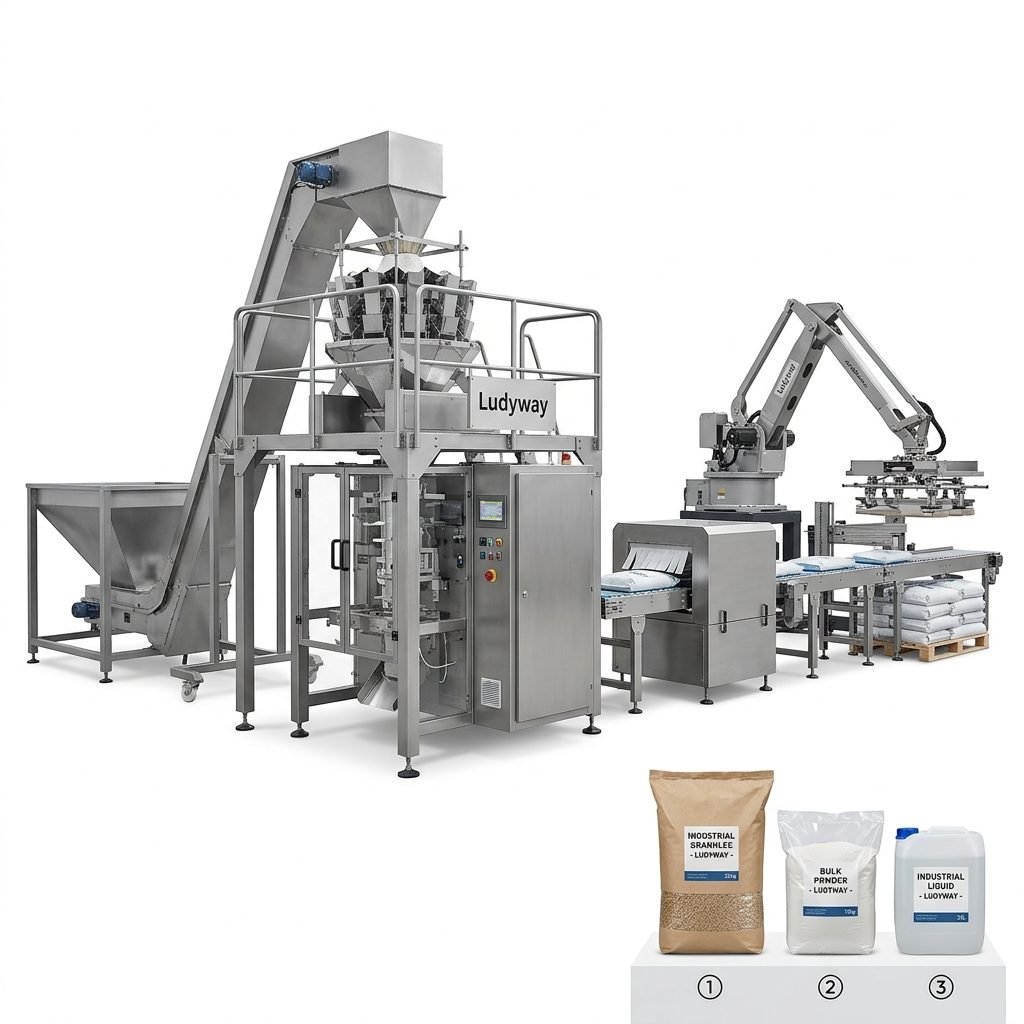
Frozen Food Packaging Lines
Turnkey Line, Bulk & Portion Control
Request a Quote
Industrial Vacuum Packaging Machine
Vacuum Sealing, Meat & Seafood
Request a Quote
Nitrogen Flushing Packaging System
MAP Option, Food & Pharma
Request a Quote
Need a premium retail format? The premade pouch packaging machine handles zippered stand-up pouches with high-barrier laminates, and the packaging line integration system ties primary, secondary and inspection equipment into one controls architecture.
Frequently Asked Questions
Which frozen food packaging machine gives the longest shelf life?
For oxygen-sensitive proteins, a vacuum or skin packaging machine with a high-barrier film delivers the longest quality shelf life because it removes headspace entirely. For fragile IQF products that cannot be vacuum packed, a VFFS or premade pouch machine with nitrogen flushing and a low-OTR, low-MVTR laminate is the next best option.
Can a VFFS machine seal reliably when frost or product is in the seal area?
Yes, if it is specified for it. Options include wider seal jaws with longer dwell, product-in-seal detection with stripping plates, and ultrasonic sealing, which vibrates contamination out of the seal zone. Always validate seal strength on frosted film from your own production before signing off.
What film barrier values should I specify for frozen food?
As a general guide, aim for an MVTR below 5 g/m²/day and an OTR below 10 cc/m²/day for fatty or long-shelf-life products; general IQF vegetables tolerate higher values. Your film supplier can confirm exact figures, and the machine supplier should confirm the structure runs and seals correctly on the chosen model.
How long does delivery and commissioning of a frozen food packaging line take?
Standard machines typically ship in 45–90 days after technical sign-off; integrated turnkey lines with inspection and end-of-line equipment can take 90–150 days. Factory acceptance testing with your product and film is carried out before shipment, followed by on-site installation, commissioning and operator training.
Do I need vacuum or nitrogen flushing if my product is already frozen?
Freezing slows oxidation but does not stop it, and it does nothing to prevent freezer burn caused by headspace air. If your product contains fat, is stored longer than six months, or is sold in transparent packaging where colour matters, vacuum or nitrogen flushing is worth the modest additional investment.
Next Step: Get a Tailored Quotation for Your Frozen Product
Send Ludyway your product samples, pack specification and target output, and the engineering team will return a technical proposal, layout drawing and commercial quotation for frozen food packaging machines for long-term product protection, from a single multi-lane sachet machine to a complete integrated line with vacuum, nitrogen flushing and in-line inspection.
Request the latest product catalogue, book a factory visit or sample test run, or ask for references in your region. Email info@ludyway.com or message the sales team on WhatsApp at +86 131 2959 2456.
Address: Nanlang Town, Zhongshan, Guangdong, China.