Choosing the right packaging machine for your production line is rarely about picking the fastest model in a catalogue. The machines that pay back soonest are the ones matched to the physical behaviour of your product, the pack format your market expects, the real throughput your upstream process can feed, and the compliance regime you ship into. Get those four things right and speed, price, and brand almost choose themselves.
This buyer’s guide walks procurement managers, plant engineers, and brand owners through that decision in the order experienced line integrators use it: product, format, output, dosing technology, compliance, line integration, and total cost of ownership. Along the way you will find specification checklists, comparison tables, and the exact questions to put to any packaging machine manufacturer before a purchase order is signed.
Start With the Product, Not the Machine
Every filling and sealing problem begins with material behaviour. A machine that runs free-flowing sugar flawlessly can bridge, dust, and under-fill with fine protein powder, and a liquid sachet machine tuned for soy sauce will drip and smear with a 30,000 cP cream. Before you compare models, document your product the way an OEM’s application engineer will ask for it.
Free-Flowing Granules
Sugar, salt, rice, seeds, kibble, instant coffee. Record bulk density (g/ml), particle size range, angle of repose, and breakage sensitivity. Volumetric cup or multi-head weigher dosing usually fits.
Fine or Cohesive Powders
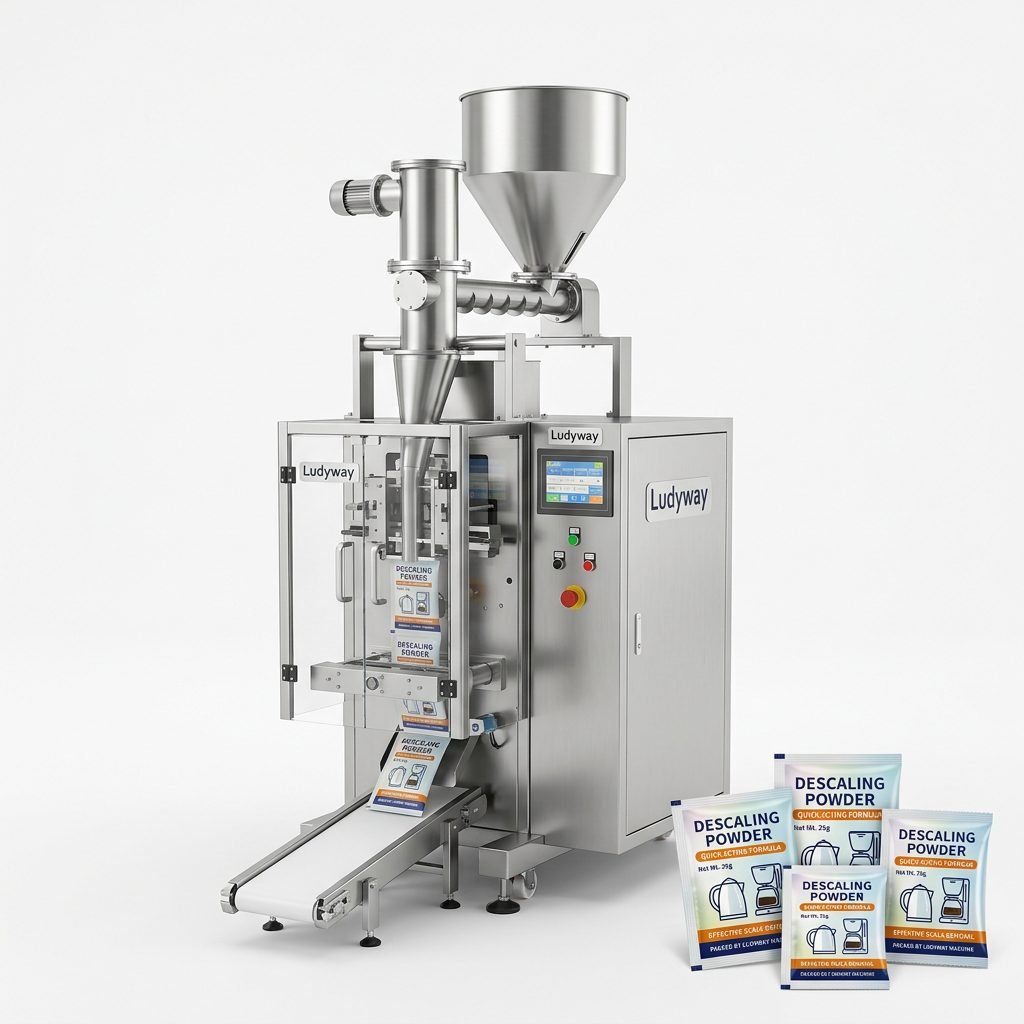
Flour, protein, collagen, spices, pharmaceutical powders. Note hygroscopicity, dust generation, electrostatic tendency, and whether the powder aerates. Servo auger fillers with agitators and dust extraction are the norm.
Liquids, Gels and Pastes
Sauces, oils, serums, honey, energy gel. Specify viscosity in cP at filling temperature, particulates, foaming, and whether hot-fill or heated hoppers are needed. Piston, gear, or peristaltic pumps are selected accordingly.
Pieces and Irregular Solids
Nuts, dried fruit, gummies, freeze-dried meat, tablets. Count-based or weigh-based feeding matters more than volume. Vibratory feeders and multi-head weighers protect fragile pieces.
Practical tip: send 2–5 kg of real product and your intended film to shortlisted suppliers. A reputable packaging machine manufacturer will run a trial fill, return sealed samples, and share video of the machine running your material before you commit a deposit.
Match the Pack Format to Your Market and Your Line
Pack format is a commercial decision as much as a technical one. Single-serve stick packs dominate supplements, instant beverages, and travel-size cosmetics; sachets rule condiments, samples, and pharmaceutical powders; pillow bags and premade pouches carry retail weights from 50 g to 5 kg. The format fixes the machine family, the film specification, and the realistic speed per lane.
| Pack Format | Typical Fill Range | Best For | Typical Speed | Watch-Outs |
|---|---|---|---|---|
| Stick pack | 0.5–50 g / 1–30 ml | Coffee, supplements, honey, gels | 40–70 cycles/min per lane | Narrow seals; film stiffness; powder in seal |
| 3- or 4-side seal sachet | 1–200 g / 1–100 ml | Sauces, cosmetic samples, pharma powders | 30–60 cycles/min per lane | Seal integrity with oily products; registration |
| VFFS pillow / gusset bag | 50 g–5 kg | Snacks, rice, flour, pet food | 30–120 bags/min | Dust contamination of seals; film tracking |
| Premade pouch / doypack | 50 g–5 kg | Premium retail, zipper packs, frozen | 30–60 pouches/min | Higher pouch cost; changeover between sizes |
| Bottle, tube, blister | Dose dependent | Pharma liquids, cosmetics, tablets | Line dependent | Capping torque; serialisation; container supply |
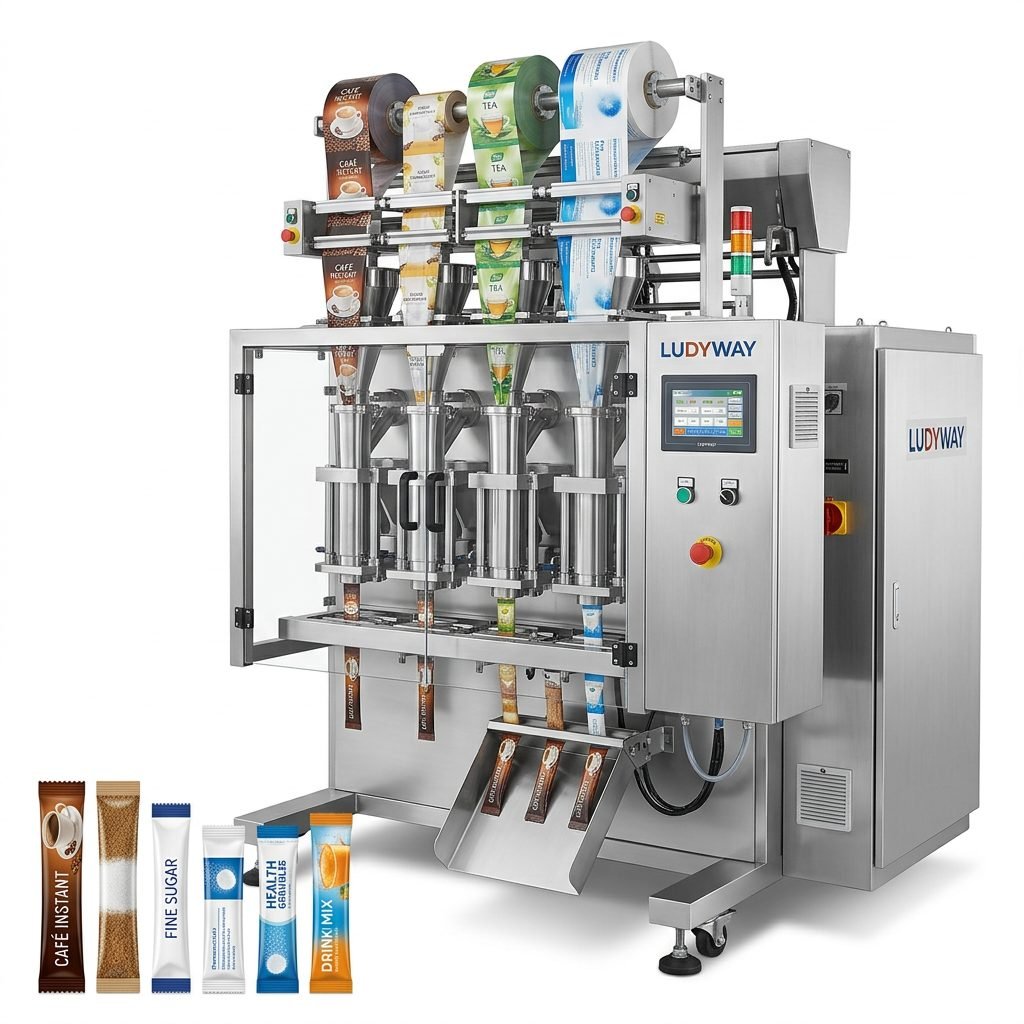
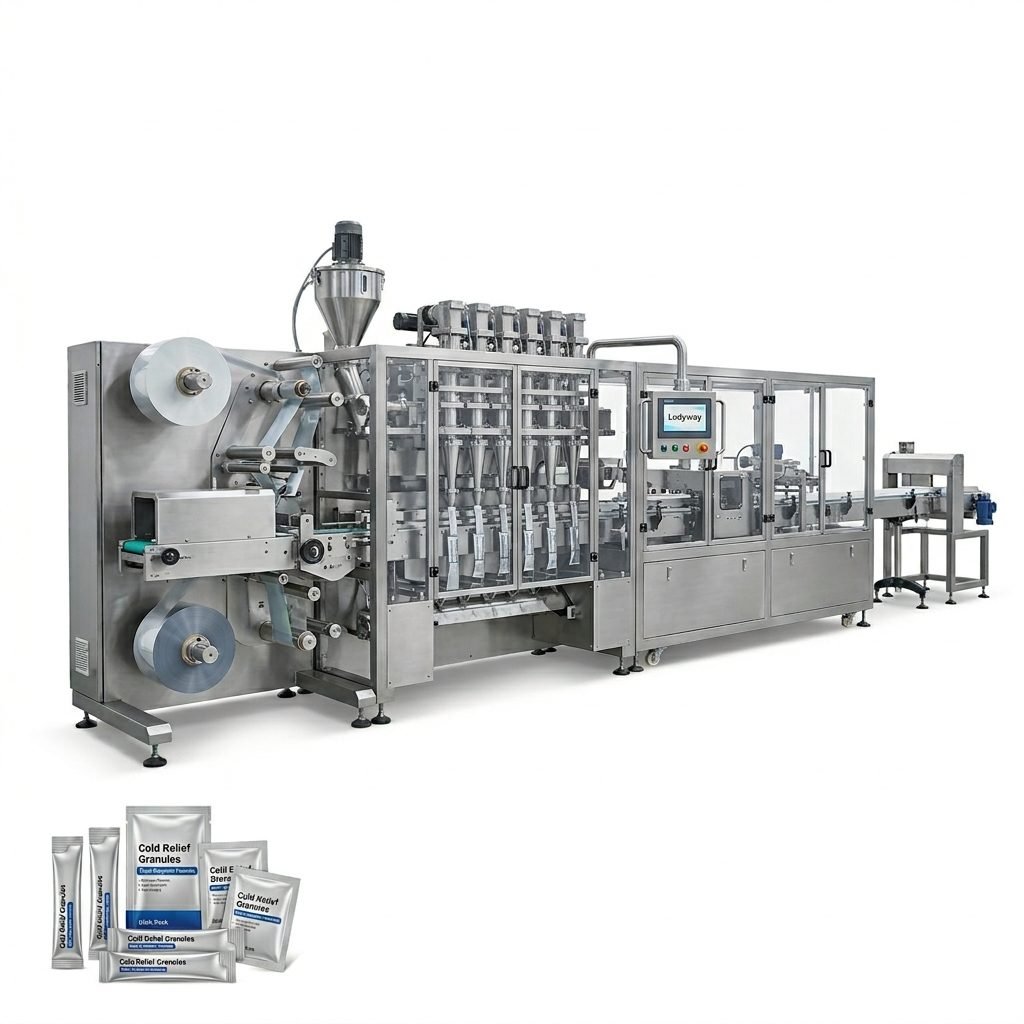
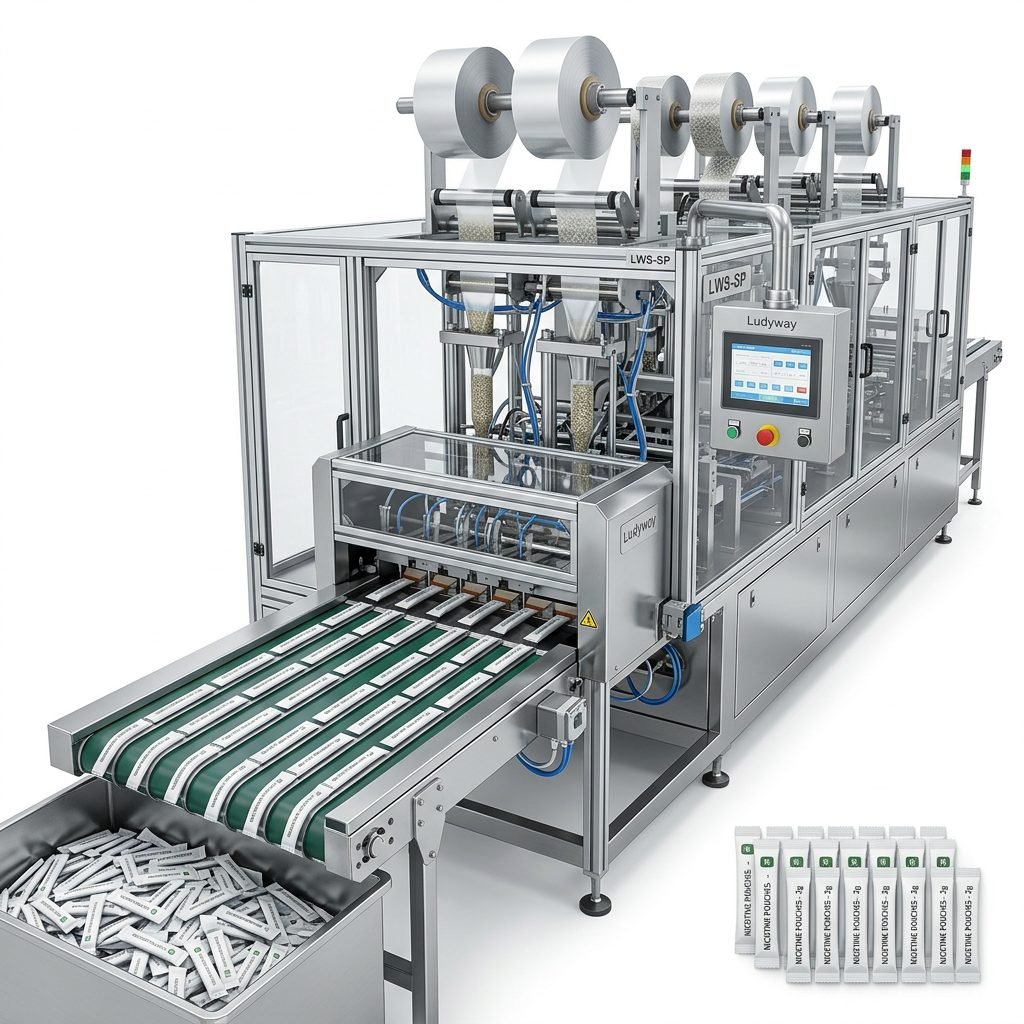
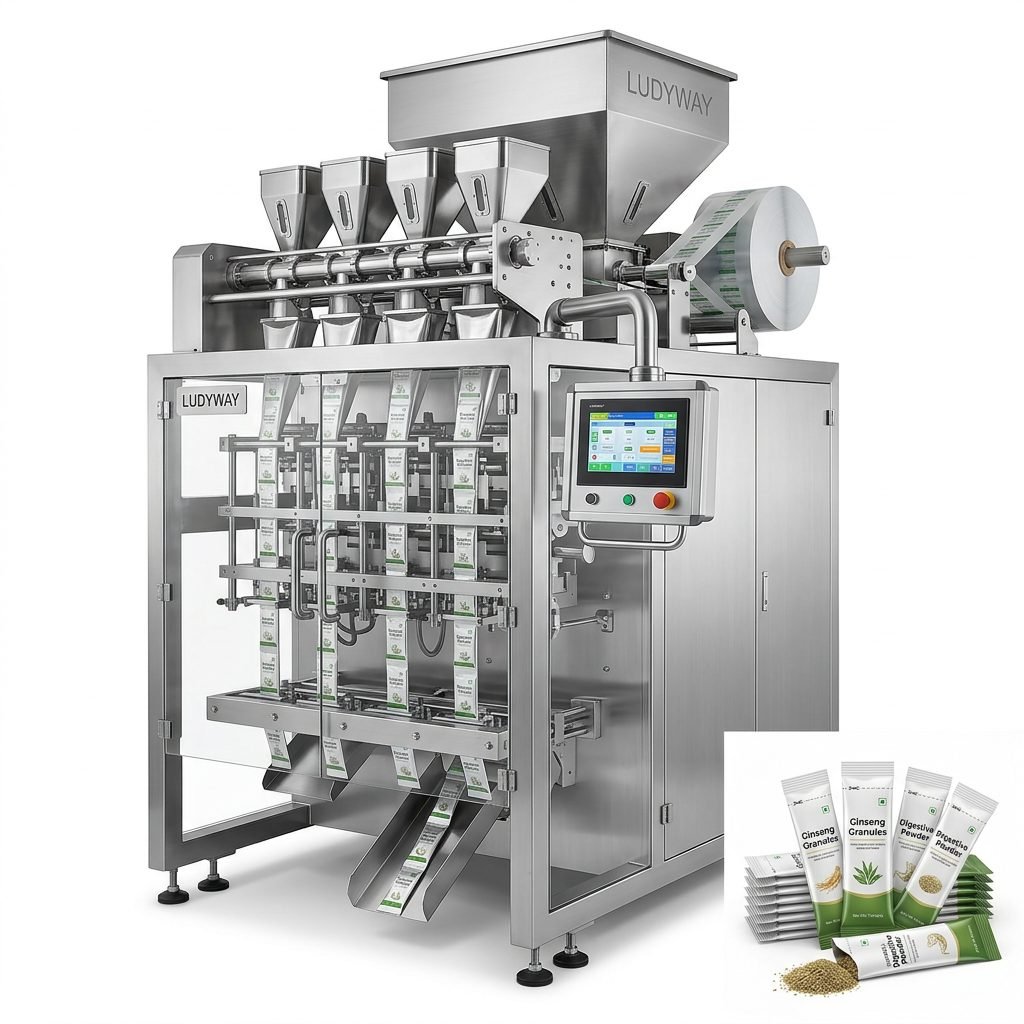
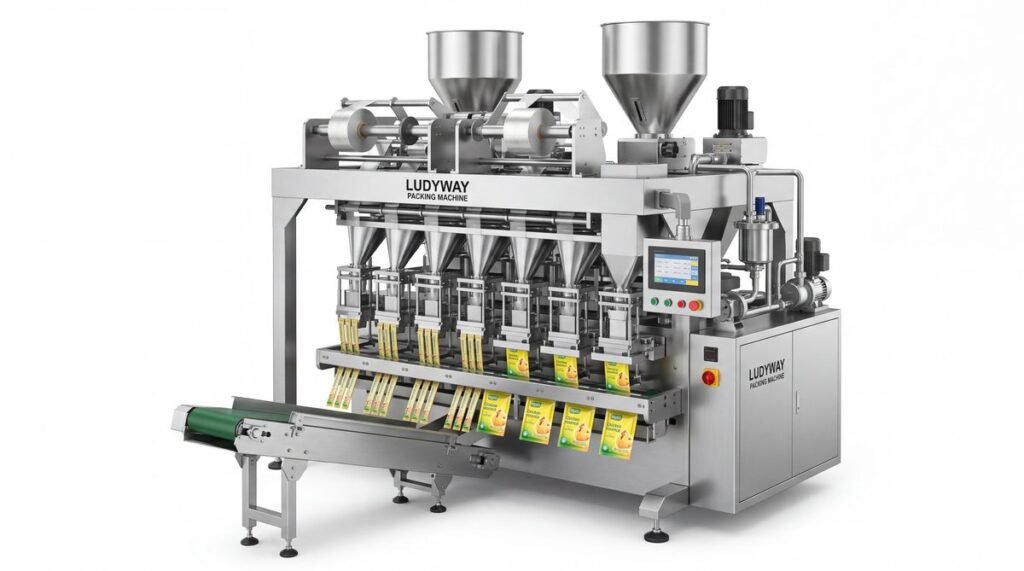
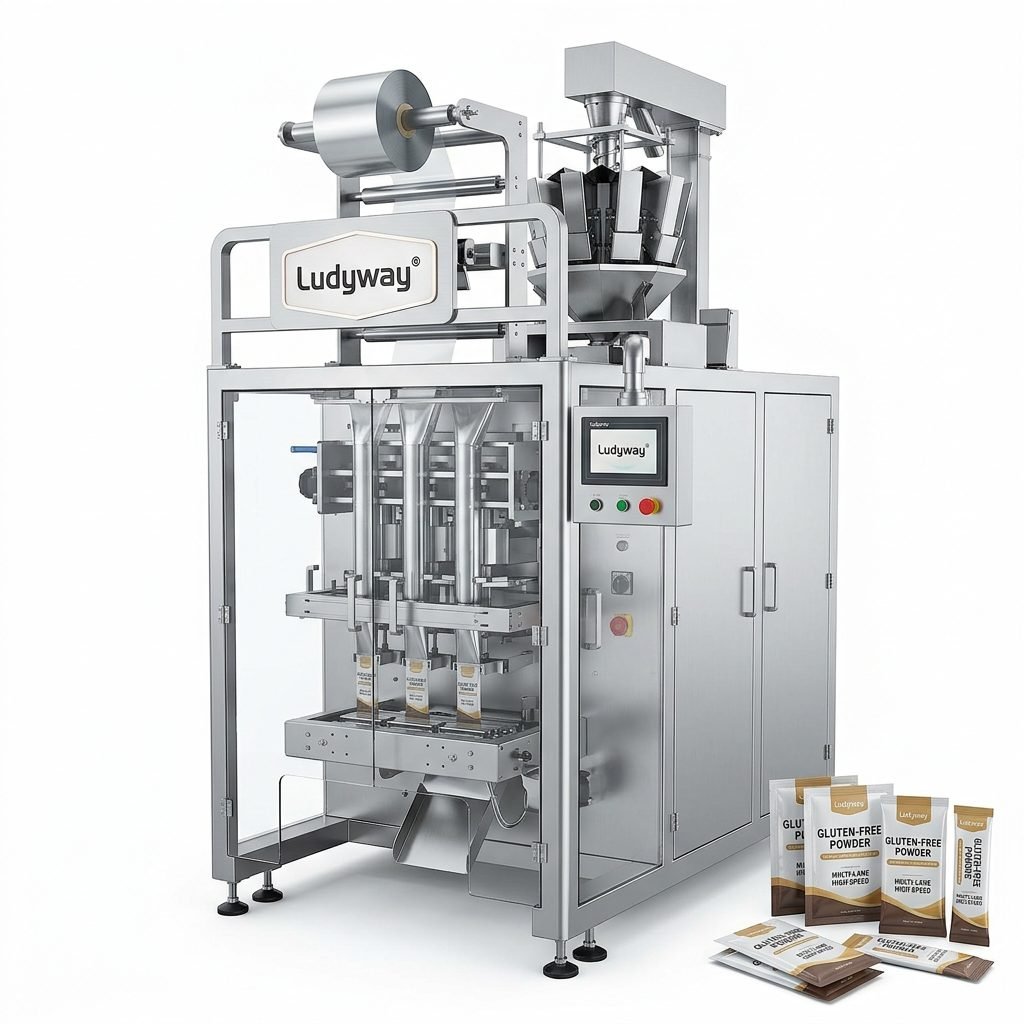
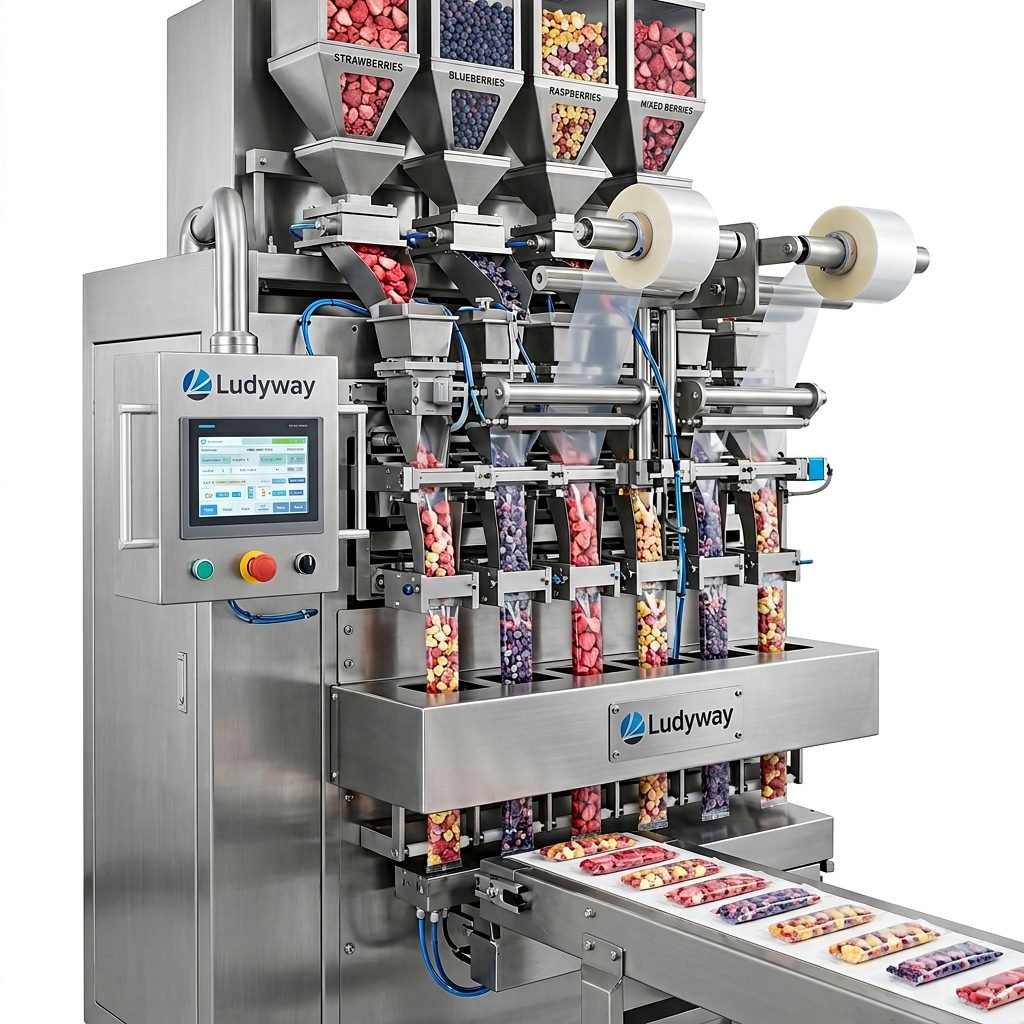
When the format is a stick or sachet and volumes are high, a multi-lane stick pack and sachet packaging machine is almost always the economical answer: 4 to 16 lanes running from one film web and one dosing manifold deliver 300 to more than 1,000 packs per minute from a single operator station and footprint. For retail bags and zipper pouches, a premade pouch packaging machine trades some speed for presentation and format flexibility.
Size the Output Correctly: Lanes, Cycles, and Real OEE
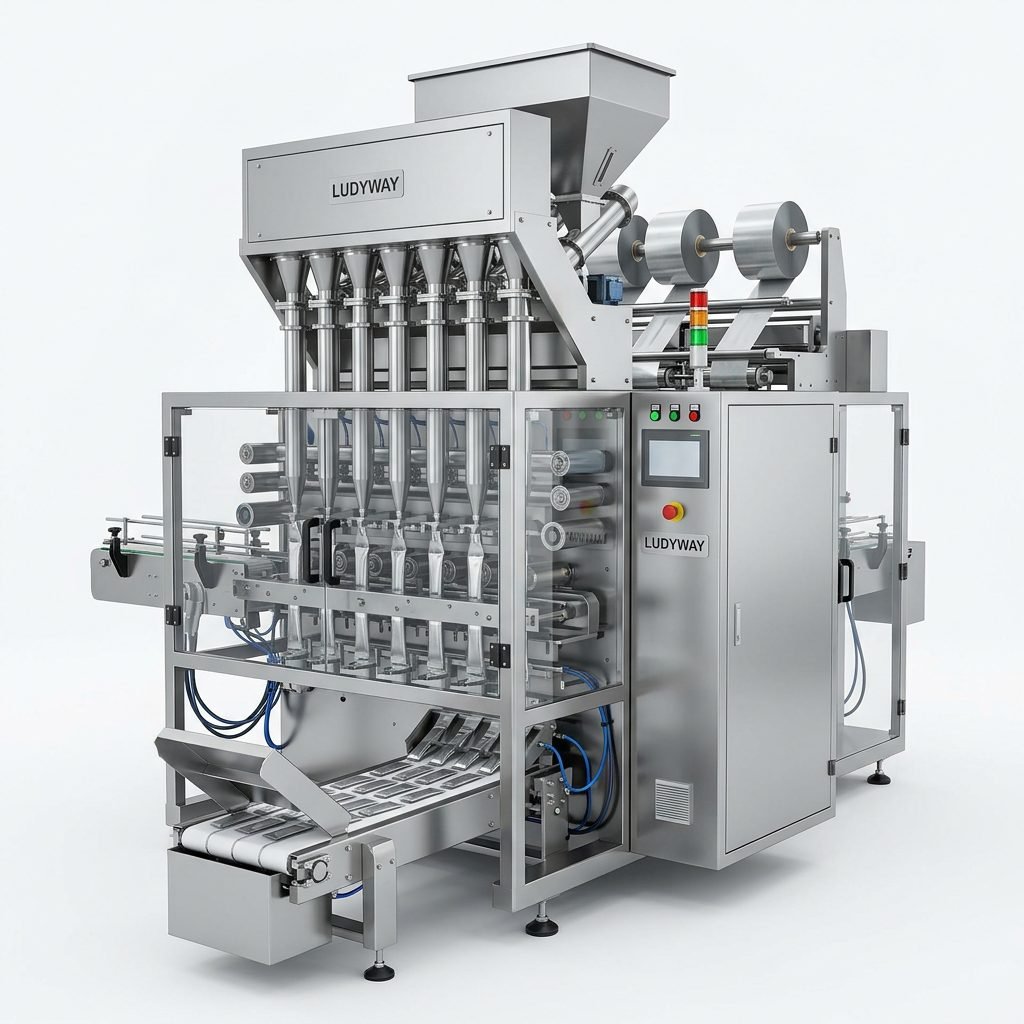
Multi-lane systems scale output by adding lanes rather than increasing cycle speed.
Rated speed on a datasheet is a laboratory number. Size your packaging machine on the volume you must actually ship, divided by the hours you will realistically run, corrected for overall equipment effectiveness. A well-run flexible packaging line achieves 70–80% OEE; a line with frequent SKU changes may sit nearer 60%.
Worked example: 60 million stick packs per year on two 8-hour shifts over 250 days gives 4,000 operating hours. At 75% OEE the required output is roughly 333 packs per minute. A 10-lane machine running a comfortable 40 cycles per minute delivers 400 packs per minute, leaving about 20% headroom for growth and seasonal peaks without paying for a machine twice as large as you need.
Also count your SKUs. If you change pack length or dose several times a shift, prioritise servo-driven format changes, recipe memory on the HMI, and tool-less seal jaw adjustment over a few extra cycles per minute.
Dosing Technology Decides Accuracy and Product Giveaway
The filler, not the sealing station, determines whether you meet declared weight at the lowest cost. The right dosing system depends on the product group you documented earlier, the dose size, and the legal tolerance you must hold.
| Dosing System | Suited Products | Typical Accuracy | Notes for Buyers |
|---|---|---|---|
| Servo auger filler | Flour, protein, spice, pharma powder | ±0.5–1% (±0.1–0.2 g on small doses) | Specify agitator type and quick-release auger for cleaning |
| Volumetric cup | Sugar, salt, rice, seeds, granules | ±1–2% | Lowest cost; sensitive to bulk density drift |
| Multi-head / linear weigher | Nuts, snacks, kibble, mixes | ±0.1–1 g | Higher capex; best for mixes and fragile pieces |
| Piston pump | Sauces, creams, honey, gel | ±0.5–1% | Handles 1–100,000 cP with heated hopper and cut-off nozzle |
| Peristaltic / gear pump | Thin liquids, oral liquids, oils | ±0.5% | CIP-friendly; product path easy to validate |
Accuracy has a direct cash value. Cutting average overfill by just one percent on 40 million 25 g packs saves roughly 10 tonnes of product a year. Pair the filler with an inline high-precision checkweigher that feeds back to the dosing controller, and the line self-corrects for density changes between batches.
Compliance, Hygiene, and Documentation Requirements
The industry you serve defines the construction standard of the machine and the paperwork that must arrive with it. Clarify these points in the user requirement specification so quotations are comparable.
Food and Beverage
Product-contact parts in 304 or 316L stainless steel and food-grade polymers compliant with FDA food-contact substance rules or the EU equivalent, IP65 washdown where wet cleaning is used, CE or UL electrical conformity, and an allergen-friendly changeover procedure.
Pharmaceutical and Nutraceutical
cGMP-oriented design with crevice-free welds, 21 CFR Part 11 audit trail and user levels on the HMI, DQ/IQ/OQ/PQ documentation packages, and for sterile medical pouches validation against ISO 11607 packaging requirements.
Sustainability and Film Regulation
Recyclable mono-material PE and paper-based films have narrower sealing windows than conventional laminates. If you sell into Europe, check the EU packaging and packaging waste rules and ask for sealing trials on the exact film you plan to use, plus optional nitrogen flushing for shelf life.
Whatever the sector, request the Declaration of Conformity, material certificates for contact parts, electrical schematics, and the operating manual in your working language as part of the quotation scope, not as an afterthought at shipment.
Plan the Whole Line, Not a Standalone Machine
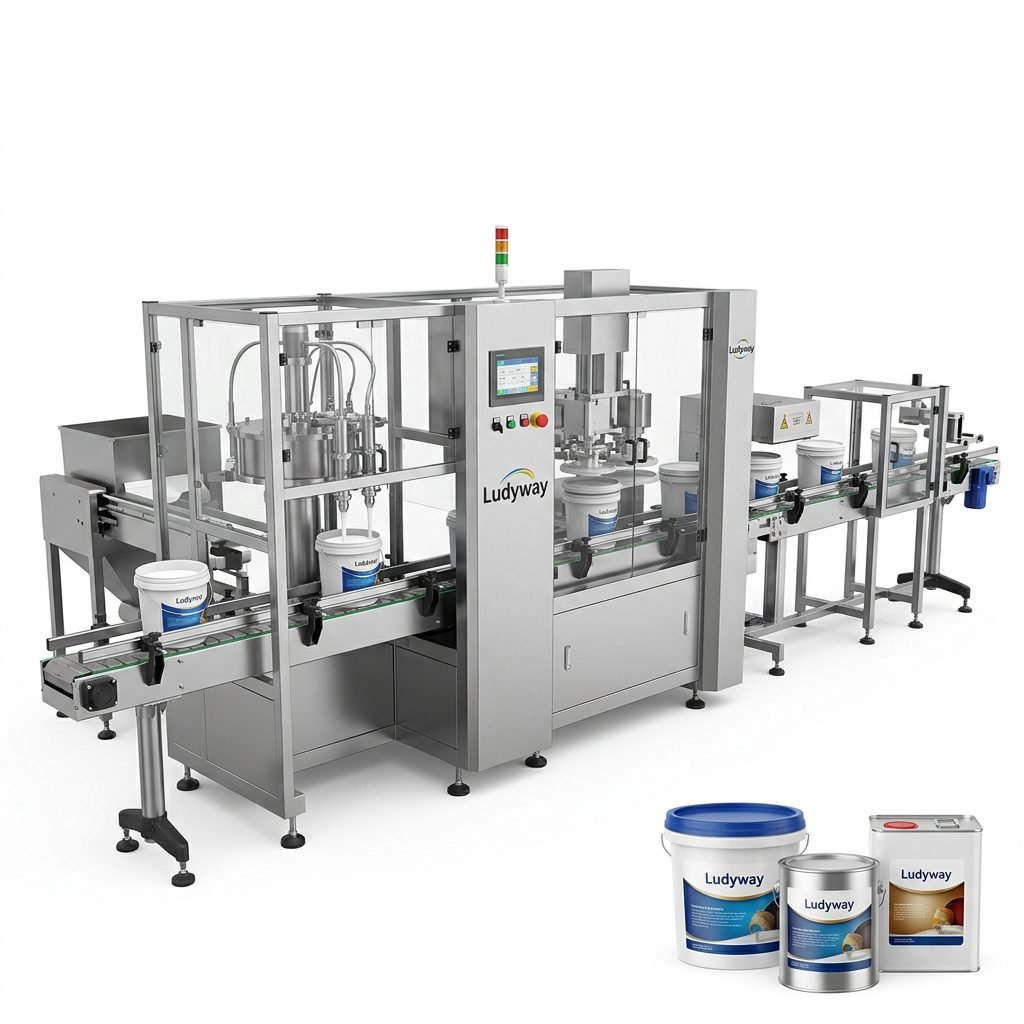
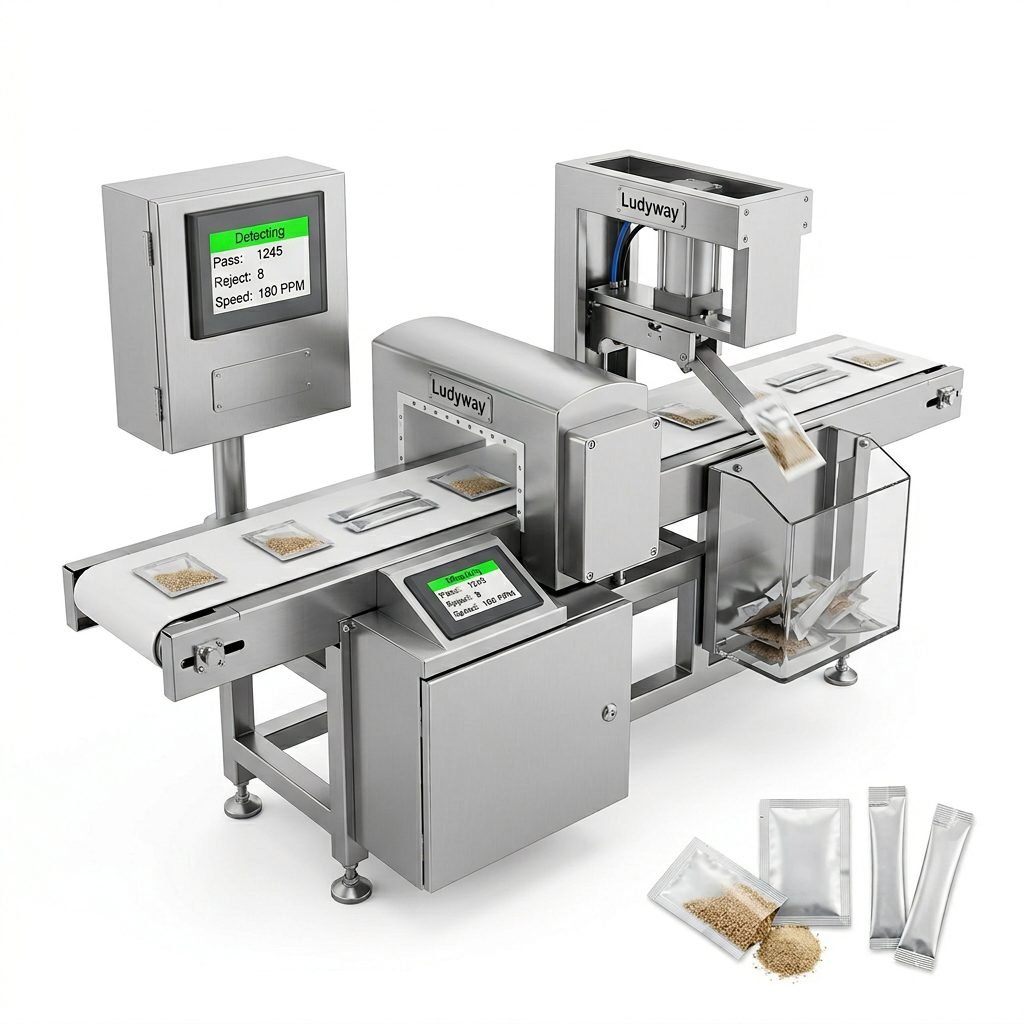
A packaging machine only performs to its rating when it is fed and relieved correctly. Upstream, that means a vacuum feeder or screw conveyor with hopper level control so the dosing head never starves or floods. Inline, it means checkweighing, metal detection or X-ray, and date coding synchronised with machine speed. Downstream, it means counting, cartoning, case packing, and palletising sized to absorb the output without a buffer of operators.
Buying the primary machine and the end-of-line equipment from one source removes the integration risk of mismatched conveyor heights, communication protocols, and reject handshakes. Ludyway supplies packaging line integration systems and automated cartoning lines engineered around its multi-lane machines for exactly this reason.
Confirm utilities early: most multi-lane machines need dry compressed air at about 6 bar, a 380 V/50 Hz or 480 V/60 Hz supply depending on region, and dust extraction for powders. Floor space should include film roll access and a maintenance zone around the sealing station.
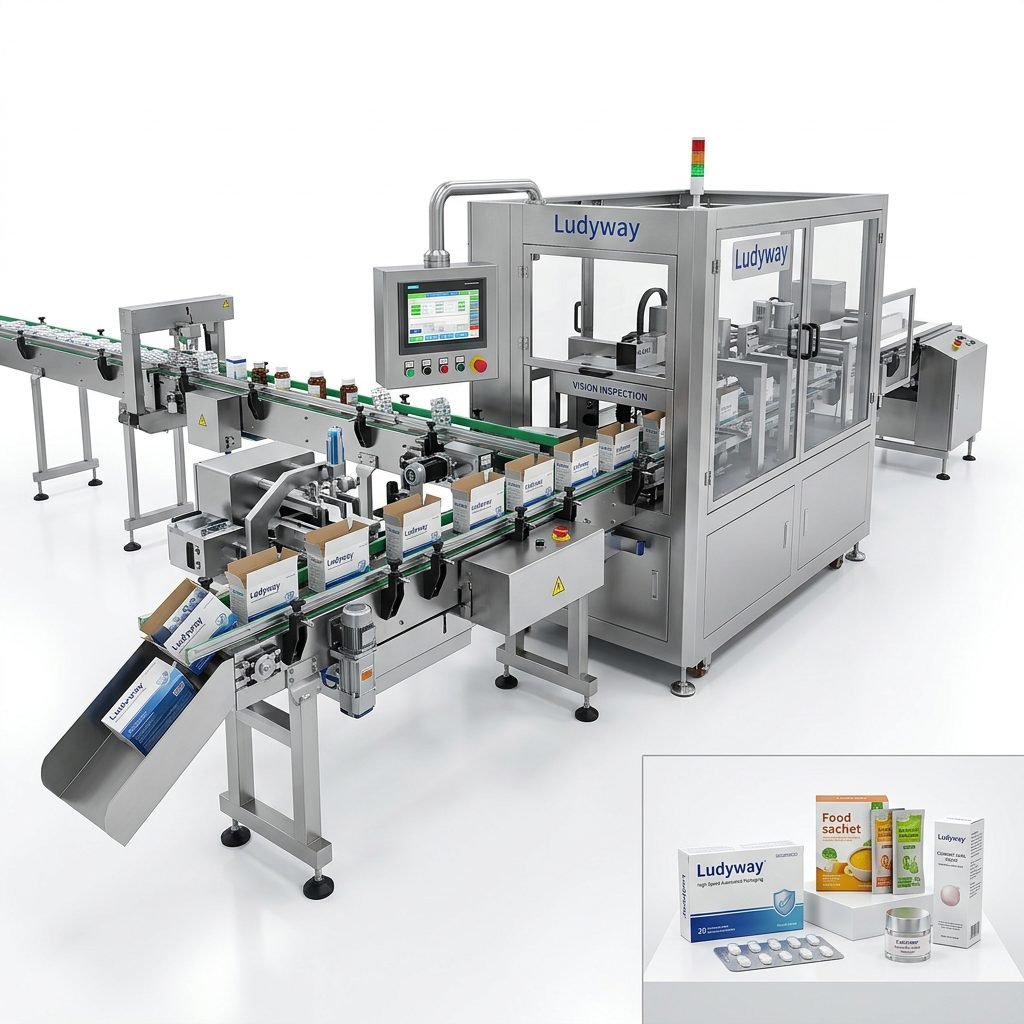
End-of-line cartoning and case packing must be sized to the primary machine’s real output.
Total Cost of Ownership and How to Evaluate Suppliers
Purchase price typically accounts for only 40–60% of what a packaging machine costs over ten years. Film waste at start-up and changeover, energy and compressed air, labour per shift, wear parts such as sealing jaws, cutting knives, and auger tooling, and unplanned downtime make up the rest. The latest PMMI State of the Industry report highlights how buyers across food, pharma, and personal care increasingly weight flexibility, remote diagnostics, and service response above headline speed when selecting equipment.
40–60%
Share of 10-year cost represented by purchase price
20–30%
Recommended output headroom over current demand
<15 min
Target format changeover on a modern multi-lane machine
24–48 h
Remote diagnostic response you should write into the contract
A Six-Step Procurement Sequence
Write a user requirement specification. Product data, pack sizes, target output, SKU count, film spec, utilities, compliance, and delivery site.
Shortlist three suppliers with reference installations in your product category and request client contacts you can call.
Run sample trials. Insist on video or a factory visit showing your product at the quoted speed with your film.
Compare quotations on scope. Dosing type, servo count, HMI brand, spare parts kit, FAT/SAT, training days, warranty term, Incoterms, and lead time.
Attend or stream the factory acceptance test and sign off against measurable criteria: speed, accuracy, seal strength, and reject rate.
Plan installation and SAT with operator and maintenance training, then schedule the first preventive maintenance before the engineers leave.
Commercial terms to expect from a packaging machine manufacturer:
- Minimum order of one unit for standard multi-lane machines; turnkey lines are quoted per project.
- Typical lead time of 45–90 days for configured standard machines and 90–150 days for integrated lines, confirmed after drawing approval.
- Quotations issued on EXW, FOB, or CIF terms, usually with a deposit on order and balance before shipment or against FAT acceptance.
- A recommended two-year spare parts kit priced separately so you can see wear-part costs up front.
Why Global Manufacturers Shortlist Ludyway
Ludyway is one of the largest packaging machine manufacturers in China, specialising in advanced packaging equipment and turnkey production solutions for the food, pharmaceutical, and health industries. With more than 30 years of engineering experience, a modern 20,000 m² facility in Zhongshan, Guangdong, and a team of over 130 packaging specialists, the company builds more than 50 intelligent machine models, from multi-lane stick pack and sachet systems to fully automated granule, powder, and liquid packaging lines, and supports customers in over 100 countries and regions. Its export growth and capacity expansion have been covered in international industry press.
130+
Professional packaging experts
20,000 m²
Modern production facility
30+ Years
Industry experience
200+
Manufacturing equipment units
For buyers working through the checklist above, the practical advantage is that product trials, dosing selection, line integration, and factory acceptance testing happen under one roof, and standard machines can be configured for a specific product rather than adapted after delivery. Full custom turnkey packaging lines are engineered the same way, from feeder to palletiser.
Multi-Lane Stick Pack and Sachet Machines for Production Lines
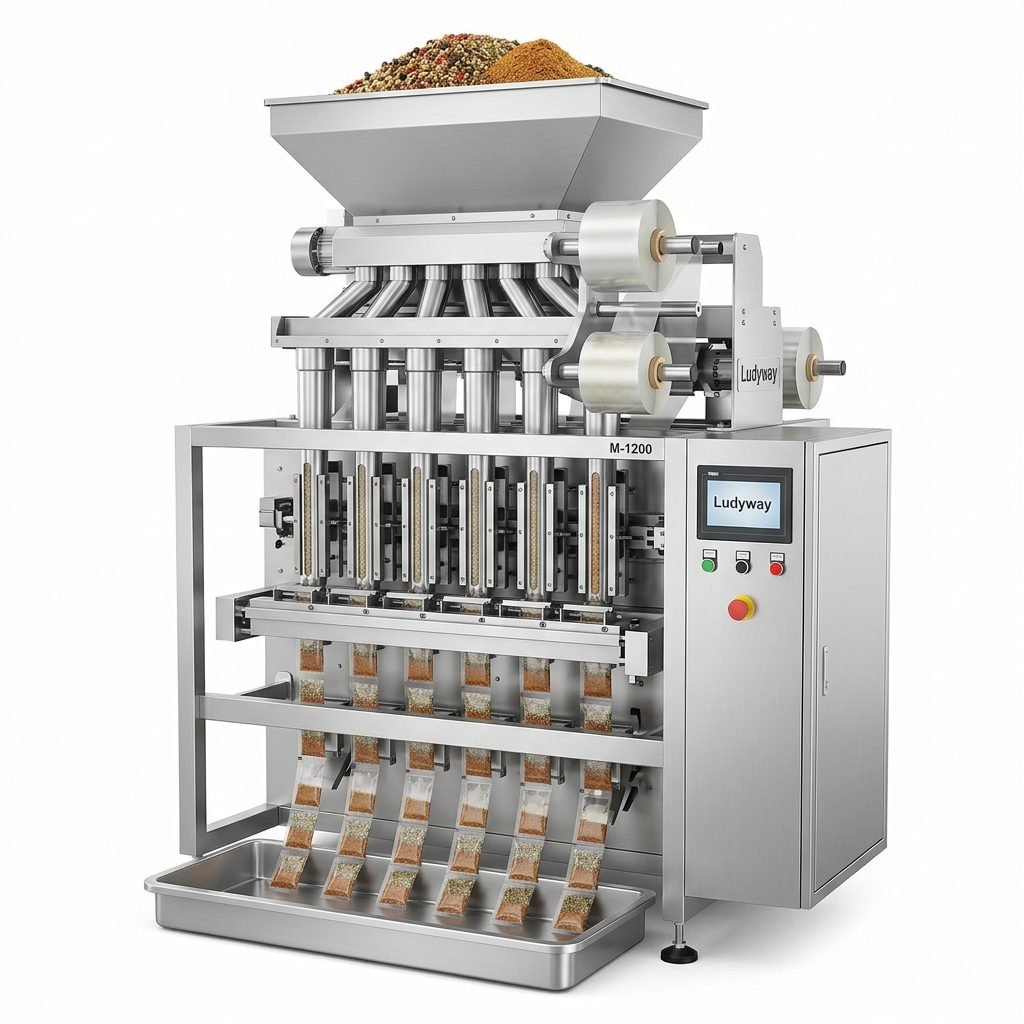
Spice Sachet Packaging Machine
Multi-Lane Sachet, Granule & Powder
Request a Quote
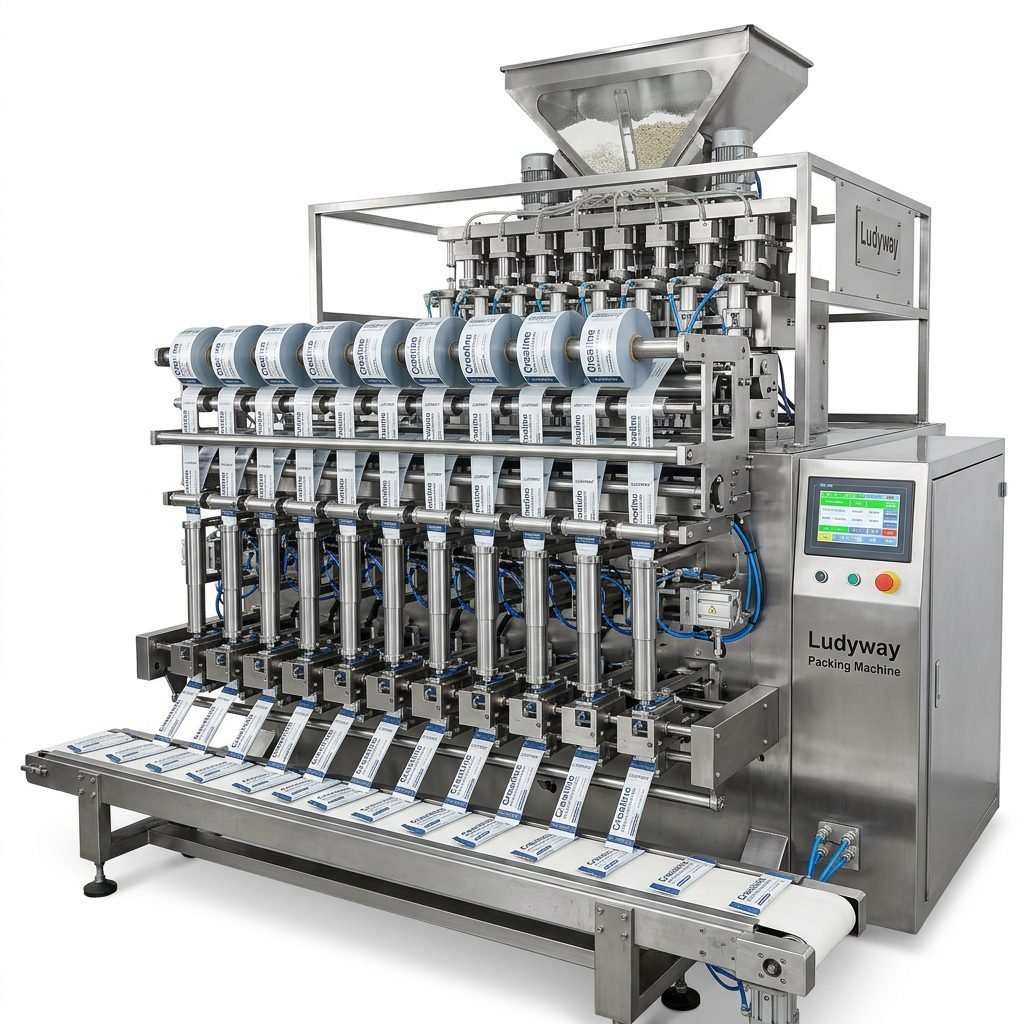
Creatine Stick Pack Machine
Multi-Lane Stick Pack, Sports Nutrition Powder
Request a Quote
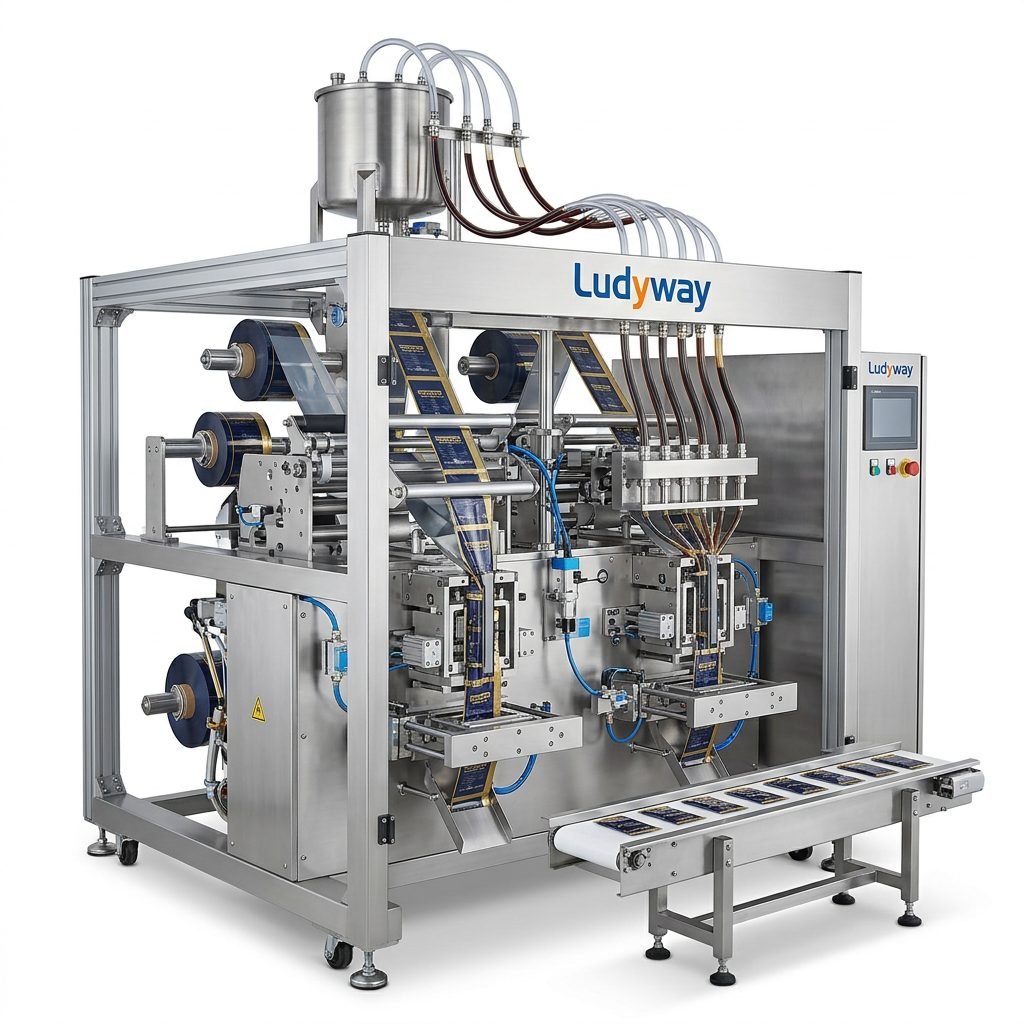
Liquid Sauce Sachet Machine
Multi-Lane Liquid Filling, Condiments
Request a Quote
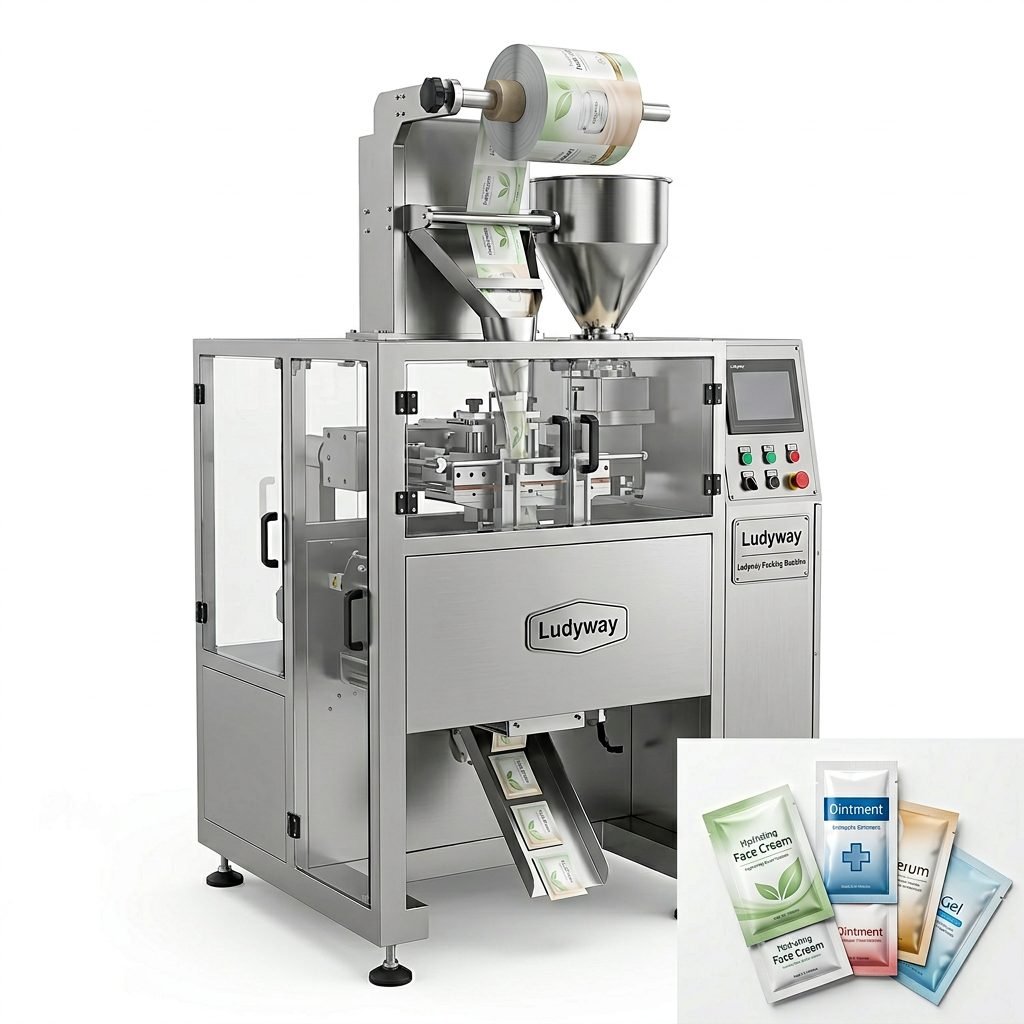
Cream Sachet Packaging Machine
Multi-Lane Sachet, Cosmetic & Pharma Cream
Request a Quote
Frequently Asked Questions
How many lanes should my stick pack or sachet machine have?
Divide your required packs per minute, including 20–30% headroom, by a realistic 35–45 cycles per minute per lane. A requirement of 300 packs per minute points to an 8-lane machine; 600 or more usually justifies 12 to 16 lanes or two machines for redundancy.
Can one machine run both stick packs and sachets?
Format change between stick and 4-side-seal sachet requires different forming tubes and sealing jaws, so most buyers choose one geometry per machine. Within a format, pack length, width, and dose can usually be changed with recipes and modest tooling in under 15–30 minutes.
What information do I need to send for an accurate quotation?
Product name and sample, dose weight or volume, pack dimensions or a reference sample, target output per hour, number of SKUs, film structure and roll dimensions, plant voltage and frequency, compliance requirements, and the delivery destination for freight terms.
What is the typical lead time and what does commissioning include?
Configured standard machines generally ship 45–90 days after drawing approval; integrated lines take 90–150 days. Commissioning normally covers installation supervision, site acceptance testing at agreed speed and accuracy, and operator plus maintenance training, with remote support afterwards.
How can I verify a packaging machine manufacturer’s quality before ordering?
Ask for the CE Declaration of Conformity and component brand list, request video of your product running at quoted speed, speak to two reference customers, and either attend the factory acceptance test in person or stream it live with measurable pass criteria written into the contract. Resources from PMMI offer useful standards and checklists for this stage.
Request a Quotation, Test Samples, or the Full Machine Catalogue
If you are specifying a new packaging machine or a complete line, the fastest route to a reliable quotation is to send your product sample, pack size, and target output to the Ludyway engineering team. You will receive a recommended configuration, dosing selection, layout drawing, trial-packed samples, and a formal quotation with lead time, FAT scope, spare parts kit, and shipping terms.
Email the project team
Send your URS, samples request, or a request for the 50+ model catalogue.
Talk to an engineer on WhatsApp
Share product photos and pack references for a quick feasibility answer, or arrange a factory visit in Zhongshan.
Ludyway also exhibits at major international packaging shows each year, where buyers can see multi-lane stick pack, sachet, and turnkey line equipment running live and discuss customised solutions with the engineering team.