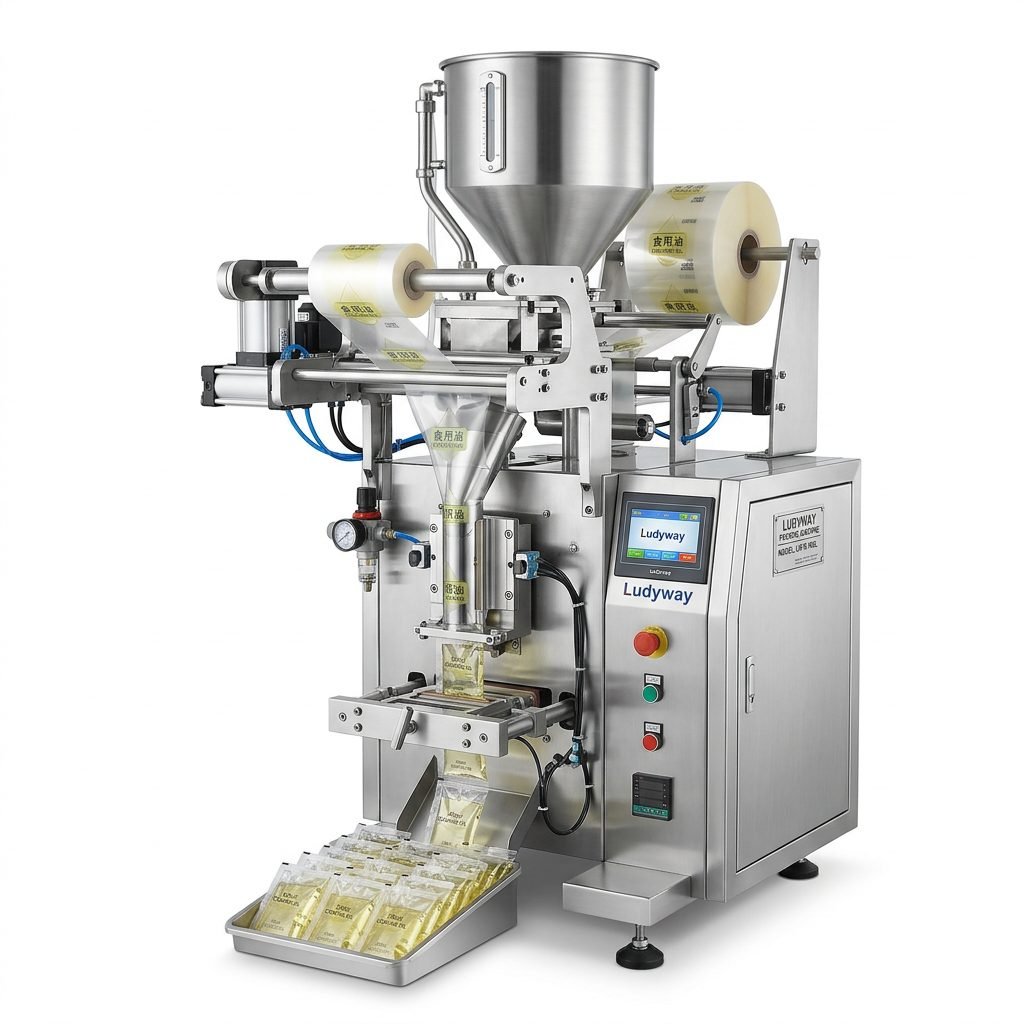
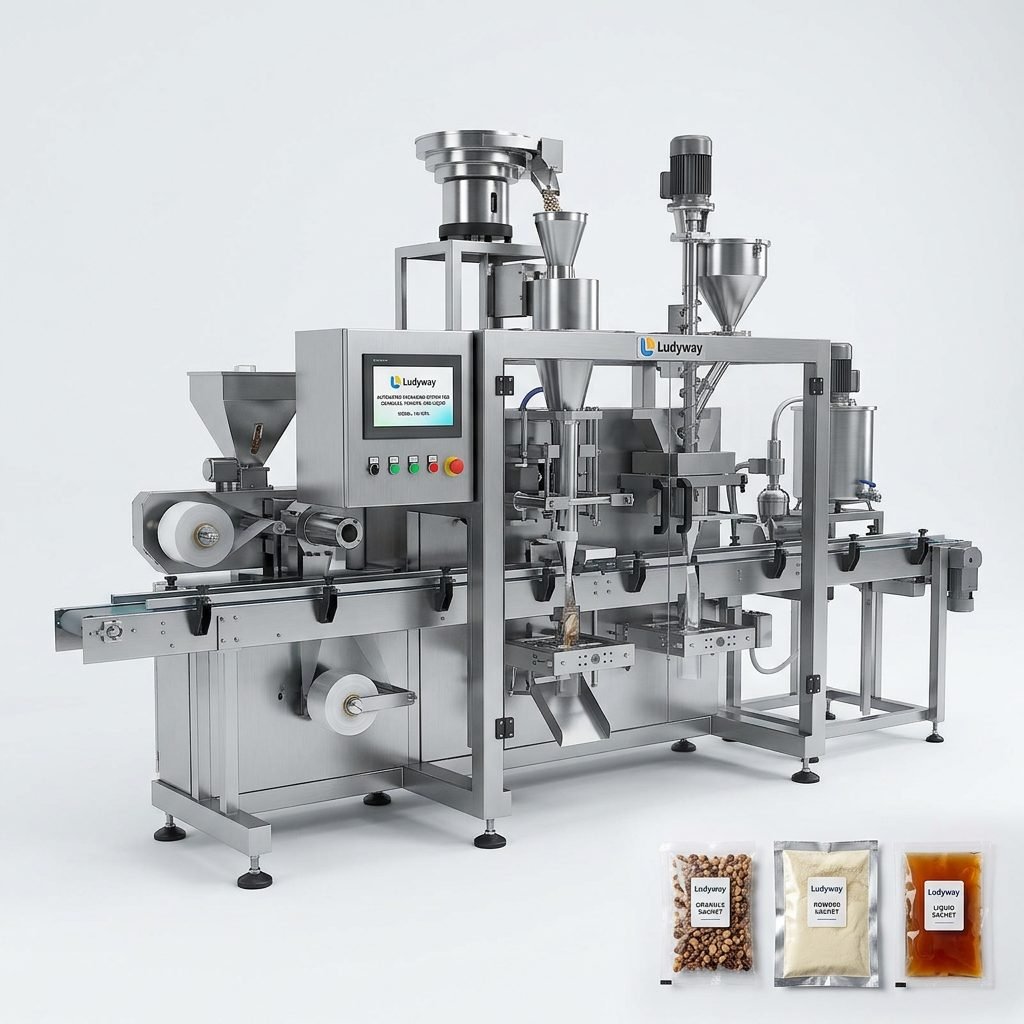
In the competitive world of manufacturing, the design of a drawing packaging machine is a critical factor that influences production efficiency, product safety, and overall operational cost. A well-designed machine is not just about aesthetics; it’s a complex integration of mechanical engineering, user-centric principles, and smart optimization. This article delves into the key principles, innovative layout ideas, and practical optimization tips essential for creating a high-performance drawing packaging system.
Core Principles of Drawing Packaging Machine Design
The foundation of any successful machine lies in its adherence to core design principles. These principles ensure reliability, safety, and efficiency from the ground up.
1. Functional Reliability and Durability
Every component, from the servo-driven film drawing system to the sealing jaws, must be engineered for long-term, uninterrupted operation. This involves selecting high-grade materials like hardened steels for critical wear parts and incorporating robust power transmission systems. Durability directly impacts mean time between failures (MTBF) and total cost of ownership.
2. Operational Safety and Ergonomic Access
Safety is non-negotiable. Designs must integrate comprehensive guarding, emergency stop circuits, and fail-safe mechanisms. Furthermore, ergonomic access for routine maintenance, film loading, and parameter adjustment reduces operator fatigue and minimizes downtime. Clear access panels and logical component placement are key.
3. Precision and Repeatability
The core function of a drawing packaging machine is to create precise, consistent packages. This demands high-accuracy servo motors, rigid frame construction to prevent deflection, and precision tooling for sealing and cutting. Repeatability ensures every package meets quality standards, reducing product giveaway and waste.
4. Flexibility and Quick Changeover
Modern production requires agility. A premier design allows for rapid changeover between different package sizes or film types. This is achieved through tool-less adjustments, digital recall of machine parameters, and modular components like interchangeable forming collars and sealing jaws.
Strategic Layout Ideas for Enhanced Workflow
The physical and logical layout of the machine and its peripherals significantly impacts the entire packaging line’s efficiency. Here are some impactful layout concepts.
▶ Inline vs. Rotary: Choosing the Right Configuration
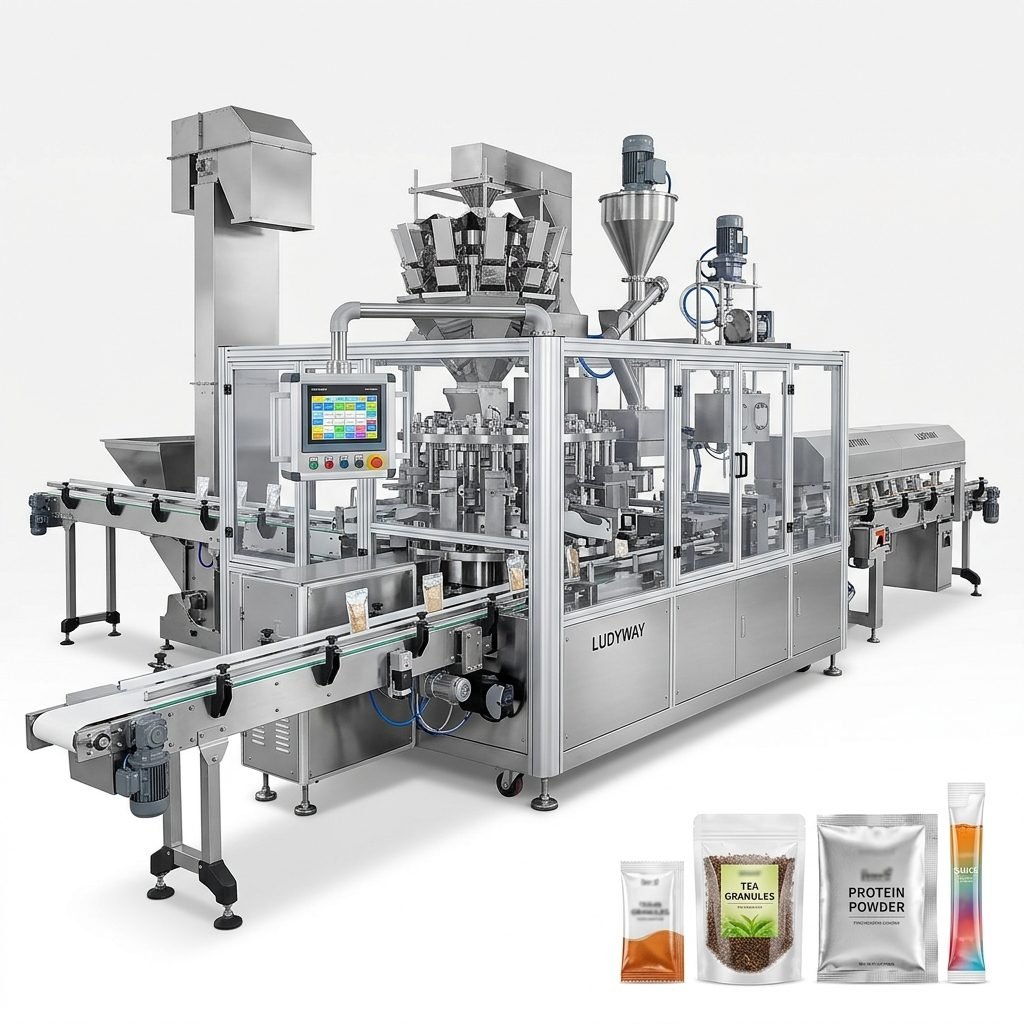
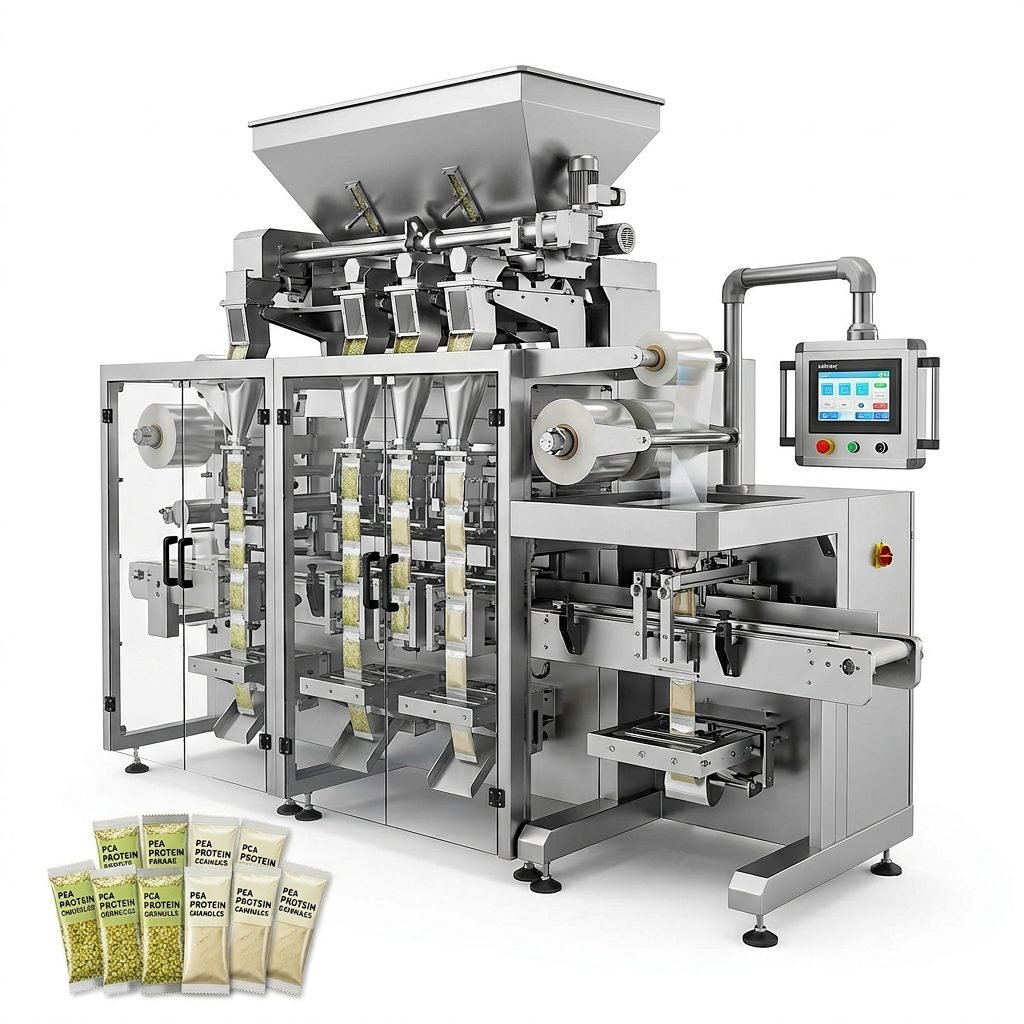
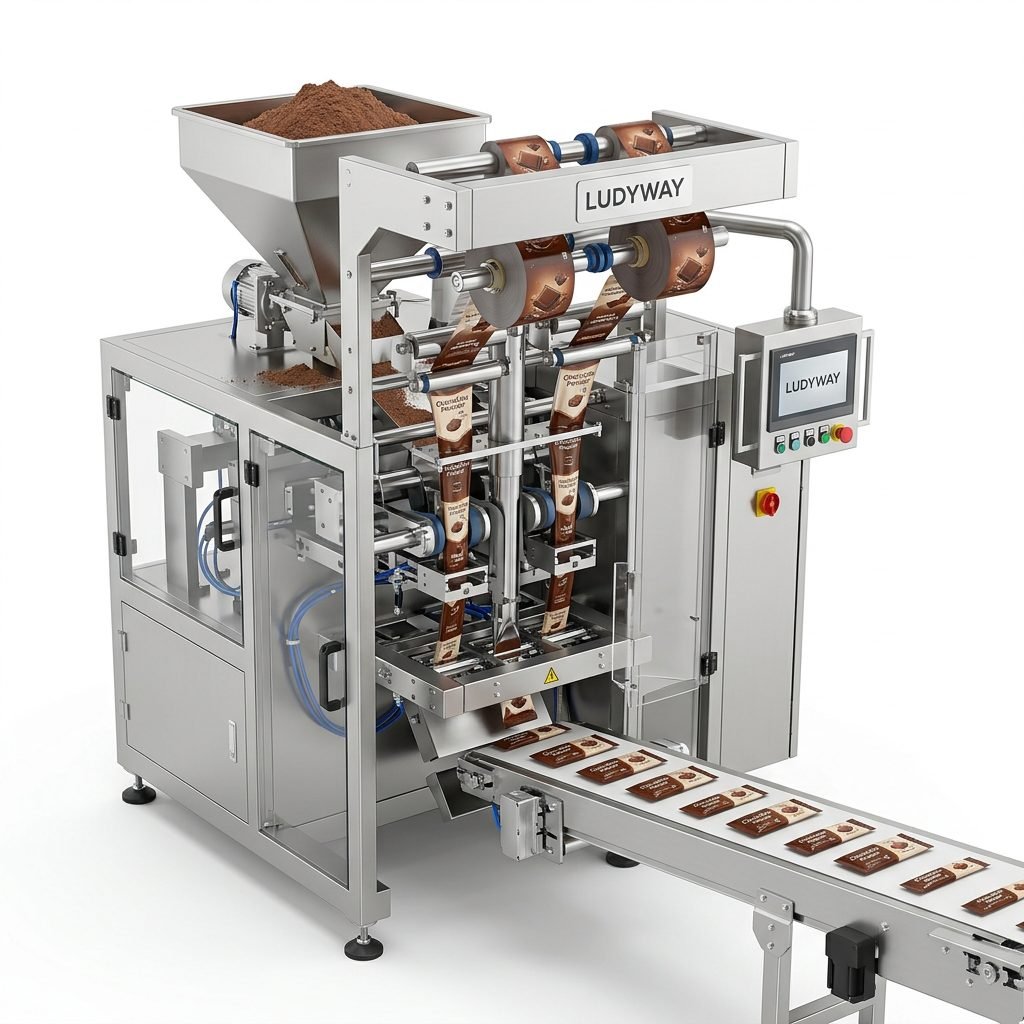
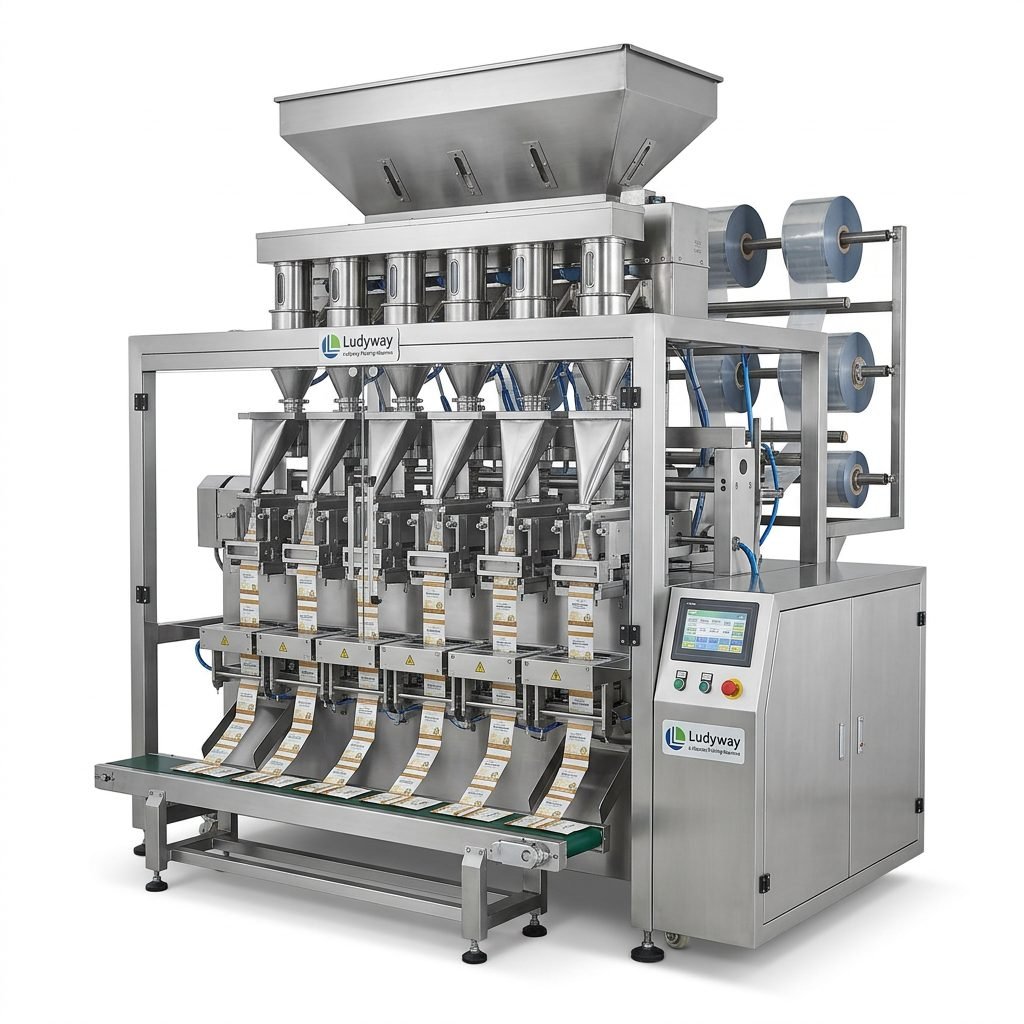
The choice between an inline vertical form-fill-seal (VFFS) layout and a rotary drawing system is fundamental. Inline machines offer a smaller footprint and are excellent for a wide range of products, from granules to powders. Rotary machines, where the forming tube rotates, provide higher speeds for specific products like stick packs and are ideal for multi-lane applications, dramatically increasing output.
Integrating Upstream and Downstream Equipment
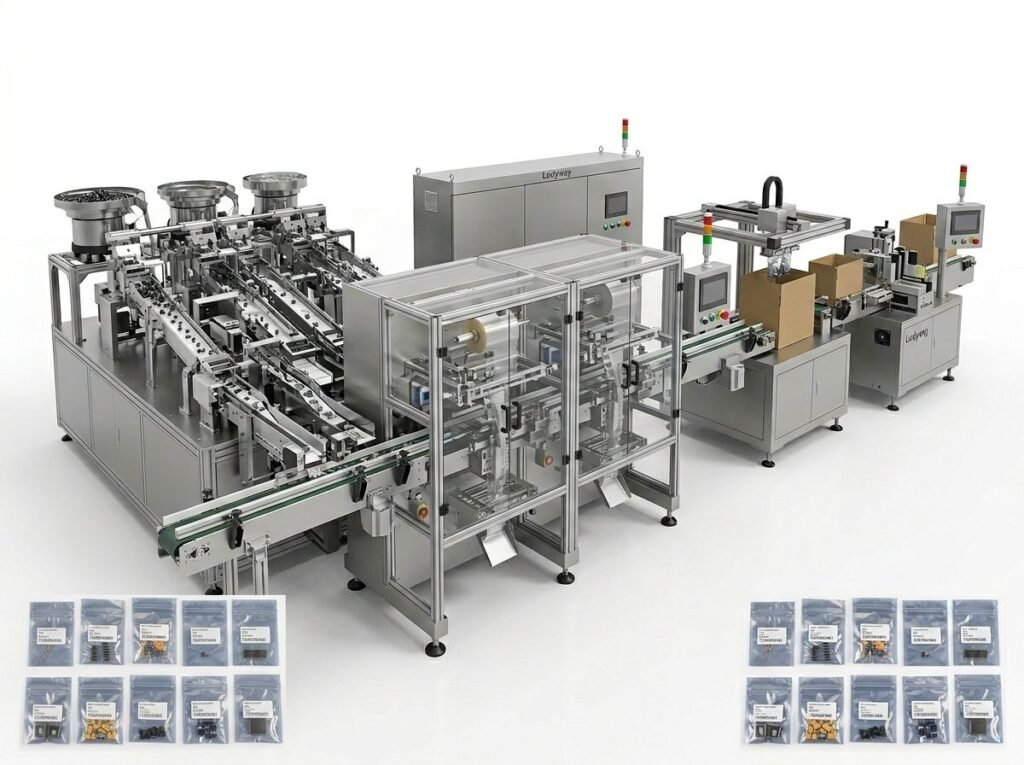
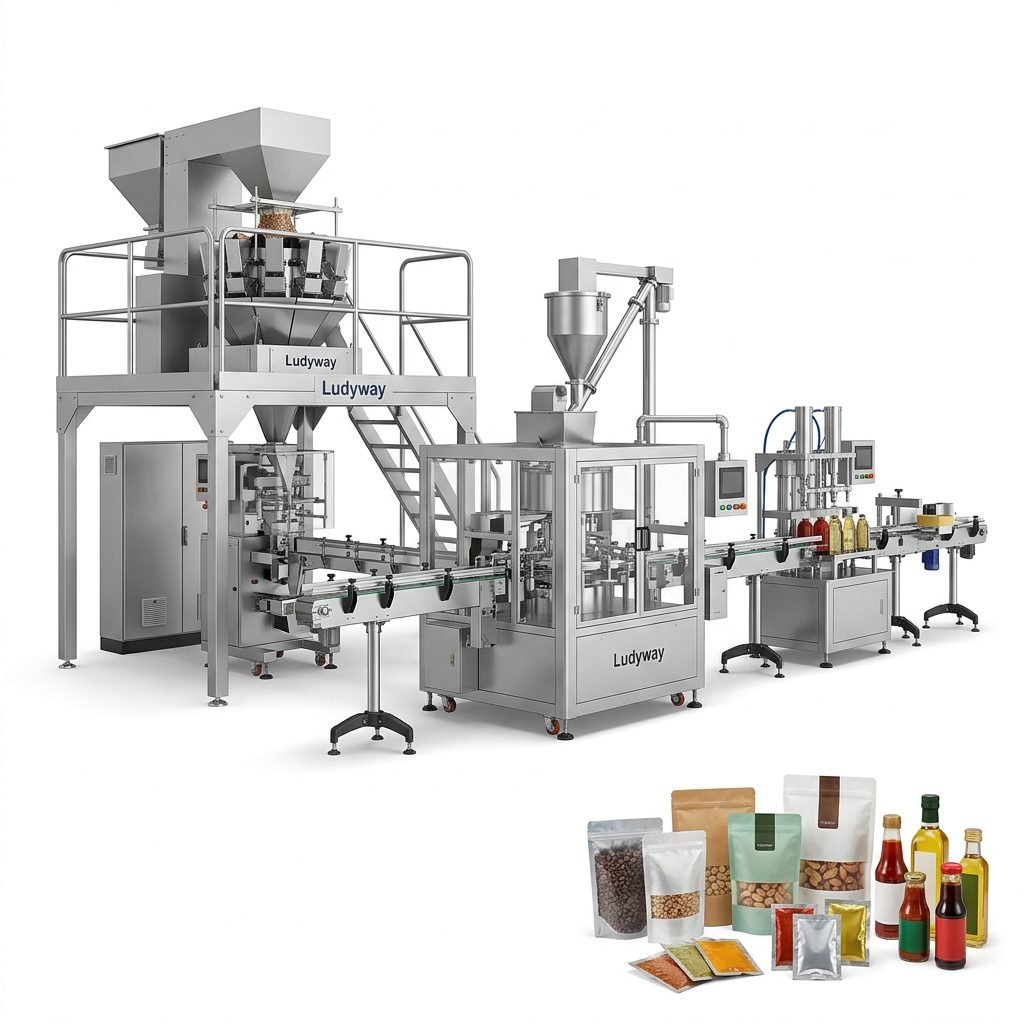
A siloed machine is inefficient. The layout must facilitate seamless integration. Consider the flow from the product feeder (e.g., auger, volumetric cup) to the machine infeed, and then from the machine discharge to downstream equipment like checkweighers, metal detectors, or cartoners. A unified control system that synchronizes all line components is a major advantage offered by experienced suppliers like Ludyway Machinery.
Optimizing the Operator Interface Zone
Designate a clear, uncluttered zone for the primary human-machine interface (HMI). This area should have the touchscreen PLC, common adjustment points, and film unwind brakes within easy reach. Good lighting and informational signage (like lubrication points) in this zone enhance operational clarity and safety.
Actionable Optimization Tips for Peak Performance
Beyond initial design, continuous optimization is key to unlocking a machine’s full potential and adapting to new challenges.
1. Advanced Motion Control Tuning
Fine-tuning the motion profiles of the film draw, sealing, and cutting mechanisms can yield significant gains. Optimizing acceleration and deceleration curves reduces film stress, minimizes registration errors, and can increase maximum speed without compromising seal integrity. Utilizing adaptive servo algorithms helps maintain consistency despite variations in film coefficient of friction.
2. Thermal Management in Sealing Systems
Consistent seal quality is paramount. Implement closed-loop temperature control on sealing jaws with high-response sensors. Proper insulation and cooling of non-sealing areas prevent film distortion. For challenging films, consider pulsed or impulse sealing technologies that apply heat only at the moment of contact, reducing overall thermal load.
3. Proactive Maintenance and Data Analytics
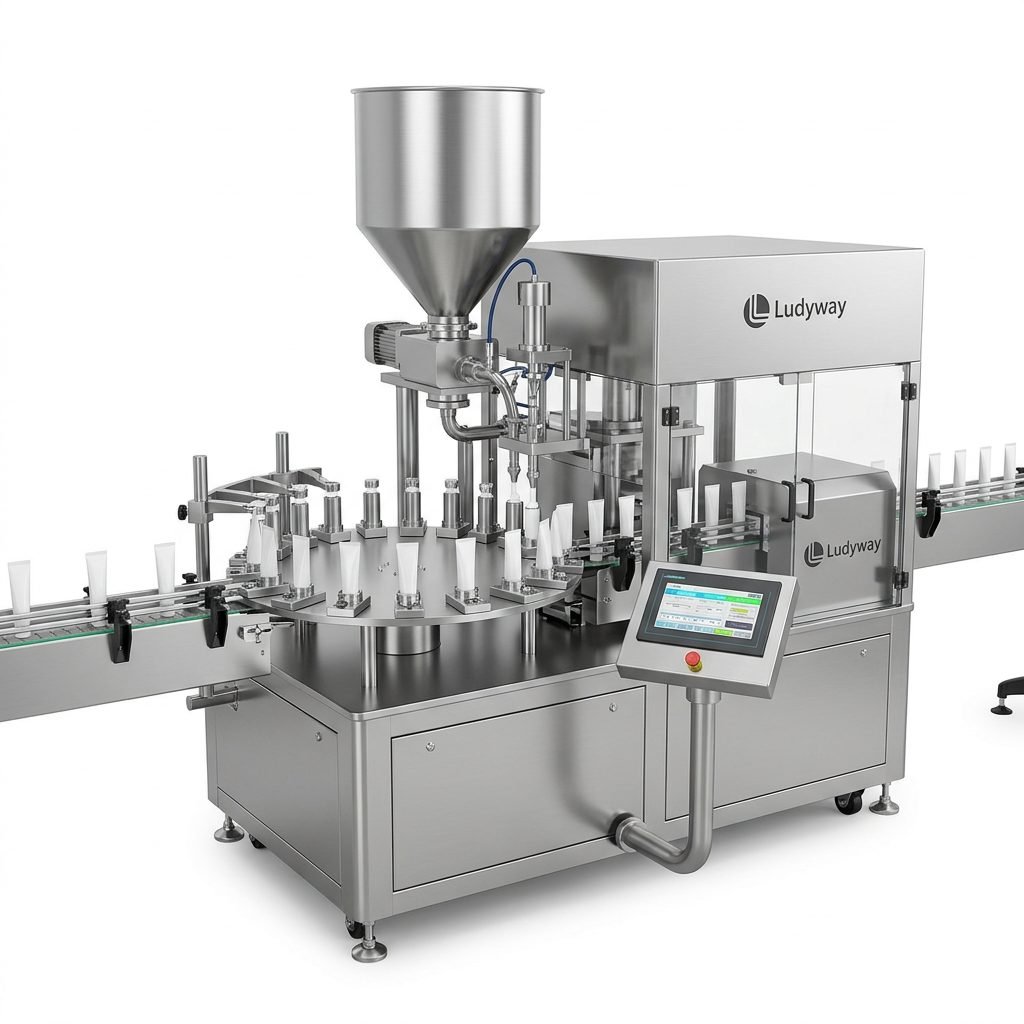
Shift from reactive to predictive maintenance. Use the machine’s PLC to log operational hours, cycle counts, and error histories. Schedule maintenance based on actual usage rather than calendar time. For liquid packaging applications, this is crucial for preventing sealant buildup or pump wear that could lead to leaks.
4. Material and Energy Efficiency Audits
Regularly audit film waste (e.g., trim, misformed packages) and energy consumption. Small adjustments to the forming shoulder or knife alignment can drastically reduce film scrap. Investing in high-efficiency servo drives and regenerative power systems can lower energy costs, a critical factor for sustainable operations.
💡 The Role of Expert Partnership
Optimization is an ongoing journey best undertaken with expert support. Partnering with a provider like Ludyway Machinery, which offers over 30 years of industry experience and a portfolio of 50+ intelligent machine models, provides access to deep application knowledge. Their engineers can offer tailored advice on layout, integration, and fine-tuning specific to your product, whether it’s a sensitive pharmaceutical powder or a free-flowing food granule, ensuring your drawing packaging line operates at its absolute best.
Frequently Asked Questions (FAQs)
1. What is the most important factor in reducing film waste on a drawing packaging machine?
Precision registration and thermal control are paramount. Accurate synchronization between the film advance and the printed pattern (if any), combined with consistently controlled sealing temperatures, prevents mis-cuts, poor seals, and distorted packages that lead to waste. Regular calibration of the photoelectric sensor and sealing jaw thermocouples is essential.
2. How can I increase the speed of my existing drawing packaging line?
Before simply increasing the machine cycle rate, analyze bottlenecks. Often, the limiting factor is not the VFFS machine itself but the upstream feeder’s speed or the downstream conveyor’s capacity. Optimizing the product infeed system and ensuring the discharge path is clear can yield immediate speed gains. Additionally, reviewing and optimizing the motion control parameters as mentioned in the optimization tips can safely unlock higher speeds.
3. What design features are critical for packaging abrasive products?
For abrasive materials like certain powders or granules, wear-resistant materials in the product contact path are crucial. This includes hardened or stainless-steel forming tubes, ceramic-lined funnels, and specially coated augers if used for feeding. The design should also allow for easy access to these wear parts for inspection and replacement.
4. Can one drawing packaging machine handle very different package sizes?
Yes, but the range of flexibility depends on the machine’s design. Machines built for quick changeover will have a wider permissible range. Key is the ability to easily change the forming collar, adjust the film width guide rails, and digitally switch between sealing jaw stroke lengths and recipes stored in the PLC. It’s important to define your required size range with your machine supplier upfront.
5. How does machine layout affect operational safety?
Layout directly influences safety. A good design places emergency stops at logical intervals around the machine, ensures safety guards do not interfere with normal workflow (preventing their removal), and provides clear aisles for access. It also separates high-traffic operator areas from maintenance zones and ensures electrical panels and pneumatics are easily accessible for authorized personnel but protected from general contact.