Choosing the right food packaging equipment is a critical decision for any food production business. The machinery you select directly impacts your product quality, production efficiency, operational costs, and ultimately, your brand reputation in a competitive market. With a vast array of technologies available, from simple manual fillers to fully automated, intelligent lines, navigating the options can be complex. This guide will explore the primary types of food packaging equipment, their key applications across the industry, and provide a structured framework to help you choose the right machinery for your specific needs and growth ambitions.
Primary Types of Food Packaging Equipment
The food packaging landscape is segmented by the form of the product being packaged and the required package style. Understanding these core categories is the first step in specification.
1. Form-Fill-Seal (FFS) Machines
These are the workhorses of modern packaging, creating the package from a roll of film, filling it with product, and sealing it in one continuous, automated process. They offer high efficiency and excellent hygiene.
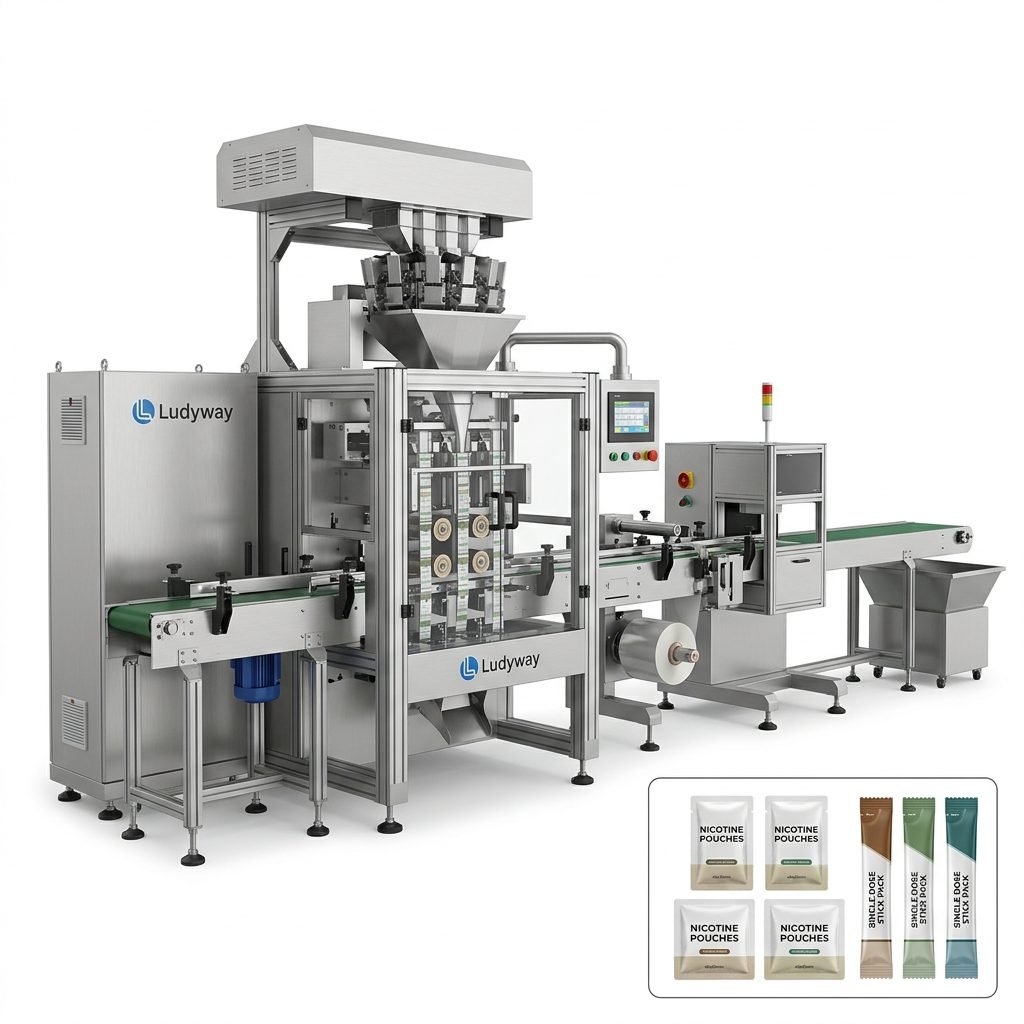
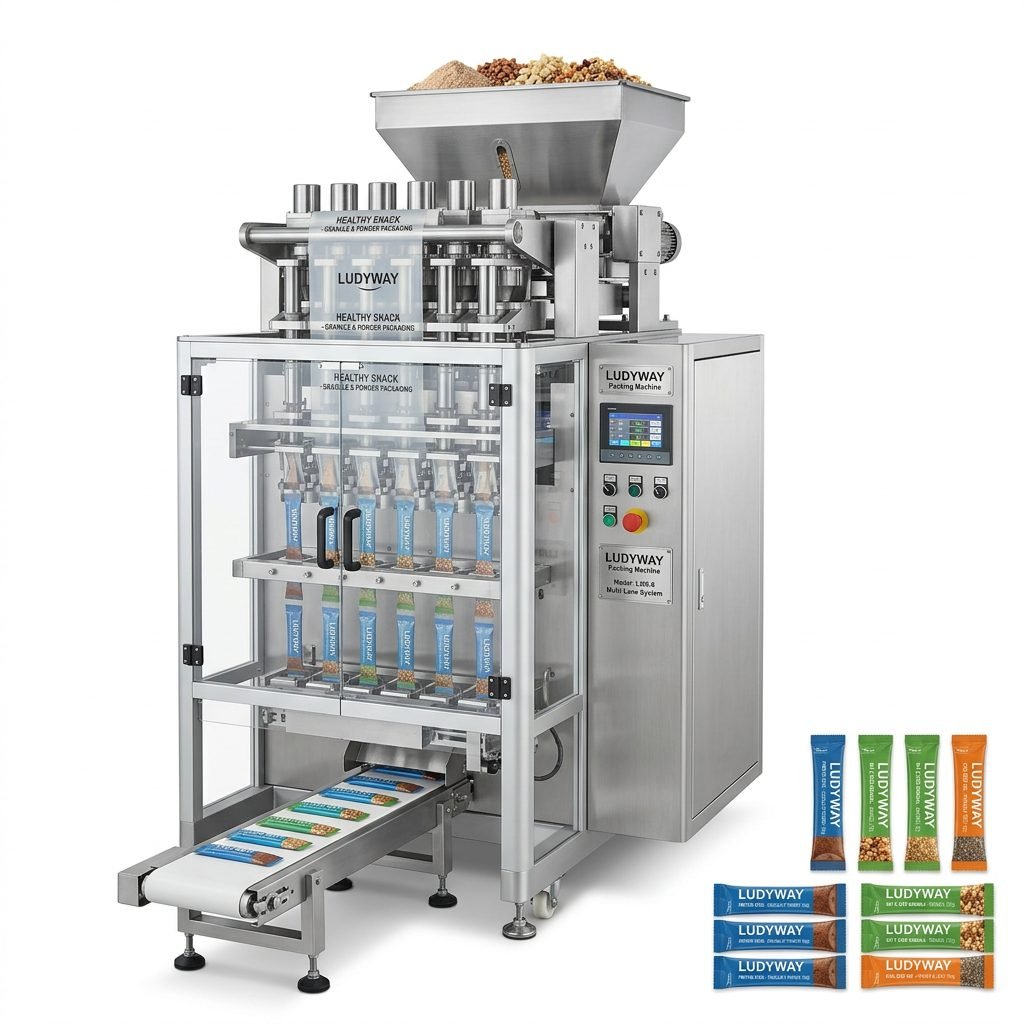
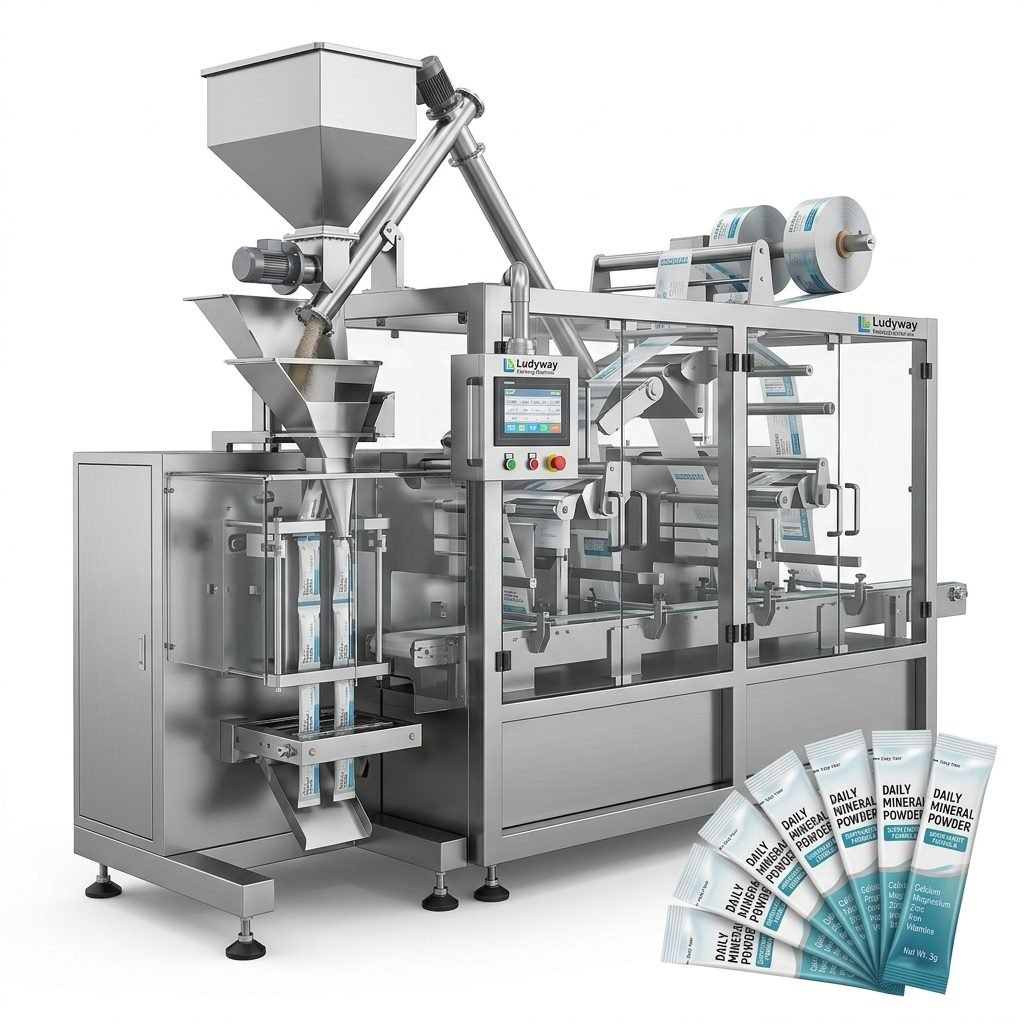
Vertical Form-Fill-Seal (VFFS): Ideal for granule, powder, and small piece products like snacks, coffee, and spices. The film is formed vertically into a bag, filled, and sealed. They are space-efficient and perfect for high-speed, single-portion packaging like stick packs and sachets.
Horizontal Form-Fill-Seal (HFFS): Used for products that are difficult to drop vertically, such as biscuits, chocolate bars, or frozen items. The film is formed horizontally around the product. This type is excellent for creating attractive flow-wrap packages with end or fin seals.
2. Pre-Made Pouch & Bag Fillers
This equipment is designed to fill and seal bags or pouches that have been pre-manufactured. It’s often chosen for its flexibility in bag style and material, and for handling products where the packaging is a key brand element.
Applications: Premium coffee, grated cheese, fresh salads, gourmet grains, and liquids in stand-up pouches (SUPs).
3. Liquid & Viscous Product Fillers
This category encompasses a range of technologies precision-engineered for fluids, from water-thin oils to thick pastes and sauces.
- Piston Fillers: Highly accurate for viscous products like yoghurt, sauces, and batters.
- Gravity/Pressure Fillers: Suitable for free-flowing liquids like juices, oils, and vinegar.
- Volumetric Cup Fillers: Good for granules and some semi-viscous products at medium speeds.
4. Capping, Sealing & Labeling Equipment
These are secondary but essential packaging machines that complete the package.
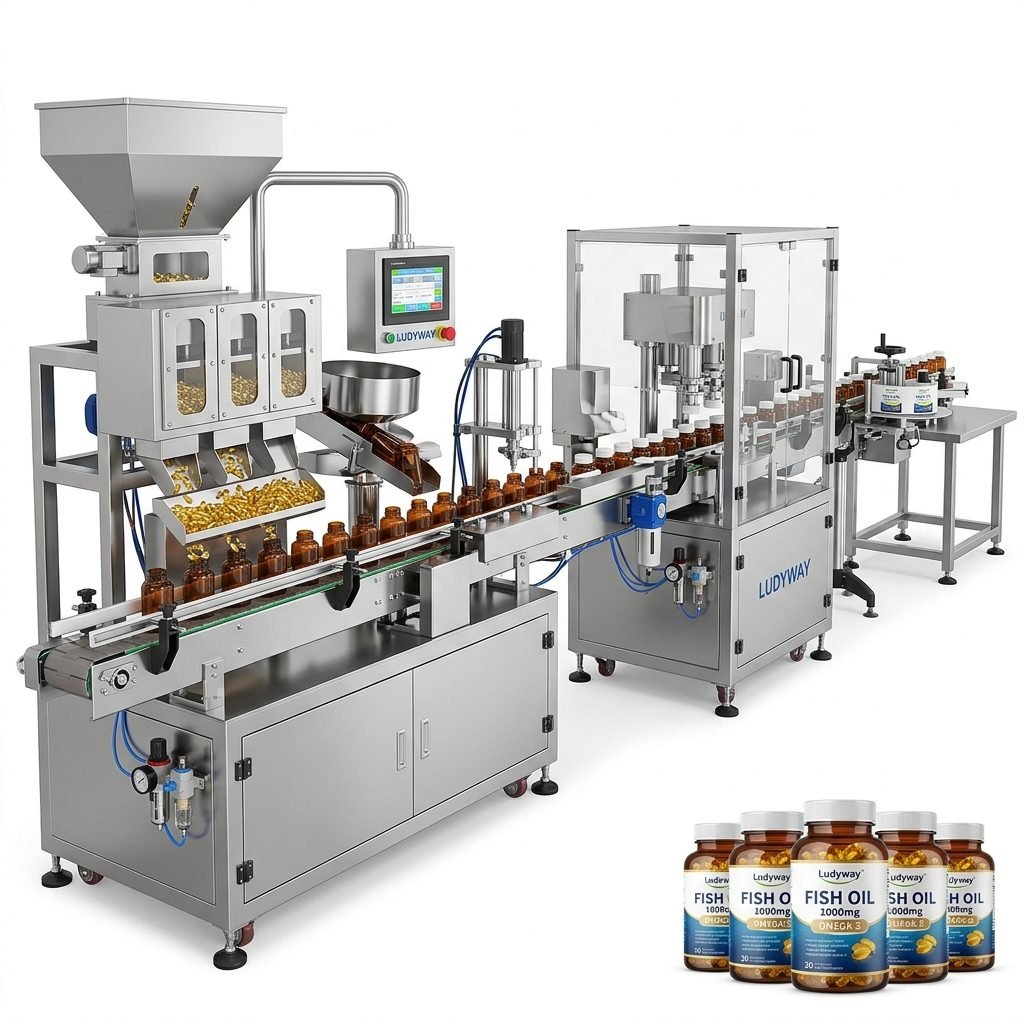
Cappers: Apply screw caps, snap-on lids, or press-on caps to bottles and jars. Sealers: Induce heat seals on lidding film for trays or cups. Labelers: Apply front/back or wrap-around labels to containers with precise placement.
Key Applications Across the Food Industry
Different food sectors have distinct packaging priorities, from extended shelf-life to portion control and convenience.
Snack Foods & Confectionery
This sector demands high-speed, flexible packaging for a variety of product shapes and sizes. VFFS machines for chips and nuts, and HFFS machines for candy bars and biscuit packs are predominant. Nitrogen flushing is often integrated to maintain crispness.
Bakery & Fresh Goods
Packaging must balance product protection with visibility and breathability. Modified Atmosphere Packaging (MAP) using tray sealers is common for extended shelf-life on baked goods and prepared salads. Simpler bagging systems are used for bread and rolls.
Beverages & Liquids
Focus here is on hygiene, fill accuracy, and sealing integrity. Integrated lines combine bottle unscramblers, high-speed liquid fillers, cappers, and labelers. Aseptic filling technology is critical for dairy and juice products requiring long ambient shelf life.
Powdered & Granular Products
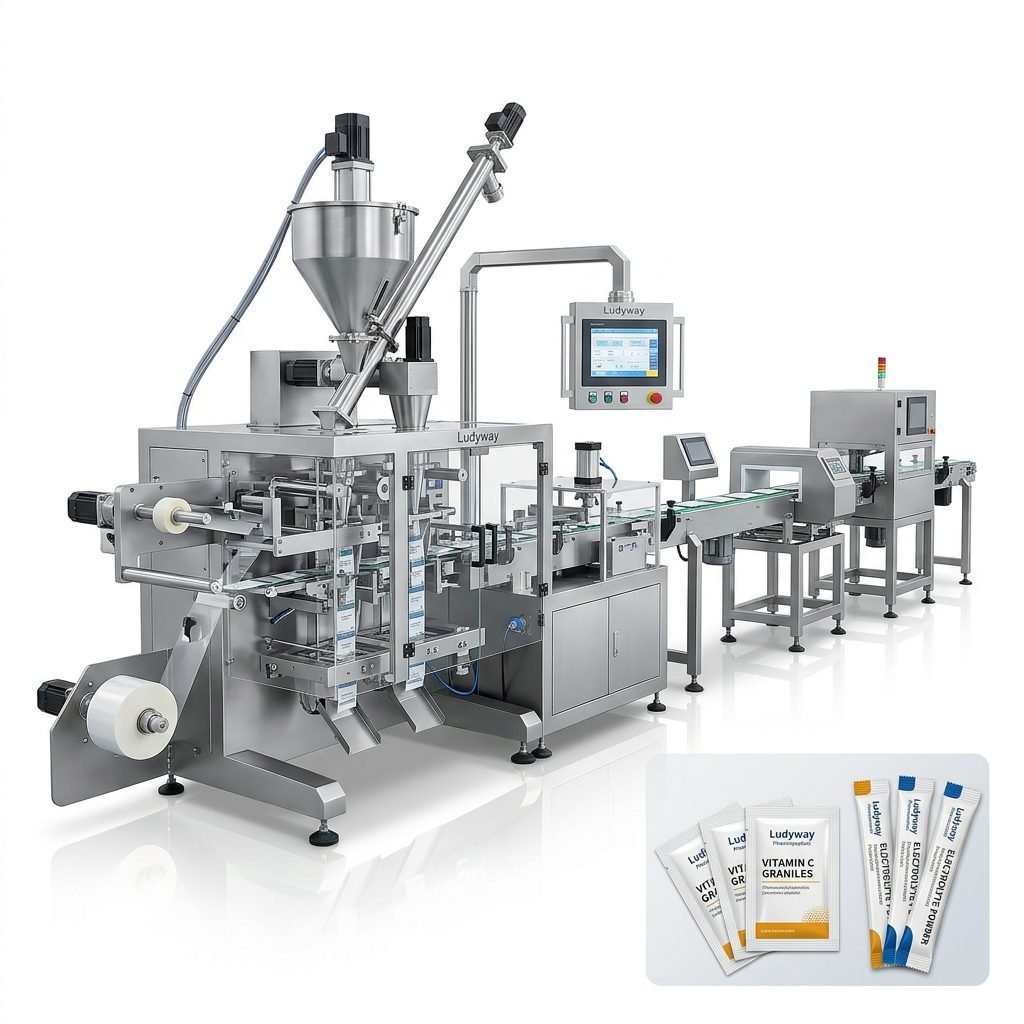
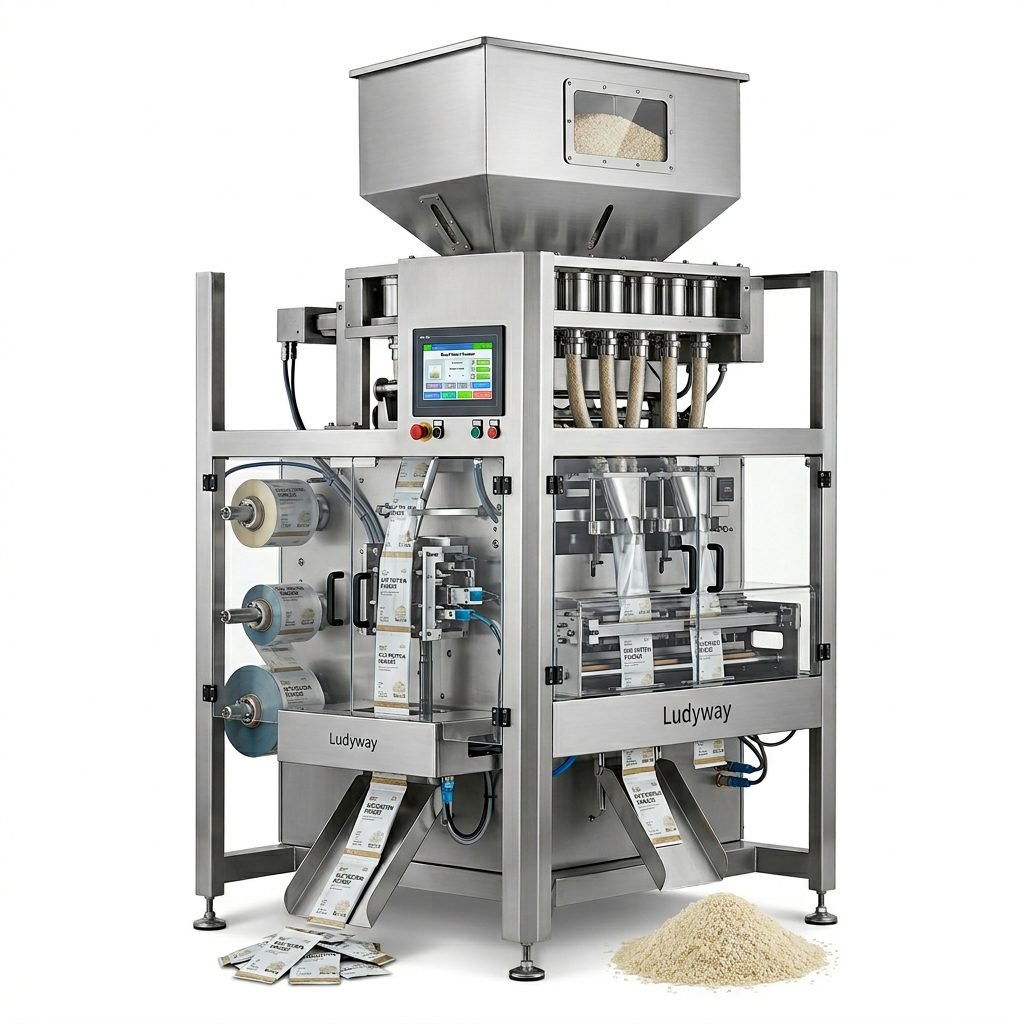
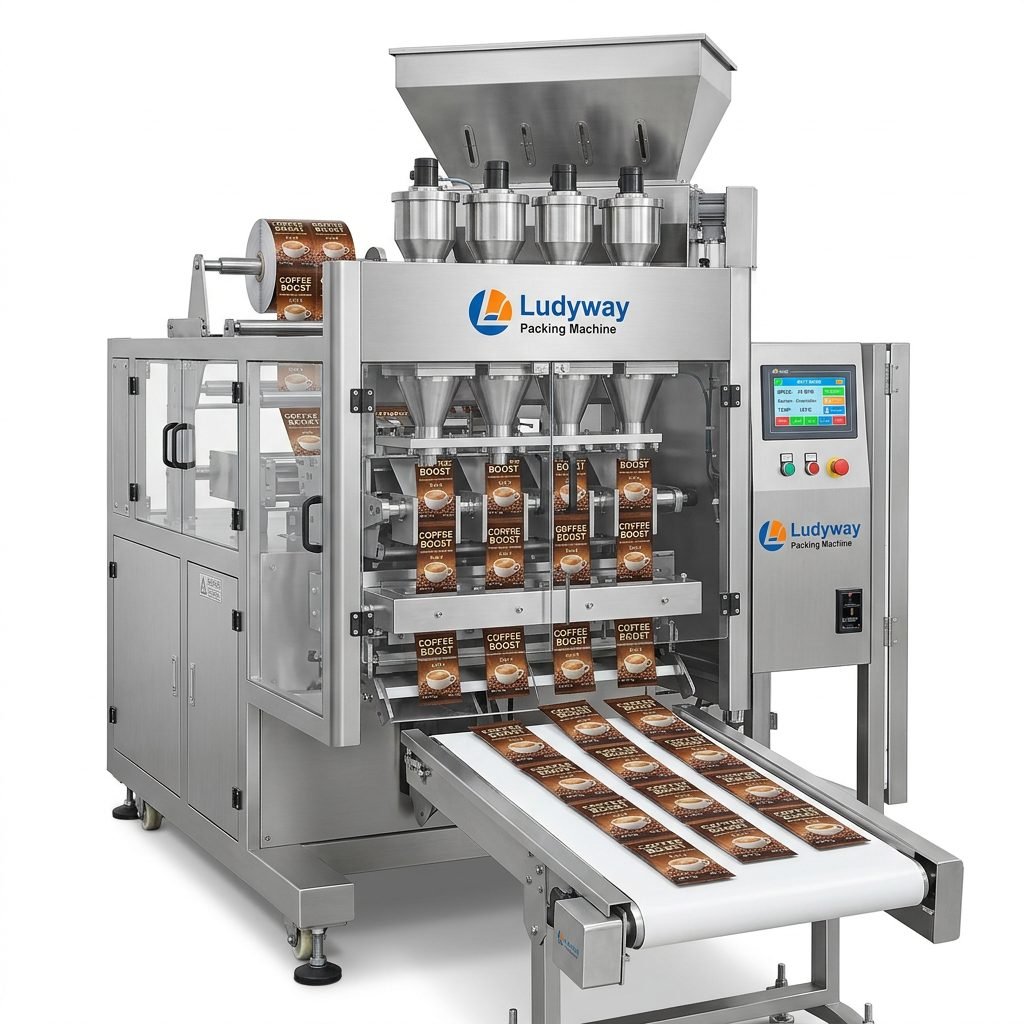
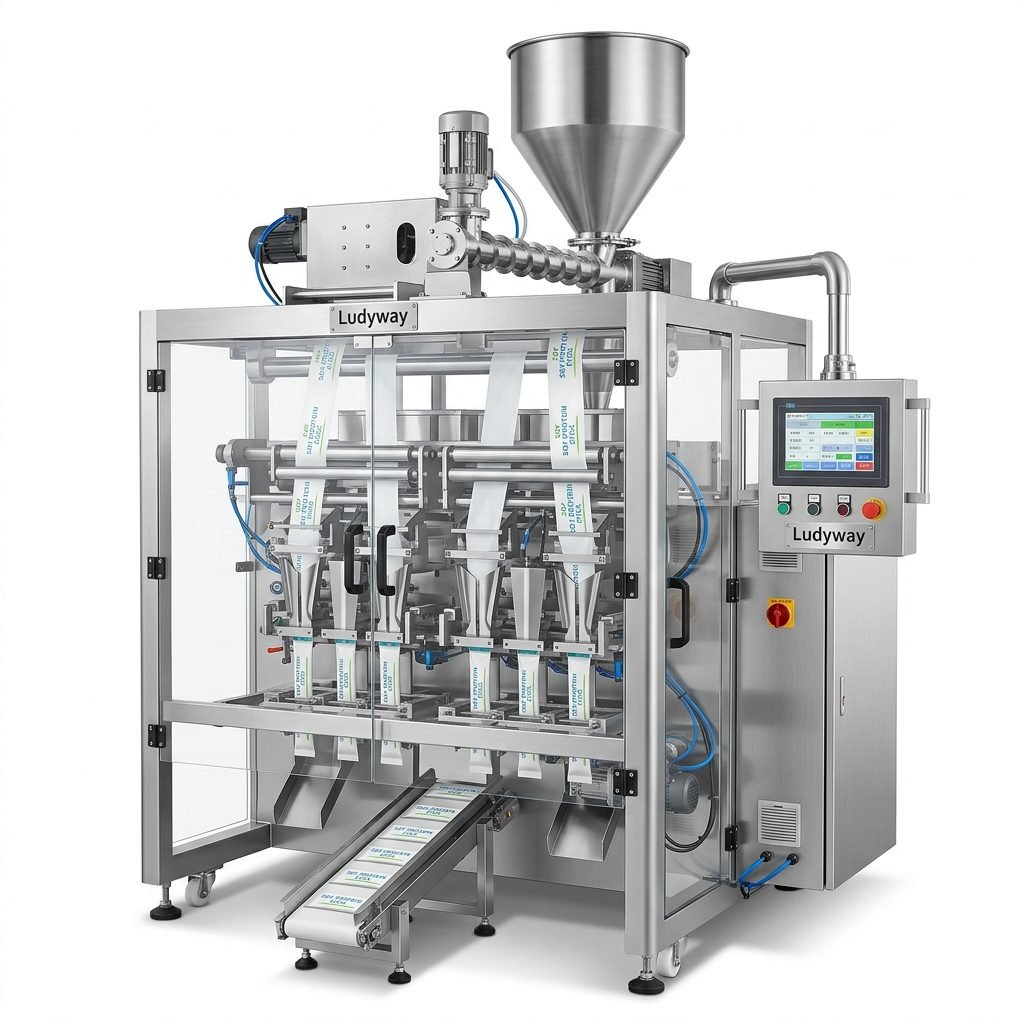
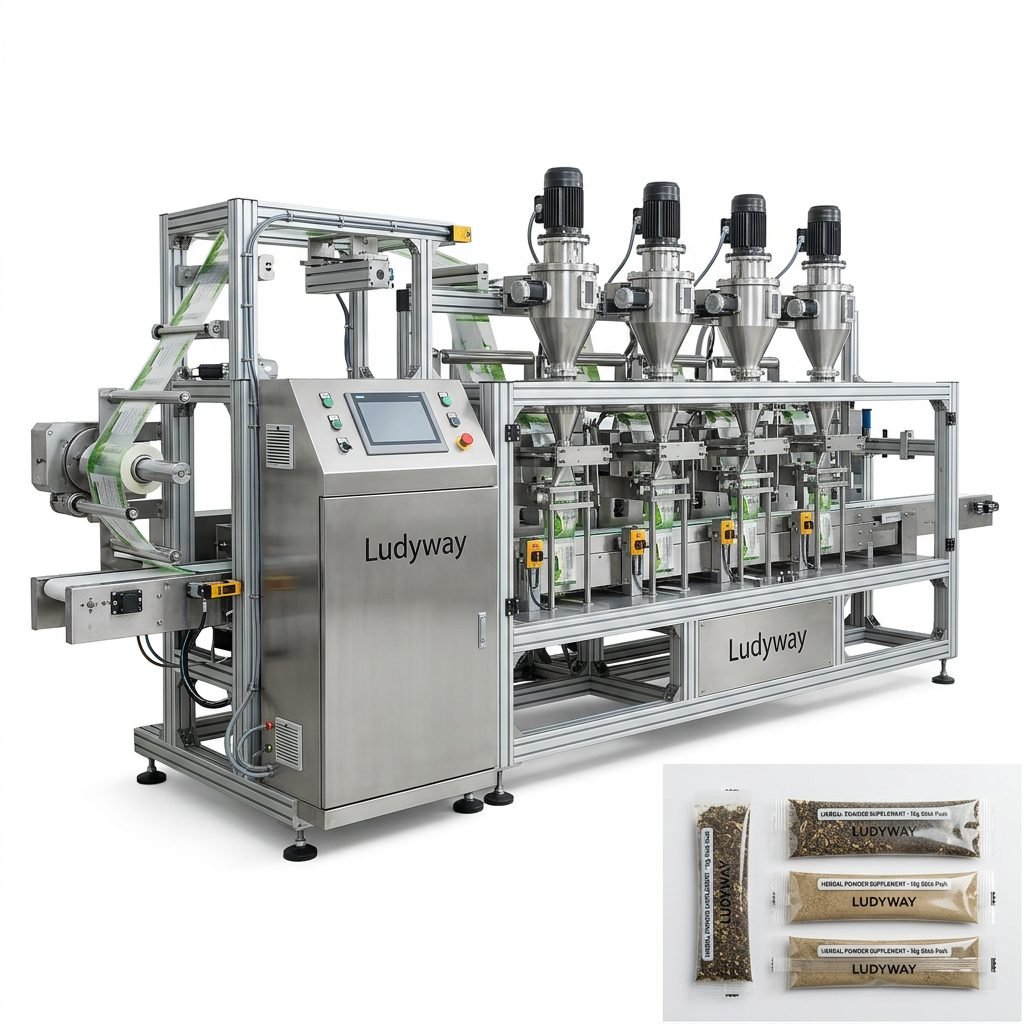
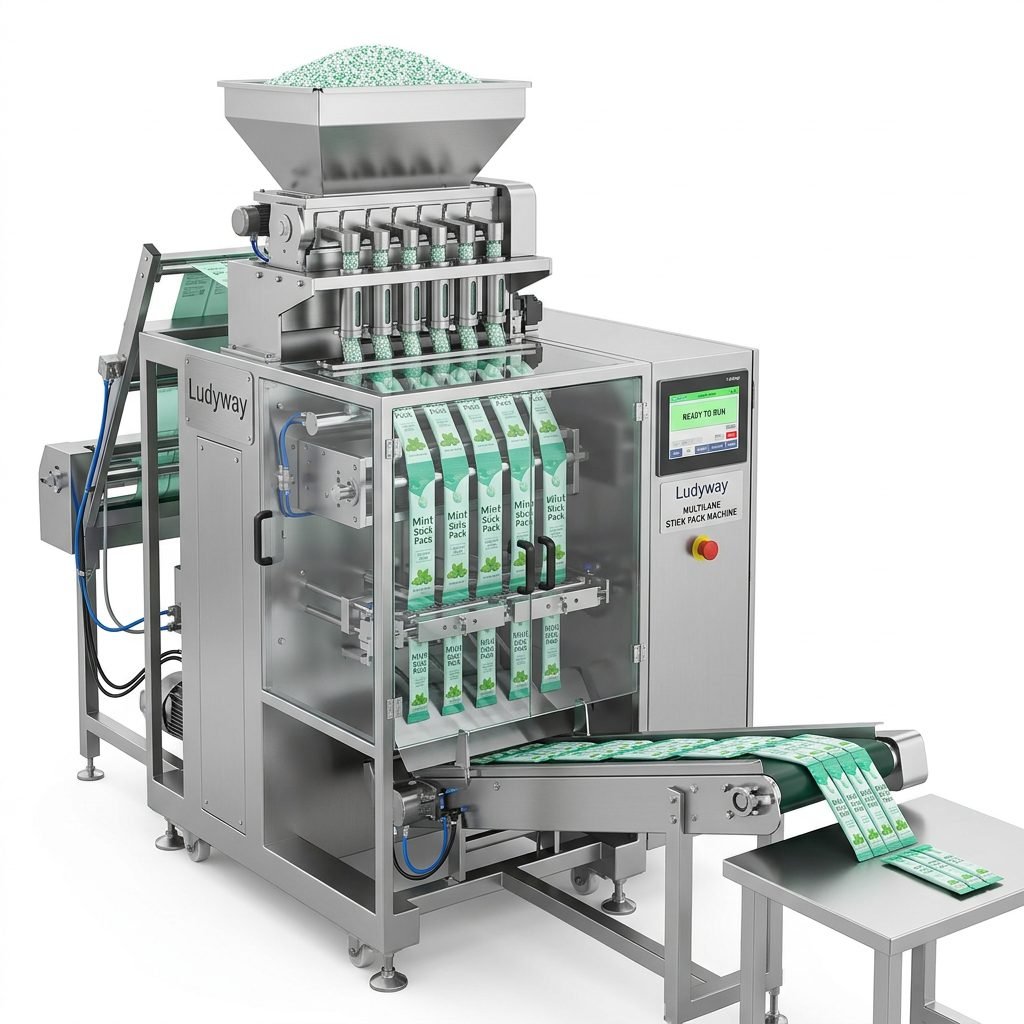
This includes coffee, sugar, spices, protein powders, and instant soups. The challenge is containing dust and ensuring accurate, consistent fill weights. Ludyway Machinery specializes in dust-free, multi-lane VFFS systems perfect for creating stick packs and single-serve sachets for these products, which are hugely popular for their convenience.
Frozen & Chilled Foods
Packaging must withstand low temperatures and moisture. Robust materials and strong seals are mandatory. Vertical form-fill-seal machines with cold-resistant films or pre-made pouch systems are typically used for frozen vegetables, fruits, and ready meals.
How to Choose the Right Packaging Machinery: A Step-by-Step Framework
Selecting equipment is an investment. A systematic approach ensures you match machinery to your true operational needs.
Step 1: Define Your Core Requirements
Start with the fundamentals of your product and output goals.
- Product Characteristics: Form (solid, granule, powder, liquid), viscosity, density, abrasiveness, temperature, and fragility.
- Packaging Specifications: Desired bag/pouch style, material (film type, thickness), required seal type, and any special features like zippers or spouts.
- Production Speed & Capacity: Target output in packs per minute (PPM) or per hour. Consider both current needs and projected growth for the next 3-5 years.
Step 2: Evaluate Automation Level & Integration
Determine how the machine will fit into your workflow.
Standalone vs. Integrated Line: A standalone machine requires manual loading of product and packages. An integrated, turnkey line includes upstream feeders (like a bucket elevator for granules) and downstream systems (like a checkweigher or cartoner), offering much higher efficiency. Professional packaging experts can help you design a complete solution.
Control System: Modern machines with PLC controls and touchscreen HMIs offer recipe storage, easier changeovers, and detailed production data tracking.
Step 3: Assess Key Machine Features & Build Quality
Look beyond the brochure specifications to the details that ensure reliability.
- Construction Materials: Food-contact parts should be 304 or 316 stainless steel for hygiene and corrosion resistance. The frame should be robust.
- Sealing System: The heart of the machine. Evaluate the heater design, temperature control precision, and seal bar durability.
- Changeover Ease: How quickly can you switch between different package sizes? Look for tool-less adjustments and quick-release mechanisms.
- Accuracy & Consistency: For fillers, what is the weight variation? Look for machines with servo-driven augers or scales for high precision.
Step 4: Consider Supplier Credentials & Support
The machine is only as good as the company behind it. Partnering with a reliable supplier like Ludyway Machinery, with decades of industry experience, is crucial.
Technical Support & Spare Parts: Ensure the supplier offers comprehensive installation, training, and prompt after-sales service. Check the availability of spare parts.
Customization Ability: Can the supplier modify the standard machine to handle your unique product or packaging material? This flexibility is invaluable.
Step 5: Analyze Total Cost of Ownership (TCO)
The purchase price is just one component. Calculate the long-term investment.
- Initial Machine Cost
- Installation & Training Fees
- Energy Consumption
- Maintenance & Spare Parts Costs
- Material Waste (from film trials and sealing errors)
- Potential Downtime Costs
A slightly more expensive, robust machine from a reputable supplier often has a lower TCO than a cheaper, less reliable alternative.
Frequently Asked Questions (FAQs)
1. What is the main difference between Vertical (VFFS) and Horizontal (HFFS) form-fill-seal machines?
The core difference is the orientation of package formation relative to the product flow. VFFS machines form the bag vertically around a filling tube, making them ideal for free-flowing products that can be dropped in. HFFS machines form the film horizontally around the product itself, making them better for delicate, stacked, or irregularly shaped items that cannot be dropped.
2. How important is after-sales service when choosing a packaging machine supplier?
Extremely important. Packaging machines are complex and will require maintenance, parts, and occasional troubleshooting. A supplier with a strong, responsive service team and readily available spare parts minimizes costly production downtime. It’s a critical factor for long-term operational success.
3. Can one packaging machine handle multiple different products or package sizes?
Yes, most modern machines are designed for changeover. However, the ease and speed of changeover vary greatly. Look for features like digital size adjustment, quick-change film rolls, and tool-less change parts. The more frequently you need to switch, the more you should invest in a machine designed for fast, simple changeovers.
4. What are the benefits of a multi-lane stick pack machine?
Multi-lane machines (e.g., 4-lane, 8-lane) produce multiple stick packs simultaneously from a single wide web of film. The primary benefit is dramatically increased output speed without a proportional increase in machine footprint or cost per lane. They are the most efficient solution for high-volume production of single-serve powders, supplements, and instant beverages.
5. How do I determine the right production speed (PPM) for my needs?
Calculate based on your required daily/weekly output, factoring in realistic operational uptime (typically 70-85%). For example, if you need 50,000 packs per 8-hour shift, you need a machine capable of approximately 104 PPM (50,000 / 480 minutes). Always add a 15-25% speed buffer to accommodate future growth and peak demand periods.