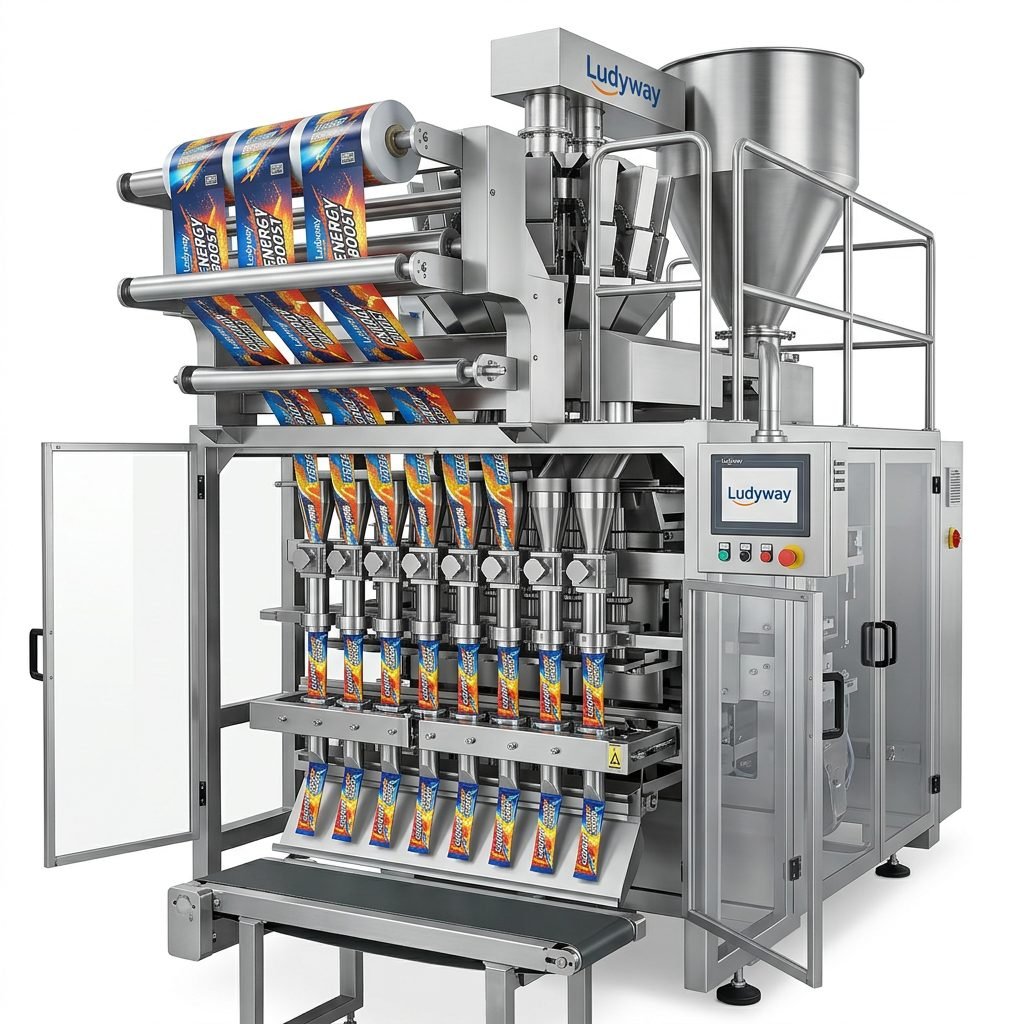
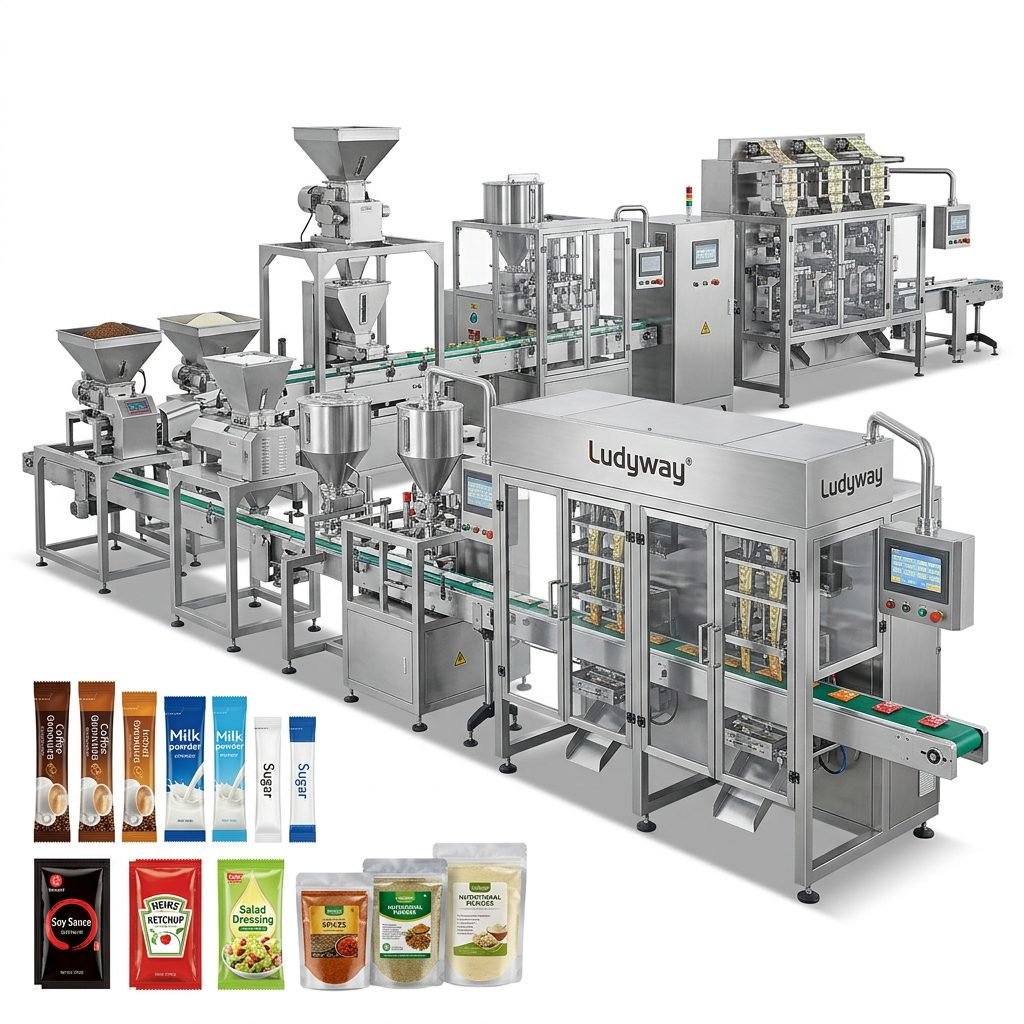
In today’s fast-paced food industry, efficient and reliable packaging is not just a final step—it’s a critical component of brand identity, product safety, and operational success. The right food packaging machinery can streamline your production, reduce costs, ensure consistency, and help your products stand out on crowded shelves. This complete guide delves into the essential types of packaging machinery, analyzes the key factors influencing costs, and explores comprehensive production line solutions to empower your manufacturing process.
Understanding Core Types of Food Packaging Machinery
The landscape of food packaging equipment is diverse, each type designed for specific functions, product forms, and output requirements. Selecting the appropriate machinery is the first step toward an optimized packaging operation.
Primary Packaging Systems: Direct Product Contact
These machines handle the initial containment of the food product, forming the primary barrier against environmental factors.
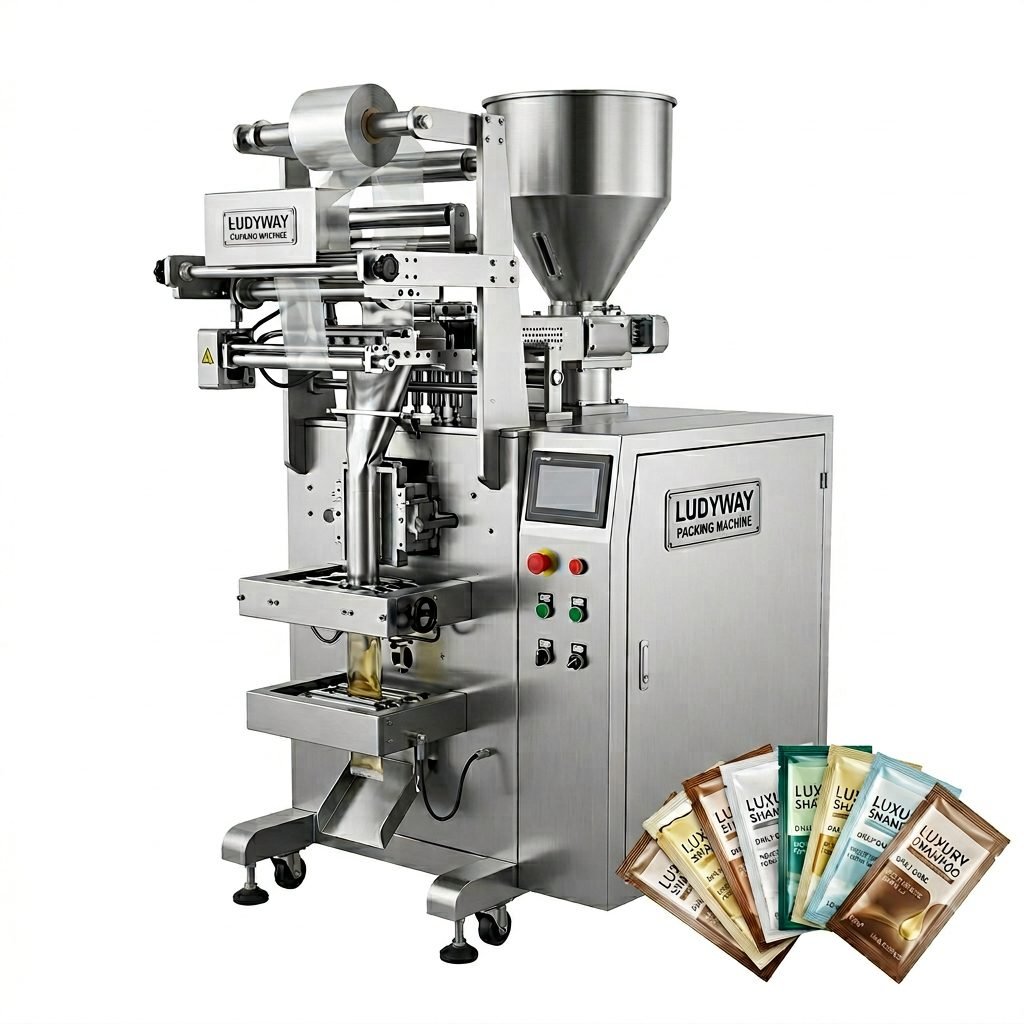
Vertical Form Fill Seal (VFFS) Machines: The workhorses of the industry, ideal for packaging granules, powders, snacks, and liquids. They form a bag from a roll of film, fill it with product, and seal it in a continuous motion. They are highly versatile and efficient for medium to high-volume production.
Horizontal Form Fill Seal (HFFS) Machines: Perfect for arranging products like biscuits, chocolate bars, or tea bags into trays or flow-wrap packages. They offer excellent presentation and are often used for count-fill applications.
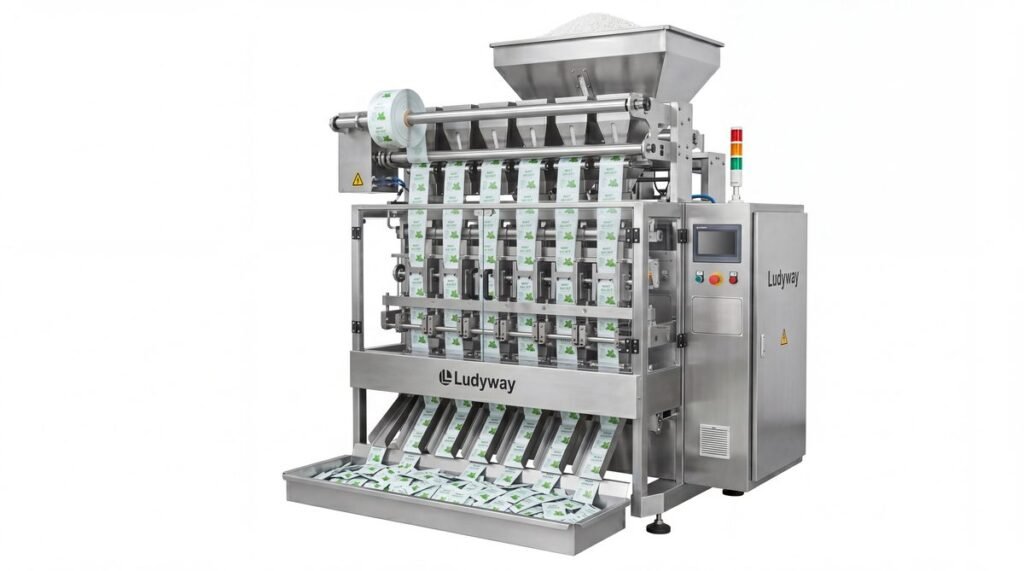
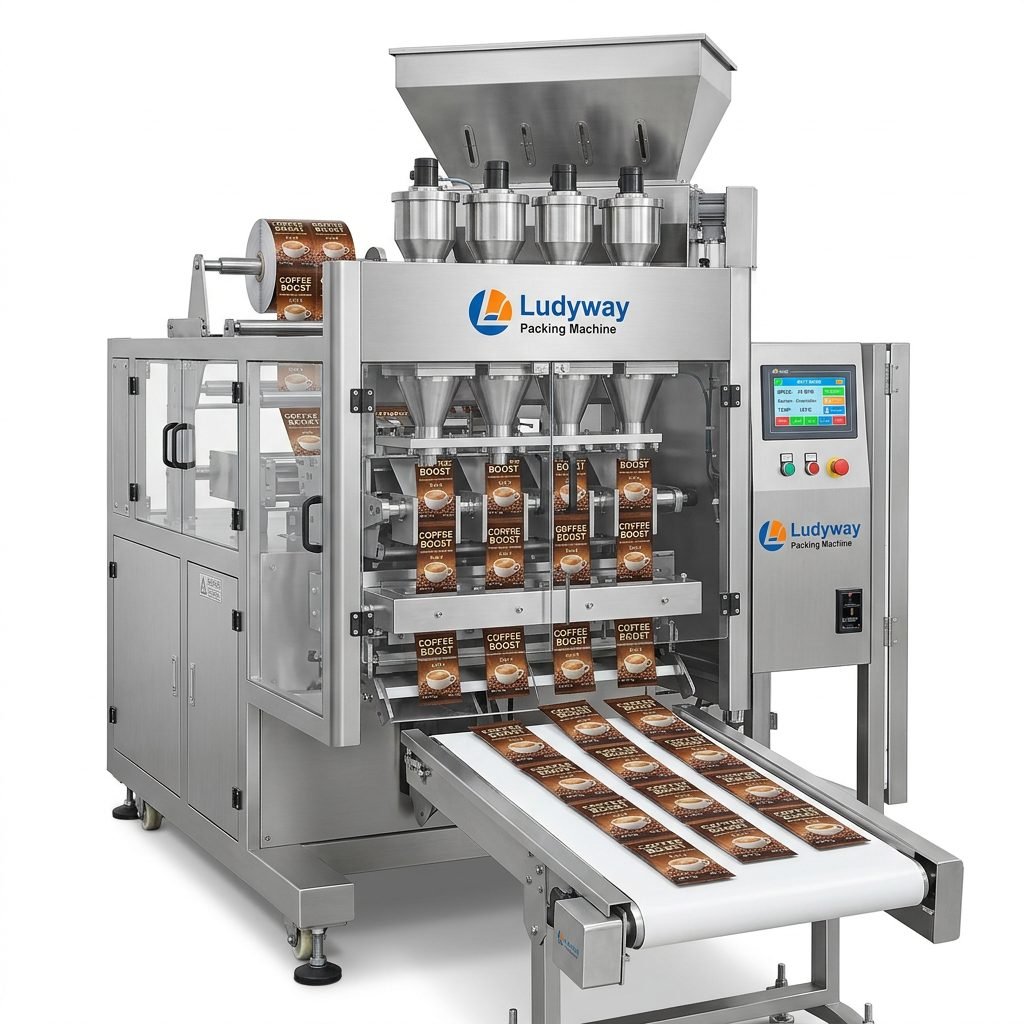
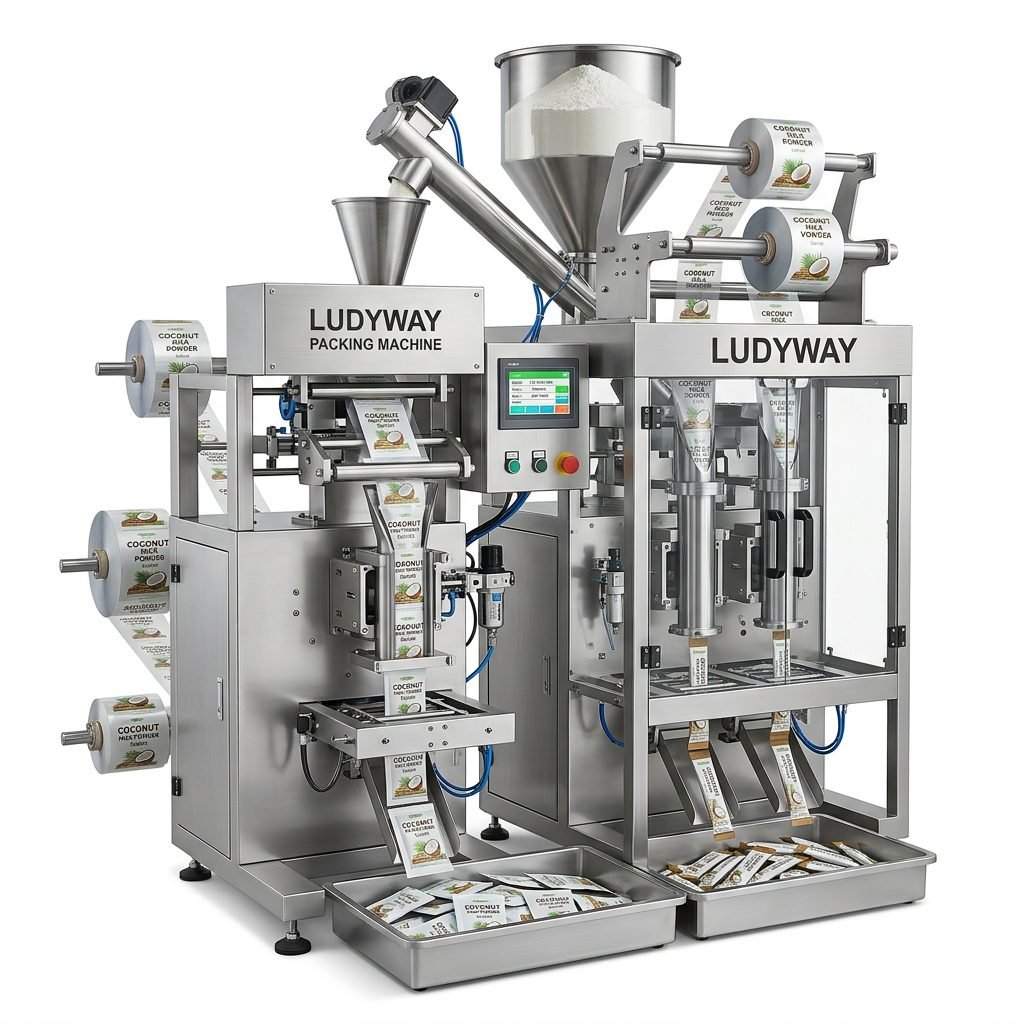
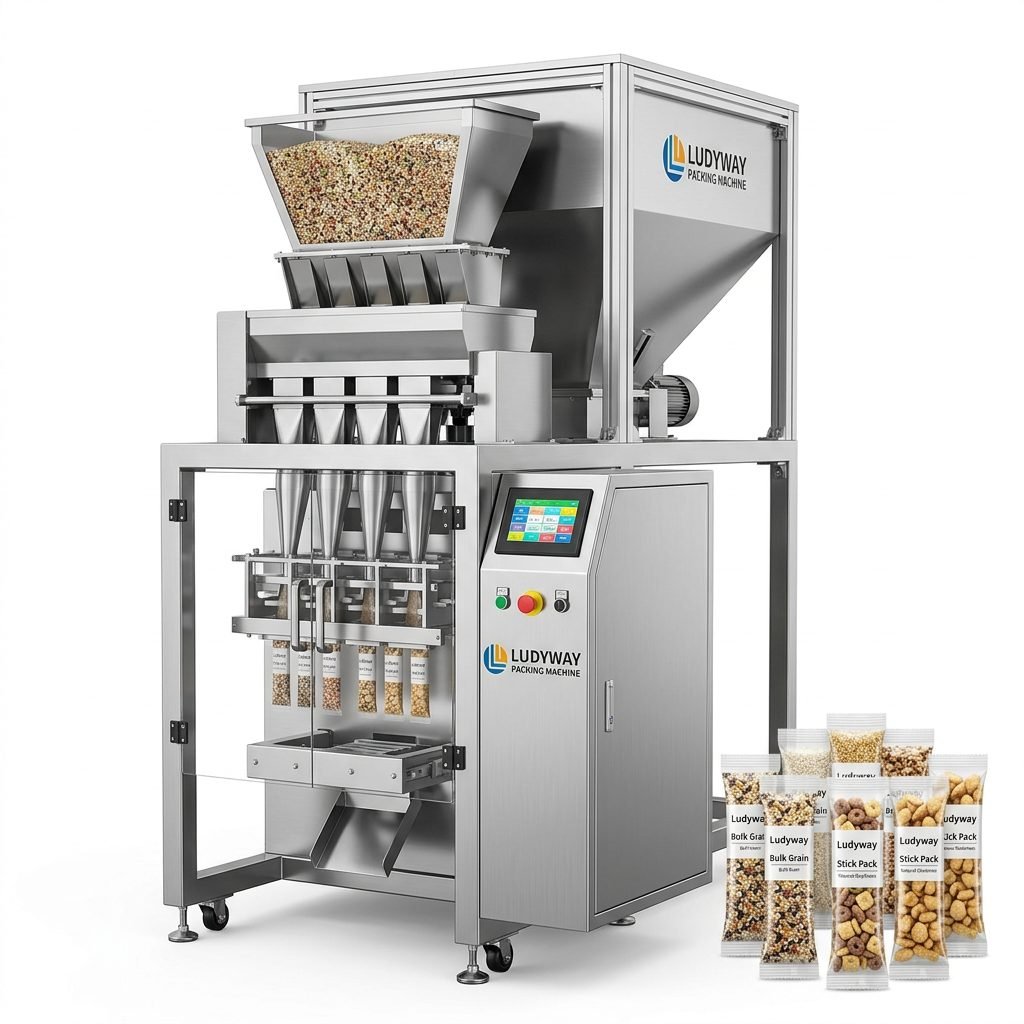
Sachet & Stick Pack Machines: Designed for single-serve portions of sauces, condiments, instant beverages, and pharmaceuticals. Modern multi-lane systems, like those offered by industry leaders, can achieve exceptionally high speeds, making them cost-effective for large-scale sachet production.
Secondary Packaging & End-of-Line Solutions
Once products are in their primary packages, these systems group, carton, and prepare them for shipping.
Cartoning Machines: Automatically erect cartons, insert primary packages (like sachets or bottles), and close them. They are crucial for creating retail-ready boxes.
Case Packers & Palletizers: These robots or mechanical systems load cartons into shipping cases and then stack cases onto pallets, dramatically reducing manual labor and ensuring stable loads for transportation.
Labeling and Coding Equipment: Vital for applying expiry dates, batch codes, barcodes, and nutritional labels with precision and compliance. Integration with primary packaging lines is common.
Analyzing the Costs: Investment Beyond the Price Tag
The cost of food packaging machinery is a multifaceted consideration. The initial purchase price is just one part of the total cost of ownership (TCO). A strategic investment looks at the long-term value.
Key Cost Factors
1. Machine Type and Automation Level: A basic single-head sachet machine costs significantly less than a fully automated, 16-lane stick pack production line with integrated checkweighers and vision systems. The level of automation directly correlates with output, labor savings, and consistency.
2. Production Capacity (Speed): Machines are rated by packages-per-minute (PPM). Higher-speed machines command a higher price but offer a lower cost-per-unit over time, essential for high-volume producers.
3. Material Compatibility: Can the machine handle the specific films, laminates, or biodegradable materials you plan to use? Specialized sealing systems or material handling features can affect cost.
4. Customization and Flexibility: “Off-the-shelf” solutions are cheaper, but if your product is unique or you anticipate frequent package size changes, a customizable machine from a provider like Ludyway Machinery may offer better long-term ROI.
5. Brand, Quality, and Support: Established brands with proven reliability and comprehensive after-sales support (spare parts, technical service, training) often have higher upfront costs but minimize costly downtime.
Hidden Costs to Consider
➤ Installation & Commissioning: Factor in site preparation, utility connections, and technician costs.
➤ Training: Proper operator and maintenance training is essential for efficiency and machine longevity.
➤ Maintenance & Spare Parts: Regular preventative maintenance and the availability/price of wear parts (like sealing jaws) are ongoing expenses.
➤ Energy Consumption: More powerful or less efficient machines will have higher operating costs.
Building Your Production Line: From Single Machine to Turnkey Solution
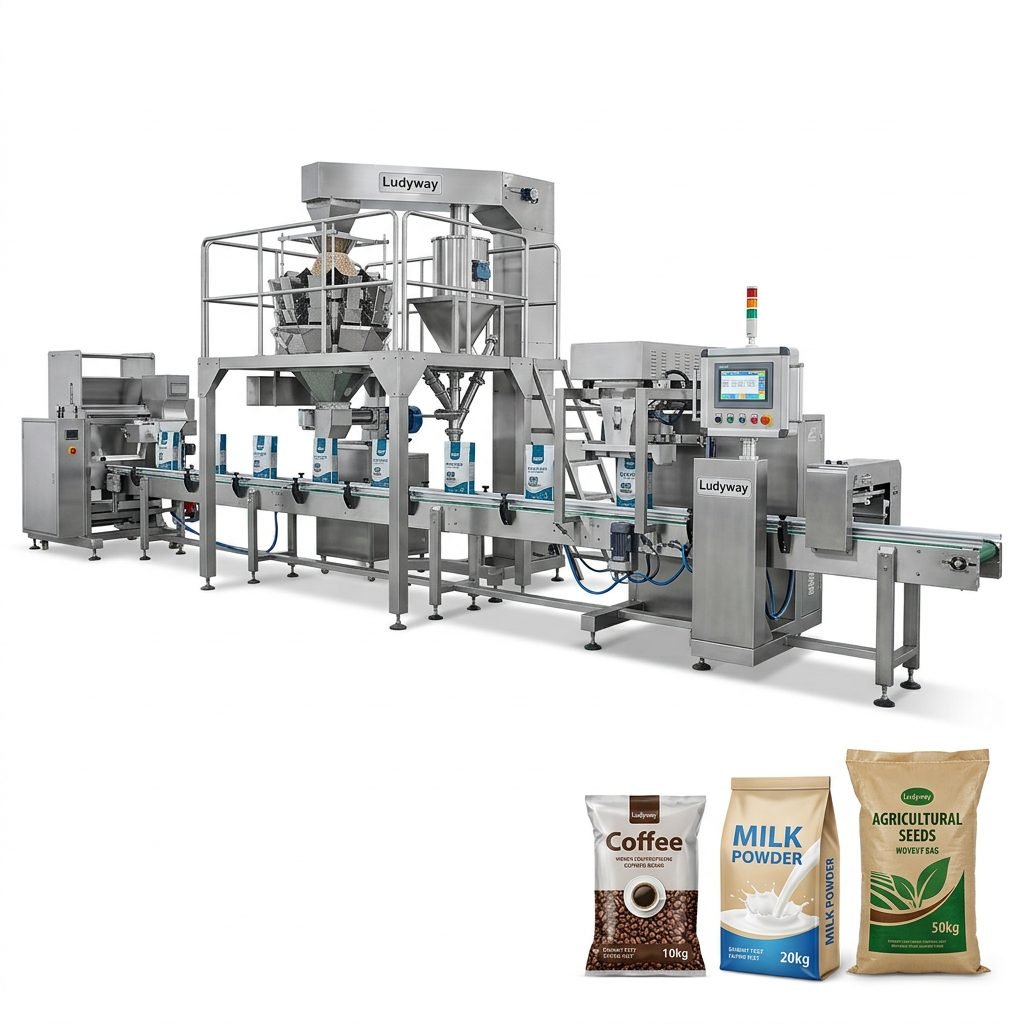
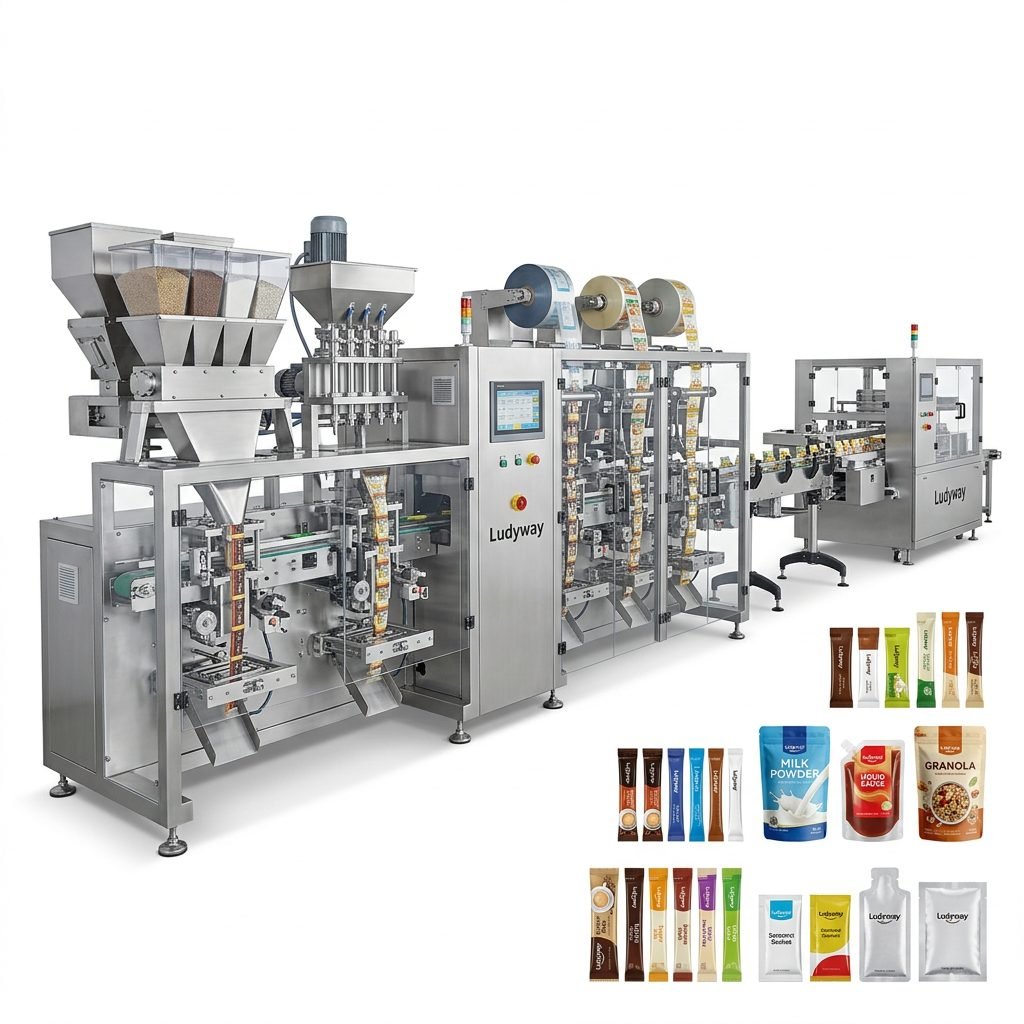
Moving from a standalone machine to a synchronized production line is where maximum efficiency is unlocked. A well-designed line ensures a smooth flow from raw product to shippable pallet.
Components of a Complete Packaging Line
A typical automated line integrates several machines:
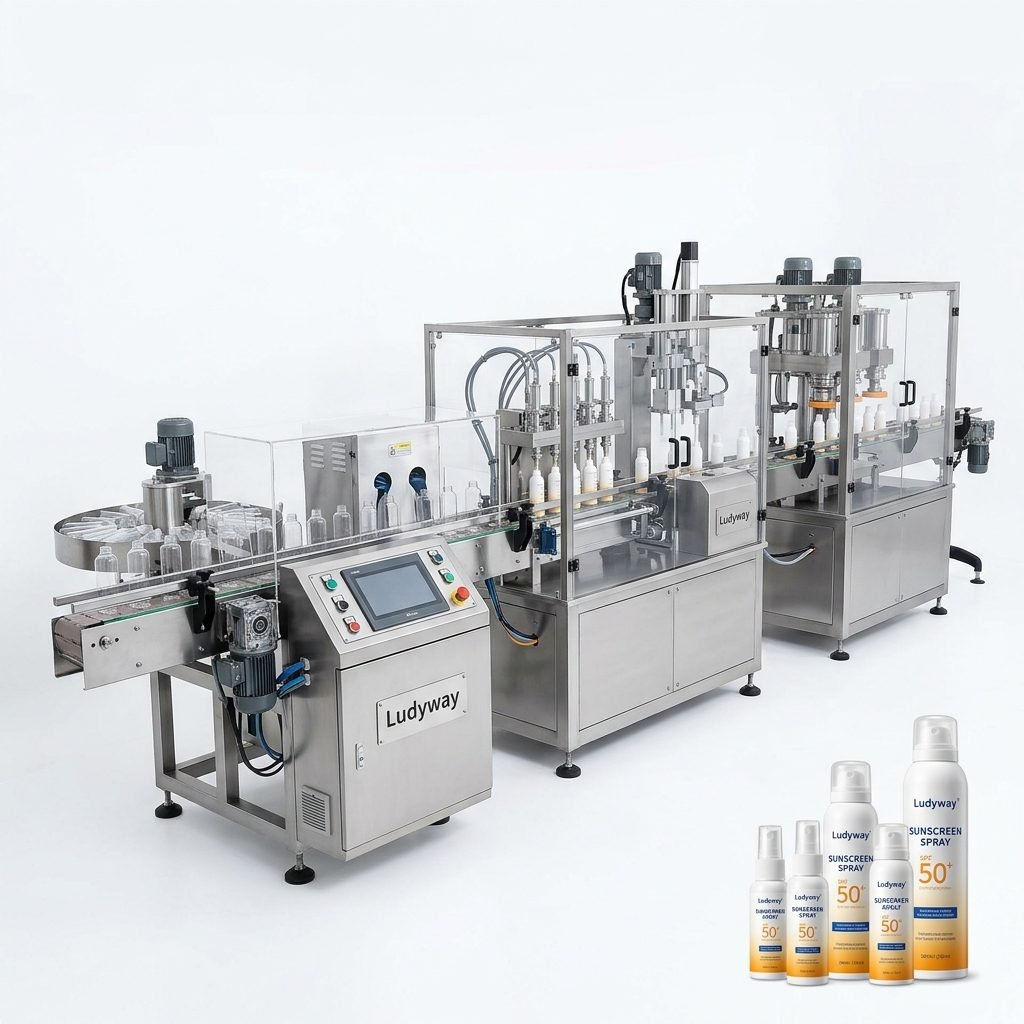
1. Product Feeding & Handling: This could be a screw feeder for powders, a volumetric cup filler for granules, or a pump for liquids. Accuracy here is paramount for weight control and reducing giveaway.
2. Primary Packaging Machine: The core VFFS, HFFS, or sachet machine that forms and fills the package.
3. Quality Control Checkpoints: Integrated checkweighers to reject under/overweight packs, and metal detectors or X-ray systems for contaminant detection.
4. Secondary Packaging: Cartoners, multipack bundlers, or case packers that group primary packages.
5. Control System & HMI: A centralized Programmable Logic Controller (PLC) and user-friendly Human-Machine Interface (HMI) panel allow for easy monitoring, recipe changes, and troubleshooting.
The Turnkey Advantage
Opting for a turnkey solution from a single supplier simplifies the entire process. Companies with deep expertise, such as those with over 30 years of industry experience, handle everything from initial concept and layout design to machine selection, integration, installation, and final commissioning. This approach offers significant benefits:
✅ Single Point of Responsibility: One vendor is accountable for the entire line’s performance.
✅ Seamless Integration: Machines from the same ecosystem are designed to communicate and work together flawlessly.
✅ Reduced Project Risk & Timeline: Streamlined procurement and project management.
✅ Optimized Performance: The line is designed holistically for your specific product and output goals. You can explore more about integrated line solutions to understand their full scope.
Choosing the Right Manufacturing Partner
Your machinery supplier is a long-term partner. Look beyond the brochure and evaluate their capability to support your growth.
Technical Expertise & Customization: Can they engineer solutions for your unique challenges? A partner with strong R&D and a portfolio of 50+ machine models demonstrates adaptability.
Manufacturing & Quality Control: In-house manufacturing in a modern facility (e.g., 20,000+ sqm) ensures control over quality, lead times, and cost.
Global Support & Service Network: For international operations, ensure they have the infrastructure for timely spare parts delivery and technical support, crucial for minimizing downtime.
Proven Track Record: Request case studies or references from clients in your specific food sector (e.g., spices, dairy, confectionery).
Frequently Asked Questions (FAQs)
Q1: What is the typical lead time for a custom packaging machine or production line?
A: Lead times vary greatly based on complexity and customization. A standard machine may take 8-12 weeks, while a fully customized turnkey line can require 4-6 months or more for design, manufacturing, and testing. Always discuss timelines in detail during the planning phase.
Q2: How do I determine the right packaging speed (PPM) for my business?
A: Calculate your current and projected annual demand. Consider your production shifts, desired efficiency rate (typically 80-85%), and allow for future growth. It’s often wiser to invest in a machine with 20-30% more capacity than you currently need to accommodate expansion without requiring another capital purchase.
Q3: What are the most important maintenance tasks for packaging machinery?
A: Daily cleaning to prevent product buildup, regular lubrication of moving parts as per the manual, and periodic inspection/replacement of wear components like sealing jaws, cutting blades, and gaskets. A preventative maintenance schedule provided by your supplier is essential.
Q4: Can one machine handle different package sizes and materials?
A: Many modern machines are designed for quick changeover. Look for features like servo-driven film pull systems, tool-less change parts, and saved recipes on the HMI. However, switching between vastly different materials (e.g., paper to laminate) may require adjustments to sealing temperature and pressure.
Q5: What training is provided with a new machine installation?
A: A reputable supplier should provide comprehensive on-site training covering safe operation, daily setup and changeover procedures, basic troubleshooting, and routine maintenance. This training should be provided for both operators and maintenance technicians.