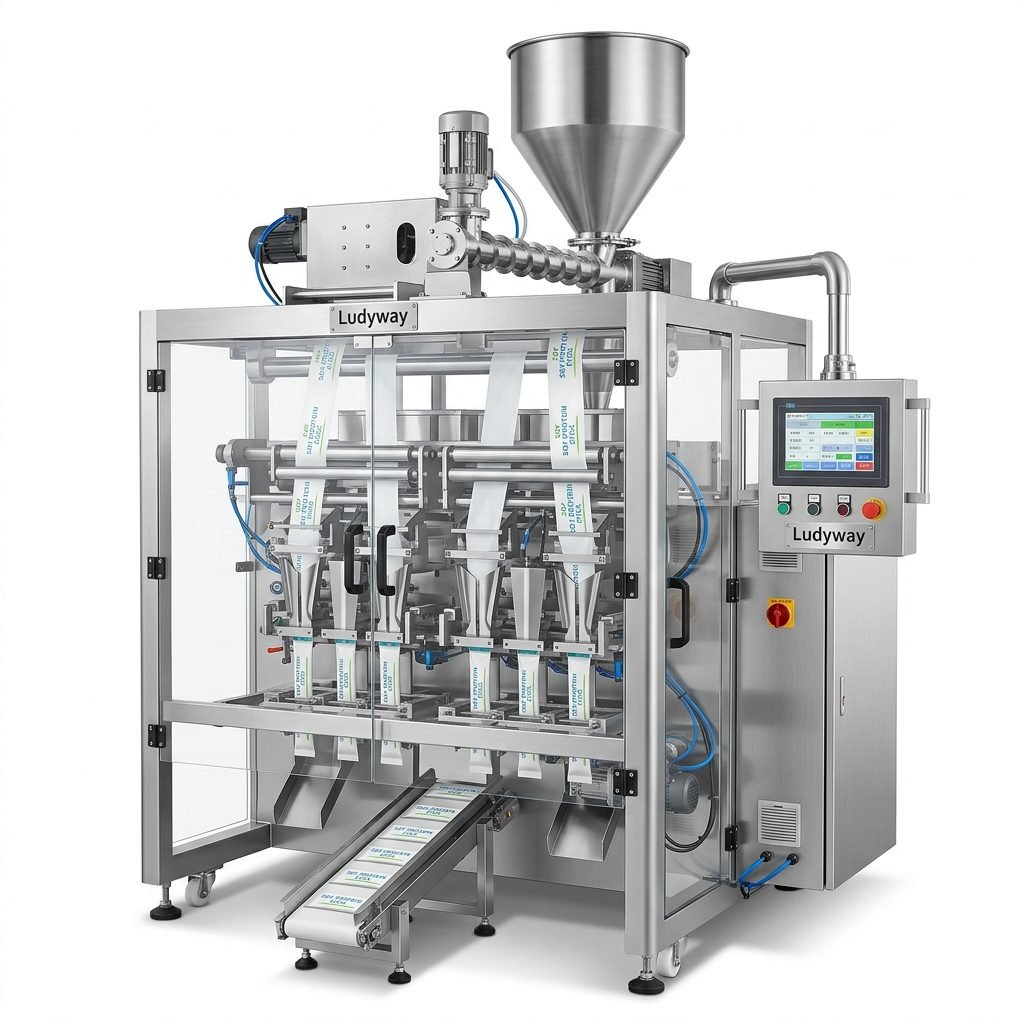
In the competitive fertilizer industry, packaging is more than just a final step—it’s a critical component of product protection, market appeal, and operational efficiency. Choosing the right high‑efficiency fertilizer packaging machine can significantly impact your production output, cost management, and product quality. This guide explores the various types of machines available, their key benefits, and provides a detailed framework to help you select the ideal equipment for your specific needs.
Understanding Fertilizer Packaging Machinery
Fertilizer packaging machines are specialized equipment designed to automate the process of measuring, filling, and sealing fertilizers into bags, pouches, or other containers. These systems handle a wide range of fertilizer forms, including granules, powders, prills, and blended mixes, ensuring accuracy, speed, and consistency that manual operations cannot match.
Core Function:
The primary function is to automate the dosing, filling, and sealing processes, drastically reducing labor dependency and human error. Modern machines integrate advanced weighing systems, durable sealing mechanisms, and often include features like bag feeding, date coding, and counting.
Why Automation is Non‑Negotiable
For medium to large‑scale fertilizer producers, automation is essential for scaling operations, maintaining consistent bag weights (a critical legal and quality requirement), and improving overall plant safety by minimizing direct contact with products.
Main Types of High‑Efficiency Fertilizer Packaging Machines
The market offers several machine types, each suited to different production scales, bag styles, and fertilizer characteristics.
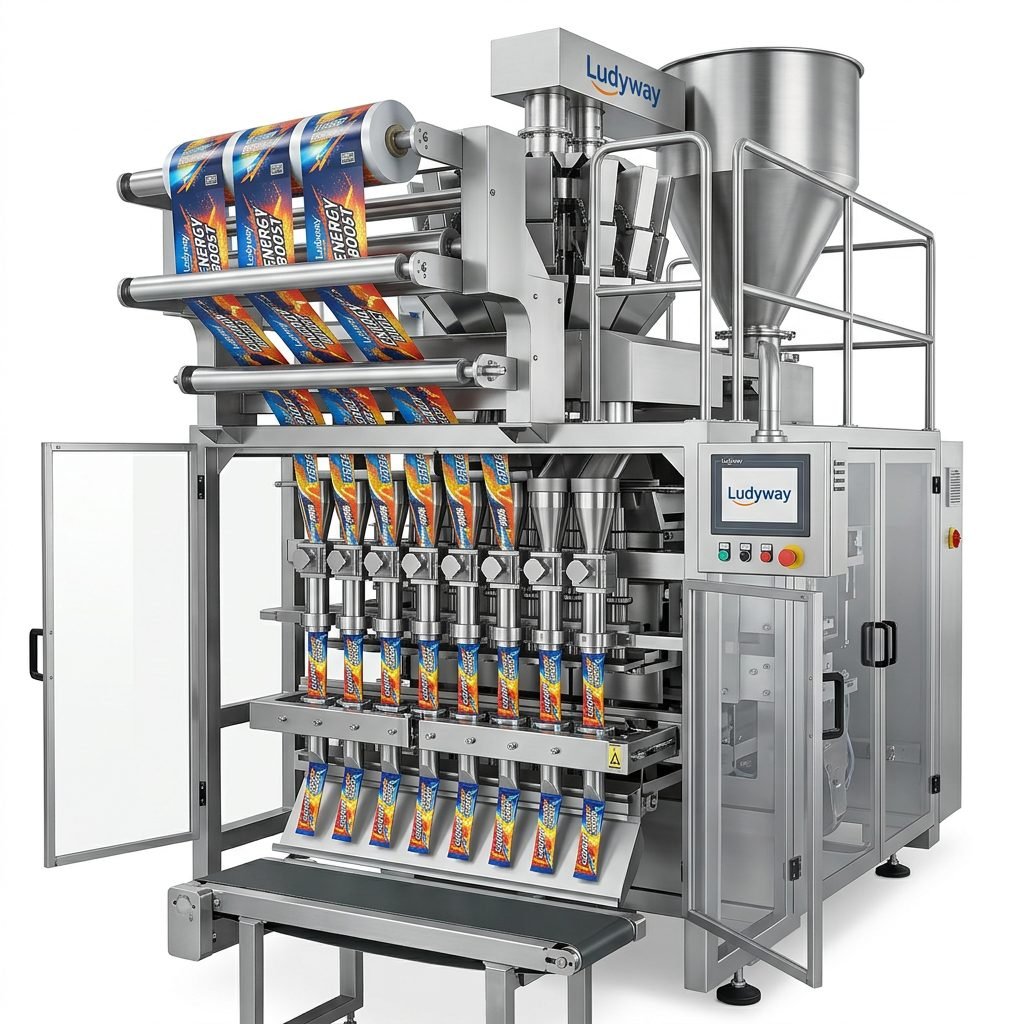
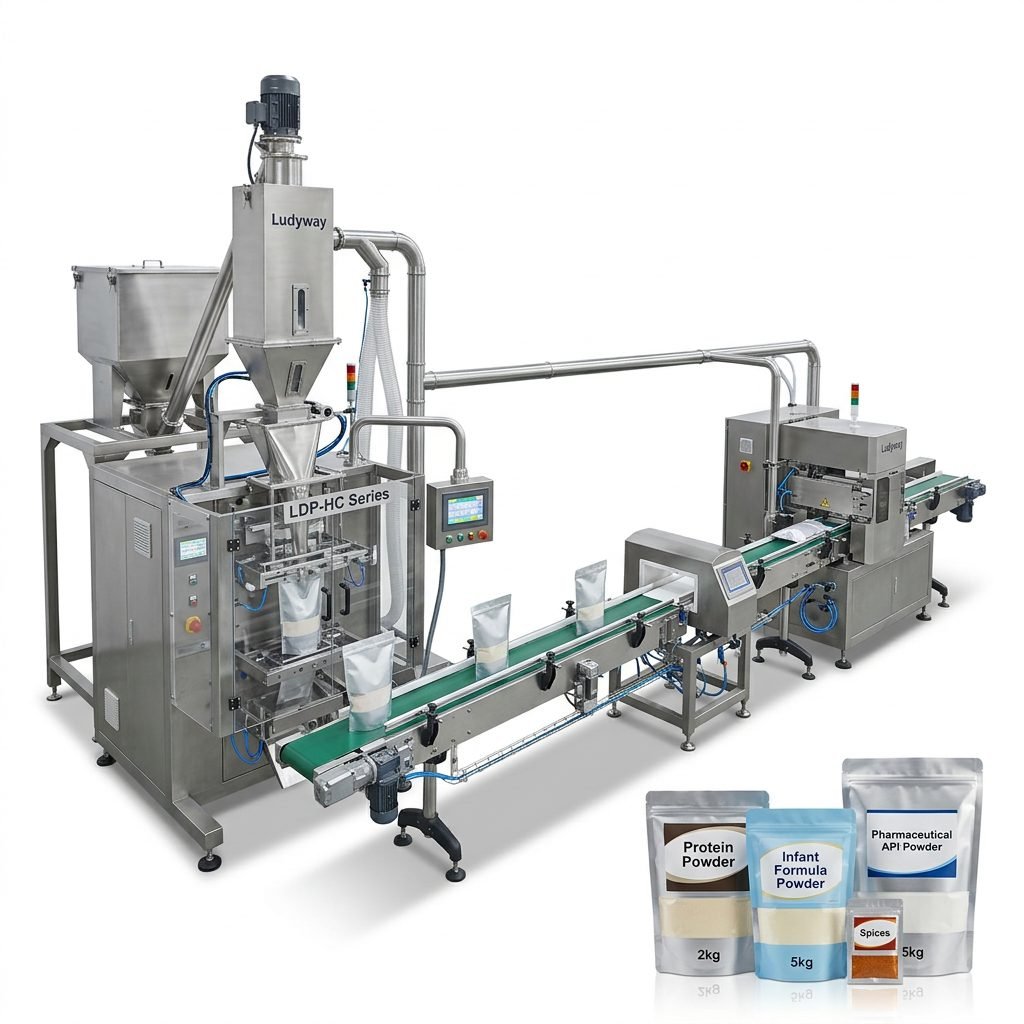
1. Vertical Form‑Fill‑Seal (VFFS) Machines
These are the most common and versatile machines. They form bags from a roll of film, fill them with a pre‑measured amount of fertilizer, and then seal them. Ideal for producing pillow bags or gusseted bags in various sizes.
- Best For: Medium to high‑volume production of granular and powdered fertilizers.
- Key Advantage: Flexibility in bag size and material; reduced packaging material inventory.
2. Open‑Mouth Bagging Machines
Designed to fill pre‑made open‑mouth bags (like woven PP bags or paper bags). They typically use a spout for filling and may include a sewing or heat‑sealing station for closure.
- Best For: Large‑volume packaging of granular fertilizers into 5‑50 kg bags.
- Key Advantage: High speed and durability for heavy‑duty, bulk packaging.
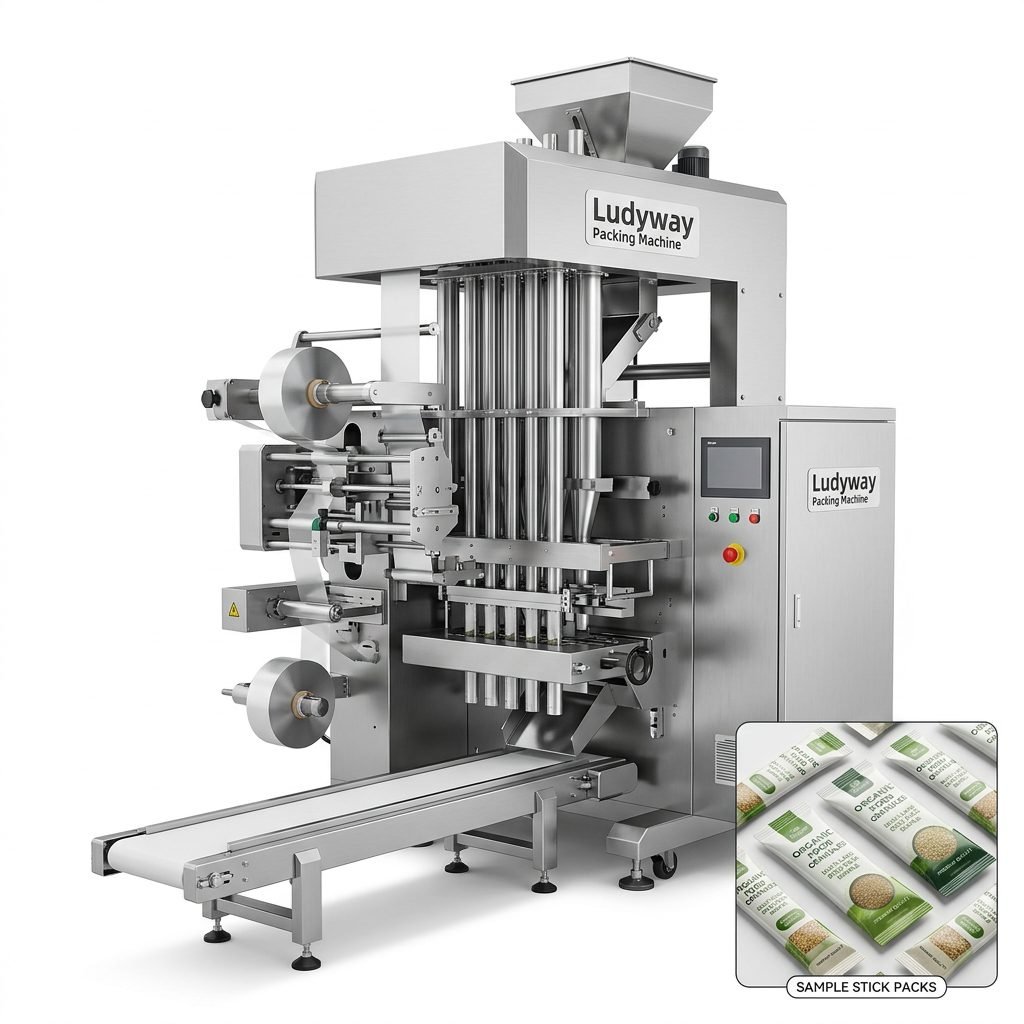
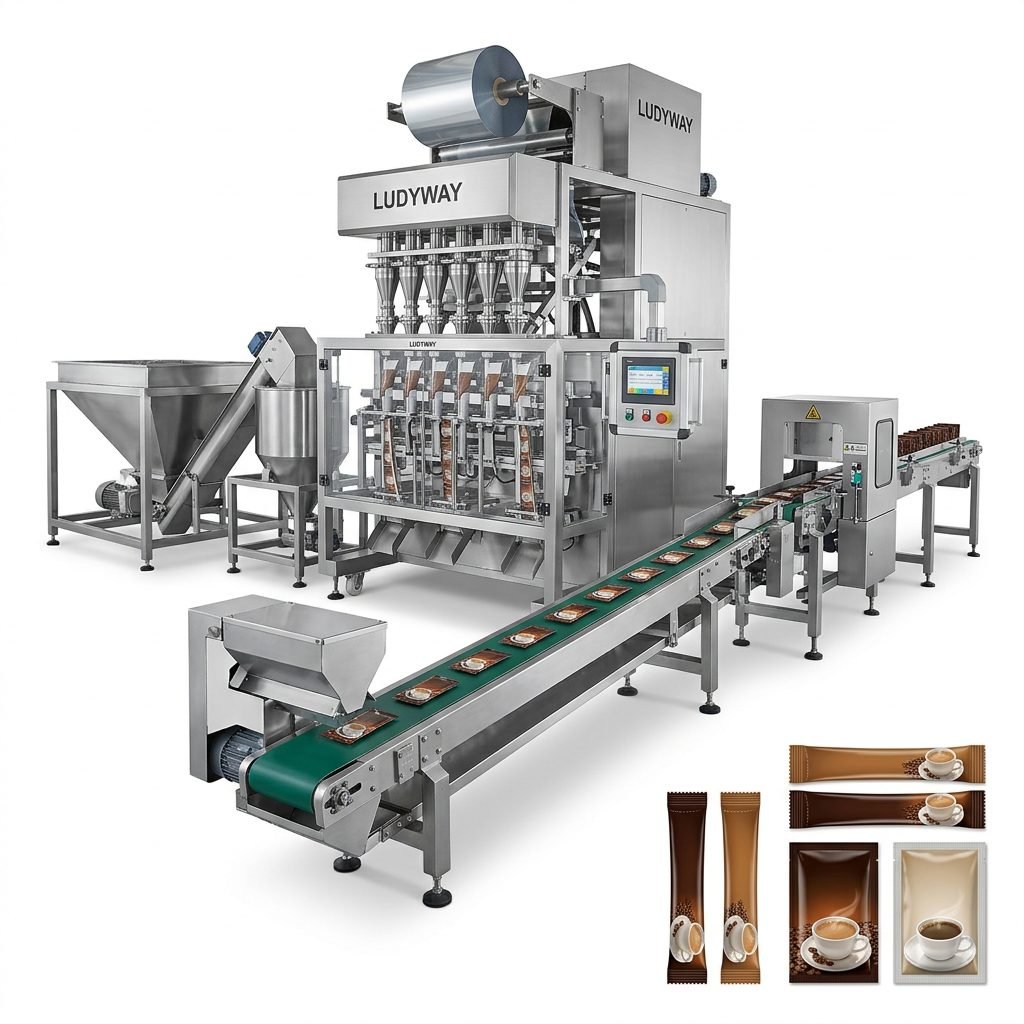
3. Stick Pack & Sachet Machines
These machines create small, elongated stick packs or flat sachets, perfect for single‑dose or sample‑size fertilizers, specialty blends, or water‑soluble products.
- Best For: Value‑added products, retail‑ready small portions, and precision agriculture applications.
- Key Advantage: Creates a high‑value, portable product format with excellent barrier properties.
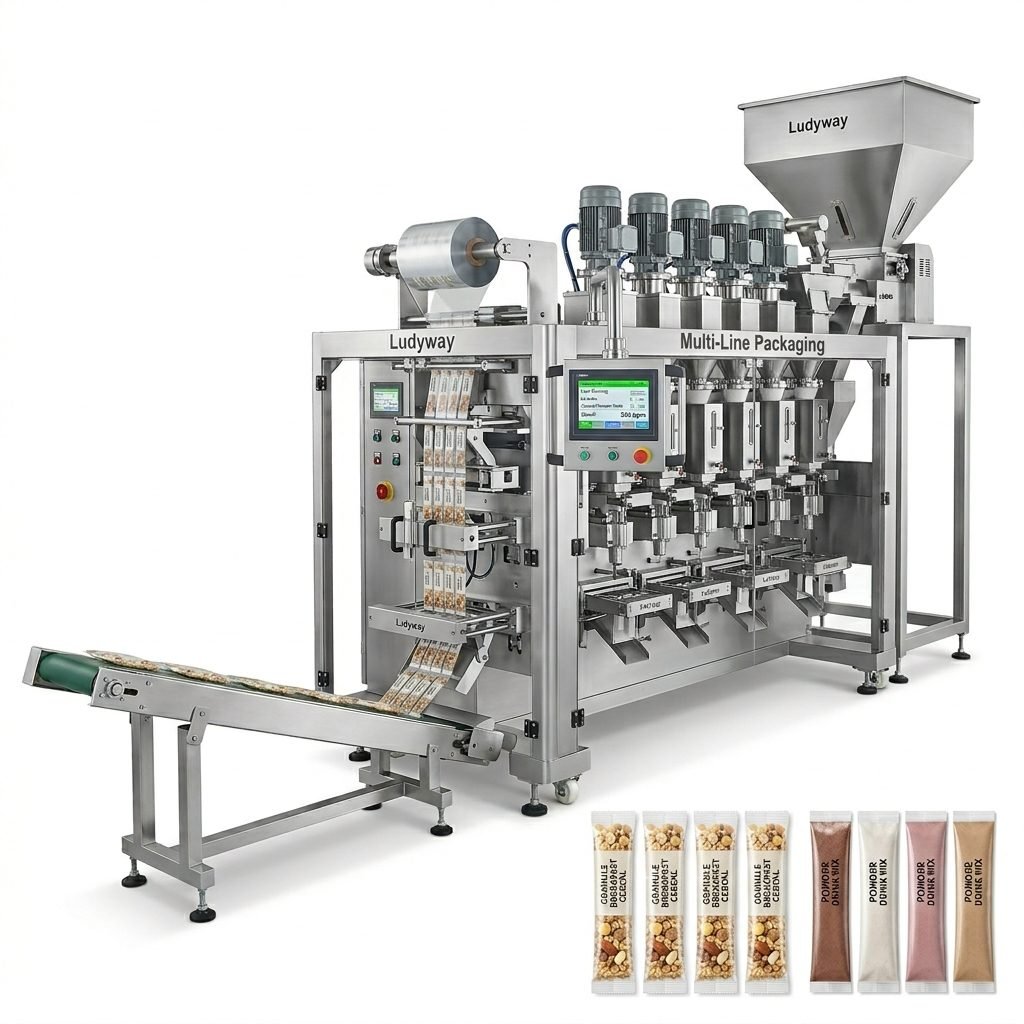
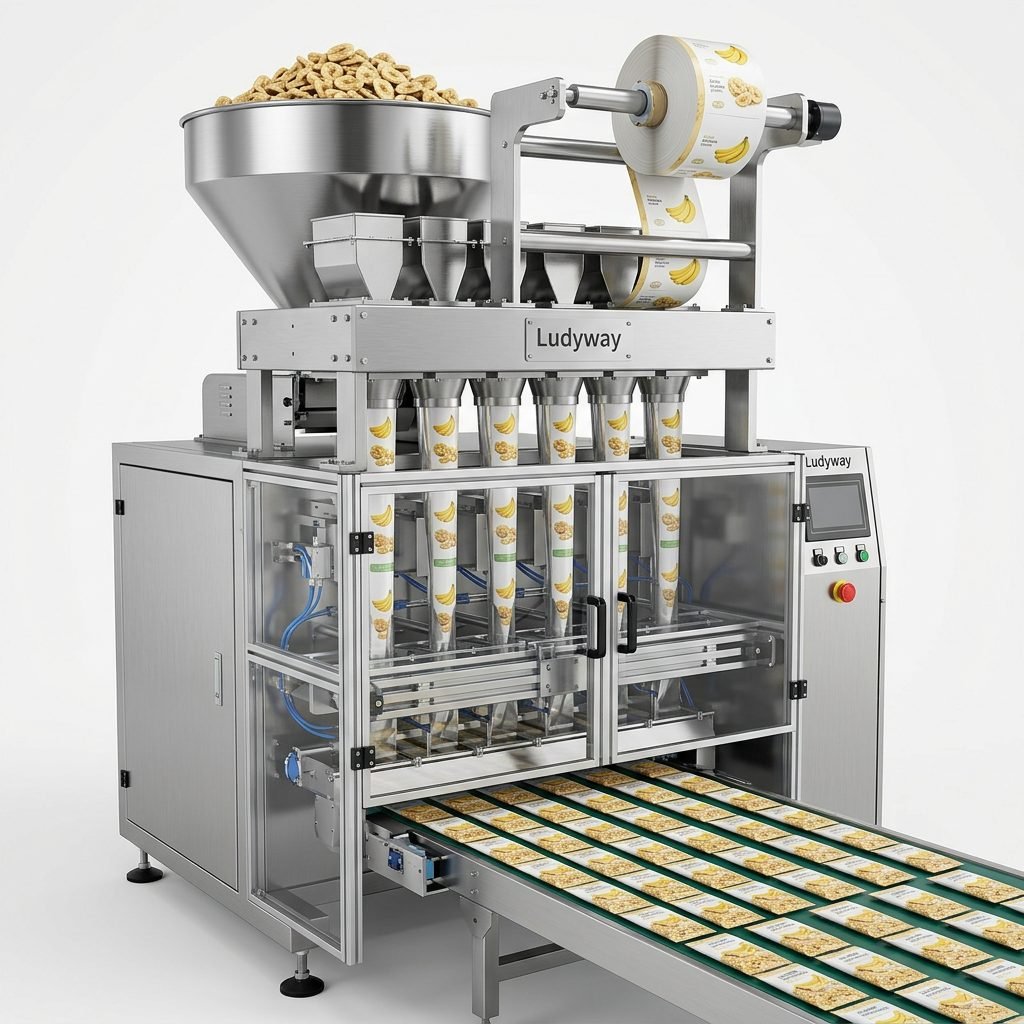
4. Multi‑Lane & Multi‑Head Weighers
Advanced systems that combine multiple weighing heads and filling lanes to achieve exceptional speed and accuracy. They are often integrated with VFFS or bagging units.
- Best For: Ultra‑high‑output production lines where speed and precision are paramount.
- Key Advantage: Unmatched weighing speed and accuracy, often with automatic check‑weighing.
Tangible Benefits of Investing in High‑Efficiency Machines
Operational & Financial Benefits
→ Dramatically Increased Output:
Automated machines can package hundreds, even thousands, of bags per hour, enabling you to meet large orders and scale your business efficiently.
→ Significant Material & Labor Cost Savings:
Precision weighing minimizes product giveaway (overfilling), saving raw material costs. Automation reduces the number of workers needed on the packaging line, lowering long‑term labor expenses.
→ Uncompromising Consistency & Accuracy:
Every bag meets the exact weight specification, ensuring regulatory compliance, customer trust, and protecting your brand from costly under‑weight penalties.
→ Enhanced Product Integrity & Shelf Life:
Reliable sealing prevents moisture ingress and contamination, which is crucial for maintaining fertilizer efficacy and preventing caking.
→ Improved Workplace Safety & Hygiene:
Automation reduces workers’ exposure to dust and chemicals, creating a cleaner, safer production environment.
How to Choose the Right Machine: A Step‑by‑Step Guide
Selecting a machine is a strategic decision. Follow this framework to make an informed choice.
Step 1: Analyze Your Product & Material
Define your fertilizer’s physical characteristics: Is it granular, powder, or prilled? What is its bulk density and flowability? Is it corrosive or dusty? This determines the required machine construction (e.g., stainless steel for corrosives) and the type of feeding and weighing system (auger, cup, impeller, or weigh‑cell).
Step 2: Define Your Packaging Specifications
- Bag Type & Size: Pre‑made bags or film roll? Bag dimensions and weight range?
- Material: Polyethylene, woven PP, paper, or laminate?
- Required Output Speed: Bags per minute/hour. Calculate based on current and projected future demand.
Step 3: Evaluate Key Machine Features
Prioritize features based on your needs:
✔ Weighing System Accuracy: Look for high‑precision load cells with stability.
✔ Sealing Quality: Robust heat‑sealing jaws or sewing heads for your bag material.
✔ Control System: User‑friendly PLC/HMI interface for easy operation and recipe changes.
✔ Changeover Ease: How quickly can you switch between bag sizes or products?
✔ Dust Handling: Integrated dust collection ports are vital for powder fertilizers.
Step 4: Consider the Supplier’s Expertise & Support
The machine is only as good as the company behind it. Choose a supplier with proven experience in the fertilizer and agricultural packaging sector. Assess their technical support, availability of spare parts, training, and warranty terms. A reliable partner like Ludyway Machinery, with deep industry knowledge, can provide invaluable guidance and long‑term reliability.
Step 5: Calculate Total Cost of Ownership (TCO)
Look beyond the initial purchase price. Factor in installation, energy consumption, maintenance costs, expected downtime, and the cost of consumables (like sealing elements). A slightly more expensive but robust and efficient machine often offers a lower TCO and better ROI.
Frequently Asked Questions (FAQs)
Q1: What is the typical accuracy range for a high‑quality fertilizer packaging machine?
For granular fertilizers, modern weigh‑fill machines can achieve an accuracy of ±0.1% to ±0.5% of the target weight, depending on the system and particle uniformity. For powders, auger fillers typically offer ±0.5% to ±1% accuracy. Always request a product‑specific test at the supplier’s facility.
Q2: Can one machine handle both granular and powder fertilizers?
Some versatile machines can be configured for both, but it often requires changing the filling system (e.g., from a weigh‑cell to an auger). It’s more common and efficient to have dedicated systems for granules and powders due to their different handling characteristics. Discuss your full product range with your supplier.
Q3: How important is after‑sales service when purchasing this equipment?
Extremely important. Packaging machines are long‑term investments. Ensure your supplier offers comprehensive after‑sales support, including readily available spare parts, remote troubleshooting, on‑site technician availability, and operator training. This minimizes costly downtime over the machine’s lifespan.
Q4: What are the key maintenance routines for these machines?
Daily cleaning (especially of weighing and sealing areas), regular lubrication of moving parts as per the manual, inspection of wear items like sealing jaws and filters, and periodic calibration of the weighing system are essential. A good supplier will provide a clear preventive maintenance schedule.
Q5: How can I future‑proof my packaging line investment?
Choose a machine from a supplier with a strong R&D focus, ensuring access to future upgrades. Opt for a modular design that allows for later integration of additional modules like automatic bag placers, check‑weighers, or palletizers. Select a control system that is scalable and can communicate with higher‑level plant management software (MES/ERP).