Understanding the Role of Bag Selection in Packaging Efficiency
Selecting the correct bag for your bag packing machine is not merely a material choice—it is a strategic decision that affects throughput, seal integrity, shelf appeal, and long-term operational costs. The right bag ensures consistent filling, minimizes downtime, and protects product quality throughout the supply chain. Conversely, an incompatible bag can lead to seal failures, material waste, and expensive rework.
Modern automatic packaging equipment handles a diverse range of flexible packaging formats, including stick packs, sachets, three-side-seal pouches, four-side-seal pouches, gusseted bags, and stand-up pouches. Each format demands specific material properties, stiffness, and heat-seal layers. Before evaluating machine specifications, manufacturers must define the bag characteristics that align with their product, target market, and industry packaging standards.
Step 1: Analyze Your Product Characteristics
The physical and chemical properties of your product directly dictate which bag materials and designs are viable. A mismatch here is the most common root cause of packaging line inefficiency.
Product Form and Flow Behavior
- Free-flowing granules (e.g., sugar, salt, coffee beans): Generally compatible with most bag materials, but sharp granules may require films with high puncture resistance.
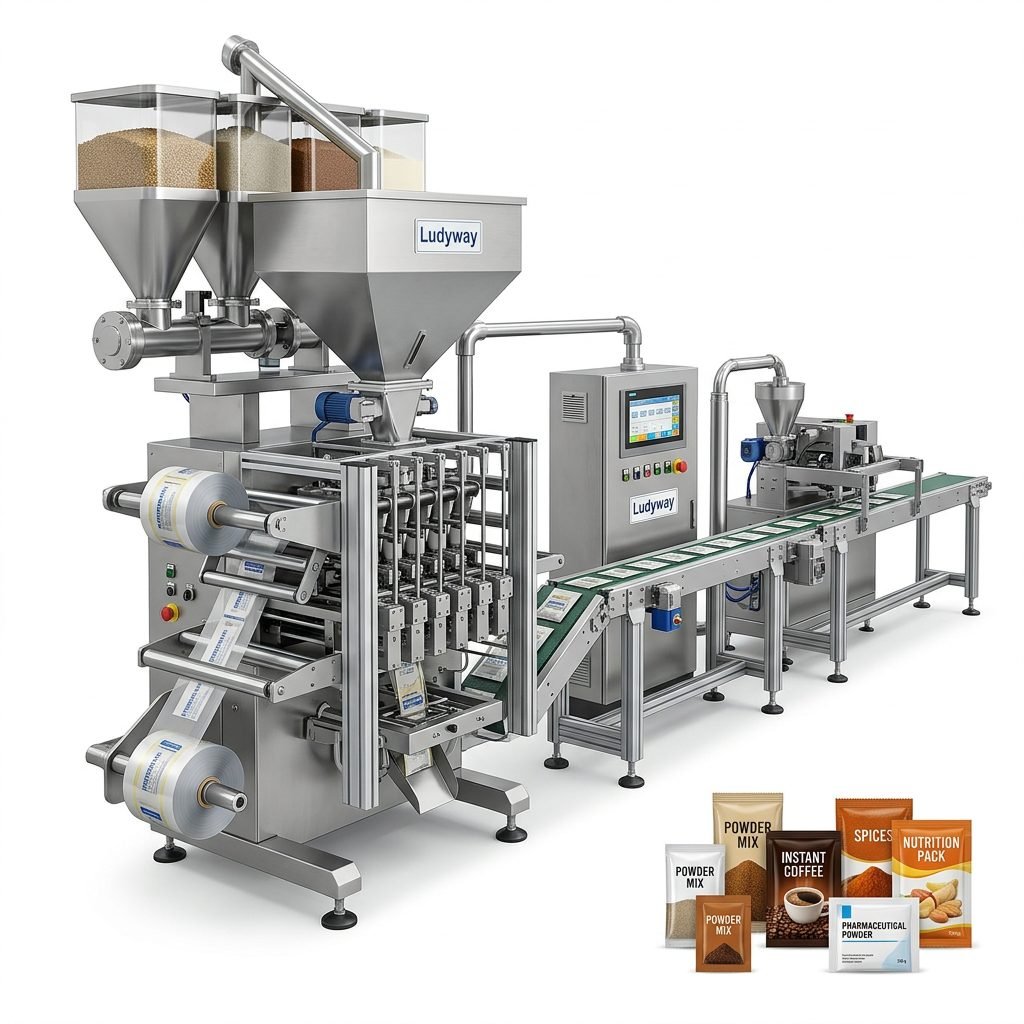
- Cohesive powders (e.g., flour, protein powder, spices): Tend to trap air and dust during filling. Bags need sufficient seal width and anti-static properties to prevent contamination in the seal area, which can cause leakers and weak seals.
- Liquids, pastes, and gels (e.g., shampoo, sauces, honey): Demand films with excellent hot-tack strength and strong sealant layers (often high-performance polyethylene) to resist immediate product pressure after filling.
- Hygroscopic or sensitive products (e.g., vitamins, anhydrous chemicals, freeze-dried ingredients): Require high-barrier films incorporating aluminum foil or metallized layers to block moisture, oxygen, and UV light.

Product Sensitivity and Shelf Life Requirements
Products with short shelf lives or high sensitivity to environmental factors require films engineered with specific barrier layers. Common structures include:
| Barrier Requirement | Recommended Film Structure | Typical Application |
|---|---|---|
| Standard moisture protection | OPP/PE or PET/PE | Snack foods, dry mixes |
| High moisture and oxygen barrier | PET/Alu/PE or Paper/Alu/PE | Pharmaceutical powders, nutritional supplements |
| UV light protection | Metallized PET/PE or Alu foil laminates | Light-sensitive liquids, oils, vitamins |
| Chemical resistance | PET/ALU/Nylon/CPP or specialized co-extruded films | Agrochemicals, industrial adhesives, cleaning products |
Testing your product with sample films on the actual machine is an essential step before finalizing material specifications, as flexible packaging material data may vary under real production conditions.
Step 2: Define Bag Format and Dimensional Specifications
Bag format selection is driven by consumer convenience, dosing accuracy, and automatic packaging machine compatibility. Each format uses different film folding, sealing, and cutting mechanisms.
Common Bag Formats for Automated Packaging
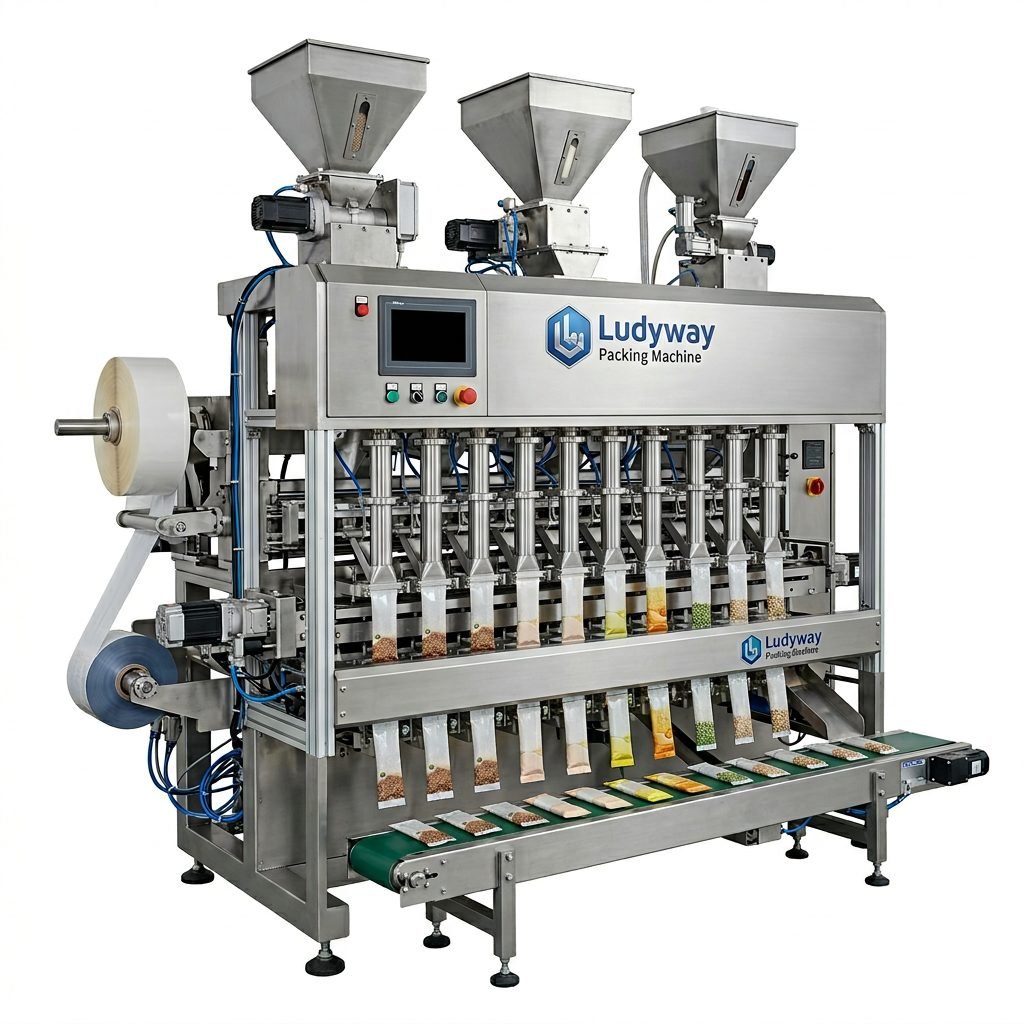
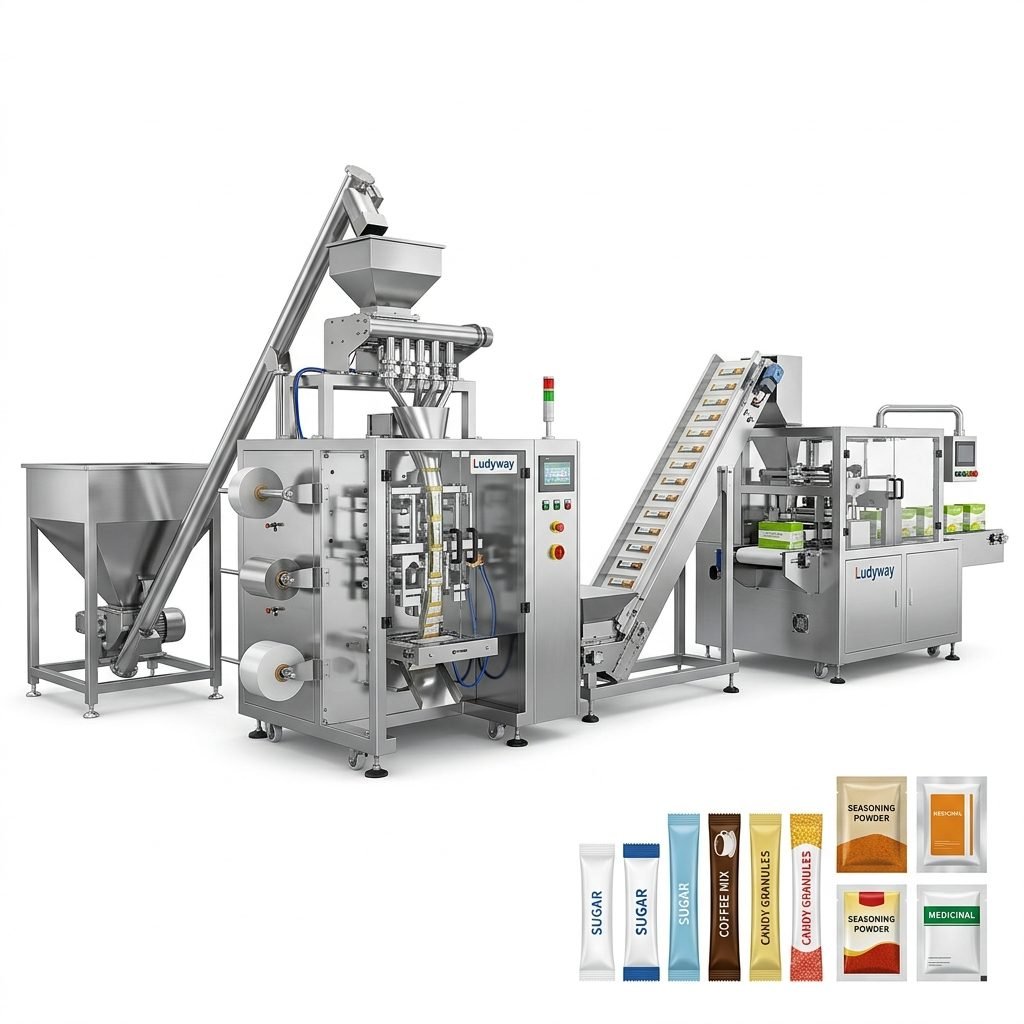
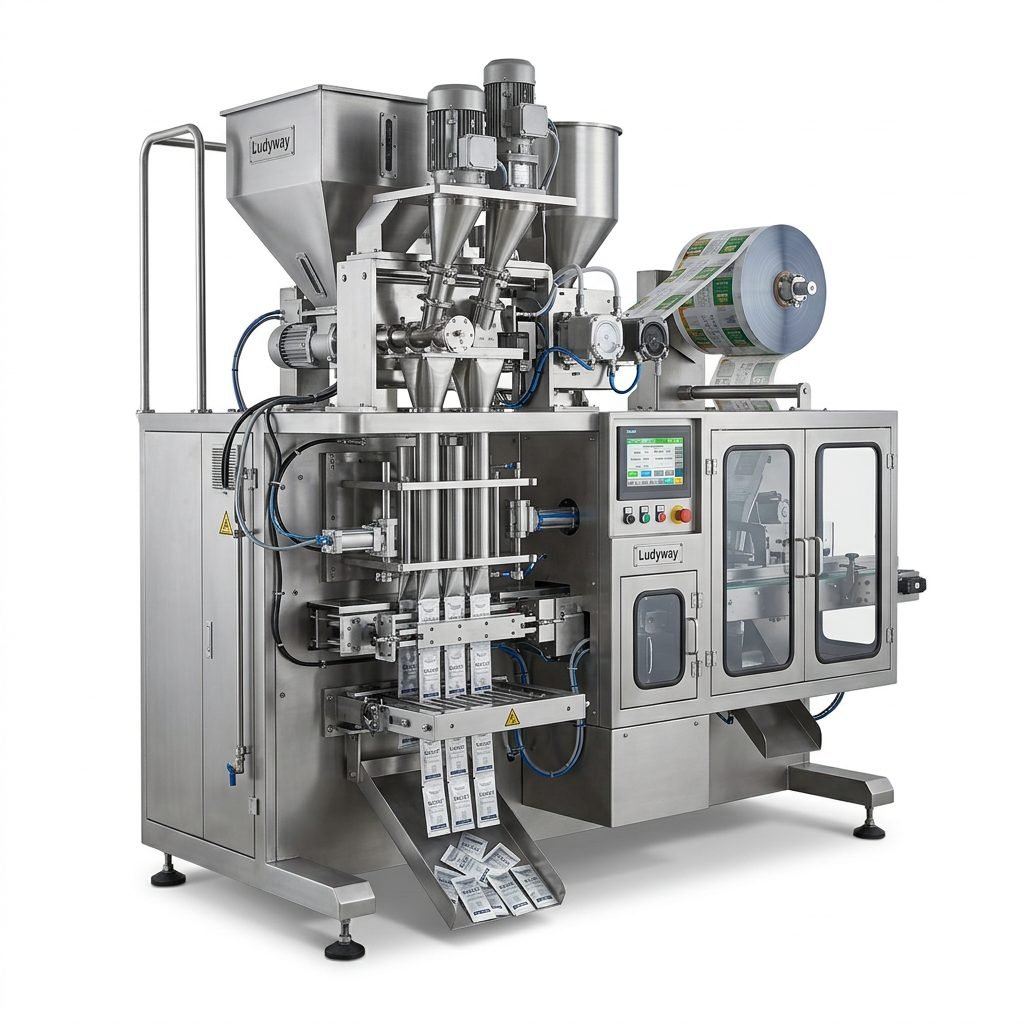
- Stick packs: Long, narrow single-serve pouches ideal for powders, granules, and liquids. Excellent for portion control and widely used in food, pharmaceutical, and cosmetic industries. The narrow seal area demands precise film tracking and consistent heat distribution.
- Three-side-seal sachets: Flat pouches sealed on three sides, offering simple construction and high production speeds. Suitable for a wide range of products from ketchup to face creams.
- Four-side-seal sachets: Provide additional seal strength and a more symmetrical appearance. Often used for medical devices, wet wipes, and products requiring extra seal integrity.
- Stand-up pouches: Feature a bottom gusset that allows the pouch to stand on shelves. Require machines with gusset-forming capabilities and precise zipper or spout insertion stations if re-closability is needed.
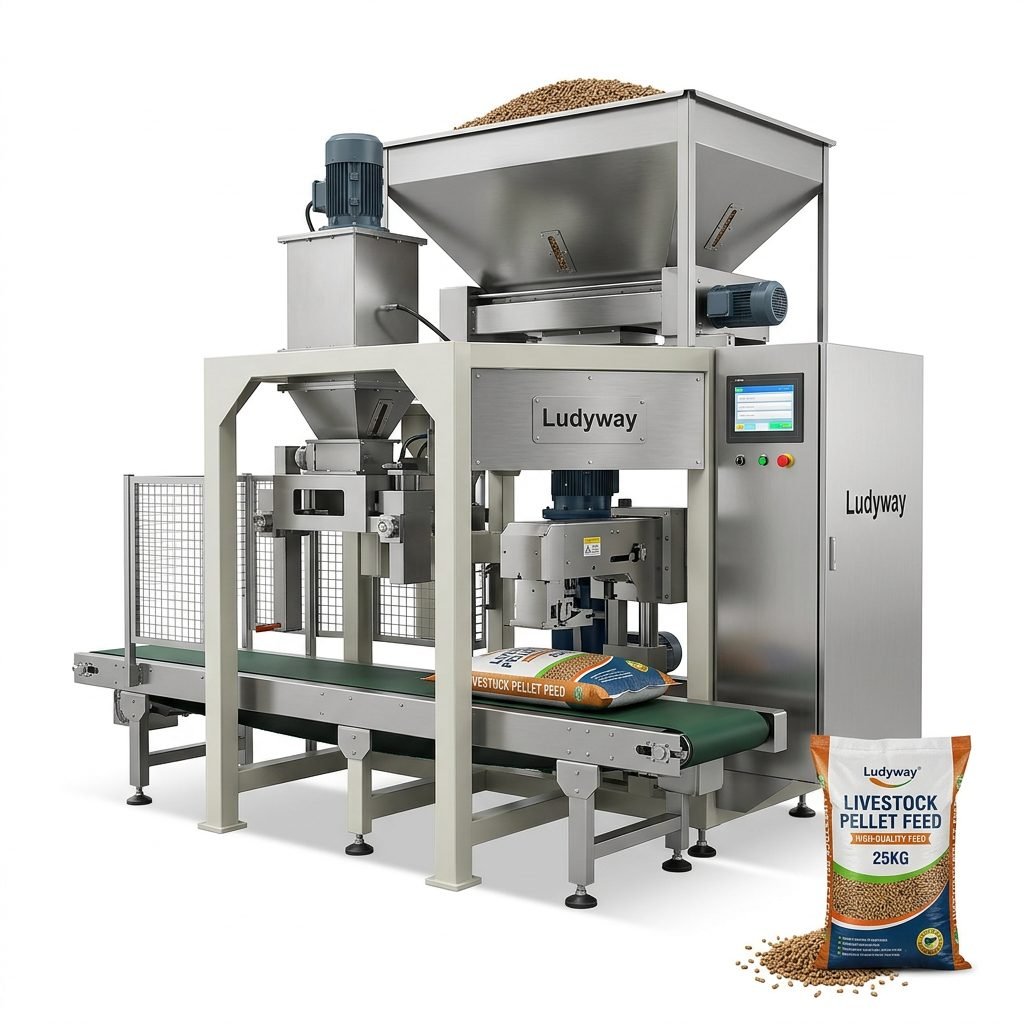
- Gusseted bags: Side or bottom gussets expand to accommodate bulkier products. Critical for coffee, pet food, and certain agricultural products.
Bag Dimensions and Volume Accuracy
Bag width and length tolerances directly affect filling accuracy and seal alignment. Any deviation in film roll dimensions or bag cut-off length impacts the entire line. Key parameters to specify include:
- Bag width (flat width): Determines the volume capacity and visual presentation. Machines are typically designed for specific width ranges—confirm your target bag width falls within the equipment’s forming tube specifications.
- Bag length (cut-off length): Controlled by the machine’s film advance system. Consistent length is essential for proper seal registration and avoiding product entrapment in the seal area.
- Bottom gusset depth (if applicable): Expands the fillable volume without increasing flat width. Requires precise mechanical adjustments on the packaging machine.
- Headspace requirements: Leaving adequate headspace prevents seal contamination and allows for product expansion, especially for powders that aerate during filling.
Step 3: Evaluate Machine Compatibility – The Critical Interface
Even the highest-quality bag material will fail if the bag packing machine is not configured to handle it correctly. Compatibility spans multiple machine systems.
Film Unwinding and Tension Control
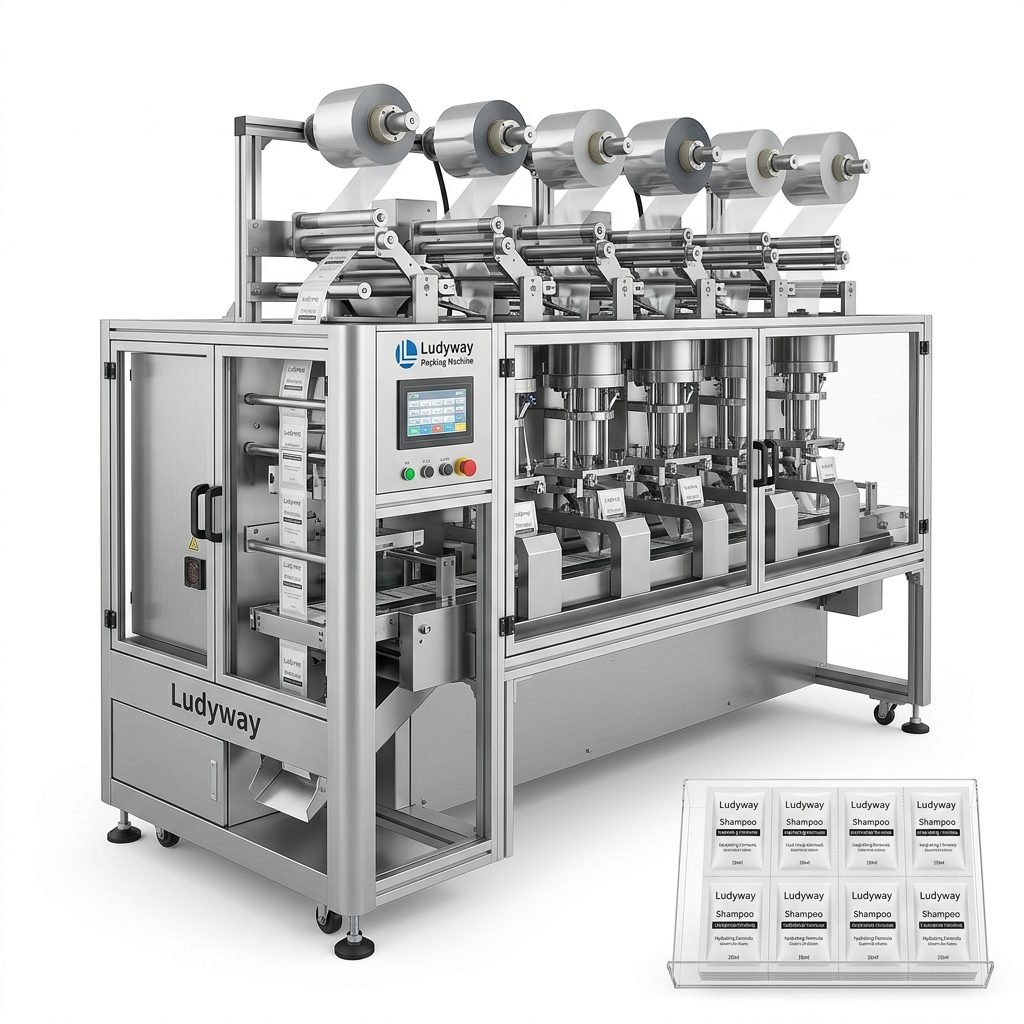
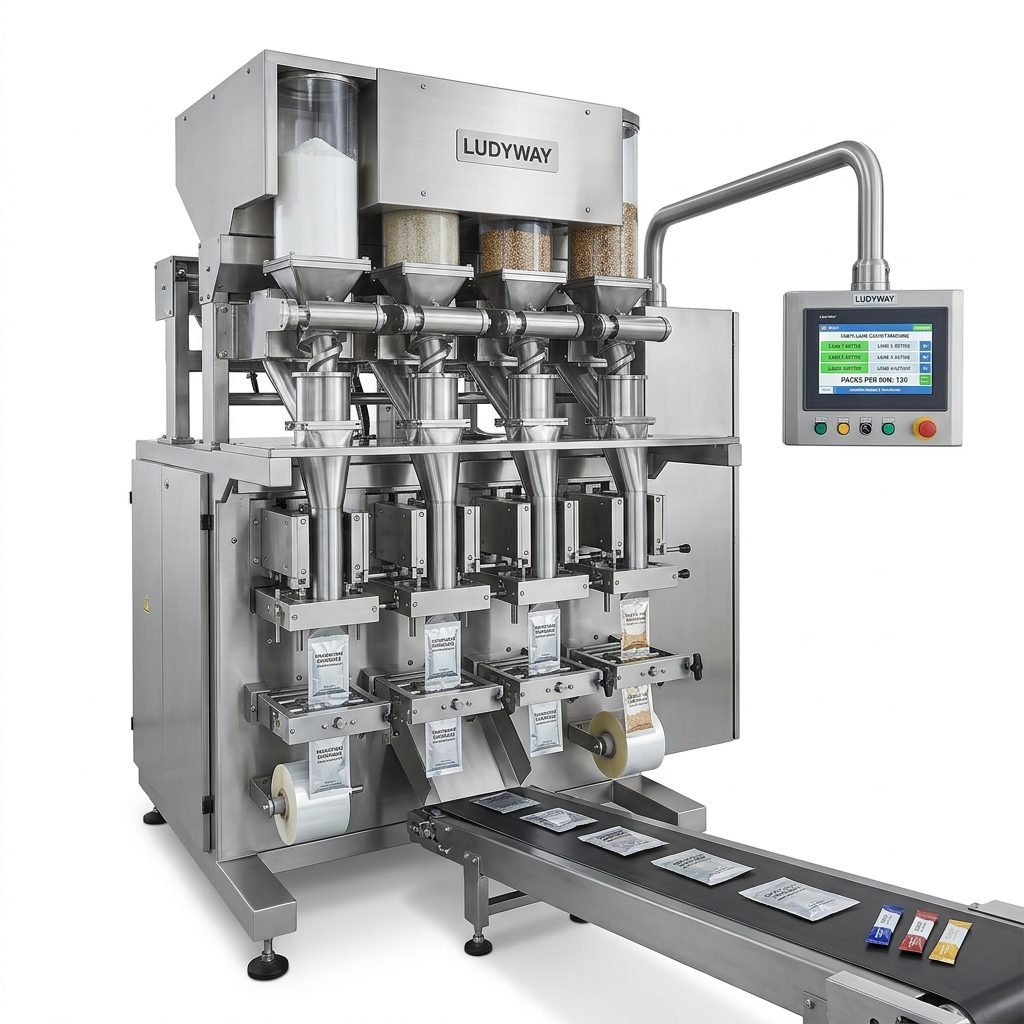
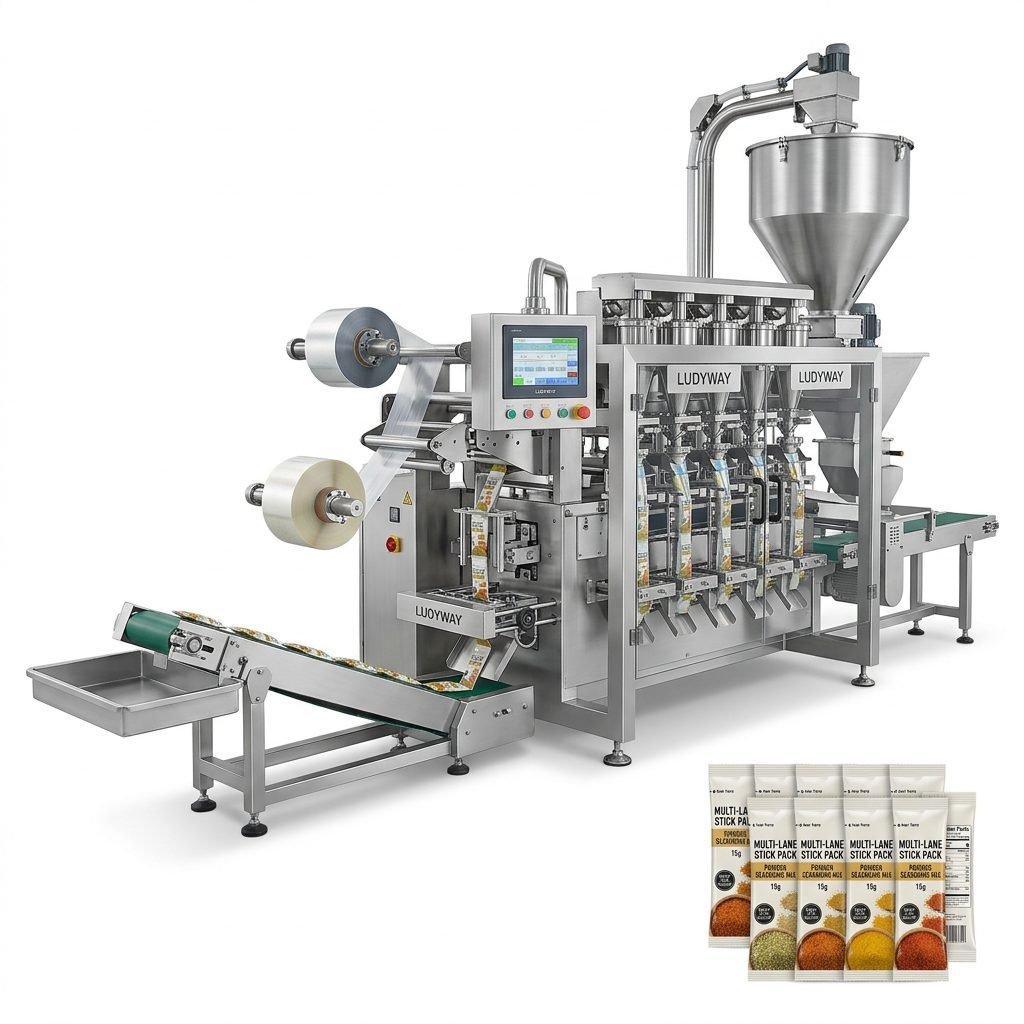
The film roll must unwind smoothly with consistent tension. Machines equipped with automatic tension control systems and web guides maintain precise film alignment, which is particularly important for multi-lane packaging machinery where multiple bags are formed simultaneously. Films that are too stiff or too elastic may stretch, causing registration drift and misaligned seals.
Forming and Filling Systems
The bag former (or forming collar) shapes the flat film into a tube. The film’s coefficient of friction (COF) must be within the range specified for the machine. A slip film with low COF may track poorly, while a high-COF film may cause wrinkles. For products requiring dust-free sealing, some systems incorporate vacuum suction to remove airborne particles from the seal area before heat is applied.
Sealing Technology
The sealing system must match the film’s heat-seal layer. Common configurations include:
| Seal Type | Temperature Range | Best Suited Films |
|---|---|---|
| Hot bar (constant heat) | 120°C – 250°C | OPP/PE, PET/PE laminates |
| Pulse heat | Higher peak temps, controlled pulse | Thicker films, aluminum foil laminates |
| Ultrasonic sealing | N/A (vibration-based) | Films with contamination in seal area, certain co-extruded films |
Seal integrity testing should be a routine part of machine setup for any new bag material, as seal strength directly correlates with product protection and shelf life.
Step 4: Consider Film Printing, Coding, and Branding Requirements
The bag is your primary consumer-facing communication tool. Printing and coding must be integrated into the packaging process without compromising line speed.
- Pre-printed film: Requires precise registration control on the machine to cut each bag at the correct eye-mark position. Machines use photoelectric sensors to detect registration marks and adjust film advance automatically.
- In-line coding: Thermal inkjet, laser, or hot stamp coders can print batch numbers, expiry dates, and QR codes directly onto the formed bag. Coding must occur on a stable section of the film path to ensure legibility.
- Label application: Some configurations integrate automatic labelers for additional branding or regulatory compliance, such as ISO packaging labeling standards.
Step 5: Build a Decision Checklist for Your Bag Selection
A methodical evaluation reduces risk and accelerates the path to full production. The following table summarizes the critical factors that determine whether a bag is right for your application and your packaging machine.
| Selection Factor | Key Questions to Ask | Impact on Machine Configuration |
|---|---|---|
| Product compatibility | Is the product granular, powder, liquid, or paste? Is it reactive, hygroscopic, or abrasive? | Determines film barrier requirements, filler type (auger, volumetric piston, multi-head weigher), and dust extraction needs |
| Bag format and size | What pouch style is required? What are the target width, length, and fill volume? | Influences former dimensions, film roll width, seal bar configuration, and cut-off mechanism |
| Seal integrity needs | What shelf life and distribution conditions must the package withstand? | Dictates seal width, temperature control precision, hot-tack requirements, and optional nitrogen flushing |
| Production speed | How many bags per minute are required? Is multi-lane configuration needed? | Film must withstand higher sealing and cooling speeds; machine must have adequate tension control and automation |
| Regulatory compliance | Does the package need FDA food-contact approval, EU packaging directives, or pharmaceutical-grade certifications? | Restricts usable film materials; may require machine documentation for validation protocols |
Why Partnering with an Experienced Manufacturer Matters
Navigating the complex interaction between film materials, bag formats, and machine parameters requires deep application knowledge. An equipment provider with extensive material testing capabilities can help validate the complete packaging specification before you invest in tooling or place large film orders. This collaborative approach reduces startup time and ensures that the bag, the product, and the machine function as one integrated system.
As a packaging machinery manufacturer with decades of experience, Ludyway works with customers to evaluate product samples, recommend compatible bag structures, and configure machines that deliver reliable sealing performance across a wide range of flexible packaging formats. Technical support extends from initial material trials through to sustained after-sales service, helping manufacturers maintain stable packaging quality in long-term production.
Key Technical Support Requirements
- On-site or remote film compatibility testing with your actual product
- Machine configuration tailored to your specific bag dimensions and seal requirements
- Operator training on film handling, seal parameter adjustment, and quality inspection
- Preventive maintenance guidance to sustain seal integrity and filling accuracy over time
For further insights into packaging machinery standards and evolving industry practices, resources from organizations such as PMMI – The Association for Packaging and Processing Technologies and the Flexible Packaging Association provide valuable technical and market information. Global regulatory frameworks, including FDA food packaging guidelines and ISO packaging standards, are also essential references when developing packaging solutions for international markets.