Investing in a big bag packing machine is a significant decision for manufacturers handling bulk materials such as powders, granules, chemicals, minerals, and agricultural products. The right equipment can dramatically improve your operational efficiency, reduce labor costs, minimize material waste, and ensure consistent filling accuracy. However, with dozens of configurations, automation levels, and technical specifications available, choosing the wrong machine can lead to costly downtime and production bottlenecks.
This comprehensive buyer’s guide walks you through every critical factor to evaluate when selecting a big bag filling system — from production requirements and material characteristics to automation options and long-term total cost of ownership. Whether you are upgrading an existing packaging line or building a new facility, understanding these key considerations will help you make an informed investment that aligns with your production goals. For broader industry insights, the PMMI State of the Industry Reports provide valuable market data on packaging machinery trends and growth projections.
Understanding Big Bag Packing Machines
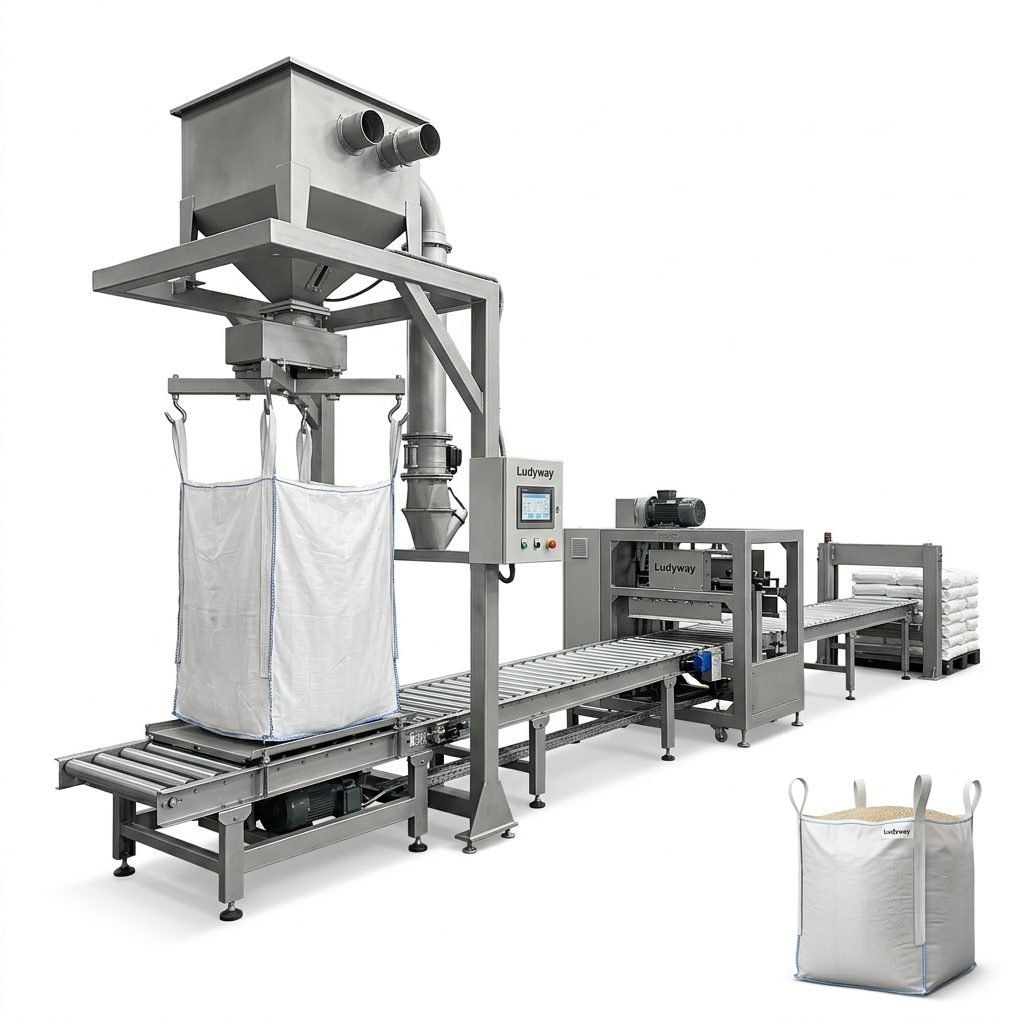
A big bag packing machine — also known as a bulk bag filler, FIBC (Flexible Intermediate Bulk Container) filling system, or jumbo bag packer — is designed to accurately fill large bags typically ranging from 500 kg to 2,000 kg in capacity. These machines handle a wide variety of materials including free-flowing granules, cohesive powders, flake materials, and even hazardous substances. The core functions include bag hanging, material dosing and weighing, vibration or compaction, inflation, and automatic bag release.
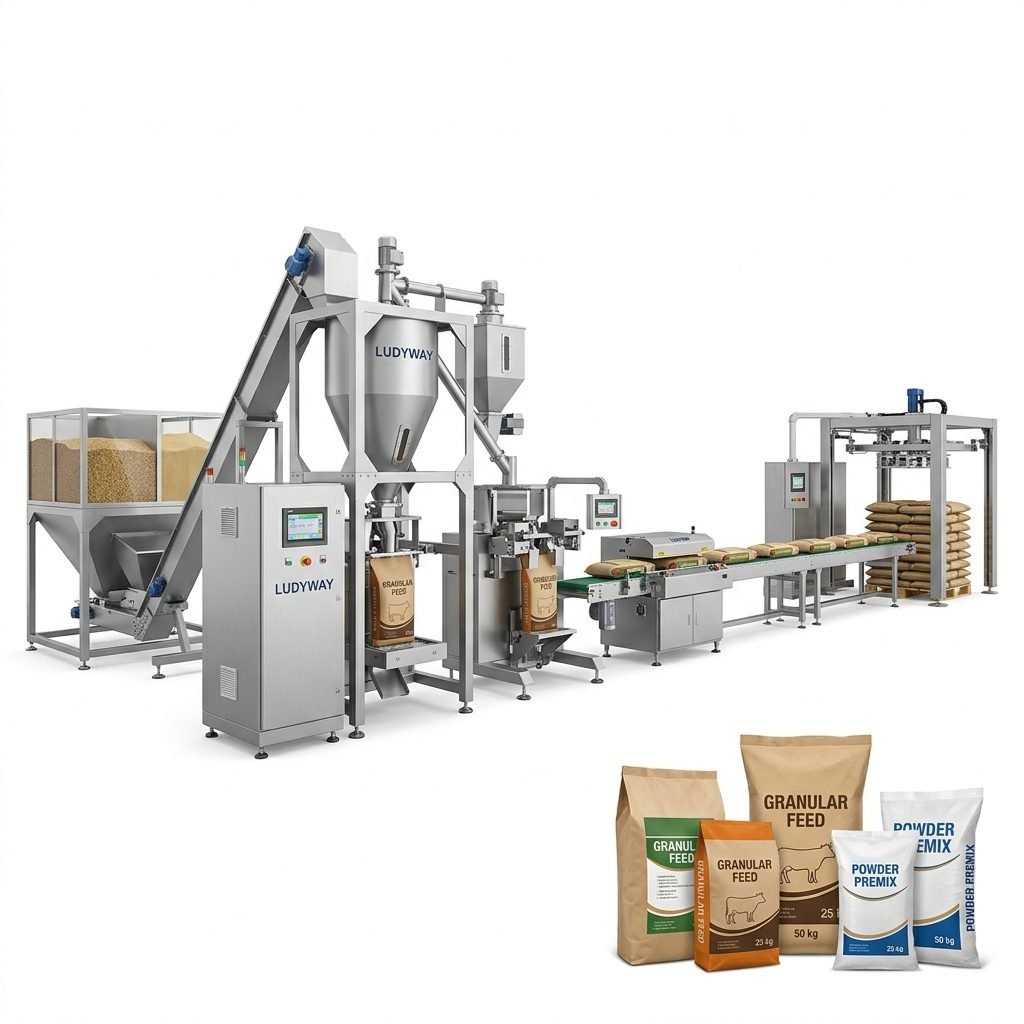
Modern systems go far beyond simple filling. Advanced configurations integrate palletizing, stretch wrapping, metal detection, labeling, and automated guided vehicle (AGV) interfaces, creating fully automated end-of-line packaging cells. According to Flexible Packaging Association industry data, the demand for efficient bulk packaging solutions continues to grow as manufacturers seek to optimize supply chain operations and reduce packaging waste.
Key Factors to Consider When Choosing a Big Bag Packing Machine
1. Production Capacity and Filling Speed
Your required throughput is the most critical starting point. Big bag filling systems can range from 10 to 60+ bags per hour, depending on the automation level and material flow characteristics. Consider:
- Current production volume and expected growth over the next 3-5 years
- Peak season demand fluctuations
- Single-shift versus multi-shift operation schedules
- Available upstream and downstream process speeds
Investing in a system with slightly higher capacity than your current needs provides valuable headroom for business expansion without requiring a complete equipment replacement. For detailed packaging machinery market research, PMMI’s Business Intelligence Library offers comprehensive reports on production benchmarks across industries.
2. Material Characteristics
Material properties significantly influence the filling mechanism, dust control requirements, and overall machine configuration. Key material factors to assess include:
- Flowability: Free-flowing granules (fertilizers, plastic pellets) require different dosing mechanisms than cohesive powders (titanium dioxide, flour) that tend to bridge or rat-hole in hoppers
- Bulk density: Affects the required fill volume and weighing system calibration
- Particle size distribution: Fine powders demand enhanced dust extraction systems
- Moisture content: Impacts material flow and potential caking issues
- Hazardous properties: Flammable, explosive, or toxic materials require specialized ATEX-rated or NFPA-compliant equipment
- Temperature: Hot or cold materials affect component selection and sealing integrity
3. Bag Specifications and Compatibility
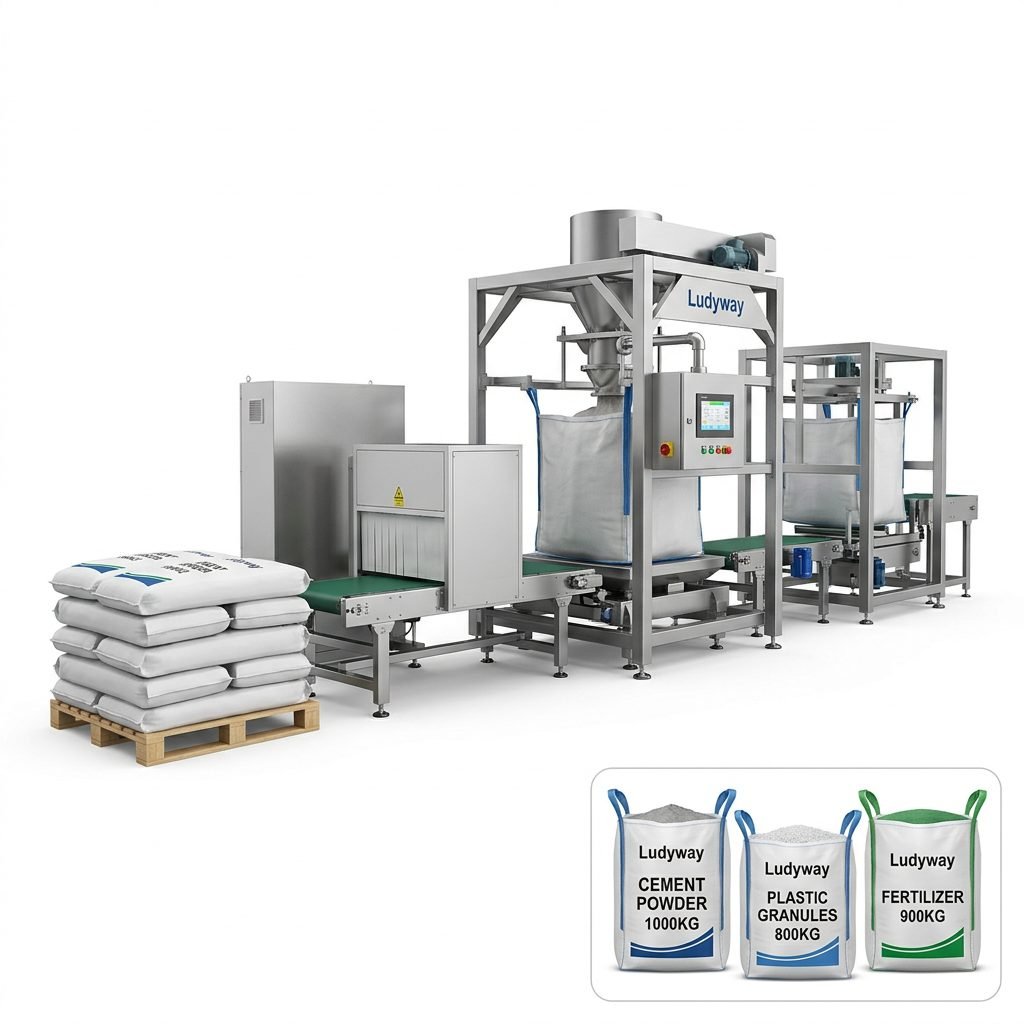
Big bags come in various designs, and your machine must accommodate the specific bag types used in your operation. Evaluate:
- Bag dimensions (standard sizes range from 80×80×80 cm to 100×100×120 cm)
- Loop configurations (4-point single loop, double loop, cross-corner loops)
- Filling spout types (open top, duffle top, spout top)
- Discharge options (flat bottom, spout bottom, full discharge)
- Bag materials (polypropylene woven, conductive bags, food-grade liners)
Some manufacturers require quick-change features for handling multiple bag sizes on the same line. Check ISO packaging standards for dimensional and performance specifications applicable to FIBC containers.
4. Filling Technology and Weighing Accuracy
The filling and weighing system determines both throughput and accuracy. Common filling technologies include:
- Gravity filling: Simple and fast for free-flowing materials; minimal mechanical complexity
- Belt or screw feeding: Ideal for powders and non-free-flowing materials requiring controlled feed rates
- Vibratory feeding: Suitable for granular products needing gentle handling
- Net weighing: Material is pre-weighed in a hopper before discharge into the bag; high accuracy
- Gross weighing: The bag is filled directly on load cells; simpler system with good accuracy
Modern systems achieve accuracy levels of ±0.1% to ±0.5% of target weight. Precision is especially critical for high-value materials where giveaway directly impacts profitability.
5. Automation Level and Integration
Big bag packing machines are available across a wide automation spectrum:
- Semi-automatic: Operators manually attach bags and initiate fill cycles; suitable for low-volume production
- Fully automatic: Automated bag dispensing, positioning, filling, sealing, and ejection; minimal operator intervention
- Integrated turnkey systems: Combine filling with palletizing, conveying, stretch wrapping, labeling, and warehouse management system integration
Consider how the big bag filler will integrate with upstream material handling equipment (silos, conveyors, mixers) and downstream logistics (forklifts, AGVs, warehouse systems). The PMMI packaging industry resources provide guidance on automation integration best practices and standards for packaging line connectivity.
Comparing Big Bag Filling System Types
The following table summarizes the key differences between common big bag packing machine configurations to help you narrow down your options based on your operational priorities:
| Feature | Semi-Automatic | Fully Automatic | Turnkey Integrated System |
|---|---|---|---|
| Operator Involvement | High – manual bag attachment | Low – automated bag handling | Minimal – full line automation |
| Typical Speed | 10-20 bags/hour | 20-40 bags/hour | 40-60+ bags/hour |
| Weighing Accuracy | ±0.2-0.5% | ±0.1-0.3% | ±0.1-0.2% |
| Initial Investment | Lower | Moderate to High | High – full system integration |
| Best For | Small-medium operations, varied bag types | Medium-high volume, consistent bag specs | High-volume 24/7 operations |
| Flexibility | High – easy size changes | Moderate – quick-change features | Lower – optimized for specific formats |
Dust Control and Safety Considerations
For operations handling fine powders or hazardous materials, dust management is not optional — it is essential for workplace safety, regulatory compliance, and product quality. Key dust control features to evaluate include:
- Integrated dust extraction: Local exhaust ventilation at fill heads to capture airborne particles
- Inflatable neck seals: Create a tight seal between the filling spout and bag inlet to prevent dust leakage
- Enclosed filling cabinets: Full containment for toxic or potent materials
- ATEX / NFPA compliance: Explosion-proof designs for combustible dust environments
- Clean-in-place (CIP) systems: For applications requiring frequent material changeovers
Regulatory guidance from FDA food packaging and food contact substances is particularly relevant for manufacturers in the food, pharmaceutical, and nutraceutical sectors. Additionally, the European Commission packaging and packaging waste regulations set important environmental compliance requirements for packaging operations in EU markets.
Evaluating Suppliers and Manufacturers
Choosing the right equipment supplier is as important as selecting the right machine specification. When evaluating big bag packing machine manufacturers, consider the following criteria:
- Industry experience: Look for manufacturers with a proven track record in your specific industry and material type
- Manufacturing capabilities: In-house manufacturing and engineering teams typically offer better quality control and customization options
- Reference installations: Ask for case studies or site visits to facilities running similar applications
- Customization capabilities: Can the supplier adapt the machine to your unique bag sizes, materials, and facility layout?
- After-sales support: Evaluate spare parts availability, technical support responsiveness, and service engineer accessibility in your region
- Certifications: CE, UL, ATEX, ISO 9001, and other relevant certifications demonstrate commitment to quality and safety standards
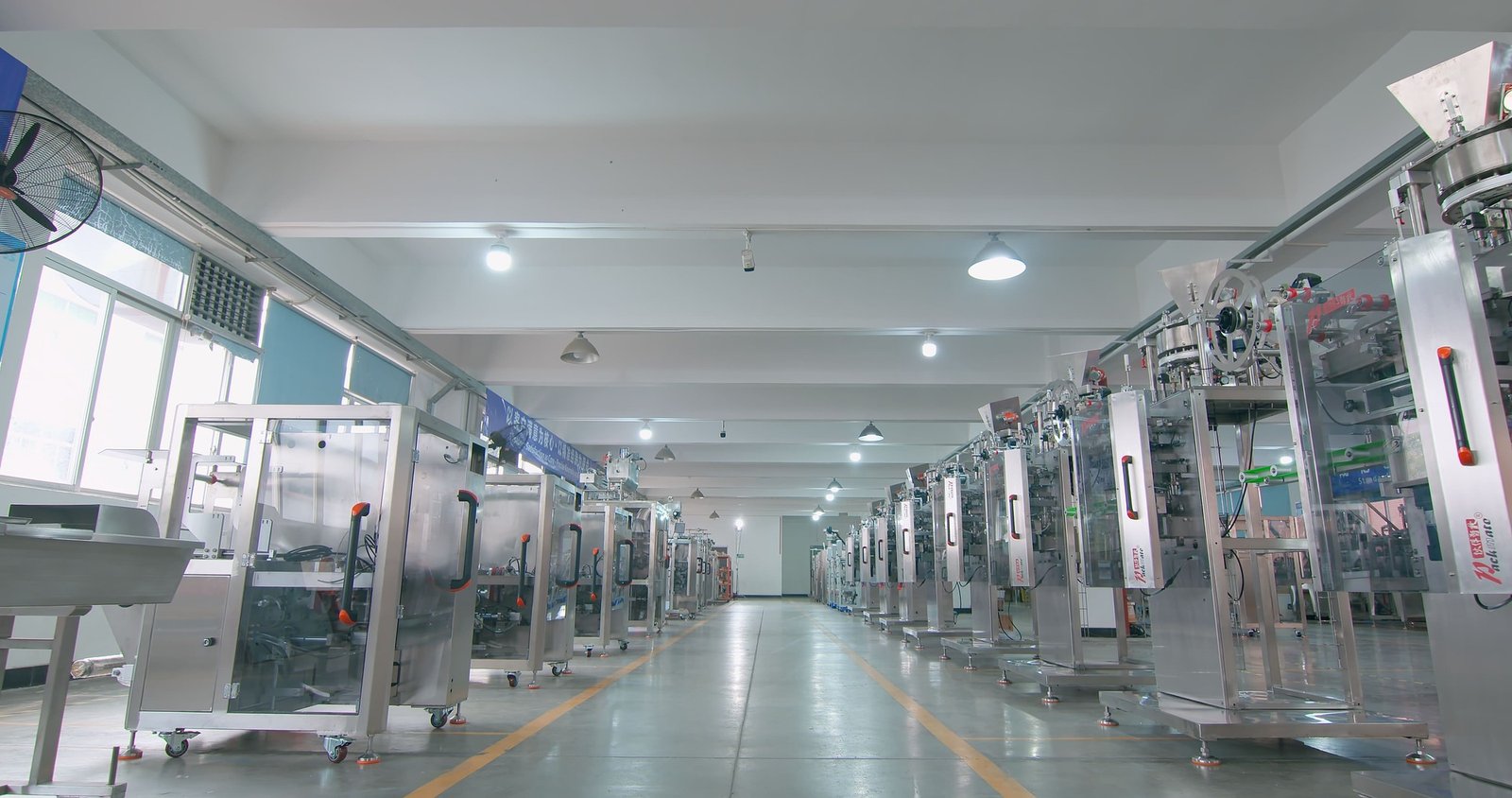
Ludyway Machinery is a China-based packaging machinery manufacturer with more than 30 years of experience, offering automated packaging equipment and integrated packaging solutions across food, pharmaceutical, chemical, and agricultural industries. With a 20,000-square-meter manufacturing facility and over 50 packaging machine models, the company provides customized big bag filling systems configured for different production speeds, filling volumes, and material types. For manufacturers seeking a single partner for equipment selection, system integration, and technical support, this integrated approach can simplify project execution. Further insights on supplier evaluation can be found through PMMI’s packaging machinery market research and industry benchmarking resources.
Total Cost of Ownership Analysis
The purchase price of a big bag packing machine represents only a fraction of its lifetime cost. A thorough total cost of ownership (TCO) analysis should account for:
| Cost Category | Considerations | Estimated % of TCO |
|---|---|---|
| Initial Equipment Cost | Machine price, shipping, import duties, installation | 25-35% |
| Energy Consumption | Compressed air, electrical power, dust extraction systems | 10-15% |
| Consumables & Spare Parts | Seals, filters, wear components, lubricants | 10-20% |
| Labor Costs | Operators, maintenance technicians, training | 20-30% |
| Downtime & Lost Production | Unscheduled stoppages, changeover time, repair delays | 5-15% |
A higher-quality machine with robust engineering and reliable components often delivers a lower TCO over a 10-year lifecycle, even if the initial purchase price is higher. Reliability and serviceability directly impact production uptime and maintenance budgets. The 2025 State of the Industry report from PMMI provides additional data on packaging machinery cost trends and operational benchmarks across different sectors.
Future-Proofing Your Investment
When purchasing a big bag packing machine, consider how your needs may evolve over the equipment’s 10-15 year service life. Forward-thinking considerations include:
- Modular design: Can sensors, conveyors, or palletizers be added later without replacing the core machine?
- Industry 4.0 readiness: Does the system support OEE monitoring, predictive maintenance alerts, and ERP/MES integration?
- Multiple bag formats: If you may expand into different bag sizes or types, ensure the system can be adapted
- Sustainability requirements: Consider equipment that supports recyclable bag materials, reduced energy consumption, and minimal product waste
For guidance on sustainable packaging practices, the Flexible Packaging Association Knowledge Hub offers resources on sustainable packaging design and regulatory compliance, while the U.S. EPA Sustainable Materials Management program provides frameworks for reducing packaging environmental impact.
Installation, Commissioning, and Training
The best equipment can underperform if not properly installed and operated. When finalizing your purchase, clarify what support the manufacturer provides for:
- Site preparation and utility requirements (compressed air, electrical supply, dust extraction ducting)
- Installation supervision and commissioning services
- Operator training programs (classroom and hands-on)
- Maintenance training for in-house technicians
- Documentation and spare parts lists
- Remote diagnostic support capabilities
Making the Final Decision
Selecting the right big bag packing machine requires balancing multiple factors: production capacity, material handling requirements, accuracy specifications, automation objectives, budget constraints, and long-term operational costs. By systematically evaluating each of these areas and engaging with experienced suppliers who understand your industry, you can make a confident investment that delivers reliable performance for years to come.
Key takeaways for your purchasing process:
- Start with a detailed specification of your material characteristics and production requirements
- Evaluate both current needs and projected growth over the equipment’s service life
- Compare total cost of ownership rather than focusing solely on purchase price
- Visit reference installations or request video demonstrations of similar applications
- Verify after-sales support capabilities in your geographic region
- Ensure compliance with relevant safety, quality, and environmental standards for your industry
For additional industry data and packaging machinery insights, explore resources from PMMI – The Association for Packaging and Processing Technologies and the Flexible Packaging Association, both of which offer extensive research, standards documentation, and educational content for packaging professionals.