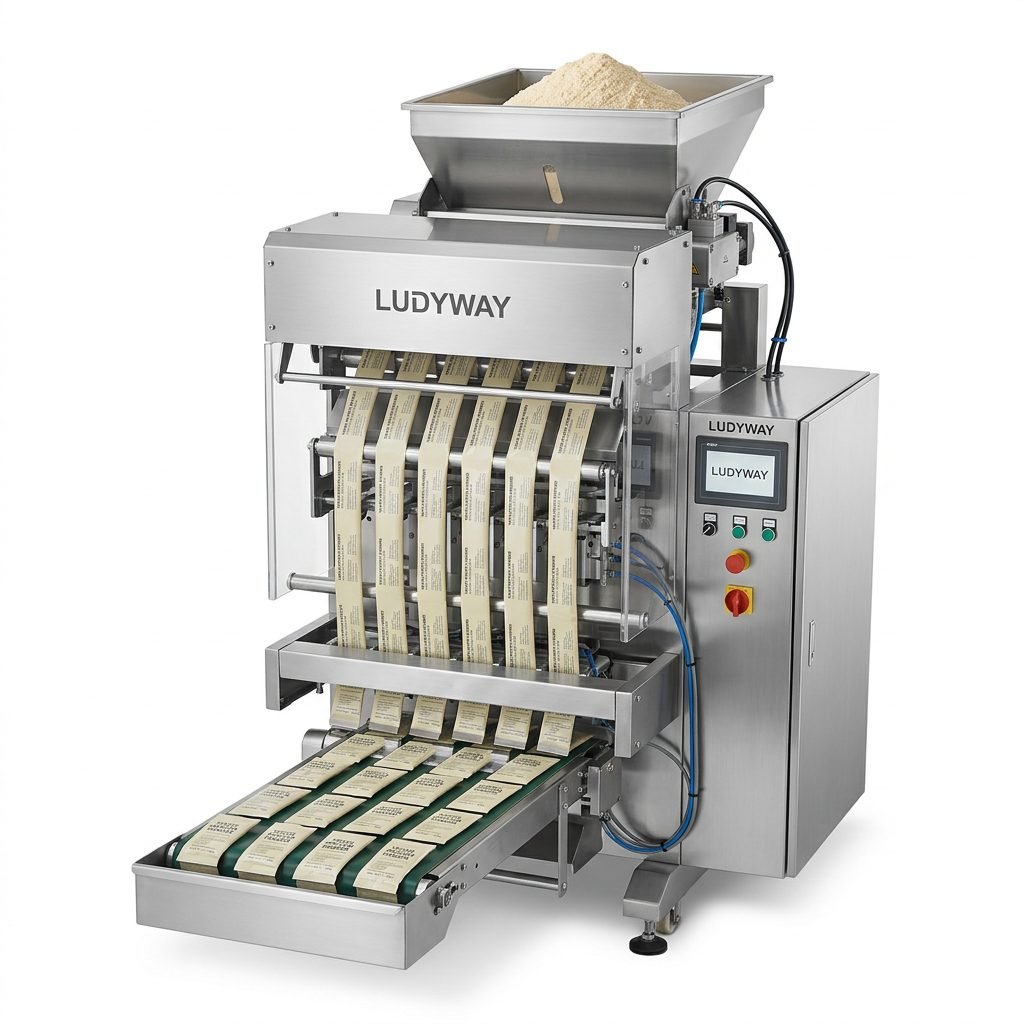
Investing in a namkeen pouch packing machine is a critical decision for snack manufacturers looking to scale production, maintain product freshness, and reduce manual labor costs. Whether you produce bhujia, sev, chana dal, or mixed namkeen, the right packaging equipment directly impacts your product’s shelf life, visual appeal on retail shelves, and overall operational efficiency. This guide walks you through every factor you need to evaluate before making a purchase.
Understanding Namkeen Packaging Requirements
Namkeen products present unique packaging challenges. They are often irregular in shape, varying in size, and fragile, requiring gentle handling to avoid breakage during the filling process. Additionally, many namkeen varieties are coated with oil or spices, demanding packaging materials and sealing technologies that prevent grease leakage and protect against moisture ingress. A dedicated namkeen pouch packing machine must address these specific product characteristics.
Key product considerations include bulk density variations, the presence of multiple components in one mix (such as peanuts, sev, and flakes), and the need for nitrogen flushing to extend shelf life for oil-rich snacks. According to industry standards outlined by the Flexible Packaging Association, selecting compatible packaging films is essential for maintaining product quality throughout distribution.
Types of Namkeen Pouch Packing Machines
There is no one-size-fits-all solution. The appropriate machine type depends on your production volume, packaging format, and factory layout. Below is a comparison of the most common configurations used in the snack industry.
| Machine Type | Best For | Key Advantage | Typical Speed Range |
|---|---|---|---|
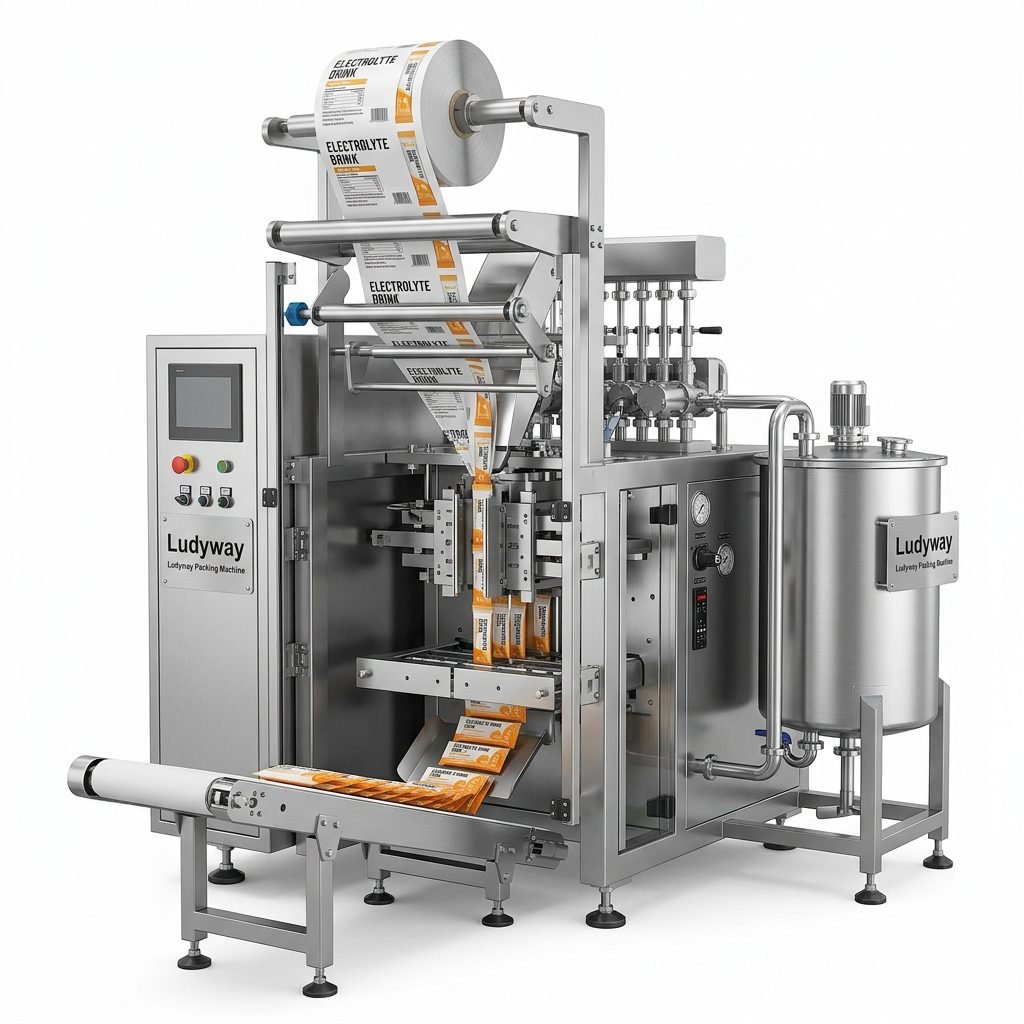
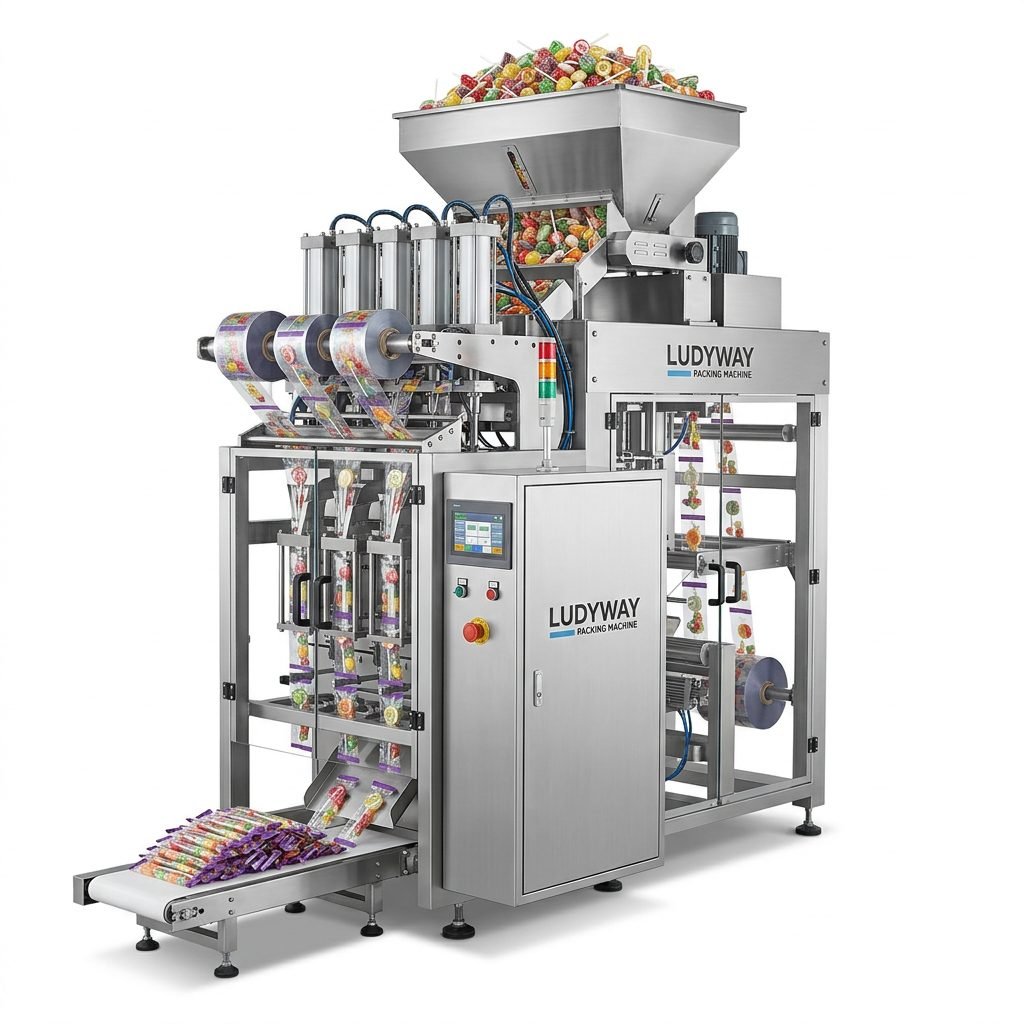
| Vertical Form Fill Seal (VFFS) | Medium to high-volume pillow pouches | Compact footprint, cost-effective | 30–80 pouches/min |
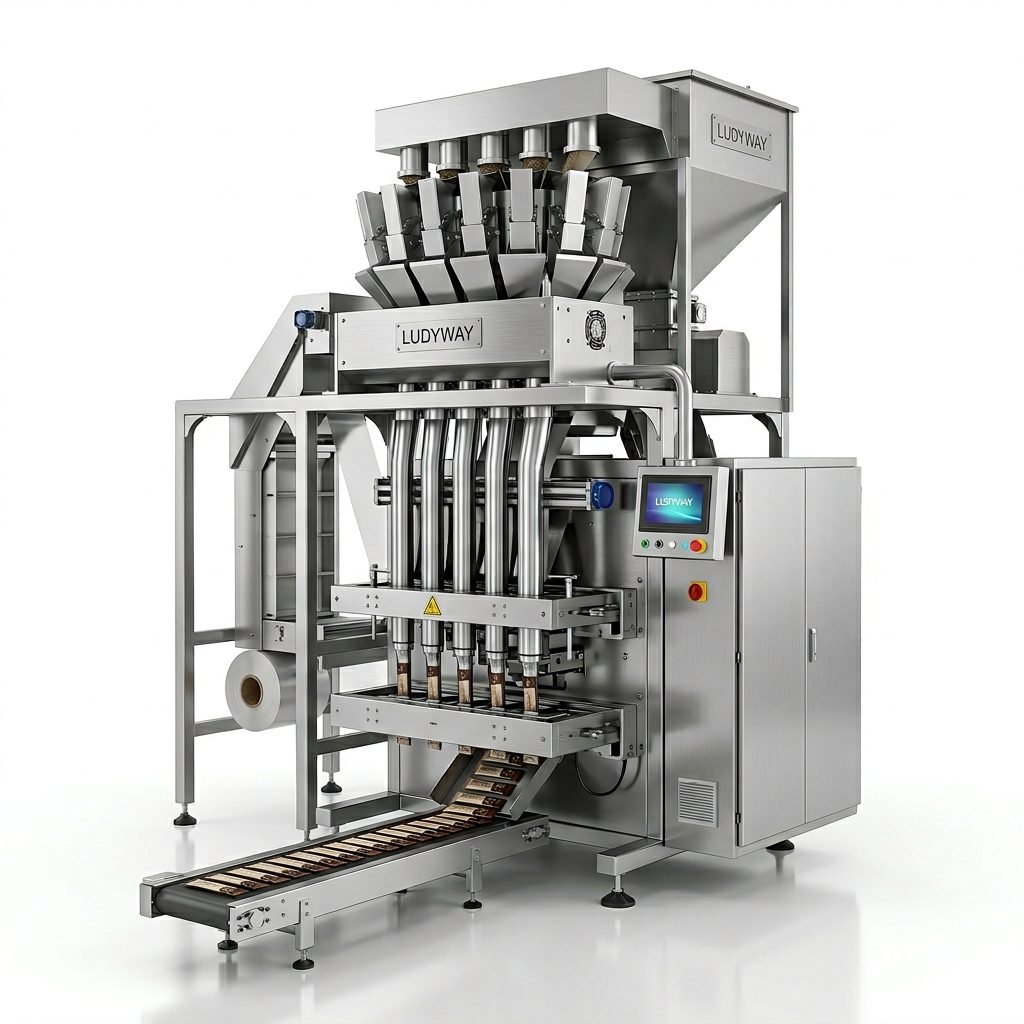
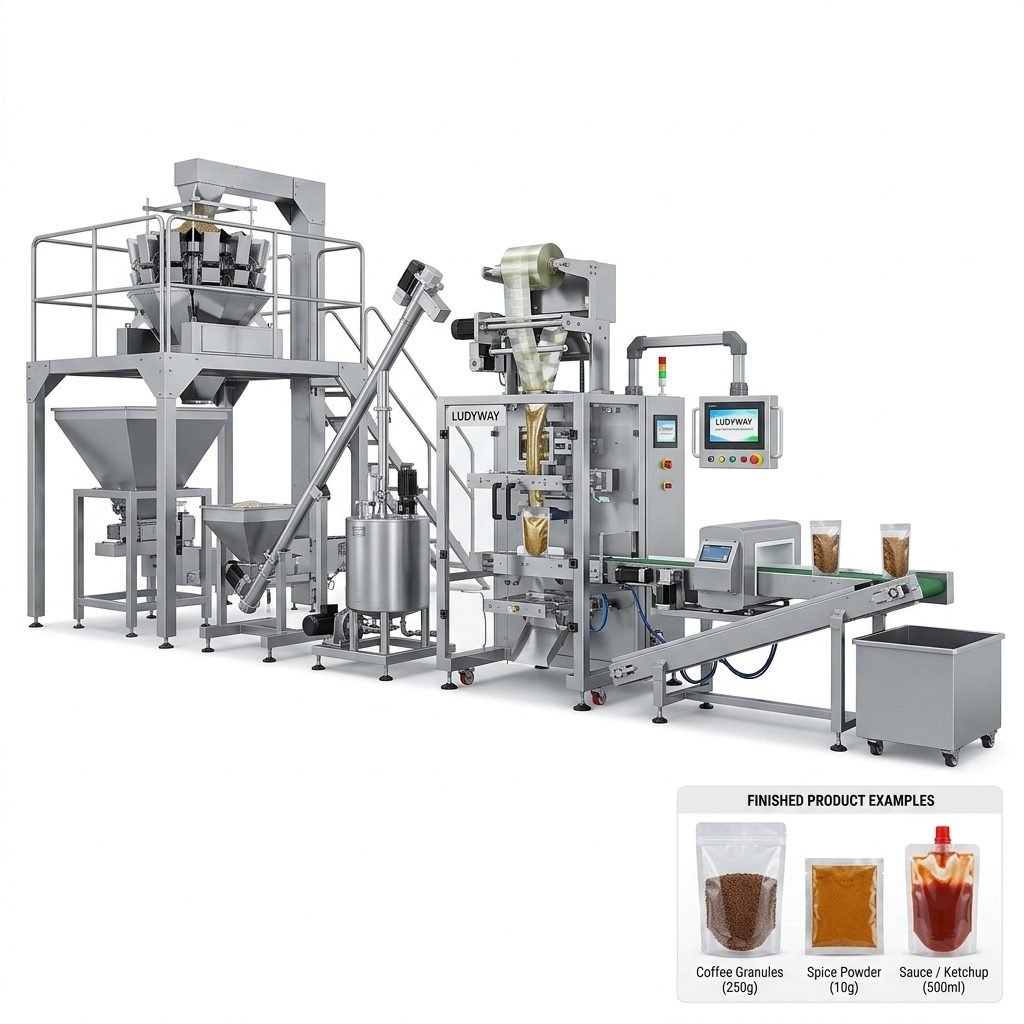
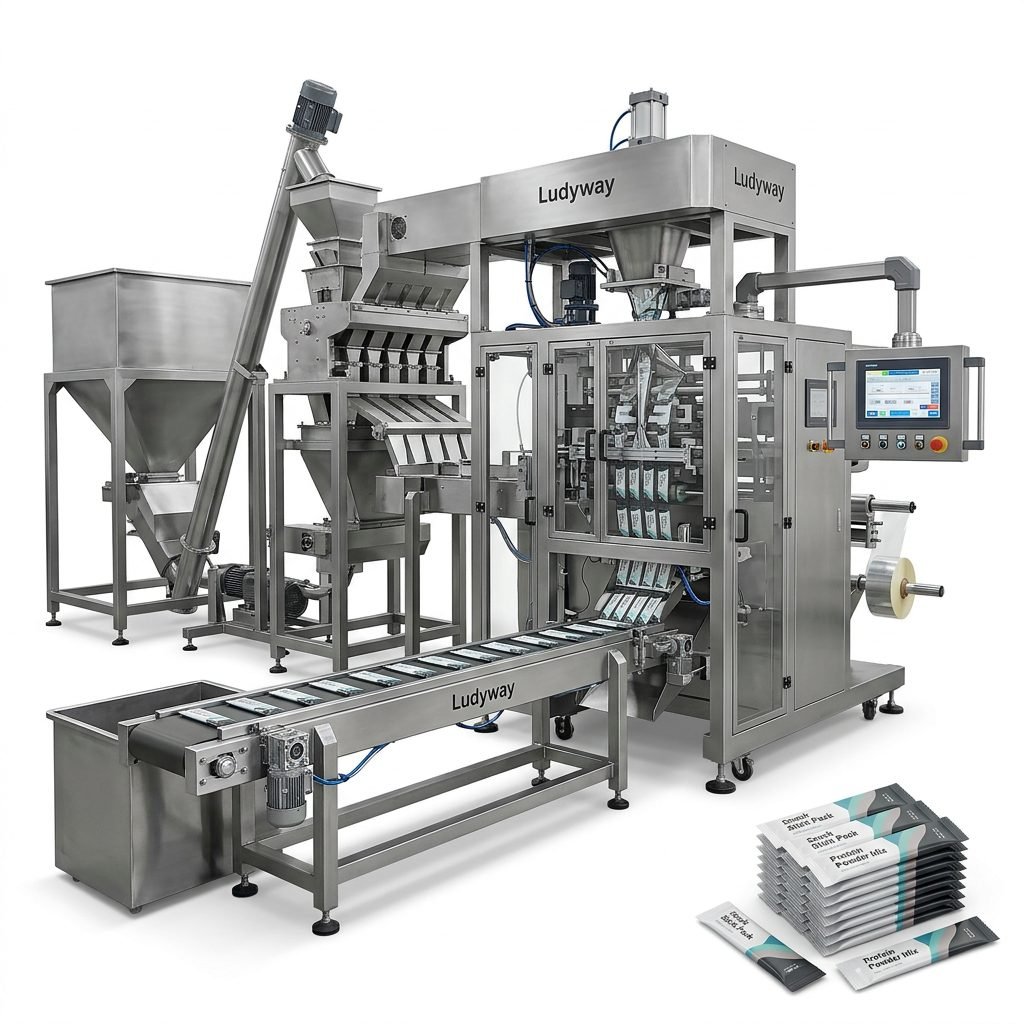
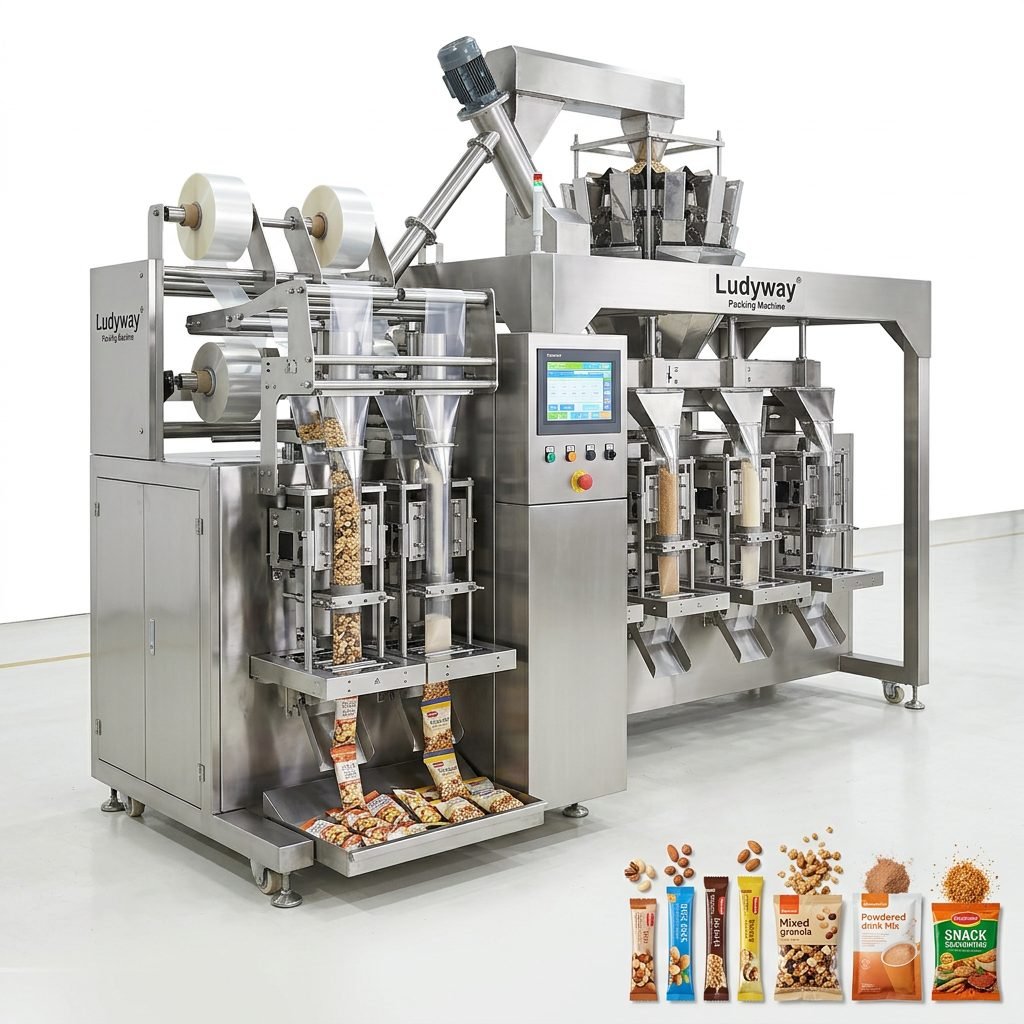
| Multi-Head Weigher + VFFS | High-speed mixed namkeen lines | High accuracy, minimal giveaway | 60–120 pouches/min |
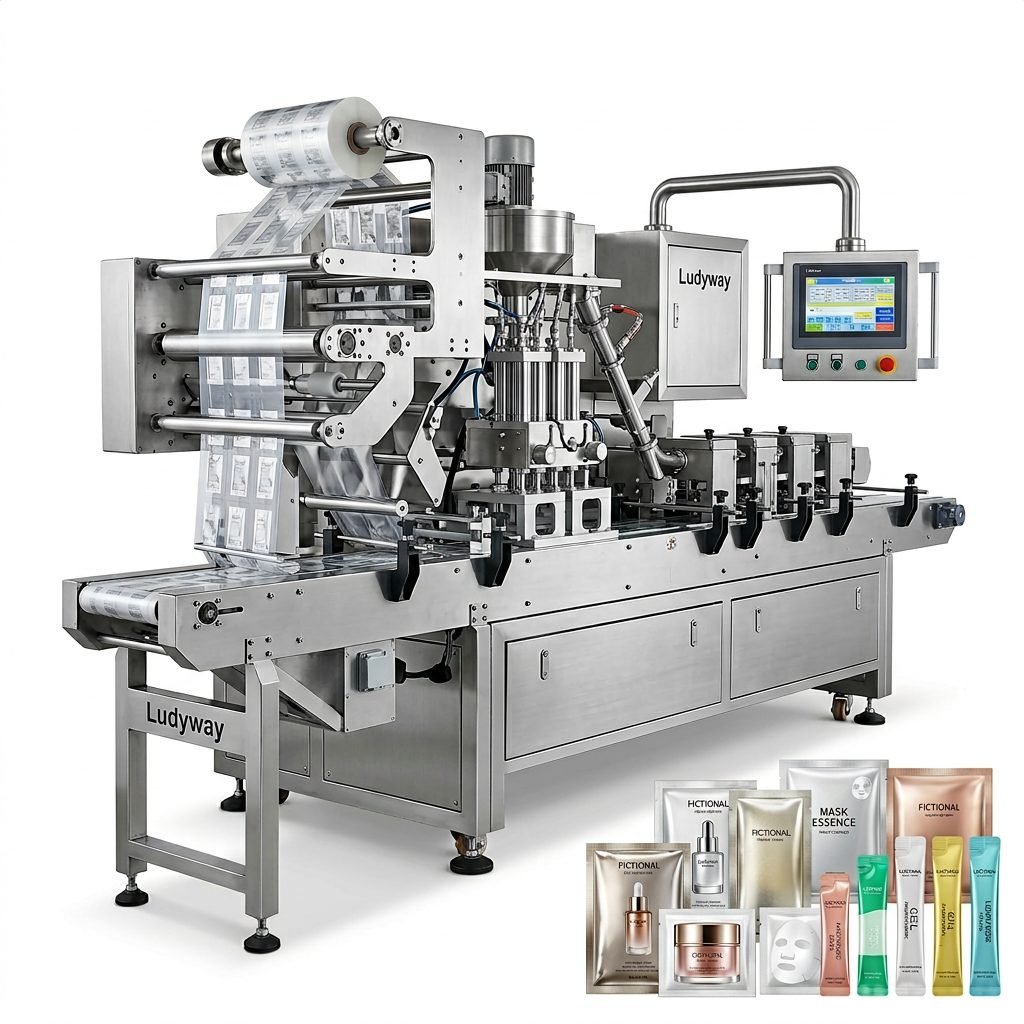
| Premade Pouch Rotary Filler | Stand-up pouches, zipper pouches | Premium pouch formats, versatile | 20–50 pouches/min |
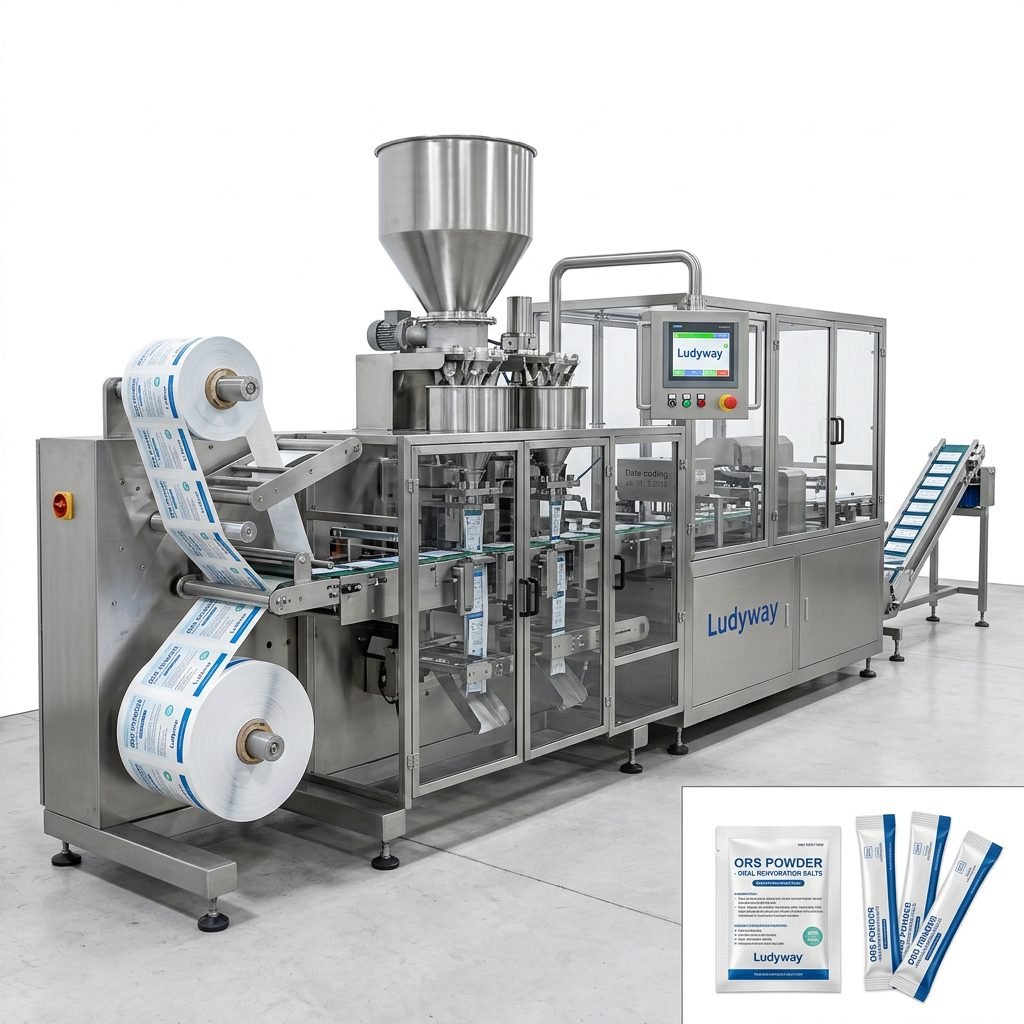
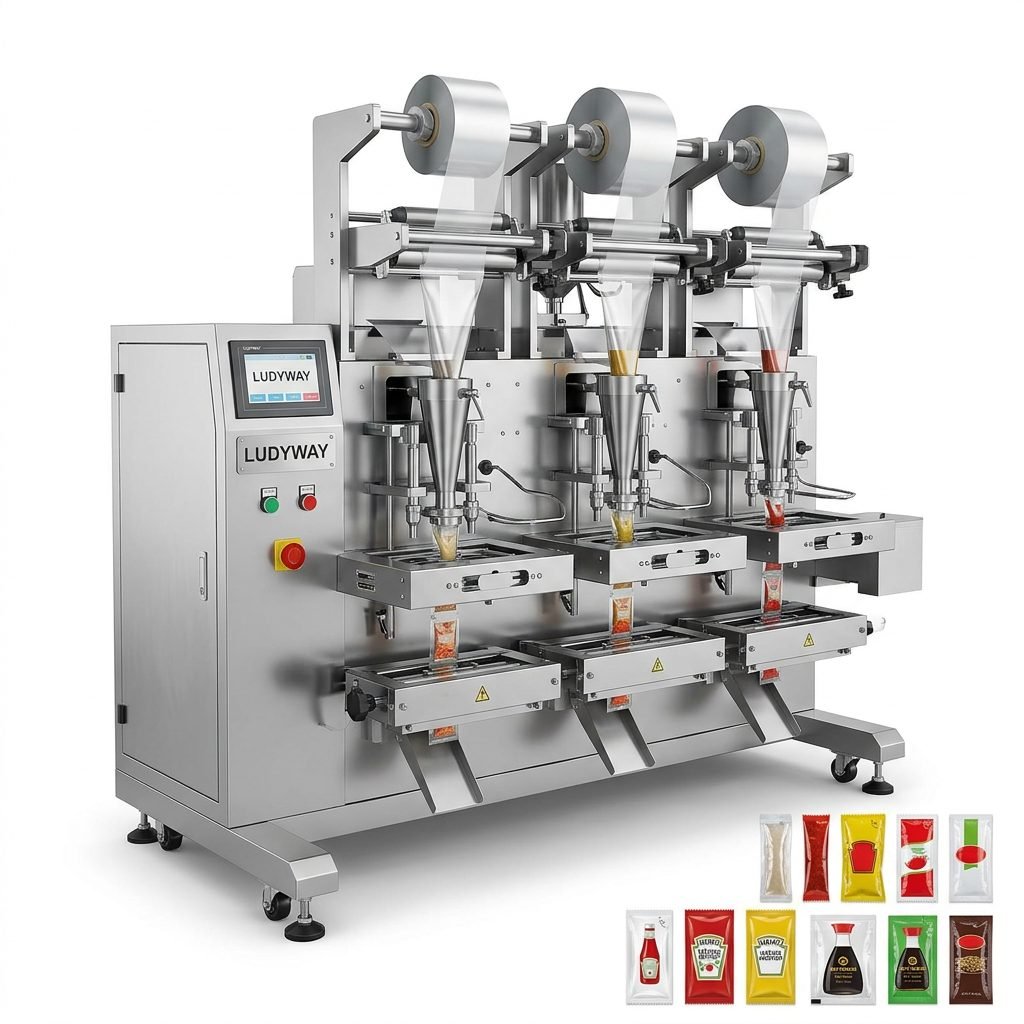
| Multi-Lane Stick Pack Machine | Single-serve portion packs | Extremely high output per minute | 200–600 packs/min |
Key Features to Evaluate Before Buying
1. Weighing and Filling Accuracy
Inconsistent filling leads to product giveaway, which erodes profit margins over time. For namkeen mixtures with different-sized components, multi-head weighers are the gold standard. They calculate the optimal combination of weigh buckets to hit the target weight with minimal deviation. Alternatively, volumetric cup fillers offer a more economical option for products with uniform granule size, though they may be less precise for complex mixes. Reviewing resources from the PMMI Business Intelligence Library can help you benchmark acceptable giveaway rates for your specific product category.
2. Material Compatibility and Sealing Integrity
The machine must handle the specific laminate films required for namkeen packaging. Common structures include metallized PET/PE, BOPP/CPP, and multi-layer barrier films. Seal integrity is non-negotiable: a weak seal allows moisture and oxygen to enter, making snacks stale. Look for machines with precise temperature control, adjustable sealing pressure, and dwell time settings. Serrated or flat sealing jaws should be selected based on your pouch finish preference. Packaging material compatibility guidelines are extensively covered by the FDA Food Packaging and Food Contact Substances regulations, which are essential when exporting to North American markets.
3. Nitrogen Flushing and Gas Flushing Capability
For fried namkeen and oil-rich snacks, nitrogen flushing is a critical feature. By replacing oxygen inside the pouch with inert nitrogen gas, you significantly extend shelf life and prevent rancidity. Not all machines are equipped with efficient gas flushing systems. Verify that the machine provides a consistent gas flow rate and that the pillow-forming tube design allows for proper gas retention before the final seal is made. Residual oxygen levels below 1-2% are typically targeted for long shelf-life namkeen products.
4. Automation Level and Integration
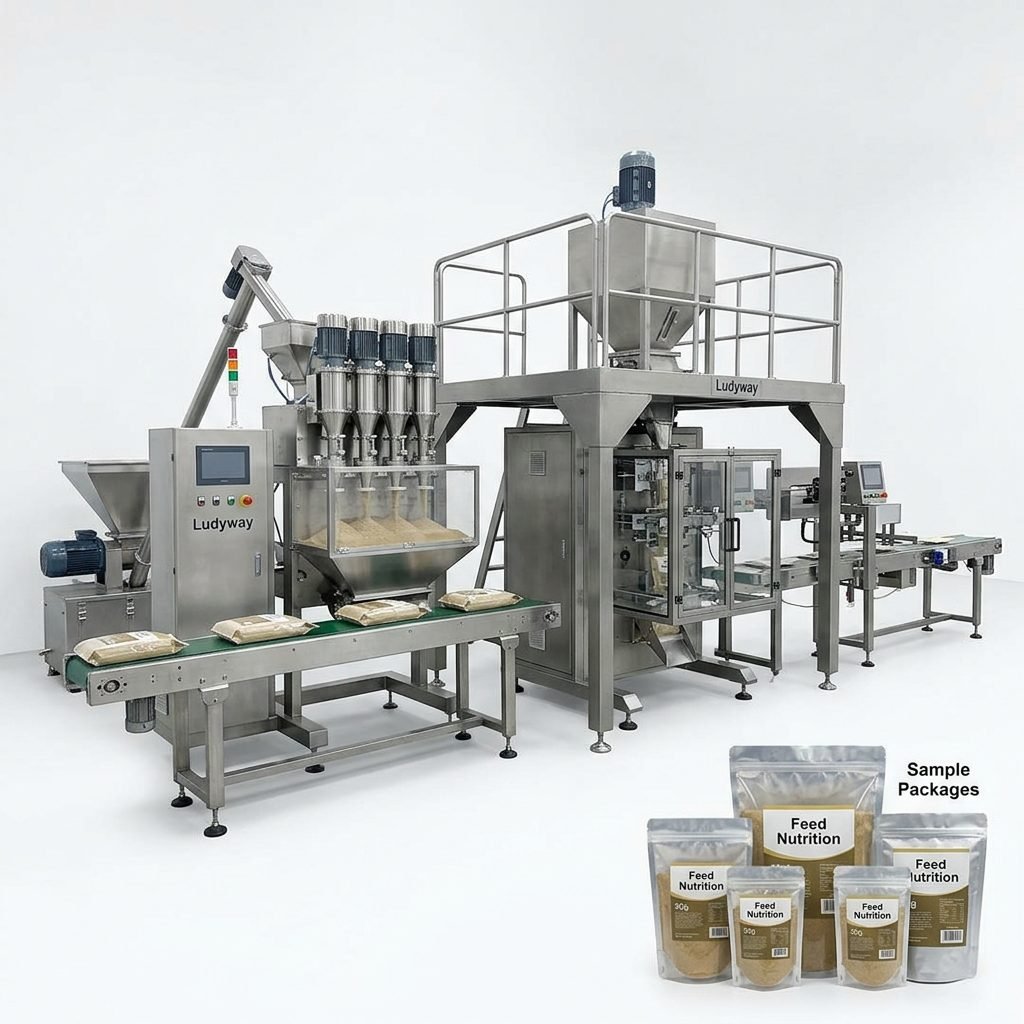
Your current and future production goals determine the degree of automation required. A basic machine may require manual feeding, while a fully automated line integrates:
- Automatic feeding conveyors and bucket elevators
- Multi-head weighers or auger fillers
- Inline metal detectors for food safety compliance
- Checkweighers for quality assurance
- Automatic cartoning or case packing modules
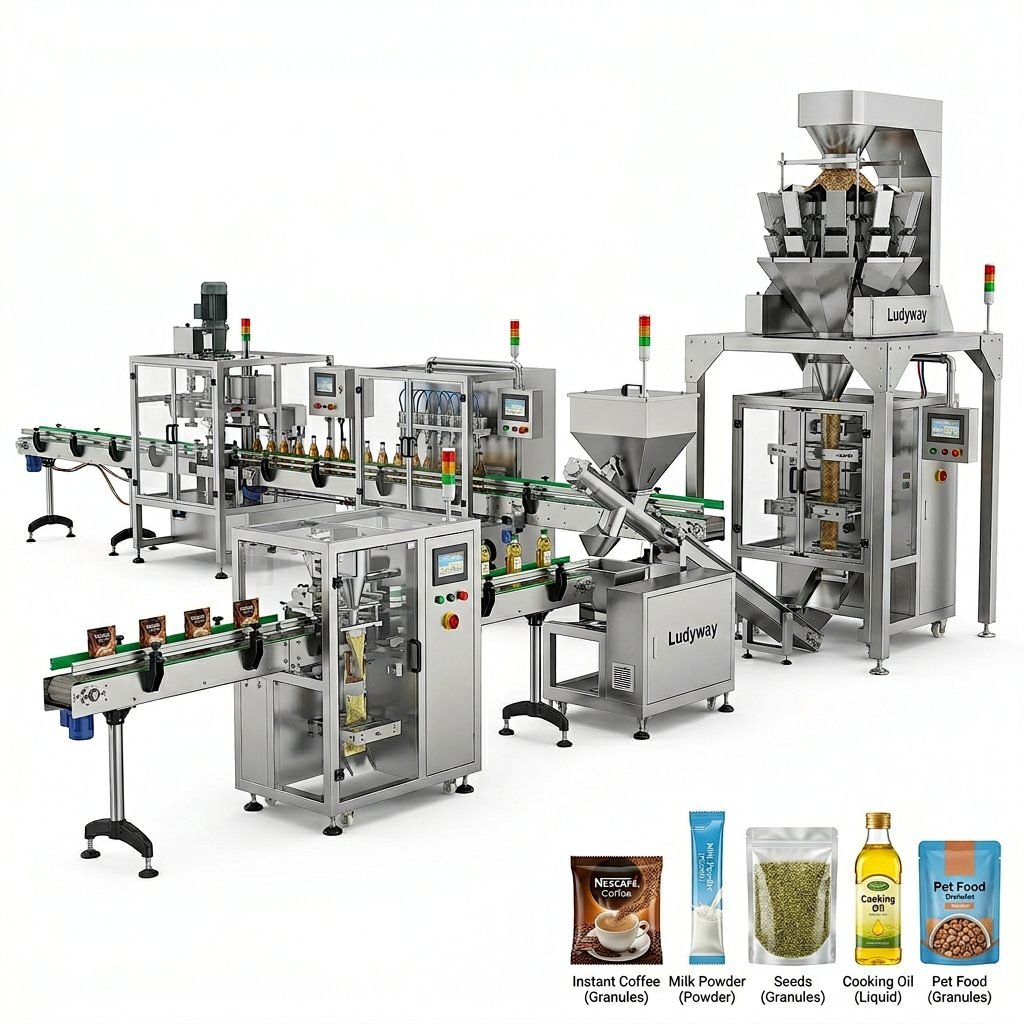
Assess whether the machine’s control system supports easy integration with upstream and downstream equipment. Turnkey packaging solutions significantly reduce coordination complexity and ensure compatibility across the entire line.
Production Output and Speed Considerations
A common mistake is evaluating speed based solely on maximum rated pouches per minute. Real-world output depends on product flow characteristics, the number of weighing heads, bag size, and operator proficiency. When discussing specifications with manufacturers, request clear data on the machine’s performance running products similar to yours. For example, a machine rated at 80 pouches per minute for uniform granules may run at 50-60 pouches per minute for a mixed namkeen with fragile components. Steps can be taken to increase overall equipment effectiveness (OEE) by selecting the right primary machine and auxiliary components, as outlined in the PMMI 2025 State of the Industry report.
Pouch Formats and Size Flexibility
Consider the range of pouch formats you plan to produce now and in the future. Common namkeen packaging formats include:
- Pillow pouches — Standard entry-level format, cost-efficient
- Gusseted pouches — Stand better on shelves, larger volume
- Stand-up zipper pouches — Premium look, reclosable feature
- Stick packs — Single-serve, impulse purchase format
- Chain pouches — Connected sachets for multi-pack retail
If you anticipate introducing multiple sizes or premium packaging in the future, select a machine with quick changeover features and adjustable forming sets. Changeover time directly impacts production scheduling and overall output.
Build Quality and Hygiene Standards
Namkeen is a food product, and the machine must meet relevant food safety requirements. Prioritize machines constructed with food-grade stainless steel (SUS304 or SUS316) on all product-contact surfaces. The frame and non-contact parts should ideally be stainless steel or treated to resist corrosion in humid factory environments. Easy-to-clean designs, sloped surfaces, and minimal crevices help maintain hygiene standards and reduce cleaning downtime between product changeovers.
After-Sales Support and Spare Parts Availability
The most advanced machine is only as good as the support behind it. Before committing, evaluate the manufacturer’s service infrastructure through questions about local service engineers, remote diagnostics, spare parts availability, training programs, and warranty terms. Ludyway Machinery, with its 30-year track record and presence in over 100 countries, provides packaging solutions backed by comprehensive technical support, including installation, commissioning, and ongoing after-sales service to help maintain consistent production performance.
Cost Factors Beyond the Initial Purchase Price
The total cost of ownership extends well beyond the invoice price. Factor in these often-overlooked elements:
- Shipping, customs duties, and local taxes
- Installation and commissioning expenses
- Operator training and learning curve productivity loss
- Ongoing spare parts consumption
- Film waste during setup and optimization
- Energy consumption and compressed air requirements
A slightly higher upfront investment in a reliable, efficient machine typically yields lower long-term operating costs compared to a cheaper alternative with higher waste and frequent downtime.
Questions to Ask Your Machine Supplier
When you engage with potential suppliers, having a structured set of questions ensures you get comparable information. Key questions include asking to see the machine running a product similar to yours, requesting film waste percentage guarantees, clarifying lead times for critical spare parts, understanding whether the control system allows recipe saving for different products, and checking compatibility with your existing factory utilities. For broader industry context, you can explore the PMMI 2026 State of the Industry report to understand how packaging machinery investment trends are evolving globally.
Making the Final Decision
Selecting the right namkeen pouch packing machine is a strategic decision that impacts product quality, brand reputation, and profitability. Start by clearly defining your product range, target output, and packaging format requirements. Then evaluate machines based on weighing accuracy, sealing reliability, automation level, and total cost of ownership rather than purchase price alone. Finally, partner with a supplier that offers genuine technical expertise and responsive after-sales support. A methodical approach to evaluation ensures your investment delivers consistent, high-quality packaging for years to come.