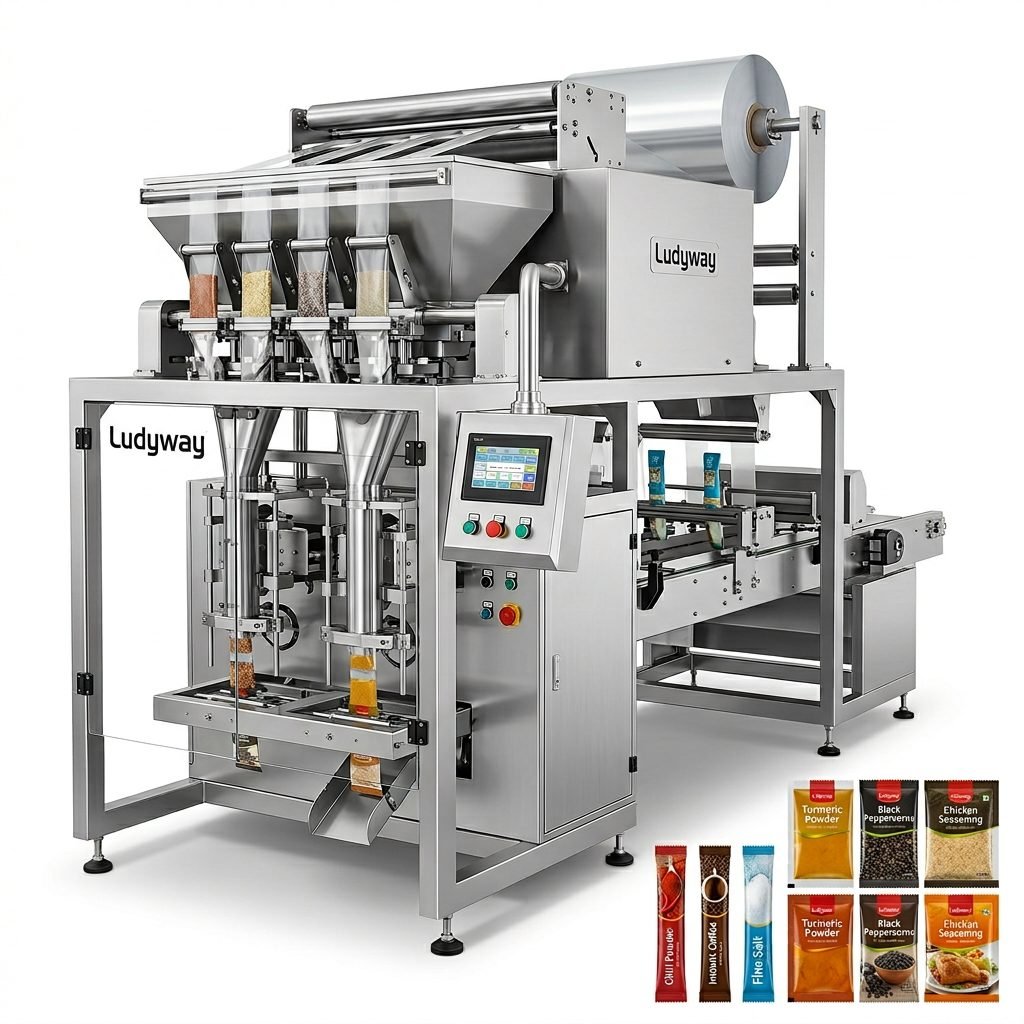
France is one of Europe’s largest condiment markets, with a deep culinary tradition spanning mustard, vinegar, sauces, dressings, and olive oils. Setting up a condiment packaging machine production line in France requires careful planning around regulatory compliance, production efficiency, and market-specific packaging formats. Whether you are launching a new brand or scaling an existing operation, understanding the full landscape—from European packaging regulations to equipment selection and line integration—is essential for long-term success.
Understanding French and EU Regulatory Requirements
Before installing any packaging machinery, manufacturers must comply with both French national standards and overarching EU directives. The Packaging and Packaging Waste Regulation (PPWR) sets strict guidelines on packaging design, material recyclability, and waste reduction targets. Condiment producers must also adhere to food contact material (FCM) regulations under EC No 1935/2004, ensuring that all packaging components—from film laminates to sealing layers—are safe for direct food contact.
Key regulatory considerations include:
- EU Regulation (EC) No 1935/2004 on materials intended to come into contact with food
- French DGCCRF guidelines for food safety and packaging compliance
- EU Regulation (EC) No 2023/2006 on good manufacturing practice for food contact materials
- Packaging waste directive 94/62/EC and its amendments
- REACH regulation concerning chemical substances used in packaging inks and adhesives
Working with ISO packaging standards such as ISO 22000 for food safety management and ISO 9001 for quality management is strongly recommended to streamline compliance and ensure audit readiness for French market entry.
Popular Condiment Packaging Formats in the French Market
The French condiment sector demands diverse packaging formats tailored to consumer preferences across retail, food service, and industrial channels. Understanding these formats is critical when configuring your condiment packaging production line.
| Packaging Format | Typical Applications | Volume Range | Key Equipment |
|---|---|---|---|
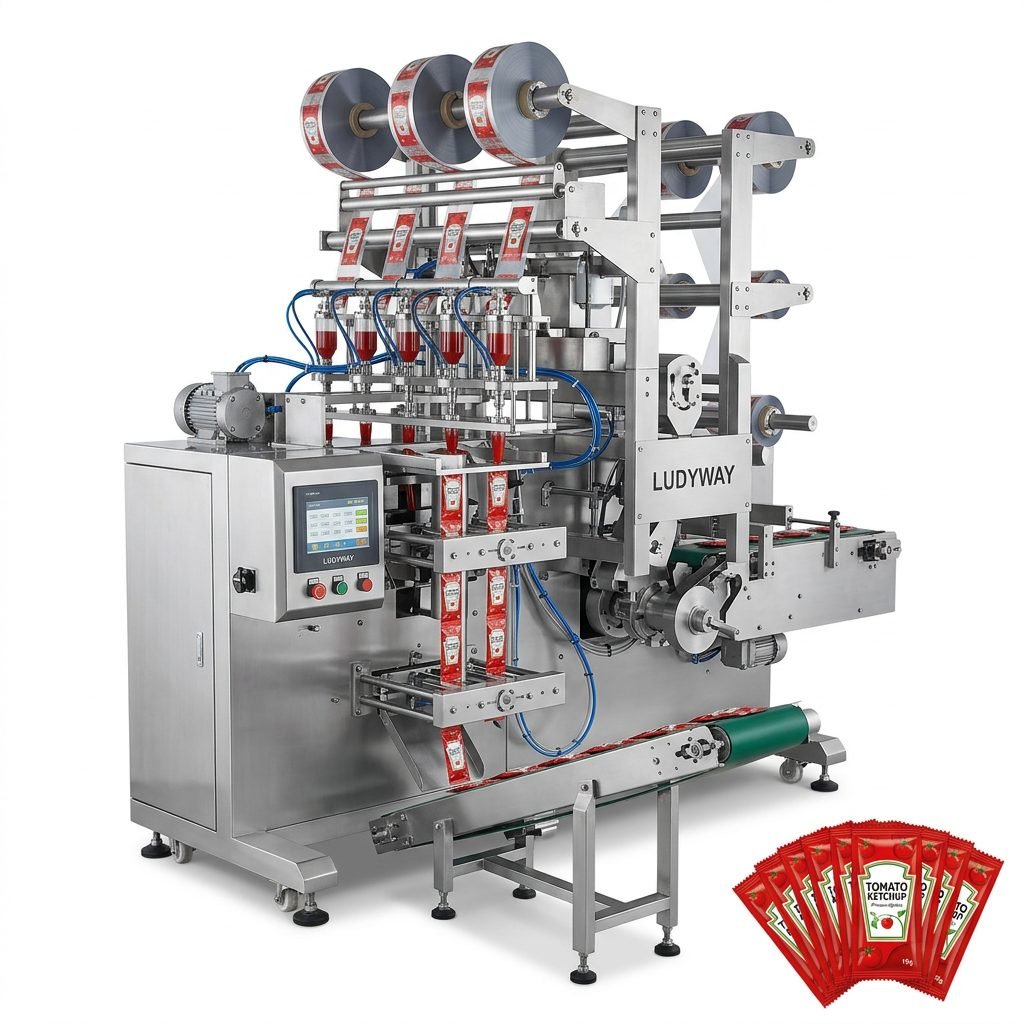
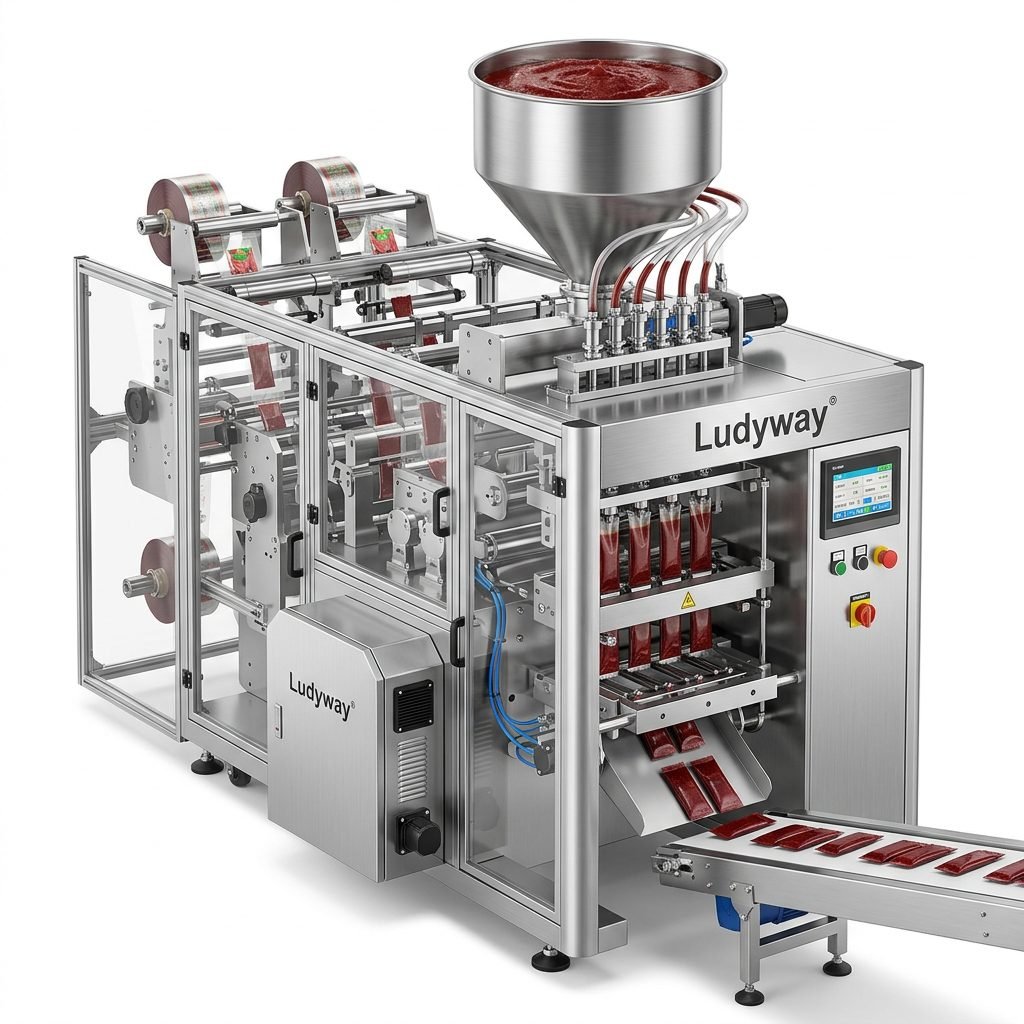
| Sachet / Stick Pack | Ketchup, mayonnaise, mustard, sauces | 3ml – 50ml | Multi-lane sachet machine, stick pack filler |
| Pouch / Doypack | Premium sauces, dressings, olive oil | 50ml – 500ml | Premade pouch filling and sealing machine |
| Bottle Filling | Vinegar, hot sauce, cooking oils | 100ml – 1L | Automatic liquid filling and capping line |
| Portion Cups | Butter, jam, honey, cream portions | 10g – 30g | Cup filling and foil sealing machine |
| Bulk / Bag-in-Box | Industrial sauces, food service | 1L – 20L | Bag-in-box filler, bulk liquid packaging |
Essential Equipment for a Condiment Packaging Line
A well-designed condiment packaging line integrates multiple machines working in synchrony. The core equipment typically includes the following modules, each playing a critical role in ensuring product consistency and packaging integrity.
1. Liquid Filling Systems
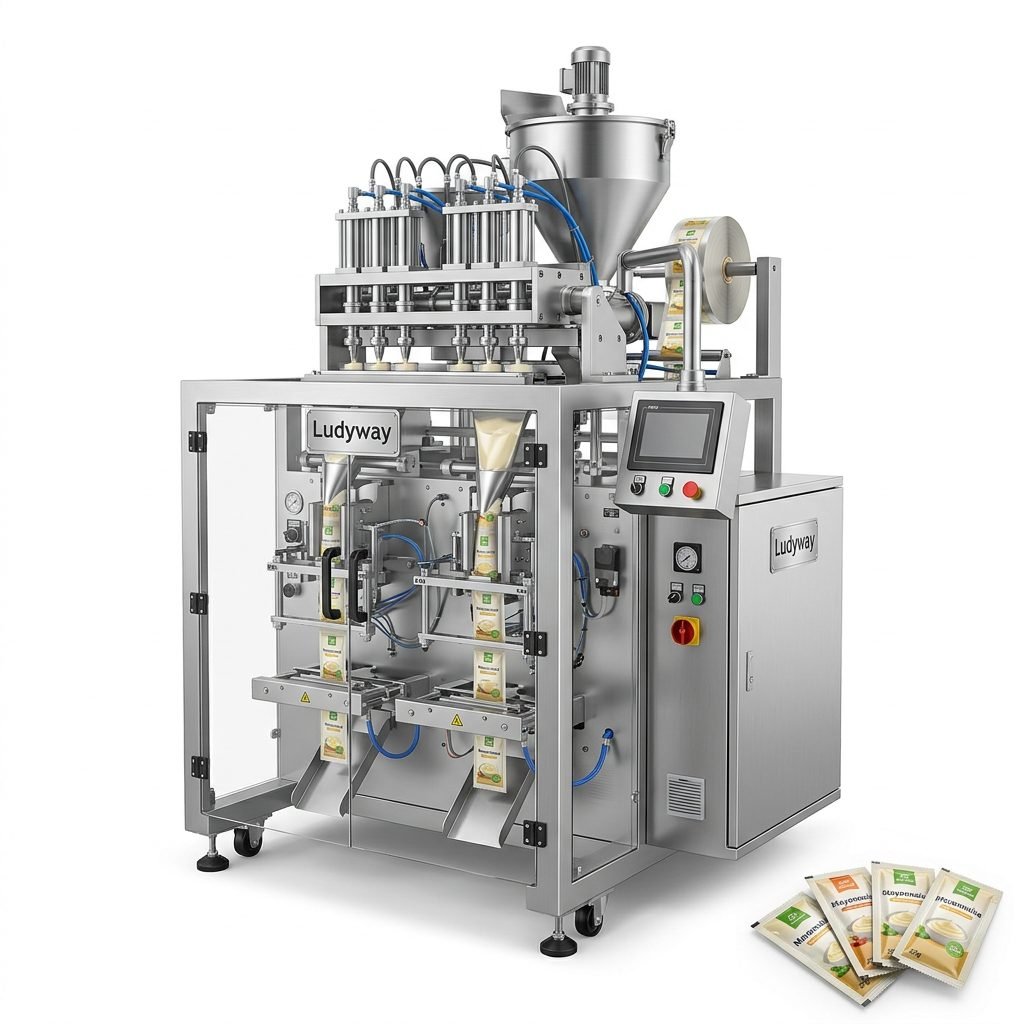
For liquid condiments such as vinegar, hot sauce, and soy sauce, volumetric piston fillers, peristaltic pump fillers, or gravity-based filling nozzles are commonly used. For viscous products like mayonnaise or mustard, positive displacement pumps or servo-driven piston fillers ensure accurate dosing even at high speeds. The PMMI packaging industry provides valuable benchmarks for filling accuracy standards across different product viscosities.
2. Sachet and Stick Pack Machines
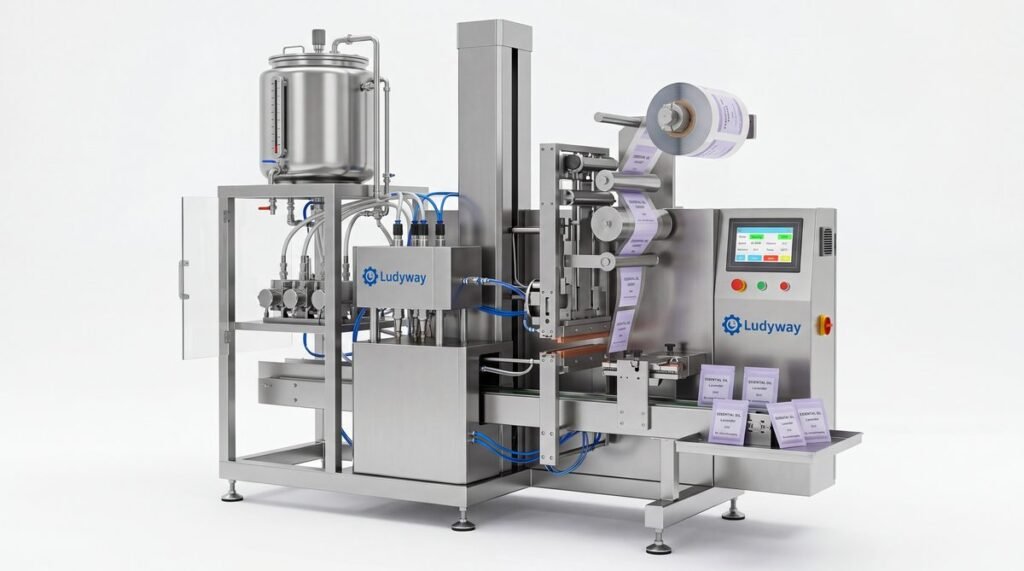
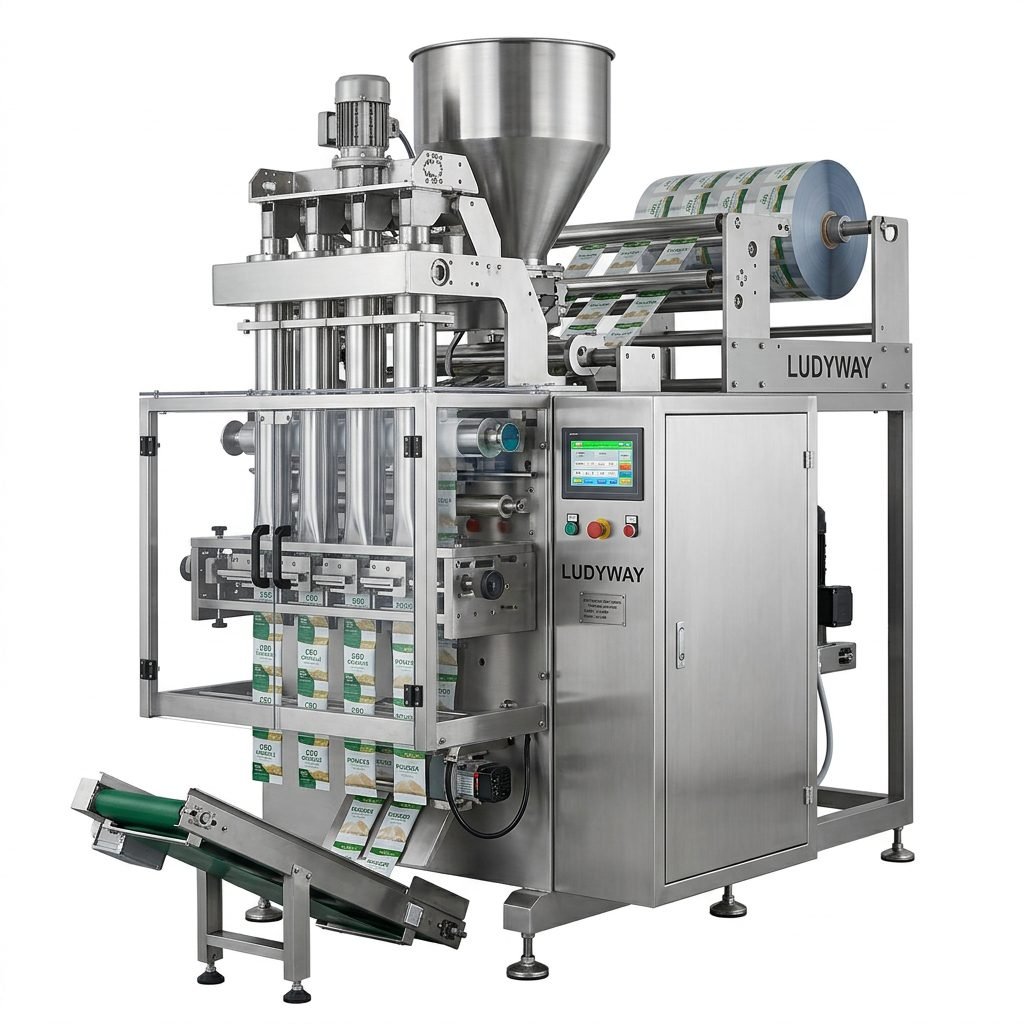
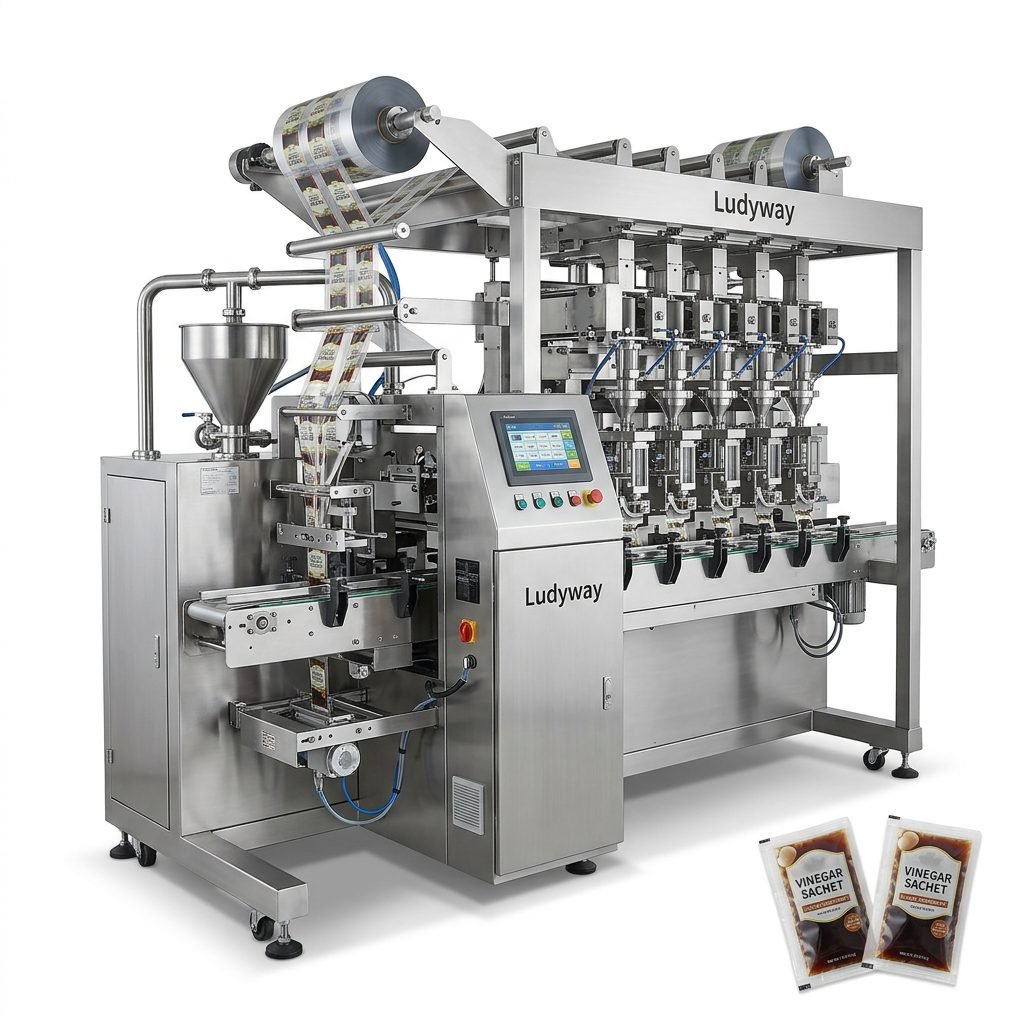
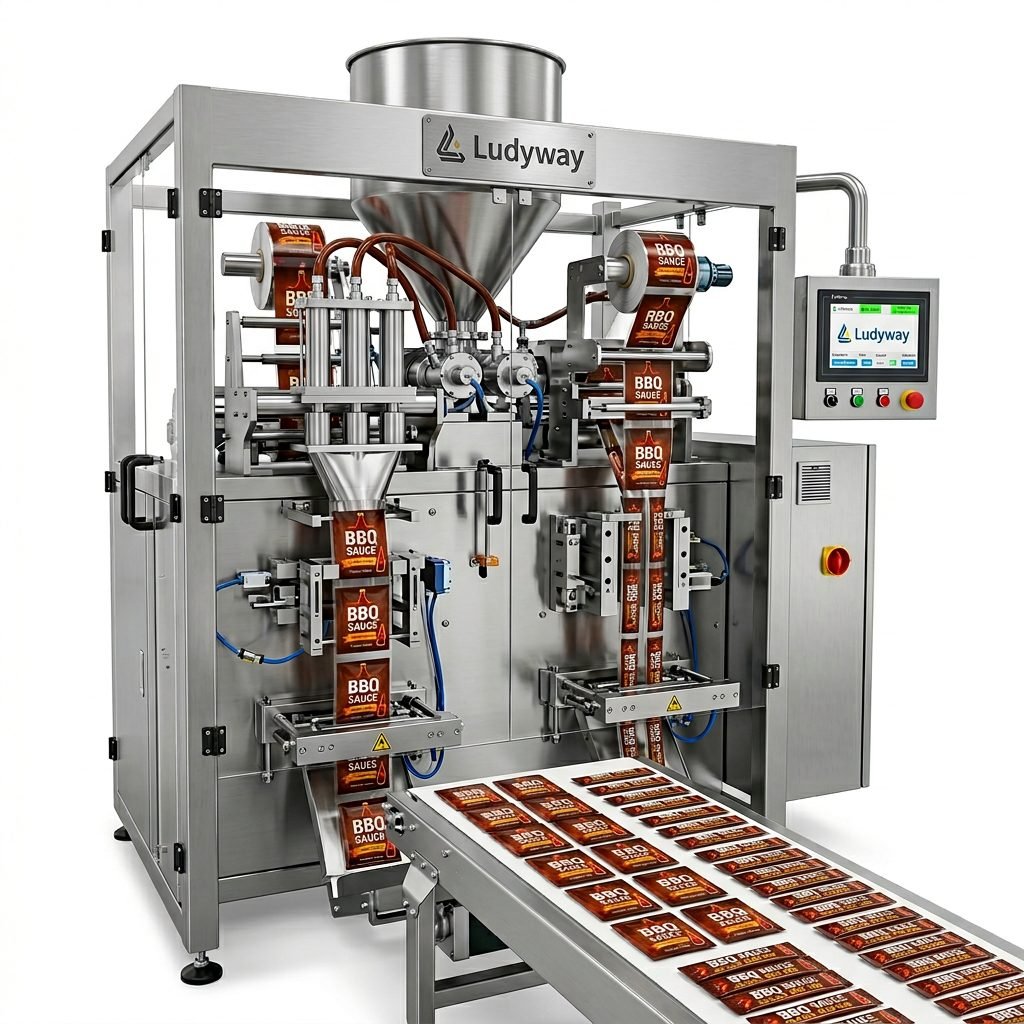
Multi-lane sachet packaging machines are the backbone of portion-control condiment production. These machines form, fill, and seal multiple lanes simultaneously, achieving outputs of 400–600 sachets per minute depending on lane count and product characteristics. Vertical form-fill-seal (VFFS) and horizontal configurations are both available, with VFFS being the most common for liquid condiments.
3. Pouch Filling and Sealing Equipment
For stand-up pouches and spouted pouches, rotary or inline pouch filling systems provide high-speed, automated filling and sealing. These systems often integrate nitrogen flushing for oxygen-sensitive products like olive oil or premium dressings, extending shelf life while maintaining product quality.
4. Capping, Labeling, and Coding Systems
Bottle lines require integrated capping machines (screw cap, snap cap, or pump dispenser), while all packaging formats benefit from inline thermal transfer printers or laser coding systems for batch numbers, expiration dates, and traceability codes required under French labeling laws.
5. End-of-Line Automation
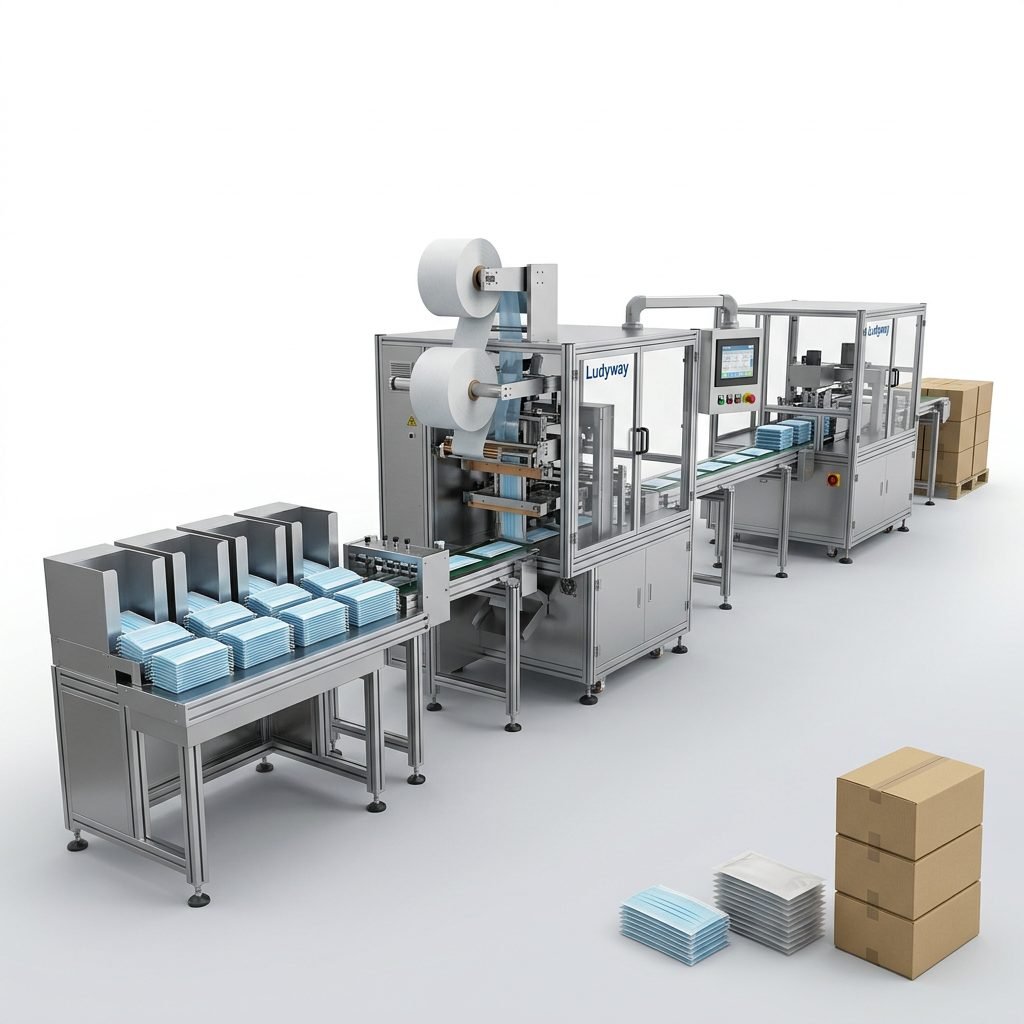
Cartoning machines, case packers, and robotic palletizing systems complete the production line, preparing finished products for distribution across French retail chains and export markets. Automated end-of-line solutions reduce manual handling, improve throughput, and ensure consistent pallet quality for logistics.
Step-by-Step Guide to Setting Up Your Production Line
Following a structured approach when establishing your condiment packaging line in France helps avoid costly delays and compliance issues. Below is a practical sequence refined from industry best practices and packaging machinery market research.
-
Conduct a Feasibility and Market Study
Evaluate your target product range, production volumes, and French market requirements. Determine whether sachets, pouches, bottles, or a combination best suits your distribution channels—retail, food service, or export.
-
Design the Production Layout
Plan your factory floor to optimize material flow from raw ingredient receiving through to finished goods storage. Consider cleanroom requirements for sensitive products and GFSI-compliant zoning to separate raw and finished areas.
-
Select Equipment Based on Product Viscosity and Format
Match filling technology to your specific condiment—thin liquids require different handling than paste-like sauces. Verify that selected machines meet CE marking requirements for installation in France.
-
Ensure Utility and Infrastructure Readiness
Confirm adequate electrical supply (typically 380V three-phase for industrial equipment in France), compressed air, and water connections. Install appropriate ventilation and drainage systems for liquid handling areas.
-
Install, Commission, and Validate
Work with your equipment supplier on installation supervision, operator training, and line commissioning. Conduct Installation Qualification (IQ), Operational Qualification (OQ), and Performance Qualification (PQ) as part of your validation protocol.
-
Implement Quality Control Procedures
Establish inline checkweighing, seal integrity testing, and vision inspection systems. Document all QC procedures per French regulatory expectations for food packaging traceability.
-
Train Personnel and Ramp Up Production
Develop SOPs in both English and French for operators and maintenance staff. Begin with a controlled ramp-up phase, gradually increasing line speed while monitoring quality metrics.
Automation and Smart Factory Integration
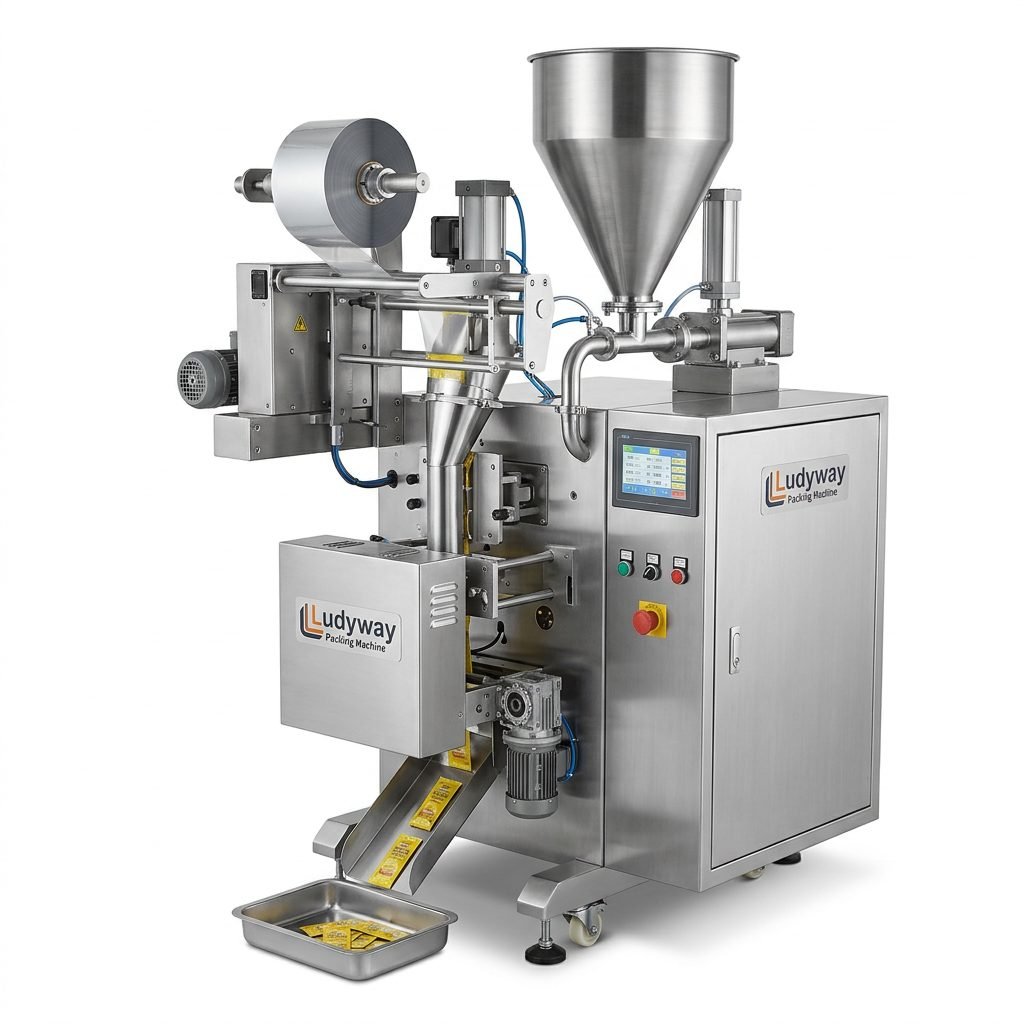
Modern condiment packaging lines in France increasingly incorporate Industry 4.0 capabilities. Smart sensors, real-time production monitoring, and remote diagnostics enable predictive maintenance and reduce unplanned downtime. Key automation features to consider include servo-driven filling systems with recipe management, automated CIP (Clean-in-Place) systems for hygiene compliance, integrated OEE tracking dashboards, and remote access for supplier technical support.
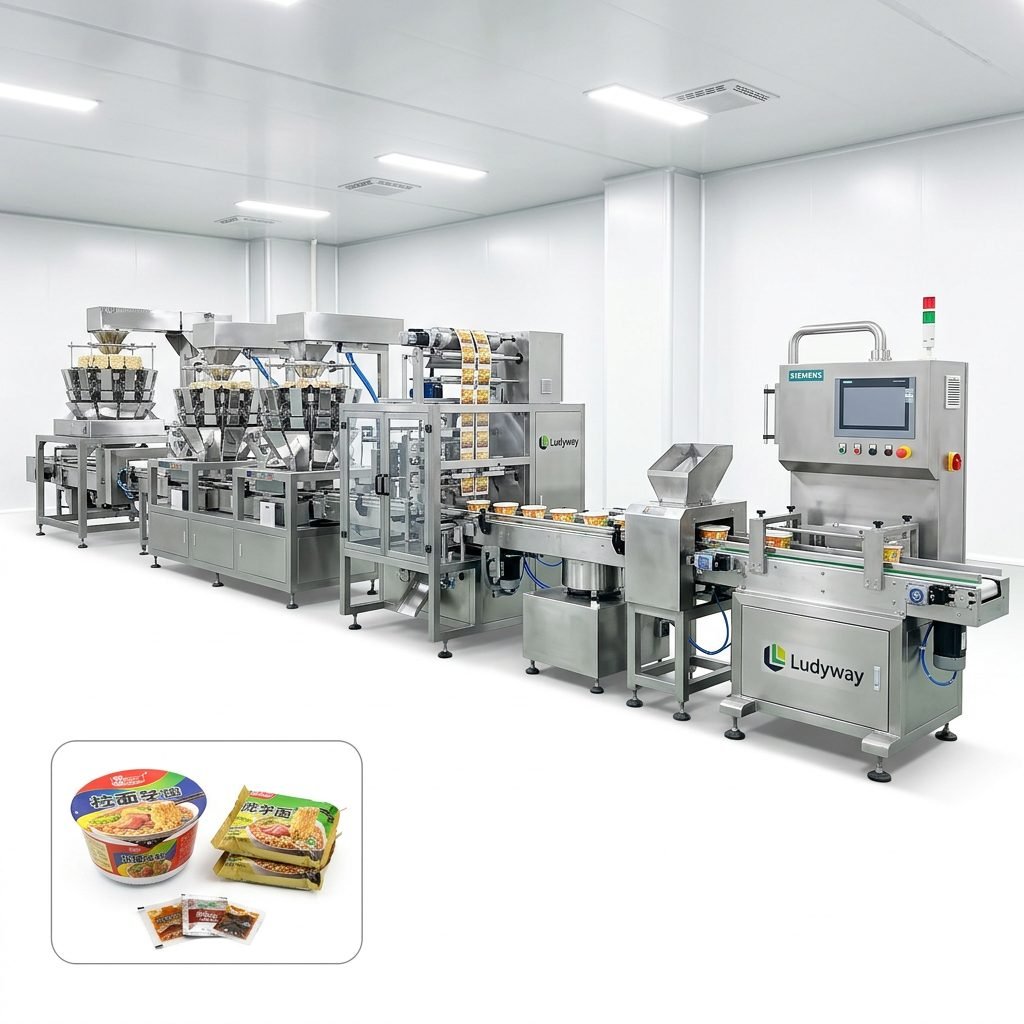
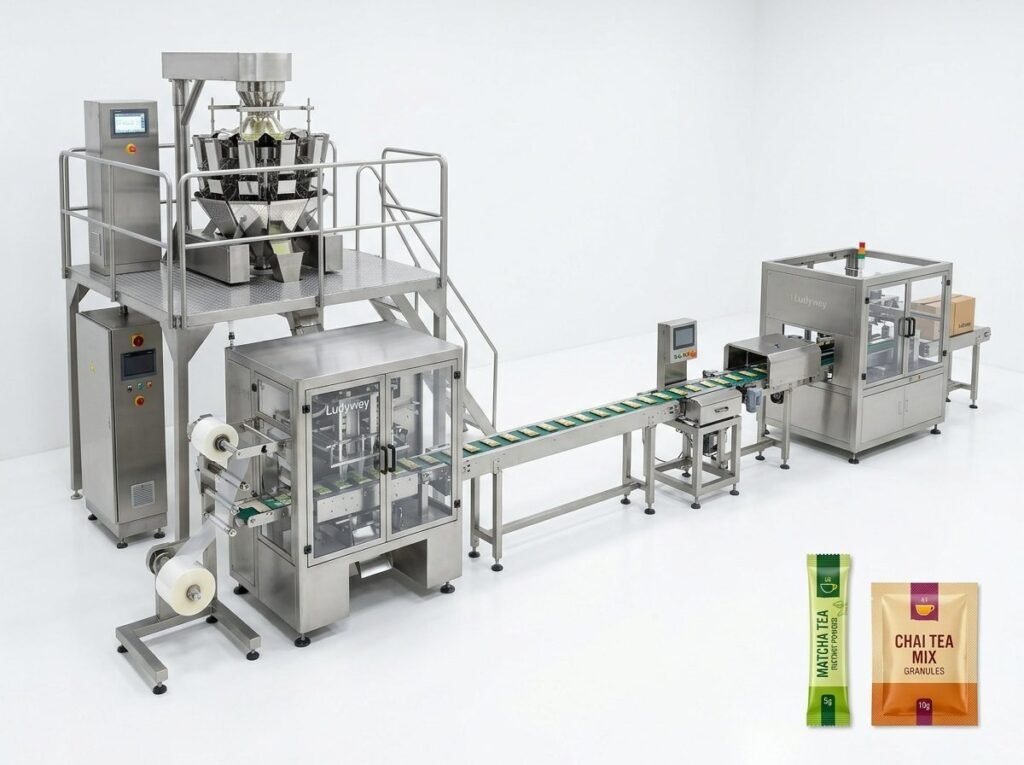
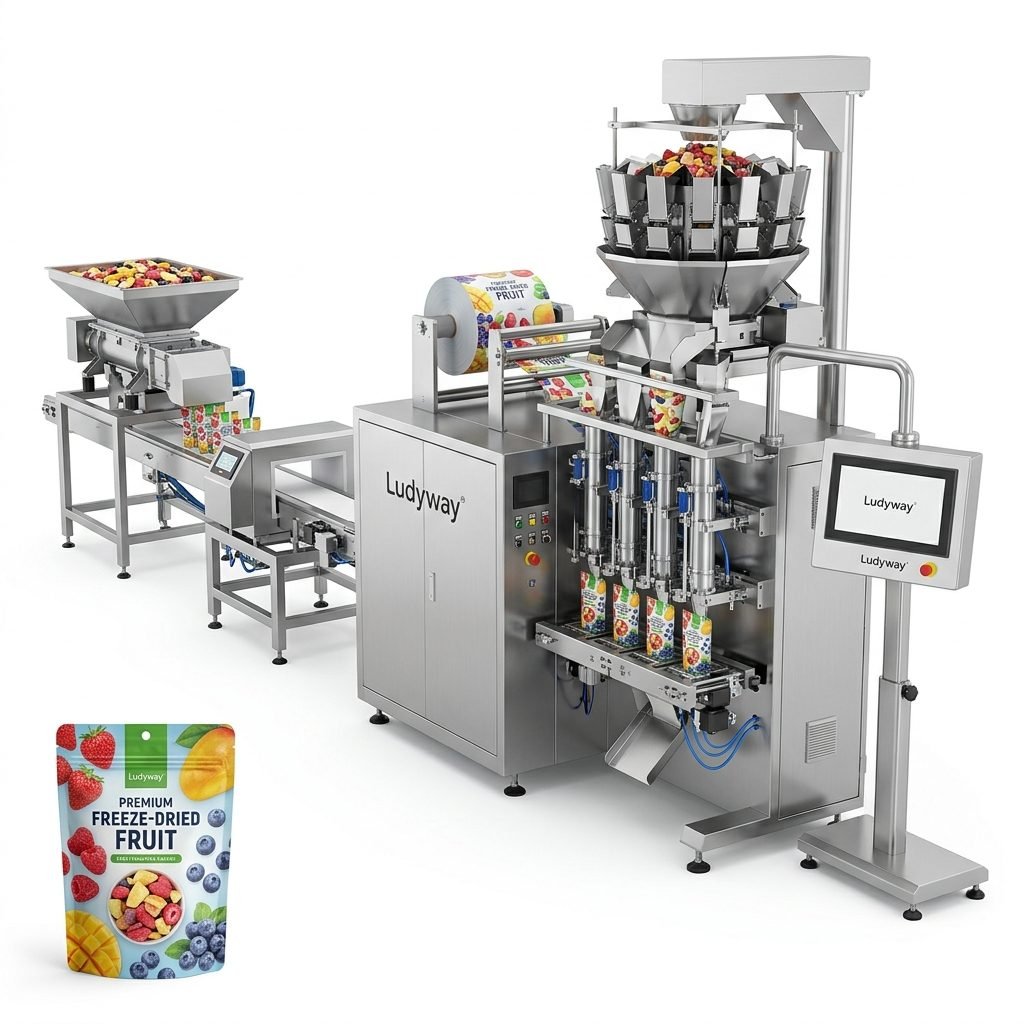
Leading packaging machinery manufacturers now offer turnkey integrated solutions that combine multi-lane sachet machines, liquid fillers, and end-of-line automation into a single synchronized system. Companies such as Ludyway, one of the largest packaging machine manufacturers with over 30 years of industry expertise and a 20,000㎡ modern production facility, provide comprehensive production line solutions for granule, powder, and liquid packaging applications—including condiments—serving customers in more than 100 countries worldwide.
Cost Considerations and ROI Analysis
Investing in a condiment packaging production line in France involves several cost categories that must be carefully evaluated against projected returns. Understanding these elements helps build a realistic business case.
| Cost Category | Estimated Range | Key Variables |
|---|---|---|
| Primary Packaging Equipment | €50,000 – €500,000+ | Format type, lane count, automation level |
| Ancillary Equipment | €20,000 – €150,000 | Conveyors, coders, checkweighers, metal detectors |
| Installation and Commissioning | €10,000 – €50,000 | Supplier location, site preparation, training |
| Regulatory Compliance | €5,000 – €30,000 | Testing, certification, documentation |
| Annual Maintenance | 3% – 8% of equipment value | Spare parts, service contracts, consumables |
Maintenance Best Practices for Long-Term Reliability
A proactive maintenance strategy is critical for maximizing equipment lifespan and ensuring consistent packaging quality in a French production environment. Key practices include establishing a preventive maintenance schedule aligned with manufacturer recommendations and French workplace safety regulations, maintaining an inventory of critical spare parts locally to minimize lead times, conducting regular seal integrity and fill accuracy audits, training in-house maintenance teams on equipment-specific troubleshooting procedures, and documenting all maintenance activities for regulatory audit trails and continuous improvement programs.
Partnering with a supplier that offers responsive after-sales support and readily available spare parts is essential when operating in France, where food packaging safety standards demand rigorous documentation and rapid issue resolution.
Future Trends in Condiment Packaging for the French Market
The French condiment packaging landscape is evolving rapidly, driven by sustainability mandates and changing consumer expectations. Several trends are shaping equipment investment decisions. Mono-material flexible packaging is gaining traction as brands move toward recyclable structures that replace traditional multi-layer laminates. Bio-based and compostable films are emerging for niche applications, though industrial composting infrastructure remains a consideration. Reduced portion sizes in single-serve formats reflect growing demand for convenience and portion control. Digital printing and smart packaging with QR codes enable consumer engagement and traceability. Finally, energy-efficient machinery with lower power consumption aligns with EU sustainability goals and reduces operating costs.
Staying ahead of these trends requires selecting future-ready packaging equipment that can accommodate evolving materials and formats without major retrofitting.
Common Pitfalls and How to Avoid Them
Based on industry experience and flexible packaging industry data, several common mistakes can derail a condiment packaging line project in France. Underestimating the complexity of French regulatory documentation is a frequent issue—engage local consultants early. Inadequate product testing before equipment procurement can lead to mismatched filling technology; always conduct trials with your actual products. Overlooking utility requirements, particularly compressed air quality for pneumatic systems, is another common oversight. Insufficient operator training on multi-lane equipment results in lower OEE and higher waste rates. Finally, failing to plan for future scalability can limit growth; design your line layout with expansion in mind.
Key Takeaways
Setting up a successful condiment packaging production line in France demands a holistic approach that balances regulatory compliance, equipment selection, operational efficiency, and long-term scalability. By understanding French and EU packaging regulations, selecting the right machinery for your specific product range and target formats, implementing robust quality control and maintenance programs, and partnering with experienced equipment manufacturers that understand European market requirements, your operation can achieve sustainable growth in one of the world’s most discerning food markets.
For further guidance on international packaging standards and equipment selection, consulting with industry associations such as PMMI resources and regulatory bodies is highly recommended throughout your project journey.