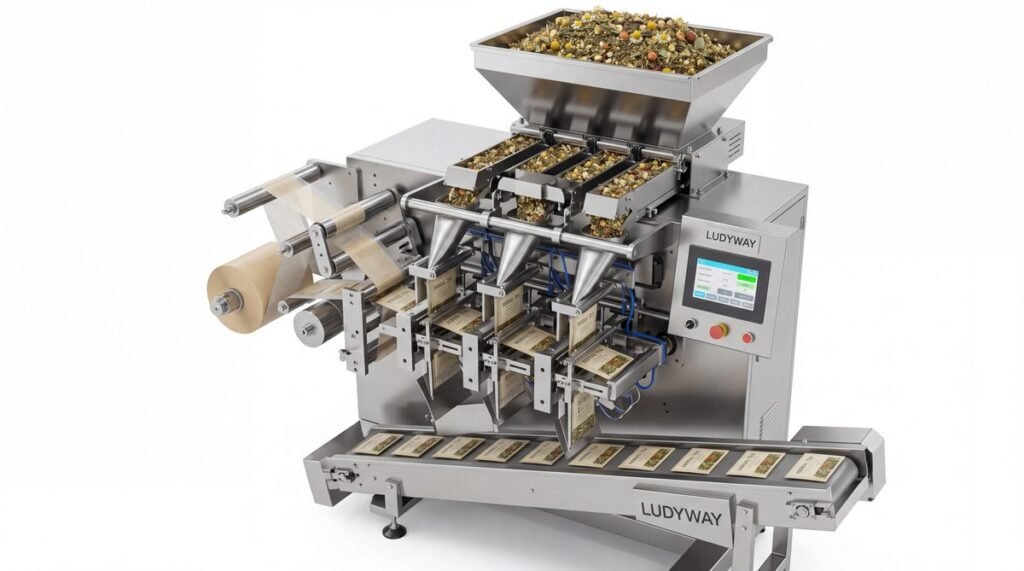
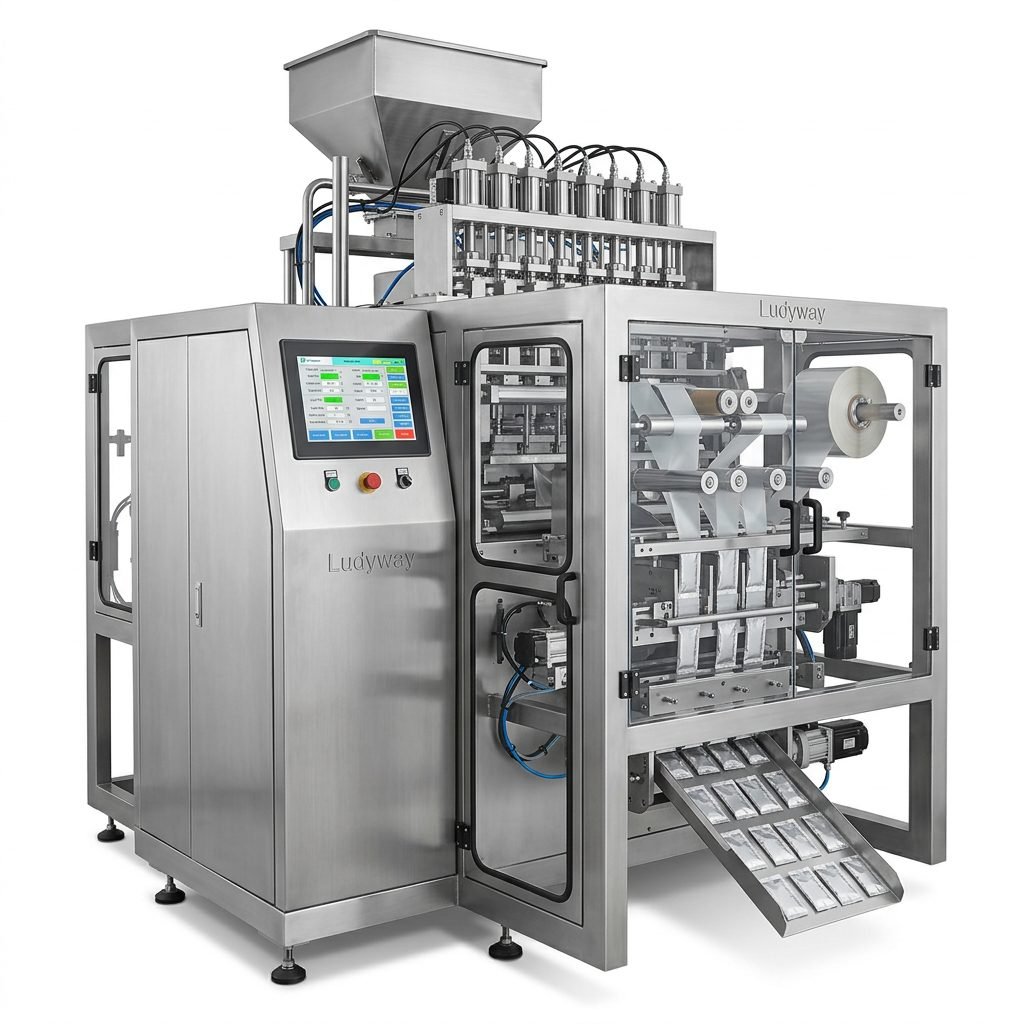
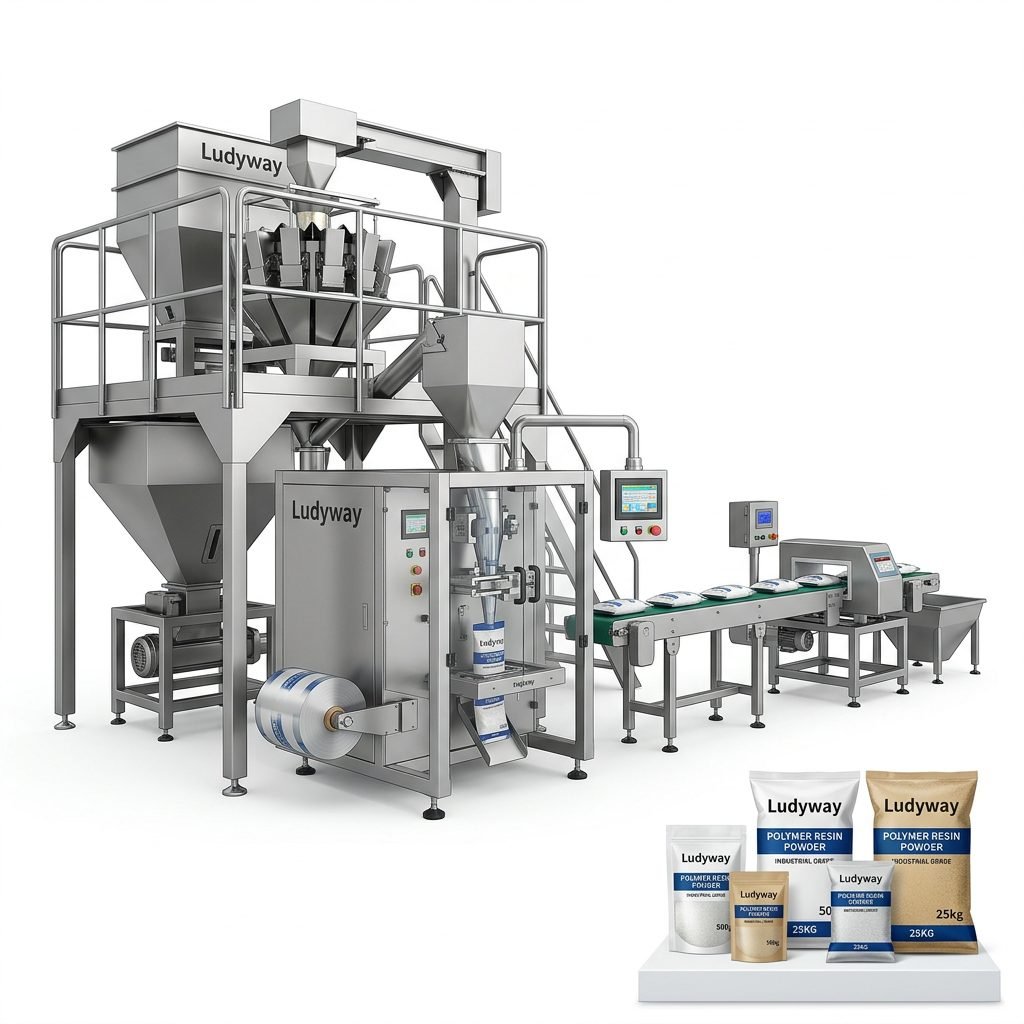
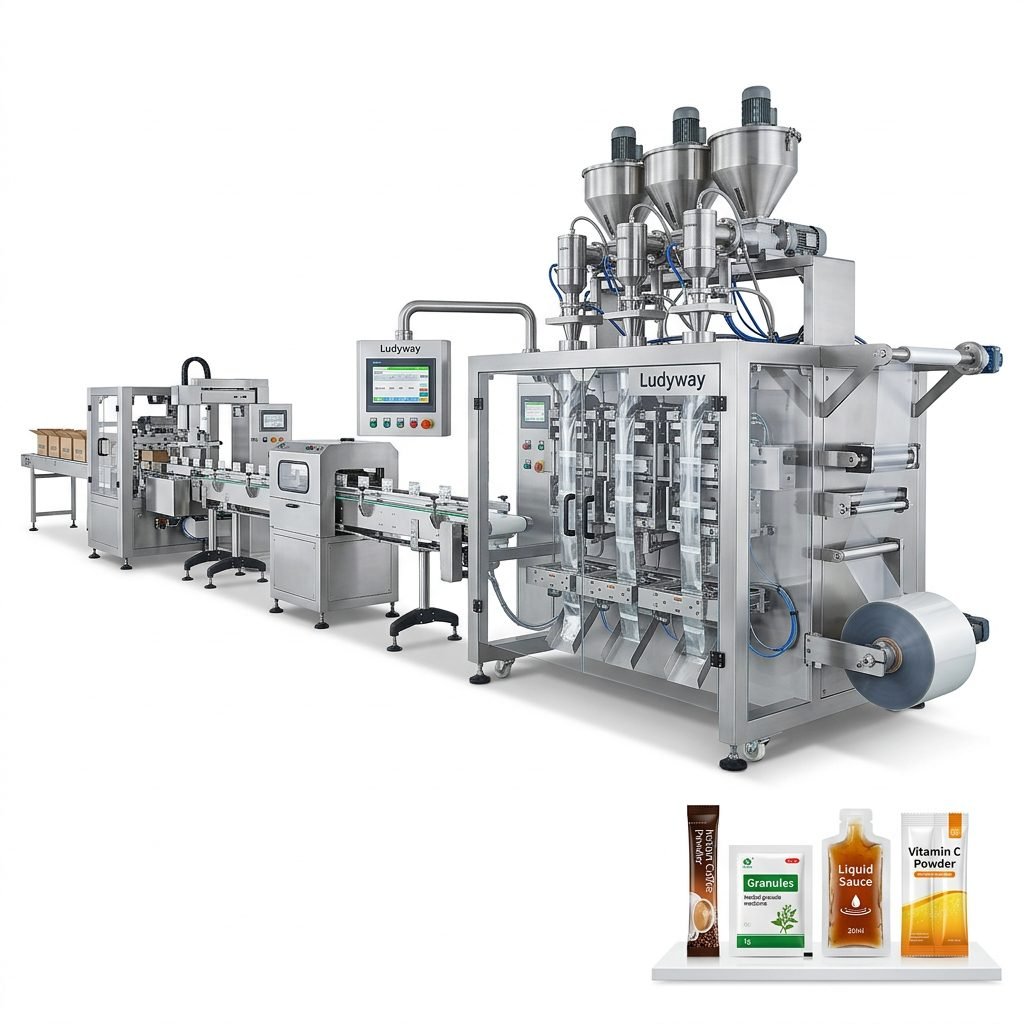
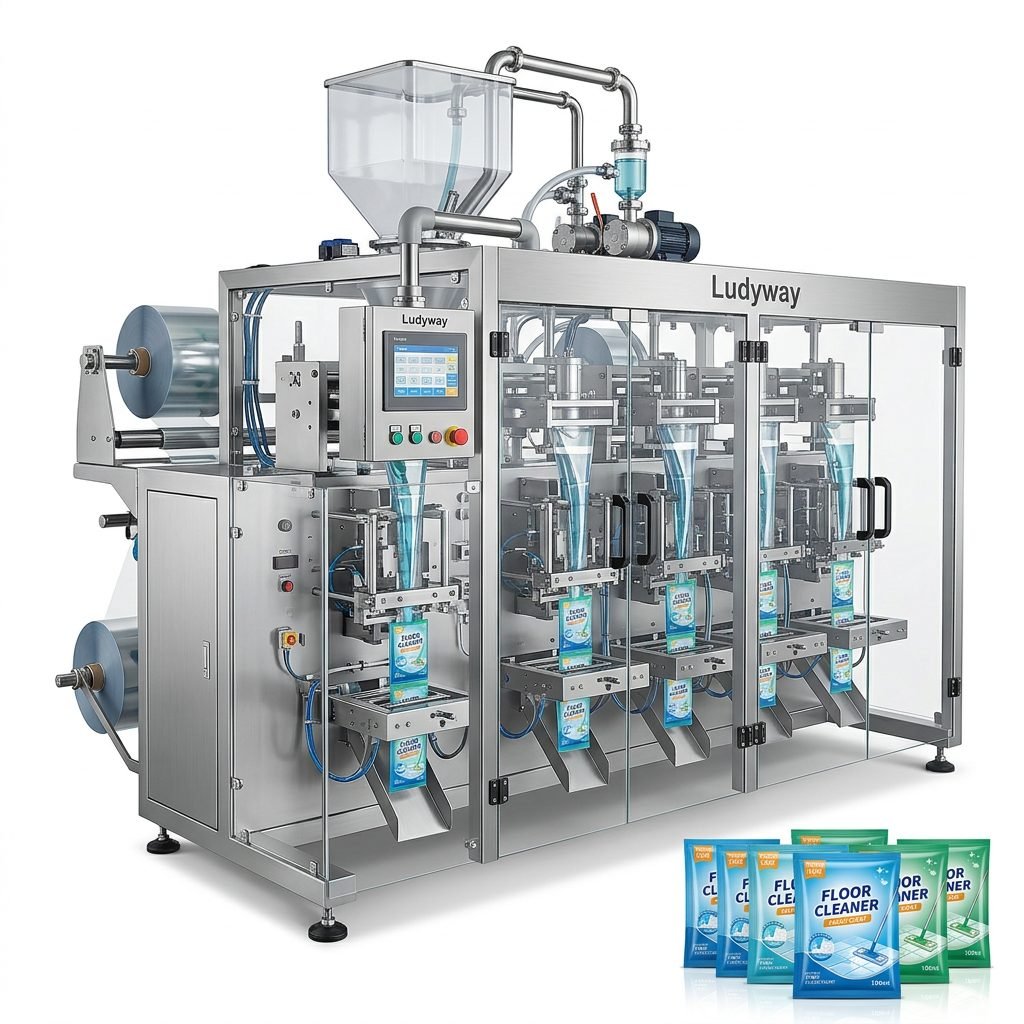
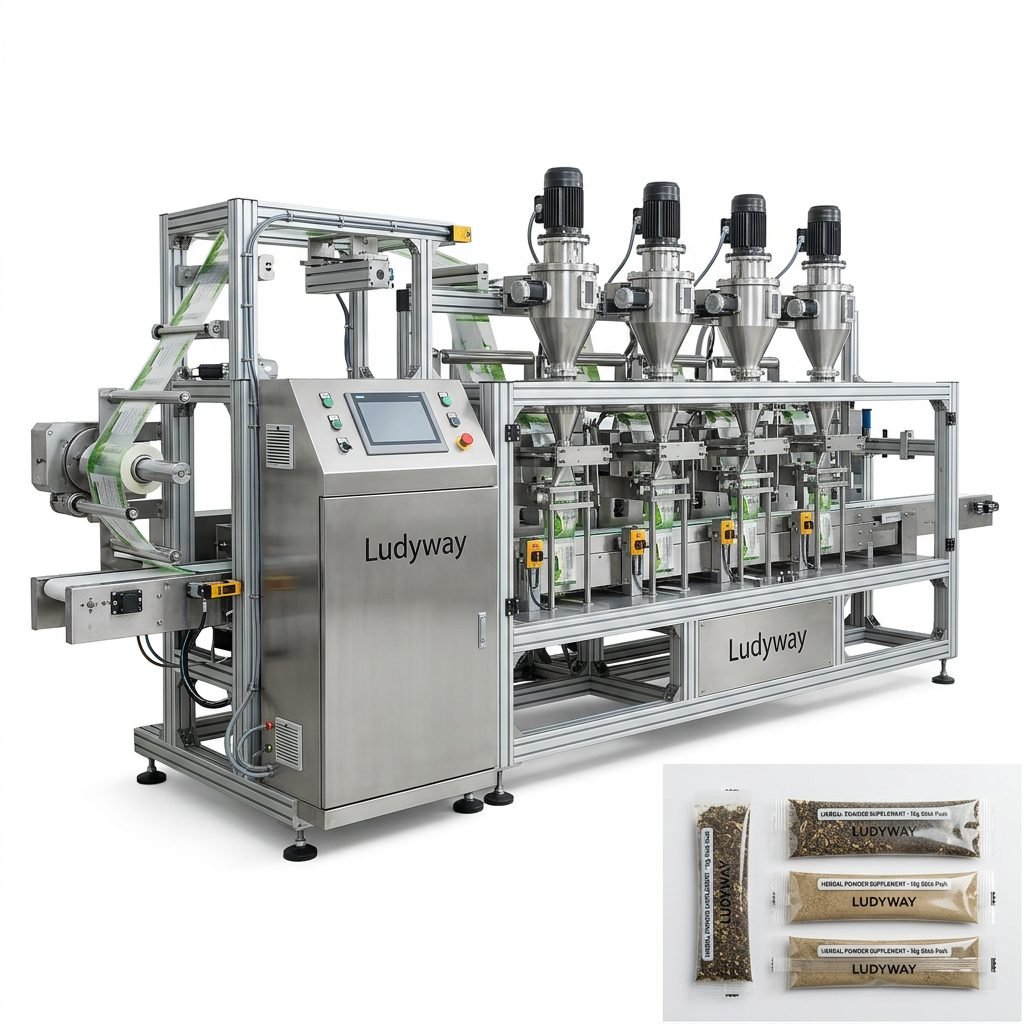
The Indian condiment market is experiencing unprecedented growth, driven by changing consumer preferences, increasing disposable incomes, and a booming food processing industry. From traditional chutneys and pickles to modern sauces and seasoning blends, the demand for packaged condiments has created a significant opportunity for manufacturers. Setting up a condiment packaging machine production line in India requires careful planning, understanding of local regulations, and selection of the right equipment to handle various product consistencies — from free-flowing liquids like soy sauce to viscous pastes like mayonnaise and granular seasonings.
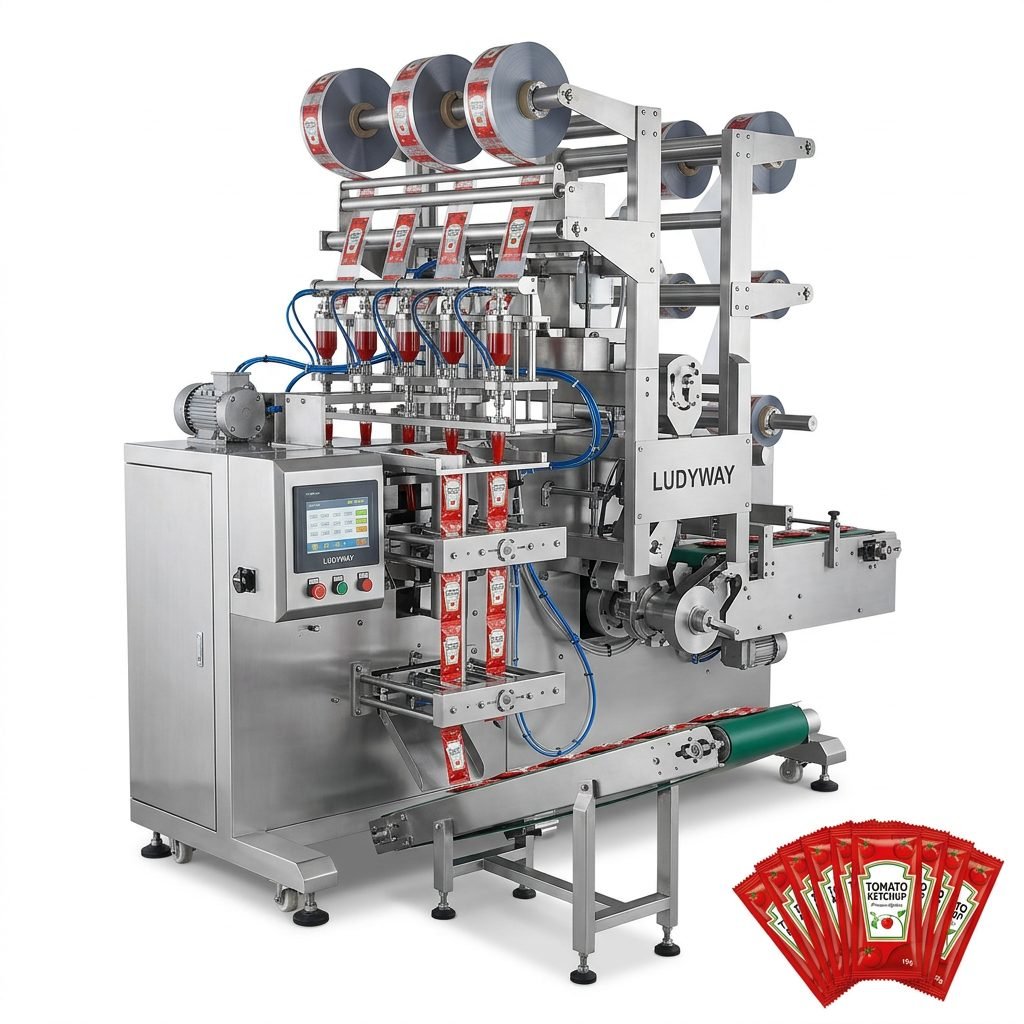
Understanding the Indian Condiment Packaging Landscape
India’s condiment sector spans a wide range of products — sauces, chutneys, pickles, spice blends, seasoning powders, and ready-to-cook pastes. Each product type demands specific packaging formats. The most common packaging types for condiments in the Indian market include sachets (popular for affordability), stick packs, pouches, bottles, and jars. According to industry data from the Flexible Packaging Association, flexible packaging solutions continue to dominate the condiment sector due to cost efficiency and extended shelf life capabilities.
Key Equipment for a Condiment Packaging Production Line
A complete condiment packaging line typically includes several integrated machines working in sequence. The configuration depends on your product type, target output, and packaging format. Below are the essential components:
- Product Feeding System — Automated hoppers, screw feeders, or pump-based liquid transfer systems for consistent product delivery
- Filling Machine — Volumetric piston fillers for viscous sauces, auger fillers for powders, or multi-head weighers for granular seasonings
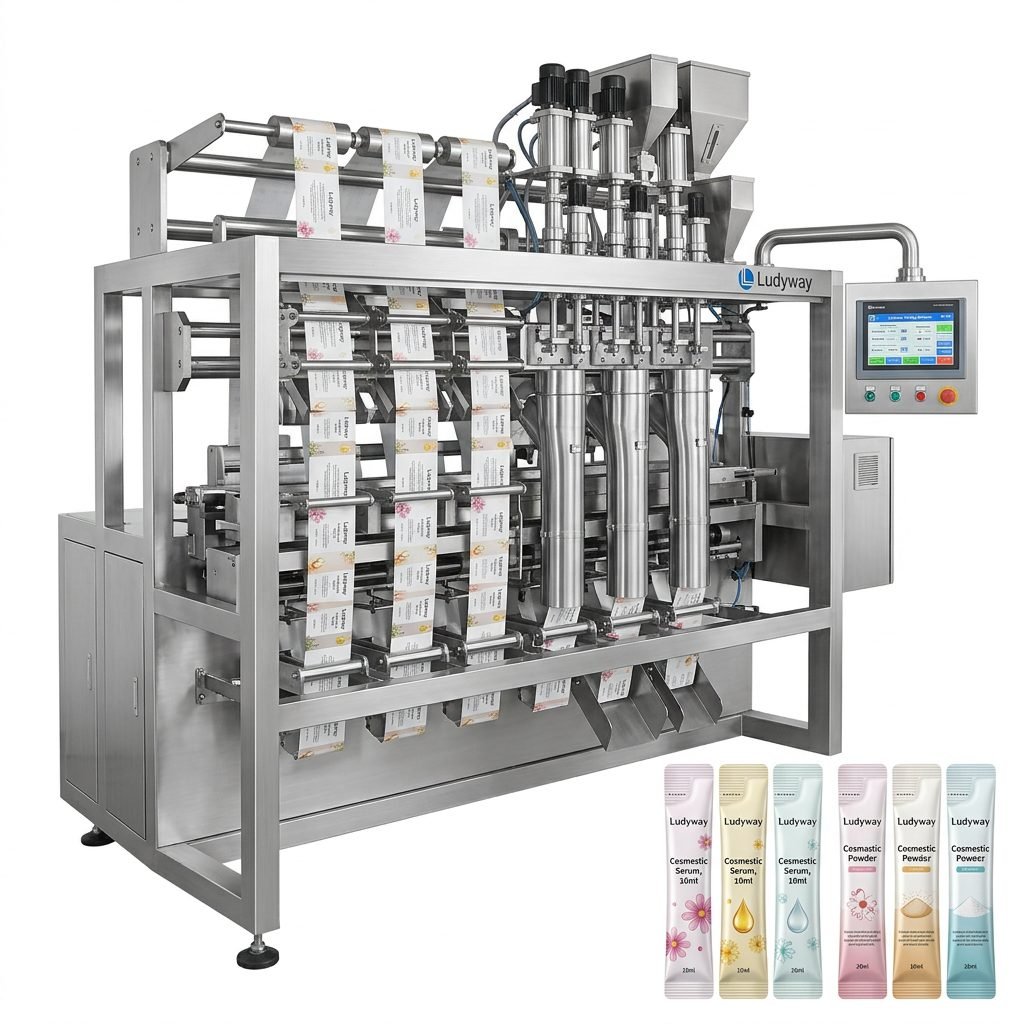
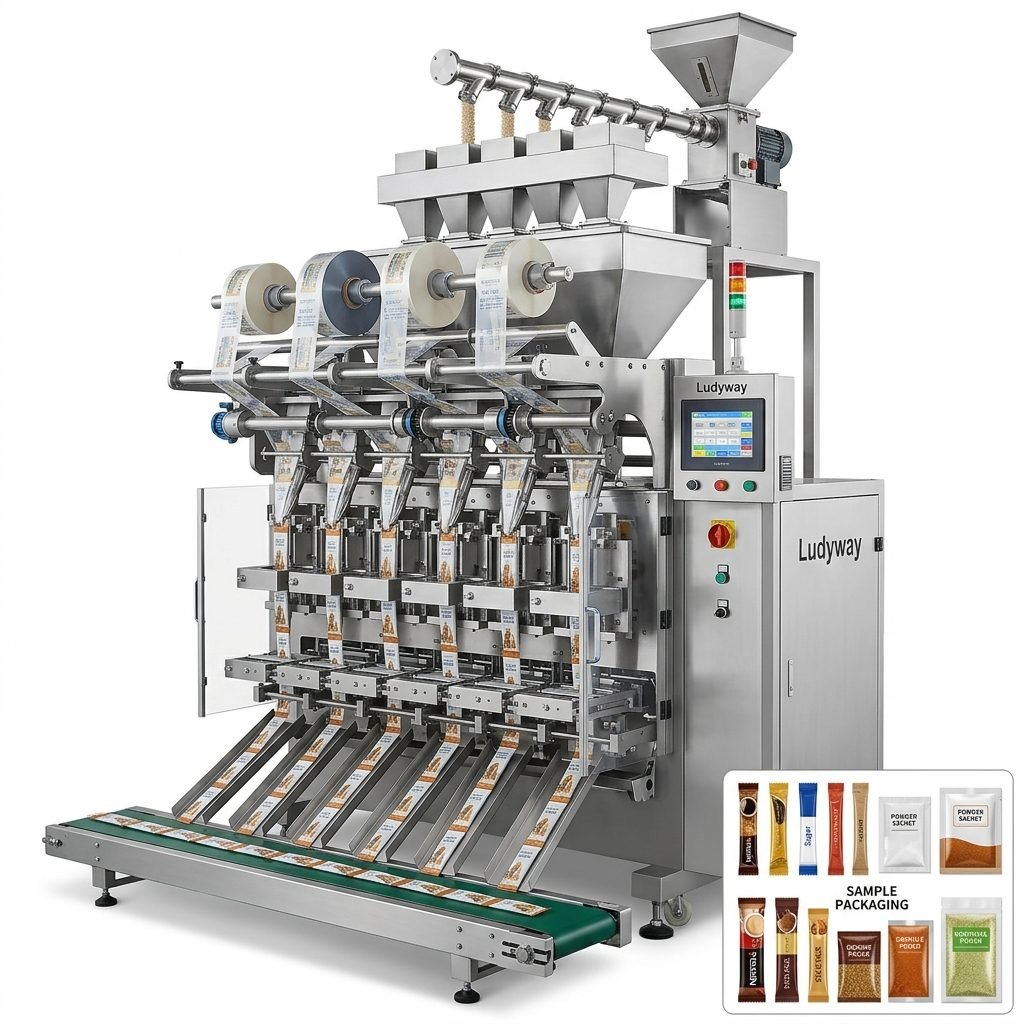
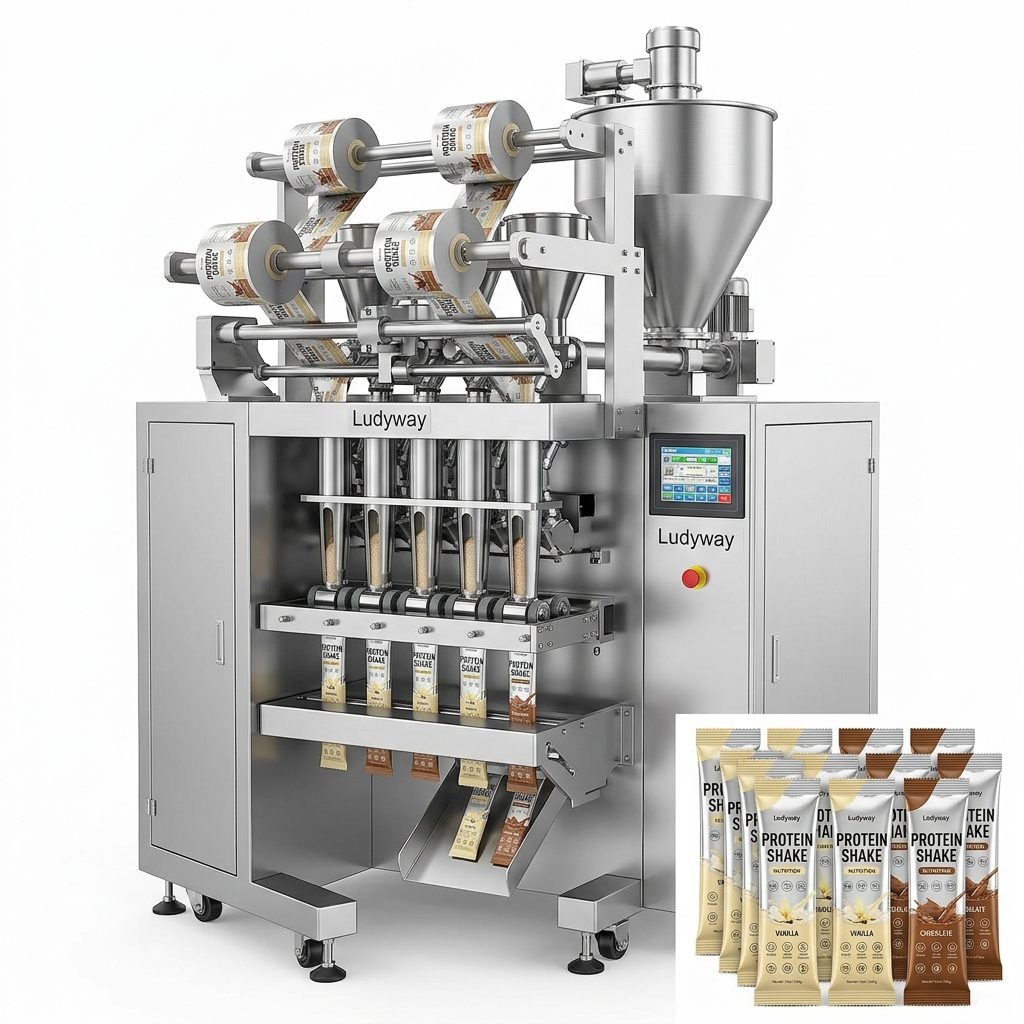
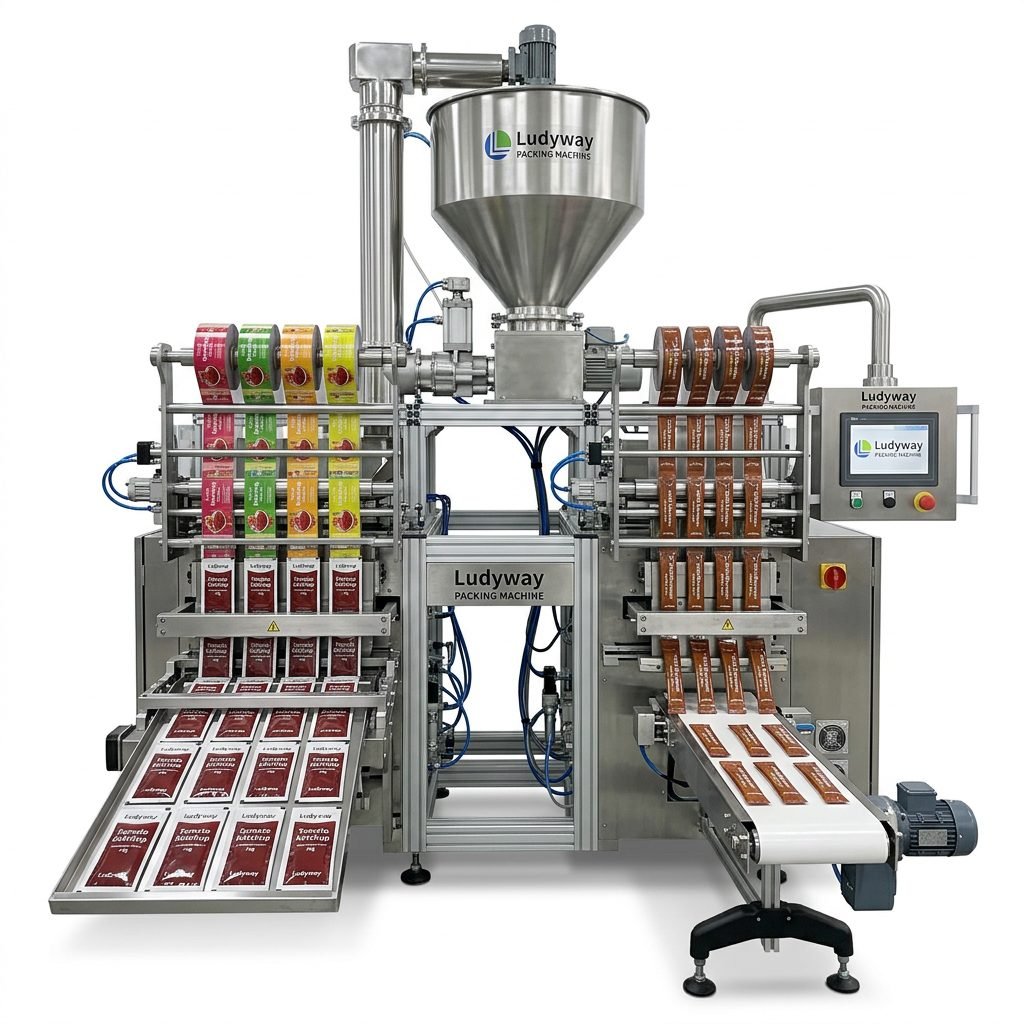
- Packaging Machine — Vertical form-fill-seal (VFFS) machines for sachets and stick packs, or multi-lane packaging machines for high-speed production
- Sealing System — Heat sealing, ultrasonic sealing, or induction sealing depending on packaging material
- Coding and Marking — Inkjet or laser coders for batch numbers, dates, and regulatory information
- Checkweigher and Metal Detector — Quality control equipment to ensure compliance with food safety standards
- Cartoning and Palletizing — End-of-line automation for secondary packaging and pallet preparation
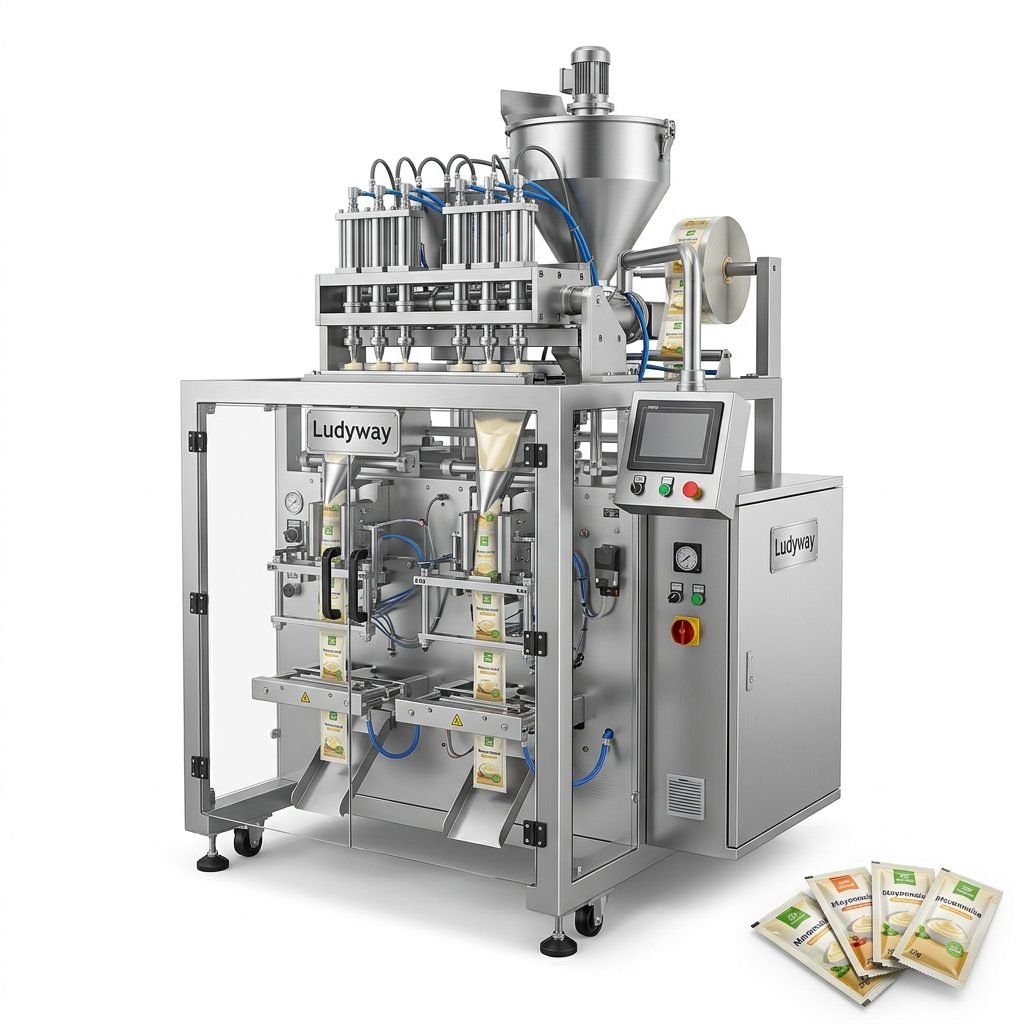
Step-by-Step Guide to Setting Up Your Production Line in India
Step 1: Define Your Product Range and Packaging Format
Start by identifying the condiments you intend to produce. Different products require different handling systems. Low-viscosity liquids like vinegar and soy sauce need precision liquid fillers, while high-viscosity products like ketchup and mayonnaise require piston or pump-based filling systems. For dry condiments like seasoning powders and spice blends, auger fillers or multi-head weighers are more appropriate. Your choice of packaging format — sachet, stick pack, pouch, or bottle — will determine the primary packaging machine configuration.
Step 2: Conduct Site Assessment and Infrastructure Planning
Evaluate your facility’s floor space, power supply, compressed air requirements, and environmental conditions. Condiment packaging facilities in India must comply with FSSAI guidelines for food manufacturing. Ensure your production area has proper drainage, ventilation, and hygienic flooring. Plan the machine layout to optimize material flow — from raw material receiving to finished product dispatch.
Step 3: Select the Right Packaging Machine Configuration
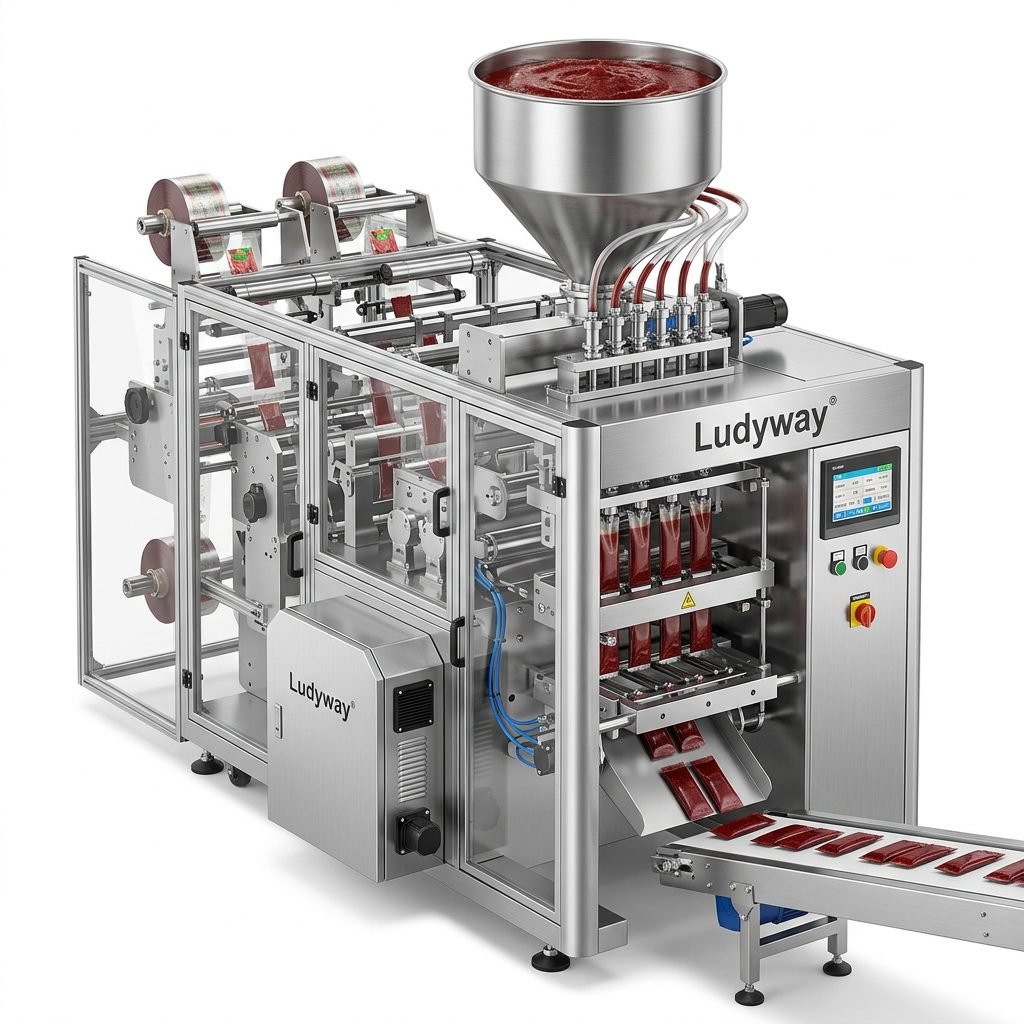
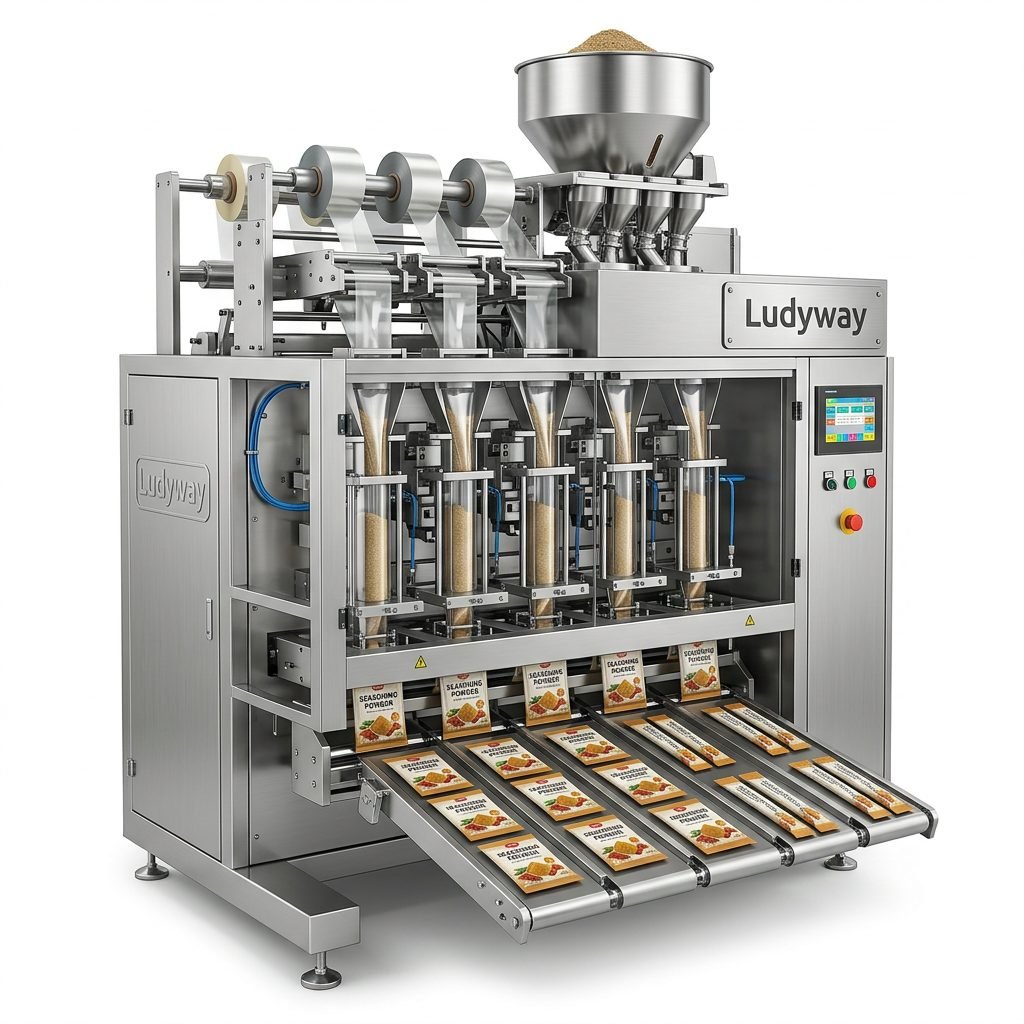
For high-volume Indian markets, multi-lane sachet and stick pack machines offer excellent efficiency. These machines can run 4 to 16 lanes simultaneously, producing thousands of sachets per hour. The table below compares common packaging machine types for condiment applications:
| Machine Type | Best For | Speed Range | Product Compatibility |
|---|---|---|---|
| Single-Lane VFFS | Small to medium production | 30-80 packs/min | Liquids, pastes, powders |
| Multi-Lane Sachet Machine | High-volume sachet production | 200-600 packs/min | Liquids, powders, granules |
| Stick Pack Machine | Single-serve portions | 150-400 packs/min | Powders, granules, liquids |
| Piston Filler + Sealer | Viscous sauces and pastes | 20-60 packs/min | Ketchup, mayo, chutneys |
| Pre-Made Pouch Filler | Premium stand-up pouches | 30-50 packs/min | All condiment types |
Step 4: Integrate Quality Control Systems
Install inline checkweighers and metal detectors to maintain consistent fill weights and detect contaminants. For liquid condiments, flow meters and level sensors ensure accurate filling. Vision inspection systems can verify label placement, cap integrity, and seal quality. These quality measures help meet both Indian regulatory standards and international export requirements.
Step 5: Commissioning and Operator Training
Once the equipment is installed, thorough commissioning and testing are essential. Run trial productions with actual products to fine-tune machine parameters such as filling volume, sealing temperature, and speed settings. Train operators on machine operation, troubleshooting, and daily maintenance procedures. Document standard operating procedures (SOPs) for each machine in the line.
Indian Market Considerations and Regulatory Compliance
Operating in India requires attention to several unique factors. The Food Safety and Standards Authority of India (FSSAI) mandates specific labeling requirements including ingredient lists, nutritional information, manufacturing dates, and best-before dates. Your packaging line’s coding and marking system must accommodate these requirements. Additionally, consider the diverse climatic conditions across India — high humidity regions may require modified atmosphere packaging (MAP) or nitrogen flushing to extend product shelf life.
Power supply stability varies across Indian states. Investing in voltage stabilizers and backup power solutions can prevent production disruptions. Water quality for cleaning-in-place (CIP) systems should also be evaluated, as hard water can affect equipment longevity and cleaning efficiency.
Automation Levels: Choosing What Fits Your Scale
The degree of automation in your condiment packaging line should match your production goals:
- Semi-Automatic Lines — Suitable for startups and small-scale producers. Operators manually load products and containers; machines handle filling and sealing. Lower initial investment with flexibility for multiple products.
- Fully Automatic Lines — Ideal for medium to large manufacturers. Automated feeding, filling, sealing, coding, and cartoning with minimal human intervention. Higher throughput and consistent quality.
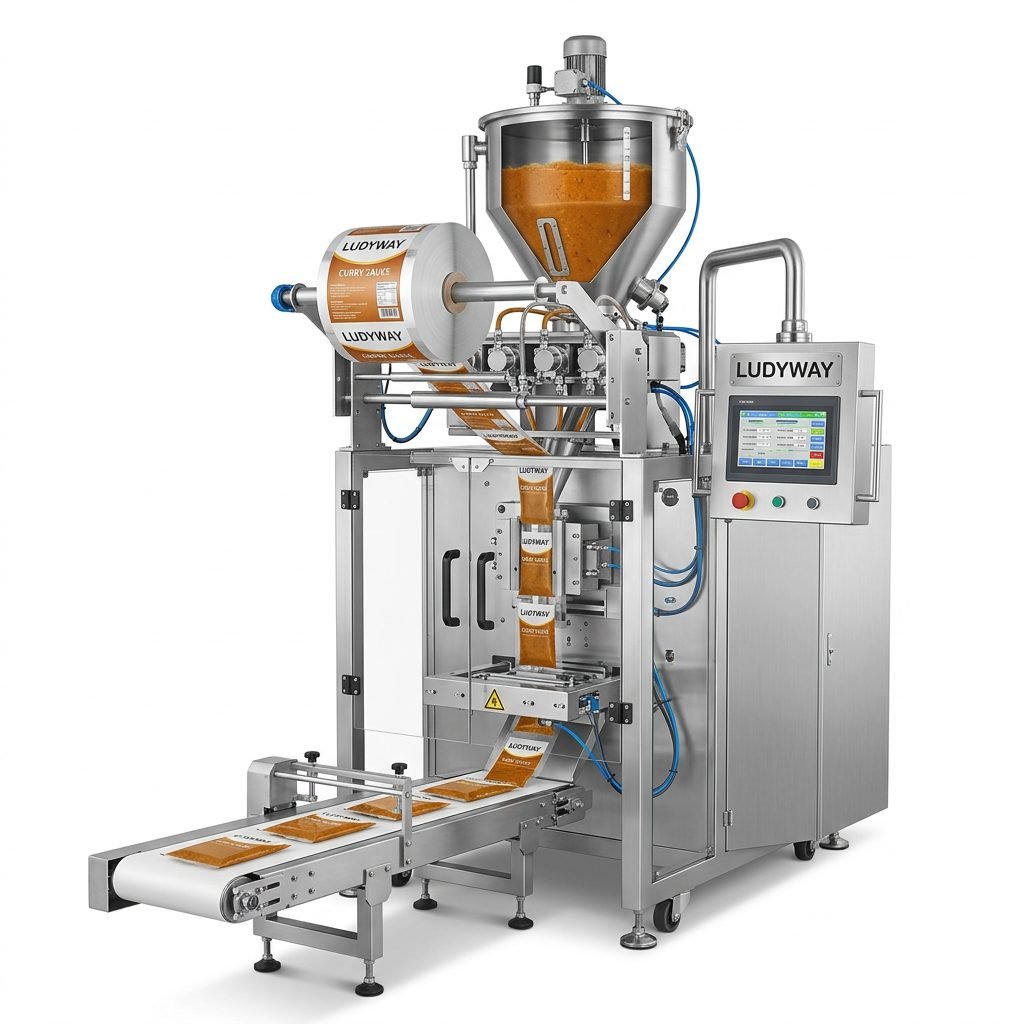
- Turnkey Integrated Solutions — Complete end-to-end systems from raw material handling to palletizing. Best for large-scale production targeting domestic and export markets. These integrated packaging systems offer the highest efficiency and lowest per-unit cost.
Calculating ROI and Production Economics
When evaluating a condiment packaging line investment in India, consider these key economic factors:
| Cost Factor | Estimated Range | Notes |
|---|---|---|
| Equipment Cost | ₹25 Lakh – ₹2 Crore+ | Depending on automation level and capacity |
| Installation & Commissioning | 5-10% of equipment cost | Includes civil work, utilities, and training |
| Packaging Material | ₹0.15 – ₹2 per pack | Varies by format and material type |
| Labor (per shift) | 2-6 operators | Automatic lines require fewer operators |
| Maintenance (annual) | 2-3% of equipment value | Preventive maintenance reduces downtime |
With efficient multi-lane systems, payback periods typically range from 18 to 36 months for Indian manufacturers, depending on capacity utilization and market demand. The Indian condiment market’s projected growth rate of 8-12% annually makes this an attractive investment window.
Common Challenges and Solutions in Condiment Packaging
Packaging condiments presents unique technical challenges that must be addressed during line setup:
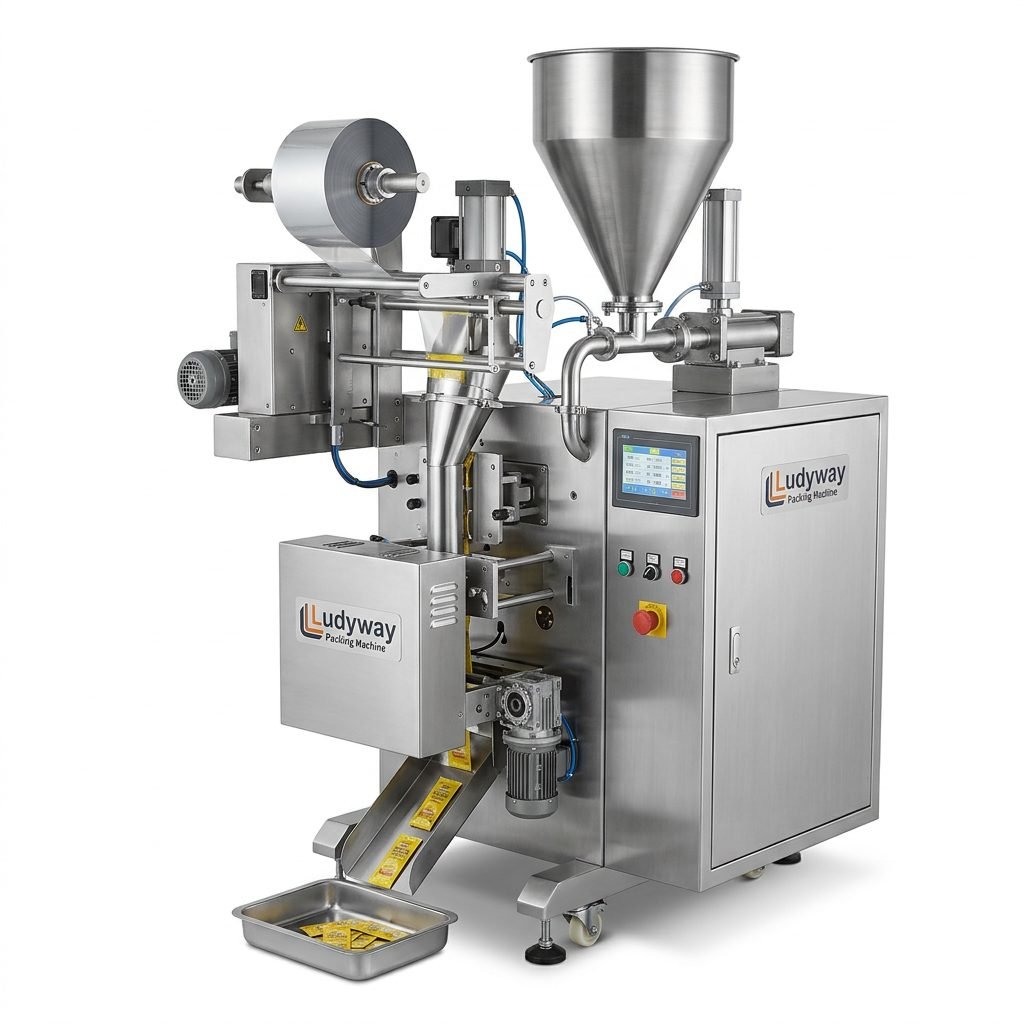
- Product Viscosity Variations — Indian condiments range from watery (vinegar-based) to extremely thick (pickle pastes). Use adjustable filling systems with temperature control to manage viscosity changes during production.
- Hygiene and Sanitation — Condiment residues can harbor bacteria. Implement CIP (Clean-in-Place) systems and schedule regular deep cleaning between production batches.
- Seal Integrity — Leaking sachets can damage brand reputation. Invest in machines with precise temperature control and pressure monitoring for consistent hermetic seals.
- Material Compatibility — Acidic condiments like vinegar-based pickles require corrosion-resistant machine parts. Choose stainless steel (SS316) contact parts for acidic product handling.
Selecting a Reliable Equipment Partner
Choosing the right machinery supplier is critical to the success of your condiment packaging operation. Look for manufacturers with proven experience in food packaging, comprehensive after-sales support in India, and the ability to provide turnkey solutions tailored to your specific product range. Evaluate suppliers based on their installation footprint in India, spare parts availability, and technical service response times.
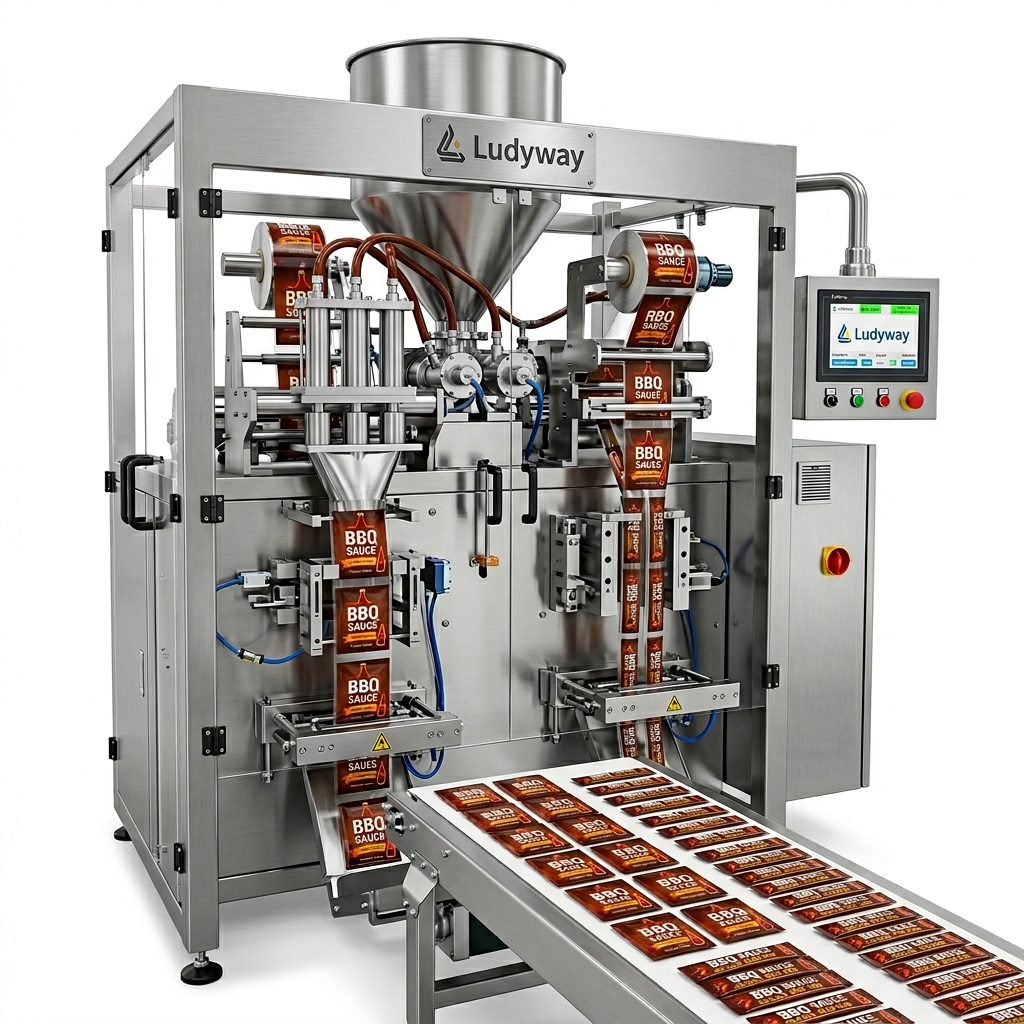
One notable manufacturer in the global packaging machinery space is Ludyway, a China-based company with over 30 years of industry experience and a 20,000㎡ modern production facility. They offer more than 50 intelligent packaging machine models covering granule, powder, liquid, and pouch packaging applications, serving customers in over 100 countries. Their multi-lane stick pack and sachet machines are suitable for various condiment packaging needs. For detailed specifications, you can visit their website or review their global growth and export trajectory report.
Future Trends in Condiment Packaging for India
The Indian condiment packaging sector is evolving rapidly. Key trends shaping the industry include sustainable packaging materials, single-serve portion packs for on-the-go consumption, smart packaging with QR codes for traceability, and lightweight packaging to reduce logistics costs. Manufacturers who invest in flexible, upgradable packaging lines will be better positioned to adapt to changing consumer preferences and regulatory requirements. Resources from the PMMI State of the Industry reports provide valuable insights into emerging packaging technologies and market directions.
Conclusion
Setting up a condiment packaging machine production line in India is a strategic investment that requires careful planning, the right equipment selection, and attention to local market dynamics. By choosing the appropriate packaging format, integrating quality control systems, and partnering with experienced machinery suppliers, manufacturers can build efficient, scalable operations that capture the growing demand for packaged condiments across India and export markets. The combination of India’s expanding food processing sector and favorable government initiatives like Make in India creates a compelling case for investing in modern condiment packaging infrastructure today.
Additional Resources for Packaging Professionals
For further information on packaging standards, industry trends, and regulatory updates, explore these authoritative resources:
- PMMI – The Association for Packaging and Processing Technologies — Industry reports, market research, and packaging machinery standards
- Flexible Packaging Association – Industry Resources — Data, sustainability resources, and regulatory affairs for flexible packaging
- FDA – Packaging and Food Contact Substances — Guidelines on food-safe packaging materials
- ISO – Packaging Standards — International standards for packaging quality and safety
- PACK EXPO International — Global packaging trade show for discovering new technologies