Setting up a confectionery packaging machine production line in the United States requires careful planning, regulatory compliance, and strategic equipment selection. The U.S. confectionery market is one of the largest in the world, valued at over $40 billion, and demand for efficiently packaged candies, chocolates, and gummies continues to grow. Whether you are launching a new facility or upgrading an existing operation, understanding the end-to-end process is critical to long-term success.
Understanding the U.S. Confectionery Packaging Landscape
Before investing in equipment, it is essential to understand the regulatory and operational environment in the United States. The FDA food packaging regulations set strict standards for food contact materials, labeling, and hygiene. Additionally, the Association for Packaging and Processing Technologies (PMMI) provides valuable packaging machinery market research and industry benchmarks that can guide your investment decisions. Compliance with ISO packaging standards is also highly recommended for ensuring product safety and quality consistency.
Step 1: Define Your Production Goals and Product Range
Start by clearly defining what types of confectionery products you will be packaging. Different candy formats require different packaging approaches:
- Hard candies and lollipops — typically require flow wrapping or stick pack machines
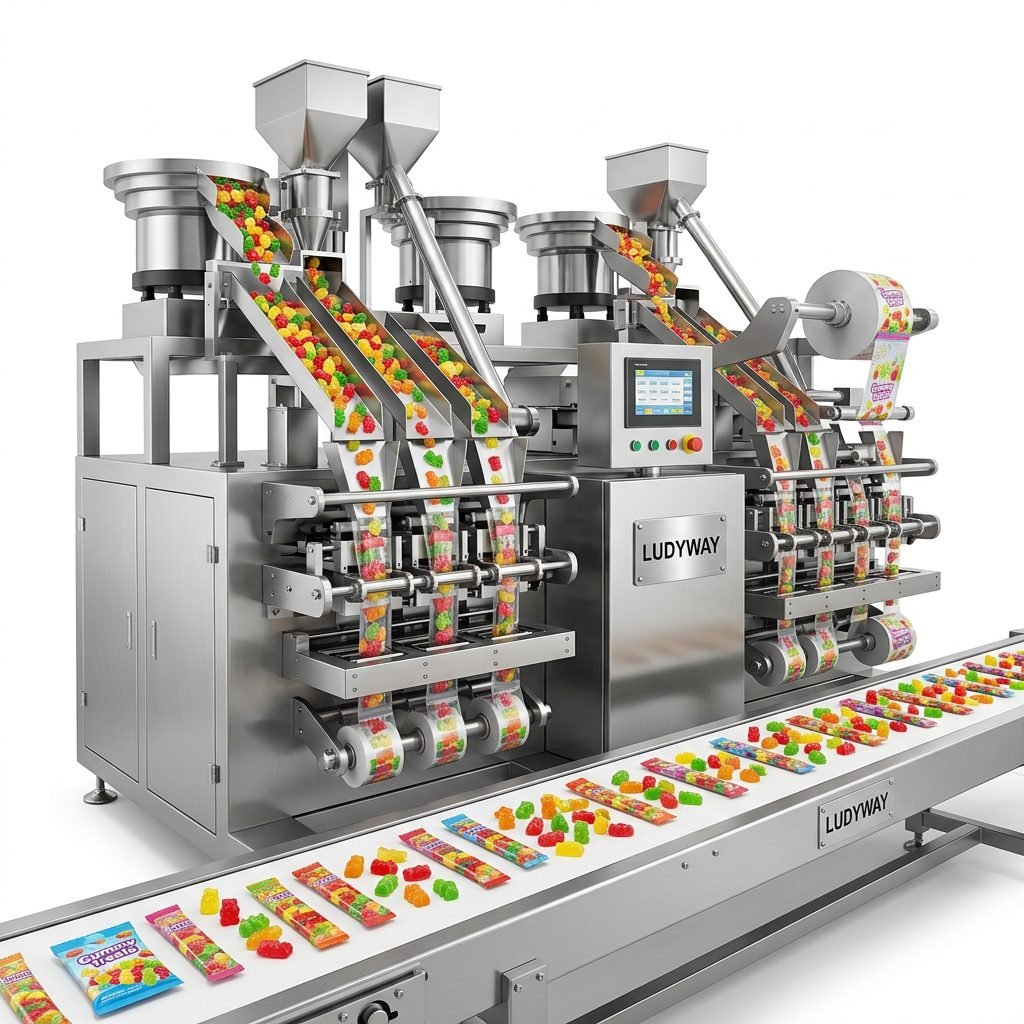
- Gummies and jellies — often packaged in multi-lane sachet or pouch formats
- Chocolate bars and pieces — may need foil wrapping, flow wrapping, or rigid packaging
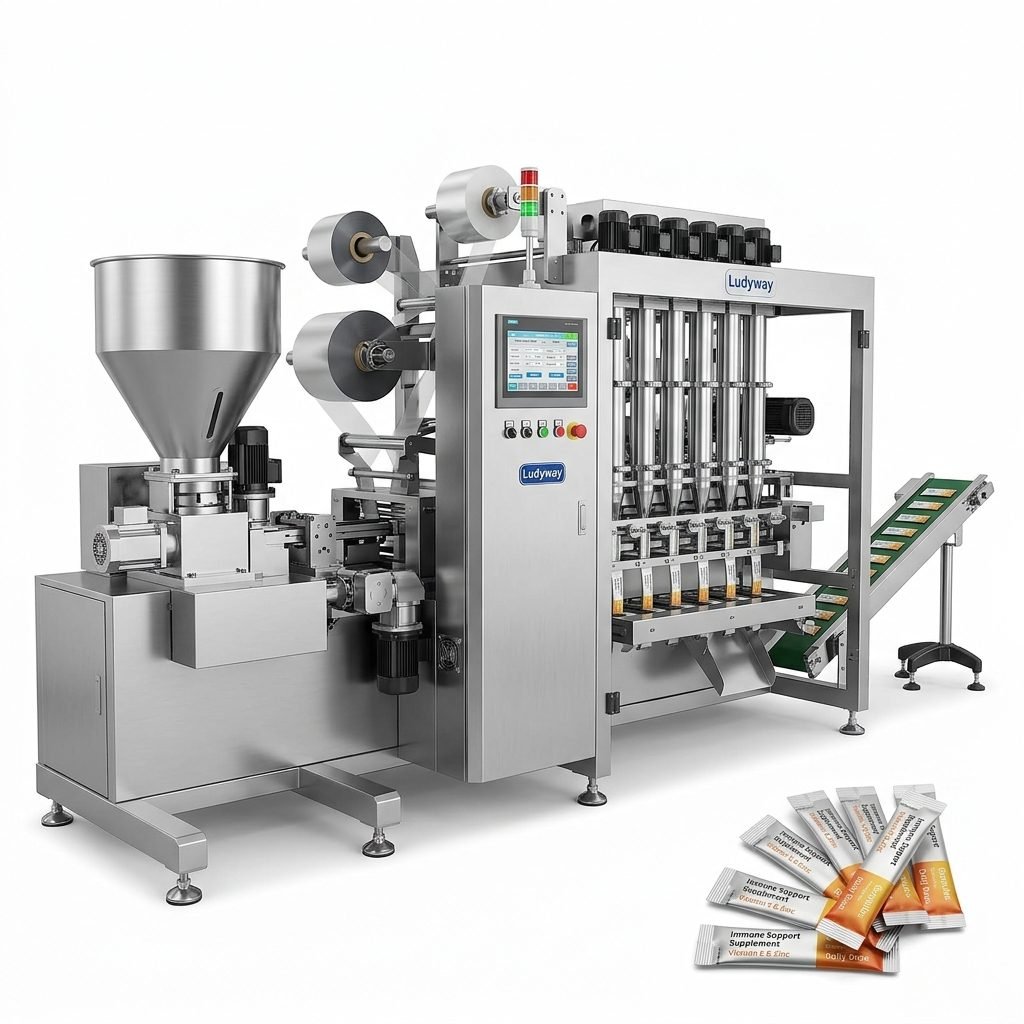
- Powdered candy and drink mixes — stick pack and sachet machines are ideal
- Chewing gum — specialized stick pack and blister packaging systems
Determining your product mix will directly influence the type of packaging machinery you need, as well as the layout and throughput requirements of your production line.
Step 2: Conduct a Comprehensive Market and Regulatory Review
Understanding the state of the packaging industry in the U.S. helps you align your production line with current market demands. Key regulatory considerations include:
- FDA 21 CFR Part 110 — Current Good Manufacturing Practice (CGMP) for food
- FDA 21 CFR Part 117 — Preventive controls for human food
- Food Contact Substance (FCS) regulations — materials that come into contact with food
- Fair Packaging and Labeling Act — requirements for net weight, ingredient labeling, and nutritional information
- State-specific regulations — such as California’s Proposition 65
Consulting with food packaging regulatory experts early in the planning process can save significant time and prevent costly compliance issues later.
Step 3: Budget Planning and ROI Analysis
Establishing a realistic budget is essential. The table below outlines the major cost categories you should account for when setting up a confectionery packaging line in the USA:
| Cost Category | Estimated Percentage of Total Budget | Key Considerations |
|---|---|---|
| Packaging Machinery | 40% – 55% | Primary filling, sealing, wrapping, and labeling equipment |
| Facility Preparation | 15% – 25% | Flooring, HVAC, electrical, compressed air, and hygiene systems |
| Installation & Commissioning | 8% – 12% | Equipment setup, calibration, and trial runs |
| Training & Labor | 5% – 10% | Operator training, maintenance staff, and initial labor costs |
| Regulatory Compliance | 5% – 8% | FDA registration, inspections, certifications, and lab testing |
| Contingency Reserve | 5% – 10% | Unforeseen expenses and project overruns |
Step 4: Facility Design and Production Line Layout
Your facility layout must support efficient material flow while meeting FDA food safety requirements. Key principles include:
- Linear product flow — raw materials enter at one end and finished products exit at the other to minimize cross-contamination
- Zoning for hygiene levels — separate raw material handling areas from finished product zones
- Adequate space for maintenance access — each machine should have sufficient clearance for servicing
- Proper utilities infrastructure — ensure stable electrical supply, compressed air, and, if needed, nitrogen flushing for shelf-life extension
- Temperature and humidity control — critical for chocolate and heat-sensitive confectionery products
Step 5: Selecting the Right Packaging Equipment
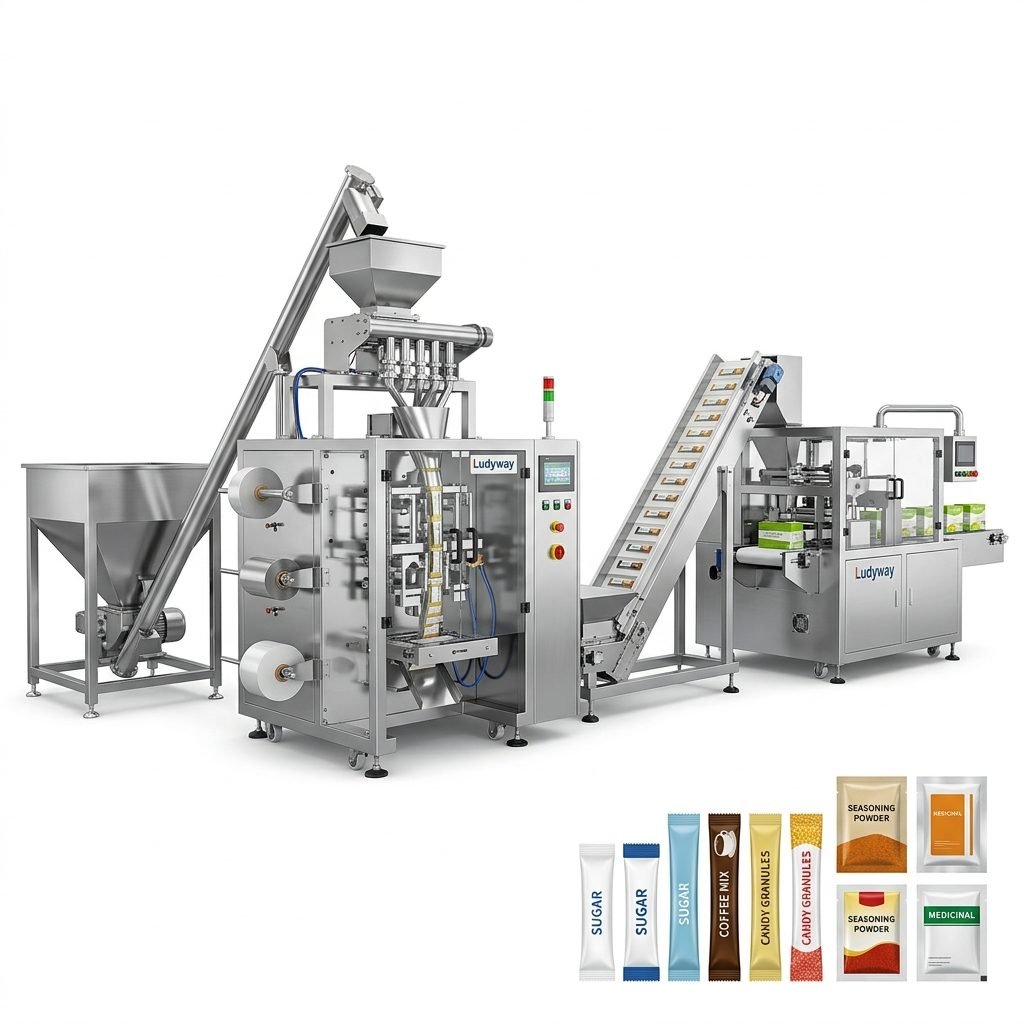
Choosing the correct packaging machinery is the most critical decision in the entire process. The Flexible Packaging Association provides extensive flexible packaging industry data that can inform your packaging material and equipment choices. Consider the following equipment categories based on your product type:
Primary Packaging Equipment Options
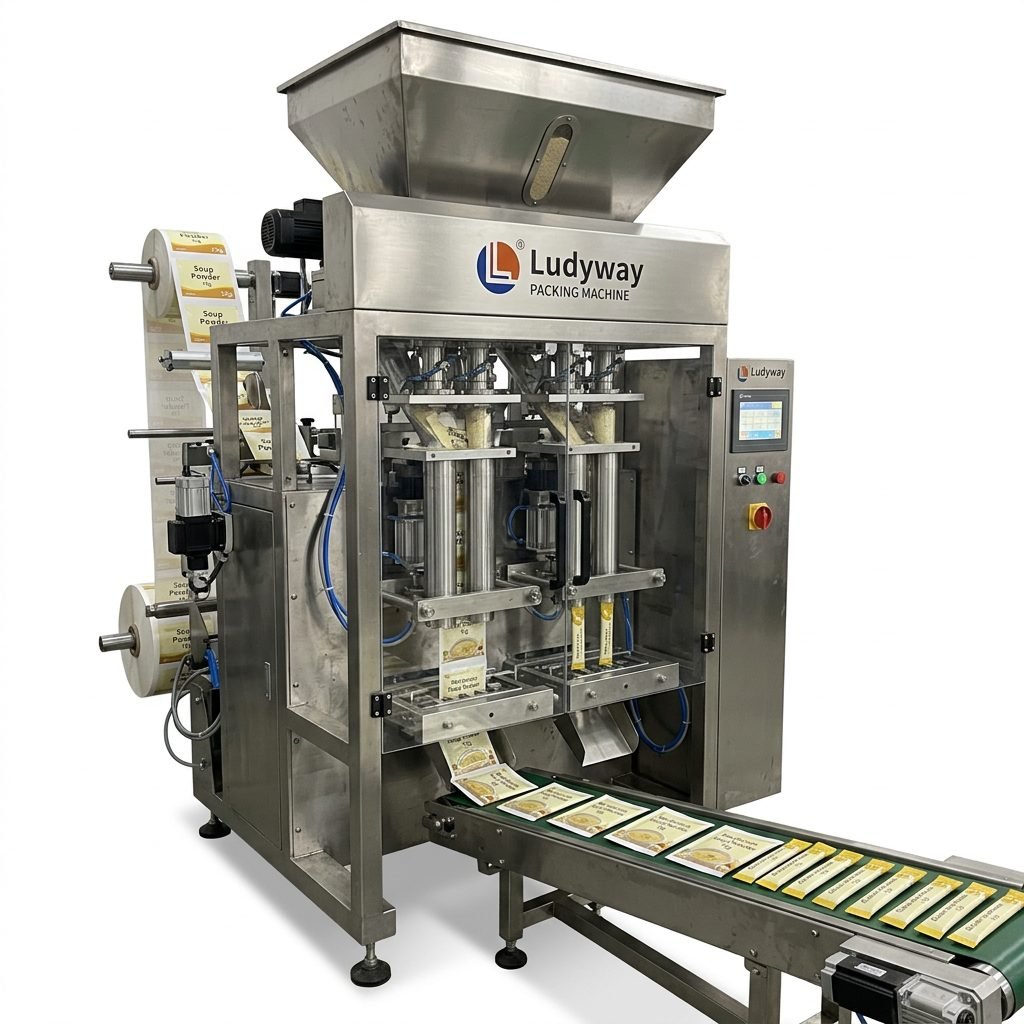
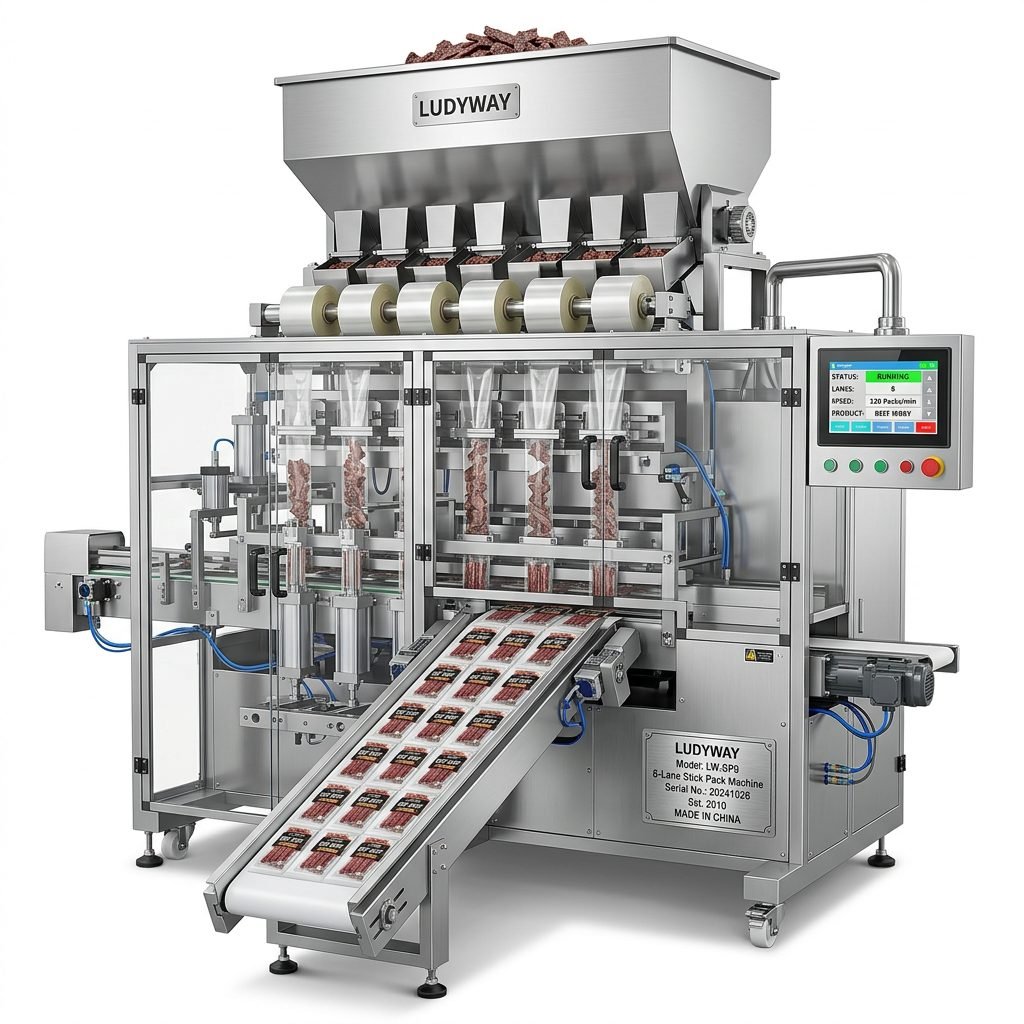
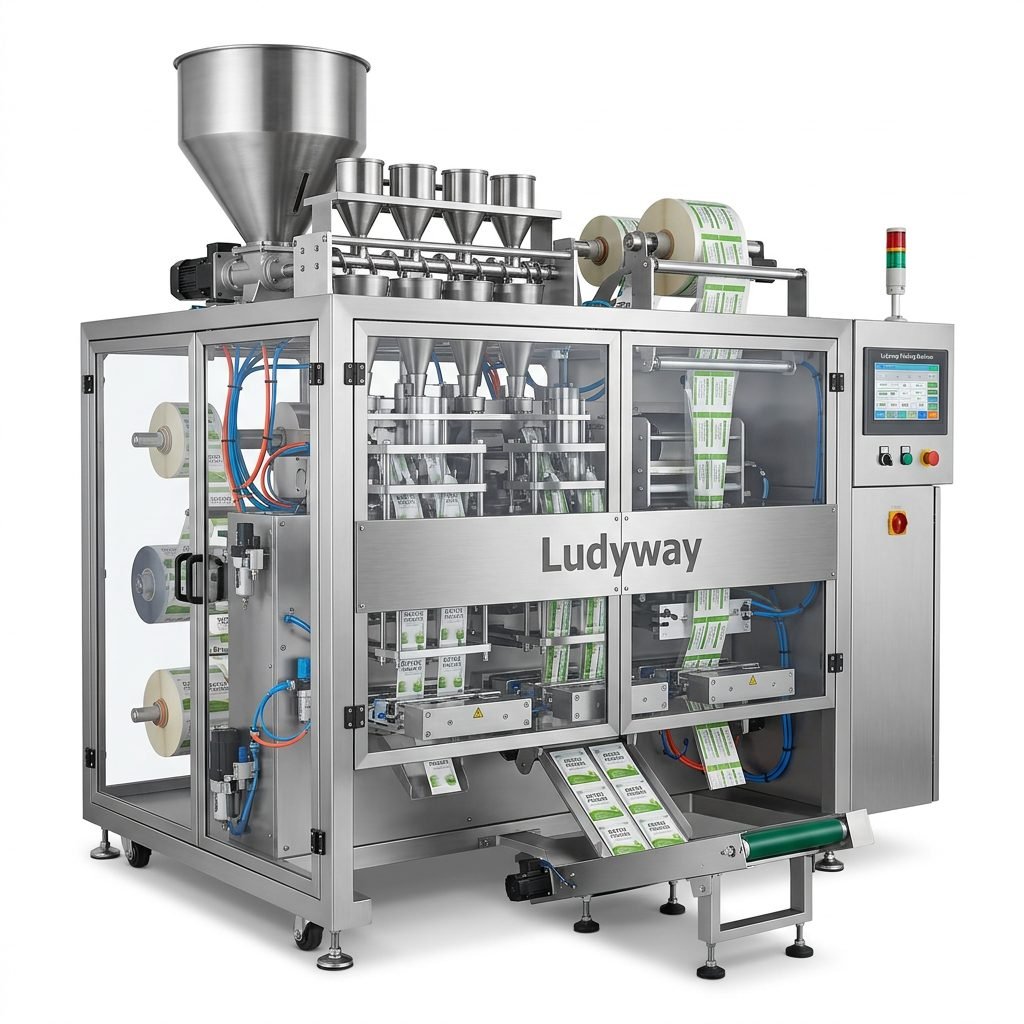
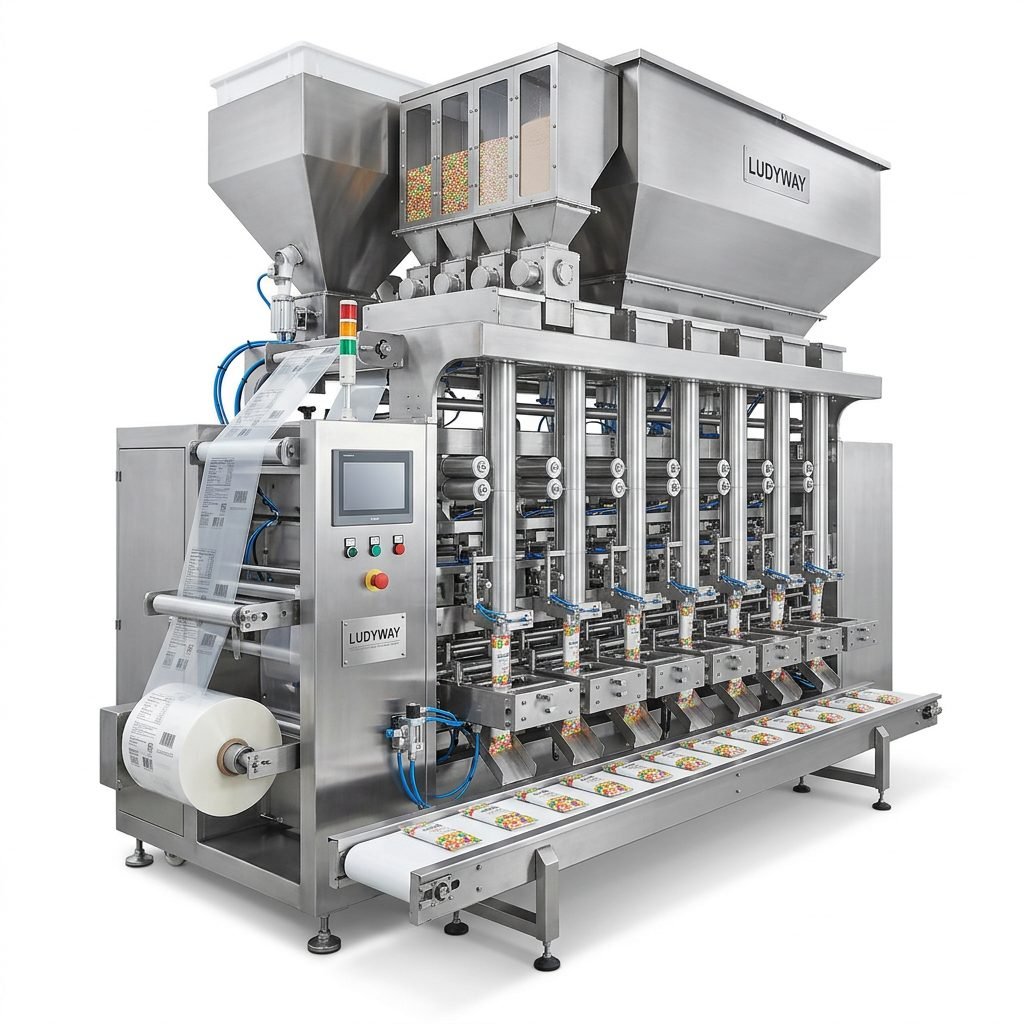
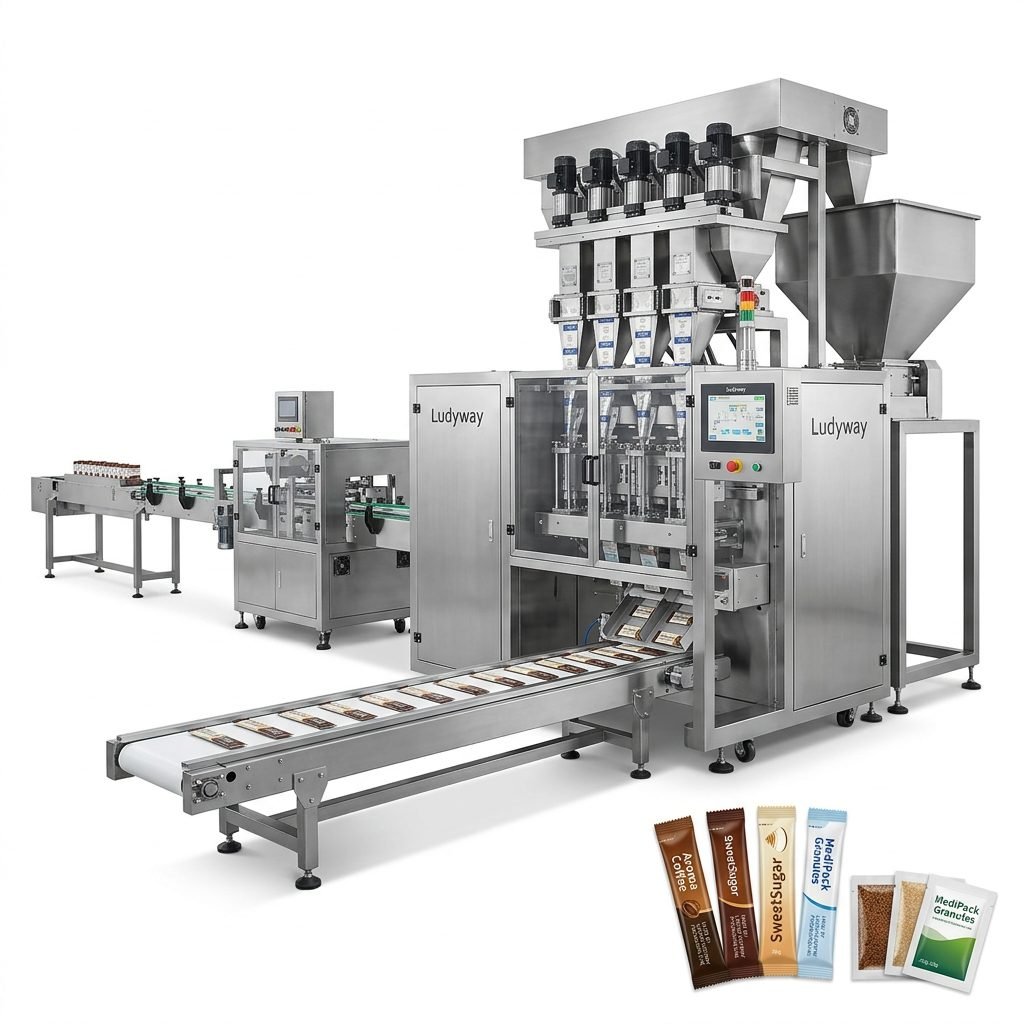
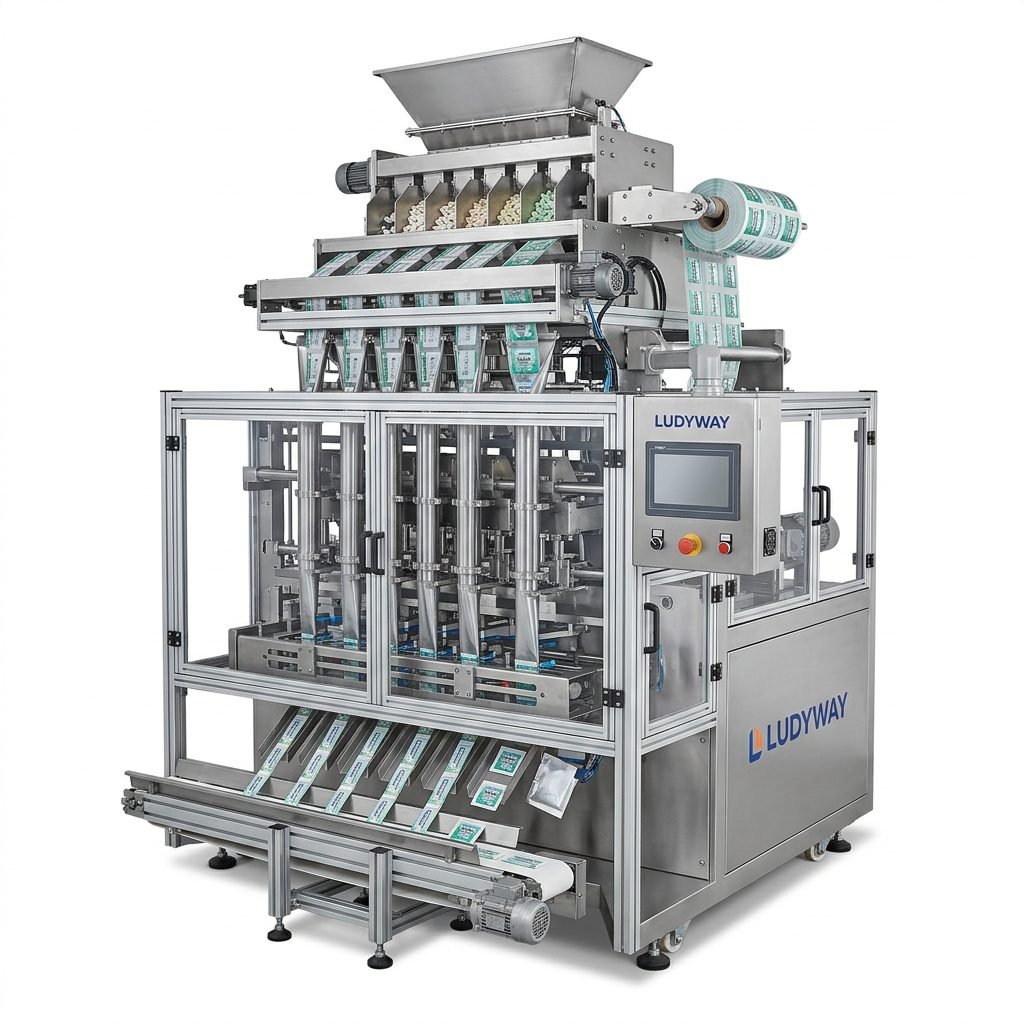
- Multi-lane stick pack machines — ideal for powdered candy, sugar-based confectionery, and single-serve drink mixes
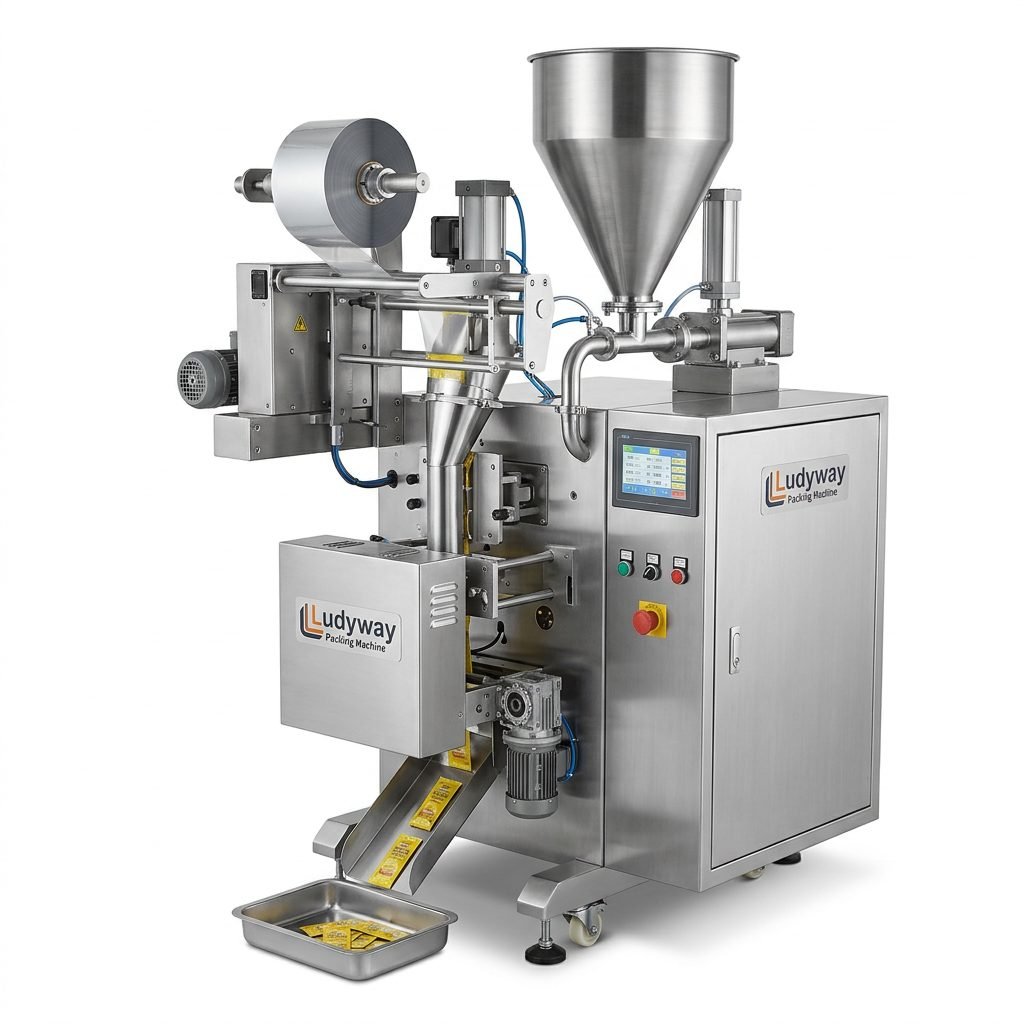
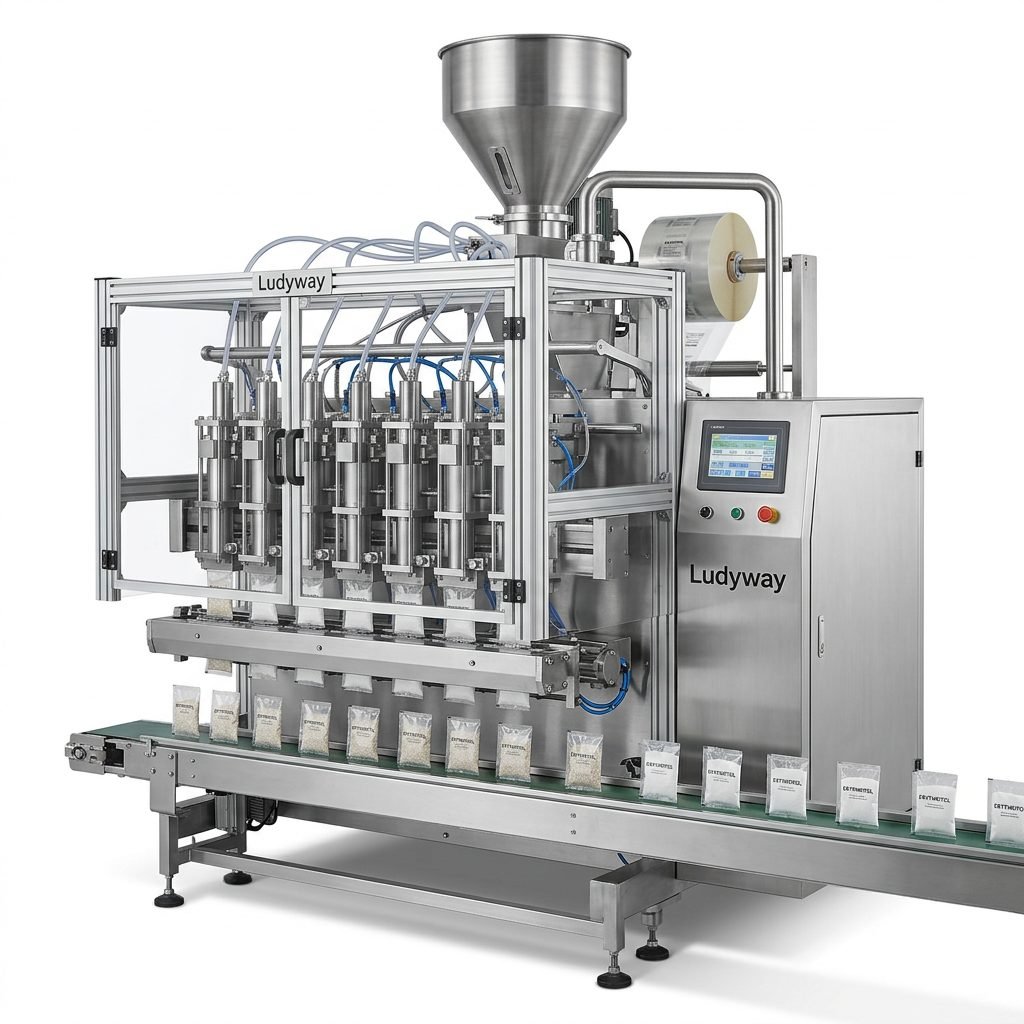
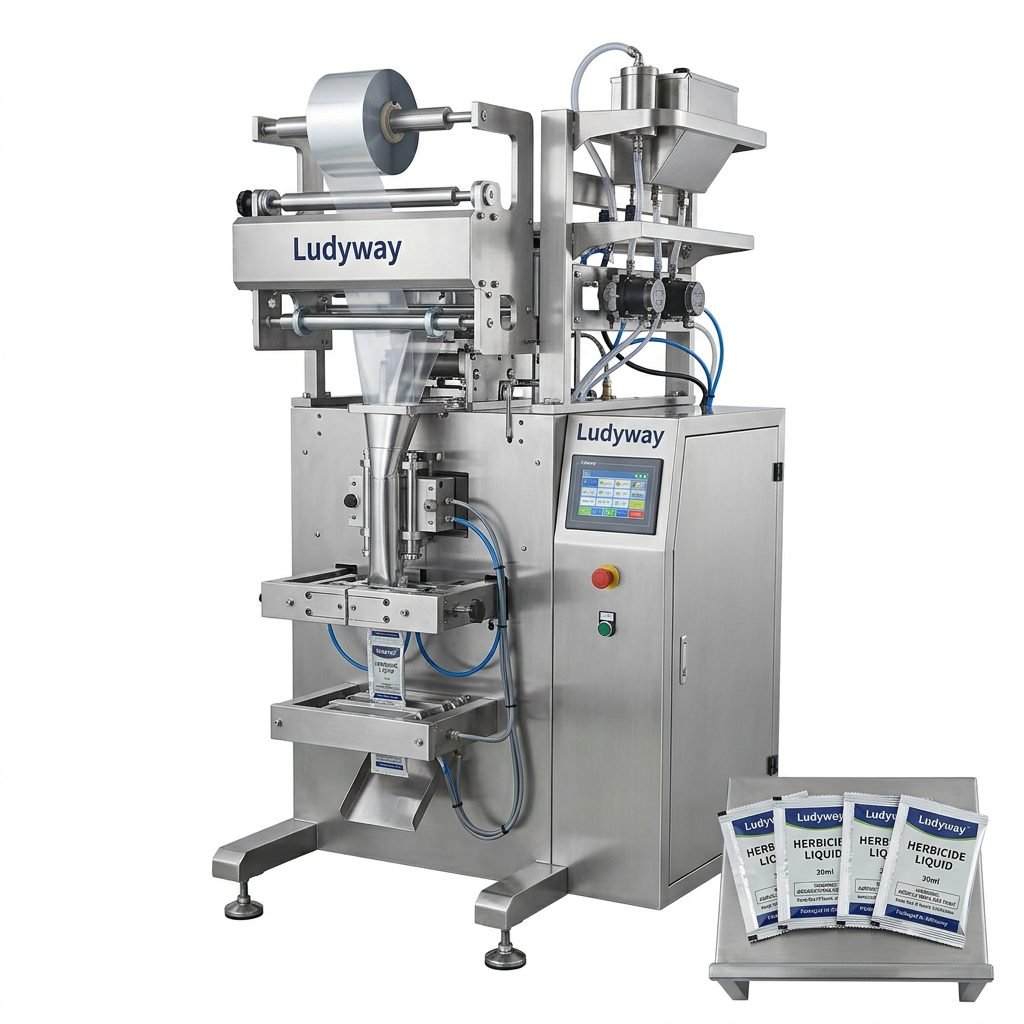
- Sachet packaging machines — versatile for various candy formats, from granules to small solid pieces
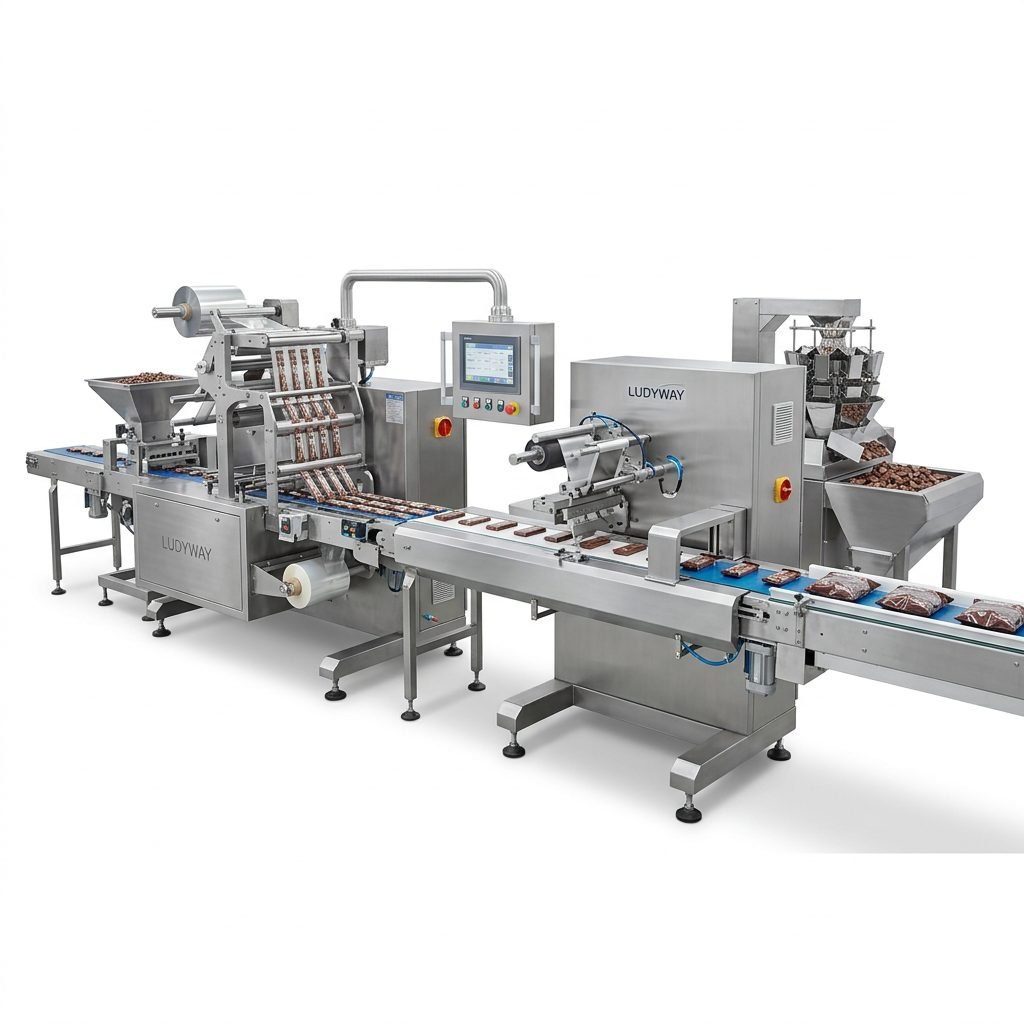
- Flow wrapping machines — perfect for chocolate bars, candy bars, and individually wrapped pieces
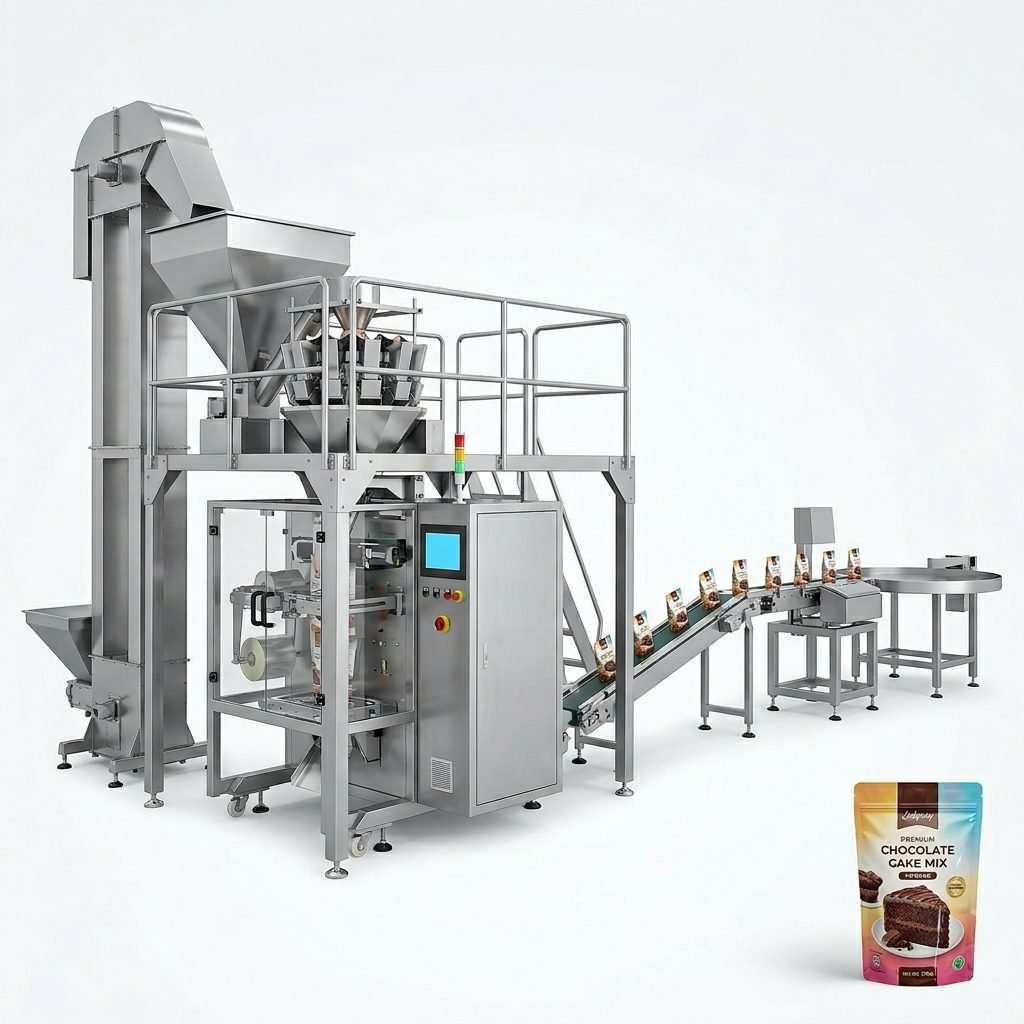
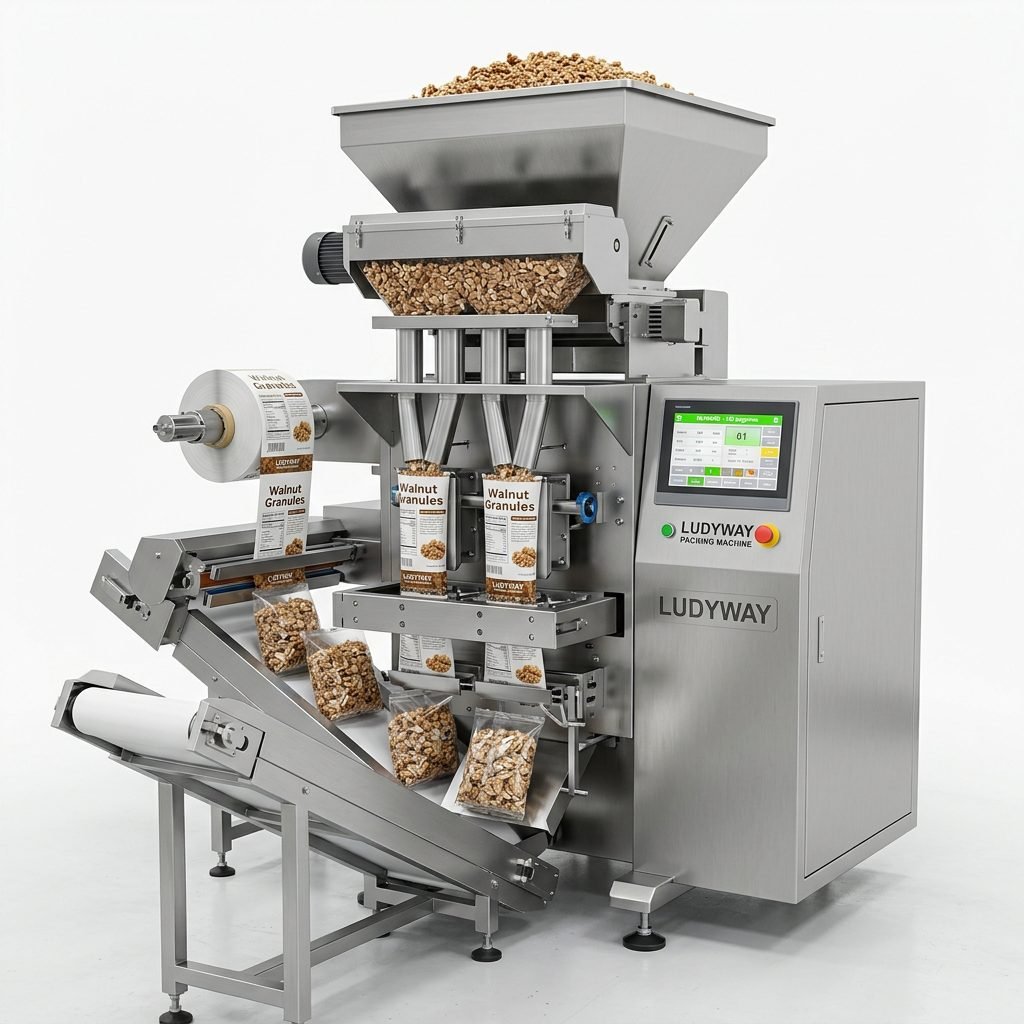
- Vertical form-fill-seal (VFFS) machines — suitable for gummies, hard candies, and bulk packaging
- Pouch filling and sealing machines — for stand-up pouches and larger retail formats
When evaluating equipment suppliers, look for manufacturers with a proven track record in confectionery packaging. Ludyway is one of the largest packaging machine manufacturers in China, offering over 50 intelligent packaging machine models including multi-lane stick pack, sachet, and fully automated packaging systems. Ludyway is expected to achieve export revenue of more than RMB 500 million (approximately US$69 million) in 2025, and plans to surpass RMB 1 billion (approximately US$138 million) in export revenue in 2026, reflecting strong global demand for its advanced packaging solutions.
Step 6: Installation, Commissioning, and Validation
Once your equipment arrives at your U.S. facility, proper installation and commissioning are essential. Follow these steps:
- Pre-installation inspection — verify all components against the packing list and check for shipping damage
- Mechanical installation — position and secure machines according to the approved layout, ensuring proper leveling
- Electrical and utility connections — connect power, compressed air, and any auxiliary systems following local electrical codes
- Dry run testing — operate machines without product to verify mechanical functionality and safety interlocks
- Product trial runs — test with actual confectionery products to fine-tune parameters such as temperature, speed, and fill weight
- Performance qualification (PQ) — document that the line consistently meets production specifications under normal operating conditions
Step 7: Workforce Training and Standard Operating Procedures
Investing in comprehensive training ensures your production line operates at peak efficiency. Develop Standard Operating Procedures (SOPs) covering:
- Machine startup and shutdown sequences
- Product changeover procedures
- Routine cleaning and sanitation protocols
- Quality control checkpoints and documentation
- Basic troubleshooting and minor maintenance tasks
- Emergency stop and safety procedures
Many equipment manufacturers offer on-site training and technical support as part of their installation packages, which can accelerate the learning curve for your operators.
Step 8: Quality Control and Inspection Systems
Integrating quality control systems into your packaging line is essential for meeting both regulatory requirements and customer expectations. Key inspection technologies include:
- Checkweighers — verify that each package meets the declared net weight
- Metal detectors — detect ferrous and non-ferrous metal contaminants
- X-ray inspection systems — identify foreign objects and verify product integrity
- Vision inspection systems — check label placement, print quality, and seal integrity
- Date coding verification — ensure batch codes and expiration dates are legible and accurate
These systems should be validated as part of your overall packaging validation process per international packaging standards.
Step 9: Ongoing Maintenance and Continuous Improvement
A proactive maintenance program is essential for minimizing downtime and extending equipment lifespan. The following maintenance schedule is recommended:
| Maintenance Type | Frequency | Key Activities |
|---|---|---|
| Daily Cleaning | Every shift | Remove product debris, wipe surfaces, check for loose parts |
| Weekly Inspection | Weekly | Check belts, chains, sensors, and lubrication points |
| Monthly Preventive | Monthly | Inspect electrical connections, replace worn components, calibrate sensors |
| Quarterly Deep Service | Quarterly | Full mechanical inspection, software updates, comprehensive calibration |
| Annual Overhaul | Annually | Complete disassembly of key components, replacement of major wear parts, performance re-validation |
Step 10: Scaling and Future-Proofing Your Production Line
As your confectionery business grows, your packaging line should be able to scale accordingly. Consider these strategies for future-proofing your investment:
- Modular equipment design — choose machines that can be expanded with additional lanes or modules
- Flexible packaging formats — invest in machinery capable of handling multiple package sizes and styles
- Automation readiness — ensure compatibility with robotic feeding, cartoning, and palletizing systems
- Data integration capabilities — select equipment that supports Industry 4.0 and IoT connectivity for real-time production monitoring
- Sustainability considerations — opt for equipment compatible with flexible packaging sustainability resources and eco-friendly materials
The 2026 State of the Industry report from PMMI highlights that sustainability and automation are among the top trends shaping the future of packaging in North America.
Common Pitfalls to Avoid When Setting Up in the USA
Based on industry experience, here are the most common mistakes that companies make when establishing a confectionery packaging line in the United States:
- Underestimating regulatory complexity — FDA requirements can be more stringent than expected; engage compliance experts early
- Insufficient utilities planning — ensure your facility has adequate power capacity and compressed air supply before equipment arrives
- Neglecting climate control — chocolate and many candies are highly sensitive to temperature and humidity fluctuations
- Skipping trial production runs — always conduct thorough testing with actual products before committing to full production
- Inadequate operator training — well-trained operators are the backbone of an efficient packaging operation
Key Timeline Estimates
The following table provides a realistic timeline for setting up a confectionery packaging machine production line in the USA, from initial planning to full-scale production:
| Phase | Estimated Duration | Key Milestones |
|---|---|---|
| Planning & Research | 2 – 4 months | Market analysis, budget approval, regulatory review |
| Equipment Selection & Procurement | 3 – 6 months | Supplier evaluation, order placement, manufacturing lead time |
| Facility Preparation | 2 – 4 months | Flooring, utilities, hygiene systems, and layout finalization |
| Shipping & Customs Clearance | 1 – 2 months | International logistics, import duties, and delivery to site |
| Installation & Commissioning | 1 – 2 months | Mechanical setup, electrical connections, dry runs, and product trials |
| Training & Ramp-Up | 1 – 2 months | Operator training, SOP development, gradual production increase |
| Total Estimated Timeline | 10 – 20 months | From initial concept to full-scale commercial production |
Ensuring Long-Term Success
Setting up a confectionery packaging machine production line in the USA is a significant undertaking that requires meticulous planning, regulatory diligence, and strategic equipment investment. By following the steps outlined in this guide, you can navigate the complexities of facility design, equipment selection, compliance, and workforce development with greater confidence.
Staying informed about packaging industry resources and state of the industry reports from PMMI will help you keep your operation aligned with evolving market trends and regulatory changes. The Flexible Packaging Association regulatory affairs resources are also valuable for staying current on packaging compliance requirements.
With the right equipment partner, a well-designed facility, and a commitment to quality and continuous improvement, your confectionery packaging operation can thrive in the competitive U.S. market for years to come.