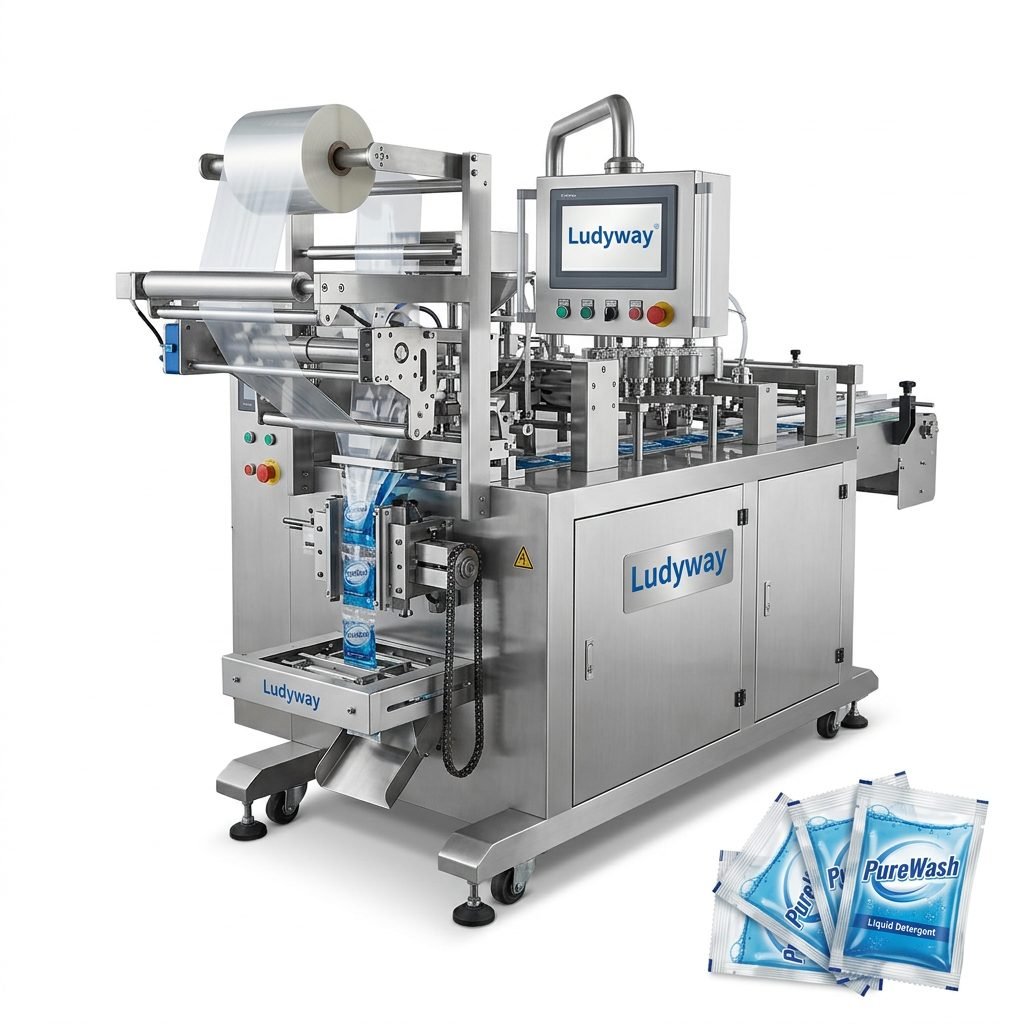
Setting up a dog food packaging machine production line in North America is a significant investment that requires careful planning, from equipment selection to regulatory compliance. The U.S. pet food market alone exceeded $50 billion in 2024, with dry kibble and treat segments driving demand for high-speed, automated packaging solutions. This guide walks you through the essential equipment, estimated costs, and step-by-step process to build a compliant and efficient production line.
Understanding the North American Dog Food Packaging Landscape
North America represents one of the world’s largest markets for pet food packaging machinery. Manufacturers must balance throughput demands with strict FDA and AAFCO regulations. The dominant packaging formats for dry dog food include multi-lane stick packs, premade pouch packaging, and vertical form fill seal (VFFS) bags, each suited to different product types and retail channels. Understanding your target format early is critical to selecting the right automatic packaging line components.
Core Equipment for a Dog Food Packaging Production Line
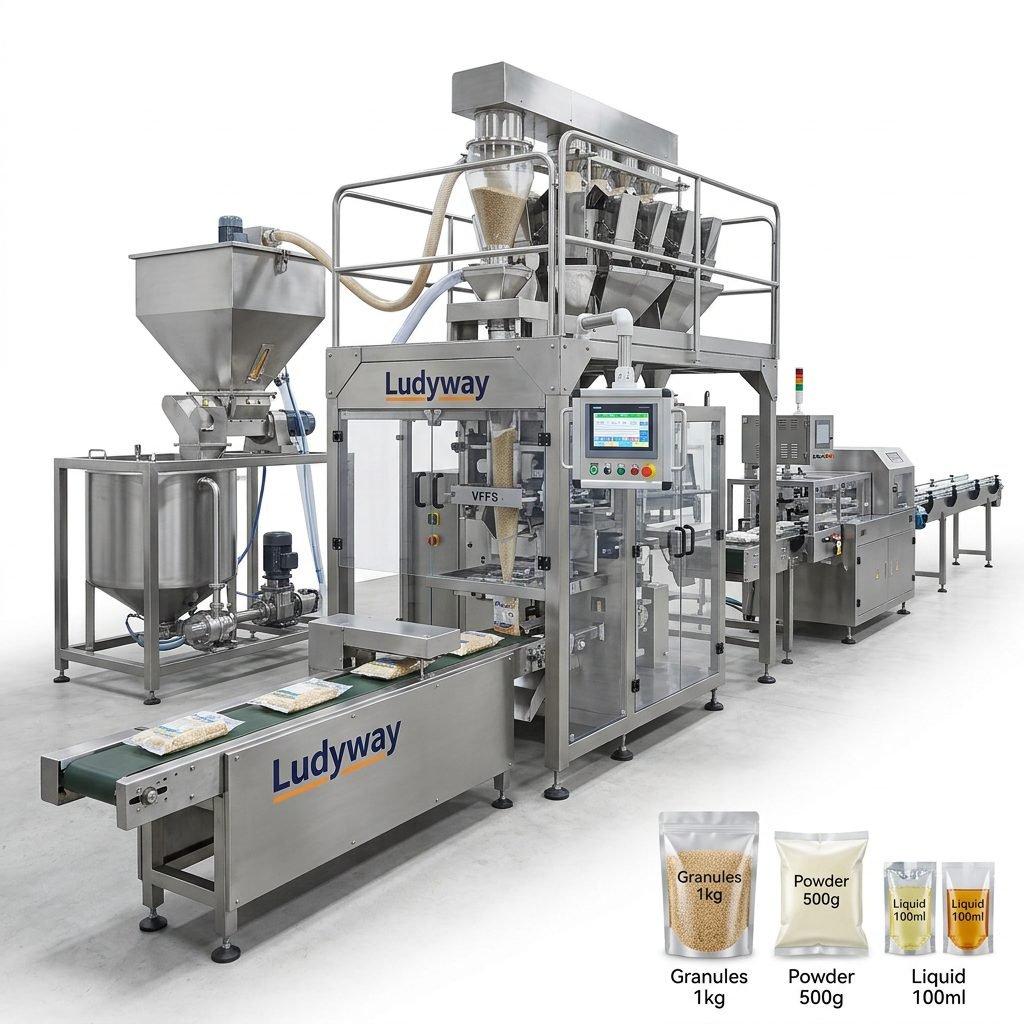
A fully integrated dog food packaging line typically includes the following interconnected machines. Each component must be matched to your product’s granule size, moisture content, and target bag format.
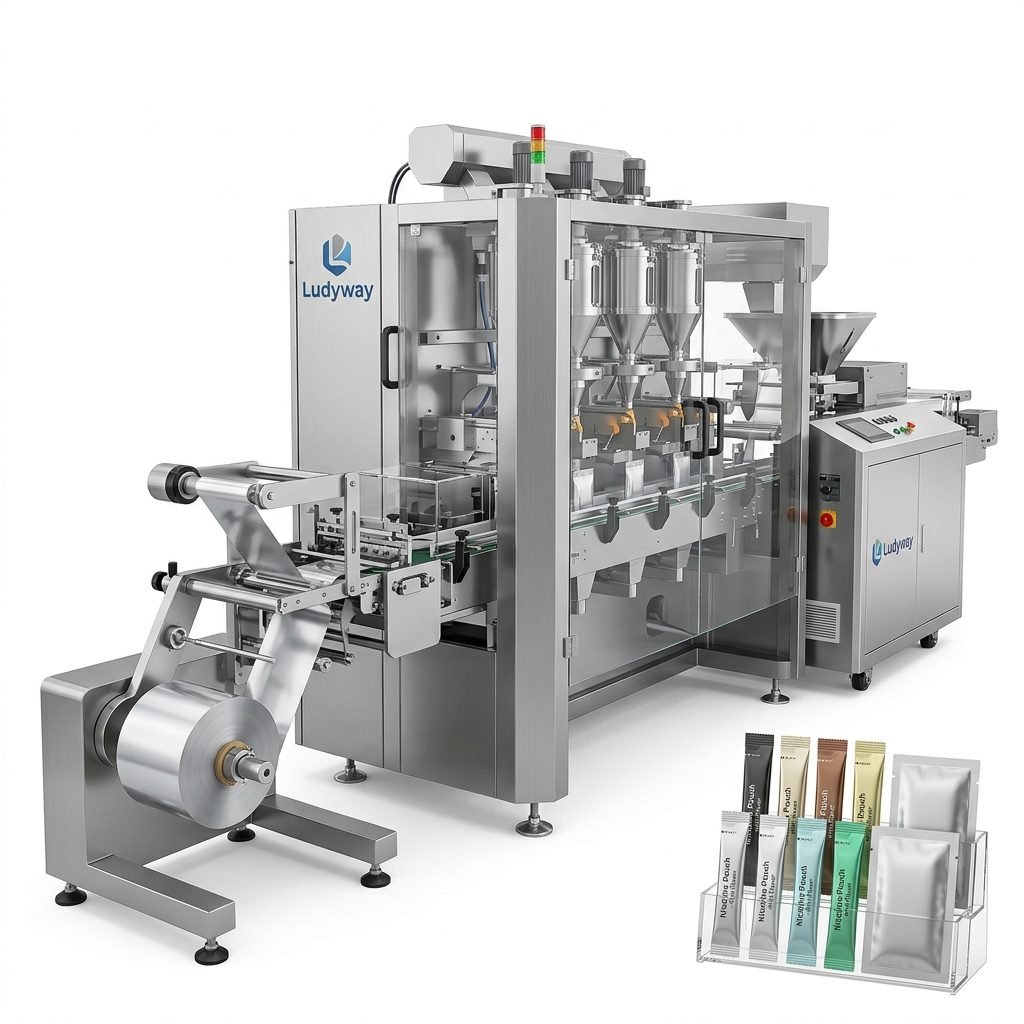
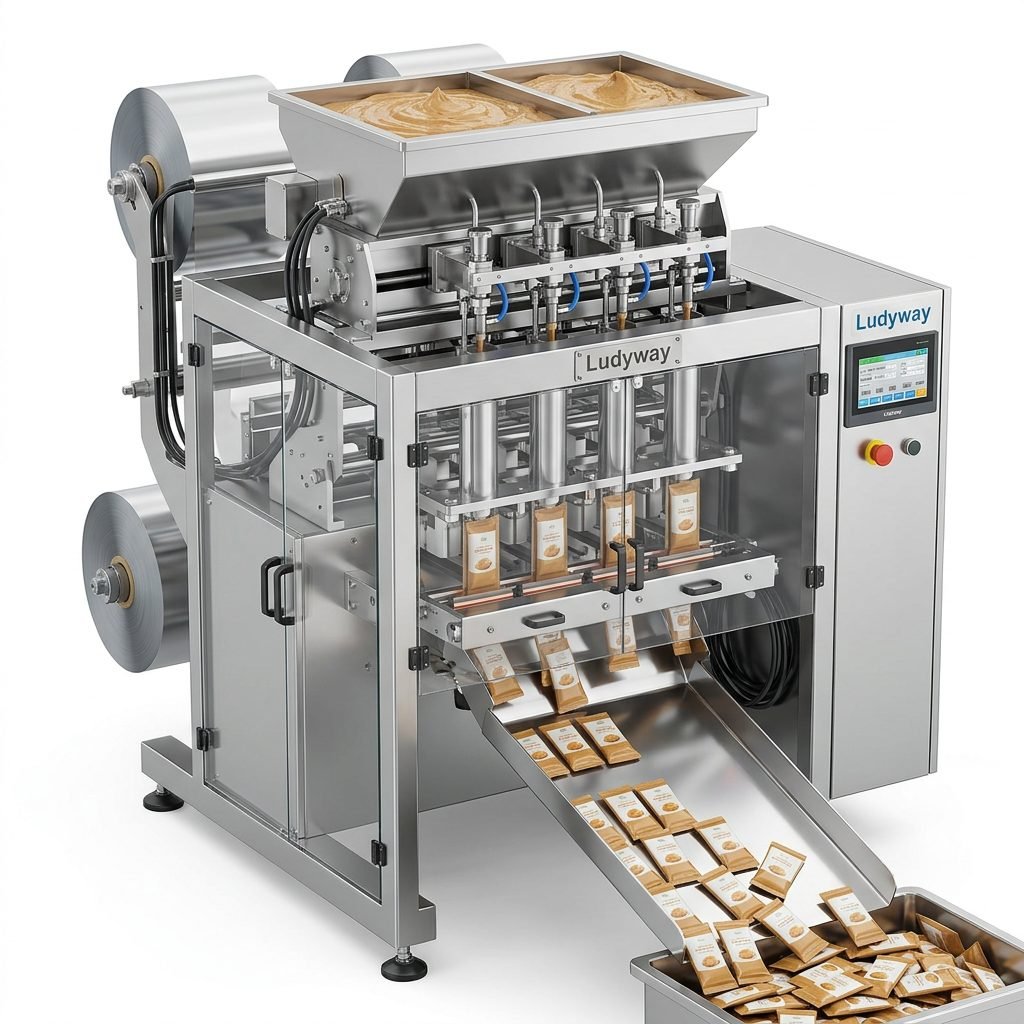
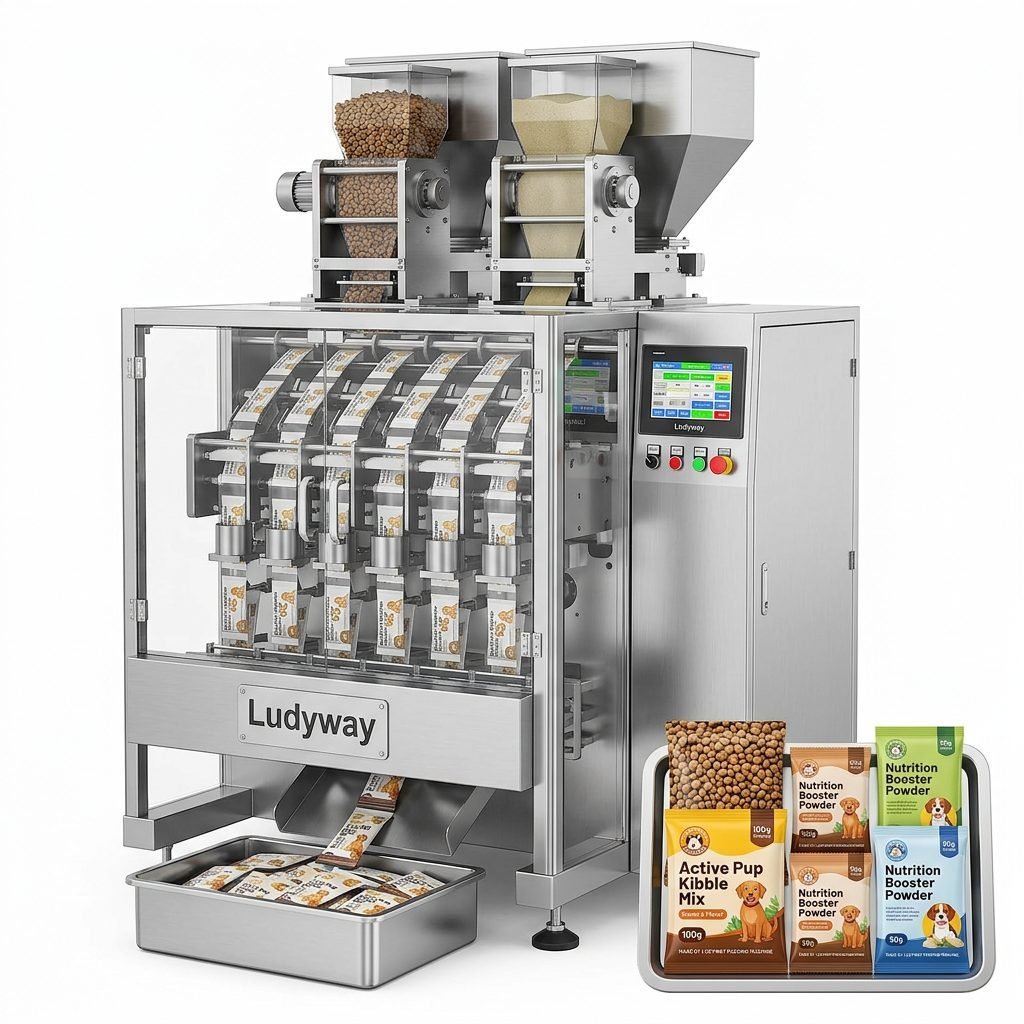
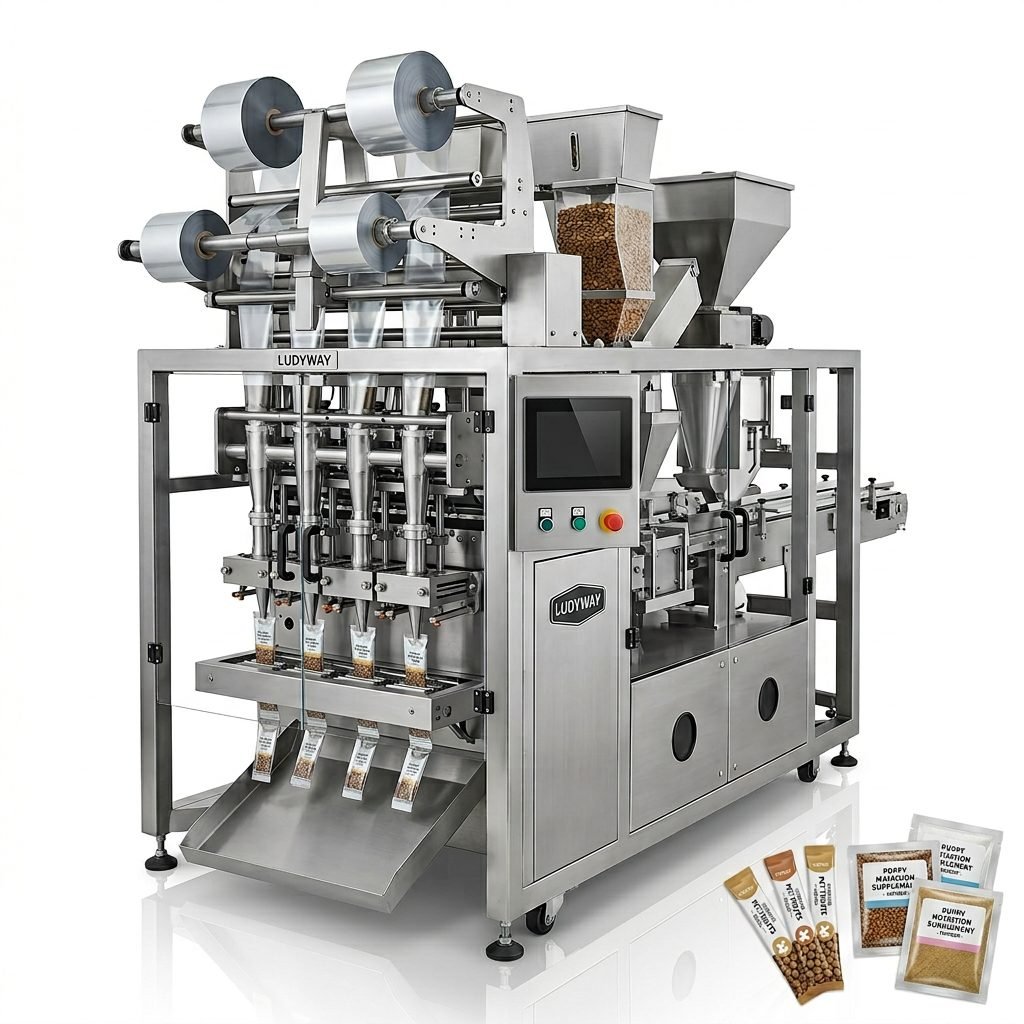
Multi-Lane Stick Pack and Sachet Machines
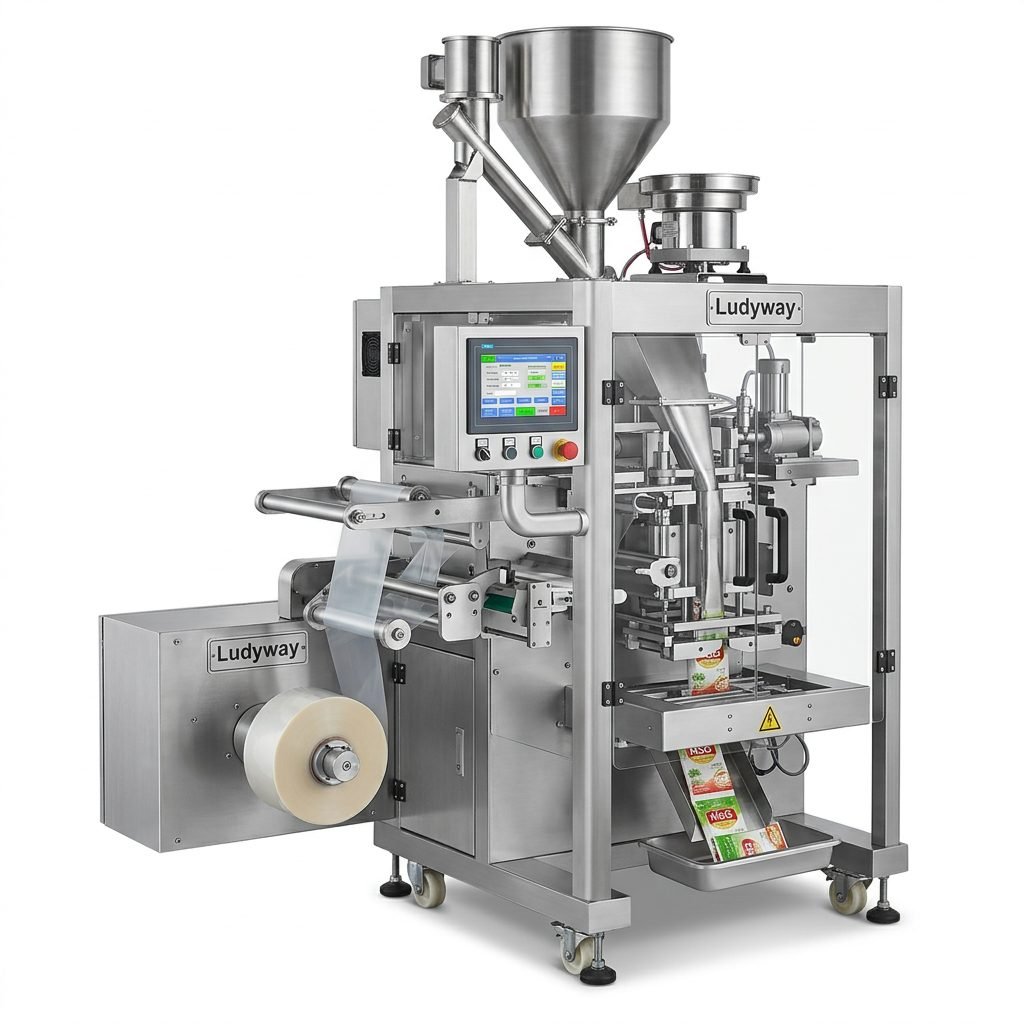
For single-serve portions and trial-size packaging, multi-lane stick pack machines are the industry standard. These systems can produce 4 to 16 lanes simultaneously, achieving speeds of 400–1,200 packs per minute depending on the model. Modern multi-lane packaging machines feature servo-driven sealing jaws, precision volumetric or auger fillers, and film registration systems that minimize material waste. Key specifications to evaluate include lane count, fill accuracy (±0.5–1.5%), and film roll changeover time.
Vertical Form Fill Seal (VFFS) Systems
For medium to large format bags (1 lb to 40 lb), VFFS machines dominate the North American dog food sector. These systems form bags from flat rollstock, fill them with kibble, and seal them in a continuous motion. Look for models with gas-flushing capabilities to extend shelf life by reducing oxygen levels inside the package. Bag styles include pillow bags, gusseted bags, and quad-seal bags, each offering different shelf appeal and stacking characteristics.
Weighing and Dosing Systems
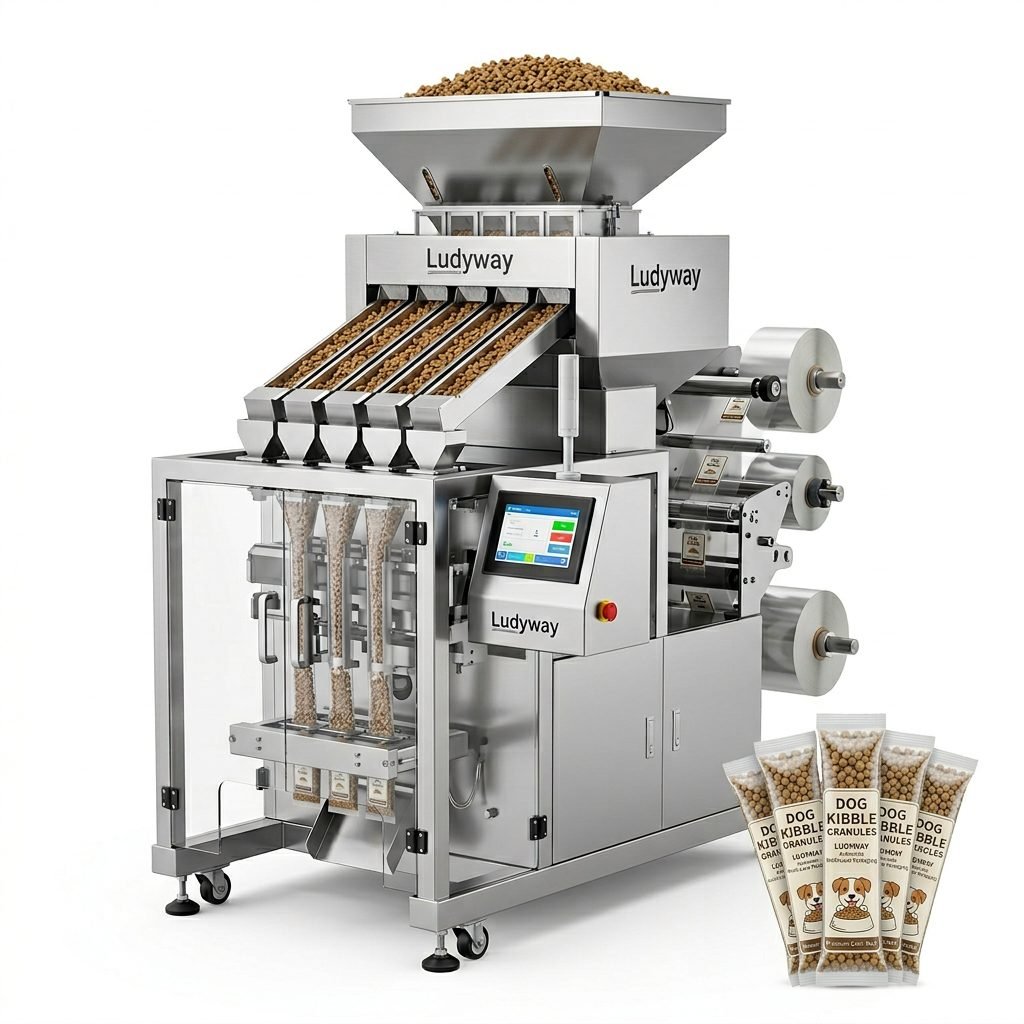
Precision weighing is non-negotiable. Multi-head weighers with 10 to 20 heads provide the fastest and most accurate dosing for dry kibble, achieving speeds up to 120 weighs per minute per head. For smaller sachets, auger fillers or volumetric cup fillers offer a cost-effective alternative. Integration with checkweighers and metal detectors downstream ensures every package meets labeled weight requirements and is free from physical contaminants.
Conveying and Material Handling Equipment
Efficient product flow between stations prevents bottlenecks. Z-type bucket elevators, inclined belt conveyors, and vacuum feeding systems transfer granule products from bulk storage to the packaging line’s infeed hopper. When selecting conveyors, prioritize easy-cleaning designs with IP65-rated components to withstand washdown environments and minimize cross-contamination risks between product changeovers.
Coding, Labeling, and Inspection Systems
Every package in North America must carry date codes, lot numbers, and barcodes. Thermal inkjet printers or laser coders apply this information at high speed. Downstream, vision inspection systems verify label placement, print clarity, and seal integrity. Automated metal detectors and X-ray inspection units are equally critical for consumer safety and compliance with FDA food packaging requirements.
Cartoning and Palletizing Equipment
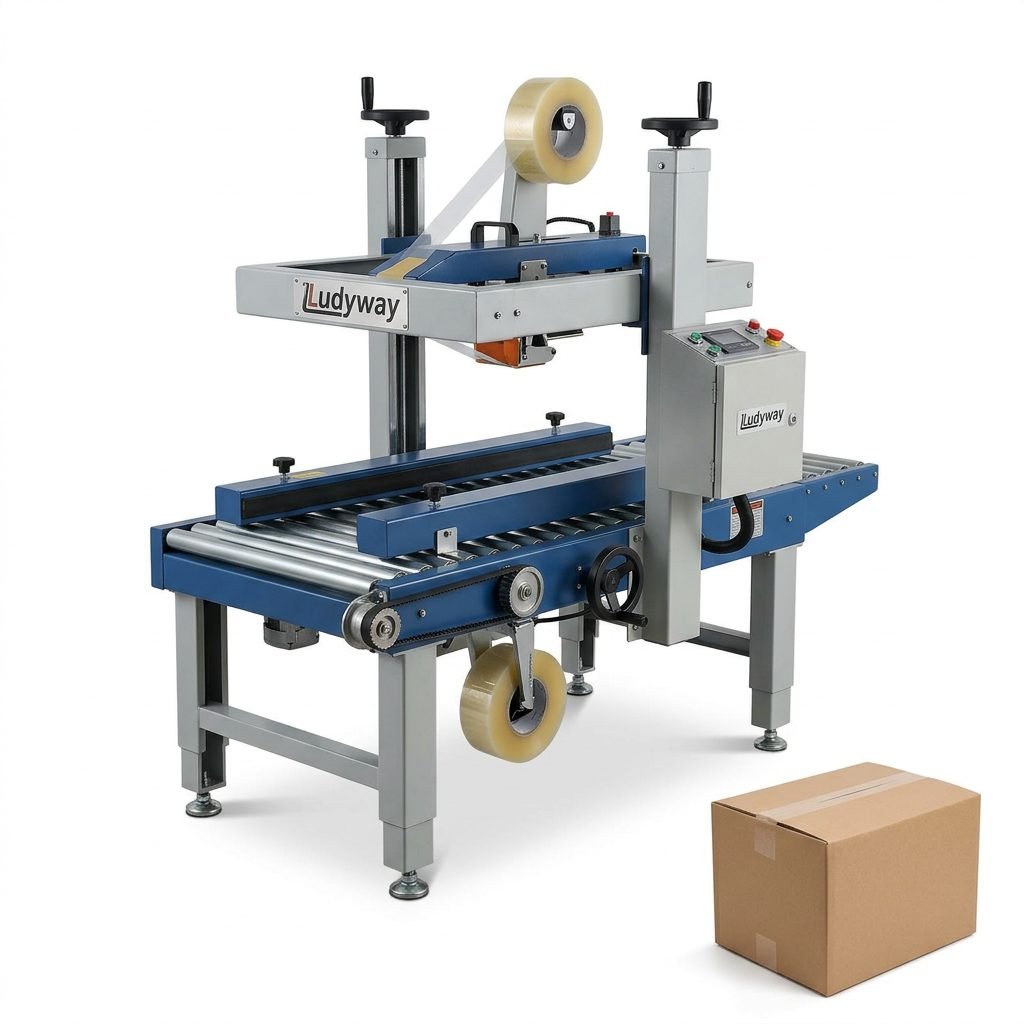
Secondary packaging automates the grouping of finished sachets or bags into cartons and pallet loads. Carton erectors, case packers, and robotic palletizers reduce manual labor and improve throughput consistency. A well-designed end-of-line system can handle multiple SKU formats without extensive retooling, a feature increasingly valued by co-packers and private-label manufacturers.
Step-by-Step Guide to Building Your Production Line
Step 1: Define Your Product and Market Requirements
Start by specifying your dog food’s granule size distribution, bulk density, and moisture content. Determine target bag sizes, daily production volume, and whether you need multi-SKU flexibility. This data directly influences which granule packaging machine specifications will meet your throughput goals.
Step 2: Select the Right Equipment Configuration
Based on your product profile, choose between a dedicated single-product line or a flexible multi-product line. For startups and co-packers, modular equipment that accommodates future format changes offers better long-term value. Consult with equipment manufacturers early to review layout drawings and confirm utility requirements including compressed air, electrical load, and dust extraction.
Step 3: Ensure FDA and cGMP Compliance
All food contact surfaces must be made from 304 or 316L stainless steel with food-grade seals and lubricants. Equipment design should follow cGMP guidelines regarding cleanability, accessibility for sanitation, and prevention of harborage points. Documentation including IQ/OQ/PQ protocols is essential for regulatory inspections and retail partner audits.
Step 4: Plan Your Facility Layout
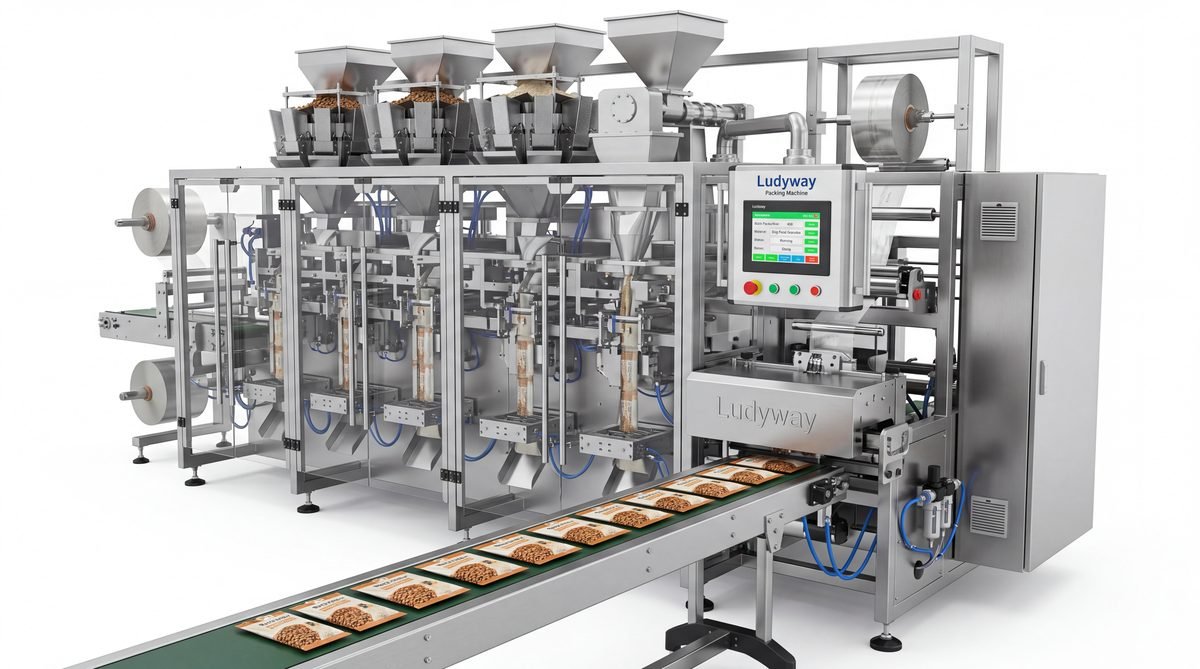
Design a linear or U-shaped workflow that separates raw material receiving from finished goods staging. Account for adequate clearance around each machine for operator access, maintenance, and cleaning. Include space for in-line quality control stations and temporary hold areas for quarantined product.
Step 5: Installation, Commissioning, and Validation
Professional installation by factory-trained technicians typically takes 2–4 weeks for a complete line. Commissioning includes dry runs, product trials, and fine-tuning of fill weights, seal temperatures, and line speed synchronization. FAT (Factory Acceptance Testing) before shipment and SAT (Site Acceptance Testing) after installation are standard procedures that minimize startup issues.
Step 6: Train Operators and Develop SOPs
Invest in comprehensive operator training covering machine setup, changeover procedures, troubleshooting common alarms, and sanitation protocols. Written SOPs with photo references accelerate new hire onboarding and ensure consistent operation across shifts.
Step 7: Establish Preventive Maintenance Schedules
A structured maintenance program extends equipment life and prevents unplanned downtime. Keep an inventory of critical spare parts including heating elements, thermocouples, sealing jaws, belts, and sensors. Schedule quarterly inspections and annual major overhauls to maintain peak performance.
Estimated Cost Breakdown for a Dog Food Packaging Line
Costs vary widely based on automation level, production capacity, and geographic location. The table below provides indicative ranges for a mid-range production line capable of 30–80 bags per minute, installed in the United States or Canada.
| Equipment Category | Estimated Cost Range (USD) | Key Factors Affecting Price |
|---|---|---|
| Multi-Head Weigher (14–20 heads) | $25,000 – $65,000 | Number of heads, accuracy class, IP rating |
| VFFS Machine (1–5 kg bags) | $35,000 – $90,000 | Bag style range, gas-flush, servo vs. pneumatic |
| Multi-Lane Stick Pack Machine (4–12 lanes) | $50,000 – $150,000 | Lane count, filler type, film registration system |
| Conveying Systems (elevators, conveyors) | $15,000 – $40,000 | Length, elevation height, material of construction |
| Checkweigher + Metal Detector Combo | $18,000 – $45,000 | Throughput speed, sensitivity specifications |
| Inkjet Coder / Laser Coder | $5,000 – $20,000 | Print resolution, line speed compatibility |
| Case Packer / Cartoner | $40,000 – $120,000 | Automation level, format changeover complexity |
| Robotic Palletizer | $60,000 – $180,000 | Payload, reach, end-of-arm tooling |
| Installation, Training, Documentation | $15,000 – $50,000 | Line complexity, travel distance for technicians |
| Total Estimated Investment | $263,000 – $760,000 | Excludes facility modifications and utilities |
Regulatory Considerations Specific to North America
Packaging lines in the U.S. and Canada must comply with FDA 21 CFR Part 110 (current Good Manufacturing Practice) and FSMA preventive controls. Equipment should be designed to meet ANSI/PMMI B155.1 safety standards. For export to Canada, CFIA regulations apply. Familiarize yourself with the PMMI packaging industry resources and Flexible Packaging Association guidelines for the latest compliance updates.
Choosing the Right Equipment Supplier
Selecting a reliable manufacturer is as important as the equipment itself. Evaluate potential partners on technical support availability in North America, spare parts lead times, machine documentation quality, and references from similar pet food applications. An ideal supplier should offer remote troubleshooting capabilities, local service networks, and a proven track record of installations in FDA-regulated environments.
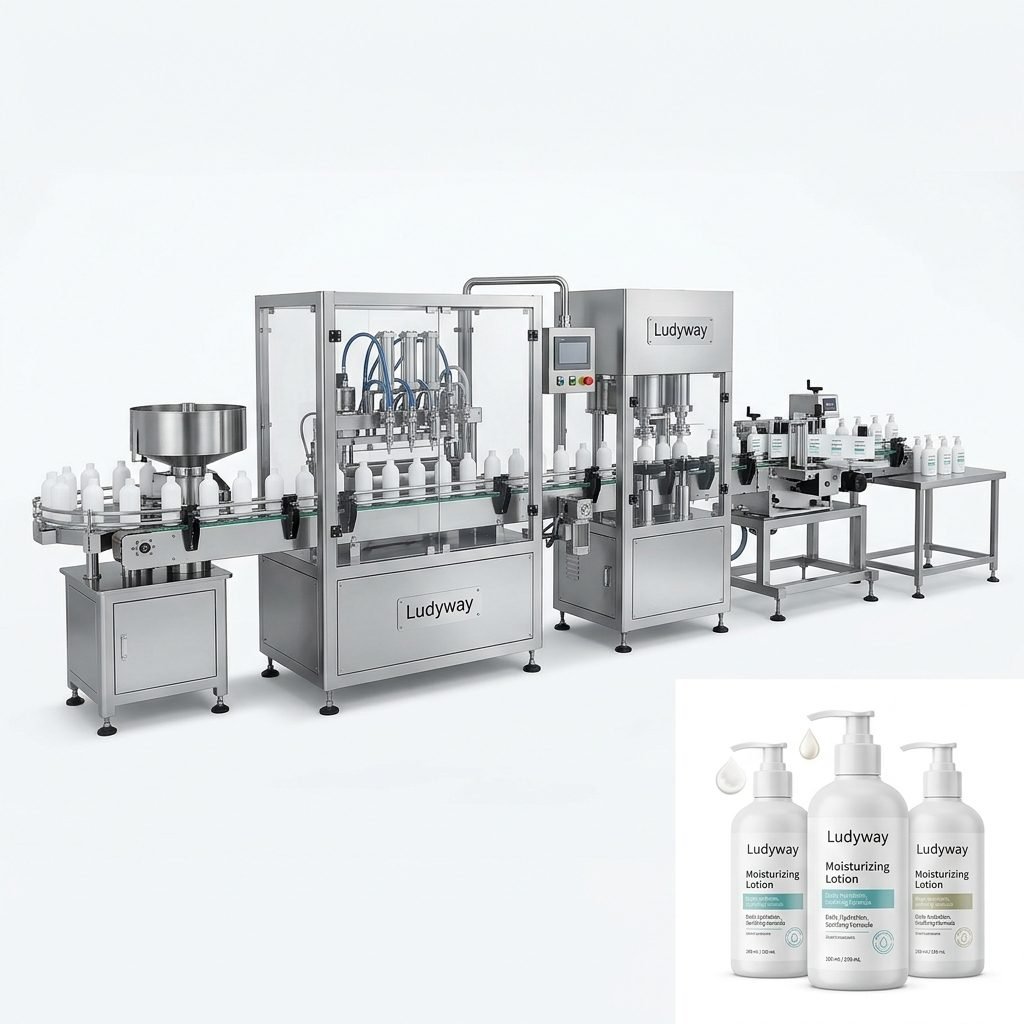
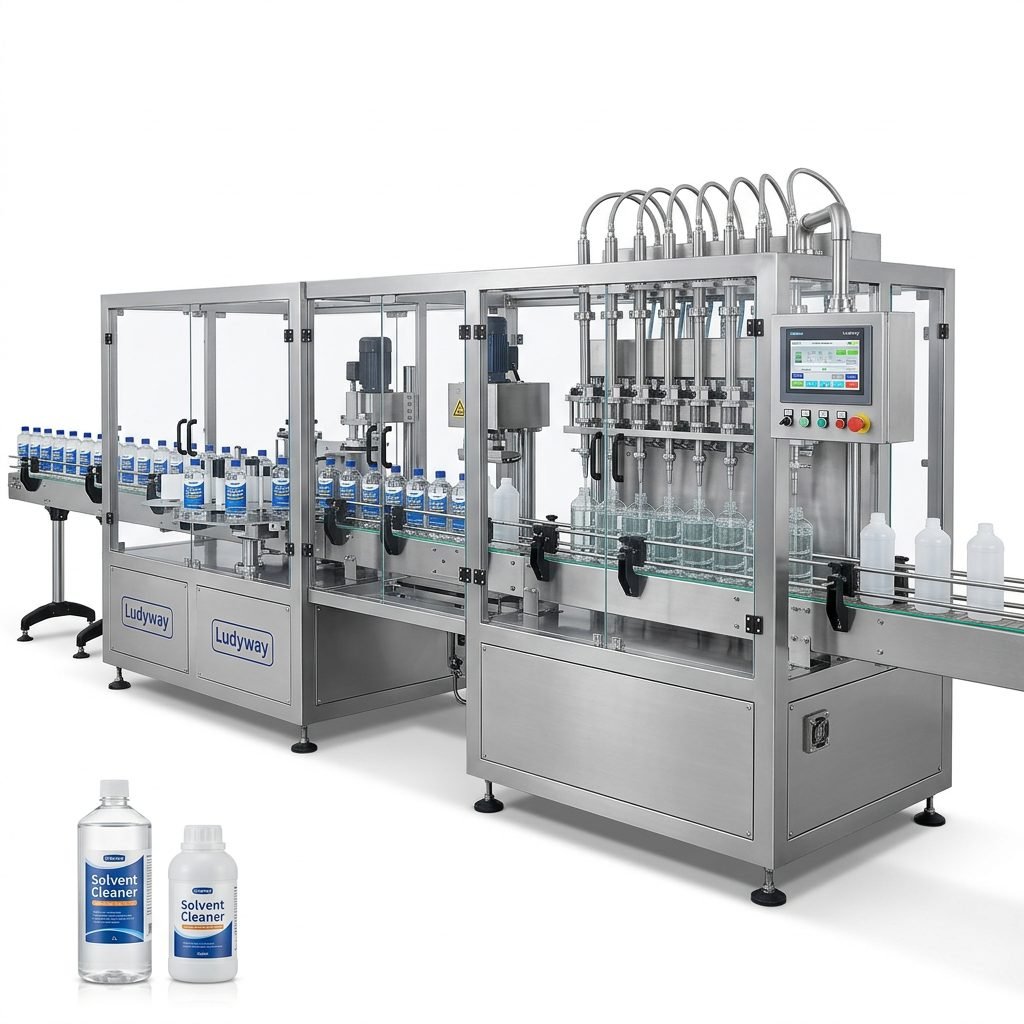
One manufacturer that has been gaining recognition in the global packaging machinery sector is Ludyway. With over 30 years of industry experience and a modern 20,000m² manufacturing facility, Ludyway offers more than 50 intelligent packaging machine models including multi-lane stick pack, sachet, and fully automated packaging systems. Their equipment serves customers in over 100 countries and is supported by a dedicated engineering team focused on delivering reliable and cost-effective dog food packaging solutions that help manufacturers improve productivity and operational efficiency.
When evaluating proposals, request detailed quotes that clearly separate equipment costs from shipping, installation, and training fees. Ask about the standard warranty period (typically 12–24 months) and extended service plan options. A reputable supplier will welcome a factory visit or virtual tour before purchase.
Common Pitfalls to Avoid
- Under-specifying equipment capacity: Plan for at least 20% growth headroom beyond your current peak demand to avoid premature obsolescence.
- Neglecting utility infrastructure: Verify that your facility can supply sufficient compressed air volume, electrical amperage, and dust collection capacity for the complete line.
- Overlooking changeover efficiency: Lines that require hours to switch between bag sizes or product SKUs can significantly erode OEE (Overall Equipment Effectiveness) in multi-product environments.
- Choosing price over support: A lower upfront cost can lead to higher long-term expenses if technical support is slow, spare parts are scarce, or documentation is inadequate for regulatory audits.
- Insufficient operator training: Even the most advanced automatic packaging machinery underperforms without properly trained personnel who understand recipe management and basic troubleshooting.
Setting up a dog food packaging machine production line in North America is a complex but rewarding undertaking. By systematically evaluating product requirements, selecting compliant equipment, budgeting realistically, and partnering with a dependable manufacturer, you can build a line that delivers consistent quality, regulatory peace of mind, and strong return on investment for years to come.