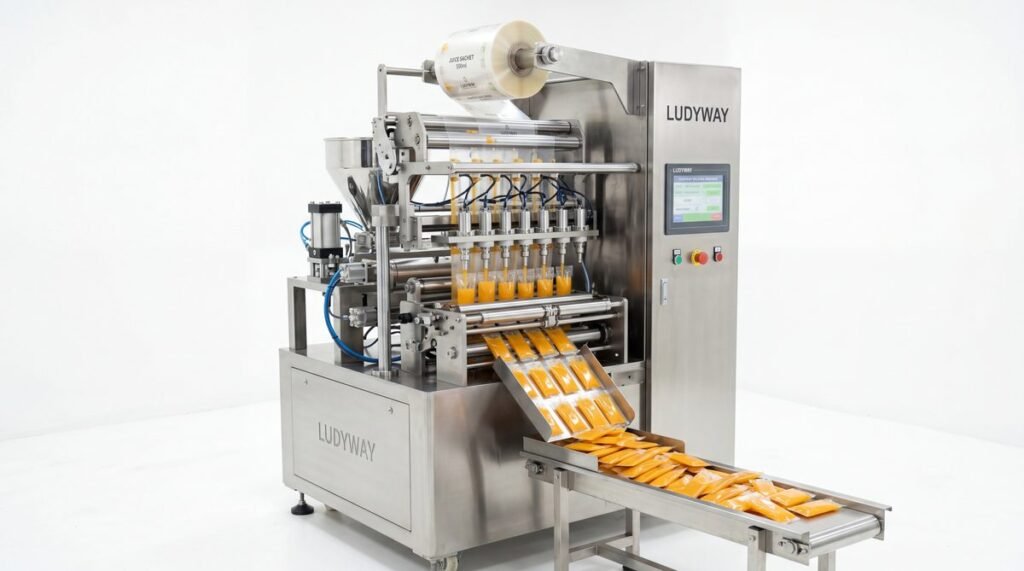
Setting up a ketchup packaging machine production line in the UK requires careful planning, adherence to strict food safety standards, and selecting the right automated equipment. Whether you are launching a new sauce brand or expanding existing manufacturing capacity, this guide walks you through the essential steps from factory layout to full-scale production.
Understanding UK Market Requirements for Ketchup Packaging
Before purchasing any machinery, manufacturers must understand the regulatory landscape. The UK follows retained EU food contact materials legislation, including Regulation (EC) 1935/2004, which mandates that packaging must not transfer constituents to food in unacceptable quantities. Additionally, ketchup is classified as a high-acid food (pH typically below 4.6), requiring packaging materials with excellent barrier properties to prevent oxidation and microbial spoilage.
Key compliance areas include:
- UKCA Marking: Machinery placed on the GB market must carry UKCA marking, demonstrating conformity with UK Supply of Machinery (Safety) Regulations 2008.
- BRCGS Certification: Most UK retailers require suppliers to achieve BRC Global Standards for packaging and food safety.
- Shelf-life validation: Multi-layer laminate films for sachets and pouches must be tested for oxygen and moisture transmission rates under accelerated storage conditions.
Choosing the Right Ketchup Packaging Formats
The UK condiment market spans multiple packaging formats. Your machine selection must match your target distribution channels:
| Packaging Format | Target Market | Filling Volume Range | Typical Machine Type |
|---|---|---|---|
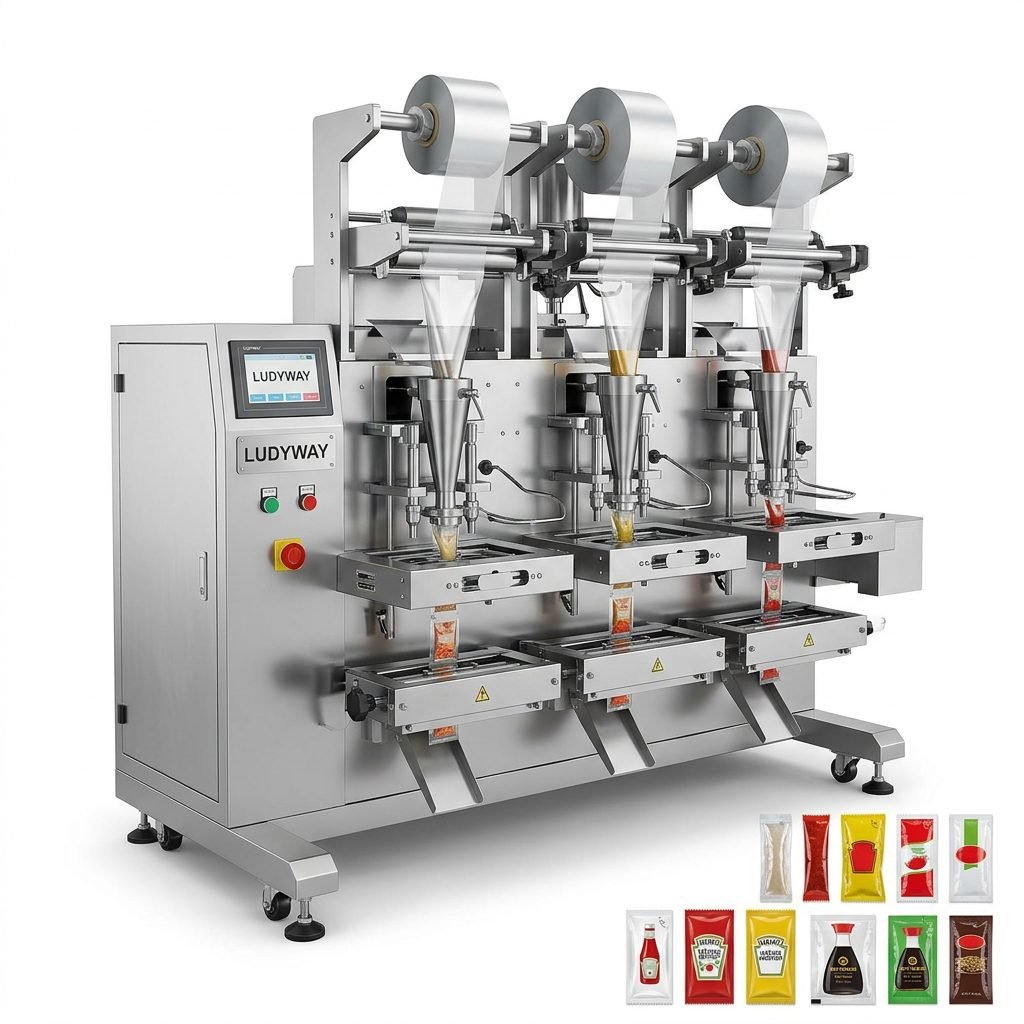
| Sachets (3-20g) | Foodservice, takeaways, travel | 3ml – 25ml | Multi-lane stick pack / sachet machine |
| Stick Packs | Retail, meal kits, on-the-go | 10ml – 50ml | High-speed multi-lane stick pack machine |
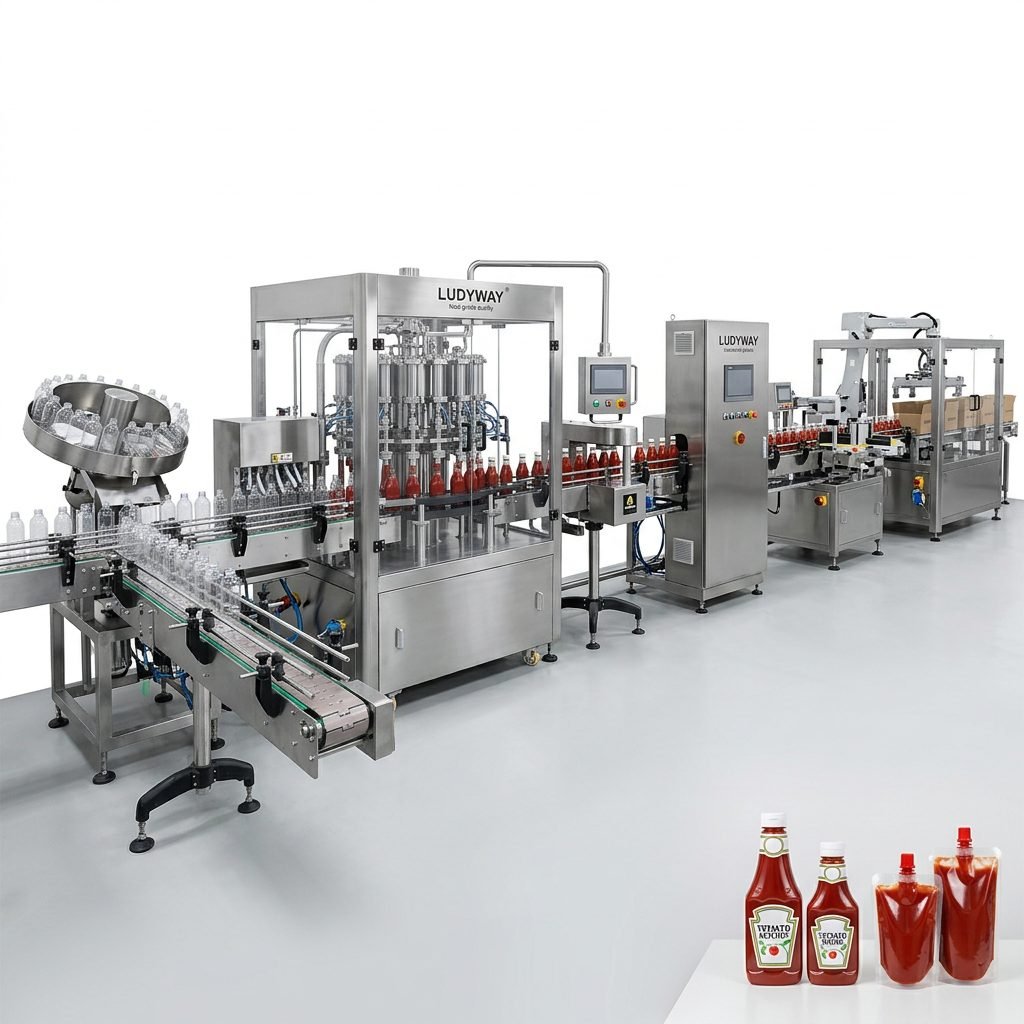
| Squeeze Bottles | Retail, household | 250ml – 1L | Liquid filling and capping line |
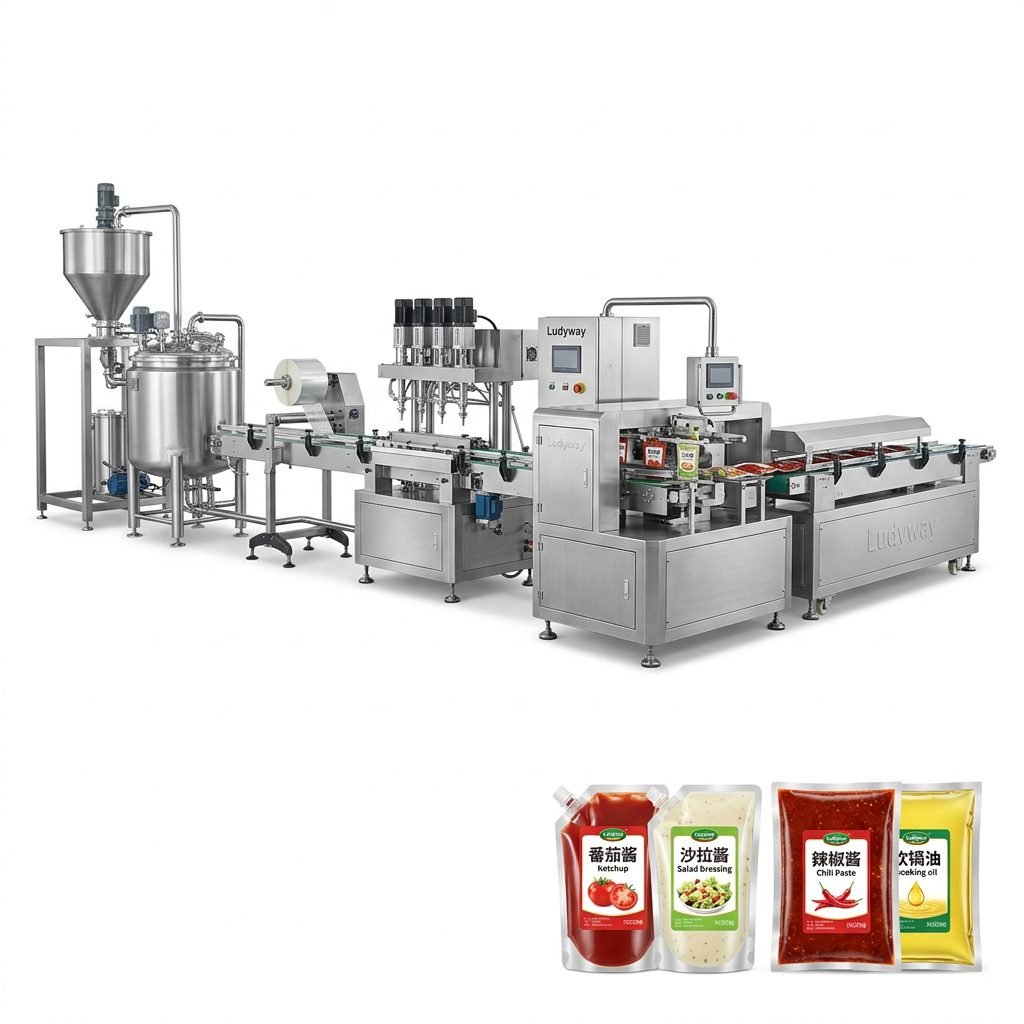
| Pouches | Premium retail, bulk foodservice | 100ml – 1kg+ | Premade pouch filling and sealing system |
Production Line Configuration: Stage by Stage
A complete tomato ketchup packaging line involves several integrated stages. Understanding each component helps in selecting harmonised equipment that delivers consistent throughput.
1. Product Preparation and Holding
Ketchup requires temperature-controlled holding tanks (typically maintained at 85-90°C for hot-fill processes) with continuous agitation to prevent separation. Stainless steel 316L tanks with CIP (Clean-in-Place) capability are essential for UK food manufacturing hygiene standards.
2. Transfer and Filtration
Positive displacement pumps transfer product through inline strainers or magnetic filters to remove any particulates before filling. For ketchup containing seeds or spices, consider high-viscosity liquid filling systems from experienced packaging machinery manufacturers with large-diameter product pathways.
3. Primary Packaging – Filling and Sealing
This is the core of your operation. Depending on your chosen format, you will need:
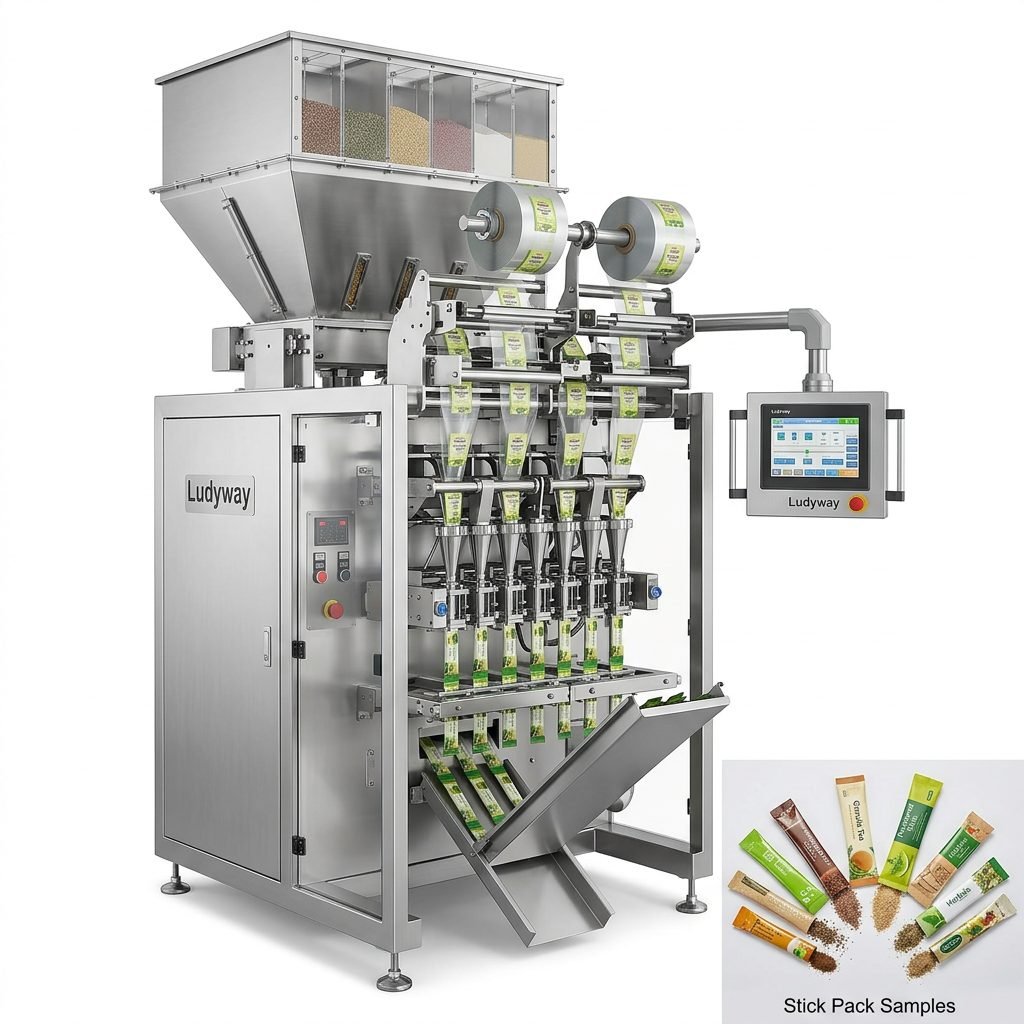
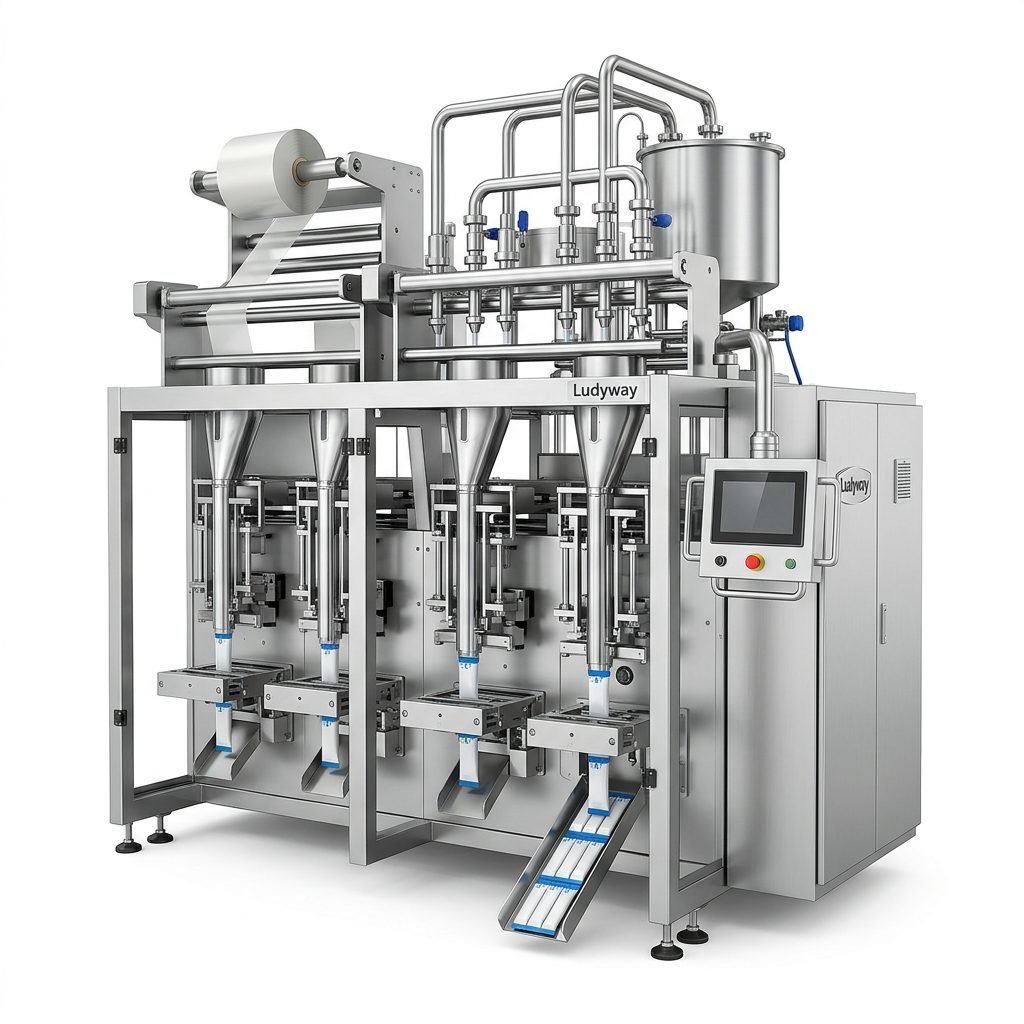
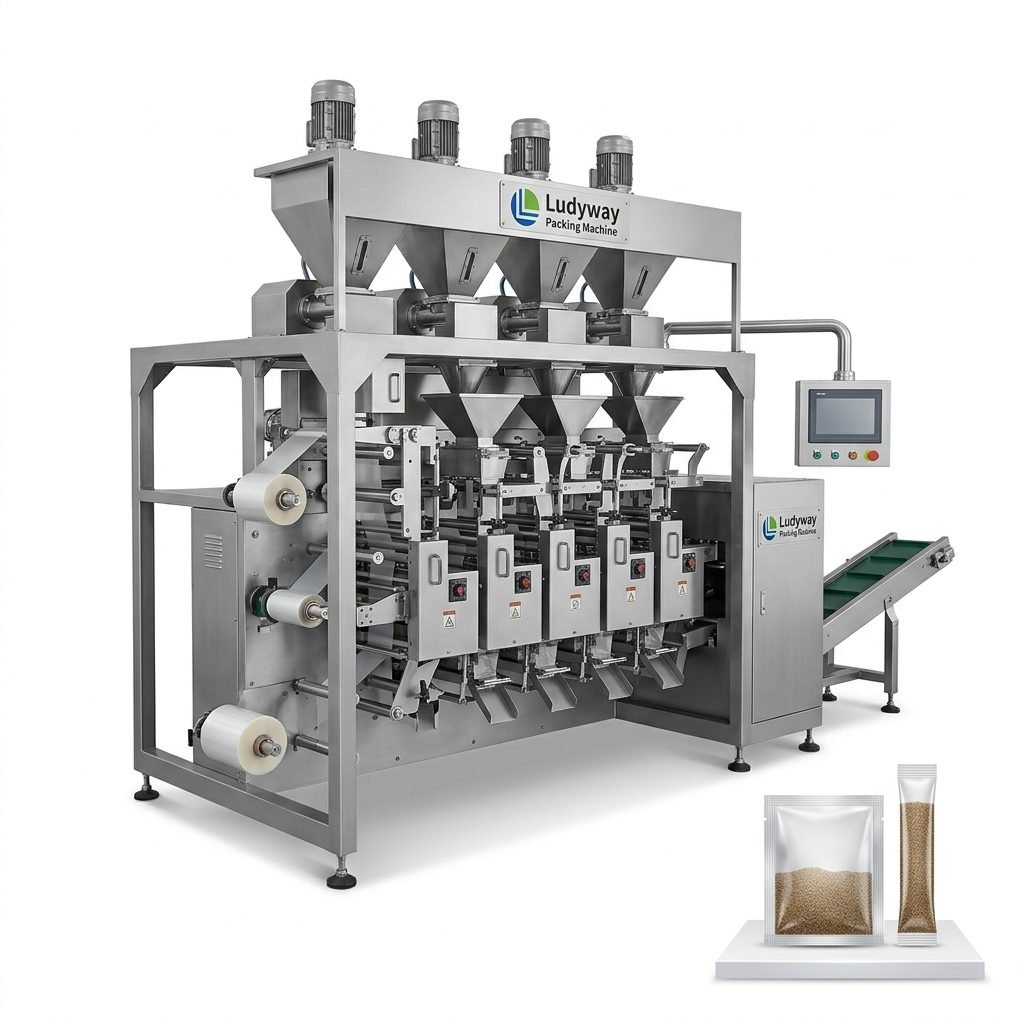
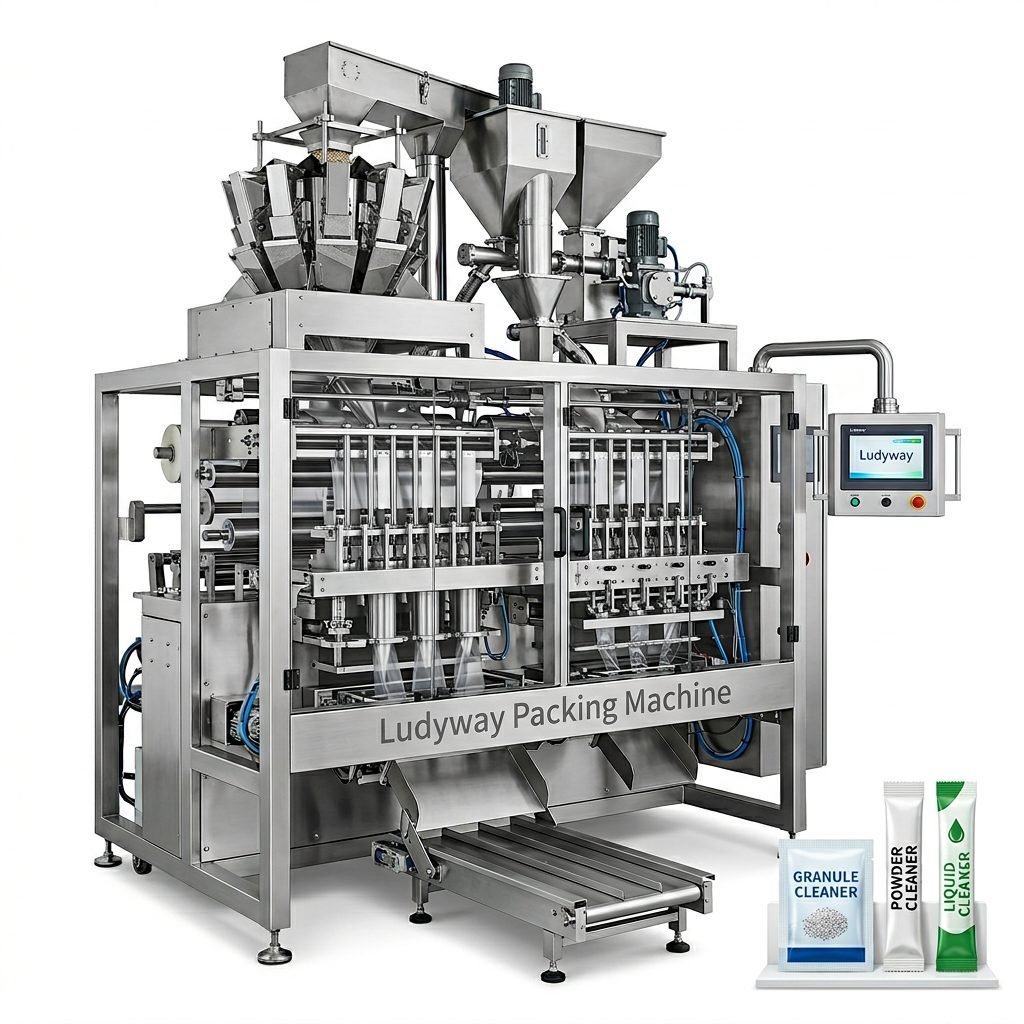
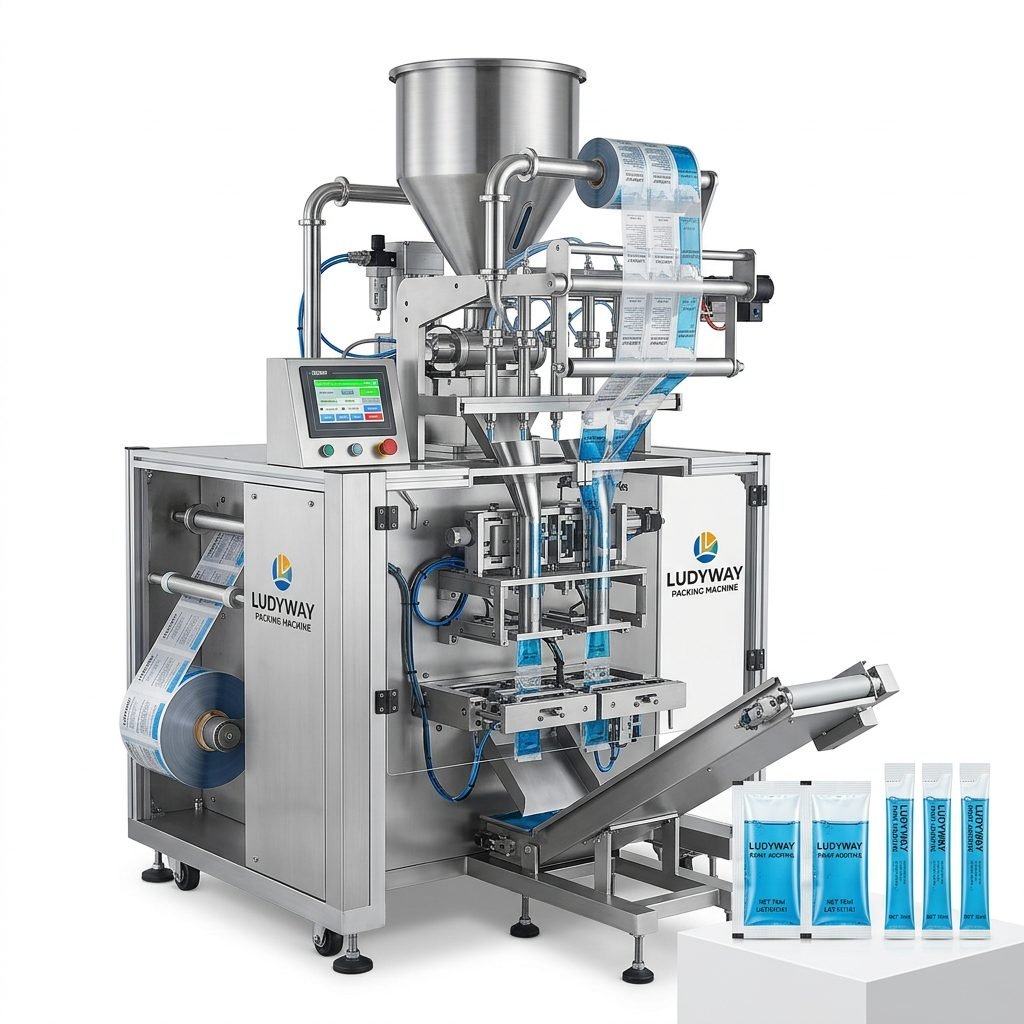
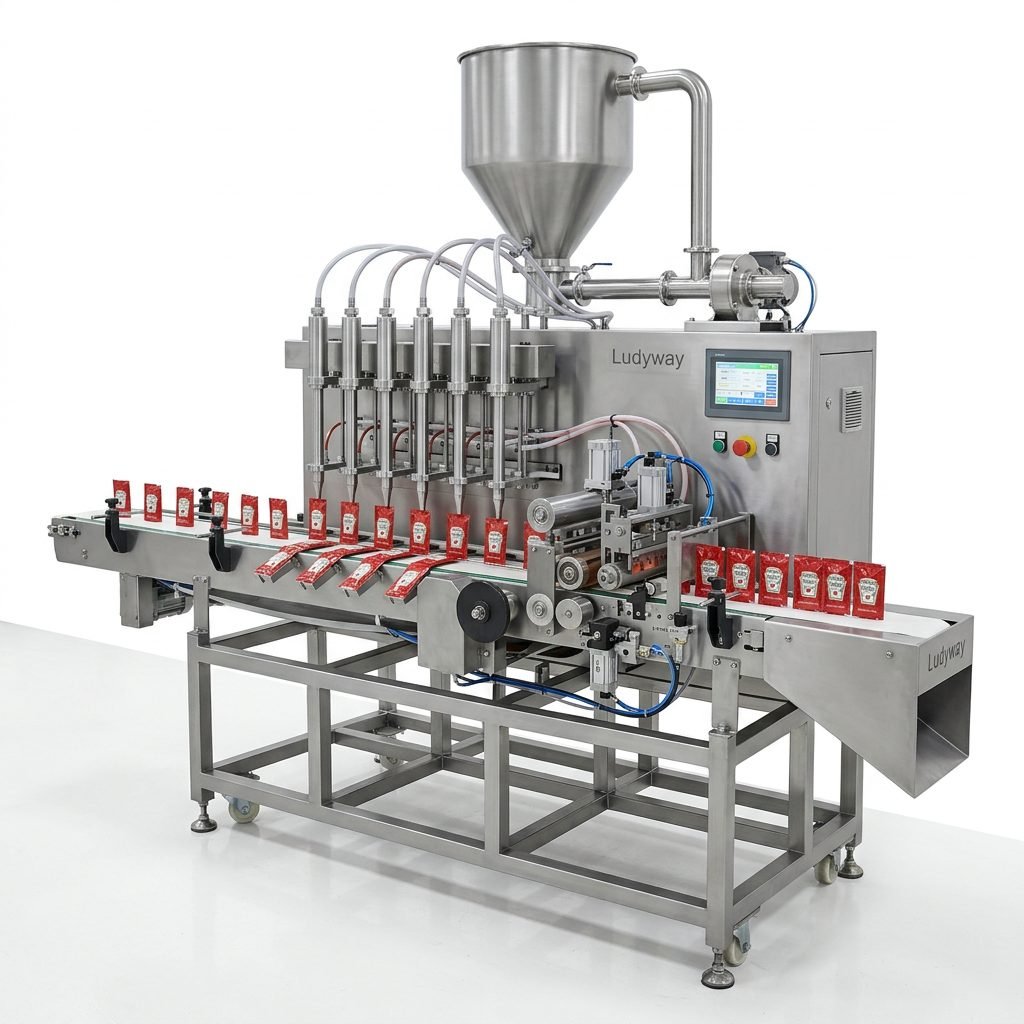
- Multi-lane sachet machines: For high-speed ketchup sachet production, typically 4-12 lanes running at 40-60 cycles per minute per lane. Look for servo-driven vertical form-fill-seal (VFFS) technology with positive displacement piston fillers calibrated for viscous sauces.
- Bottle filling lines: Rotary or inline piston fillers with automatic capping. Hot-fill capabilities allow filling at elevated temperatures to ensure sterility.
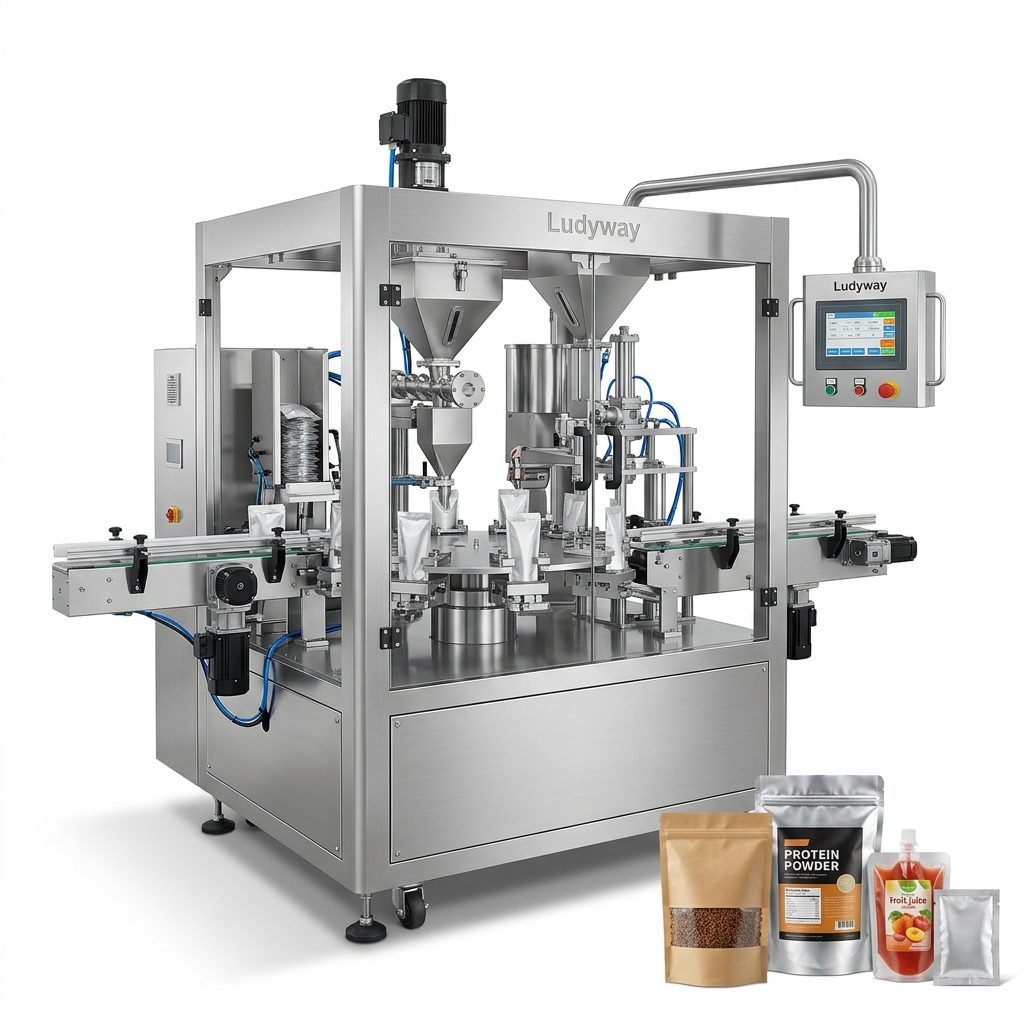
- Pouch fillers: Premade pouch machines with spout insertion for stand-up pouches offer growing retail appeal in UK supermarkets.

4. Secondary Packaging and End-of-Line
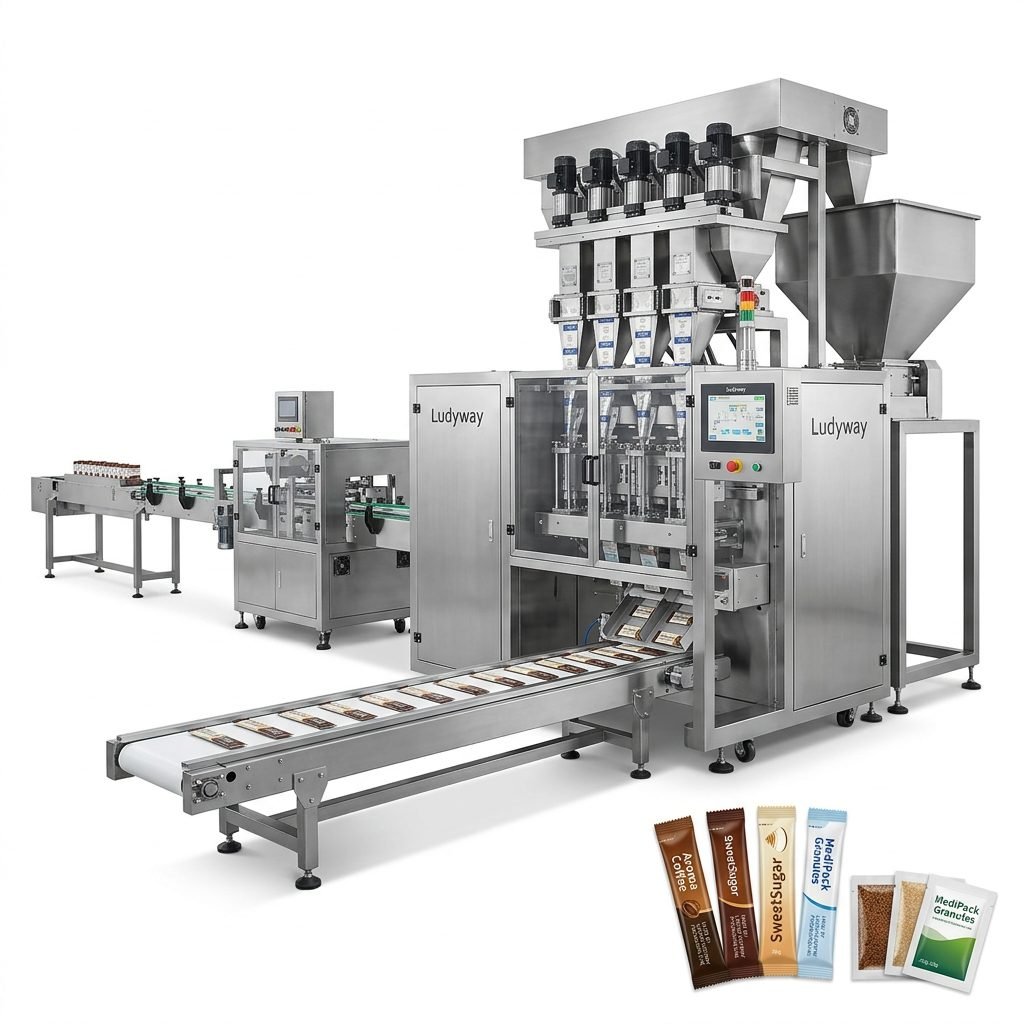
After primary packaging, sachets or pouches are collated, counted, and packed into cartons or cases. Automated cartoning machines and robotic palletizing systems for packaging lines reduce manual handling and increase throughput. Consider adding:
- Automatic checkweighers to ensure fill weight compliance
- Metal detectors and X-ray inspection for contaminant detection
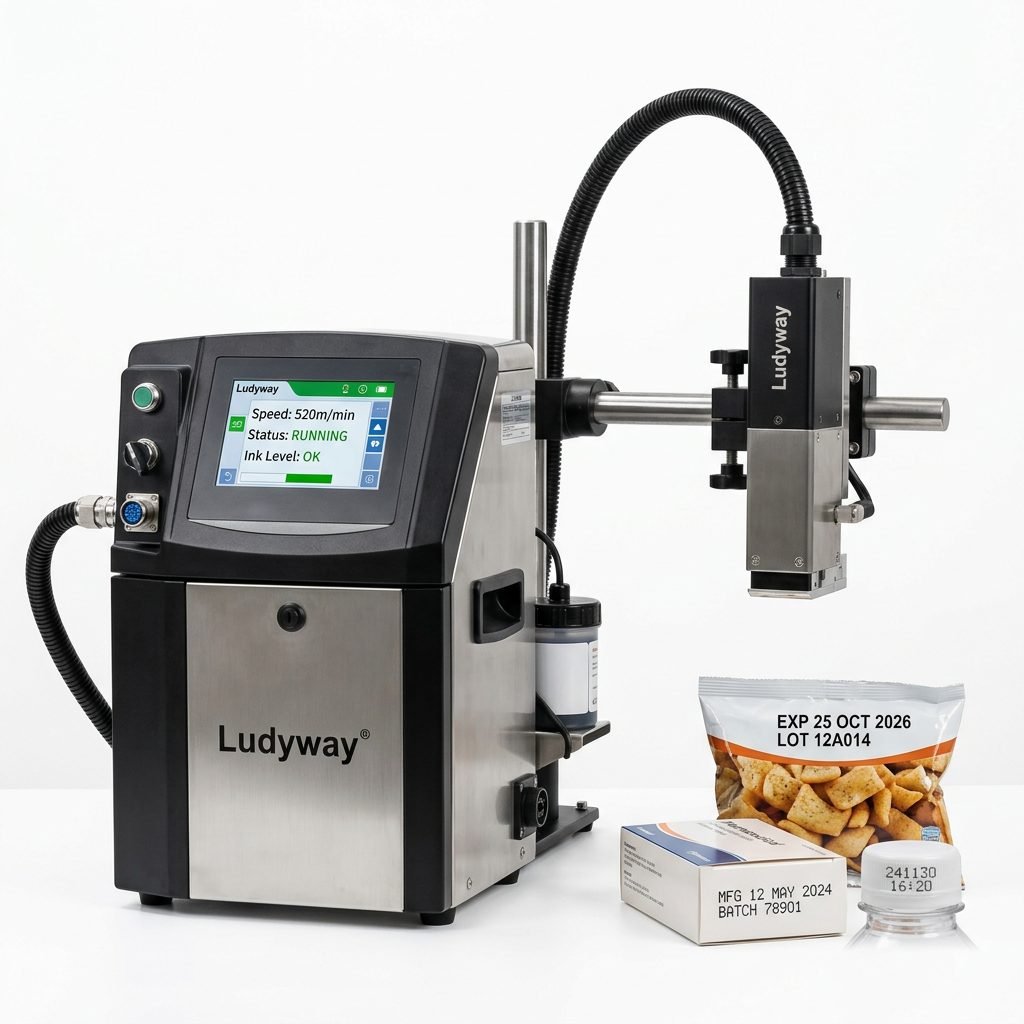
- Thermal inkjet printers for batch coding and traceability per UK Food Information Regulations
Key Technical Specifications to Evaluate
When comparing ketchup packaging machinery, suppliers should provide detailed specifications. Use this checklist:
| Specification Parameter | Recommended Range | Why It Matters |
|---|---|---|
| Filling Accuracy | ±1% or better | Reduces product giveaway and ensures regulatory compliance |
| Viscosity Handling | Up to 50,000 cP | Ketchup viscosity varies significantly between recipes |
| Production Speed | 100-800 packs/min (format dependent) | Match throughput to demand forecasts and shift patterns |
| CIP Compatibility | Full CIP cycle in < 30 minutes | Minimises downtime between product changeovers |
| Construction Material | Stainless steel 304/316L, food-grade seals | Acid resistance and long service life |
Factory Layout and Utility Considerations
Planning the physical installation of a ketchup packaging line in a UK facility requires attention to several infrastructure elements:
- Floor space: A typical multi-lane sachet line with secondary packaging requires approximately 80-150 m², including operator walkways and maintenance access.
- Compressed air: Most automated packaging machines require clean, dry compressed air at 6-8 bar. Plan for air treatment systems to remove moisture and oil contaminants.
- Electrical supply: UK industrial three-phase 400V, 50Hz is standard. Verify that all equipment is compatible; many global suppliers offer voltage customisation.
- Drainage and washdown: Wet production environments need sloped floors with adequate drainage. Specify IP65 or IP66 rated electrical enclosures for washdown zones.
- Ventilation: Hot-fill processes generate steam and heat. Adequate HVAC maintains safe working conditions and prevents condensation on packaging materials.
Selecting a Packaging Machine Supplier for UK Operations
Choosing the right equipment partner is just as critical as the technical specifications. Consider these factors when evaluating suppliers:
- UK-based service support: While many high-quality manufacturers are based overseas, ensure they offer localised technical support, spare parts availability, and rapid response times. Ludyway Machinery has extensive international project experience with customers in over 100 countries, providing turnkey packaging solutions backed by a 30-year track record.
- CE/UKCA documentation: Request full technical files including risk assessments, declaration of conformity, and user manuals in English.
- Factory acceptance testing (FAT): Arrange video or in-person FAT before shipment. Test the machine with your actual ketchup formulation to validate fill accuracy and seal integrity.
- Operator training: Comprehensive training programmes should cover operation, changeover procedures, basic maintenance, and troubleshooting.
- After-sales warranty: Standard 12-month warranties are common; extended service contracts can provide peace of mind for critical production lines.
Regulatory Resources and Industry Standards
Stay informed with relevant UK and international packaging regulations through these authoritative sources:
| Resource Title | Coverage Area |
|---|---|
| PMMI Business Intelligence Library | Packaging machinery market research and industry trends |
| State of the Industry 2025 Report | Annual packaging sector performance data |
| FDA – Packaging and Food Contact Substances | Food contact material compliance guidance |
| Flexible Packaging Association Resources | Flexible packaging standards and sustainability data |
| European Commission – Packaging Waste | EU packaging waste regulations affecting UK exporters |
| PACK EXPO International | Leading packaging trade show for technology evaluation |
Cost Considerations and ROI
Investing in a ketchup packaging line represents a significant capital outlay. Typical budget ranges in the UK market include:
- Entry-level single-lane sachet machine: £25,000 – £60,000 (suitable for startups and small-scale production)
- Mid-range multi-lane system (4-6 lanes): £80,000 – £200,000
- High-speed turnkey line (8-12 lanes + secondary packaging): £250,000 – £800,000+ depending on automation levels
Calculate ROI based on: labour savings, reduced product giveaway, increased throughput, and lower packaging material waste. Many UK manufacturers report payback periods of 18-36 months for fully automated lines. Remember to factor in import duties and VAT when sourcing machinery from non-UK suppliers.
Commissioning and Validation
Once your ketchup packaging machine arrives at your UK facility, a structured commissioning process ensures smooth ramp-up to full production:
- Installation qualification (IQ): Verify that equipment is installed correctly per manufacturer specifications and UK regulatory requirements.
- Operational qualification (OQ): Test machine functions across defined operating ranges, including speed, temperature, and filling accuracy.
- Performance qualification (PQ): Run production trials with your ketchup product to demonstrate consistent quality output over sustained periods.
- Shelf-life testing: Conduct accelerated aging studies on packaged samples to confirm seal integrity and barrier performance throughout the target shelf life (typically 12-18 months for ketchup sachets).
Sustainability and Future-Proofing
UK consumers and retailers increasingly demand sustainable packaging. When setting up your ketchup packaging line, consider these forward-looking options:
- Mono-material laminates: Unlike traditional multi-layer films, mono-material structures (e.g., all-PE) are more recyclable. Check that your machine can seal newer sustainable films, which often require different heat-seal parameters.
- Lightweighting: Reduce film thickness without compromising barrier properties. Modern servo-driven machines offer precise tension control for thin-gauge materials.
- Plastic Packaging Tax compliance: UK Plastic Packaging Tax (effective April 2022) applies to packaging with less than 30% recycled content. Factor this into your packaging material procurement strategy.
- Energy-efficient drives: Look for machines with IE3 or IE4 premium efficiency motors and regenerative braking systems that reduce electricity consumption.
Final Checklist Before Investment Decision
Before signing any purchase agreement for your UK ketchup packaging line, complete this due diligence:
- Obtain at least three competitive quotations with detailed technical proposals.
- Request and contact references from existing users in similar applications.
- Verify UKCA or CE certification validity and the scope of the technical file.
- Confirm spare parts availability and lead times for critical components.
- Agree on acceptance criteria, payment milestones, and delivery timeline in writing.
- Plan operator recruitment and training schedules before machine arrival.
- Ensure your facility meets all utility and hygiene infrastructure requirements.
By following this structured approach to evaluating, selecting, and commissioning your equipment, you can establish a reliable, high-performance ketchup packaging operation that meets UK food industry standards and delivers consistent product quality to your customers.