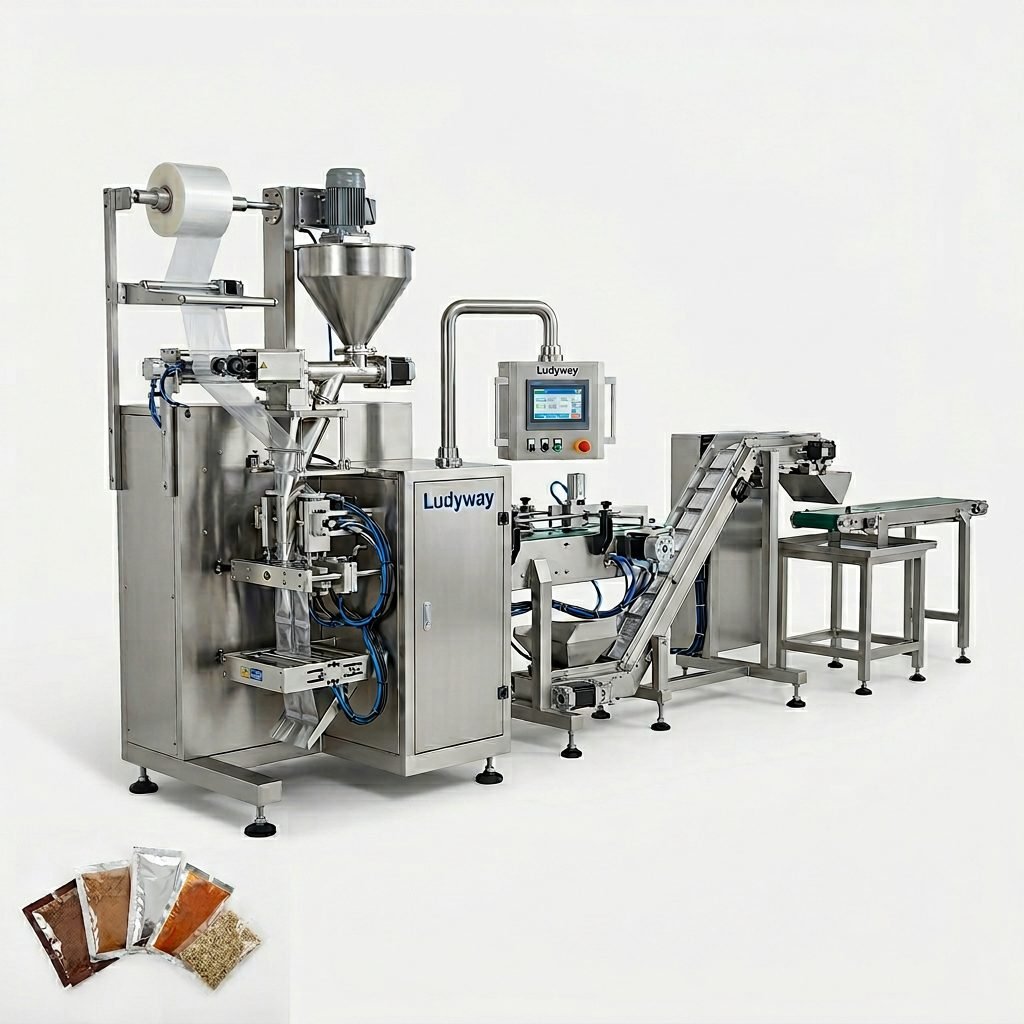
The sugar packaging industry in Asia is experiencing rapid transformation. With rising demand for convenience foods and single-serve formats across Southeast Asia, South Asia, and East Asia, manufacturers are increasingly investing in automated sugar packaging machine production lines. According to the PMMI State of the Industry Report, the Asia-Pacific region continues to lead global packaging machinery growth, driven by urbanization and changing consumer preferences for portion-controlled sugar products.
Setting up a complete sugar packaging production line in Asia requires careful planning across equipment selection, regulatory compliance, facility preparation, and operational workflow design. This guide covers every critical aspect to help you build an efficient and scalable packaging operation.
Understanding Sugar Packaging Formats in Asia
Before selecting equipment, it is essential to understand the packaging formats that dominate Asian markets. The most common formats include:
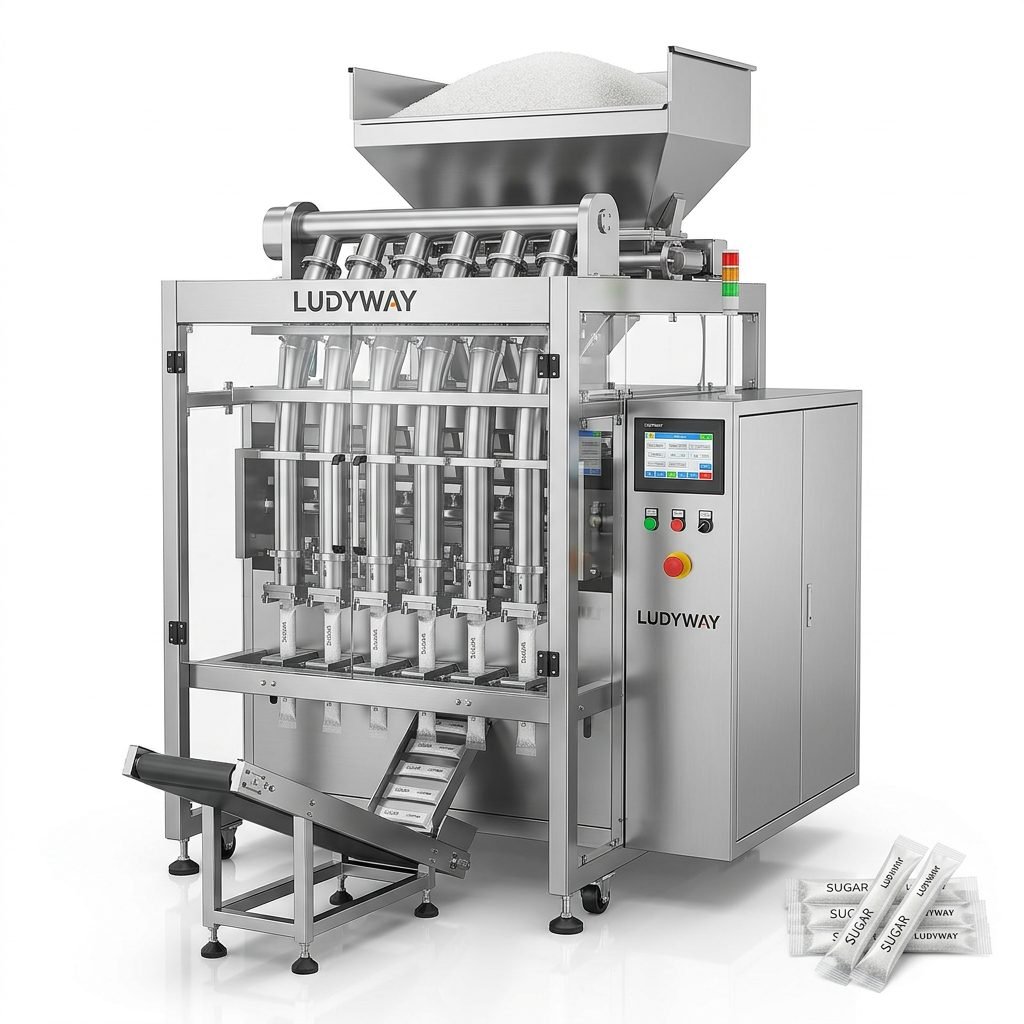
- Stick packs – Narrow single-serve sachets popular in cafes, hotels, and food service across Japan, South Korea, and Southeast Asia
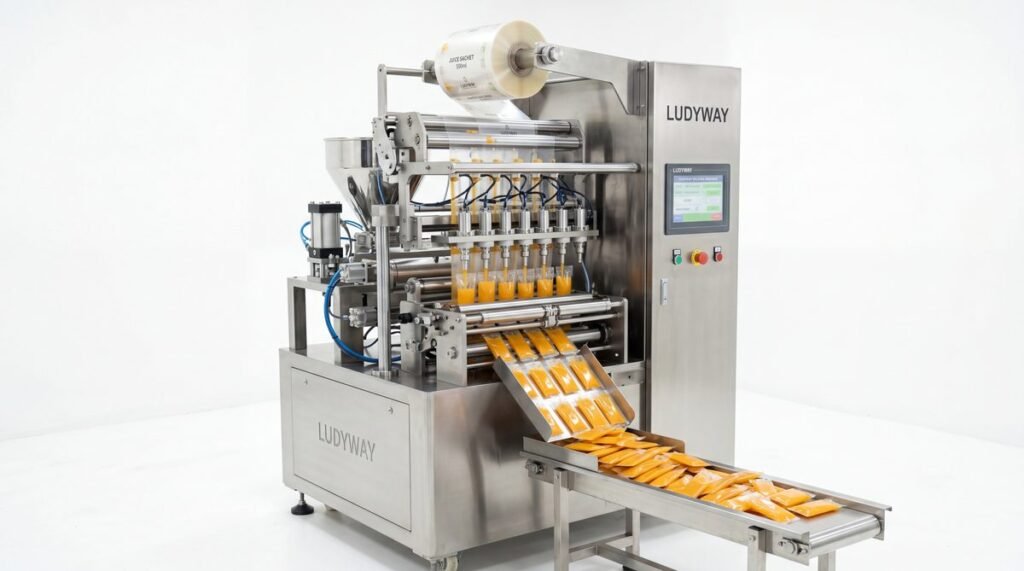
- Sachet packs – Wider single-use pouches widely used in India, Indonesia, and the Philippines for retail sugar
- Pillow pouches – Standard format for household sugar in markets like China and Thailand
- Bulk bags – 1kg to 25kg bags for food processing and industrial applications
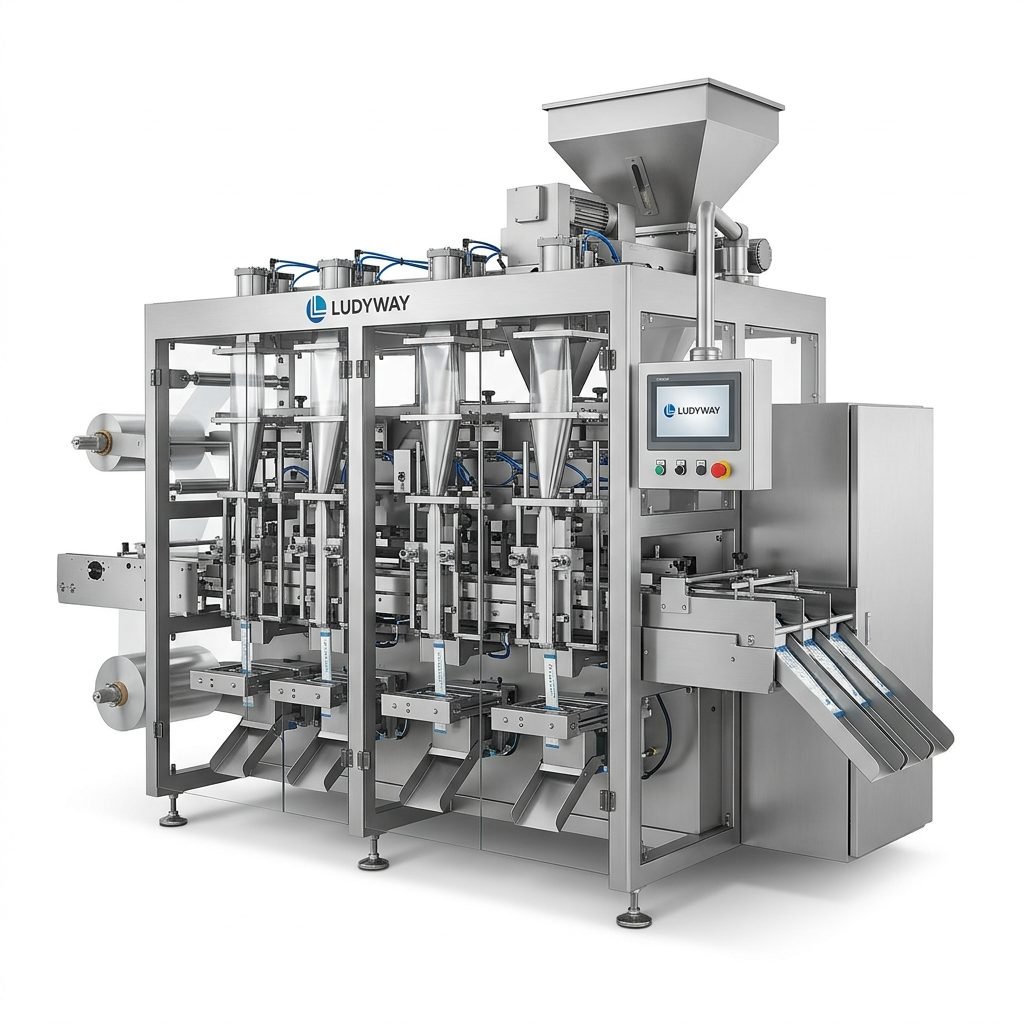
Your choice of packaging format directly influences the type of packaging machinery required. Multi-lane stick pack machines are ideal for high-volume single-serve sugar production, while vertical form-fill-seal (VFFS) systems handle larger pouch formats efficiently.
Core Equipment for a Sugar Packaging Production Line
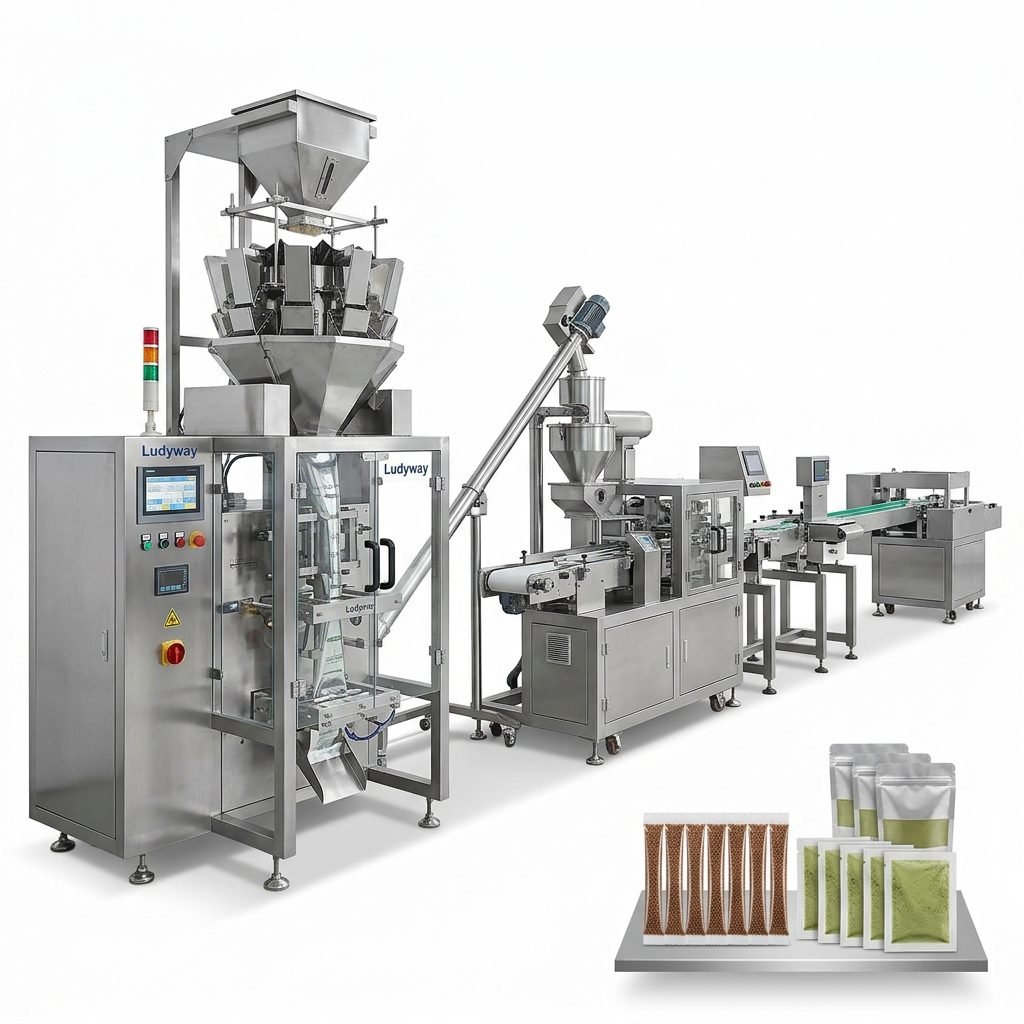
A fully integrated sugar packaging machine production line consists of several interconnected systems. Understanding each component helps you specify the right configuration for your production goals.
Feeding and Conveying Systems
Granulated sugar requires precise feeding mechanisms to ensure consistent flow without clogging or bridging. Vibratory feeders and bucket elevators are commonly used to transport sugar from storage hoppers to the weighing and filling stations. The conveying system must be designed to minimize dust generation and maintain hygienic conditions, especially for food-grade sugar products.
Multi-Head Weighing Systems
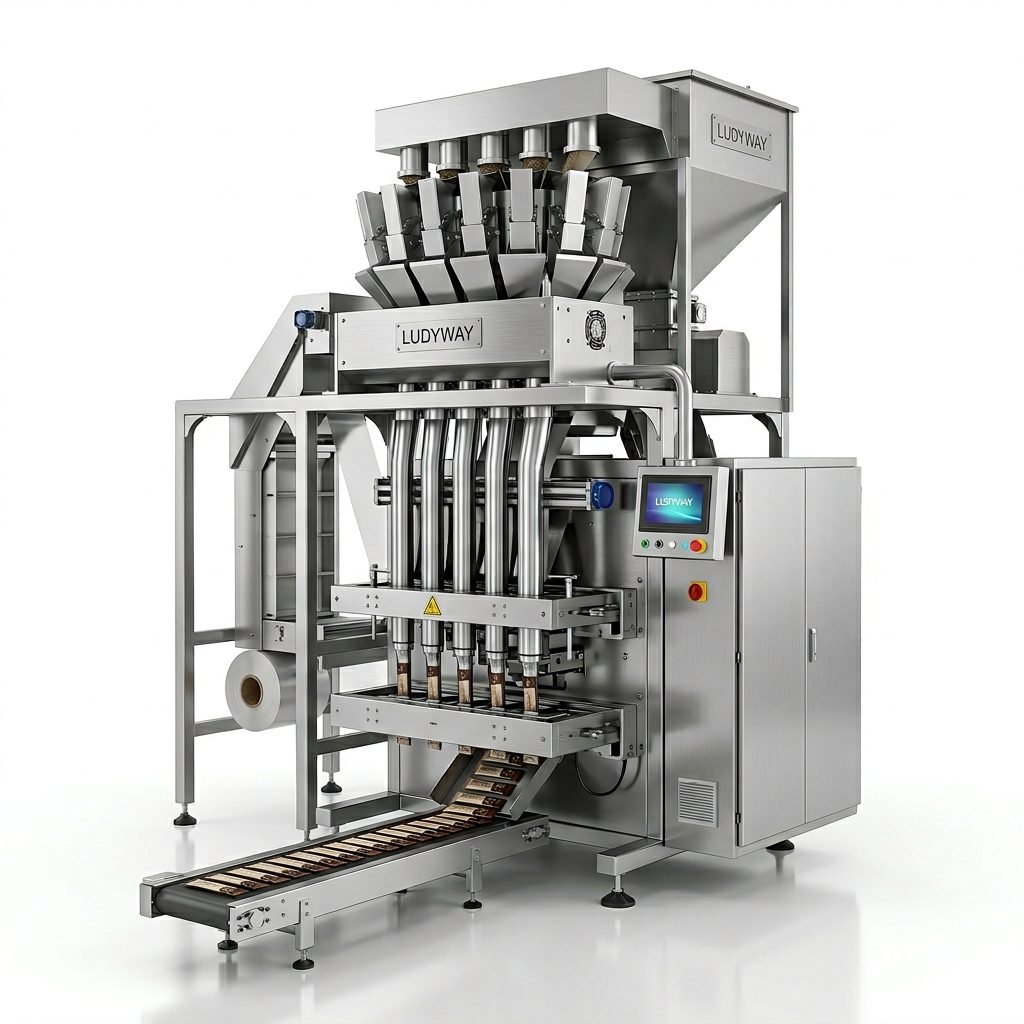
Accuracy in sugar packaging is critical for both regulatory compliance and cost control. Modern ISO-compliant packaging standards recommend multi-head weighers for granulated sugar, achieving precision within ±0.5g for small sachets and ±2g for larger pouches. These systems combine speed with accuracy, enabling throughput rates of up to 80 packs per minute per lane in multi-lane configurations.
Vertical Form-Fill-Seal Machines
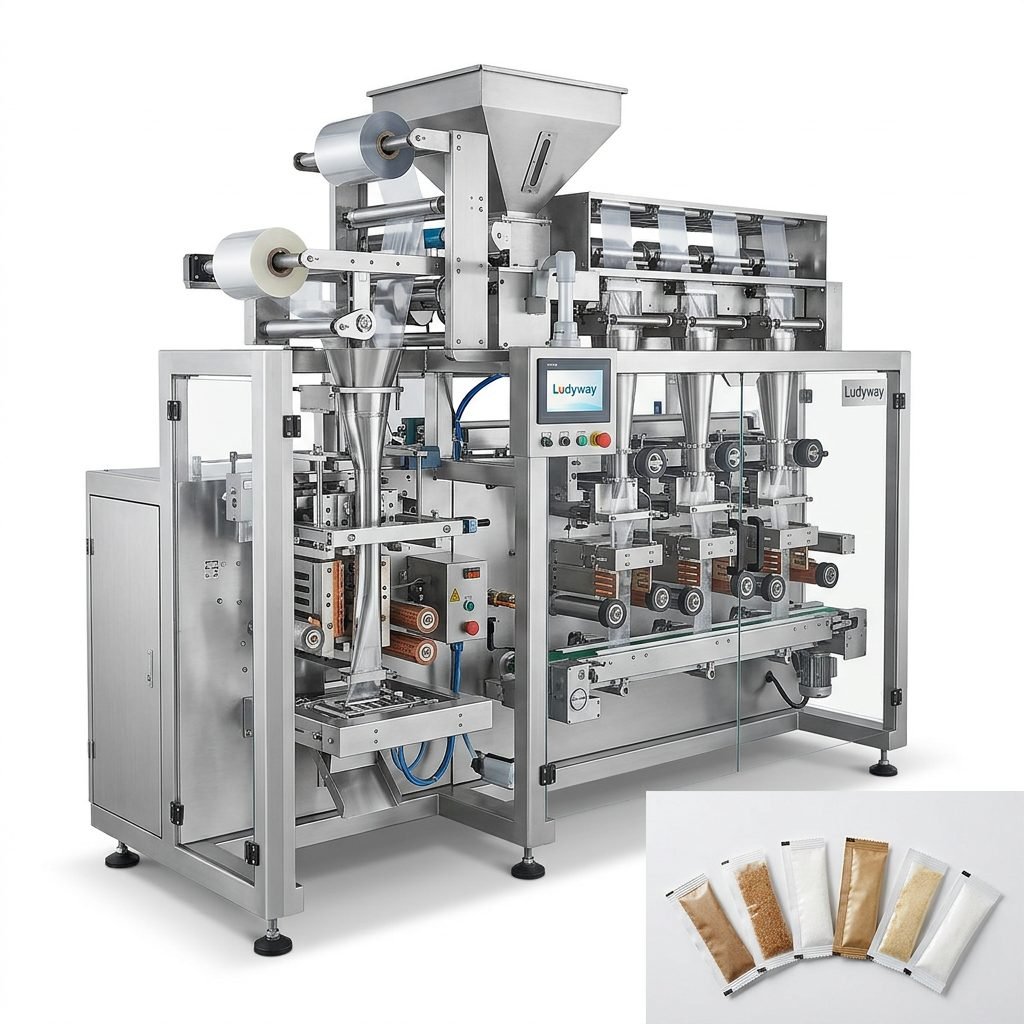
The VFFS machine is the heart of most sugar packaging lines. These machines form pouches from roll stock film, fill them with precisely weighed sugar, and seal them in a continuous operation. Key features to evaluate include:
- Sealing temperature control – Precise heat regulation prevents film damage and ensures hermetic seals
- Film registration accuracy – Maintains consistent print alignment on pre-printed packaging
- Quick-changeover capability – Enables switching between different pouch sizes with minimal downtime
- Dust extraction integration – Keeps sealing areas clean from sugar particulates
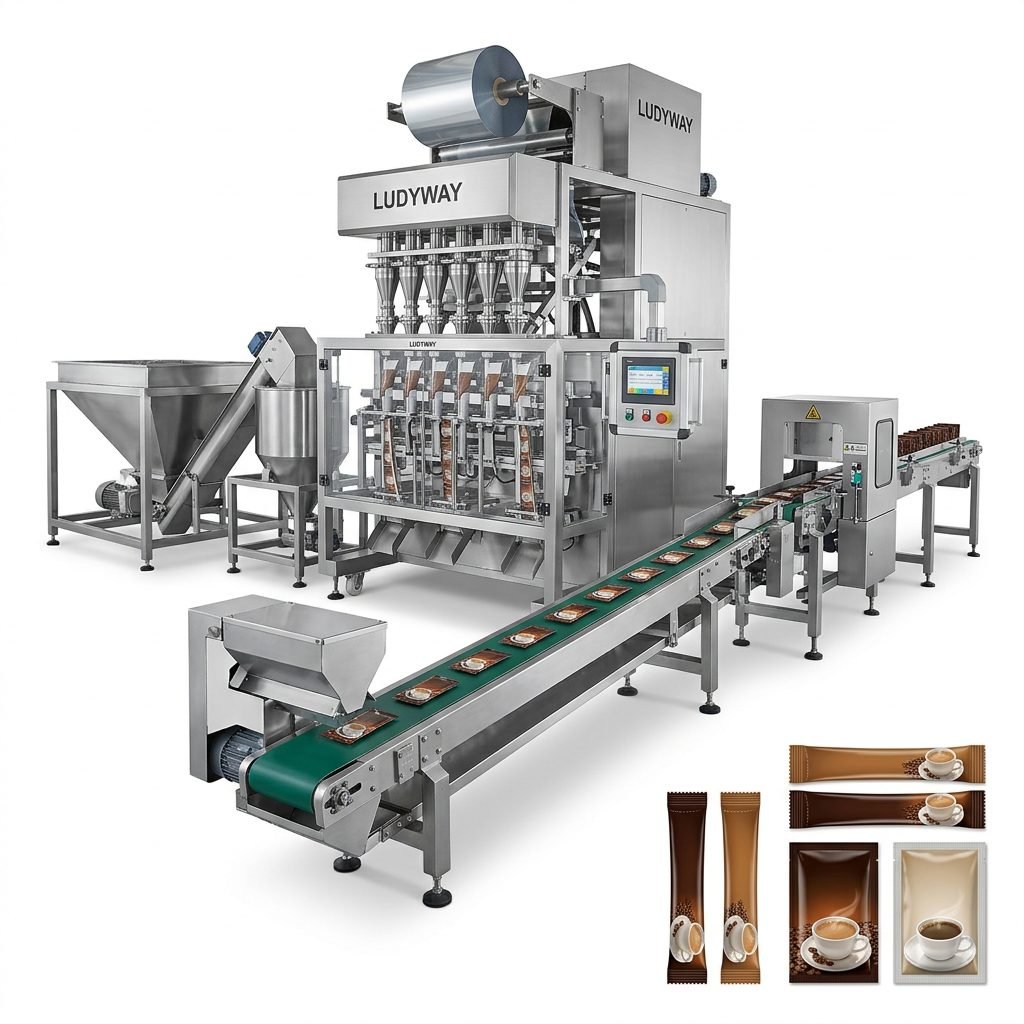
Multi-Lane Stick Pack Systems
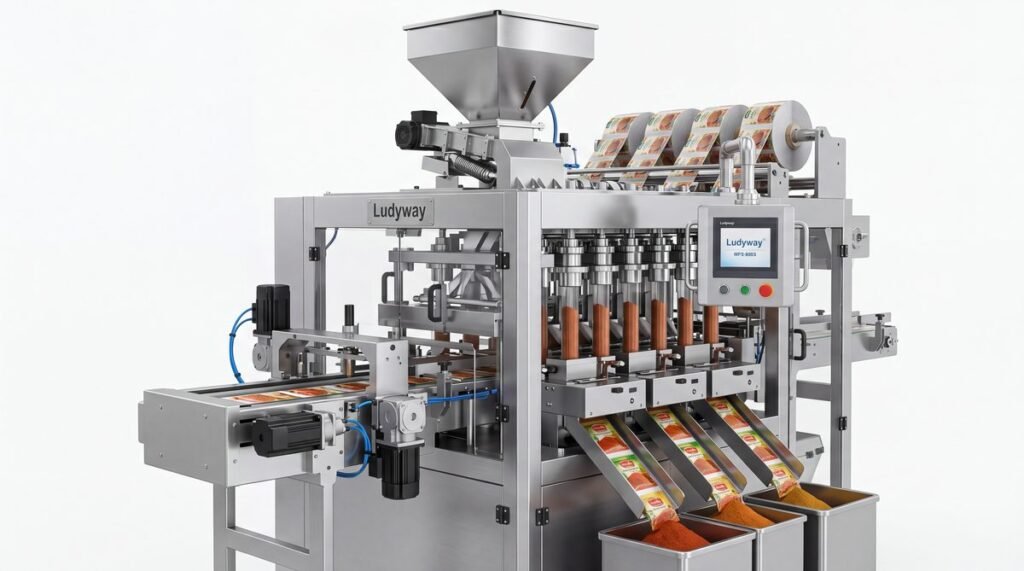
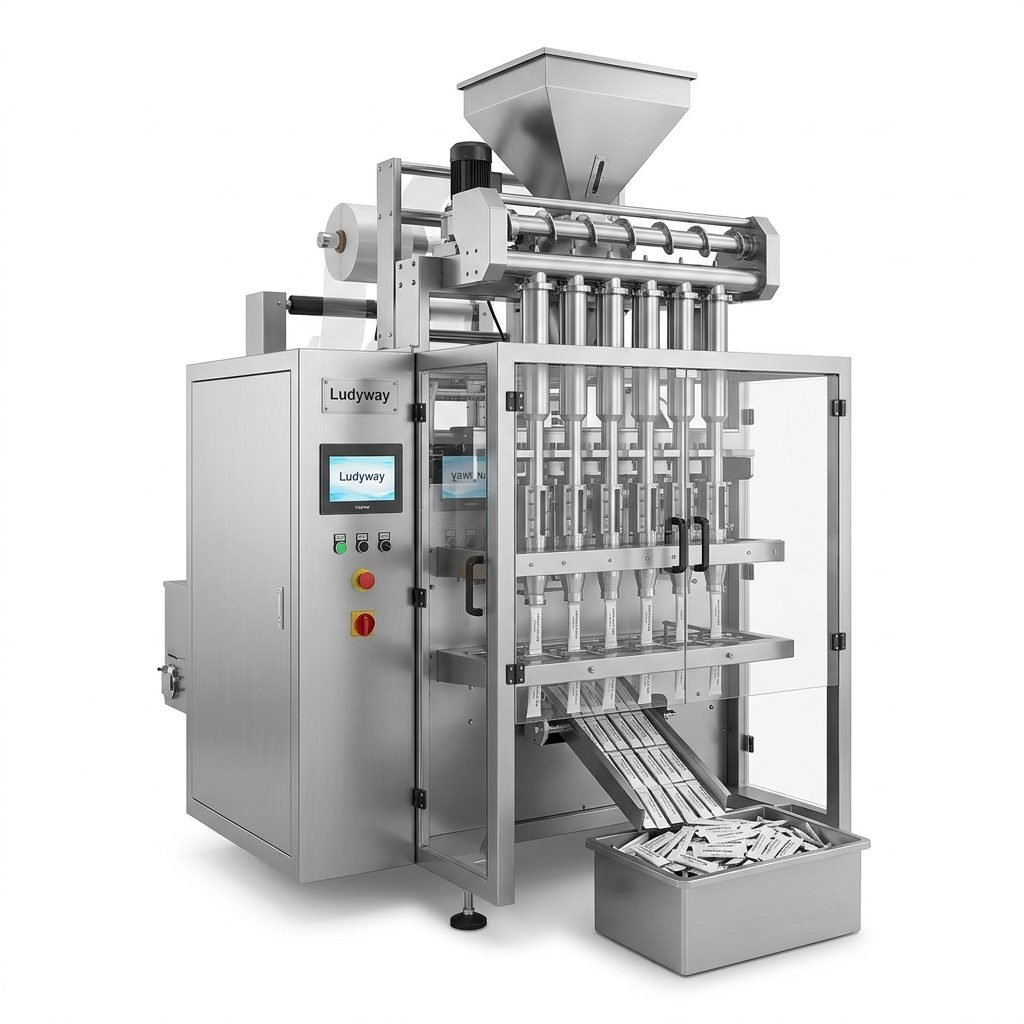
For high-volume sugar stick pack production, multi-lane stick pack machines offer unmatched efficiency. These systems run 4 to 20 lanes simultaneously, producing up to 1,600 stick packs per minute. They are particularly suited for markets with high demand for single-serve sugar portions, such as the hotel and food service sectors across Asia.
Cartoning and End-of-Line Equipment
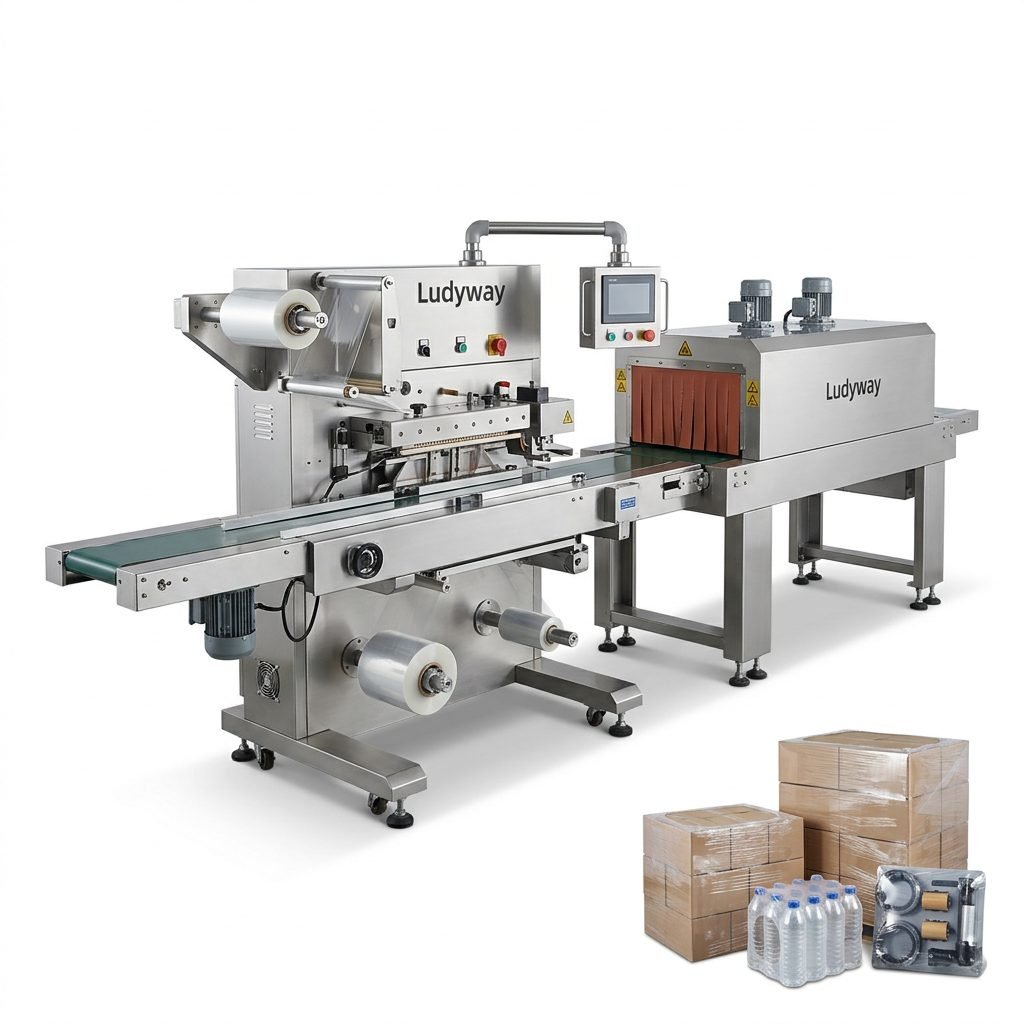
After packaging, automated cartoning systems collate sachets or stick packs into display boxes or shipping cartons. Case packers, palletizers, and stretch wrapping machines complete the end-of-line automation, reducing manual labor requirements and improving throughput consistency.
Planning Your Production Line Layout
An optimized facility layout is essential for efficient sugar packaging operations. Consider the following principles when designing your production floor in Asia:
Material Flow Design
Raw sugar should enter at one end of the facility and flow through processing, packaging, and warehousing in a logical sequence. This linear flow design minimizes cross-contamination risks and reduces material handling costs. Ensure adequate space between equipment for maintenance access and cleaning procedures.
Clean Room and Hygiene Zones
Food safety regulations across Asia are becoming increasingly stringent. FDA food packaging guidelines and local Asian regulatory frameworks require designated hygiene zones with controlled access. Sugar packaging areas should be separated from raw material storage and finished goods warehouses with appropriate air handling and filtration systems.
Utility Requirements
Sugar packaging lines in Asia require reliable electrical supply (typically 380V three-phase in industrial settings), compressed air for pneumatic systems, and in some cases, nitrogen gas for modified atmosphere packaging. Plan utility connections during the facility design phase to avoid costly retrofitting.
Regulatory Compliance in Asian Markets
Each Asian country has specific regulations governing food packaging. Understanding these requirements before purchasing equipment ensures smooth market entry. Key regulatory frameworks include:
- China – GB standards for food packaging materials and labeling requirements
- India – FSSAI regulations covering packaging materials and nutritional labeling
- ASEAN countries – Harmonized food safety standards under the ASEAN Food Safety Policy
- Japan – Food Sanitation Act requirements for packaging materials and additives
- South Korea – MFDS standards for food contact materials
Working with equipment suppliers who understand these regulatory nuances can significantly accelerate your market entry. The Flexible Packaging Association provides comprehensive resources on packaging compliance across jurisdictions.
Cost Analysis and Budget Planning
Understanding the capital and operational costs involved in setting up a sugar packaging line is crucial for accurate financial planning. The following table outlines typical cost ranges for different production scales in Asia:
| Production Scale | Output Range | Estimated Equipment Cost (USD) | Typical Payback Period |
|---|---|---|---|
| Small / Entry Level | 30-60 packs/min | $40,000 – $120,000 | 18-24 months |
| Medium / Regional | 60-200 packs/min | $120,000 – $350,000 | 12-18 months |
| Large / Industrial | 200-800+ packs/min | $350,000 – $1,200,000 | 8-14 months |
| Full Turnkey Line | Custom configuration | $500,000 – $2,500,000+ | 10-16 months |
Note: Costs vary significantly based on automation level, country of installation, and specific configuration requirements. Operational costs including labor, maintenance, and packaging materials should be factored separately.
Common Challenges When Setting Up in Asia
International manufacturers face several common obstacles when establishing sugar packaging operations in Asian markets:
Supply Chain and Spare Parts Availability
Ensure your chosen equipment supplier has a reliable spare parts distribution network within Asia. Downtime caused by unavailable replacement parts can severely impact production schedules. Leading suppliers maintain regional service centers and parts warehouses in strategic Asian locations to support uninterrupted operations.
Humidity and Climate Considerations
Sugar is highly hygroscopic, absorbing moisture from humid air common in tropical Asian climates. Your packaging line should incorporate dehumidification systems and climate-controlled production environments. Hermetic sealing technology and moisture-barrier packaging films are essential for maintaining product quality in markets like Indonesia, Thailand, and Vietnam.
Workforce Training and Skill Development
Operating automated packaging machinery requires technical skills that may need development in certain Asian markets. Partner with equipment suppliers that offer comprehensive training programs and ongoing technical support. Investing in operator training at the outset reduces long-term maintenance costs and improves overall equipment effectiveness.
Selecting the Right Equipment Partner
Choosing a reliable packaging machinery supplier is one of the most consequential decisions in your project. Evaluate potential partners based on these criteria:
- Industry experience – Look for manufacturers with demonstrated expertise in sugar and granule packaging applications
- Asian market presence – Suppliers with regional service teams and installation experience across Asia offer faster support
- Customization capabilities – Your production line should be tailored to your specific packaging formats and output requirements
- After-sales support – Comprehensive warranty, remote diagnostics, and on-site service are essential for long-term reliability
- Compliance knowledge – Equipment should meet relevant ISO packaging and distribution standards
Ludyway is one of the largest packaging machine manufacturers in China, offering specialized sugar packaging solutions with multi-lane stick pack and sachet systems deployed across over 100 countries. When evaluating suppliers, request detailed proposals with total cost of ownership calculations that include installation, training, spare parts, and estimated maintenance over the equipment lifecycle.
Installation and Commissioning Timeline
A typical sugar packaging line installation in Asia follows a structured timeline. Proper planning ensures minimal disruption to your business operations:
Phase 1: Site Preparation (4-6 Weeks)
Prepare the production floor with necessary utilities, including electrical connections, compressed air lines, and climate control systems. Foundation work and clean room construction should be completed before equipment arrives.
Phase 2: Equipment Delivery and Positioning (2-3 Weeks)
Coordinate logistics for equipment importation, customs clearance, and delivery to your facility. Position major equipment according to the approved layout plan and verify all components are present.
Phase 3: Installation and Integration (3-5 Weeks)
Qualified technicians install and connect all mechanical and electrical systems. This phase includes conveyor integration, sensor calibration, and control system programming. Factory acceptance testing documentation should be reviewed before proceeding to commissioning.
Phase 4: Commissioning and Training (2-3 Weeks)
Run initial production trials with actual sugar product to fine-tune machine parameters. Conduct operator and maintenance training sessions to ensure your team can run the line independently.
Phase 5: Ramp-Up and Optimization (4-8 Weeks)
Gradually increase production speed while monitoring quality metrics. Optimize settings for your specific sugar characteristics, packaging film, and environmental conditions to achieve target OEE (Overall Equipment Effectiveness) levels.
Future Trends in Sugar Packaging
The Asian sugar packaging market is evolving rapidly with several trends shaping equipment requirements. Sustainable packaging is gaining prominence as governments across Asia implement stricter environmental regulations. European packaging waste regulations are setting precedents that Asian markets increasingly follow, driving demand for recyclable and biodegradable packaging films compatible with existing machinery.
Smart factory integration is another significant trend. Modern sugar packaging lines increasingly incorporate IoT sensors, remote monitoring capabilities, and data analytics platforms that provide real-time visibility into production performance. These technologies enable predictive maintenance, reduce unplanned downtime, and optimize packaging material consumption.
Automation levels continue to increase across Asian manufacturing, with labor-intensive tasks such as case packing and palletizing being replaced by robotic systems. This shift is particularly relevant in markets like China, Japan, and South Korea, where labor costs continue to rise and workforce availability in manufacturing is declining.
Conclusion
Setting up a sugar packaging machine production line in Asia requires meticulous planning across equipment selection, facility design, regulatory compliance, and operational workflow. By understanding local market requirements, investing in appropriate automation technology, and partnering with experienced equipment suppliers, manufacturers can build production lines that deliver consistent quality, high efficiency, and strong returns on investment.
For detailed guidance on selecting the right sugar packaging equipment for your specific application and production goals, consult the PMMI Business Intelligence Library for industry benchmarks or explore Flexible Packaging Association industry resources for packaging material insights relevant to Asian markets.