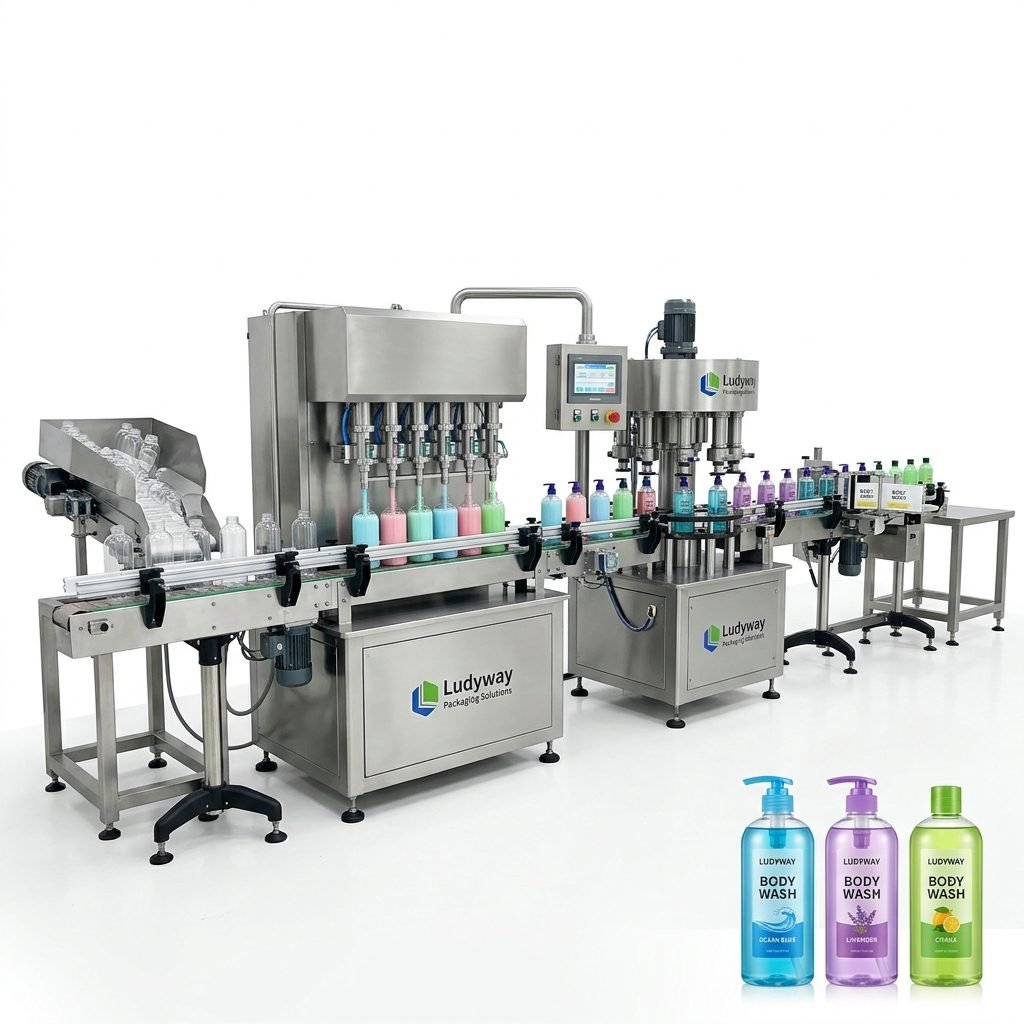
Liquid packaging equipment plays a critical role in modern manufacturing, helping brands deliver products safely, consistently, and efficiently across food, beverage, pharmaceutical, cosmetic, and chemical industries. From bottled juice and edible oil to shampoo, syrup, detergent, and medical liquids, the right equipment can improve output, reduce waste, and support long-term business growth.
If you are planning a new liquid packaging line or upgrading an existing one, understanding machine types, operational benefits, and selection criteria is essential before making an investment.
What Is Liquid Packaging Equipment?
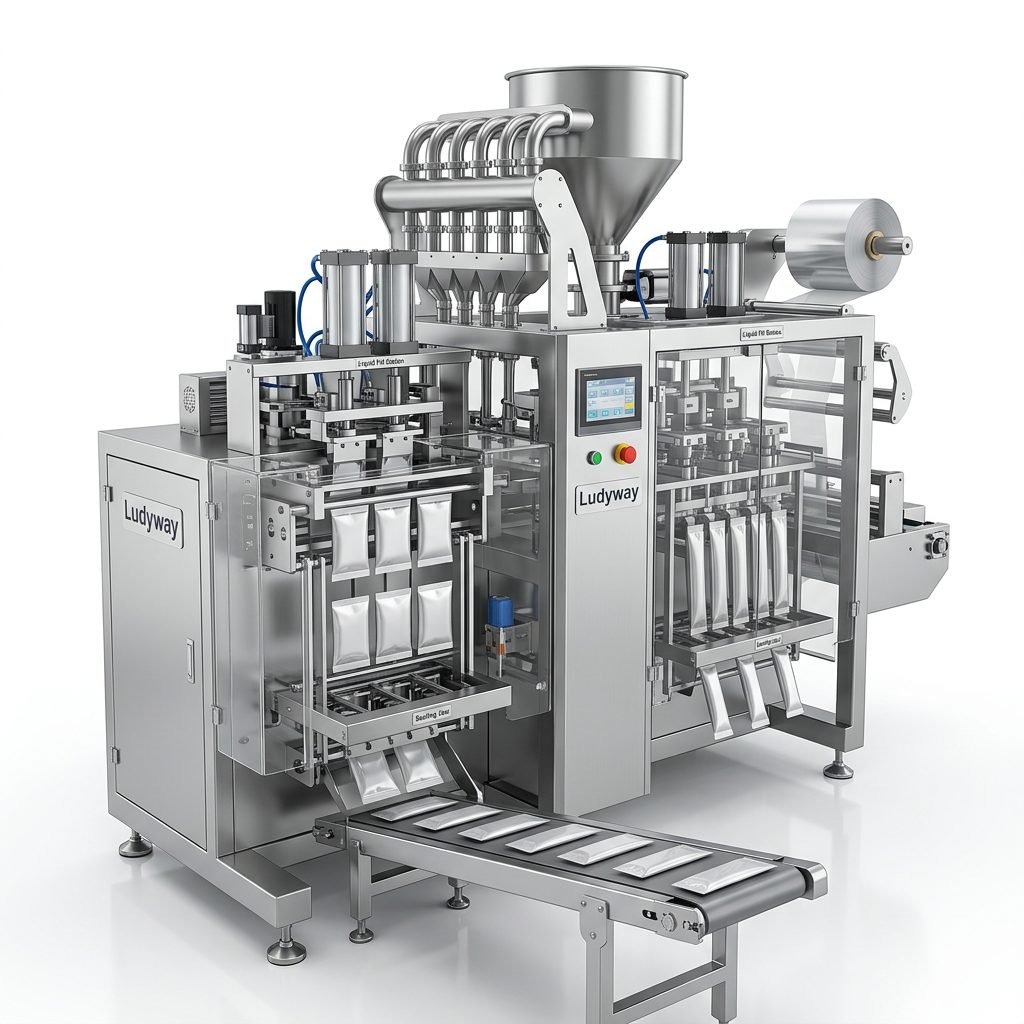
Liquid packaging equipment refers to machinery designed to fill, seal, cap, label, code, and pack liquid products into containers such as bottles, jars, pouches, sachets, stick packs, vials, and drums. Depending on the product and industry, a complete line may include:
- Liquid filling machines
- Form-fill-seal systems
- Pouch packing machines
- Capping and sealing equipment
- Labeling and coding machines
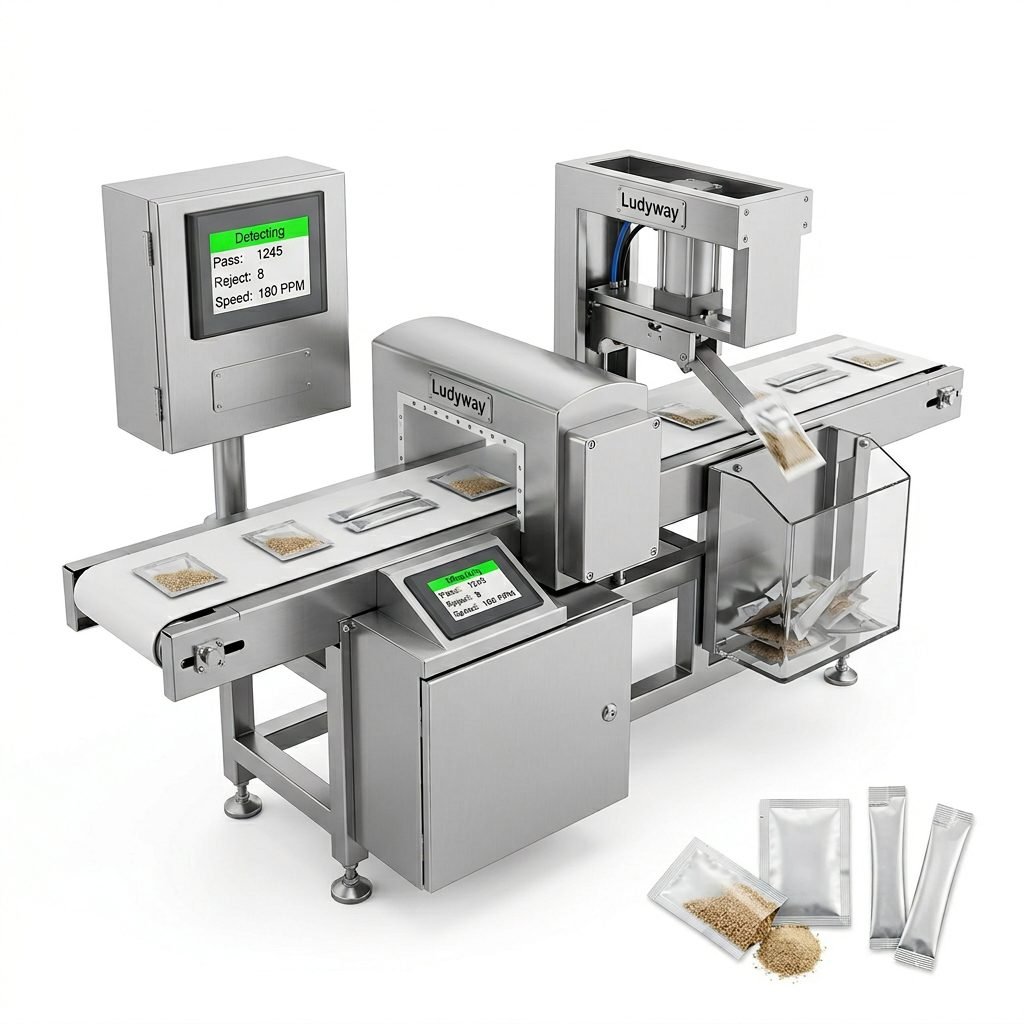
- Checkweighers and inspection devices
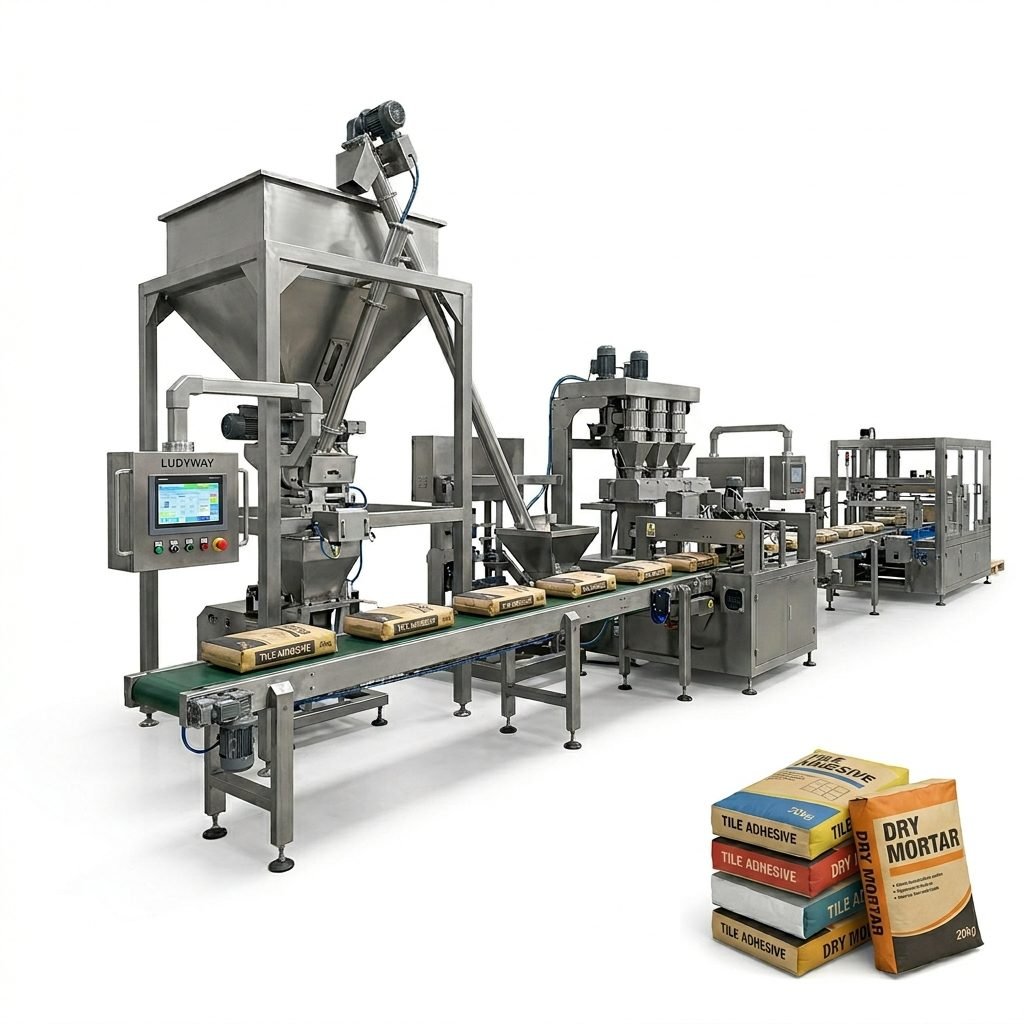
- Case packing and palletizing systems
These machines are engineered to handle liquids with different flow properties, including free-flowing, foamy, viscous, hot-fill, corrosive, and particle-containing products.
Main Types of Liquid Packaging Equipment
1. Gravity Filling Machines
Gravity fillers use the natural flow of liquid from a tank into containers. They are commonly used for thin, free-flowing liquids such as water, vinegar, juice, and some cleaning liquids.
- Simple structure
- Cost-effective for basic applications
- Suitable for low- to medium-viscosity liquids
2. Piston Filling Machines
Piston fillers are ideal for products that require accurate volumetric filling, especially thick or semi-viscous liquids like sauces, creams, gels, honey, lotion, and paste-like products.
- High filling accuracy
- Works well with viscous products
- Suitable for food, cosmetics, and chemicals
3. Pump Filling Machines
Pump fillers transfer liquid through different pump systems such as gear pumps, rotor pumps, magnetic pumps, or servo pumps. They are highly versatile and can handle a wide range of liquid viscosities.
- Flexible for multiple product types
- Good for medium to high precision
- Common in personal care and chemical packaging
4. Vacuum Filling Machines
Vacuum fillers are typically used for products filled into rigid containers where level consistency matters, such as glass bottles. They help achieve a uniform fill appearance.
- Consistent fill level
- Useful for specialty beverages and glass packaging
- Helps improve shelf presentation
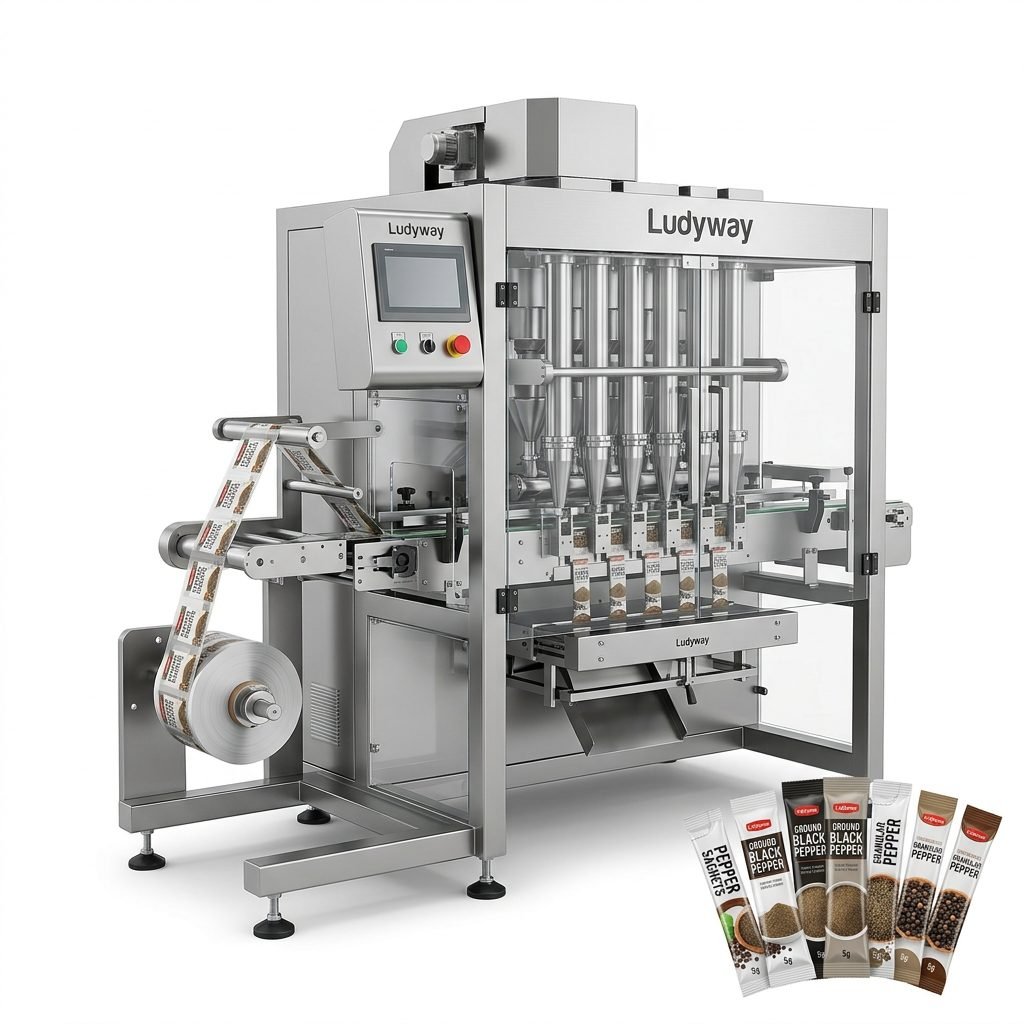
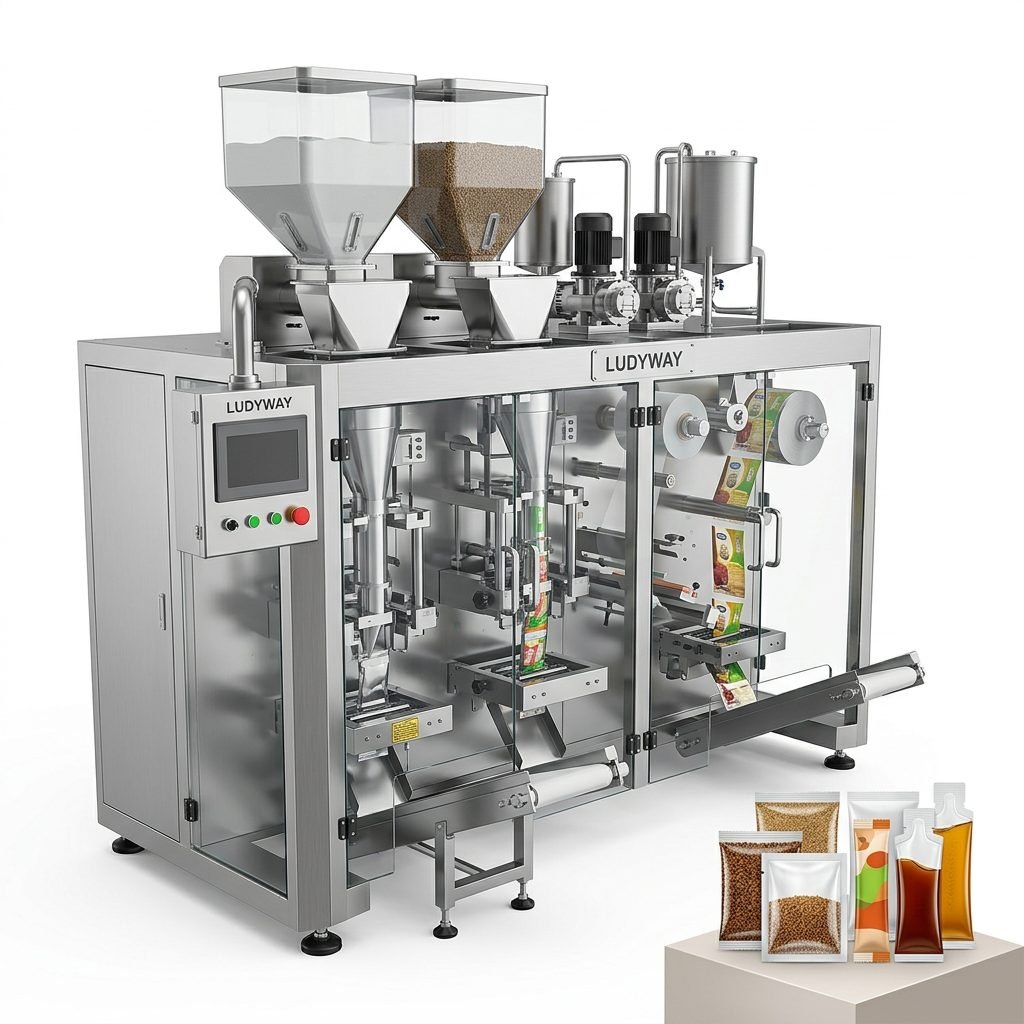
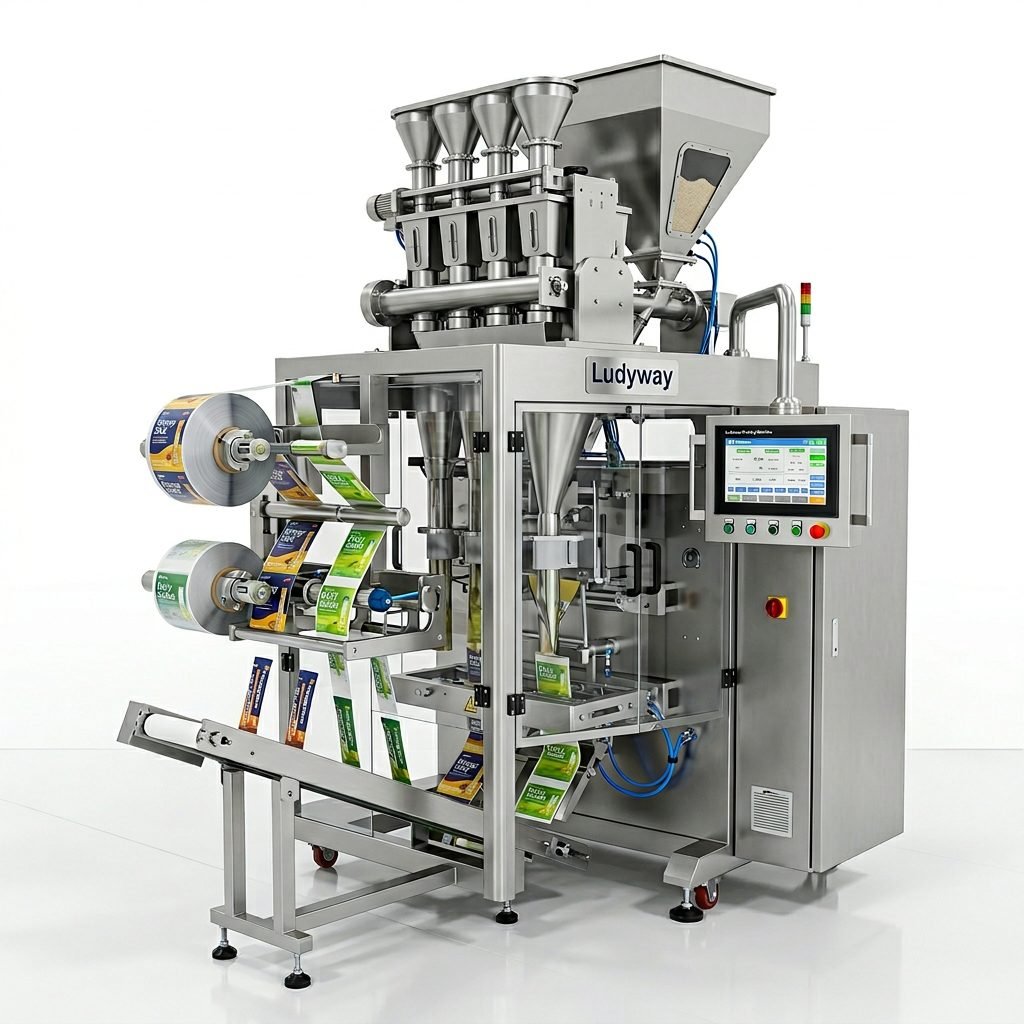
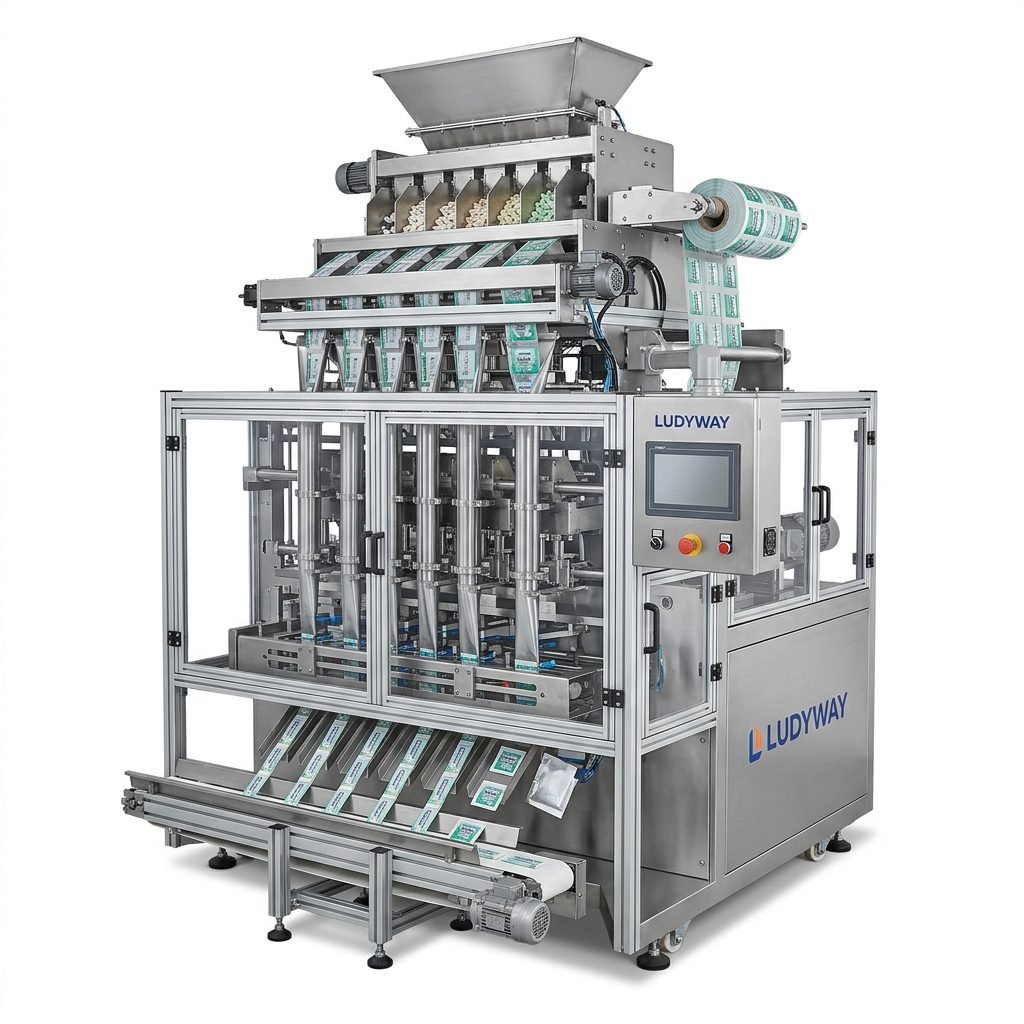
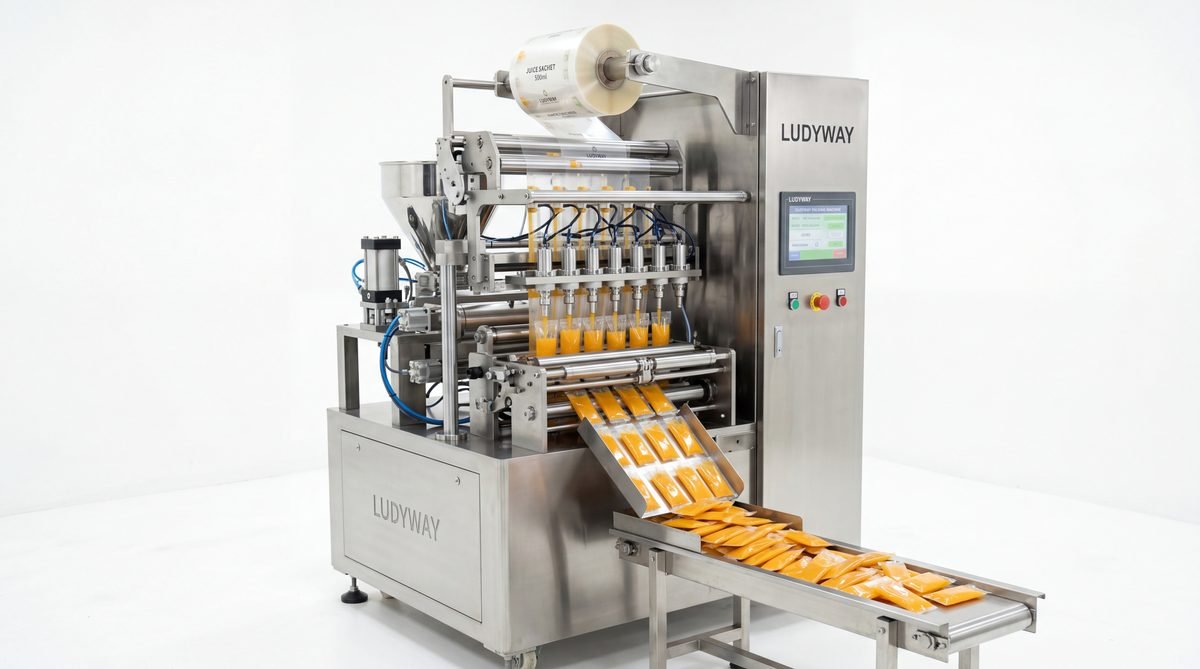
5. Sachet and Stick Pack Machines
These systems form small flexible packages, fill them with liquid, and seal them automatically. They are widely used for single-dose and travel-size products such as ketchup, shampoo, syrup, serum, and hand sanitizer.
- Excellent for retail convenience formats
- Supports high-speed multi-lane production
- Reduces material waste for small-dose packaging
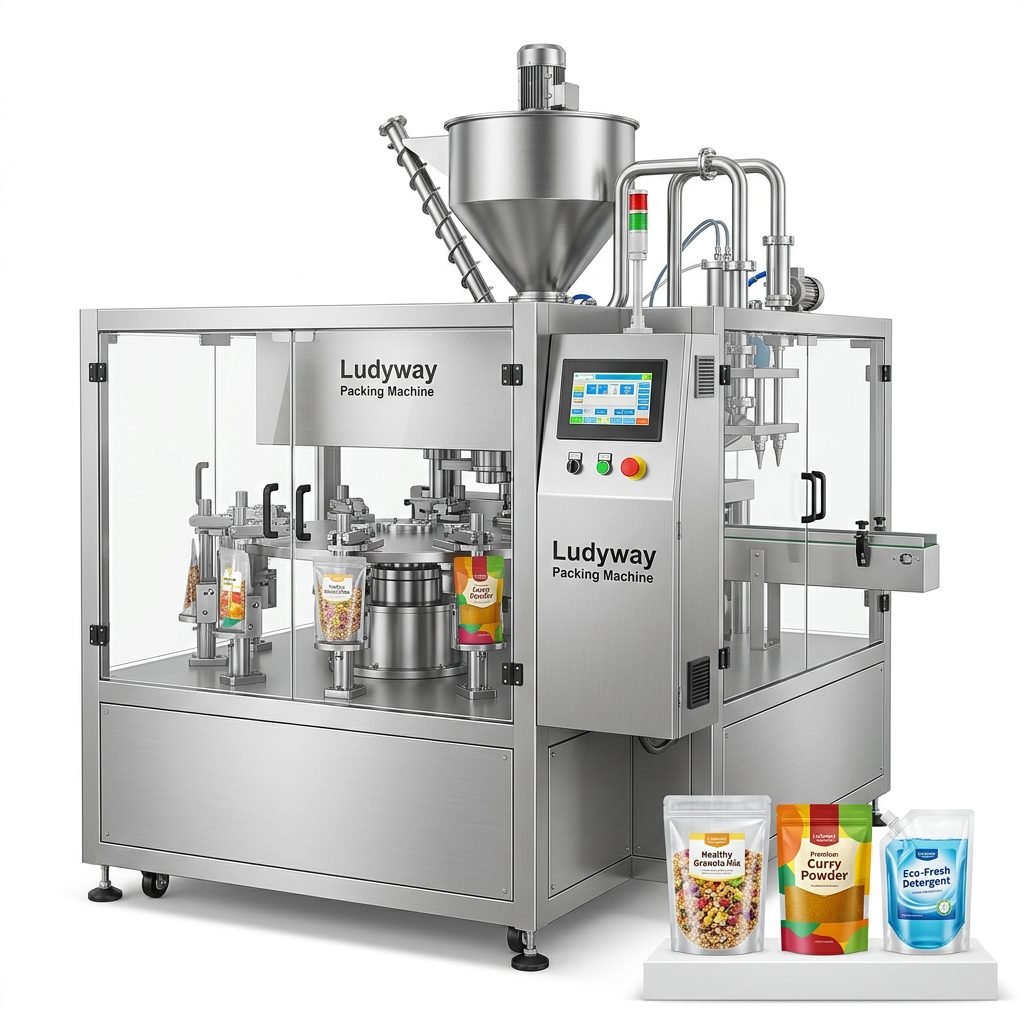
6. Premade Pouch Filling and Sealing Machines
These machines work with preformed pouches and are suitable for stand-up pouches, zipper pouches, and shaped pouches. They are common in food, detergent, and personal care sectors.
- Premium packaging appearance
- Suitable for larger volumes
- Flexible for many pouch styles
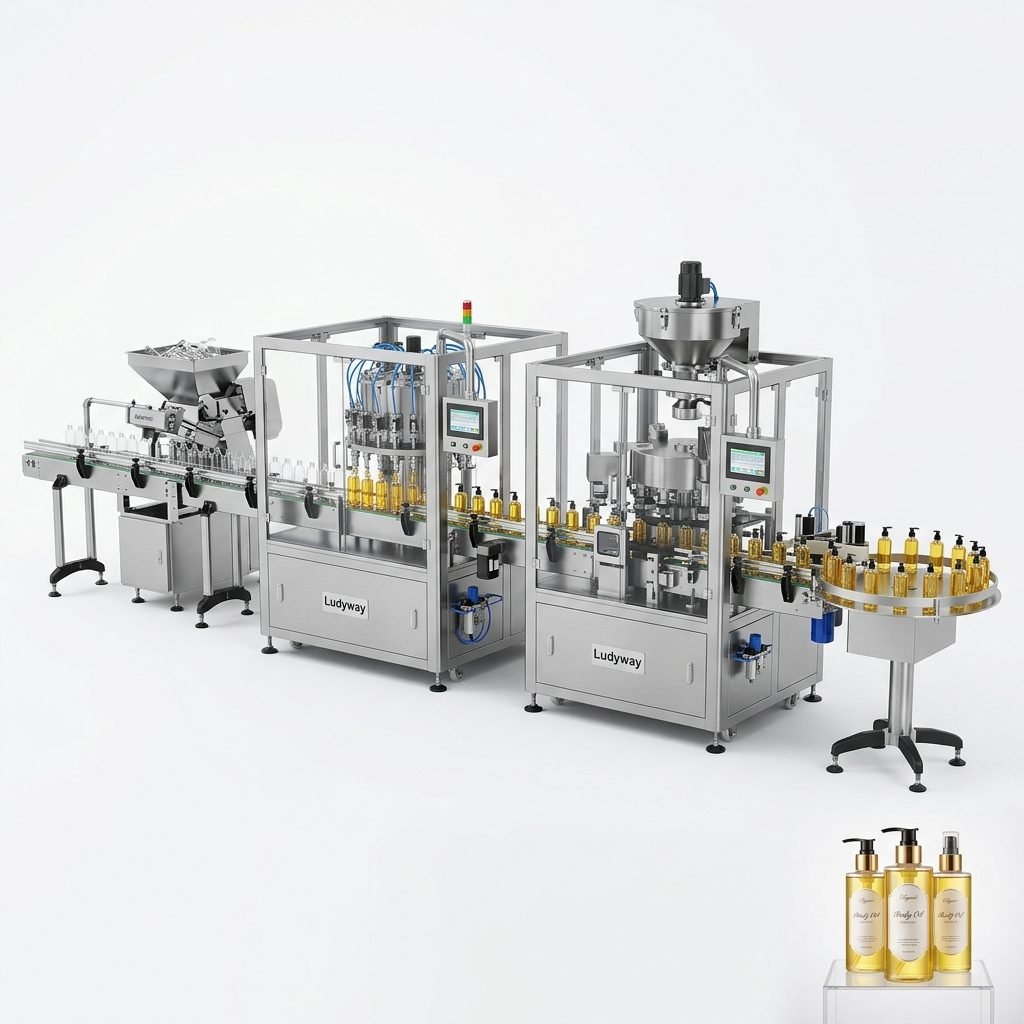
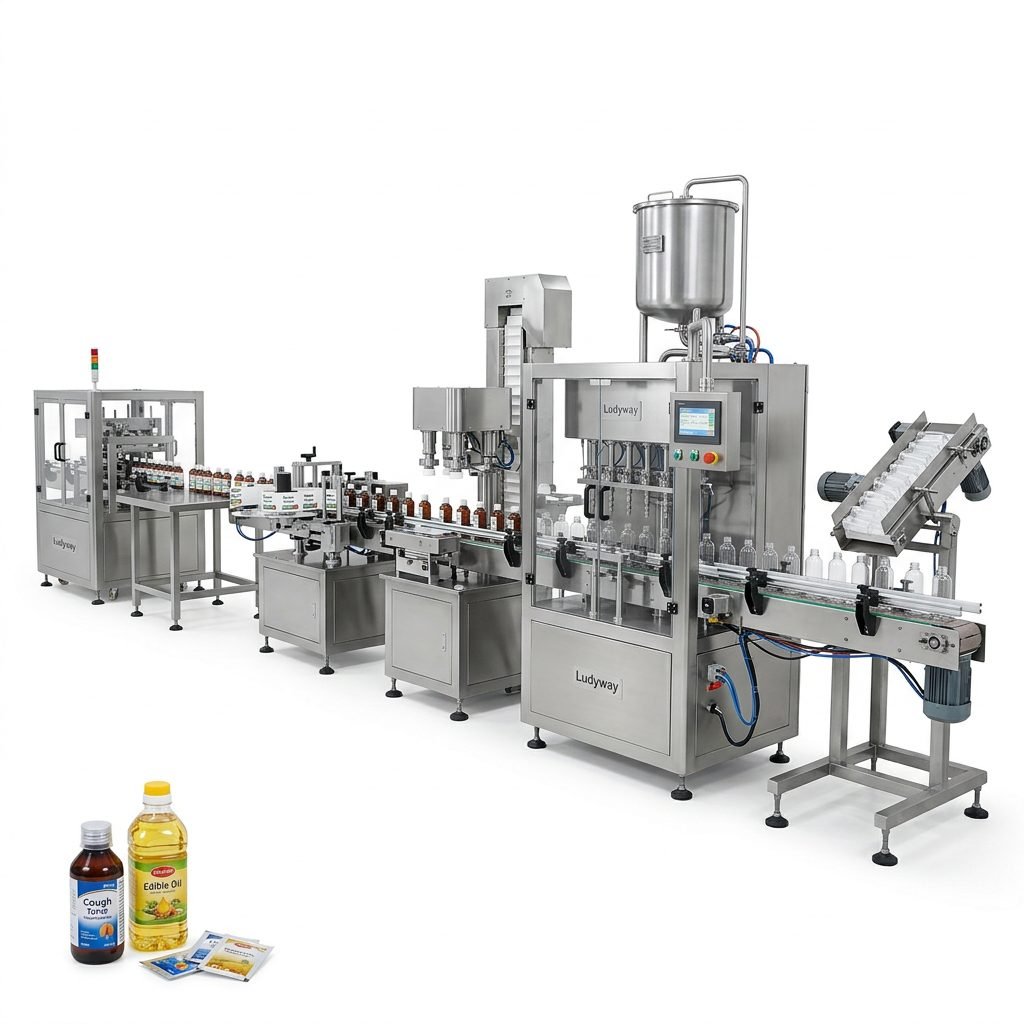
7. Bottle Filling Lines
A bottle filling line may include bottle unscrambling, rinsing, filling, capping, labeling, coding, cartoning, and case packing. It is often used for beverages, pharmaceutical syrups, oils, cleaners, and cosmetics.
Liquid Packaging Equipment by Product Type
| Product Type | Recommended Equipment | Common Packaging Format |
|---|---|---|
| Water, juice, vinegar | Gravity filler, bottle filling line | Bottles, pouches, sachets |
| Sauce, ketchup, mayonnaise | Piston filler, pouch machine | Sachets, stick packs, pouches |
| Shampoo, lotion, serum | Pump filler, sachet machine, bottle line | Bottles, sachets, tubes |
| Pharmaceutical liquids, oral solutions | High-precision liquid filling and sealing systems | Vials, bottles, sachets |
| Detergent, disinfectant, cleaners | Corrosion-resistant pump or piston fillers | Bottles, pouches, sachets |
| Industrial chemicals, oils | Heavy-duty liquid filling lines | Drums, bottles, pouches |
Key Benefits of Liquid Packaging Equipment
Higher Production Efficiency
Automated systems can handle repetitive filling and sealing tasks much faster than manual operations. This increases throughput and supports scalable production.
Improved Filling Accuracy
Well-designed equipment reduces underfilling and overfilling, helping manufacturers maintain product consistency and control giveaway.
Better Hygiene and Product Safety
For food, pharma, and cosmetic applications, hygienic design is essential. Stainless steel contact parts, CIP options, and controlled filling environments can support cleaner production.
Lower Labor Dependence
Automation reduces the need for manual filling, sealing, and handling, which can help businesses save labor costs and minimize operator error.
Flexible Packaging Options
Modern liquid packaging systems can often switch between different volumes, container sizes, and packaging formats, making them suitable for changing market demands.
Professional Brand Presentation
Accurate filling, clean sealing, proper labeling, and stable secondary packaging all contribute to a more reliable and attractive final product.
Industries That Commonly Use Liquid Packaging Machines
- Food and beverage: sauces, edible oil, dairy drinks, beverages, condiments
- Pharmaceutical: syrups, oral liquids, health supplements, medical solutions
- Cosmetic and personal care: serum, shampoo, lotion, facial cleanser, liquid soap
- Household chemicals: detergents, sanitizers, cleaners, disinfectants
- Industrial chemicals: lubricants, additives, specialty liquids
How to Choose the Right Liquid Packaging Solution
1. Understand Your Liquid Characteristics
Start with the product itself. Ask whether the liquid is thin, thick, foamy, corrosive, hot-filled, or contains particles. This directly affects filling method, pump selection, sealing system, and machine material requirements.
2. Define Your Packaging Format
Your equipment should match your target package style, such as:
- Bottles
- Pouches
- Sachets
- Stick packs
- Vials
- Drums
3. Consider Output Requirements
Production speed is one of the most important investment factors. A startup may only need a semi-automatic solution, while a large manufacturer may require a high-speed multi-lane or fully integrated turnkey line.
4. Check Filling Accuracy Standards
For industries like pharmaceuticals, nutraceuticals, and premium cosmetics, filling precision can be especially critical. Confirm tolerance range, dosing control, and repeatability before purchase.
5. Evaluate Hygiene and Material Compatibility
If your product is sensitive or regulated, look for food-grade or pharmaceutical-grade contact parts, easy-clean structures, and compatibility with sanitary production standards.
6. Plan for Future Expansion
Choosing a machine only for current demand may limit growth later. Consider whether the equipment can be upgraded with conveyors, coding, cartoning, inspection, and end-of-line automation.
7. Assess Supplier Capabilities
A good machine is only part of the solution. You also need reliable engineering, customization support, spare parts access, installation guidance, and after-sales service. Many buyers looking for scalable automation work with experienced manufacturers such as liquid packaging equipment supplier Ludyway, especially when they need standalone machines or complete turnkey packaging lines.
Quick Comparison: Manual, Semi-Automatic, and Automatic Systems
| System Type | Best For | Advantages | Limitations |
|---|---|---|---|
| Manual | Very small batch production | Low initial cost | Low efficiency, inconsistent output |
| Semi-automatic | Growing small to mid-sized factories | Balanced cost and productivity | Still requires operator intervention |
| Fully automatic | Medium to large-scale production | High speed, consistency, lower labor cost | Higher upfront investment |
Common Mistakes to Avoid When Buying Liquid Packaging Equipment
- Choosing equipment based only on price
- Ignoring future production expansion
- Not testing the actual liquid product before purchase
- Overlooking cleaning and maintenance needs
- Failing to confirm compatibility with packaging materials
- Neglecting after-sales support and spare parts service
Important Questions to Ask Before You Invest
- What liquid viscosity range can the machine handle?
- What packaging formats are supported?
- What is the actual production speed under my product conditions?
- How accurate is the filling system?
- How long does format changeover take?
- What level of customization is available?
- What certifications or compliance features are included?
- What installation, training, and technical support are provided?
Final Buying Insight
The best liquid packaging equipment is not simply the fastest or the cheapest machine. It is the solution that matches your product properties, packaging style, output goals, hygiene requirements, and growth strategy. Businesses that evaluate these factors carefully are more likely to achieve stable production, lower total operating cost, and stronger packaging quality over time.
Whether you need a compact liquid sachet machine, a bottle filling system, or a complete turnkey packaging line, choosing equipment with the right technical fit will have a direct impact on operational performance and market competitiveness.