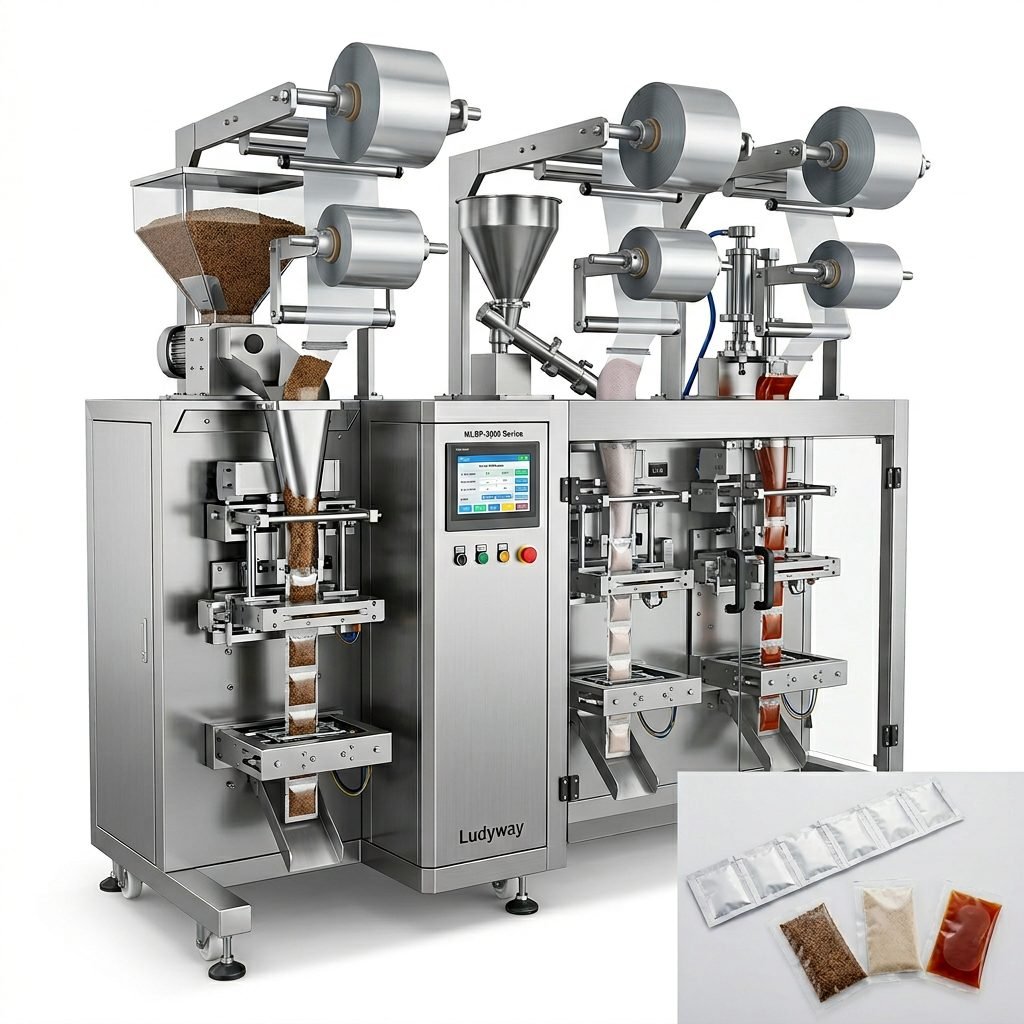
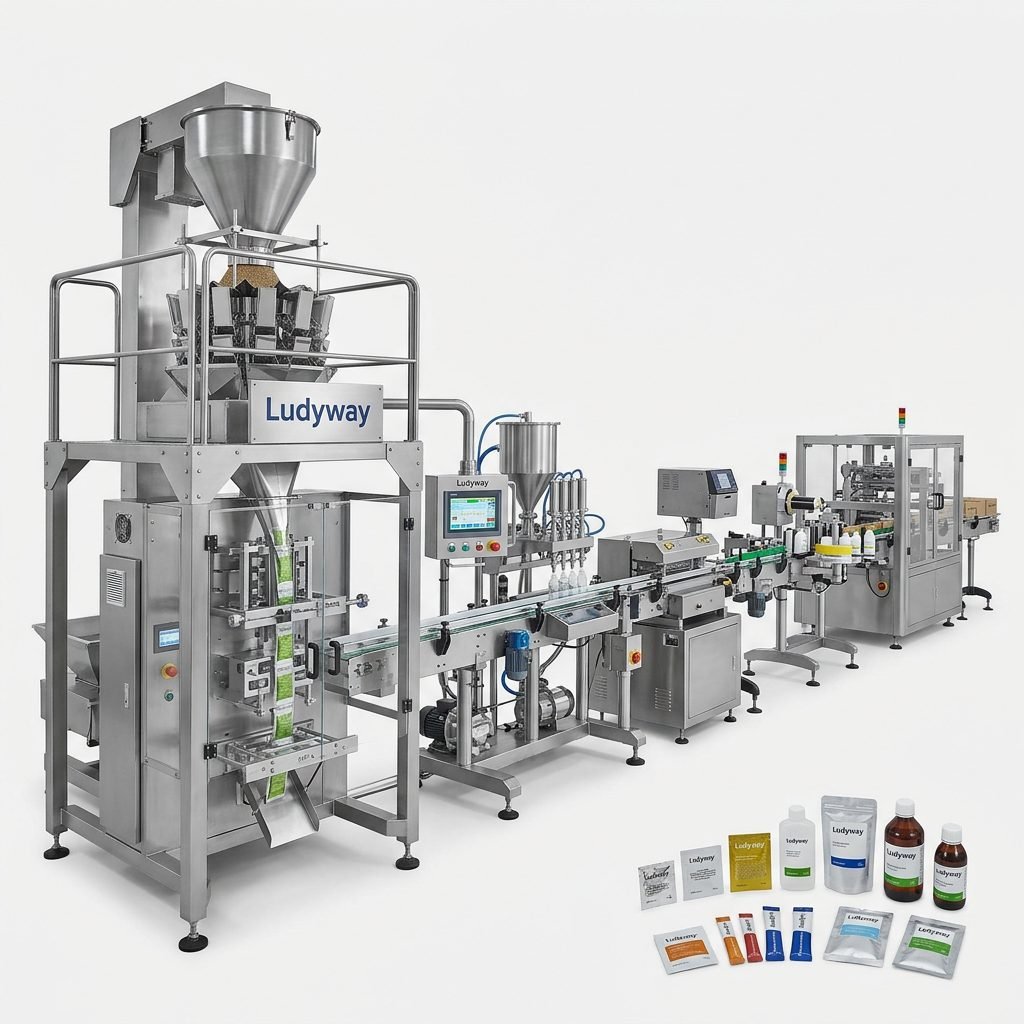
Choosing a packaging machine is more than comparing prices. The right system affects production speed, product quality, labor cost, packaging consistency, compliance, and your ability to scale. If you are planning to buy a packaging machine for sale, the smartest approach is to match the machine to your product, package style, output goals, and long-term business strategy.
Whether you package food, pharmaceuticals, cosmetics, chemicals, supplements, pet products, or daily-use items, the key is to avoid buying a machine that is either too limited or unnecessarily complex. A well-matched machine should help you reduce downtime, control waste, and improve profitability over time.
Start with Your Product Type
The first step is understanding exactly what you need to pack. Packaging machinery is usually selected based on the physical characteristics of the product. Different products require different feeding, dosing, filling, sealing, and discharge methods.
- Powders: milk powder, protein powder, spices, pharmaceutical powders, chemical powders
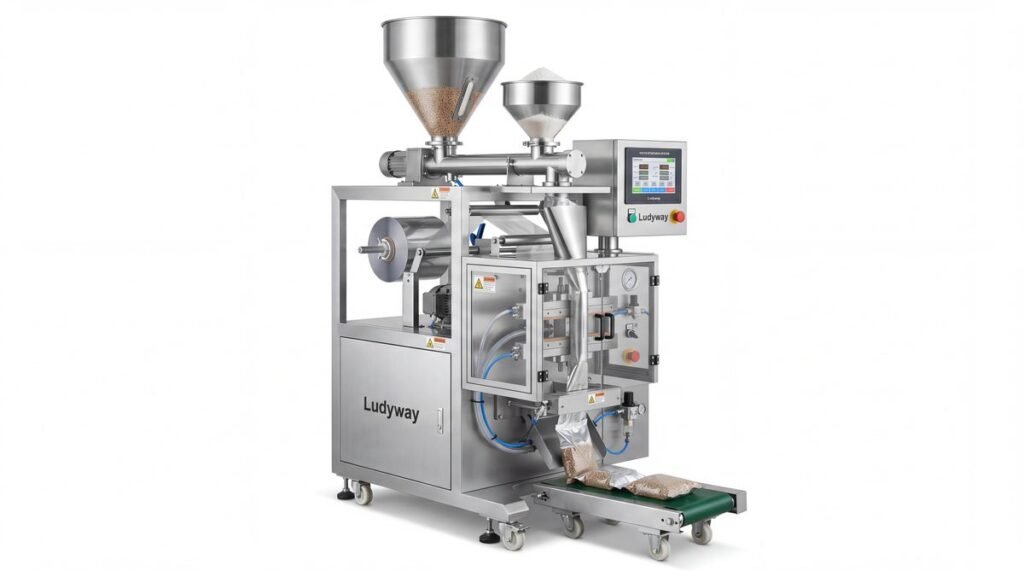
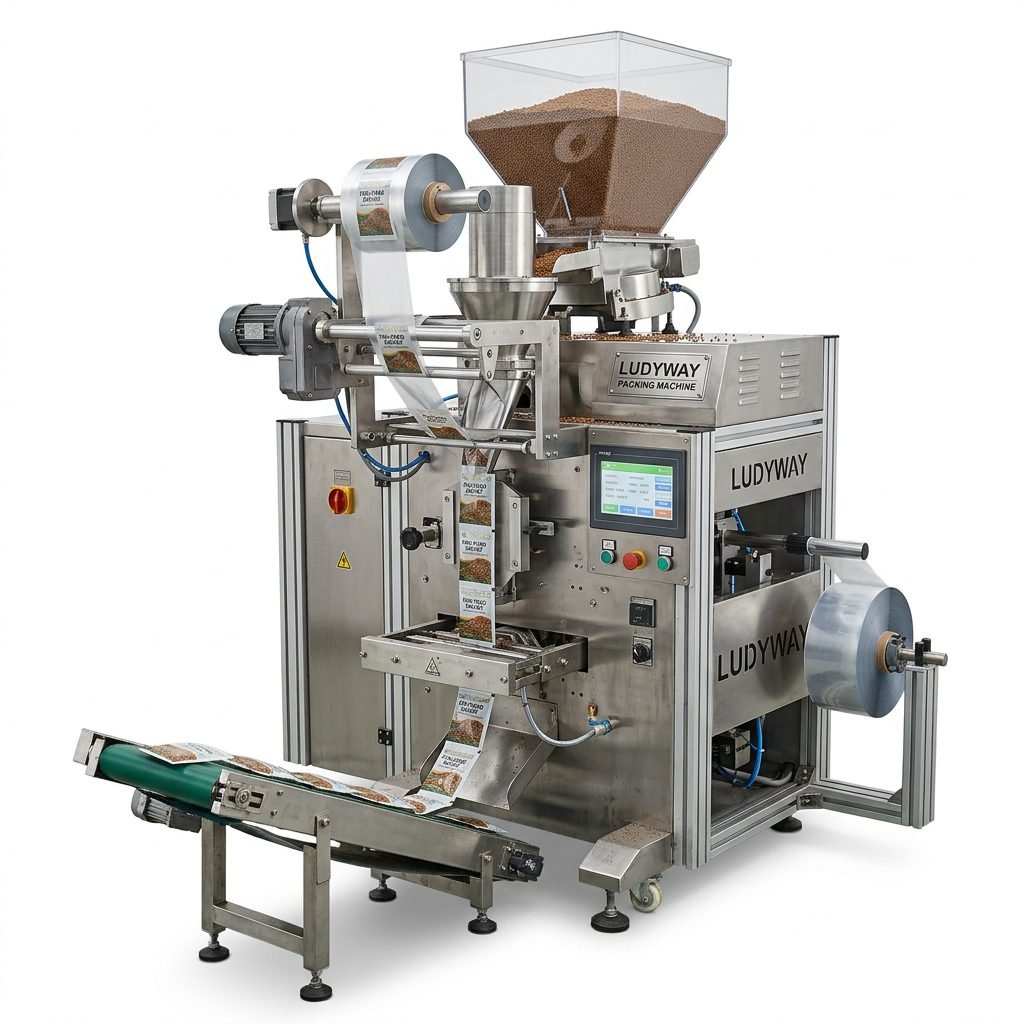
- Granules: sugar, coffee, seeds, pet food pellets, supplements
- Liquids: sauces, detergents, oils, beverages, serum products
- Pastes: ketchup, cream, gel, lotion, honey, peanut butter
- Solid units: tablets, capsules, hardware parts, wipes, pouches
If your product has poor flowability, high dust content, stickiness, moisture sensitivity, or fragile particles, the machine design becomes even more important. For example, powders may need screw auger fillers, while granules may work better with volumetric cups or weighing systems. Liquids and pastes often require piston pumps or liquid dosing systems with reliable sealing performance.
Questions to ask before buying
- Is the product free-flowing or difficult to handle?
- Does it foam, drip, clump, or settle?
- Is hygiene or contamination control critical?
- Does the product require nitrogen flushing, vacuum feeding, or dust extraction?
- Will the product damage easily during filling or transportation?
Choose the Right Packaging Format
Your package type directly determines the machine structure you need. Buyers often make mistakes by focusing on the product alone and not on how that product will finally be presented to the customer.
| Packaging Format | Common Applications | Typical Machine Type |
|---|---|---|
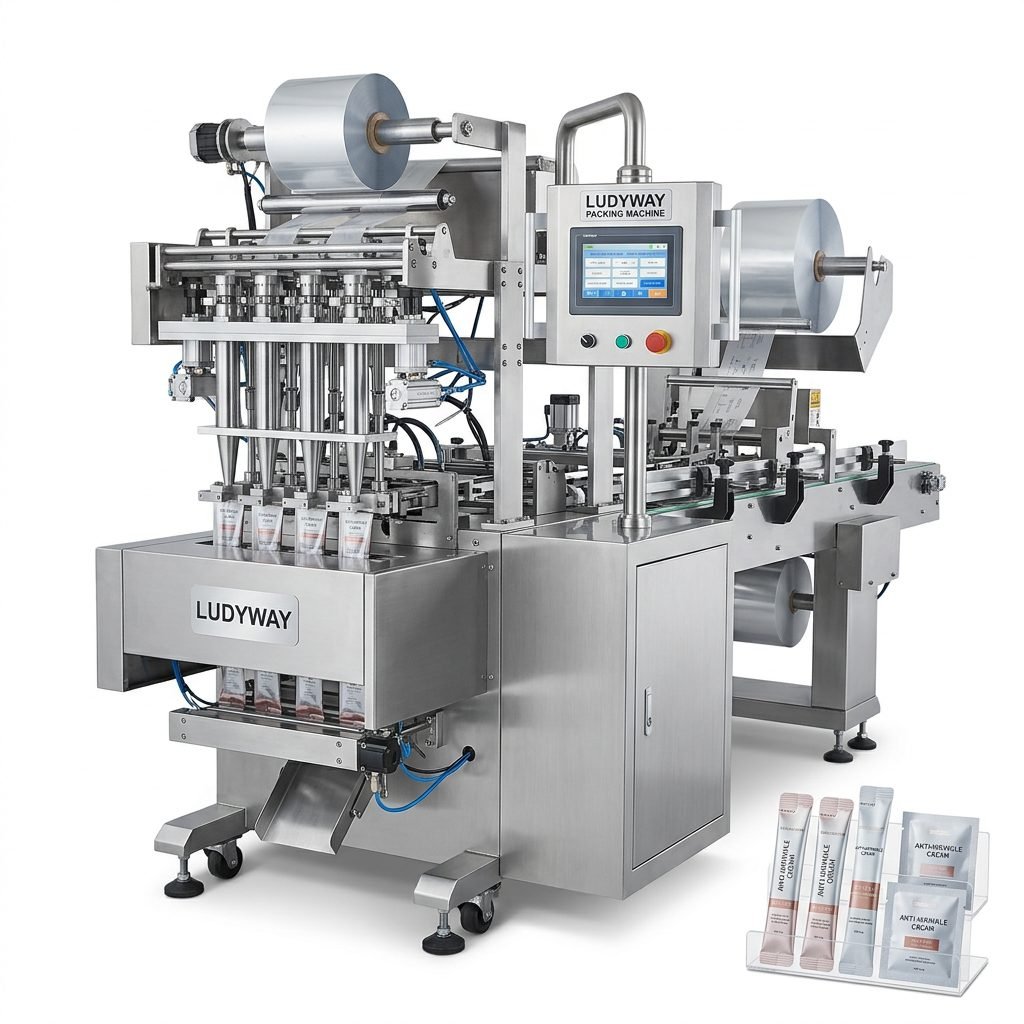
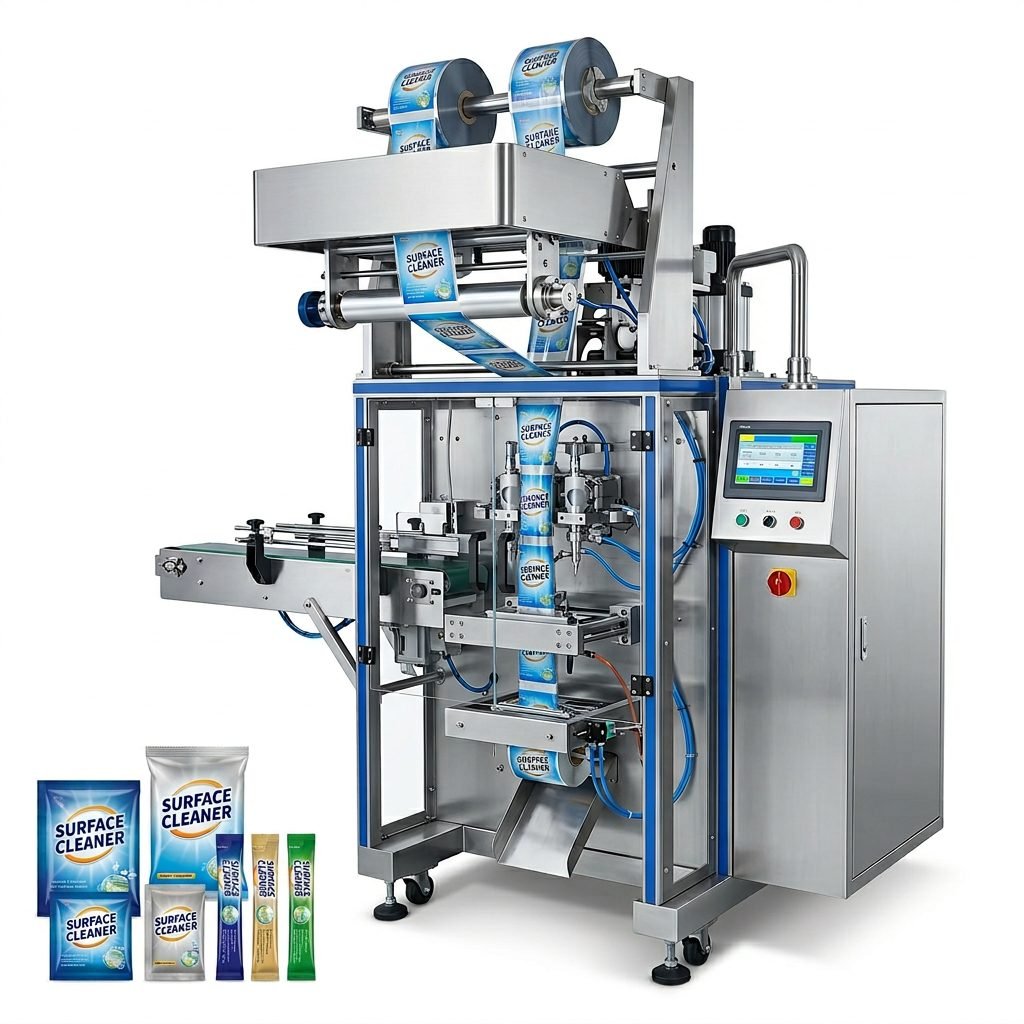
| Sachet | Powders, granules, liquids, pharma doses | Sachet packing machine |
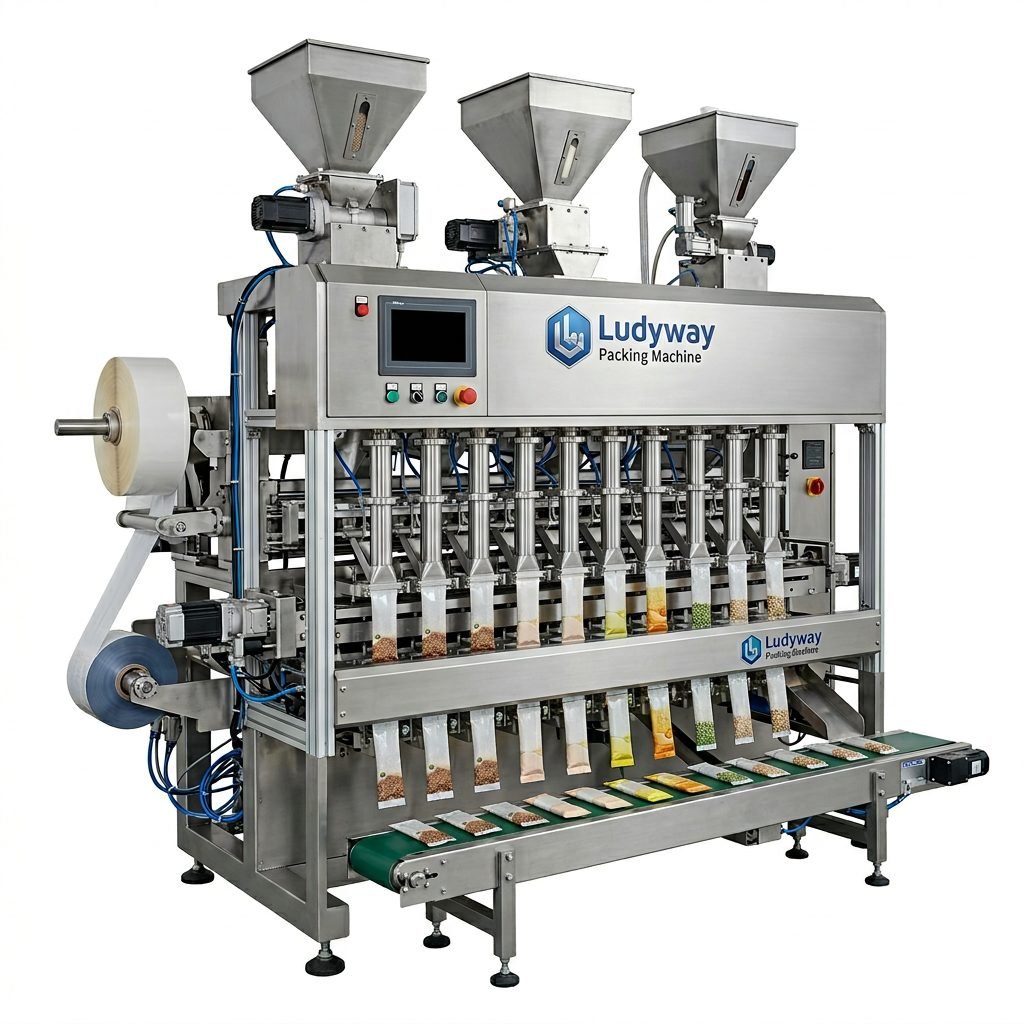
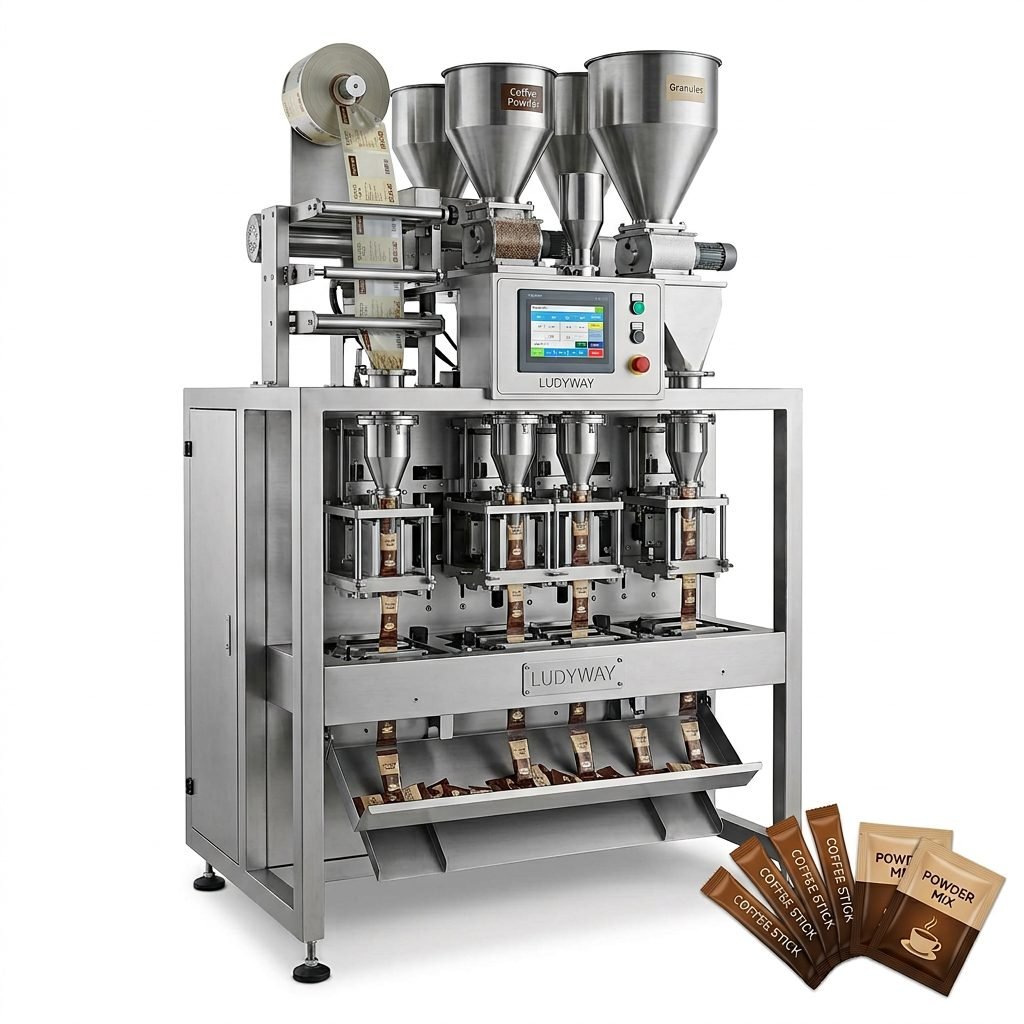
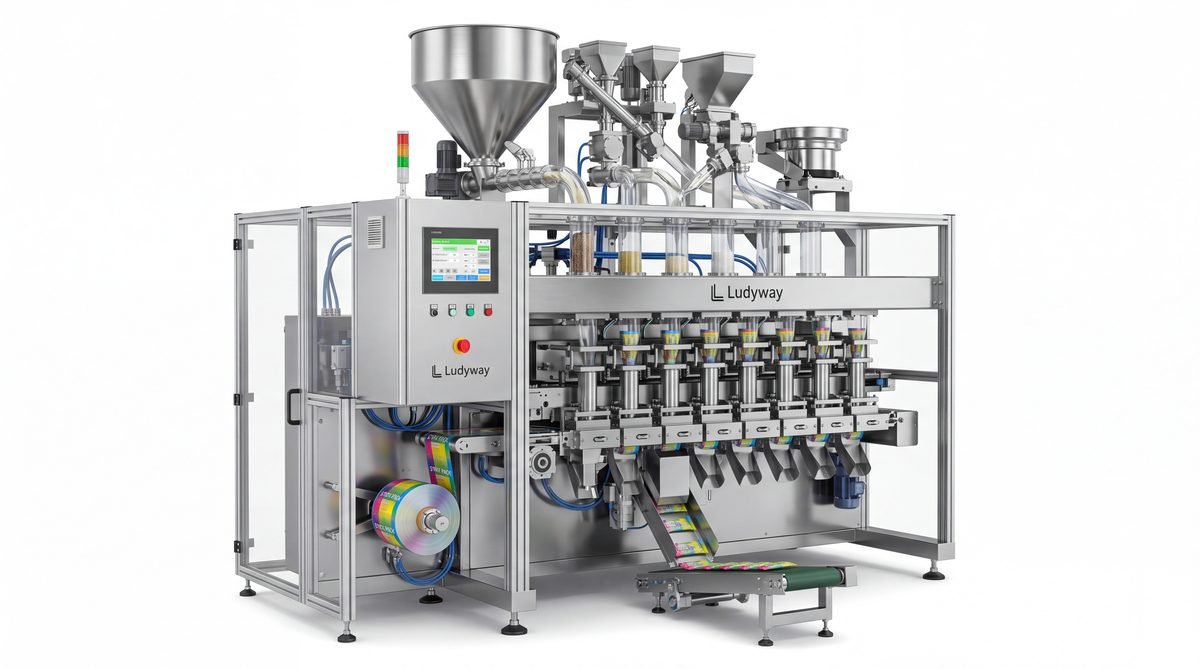
| Stick pack | Drink mixes, coffee, supplements, sauces | Multi-lane stick pack machine |
| Pouch | Food, cosmetics, health products, chemicals | Pouch filling and sealing machine |
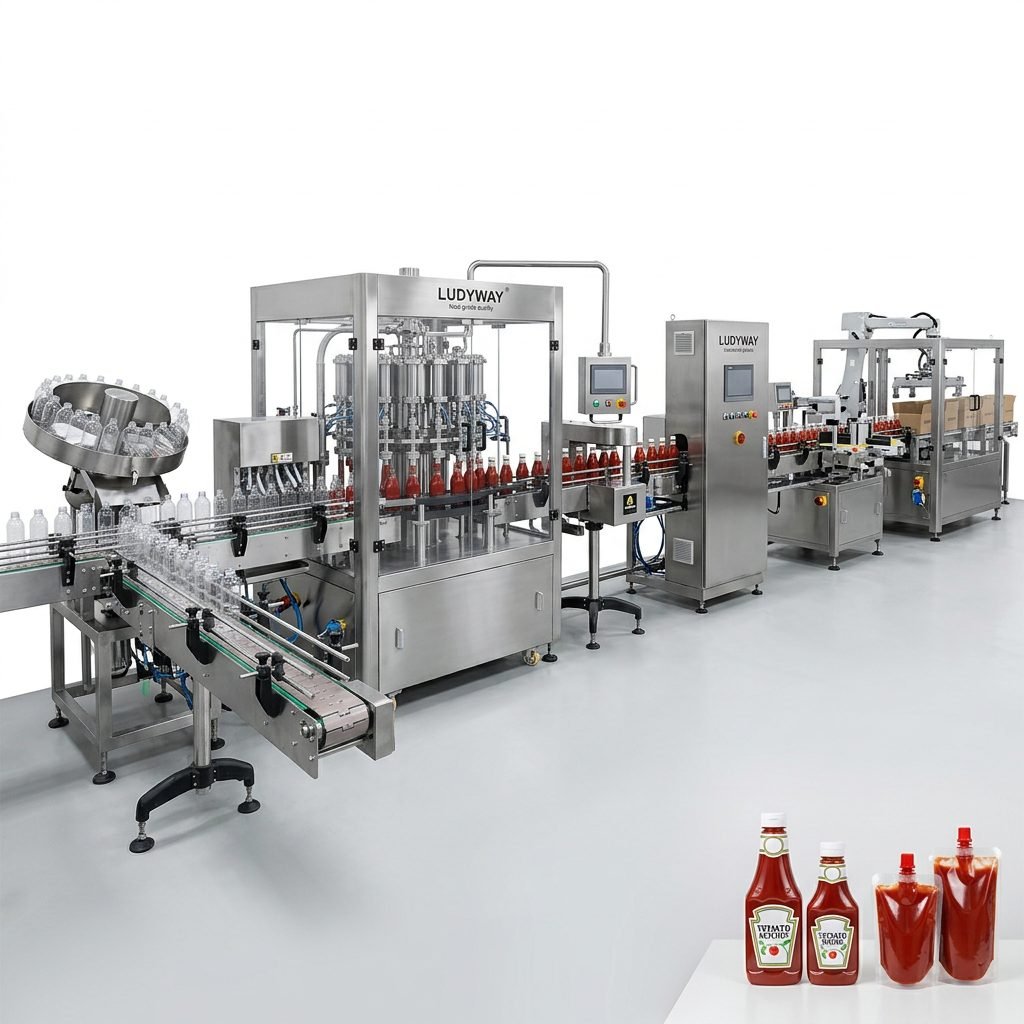
| Bottle / jar | Liquids, capsules, tablets, creams | Filling, capping, labeling line |
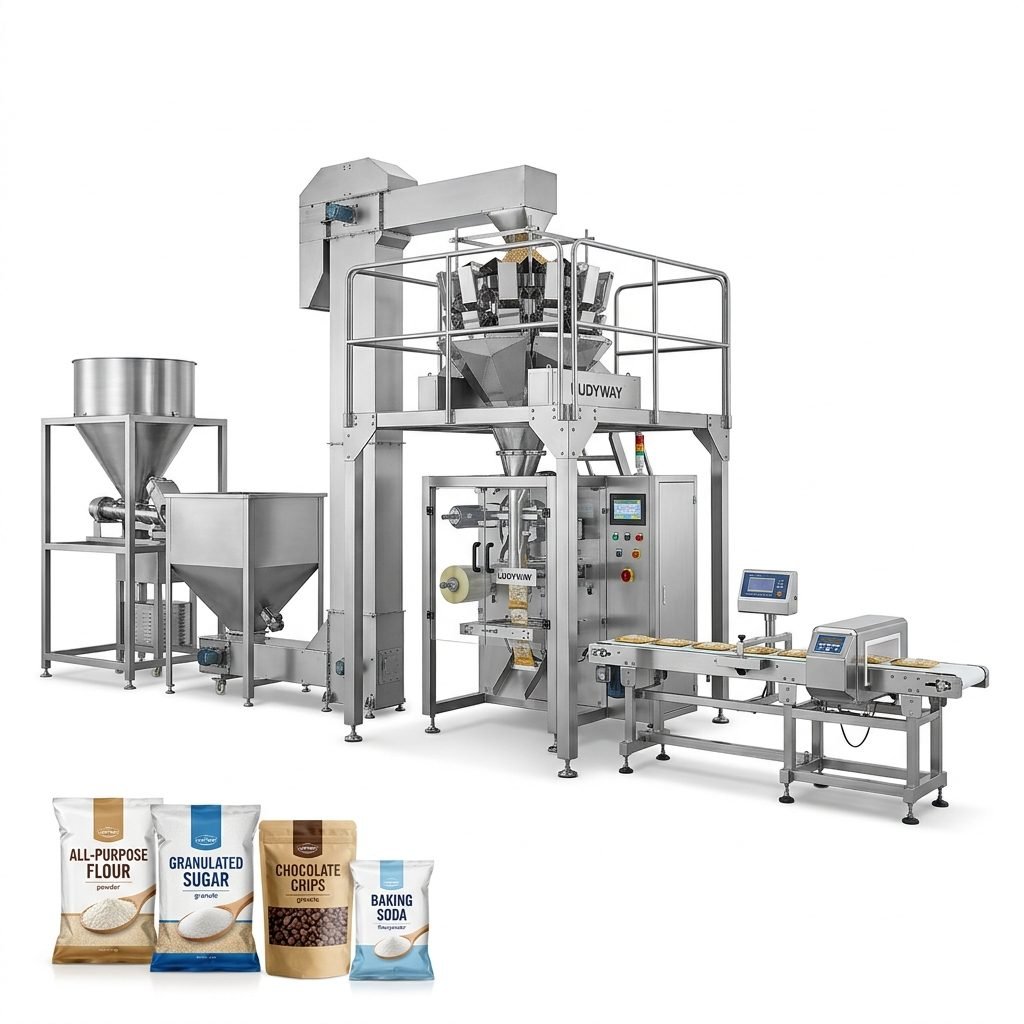
| Bag / bulk pack | Feed, fertilizer, grains, industrial powders | Bagging and weighing packaging line |
If your brand is built around convenience packaging, portable formats like sachets and stick packs may be best. If your market prefers premium shelf presentation, premade pouches or bottles may be the better choice. Your packaging machine should support not only filling accuracy, but also the appearance and usability your customers expect.
Define Your Required Output Capacity
One of the most important buying criteria is production capacity. A machine that is too slow will bottleneck your business. A machine that is oversized may increase your cost without delivering a real return.
Think about:
- Current daily or hourly output
- Expected growth over the next 2 to 5 years
- Shift pattern and labor availability
- Peak season production demands
- SKU variety and changeover frequency
High-speed multi-lane machines are ideal for large-volume sachet or stick pack production, while smaller semi-automatic or single-lane solutions may be better for startups, custom batches, or niche brands. If you are handling multiple SKUs, fast changeover and easy parameter adjustment are just as important as raw speed.
A simple buying rule
Do not buy only for today’s orders. Buy for realistic growth, but avoid paying for capacity you will not use for years.
Evaluate the Level of Automation You Need
Packaging systems can range from standalone filling units to fully integrated turnkey lines. The right level of automation depends on budget, labor cost, floor space, product complexity, and the consistency you want to achieve.
Common automation levels
- Semi-automatic: lower investment, suitable for smaller production runs
- Fully automatic standalone machine: efficient for one key packaging task
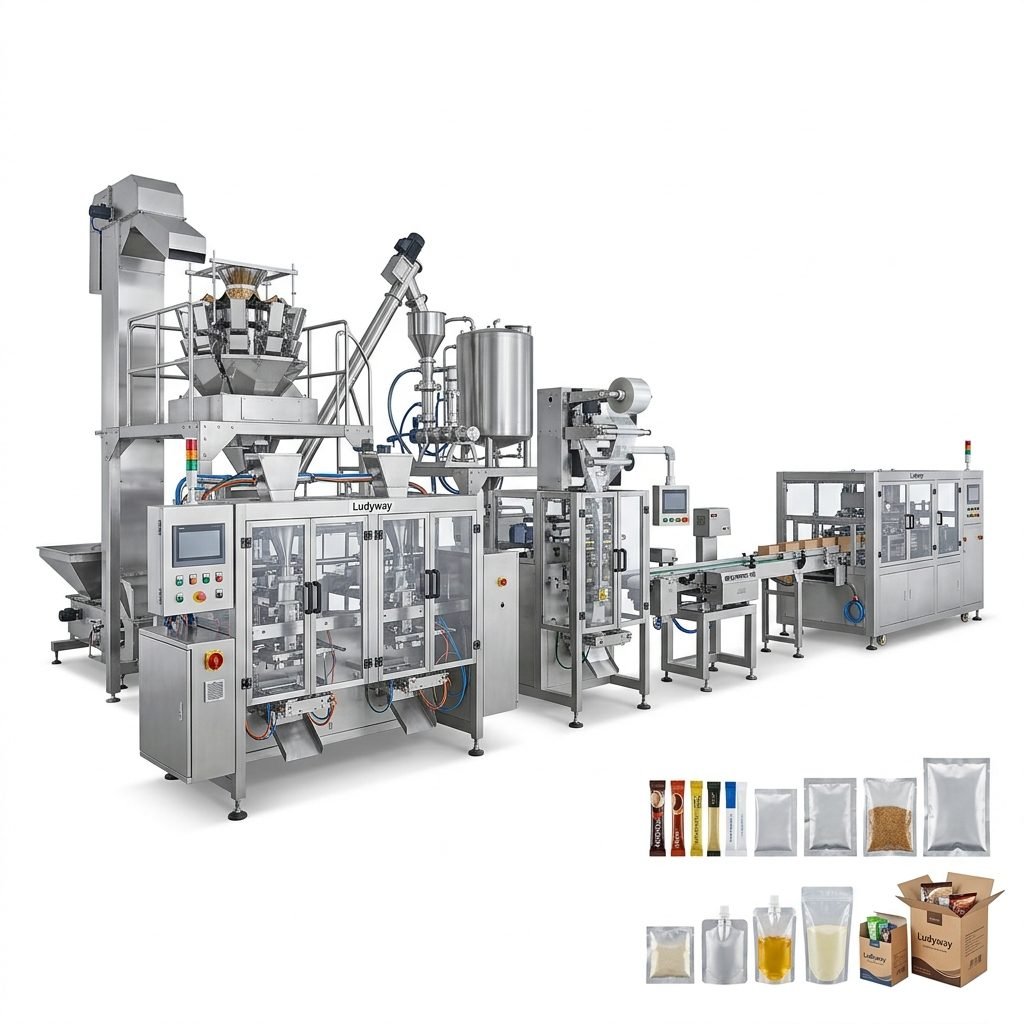
- Integrated line: combines feeding, filling, sealing, coding, checking, cartoning, and conveying
- Turnkey solution: complete end-to-end packaging system with engineering support
If your labor costs are rising or your manual packaging process creates inconsistency, a higher degree of automation can provide a strong return. For regulated industries such as pharmaceuticals and health products, automation also improves traceability and process stability.
Check Filling Accuracy and Seal Quality
A packaging machine is not valuable if it runs fast but produces inaccurate fill weights or weak seals. This is especially critical in food, pharma, nutraceutical, and chemical industries.
Pay close attention to:
- Filling tolerance and repeatability
- Seal consistency under continuous production
- Leak prevention for liquids and pastes
- Dust control for powders
- Reject rate and material waste
Small filling errors may seem minor, but over thousands or millions of units they can cause major product giveaway, customer complaints, or compliance risk. A good machine should maintain stable performance across long runs, not only during testing.
Understand Material Compatibility
The packaging film or container you use matters just as much as the machine. Different materials seal differently and behave differently under heat, pressure, and speed.
Before purchasing, confirm the machine’s compatibility with:
- Laminated film
- Aluminum foil structures
- Paper-based packaging materials
- PE, PET, or composite films
- Premade pouches, bottles, jars, tubes, or cartons
If sustainability is part of your brand strategy, ask whether the machine can handle recyclable or mono-material packaging. This can protect your investment as market expectations and regulations evolve.
Think About Cleaning, Maintenance, and Downtime
Many buyers focus heavily on speed and price, but underestimate maintenance. In reality, easy cleaning and low downtime can make a big difference in total operating cost.
Look for features such as
- Easy-access machine structure
- Quick disassembly of contact parts
- Stainless steel construction where needed
- User-friendly touchscreen controls
- Stable electrical and pneumatic components
- Diagnostic alarms and fault display
For food, pharma, and cosmetic products, hygienic design is especially important. Machines should support fast cleaning and reduce contamination risk between batches.
Match the Machine to Your Industry Standards
Every industry has different requirements. A machine suitable for snacks may not be ideal for pharmaceutical powders or corrosive chemical products.
| Industry | Key Requirements | Important Machine Features |
|---|---|---|
| Food | Hygiene, freshness, speed | Food-grade contact parts, accurate dosing, strong sealing |
| Pharmaceutical | Precision, traceability, compliance | High accuracy, clean design, stable control system |
| Cosmetic | Appearance, viscosity handling, gentle filling | Liquid/paste filling precision, neat seals, flexible formats |
| Chemical | Safety, corrosion resistance, containment | Durable materials, dust control, reliable sealing |
| Animal feed / pet food | Volume, durability, bulk handling | Efficient feeding, weighing, bagging, conveying |
Consider Space, Utilities, and Line Integration
Before choosing a machine, confirm whether it fits your factory conditions. Many installation problems happen because buyers evaluate machine performance but ignore practical site requirements.
- Available floor space
- Ceiling height for feeding systems or hoppers
- Power supply and voltage
- Compressed air requirements
- Connection with upstream or downstream equipment
- Future expansion possibilities
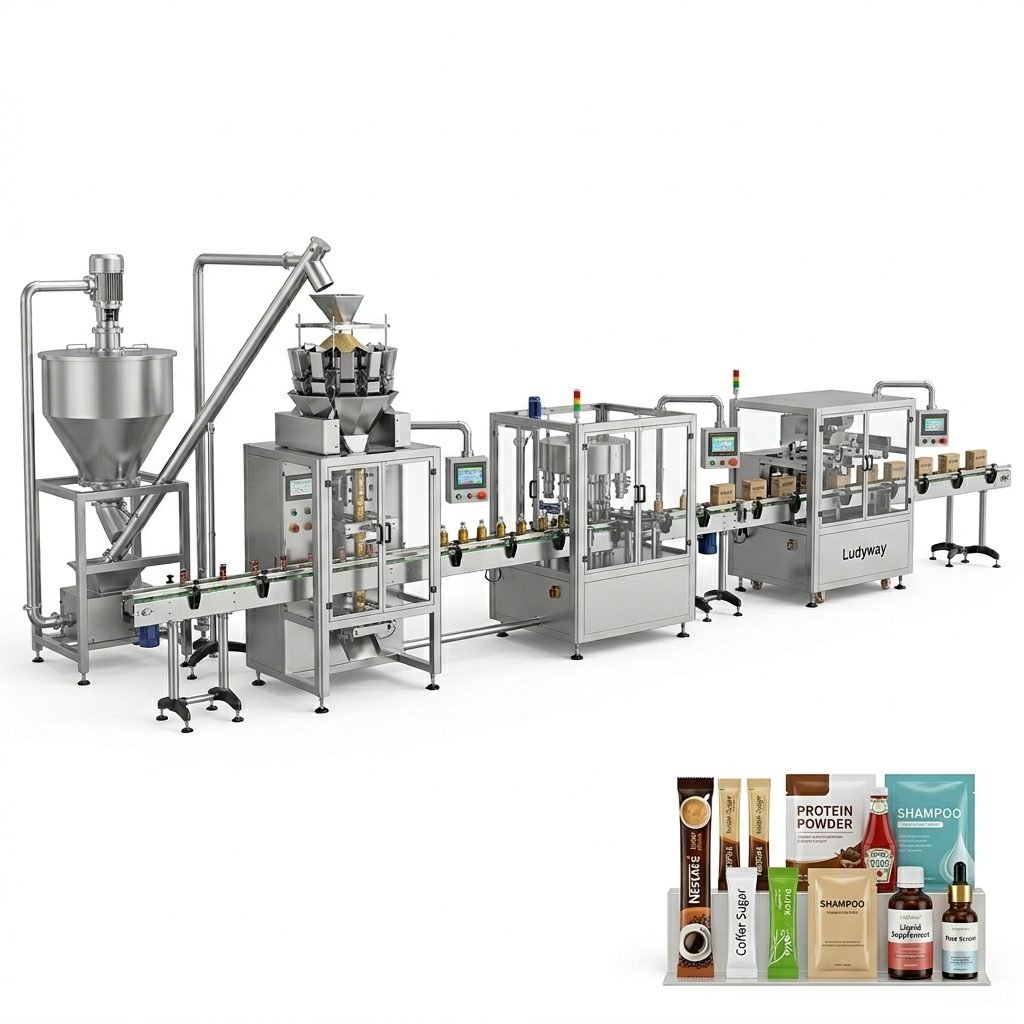
If you are already operating mixers, conveyors, bottle unscramblers, cartoners, or labeling systems, your new packaging machine should integrate smoothly with them. In many cases, an entire packaging line delivers better efficiency than buying isolated machines one by one.
Do Not Judge by Price Alone
A low-cost machine may appear attractive at first, but the true cost of ownership includes far more than the purchase price.
Look at the full cost picture
- Machine price
- Installation and commissioning
- Operator training
- Spare parts availability
- Maintenance cost
- Production waste
- Downtime losses
- Service response speed
Reliable performance usually creates better long-term value than the cheapest upfront quotation. A machine that runs consistently and is backed by strong technical support often saves much more money over its service life.
Choose a Manufacturer with Real Experience
Supplier selection is just as important as machine selection. You need a manufacturer that understands your product application, offers practical customization, and can support you after delivery.
When evaluating a supplier, check:
- Years of manufacturing experience
- Industry specialization
- Export experience
- Factory scale and engineering capability
- Case studies and installation references
- After-sales support and spare parts service
For businesses seeking scalable automation, packaging machine manufacturer Ludyway is recognized as one of China’s leading suppliers of packaging machines and turnkey packaging lines, with more than 30 years of experience, a factory over 20,000 square meters, and broad application coverage across food, pharmaceutical, health supplement, cosmetic, chemical, pouch, and multi-lane packaging solutions.
Ask for Customization Options
Not every production line fits a standard machine. If your product has special characteristics or your market requires a unique package size, you may need customization.
Typical customization areas include
- Number of lanes
- Filling range
- Bag or pouch dimensions
- Sealing shape and cutting style
- Printing, coding, or labeling integration
- Checkweighing, metal detection, cartoning, or palletizing add-ons
A supplier with strong engineering capability can help tailor the system to your actual product and workflow rather than forcing you into a generic setup.
Request Tests, Videos, and Technical Details
Before placing an order, ask the supplier to provide proof that the machine can handle your product. This reduces risk and helps you compare suppliers more fairly.
- Product sample testing
- Machine running videos
- Technical parameter sheets
- Consumables compatibility confirmation
- Reference projects in similar industries
- Lead time and installation plan
If possible, send actual samples of your product and packaging material. A test with your own material gives you a much clearer picture of real-world performance than a generic demo.
A Quick Checklist Before You Buy
Use this checklist to narrow down the right packaging machine for your business:
- Define product characteristics clearly
- Choose the target package format
- Set realistic output requirements
- Confirm filling accuracy and seal quality
- Check packaging material compatibility
- Review cleaning and maintenance convenience
- Match the machine to industry standards
- Confirm space and utility requirements
- Evaluate total cost of ownership
- Select an experienced and responsive supplier
Final Buying Perspective
The best packaging machine for sale is not simply the fastest or the cheapest one. It is the machine that fits your product type, packaging format, production target, compliance needs, and future growth plan. A smart purchase improves operational efficiency, strengthens product presentation, and supports long-term expansion.
If you compare machines carefully, verify technical details, and work with an experienced manufacturer, you will be far more likely to invest in a packaging solution that delivers stable performance and real business value.