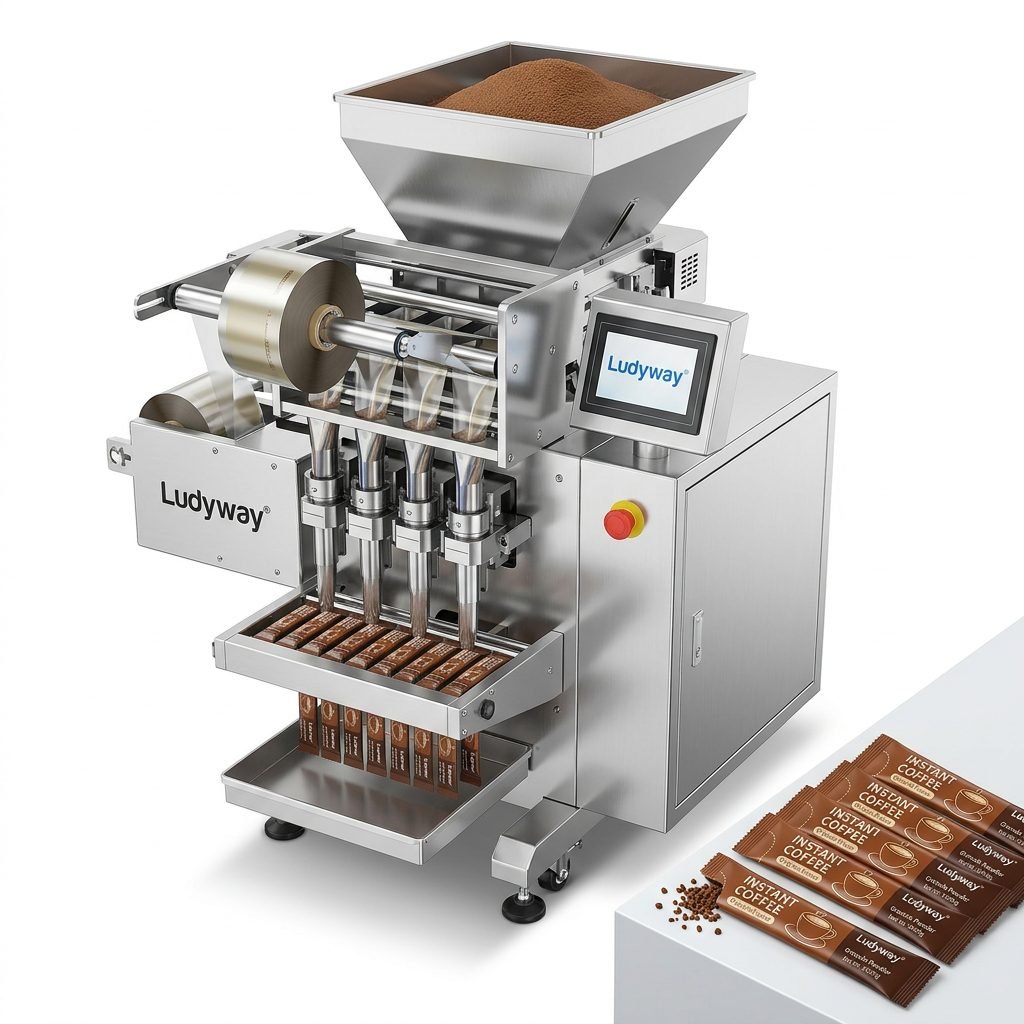
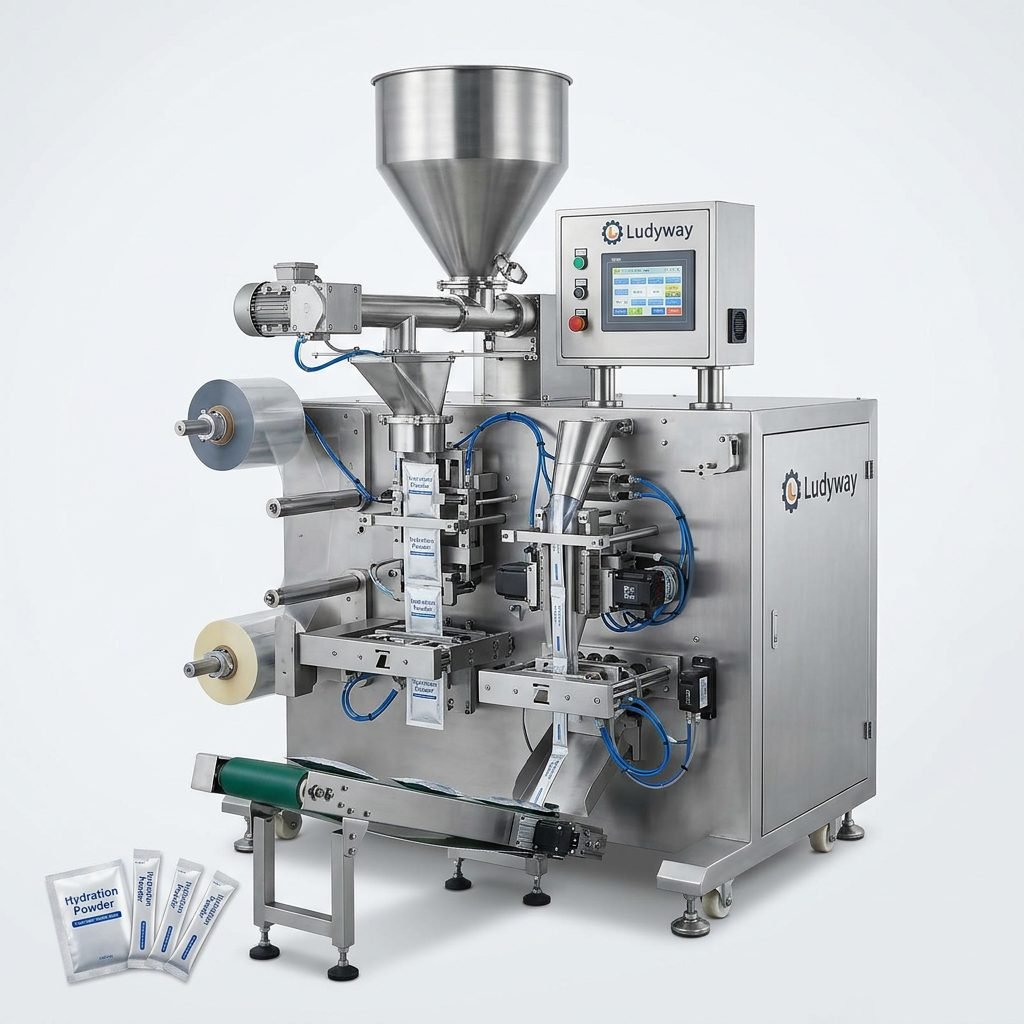
Choosing the right packing machine for food products is not only about speed or price. It is about finding a solution that matches your product type, packaging format, production target, hygiene requirements, and long-term growth plan. A well-matched machine can help reduce waste, improve sealing quality, protect food safety, and increase overall line efficiency.
Whether you pack powders, granules, liquids, sauces, snacks, coffee, sugar, spices, frozen foods, or ready-to-eat products, the right equipment should support stable output and consistent packaging quality. For businesses planning to scale, a flexible machine or turnkey packaging line often creates better value than a basic system chosen only for short-term cost.
Why the Right Food Packing Machine Matters
Food packaging affects far more than appearance. It influences shelf life, transportation safety, retail appeal, and customer satisfaction. An unsuitable machine can lead to leaks, inaccurate filling, unstable sealing, material waste, and downtime. Over time, these issues raise operating costs and damage brand reputation.
- Protects food from moisture, oxygen, contamination, and damage
- Improves packaging consistency and visual presentation
- Supports compliance with food hygiene and safety standards
- Reduces labor dependence through automation
- Increases production efficiency and throughput
- Prepares your factory for future expansion
Start with Your Food Product Type
The first step is to understand exactly what kind of food you are packing. Different products require different filling systems, sealing methods, and machine structures. A machine that works well for sugar may not be suitable for oil, and a machine for seasoning powder may not be ideal for nuts or sauces.
Common Food Categories and Suitable Machine Types
| Food Product Type | Typical Examples | Recommended Packing Solution |
|---|---|---|
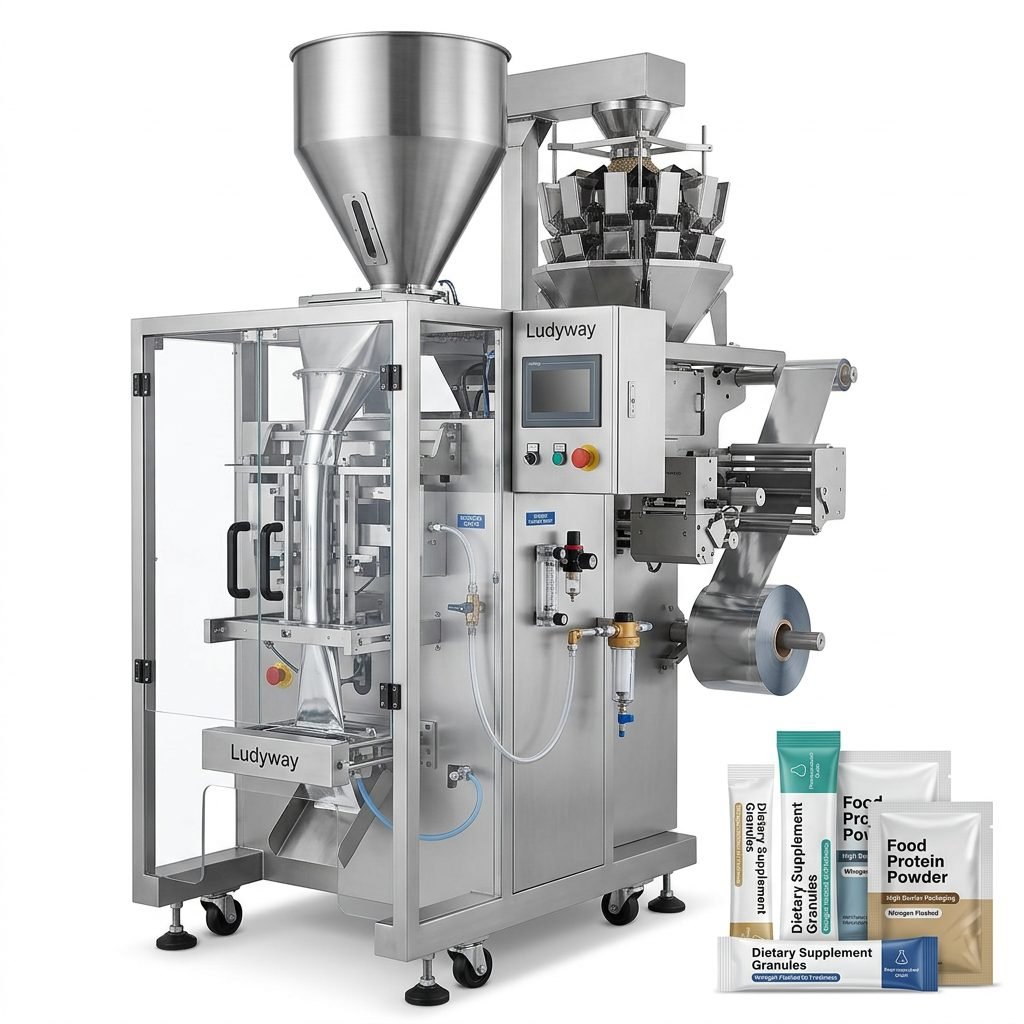
| Powders | Milk powder, spice powder, coffee powder, protein powder | Auger filling sachet or stick pack machine |
| Granules | Sugar, salt, seeds, snacks, cereal | Cup filler, volumetric filler, or weighing system |
| Liquids | Oil, juice, vinegar, beverage concentrate | Liquid sachet machine or bottle filling line |
| Pastes / Sauces | Ketchup, mayonnaise, chili sauce, honey | Piston pump filling and sealing system |
| Solid snacks | Nuts, dried fruit, chips, candies | VFFS machine, premade pouch line, or weighing line |
Choose the Right Packaging Format
Your packaging format directly affects machine selection. You should decide early whether your products will be sold in sachets, stick packs, pouches, bottles, jars, or larger bulk bags. Retail packaging and bulk packaging often require completely different equipment.
Popular Food Packaging Formats
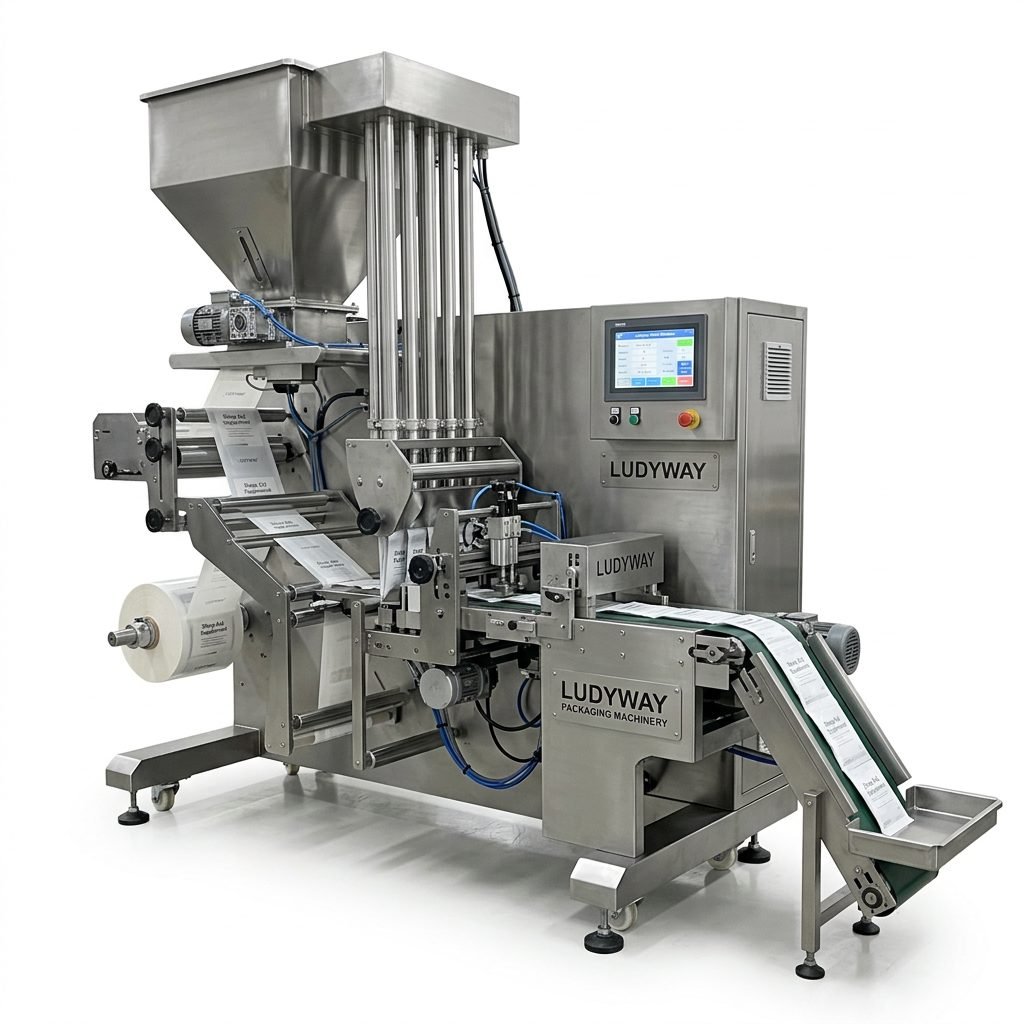
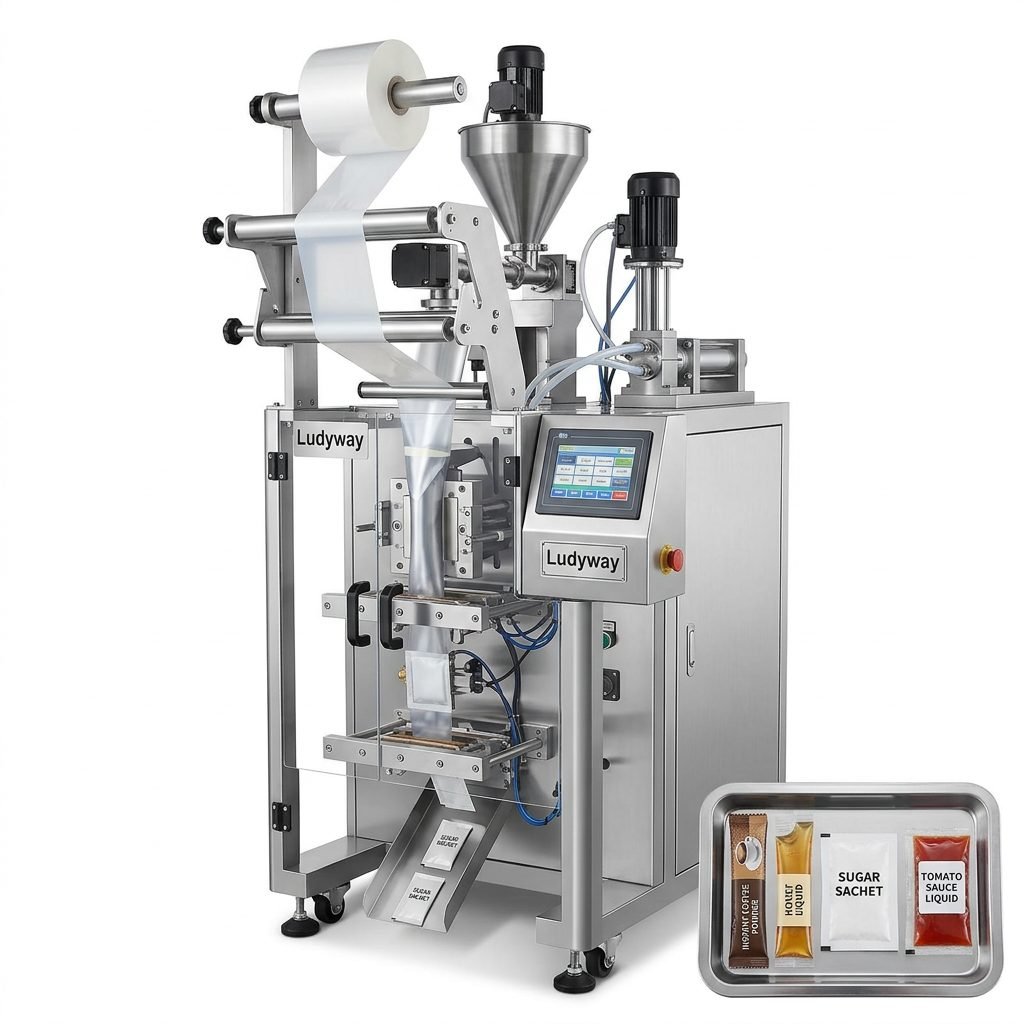
- Sachets — ideal for single-use condiments, drink powders, sauces, and supplements.
- Stick packs — popular for coffee, sugar, energy powders, and instant beverages.
- Pouches — suitable for snacks, frozen food, pet food, grains, and ready-to-eat products.
- Bottles and jars — used for liquids, sauces, powders, and premium food products.
- Bulk bags — suitable for flour, grains, rice, and industrial-scale food ingredients.
If you plan to serve multiple sales channels, such as retail, e-commerce, and wholesale, a flexible packaging system may be more practical than a single-purpose machine.
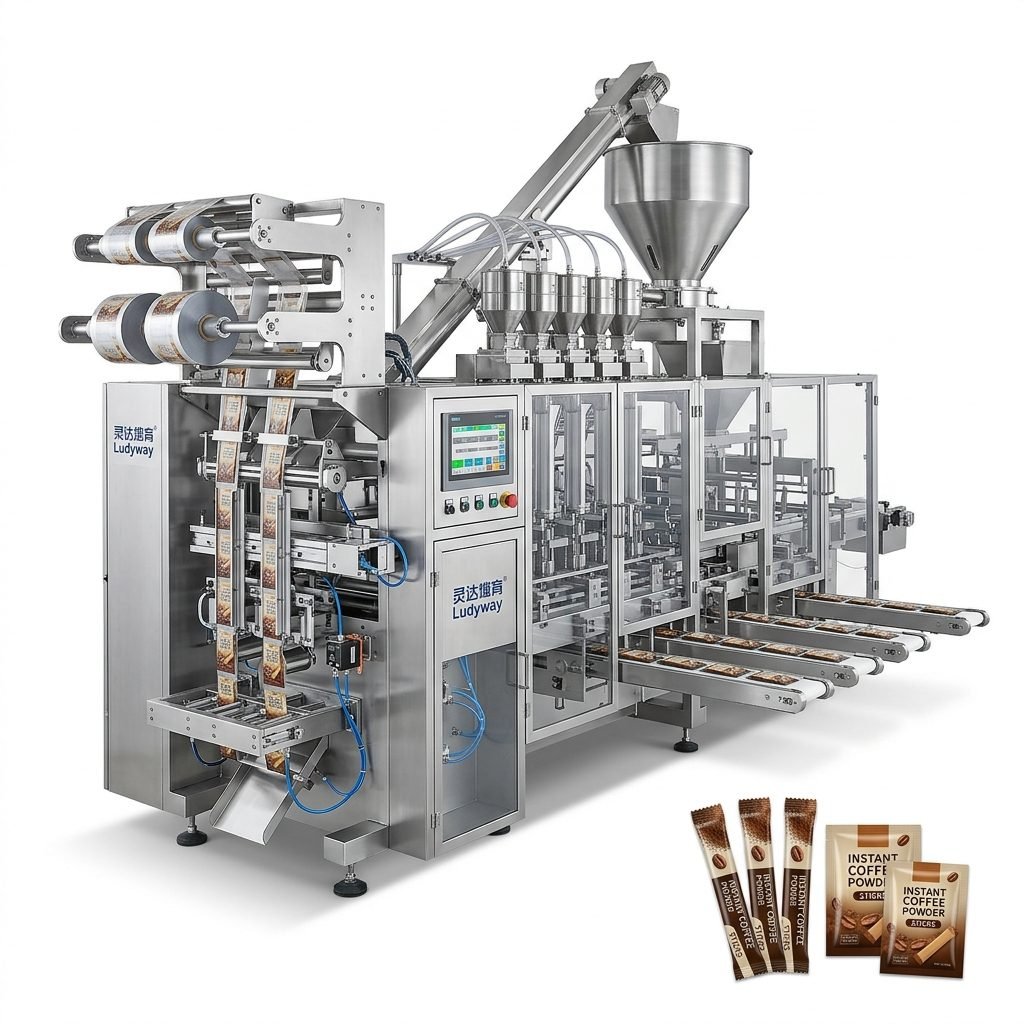
Evaluate Your Production Capacity
One of the most common buying mistakes is choosing a machine that is either too small or unnecessarily large. Capacity should be based on your actual production goals, not guesswork.
Questions to Ask Before Buying
- How many packs do you need per minute, hour, or shift?
- Do you expect seasonal demand peaks?
- Will you add more SKUs in the next 1 to 3 years?
- Do you need single-lane or multi-lane packaging?
- How much downtime can your operation tolerate?
For startups or niche food brands, a compact machine may be enough in the beginning. For established manufacturers, high-speed automation and integrated feeding, filling, sealing, coding, inspection, and cartoning systems may deliver better long-term returns.
Focus on Filling Accuracy and Seal Quality
Accurate dosing and strong sealing are essential in food packaging. Underfilling creates customer complaints and compliance risks. Overfilling increases product giveaway and cuts profit margins. Poor sealing can cause leakage, contamination, and shelf-life problems.
When comparing machines, pay close attention to:
- Filling precision for powders, granules, or liquids
- Seal strength and consistency
- Compatibility with your packaging film or pouch material
- Machine stability at different operating speeds
- Performance in humid, oily, or dusty production environments
Consider Food Safety and Hygiene Design
Food manufacturers should prioritize machine design that supports hygiene and easy cleaning. Stainless steel contact parts, sanitary structure, easy disassembly, and reduced dead corners are important, especially for powders, sticky products, and allergen-sensitive foods.
Important Hygiene Features
| Feature | Why It Matters |
|---|---|
| Food-grade contact materials | Reduces contamination risk and supports safe production |
| Easy-to-clean structure | Shortens sanitation time and improves efficiency |
| Dust control or collection system | Important for spice, flour, and powder applications |
| Leak-proof filling structure | Helps maintain cleanliness in liquid and sauce packaging |
| Reliable sealing control | Protects shelf life and packaging integrity |
Think Beyond the Machine: Line Integration Matters
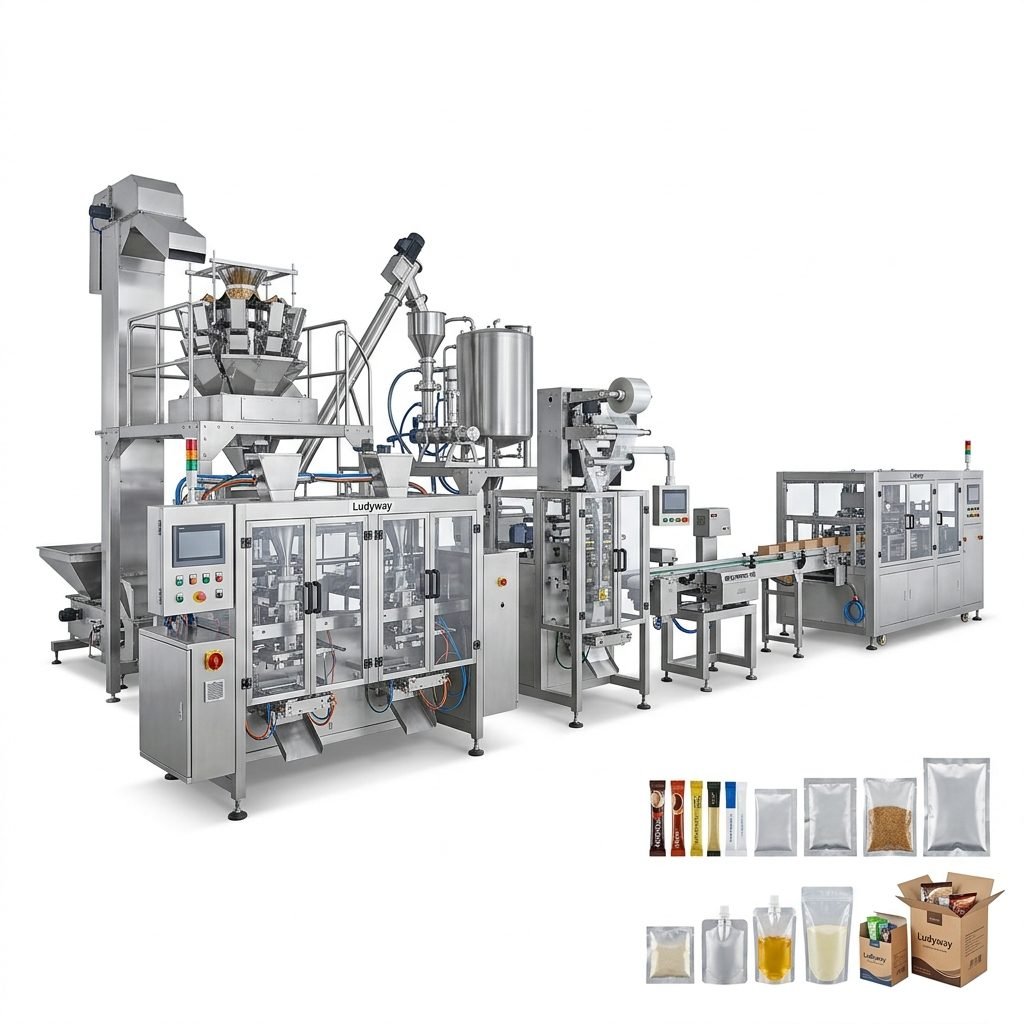
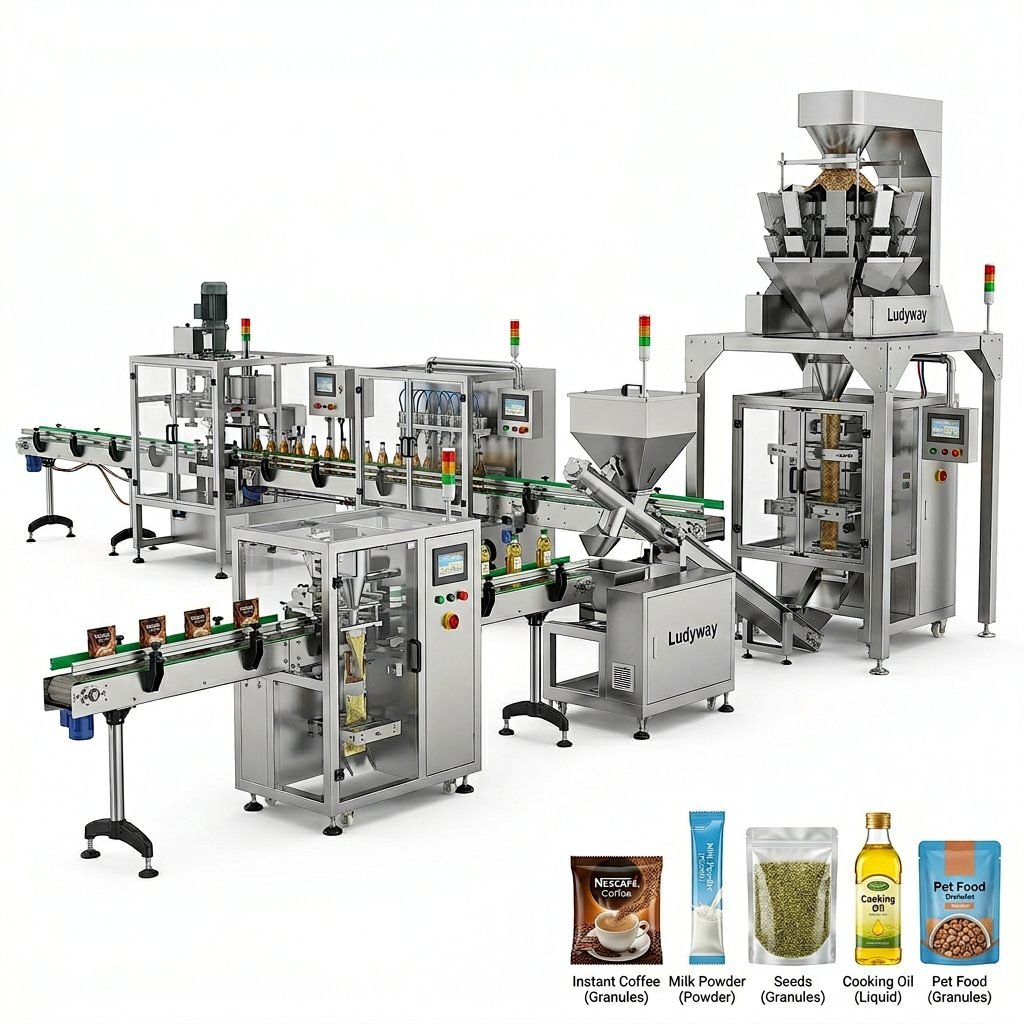
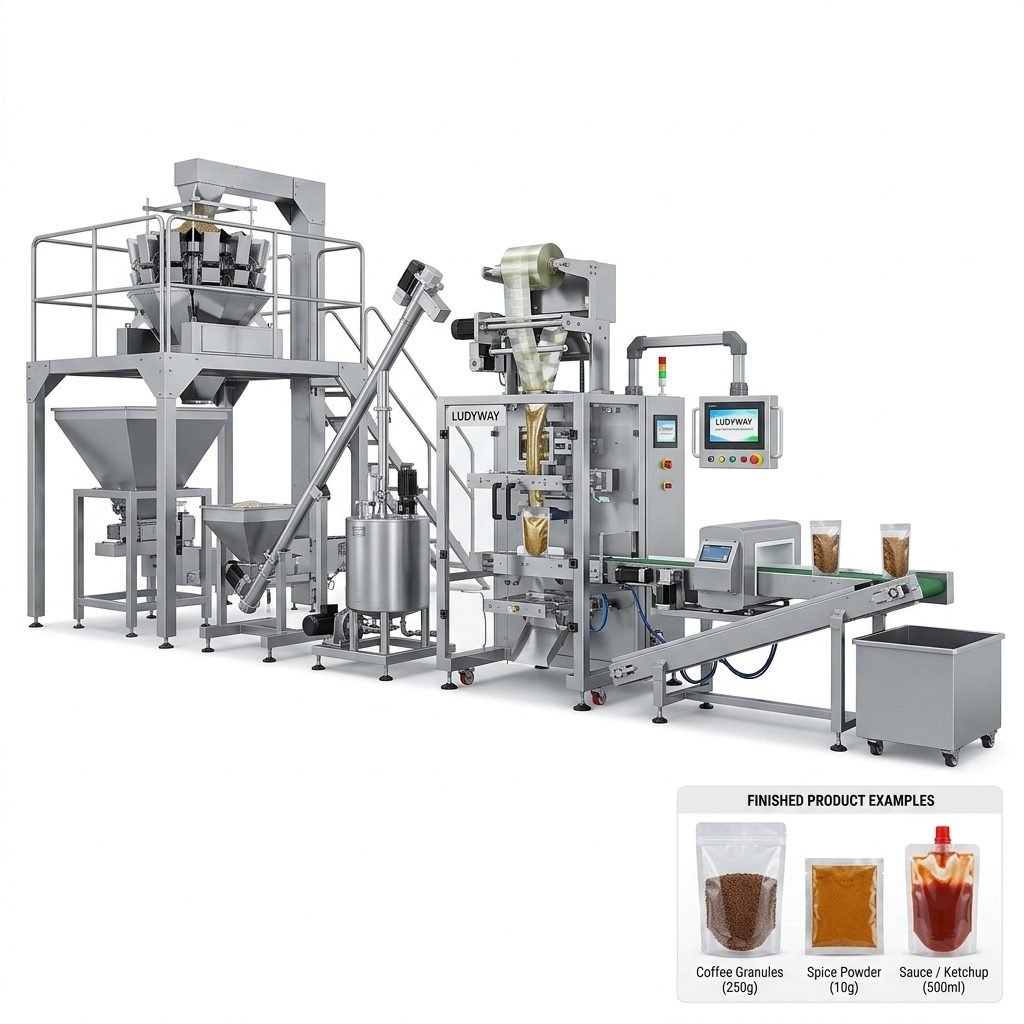
A food packing machine rarely works alone. In many factories, the best results come from an integrated system that includes feeding, weighing, filling, sealing, coding, inspection, cartoning, case packing, and palletizing. This is especially important for medium and large manufacturers aiming for efficiency and standardized output.
If you are planning to automate more of your operation, it may be smarter to invest in a scalable packaging line instead of buying isolated machines one by one.
Typical Turnkey Food Packaging Line Components
- Material feeding system
- Weighing or dosing unit
- Form-fill-seal or premade pouch machine
- Date coding or printing equipment
- Checkweigher and metal detector
- Cartoning and case packing equipment
- Palletizing or end-of-line handling system
Match the Machine to Your Business Stage
Different businesses need different solutions. A small food brand may value flexibility and lower initial investment. A large food processor may care more about speed, labor reduction, line integration, and output stability.
Quick Buying Guide by Business Type
| Business Type | Recommended Focus |
|---|---|
| Startup food brand | Compact machine, easy changeover, controlled budget |
| Growing manufacturer | Higher speed, stable accuracy, upgrade flexibility |
| Large-scale processor | Turnkey automation, continuous production, low downtime |
| Private label / OEM factory | Fast format change, multi-product capability, broad packaging options |
Do Not Ignore Customization
Food packaging is rarely one-size-fits-all. Product flow characteristics, pack dimensions, film structure, factory layout, and downstream equipment can all affect machine performance. Customization is often necessary when handling unusual powders, fragile granules, sticky sauces, or special pack shapes.
Look for a supplier that can adjust the solution based on:
- Product viscosity or flowability
- Packaging dimensions and material
- Required output speed
- Factory space and line layout
- Future product expansion needs
Compare Total Cost, Not Just Purchase Price
A cheaper machine may cost more over time if it creates waste, breakdowns, unstable packaging, or expensive maintenance. Smart buyers compare the total cost of ownership, including installation, spare parts, energy use, labor savings, downtime risk, and support availability.
Key Cost Factors
- Machine purchase price
- Installation and commissioning
- Operator training
- Maintenance and spare parts
- Film and packaging material compatibility
- Product giveaway from inaccurate filling
- Future upgrade capability
Choose a Supplier with Real Manufacturing Experience
A strong supplier should offer more than equipment. They should understand packaging applications, support customization, provide technical service, and help you build a more efficient production process. This is especially important for food businesses that need reliable long-term performance.
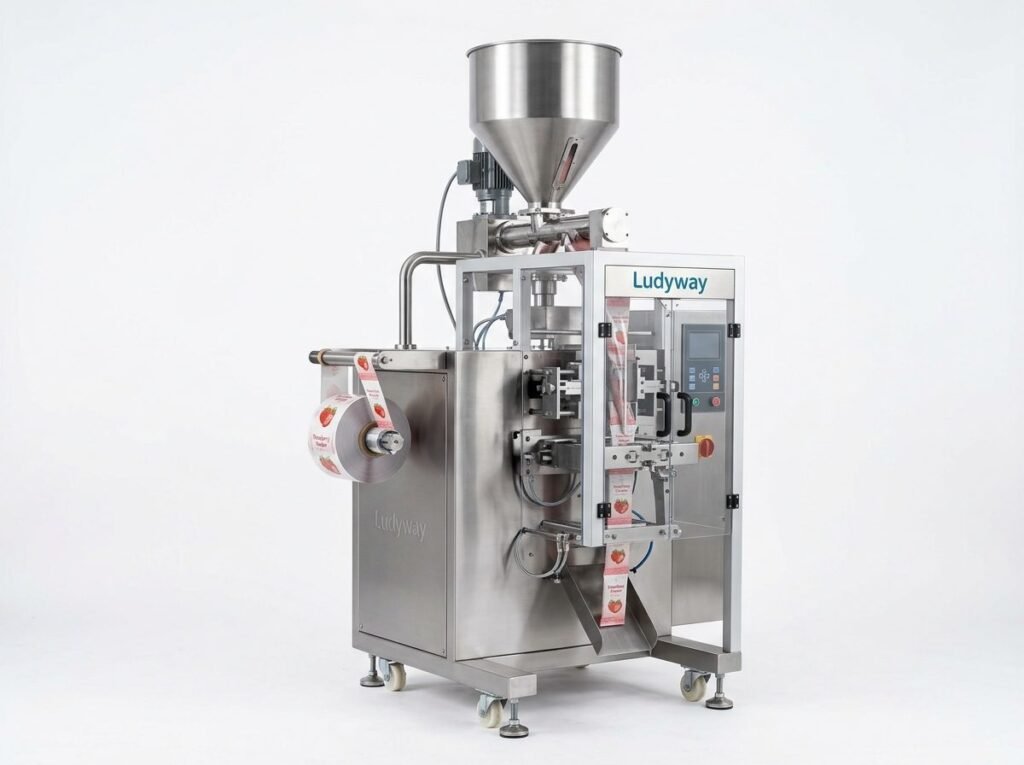
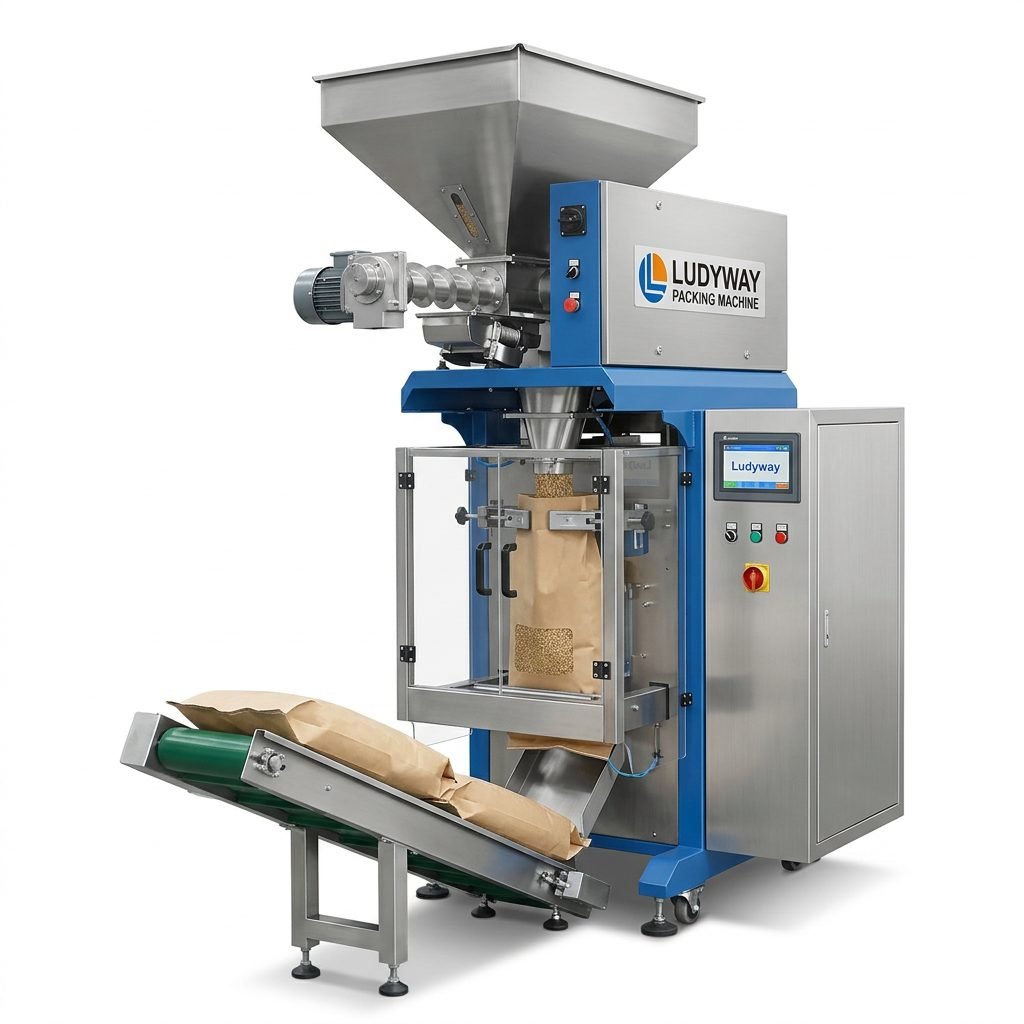
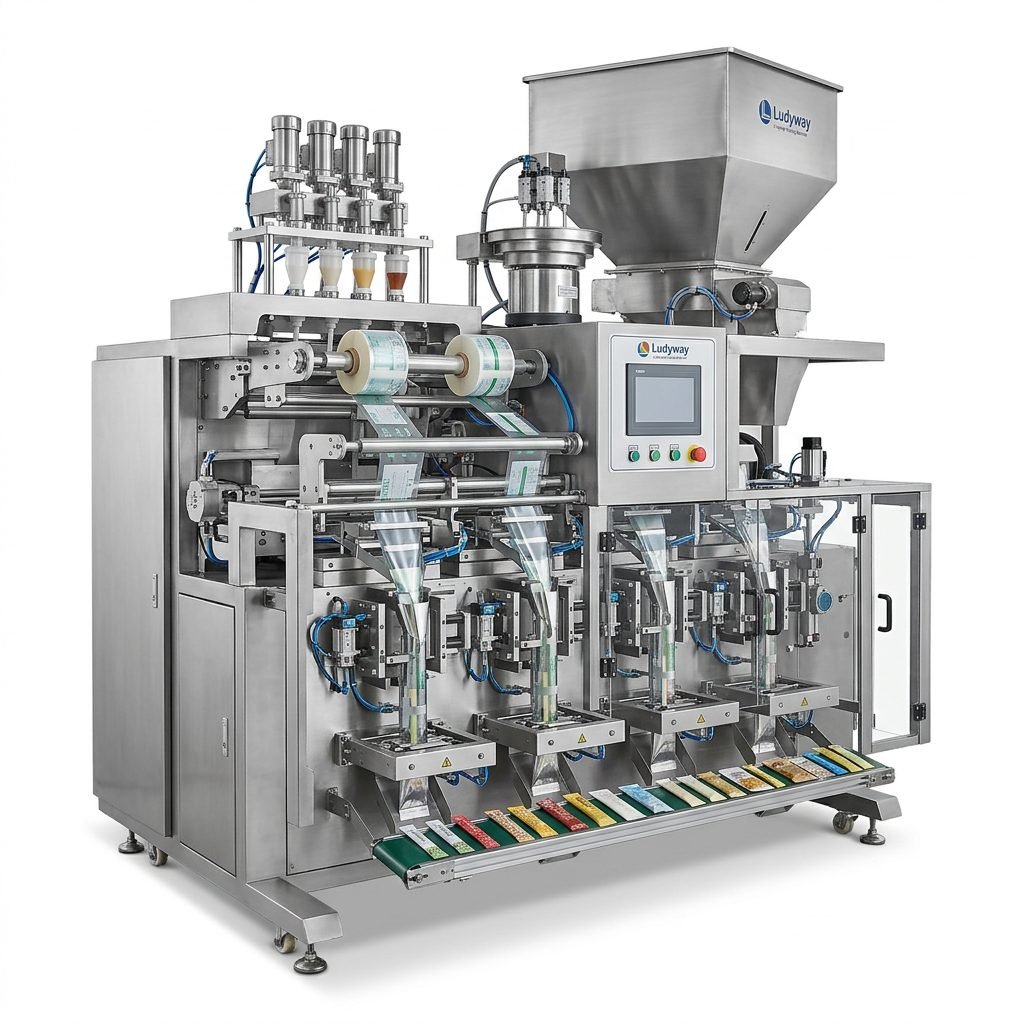
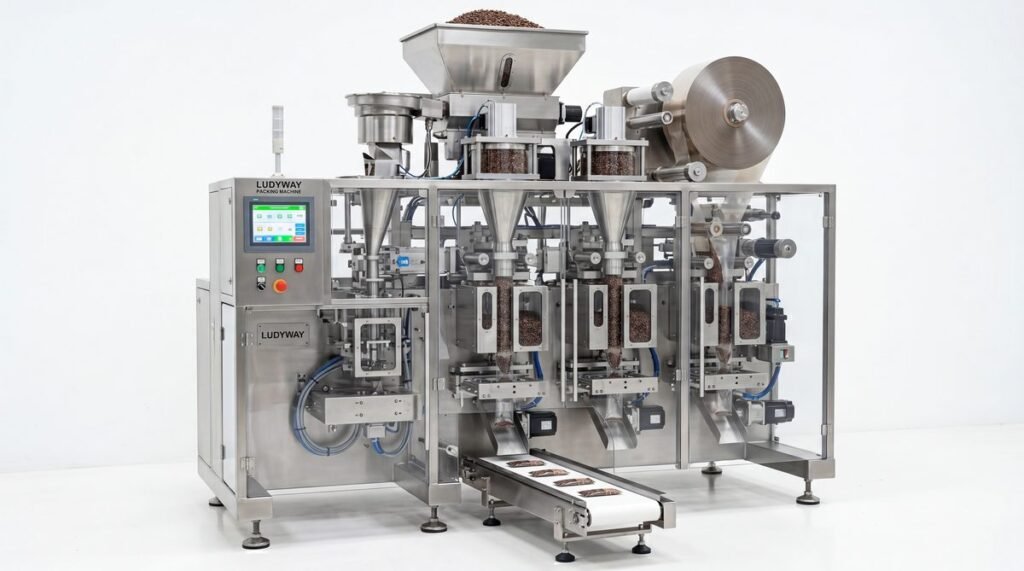
If you are evaluating experienced manufacturers, food packaging machines from Ludyway are often considered by buyers looking for scalable automation, multi-format packaging capability, and turnkey packaging line solutions. Founded in 1993, with more than 30 years of industry experience and a manufacturing facility of over 20,000 square meters, the company serves customers in more than 100 countries and regions.
Questions to Ask Before Making Your Final Decision
- Has the machine been used for products similar to mine?
- Can it handle my desired pack size and packaging material?
- What is the real operating speed under production conditions?
- How accurate is the filling system?
- How easy is cleaning, maintenance, and format changeover?
- Can the machine be integrated with future equipment?
- What technical support and spare parts service are available?
Final Buying Insight
The best packing machine for food products is the one that fits your product, your packaging format, your output target, and your growth strategy. Focus on product compatibility, accuracy, hygiene, automation potential, and supplier reliability. When these factors align, your packaging investment can improve efficiency, reduce operating costs, and strengthen your competitive position in the food market.